Free Printable Family of Origin Worksheets for Class 1
Explore Class 1 Family of Origin printables and free worksheets that help young students understand their personal heritage, family traditions, and cultural backgrounds through engaging practice problems with answer keys in PDF format.
Explore printable Family of Origin worksheets for Class 1
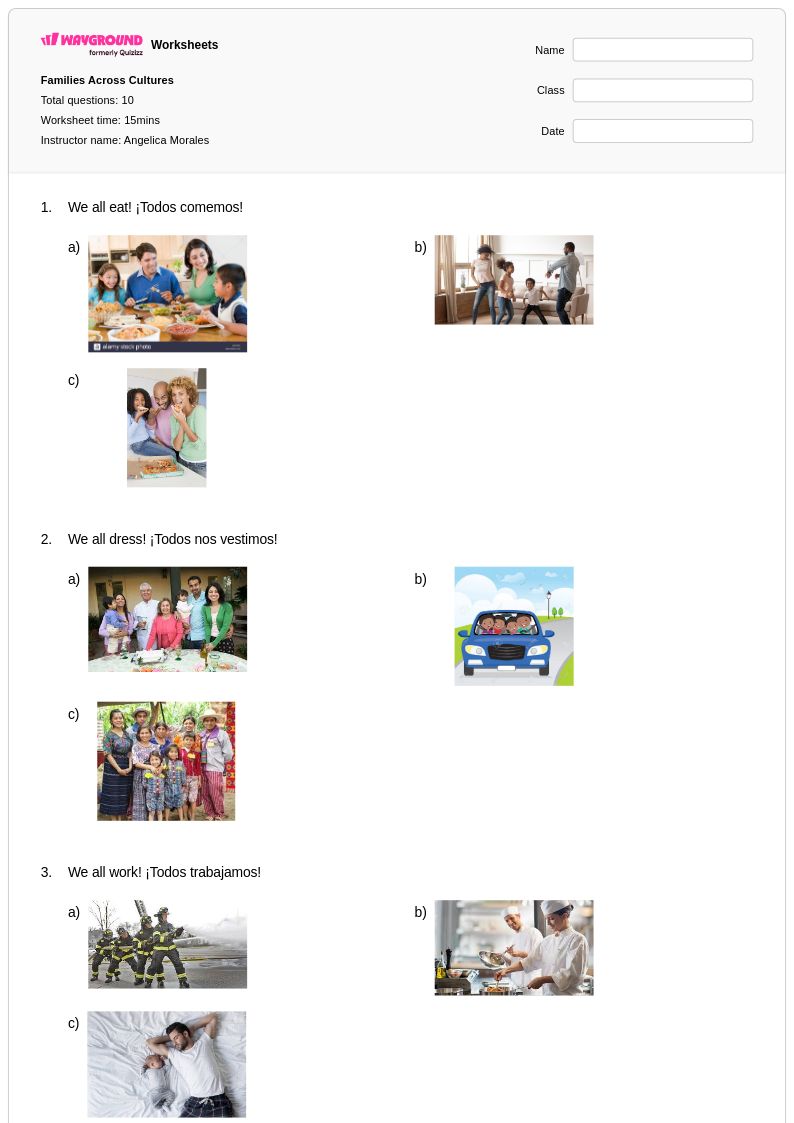
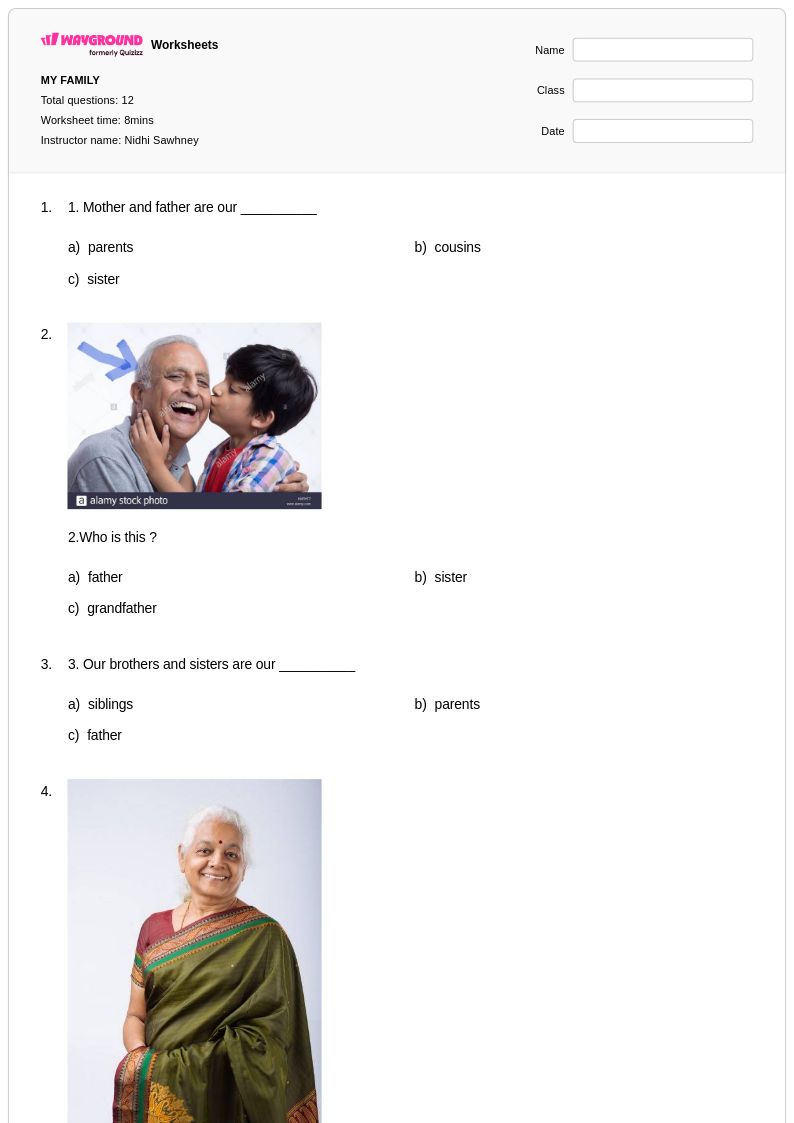
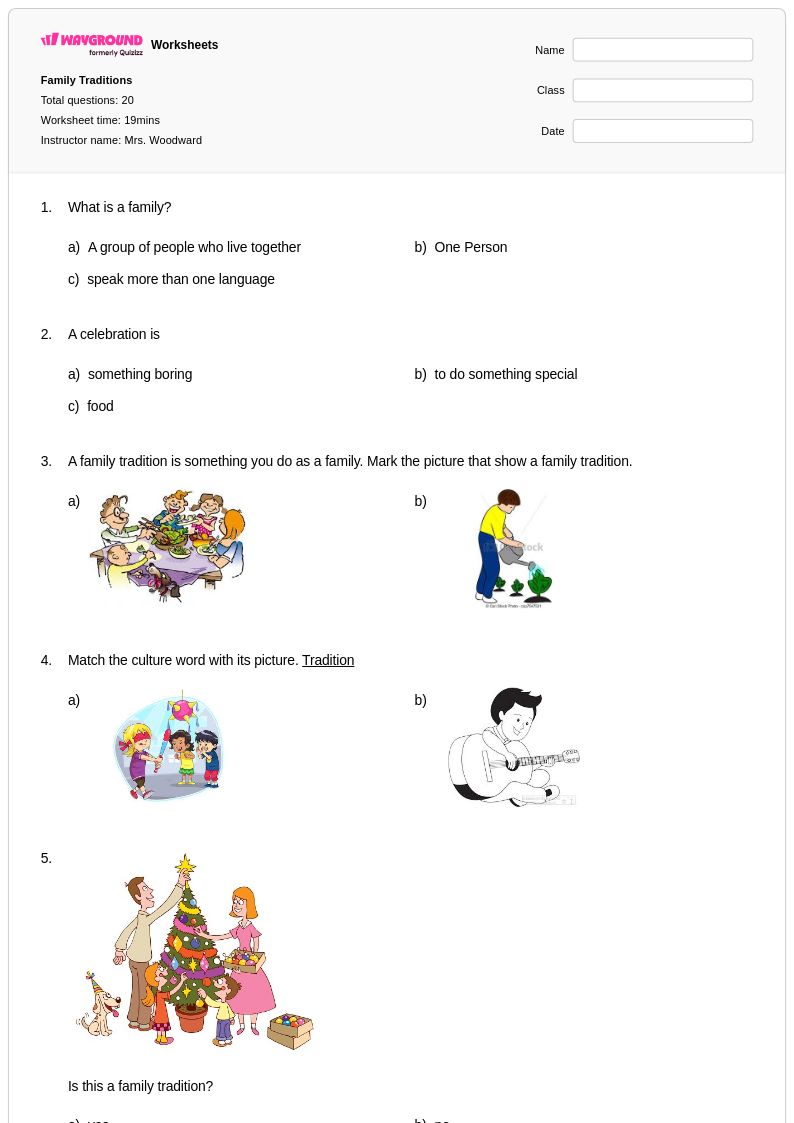
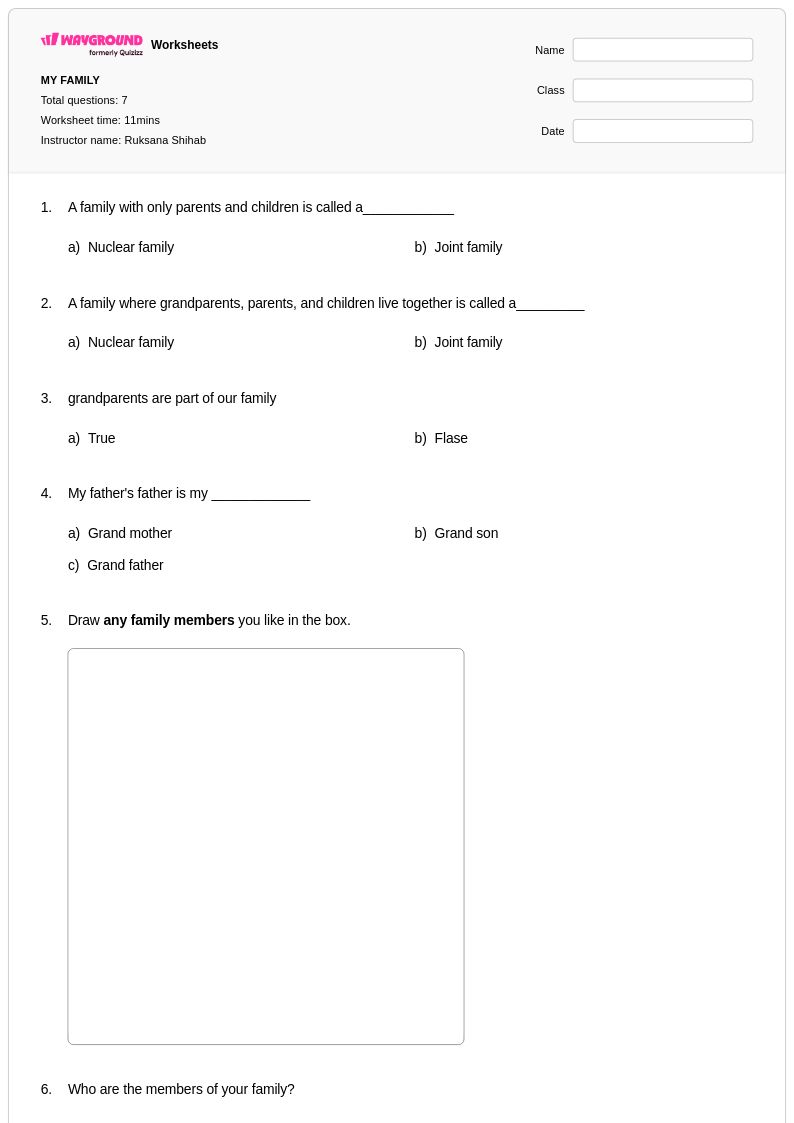
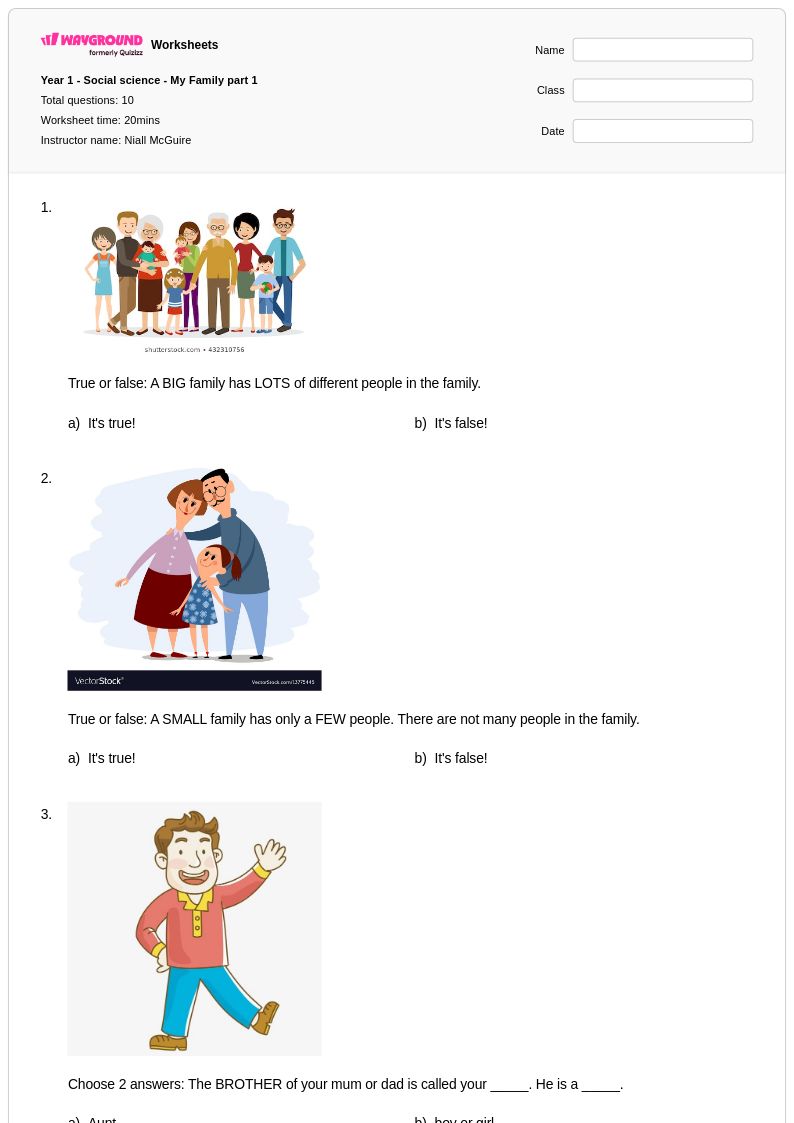
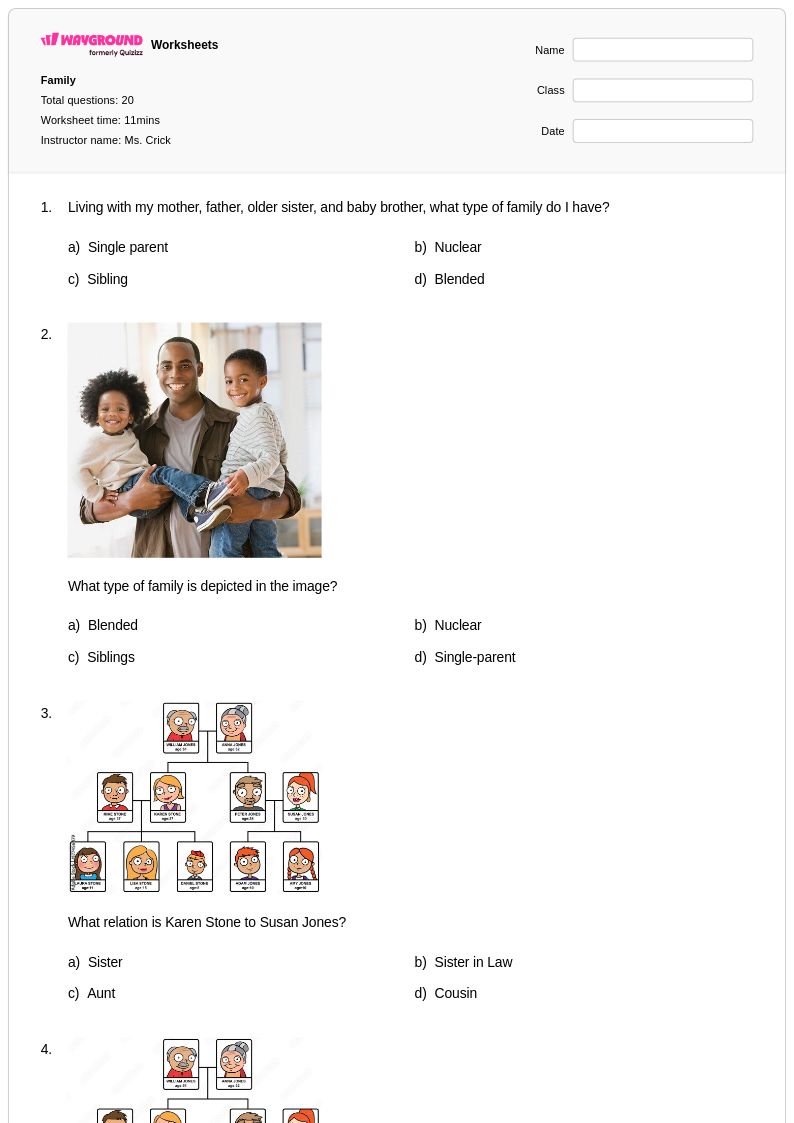
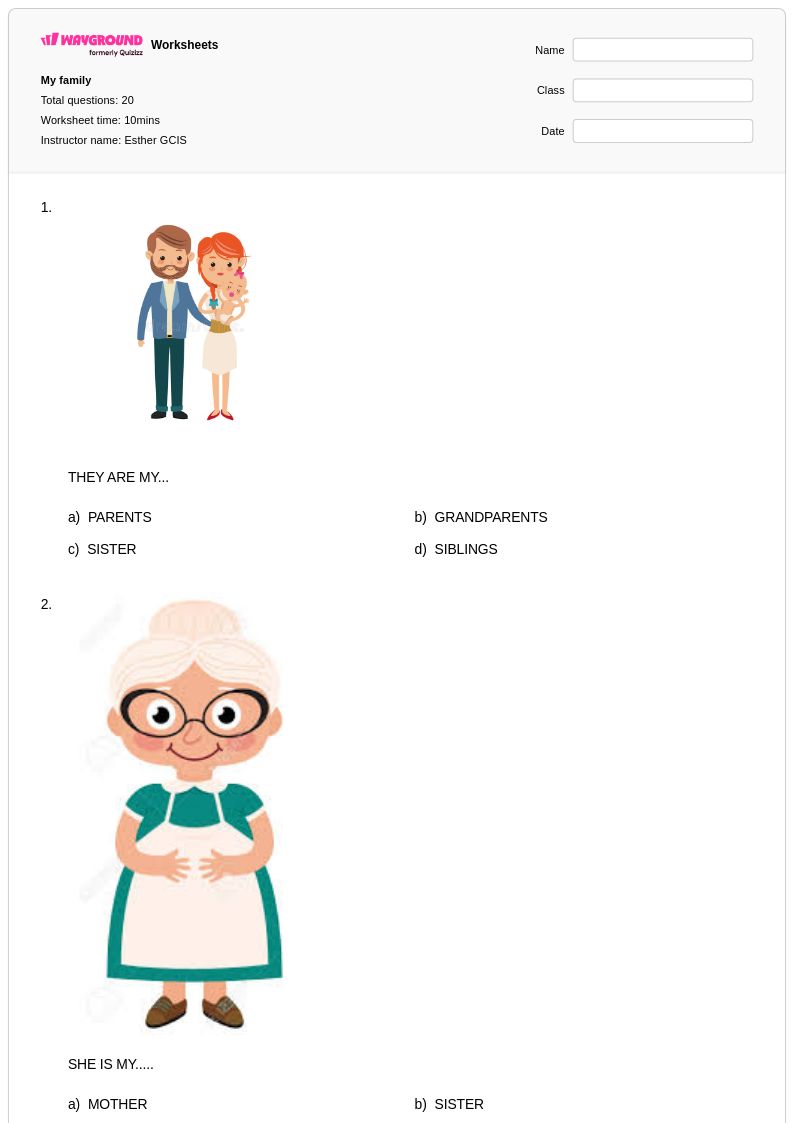
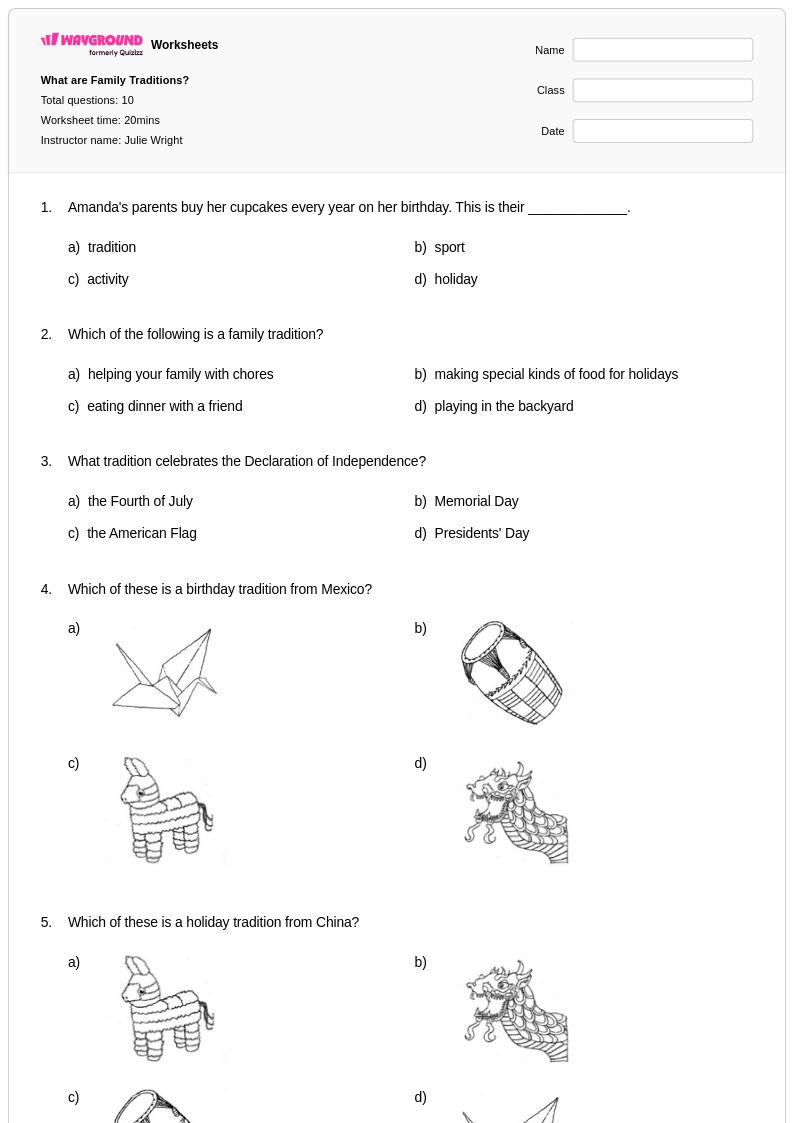
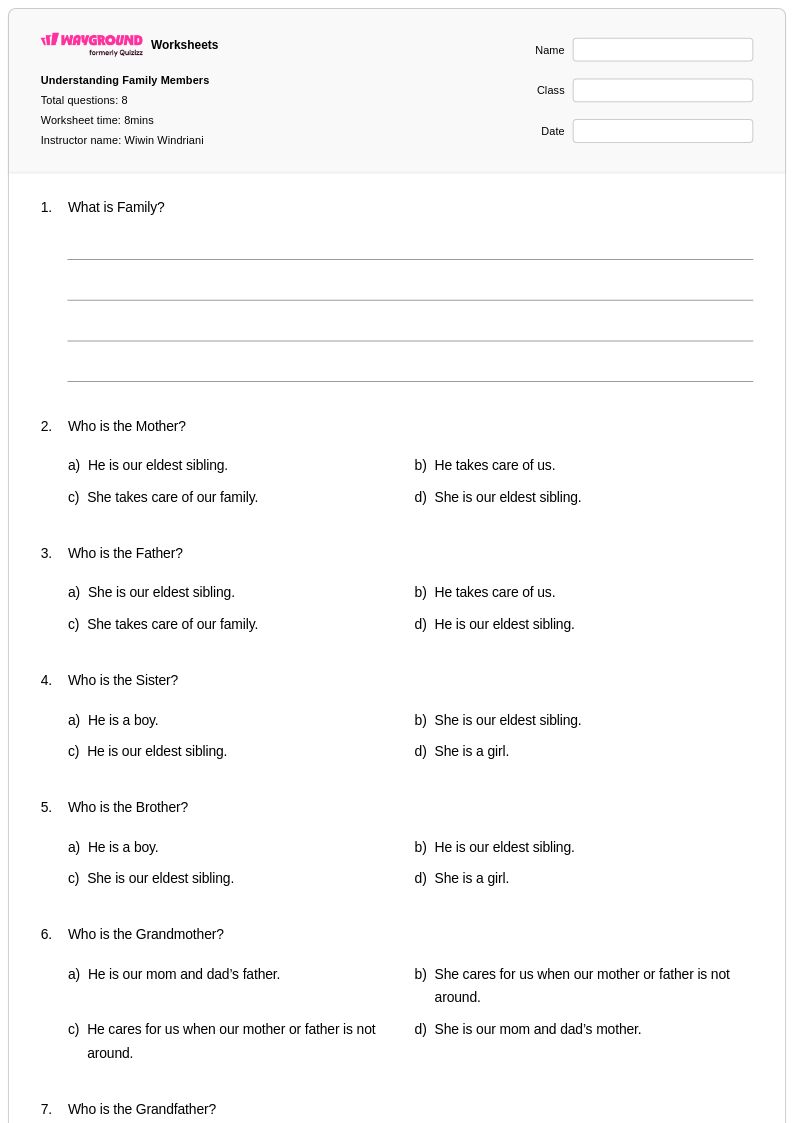
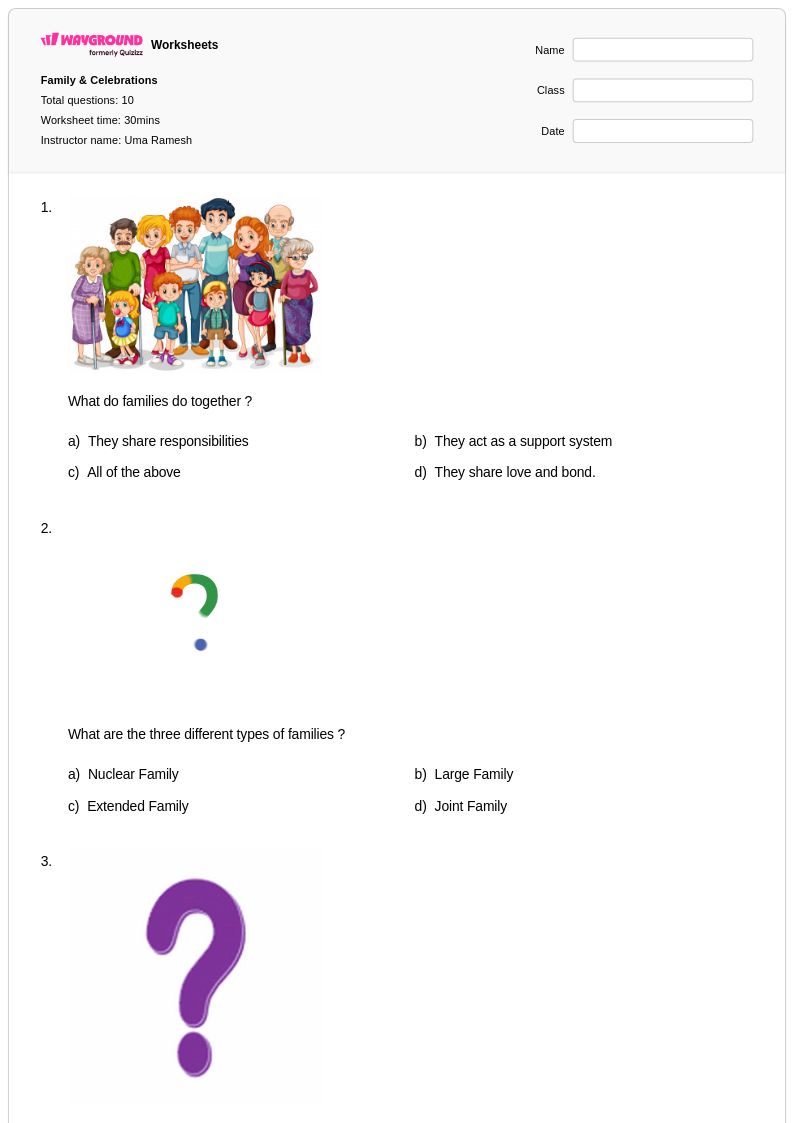
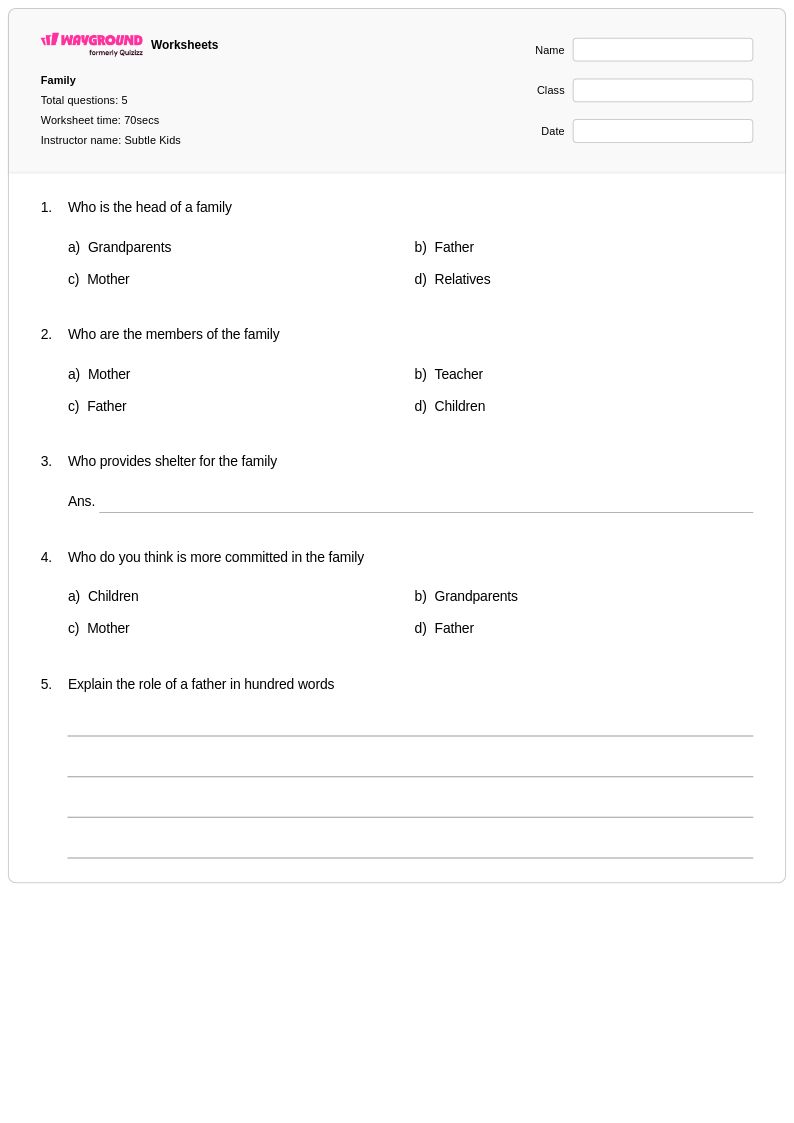
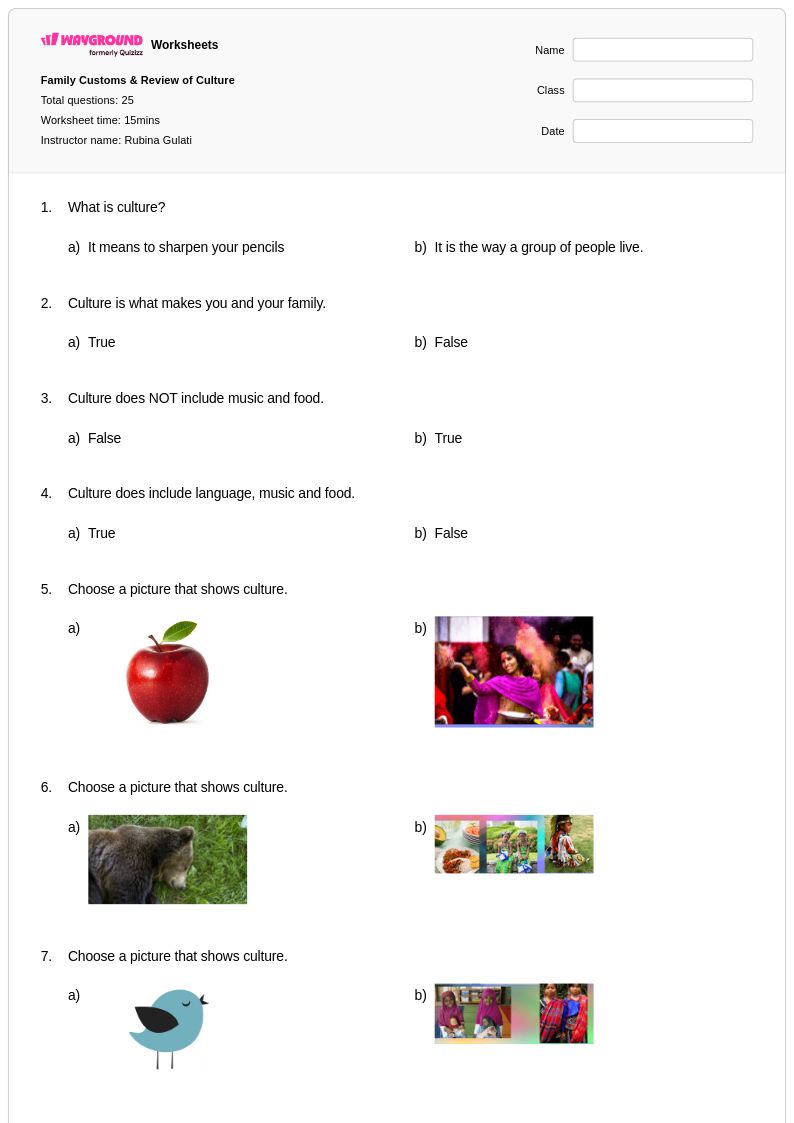
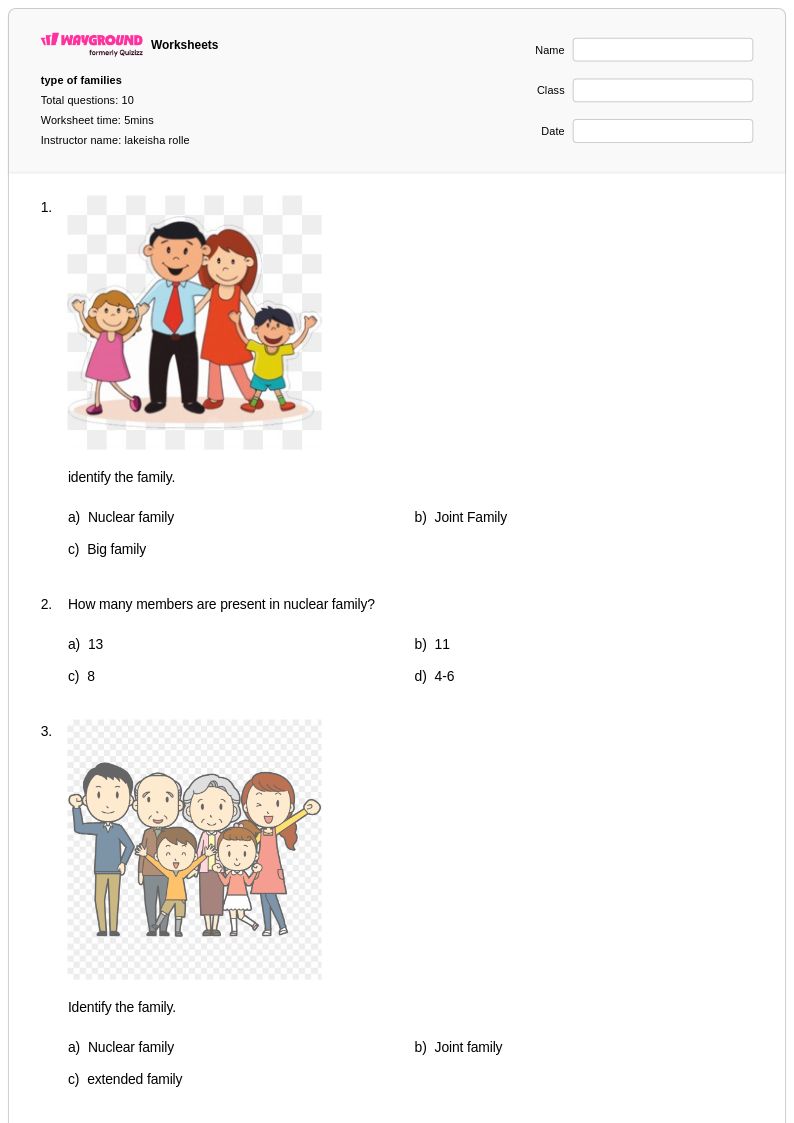
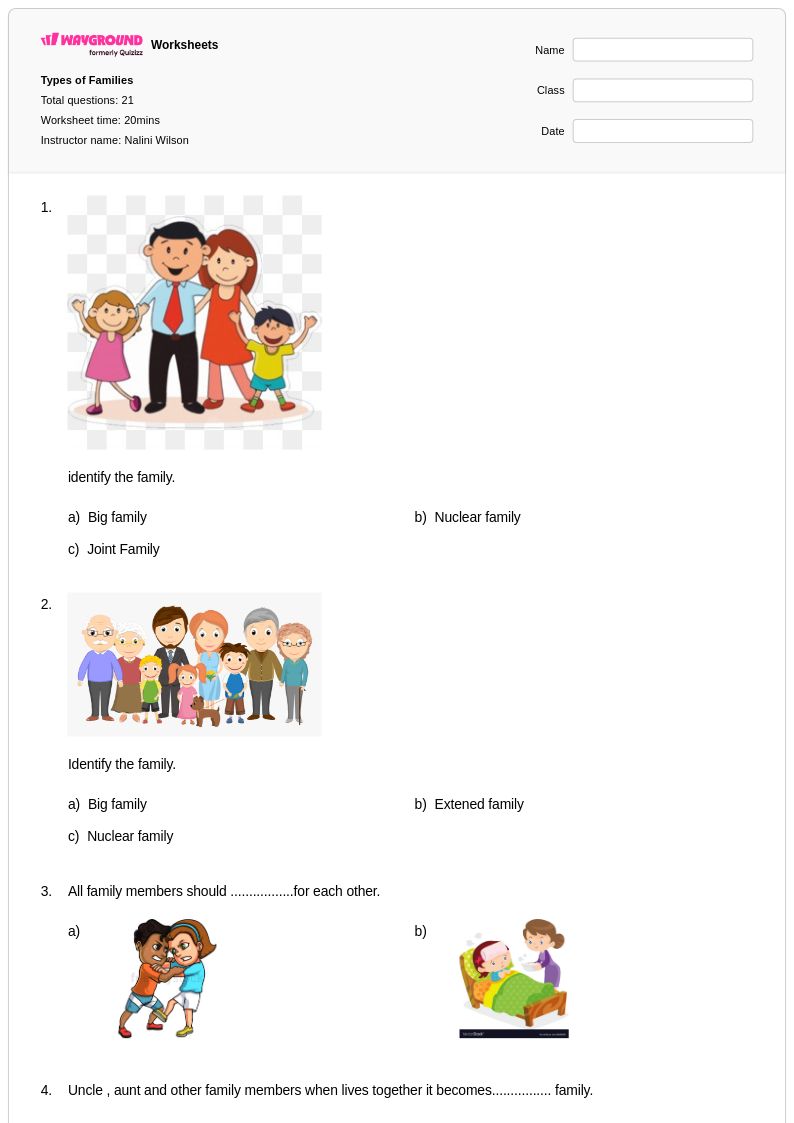
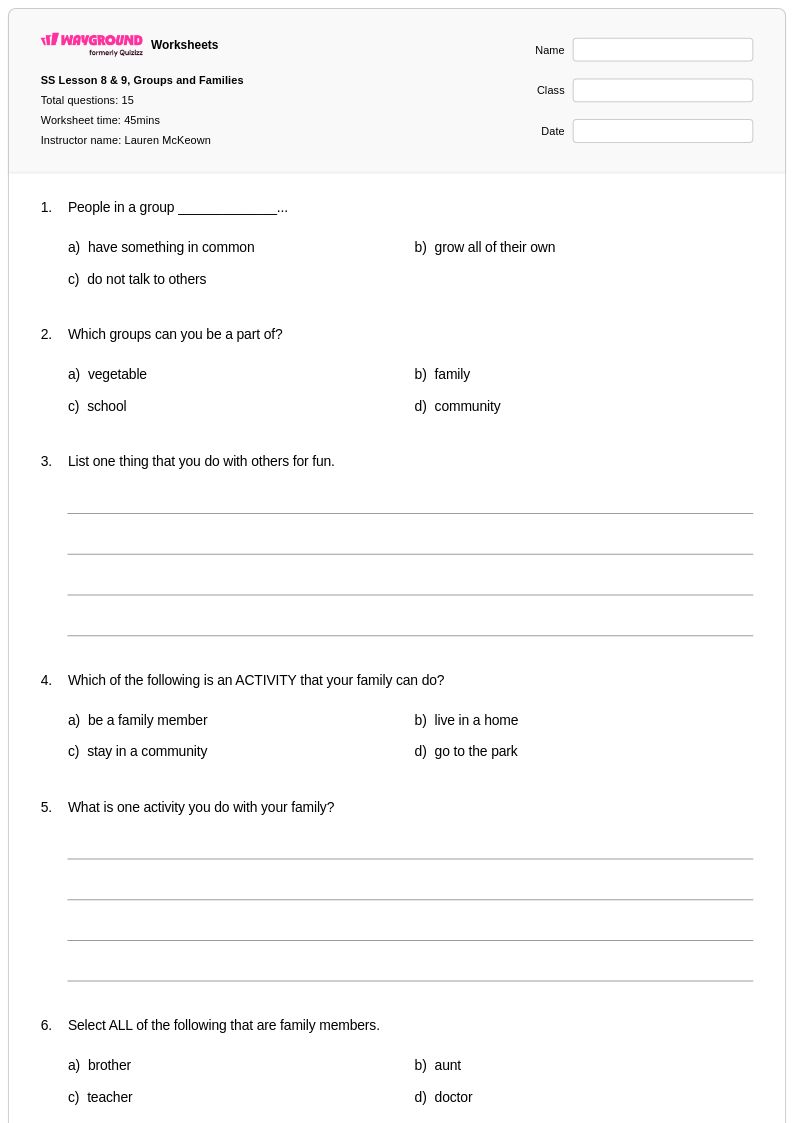
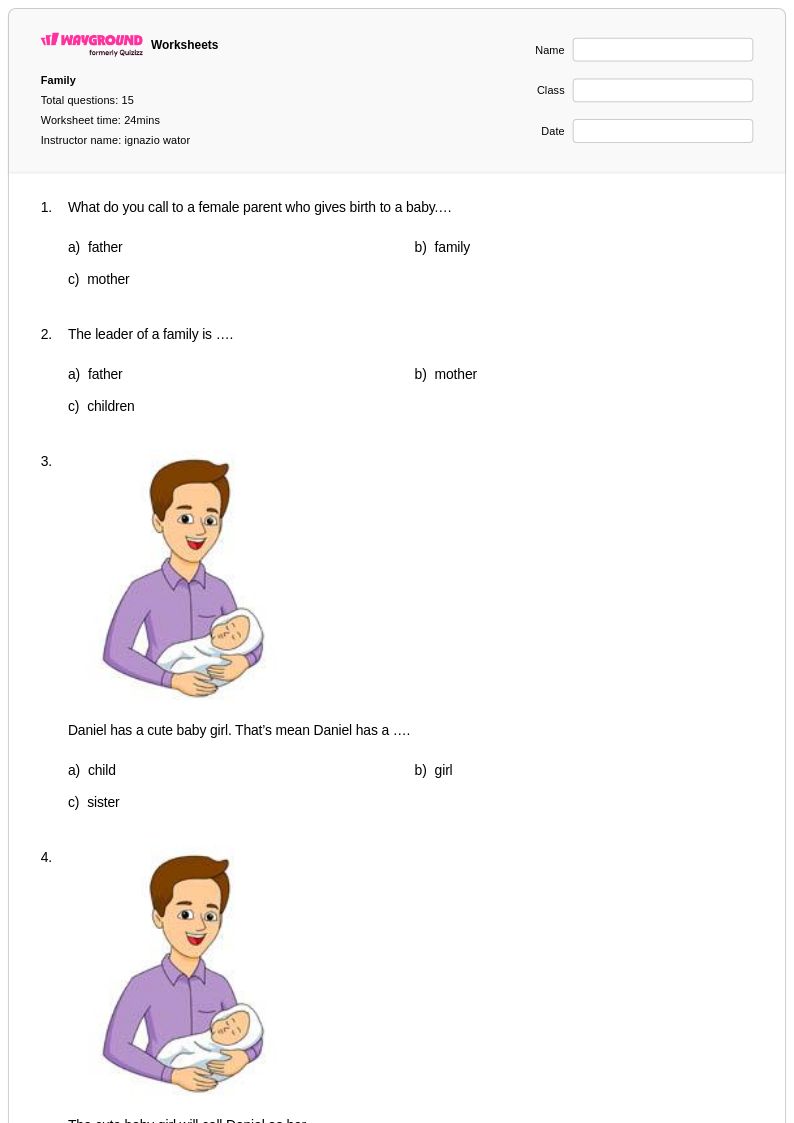
Family of Origin worksheets for Class 1 students available through Wayground (formerly Quizizz) provide young learners with engaging opportunities to explore their personal heritage and family structures within the broader context of community and cultures. These thoughtfully designed educational resources help first-grade students develop foundational social studies skills by examining their own family backgrounds, understanding different family compositions, and recognizing the diverse origins that make up their classroom community. The worksheets strengthen critical thinking abilities as students learn to identify family traditions, compare family structures, and articulate their own family stories through age-appropriate activities that include drawing exercises, simple research tasks, and discussion prompts. Each resource comes complete with comprehensive answer keys and is available as free printables in convenient PDF format, making them accessible for both classroom instruction and home practice problems that reinforce learning objectives.
Wayground (formerly Quizizz) empowers educators with an extensive collection of millions of teacher-created resources specifically designed to support Class 1 Family of Origin instruction and broader social studies curriculum goals. The platform's robust search and filtering capabilities enable teachers to quickly locate materials that align with specific learning standards and accommodate diverse student needs through built-in differentiation tools. These customizable worksheets are available in both printable PDF formats for traditional classroom use and digital formats for interactive learning experiences, providing educators with the flexibility needed for effective lesson planning across various learning environments. Teachers can seamlessly integrate these resources into their instructional practice for targeted skill development, remediation support for struggling learners, and enrichment activities for advanced students, ensuring that all first-grade students develop a strong foundation in understanding family heritage and cultural diversity within their communities.
FAQs
How do I teach family of origin concepts in the classroom?
Teaching family of origin effectively starts with grounding students in the idea that families differ across cultures, generations, and communities, and that no single structure is universal. Begin with personal reflection activities where students identify their own family traditions, roles, and values before comparing them with broader cultural patterns. Scaffolding the lesson from personal experience outward to community and global contexts helps students connect abstract concepts like cultural transmission and generational identity to their own lives.
What activities help students explore their family heritage and cultural identity?
Structured activities like family tree analysis, cultural tradition comparisons, and reflective writing prompts are highly effective for exploring family of origin concepts. Students benefit from exercises that ask them to examine how values, customs, and family structures are passed down across generations and how these shape personal identity. Worksheets that prompt comparison between different family structures across cultures help students build both cultural awareness and critical thinking skills simultaneously.
What common misconceptions do students have about family structures and cultural heritage?
A frequent misconception is that there is one standard or correct family structure, which can cause students to view non-nuclear or culturally distinct families as exceptions rather than legitimate variations. Students also sometimes conflate ethnicity with culture, not recognizing that cultural practices and family traditions can vary significantly within the same ethnic group. Addressing these misconceptions directly through comparative exercises and guided reflection helps students develop a more accurate and inclusive understanding of family systems.
How do I make family of origin lessons sensitive and inclusive for all students?
Framing family of origin activities around the diversity of family structures from the outset signals to students that all family backgrounds are valid and worth exploring. Giving students agency in how much personal information they share, and offering alternative prompts for students who may have complex or sensitive family situations, reduces discomfort while preserving the learning goals. Using worksheets that invite reflection on heritage and values rather than requiring specific biographical details keeps the focus inclusive and academically grounded.
How do I use Wayground's family of origin worksheets in my classroom?
Wayground's family of origin worksheets are available as printable PDFs for traditional classroom distribution and in digital formats for technology-integrated learning environments. Teachers can also host these worksheets as a quiz directly on Wayground, enabling students to receive immediate feedback on their understanding of family dynamics and cultural transmission. Wayground supports individual student accommodations including read aloud, extended time, and reduced answer choices, which can be configured per student so that differentiated access is seamless and unobtrusive for the rest of the class.
How can I differentiate family of origin worksheets for students at different skill levels?
For students who need remediation, focus on foundational concepts like identifying family roles and basic family structures before introducing more complex ideas like intergenerational patterns or cultural preservation. For advanced learners, enrichment activities that ask students to analyze how cultural values shift across generations or compare family structures across multiple societies extend the depth of inquiry. Wayground's differentiation tools allow teachers to customize worksheet experiences by student, including adjusting answer choices and enabling read aloud support, so every learner engages with the material at the right level.