
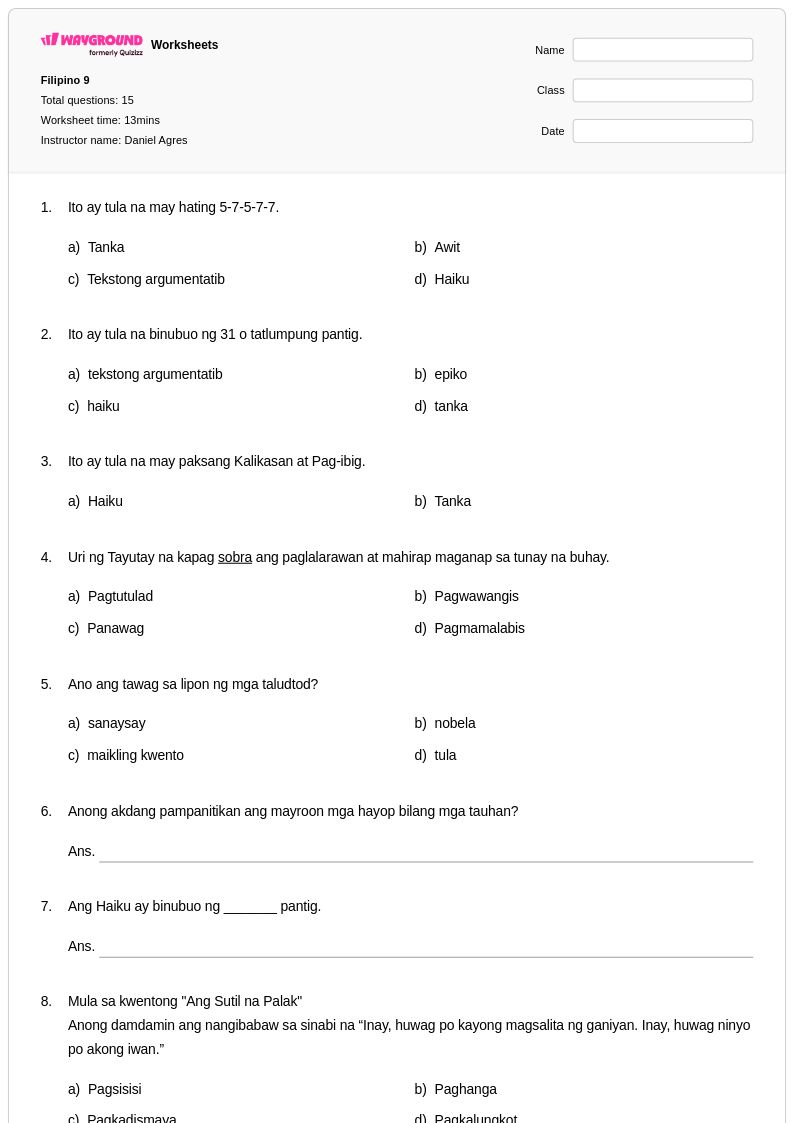
15 Q
9th
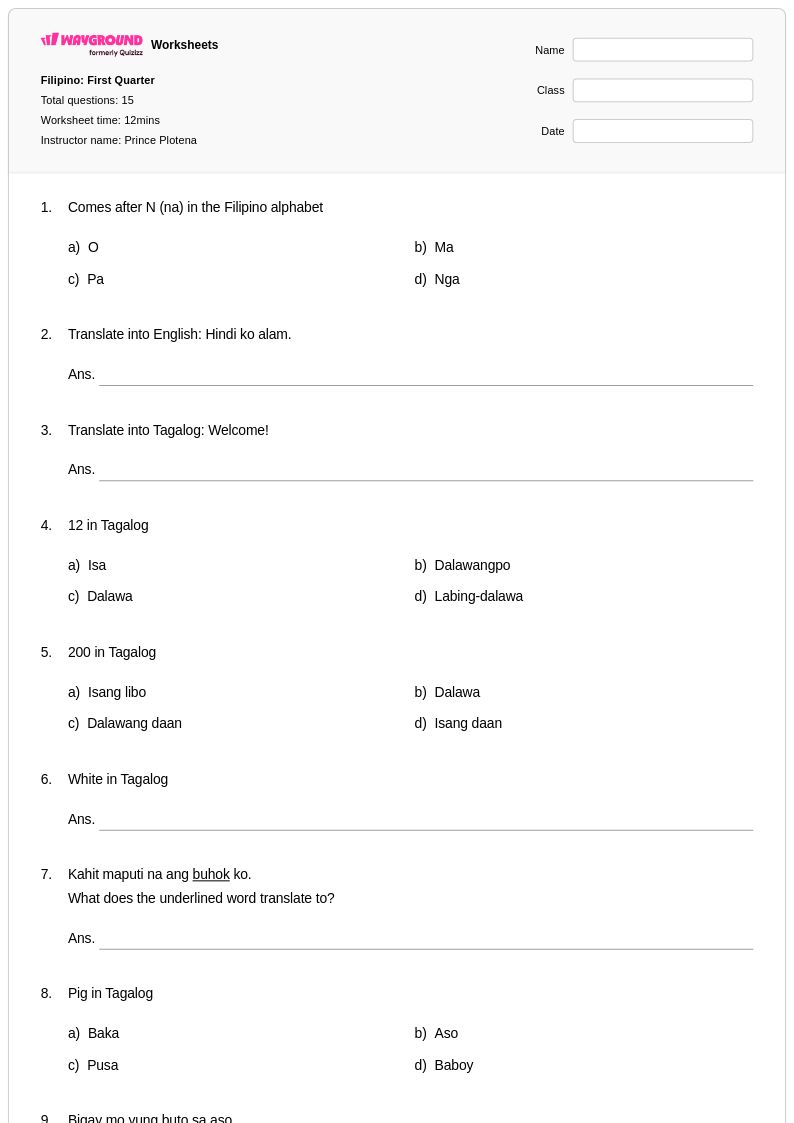
15 Q
KG
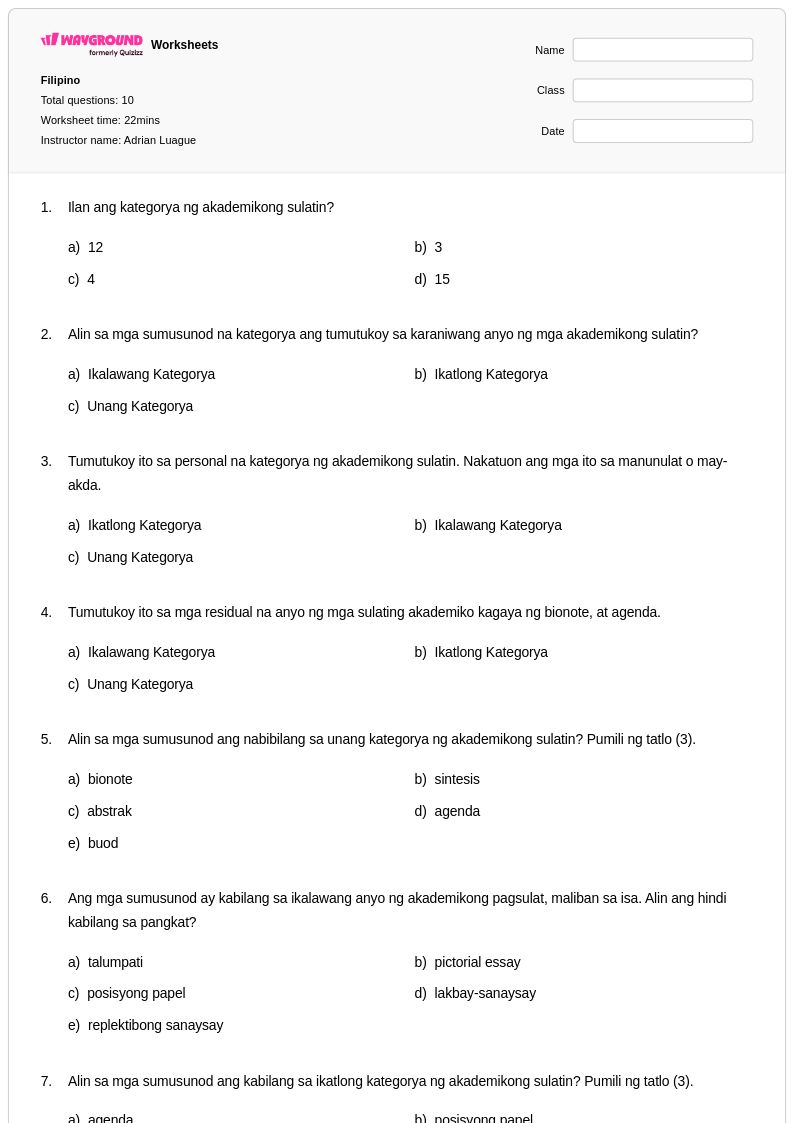
10 Q
9th - Uni
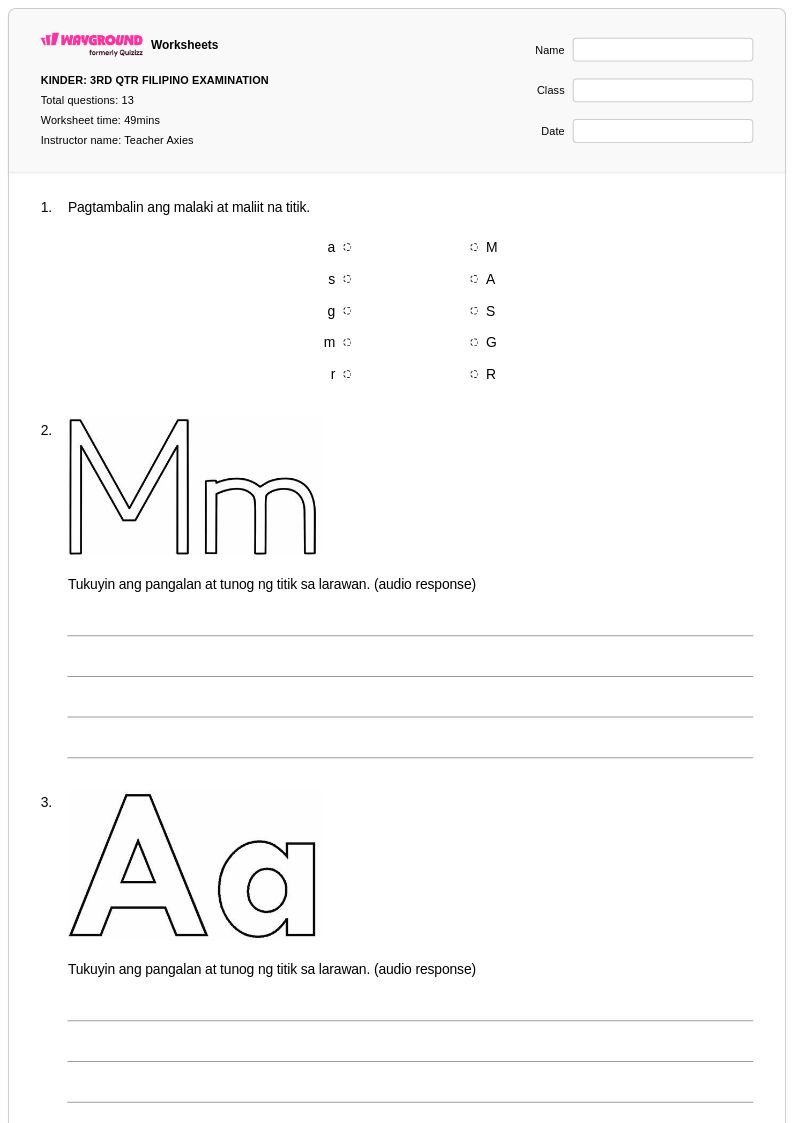
13 Q
KG
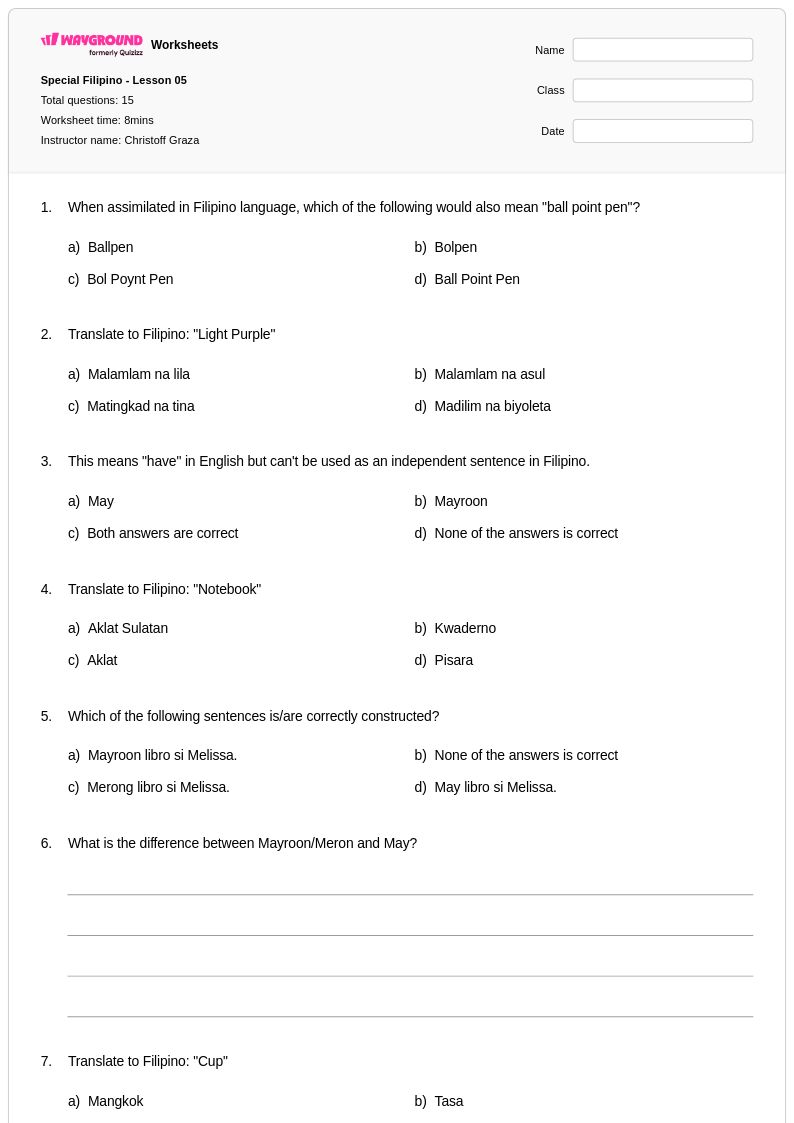
15 Q
Uni
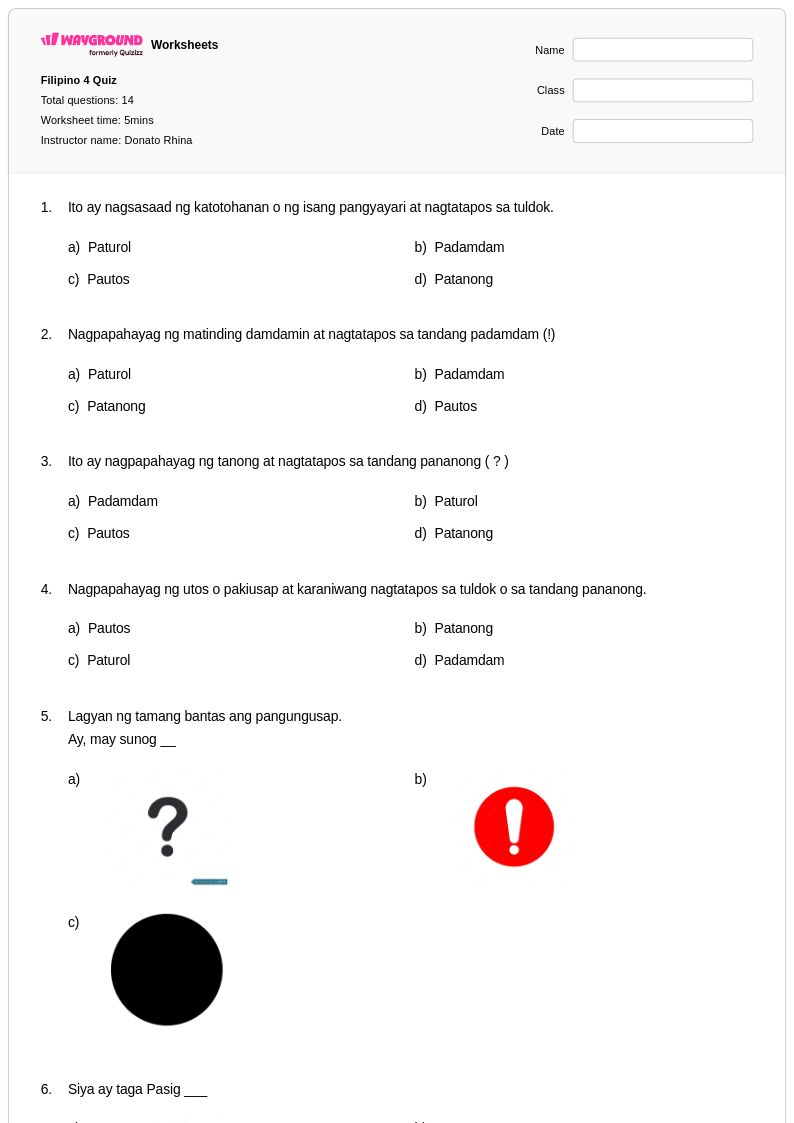
14 Q
4th
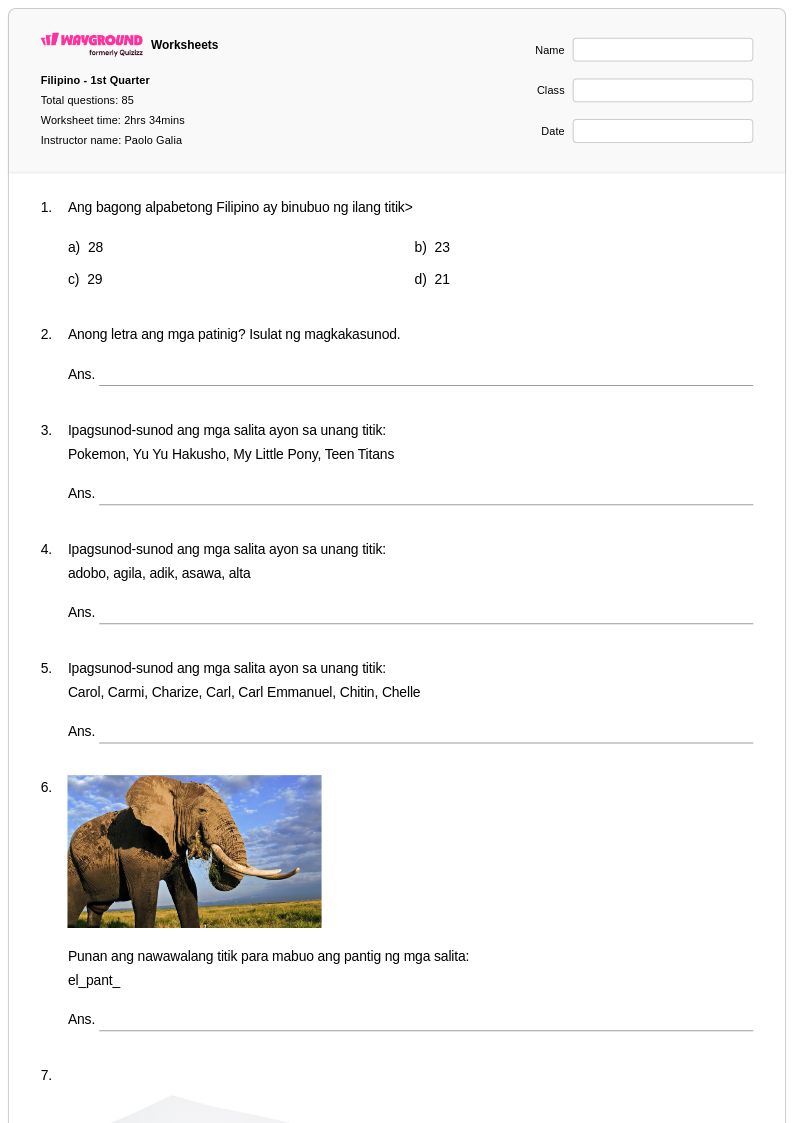
85 Q
2nd
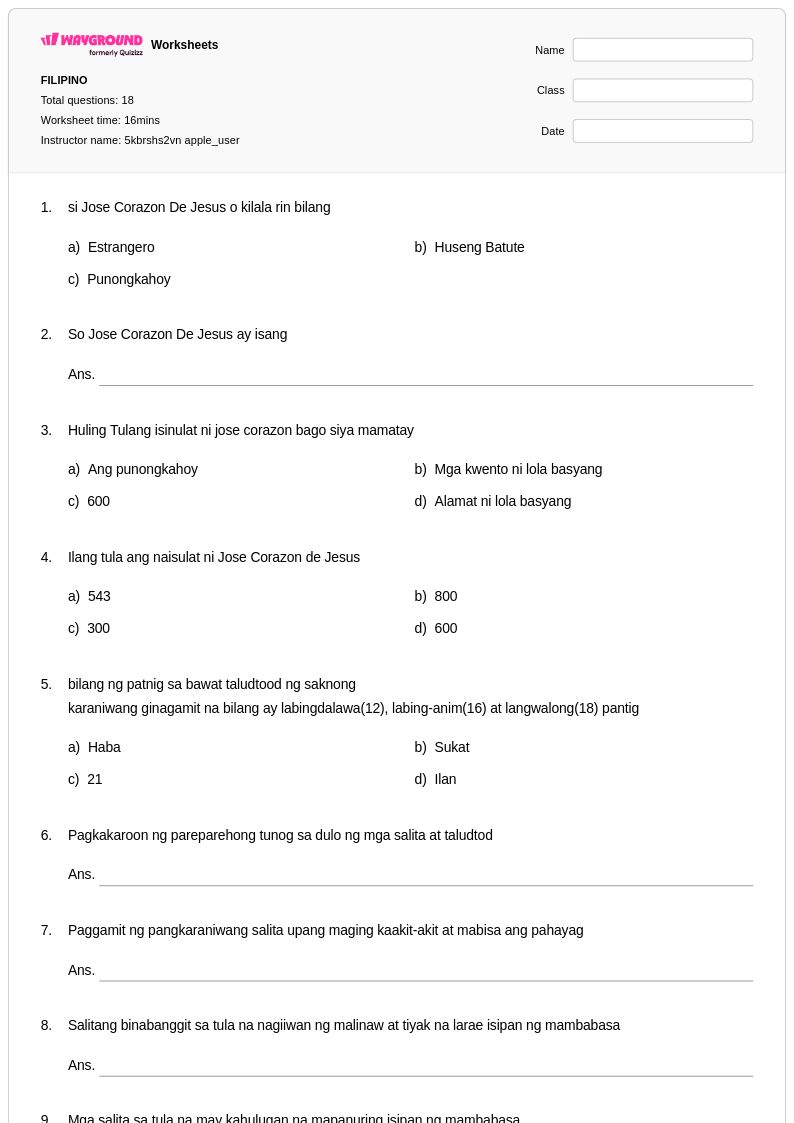
18 Q
8th
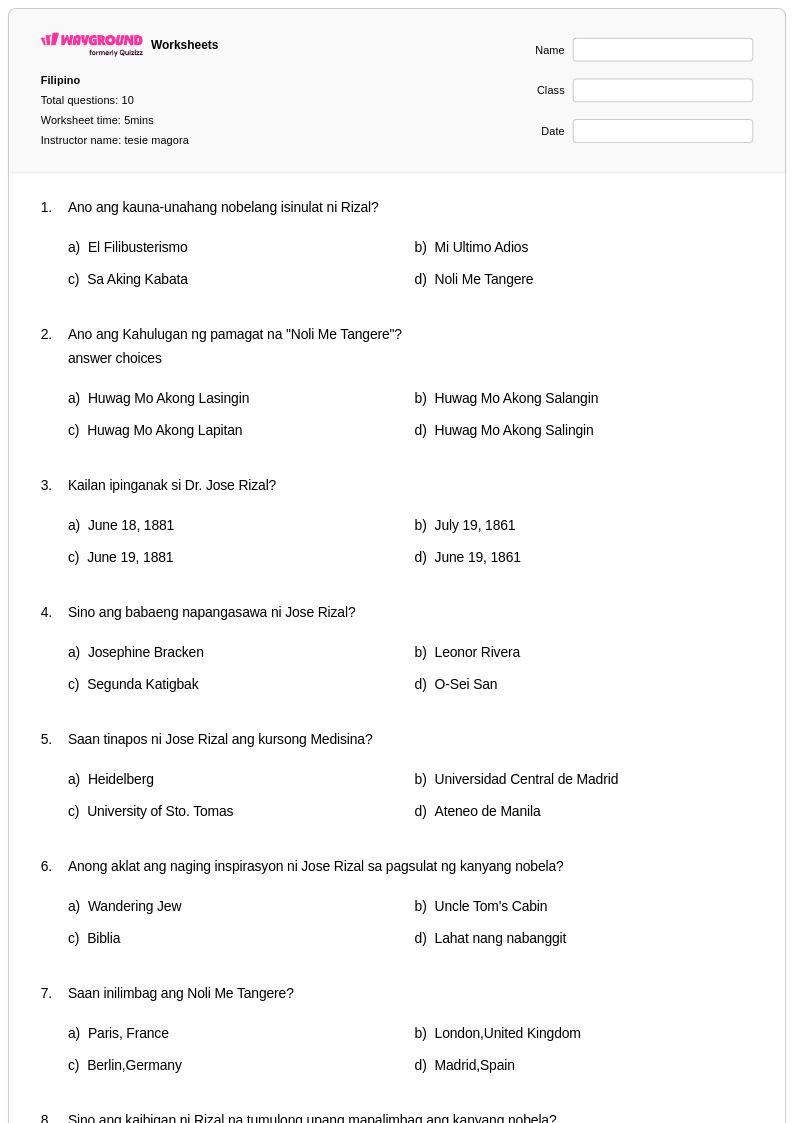
10 Q
9th
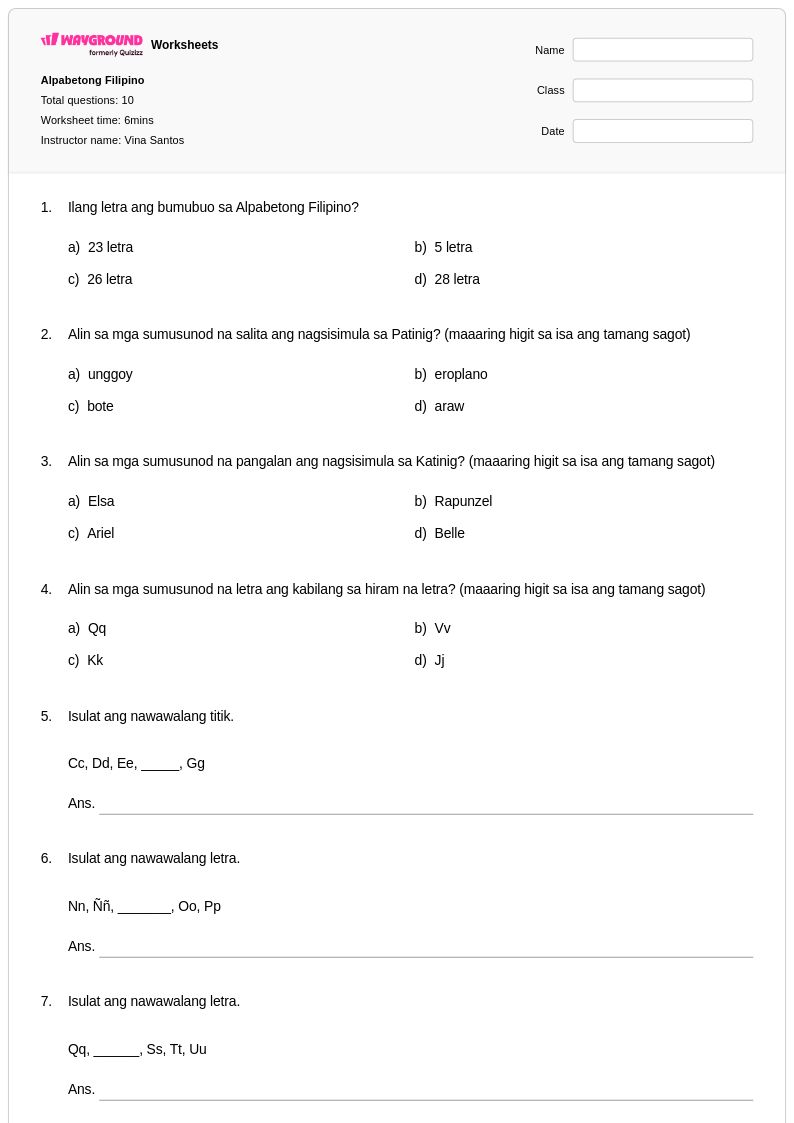
10 Q
2nd
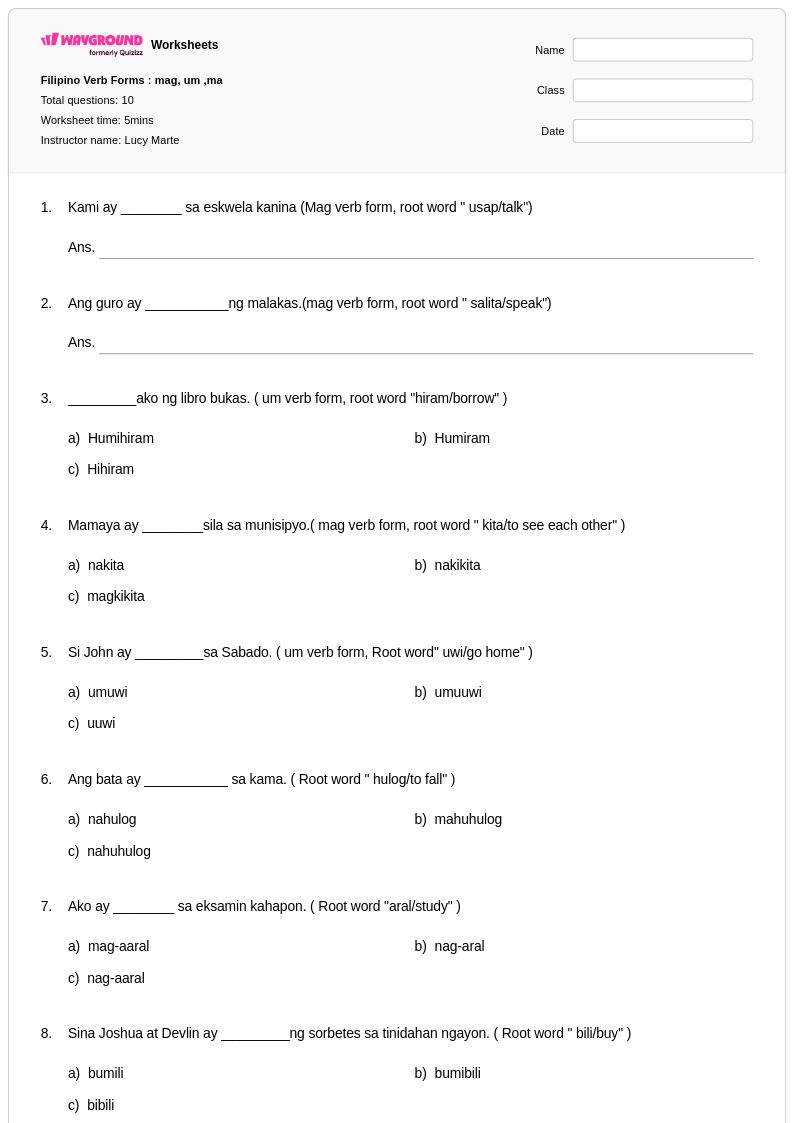
10 Q
10th - 12th
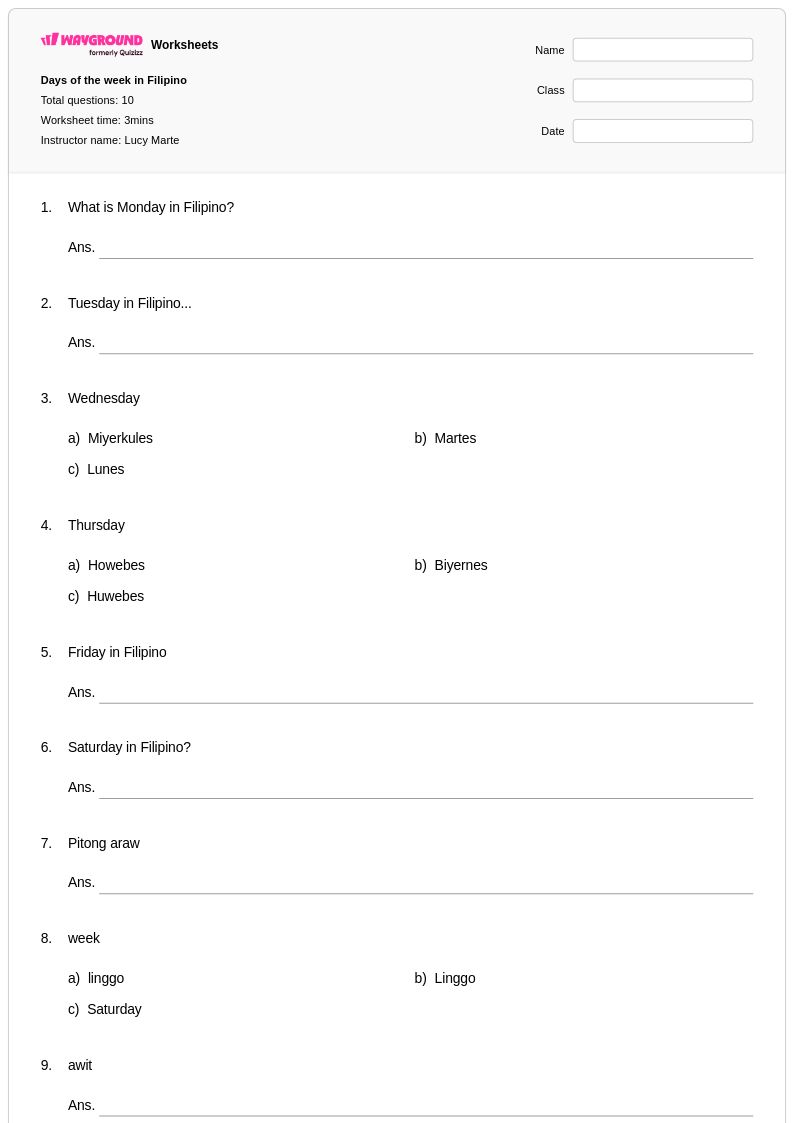
10 Q
8th - 12th
19 Q
8th
20 Q
8th
15 Q
6th
10 Q
5th
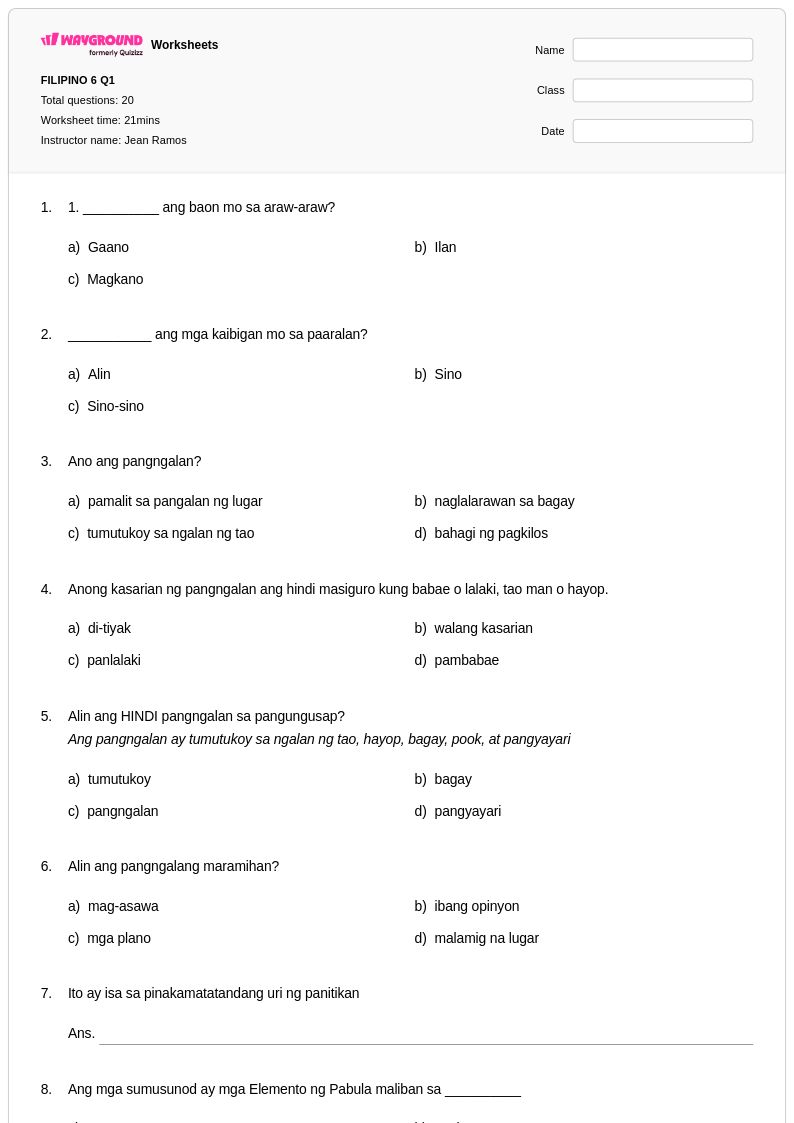
20 Q
4th - 7th
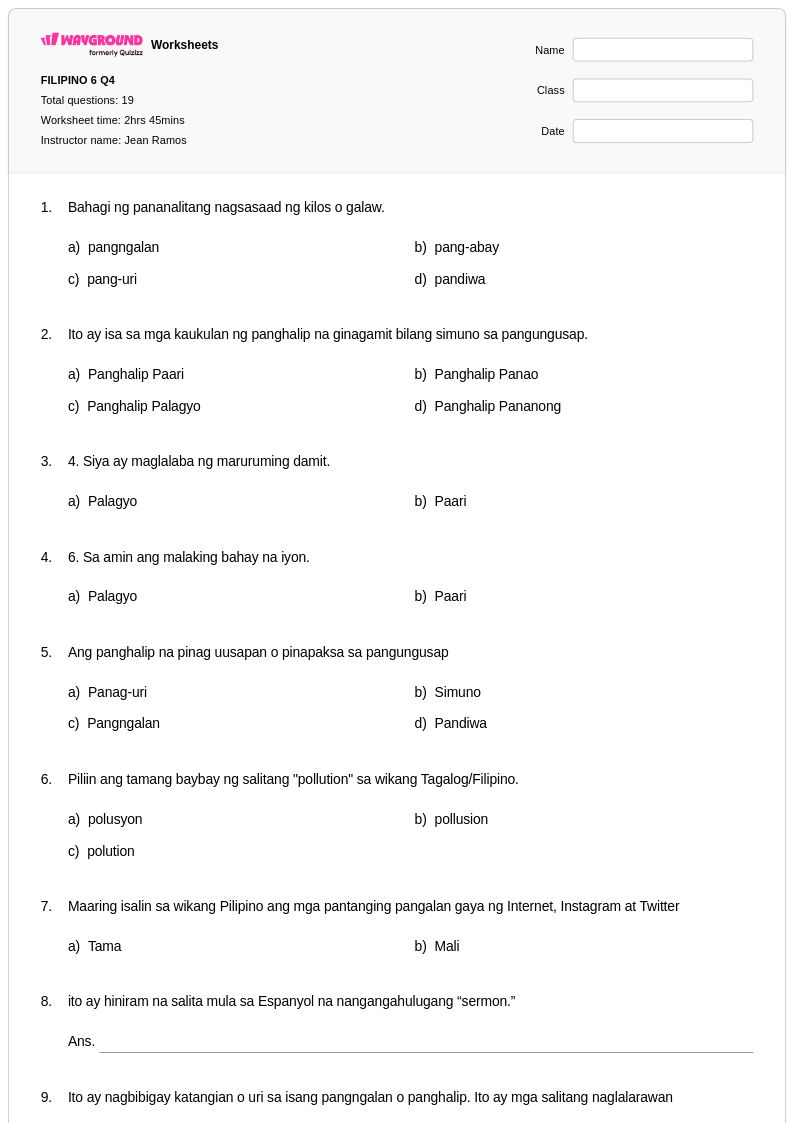
19 Q
5th - 7th
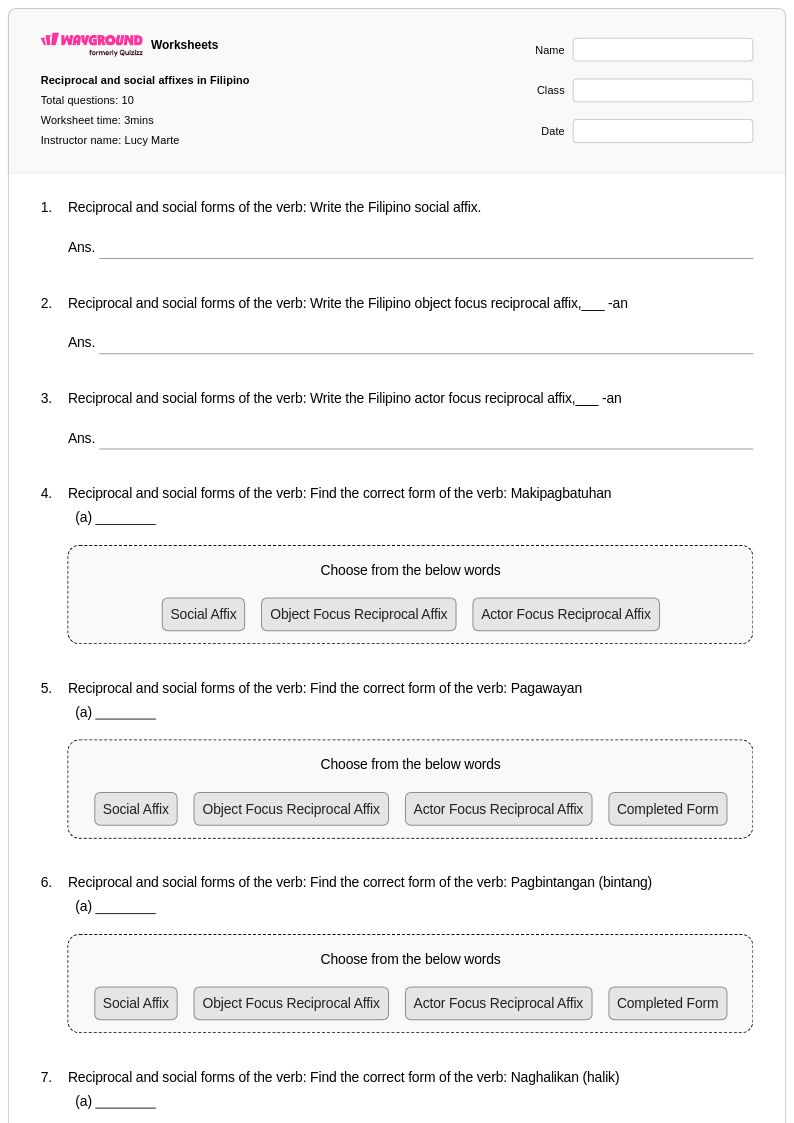
10 Q
9th - 12th
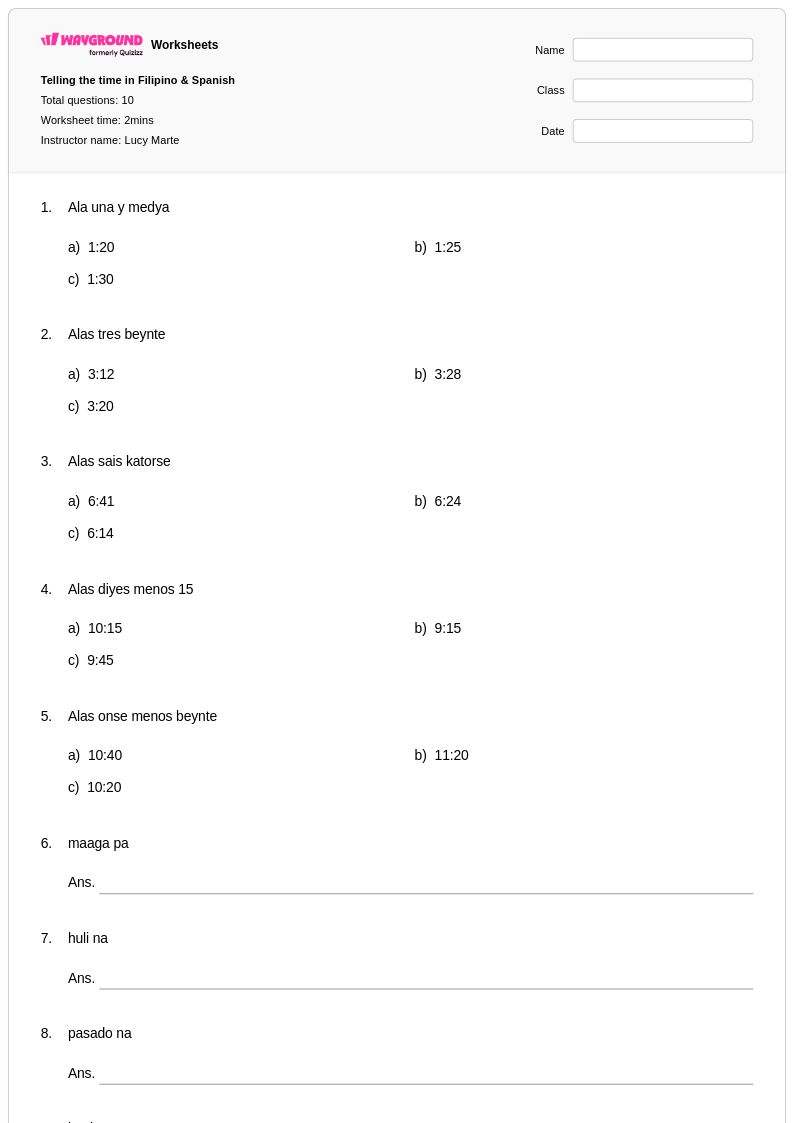
10 Q
9th - 12th
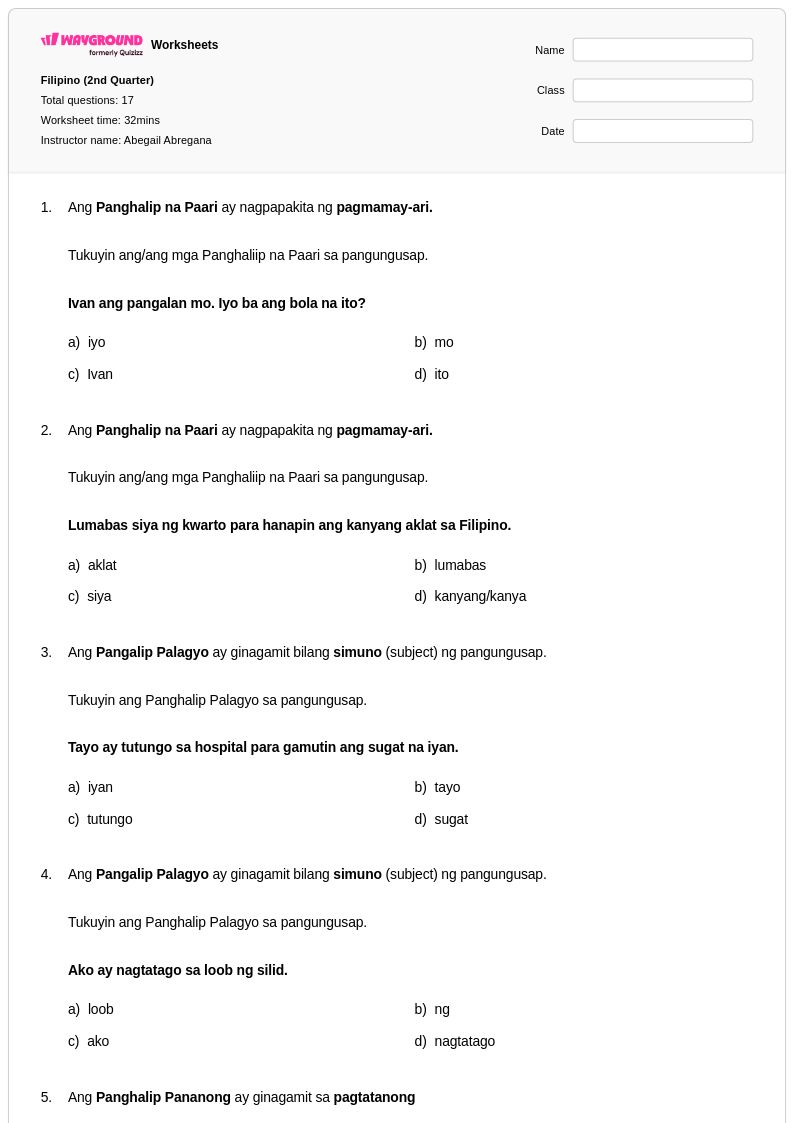
17 Q
1st
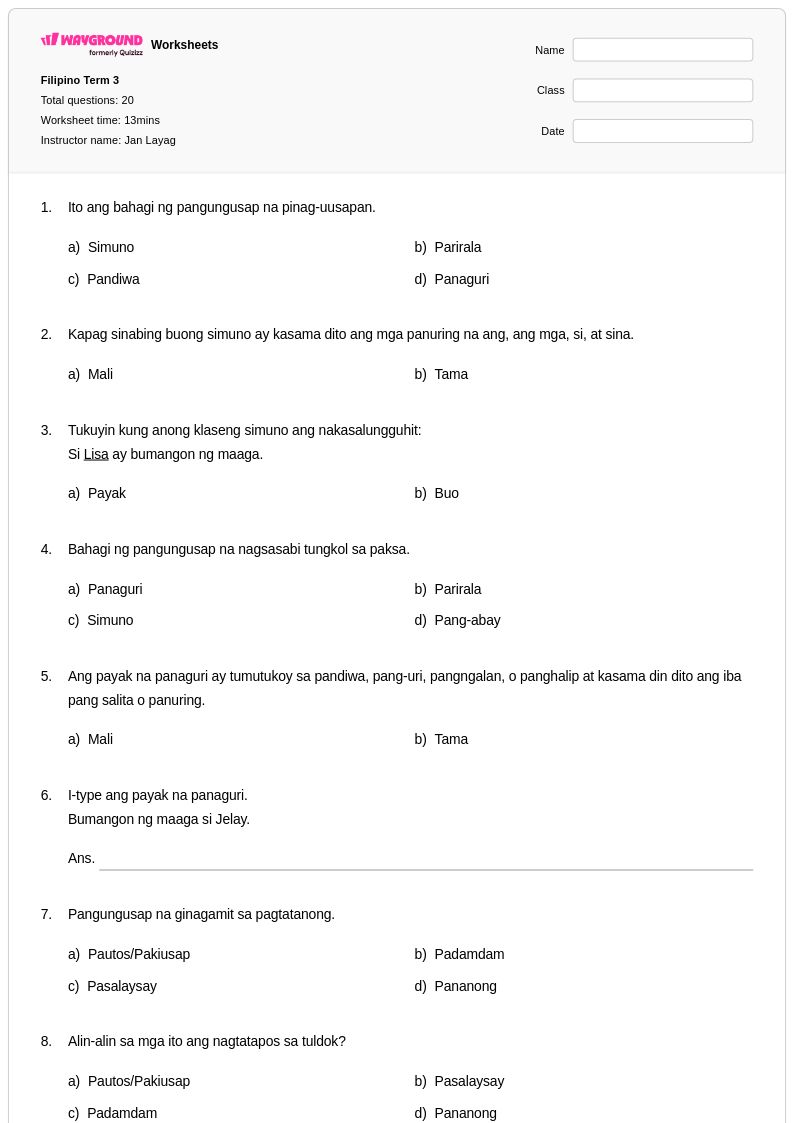
20 Q
4th
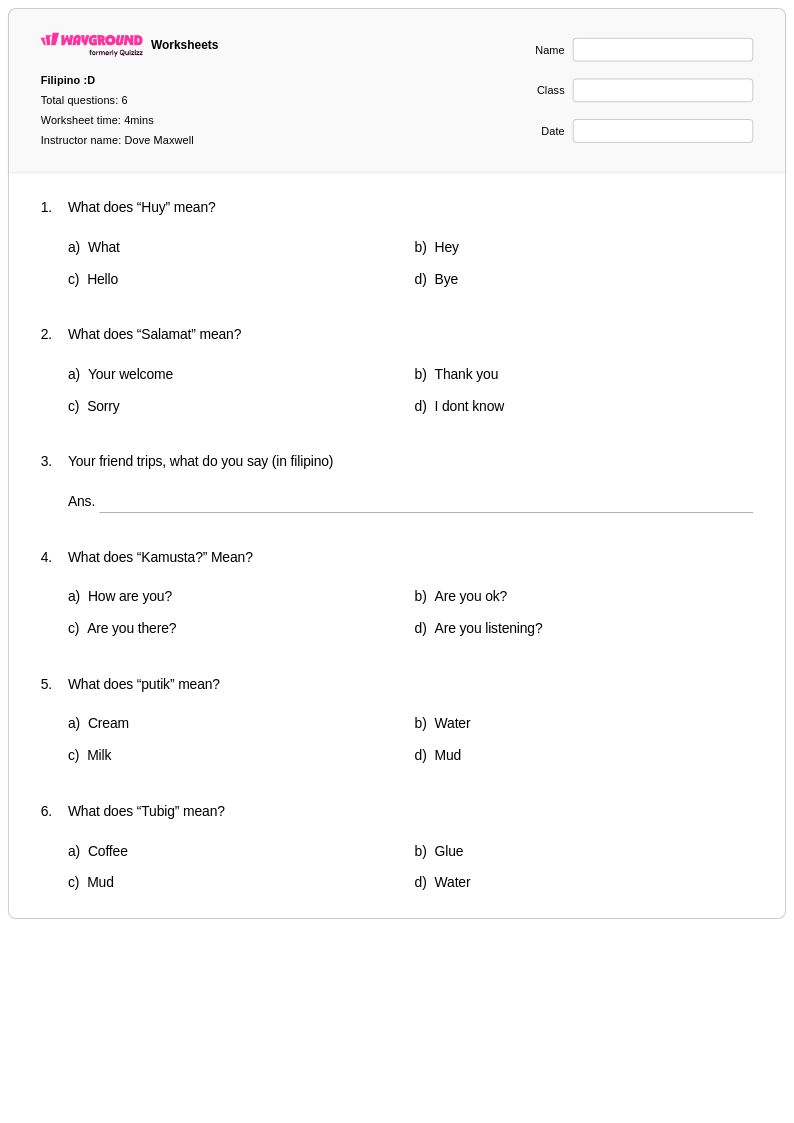
6 Q
12th
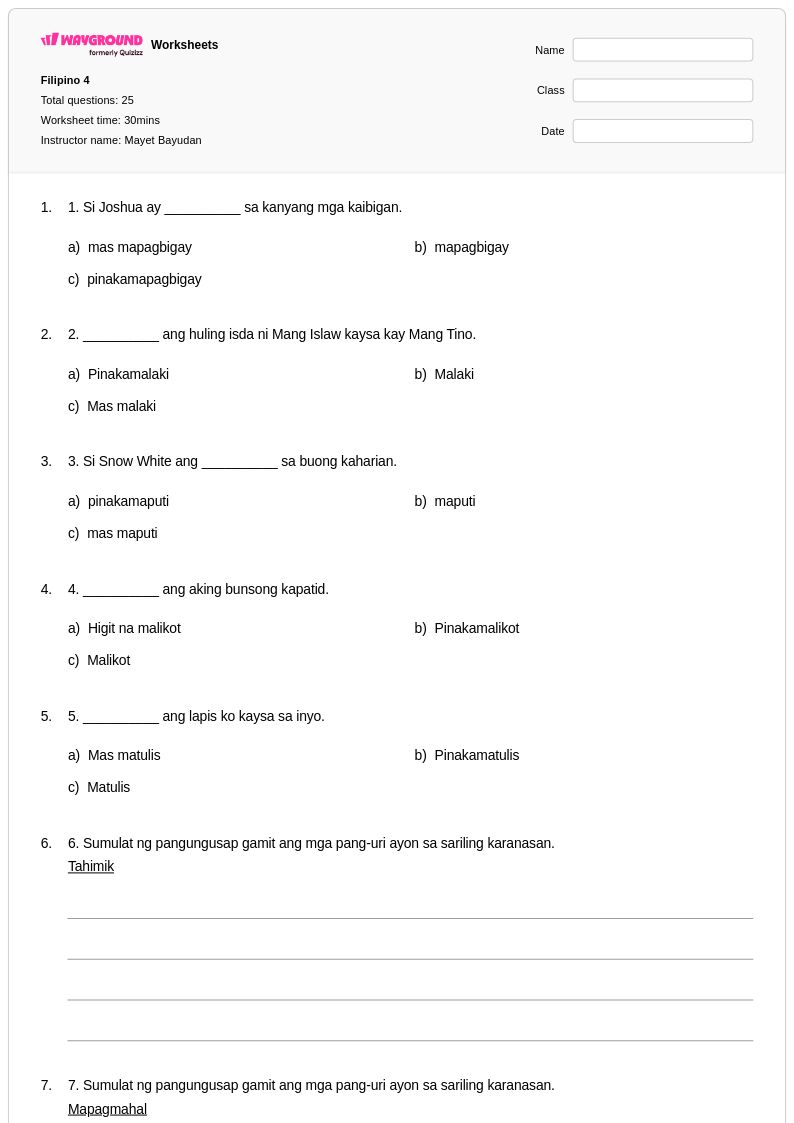
25 Q
4th
Explore Filipino Worksheets by Grades
Explore Other Subject Worksheets for kindergarten
Explore printable Filipino worksheets for Kindergarten
Filipino language worksheets for kindergarten students available through Wayground (formerly Quizizz) provide young learners with foundational exposure to one of the Philippines' official languages through age-appropriate activities and engaging visual content. These carefully designed printables focus on essential early language skills including basic vocabulary recognition, simple greetings, common household items, family terms, and fundamental pronunciation patterns that form the building blocks of Filipino language acquisition. Each worksheet incorporates colorful illustrations and interactive elements that capture kindergarteners' attention while introducing them to Filipino letters, sounds, and cultural context through practice problems that emphasize repetition and recognition. The comprehensive collection includes materials with answer keys to support both classroom instruction and home practice, ensuring that teachers and parents can confidently guide students through their initial Filipino language learning journey with free, accessible resources in convenient pdf format.
Wayground (formerly Quizizz) empowers educators with an extensive library of millions of teacher-created Filipino language resources specifically curated for kindergarten-level instruction, featuring robust search and filtering capabilities that allow teachers to quickly locate materials aligned with their curriculum goals and student needs. The platform's differentiation tools enable instructors to customize worksheets for varying skill levels within their classrooms, while the flexible format options provide both printable and digital versions to accommodate diverse learning environments and teaching preferences. Teachers can efficiently plan comprehensive Filipino language lessons by accessing materials designed for skill practice, remediation for struggling learners, and enrichment opportunities for advanced students, all while maintaining consistency with early childhood language development standards. This extensive resource collection streamlines lesson preparation and provides educators with reliable, professionally developed content that supports effective Filipino language instruction in kindergarten classrooms across diverse educational settings.
FAQs
How do I teach Filipino vocabulary to beginners?
What are the most effective exercises for practicing Filipino grammar?
What mistakes do students commonly make when learning Filipino?
How can I differentiate Filipino language instruction for students at different proficiency levels?
How do I use Filipino worksheets from Wayground in my classroom?
How do I incorporate Filipino cultural concepts into language lessons?