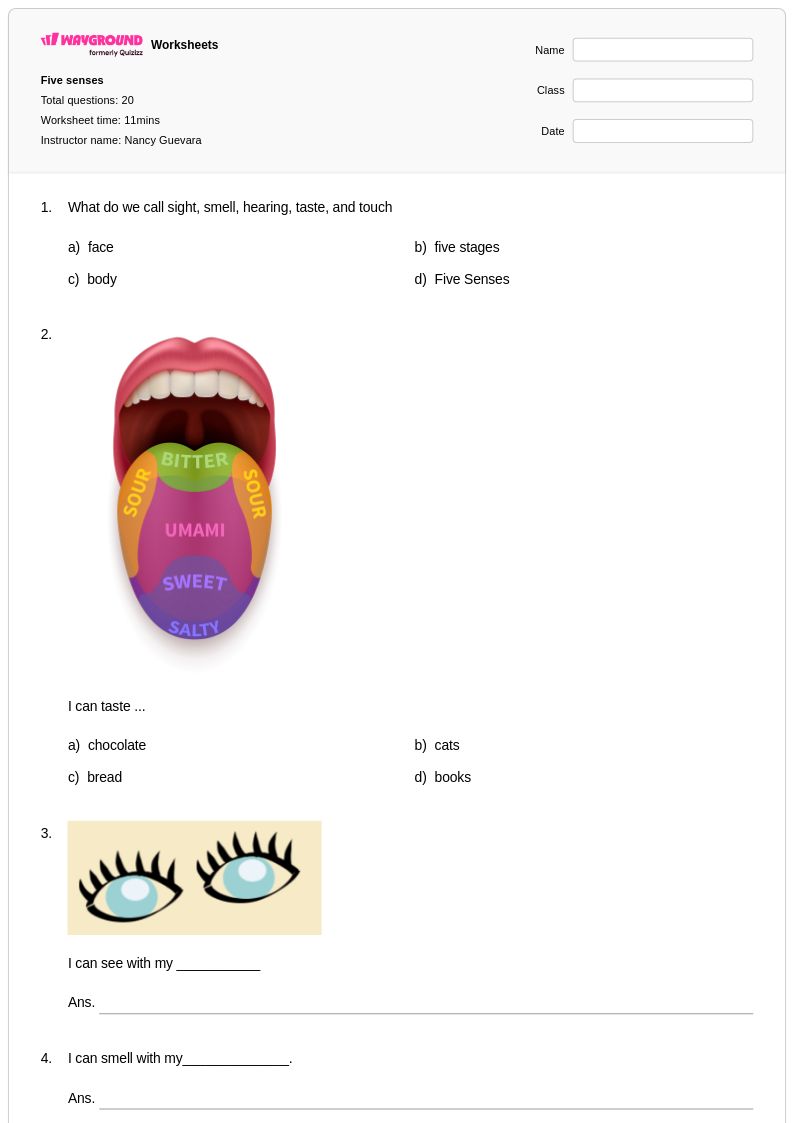
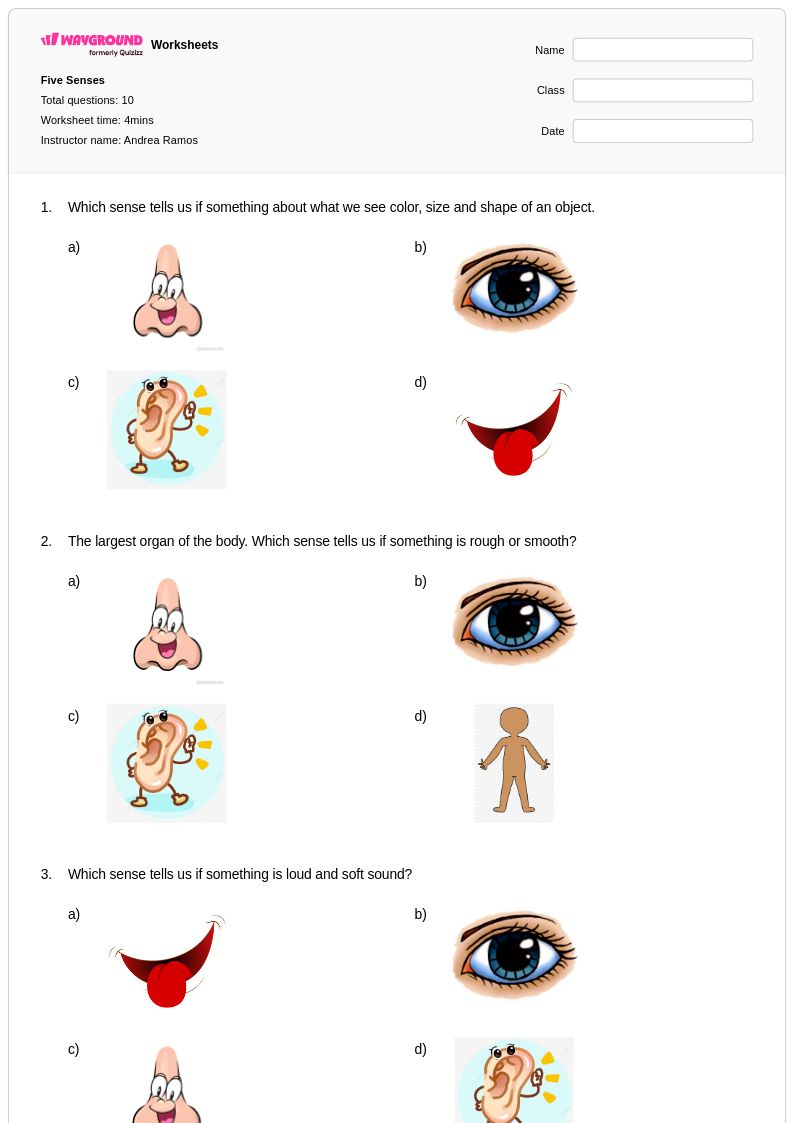
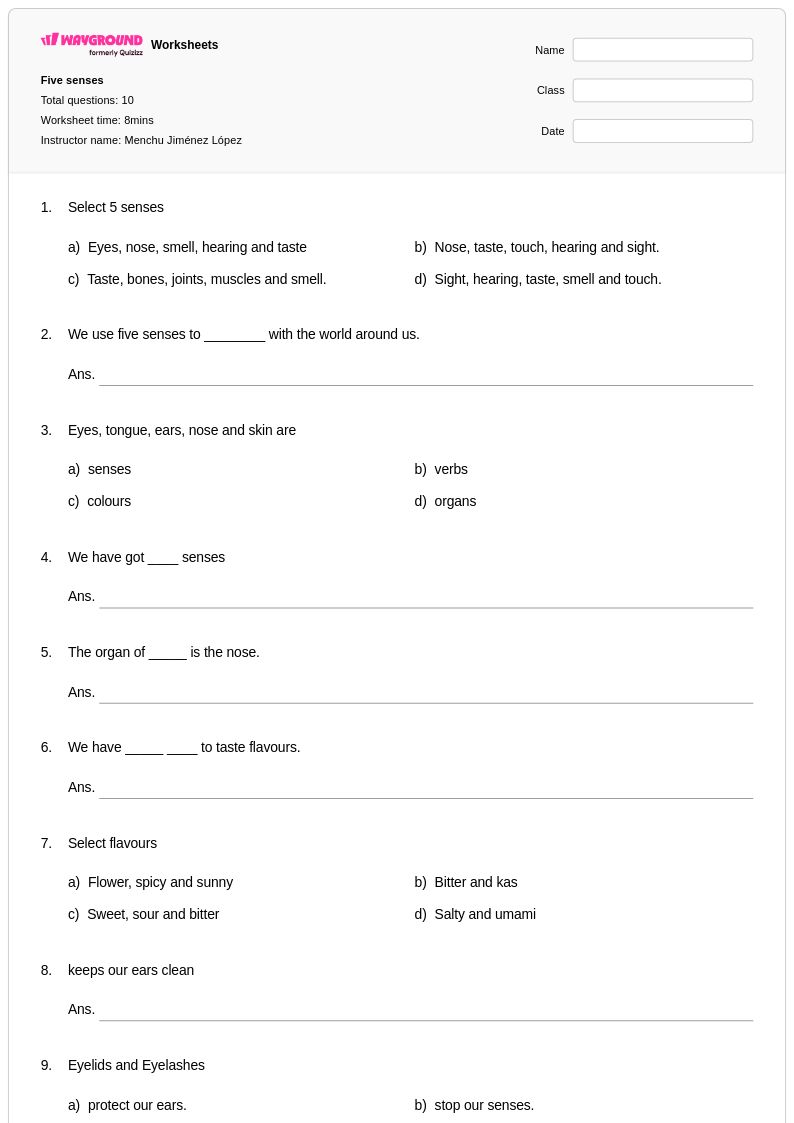
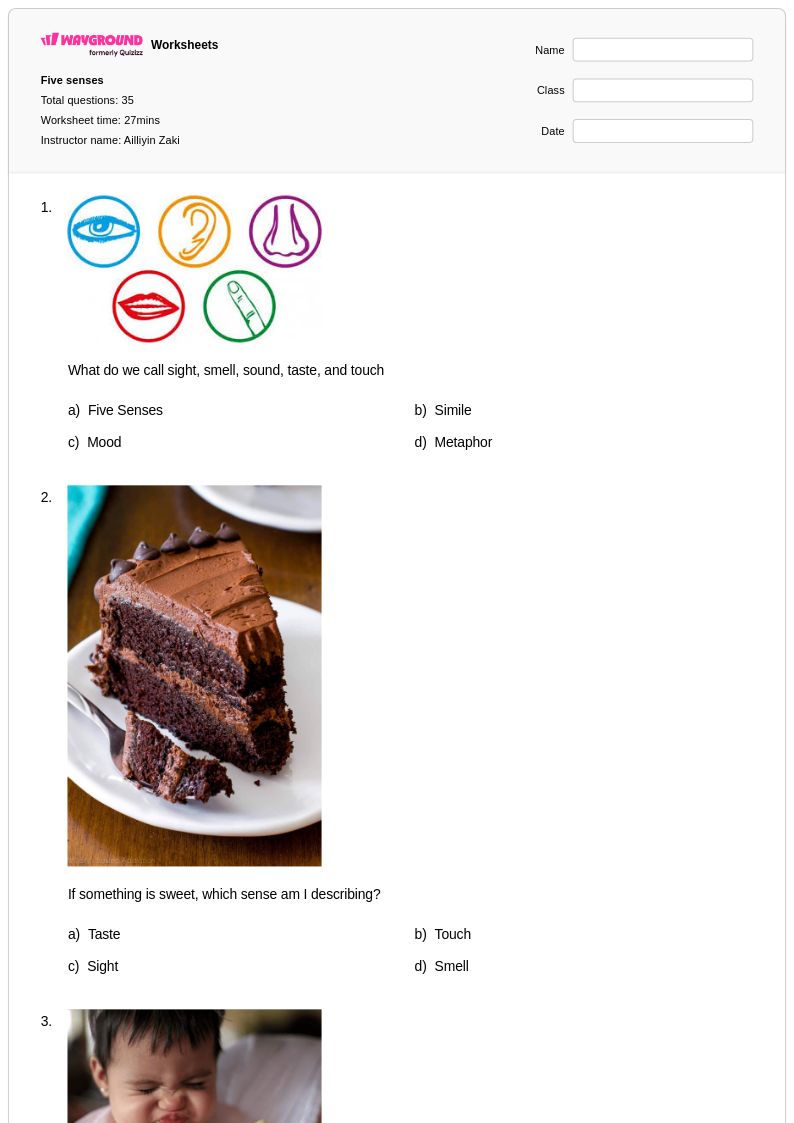
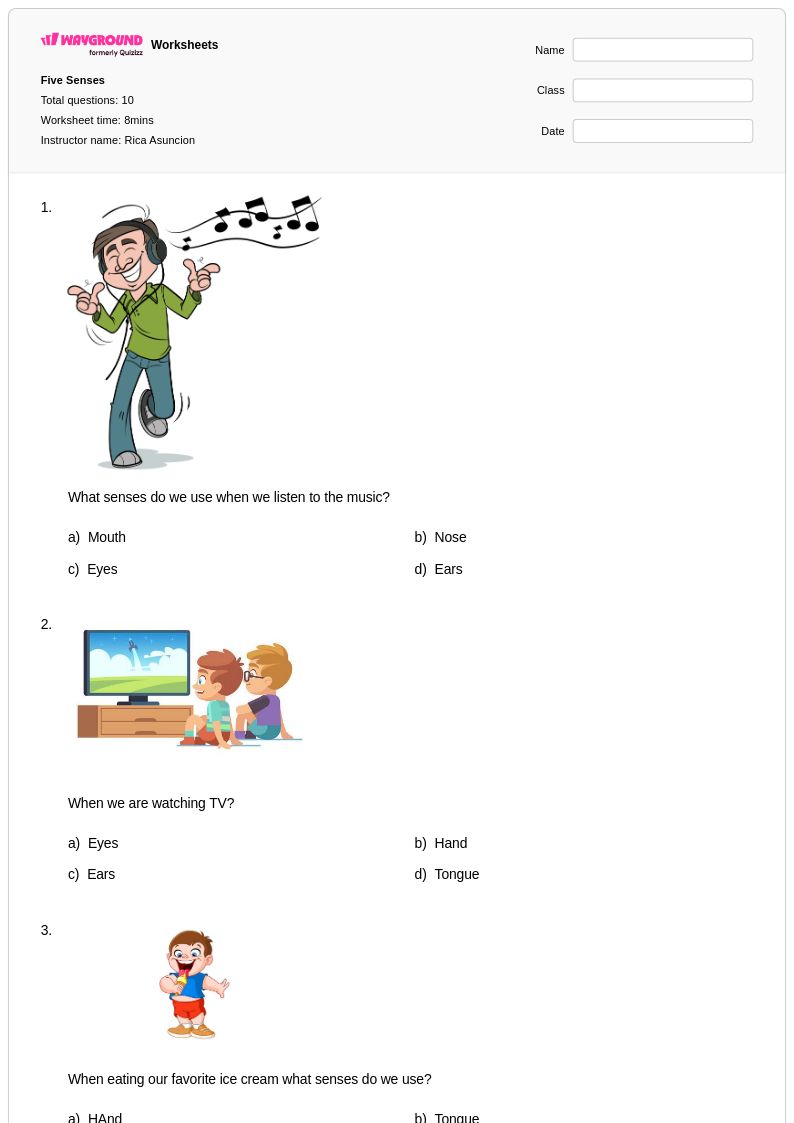
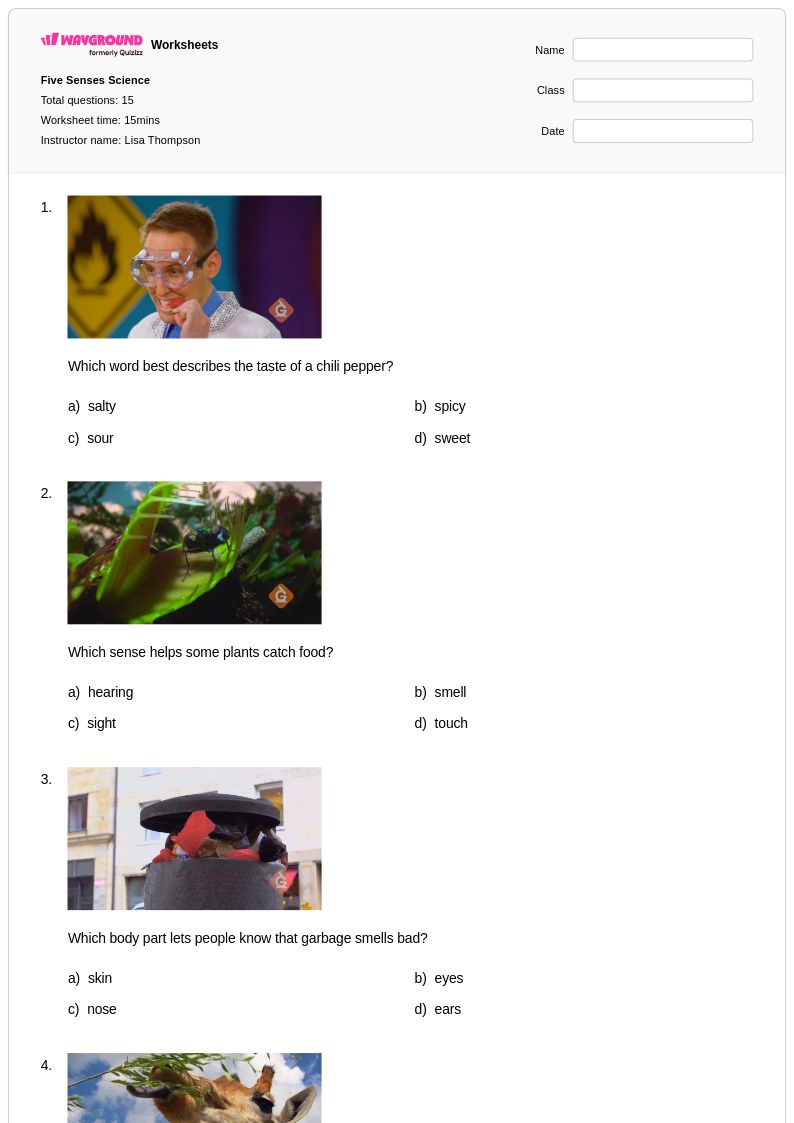
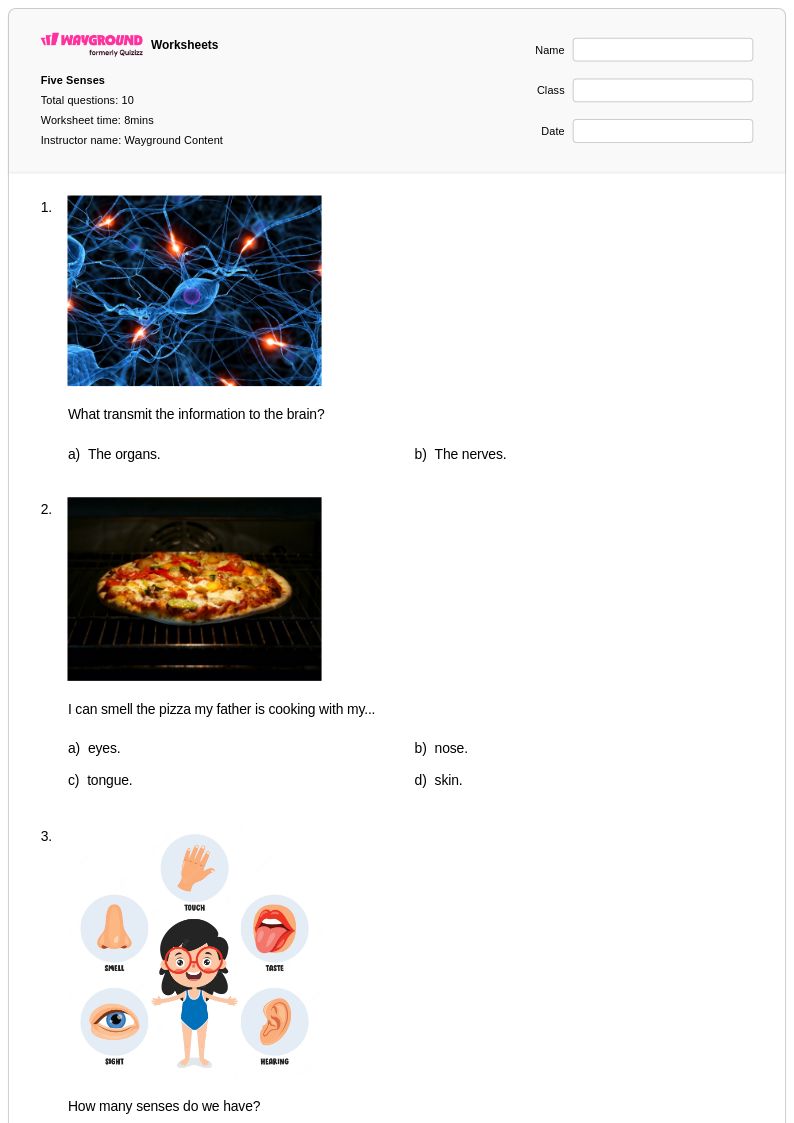
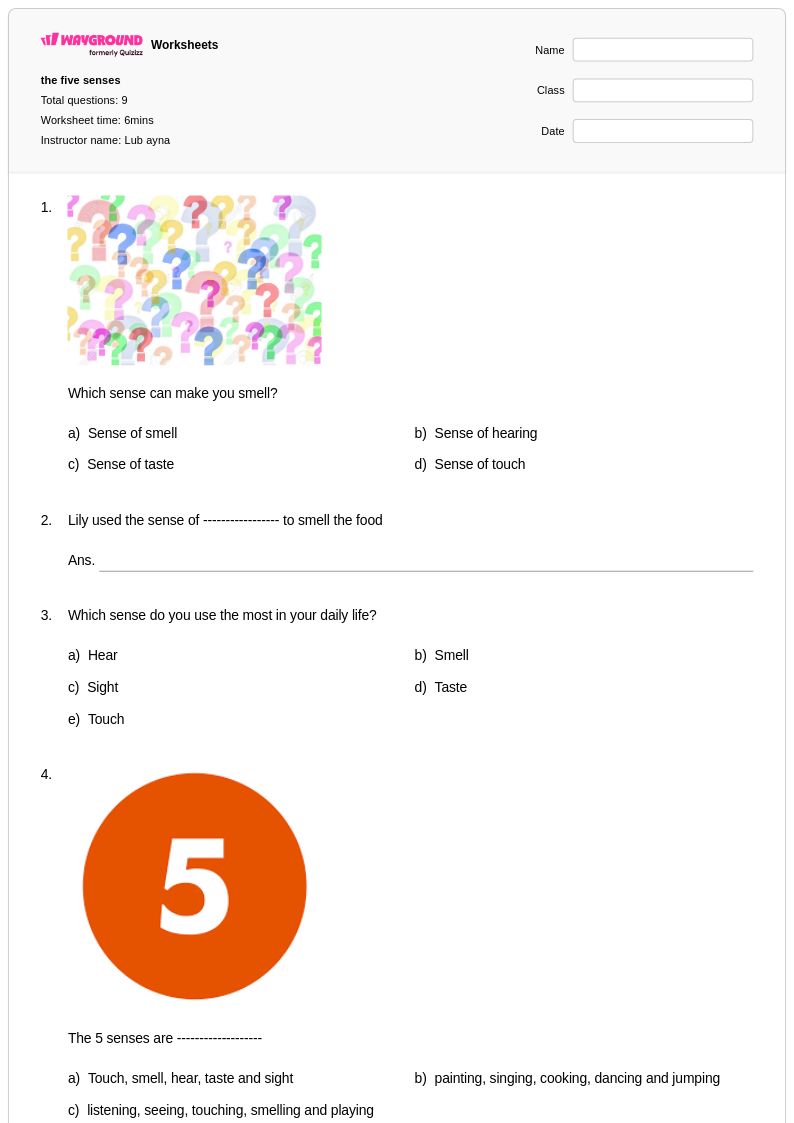
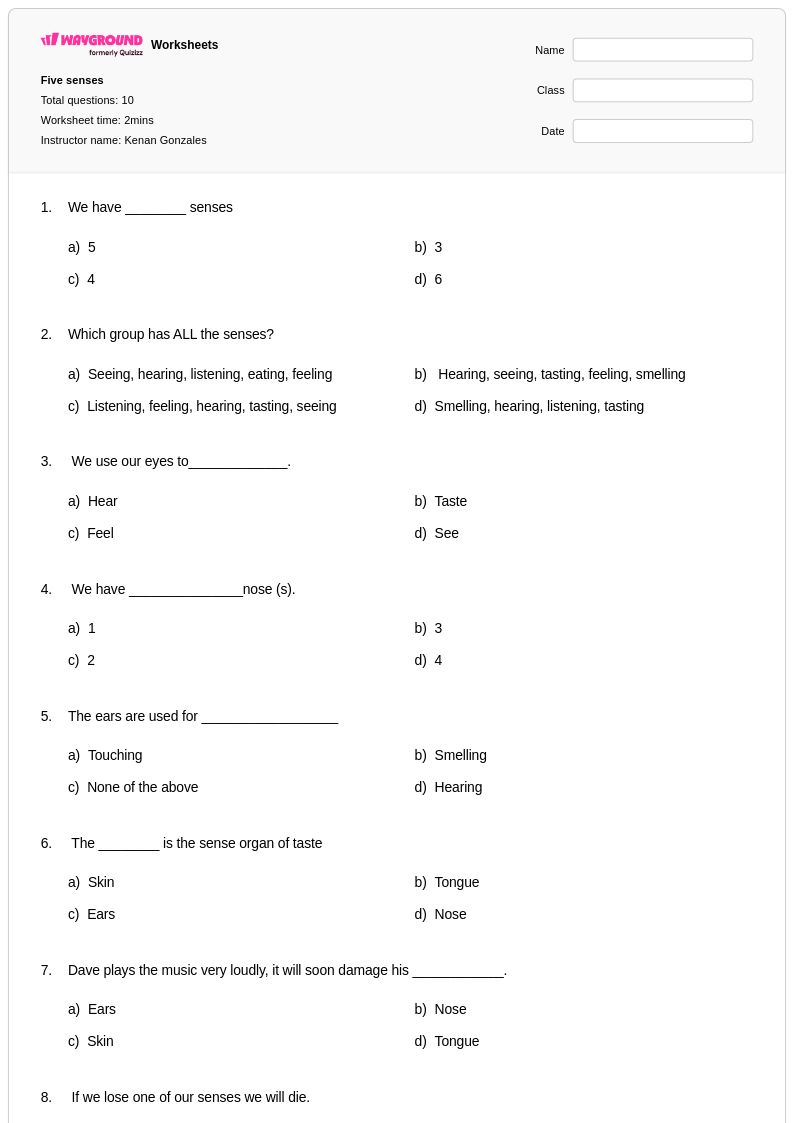
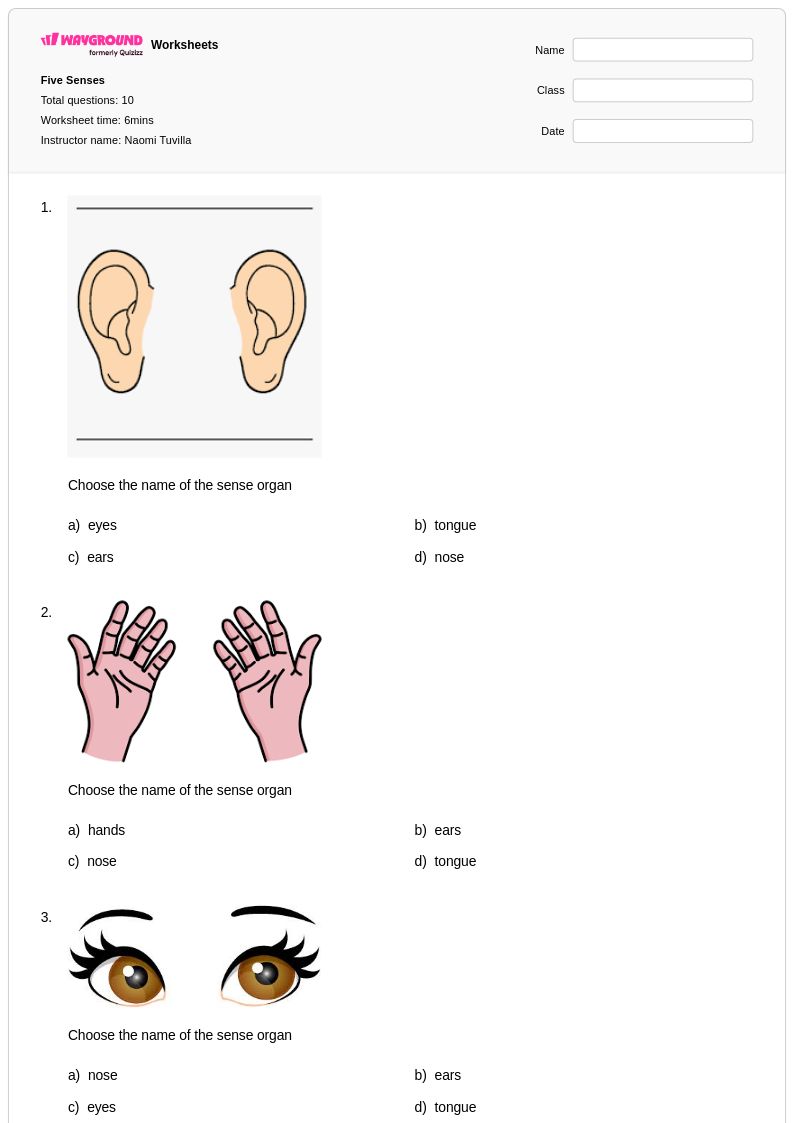
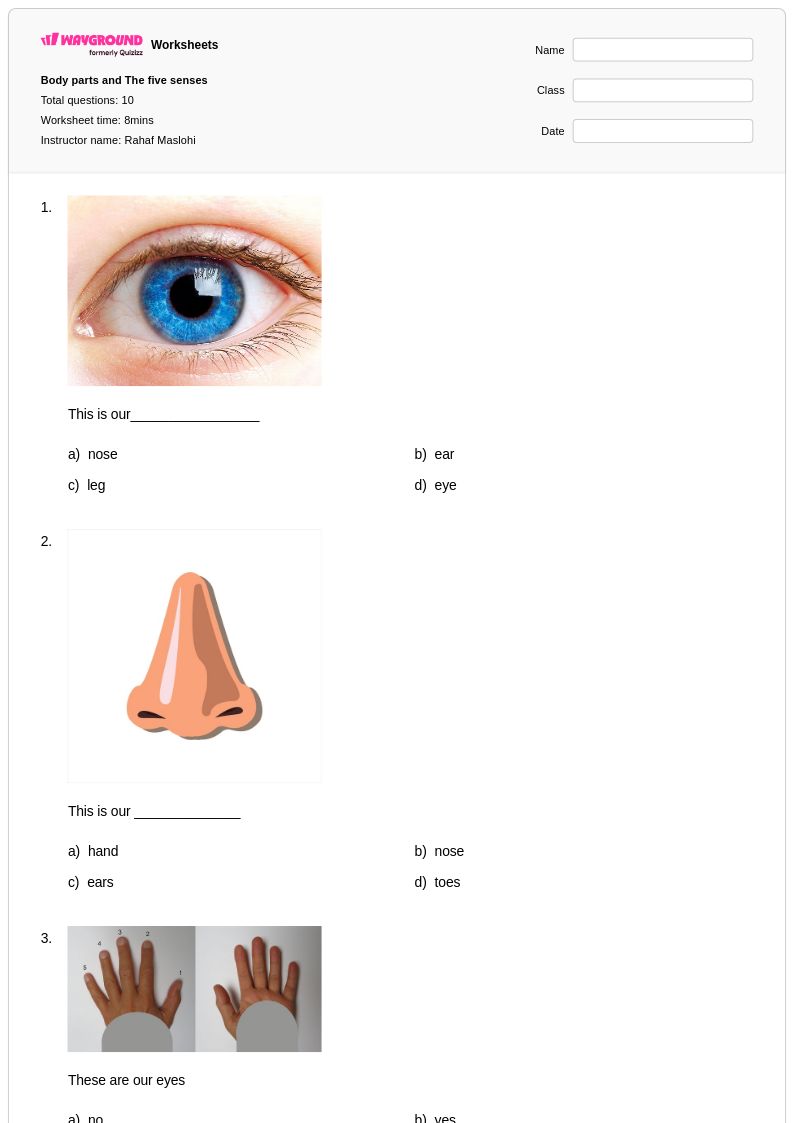
Class 3 Five Senses printable worksheets and free PDF practice problems help students explore sight, hearing, smell, taste, and touch through engaging activities with complete answer keys.
Explore printable Five Senses worksheets for Class 3
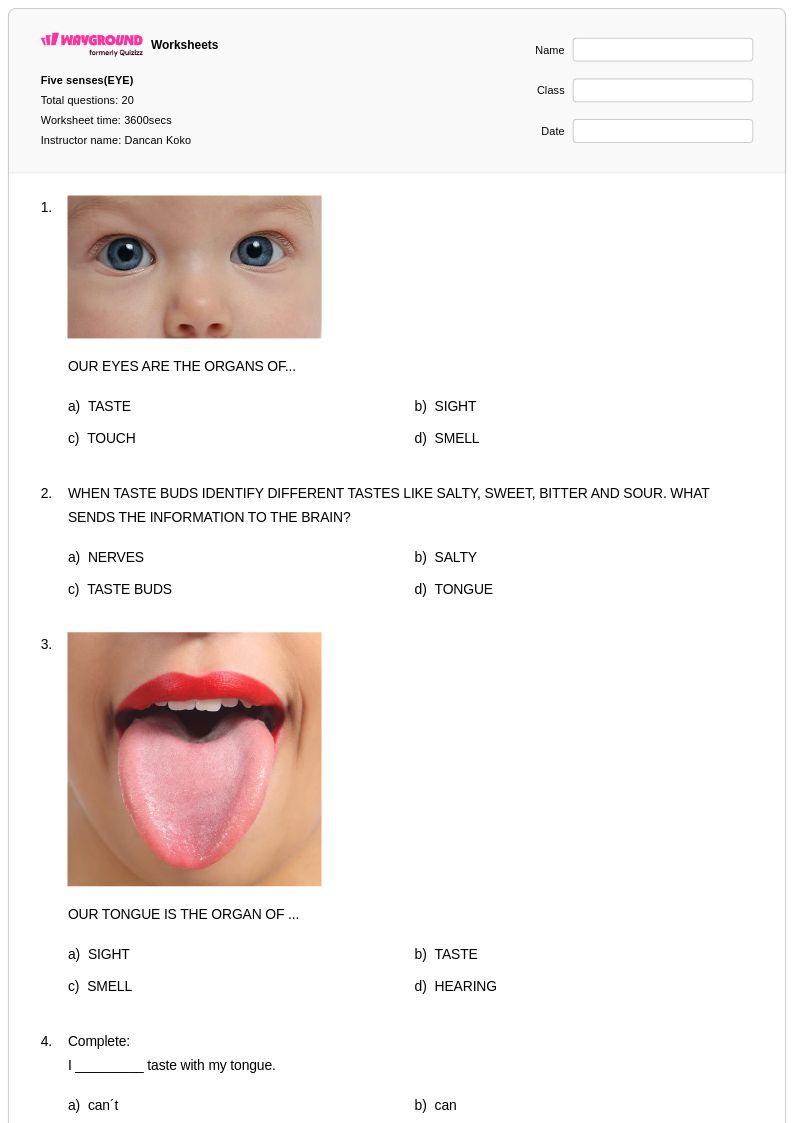
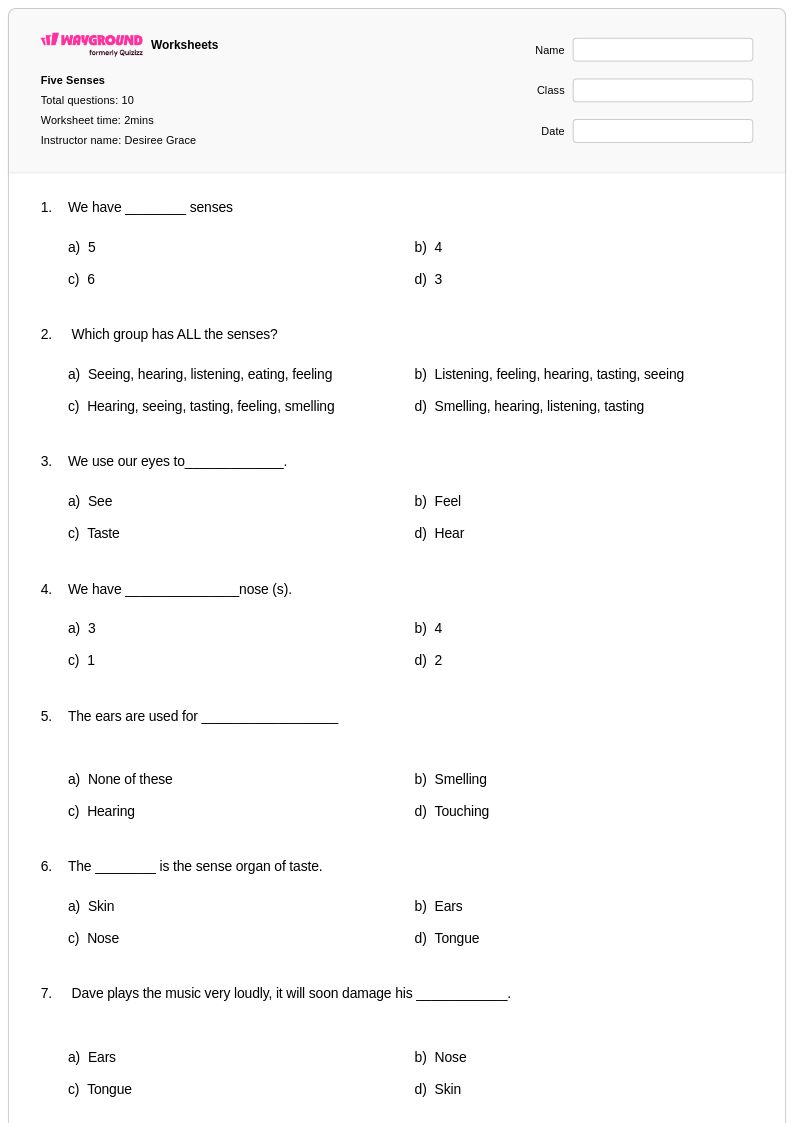
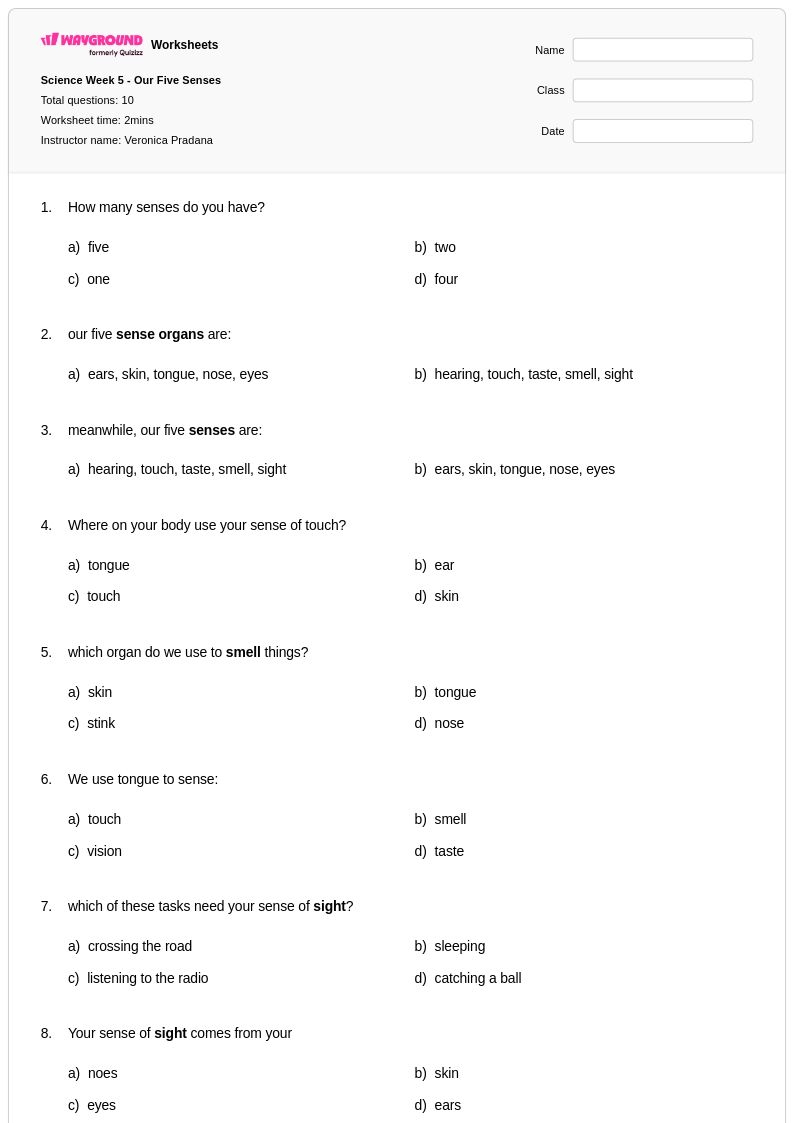
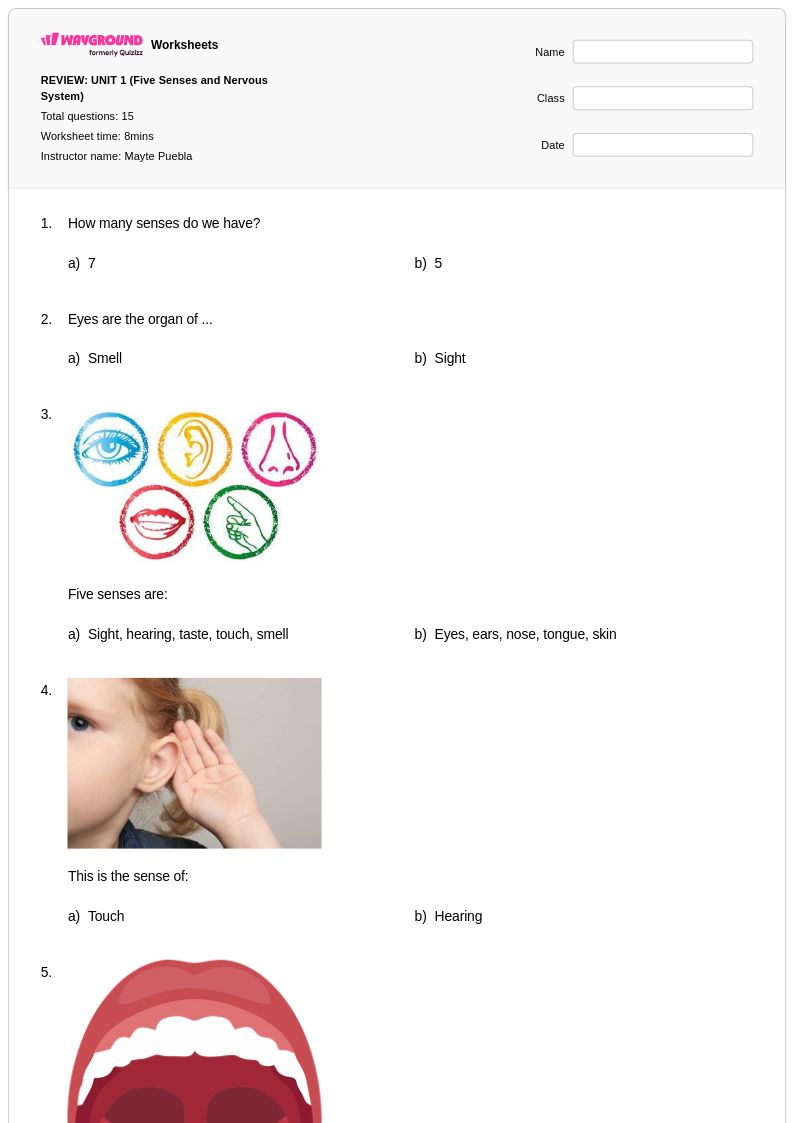
Five senses worksheets for Class 3 students available through Wayground (formerly Quizizz) provide comprehensive exploration of how humans perceive and interact with their environment through sight, hearing, smell, taste, and touch. These educational resources strengthen critical observation skills, scientific vocabulary development, and the ability to classify sensory experiences while building foundational understanding of human biology. The collection includes engaging practice problems that challenge students to identify which sense organs detect specific stimuli, match sensory descriptors to appropriate categories, and analyze real-world scenarios involving multiple senses. Teachers can access complete answer keys alongside each worksheet, with materials available as free printables in convenient pdf format for seamless classroom integration and homework assignments.
Wayground (formerly Quizizz) empowers educators with millions of teacher-created five senses resources that feature robust search and filtering capabilities, enabling quick identification of materials that align with specific curriculum standards and learning objectives. The platform's differentiation tools allow teachers to customize worksheets based on individual student needs, providing additional support for struggling learners while offering enrichment opportunities for advanced students. These versatile resources are available in both printable and digital formats, including downloadable pdf versions, making them ideal for traditional classroom instruction, remote learning environments, and hybrid teaching approaches. Teachers utilize these comprehensive worksheet collections for lesson planning, targeted skill practice, remediation sessions, and enrichment activities that deepen students' understanding of sensory perception and scientific inquiry processes.
FAQs
How do I teach the five senses to young students?
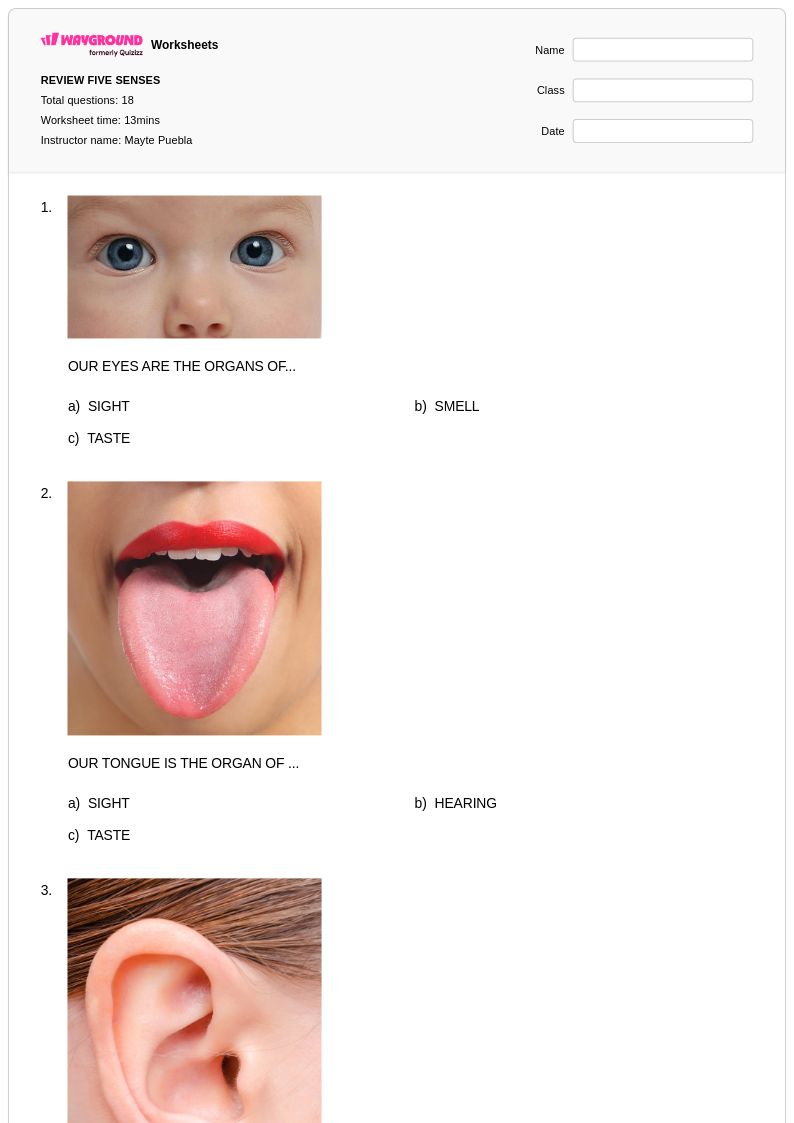
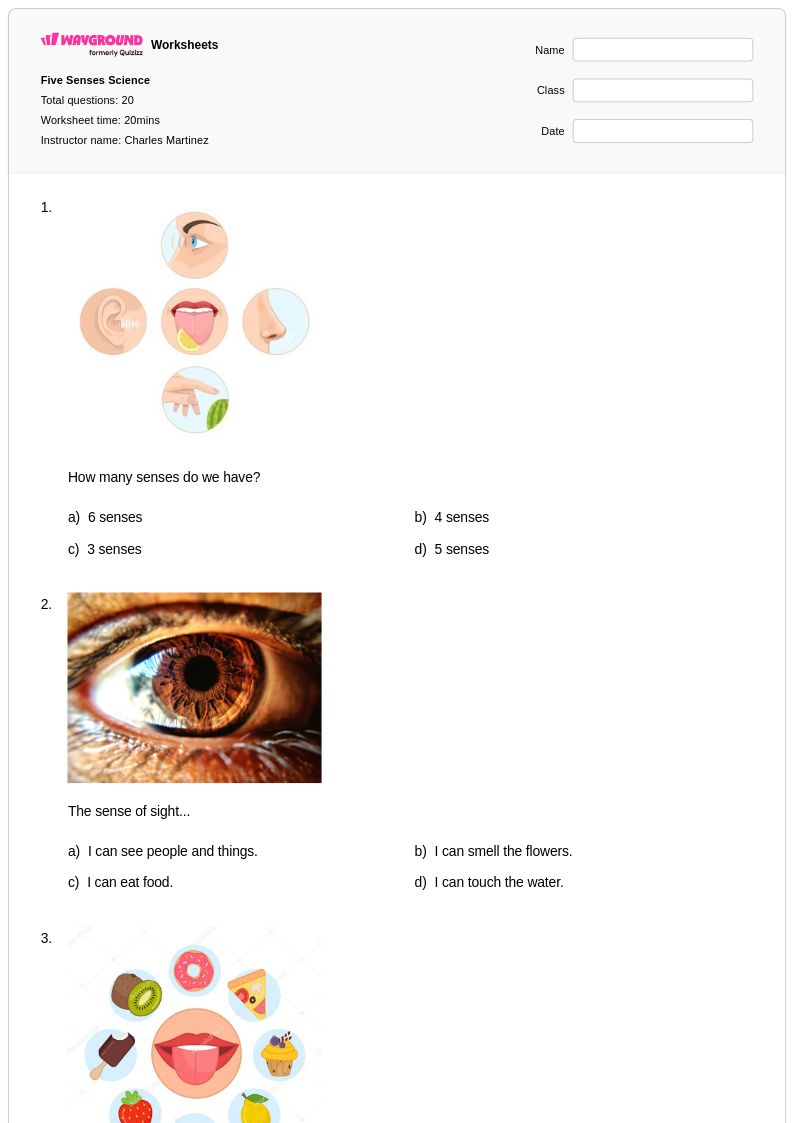
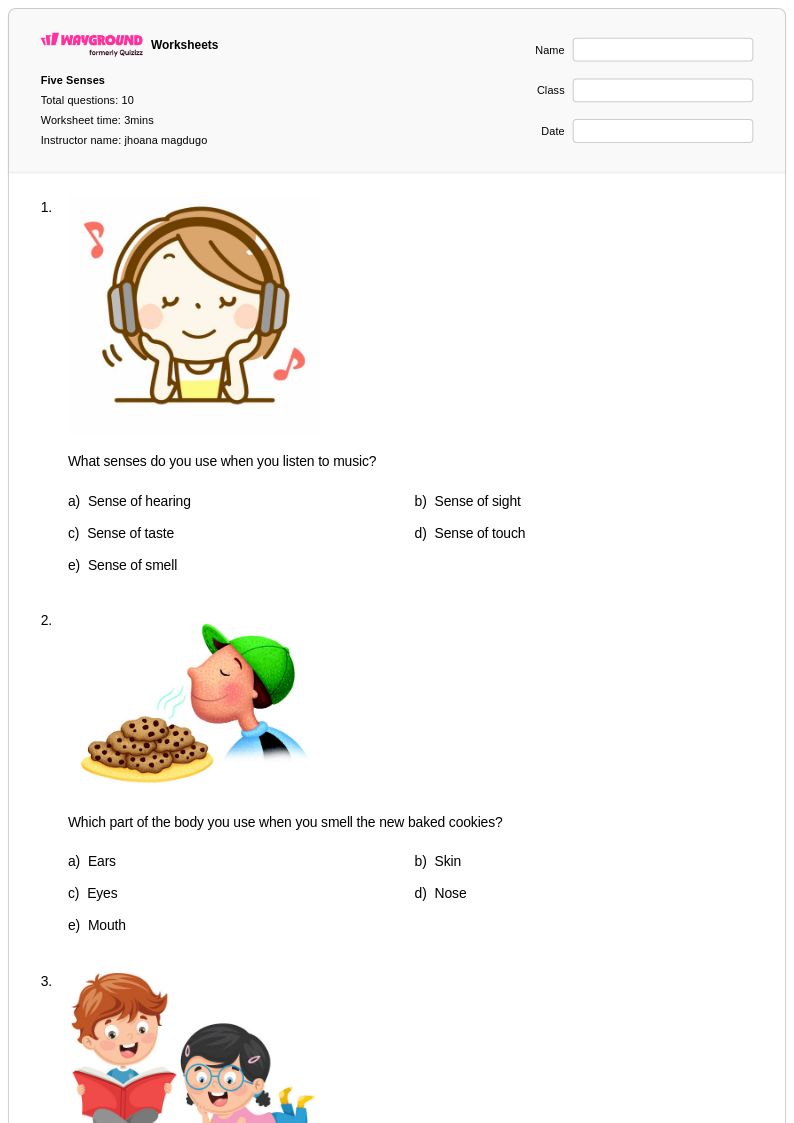
Teaching the five senses is most effective when students engage in hands-on sensory exploration alongside direct instruction. Start by connecting each sense to its corresponding body part — eyes for sight, ears for hearing, nose for smell, tongue for taste, and skin for touch — then move into activities where students classify real objects by their sensory properties. Building scientific vocabulary early, such as 'observe,' 'describe,' and 'compare,' helps students communicate their sensory experiences more precisely.
What kinds of exercises help students practice identifying the five senses?
Effective practice exercises for the five senses include matching activities where students pair each sense with the correct body part, sorting tasks where objects are classified by how they are perceived, and descriptive writing prompts where students describe an item using all applicable senses. Simple guided observation activities, where students record what they see, hear, smell, taste, or feel during a structured experiment, also reinforce how each sense functions in context.
What common mistakes do students make when learning about the five senses?
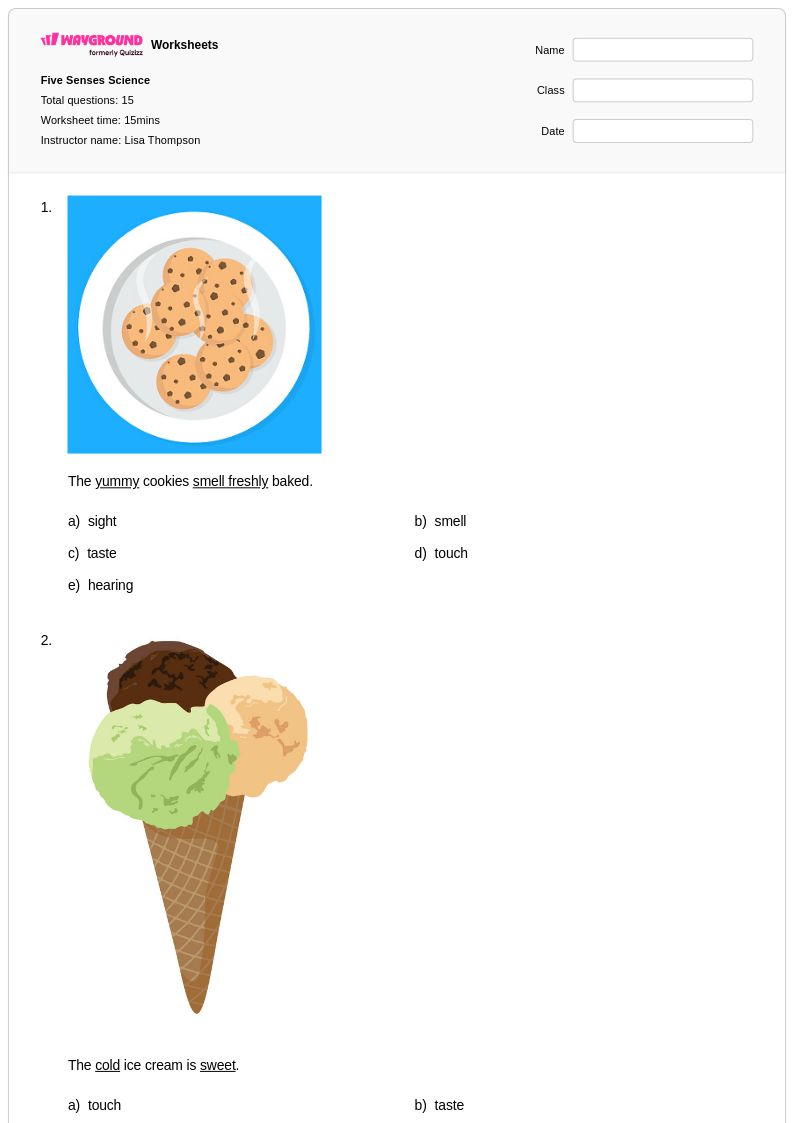
A frequent misconception is that each object can only be perceived by one sense — students often overlook that many things engage multiple senses simultaneously, such as an apple being both seen and tasted. Students also commonly confuse the sense organ with the sense itself, for example misidentifying the brain rather than the ear as the organ for hearing. Reinforcing that the brain processes all sensory input, while each organ collects specific information, helps clarify this distinction.
How can I use five senses worksheets to support different learners in my classroom?
Five senses worksheets on Wayground are available in both printable PDF and digital formats, making them adaptable for in-person, remote, and hybrid settings. When hosting worksheets digitally on Wayground, teachers can apply individual accommodations such as Read Aloud for students who need audio support, reduced answer choices to lower cognitive load, and extended time for students who require it. These settings can be assigned to specific students without affecting the rest of the class, ensuring differentiated support without disrupting the learning environment.
How do five senses worksheets support scientific observation skills?
Five senses worksheets build foundational scientific observation skills by prompting students to use precise sensory language to describe objects and phenomena rather than relying on vague impressions. Activities that ask students to compare how different objects look, sound, smell, taste, or feel train them to gather evidence systematically — a core practice in science inquiry. Over time, this structured sensory vocabulary becomes the basis for more advanced observational and analytical thinking.
How do I use five senses worksheets to assess student understanding?
Five senses worksheets are effective formative assessment tools when they require students to categorize, match, or explain sensory experiences rather than simply recall facts. Look for errors where students assign the wrong sense to a body part or fail to recognize that an object can be perceived by multiple senses — these reveal gaps in conceptual understanding rather than just vocabulary. Complete answer keys included with Wayground worksheets make it straightforward to identify patterns in student errors and adjust instruction accordingly.