Free Printable Foundations of Government Worksheets for Class 4
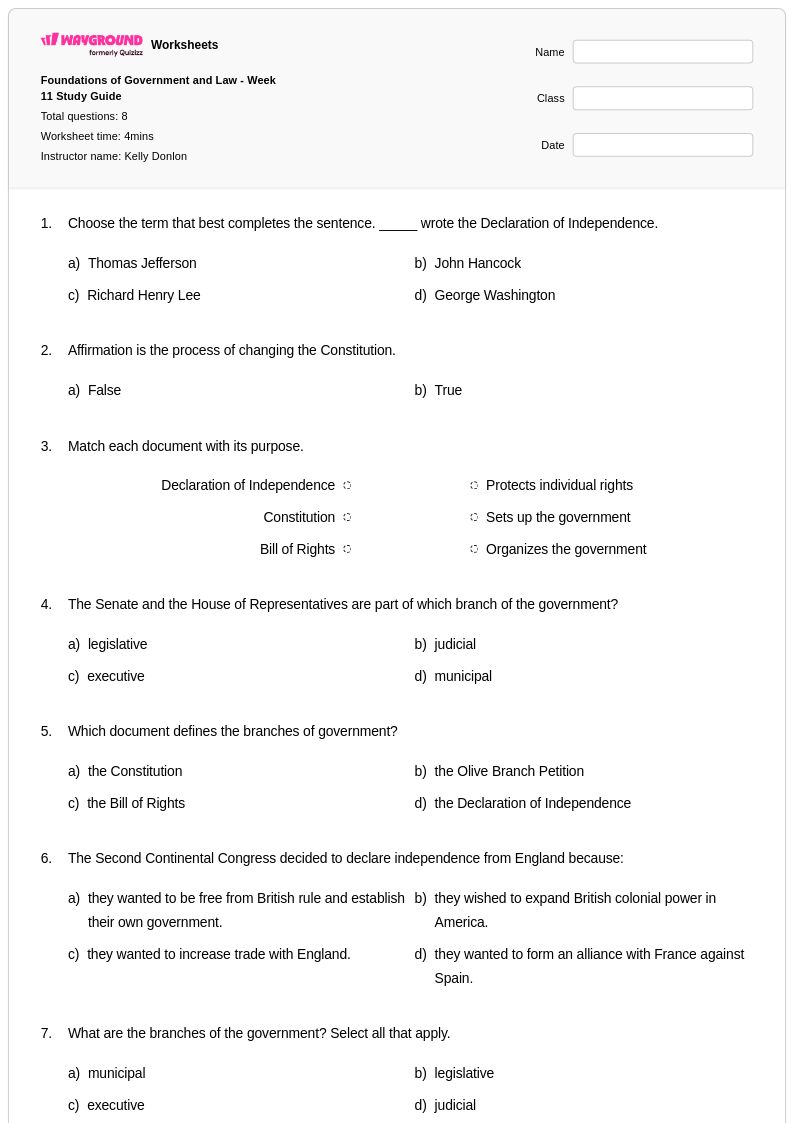
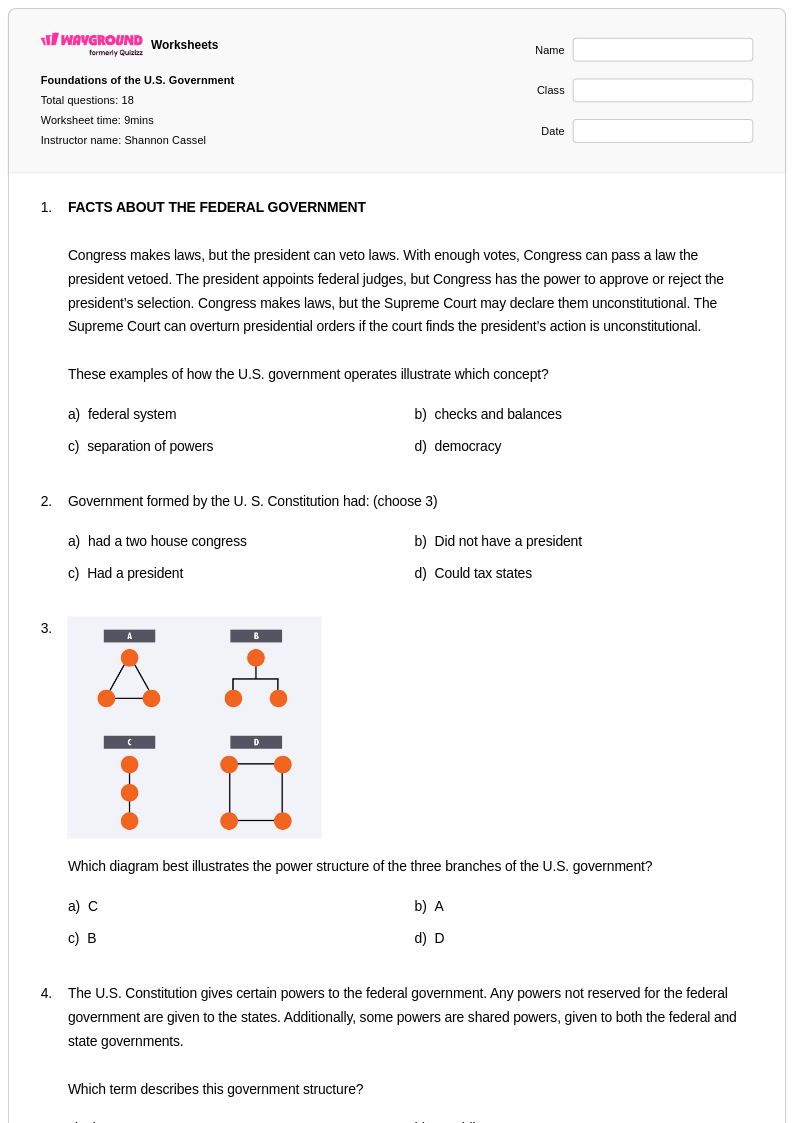
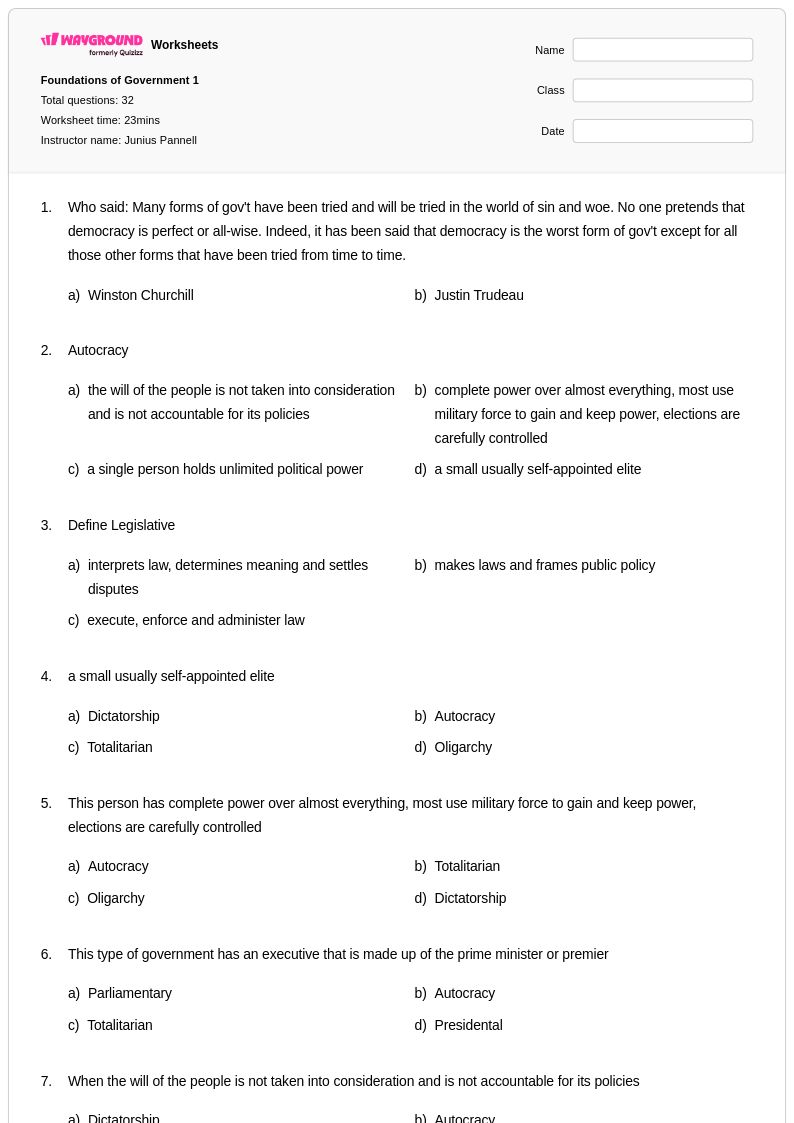
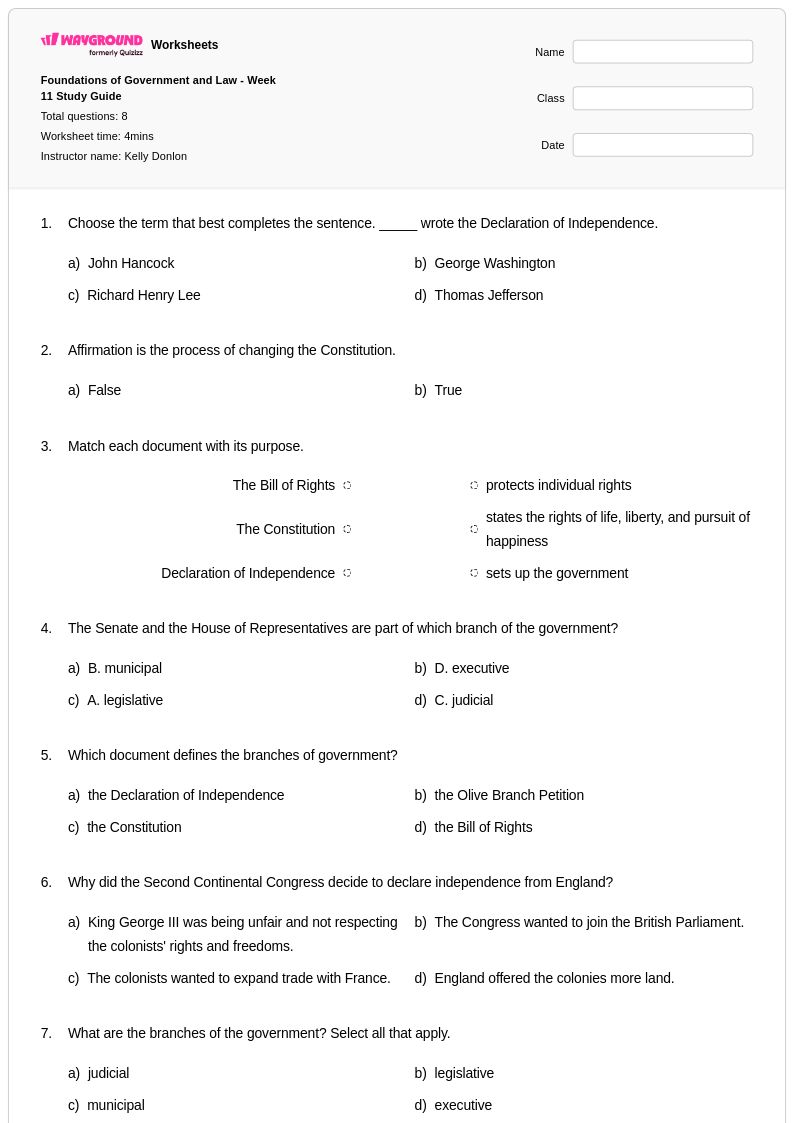
Explore Wayground's free Class 4 Foundations of Government worksheets and printables that help students understand basic governmental principles through engaging practice problems and comprehensive answer keys in downloadable PDF format.
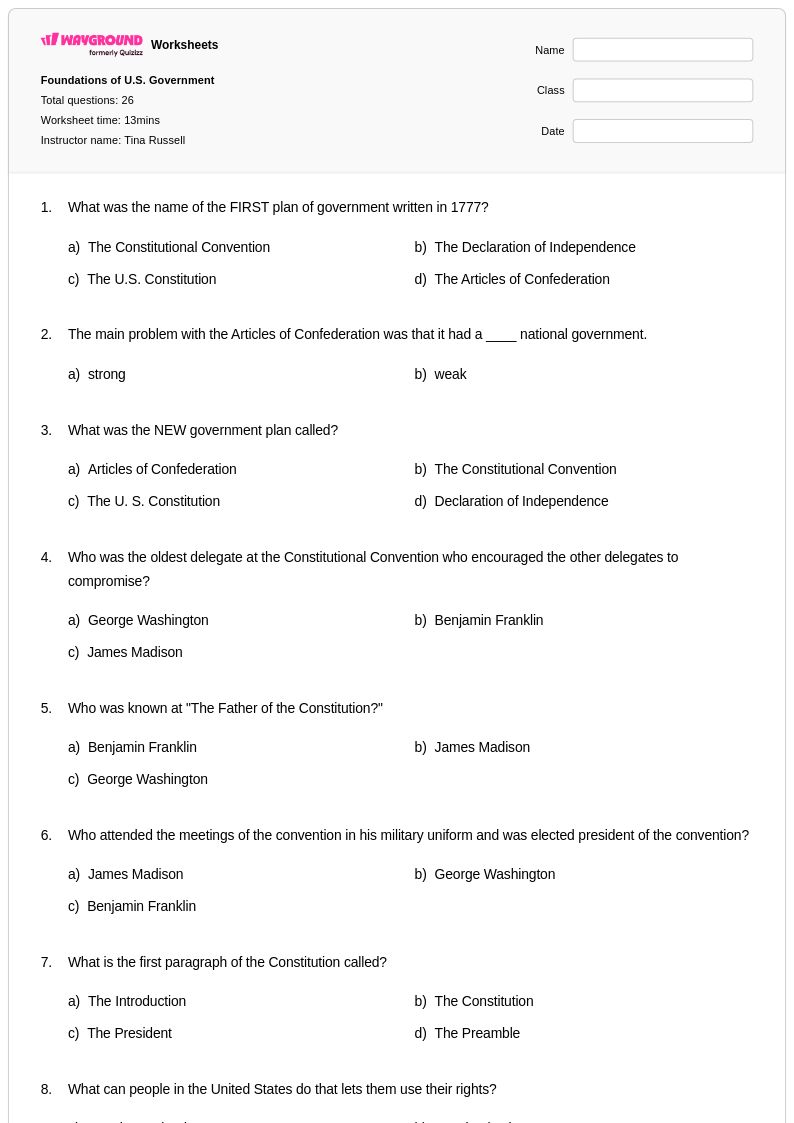
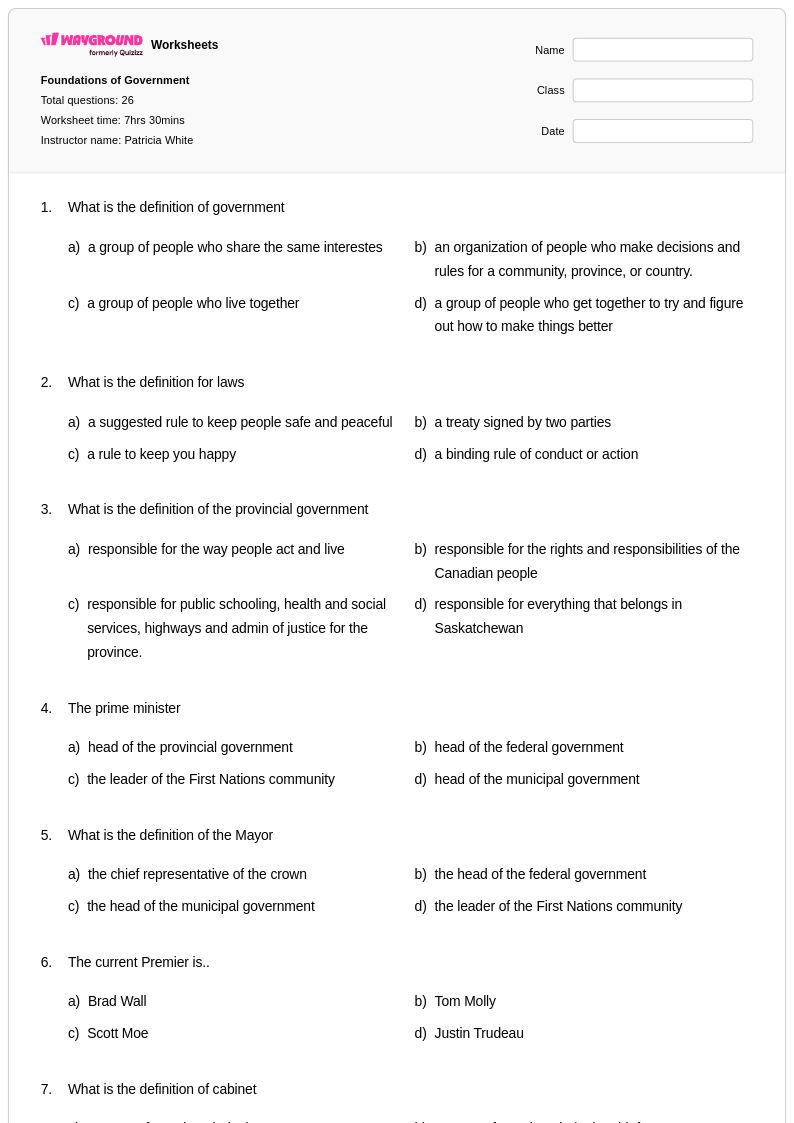
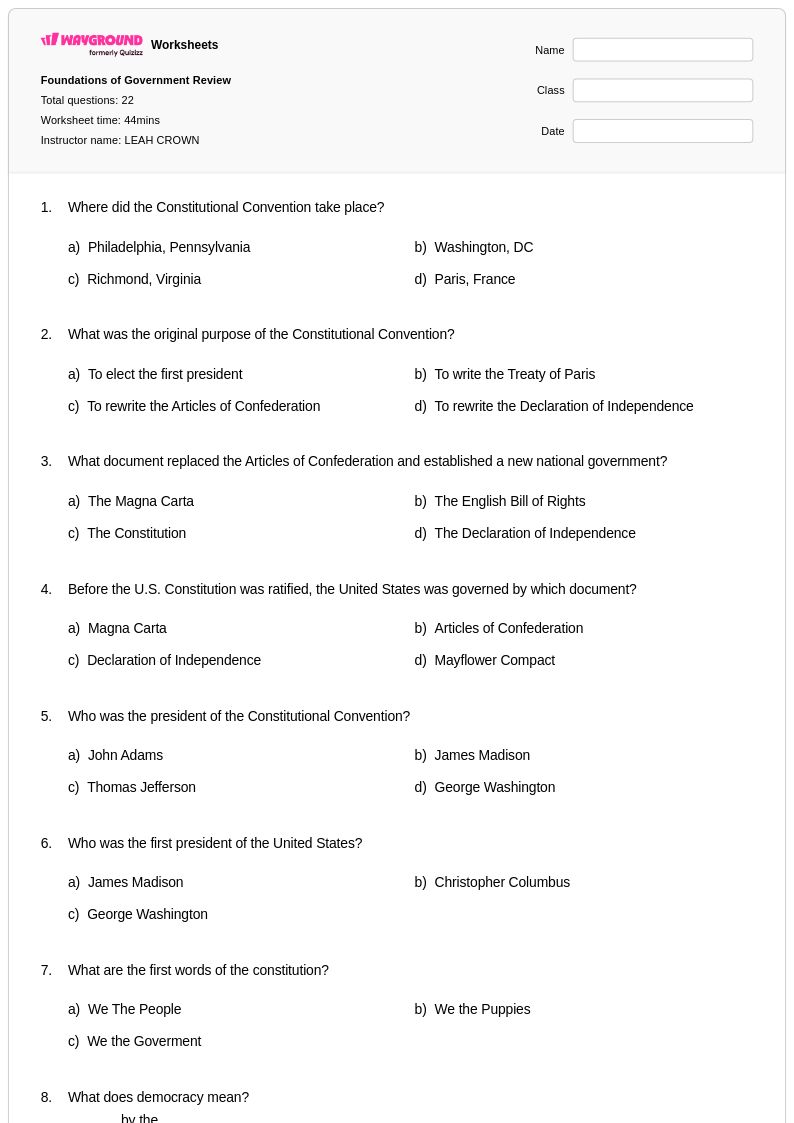
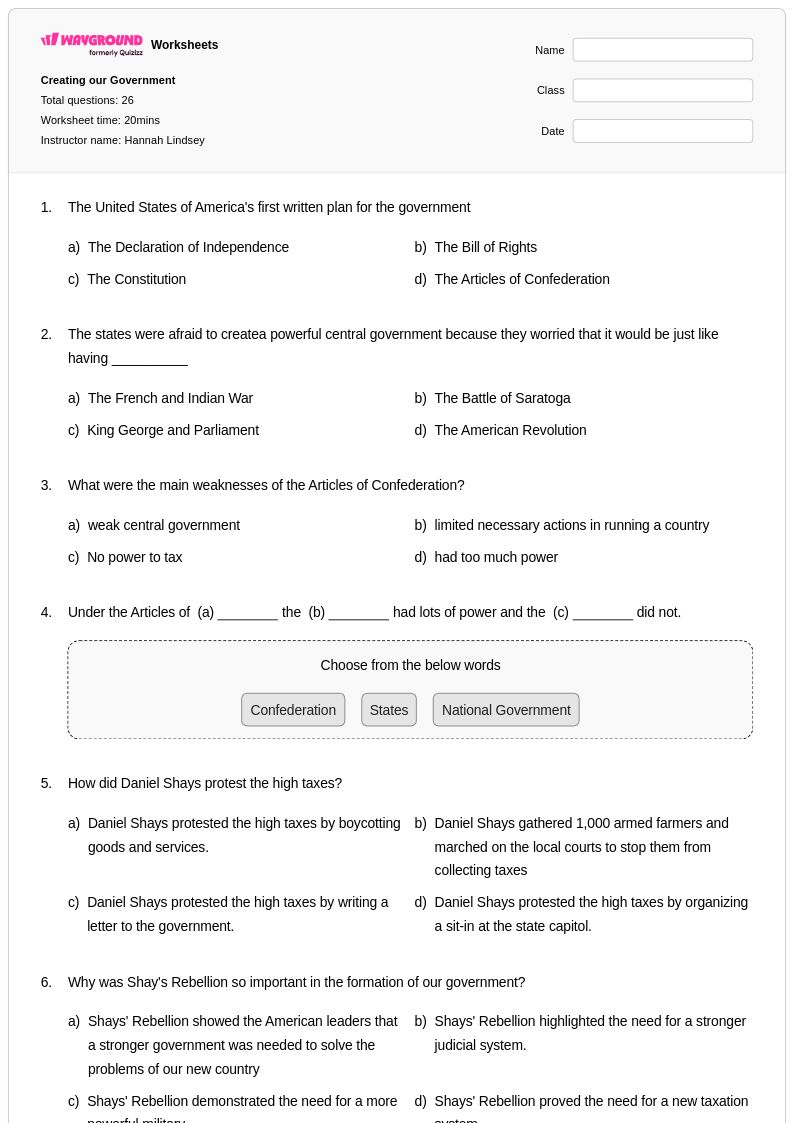
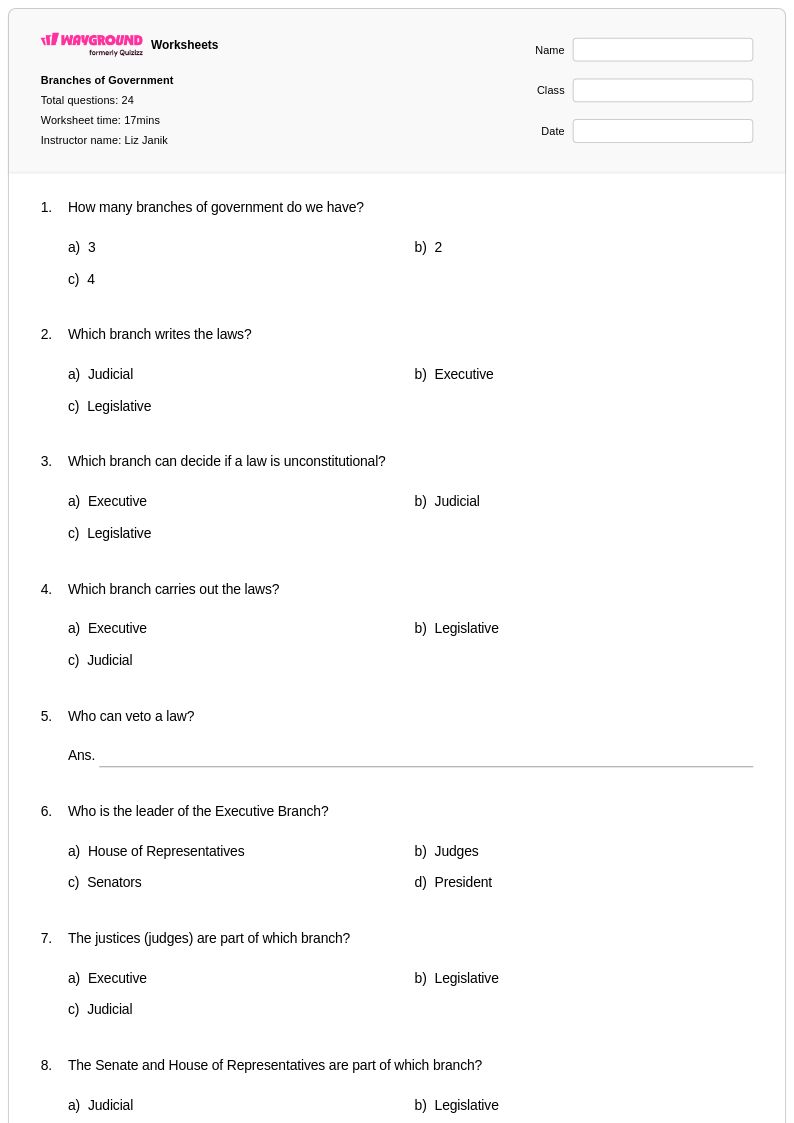
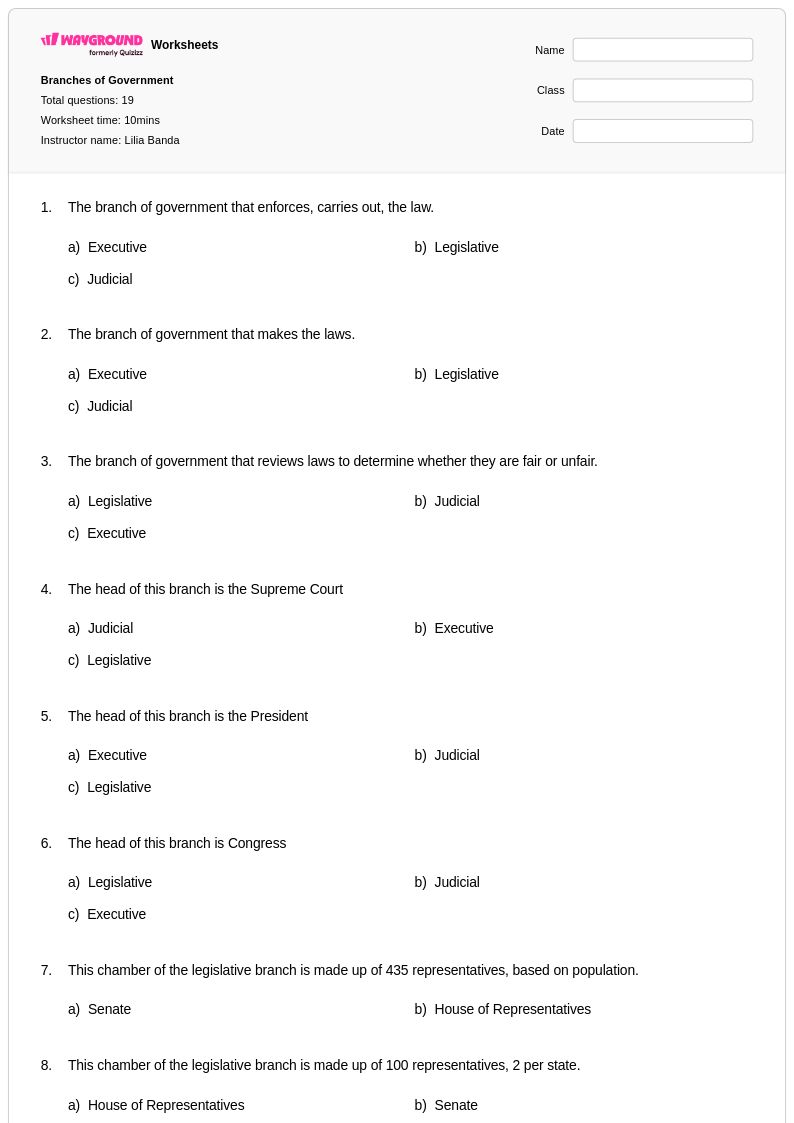
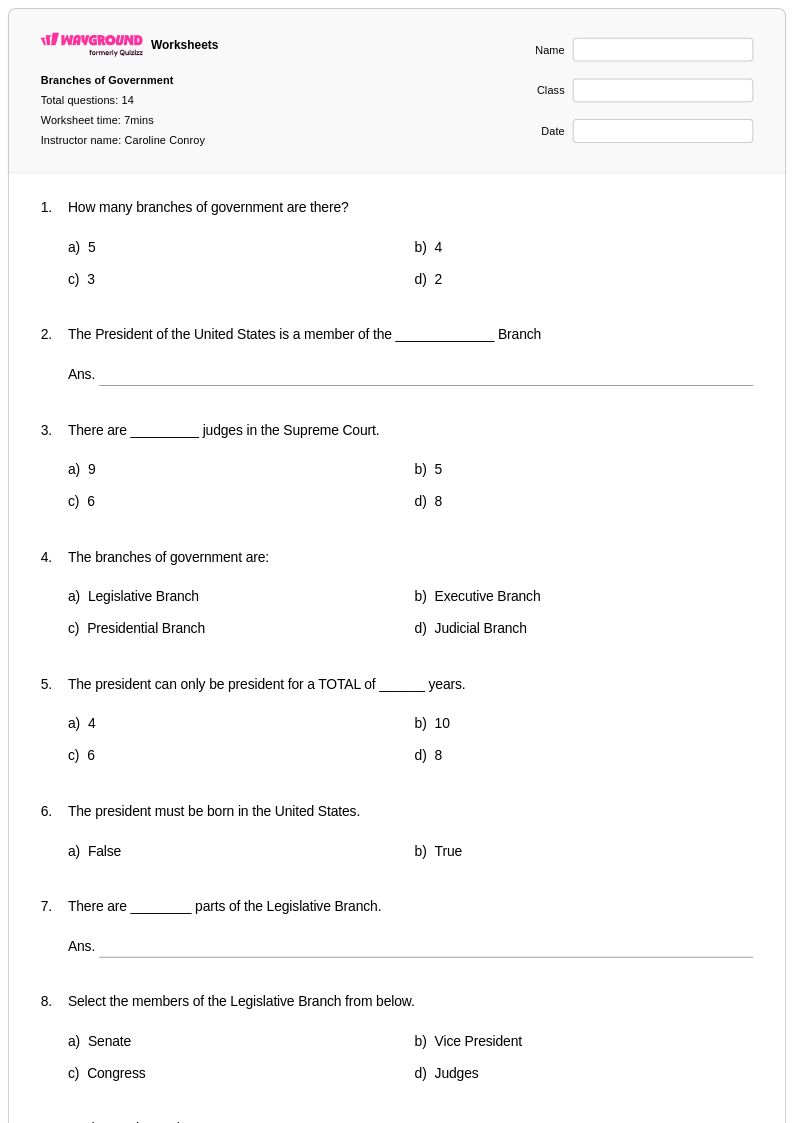
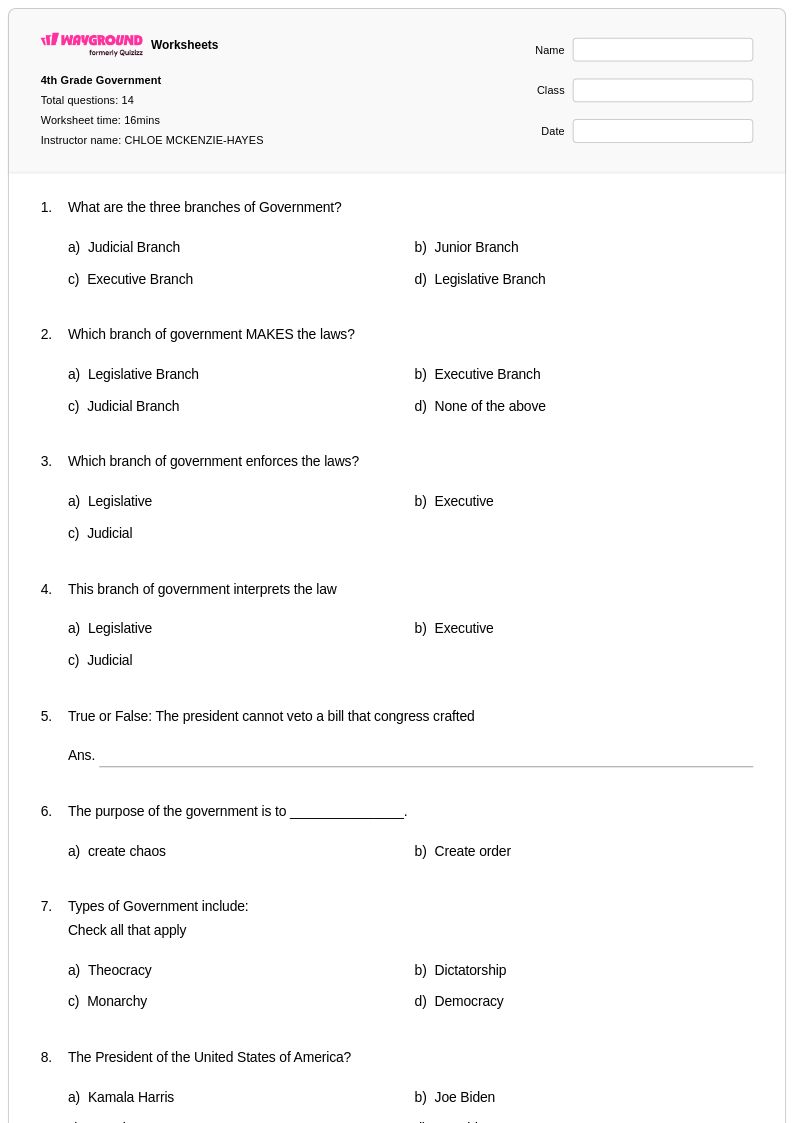
Explore printable Foundations of Government worksheets for Class 4
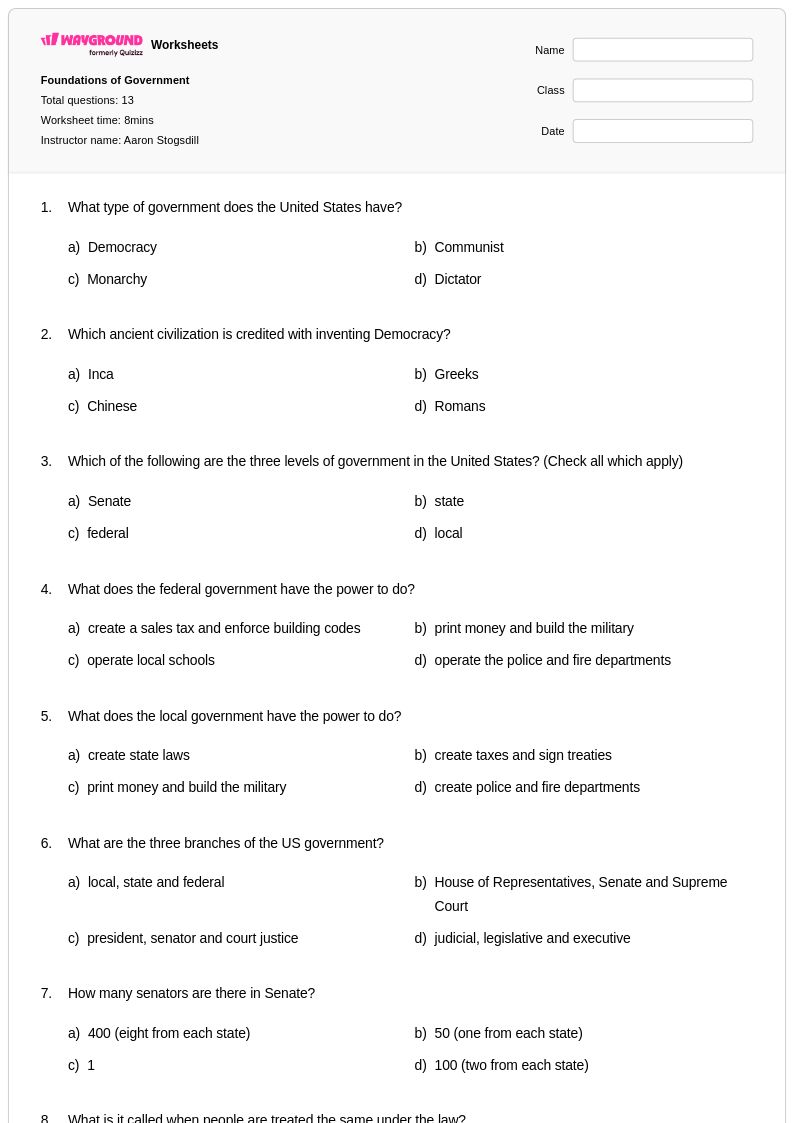
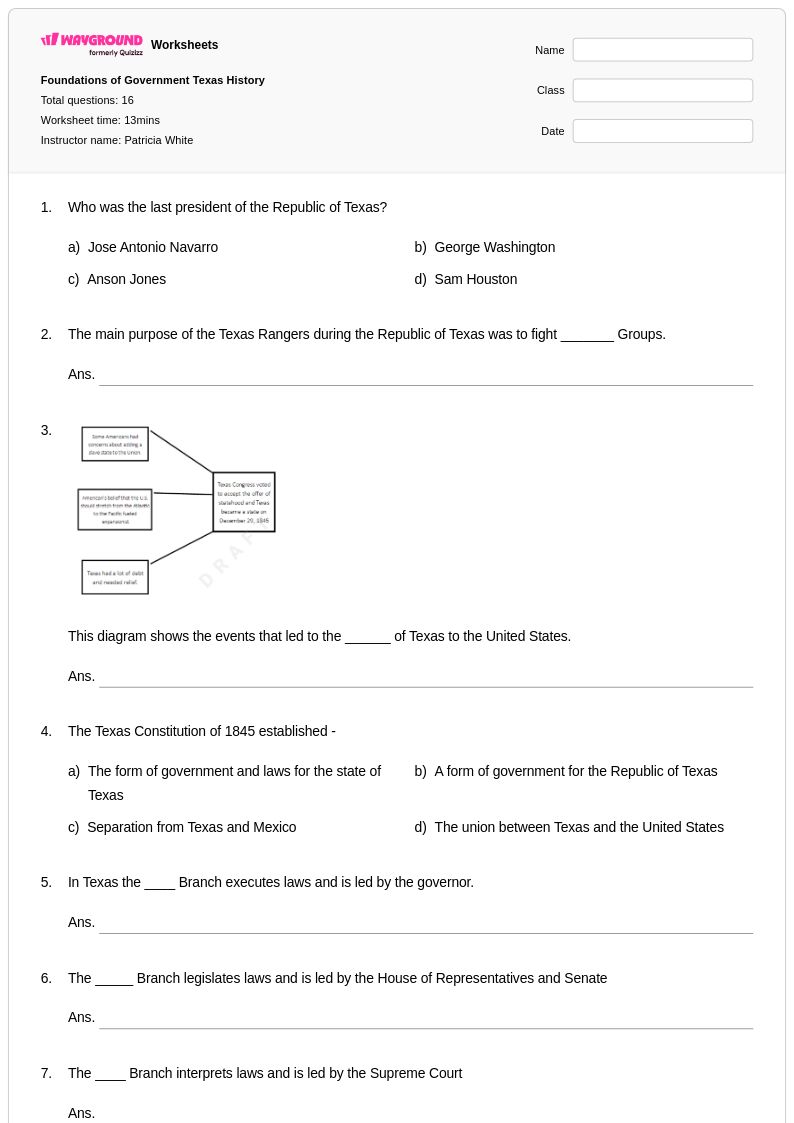
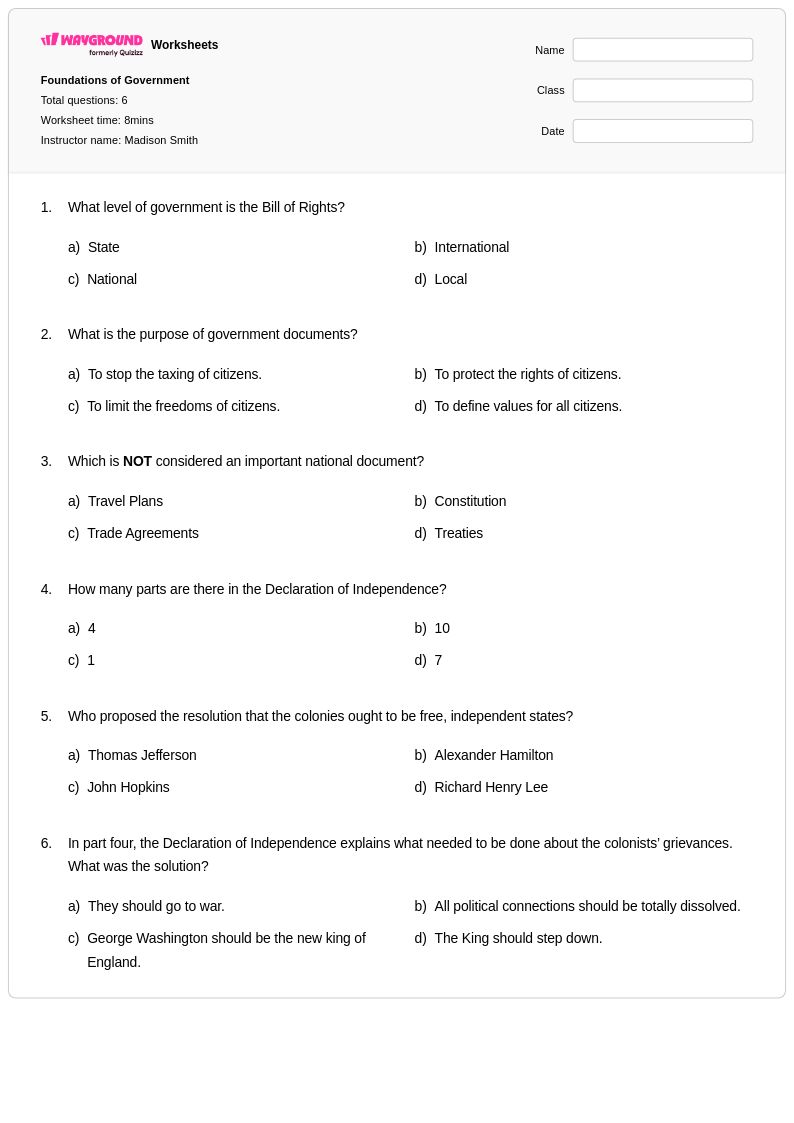
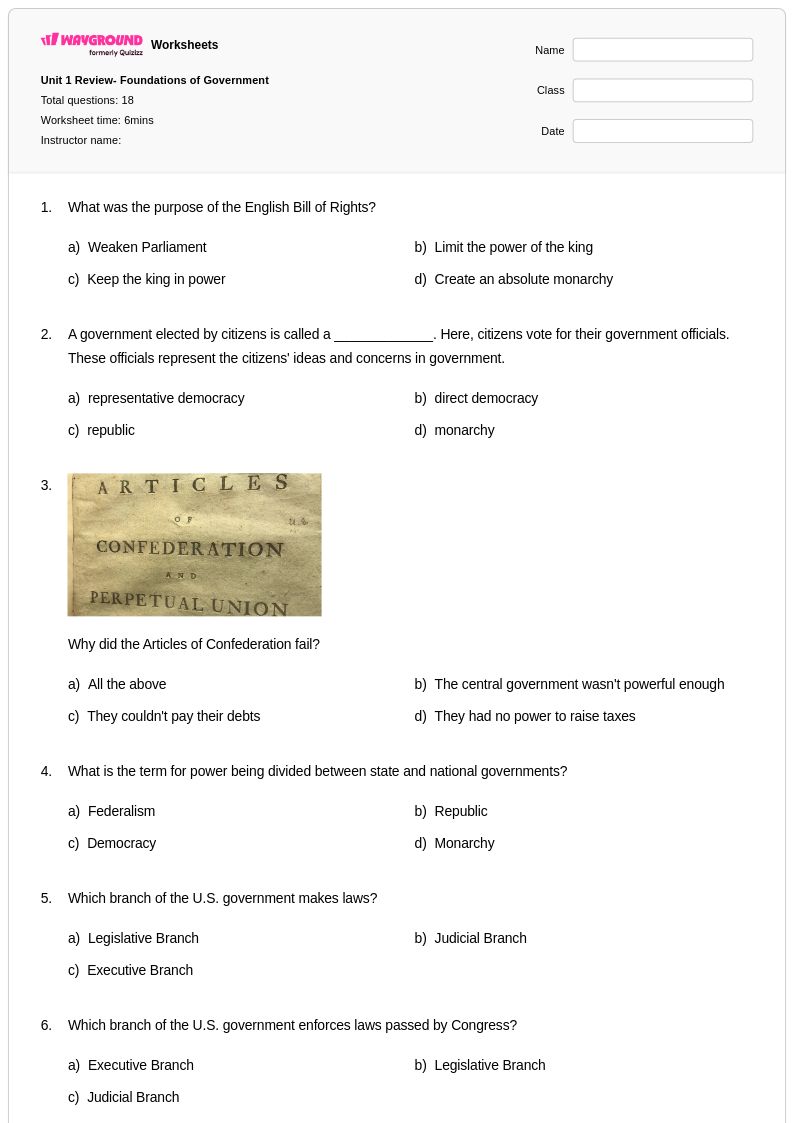
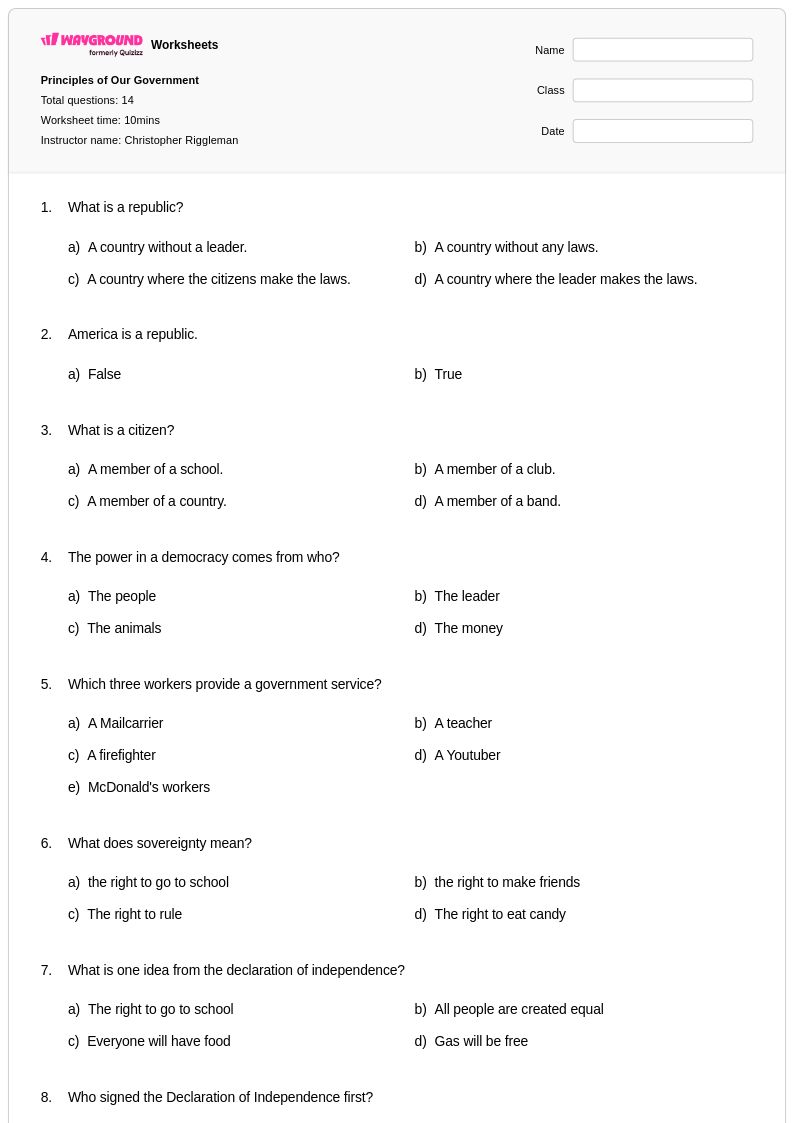
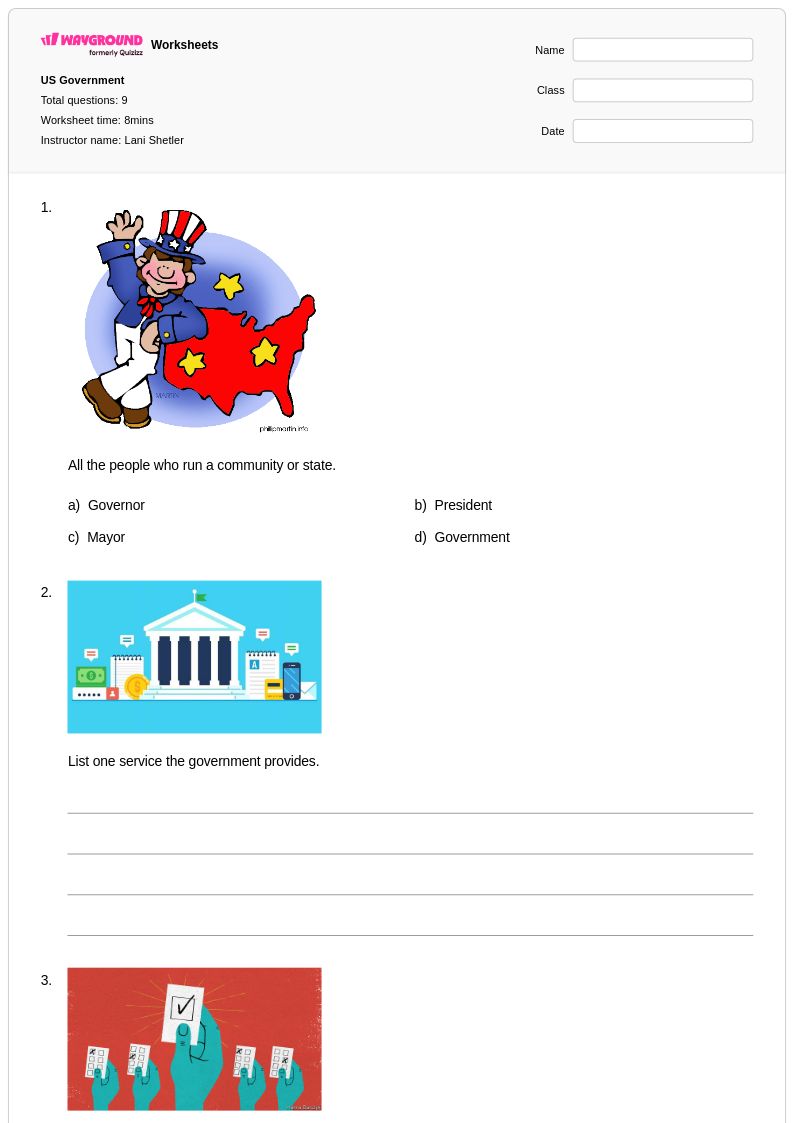
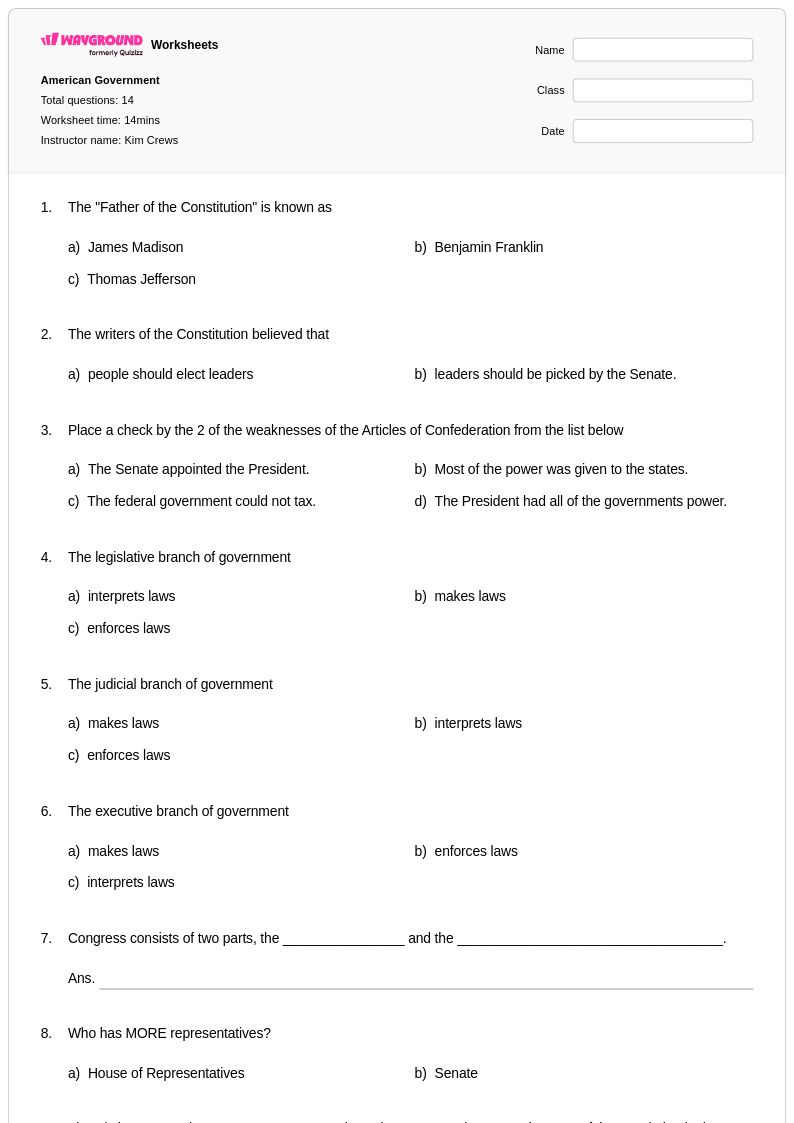
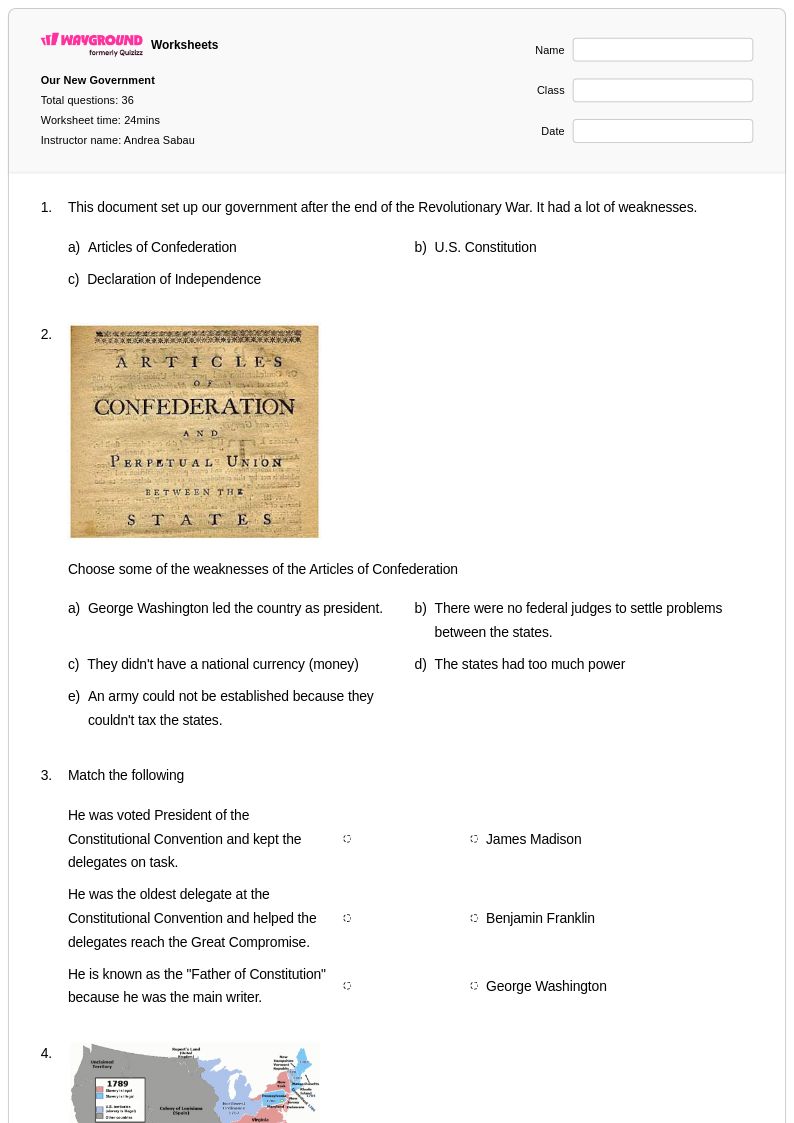
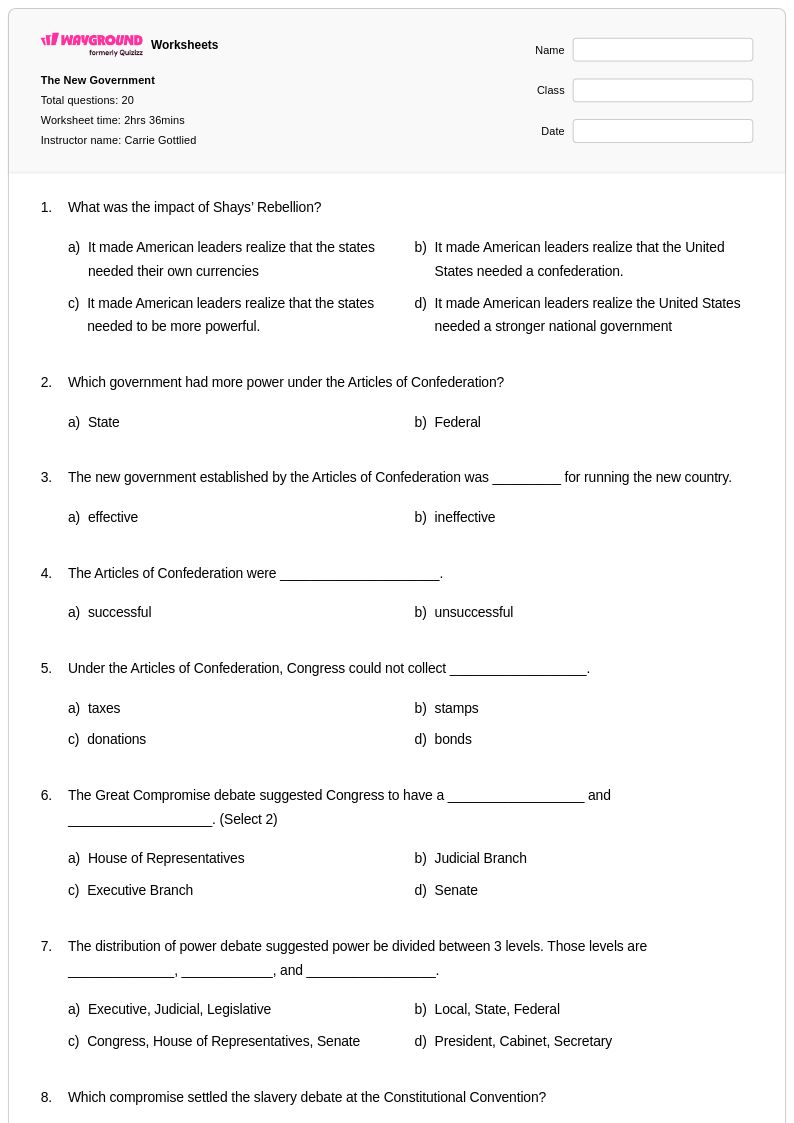
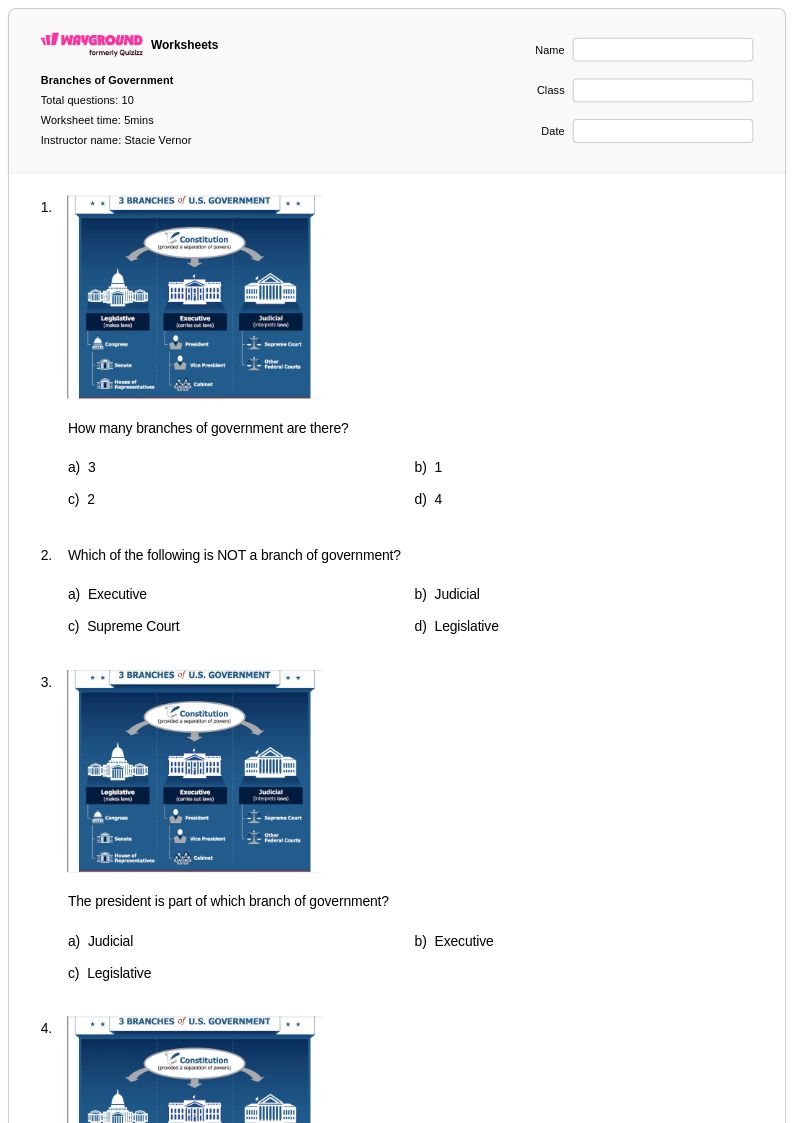
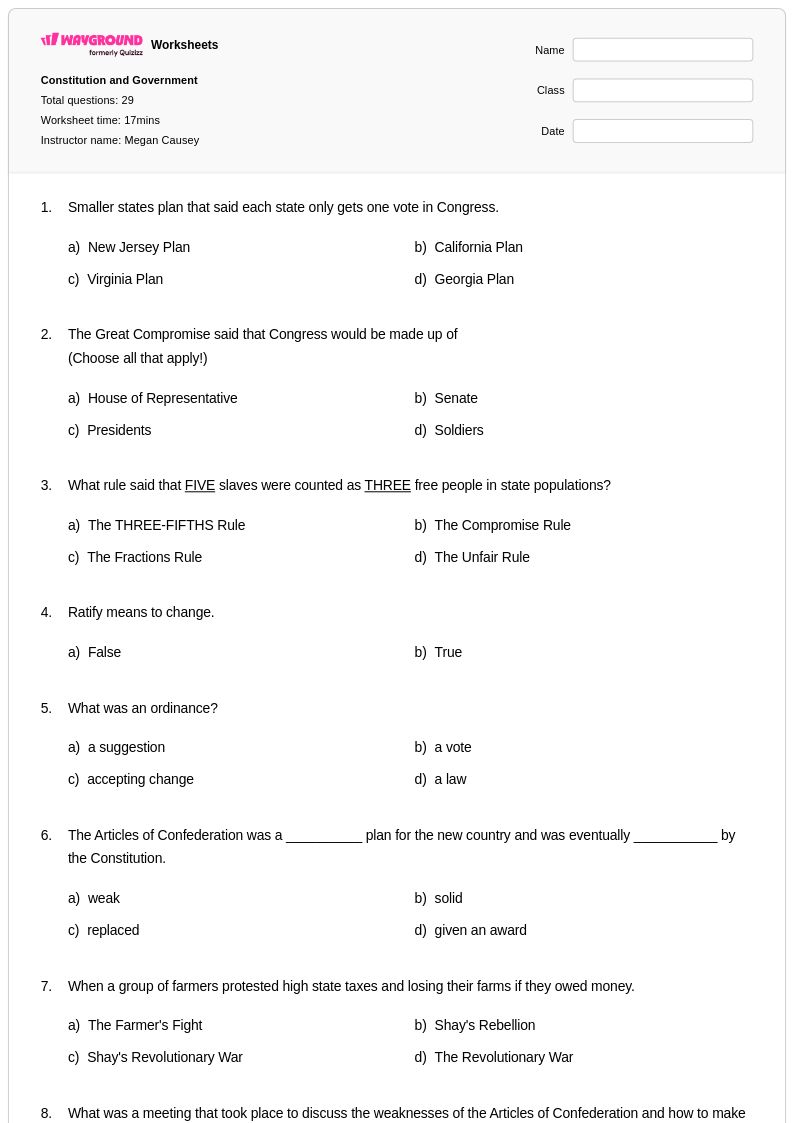
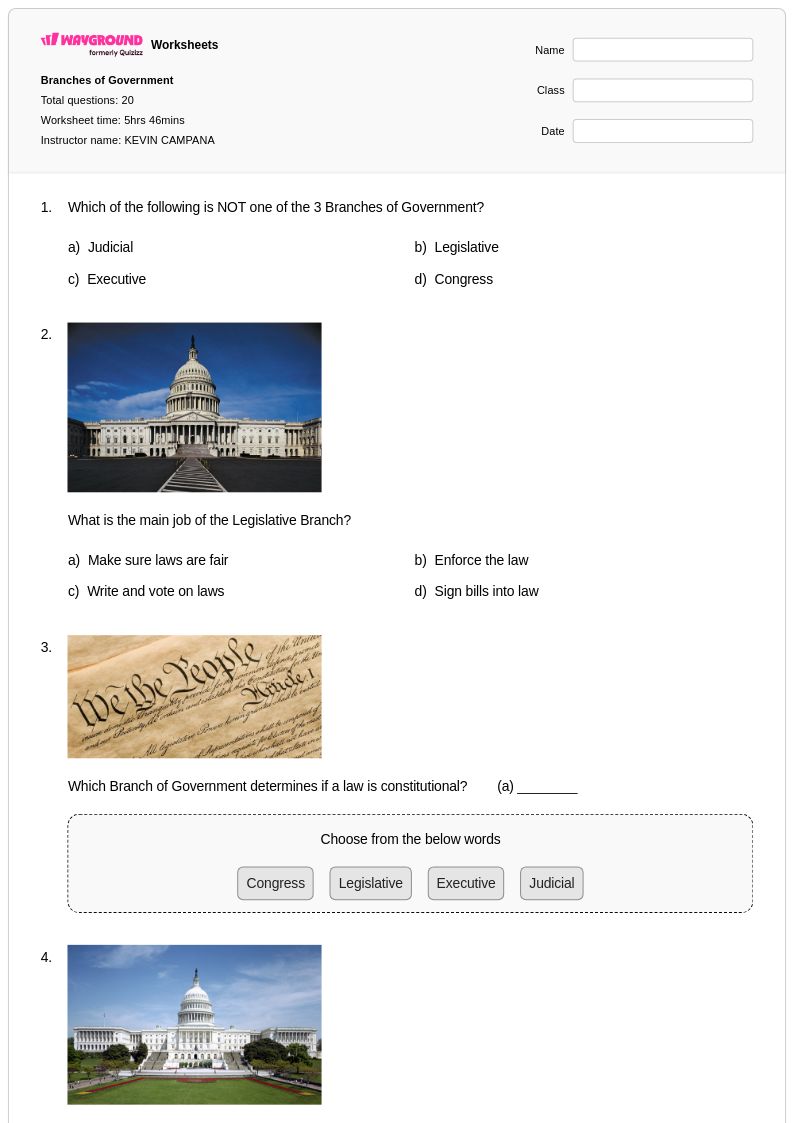
Foundations of Government worksheets for Class 4 provide essential practice opportunities that help young learners understand the basic principles underlying American democracy and governmental structures. These educational resources guide students through fundamental concepts such as the purpose of government, the Constitution as our founding document, the concept of citizenship, and the basic roles of different levels of government. Through carefully designed practice problems and engaging activities, students develop critical thinking skills about how governments are formed, why rules and laws exist, and how citizens participate in democratic processes. Teachers can access comprehensive answer keys and free printable materials that support classroom instruction while allowing students to work independently on reinforcing these cornerstone civics concepts.
Wayground (formerly Quizizz) empowers educators with an extensive collection of teacher-created Foundations of Government resources specifically designed for Class 4 learners, featuring millions of high-quality worksheets that align with social studies standards. The platform's robust search and filtering capabilities enable teachers to quickly locate materials that match their specific curriculum needs, whether focusing on the Constitution, branches of government, or civic responsibilities. These differentiated resources are available in both printable PDF formats and interactive digital versions, allowing for flexible customization that accommodates diverse learning styles and classroom environments. Teachers rely on these comprehensive tools for lesson planning, targeted remediation, enrichment activities, and ongoing skill practice, ensuring that students build a solid foundation in understanding how government functions and their role as future citizens.
FAQs
How do I teach the foundations of government to middle and high school students?
Start by grounding students in the philosophical origins of democratic thought, including the social contract theories of Locke, Hobbes, and Rousseau, before connecting those ideas to concrete structures like the separation of powers and federalism. Use primary source documents such as the Magna Carta, the Declaration of Independence, and the U.S. Constitution to show students how foundational principles became codified law. Structured analysis activities, where students compare governmental systems or evaluate the rule of law across different societies, build the critical thinking skills needed to move beyond memorization.
What types of practice activities help students understand core governmental principles?
Effective practice for this topic goes beyond vocabulary drills and includes document analysis tasks, compare-and-contrast exercises across governmental systems, and scenario-based questions that ask students to apply concepts like federalism or checks and balances to real situations. Worksheets that require students to identify the philosophical foundations behind specific constitutional provisions are especially effective at reinforcing deep understanding rather than surface recall.
What misconceptions do students commonly have about separation of powers and checks and balances?
Students frequently conflate separation of powers with checks and balances, treating them as interchangeable concepts when they are distinct: separation of powers divides governmental authority into branches, while checks and balances describes the mechanisms each branch uses to limit the others. Another common error is assuming the three branches hold equal power in all situations, when in practice the balance shifts depending on the political context and the specific constitutional provision at issue. Targeted practice problems that ask students to classify specific governmental actions by branch and then identify which check applies can directly address both misconceptions.
How do I assess whether students truly understand the social contract versus just being able to define it?
Surface-level definitions do not reveal whether students grasp the social contract as a functional concept. Strong assessment asks students to apply it: for example, identifying what obligations governments and citizens hold under different theorists' frameworks, or evaluating a historical or contemporary scenario to determine whether the social contract has been upheld or violated. Short constructed-response questions and document-based prompts are more diagnostic than multiple-choice definitions for this topic.
How can I use Foundations of Government worksheets in both print and digital classroom settings?
Foundations of Government worksheets on Wayground are available as printable PDFs for traditional classroom use and in digital formats for technology-integrated environments, including the ability to host them as a quiz directly on the Wayground platform. This flexibility means the same material can be distributed as a physical handout during in-class instruction, assigned as a digital activity for hybrid or remote learners, or administered as a graded quiz online. Each worksheet includes a complete answer key, which supports both self-paced independent study and teacher-led review.
How can I differentiate Foundations of Government instruction for students at different readiness levels?
For students who need additional support, simplifying the task structure, such as reducing the number of answer choices on assessment items or pairing document analysis with guiding questions, helps reduce cognitive overload without lowering the conceptual bar. Wayground supports student-level accommodations including reduced answer choices and read-aloud functionality, which can be configured individually so that advanced learners receive standard materials while struggling students receive tailored support, all within the same assignment.