Free Printable Graduated Cylinder Worksheets for Class 7
Class 7 graduated cylinder worksheets and printables help students master precise liquid measurement techniques through engaging practice problems, free PDF resources, and comprehensive answer keys for effective science learning.
Explore printable Graduated Cylinder worksheets for Class 7
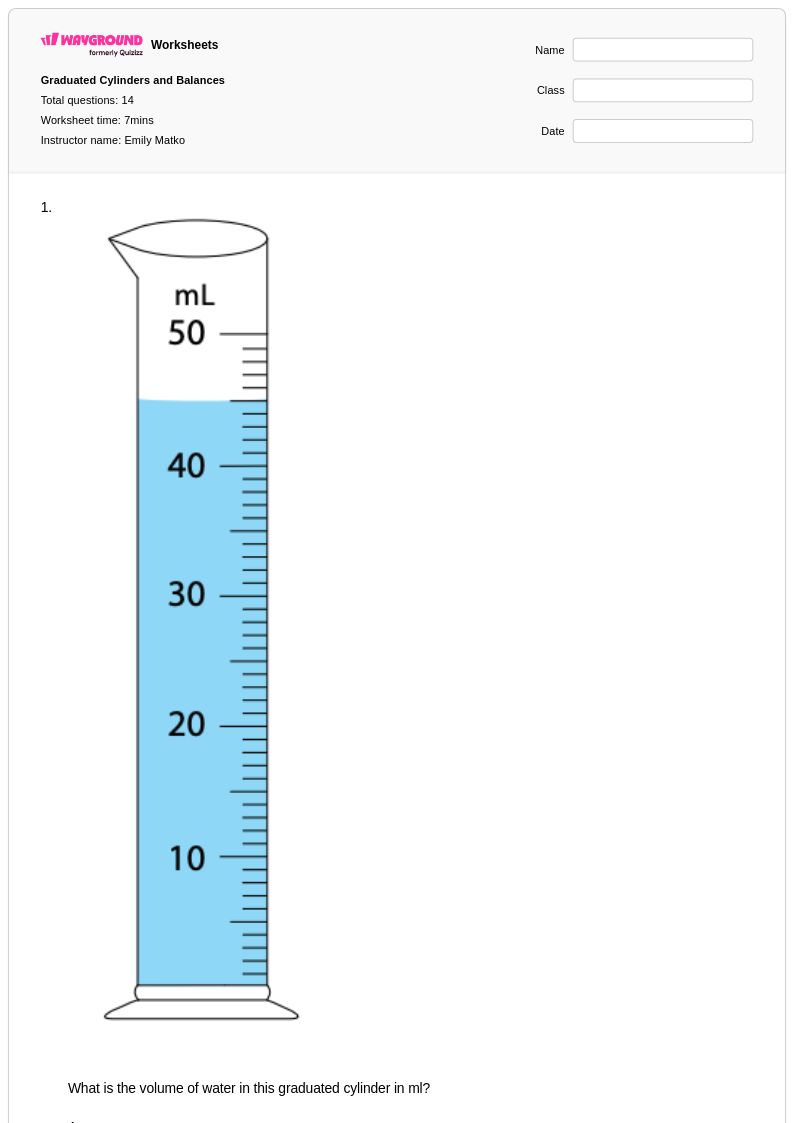
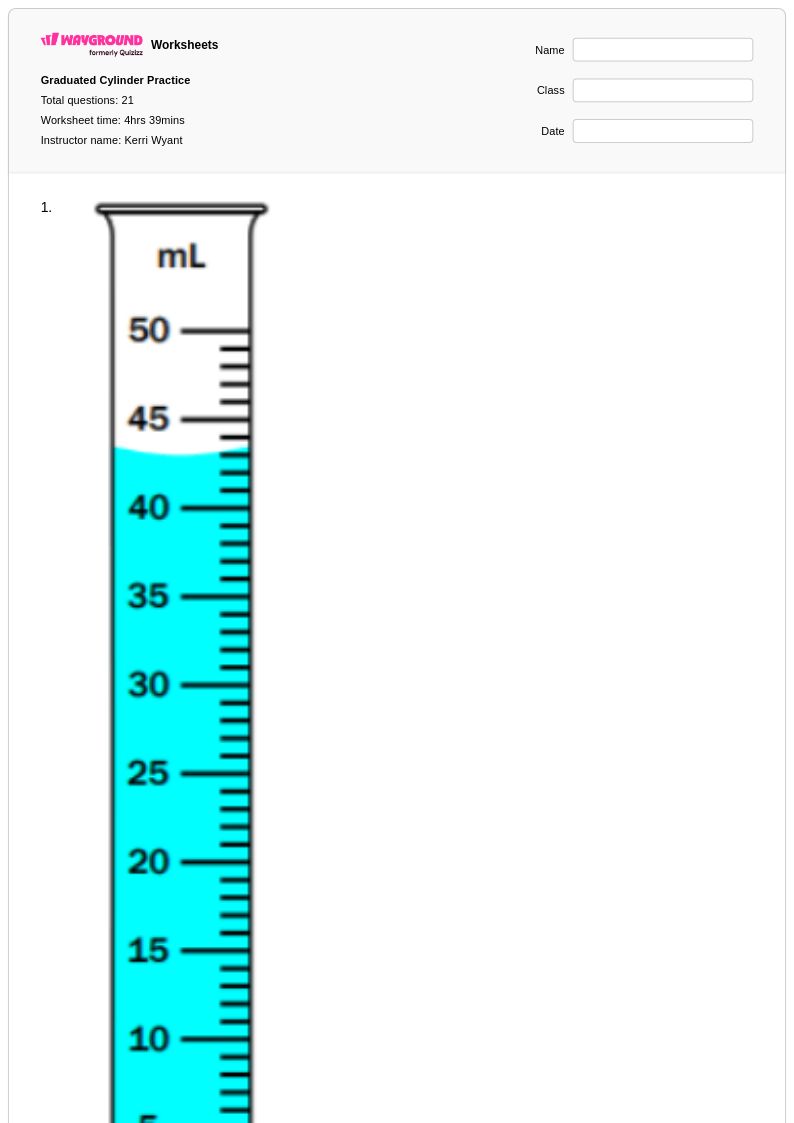
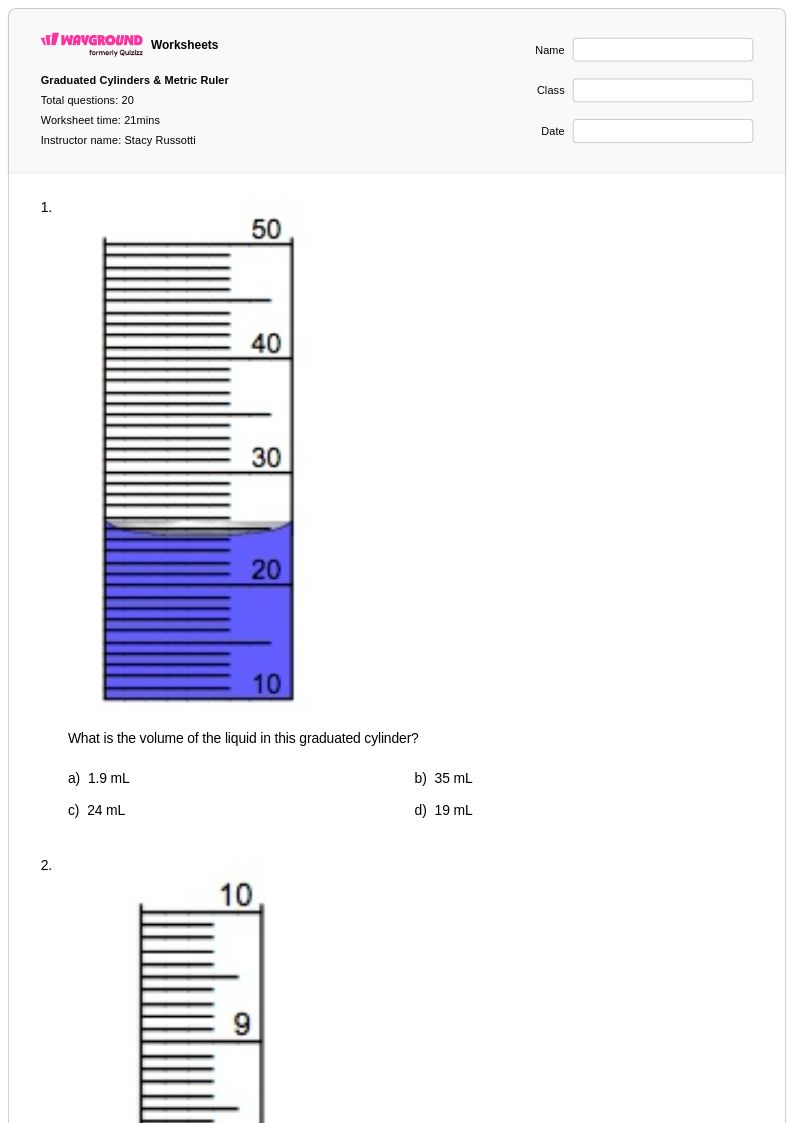
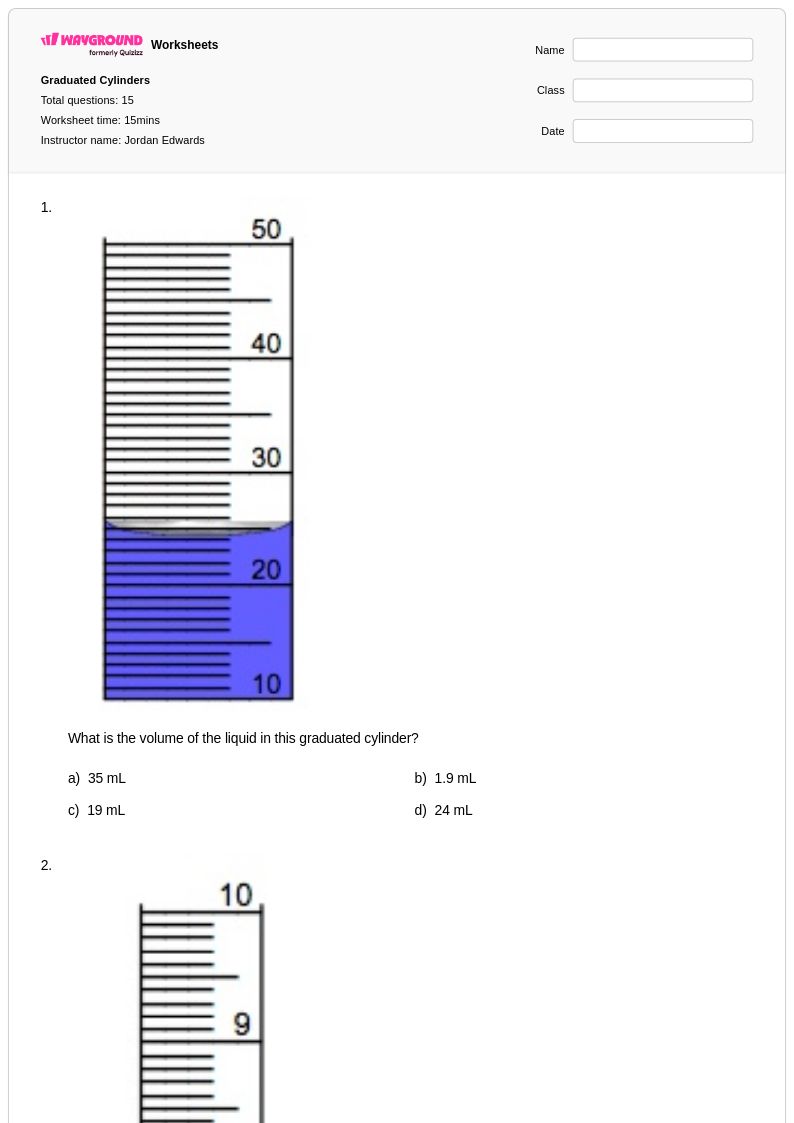
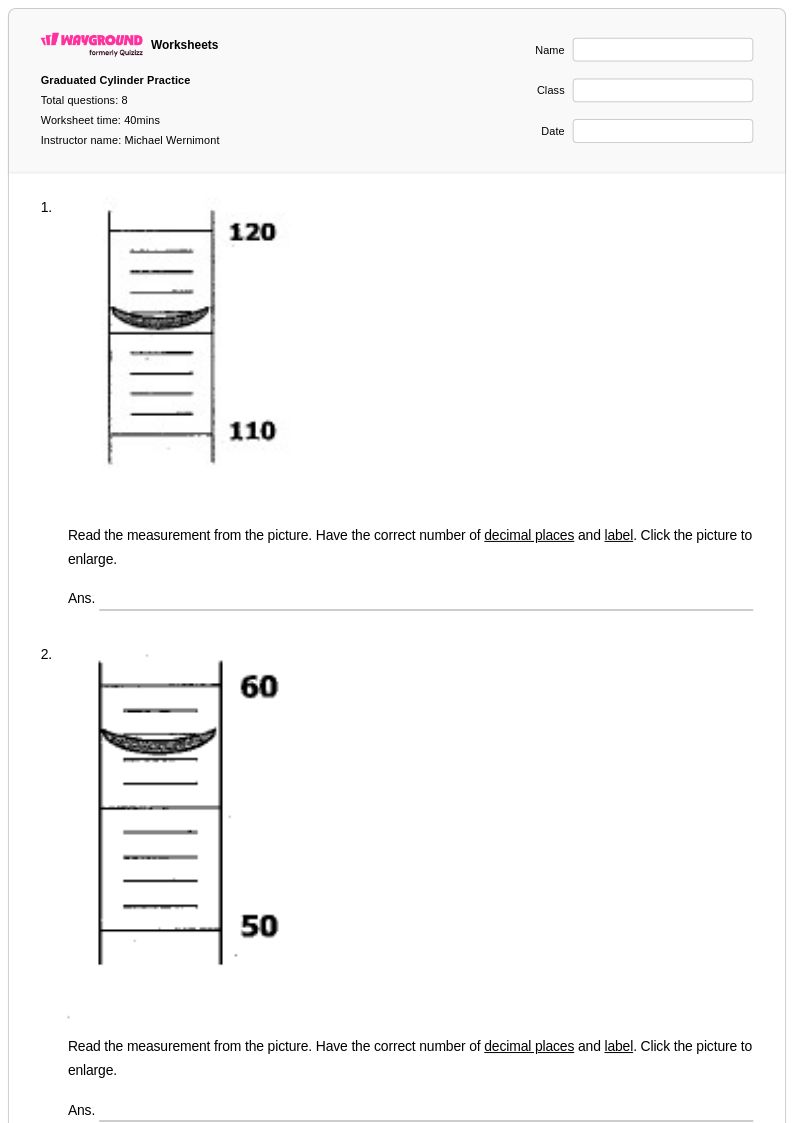
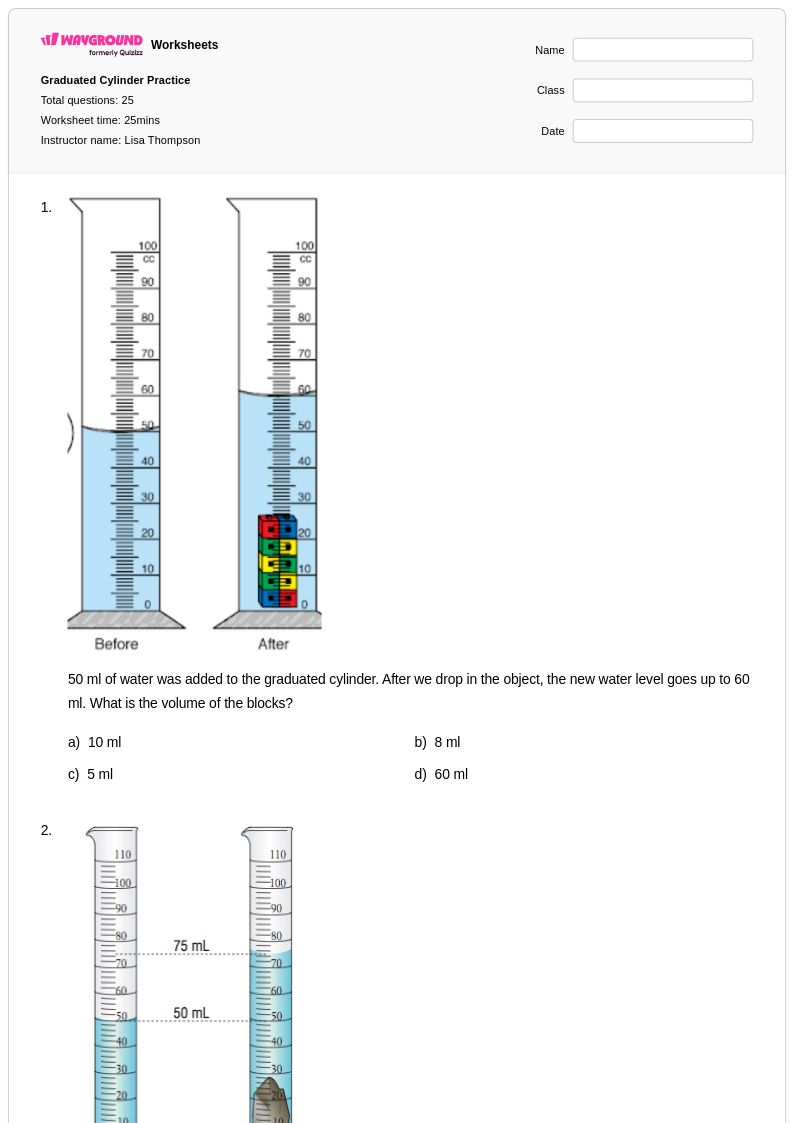
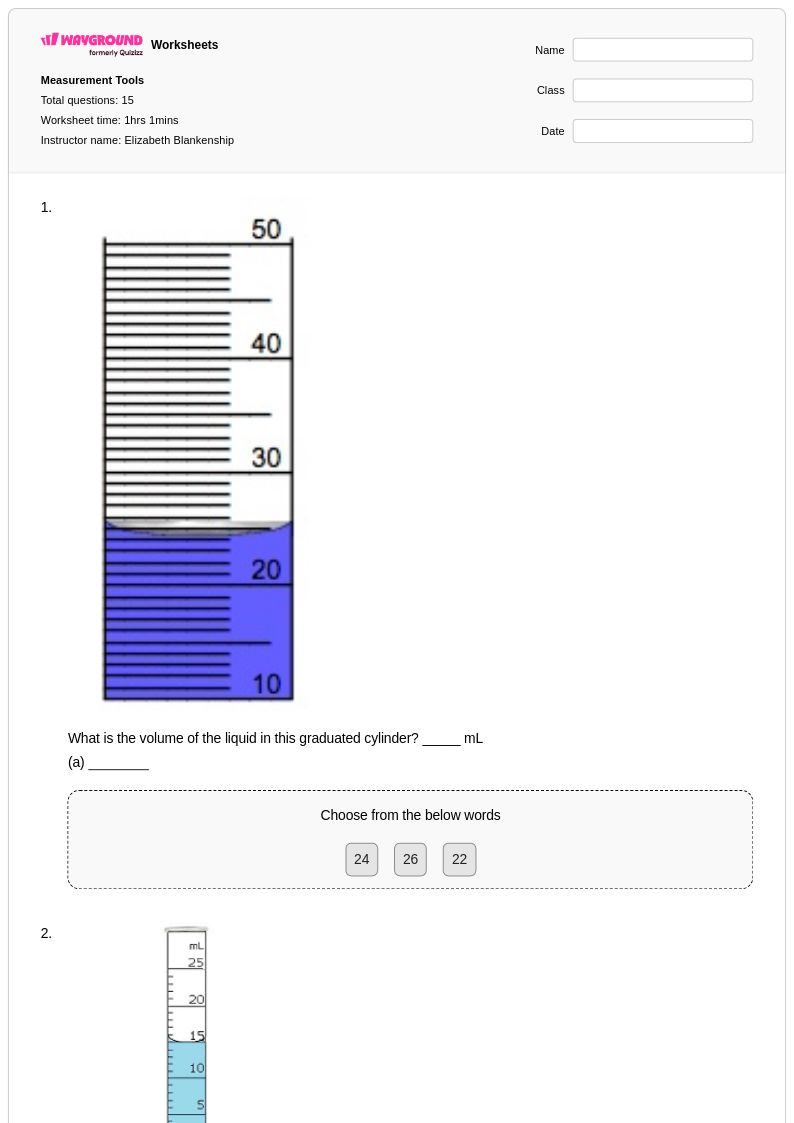
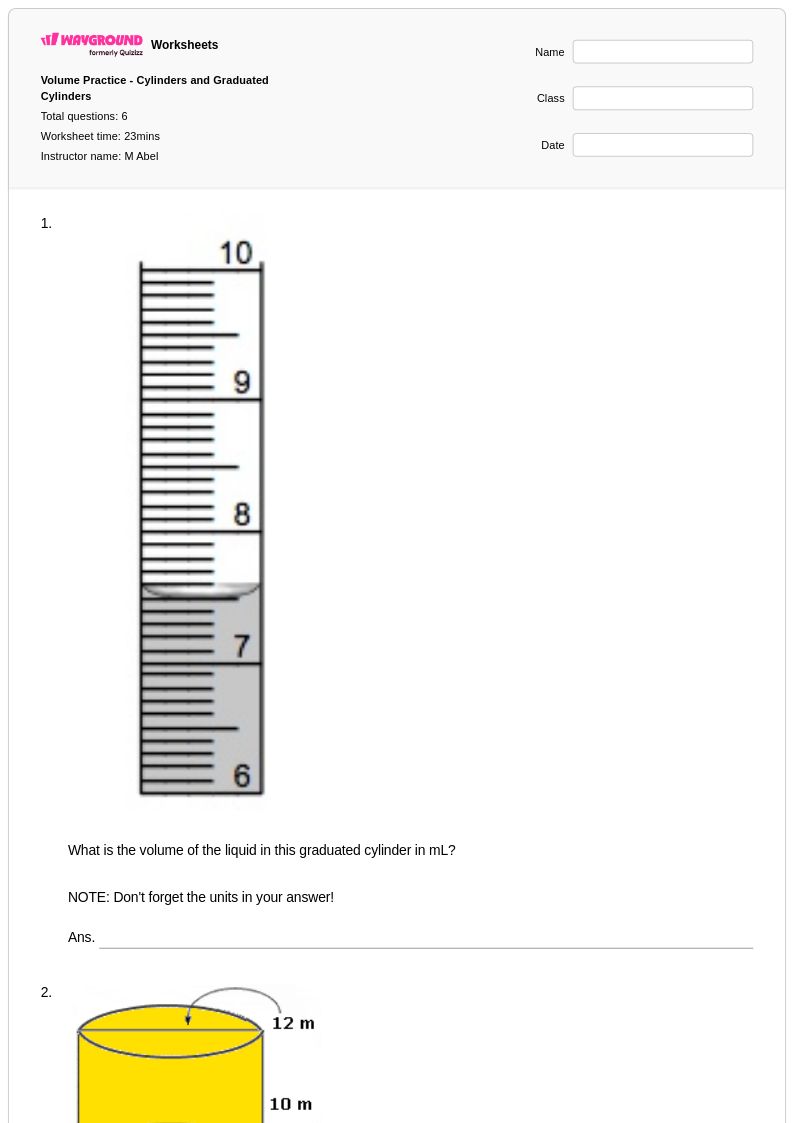
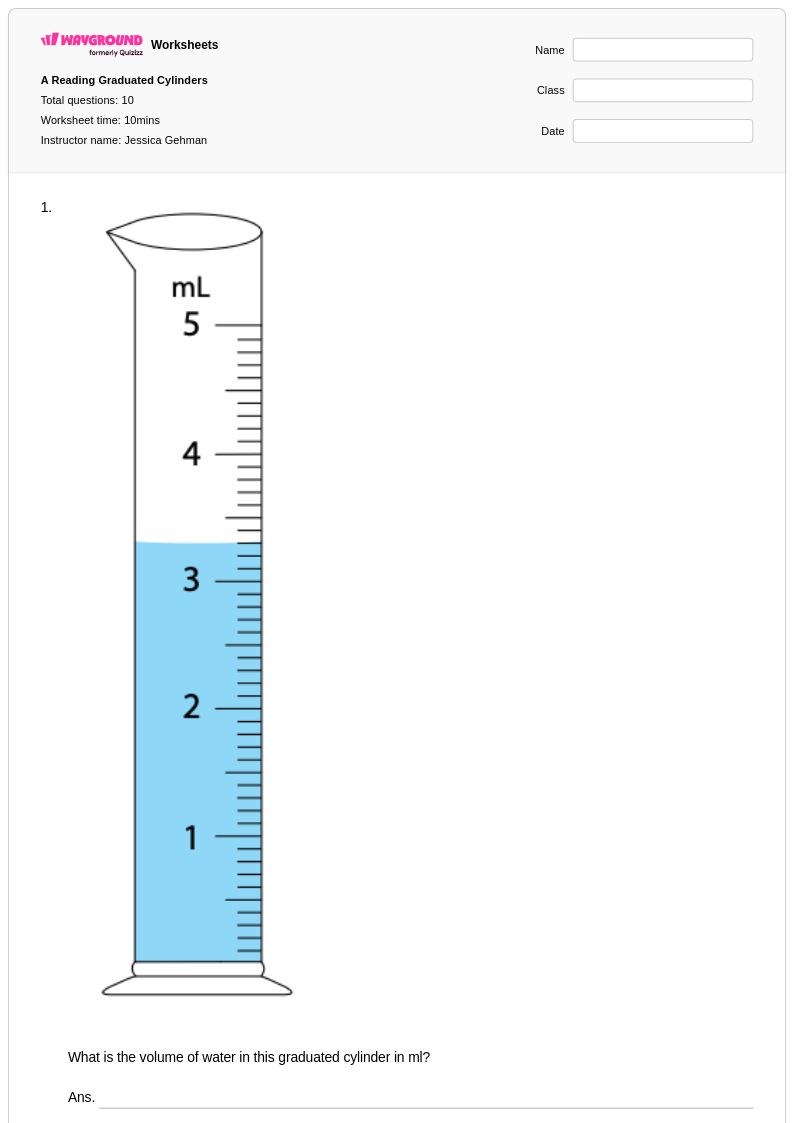
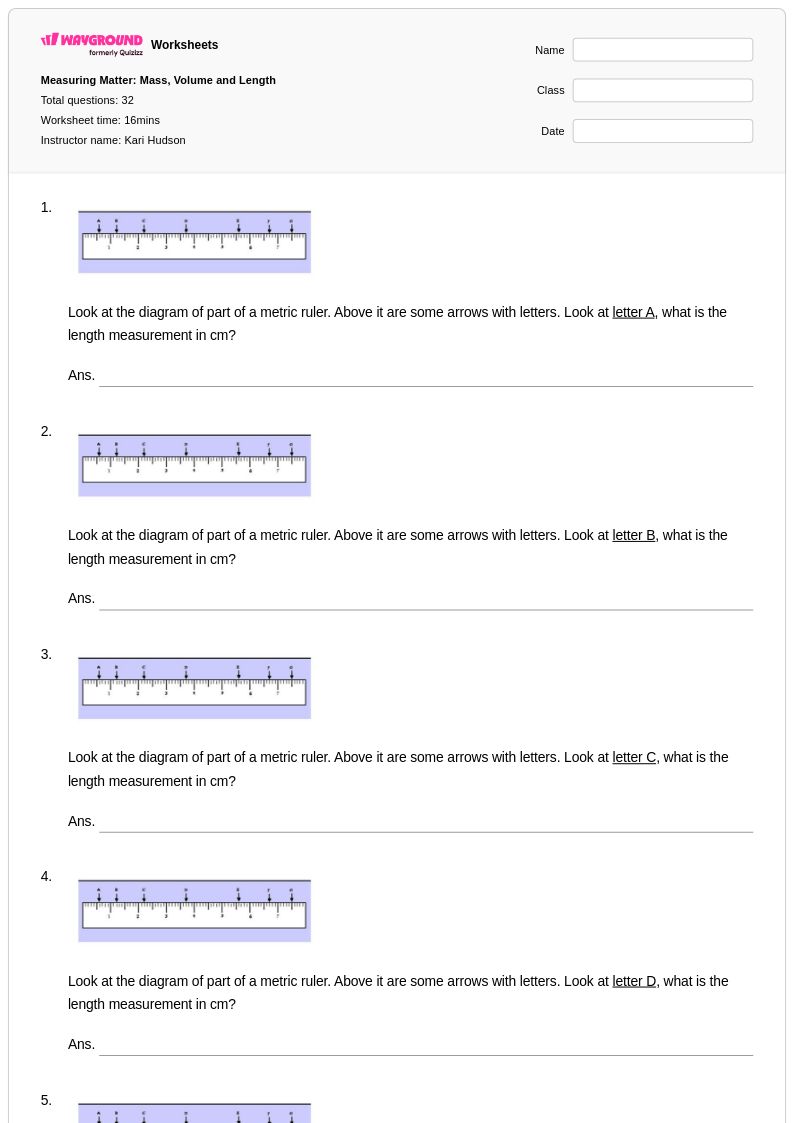
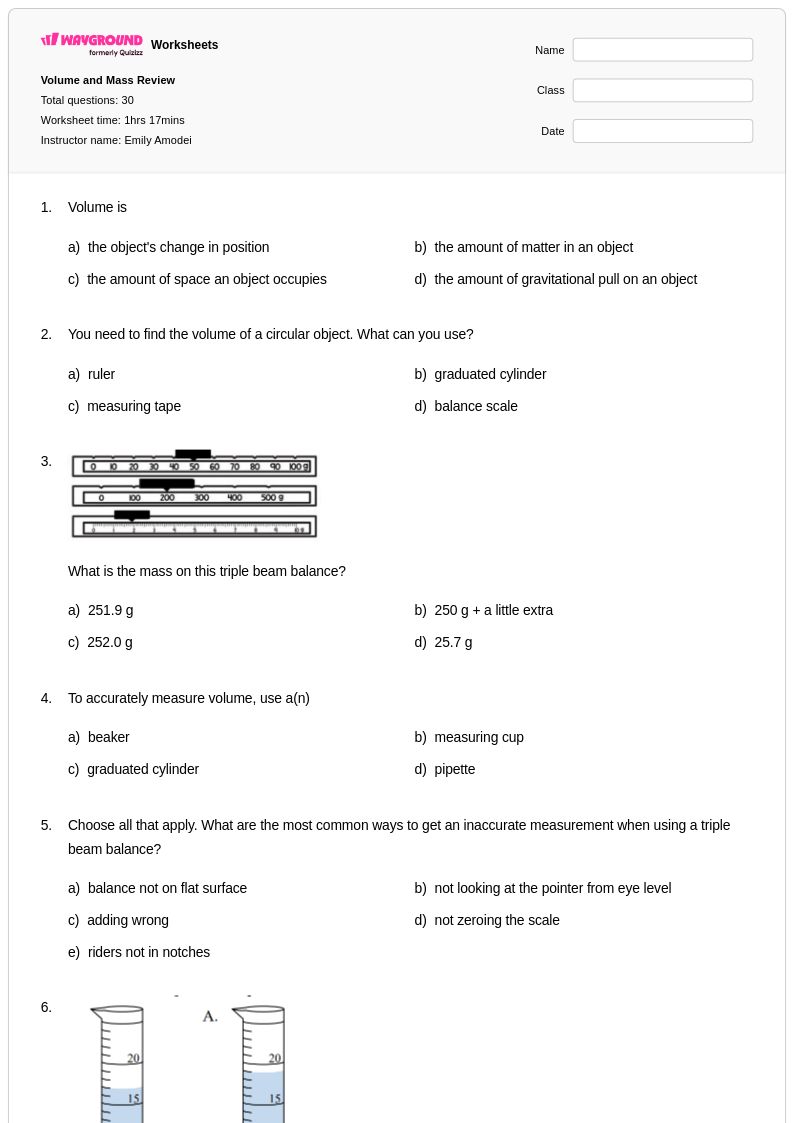
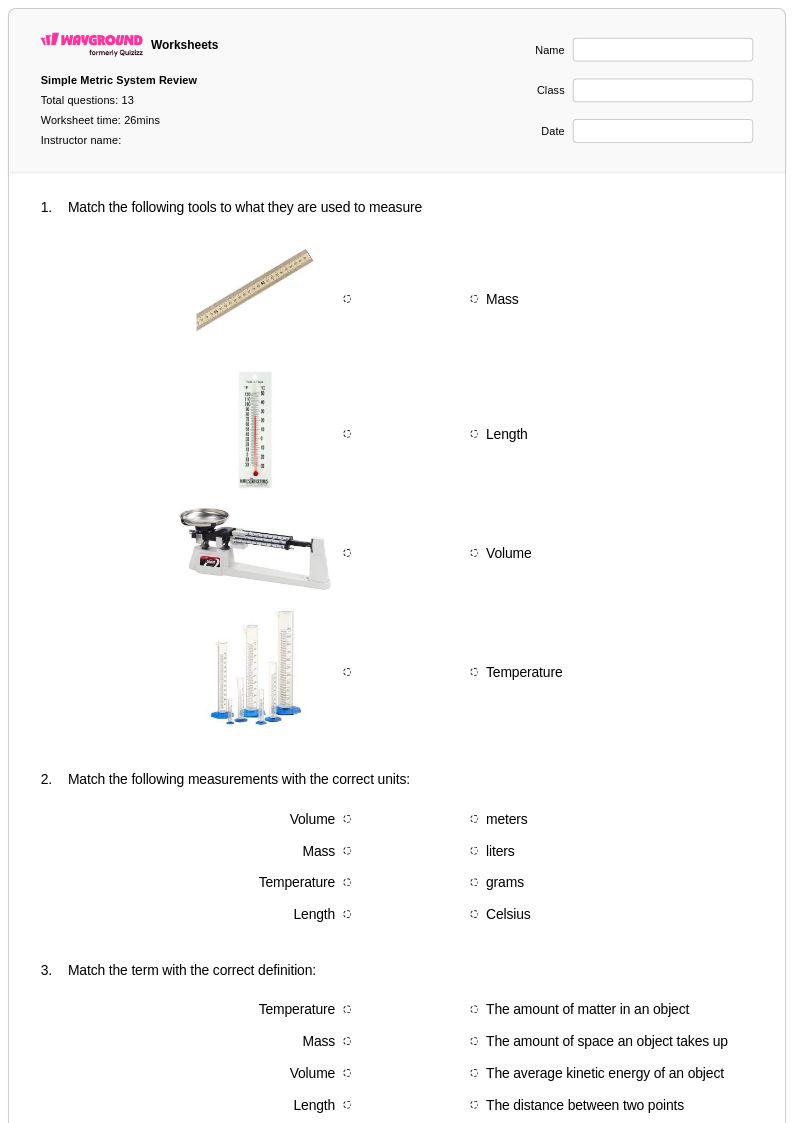
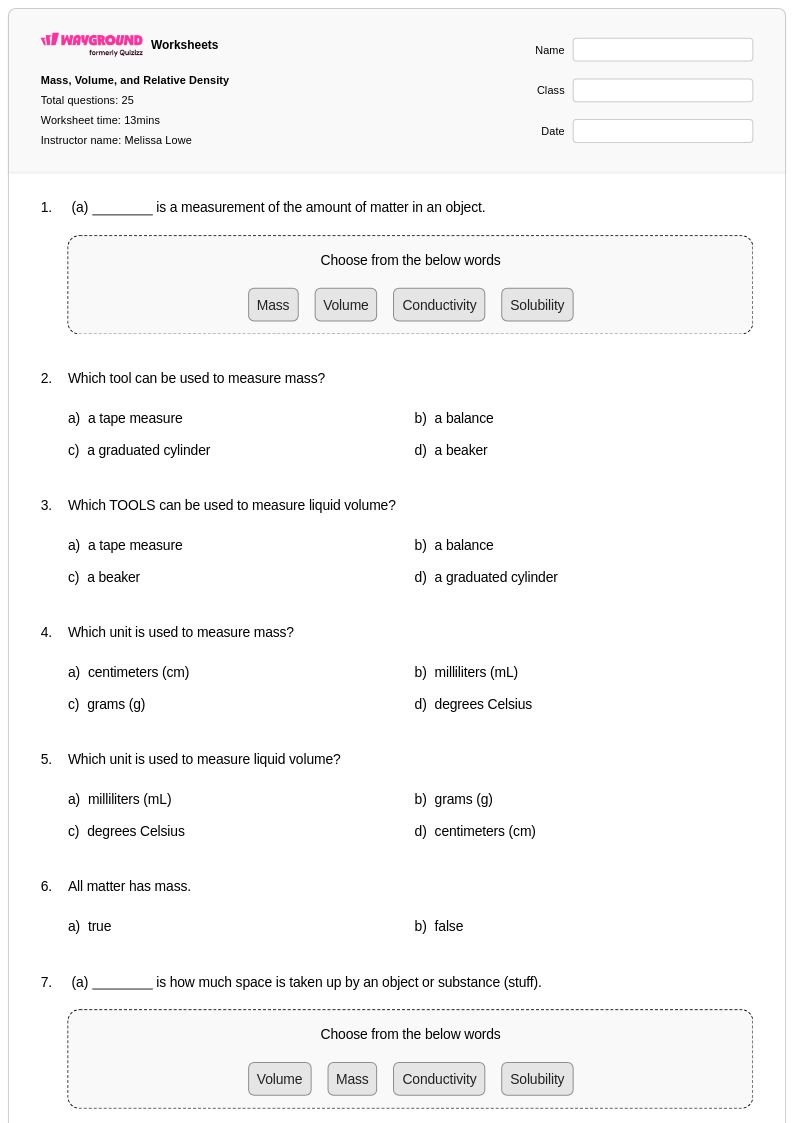
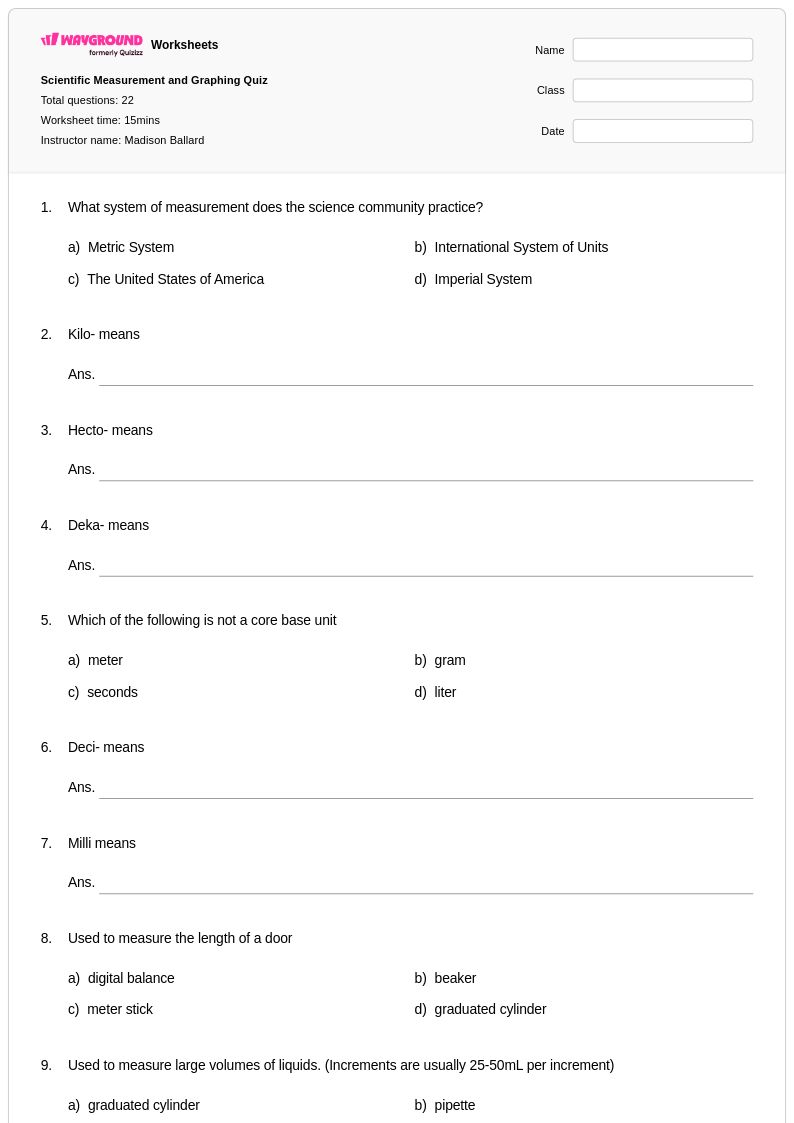
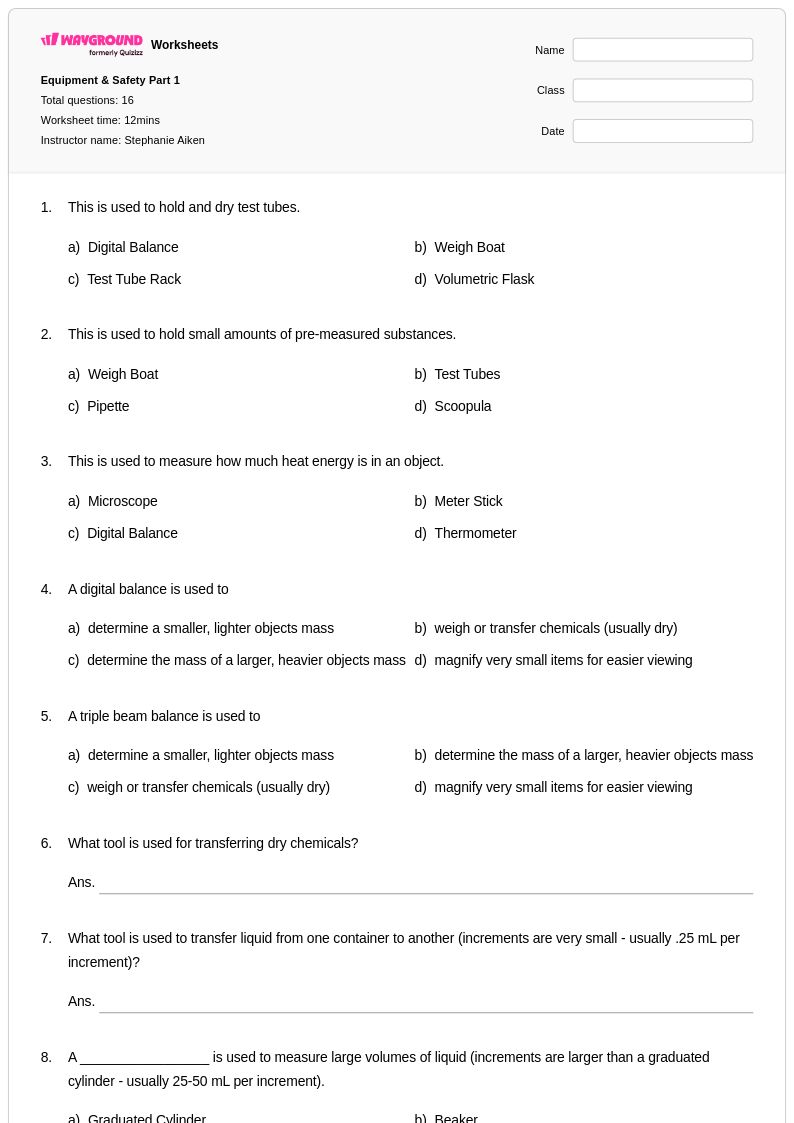
Class 7 graduated cylinder worksheets available through Wayground (formerly Quizizz) provide comprehensive practice in reading and interpreting volume measurements using this essential laboratory instrument. These expertly crafted worksheets strengthen students' abilities to accurately read meniscus levels, understand measurement precision, and apply proper graduated cylinder techniques in scientific investigations. Students develop critical skills in determining appropriate cylinder sizes for different measurement tasks, recording data with correct significant figures, and understanding the relationship between cylinder diameter and measurement accuracy. The collection includes practice problems that progress from basic volume readings to complex scenarios involving multiple measurements and calculations, with complete answer keys and free printables available in convenient pdf format for immediate classroom use.
Wayground (formerly Quizizz) supports science educators with millions of teacher-created graduated cylinder resources that feature robust search and filtering capabilities, enabling quick access to materials aligned with specific curriculum standards and learning objectives. The platform's differentiation tools allow teachers to customize worksheets based on individual student needs, from remedial practice with simple volume readings to enrichment activities involving measurement uncertainty and experimental design. These flexible resources are available in both printable and digital formats, including downloadable pdf versions, making them ideal for traditional classroom instruction, laboratory sessions, or remote learning environments. Teachers can seamlessly integrate these materials into lesson planning for skill-building practice, targeted remediation of measurement concepts, or comprehensive assessment of students' proficiency with graduated cylinder techniques.
FAQs
How do I teach students to read a graduated cylinder correctly?
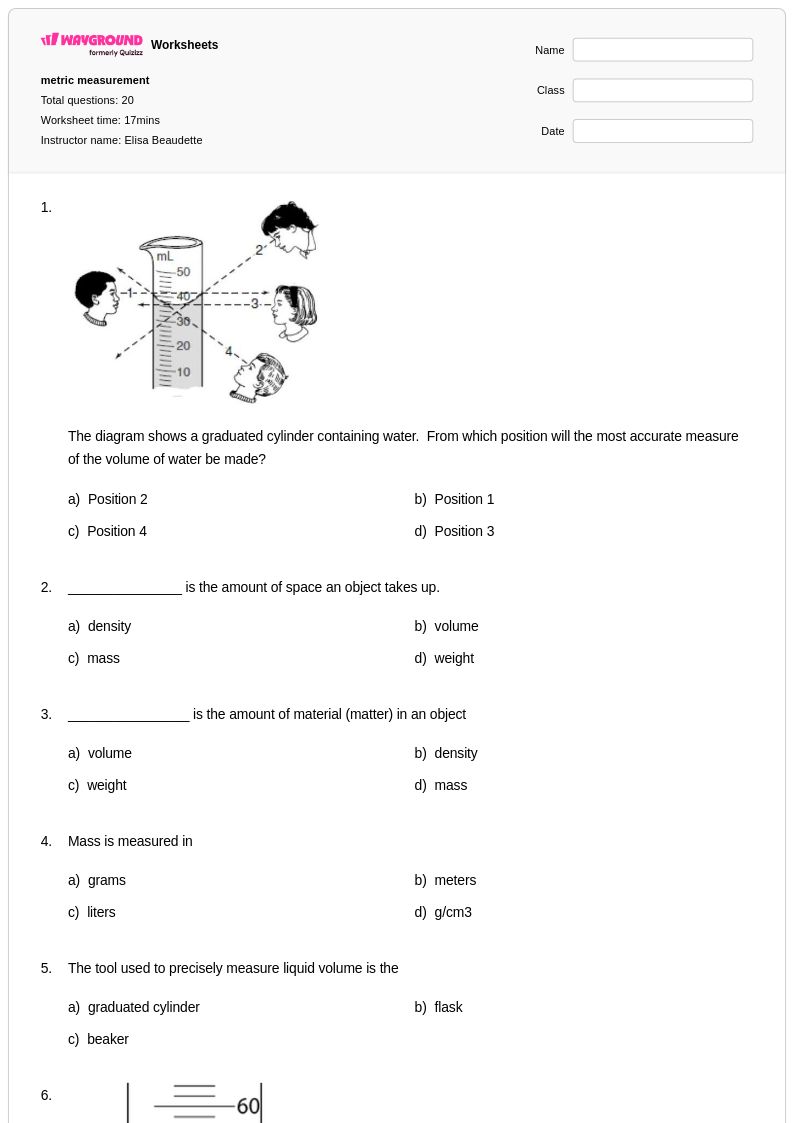
Start by teaching students to position their eyes at the level of the liquid surface, not above or below it. Then introduce the meniscus — the curved surface of the liquid — and explain that students should read from the bottom of the meniscus for most liquids (like water) and the top for mercury. Use visual examples with clearly marked increments before moving to practice problems that require interpolation between lines.
What exercises help students practice reading graduated cylinders?
Effective practice includes worksheet problems that show graduated cylinders at various fill levels and ask students to record the volume, starting with whole-number readings before progressing to readings that fall between increment marks. Problems that require unit conversion (e.g., mL to L) and scenarios involving multiple measurement steps build the precision and fluency students need for lab work.
What mistakes do students commonly make when reading graduated cylinders?
The most common error is reading the top of the meniscus rather than the bottom, which consistently produces readings that are too high. Students also frequently misidentify the value of each increment mark, especially when the scale uses intervals of 2 or 5 rather than 1. A third common mistake is parallax error — reading the scale from an angle rather than at eye level — which leads to inaccurate measurements regardless of meniscus awareness.
How do I help struggling students with graduated cylinder measurement?
Break the skill into isolated steps: first practice identifying increment values on different cylinder scales, then practice locating the meniscus, and finally combine both into full readings. Wayground supports accommodations such as Read Aloud for students who benefit from audio support, reduced answer choices to lower cognitive load, and extended time for students who need more processing time when working through measurement problems digitally.
How do I use Wayground's graduated cylinder worksheets in my classroom?
Wayground's graduated cylinder worksheets are available as printable PDFs, making them easy to distribute for in-class lab preparation or homework, and in digital formats for technology-integrated classrooms. Teachers can also host the worksheets as a quiz directly on Wayground, which enables real-time progress tracking. Each worksheet includes answer keys, so teachers can use them for self-paced practice, formative assessment, or lab remediation without additional preparation.
At what point in a science unit should I introduce graduated cylinder worksheets?
Graduated cylinder worksheets work best in two phases: first as a pre-lab introduction to familiarize students with reading scales and the meniscus before they handle physical equipment, and again after hands-on lab sessions as reinforcement or error correction. Using worksheets before the lab reduces measurement errors during actual investigations and helps students arrive with baseline fluency rather than learning the skill from scratch in a live setting.