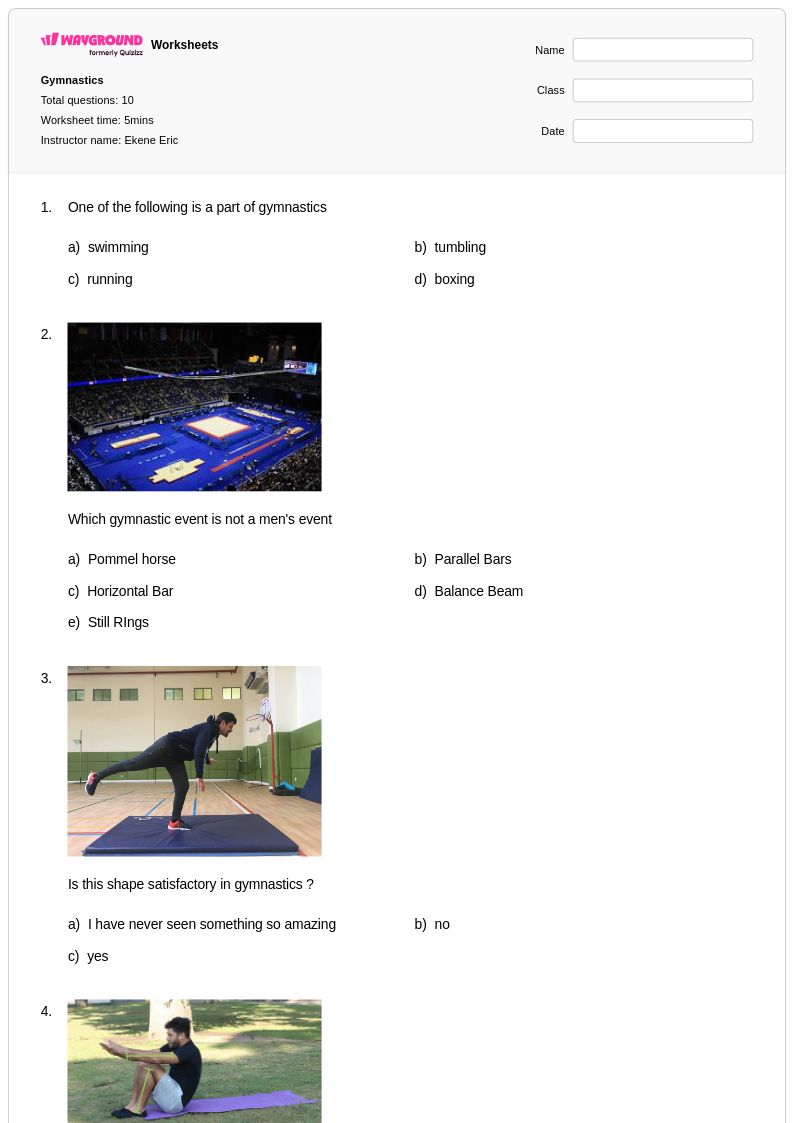
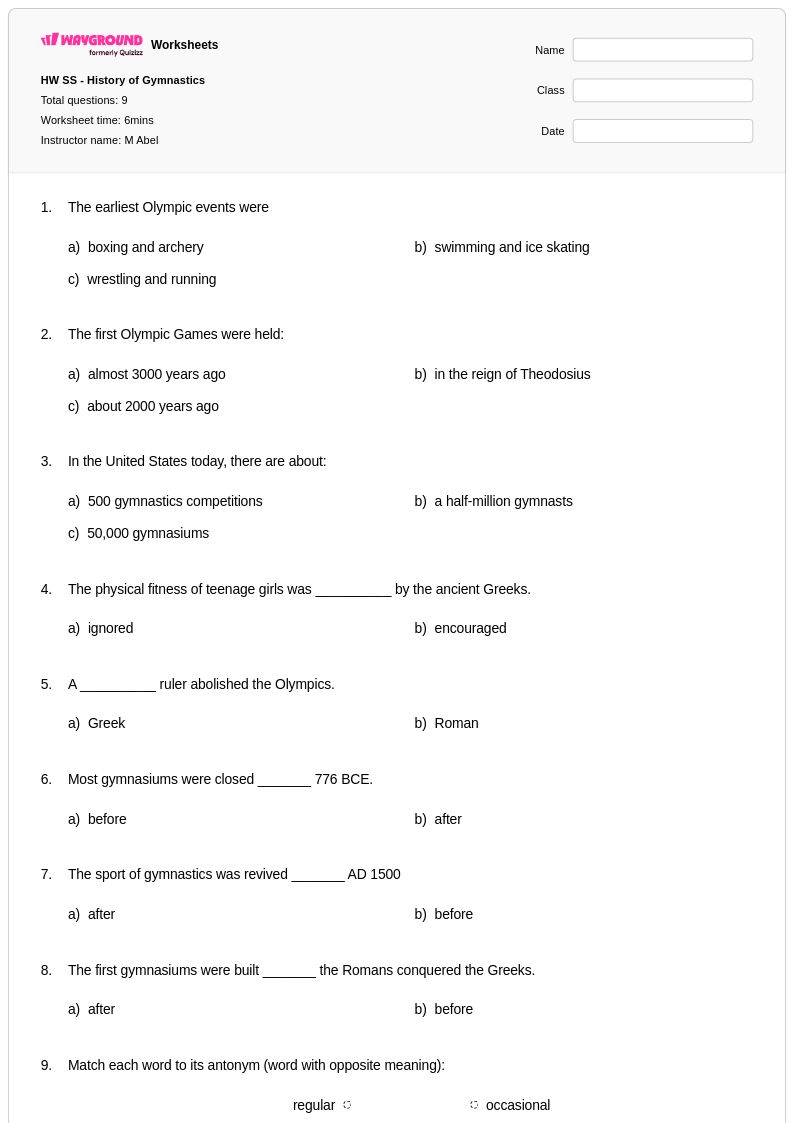
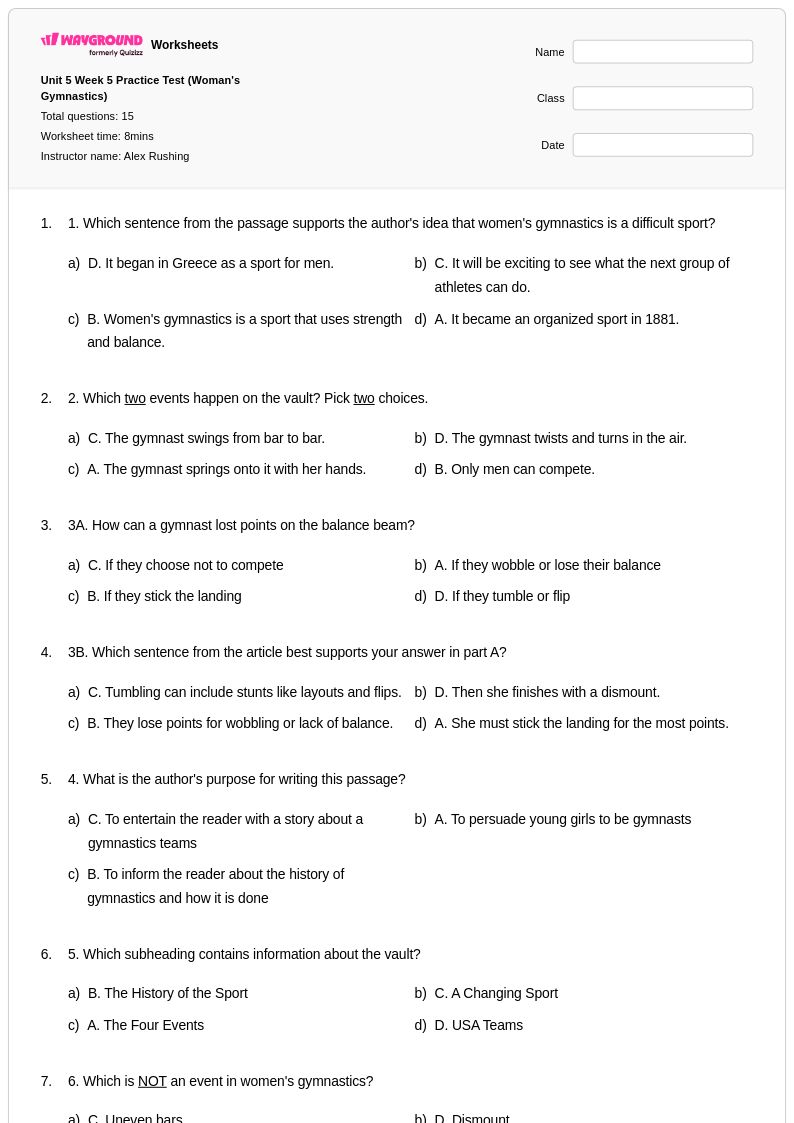
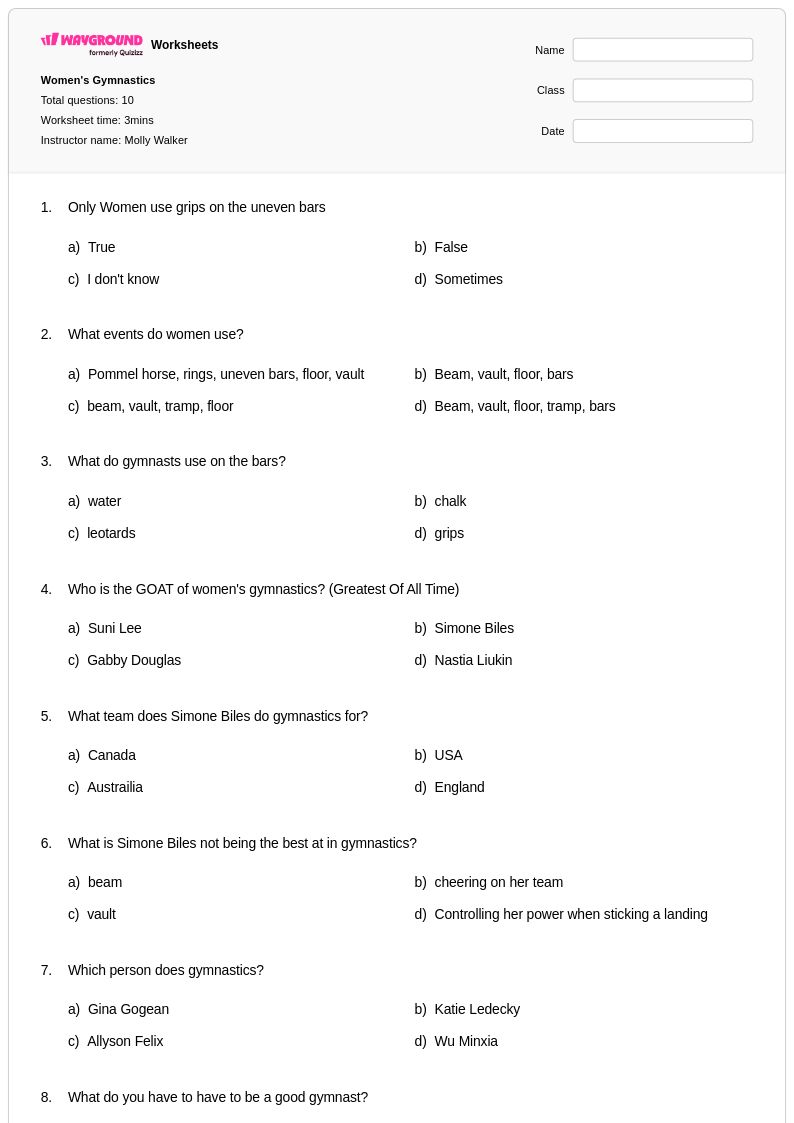
Free Printable Gymnastics Worksheets for Kindergarten
Free kindergarten gymnastics worksheets and printables help young learners develop basic movement skills, balance, and coordination through fun practice problems and activities with complete answer keys.
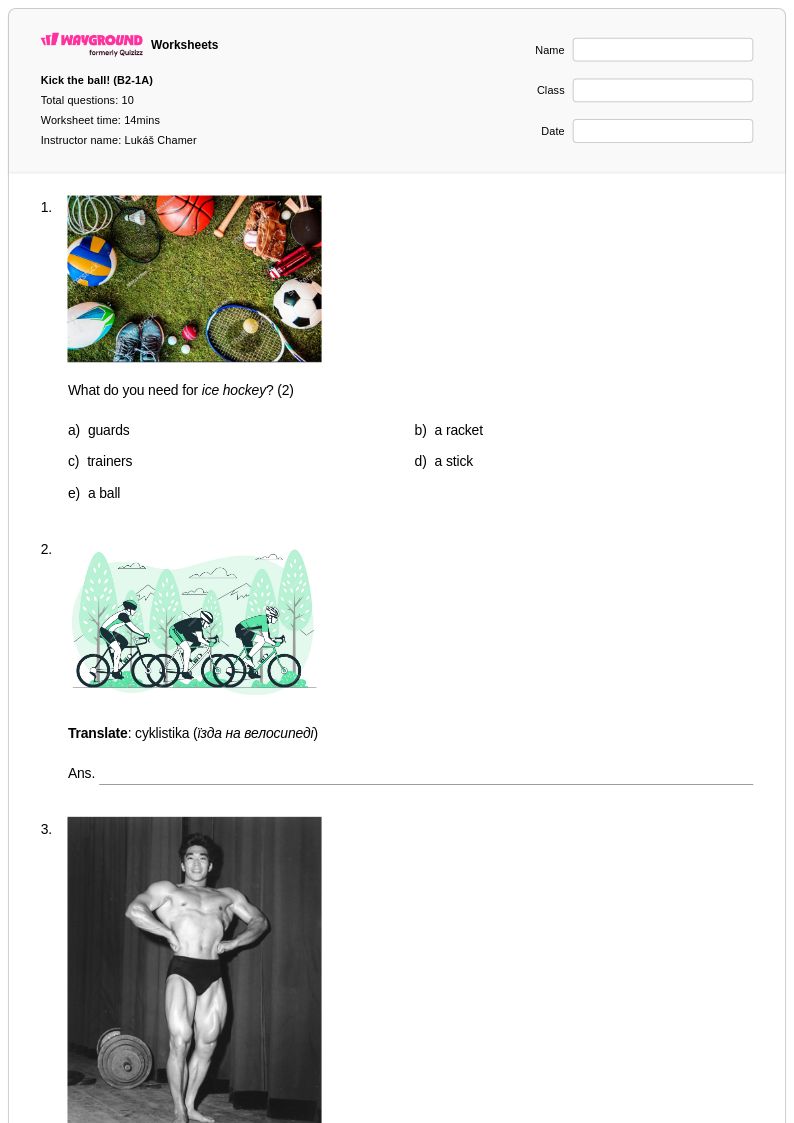
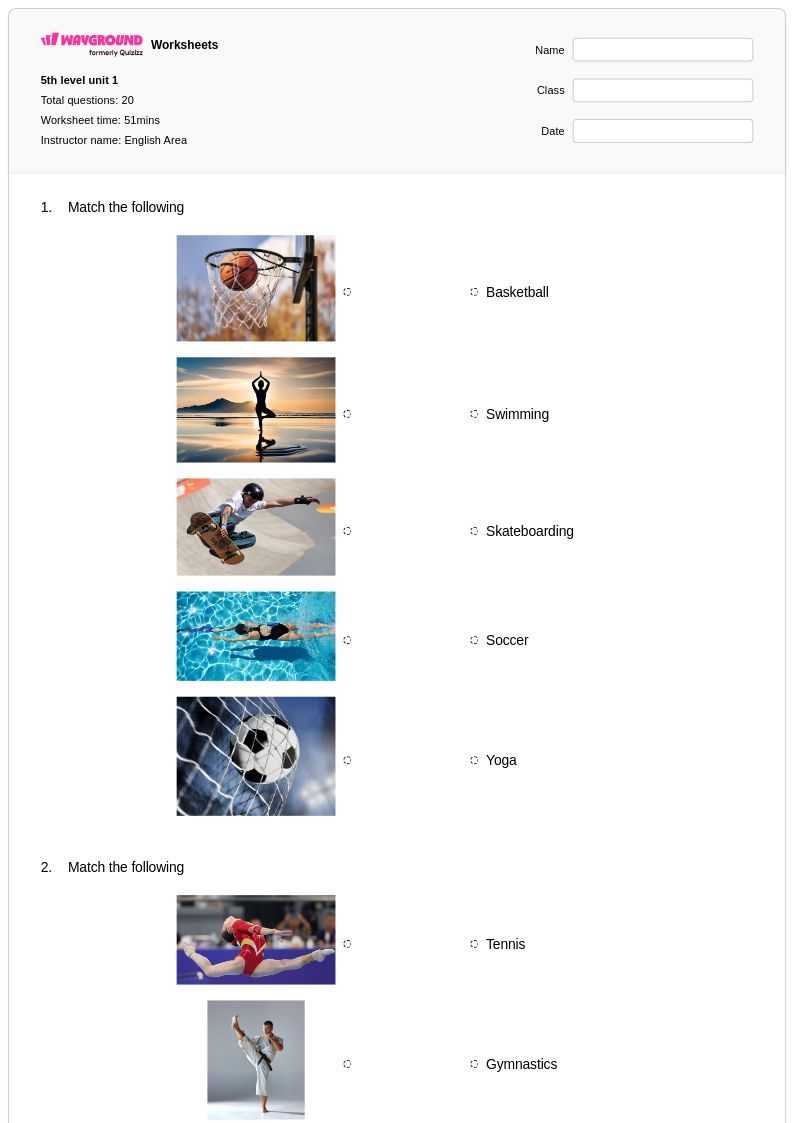
Explore printable Gymnastics worksheets for Kindergarten
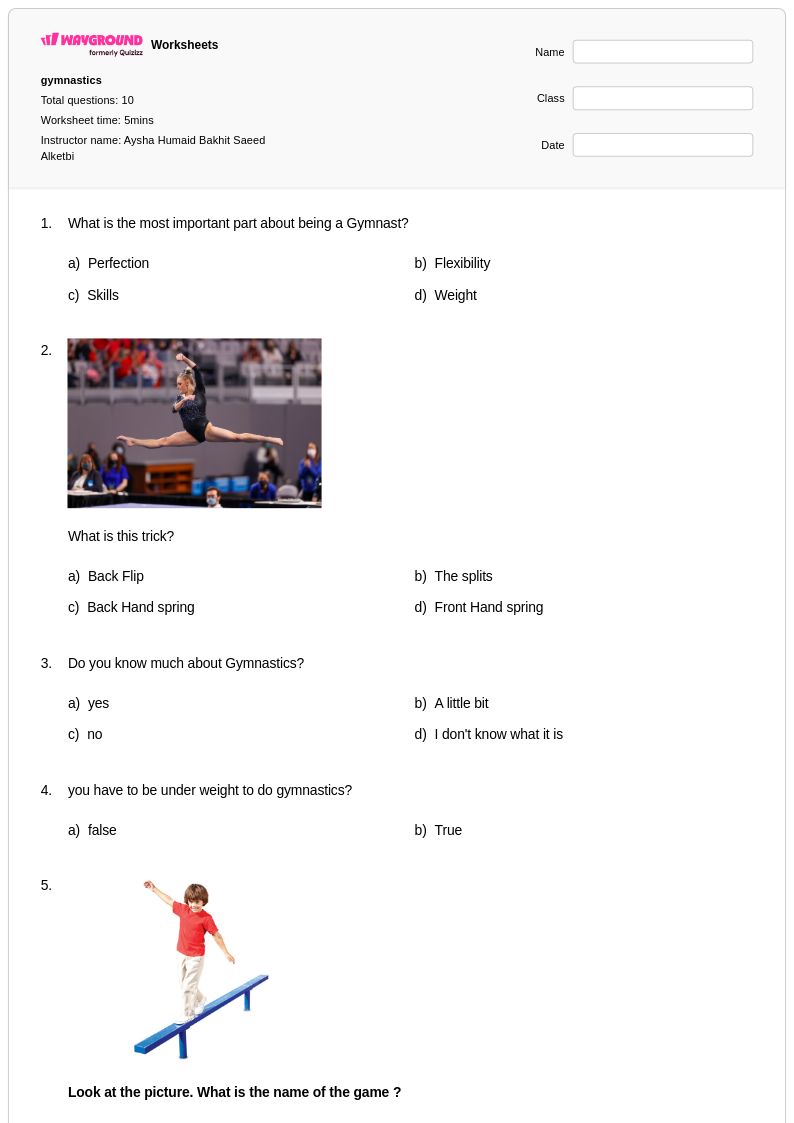
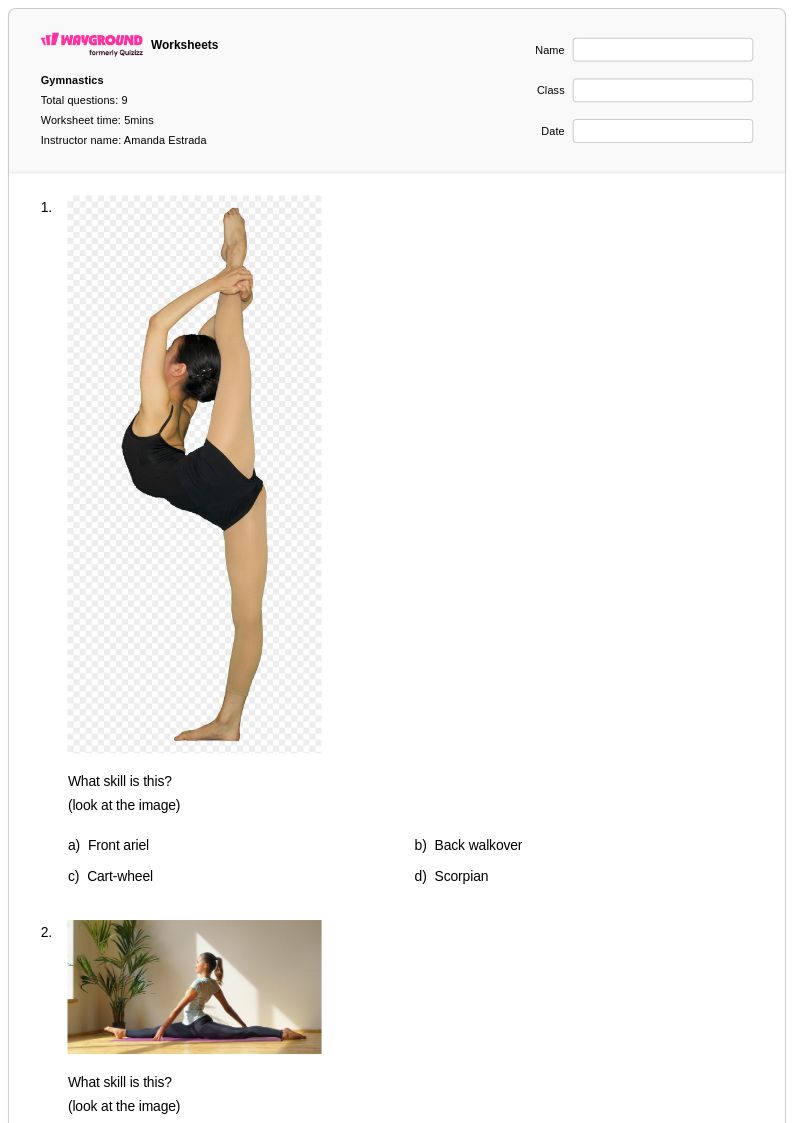
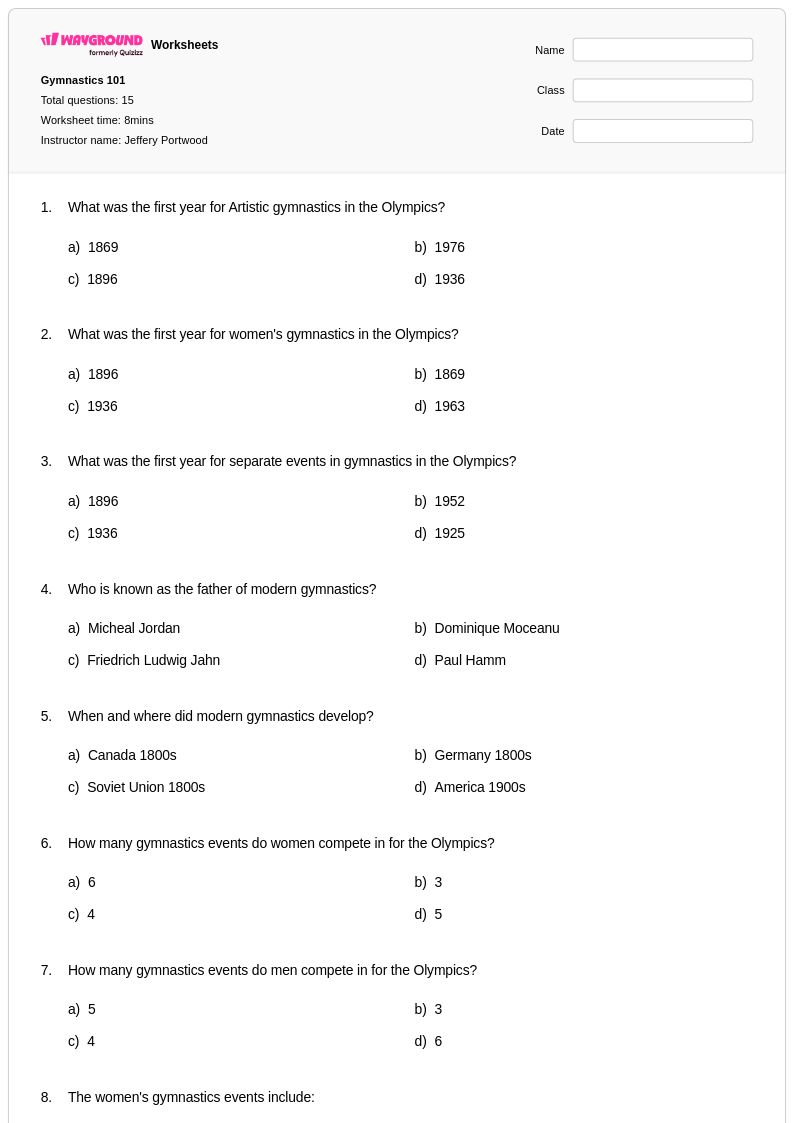
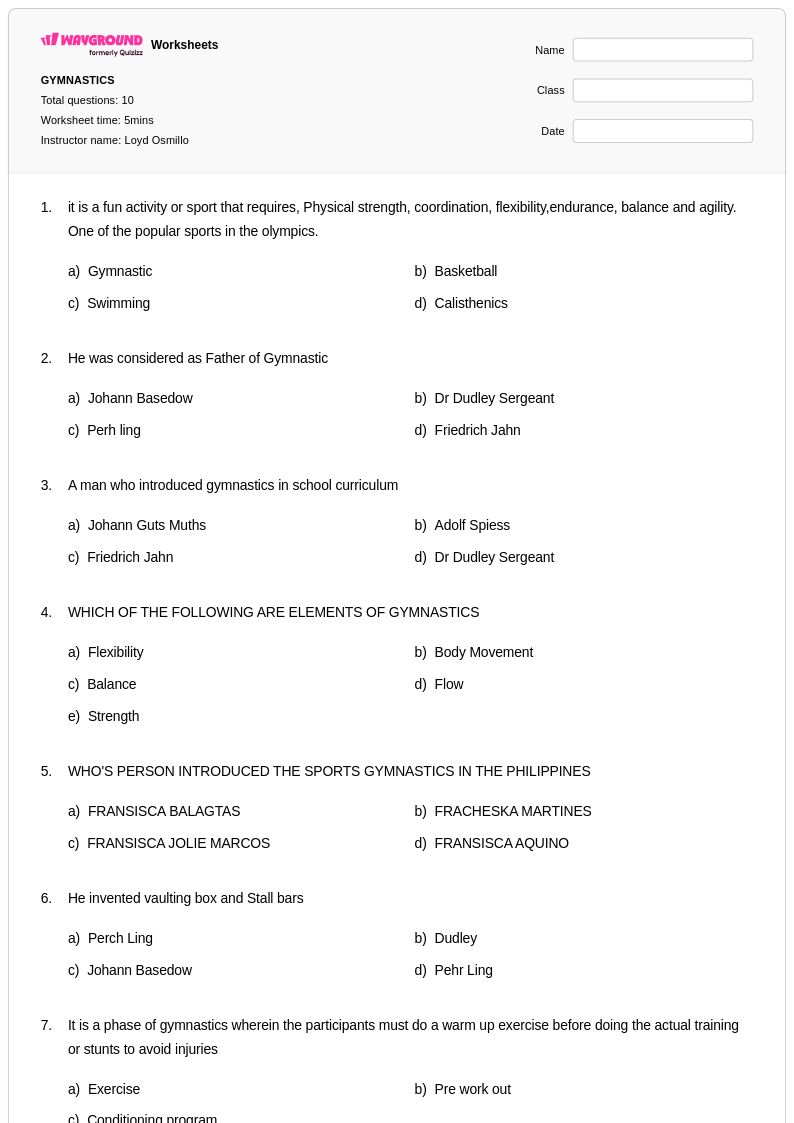
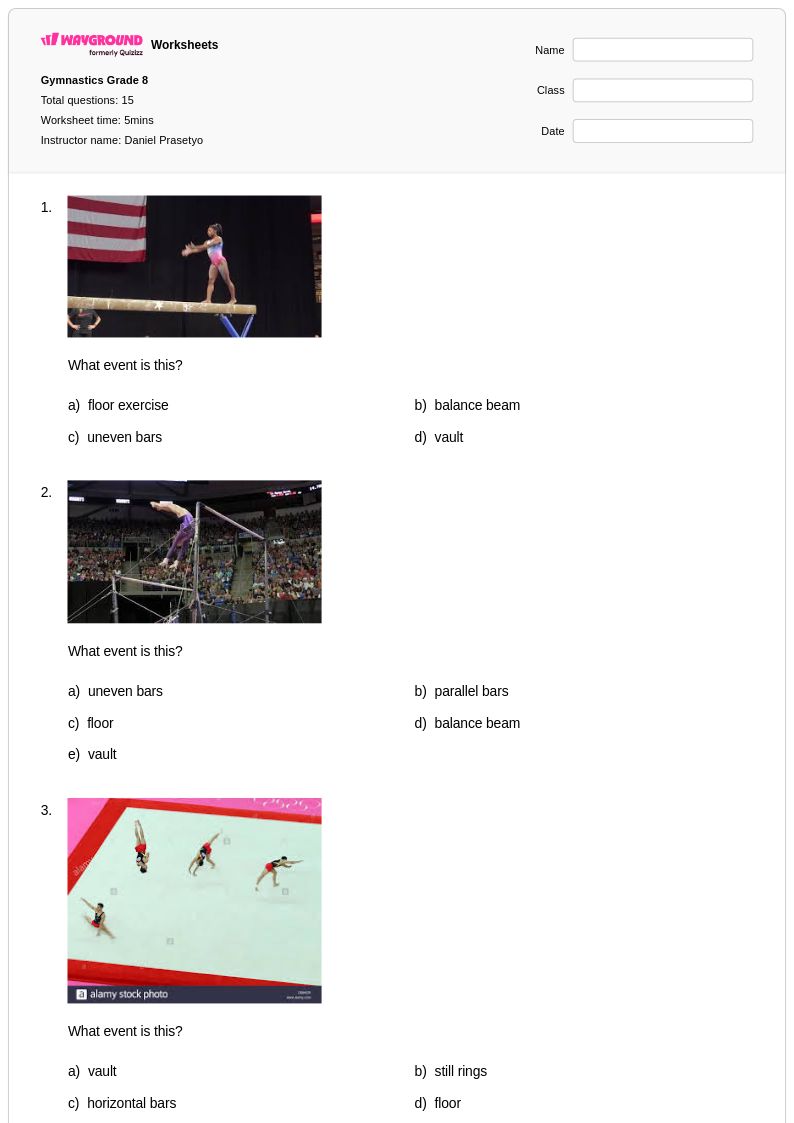
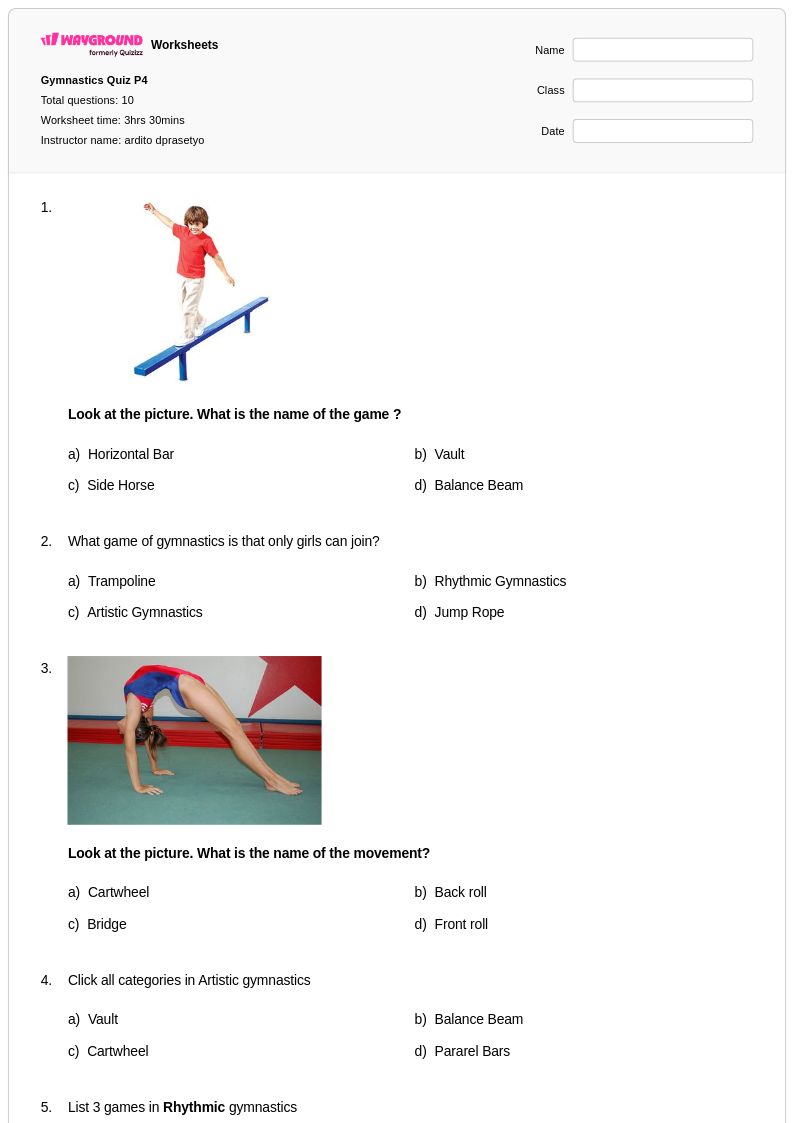
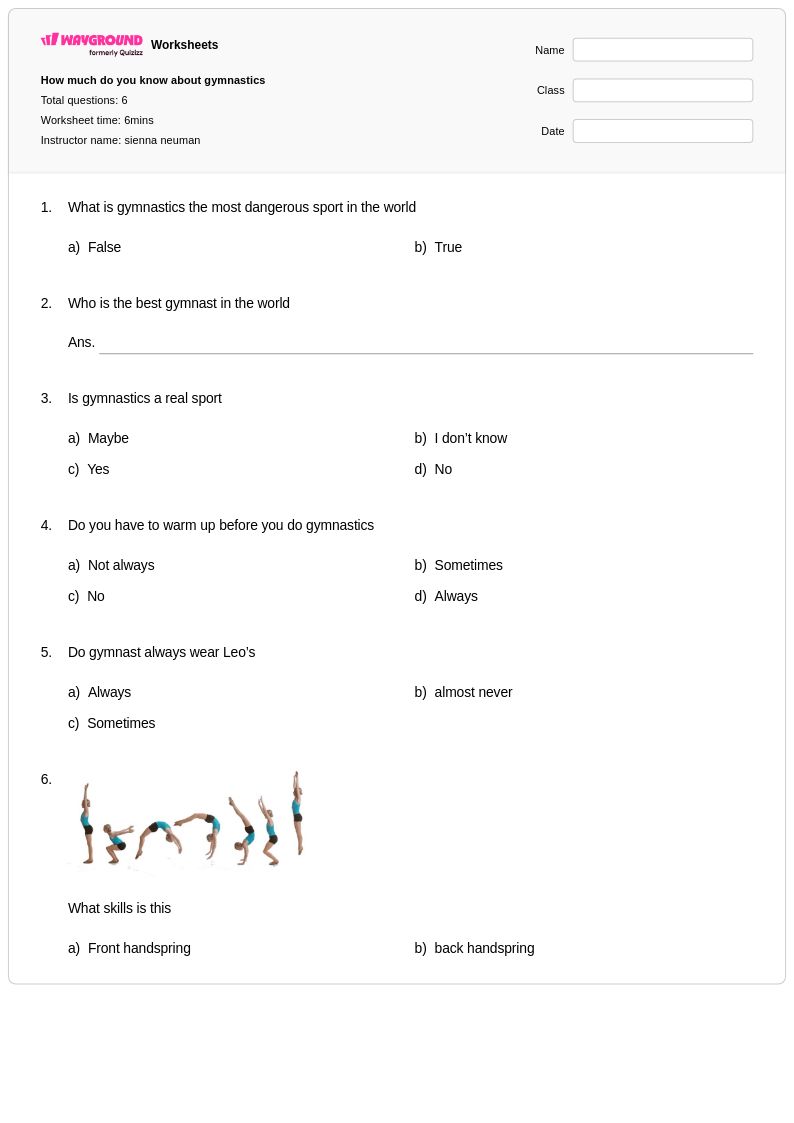
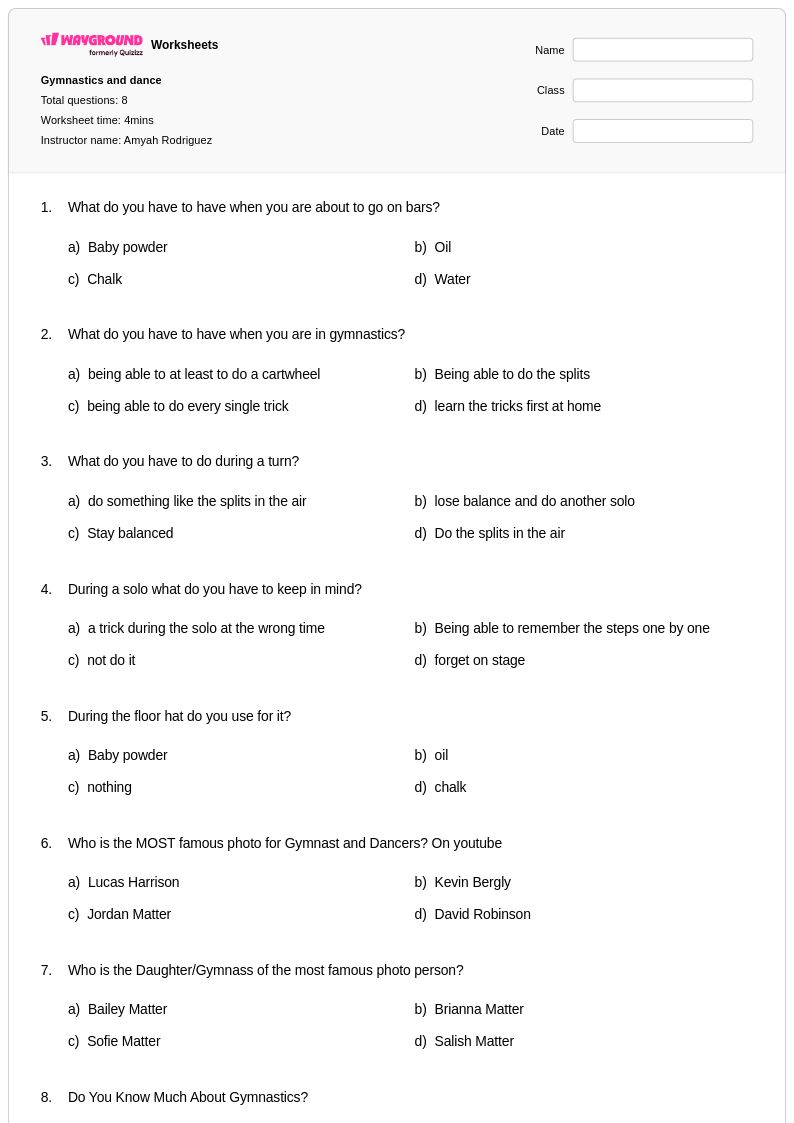
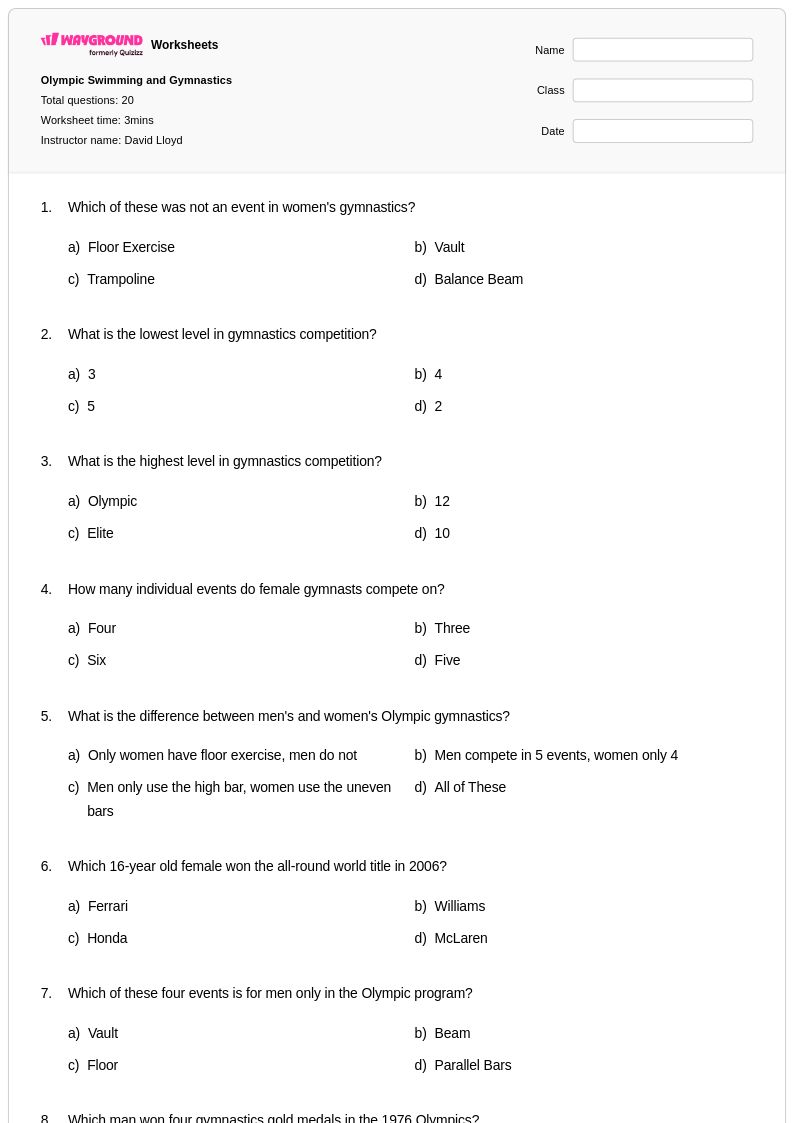
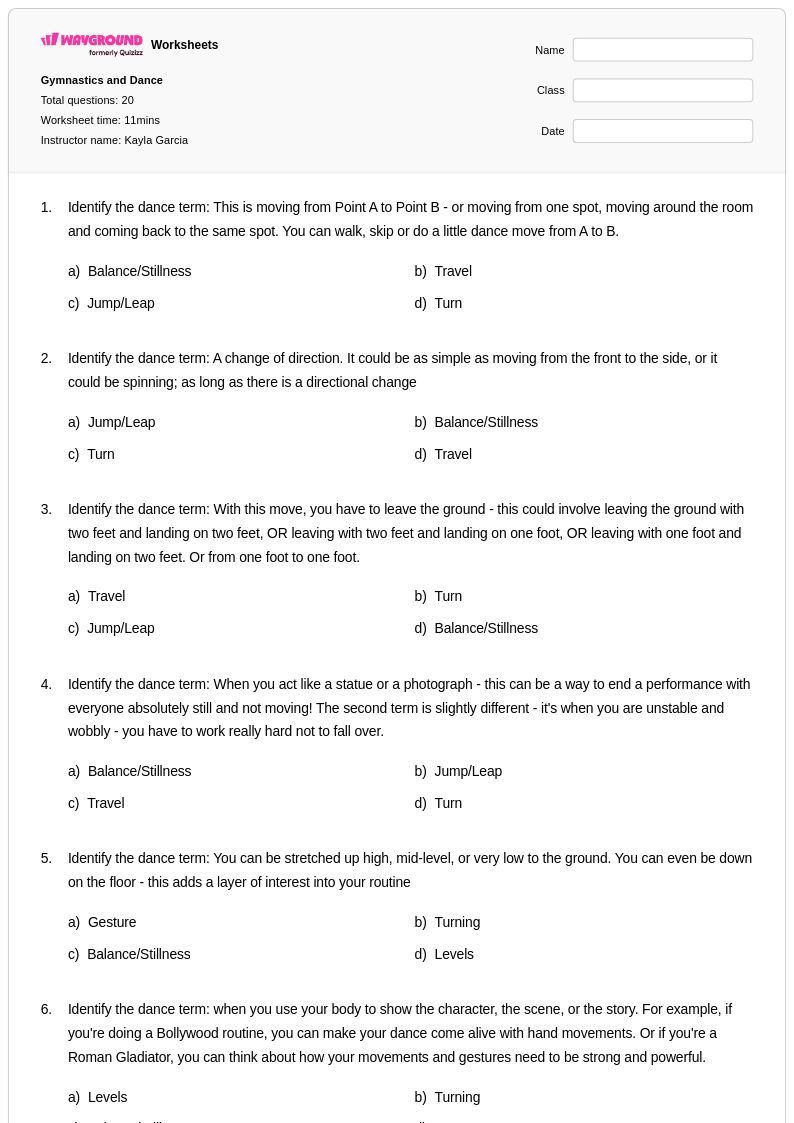
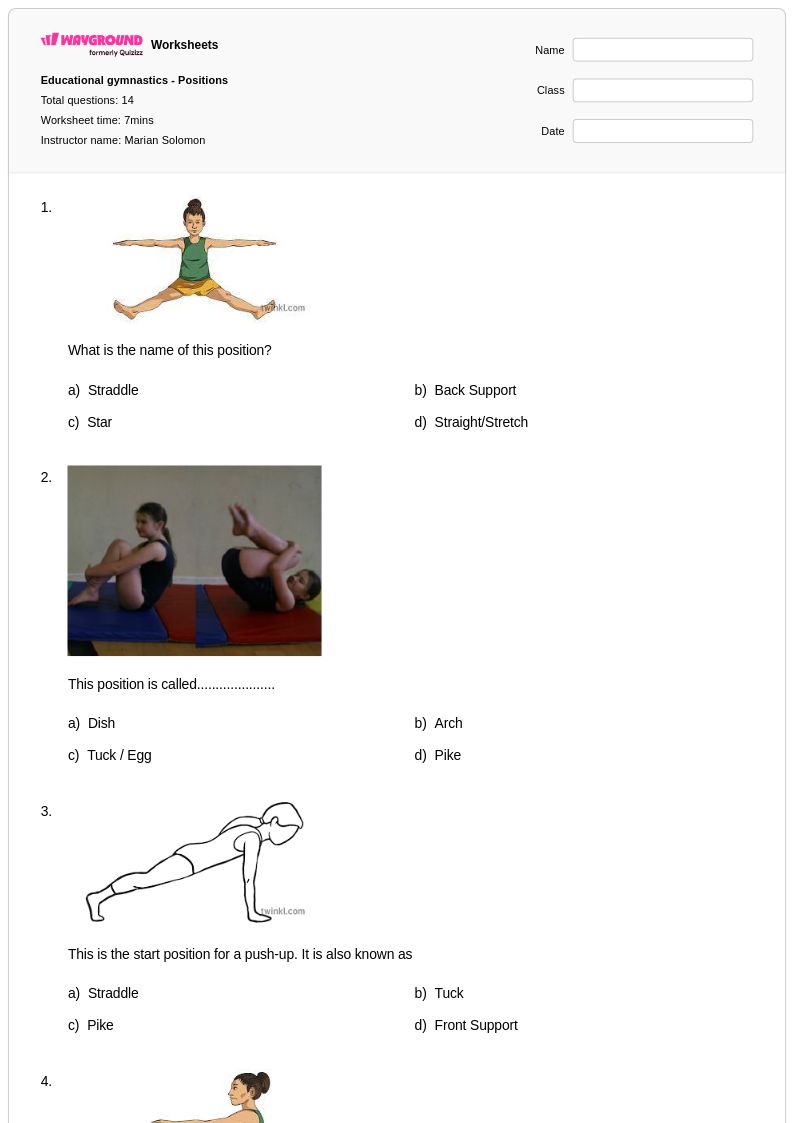
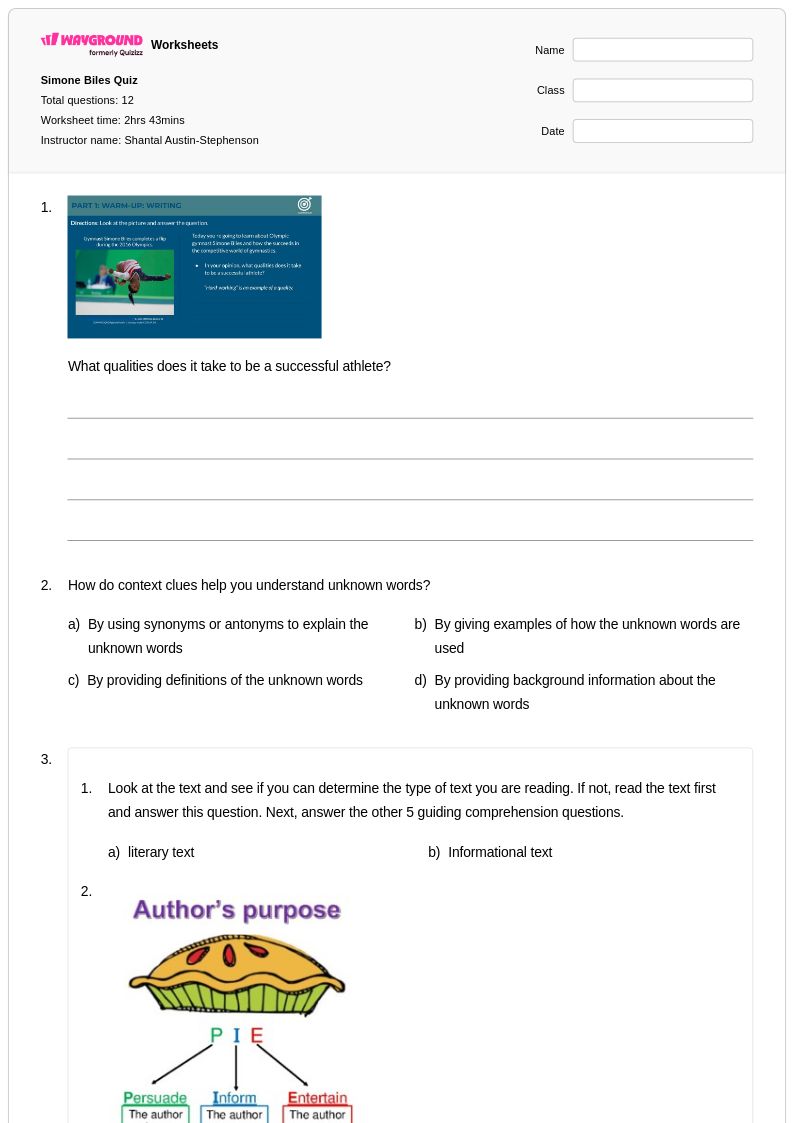
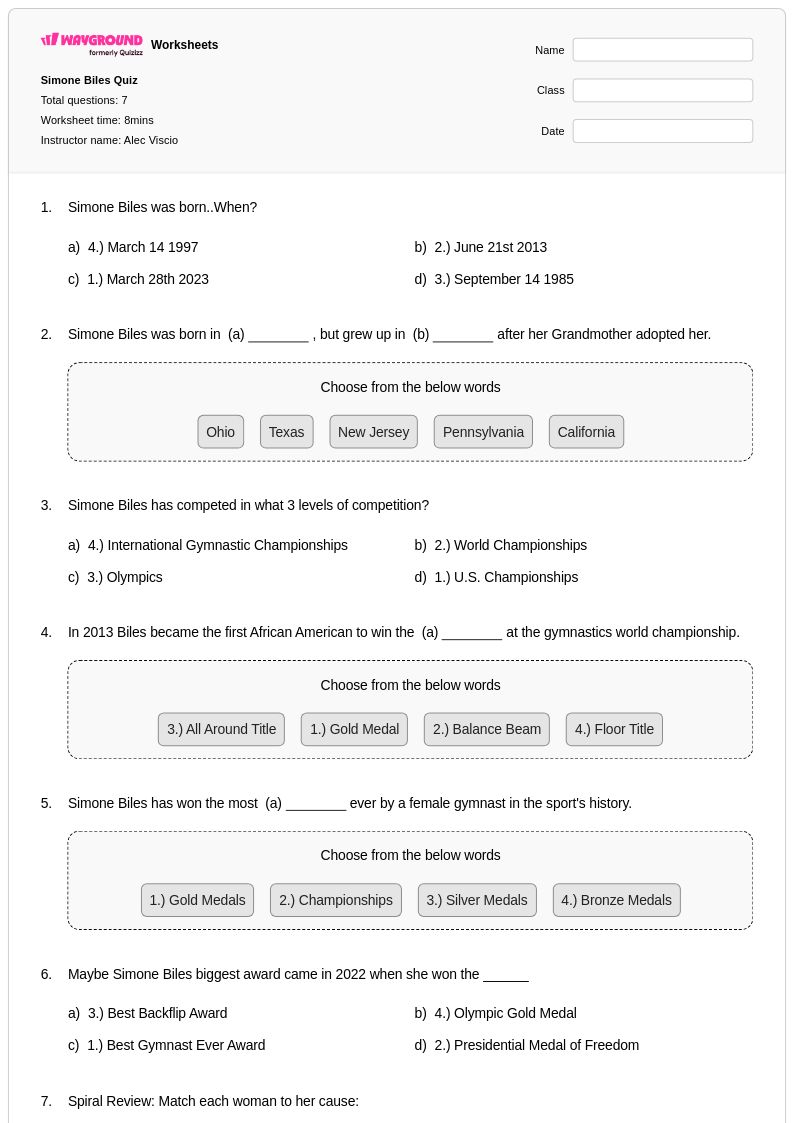
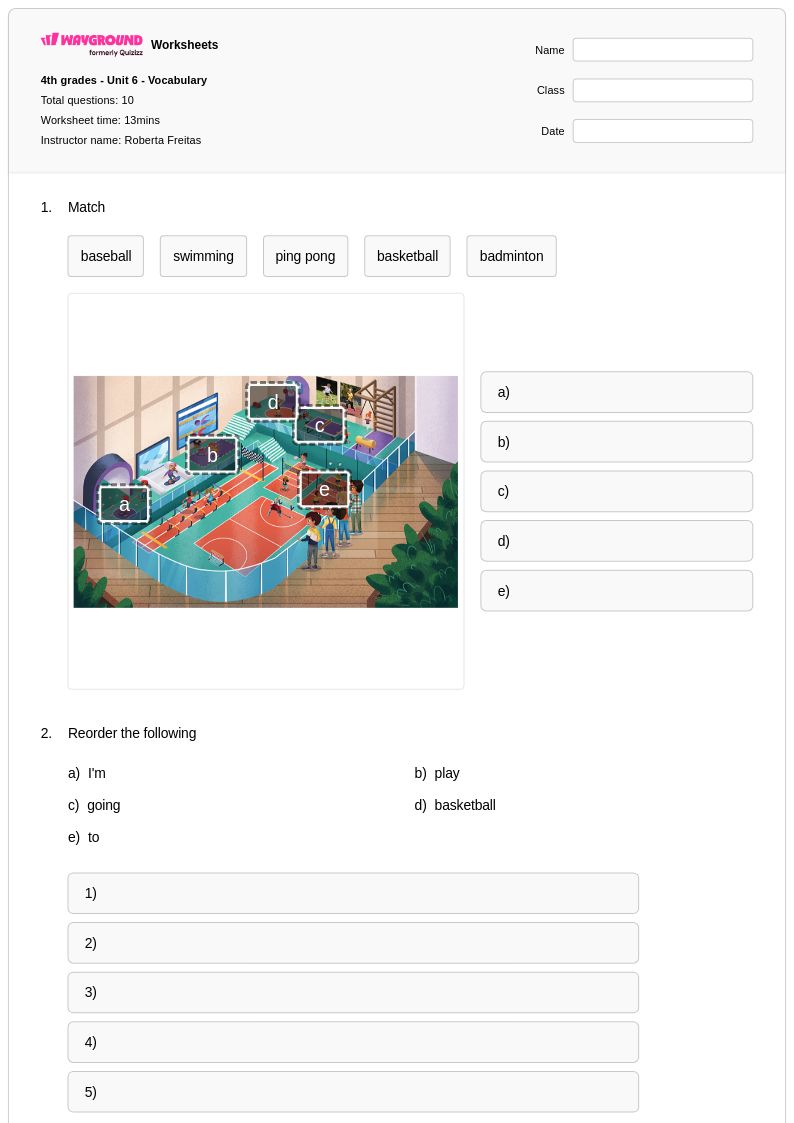
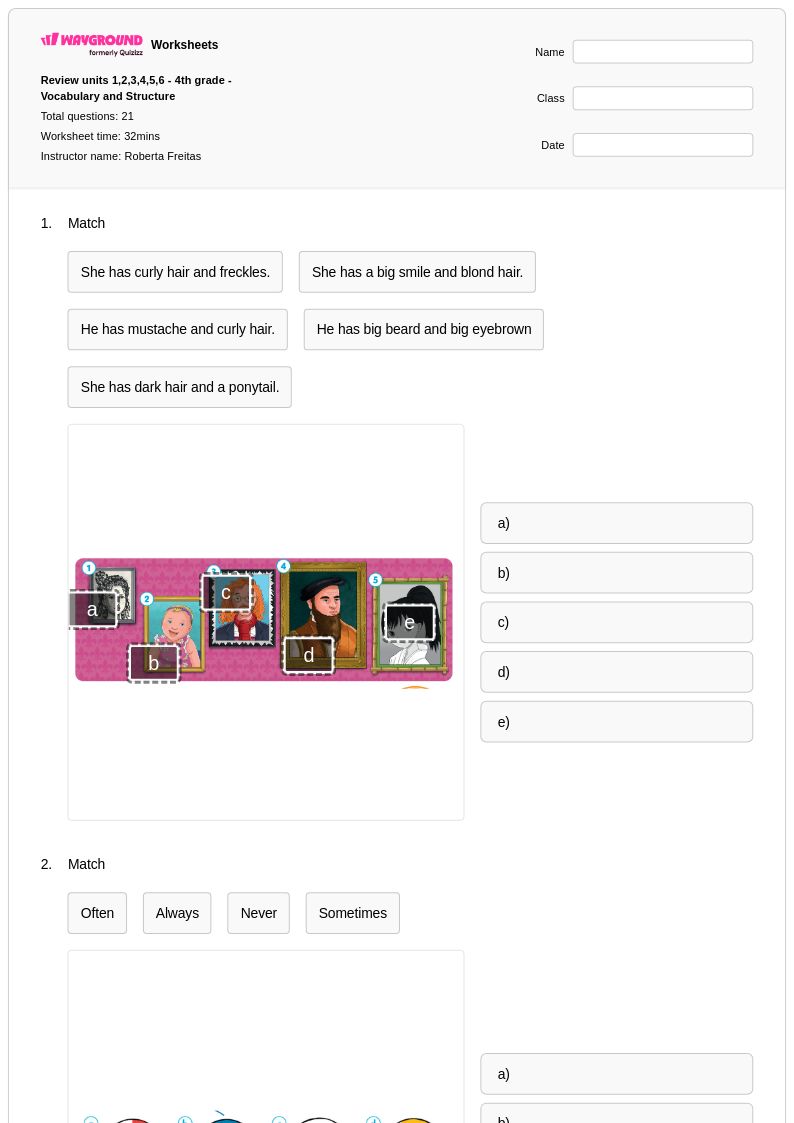
Gymnastics worksheets for kindergarten students through Wayground (formerly Quizizz) introduce young learners to fundamental movement skills and basic gymnastics concepts through age-appropriate activities and exercises. These educational resources focus on developing gross motor skills, balance, coordination, and spatial awareness while building foundational knowledge of gymnastics positions, movements, and safety practices. The worksheets strengthen essential physical literacy skills including body control, directional awareness, and following multi-step instructions, all presented in engaging formats that capture kindergarten students' attention. Teachers can access comprehensive answer keys and utilize these free printables as practice problems during physical education lessons, warm-up activities, or cross-curricular learning experiences that connect movement with academic concepts.
Wayground (formerly Quizizz) empowers physical education teachers with access to millions of teacher-created gymnastics resources specifically designed for kindergarten-level instruction. The platform's robust search and filtering capabilities allow educators to quickly locate worksheets that align with physical education standards and developmental milestones appropriate for five and six-year-old students. Teachers benefit from extensive differentiation tools that accommodate varying skill levels and learning needs, while flexible customization options enable modification of content to match specific curriculum requirements or individual student goals. These gymnastics worksheets are available in both printable pdf format and digital versions, supporting diverse instructional approaches and facilitating seamless integration into lesson planning, skill remediation sessions, enrichment activities, and ongoing assessment of students' physical development and movement competency.
FAQs
How do I teach gymnastics concepts in a classroom or PE setting?
Teaching gymnastics effectively combines practical demonstration with theoretical instruction. Start by introducing body positioning and balance concepts, then build toward movement sequences and apparatus-specific skills. Pairing physical practice with written activities, such as labeling body positions or analyzing form, reinforces terminology and helps students connect movement vocabulary to what they observe and perform.
What topics do gymnastics worksheets typically cover?
Gymnastics worksheets commonly cover fundamental skills such as body positioning, balance and coordination, tumbling progressions, and apparatus familiarization. They also address scoring systems, judging criteria for Olympic events, historical context of gymnastics as both an artistic and competitive sport, and movement terminology. This combination supports both the physical and theoretical dimensions of the subject.
What exercises help students practice gymnastics skills and terminology on paper?
Written practice activities for gymnastics include labeling diagrams of body positions, sequencing tumbling skills in correct order, matching movement terminology to definitions, and analyzing scoring criteria for specific events. These exercises reinforce the vocabulary and conceptual knowledge students need to understand what they are doing physically and to discuss gymnastics with precision.
What mistakes do students commonly make when learning gymnastics concepts?
Students often confuse artistic and acrobatic gymnastics events, misidentify apparatus-specific rules, or struggle to articulate the difference between execution and difficulty scores in judging. In written work, they frequently use informal language instead of correct movement terminology and may sequence tumbling skills incorrectly when asked to plan or describe a routine. Targeted practice with terminology and scoring concepts helps address these gaps directly.
How can I differentiate gymnastics worksheets for students with different skill levels or learning needs?
Differentiation in gymnastics instruction can include simplifying terminology tasks for beginners while offering advanced students scoring analysis or routine-design challenges. On Wayground, teachers can apply individual accommodations such as read aloud for students who need audio support, reduced answer choices to lower cognitive load, and extended time for students who need it. These settings can be assigned per student without disrupting the rest of the class.
How do I use Wayground's gymnastics worksheets in my class?
Wayground's gymnastics worksheets are available as printable PDFs for traditional classroom use and in digital formats for technology-integrated learning environments. Teachers can also host worksheets as a quiz directly on Wayground, making them suitable for both independent seatwork and interactive whole-class or individual assessment. Answer keys are included with all materials, supporting both teacher-led instruction and independent student practice.