
14 Q
1st
9 Q
1st - 5th
9 Q
1st - 2nd
65 Q
KG - 1st
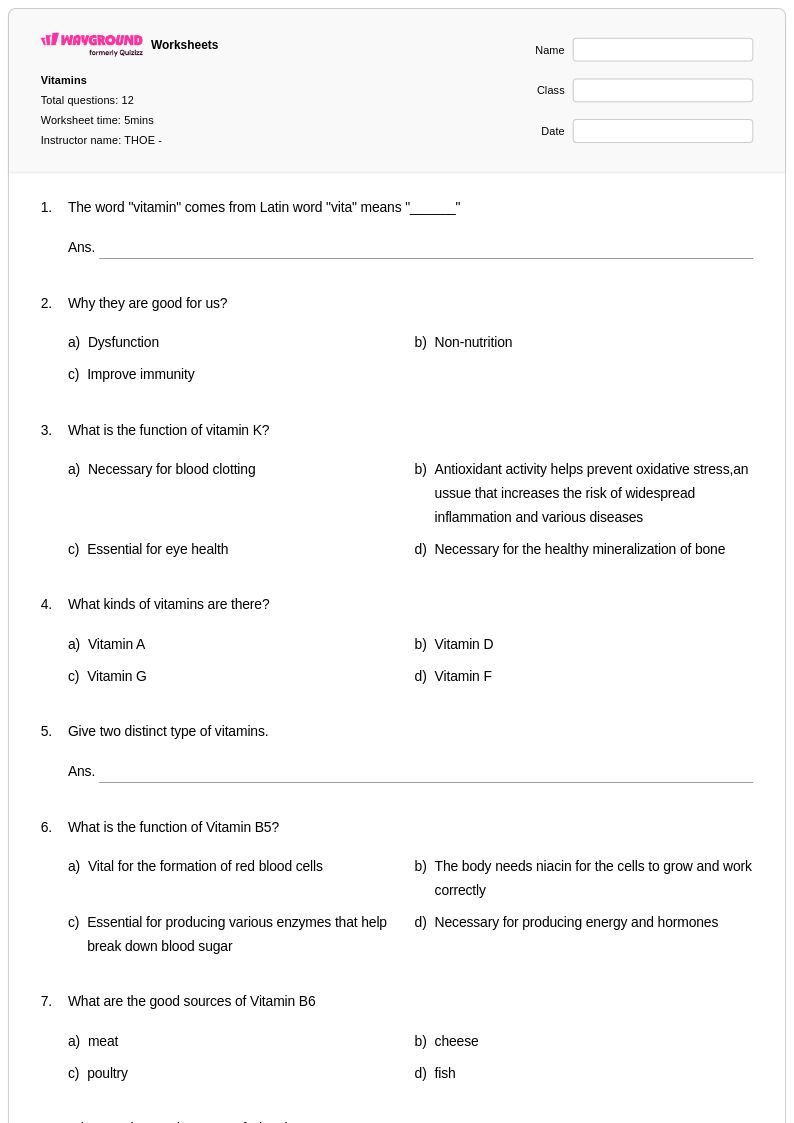
12 Q
1st - 4th
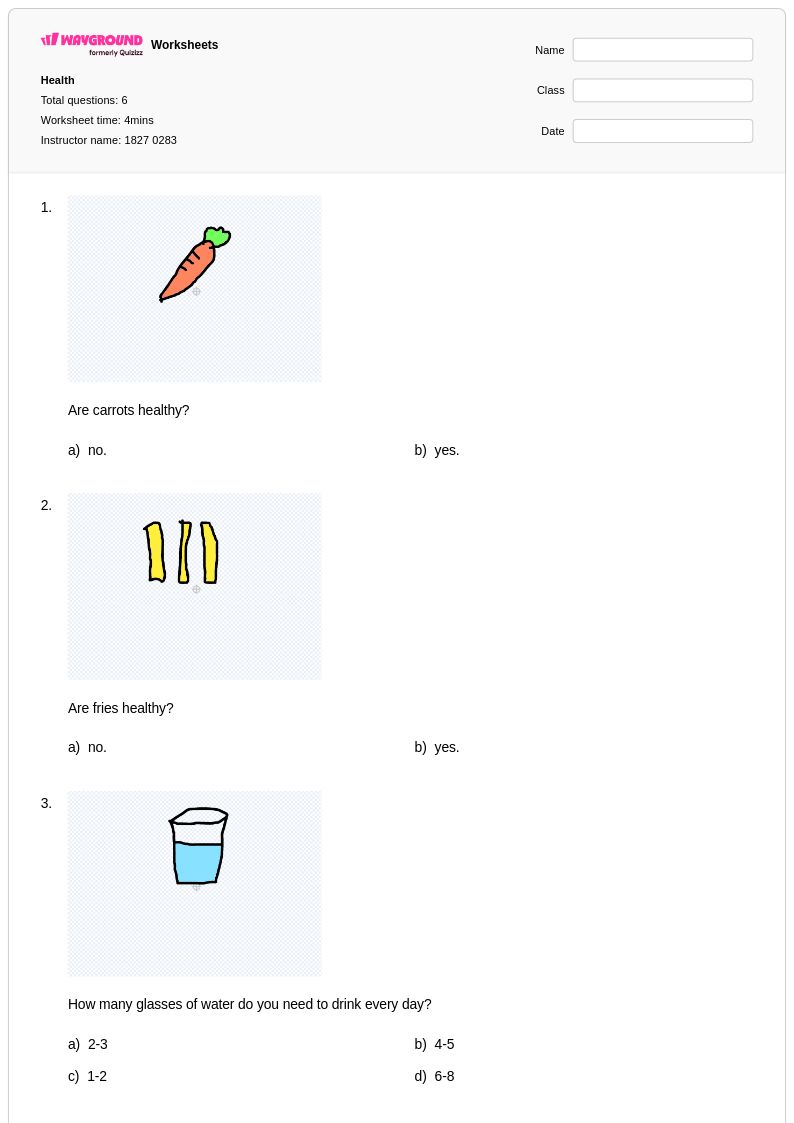
6 Q
1st - 2nd
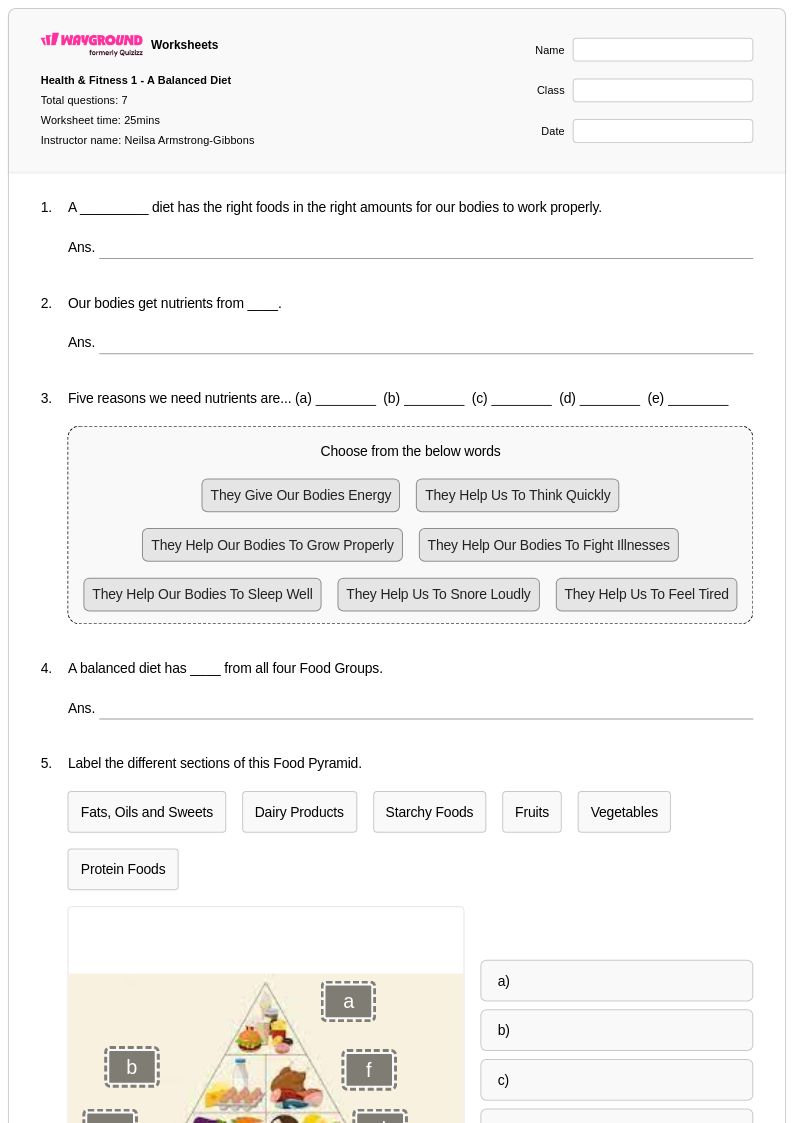
7 Q
1st - 5th
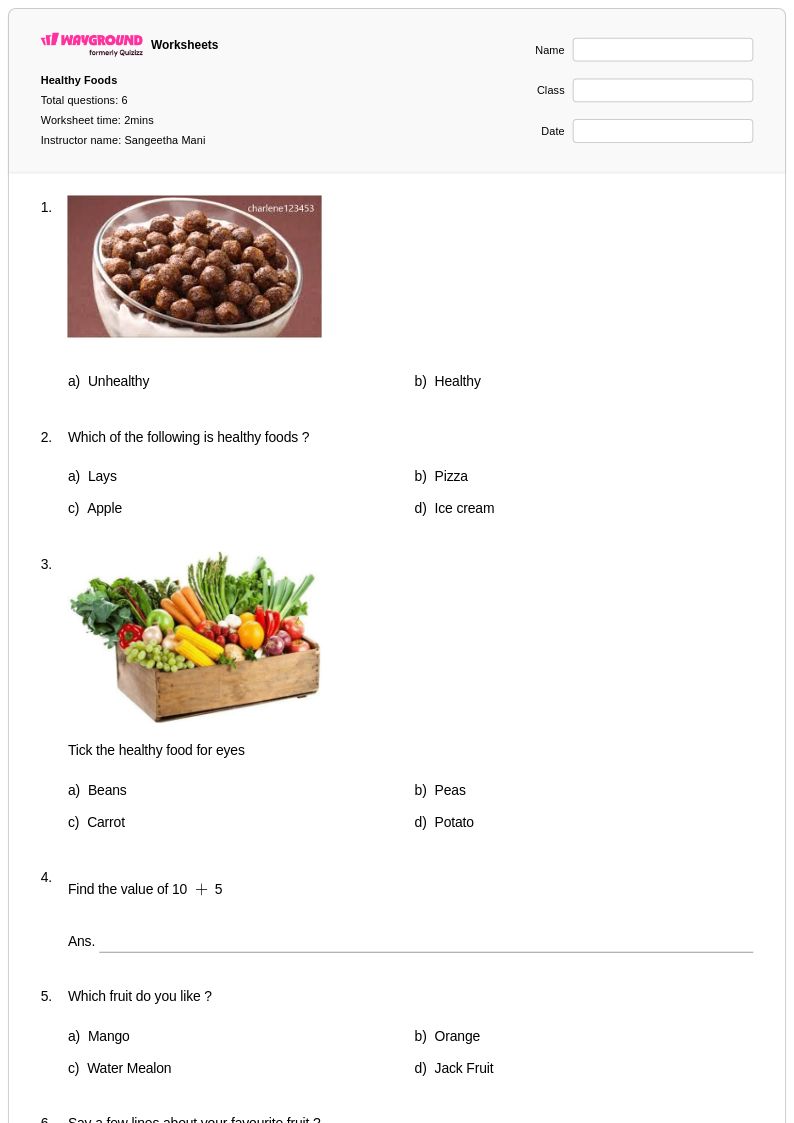
6 Q
1st - 4th
8 Q
KG - 2nd
21 Q
1st
16 Q
1st - 8th
11 Q
1st - 3rd
10 Q
1st - 7th
11 Q
1st
10 Q
1st - 2nd
10 Q
1st
25 Q
1st

15 Q
1st - 5th
16 Q
1st
14 Q
KG - 3rd
19 Q
1st
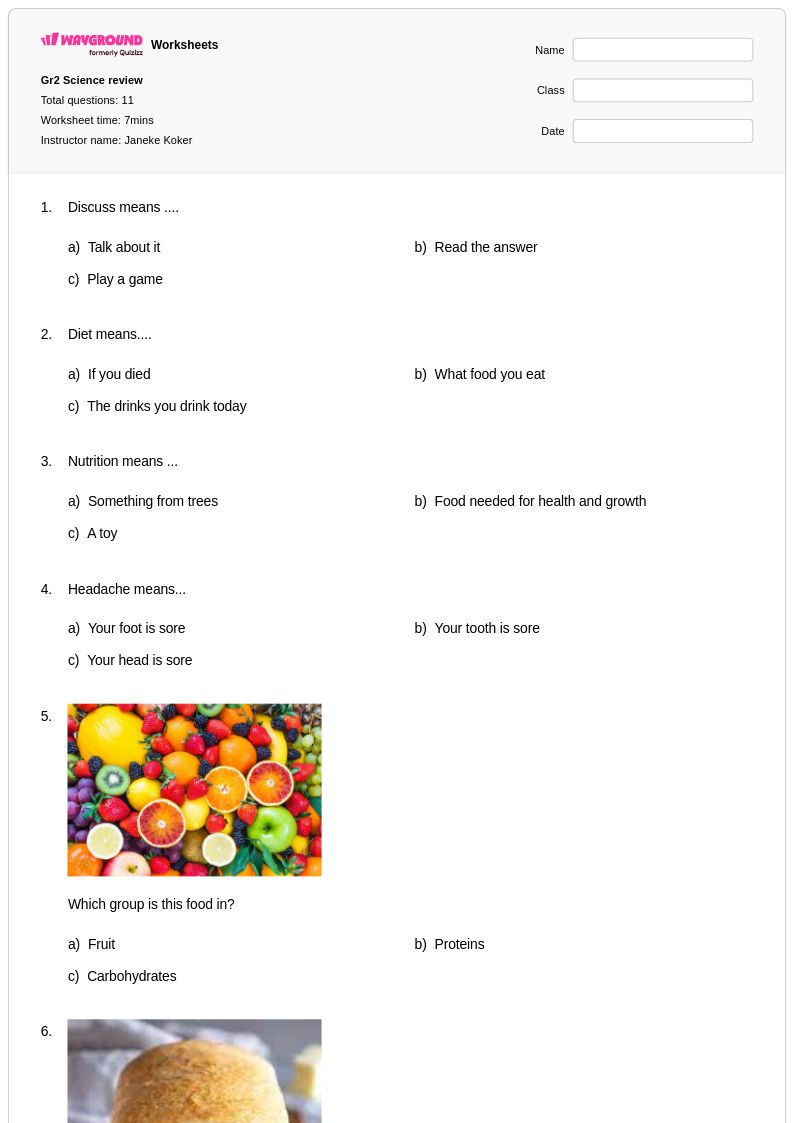
11 Q
1st - 3rd
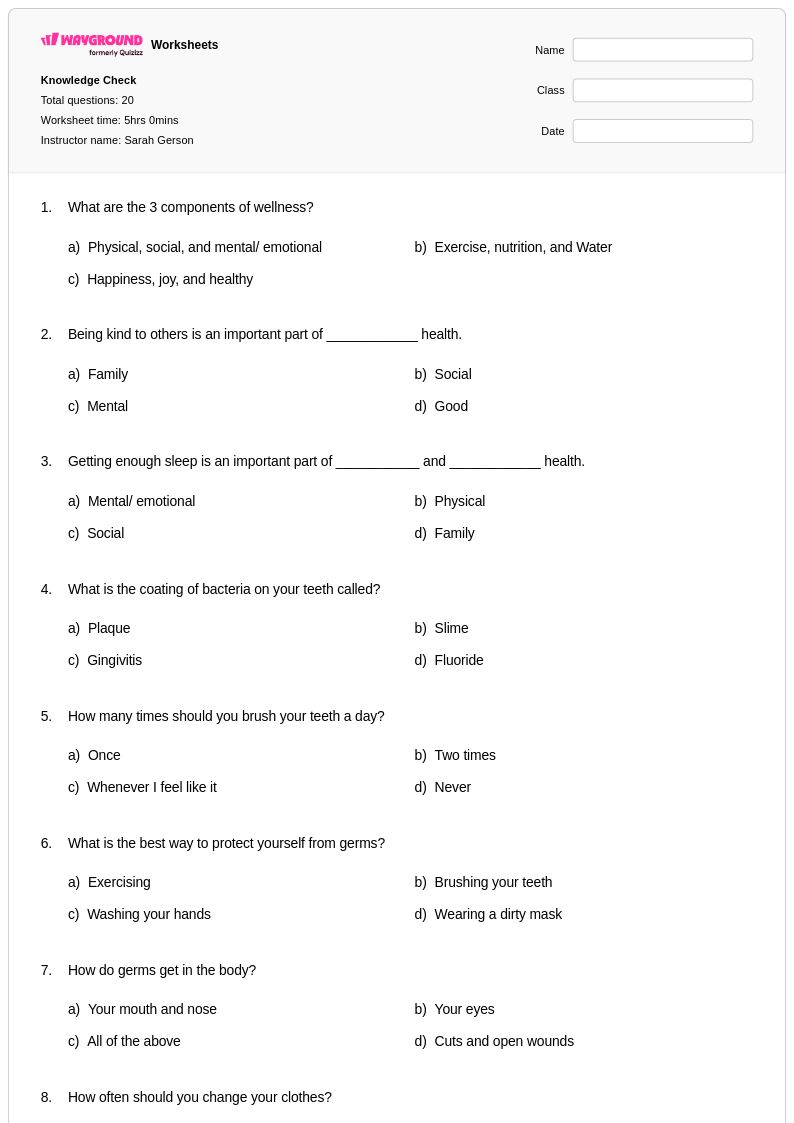
20 Q
1st - 5th
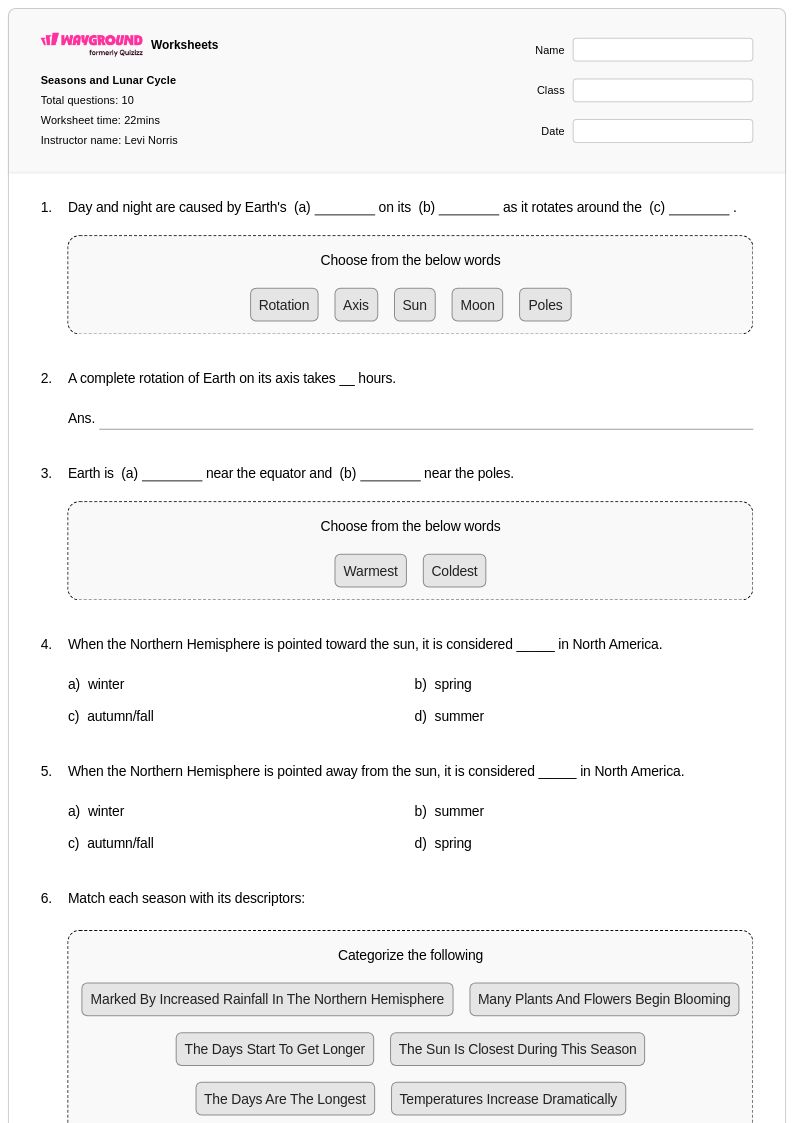
10 Q
1st - 5th
Explore Other Subject Worksheets for class 1
Explore printable Health and Nutrition worksheets for Class 1
Health and nutrition worksheets for Class 1 students available through Wayground (formerly Quizizz) provide young learners with foundational knowledge about maintaining healthy bodies and making good food choices. These carefully designed educational materials help first-grade students develop essential life skills by exploring topics such as identifying healthy foods, understanding basic body parts and their functions, recognizing the importance of exercise and rest, and learning about dental hygiene and handwashing. Each worksheet focuses on age-appropriate concepts that strengthen students' ability to categorize nutritious versus less healthy options, understand simple cause-and-effect relationships between lifestyle choices and wellbeing, and build vocabulary related to health practices. Teachers can access comprehensive answer keys and utilize these free printables as practice problems during health lessons, homework assignments, or assessment activities, ensuring students receive consistent reinforcement of critical health and nutrition concepts.
Wayground (formerly Quizizz) empowers educators with an extensive collection of teacher-created health and nutrition resources specifically tailored for first-grade learners, drawing from millions of professionally developed materials that undergo rigorous quality standards. The platform's advanced search and filtering capabilities allow teachers to quickly locate worksheets aligned with specific learning standards and curriculum requirements, while built-in differentiation tools enable customization based on individual student needs and learning levels. These versatile resources are available in both printable pdf formats for traditional classroom use and digital formats for interactive learning experiences, supporting teachers in comprehensive lesson planning that addresses diverse learning styles. Whether used for initial skill introduction, targeted remediation for struggling learners, enrichment activities for advanced students, or regular practice to reinforce healthy living concepts, these Class 1 health and nutrition worksheets provide educators with flexible, research-based tools that promote student engagement and academic success in life science education.
FAQs
How do I teach health and nutrition in a way that actually sticks with students?
What kinds of exercises help students practice nutrition and healthy eating concepts?
What misconceptions do students commonly have about nutrition and healthy eating?
How do I connect nutrition education to biology and human body systems?
How do I use Wayground's health and nutrition worksheets in my classroom?
How can I differentiate health and nutrition instruction for students at different levels?