Free Printable Health and Nutrition Worksheets for Kindergarten
Discover free kindergarten health and nutrition worksheets with printables and answer keys that help young learners understand healthy eating habits, food groups, and basic wellness concepts through engaging practice problems and educational activities.
Explore printable Health and Nutrition worksheets for Kindergarten
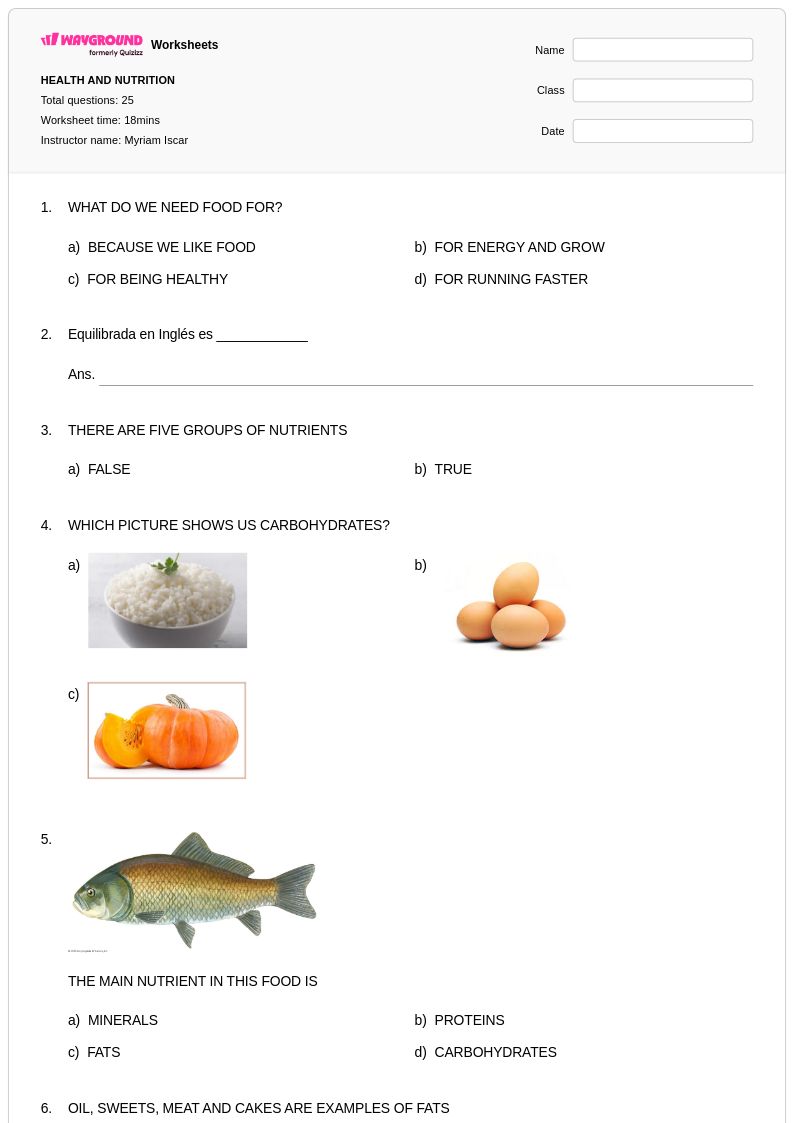
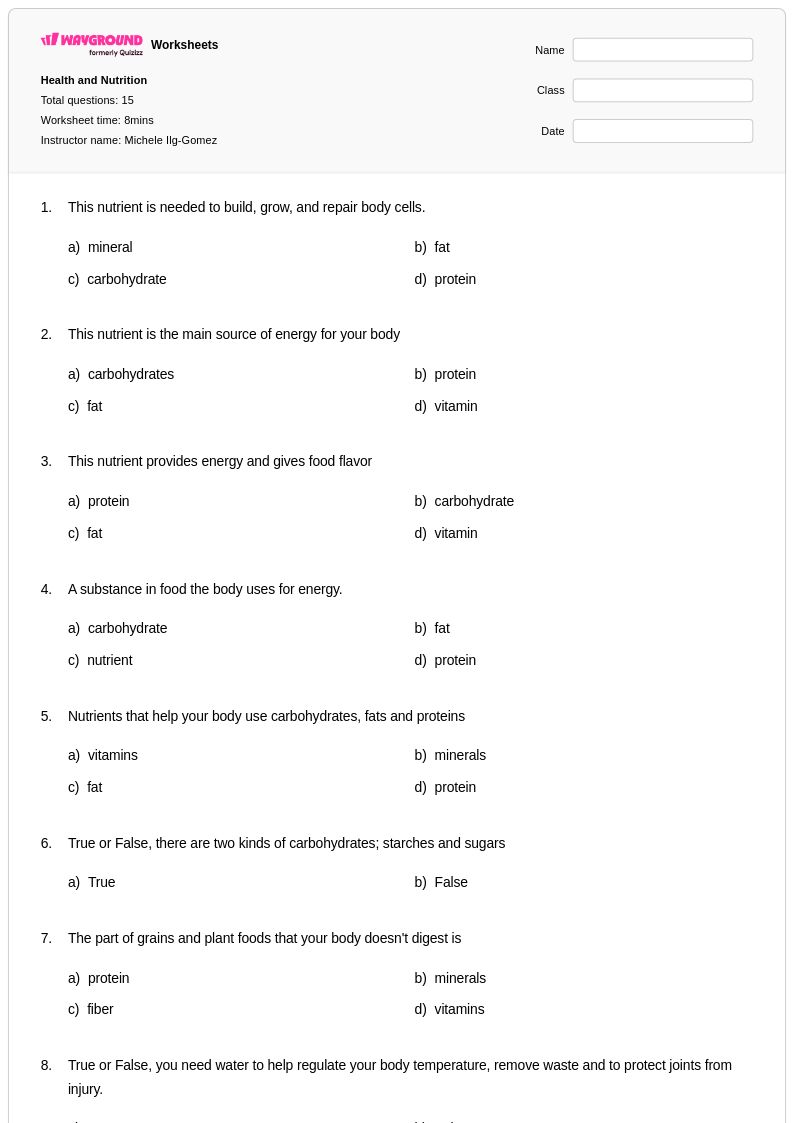
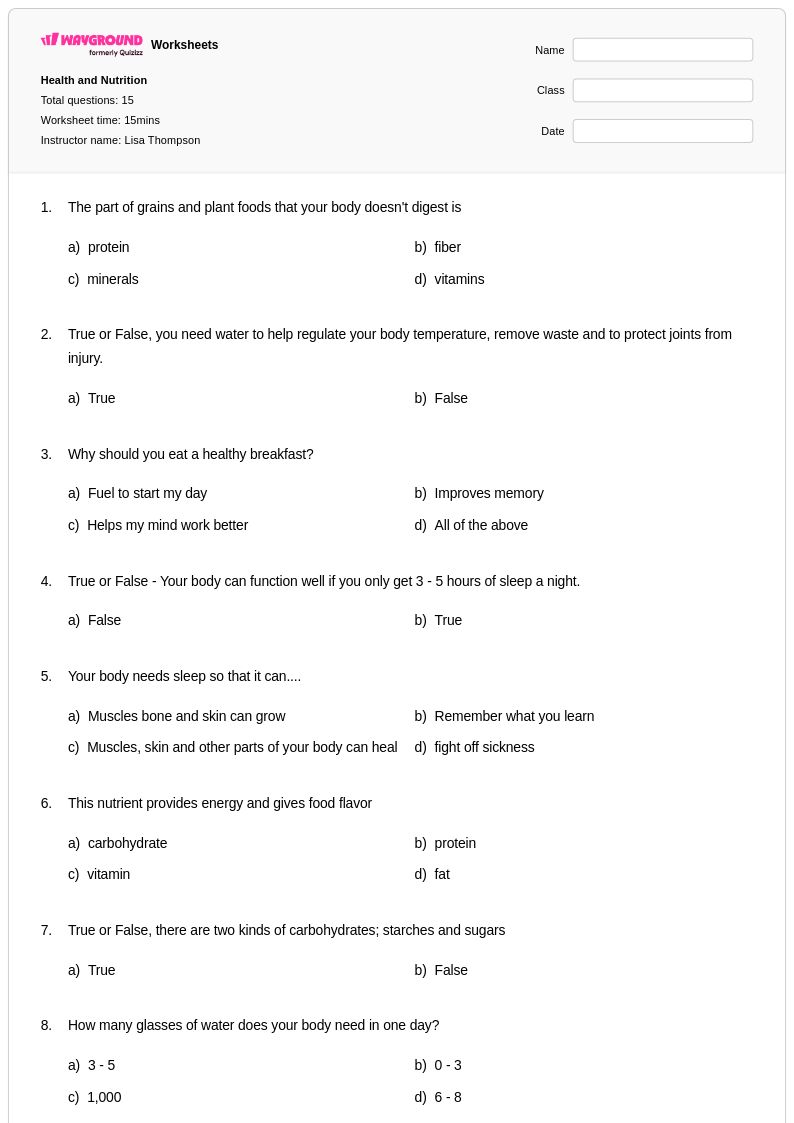
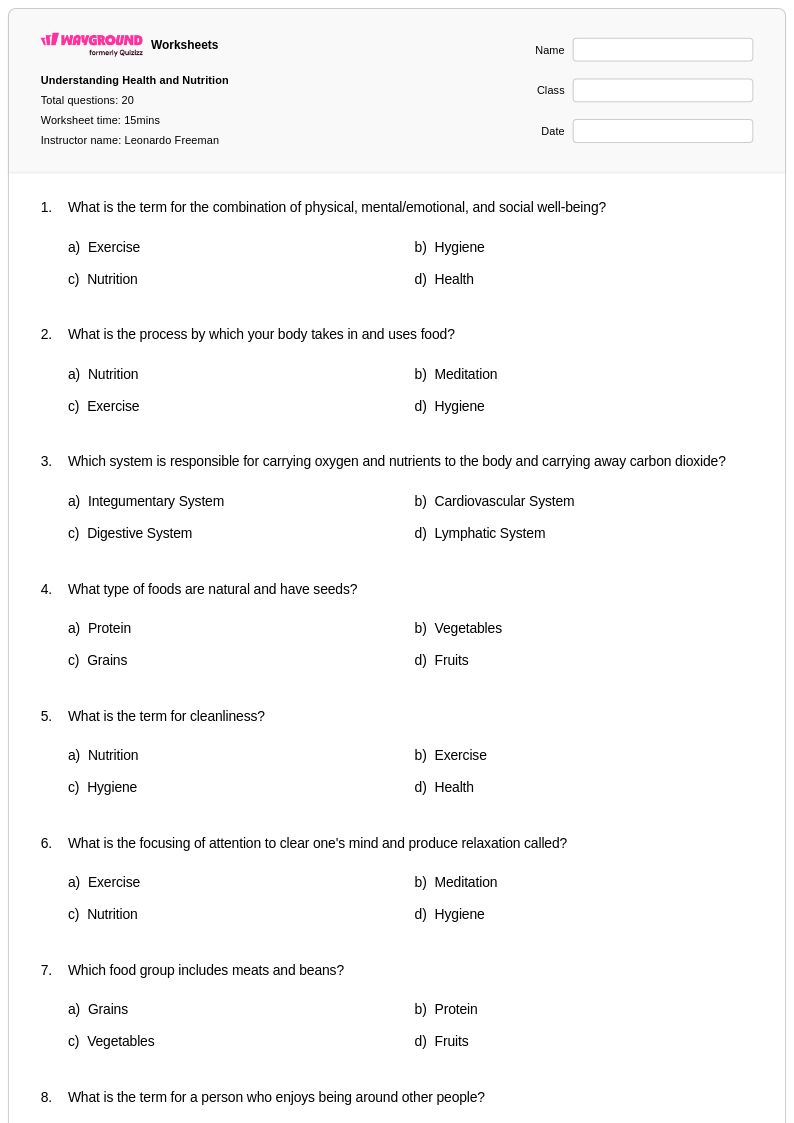
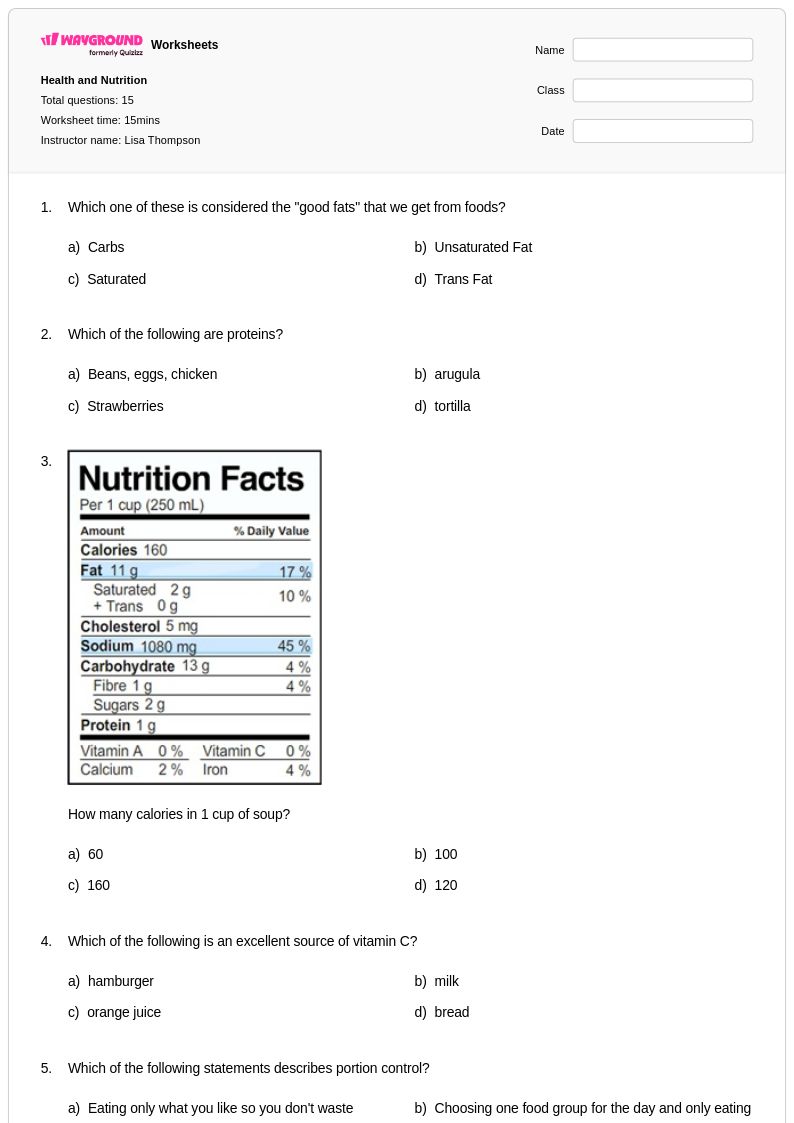
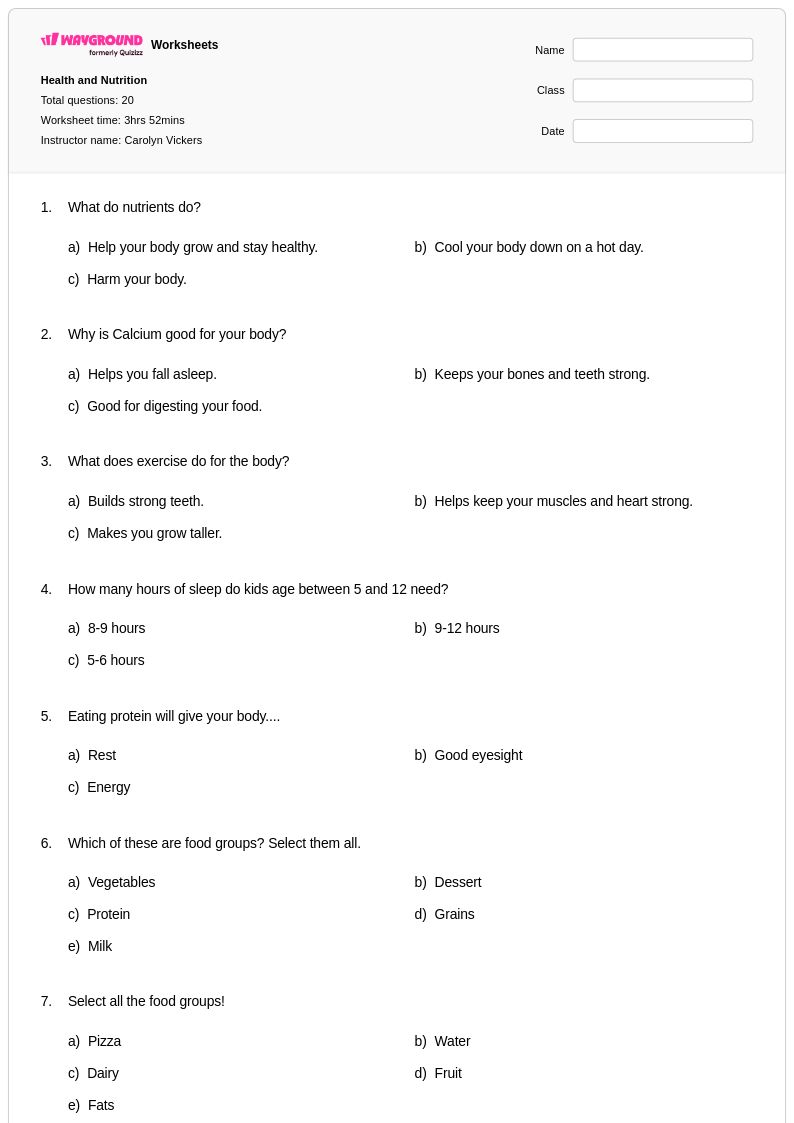
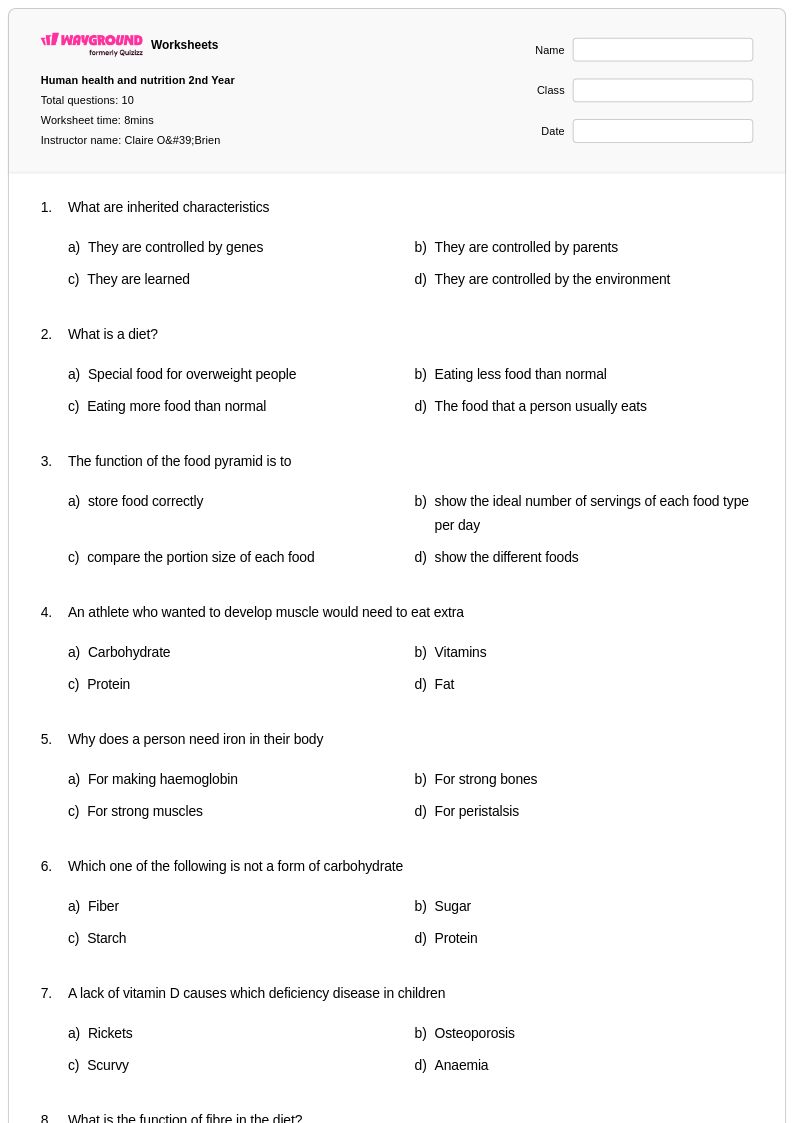
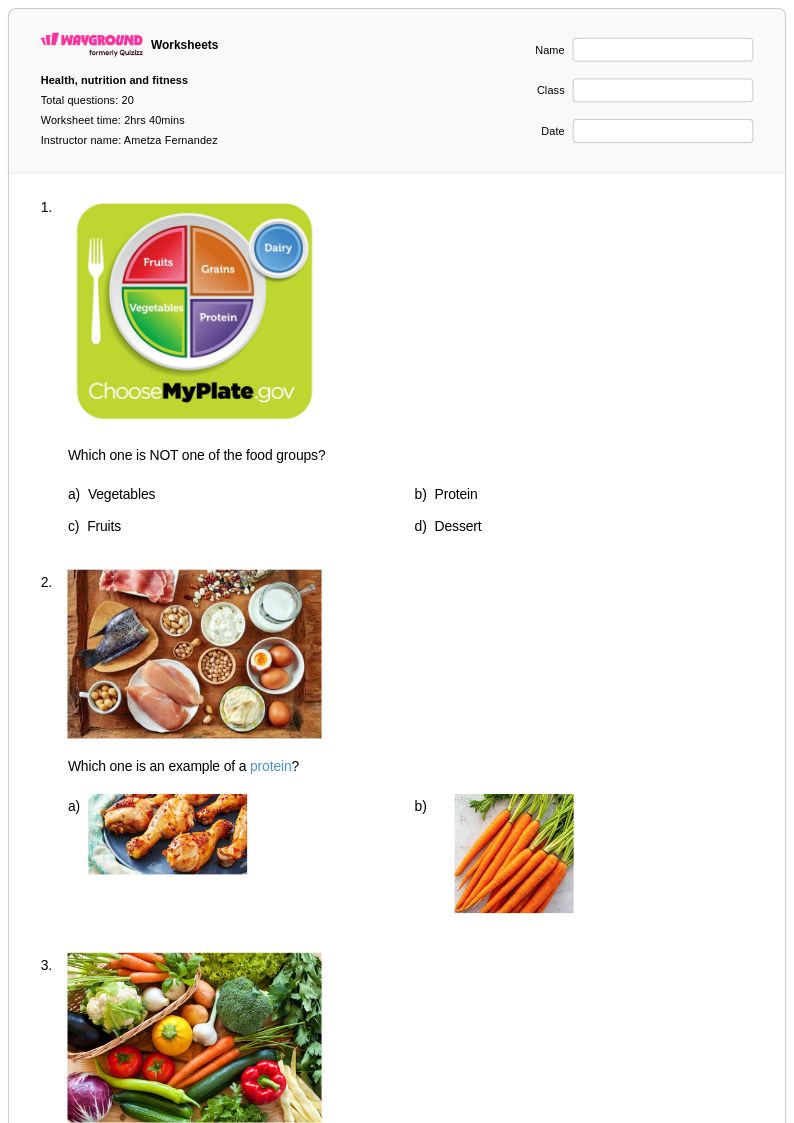
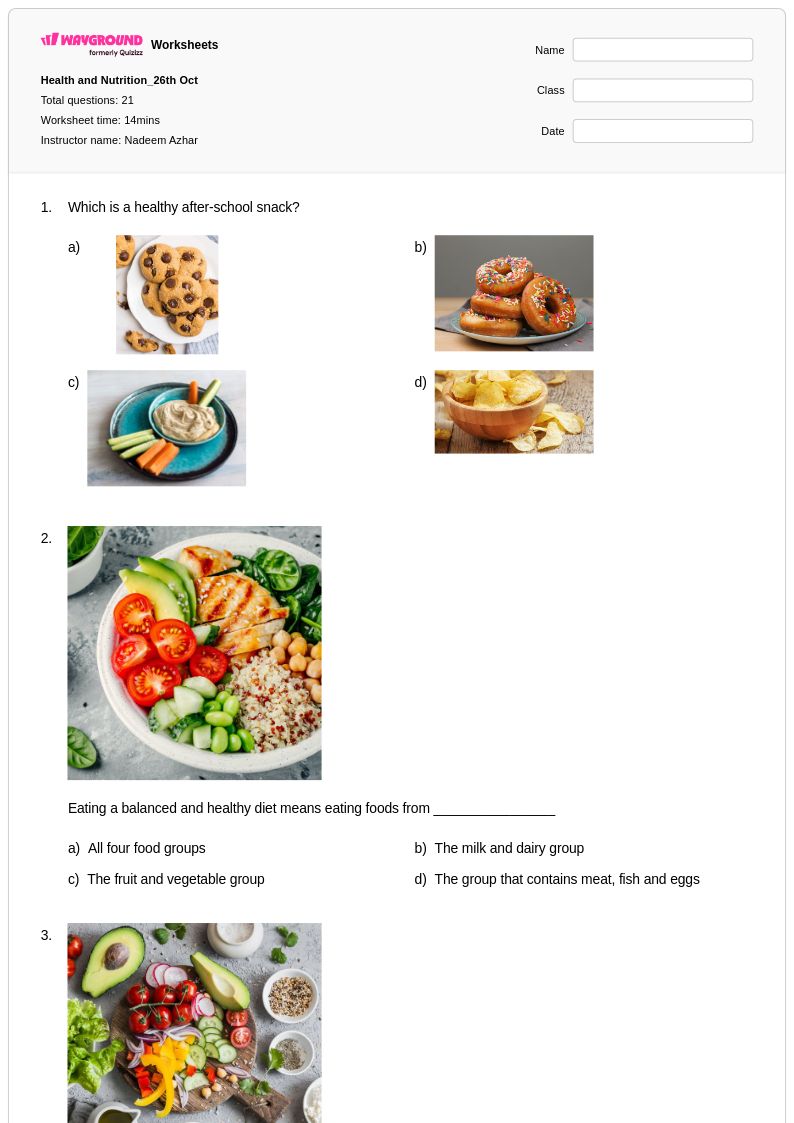
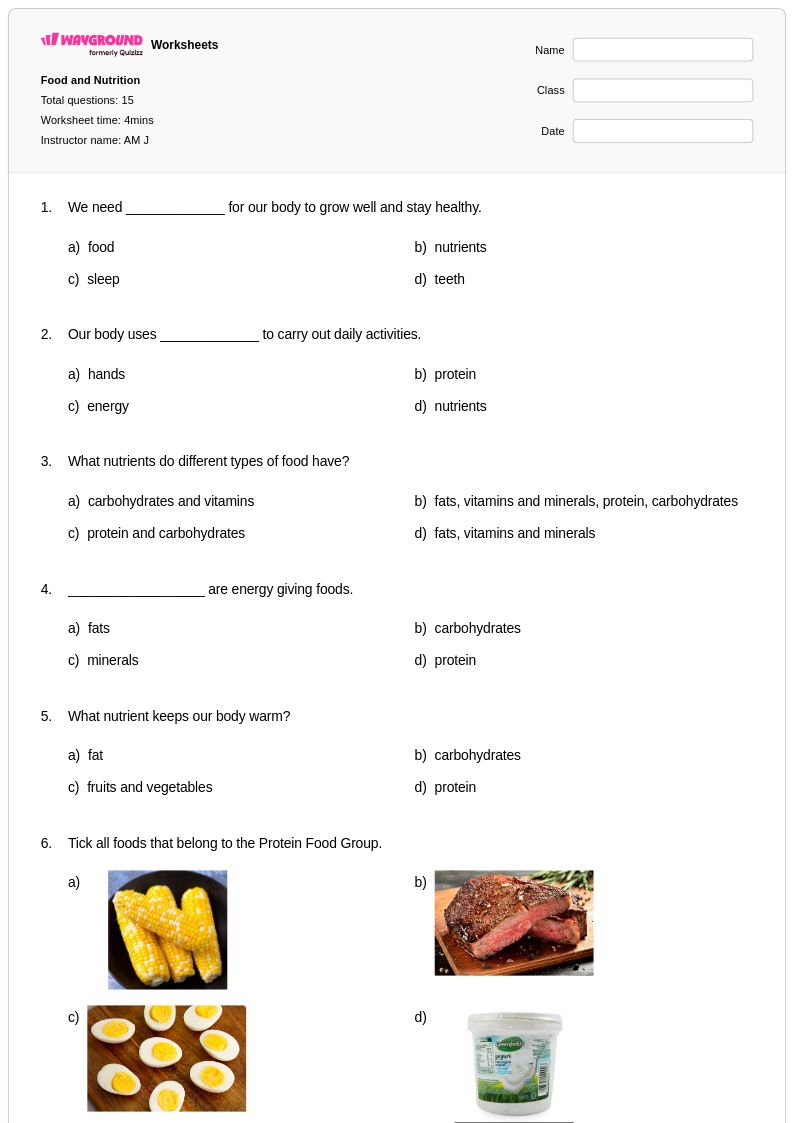
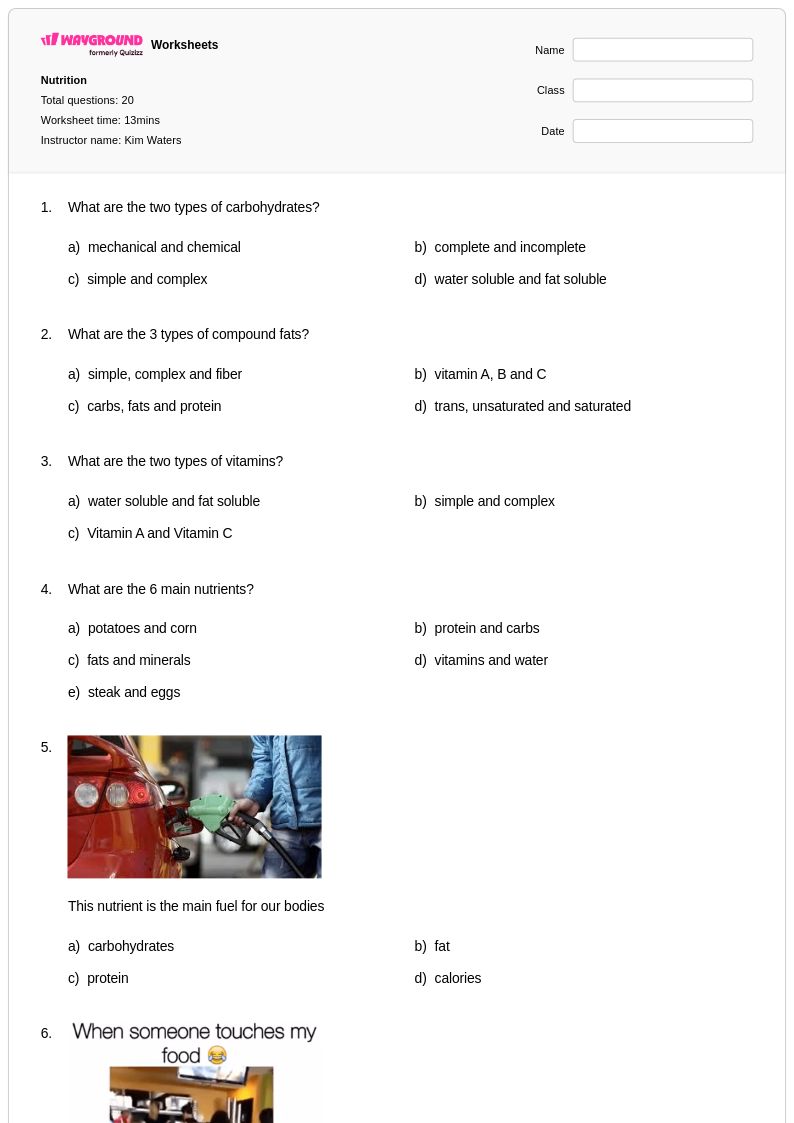
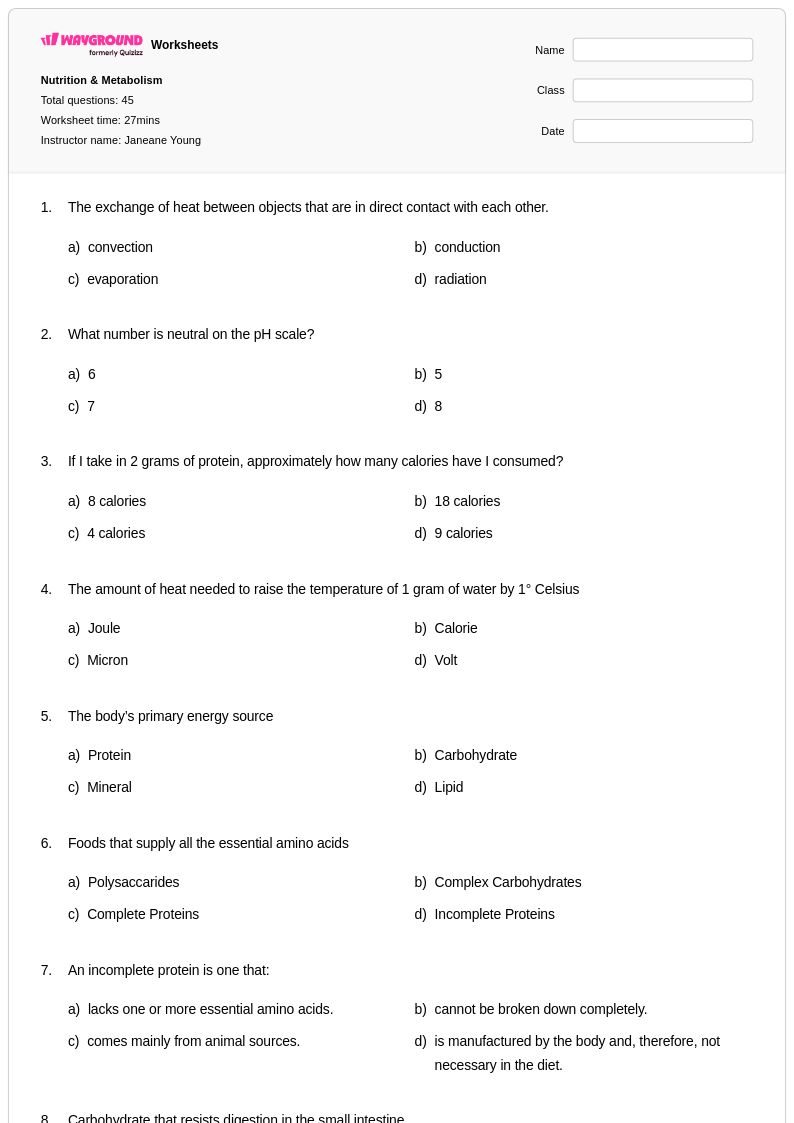
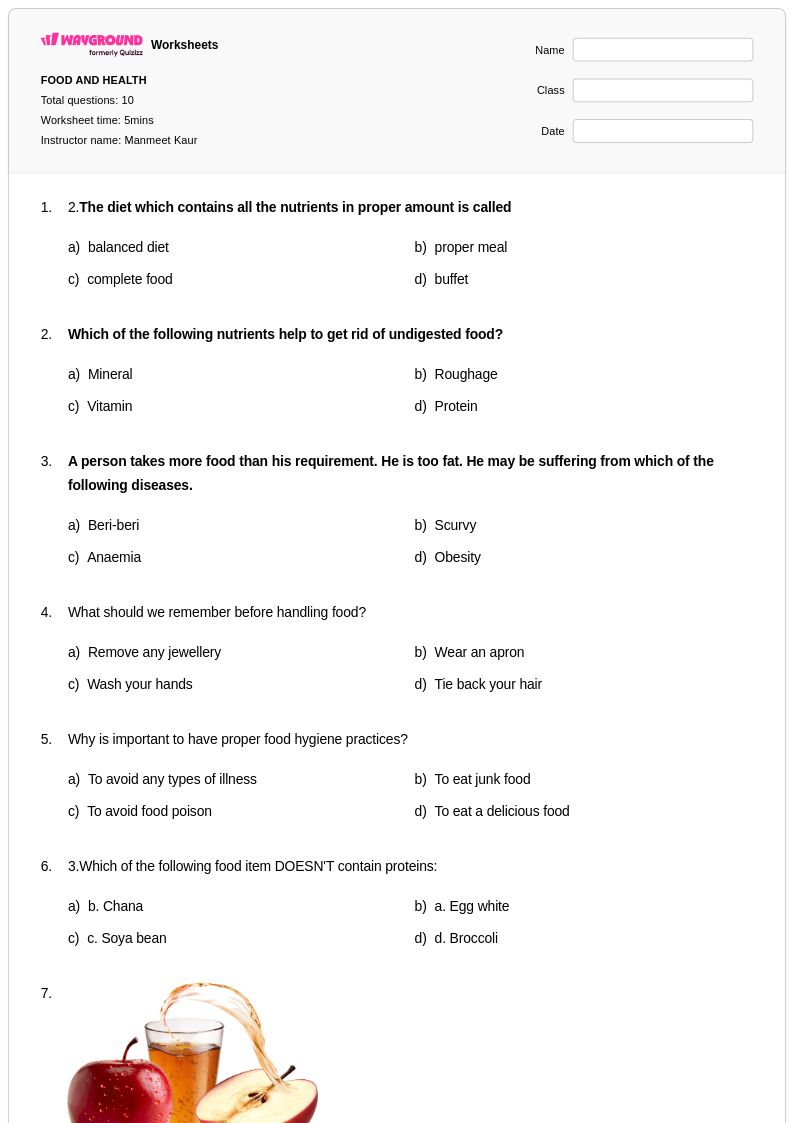
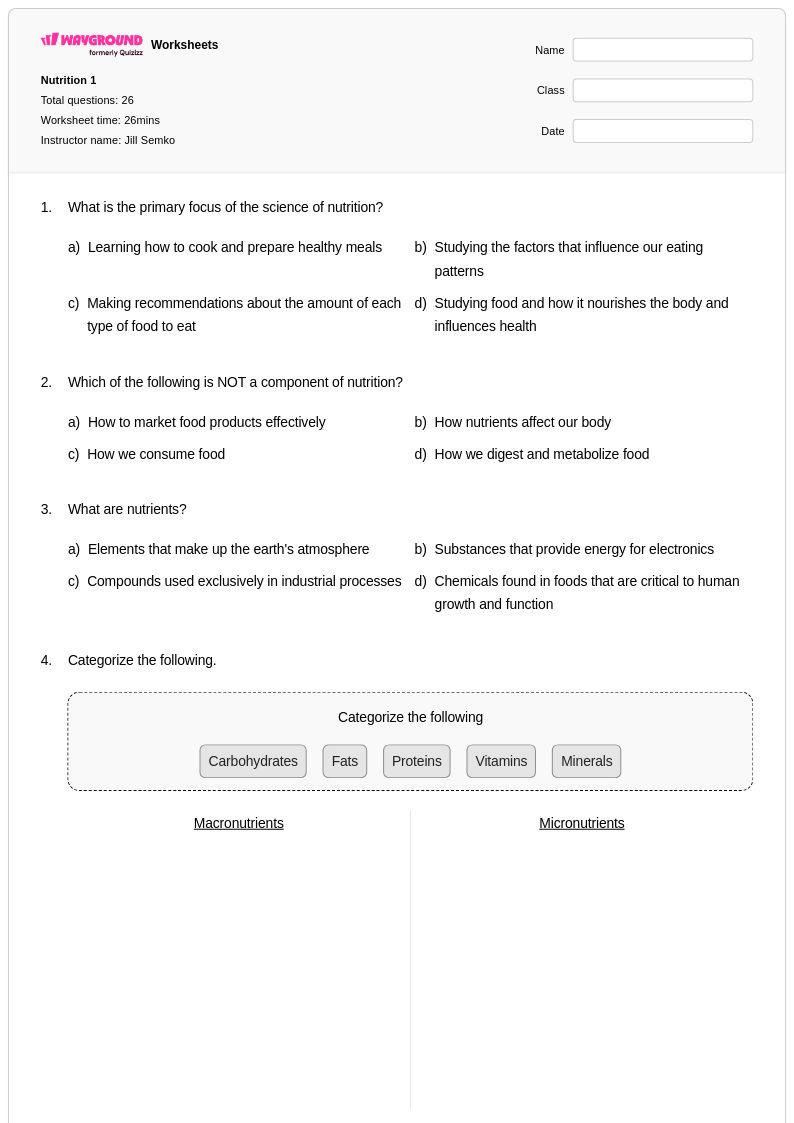
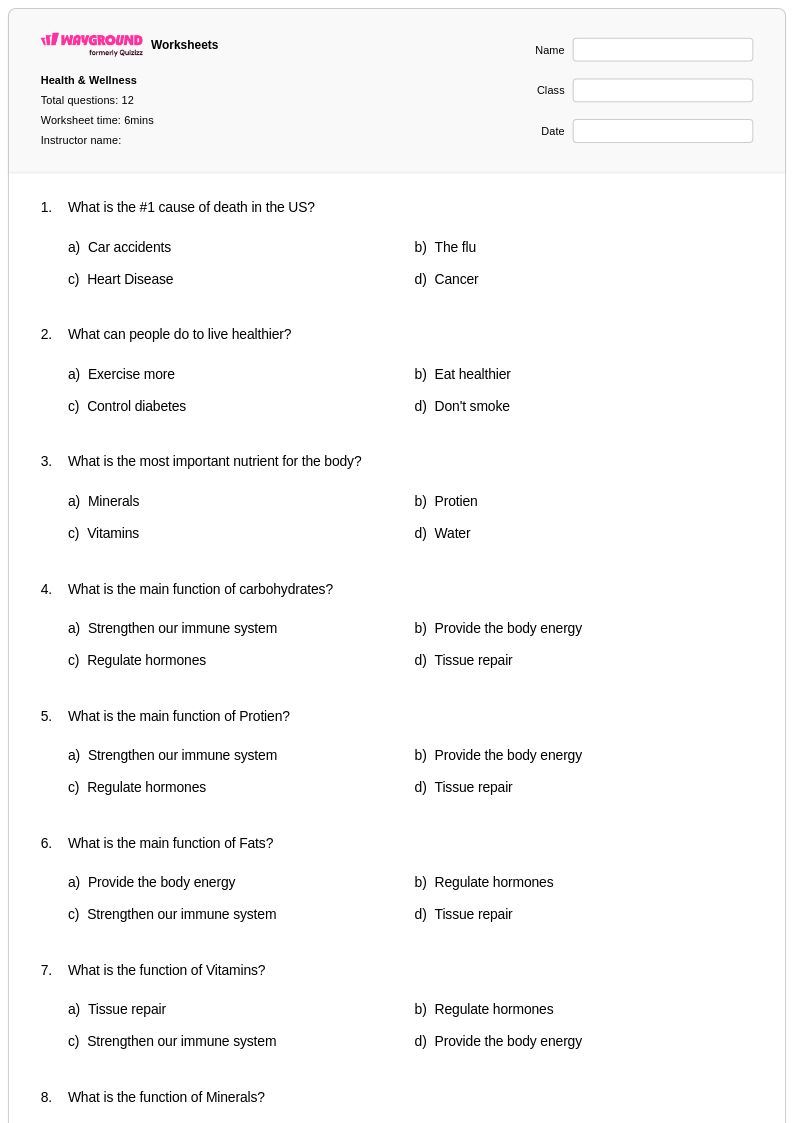
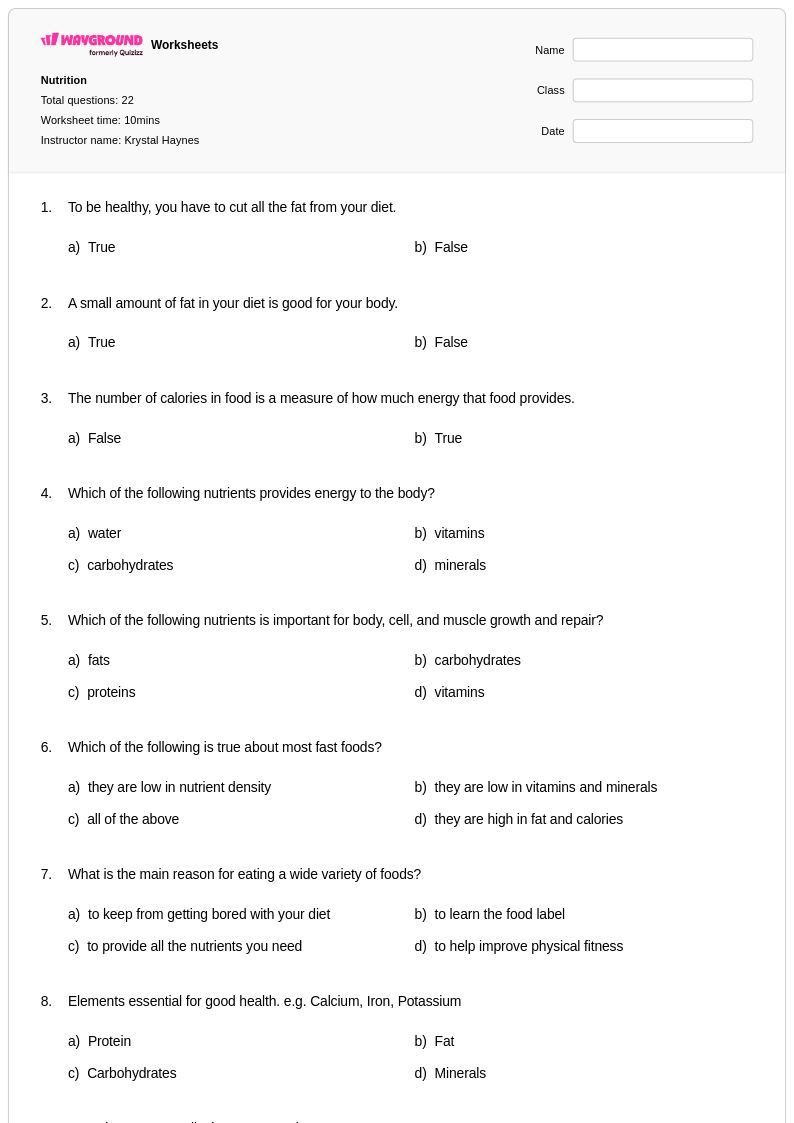
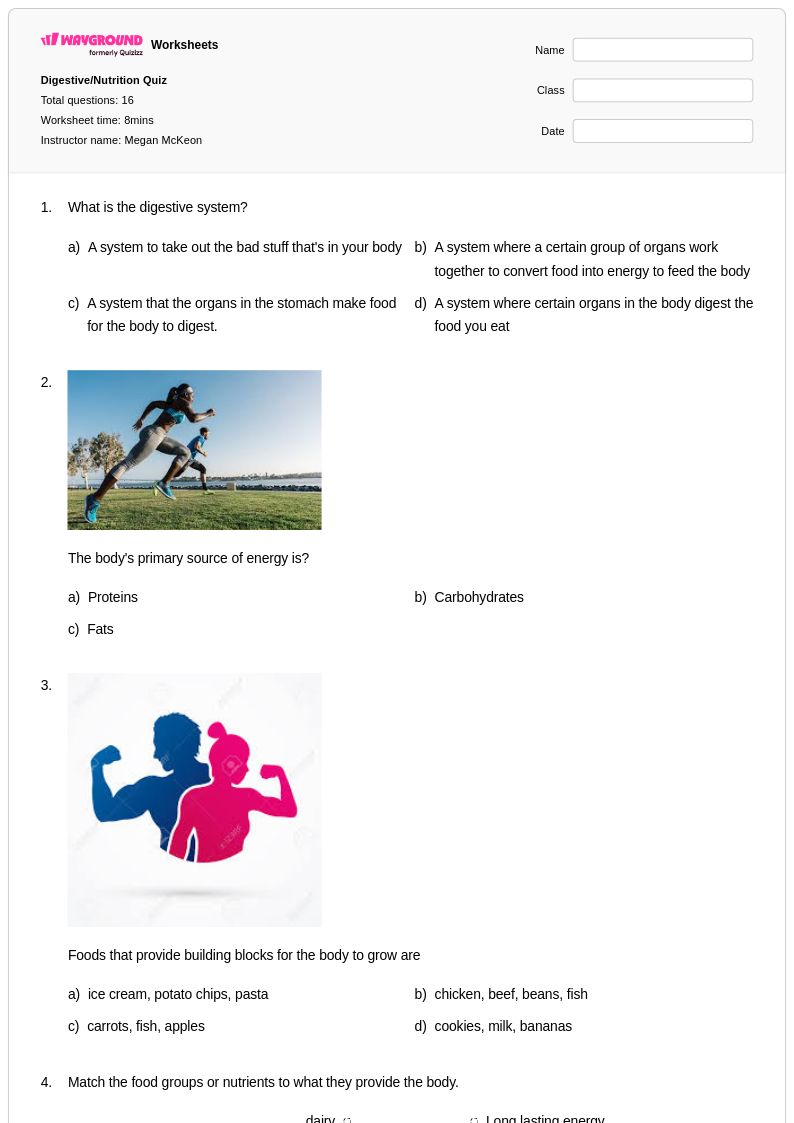
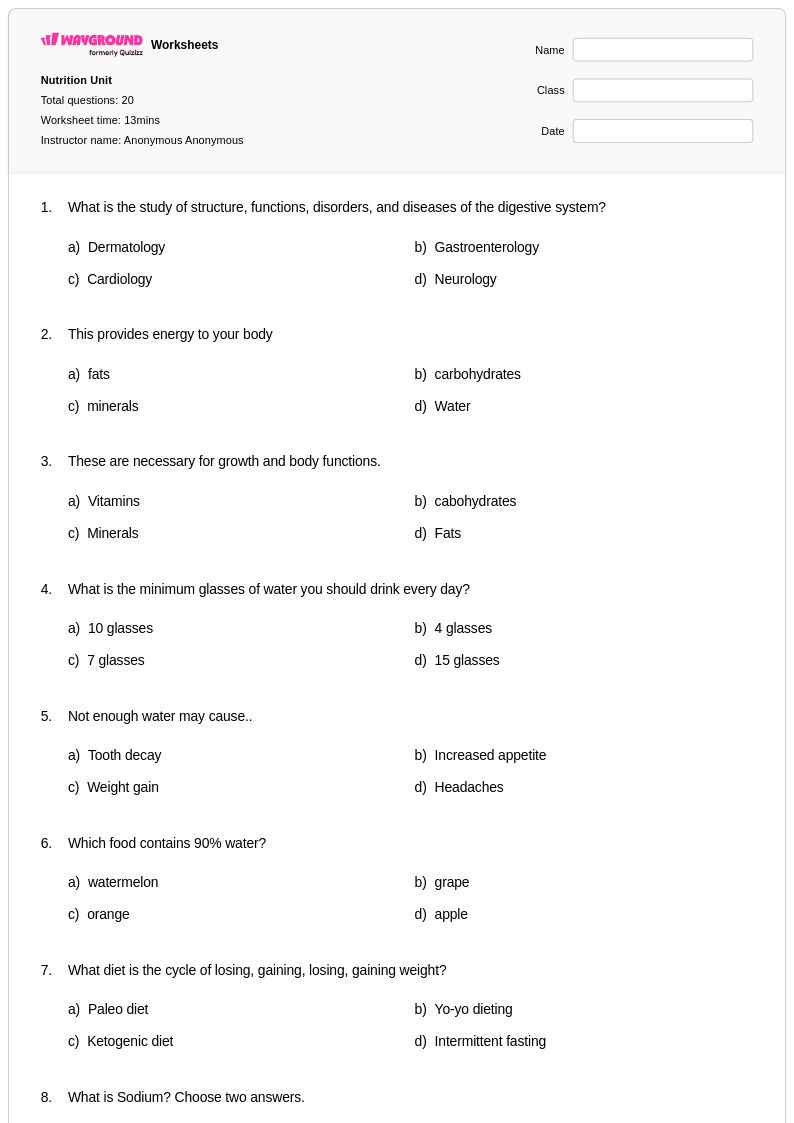
Health and nutrition worksheets for kindergarten students available through Wayground (formerly Quizizz) provide young learners with engaging, age-appropriate activities that build foundational understanding of healthy living habits. These carefully designed printables introduce essential concepts such as identifying nutritious foods, understanding the importance of fruits and vegetables, recognizing different food groups, and learning basic hygiene practices. Each worksheet collection includes comprehensive answer keys and offers free access to practice problems that help kindergarten students develop critical thinking skills about personal wellness and healthy choices. The pdf format ensures easy classroom distribution while supporting early literacy development through colorful visual elements and simple text that align with kindergarten reading levels.
Wayground (formerly Quizizz) empowers educators with millions of teacher-created resources specifically tailored for health and nutrition instruction at the kindergarten level. The platform's robust search and filtering capabilities allow teachers to quickly locate worksheets that match specific learning objectives and standards alignment requirements, while differentiation tools enable customization for diverse learning needs within the classroom. These flexible resources are available in both printable and digital formats, including downloadable pdf versions, making them ideal for lesson planning, targeted skill practice, remediation support, and enrichment activities. Teachers can seamlessly integrate these health and nutrition worksheets into daily instruction, homework assignments, or assessment preparation, ensuring that kindergarten students build strong foundational knowledge about making healthy choices that will benefit them throughout their educational journey.
FAQs
How do I teach health and nutrition in a way that actually sticks with students?
Effective nutrition education connects abstract concepts to students' daily food choices. Start with food groups and macronutrients, then build toward reading nutritional labels and understanding how dietary patterns affect long-term health outcomes. Anchoring lessons in real-world application, such as evaluating a fast food menu or comparing grocery labels, helps students internalize the material rather than just memorize it.
What kinds of exercises help students practice nutrition and healthy eating concepts?
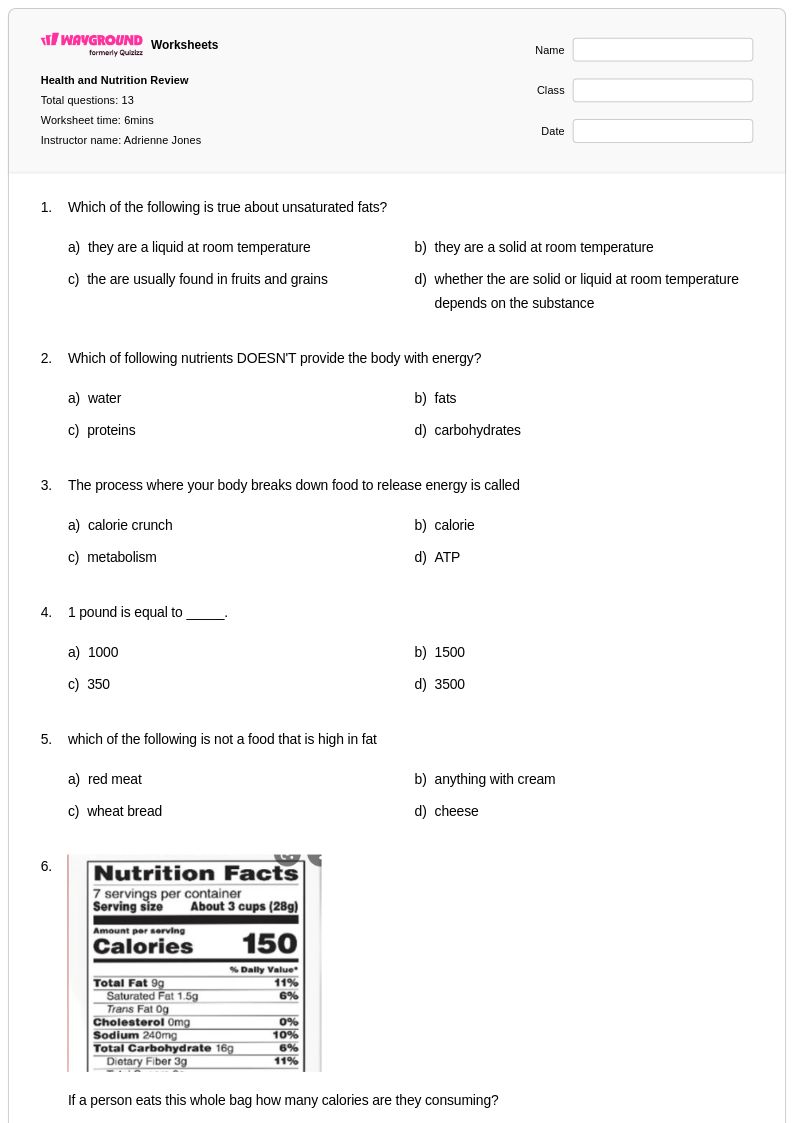
Practice exercises that work well for health and nutrition include analyzing nutritional labels, calculating daily caloric and macronutrient needs, categorizing foods into food groups, and evaluating sample meal plans for nutritional balance. Activities that ask students to make and justify dietary decisions are especially effective because they build both content knowledge and health literacy reasoning skills.
What misconceptions do students commonly have about nutrition and healthy eating?
One of the most common misconceptions is that 'healthy' means low-calorie or fat-free, which leads students to misunderstand the roles of healthy fats, complex carbohydrates, and caloric density. Students also frequently conflate specific nutrients with single foods (e.g., protein equals meat) rather than understanding that nutrients appear across many food sources. Addressing these errors directly with label-reading and food-comparison activities helps correct faulty mental models early.
How do I connect nutrition education to biology and human body systems?
Nutrition and biology intersect most clearly through the digestive system, cellular metabolism, and disease prevention. When teaching food groups or macronutrients, explicitly link each nutrient to its biological function: carbohydrates as the body's primary energy source, proteins for tissue repair, and vitamins and minerals for immune and enzymatic function. Worksheets that ask students to trace a nutrient from ingestion through digestion to cellular use reinforce this systems-level thinking.
How do I use Wayground's health and nutrition worksheets in my classroom?
Wayground's health and nutrition worksheets are available as printable PDFs for traditional classroom use and in digital formats for technology-integrated environments, giving teachers flexibility regardless of classroom setup. Teachers can also host worksheets directly as a quiz on Wayground, making them suitable for formative assessment or independent practice. Each worksheet includes a complete answer key, which supports self-paced learning, homework assignments, and efficient teacher grading.
How can I differentiate health and nutrition instruction for students at different levels?
Differentiation in nutrition education can range from simplifying food group categorization for younger or struggling learners to introducing nutrient density calculations and diet-disease relationships for advanced students. On Wayground, teachers can apply student-level accommodations such as read aloud for students who need audio support, reduced answer choices to lower cognitive load, and extended time for students who need it. These settings can be assigned to individual students without affecting the experience of the rest of the class.