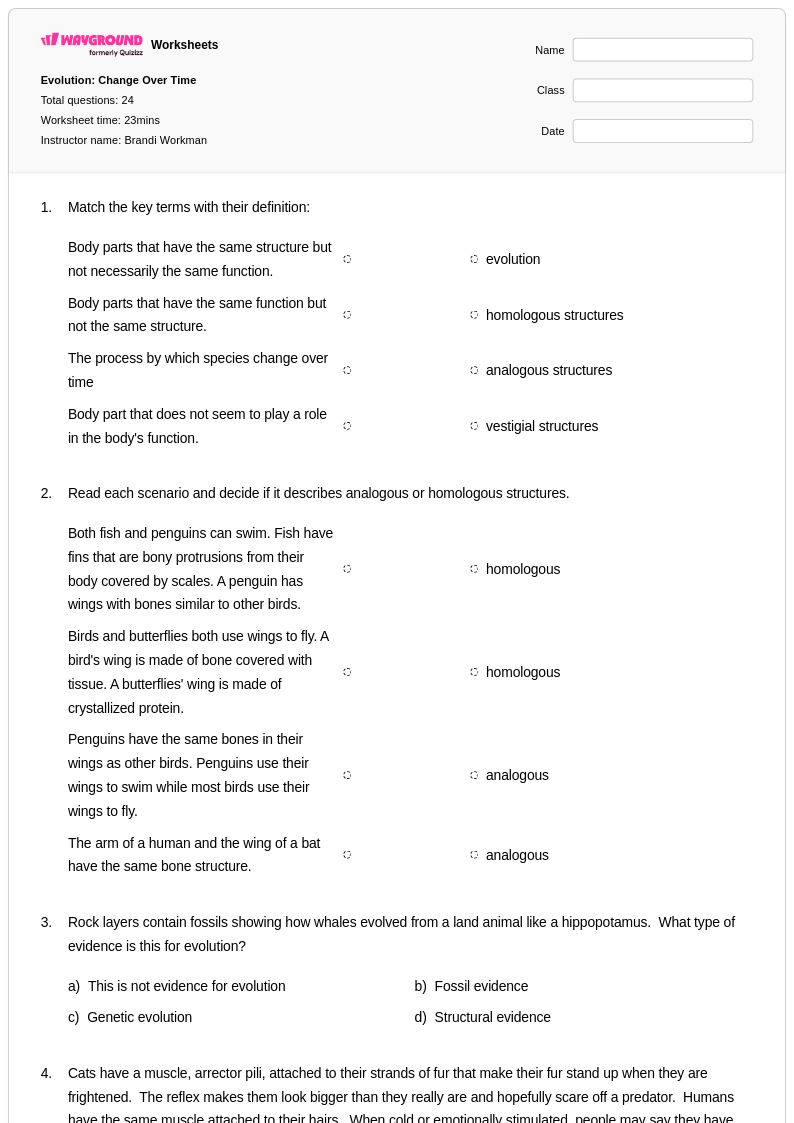
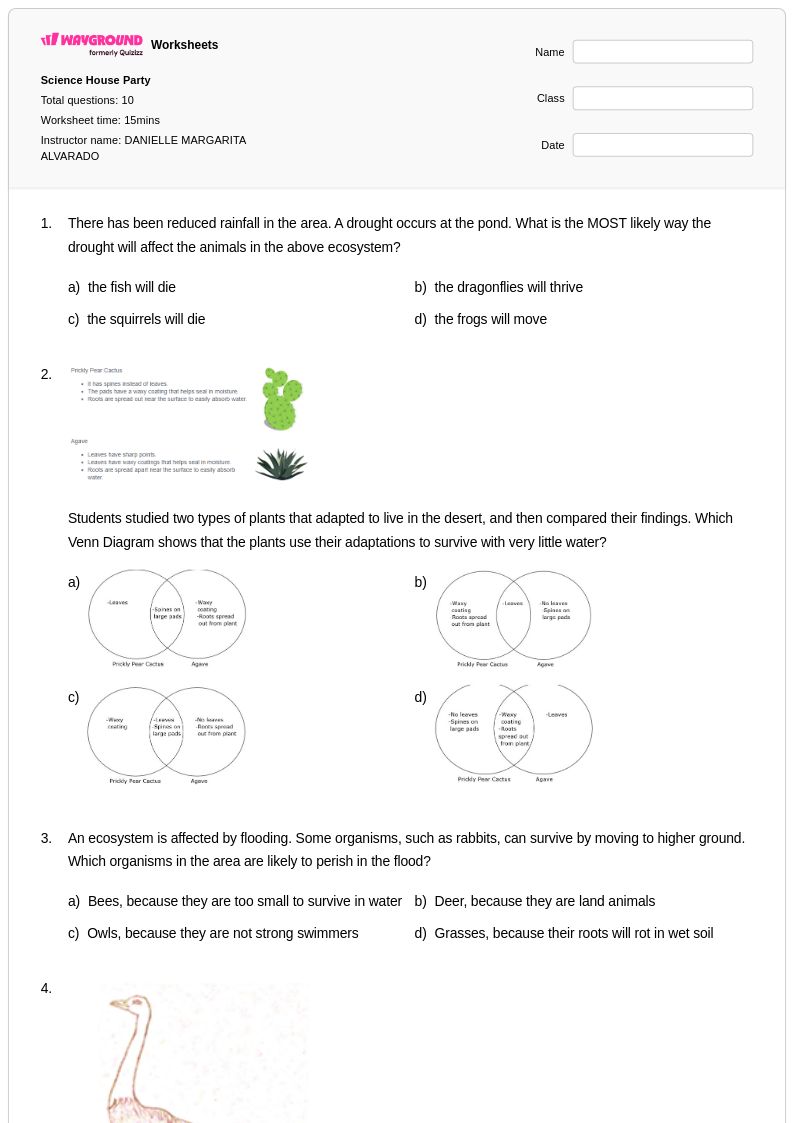
Free Printable Horse Body Parts Worksheets for Kindergarten
Explore Wayground's free kindergarten horse body parts worksheets and printables that help young learners identify and label different parts of horses through engaging practice problems with included answer keys.
Explore printable Horse Body Parts worksheets for Kindergarten
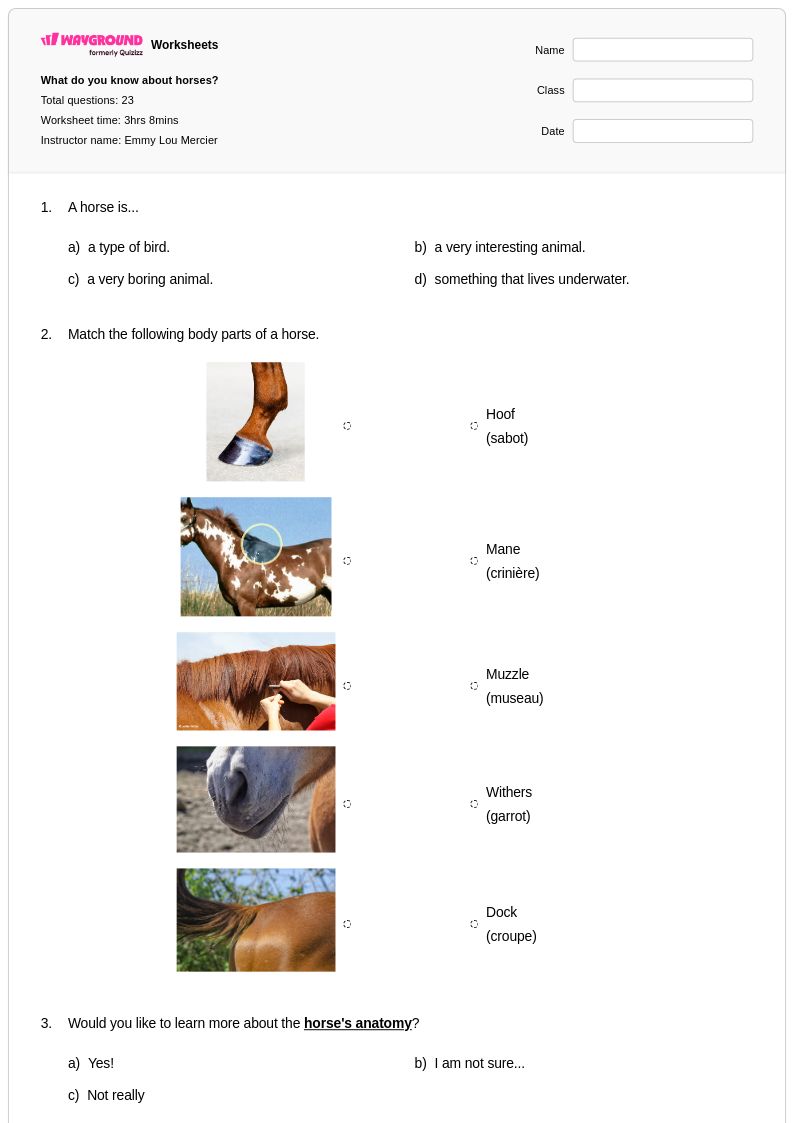
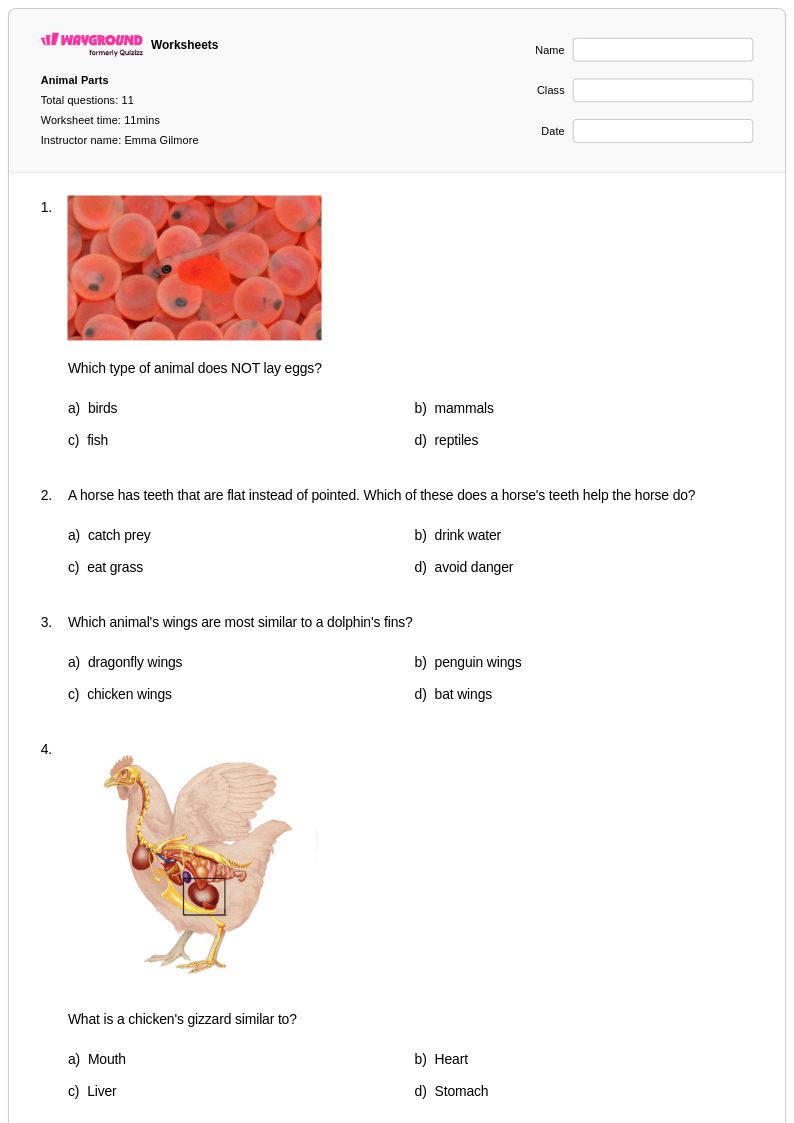
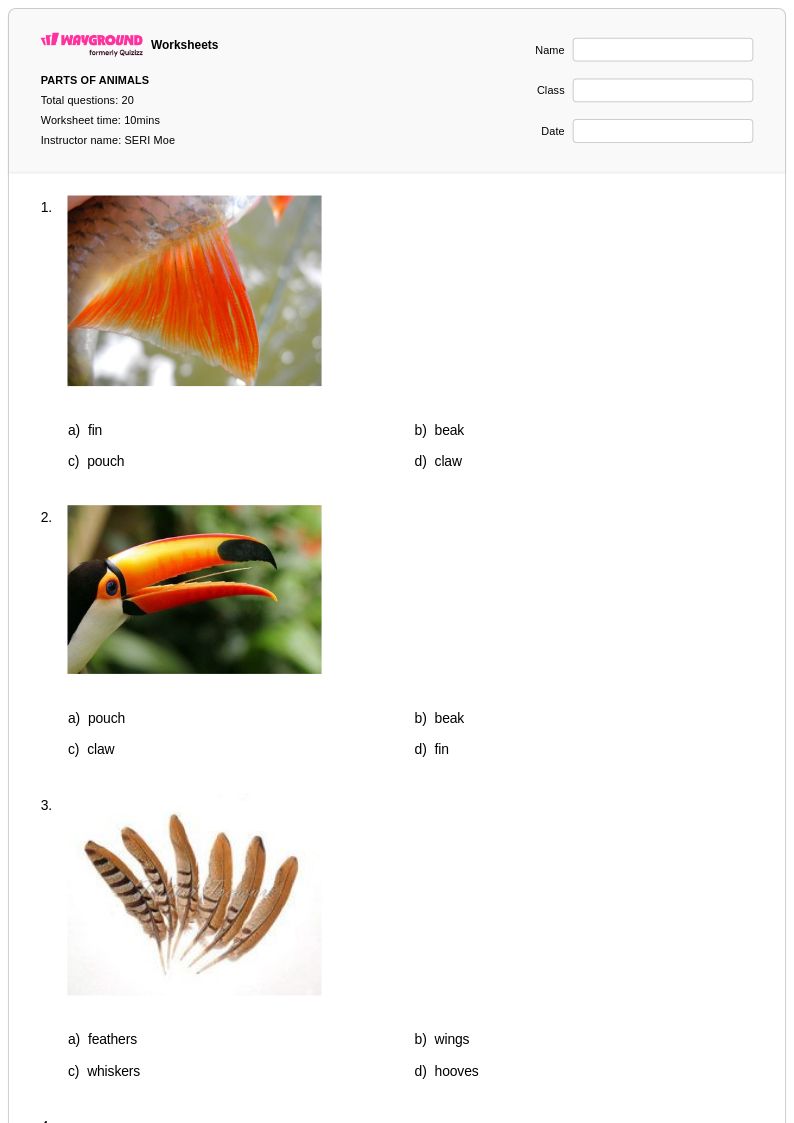
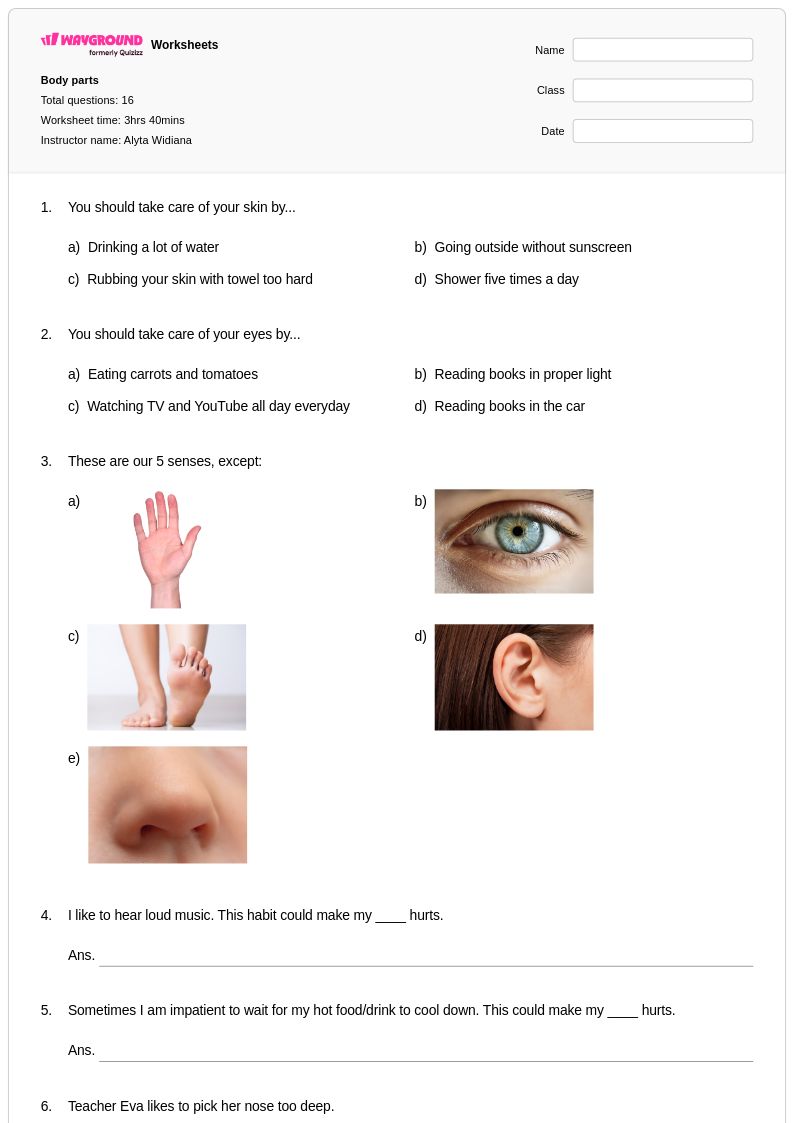
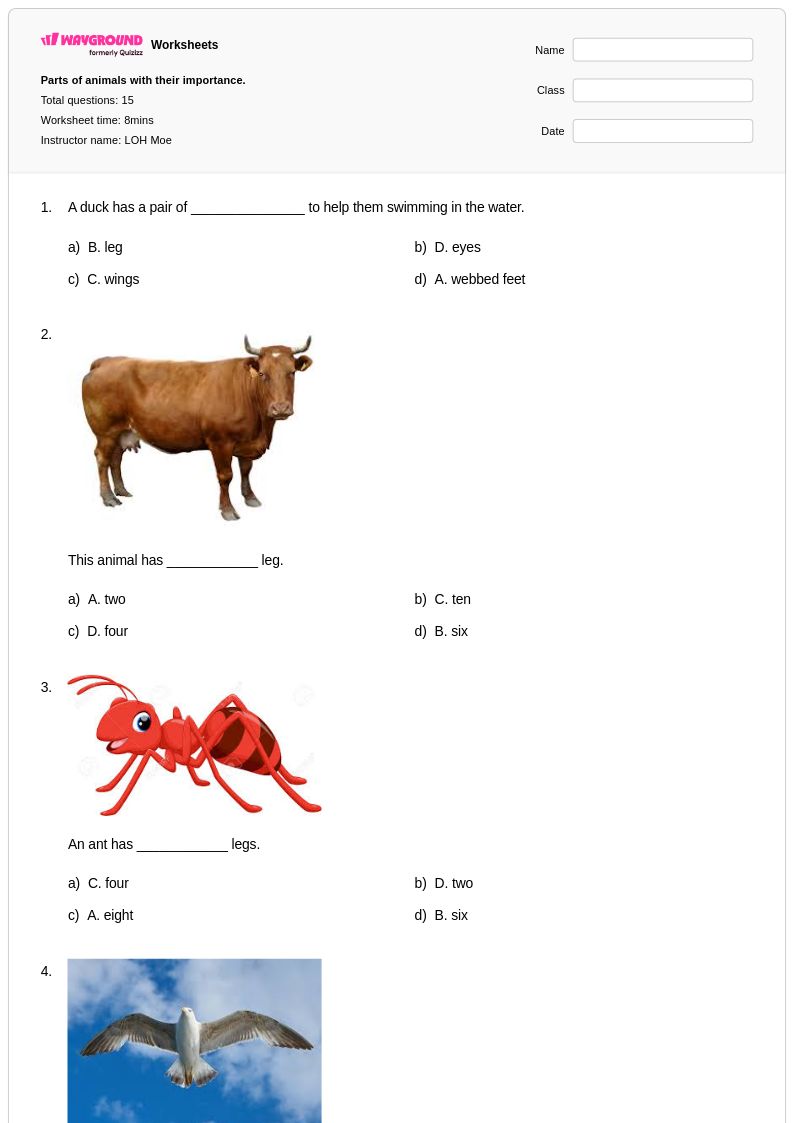
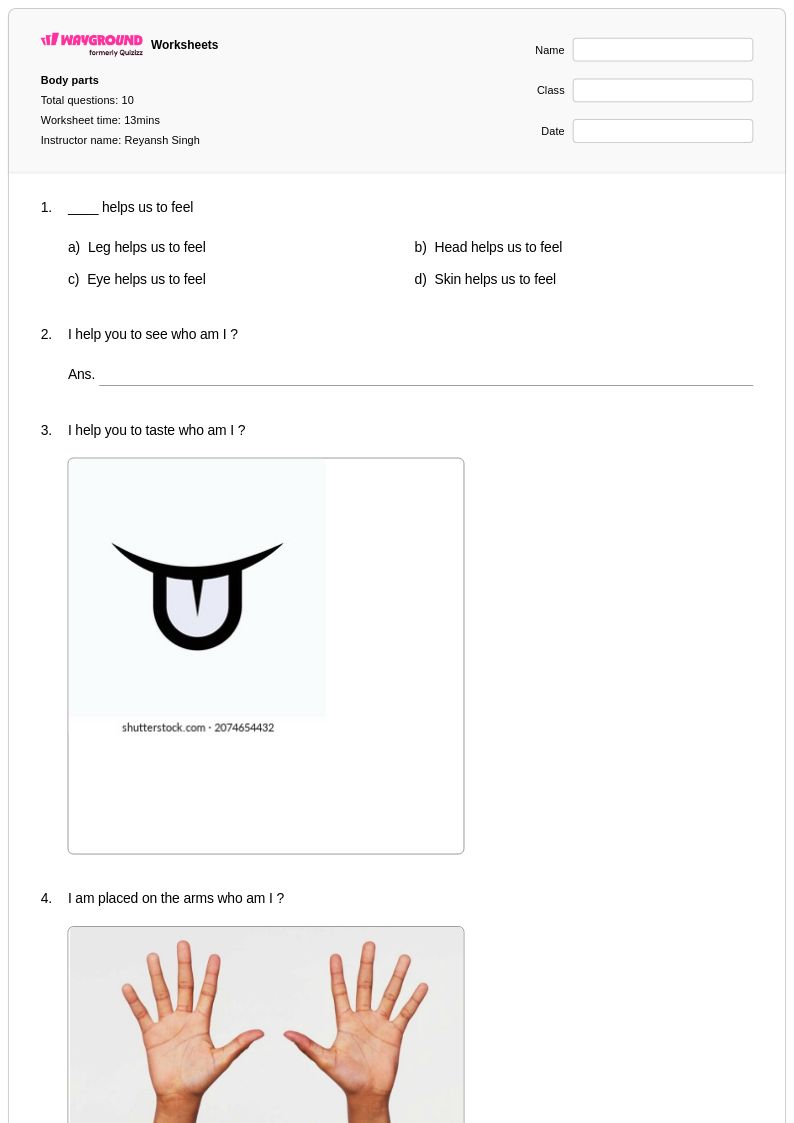
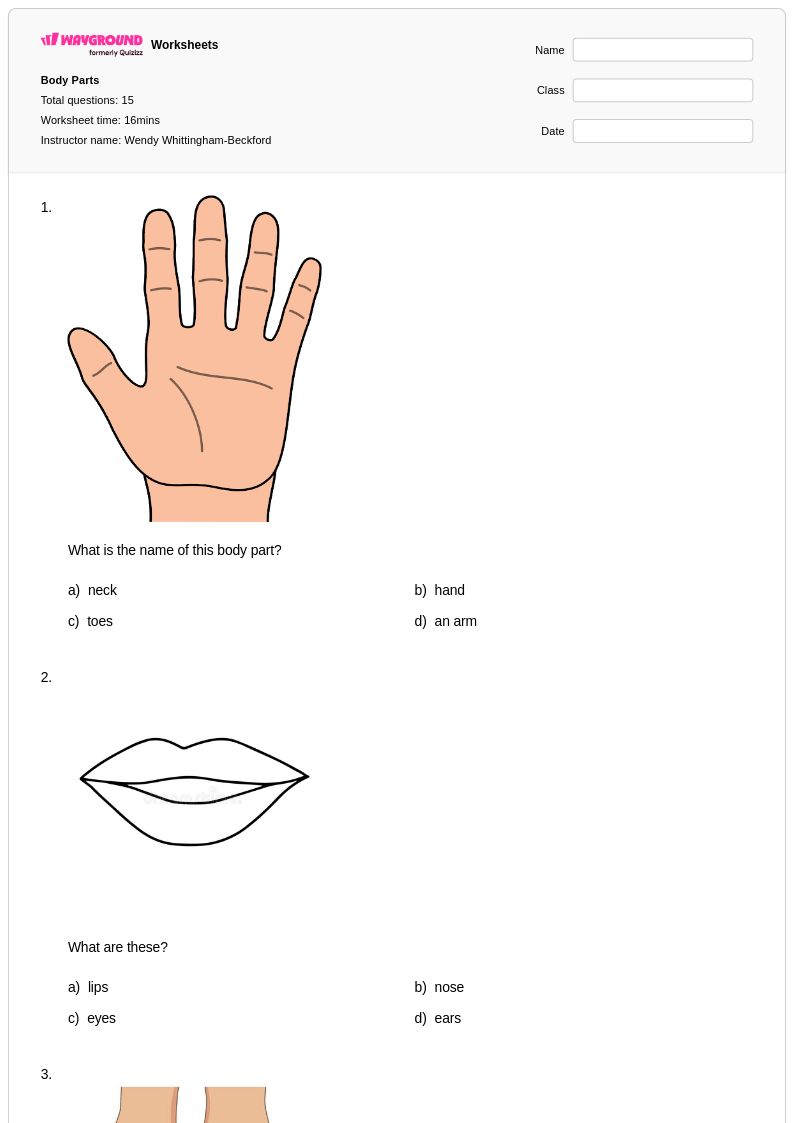
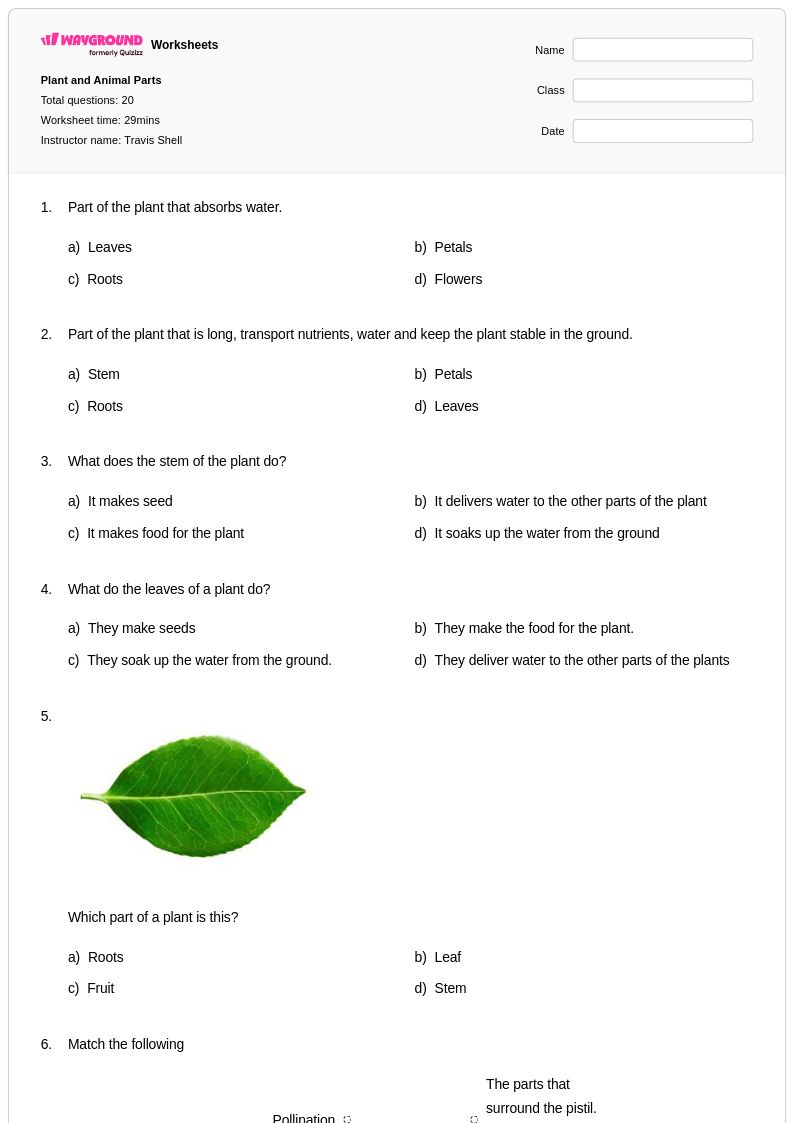
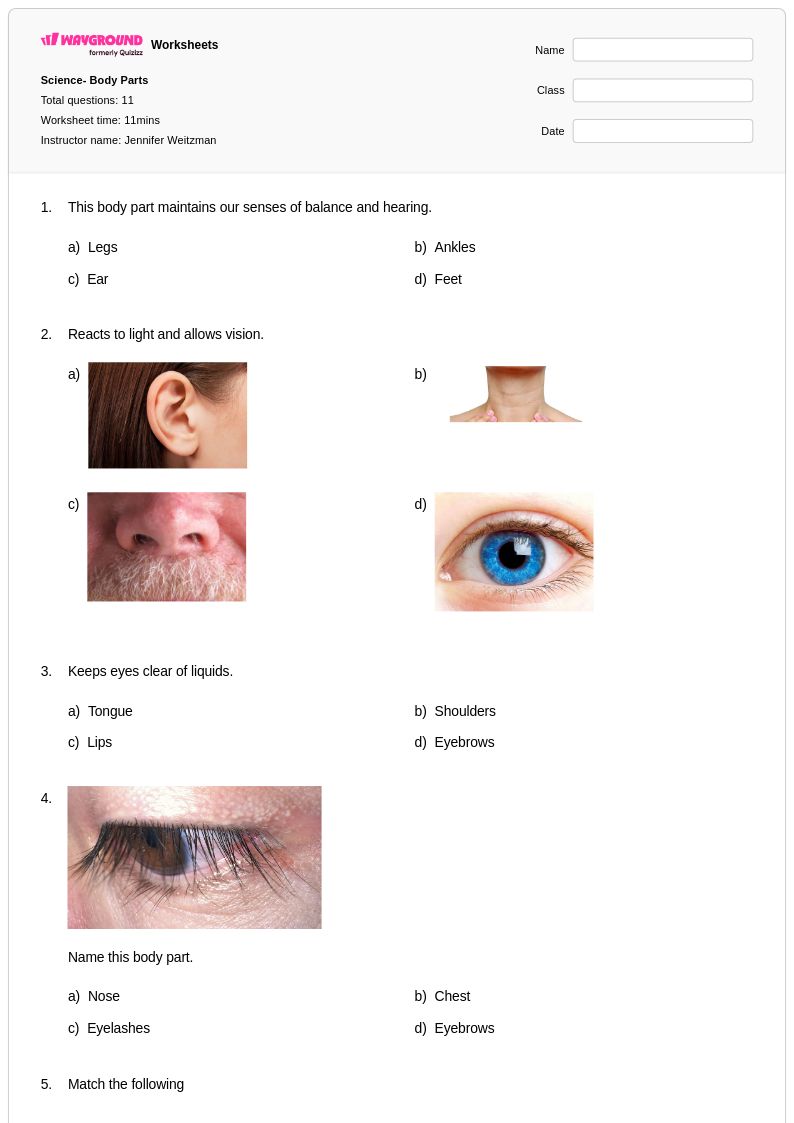
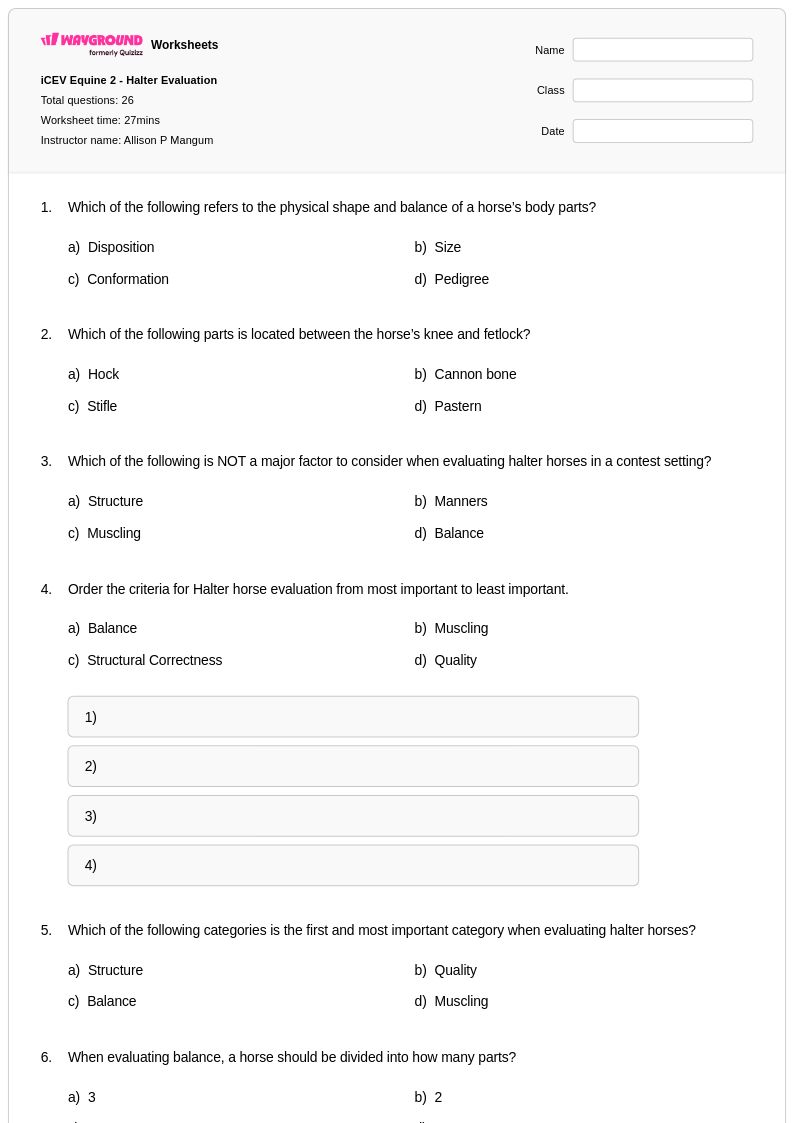
Horse body parts worksheets for kindergarten provide young learners with an engaging introduction to animal anatomy through age-appropriate life science activities. These educational resources help students develop foundational scientific vocabulary while strengthening observation skills, visual recognition, and basic understanding of how living creatures are structured. Wayground's collection includes free printables that feature clearly labeled diagrams, matching exercises, and simple identification tasks designed specifically for early elementary students. Each worksheet comes with a comprehensive answer key to support accurate learning, and the pdf format ensures easy classroom distribution and home practice. These practice problems encourage students to explore the relationship between form and function in animals while building essential pre-reading skills through picture-word associations.
Wayground, formerly Quizizz, empowers educators with access to millions of teacher-created horse body parts worksheets specifically designed for kindergarten life science instruction. The platform's robust search and filtering capabilities allow teachers to quickly locate resources that align with their specific curriculum standards and learning objectives. These differentiation tools enable instructors to customize worksheets for varying skill levels within their classrooms, supporting both remediation for struggling learners and enrichment opportunities for advanced students. Available in both printable and digital formats, including downloadable pdf versions, these worksheets seamlessly integrate into lesson planning whether for in-person instruction, remote learning, or hybrid educational environments. Teachers can efficiently address individual student needs while ensuring consistent skill practice across diverse learning settings, making horse anatomy concepts accessible and memorable for young scientists.
FAQs
How do I teach horse body parts to students?
Start with external anatomy before moving to internal systems, using labeled diagrams to introduce key terms like mane, withers, hocks, and hooves. Build vocabulary progressively by connecting each part to its function, which helps students retain terminology rather than memorize isolated labels. Hands-on labeling activities and anatomical diagram exercises are particularly effective for reinforcing equine anatomy in a life science or animal biology unit.
What exercises help students practice identifying horse body parts?
Labeling diagrams is the most direct practice method, requiring students to identify and name specific external and internal structures from a visual reference. Comparative analysis activities, where students match anatomical terms to their functions or compare horse anatomy to other mammals, deepen understanding beyond rote recall. Visual identification exercises using unlabeled diagrams as informal quizzes are also effective for checking retention before a formal assessment.
What mistakes do students commonly make when learning equine anatomy?
Students frequently confuse positional terms, such as misidentifying the withers or fetlock, because these are region-specific terms without everyday equivalents. Another common error is conflating internal systems, for example mixing up components of the digestive tract with the respiratory system when both are introduced together. Pre-teaching vocabulary with visual anchors before asking students to label diagrams significantly reduces these errors.
How can I differentiate horse body parts instruction for different skill levels?
For struggling learners, limit the initial scope to major external features before introducing internal systems, and provide word banks on labeling activities to reduce cognitive load. Advanced students can be challenged with unlabeled cross-section diagrams or asked to explain the function of each structure alongside its name. On Wayground, teachers can apply accommodations such as reduced answer choices for individual students, which lowers difficulty without requiring a separate worksheet version.
How do I use Wayground's horse body parts worksheets in my classroom?
Wayground's horse body parts worksheets are available as printable PDFs for traditional classroom use and in digital formats for technology-integrated environments, giving teachers flexibility depending on their setup. Digital versions can be hosted as a quiz directly on Wayground, making them suitable for individual practice, station rotations, or homework assignments. All worksheets include complete answer keys, so grading and self-assessment are straightforward without additional preparation.