Free Printable Butterfly Metamorphosis Worksheets for Kindergarten
Explore free printable Kindergarten butterfly metamorphosis worksheets and practice problems that help young learners discover the amazing transformation from caterpillar to butterfly with engaging PDF activities and answer keys.
Explore printable Butterfly Metamorphosis worksheets for Kindergarten
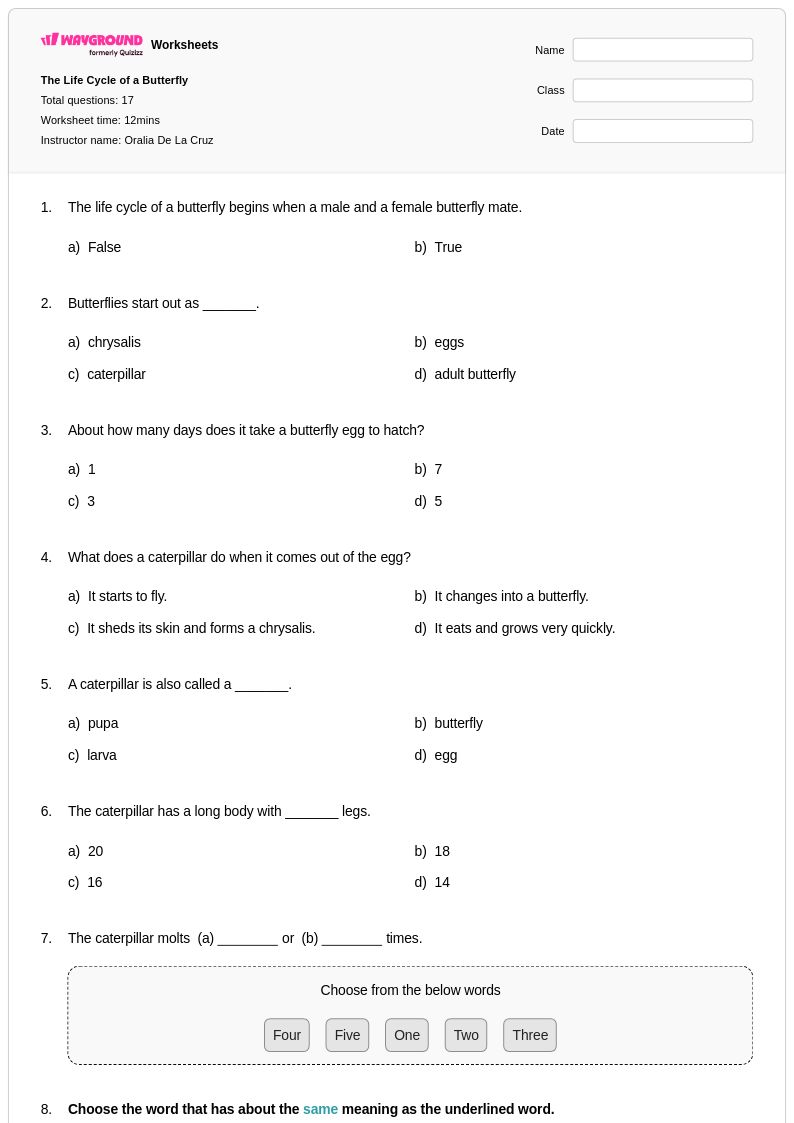
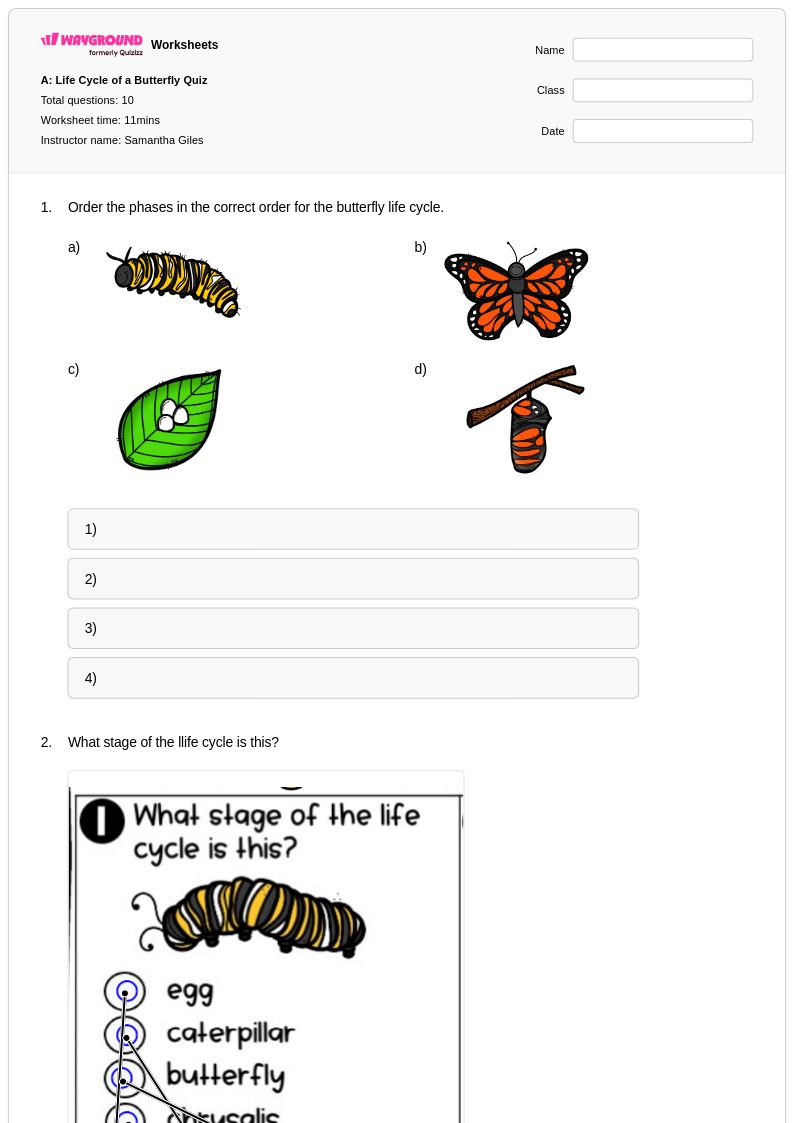
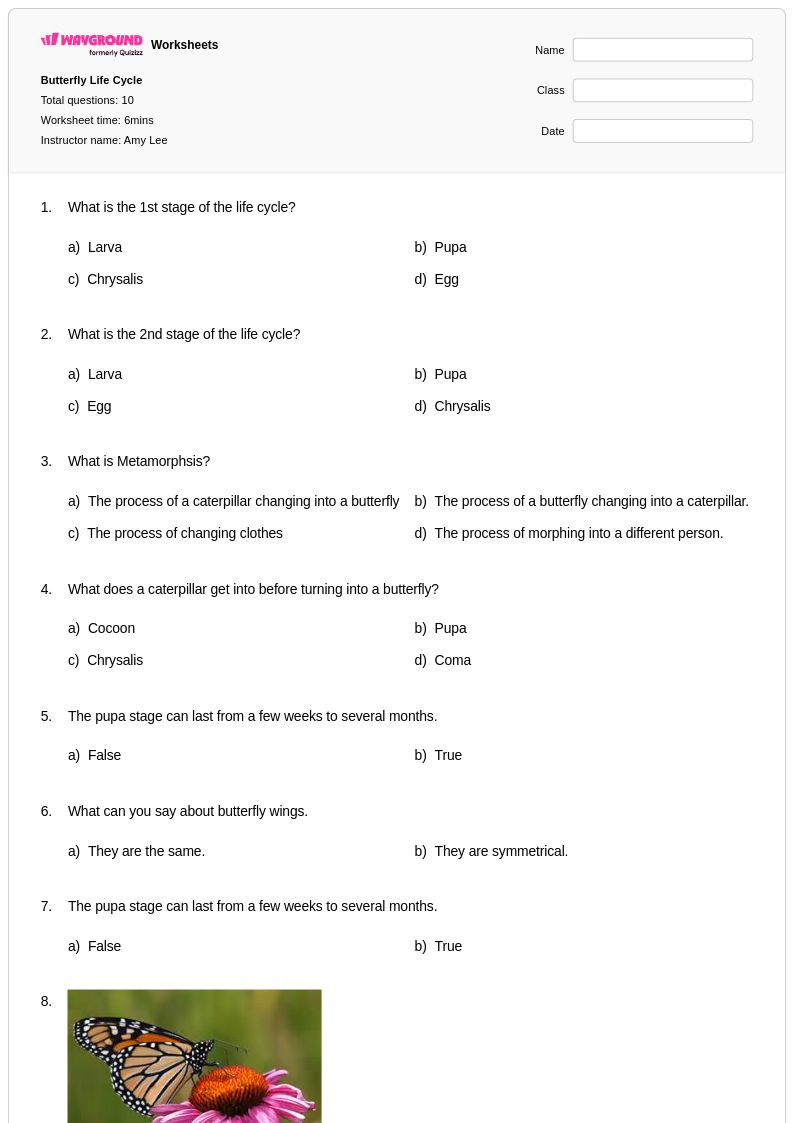
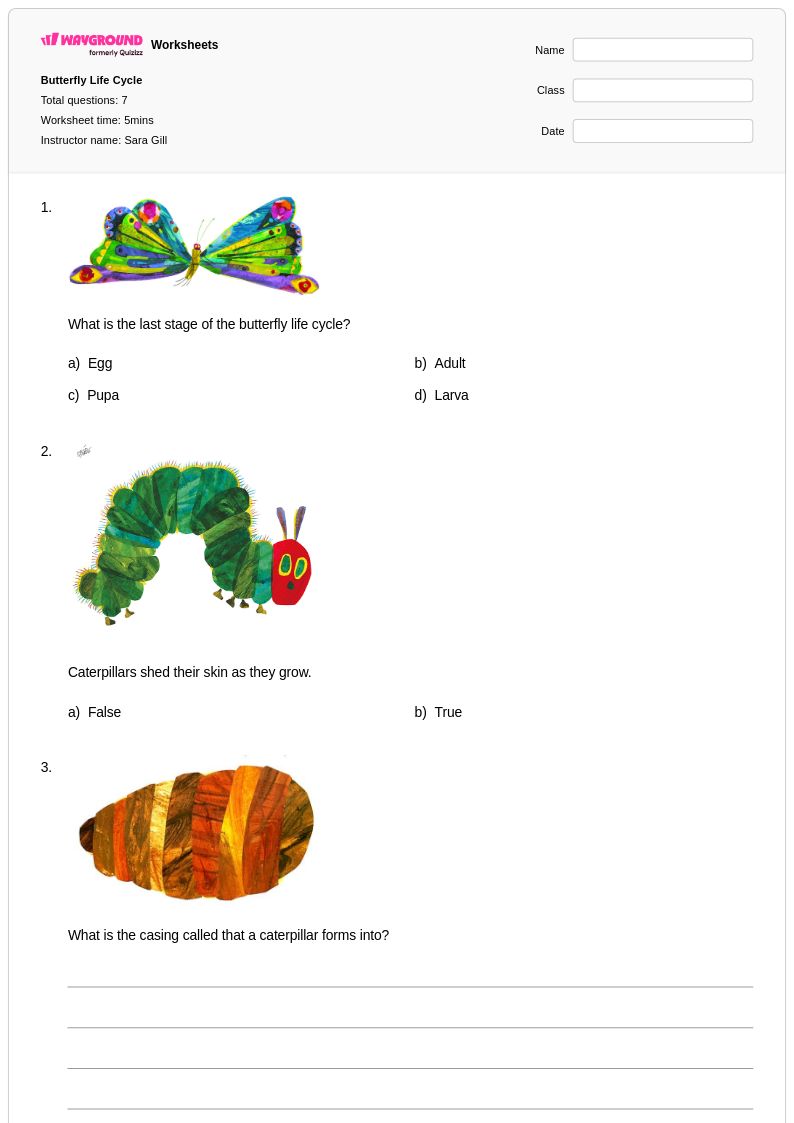
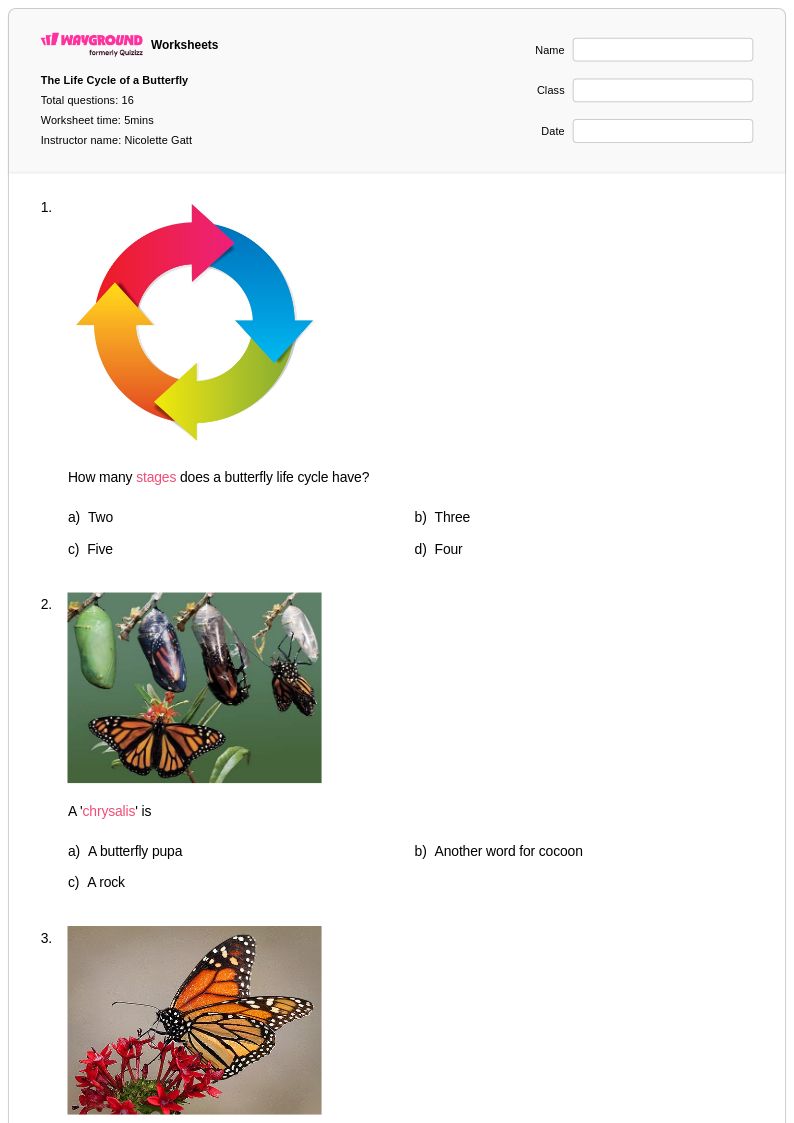
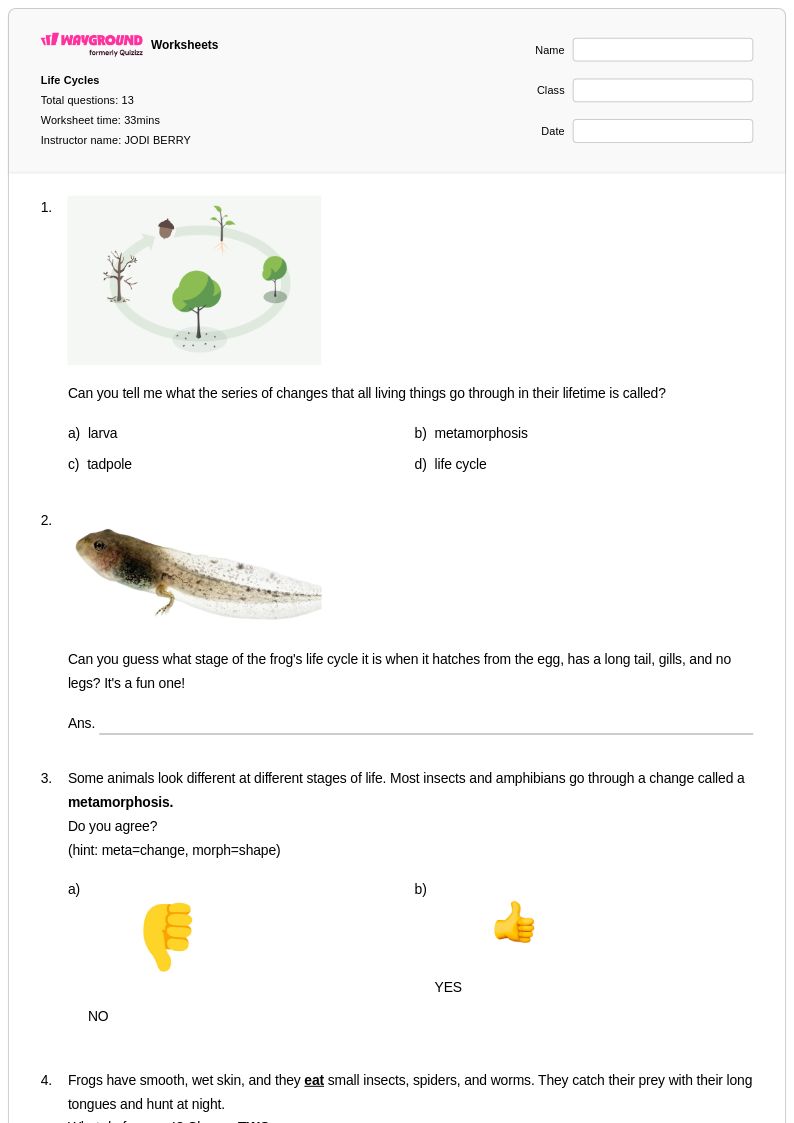
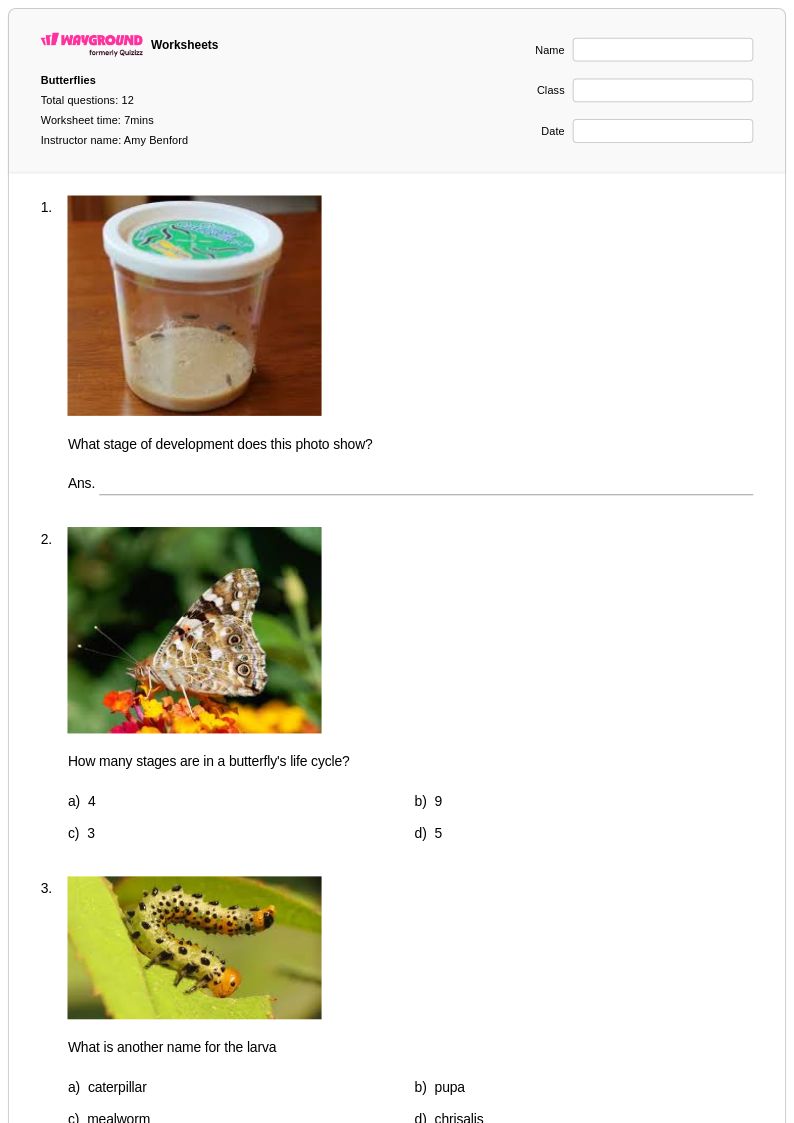
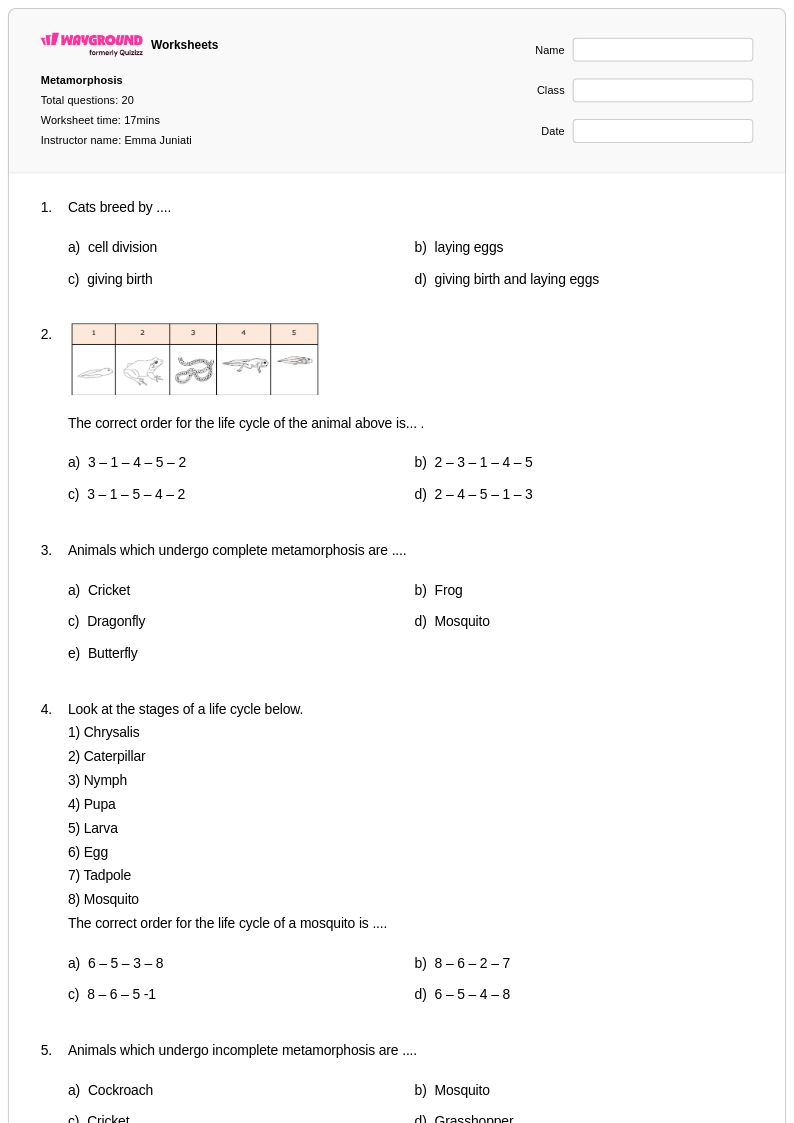
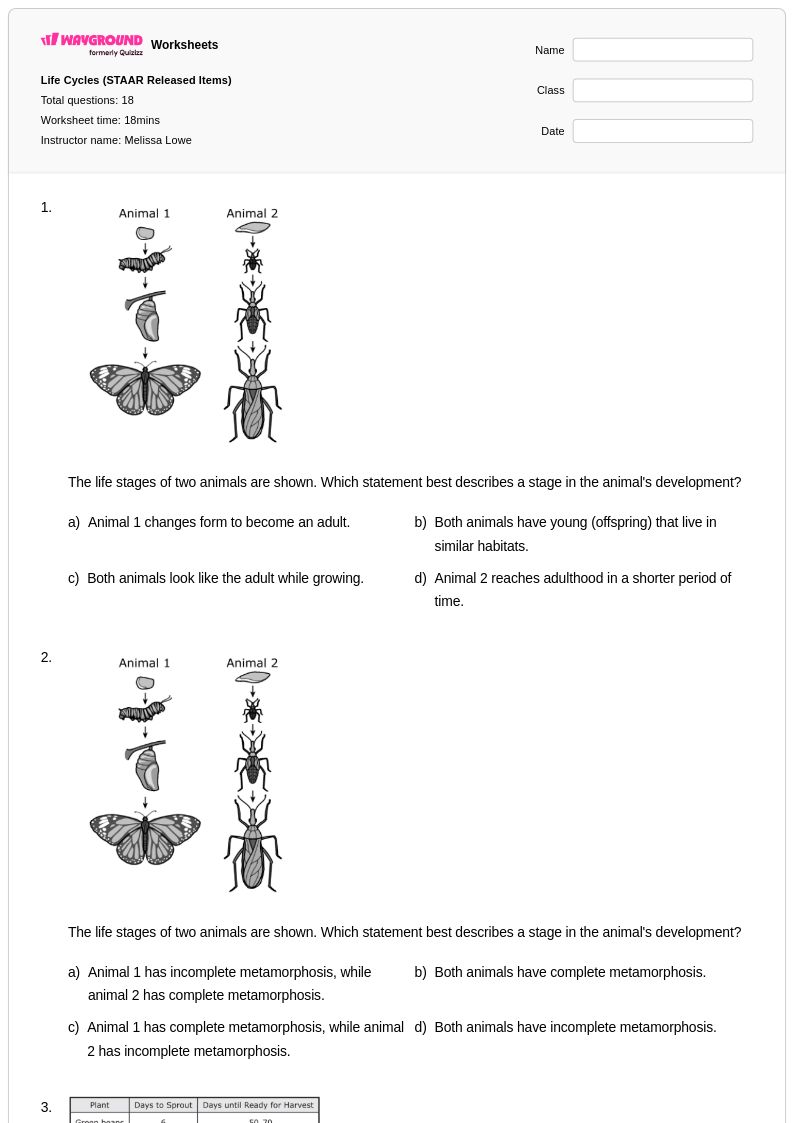
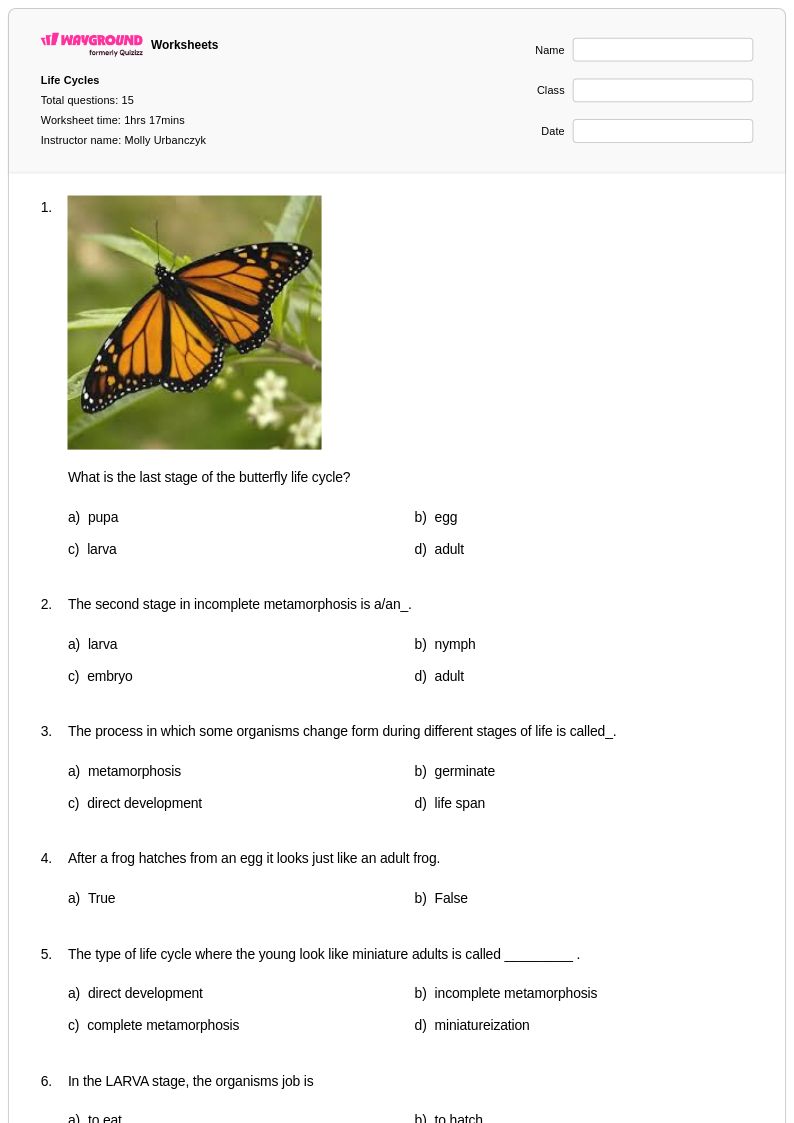
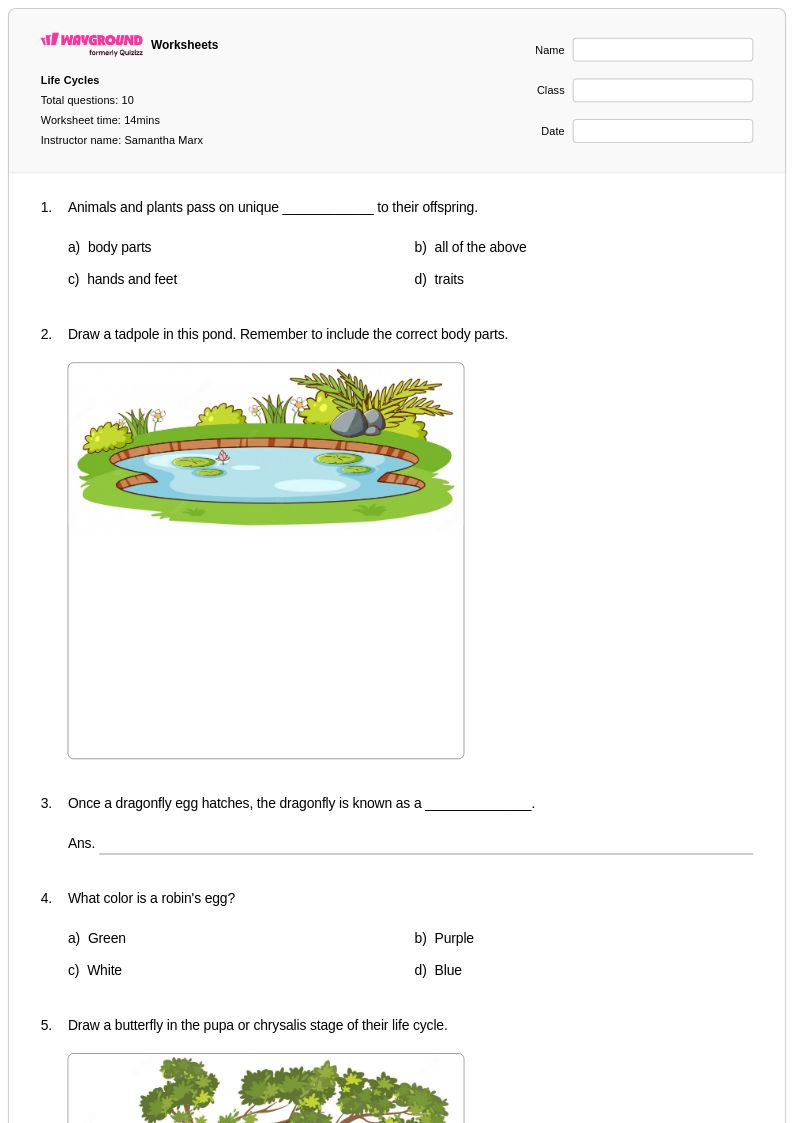
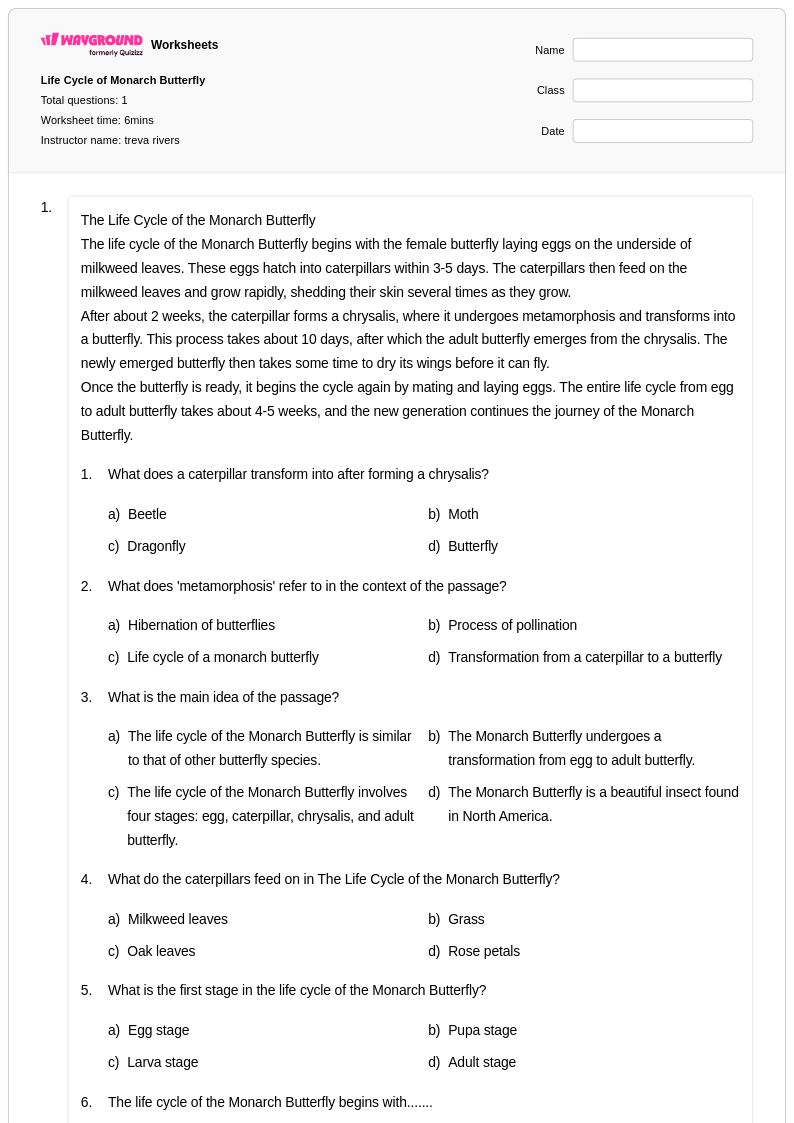
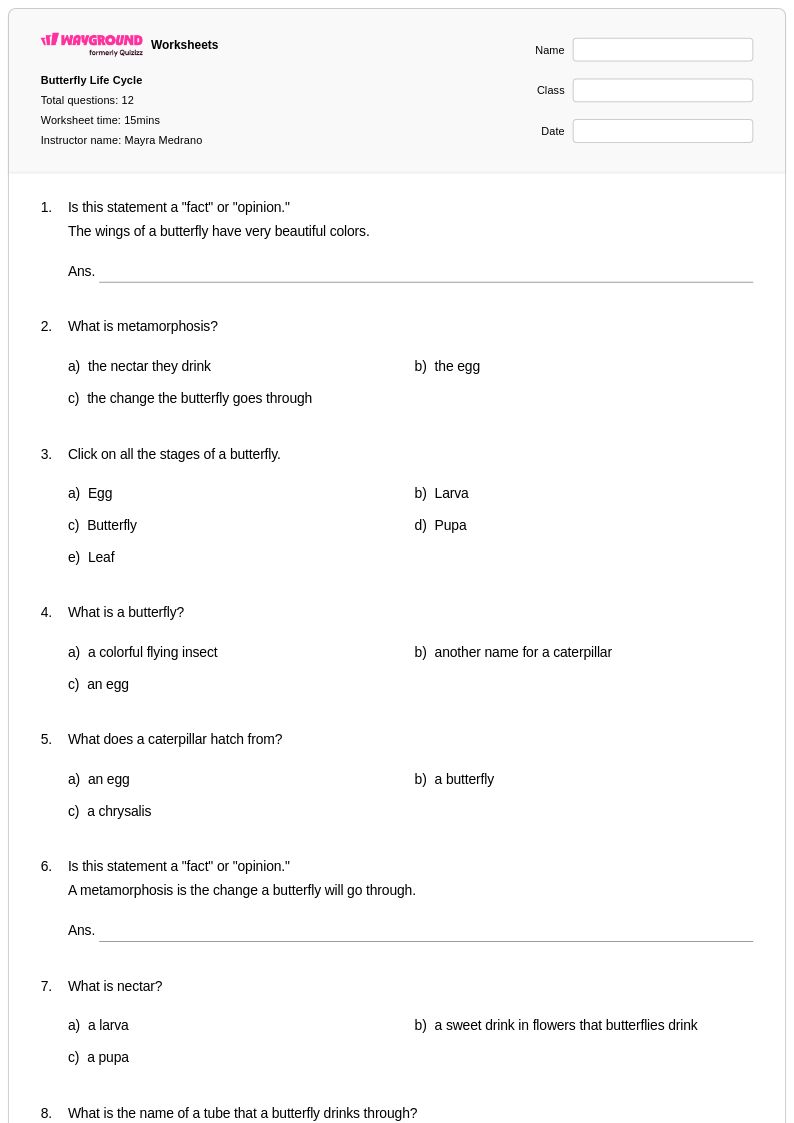
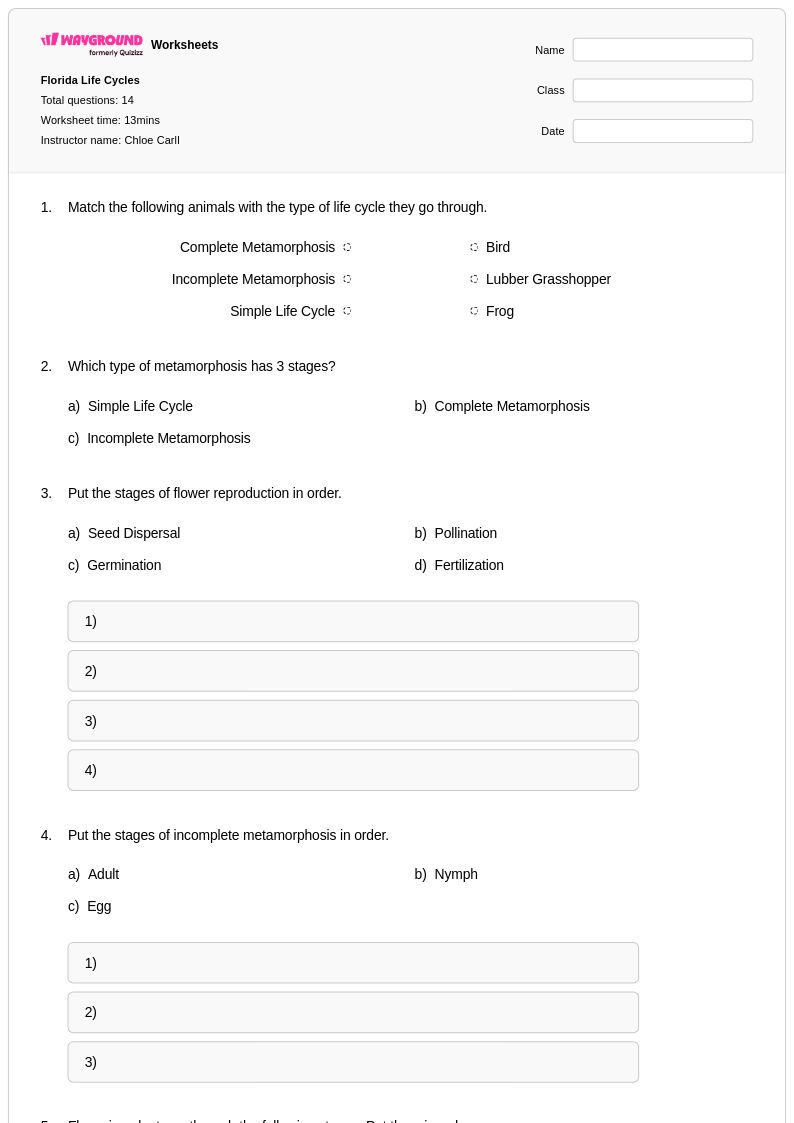
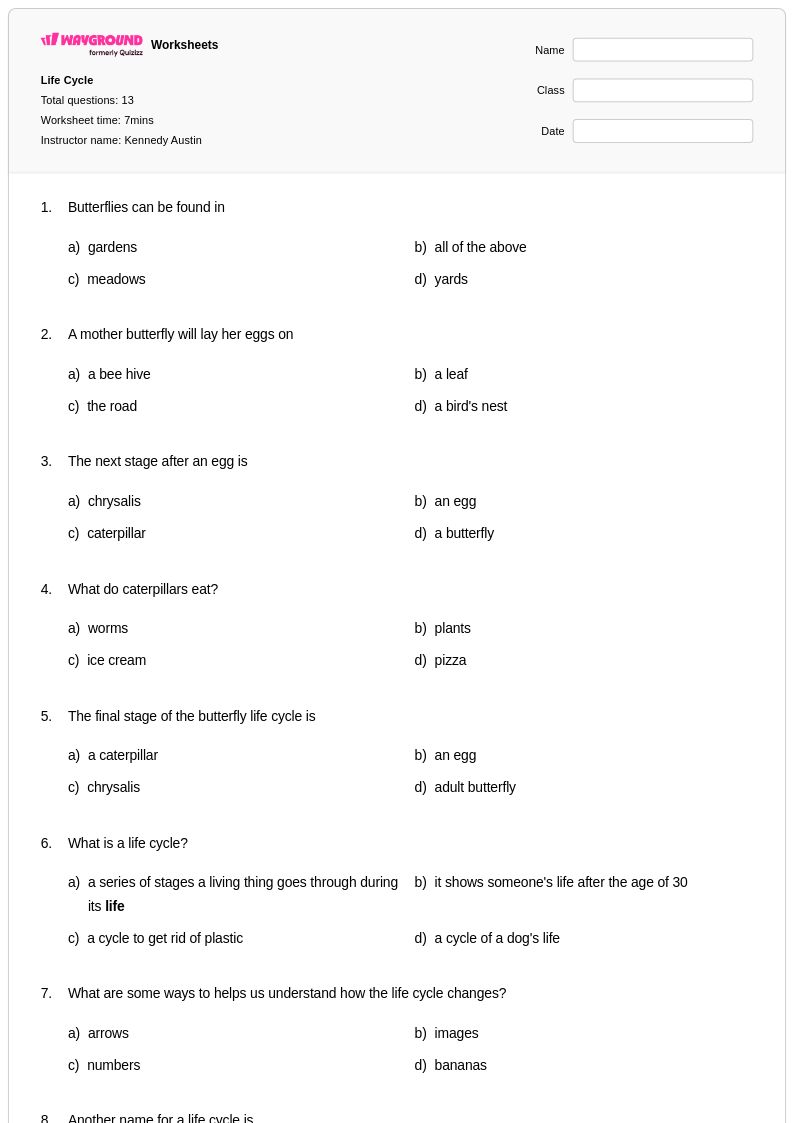
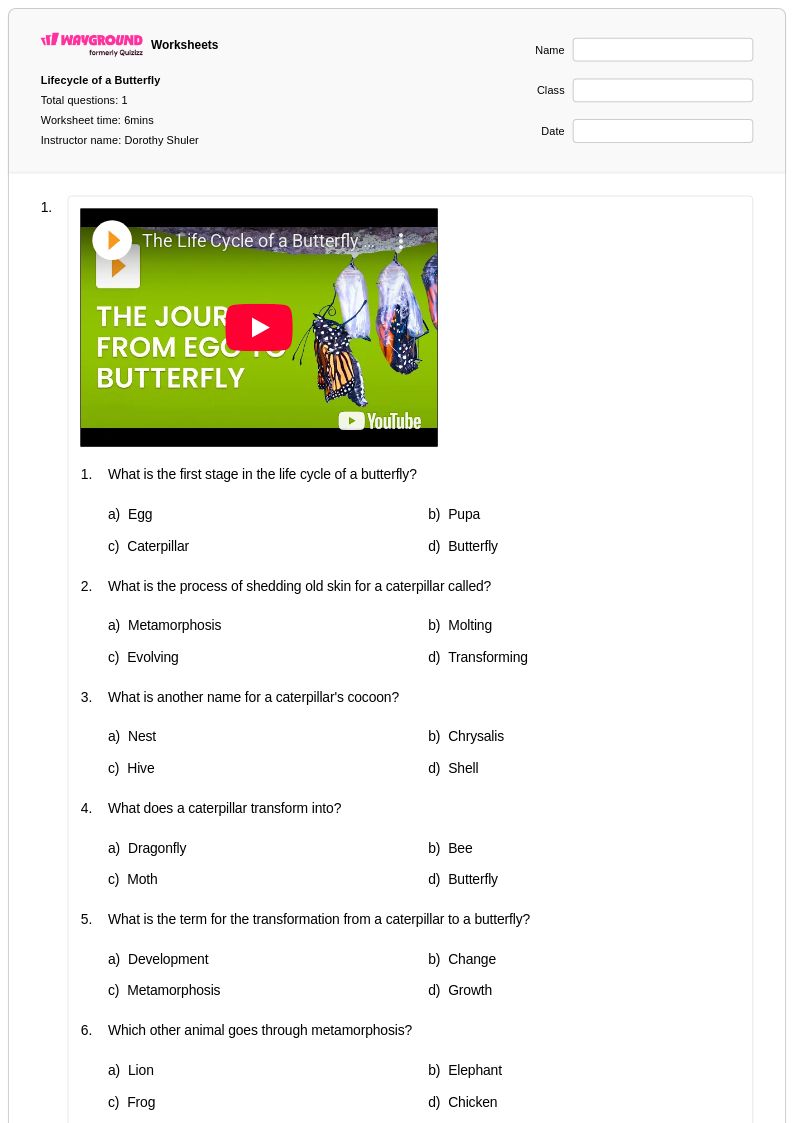
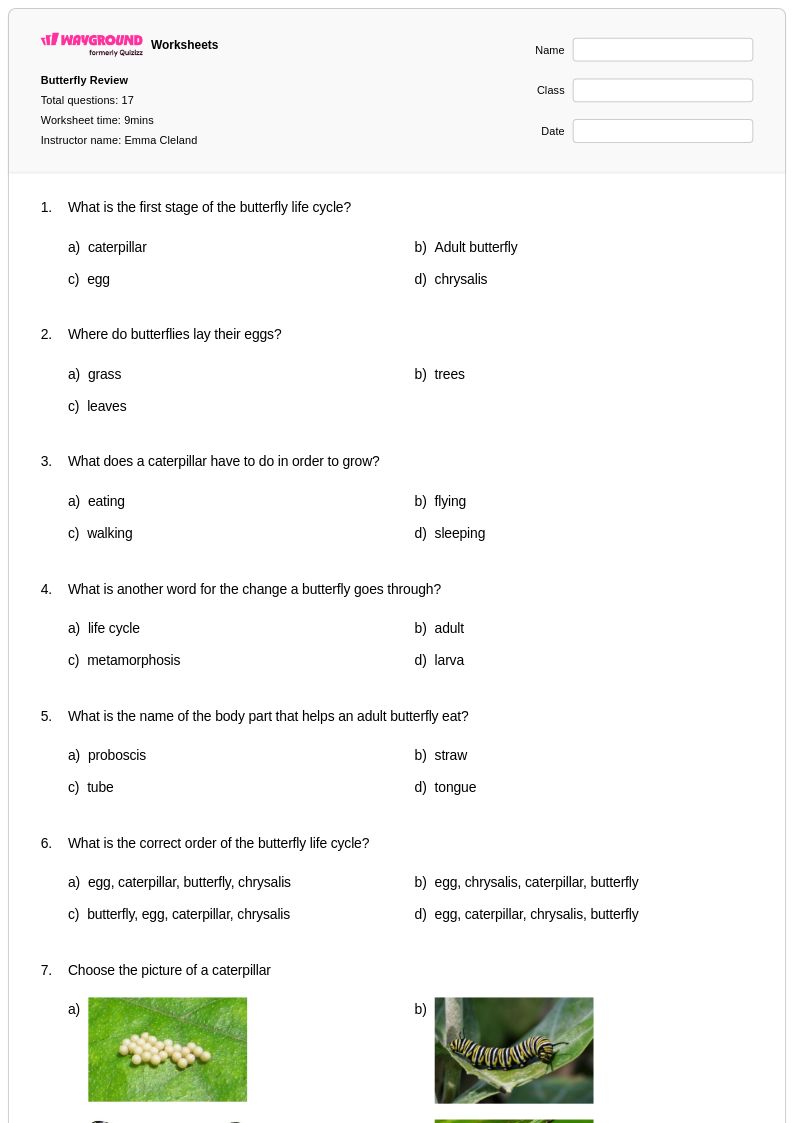
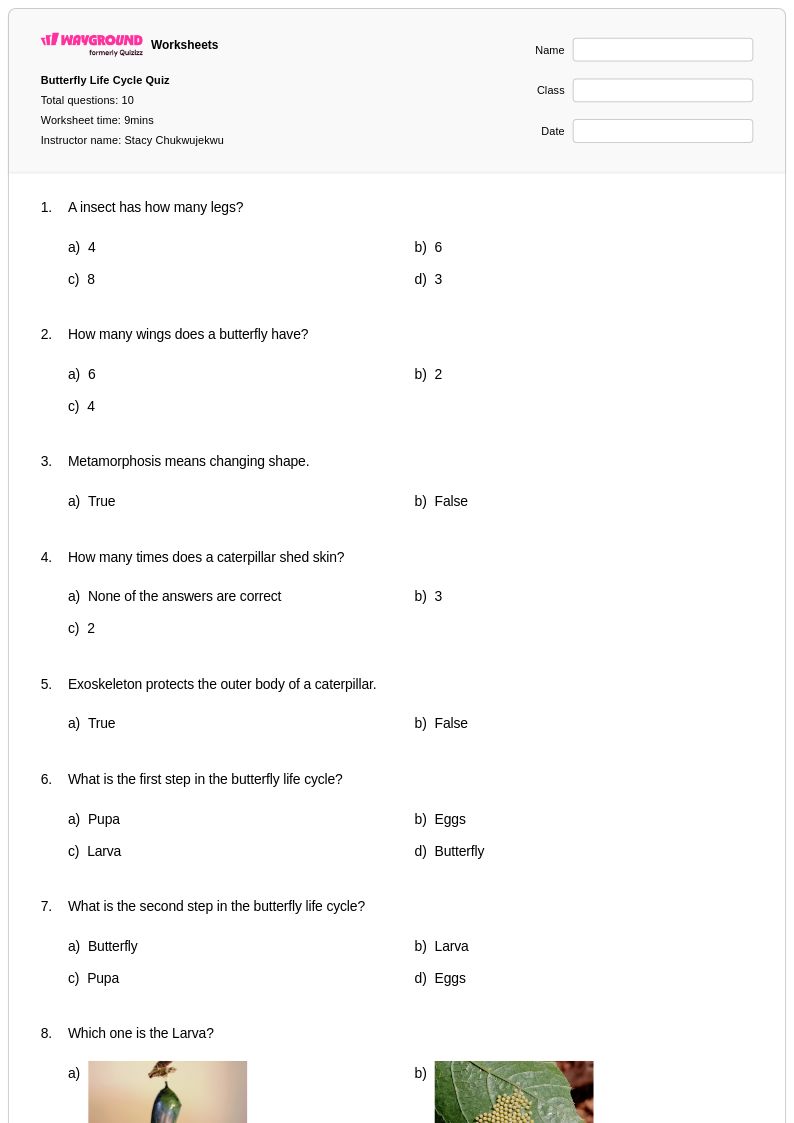
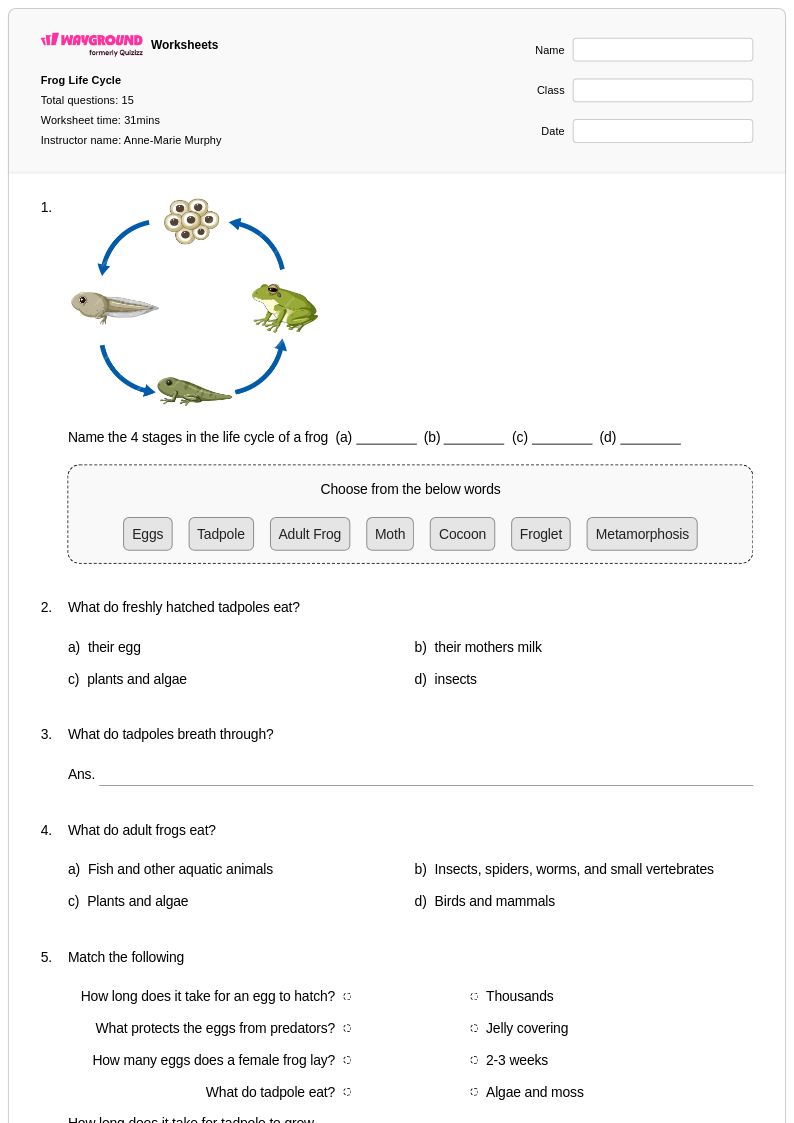
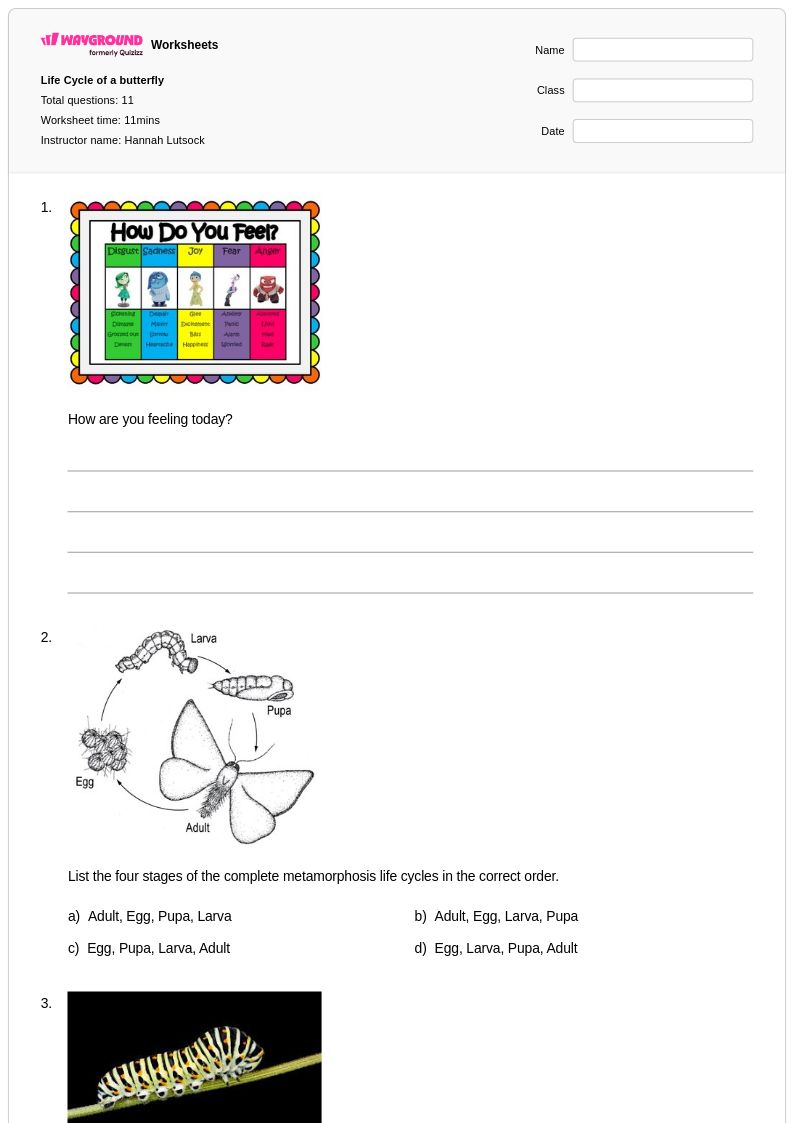
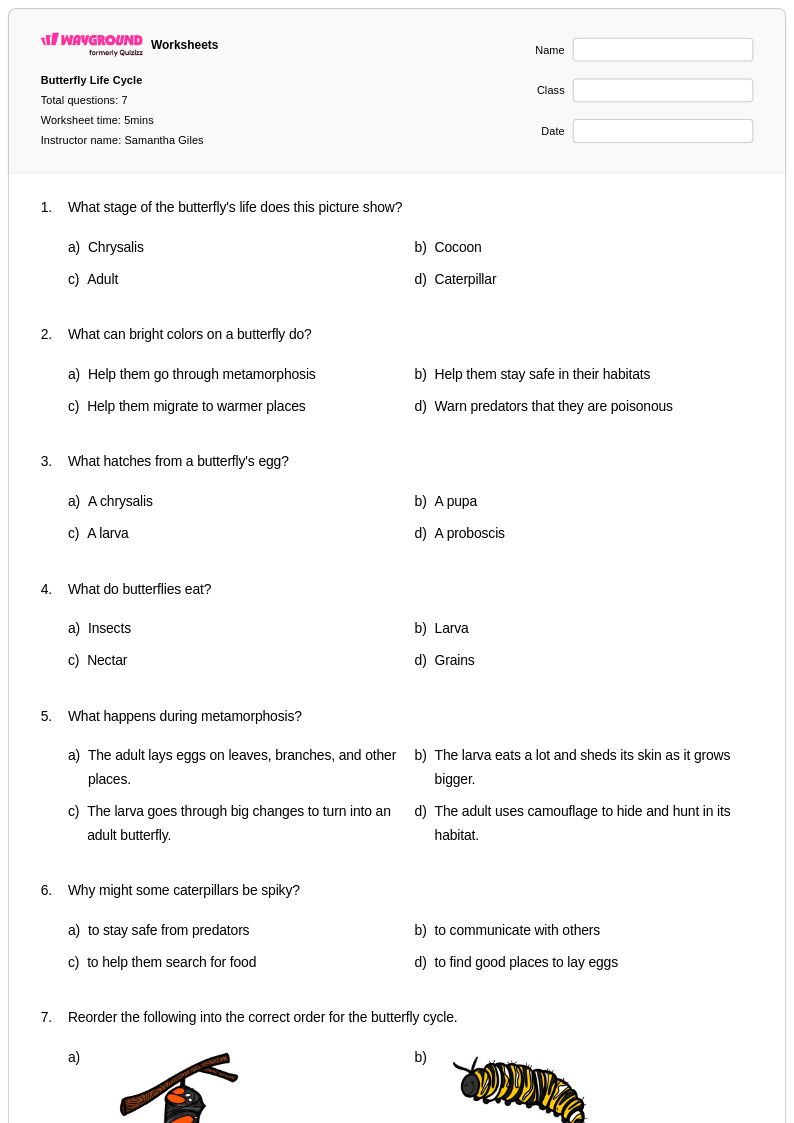
Butterfly metamorphosis worksheets for kindergarten students available through Wayground (formerly Quizizz) introduce young learners to the fascinating four-stage life cycle of butterflies through age-appropriate activities and visual exercises. These carefully designed printables help kindergarteners develop foundational scientific observation skills while building vocabulary related to eggs, caterpillars, chrysalis, and adult butterflies. The worksheets strengthen sequential thinking abilities as students practice ordering the stages of transformation, while simultaneously supporting early literacy through picture-word matching activities and simple labeling exercises. Each free resource includes comprehensive answer keys that enable teachers to quickly assess student understanding, and the pdf format ensures consistent quality whether used for individual practice problems or whole-class instruction.
Wayground (formerly Quizizz) empowers educators with access to millions of teacher-created butterfly metamorphosis resources specifically tailored for kindergarten life science instruction. The platform's robust search and filtering capabilities allow teachers to locate materials that align with specific learning standards while offering differentiation tools to meet diverse student needs within the same classroom. These comprehensive worksheet collections support flexible lesson planning through customizable features that enable educators to modify content for remediation or enrichment purposes. Available in both printable and digital formats including downloadable pdf versions, these resources facilitate seamless integration into various instructional settings while providing teachers with reliable tools for skill practice, formative assessment, and reinforcement of critical early science concepts about biological processes and natural cycles.
FAQs
How do I teach butterfly metamorphosis to elementary students?
Start by establishing the difference between complete and incomplete metamorphosis before introducing the four butterfly-specific stages: egg, larva (caterpillar), pupa (chrysalis), and adult. Use visual diagrams and sequencing activities to help students internalize stage progression, since the physical transformations are dramatic and concrete enough for younger learners to connect with. Pairing instruction with labeling exercises reinforces biological vocabulary like 'chrysalis' and 'larva' in context, which improves retention over rote memorization.
What activities help students practice the stages of butterfly metamorphosis?
Sequencing activities, where students arrange the four stages in the correct order, are particularly effective because they require recall without heavy reliance on vocabulary alone. Diagram labeling exercises push students to connect stage names with visual representations, reinforcing both scientific vocabulary and observational skills. Practice problems that ask students to explain what happens at each stage deepen comprehension beyond simple memorization of a list.
What misconceptions do students commonly have about butterfly metamorphosis?
A frequent misconception is that the chrysalis is a cocoon — students often confuse butterfly pupae with moth cocoons, which are made of silk. Another common error is treating metamorphosis as a three-stage process, skipping the egg stage entirely. Students also sometimes believe the caterpillar simply 'grows wings' inside the chrysalis, rather than understanding that most of its body structures are broken down and reorganized during pupation.
How is butterfly metamorphosis different from other insect life cycles?
Butterfly metamorphosis is an example of complete metamorphosis (holometabolism), which includes four distinct stages: egg, larva, pupa, and adult. This contrasts with incomplete metamorphosis (hemimetabolism), seen in grasshoppers and dragonflies, which has only three stages and no pupal phase. The complete metamorphosis process involves a far more dramatic physical transformation, as the larval body is almost entirely reorganized during the pupal stage.
How can I use butterfly metamorphosis worksheets in my classroom?
Butterfly metamorphosis worksheets on Wayground are available as printable PDFs for traditional classroom use and in digital formats for technology-integrated environments, and can also be hosted as a quiz directly on Wayground. The included answer keys support efficient grading and allow students to self-assess during independent work. Worksheets can be assigned as direct instruction support, independent practice, or review materials depending on where students are in the unit.
How do I support students who struggle to remember the butterfly life cycle stages in order?
Students who struggle with sequencing benefit from repeated low-stakes retrieval practice rather than passive re-reading of notes. Sequencing cut-and-paste activities or ordering tasks on worksheets give students an active way to reconstruct the cycle from memory each time. On Wayground, teachers can also enable accommodations such as read-aloud support or reduced answer choices for students who need additional scaffolding during digital practice sessions.