Free Printable Healthy Eating Worksheets for Kindergarten
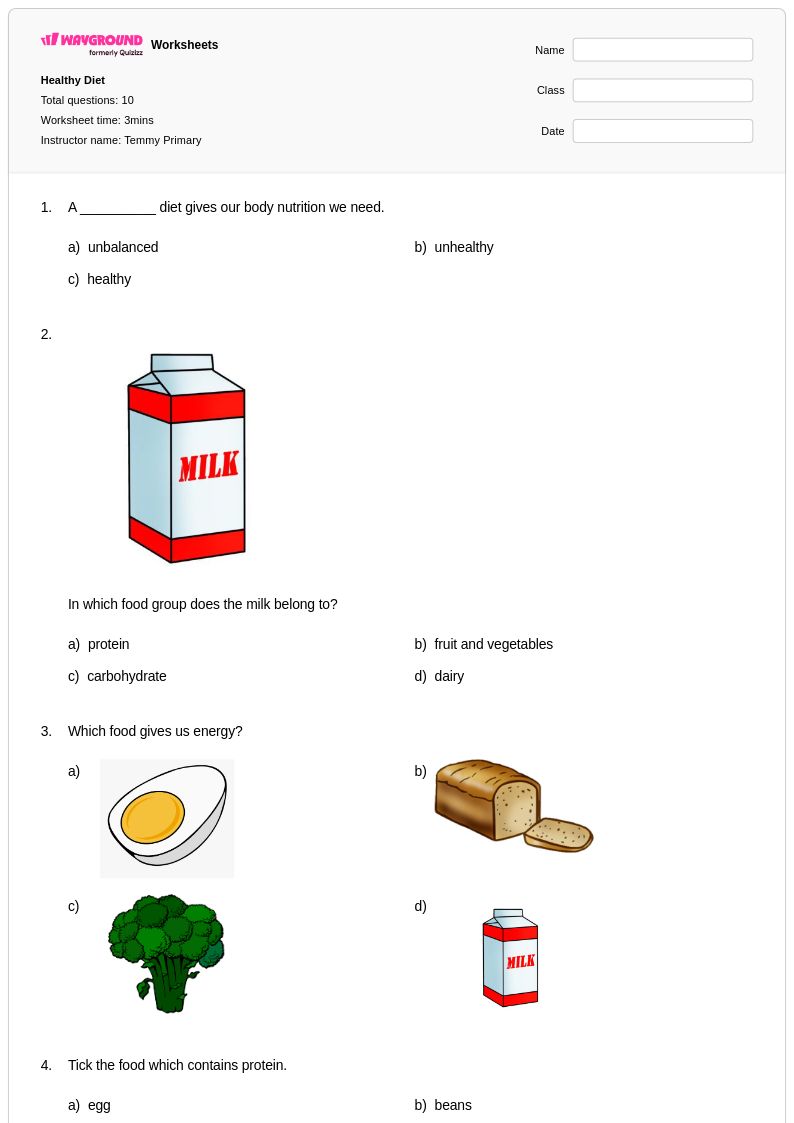
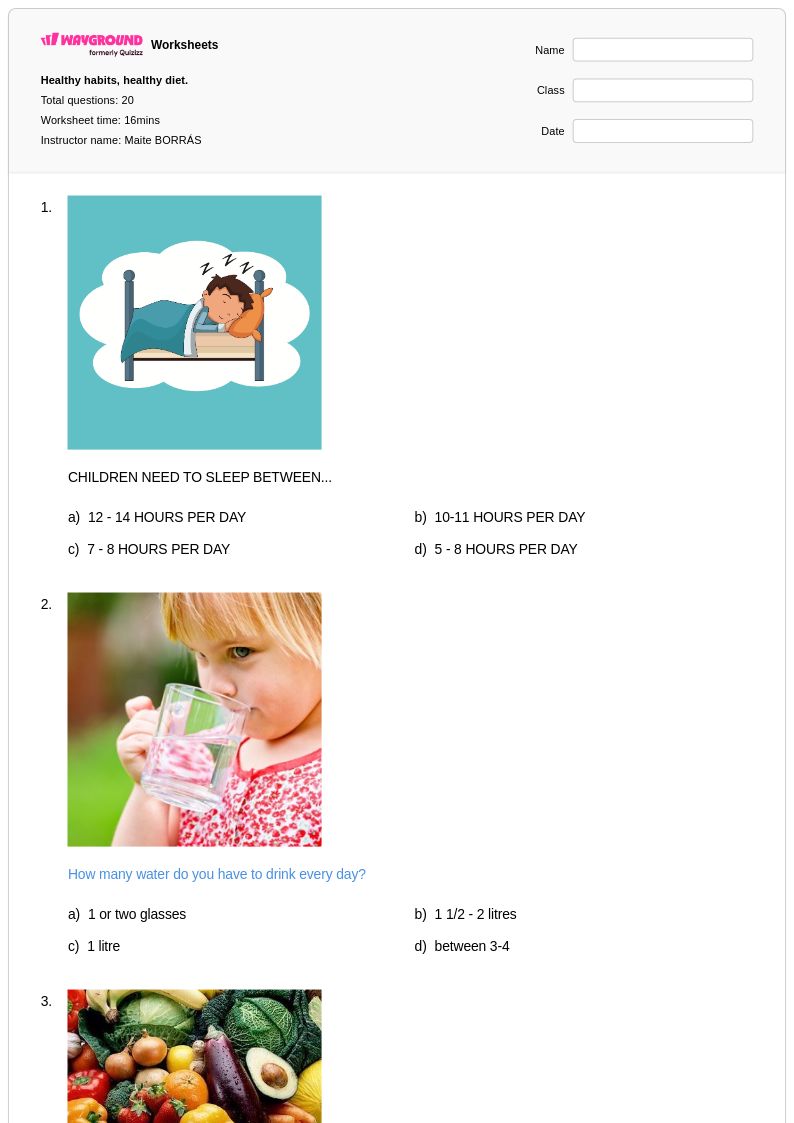
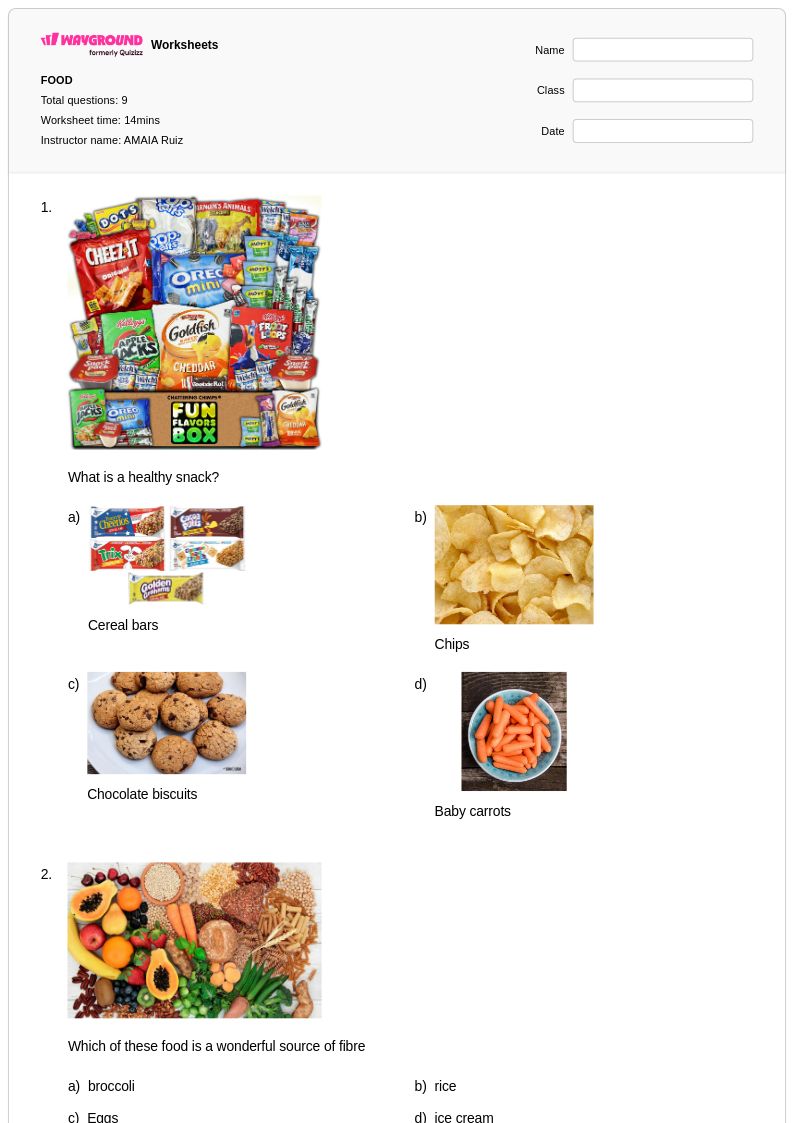
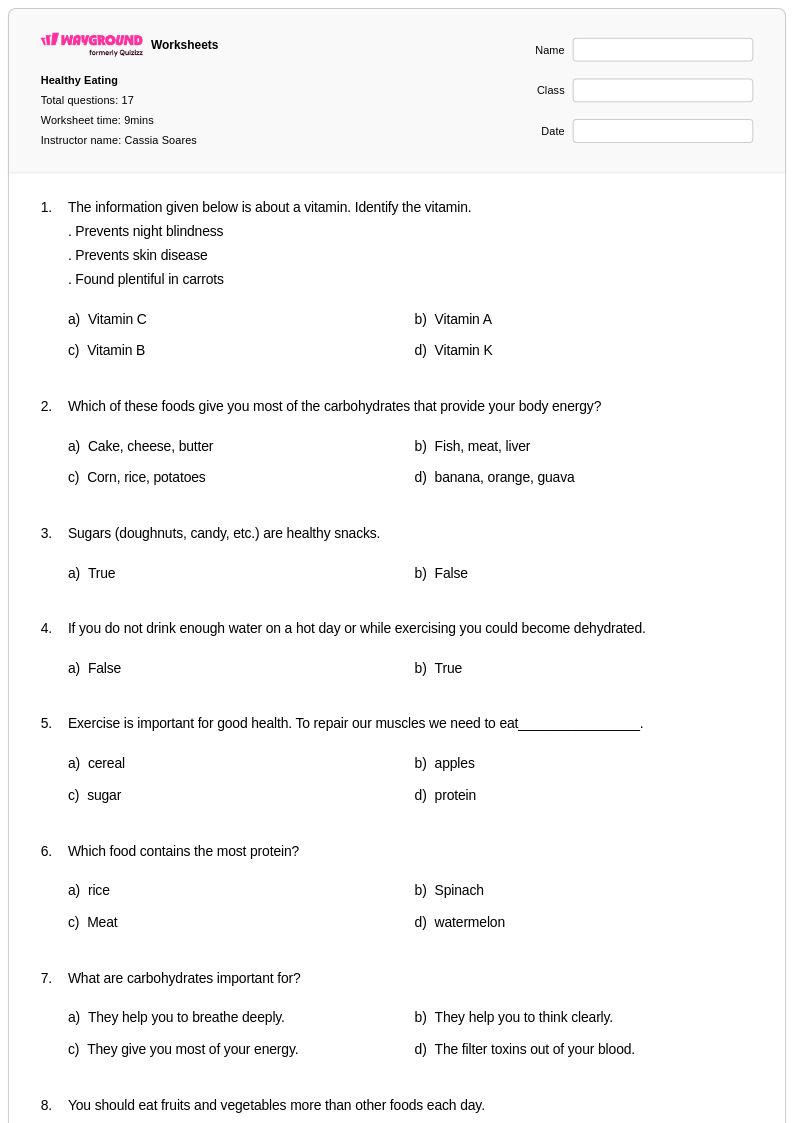
Explore free kindergarten healthy eating worksheets and printables from Wayground that help young learners discover nutritious foods, balanced meals, and good eating habits through engaging practice problems with answer keys.
Explore printable Healthy Eating worksheets for Kindergarten
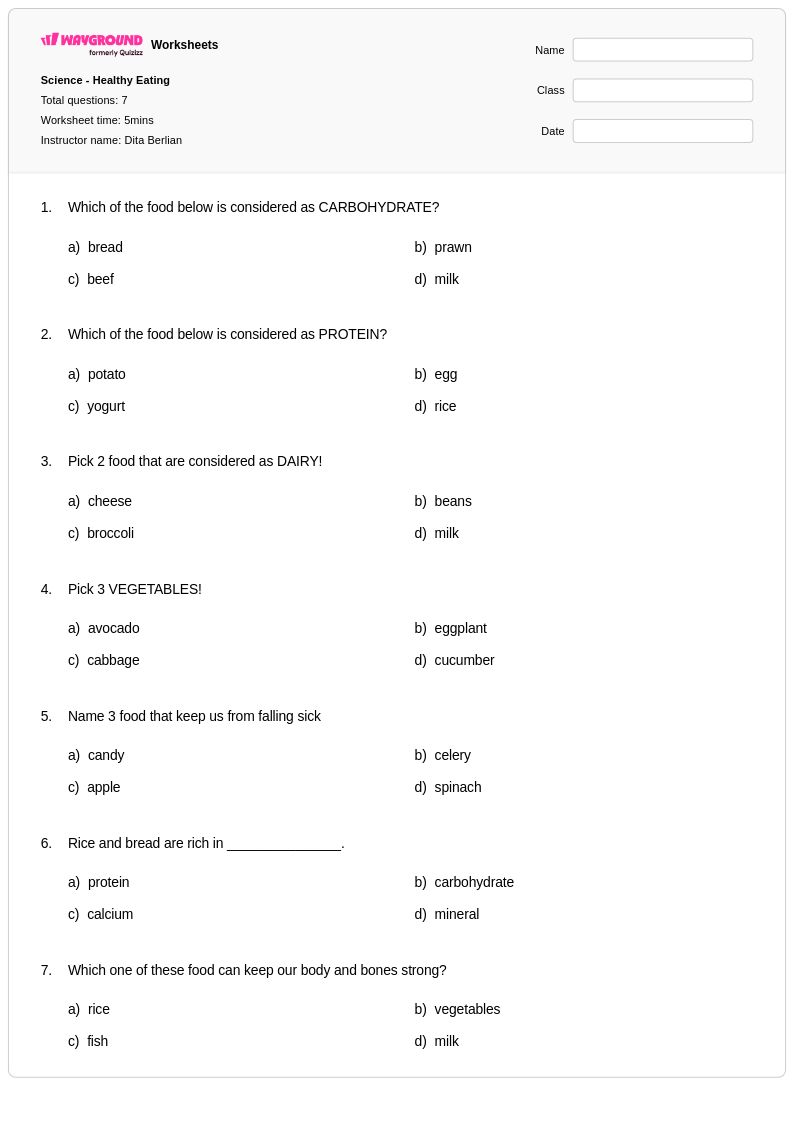
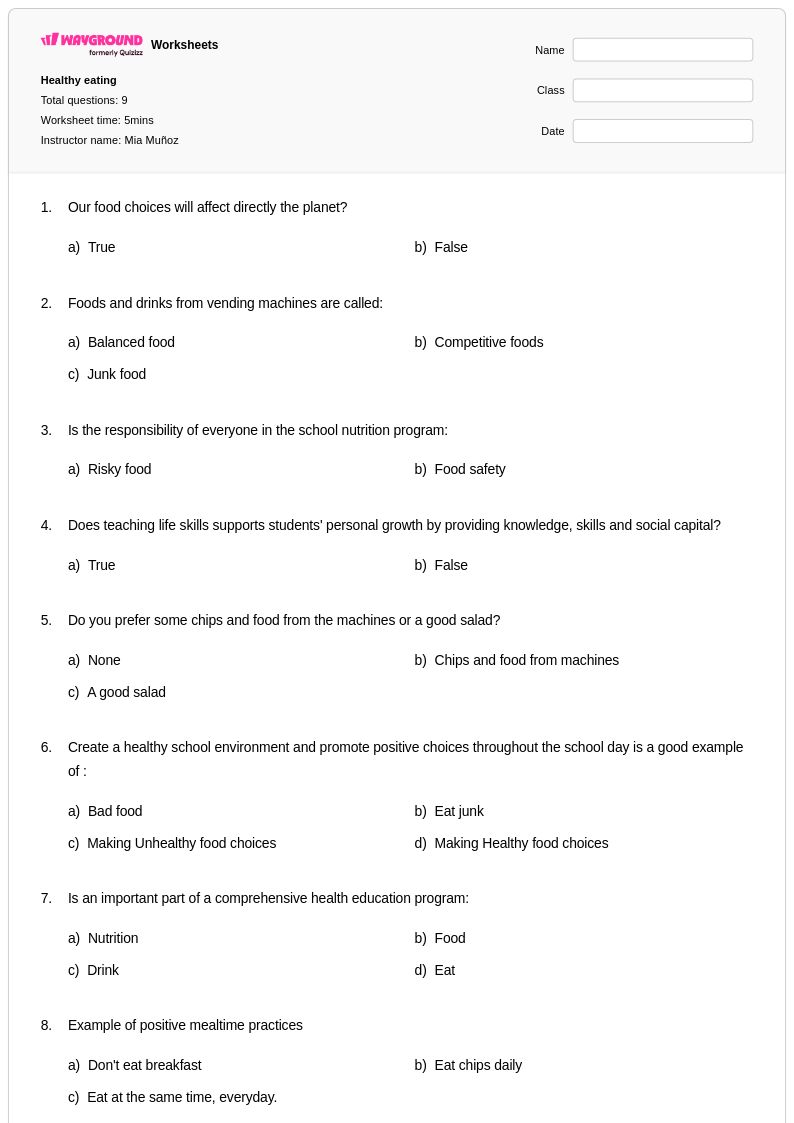
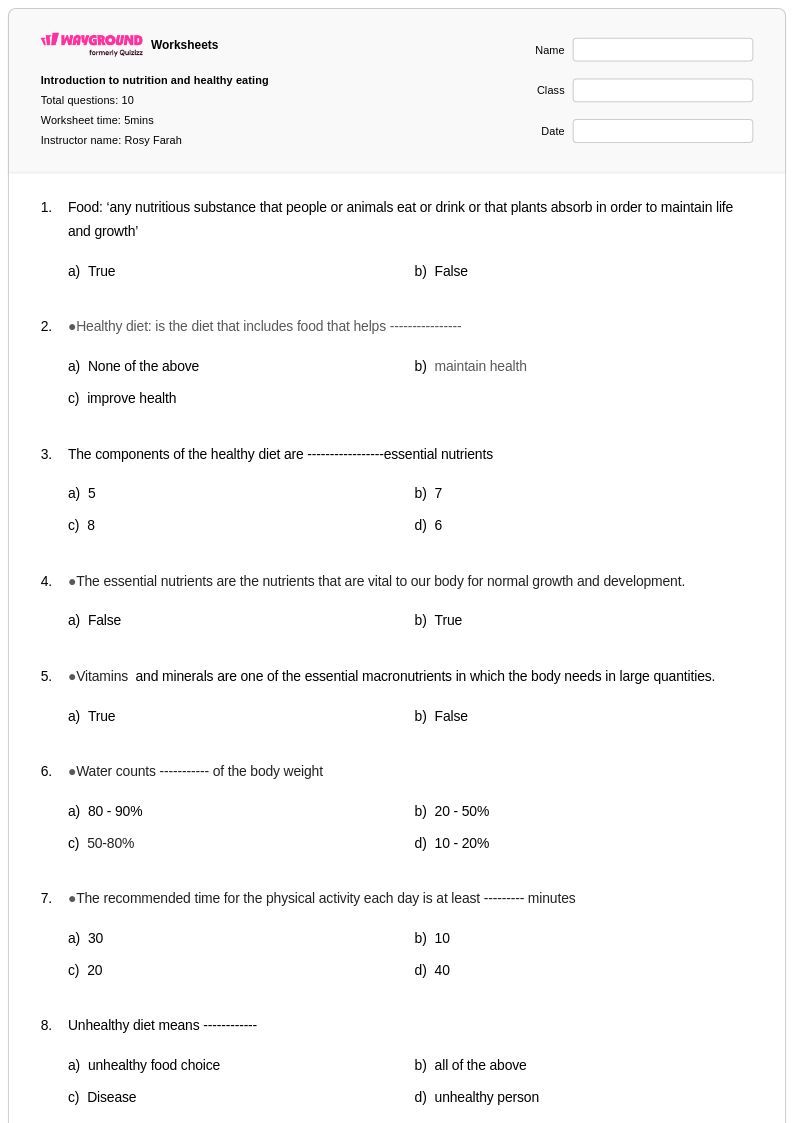
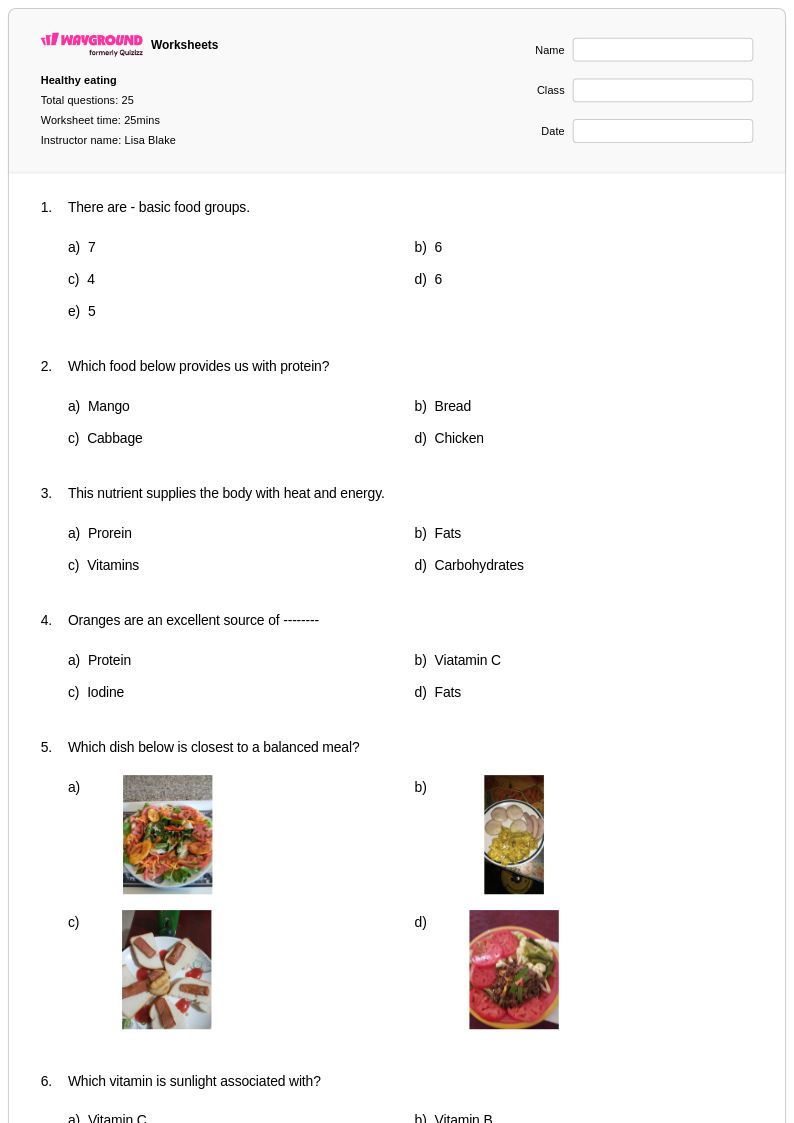
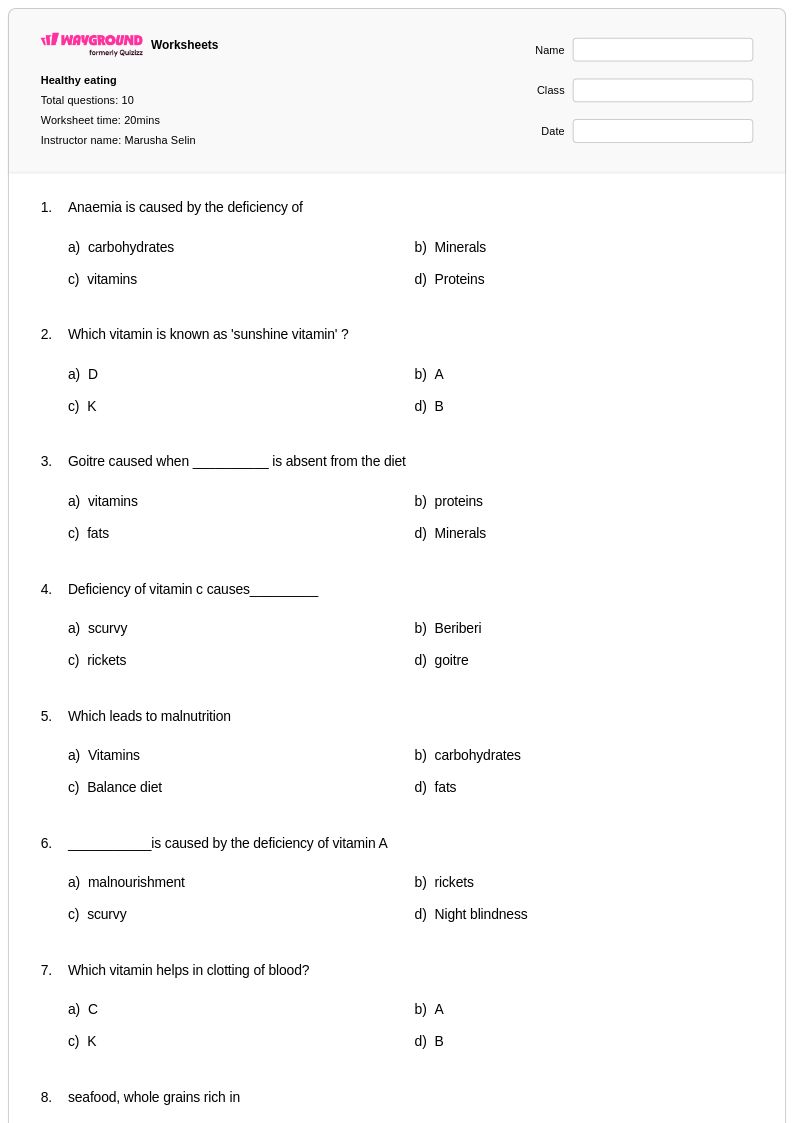
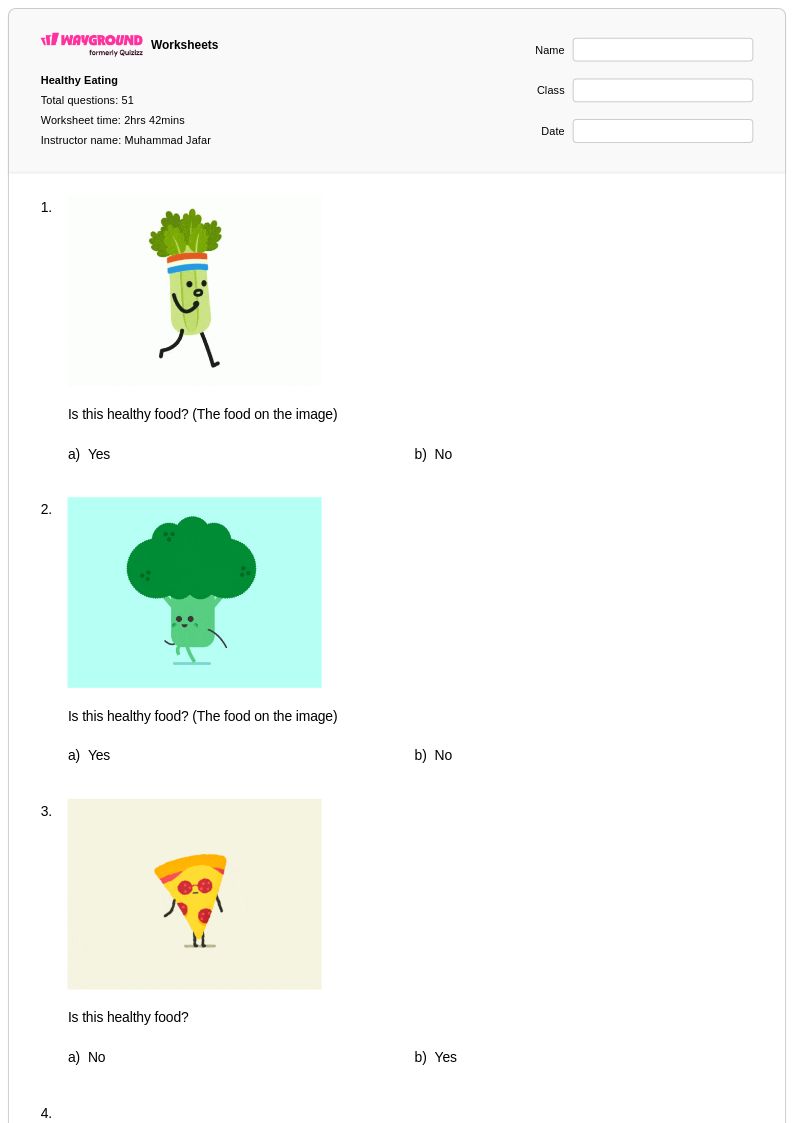
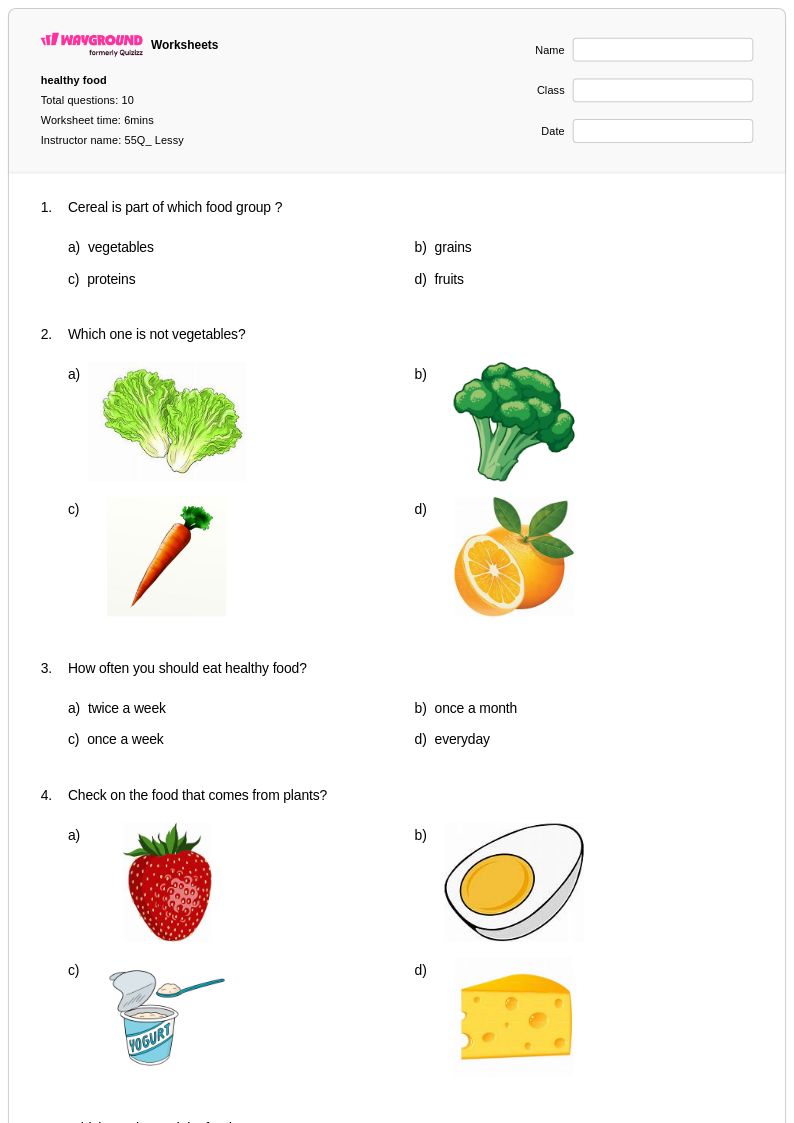
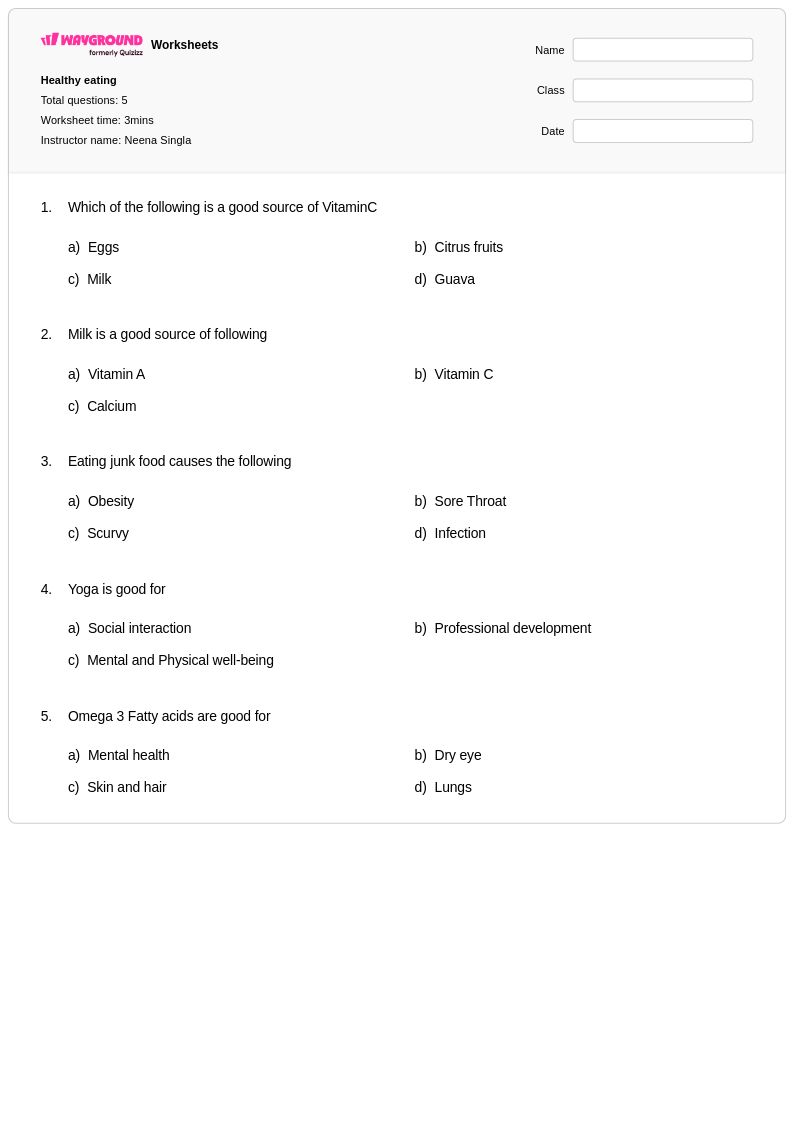
Healthy eating worksheets for kindergarten students through Wayground (formerly Quizizz) provide essential foundational knowledge about nutrition and making good food choices at an age-appropriate level. These educational resources help young learners develop critical thinking skills about the foods they eat while building vocabulary related to fruits, vegetables, proteins, and other food groups. The practice problems guide students through identifying healthy versus unhealthy food options, sorting activities that categorize different types of foods, and simple exercises that connect good nutrition to feeling strong and energetic. Each worksheet comes with a comprehensive answer key to support accurate assessment, and the free printables are available in convenient PDF format for easy classroom distribution and home learning support.
Wayground (formerly Quizizz) empowers educators with an extensive collection of millions of teacher-created healthy eating resources specifically designed for kindergarten-level instruction. The platform's robust search and filtering capabilities allow teachers to quickly locate worksheets that align with early childhood nutrition standards and developmental milestones. These differentiation tools enable instructors to customize content for varying skill levels within their classroom, supporting both remediation for students who need additional practice and enrichment opportunities for advanced learners. The flexible format options, including both printable and digital versions with PDF availability, streamline lesson planning while providing versatile resources for skill practice that can be seamlessly integrated into science centers, homework assignments, or whole-group instruction focused on building healthy lifestyle habits from an early age.
FAQs
How do I teach healthy eating concepts to students?
Effective healthy eating instruction begins with concrete examples students can connect to their daily lives, such as analyzing their own meals against food group guidelines. Teachers often structure lessons around three pillars: identifying food groups, understanding macronutrients and micronutrients, and evaluating how diet affects bodily functions like digestion and energy. Using nutritional labels as real-world artifacts gives students a tangible application for abstract nutrition concepts and builds scientific literacy alongside health awareness.
What kinds of practice problems help students understand nutrition and balanced diets?
Practice problems that ask students to classify foods into groups, calculate nutritional values, and build balanced meal plans are particularly effective for reinforcing healthy eating concepts. Exercises that require students to evaluate a sample meal and identify what is missing or excessive encourage critical thinking rather than rote recall. Problems tied to real food labels or dietary scenarios are especially useful because they bridge classroom learning to real-world decision-making skills.
What misconceptions do students commonly have about healthy eating?
One of the most common misconceptions is that all fats are unhealthy, when in fact unsaturated fats are essential for brain function and nutrient absorption. Students also frequently confuse calories with nutrients, assuming a low-calorie food is automatically healthy regardless of its vitamin, mineral, or fiber content. Another persistent error is treating food groups as equally sized portions, rather than understanding that recommended servings vary significantly by food category and individual energy needs.
How can I use healthy eating worksheets to assess student understanding?
Healthy eating worksheets are well-suited for formative assessment because they present targeted problems around specific concepts, such as identifying vitamins and minerals, interpreting nutritional labels, or explaining the digestive system's role in processing nutrients. Teachers can review completed worksheets to pinpoint exactly where students are struggling, whether with macronutrient categories, food safety principles, or balanced meal composition. Because each worksheet includes a detailed answer key, students can also self-assess immediately after completing an exercise, reinforcing learning through self-correction.
How do I use Wayground's healthy eating worksheets in my classroom?
Wayground's healthy eating worksheets are available as printable PDFs for traditional classroom use and in digital formats for technology-integrated or remote learning environments. Teachers can also host worksheets as interactive quizzes directly on Wayground, which allows for real-time progress monitoring. For students who need additional support, Wayground offers built-in accommodations such as read-aloud functionality, extended time, and reduced answer choices, all configurable per student without disrupting the rest of the class.
How do I differentiate healthy eating instruction for students at different skill levels?
Differentiation in healthy eating units works well when teachers tier task complexity, for example, having emerging learners match foods to food groups while more advanced students analyze a full day's diet for nutritional balance. On Wayground, teachers can apply individual student accommodations including reduced answer choices to lower cognitive load for struggling learners, read-aloud support for students with reading challenges, and extended time settings that persist across future sessions. These adjustments can be made per student without other students being aware, keeping the classroom experience equitable and focused.