Free Printable Beginning Sounds Worksheets for Kindergarten
Enhance your kindergarten students' beginning sounds recognition with Wayground's free printable worksheets and practice problems, complete with answer keys to support early phonics development.
Explore printable Beginning Sounds worksheets for Kindergarten
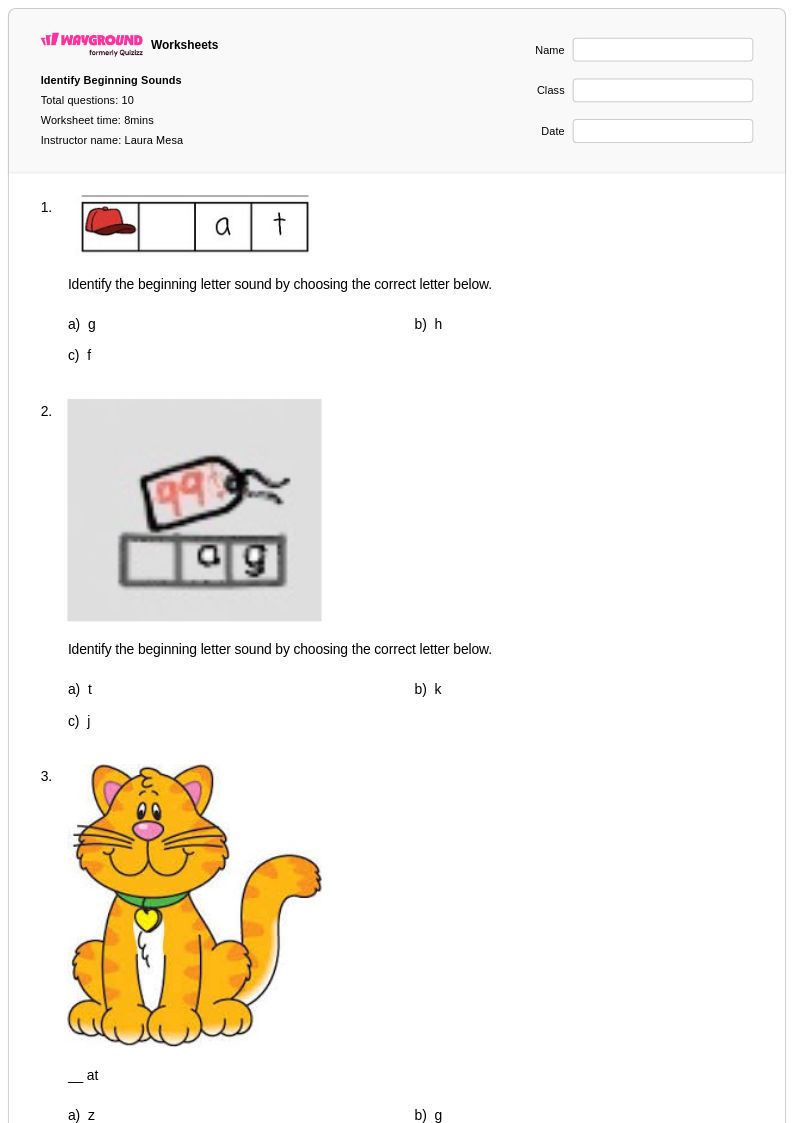
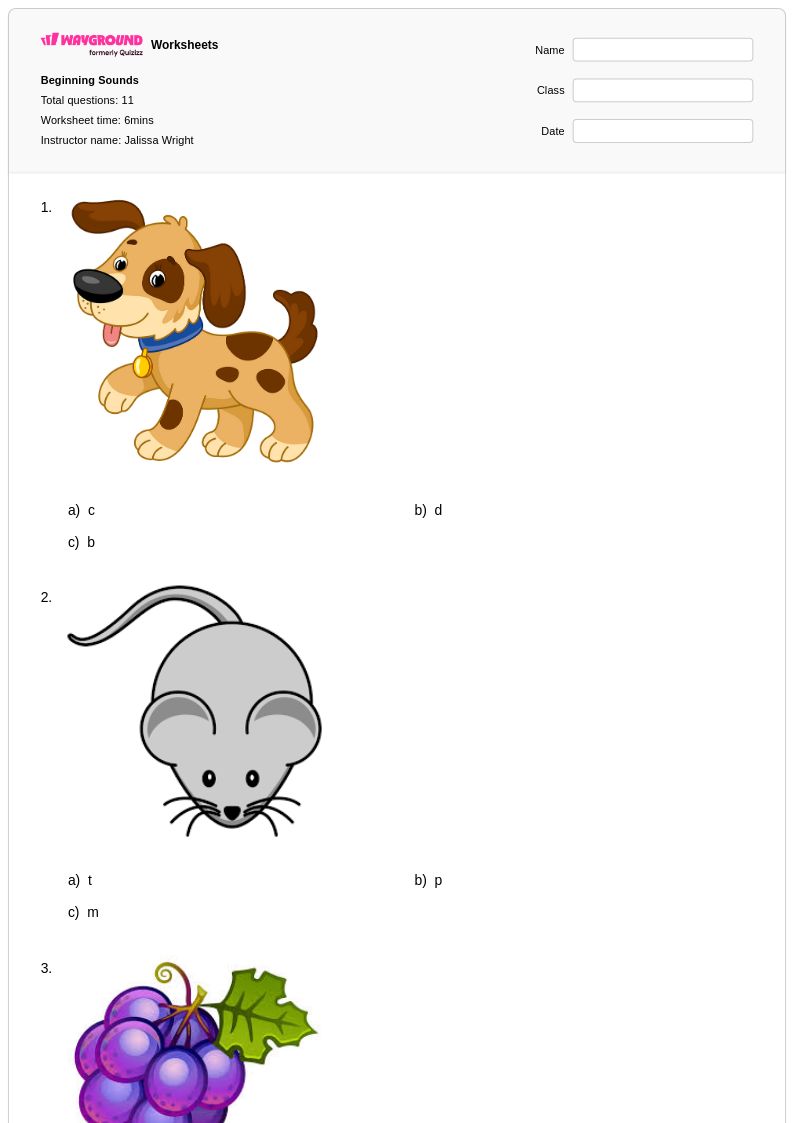
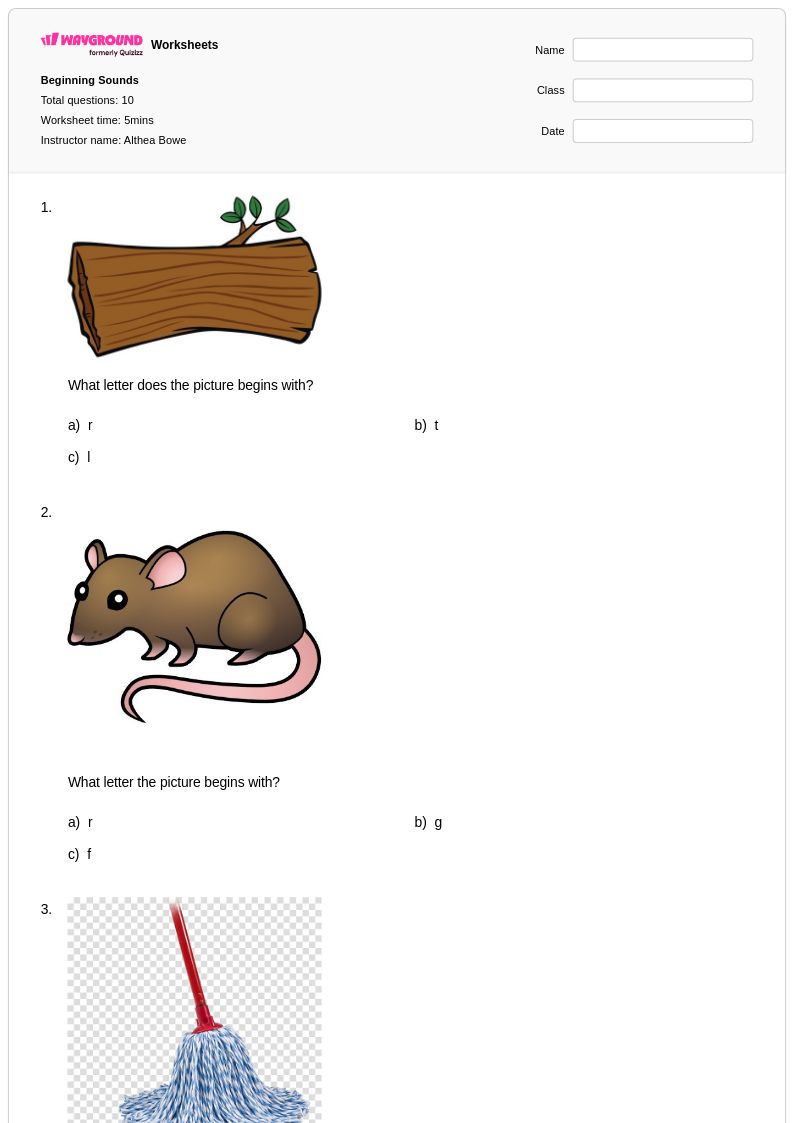
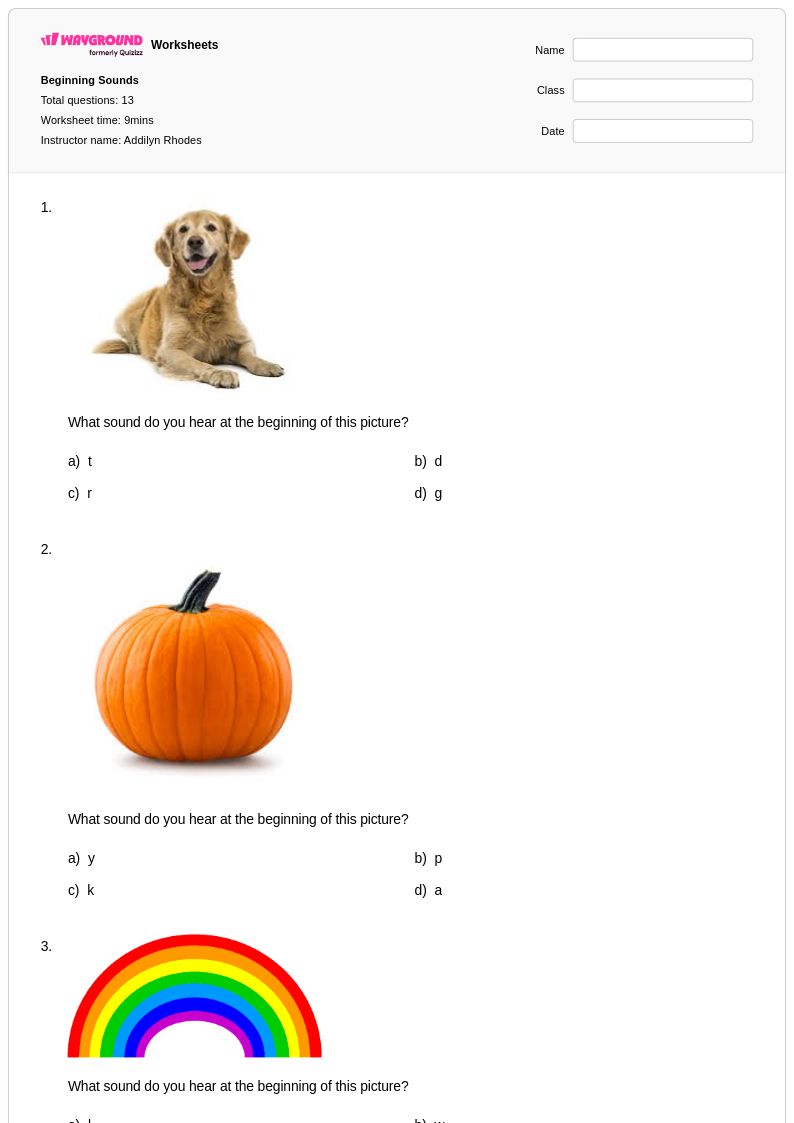
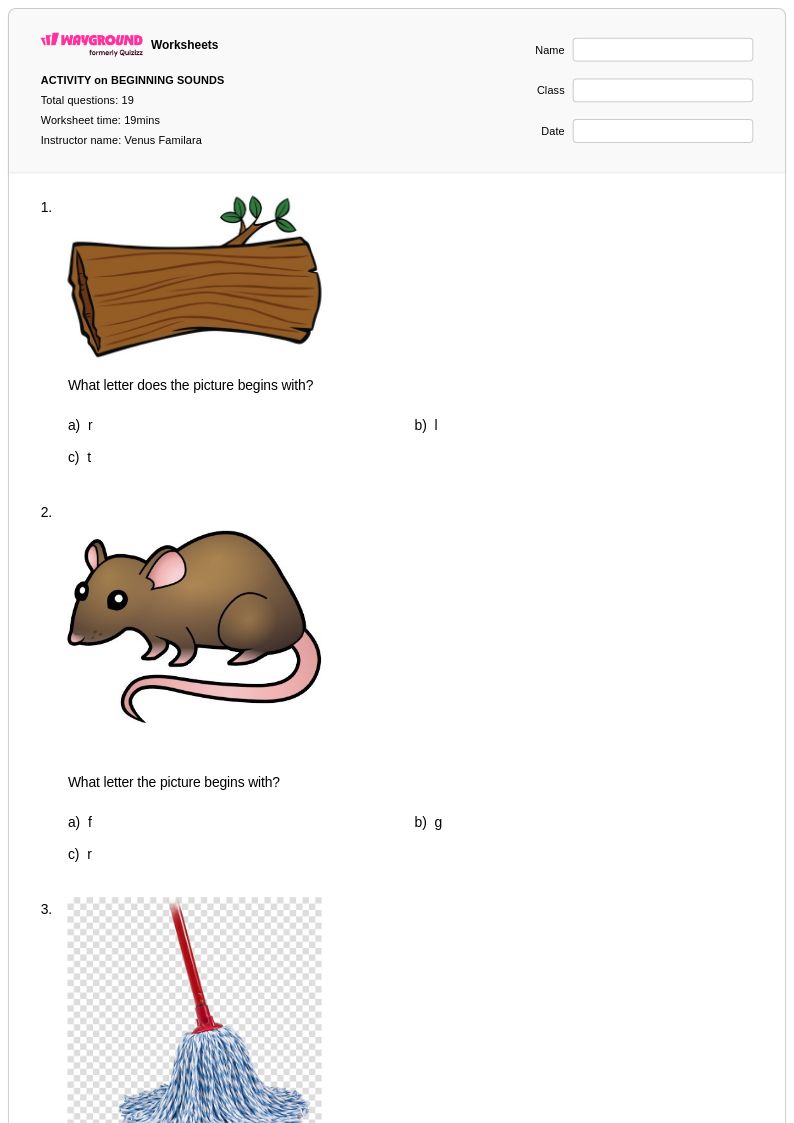
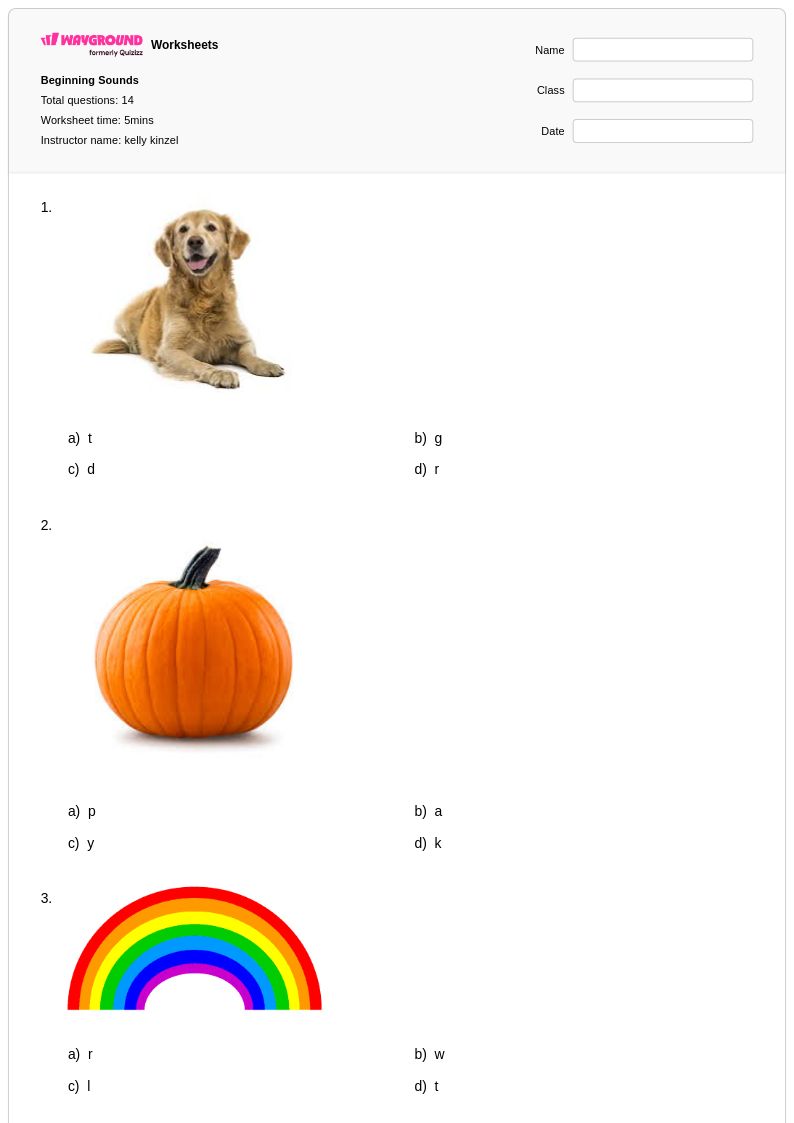
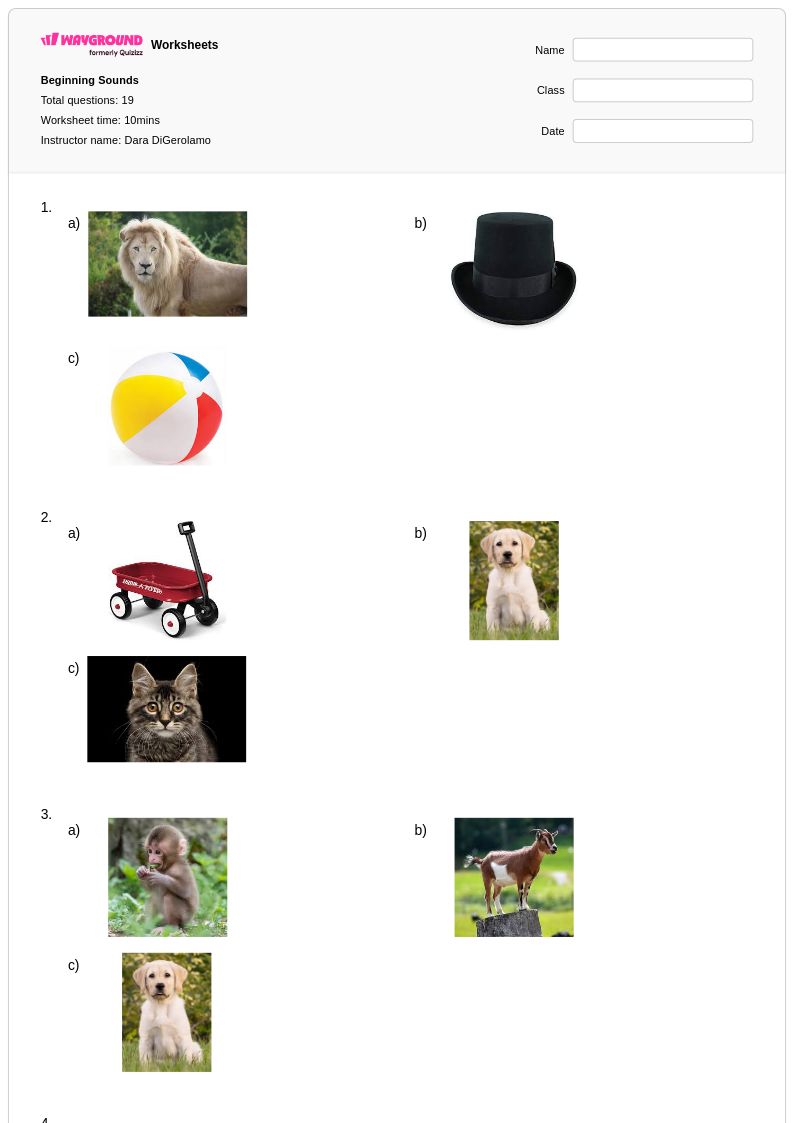
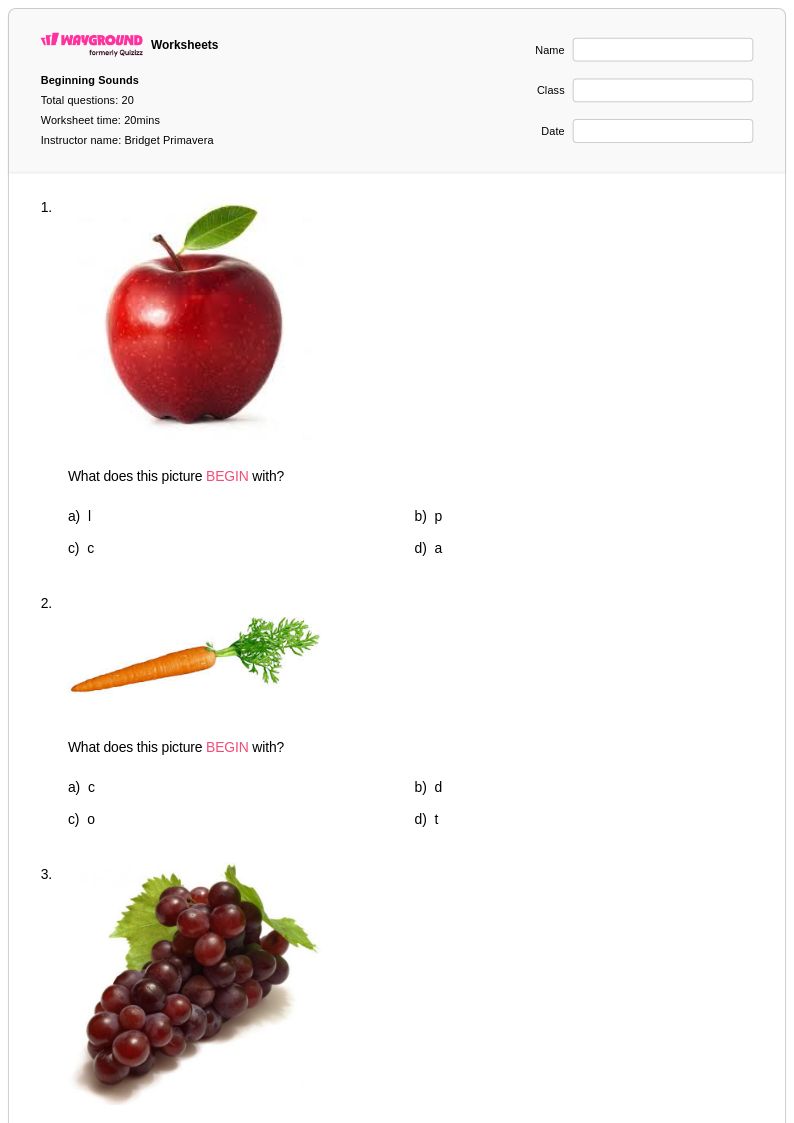
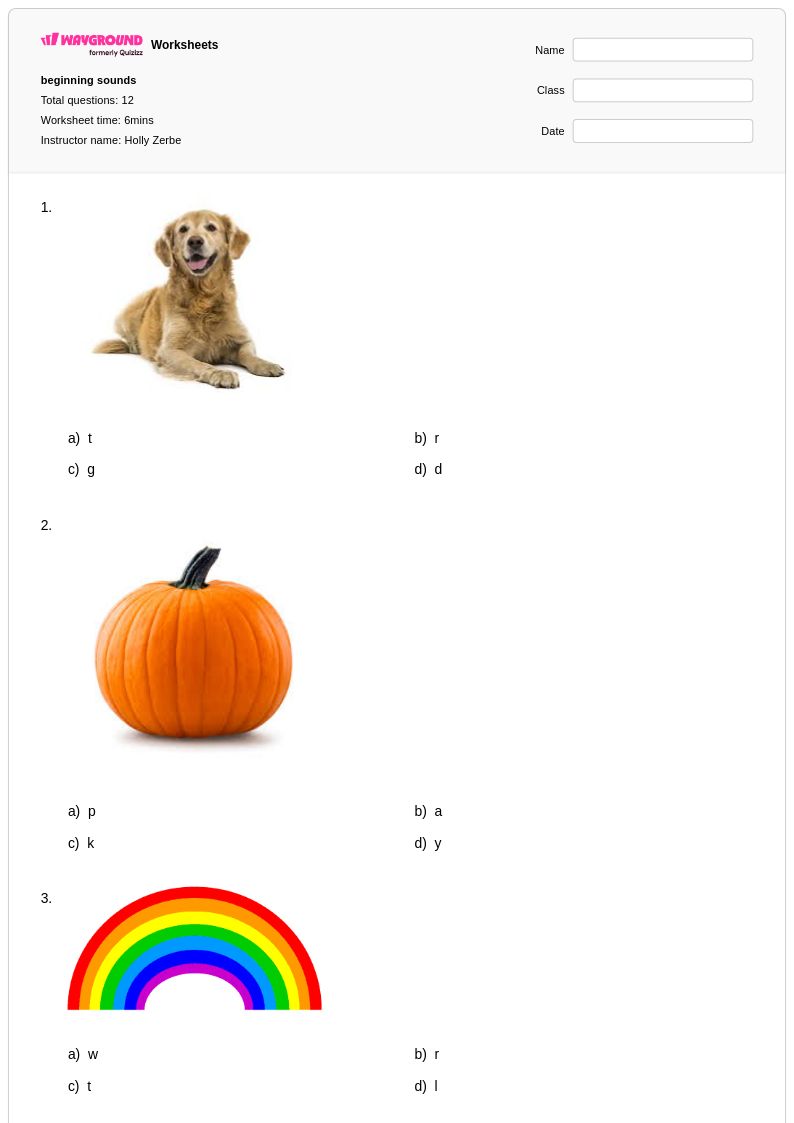
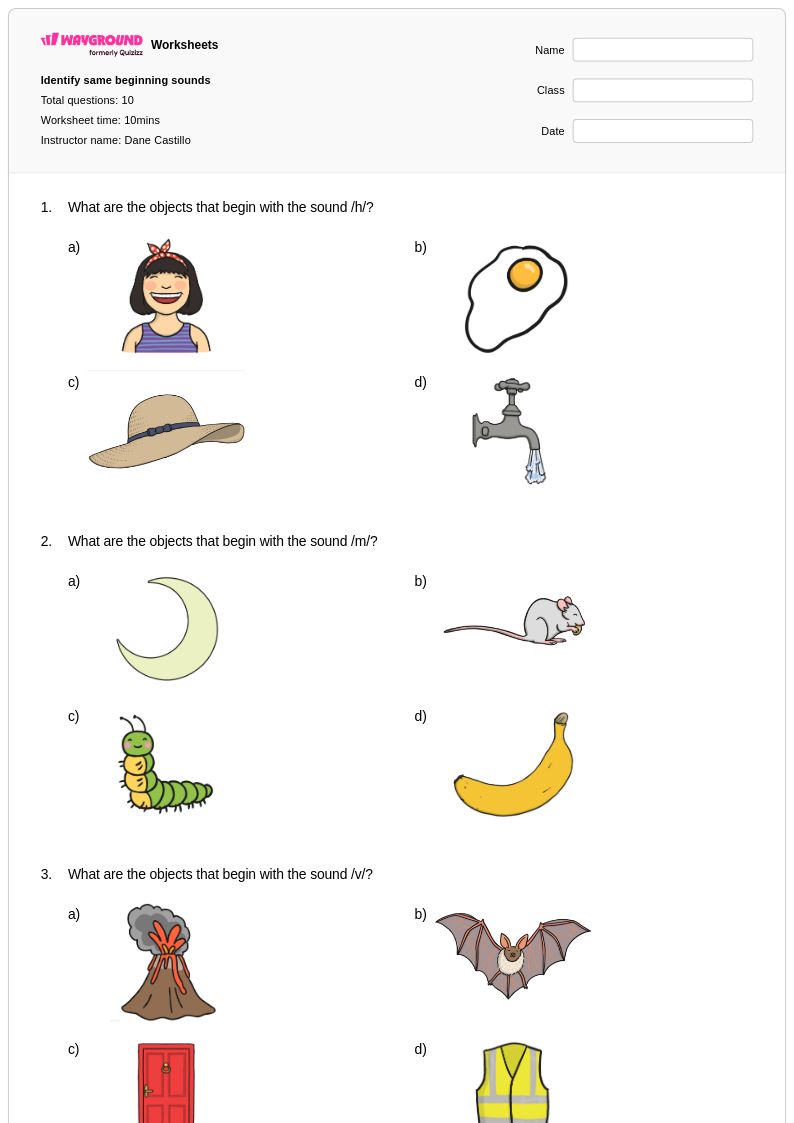
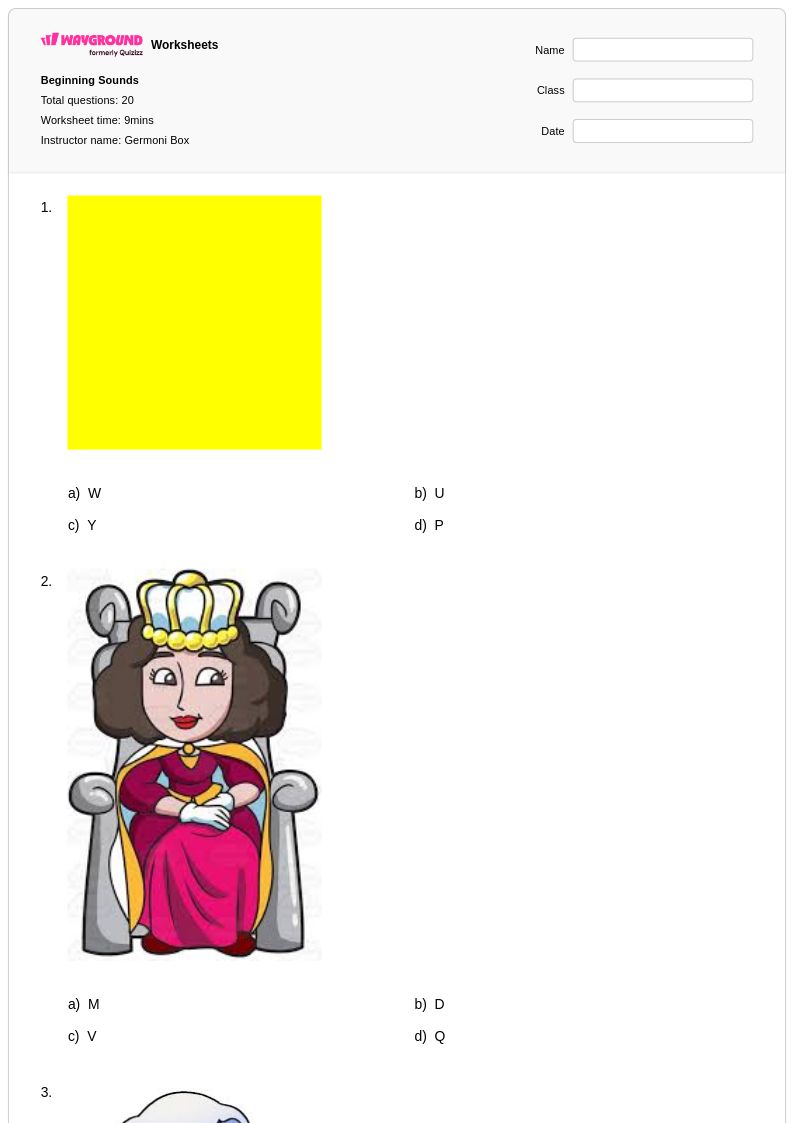
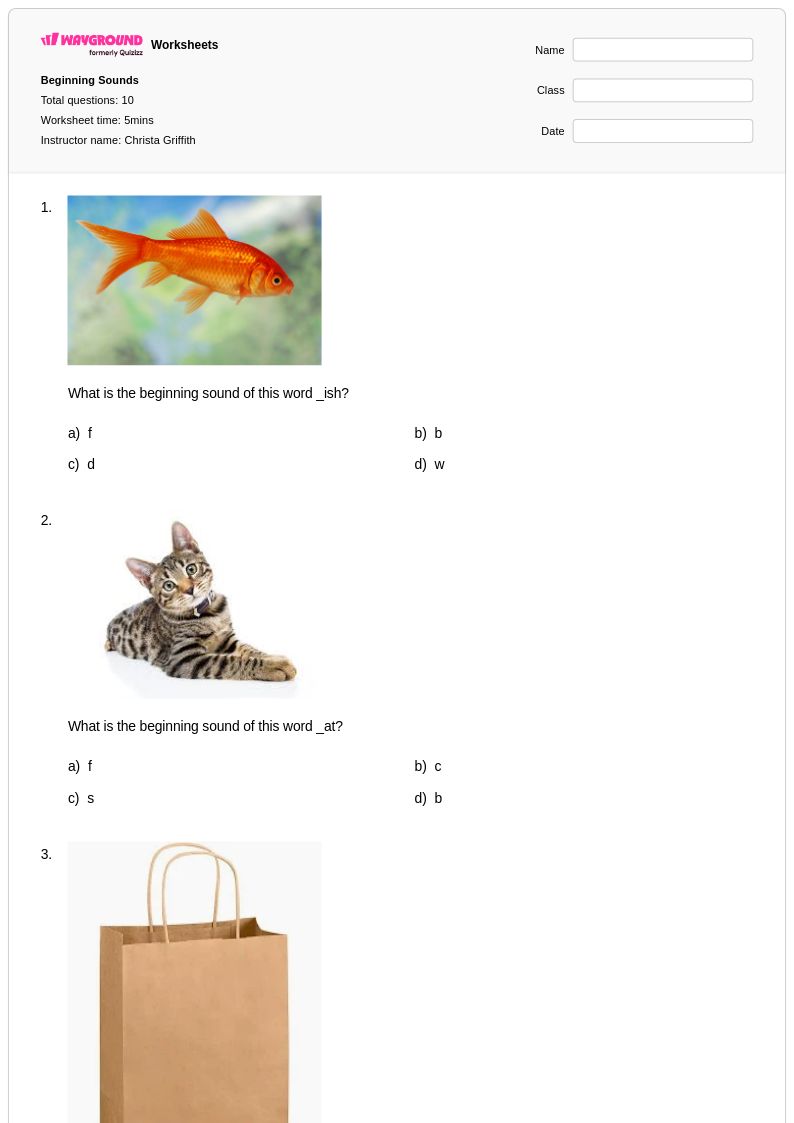
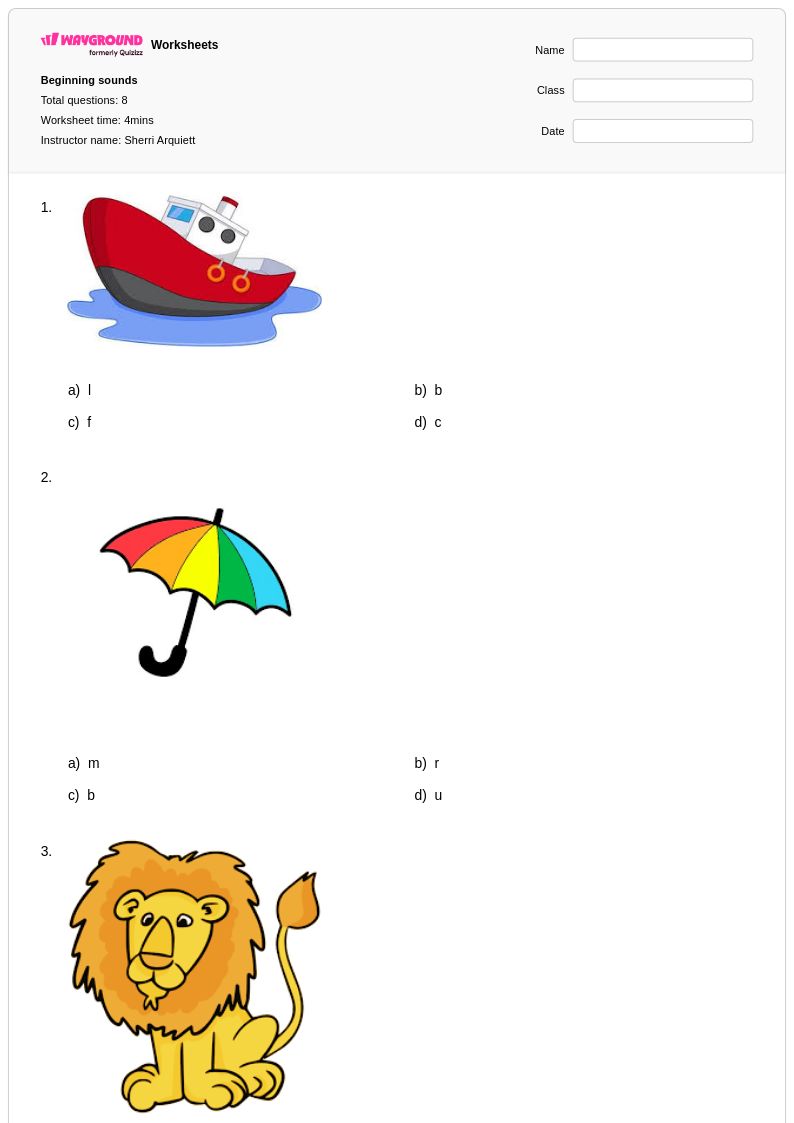
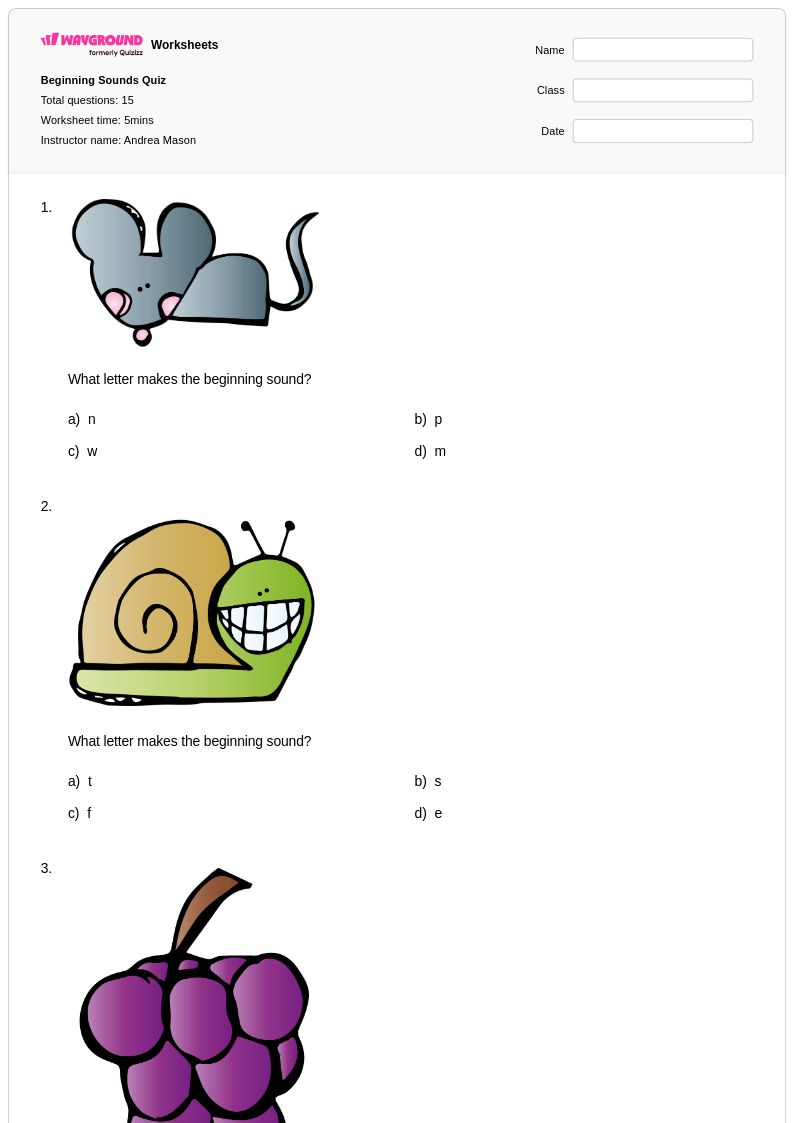
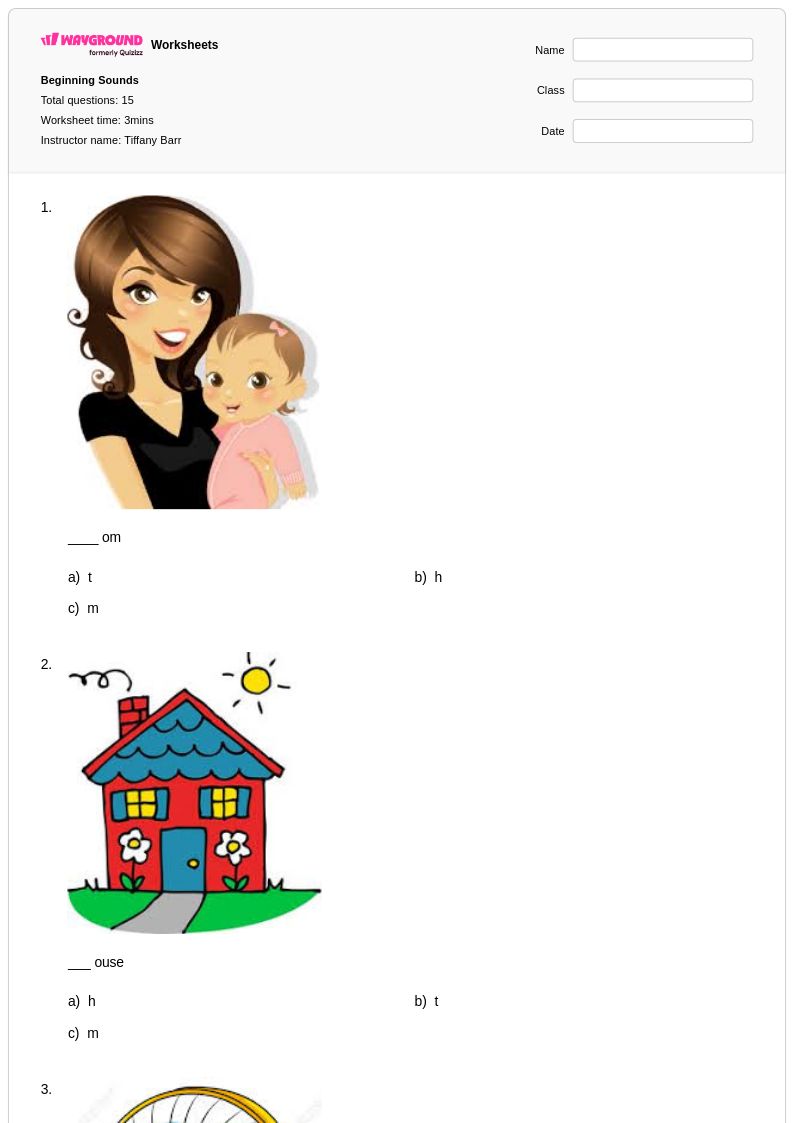
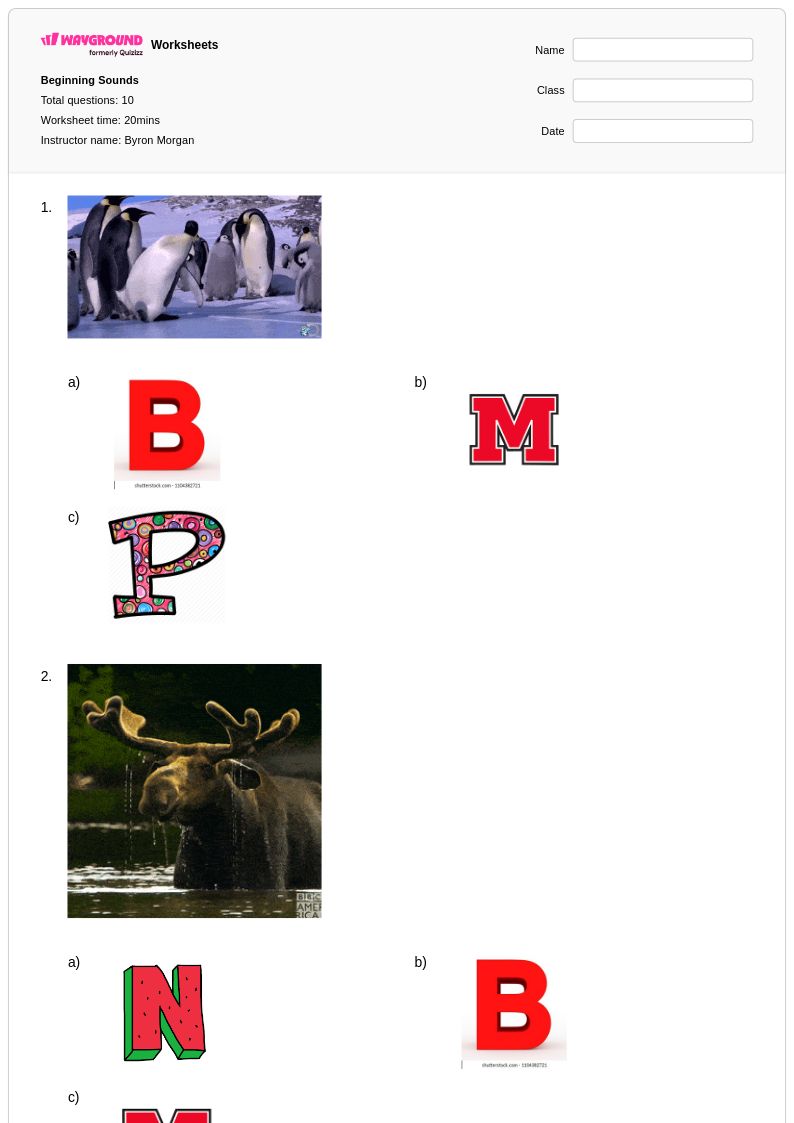
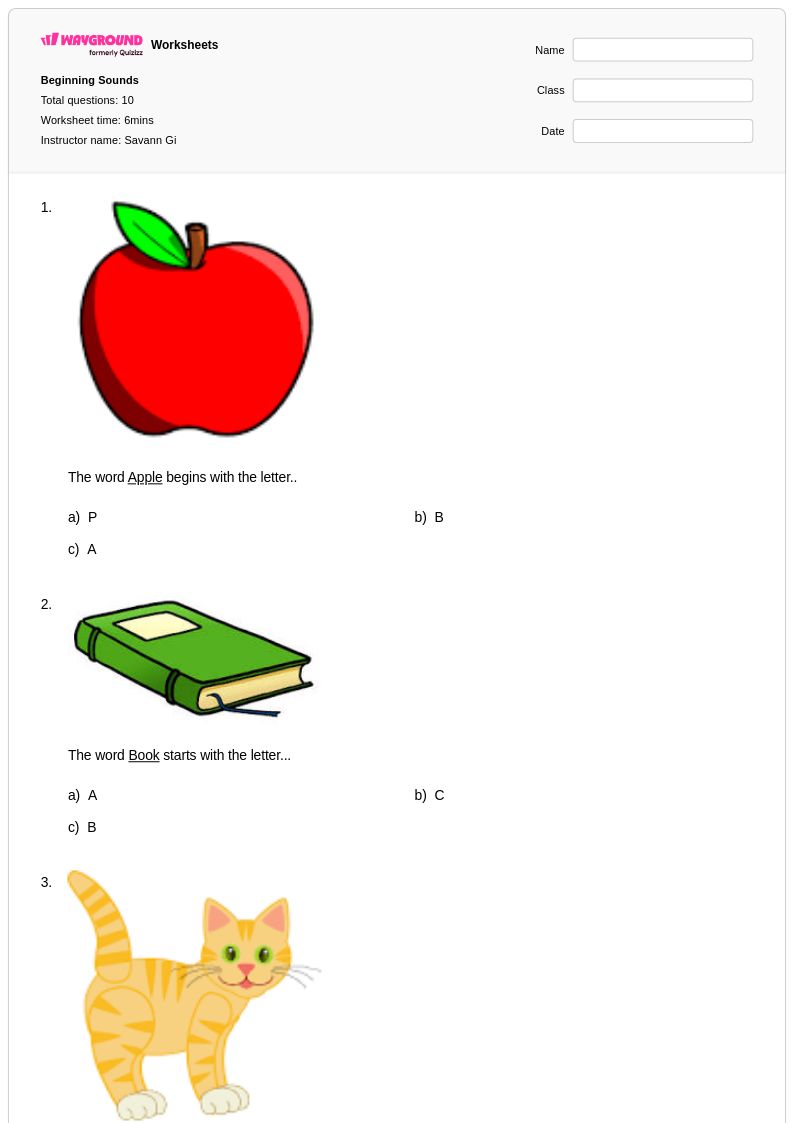
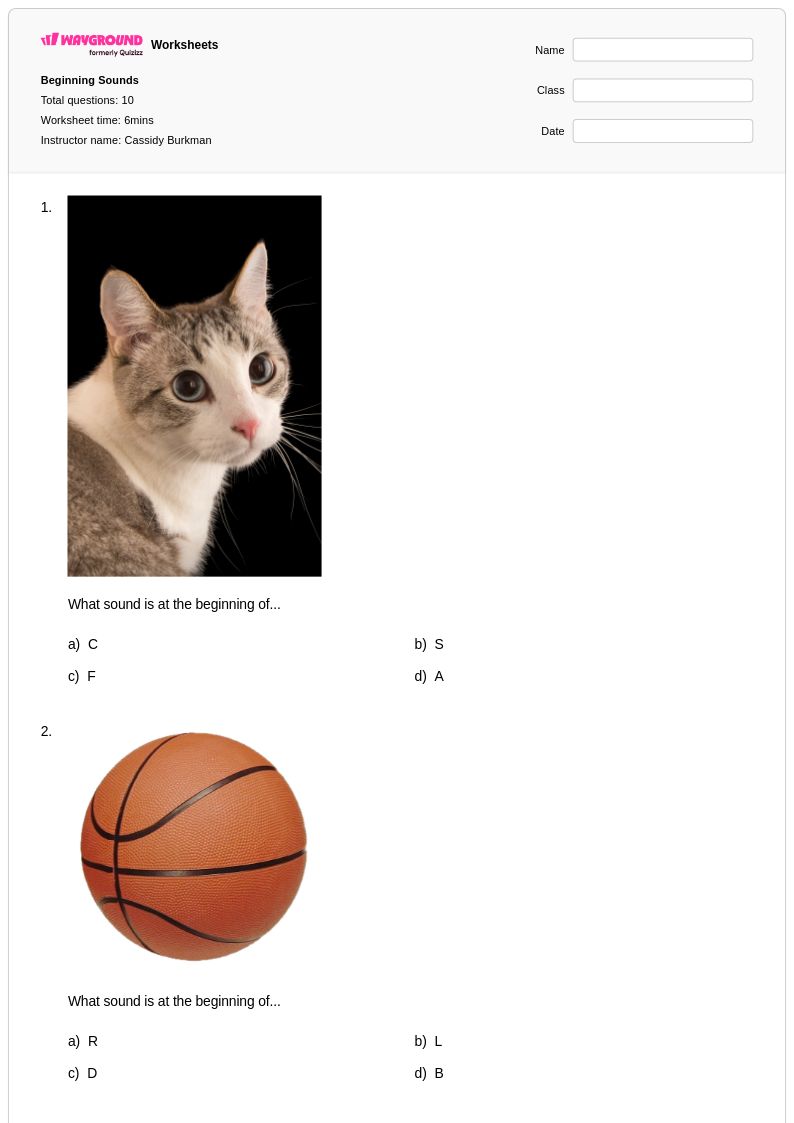
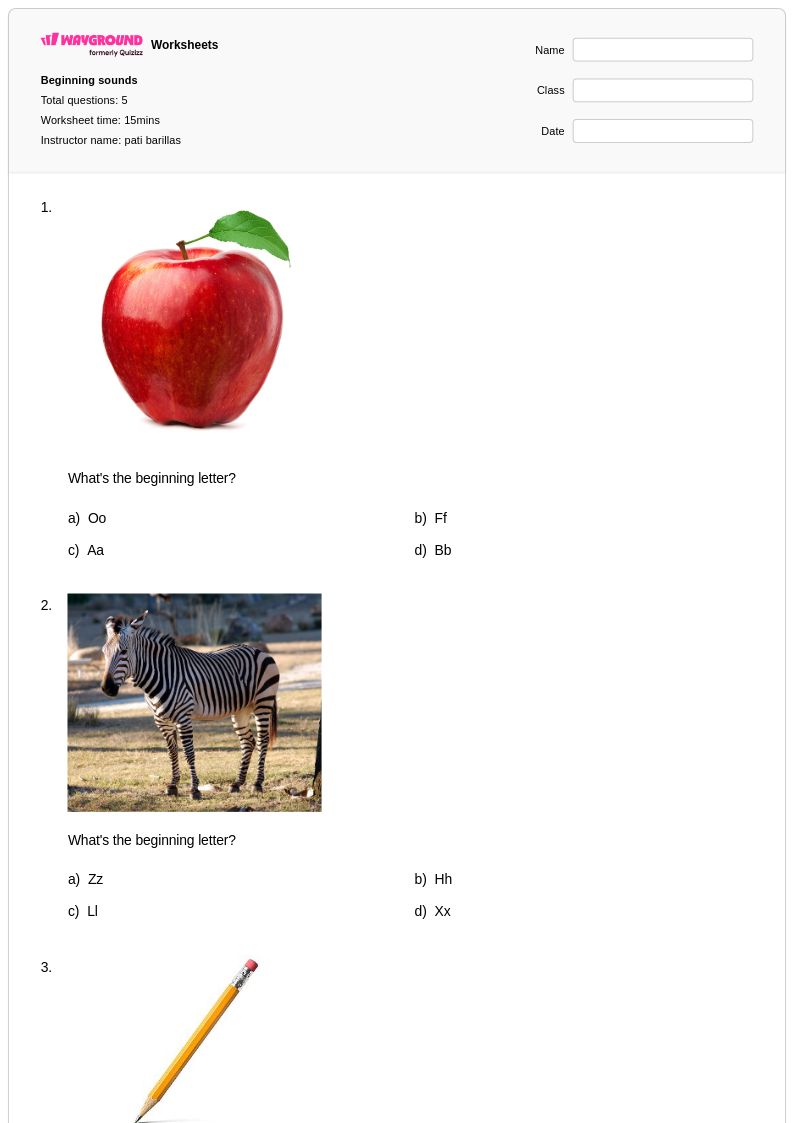
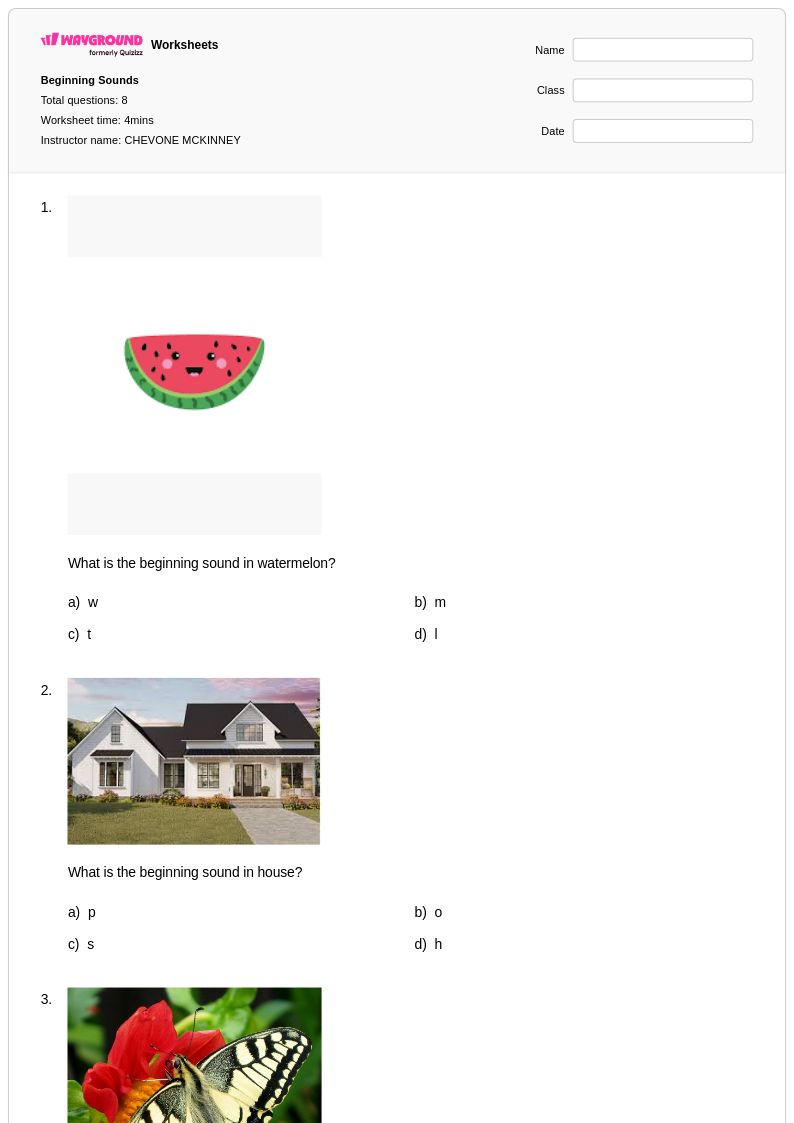
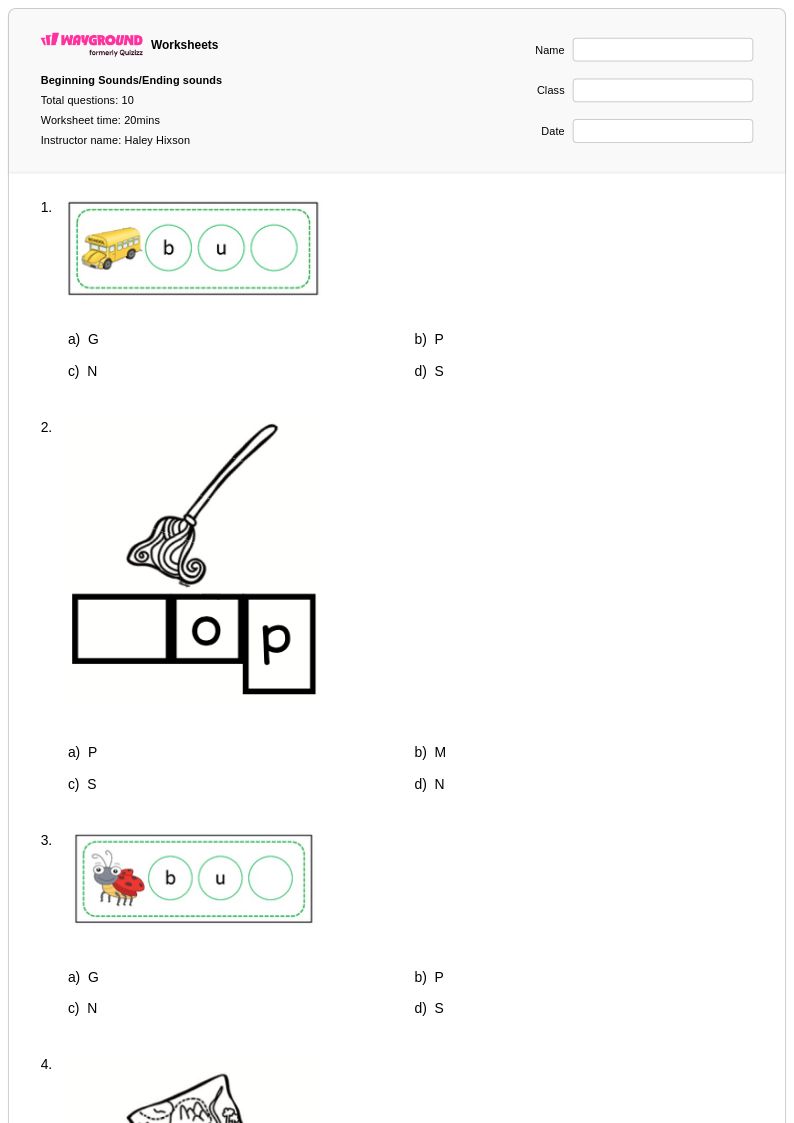
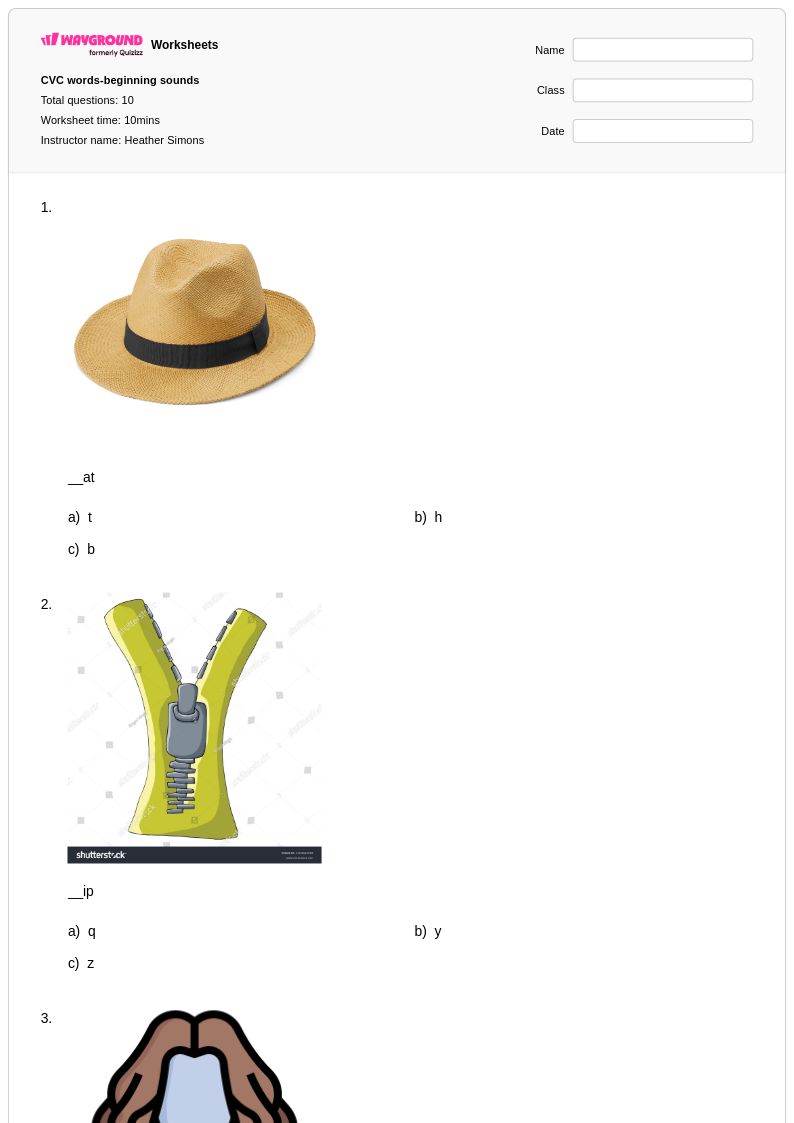
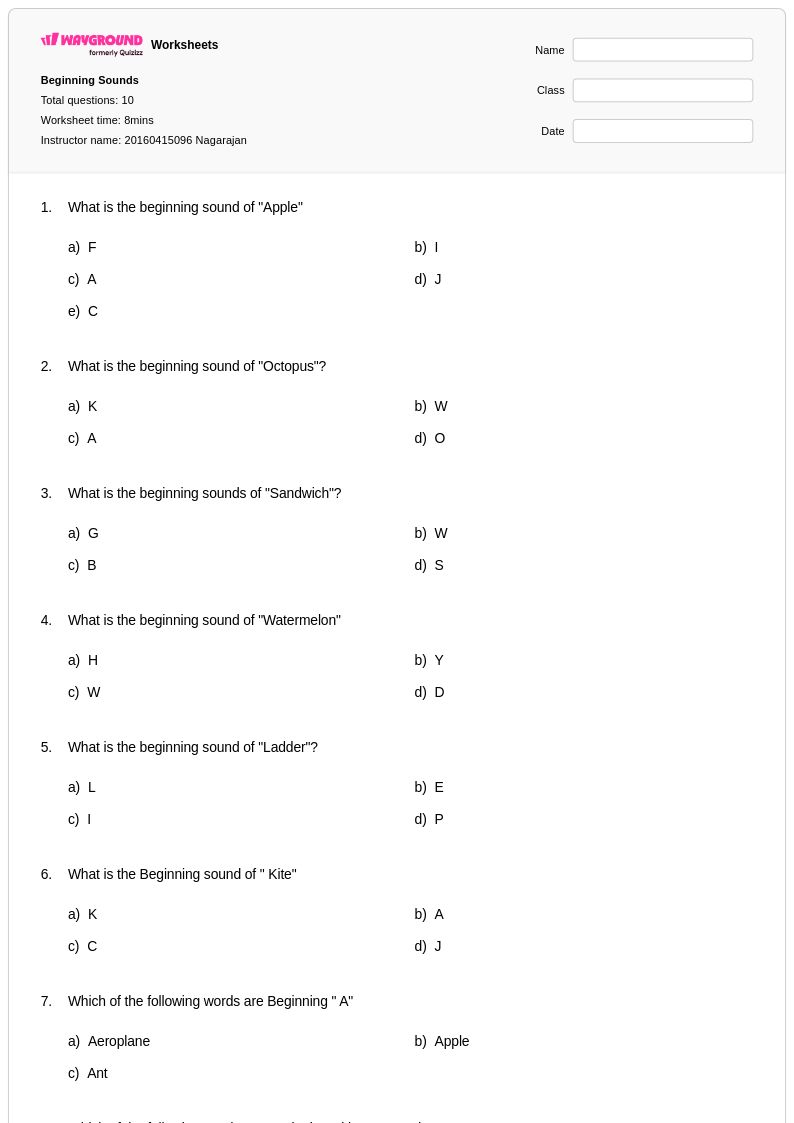
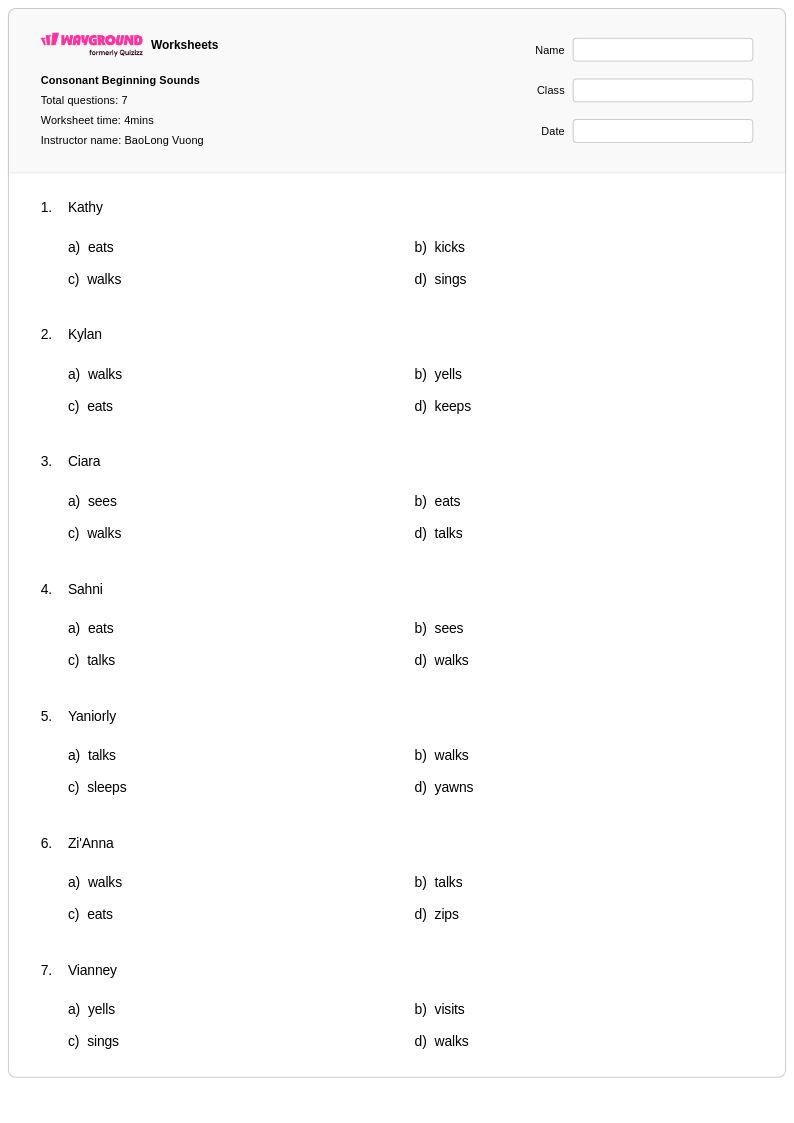
Beginning sounds worksheets for kindergarten students available through Wayground (formerly Quizizz) provide essential phonemic awareness practice that builds the foundation for reading success. These carefully designed resources help young learners identify and isolate the initial sounds in words, strengthening their ability to connect spoken language with written letters. Each worksheet collection includes comprehensive practice problems that engage students with picture-sound matching activities, letter identification exercises, and beginning sound sorting tasks. Teachers can access complete answer keys and downloadable pdf formats, making these free printables ideal for both classroom instruction and independent practice sessions that develop crucial pre-reading skills.
Wayground (formerly Quizizz) supports educators with millions of teacher-created beginning sounds resources that streamline lesson planning and differentiated instruction for kindergarten classrooms. The platform's robust search and filtering capabilities allow teachers to quickly locate standards-aligned worksheets that match their students' specific learning needs and developmental levels. These versatile materials are available in both printable and digital formats, including convenient pdf downloads that facilitate flexible implementation across various learning environments. Teachers can easily customize worksheets for remediation support, enrichment activities, or targeted skill practice, ensuring that every kindergarten student receives appropriate phonemic awareness instruction that builds confidence and competency in recognizing beginning sounds.
FAQs
How do I teach beginning sounds to early readers?
Teaching beginning sounds works best when instruction is explicit, multisensory, and systematic. Start by isolating the initial sound in spoken words before connecting it to a letter, using picture cards and think-alouds to model the process. Activities like sound sorting, picture-to-letter matching, and repeated oral practice help students internalize the relationship between sounds and their corresponding letters. Consistent daily phonics routines significantly accelerate early literacy development.
What exercises help students practice beginning sounds?
Effective beginning sounds practice includes picture identification activities where students name an image and identify its starting sound, letter-sound matching tasks, and sound sorting exercises that group pictures by initial consonant or vowel. These formats build automaticity by requiring students to move between spoken language and written letters repeatedly. Varied practice across multiple exercise types ensures students generalize the skill rather than memorizing isolated examples.
What mistakes do students commonly make when learning beginning sounds?
A common error is confusing the name of a letter with its sound, for example, saying the letter name 'W' instead of the sound /w/. Students also frequently mishear initial sounds in blends, identifying the blend as a single sound rather than isolating the very first phoneme. Another common misconception is conflating beginning sounds with rhyme, particularly when a word's onset and rime are both salient. Targeted corrective feedback during guided practice helps address these patterns before they become ingrained habits.
How can I differentiate beginning sounds practice for students at different skill levels?
Differentiation for beginning sounds can involve adjusting the complexity of picture sets, limiting choices for emerging learners, or extending practice to include vowel-initial words for more advanced students. On Wayground, teachers can apply student-level accommodations such as Read Aloud, which provides audio support for students who struggle to decode written directions, and reduced answer choices, which lowers cognitive load for students who need additional scaffolding. These settings can be applied to individual students while the rest of the class receives standard practice, keeping differentiation seamless and unobtrusive.
How do I use beginning sounds worksheets from Wayground in my classroom?
Wayground's beginning sounds worksheets are available as printable PDFs for traditional classroom use and in digital formats for technology-integrated learning environments, including the ability to host them as a quiz directly on Wayground. Printable versions work well for small-group instruction, morning work, or take-home practice, while digital formats support individual device-based learning and allow teachers to track student responses in real time. Both formats include answer keys, making them practical for independent work stations or guided instruction.
How do beginning sounds skills connect to broader reading development?
Beginning sounds awareness is a foundational component of phonemic awareness, which is one of the strongest predictors of early reading success. When students can reliably identify and isolate initial sounds, they are better equipped to apply phonics decoding strategies, recognize word families, and begin blending sounds into words. This skill also supports spelling development, as students learn to map spoken sounds onto written letters from the very start of a word.