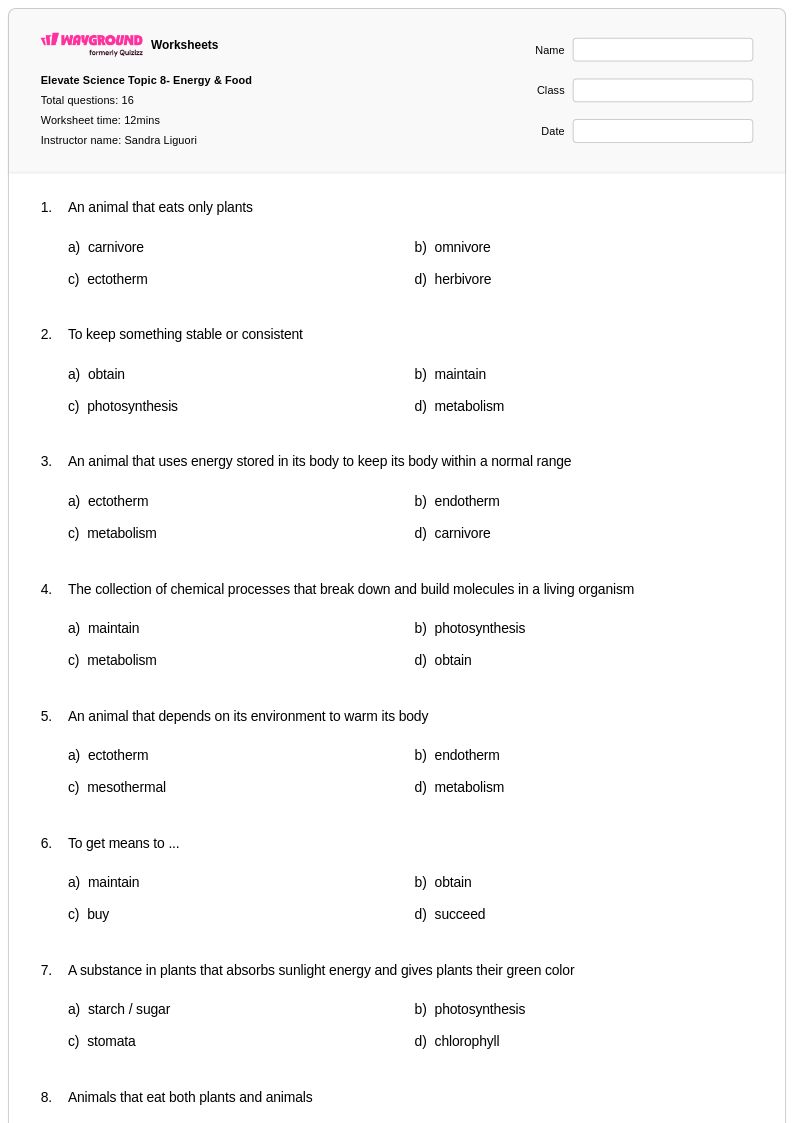
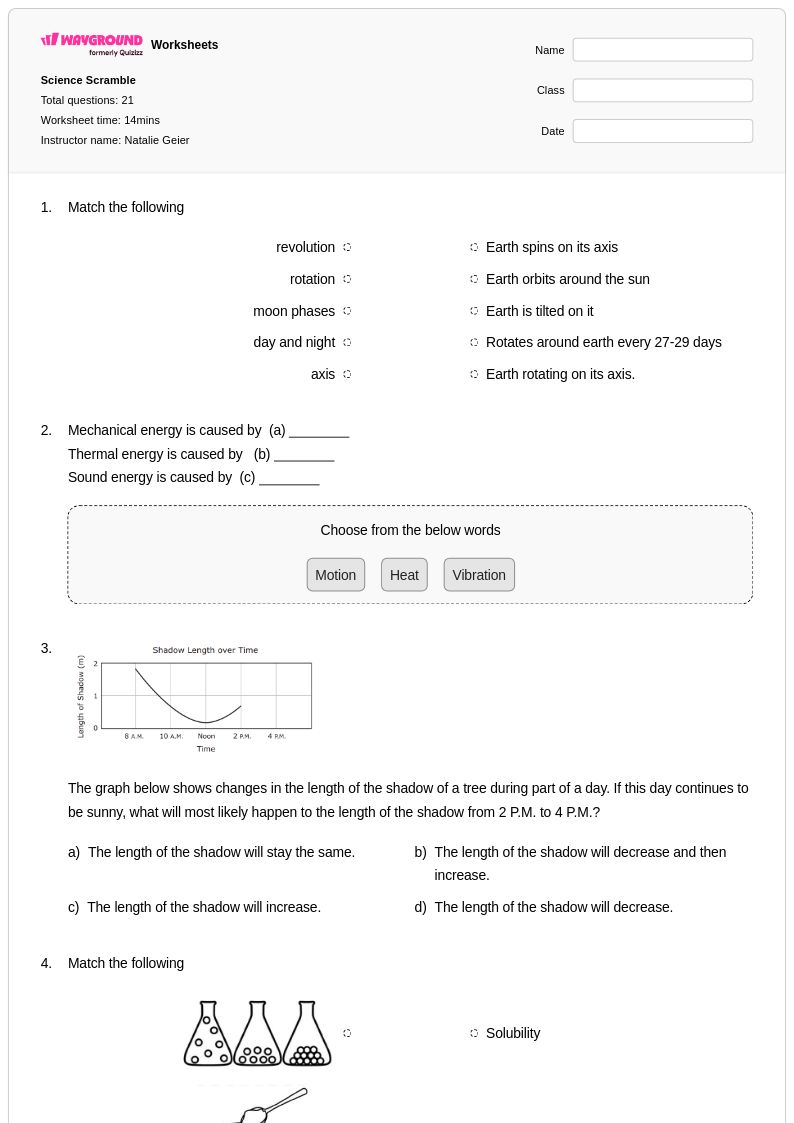
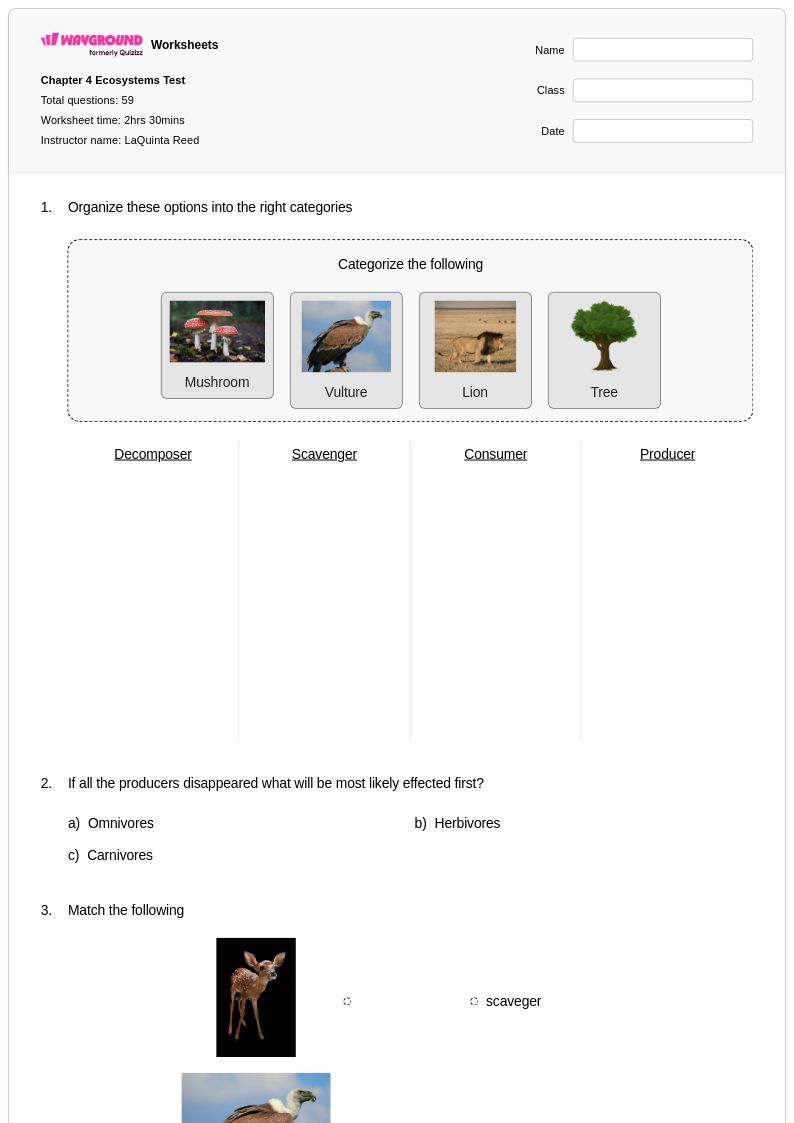
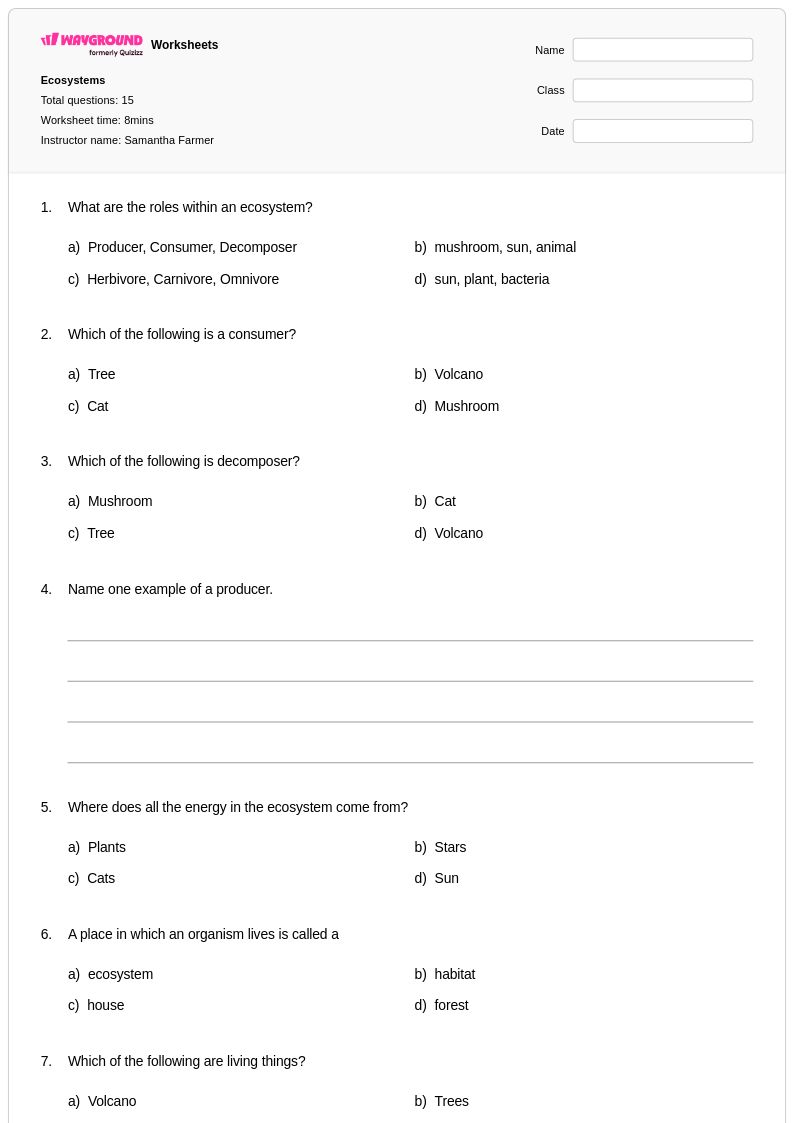
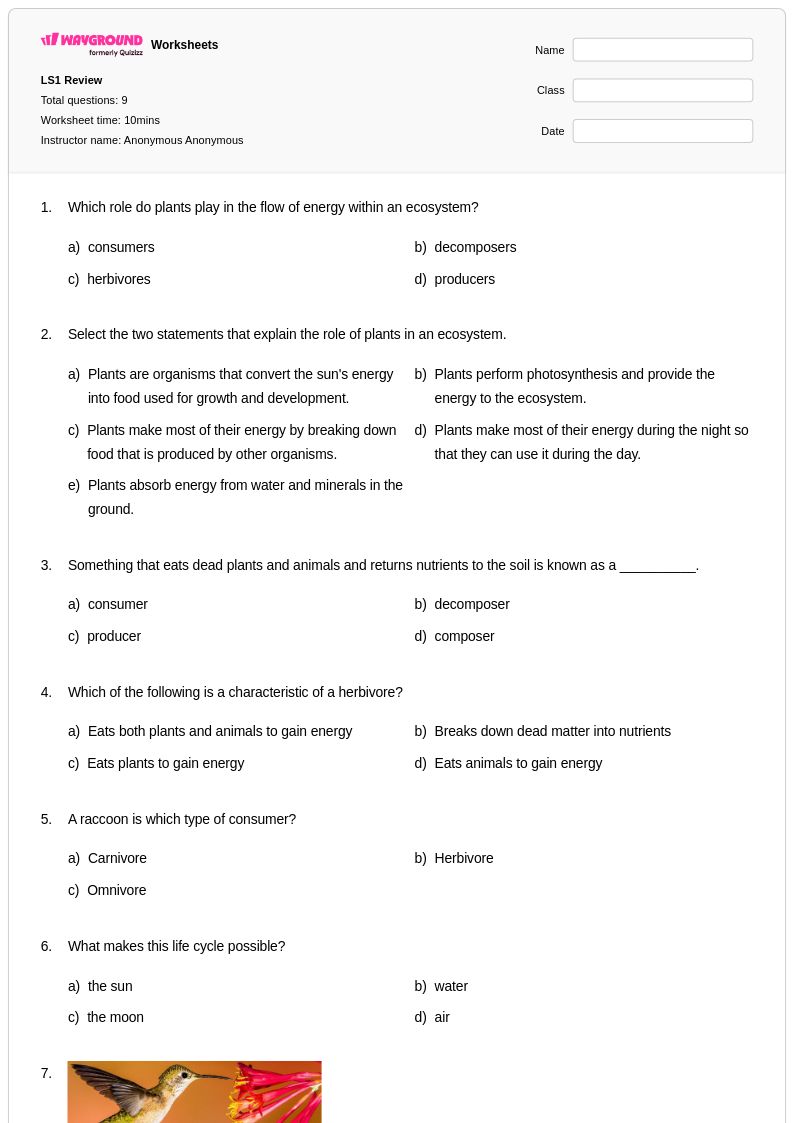
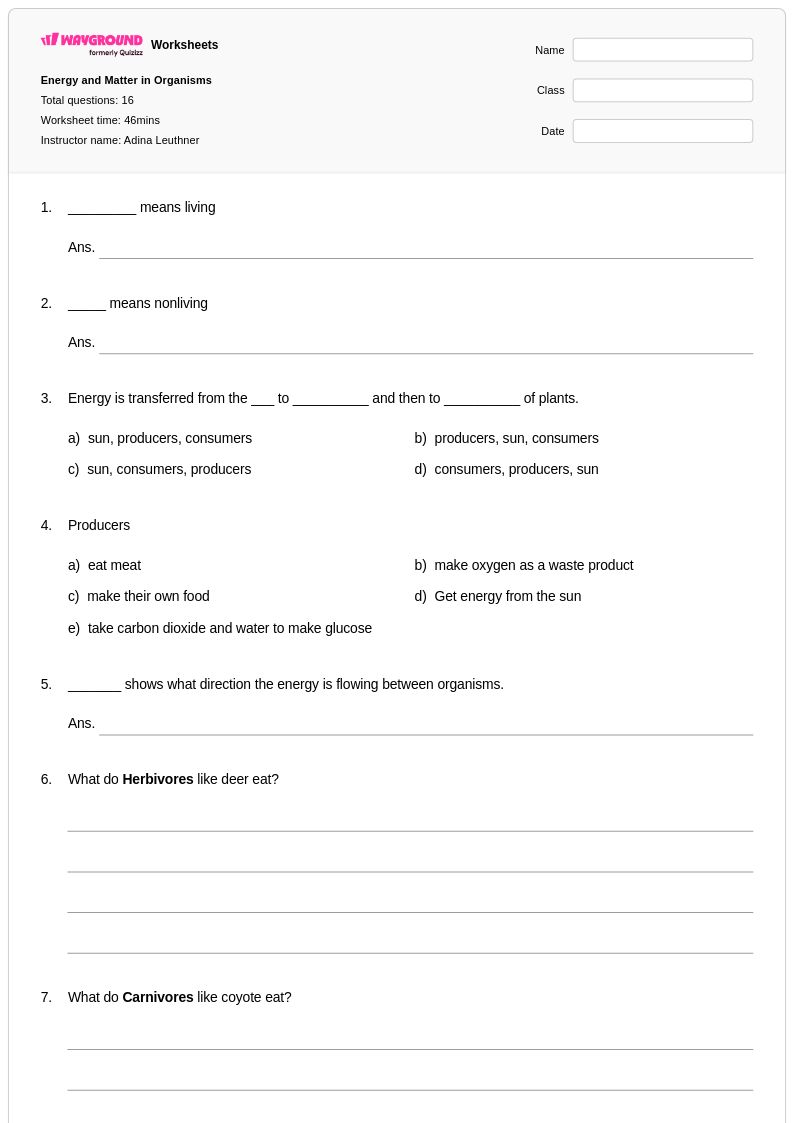
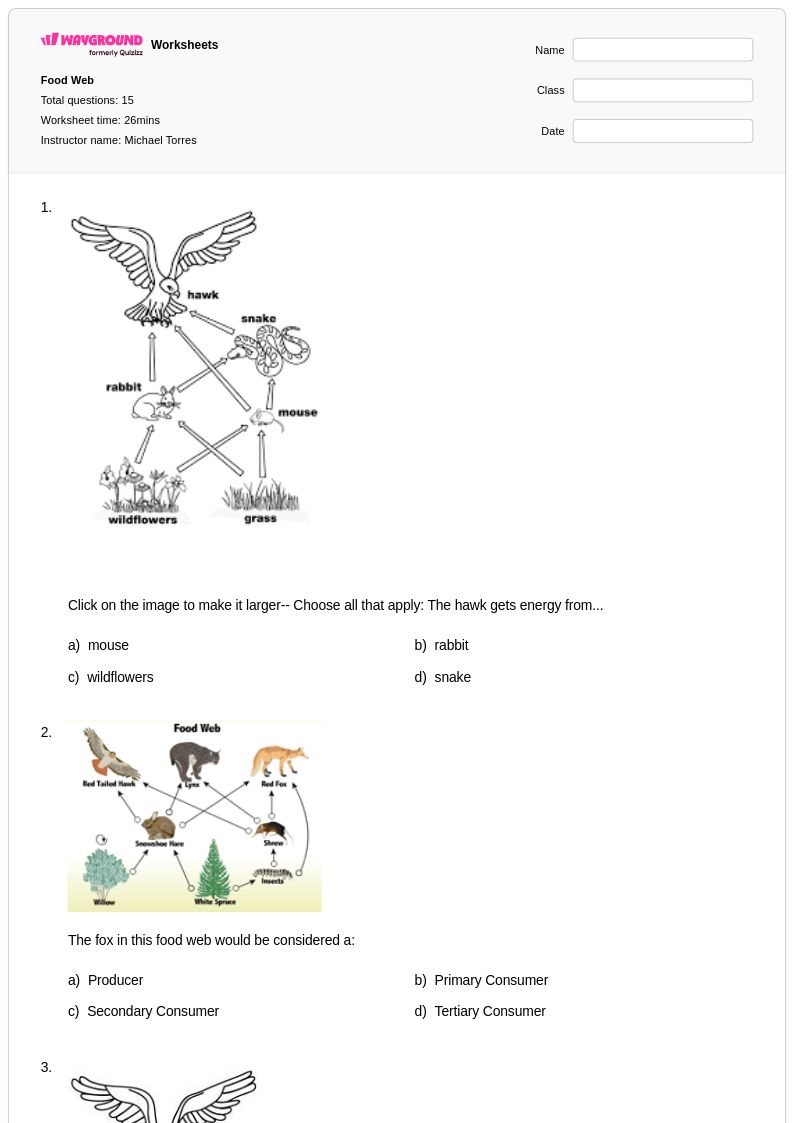
Explore Class 5 herbivore worksheets and printables that help students learn about plant-eating animals through engaging practice problems, free PDF downloads, and comprehensive answer keys.
Explore printable Herbivores worksheets for Class 5
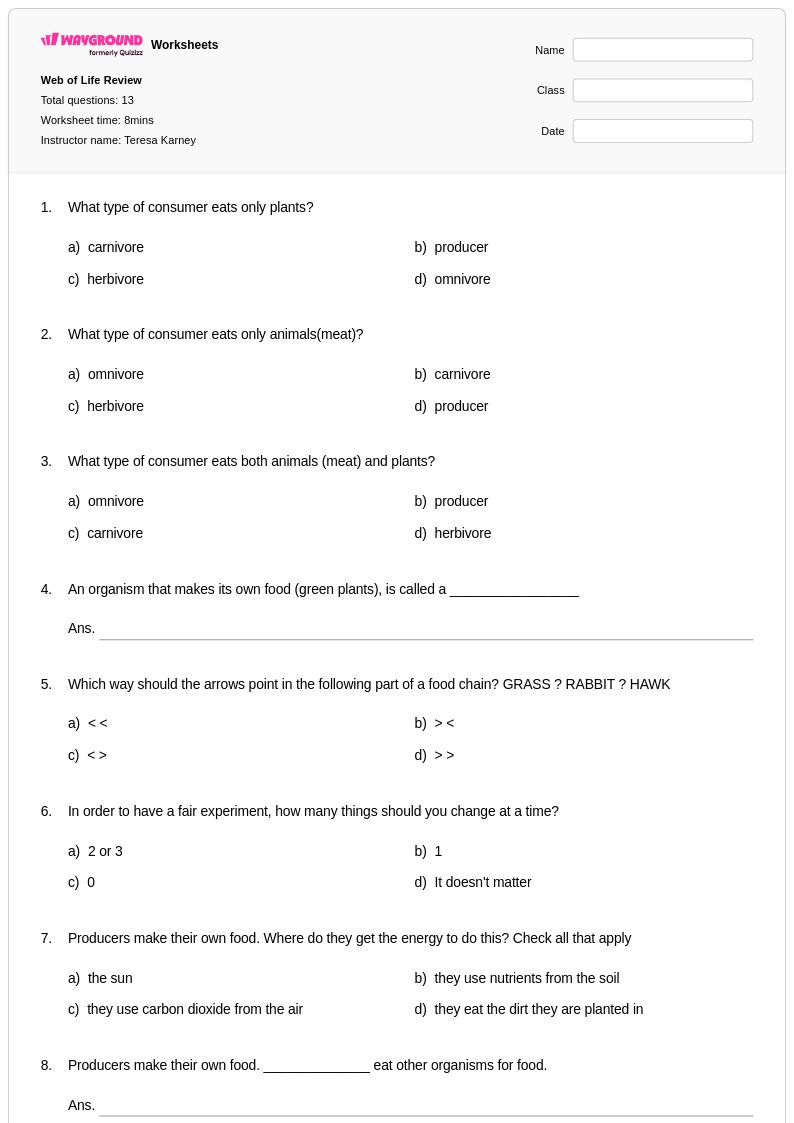
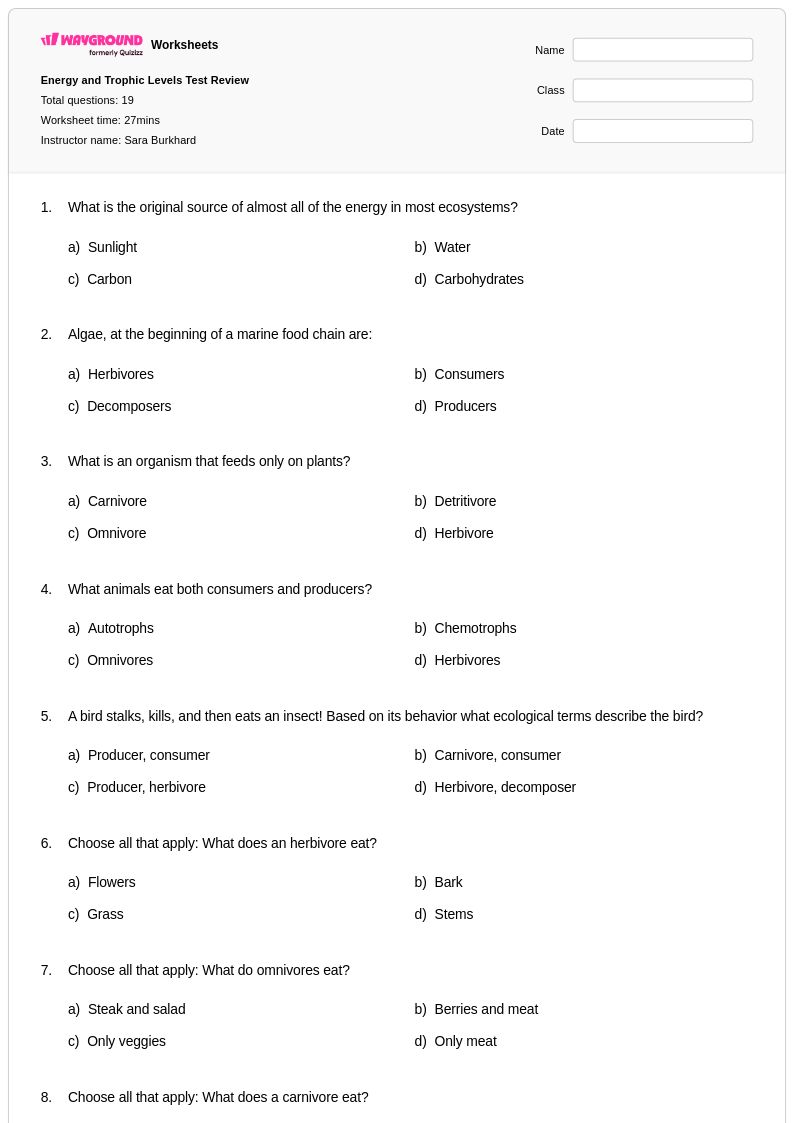
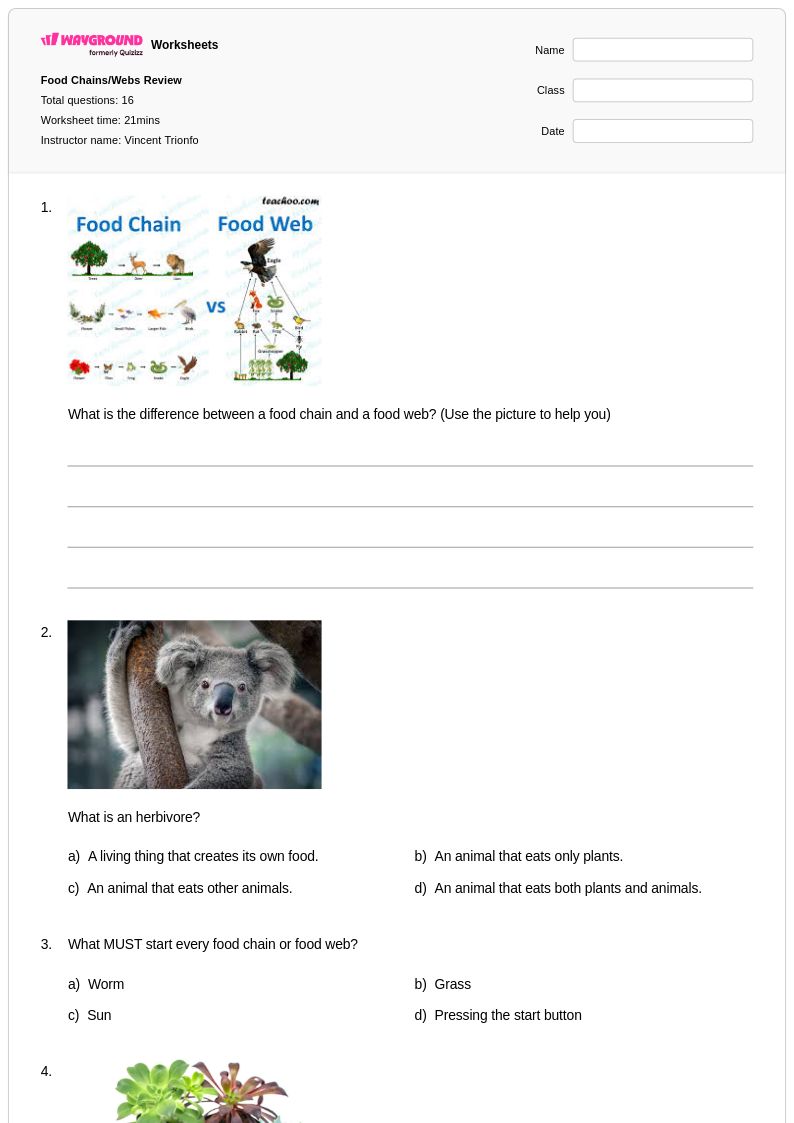
Herbivores worksheets for Class 5 students through Wayground (formerly Quizizz) provide comprehensive resources to help elementary learners understand plant-eating animals and their crucial role in ecosystems. These educational materials strengthen students' ability to identify herbivorous species, analyze their physical adaptations for consuming plant matter, and explore the relationships between herbivores and their food sources. The collection includes practice problems that challenge students to categorize animals based on their diets, examine digestive systems specialized for breaking down plant cellulose, and investigate how herbivores have evolved specific teeth structures and behaviors for efficient plant consumption. Each worksheet comes with a detailed answer key to support independent learning and assessment, while the free printables in pdf format make it easy for educators to distribute materials both in classroom settings and for take-home assignments.
Wayground (formerly Quizizz) empowers teachers with millions of educator-created herbivore resources that can be easily discovered through advanced search and filtering capabilities, ensuring alignment with science education standards while supporting diverse learning needs. The platform's differentiation tools allow instructors to customize worksheets based on individual student readiness levels, making it simple to provide appropriate challenges for both struggling learners who need additional reinforcement and advanced students requiring enrichment activities. These flexible resources are available in both printable and digital formats, including downloadable pdf versions, giving teachers the freedom to seamlessly integrate herbivore studies into lesson planning, targeted remediation sessions, and skill-building practice. The extensive collection supports comprehensive unit planning by offering varied question types and activities that help students master fundamental concepts about plant-eating animals while developing critical thinking skills essential for life science understanding.
FAQs
How do I teach students about herbivores and their role in ecosystems?
Start by grounding students in the definition of herbivory before expanding outward to ecological context. Effective instruction connects herbivore adaptations, such as flat molars, multi-chambered stomachs, and specialized digestive enzymes, to the selective pressures that produced them. From there, place herbivores within food chains and trophic levels so students can see how plant-eaters mediate energy flow between producers and carnivores. Using visual diagrams alongside written analysis helps students build both conceptual understanding and vocabulary simultaneously.
What exercises help students practice identifying and classifying herbivores?
Effective practice tasks include species-sorting activities where students classify animals by diet using observable physical traits, as well as comparative anatomy exercises that contrast herbivore and carnivore digestive systems. Labeling food chain diagrams and answering scenario-based questions about habitat and feeding behavior reinforces identification skills in context. Worksheets that require students to justify their classifications, rather than simply circle an answer, build the critical thinking skills needed for deeper ecological understanding.
What misconceptions do students commonly have about herbivores?
A common misconception is that herbivores are passive or ecologically unimportant because they do not hunt. In reality, herbivores are keystone consumers that regulate plant populations and shape habitat structure for other species. Students also frequently confuse herbivory with omnivory, especially for animals like bears or pigs that occasionally consume plant matter alongside other food sources. Clarifying that diet classification is based on primary food source, not occasional feeding behavior, helps students apply the concept more accurately.
How do herbivore adaptations connect to broader lessons on natural selection?
Herbivore adaptations are one of the clearest entry points for teaching natural selection because the relationship between plant defenses and herbivore counter-adaptations is direct and observable. Specialized teeth, fermentation chambers, detoxification enzymes, and gut microbiomes all represent evolved responses to the chemical and physical challenges of a plant-based diet. Framing these adaptations as solutions to specific selection pressures helps students understand that evolution is not random but shaped by ecological constraints. This connection makes herbivores an ideal case study for linking anatomy, behavior, and evolutionary theory in a single lesson.
How can I use herbivore worksheets in my classroom, and are they available digitally?
Herbivore worksheets on Wayground are available as printable PDFs for traditional classroom use and in digital formats for technology-integrated environments, giving teachers flexibility across in-person, hybrid, and remote settings. Teachers can also host worksheets directly as a quiz on Wayground, enabling real-time student responses and instant feedback. Each worksheet includes a complete answer key, making them practical for independent practice, guided instruction, or formative assessment. The digital format is especially useful for assigning work as homework or for students who benefit from on-screen accessibility features.
How can I differentiate herbivore worksheets for students with different learning needs?
Wayground includes built-in accommodation tools that let teachers support diverse learners without disrupting whole-class instruction. For students who need additional support, teachers can enable Read Aloud so questions and content are read to them, reduce the number of answer choices to lower cognitive load, or grant extended time on digital assignments. Font size and display themes can also be adjusted through Reading Mode for students with visual processing needs. These accommodations are saved per student and reapply automatically in future sessions, so setup is a one-time investment.