Free Printable Hero's Journey Worksheets for Class 5
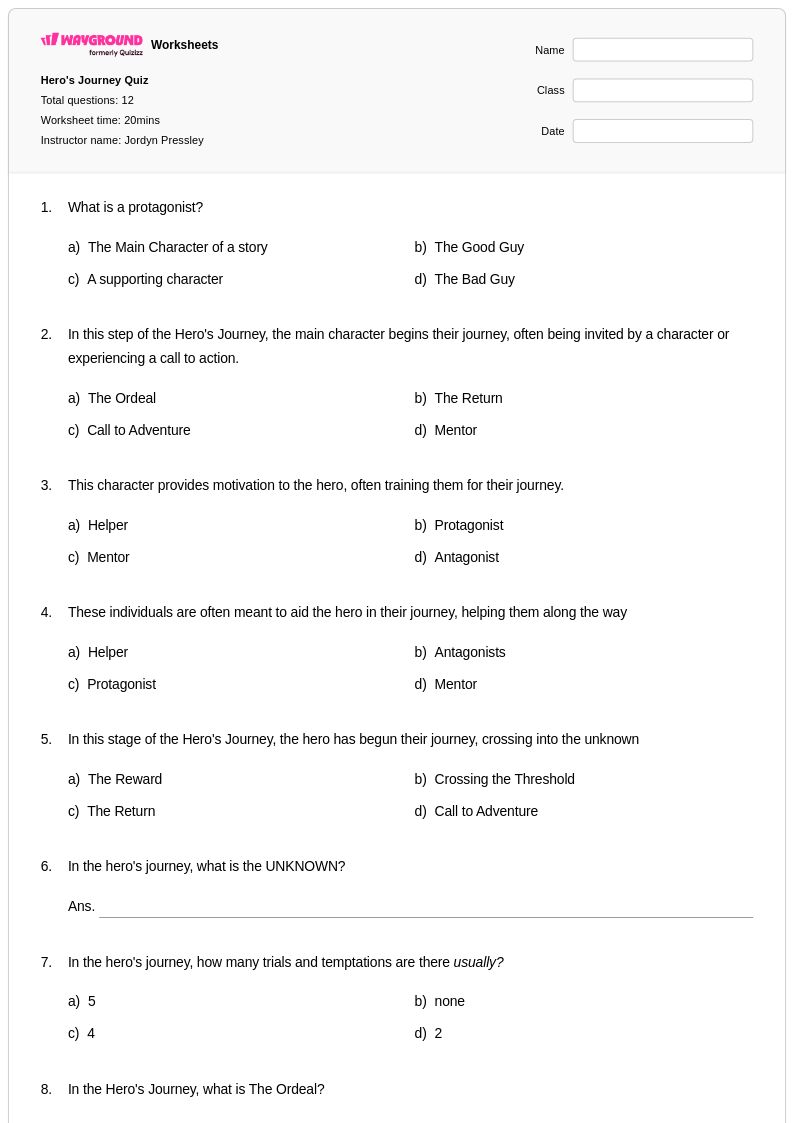
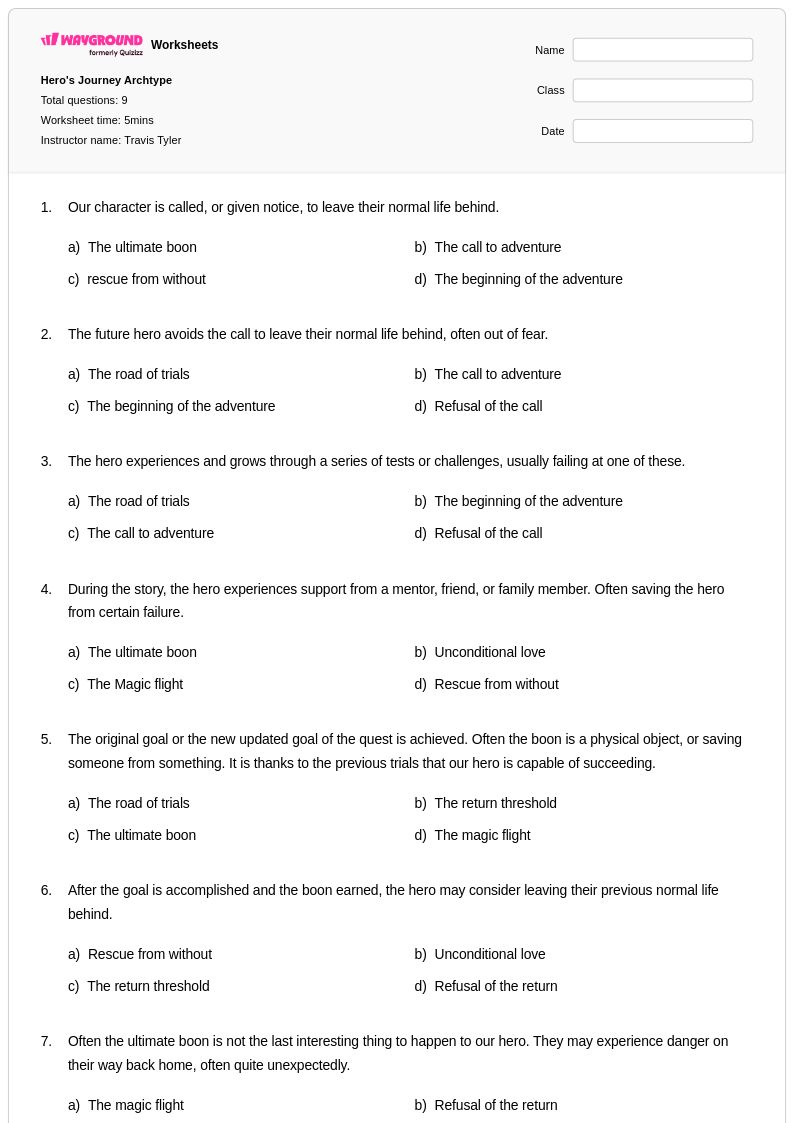
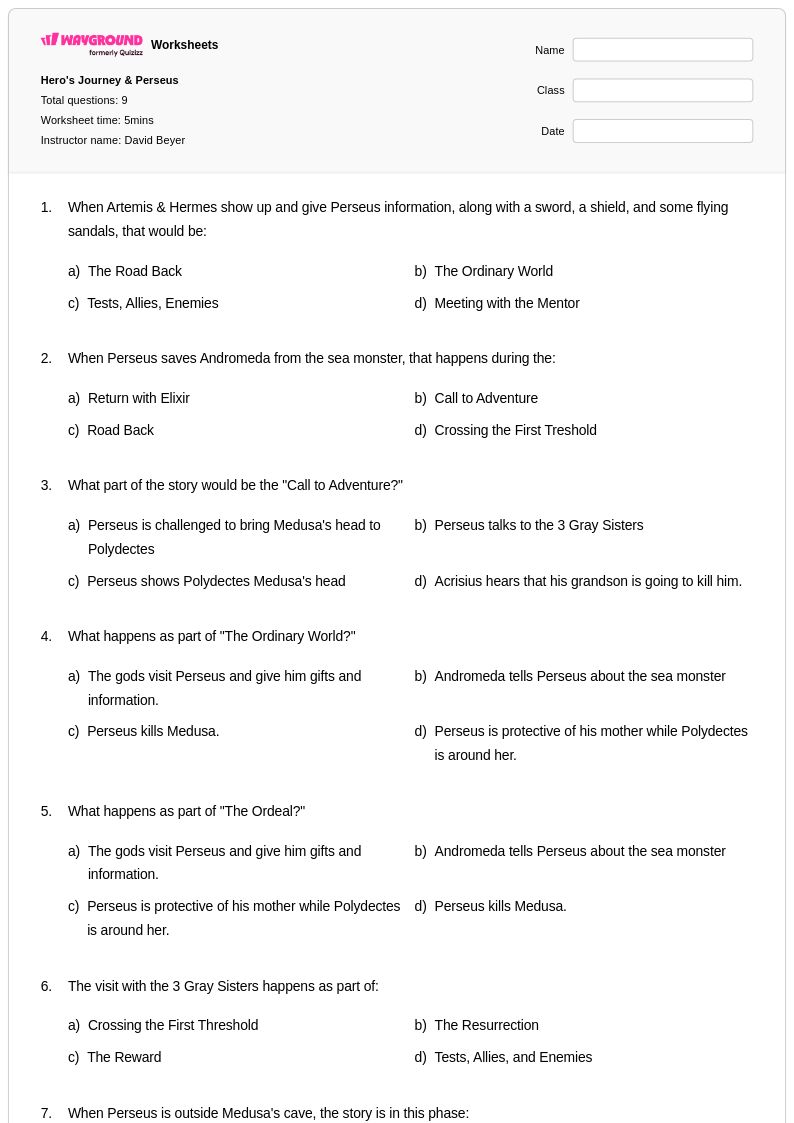
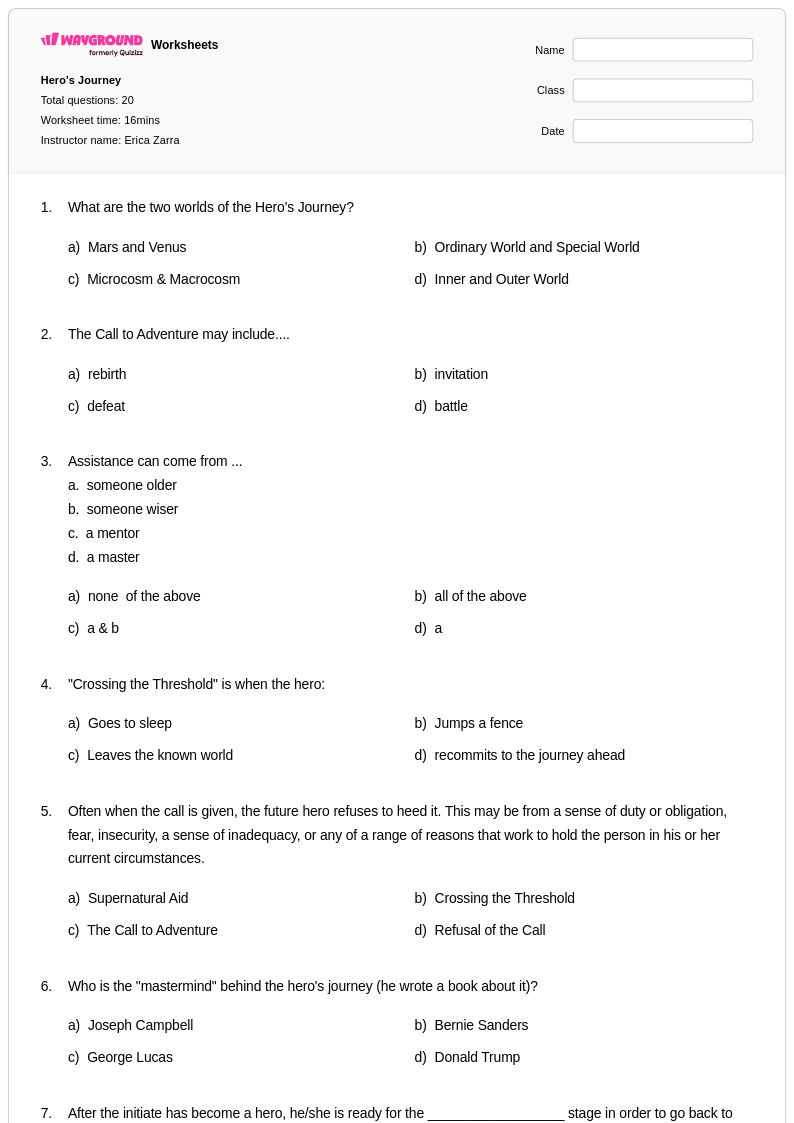
Class 5 Hero's Journey free worksheets and printables help students master this classic storytelling structure through engaging practice problems and comprehensive answer keys available as downloadable PDFs.
Explore printable Hero's Journey worksheets for Class 5
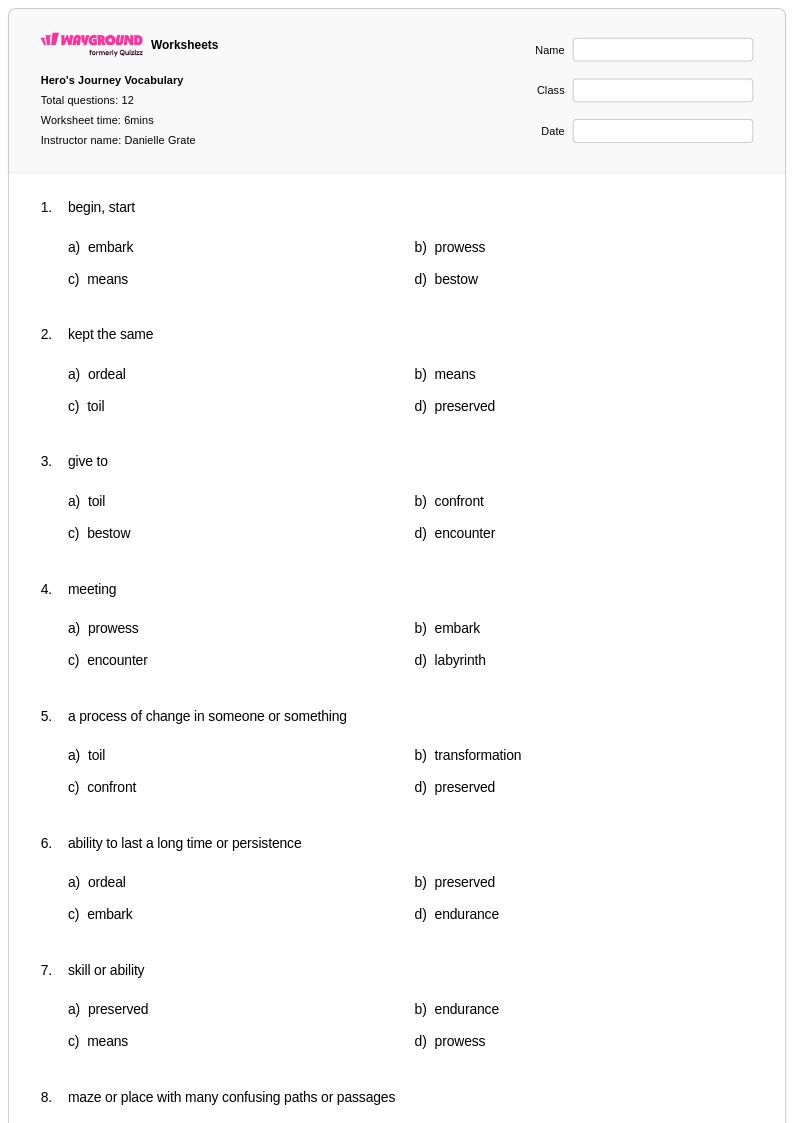
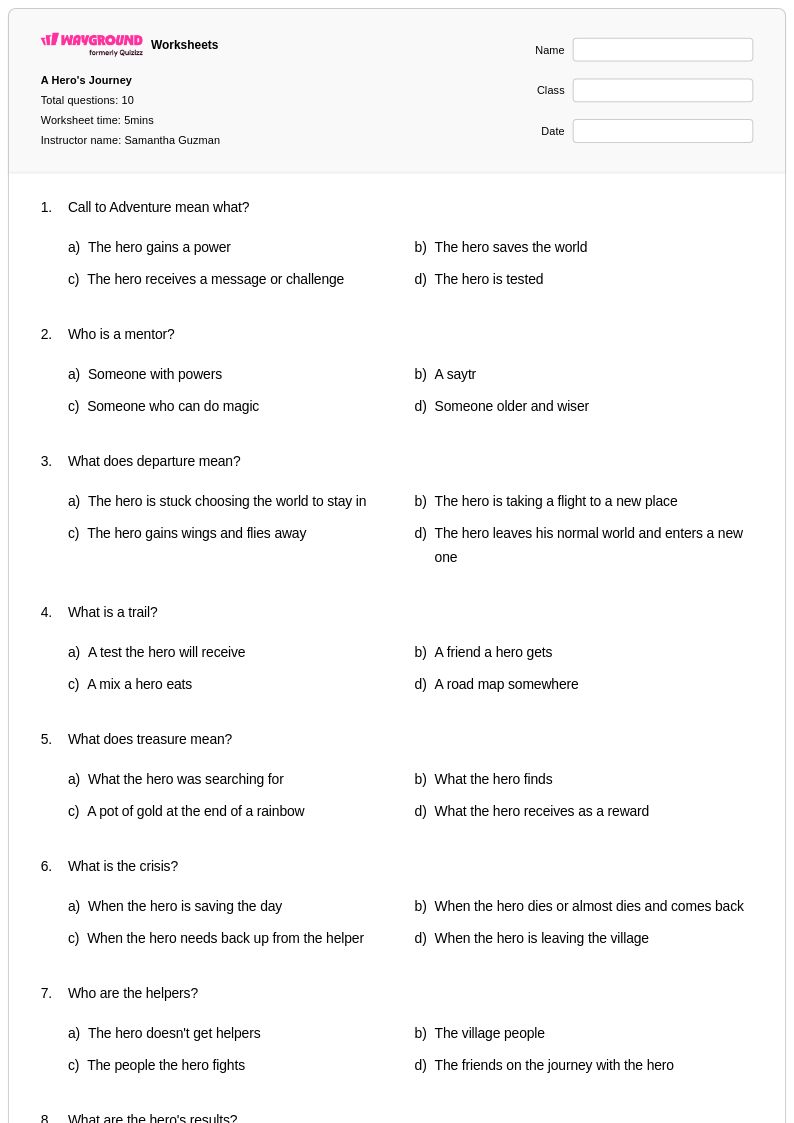
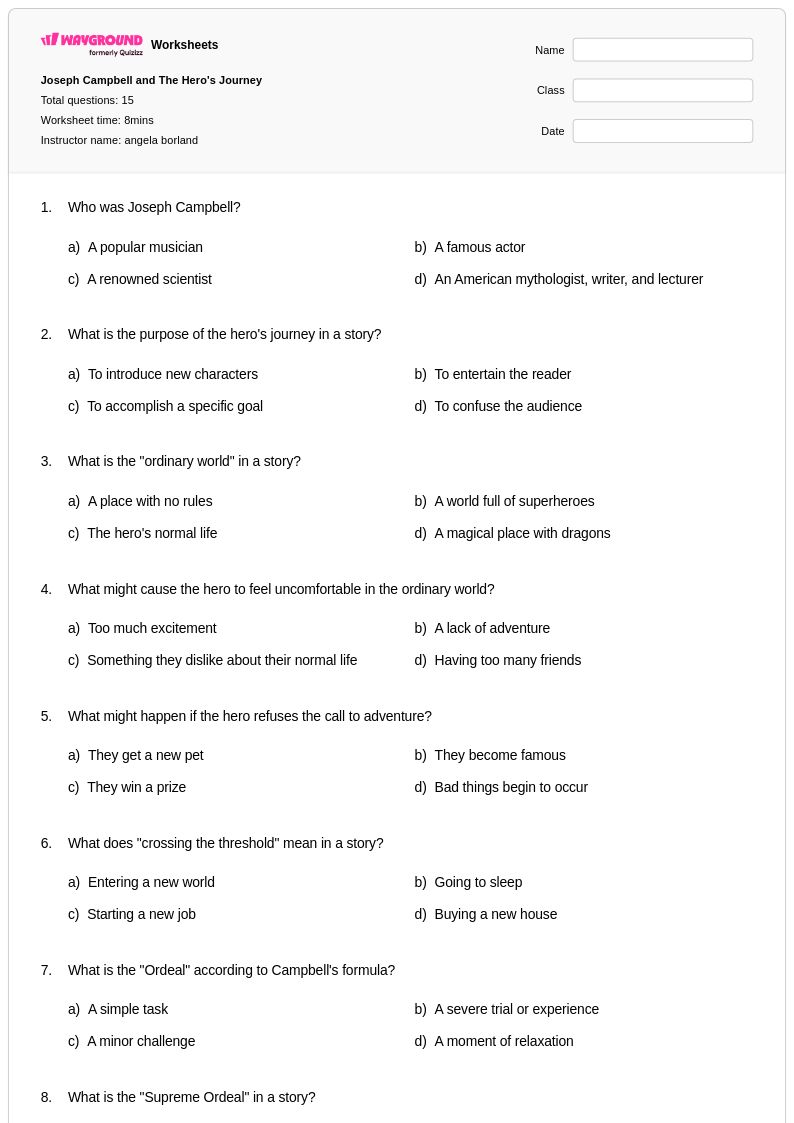
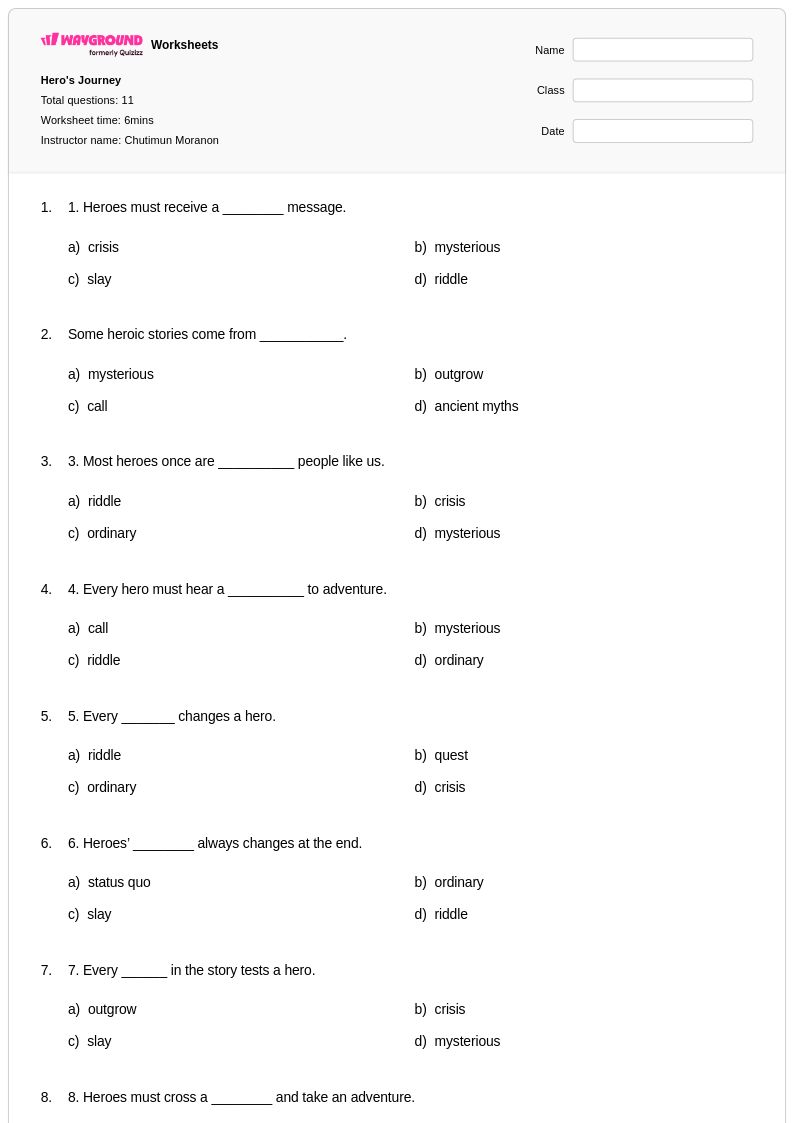
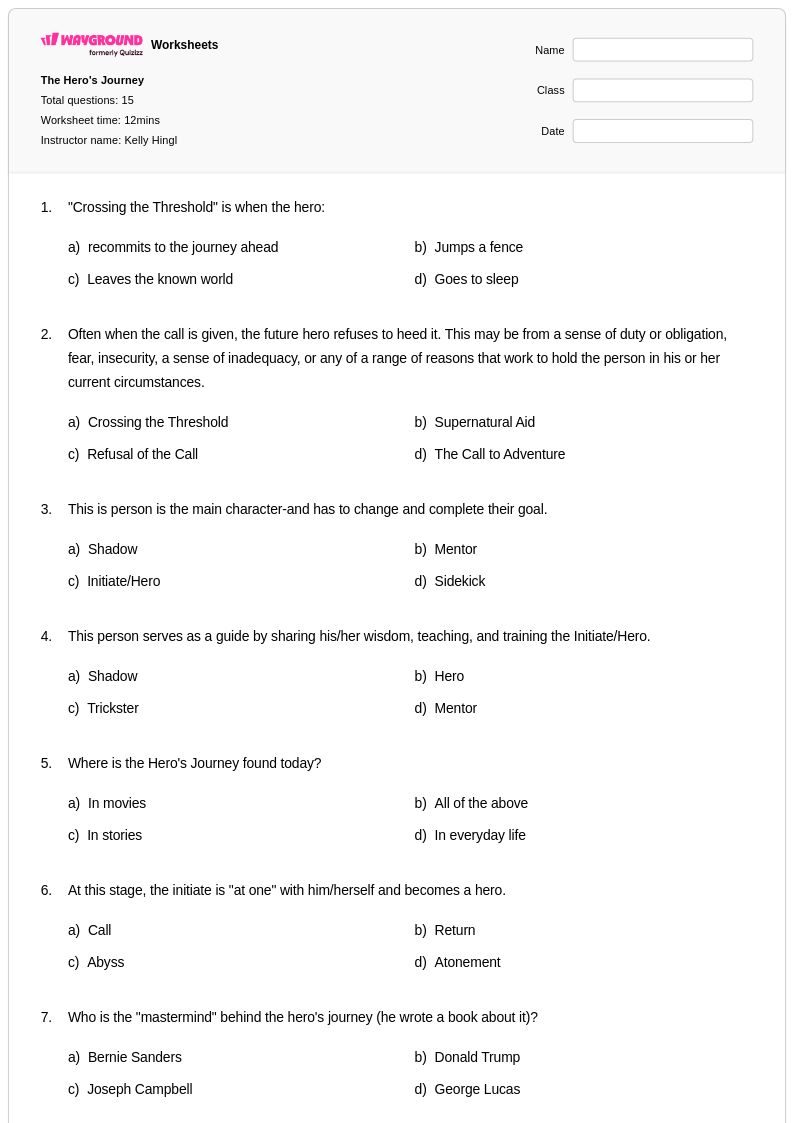
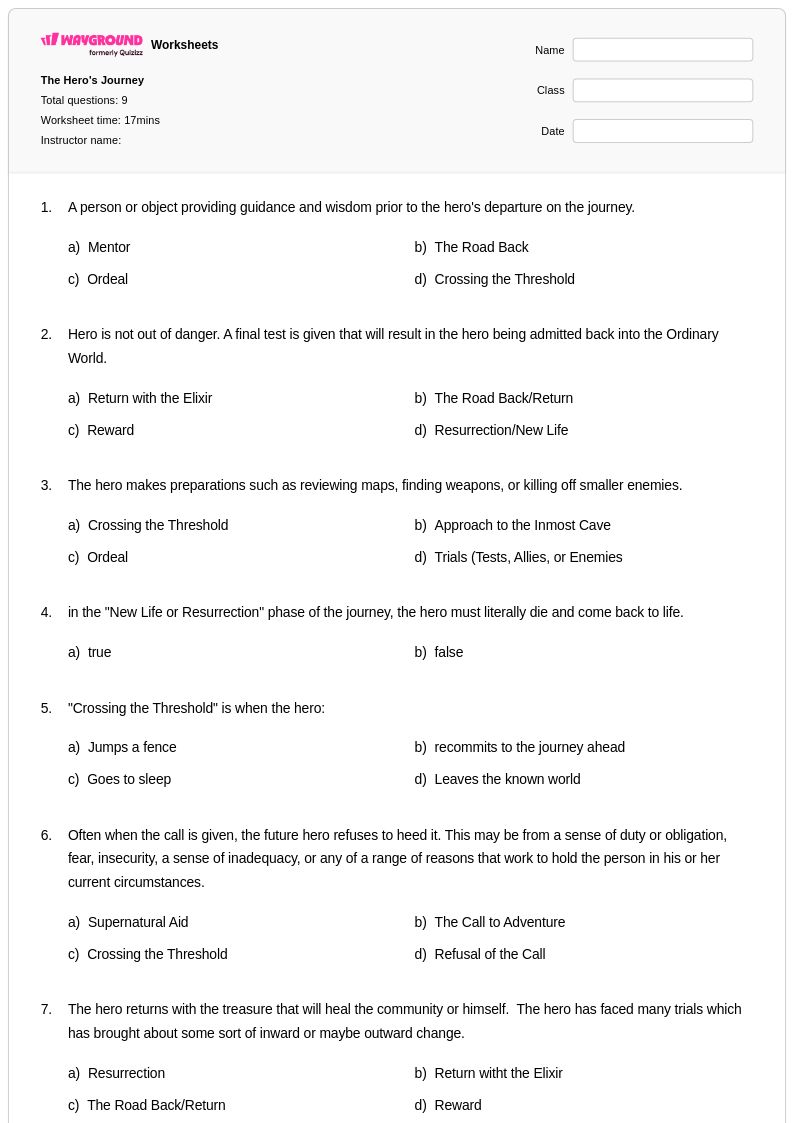
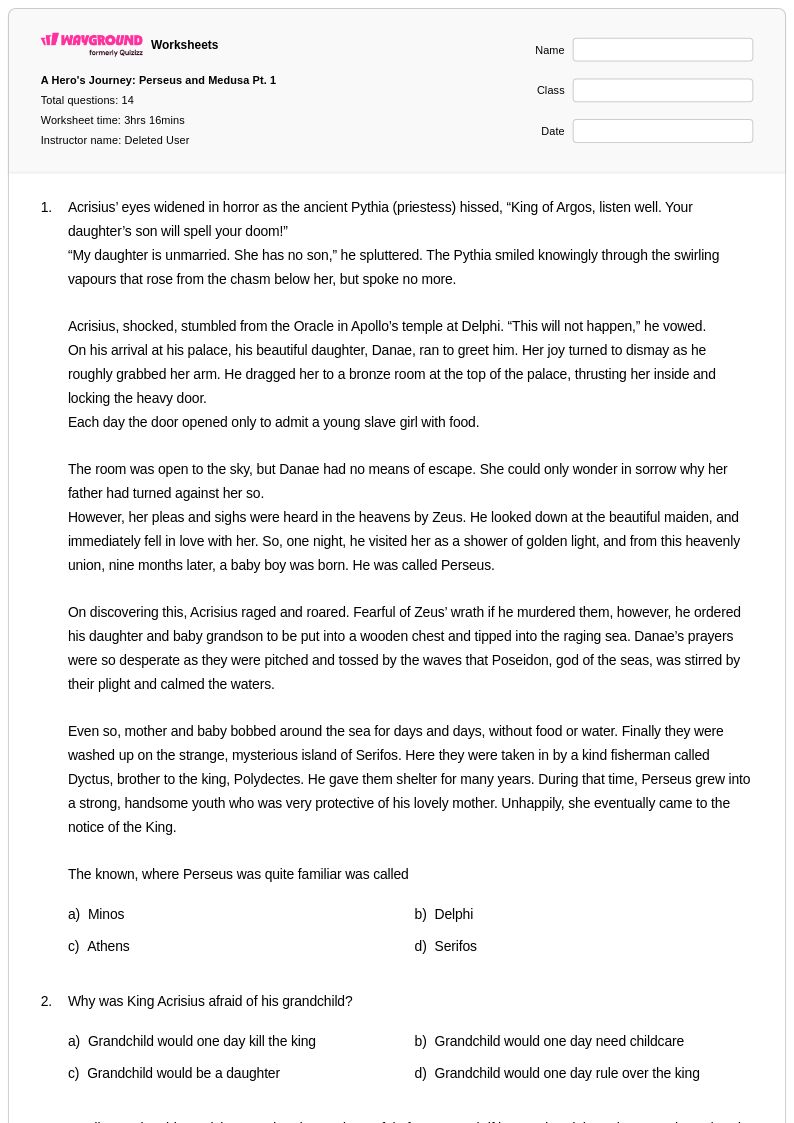
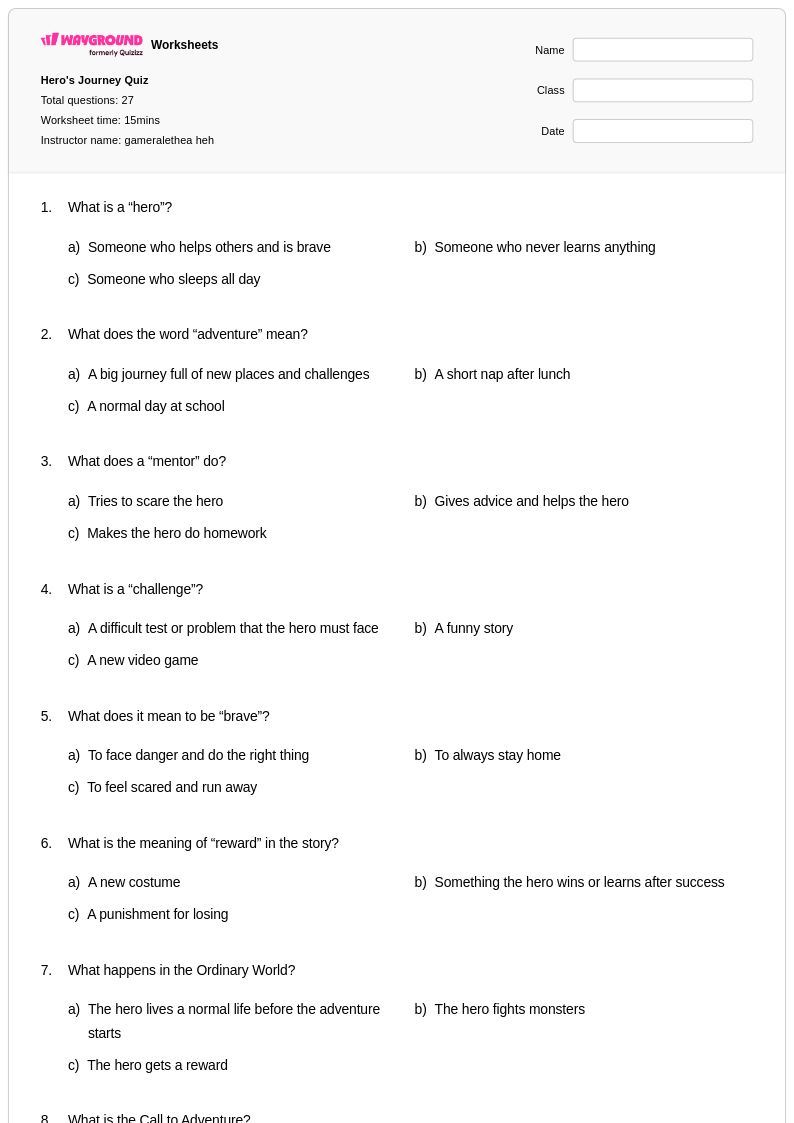
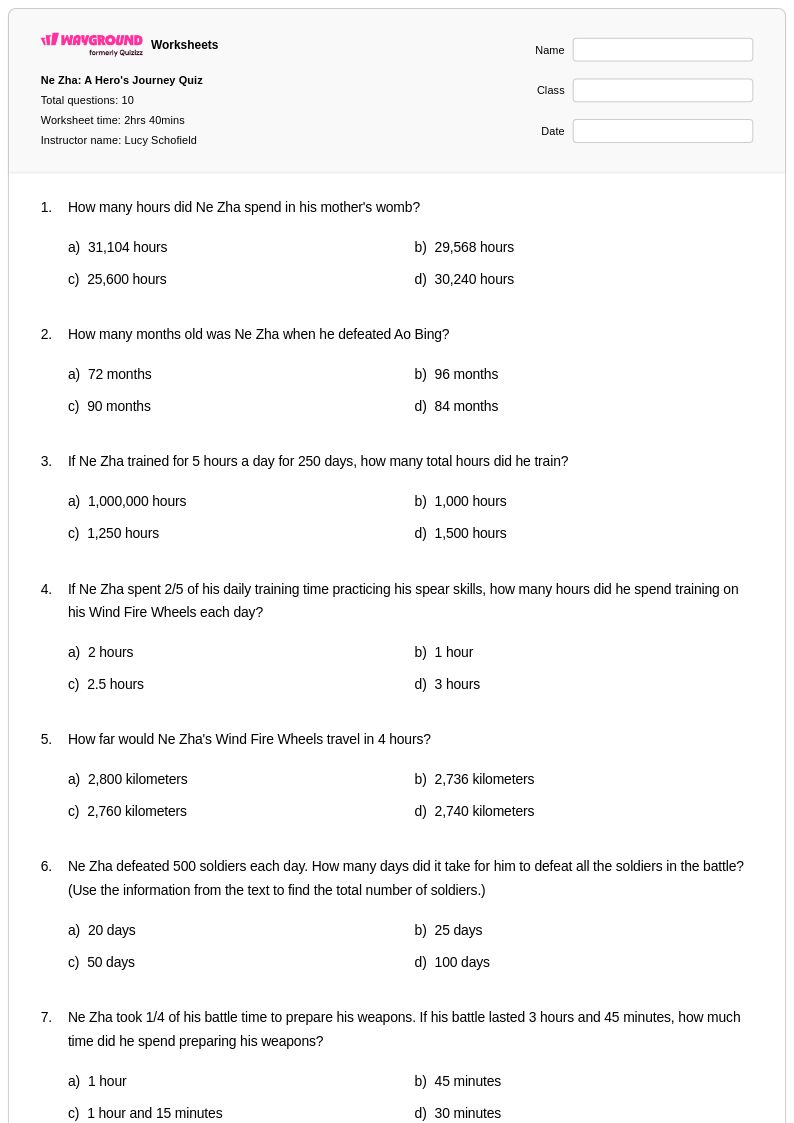
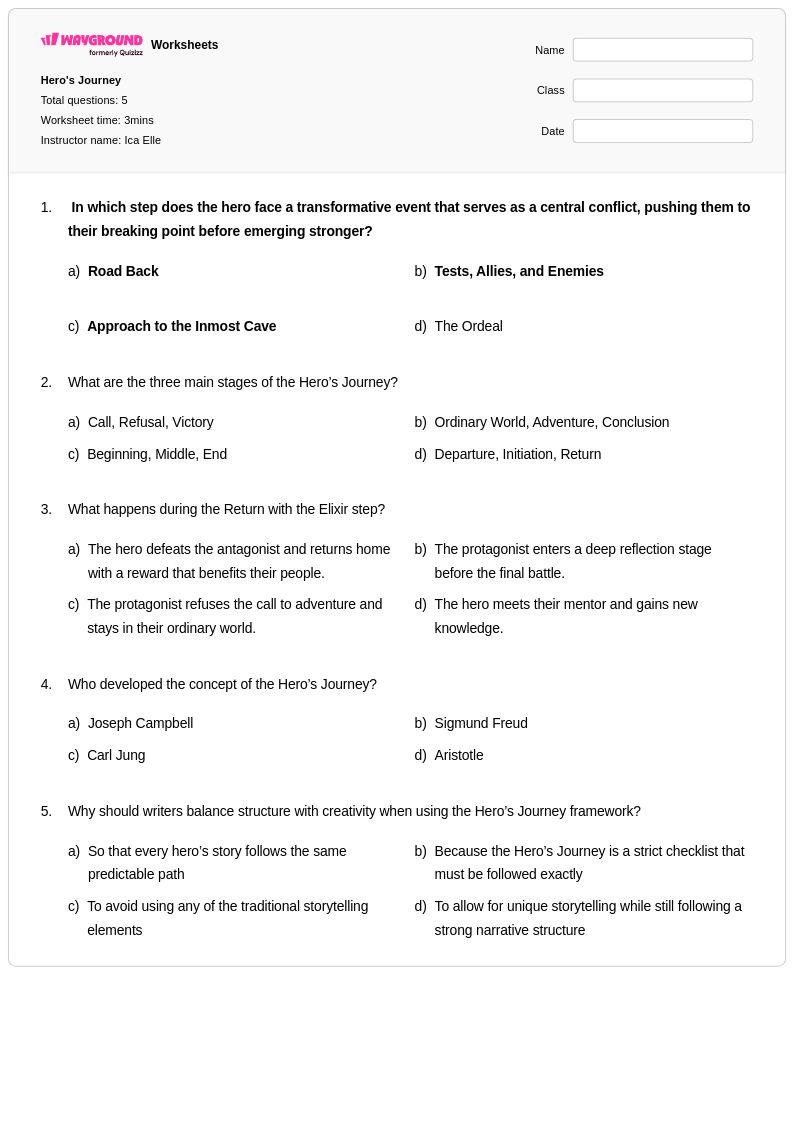
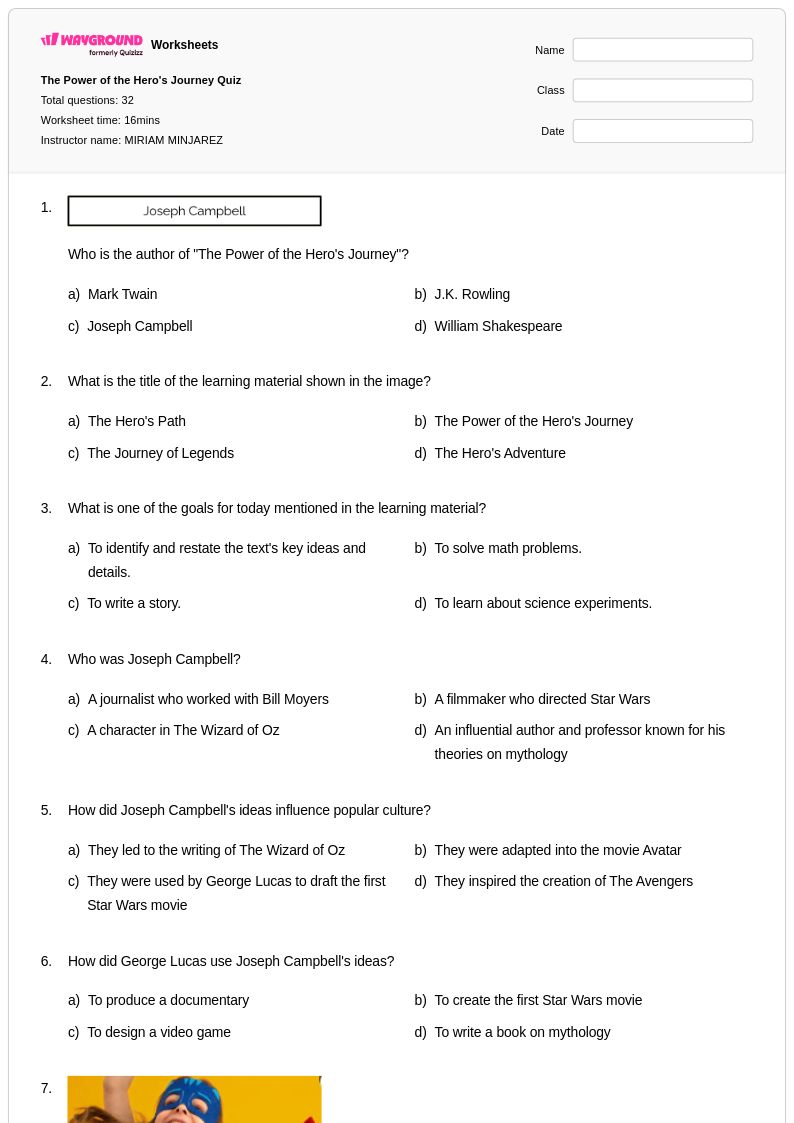
Class 5 students develop critical literary analysis skills through Wayground's comprehensive Hero's Journey worksheet collection, which guides young readers through Joseph Campbell's classic narrative structure found in countless stories and myths. These carefully crafted worksheets help students identify the essential stages of the Hero's Journey, from the ordinary world and call to adventure through trials, transformation, and return, strengthening their ability to recognize universal story patterns across different genres and cultures. Each printable resource includes structured practice problems that encourage students to map character development and plot progression, while comprehensive answer keys support both independent learning and guided instruction. These free educational materials transform complex literary concepts into accessible learning experiences, enabling fifth-grade students to analyze beloved stories like Harry Potter, Star Wars, and traditional folktales through the lens of this timeless narrative framework.
Wayground's extensive collection of millions of teacher-created resources empowers educators to deliver engaging Hero's Journey instruction that meets diverse classroom needs and aligns with reading comprehension standards. The platform's advanced search and filtering capabilities allow teachers to quickly locate worksheets that match specific skill levels and learning objectives, while differentiation tools enable seamless adaptation for struggling readers and advanced learners alike. Available in both digital and printable PDF formats, these customizable materials support flexible lesson planning whether teachers need quick remediation exercises, enrichment activities, or structured skill practice sessions. The robust worksheet library includes graphic organizers, character analysis templates, and story mapping activities that help teachers scaffold complex literary concepts while building students' confidence in recognizing narrative patterns that transcend individual stories and connect literature across cultures and time periods.
FAQs
How do I teach the Hero's Journey to my students?
Start by anchoring the Hero's Journey in a story students already know, such as a popular film or fairy tale, before introducing Joseph Campbell's monomyth framework. Walk students through the key stages sequentially, pausing to identify each stage in the familiar narrative before transferring that analysis to a literary text. Scaffolding with visual story maps or stage-by-stage organizers helps students internalize the structure rather than memorize labels in isolation.
What worksheets or activities help students practice identifying the Hero's Journey?
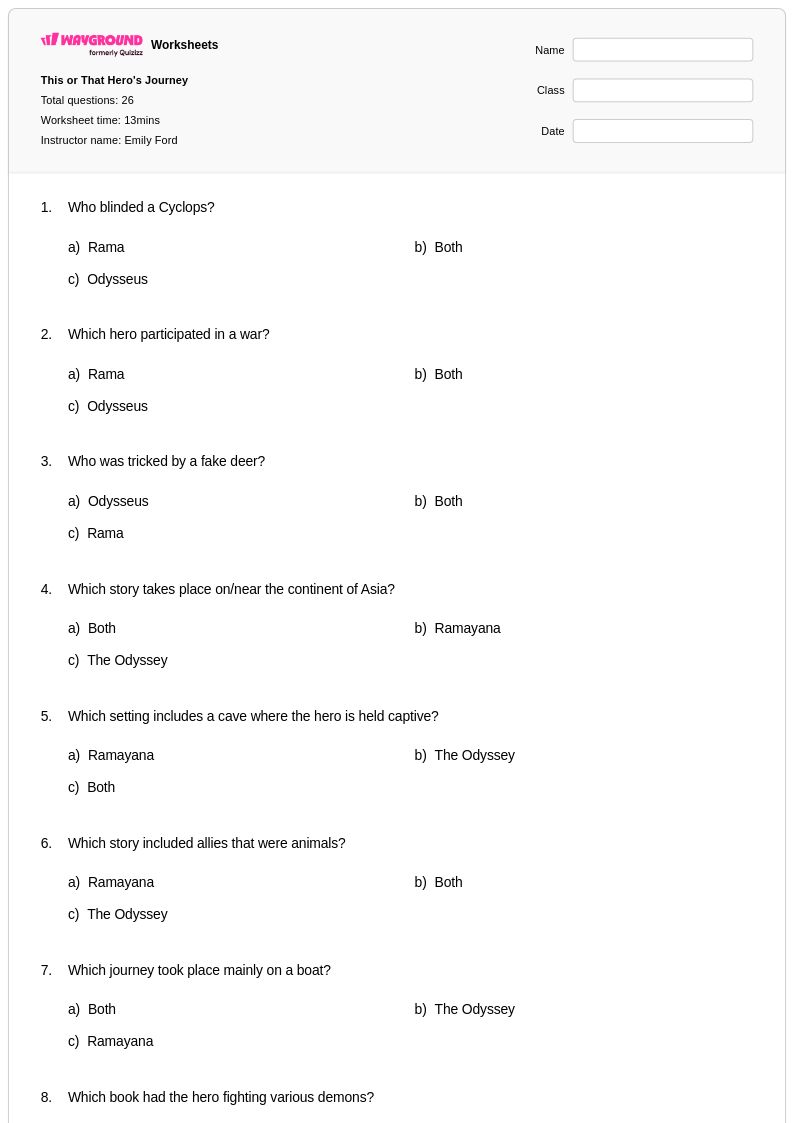
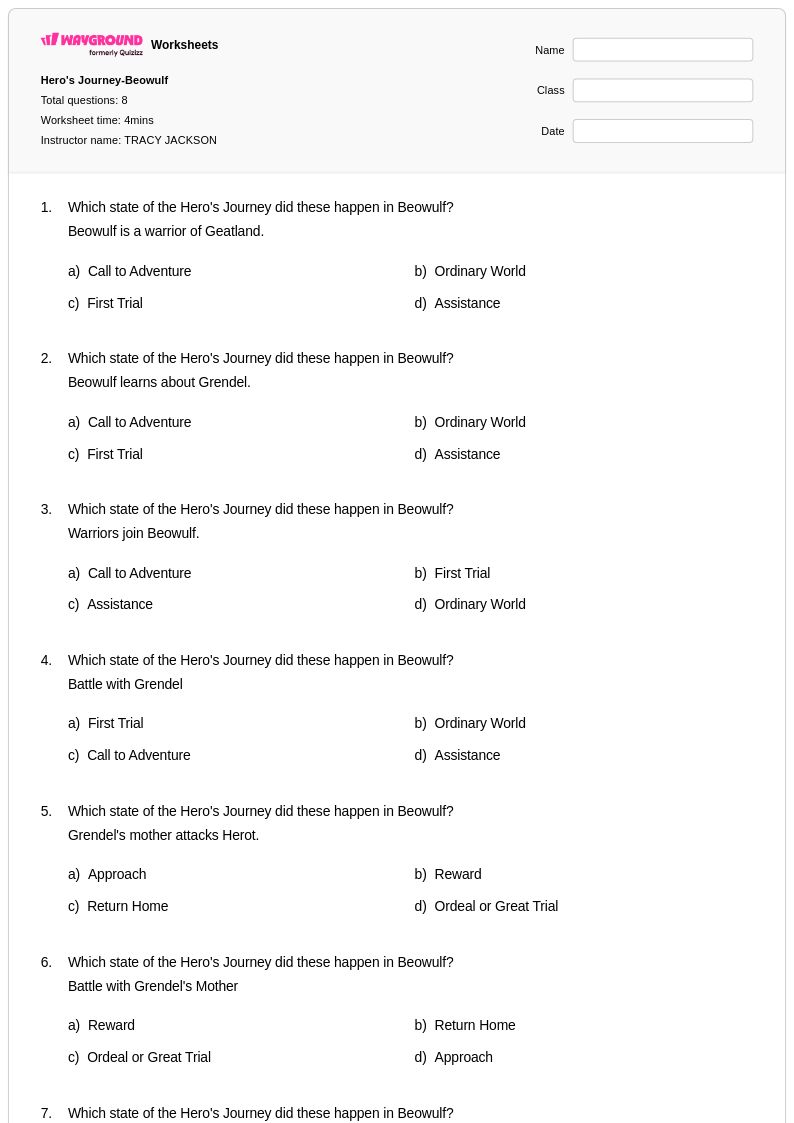
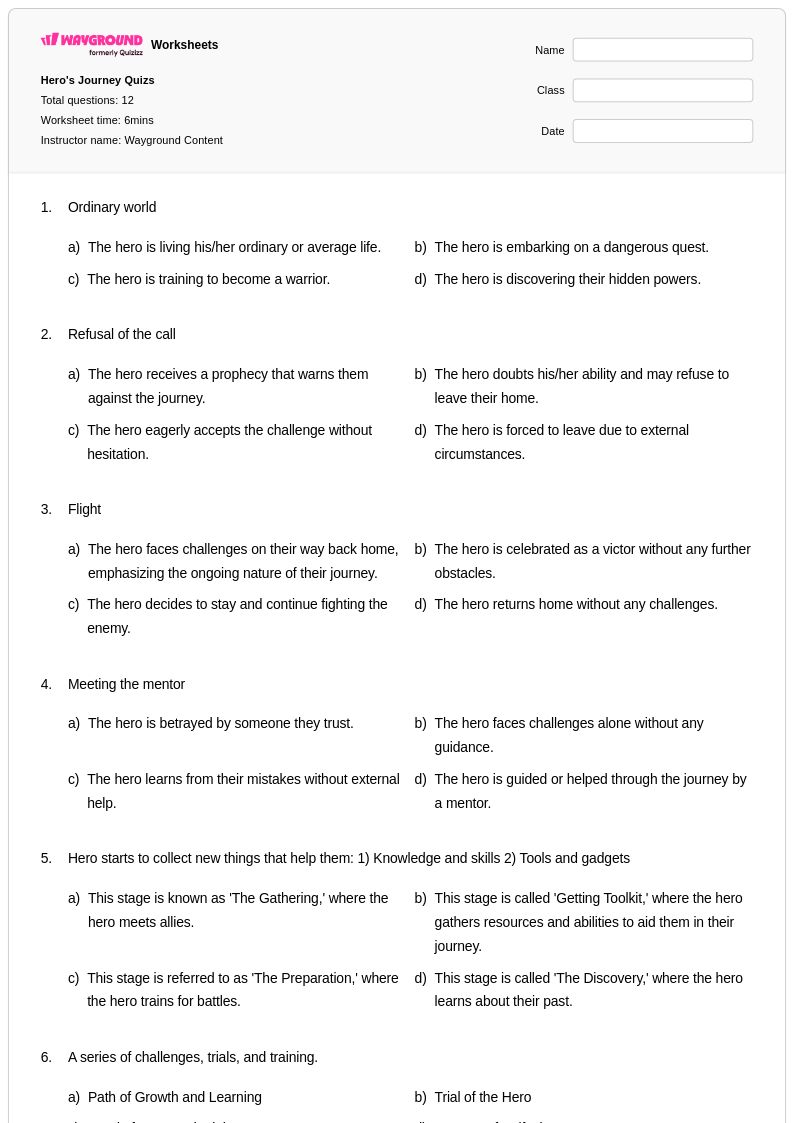
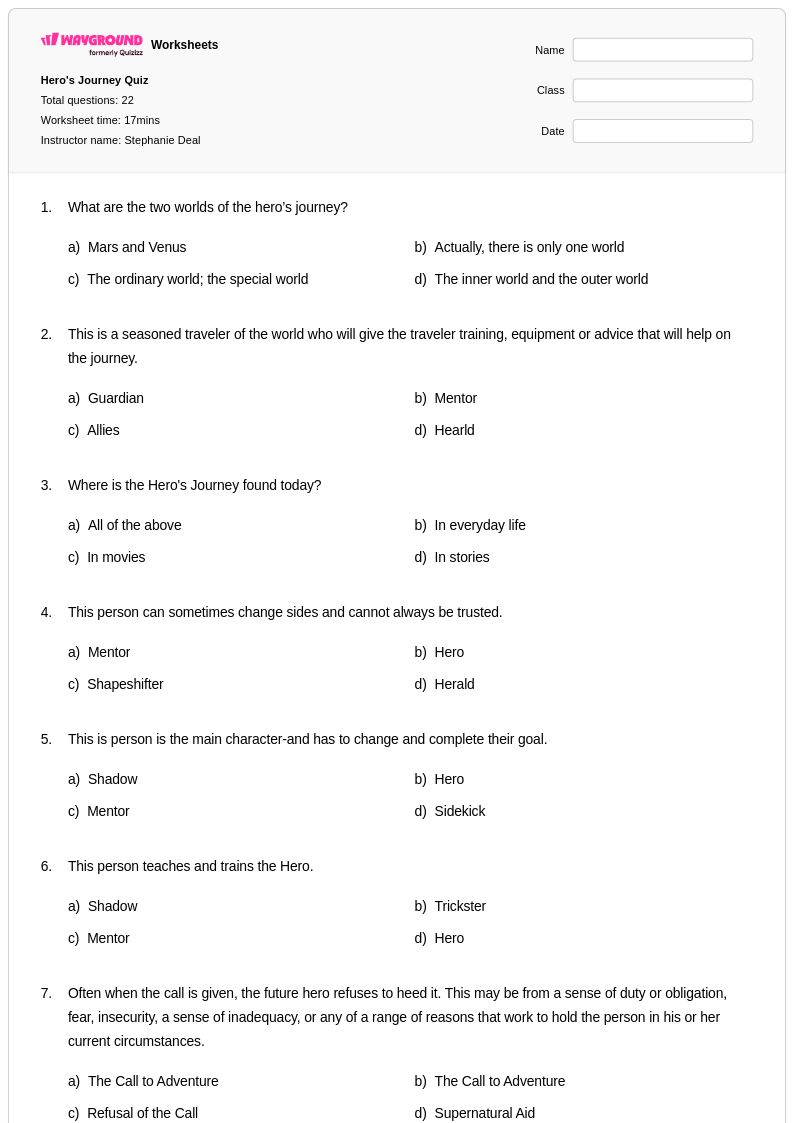
Effective practice activities include stage-labeling exercises where students map a narrative's events onto Campbell's monomyth, character archetype identification tasks, and comparative analysis prompts that ask students to trace the hero's transformation from the ordinary world to the return. Worksheets that incorporate examples from literature, film, and mythology simultaneously reinforce the concept and help students recognize that the Hero's Journey is a cross-cultural pattern, not a genre-specific formula.
What mistakes do students commonly make when analyzing the Hero's Journey?
The most frequent error is treating the Hero's Journey as a rigid checklist rather than a flexible framework, leading students to force-fit every story into all seventeen stages even when a stage is condensed or absent. Students also commonly conflate the Call to Adventure with the Threshold Crossing, missing the distinction between the inciting event and the protagonist's committed departure from the ordinary world. Emphasizing that the monomyth is a pattern with variation, not a universal template, corrects both errors.
How do I differentiate Hero's Journey instruction for struggling readers and advanced students?
For struggling readers, reduce cognitive load by focusing on the broadest three-act version of the Hero's Journey (Departure, Initiation, Return) before introducing finer stage distinctions, and use texts at an accessible reading level. On Wayground, teachers can enable Read Aloud so questions and content are read to students who need it, and Reduced Answer Choices can be applied to selected students to lower the difficulty of identification tasks without altering the assignment for the rest of the class. Advanced students benefit from comparative analysis across two or more texts, asking them to evaluate how different authors subvert or reimagine the monomyth.
How do I use Wayground's Hero's Journey worksheets in my classroom?
Wayground's Hero's Journey worksheets are available as printable PDFs for traditional classroom use and in digital formats for technology-integrated environments, so teachers can deploy them regardless of classroom setup. Digital versions can be hosted as a quiz directly on Wayground, allowing teachers to track student responses and progress in real time. Each worksheet includes a complete answer key, which reduces grading time and makes the materials practical for independent practice, homework, or in-class analysis tasks.
Can the Hero's Journey be applied to texts beyond traditional literature?
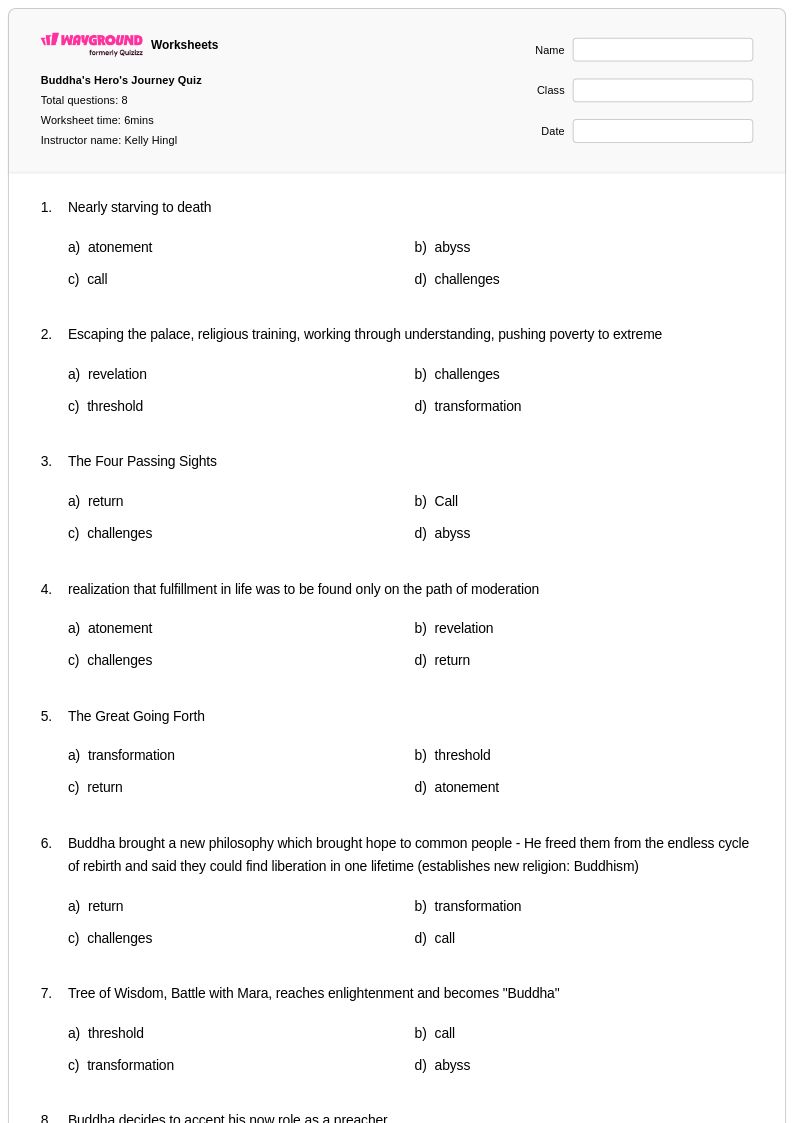
Yes, the Hero's Journey appears across literature, film, mythology, video games, and even real-world biographical narratives, making it one of the most transferable analytical frameworks in an ELA classroom. Having students apply the monomyth to a film, a graphic novel, or a historical figure's life story alongside a literary text deepens their understanding precisely because they must adapt the framework to different genres and contexts. This cross-media application also increases engagement by connecting the concept to stories students encounter outside of school.