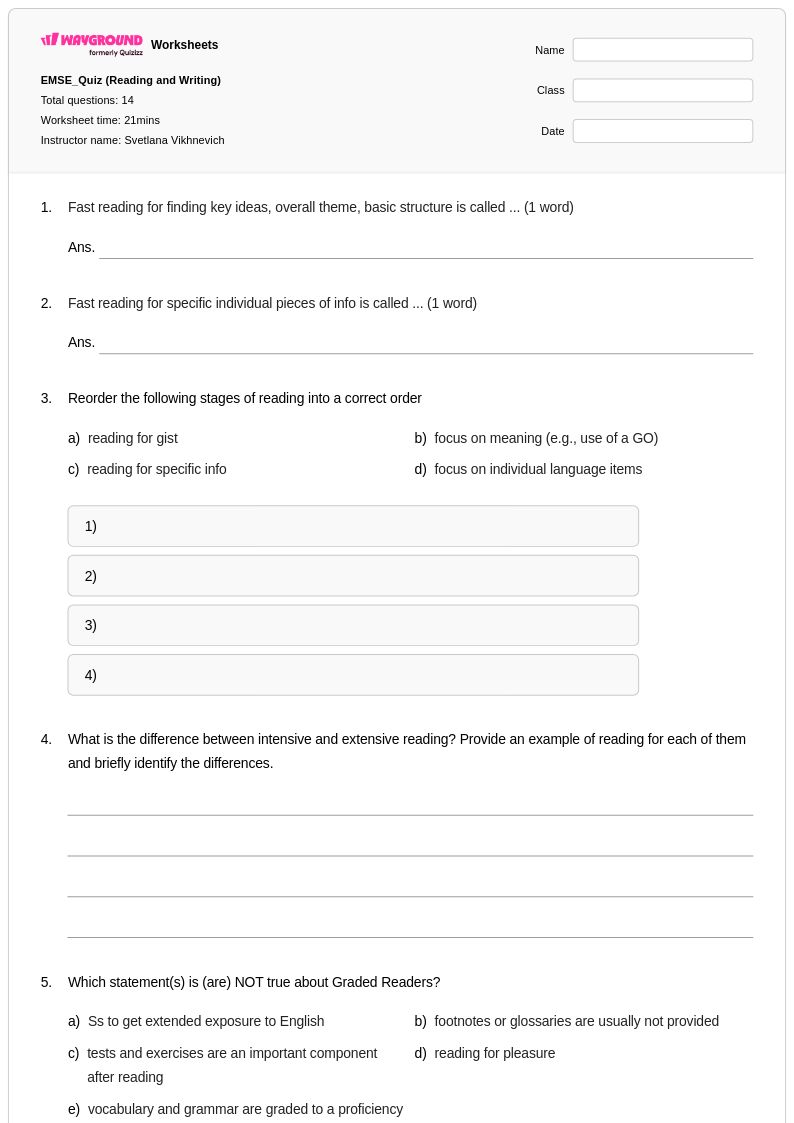
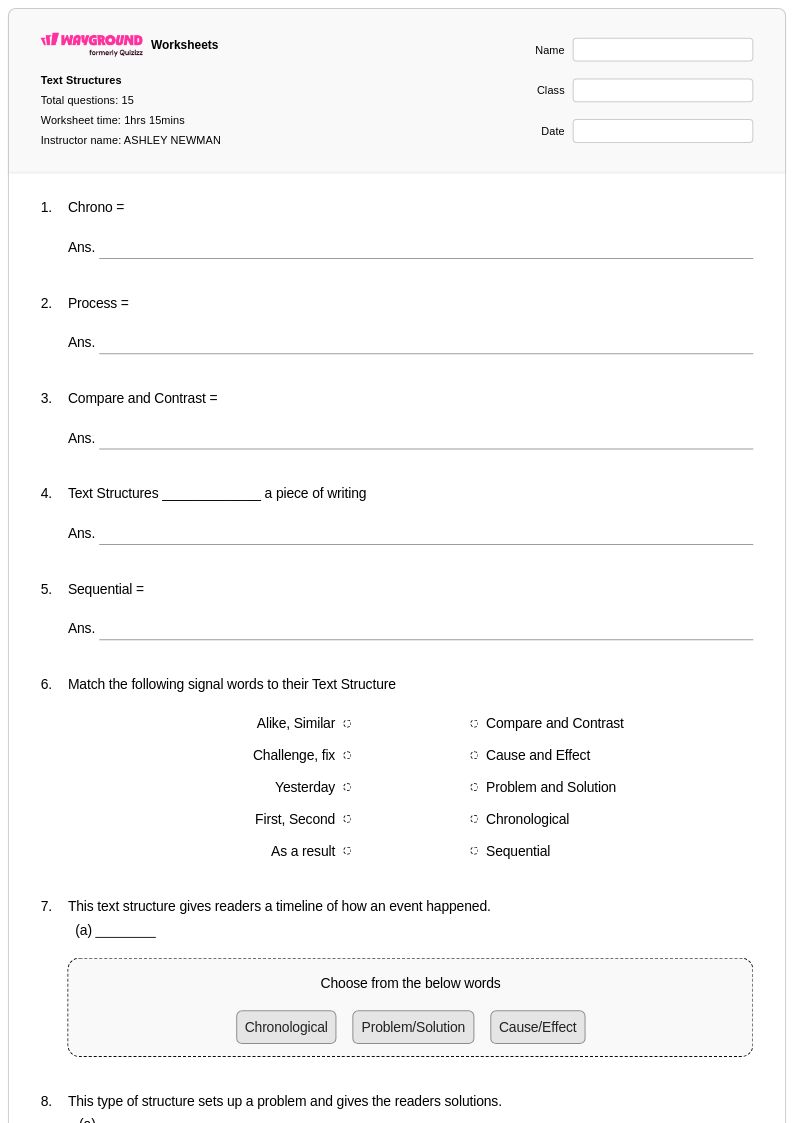
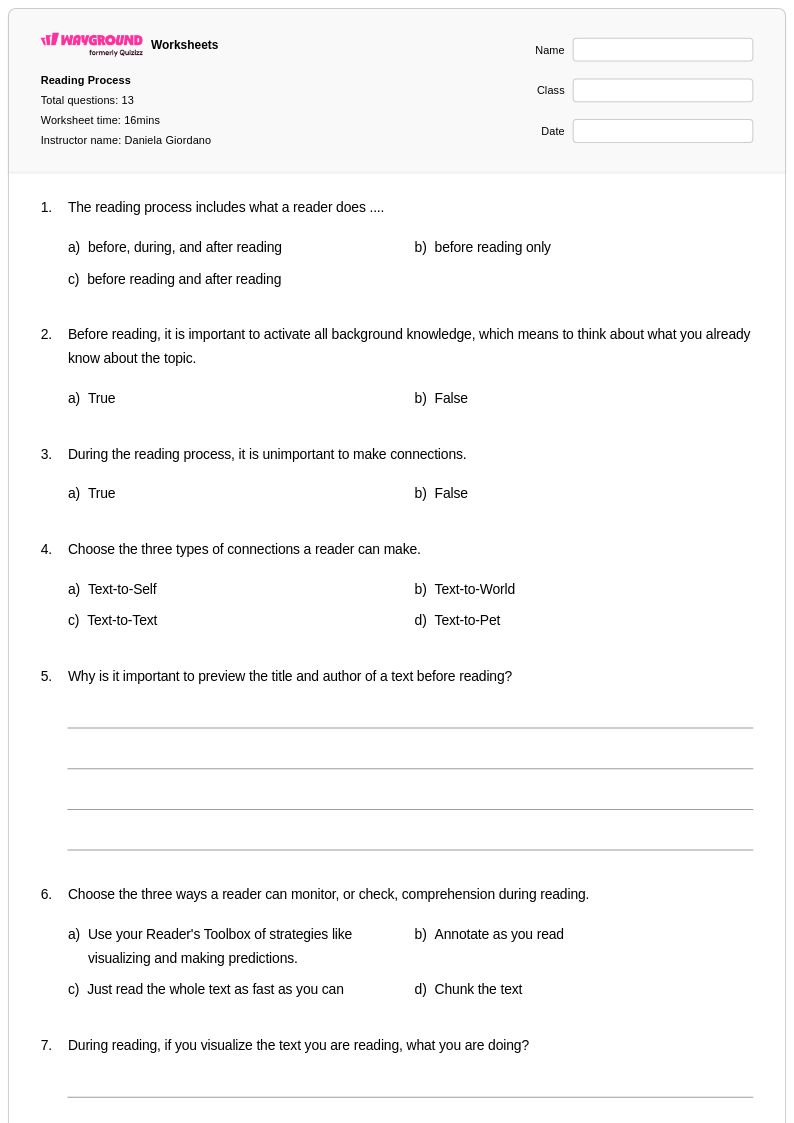
Free Printable Identifying Problems and Solutions in Reading worksheets
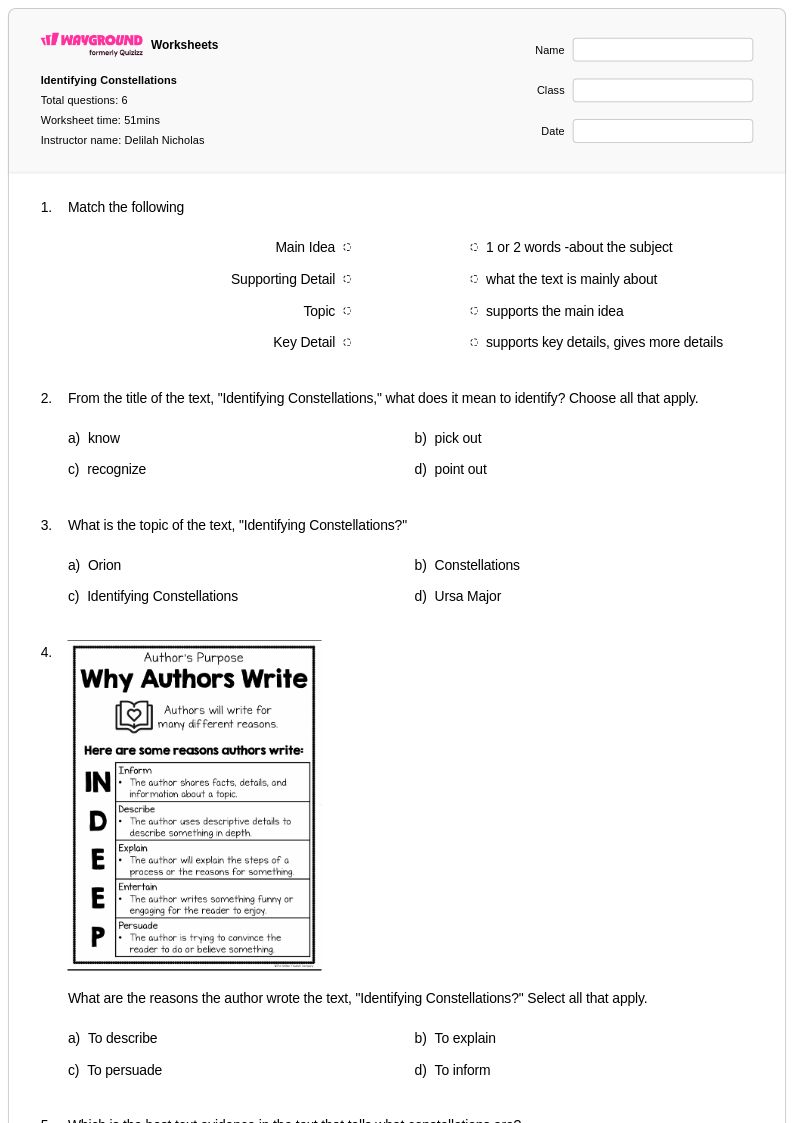
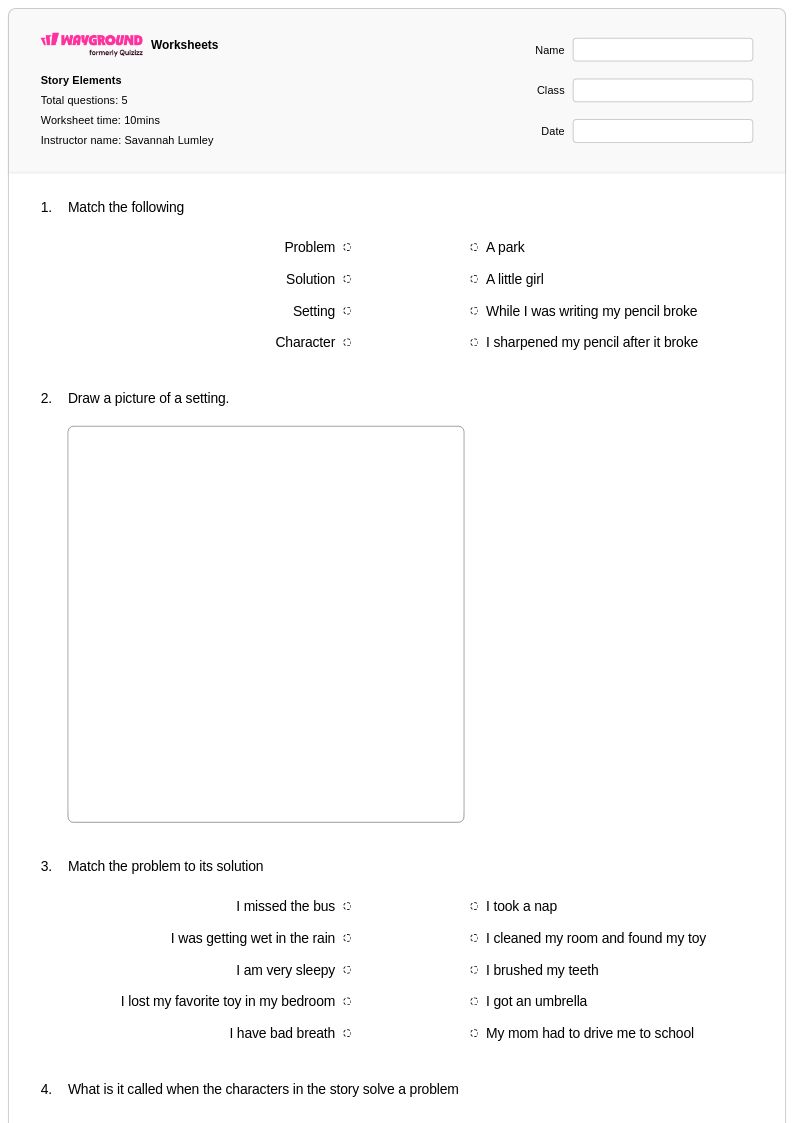
Master identifying problems and solutions in reading with Wayground's comprehensive collection of free worksheets and printables that help students develop critical comprehension strategies through guided practice problems and detailed answer keys.
Explore printable Identifying Problems and Solutions in Reading worksheets
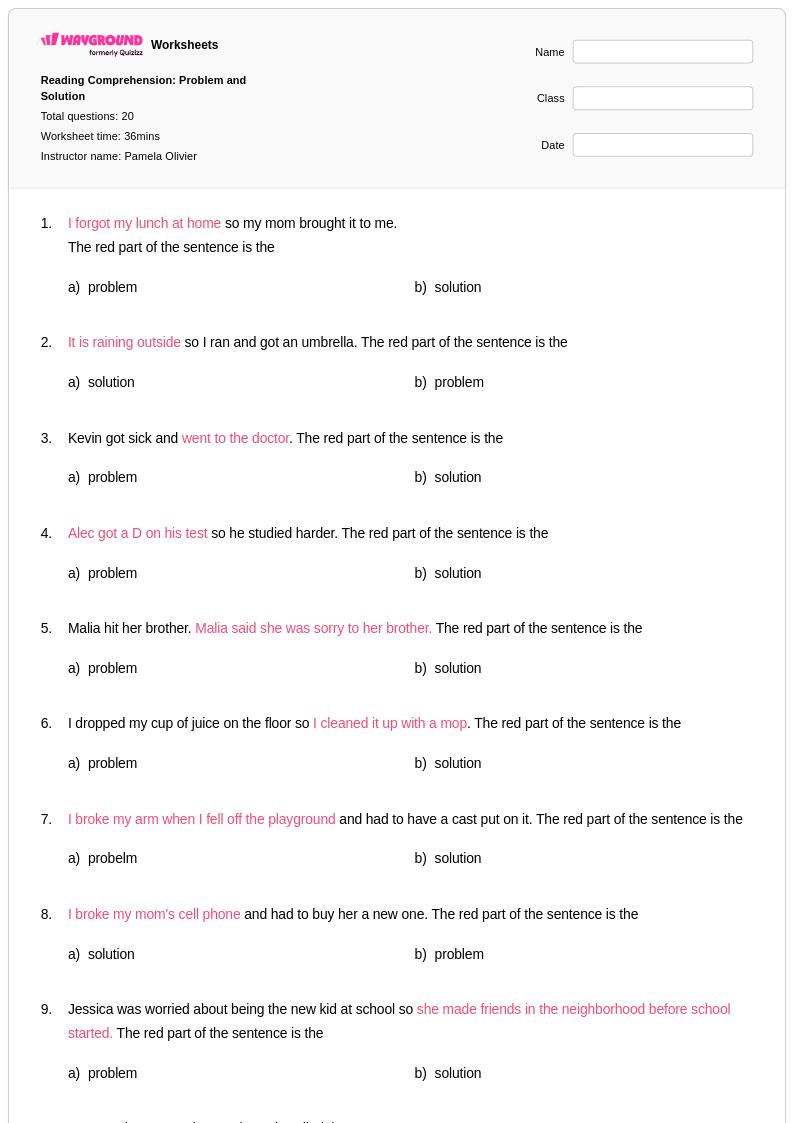
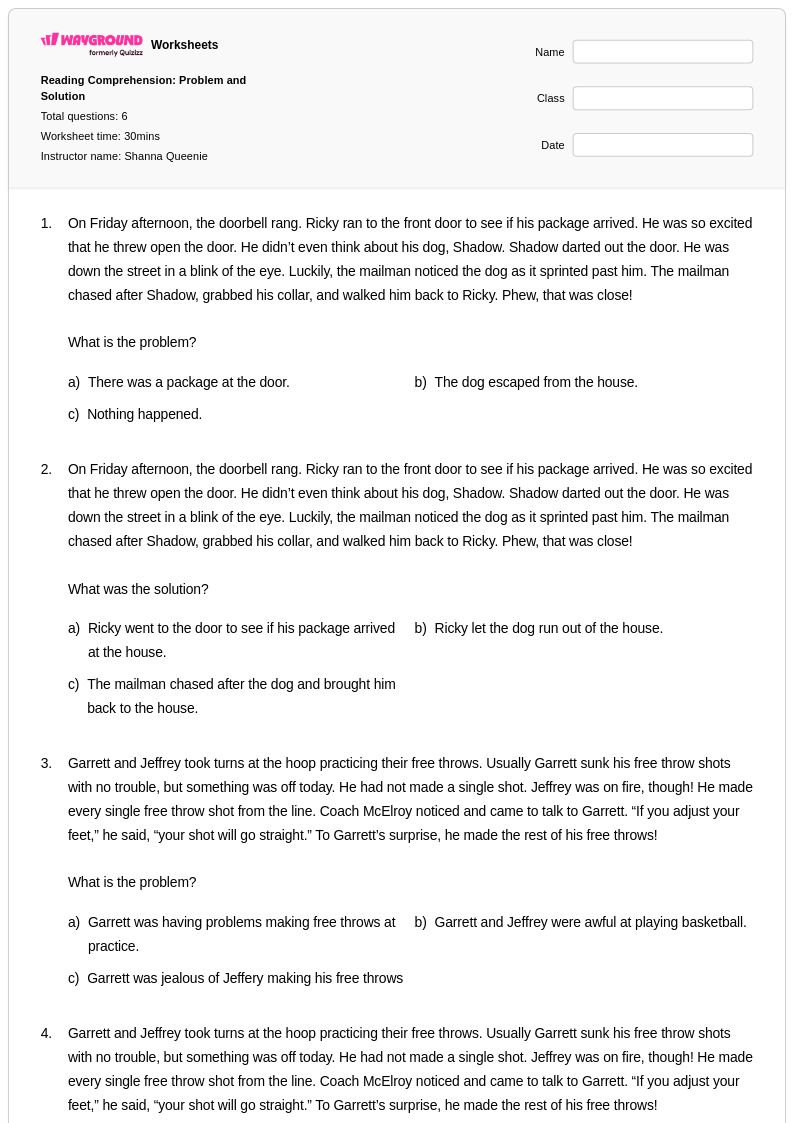
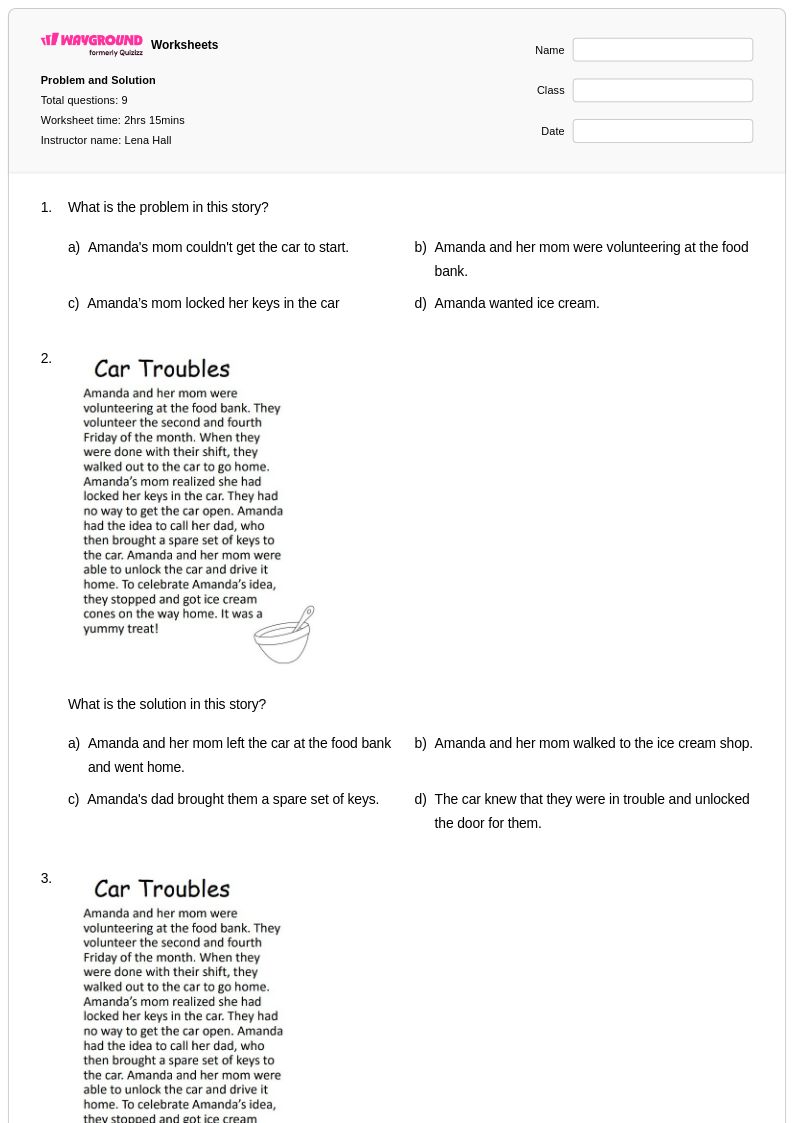
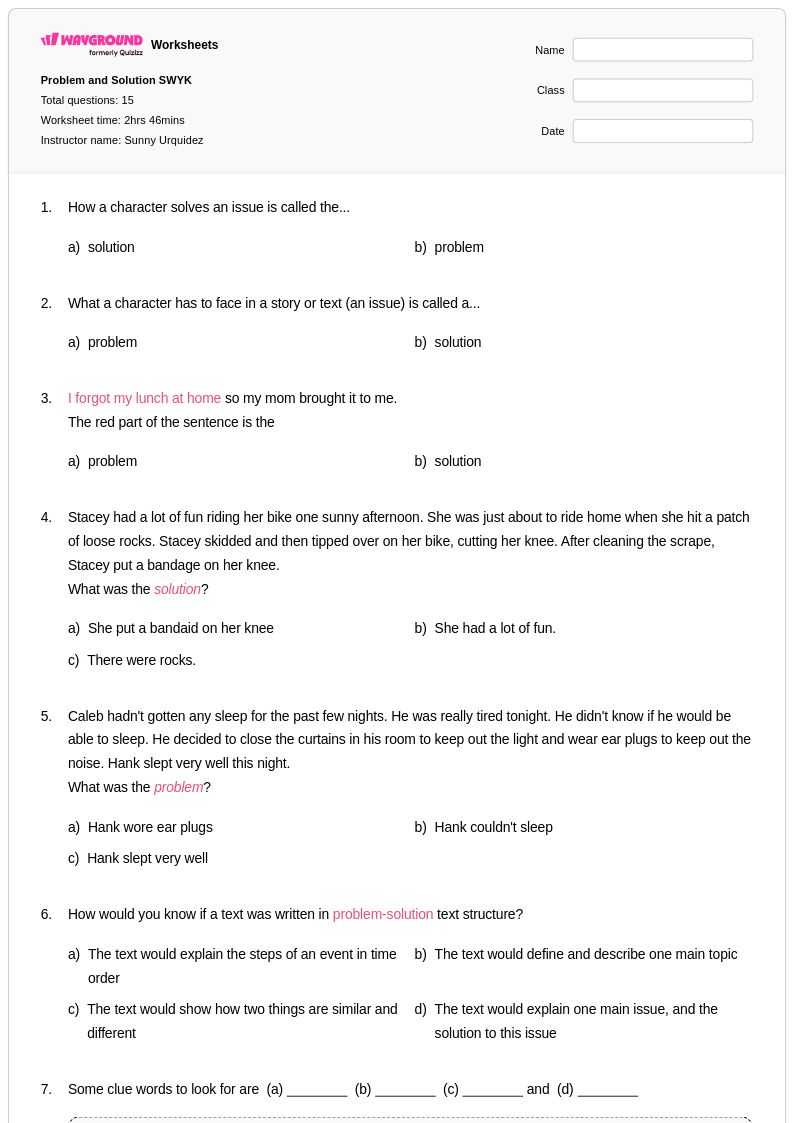
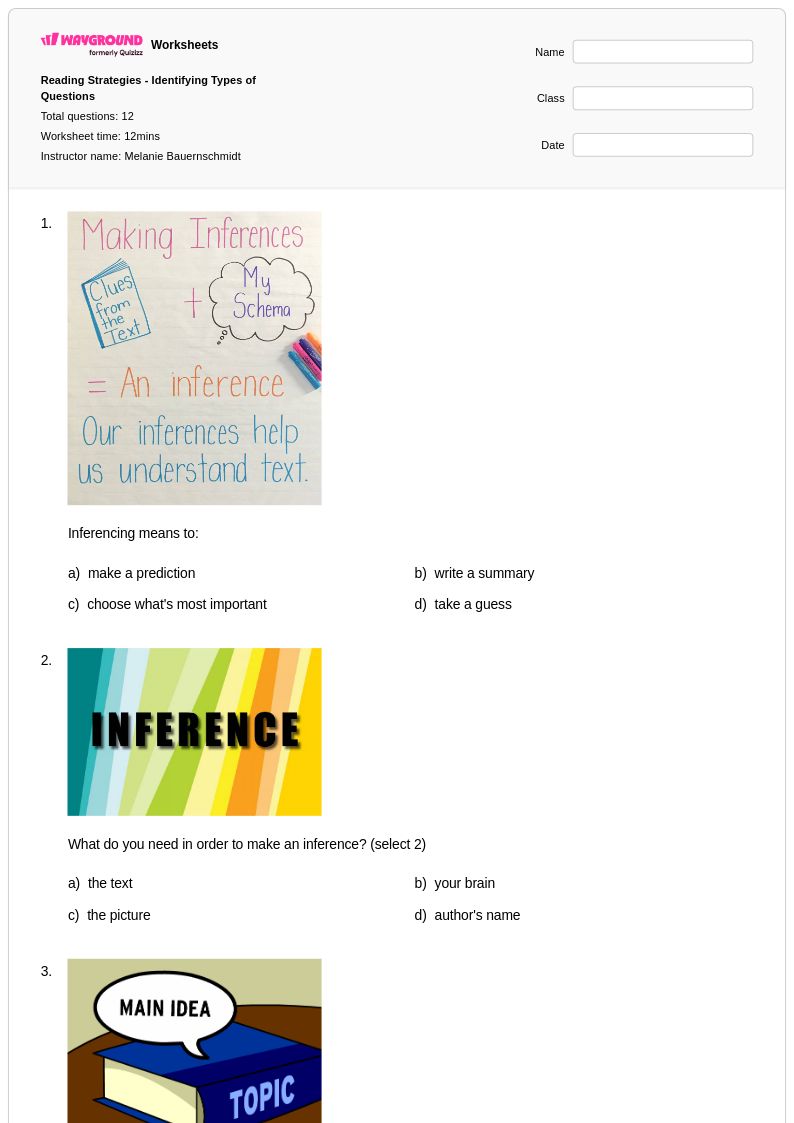
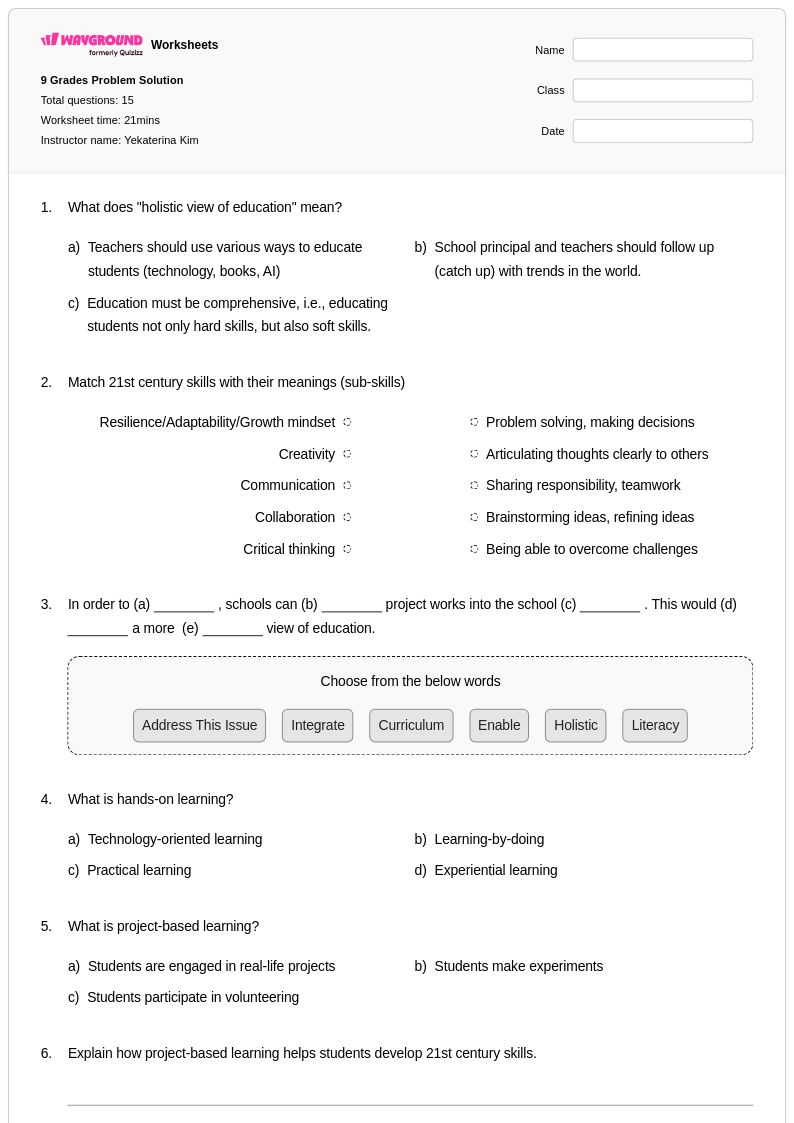
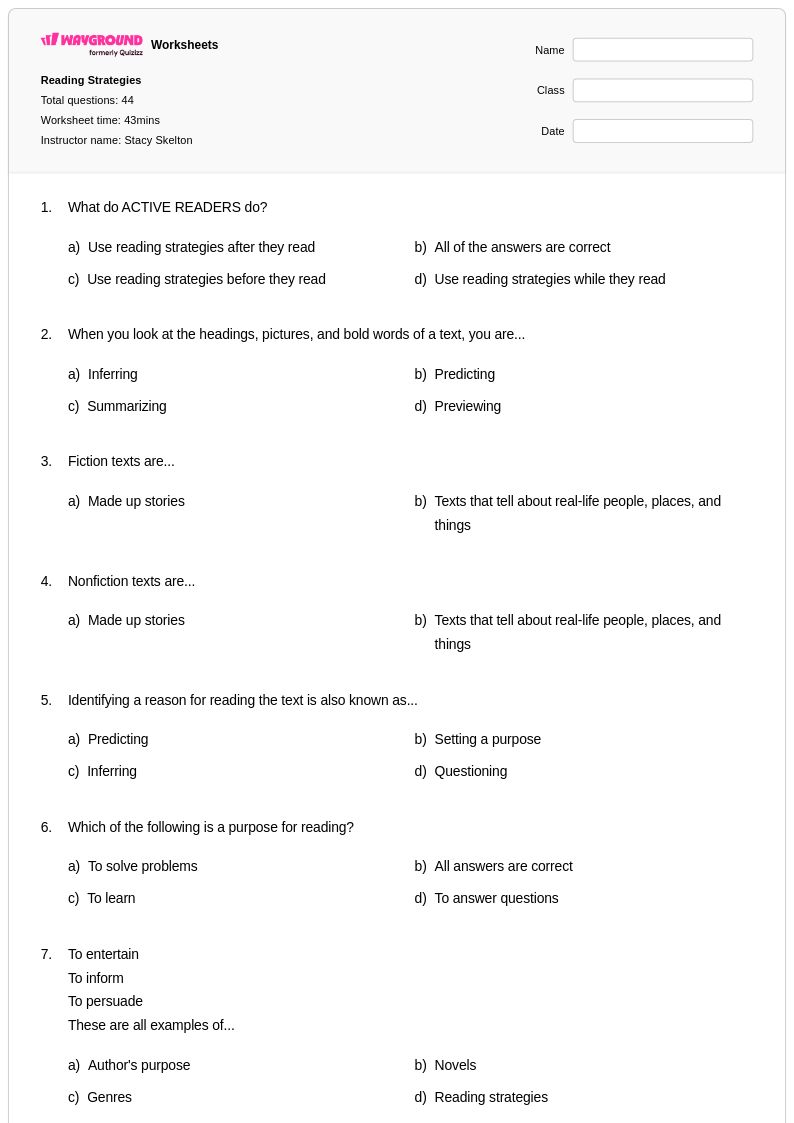
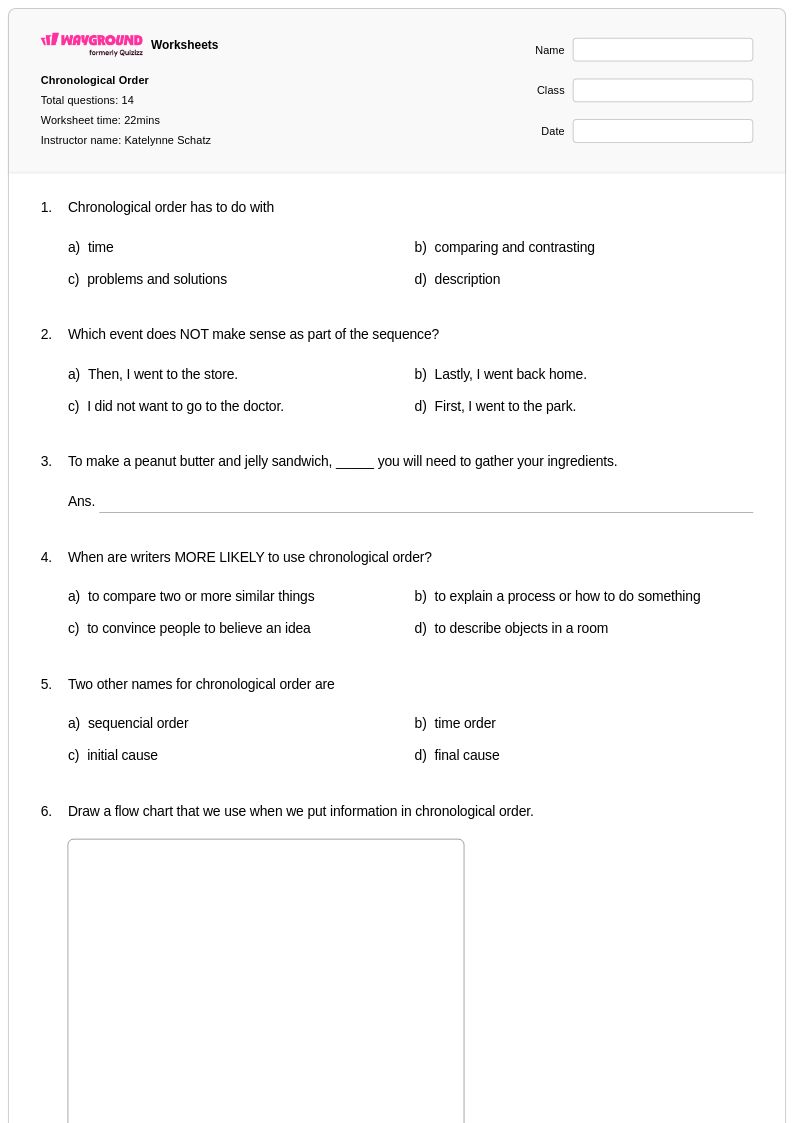
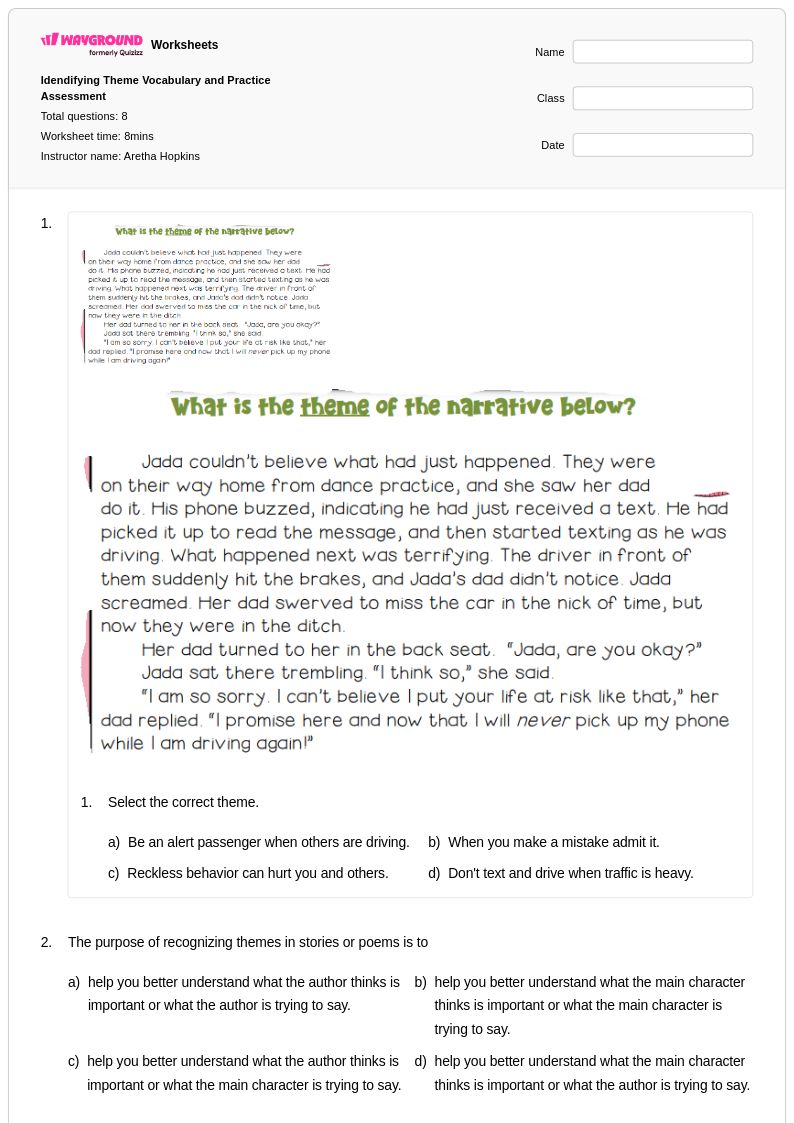
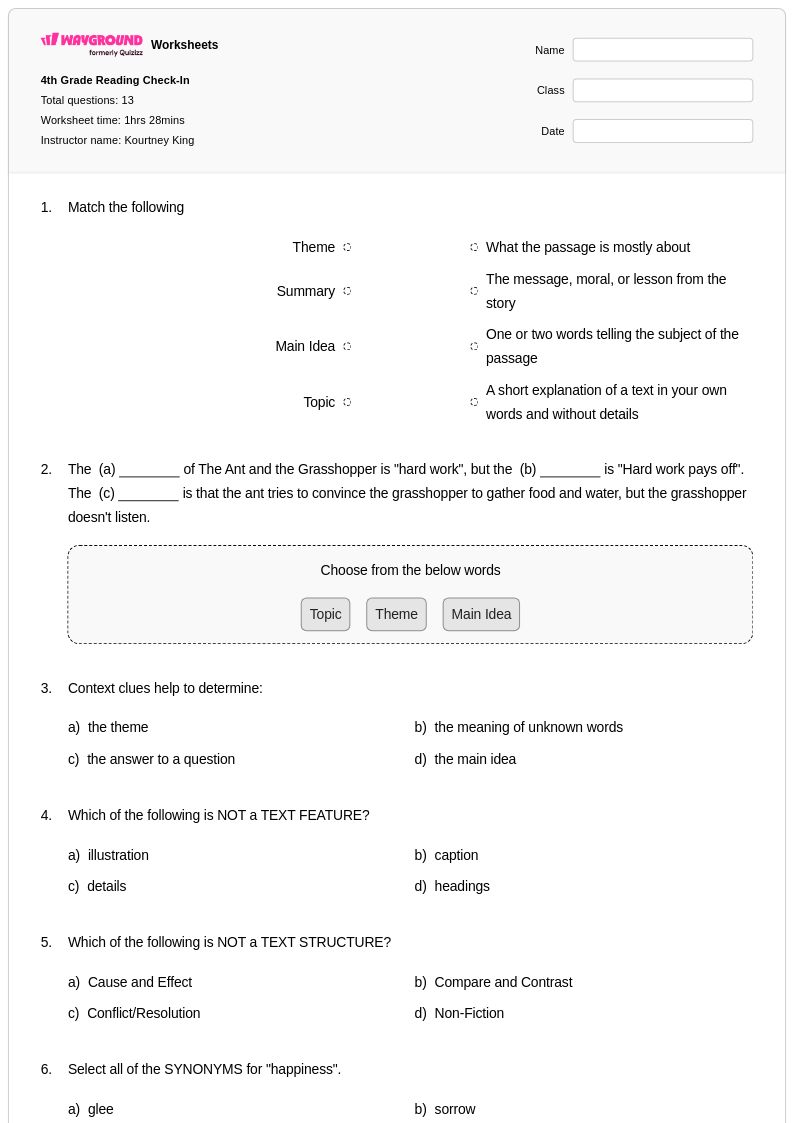
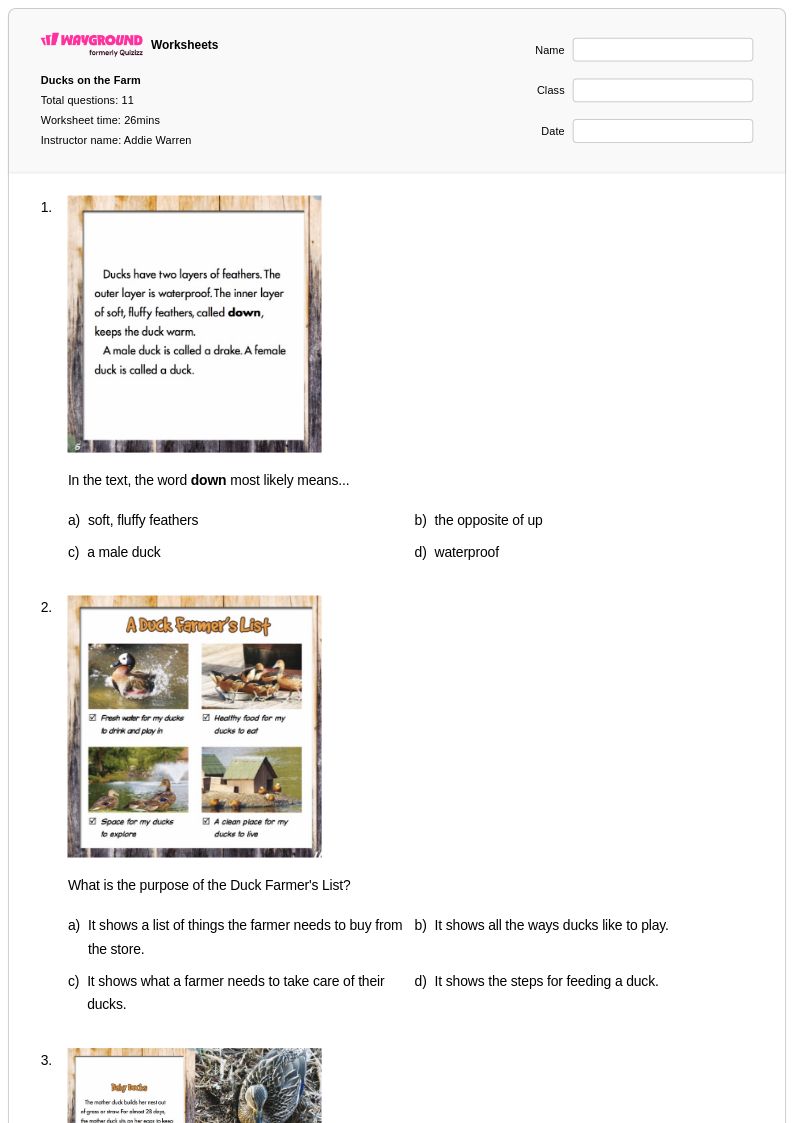
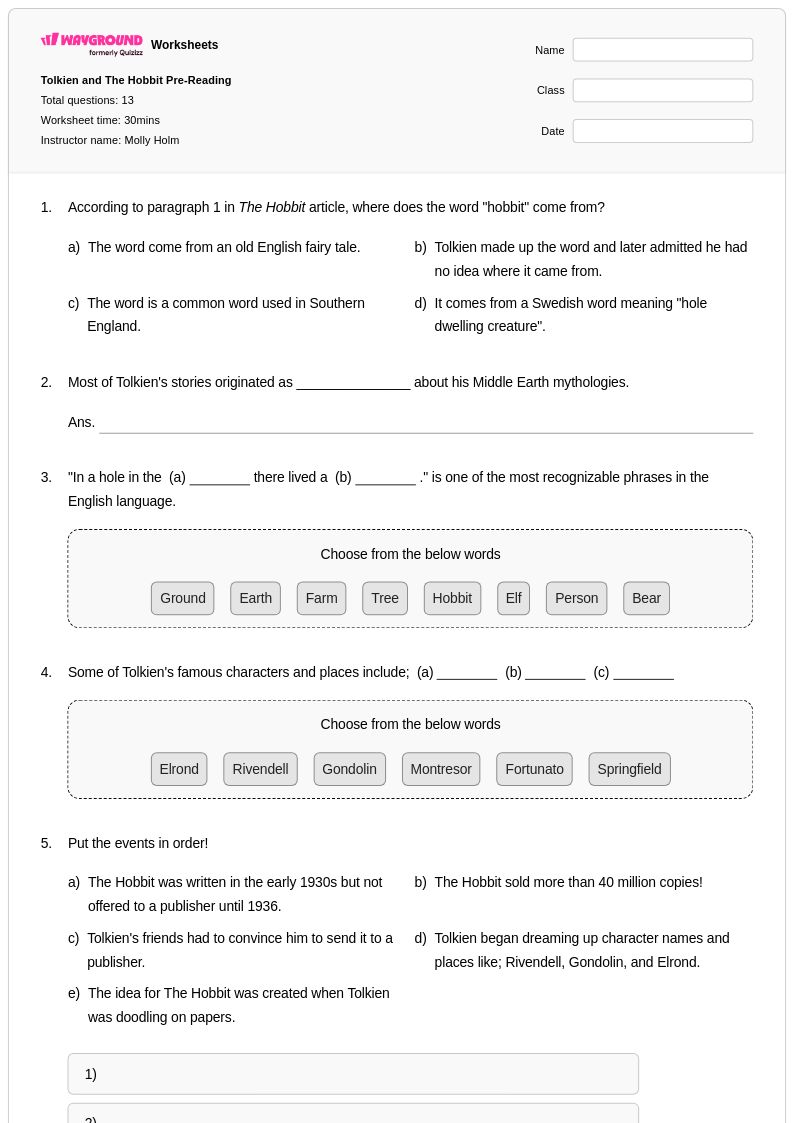
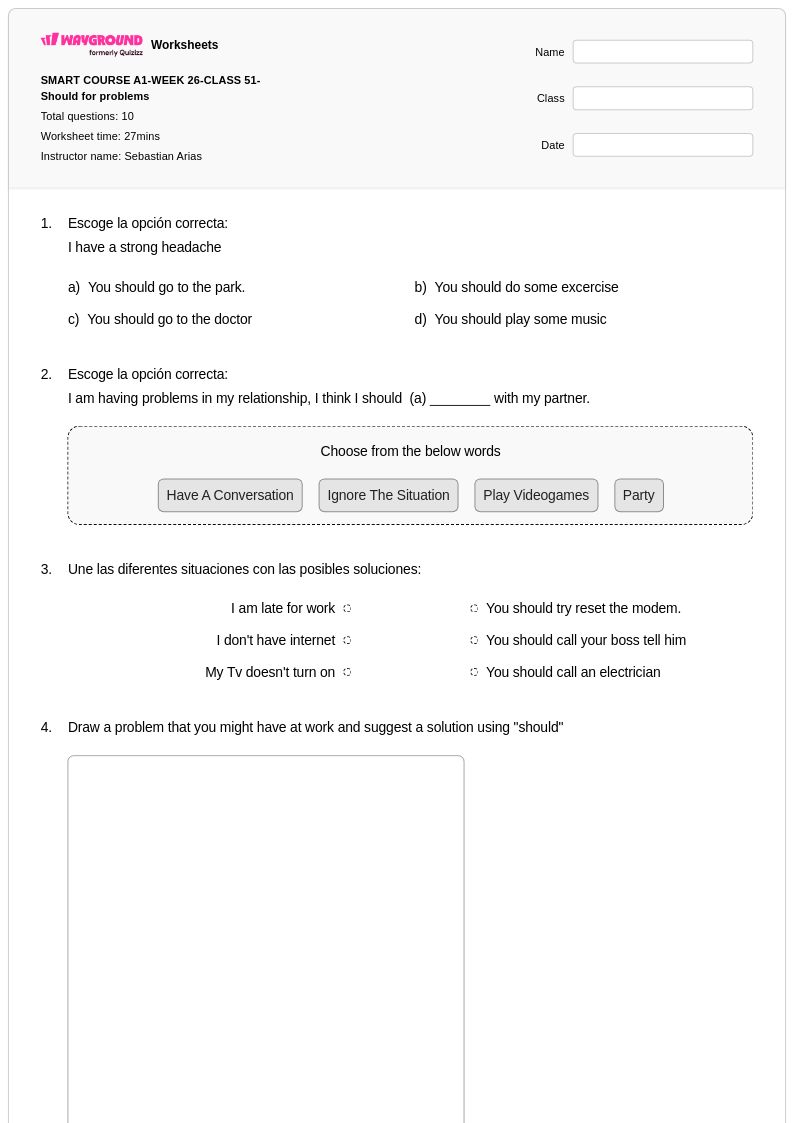
Identifying problems and solutions in reading represents a fundamental comprehension strategy that enables students to analyze text structure and develop critical thinking skills. Wayground's extensive collection of worksheets targeting this essential skill provides educators with comprehensive resources that guide students through the process of recognizing conflicts, challenges, and their corresponding resolutions within various literary and informational texts. These carefully crafted practice problems strengthen students' ability to identify explicit and implicit problem-solution relationships, analyze cause-and-effect patterns, and make logical connections between textual elements. Each worksheet includes detailed answer keys that support both independent study and classroom instruction, while the free printable format ensures accessibility for diverse learning environments and budget considerations.
Wayground's platform, formerly known as Quizizz, empowers teachers with millions of educator-created resources specifically designed to enhance problem and solution identification skills across all grade levels. The robust search and filtering capabilities allow instructors to locate worksheets that align with specific learning standards and accommodate varying skill levels within their classrooms. Teachers can customize these digital and pdf materials to support differentiated instruction, providing targeted remediation for struggling readers while offering enrichment opportunities for advanced students. The platform's flexible design streamlines lesson planning by offering both interactive digital formats and traditional printable options, enabling educators to seamlessly integrate problem-solution analysis activities into their comprehensive reading instruction programs while building students' analytical reasoning and text comprehension abilities.
FAQs
How do I teach students to identify problems and solutions in a text?
Start by explicitly modeling the strategy with a familiar text, thinking aloud as you identify the central problem and trace how characters or subjects work toward a resolution. Use sentence stems like 'The problem is...' and 'The solution is...' to scaffold student language before releasing them to independent practice. In fiction, anchor instruction to character conflict; in nonfiction, focus on how an author frames a challenge and presents evidence of resolution. Repeated exposure across both text types builds transferable comprehension skill.
What exercises help students practice identifying problems and solutions in reading?
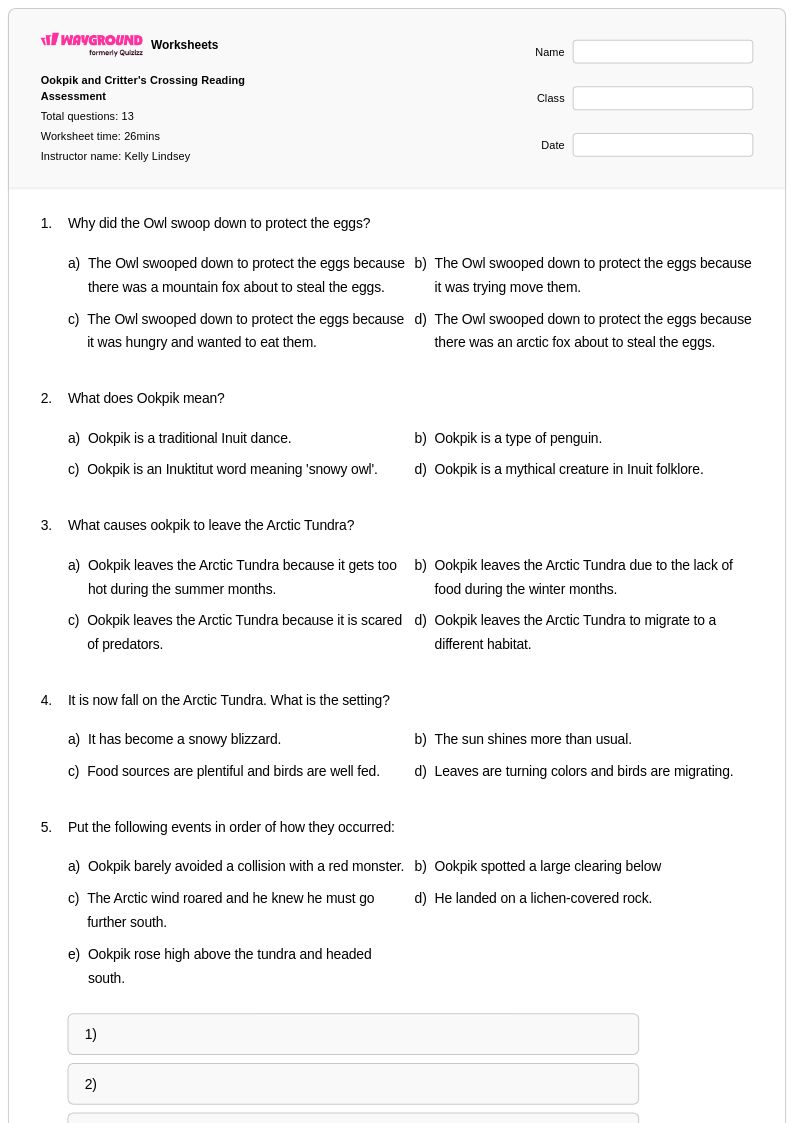
Graphic organizers that require students to record the problem, attempted solutions, and final resolution are among the most effective practice formats for this skill. Worksheets that include short fiction passages alongside nonfiction excerpts give students practice recognizing how problem-solution structure appears differently across text types. Sequencing tasks, where students order events that lead from a problem to its resolution, also reinforce logical text comprehension. Repeated guided practice with answer key feedback helps students self-correct and internalize the strategy.
What mistakes do students commonly make when identifying problems and solutions in texts?
A frequent error is confusing minor obstacles or events with the central problem of a text, leading students to identify a surface-level detail rather than the core conflict or challenge. Students also commonly list only one solution when a text presents multiple attempted resolutions before a final one is reached. In nonfiction, students often struggle to recognize implicit problem-solution structure when the author does not use explicit signal words like 'problem' or 'solution.' Instruction should directly address these signal words and scaffold analysis of texts where the structure is embedded rather than labeled.
How is identifying problems and solutions different in fiction versus nonfiction?
In fiction, the problem is typically tied to character conflict, whether internal (a character's fear or decision) or external (a conflict with another character or environment), and the solution involves character action or change. In nonfiction, the problem-solution structure is often used by authors to frame a real-world issue and present evidence-based or expert-recommended responses. Students need direct instruction in both structures because signal language, text organization, and the nature of the resolution differ significantly between the two. Teaching both text types explicitly prepares students for standardized reading assessments and analytical writing tasks.
How can I use problem and solution worksheets to support struggling readers?
For struggling readers, use shorter, high-interest passages with explicit problem-solution signal words so students can focus on the comprehension strategy rather than decoding difficulty. Graphic organizers with sentence frames reduce cognitive load while still requiring students to engage analytically with the text. On Wayground, teachers can enable accommodations such as Read Aloud so students hear the passage read to them, and Reduced Answer Choices to limit the number of options for students who need additional support. These settings can be applied to individual students without affecting the experience of the rest of the class.
How do I use Wayground's identifying problems and solutions worksheets in my classroom?
Wayground's worksheets are available as printable PDFs for traditional classroom use and in digital formats for technology-integrated instruction, so teachers can assign them as independent seat work, homework, or interactive online practice depending on the learning environment. Each worksheet includes a detailed answer key, making them suitable for independent student work, small group review, or whole-class discussion. Teachers can also host worksheets as a quiz directly on Wayground, allowing for real-time tracking of student responses. The platform's filtering tools help teachers quickly locate worksheets aligned to specific skill levels or text types within this topic.