Free Printable Indefinite Pronouns Worksheets for Class 5
Strengthen Class 5 students' grasp of indefinite pronouns with Wayground's comprehensive collection of free worksheets, featuring engaging practice problems, printable PDFs, and complete answer keys to master this essential grammar concept.
Explore printable Indefinite Pronouns worksheets for Class 5
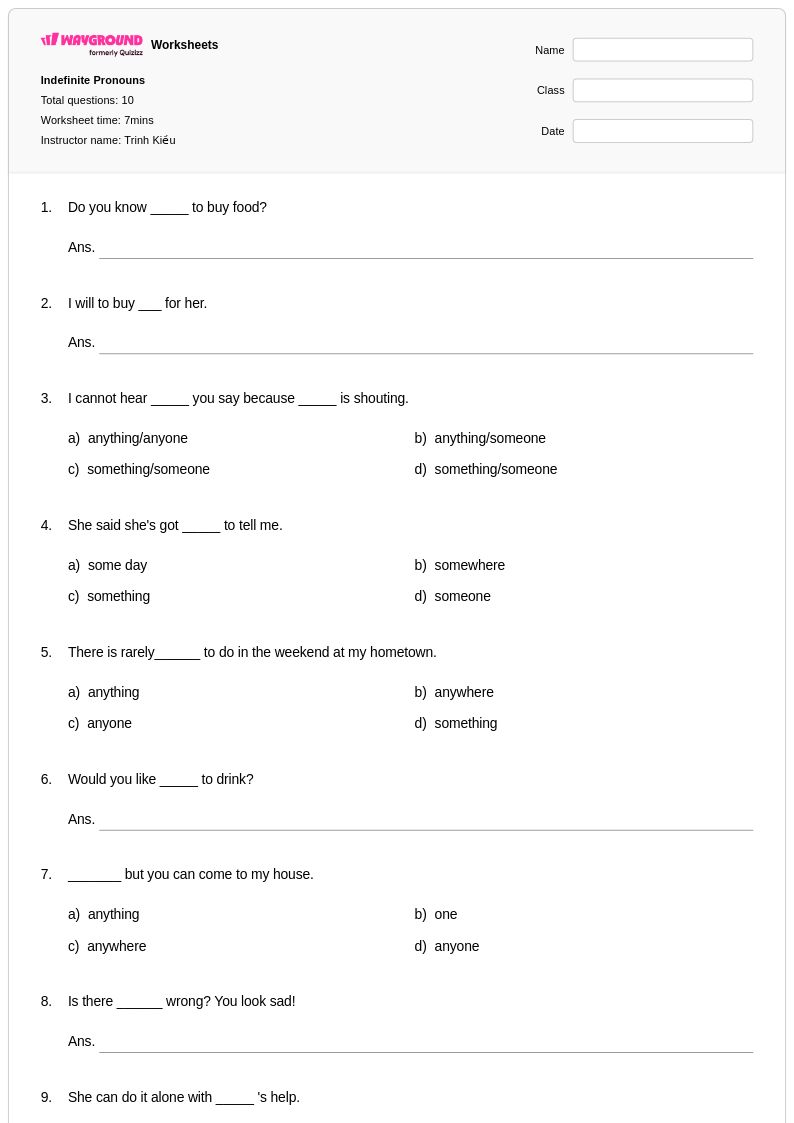
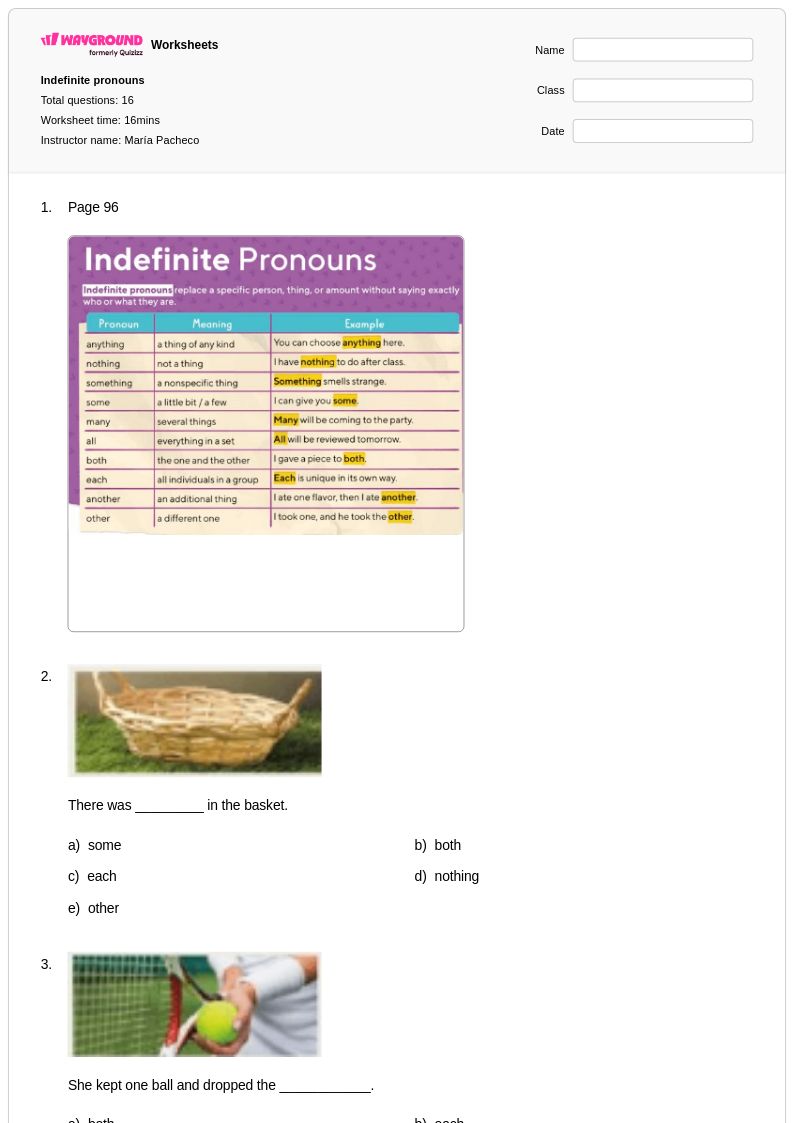
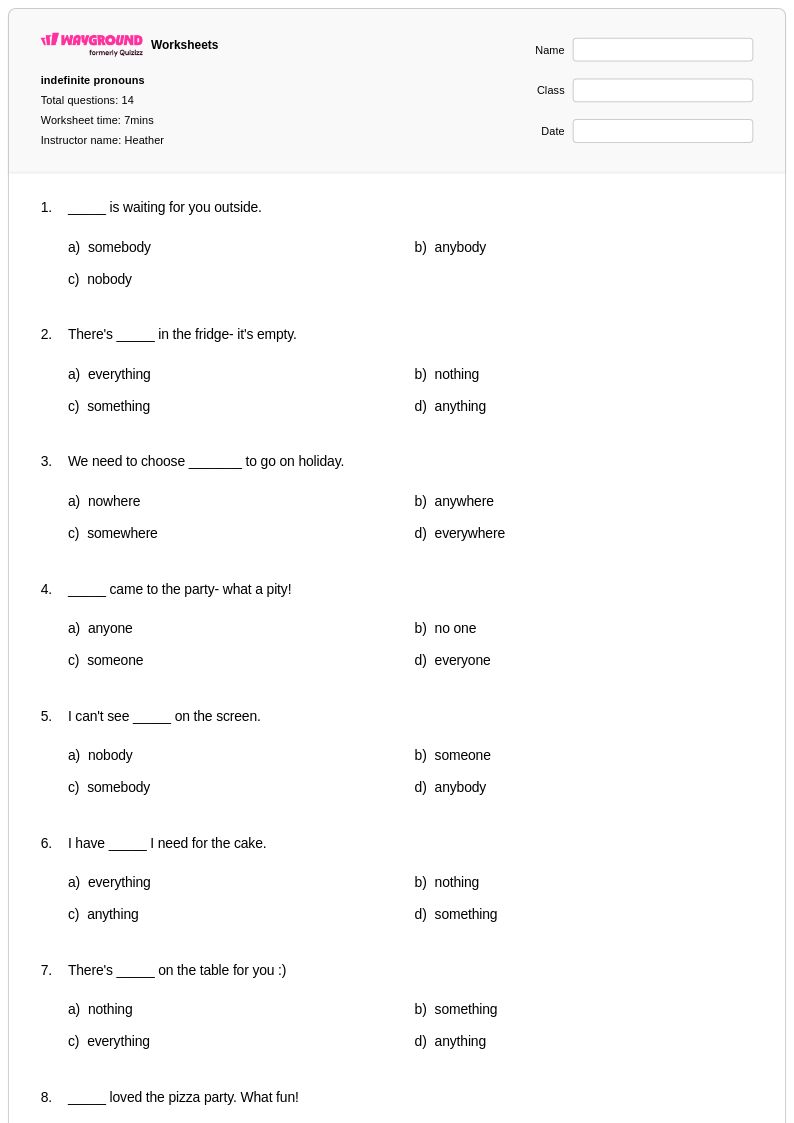
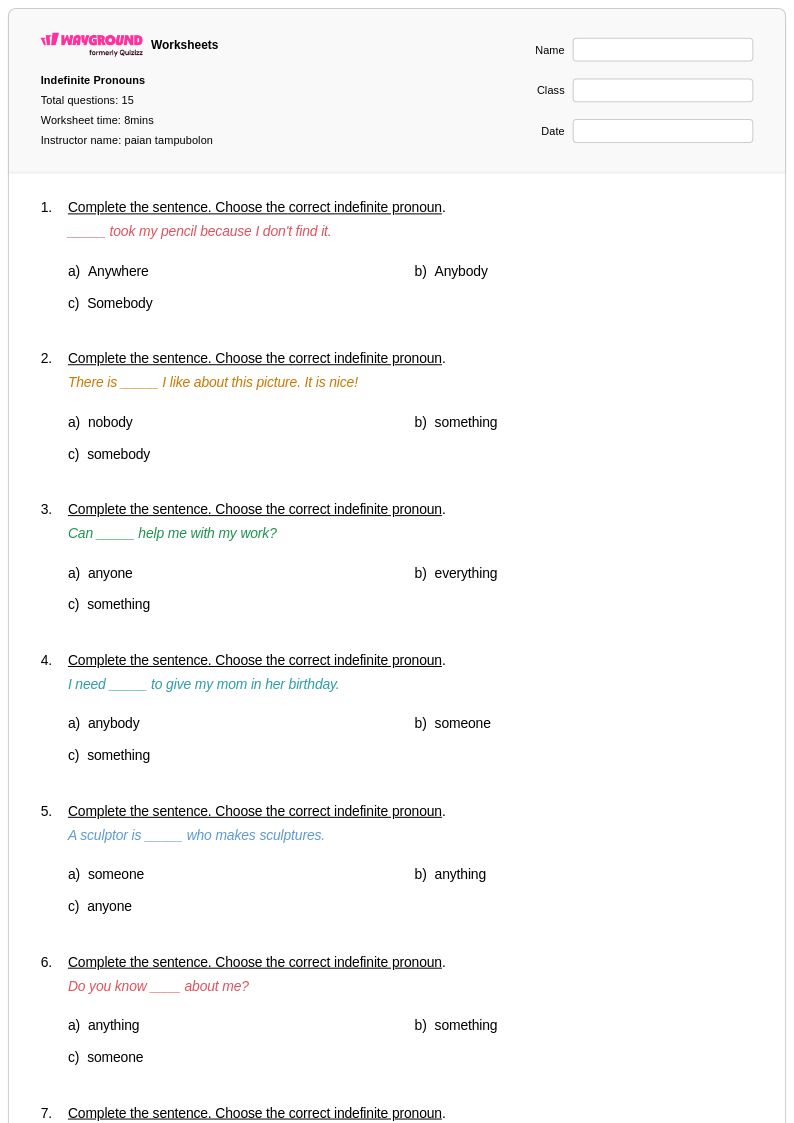
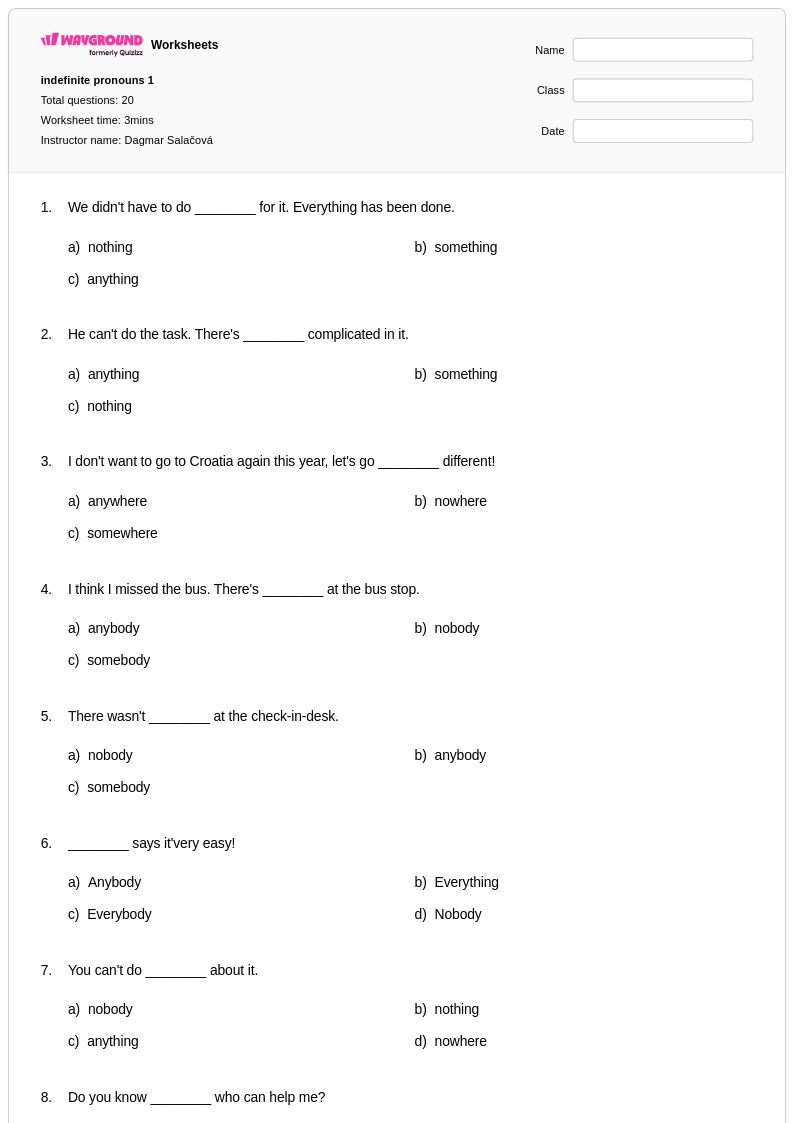
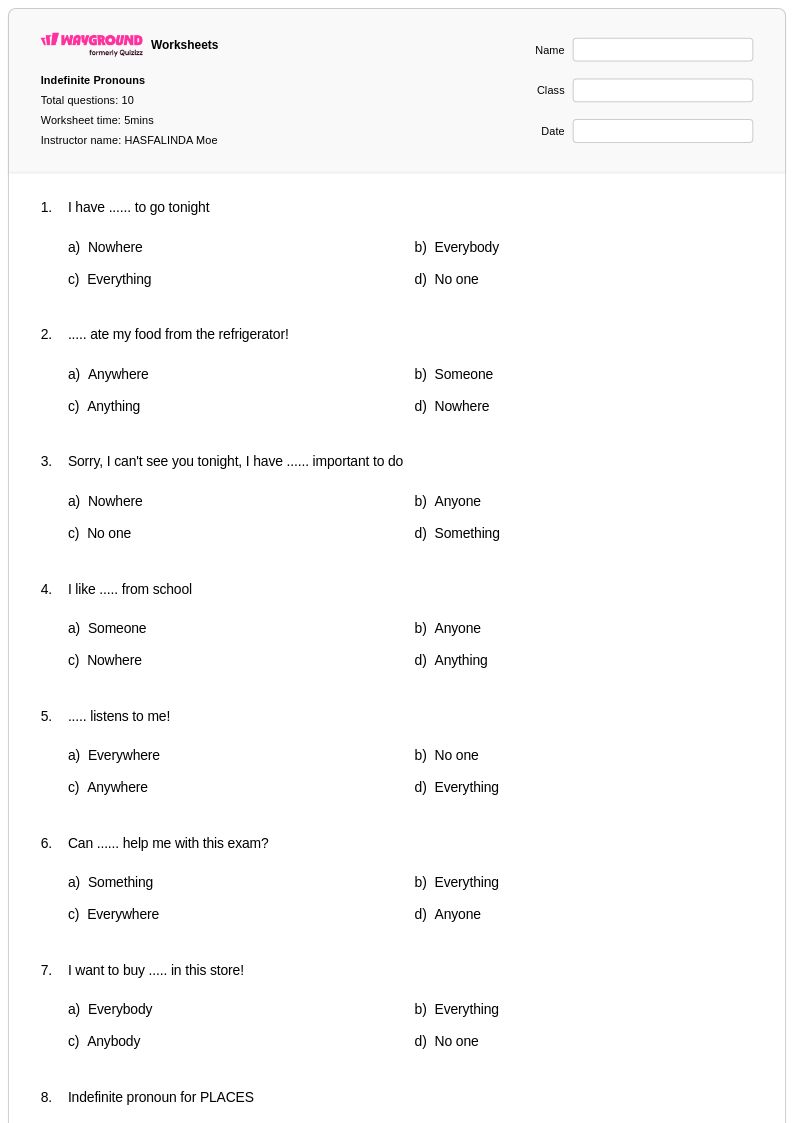
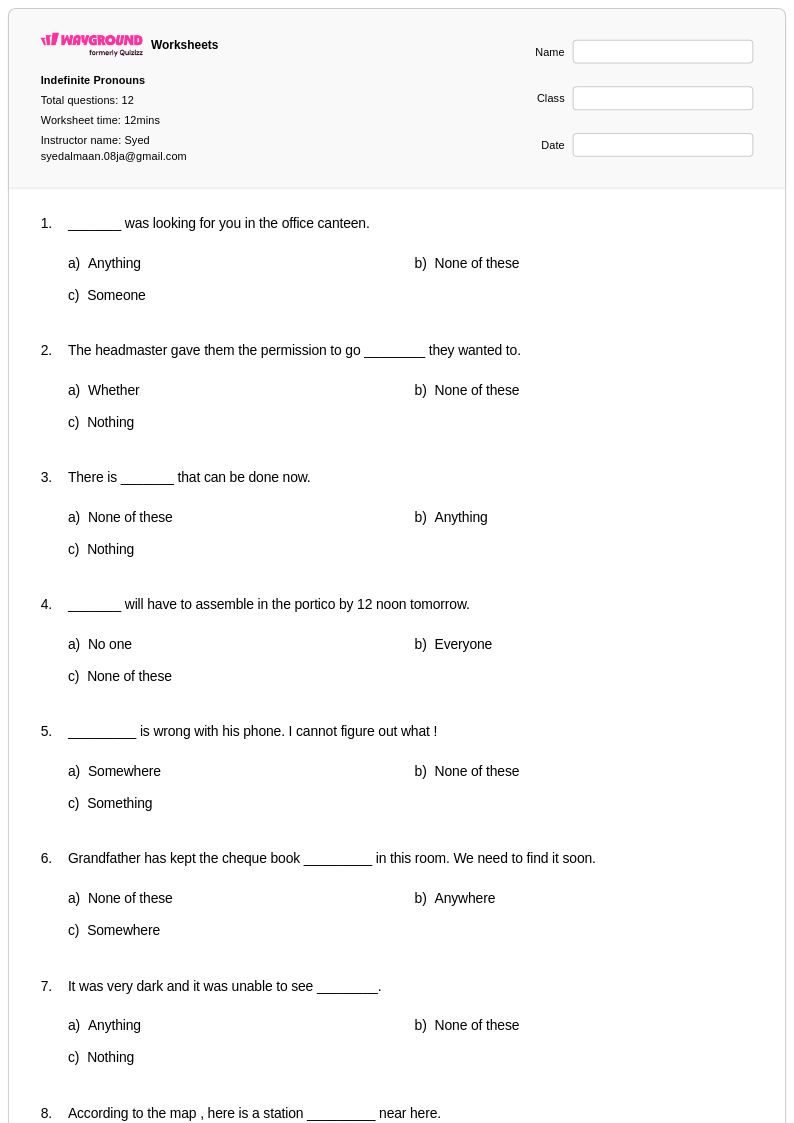
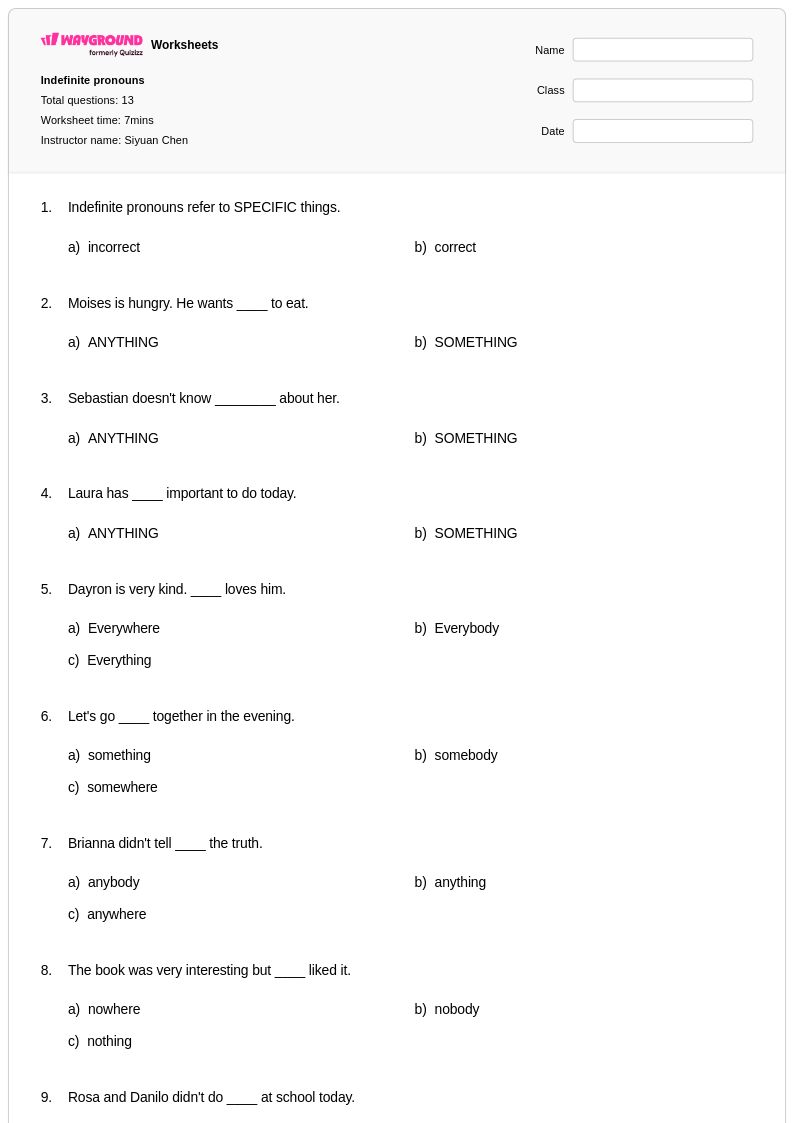
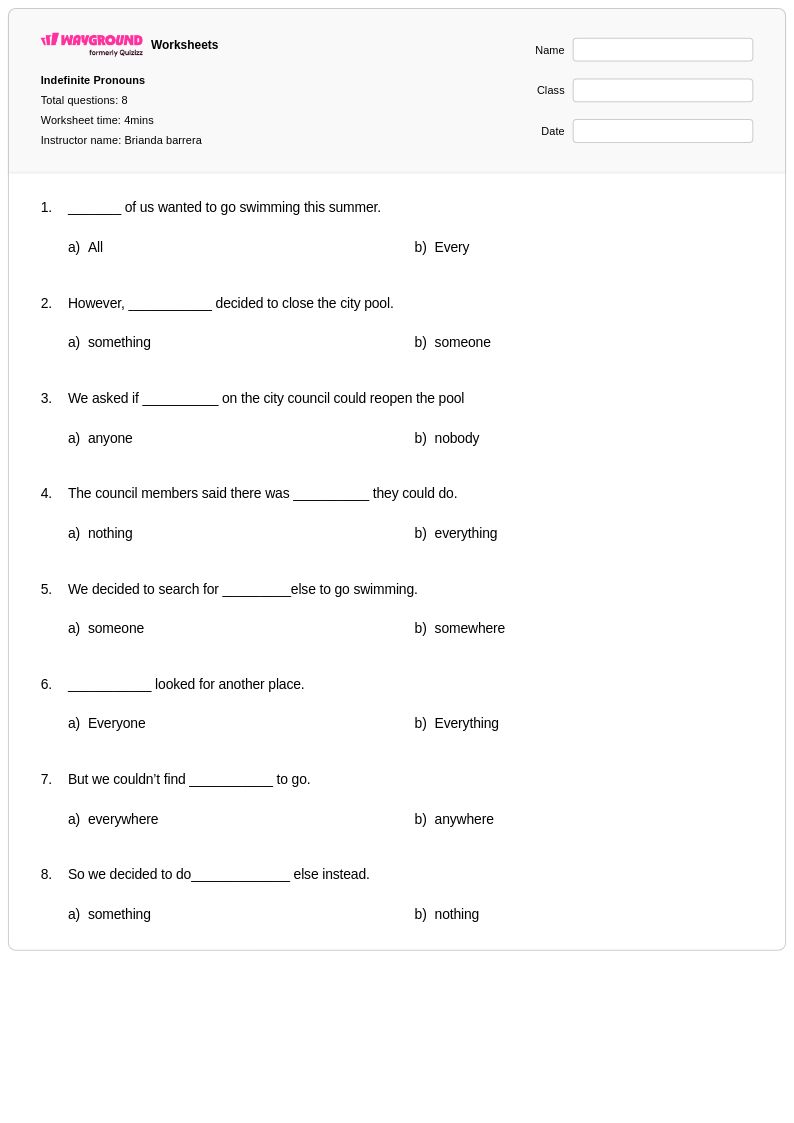
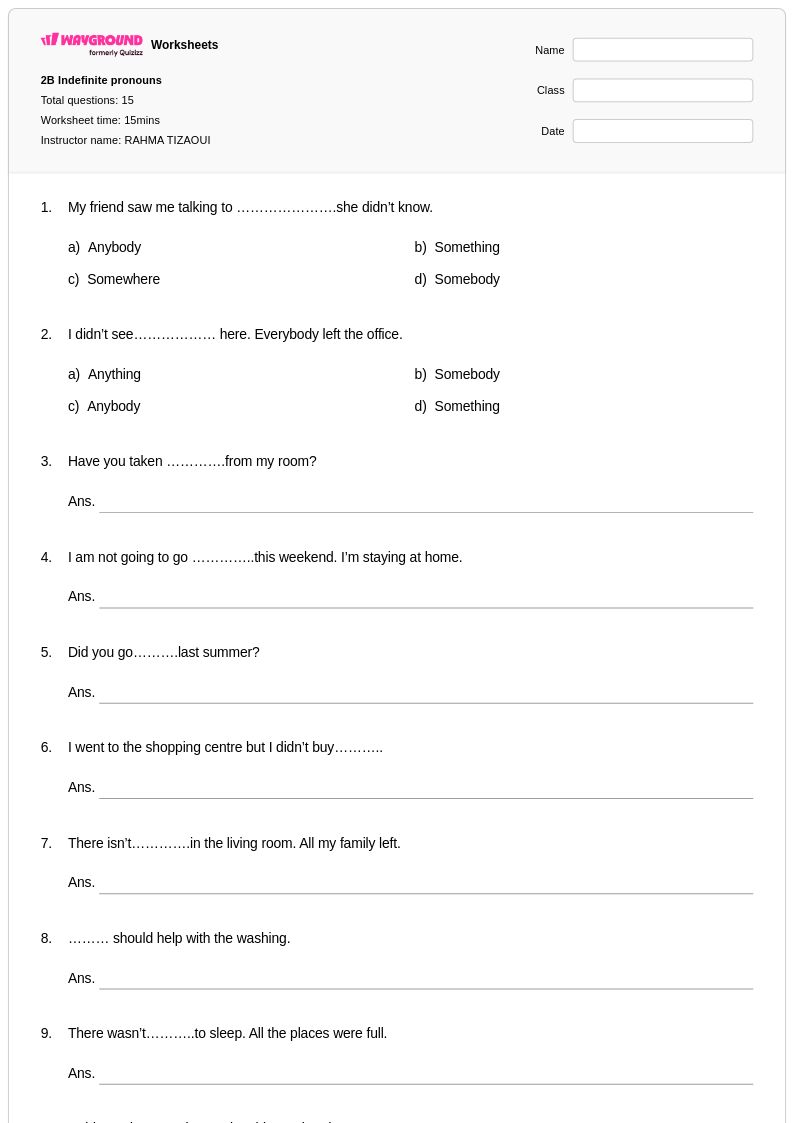
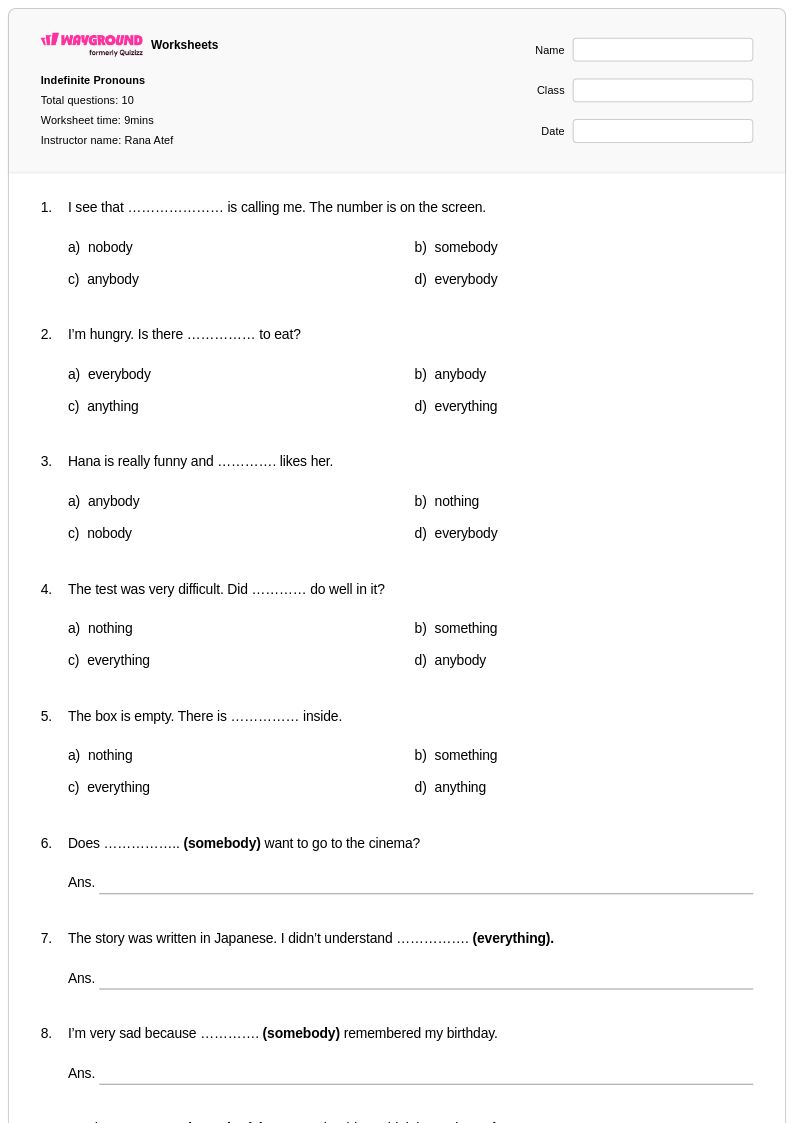
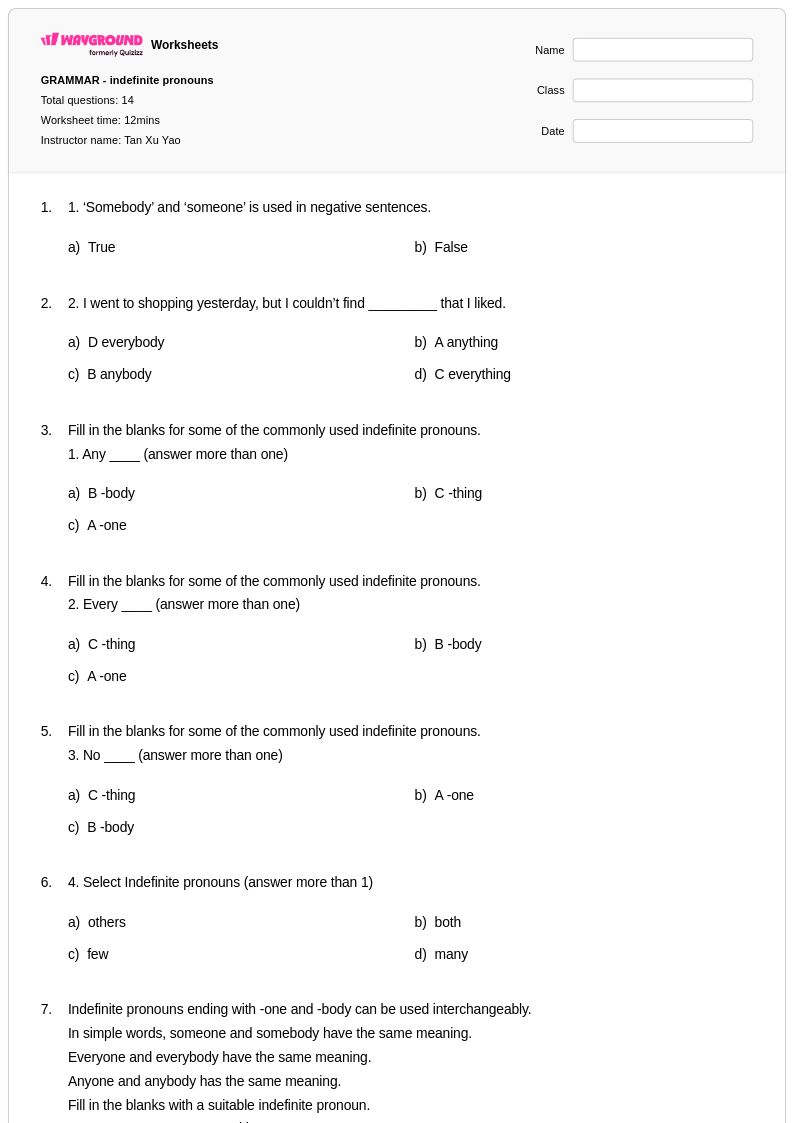
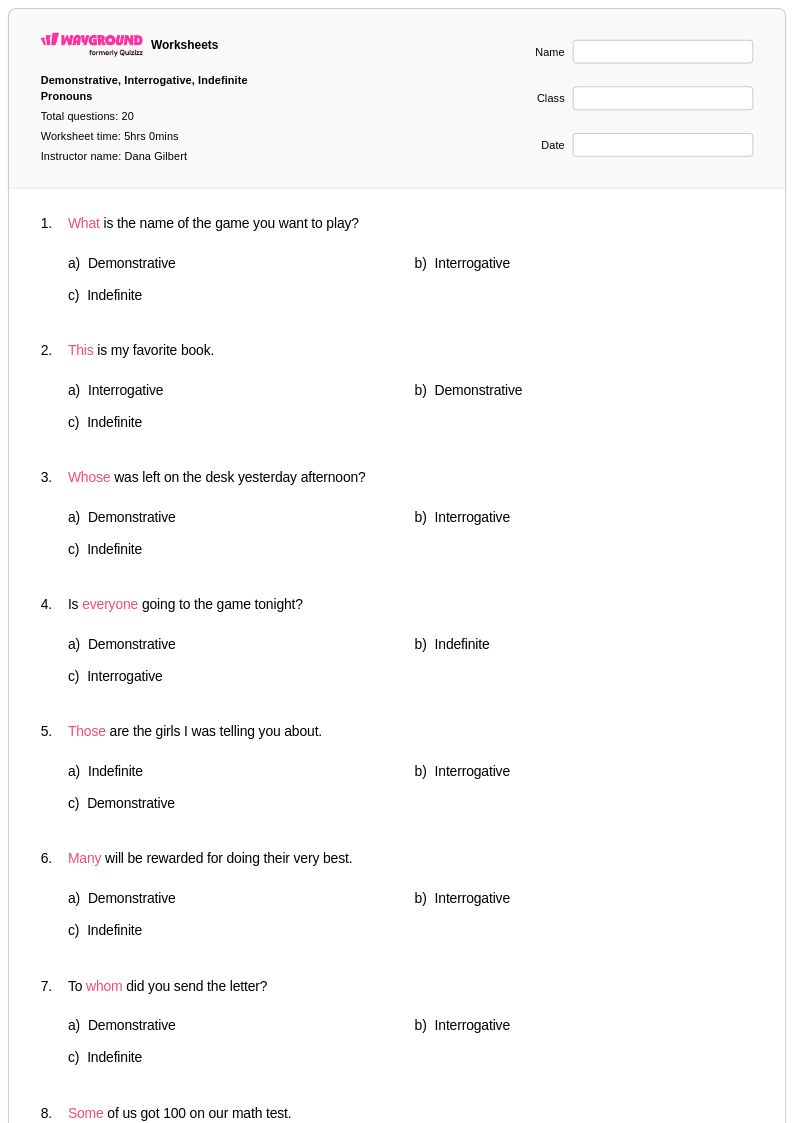
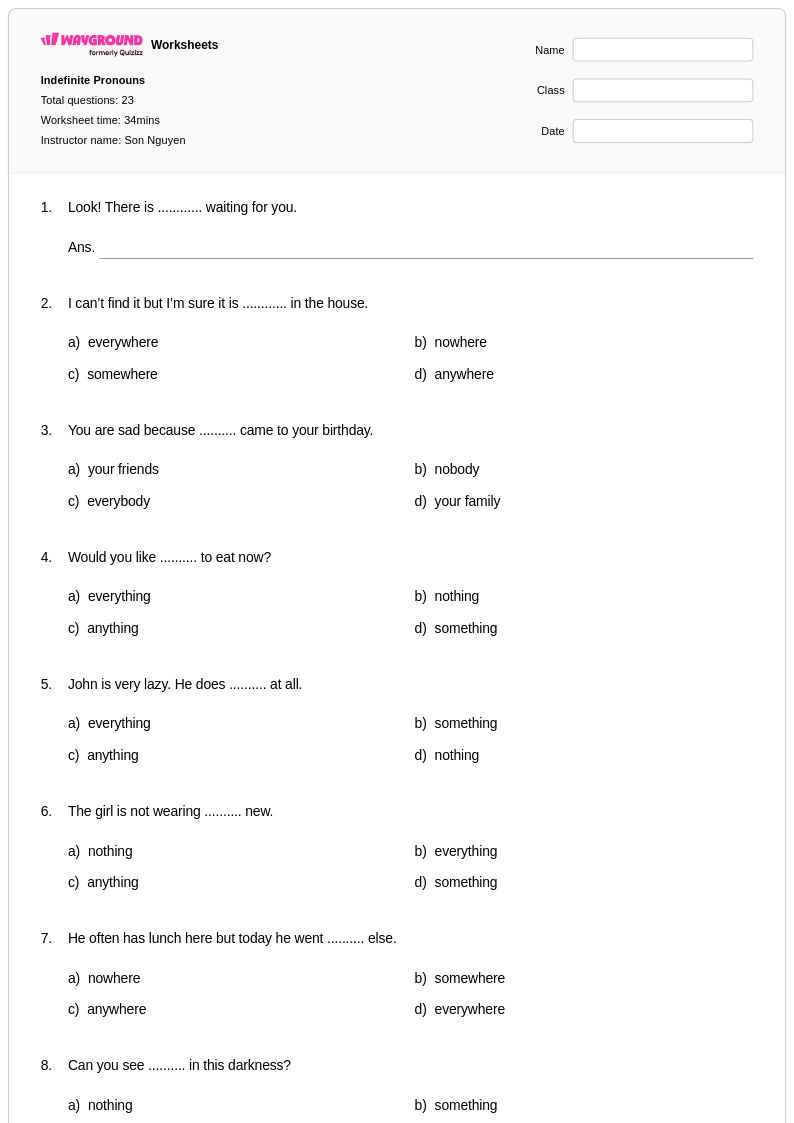
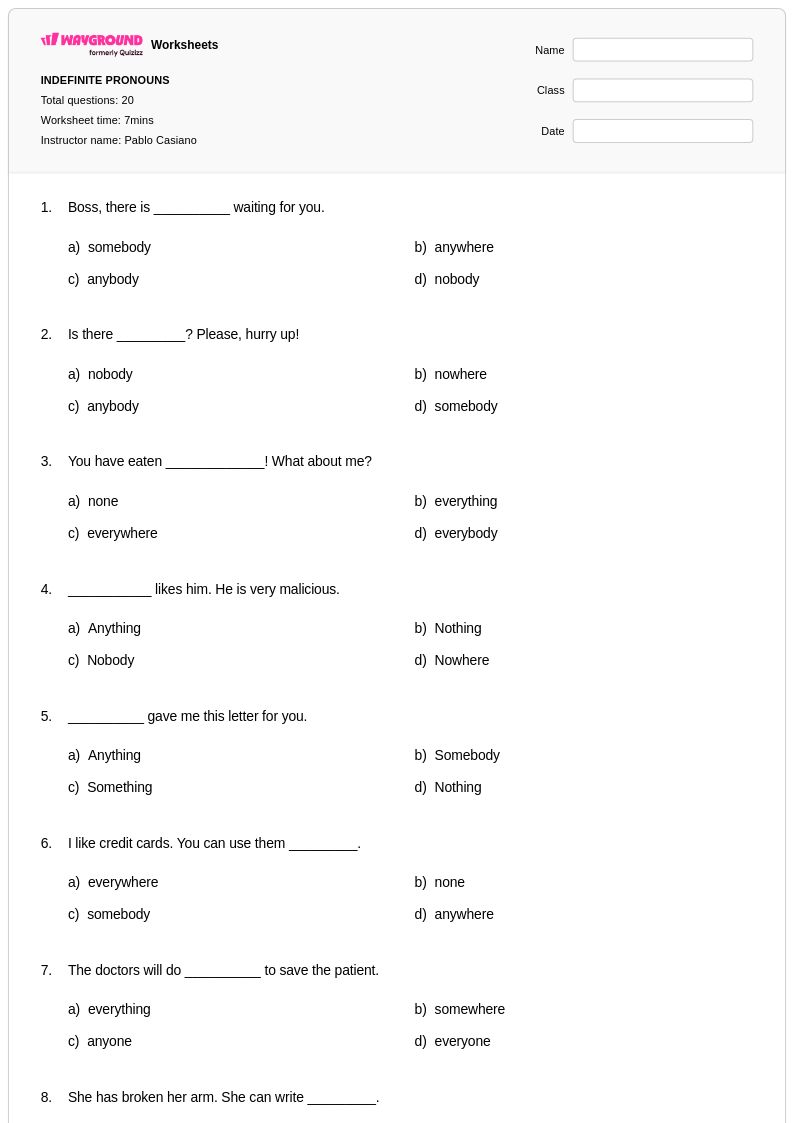
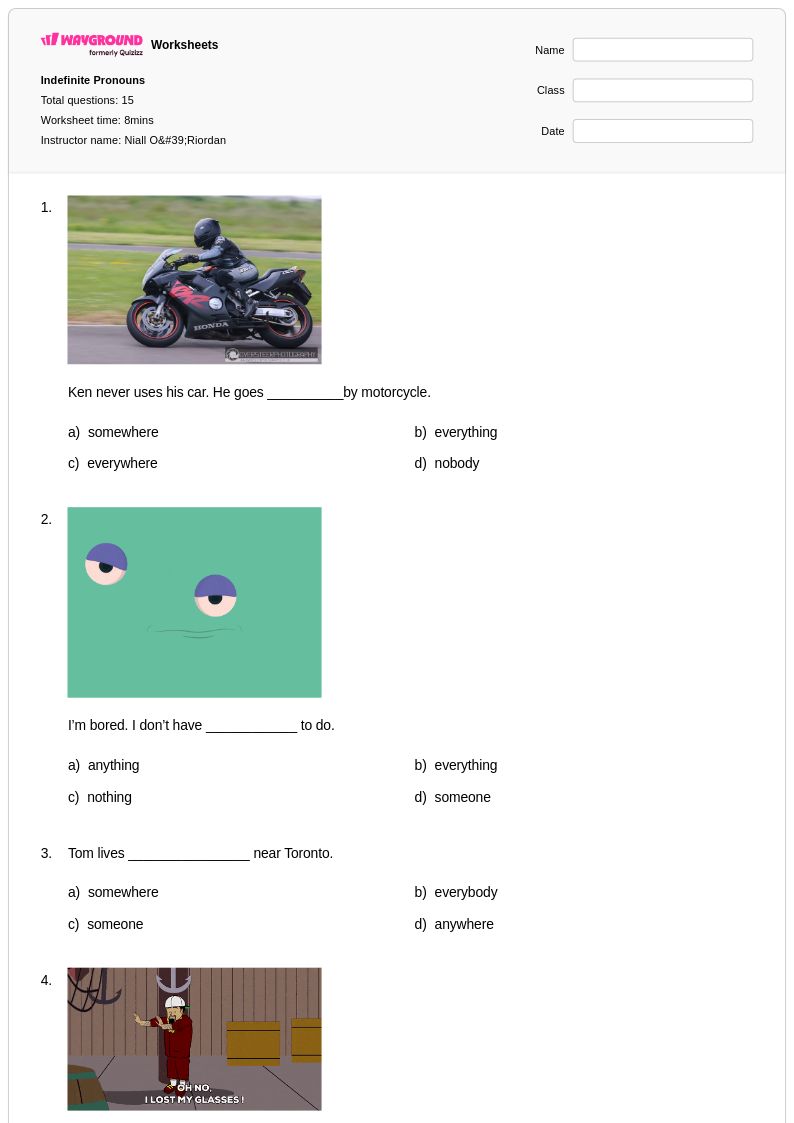
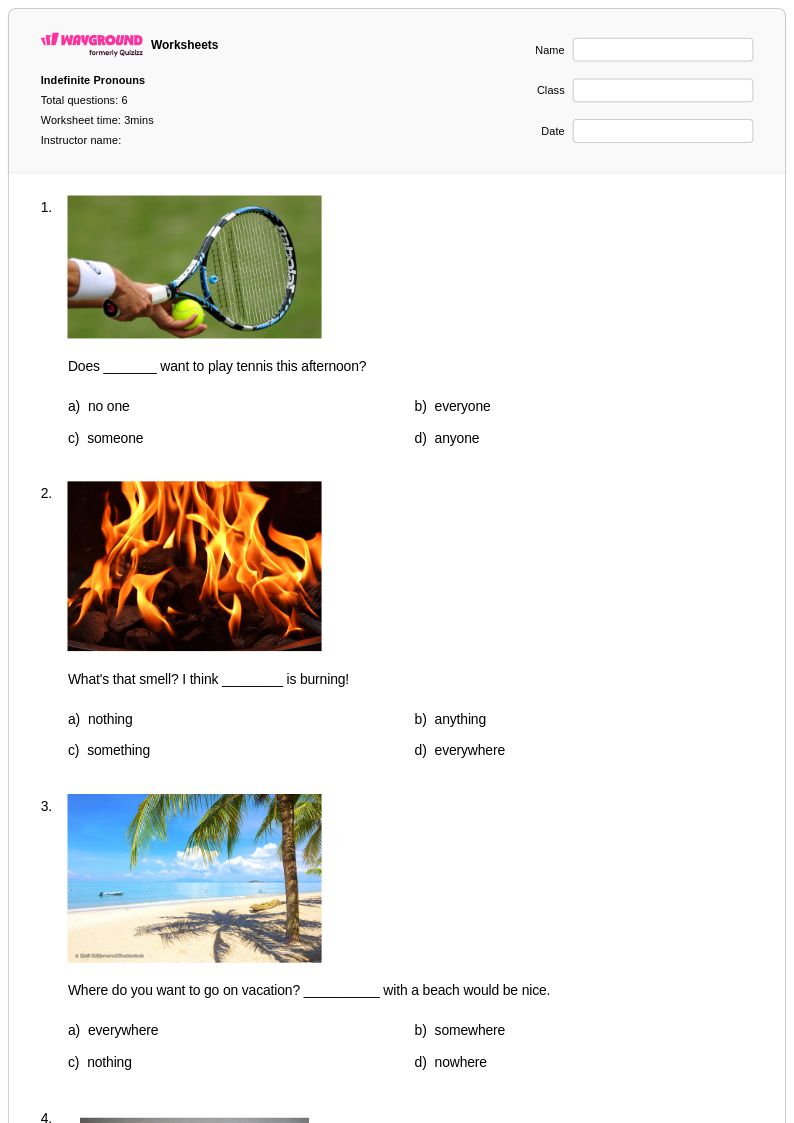
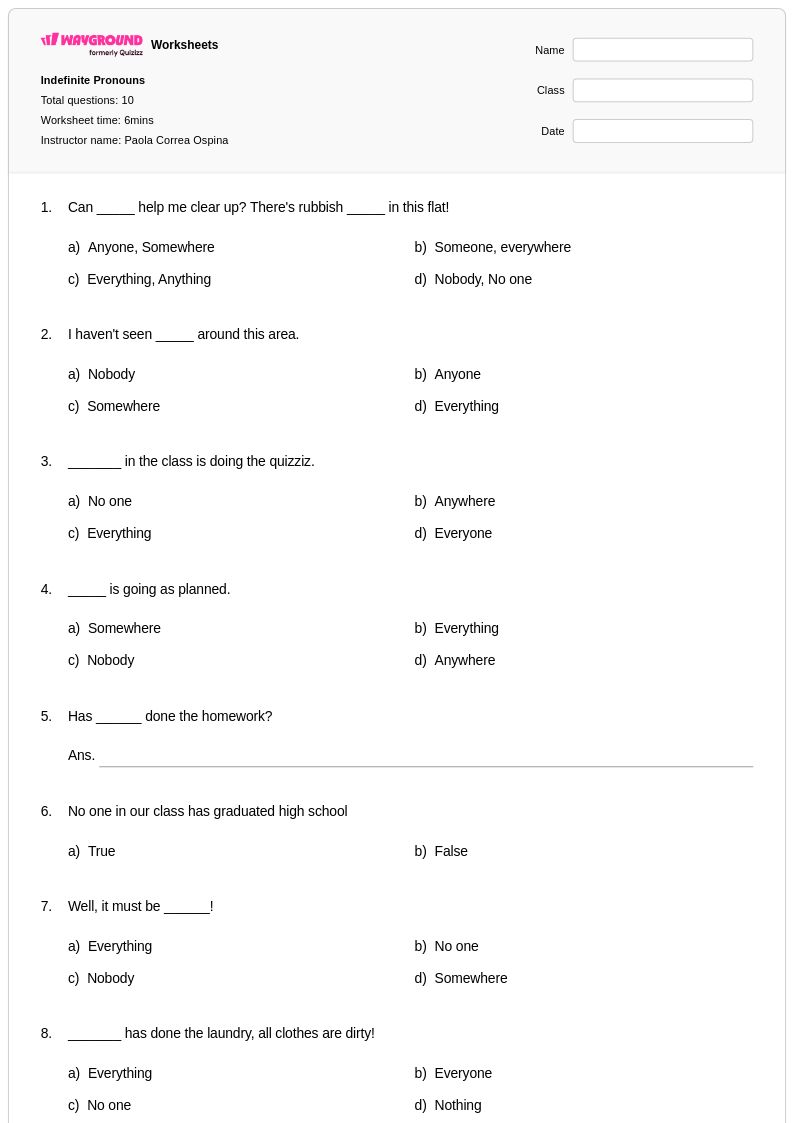
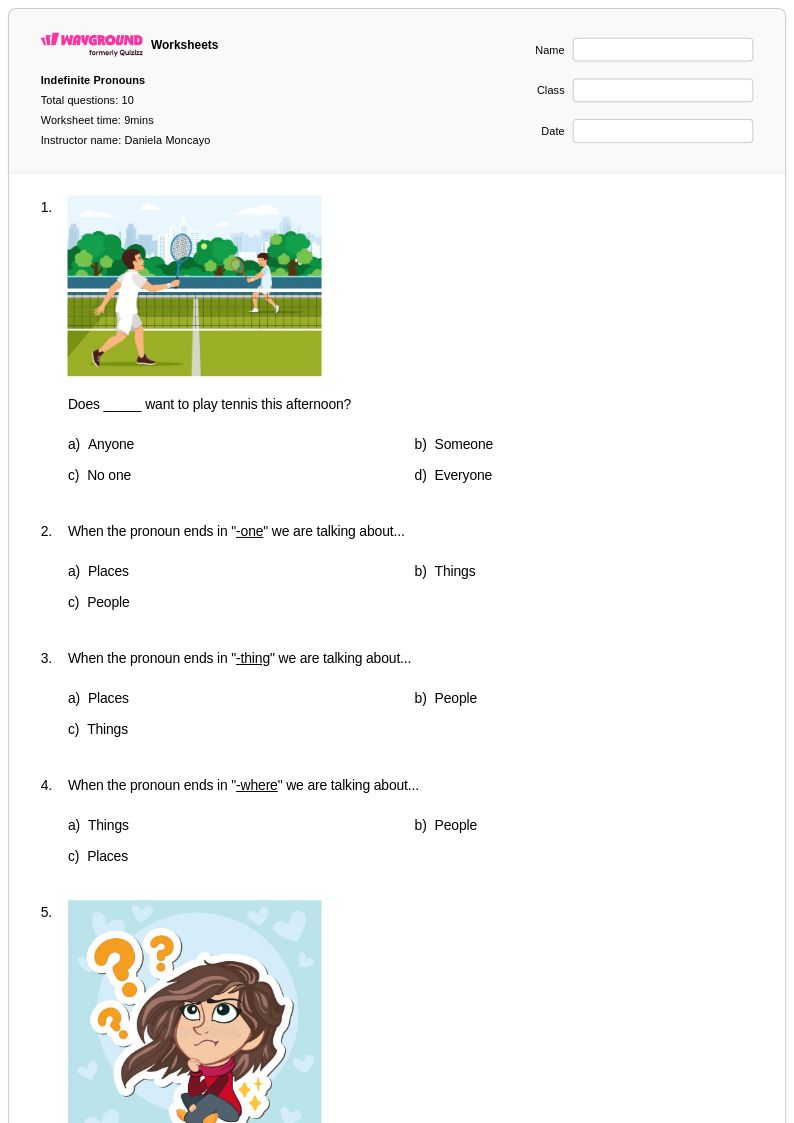
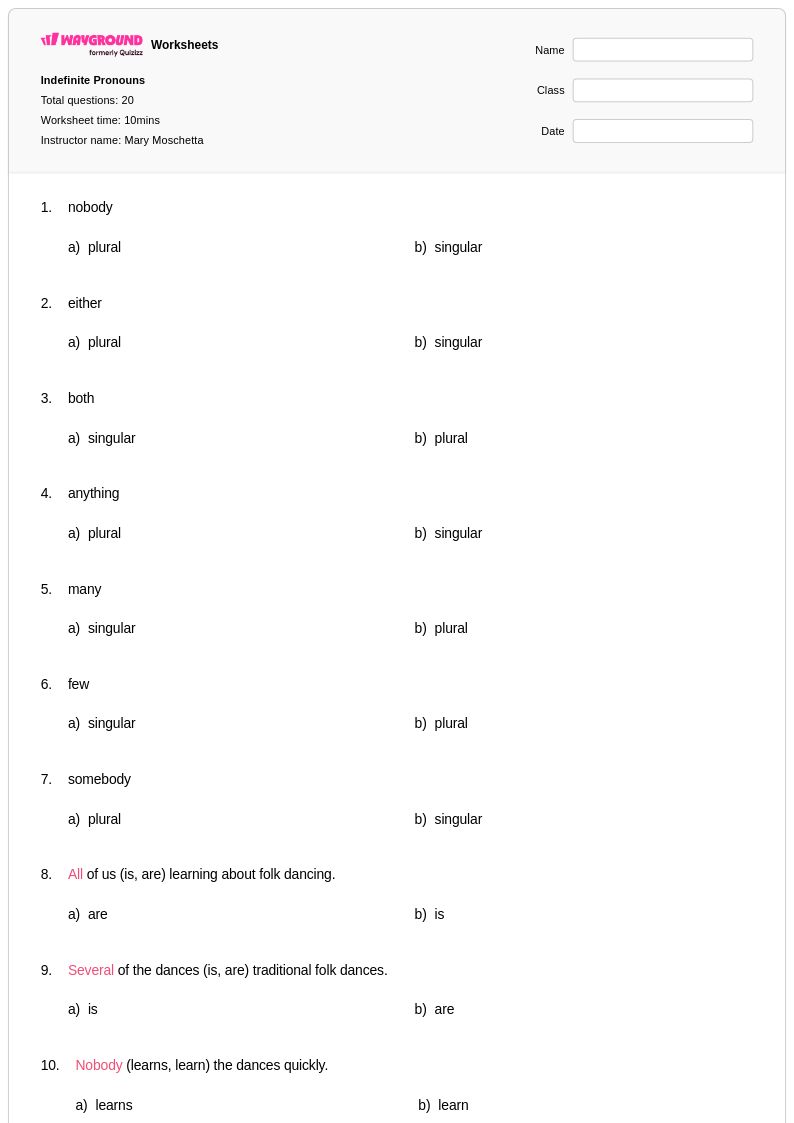
Indefinite pronouns represent a crucial component of Class 5 English language arts curriculum, requiring students to master words like someone, anyone, nothing, and everybody that refer to non-specific people, places, or things. Wayground's comprehensive collection of indefinite pronoun worksheets provides fifth-grade students with targeted practice to identify, categorize, and correctly use these essential grammatical elements in both written and spoken communication. These carefully designed printables strengthen students' understanding of singular and plural indefinite pronouns, their proper verb agreement patterns, and appropriate contextual usage through engaging practice problems that range from fill-in-the-blank exercises to sentence construction activities. Each worksheet comes with a detailed answer key, allowing students to self-assess their progress while teachers can efficiently evaluate comprehension and provide immediate feedback on this foundational grammar concept.
Wayground's extensive library of teacher-created indefinite pronoun resources empowers educators with millions of professionally developed materials that support diverse classroom needs and learning objectives. The platform's robust search and filtering capabilities enable teachers to quickly locate grade-appropriate worksheets that align with state standards and curriculum requirements, while built-in differentiation tools allow for seamless customization based on individual student proficiency levels. These versatile resources are available in both printable PDF format and interactive digital versions, providing flexibility for in-class instruction, homework assignments, remediation sessions, and enrichment activities. Teachers can efficiently plan comprehensive grammar units, target specific skill gaps through focused practice, and accommodate various learning styles through Wayground's adaptable worksheet collection that supports everything from initial concept introduction to advanced application and assessment.
FAQs
How do I teach indefinite pronouns to my students?
Start by contrasting indefinite pronouns with personal pronouns so students understand that indefinite pronouns refer to non-specific people, places, or things rather than a named individual. Group them by category — singular (someone, anyone, nothing), plural (both, few, many), and compound (everybody, everything) — and introduce each group separately before asking students to identify and use them in context. Anchor instruction in real sentences students encounter in reading so the forms feel purposeful rather than arbitrary.
What exercises help students practice indefinite pronouns?
Effective practice exercises ask students to identify indefinite pronouns within sentences, complete fill-in-the-blank items with the correct pronoun form, and rewrite sentences using indefinite pronouns in place of specific nouns. Adding subject-verb agreement tasks is especially valuable because students must determine whether the pronoun is singular or plural before selecting the correct verb. Mixing identification, application, and writing tasks in a single worksheet reinforces the concept across multiple skill dimensions.
What mistakes do students commonly make with indefinite pronouns?
The most persistent error is subject-verb agreement: students frequently treat singular indefinite pronouns like everyone, someone, and nobody as plural because they feel collective, leading to constructions like 'everyone are ready.' A second common mistake is confusing indefinite pronouns with indefinite adjectives — writing 'each students' instead of 'each student' because they misidentify the grammatical role. Targeted practice that isolates these two error patterns helps students internalize the rules before applying them in open writing.
How do I use Wayground's indefinite pronouns worksheets in my classroom?
Wayground's indefinite pronoun worksheets are available as printable PDFs for traditional classroom use and in digital formats for technology-integrated environments, so you can assign them as in-class practice, homework, or independent study depending on your setup. You can also host any worksheet as a live quiz on Wayground, which allows you to track student responses in real time. Each worksheet includes a complete answer key, making self-checking and formative assessment quick and straightforward.
How do I differentiate indefinite pronoun instruction for students at different skill levels?
For struggling students, reduce the scope to the most common singular and plural indefinite pronouns before introducing compound forms, and use sentence frames that isolate the agreement decision. For advanced students, extend practice to pronoun-antecedent agreement and indefinite pronouns in formal writing contexts. On Wayground, you can apply individual accommodations such as reduced answer choices or read-aloud support to specific students while the rest of the class works with default settings, allowing unobtrusive differentiation within a shared assignment.
How do indefinite pronouns affect subject-verb agreement?
Singular indefinite pronouns — including anyone, everyone, someone, no one, nothing, and each — always take a singular verb, even when they feel collective in meaning. Plural indefinite pronouns such as both, few, many, and several always take a plural verb. A small group including some, any, none, all, and most can be singular or plural depending on the noun in the prepositional phrase that follows them. Making this three-part distinction explicit is the most reliable way to resolve agreement errors.