Free Printable International Women's Day Worksheets for Class 8
Explore Class 8 International Women's Day printables and free worksheets that help students practice understanding global women's contributions, featuring comprehensive PDF resources with answer keys.
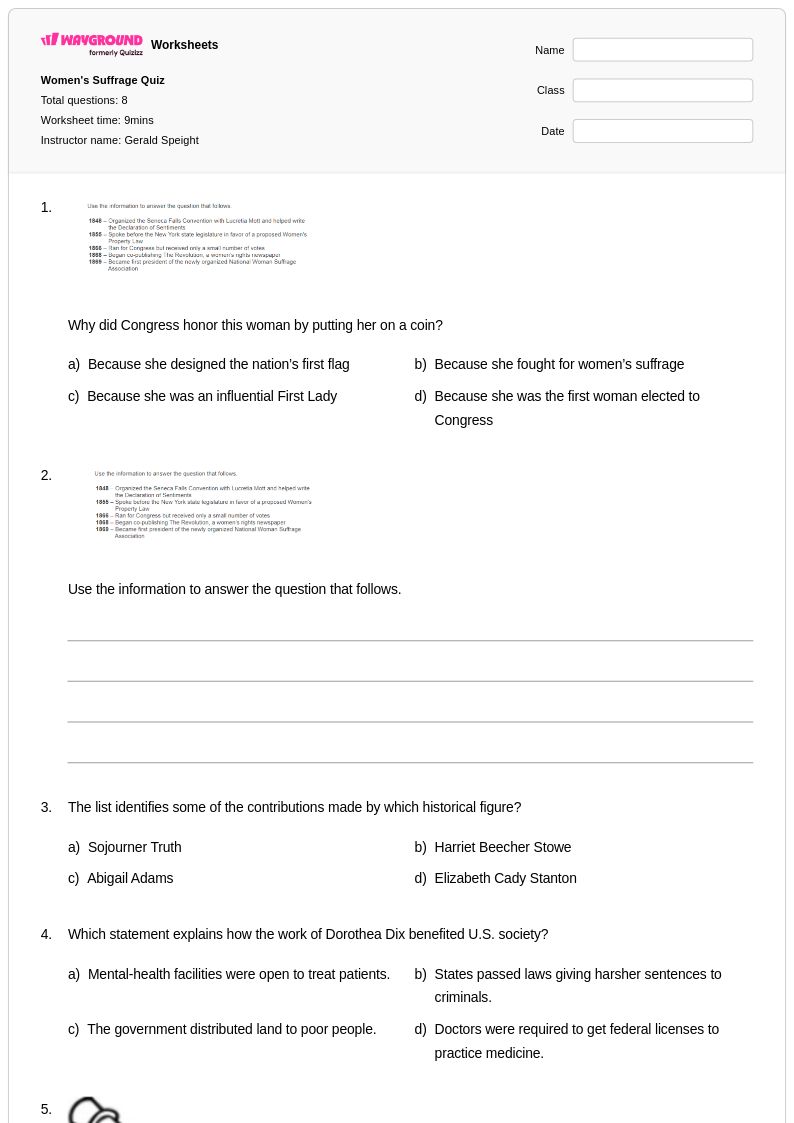
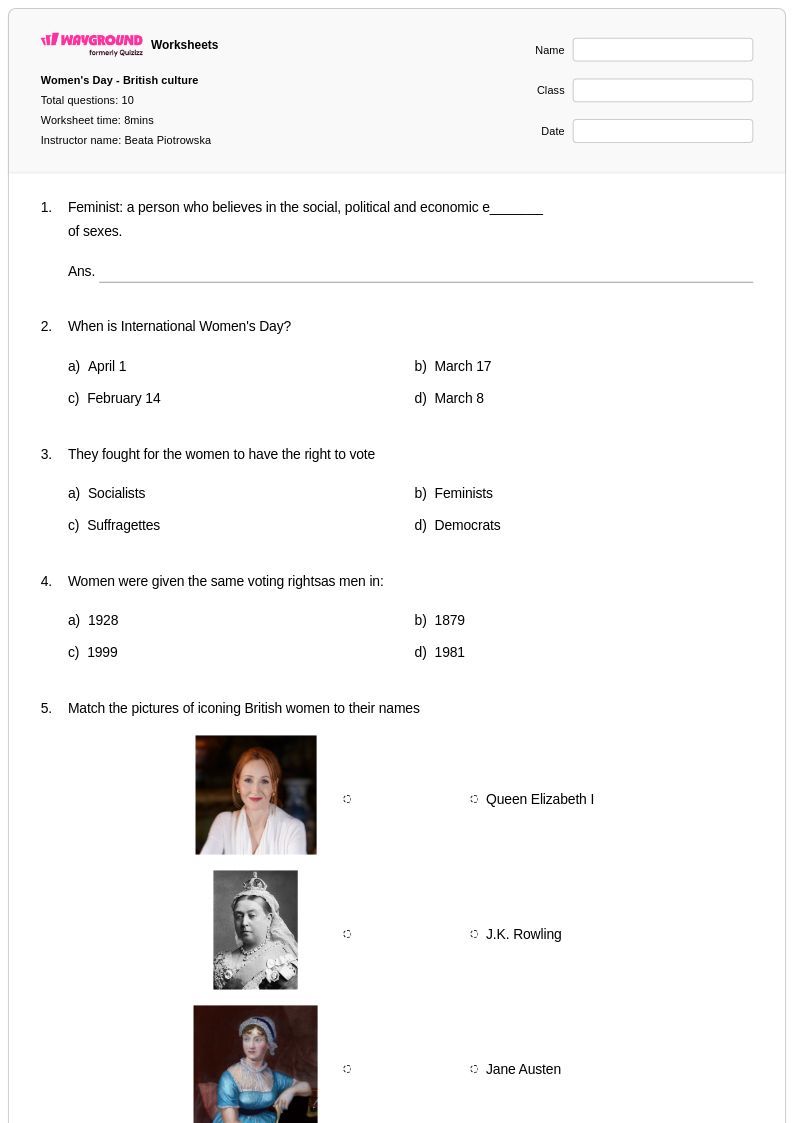
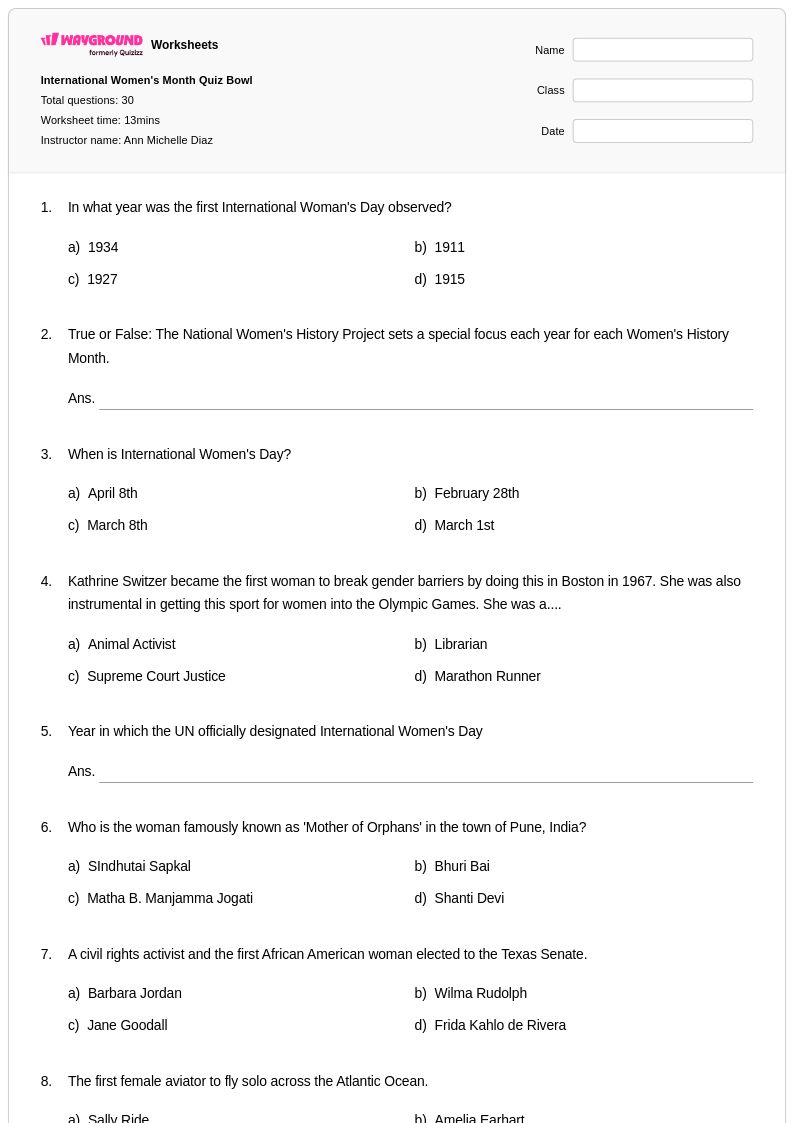
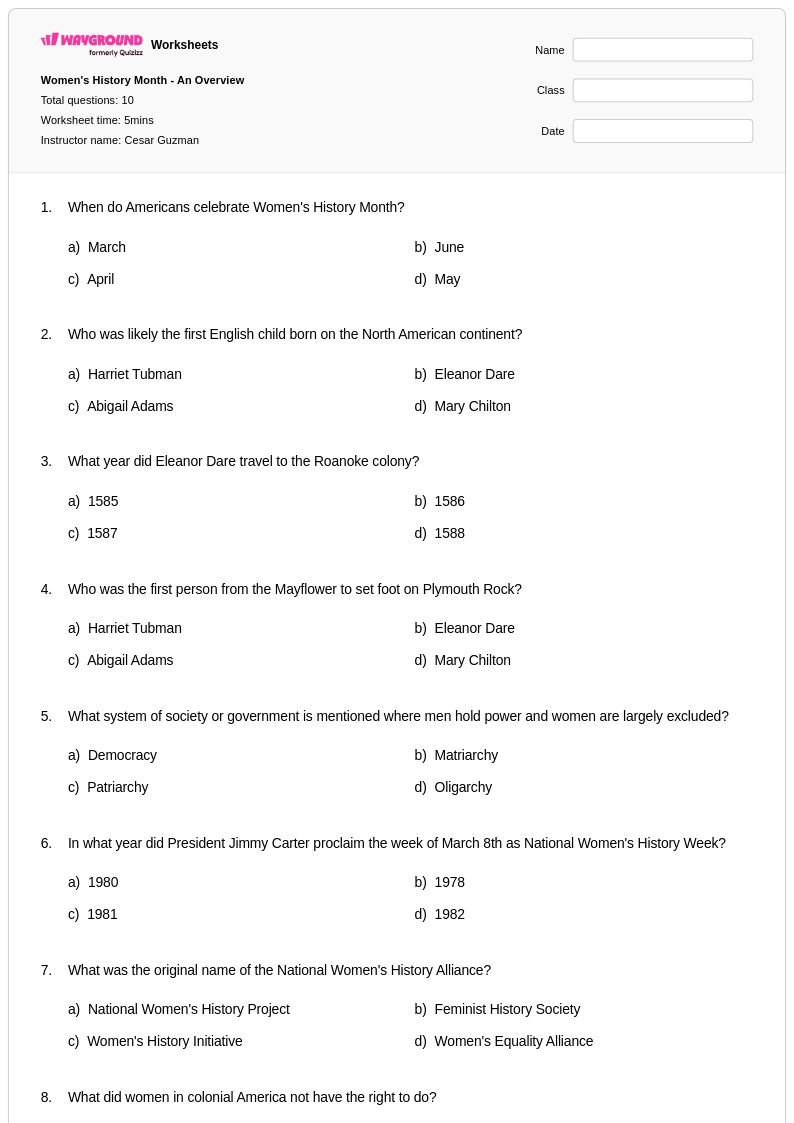
Explore printable International Women's Day worksheets for Class 8
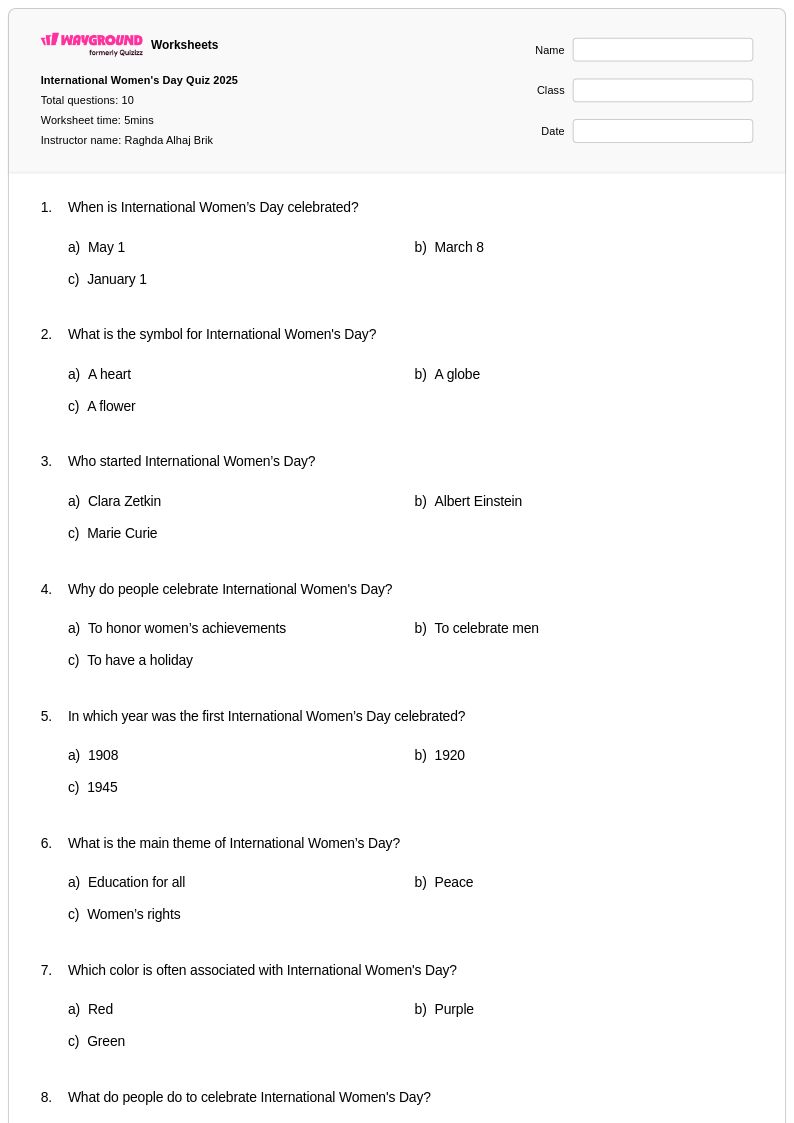
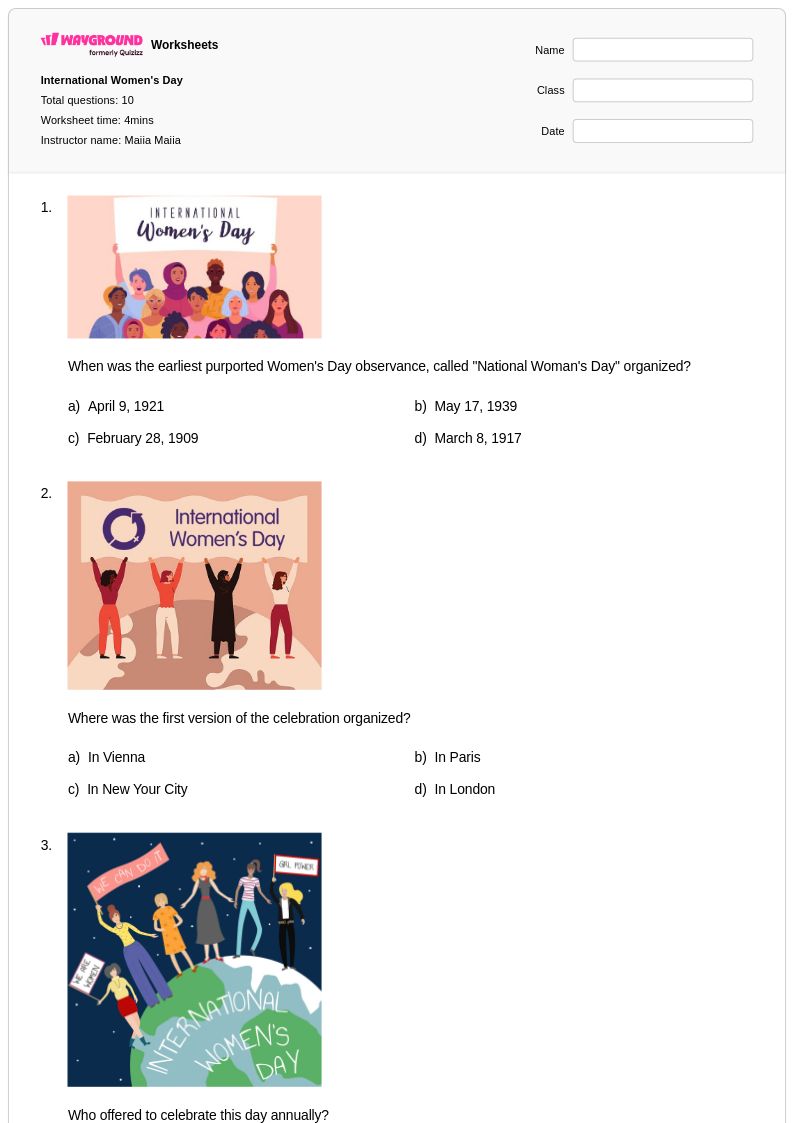
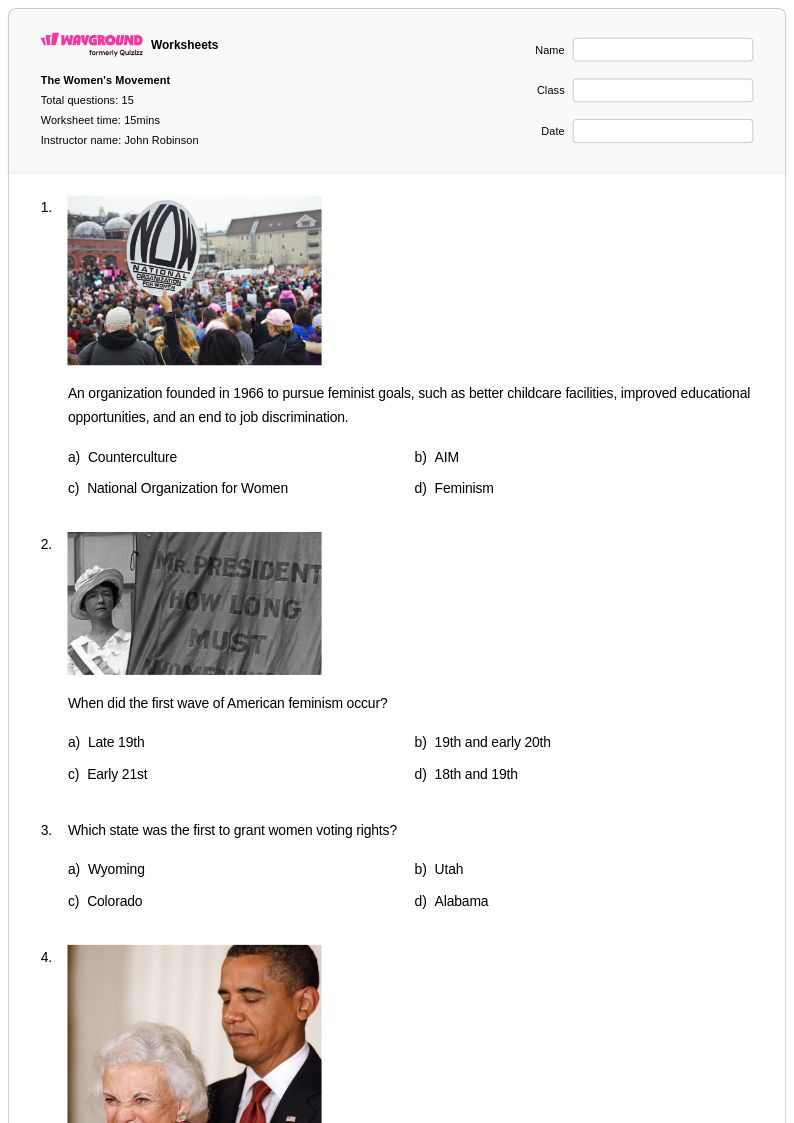
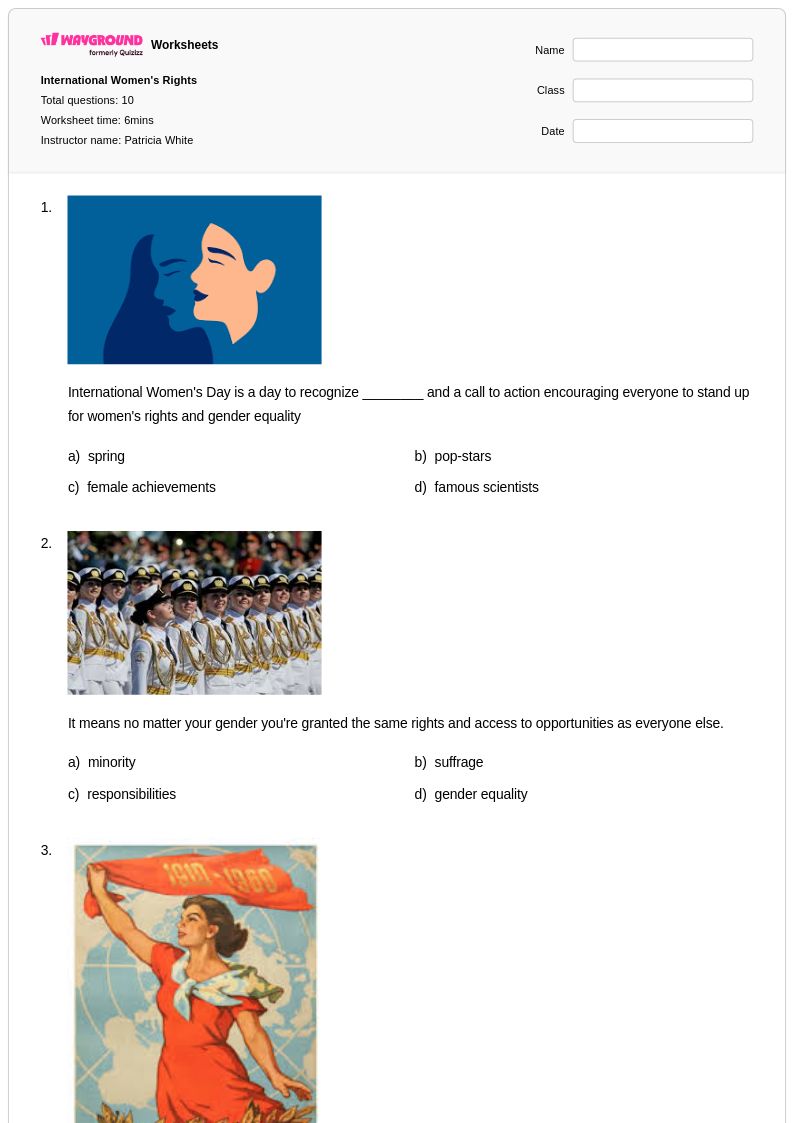
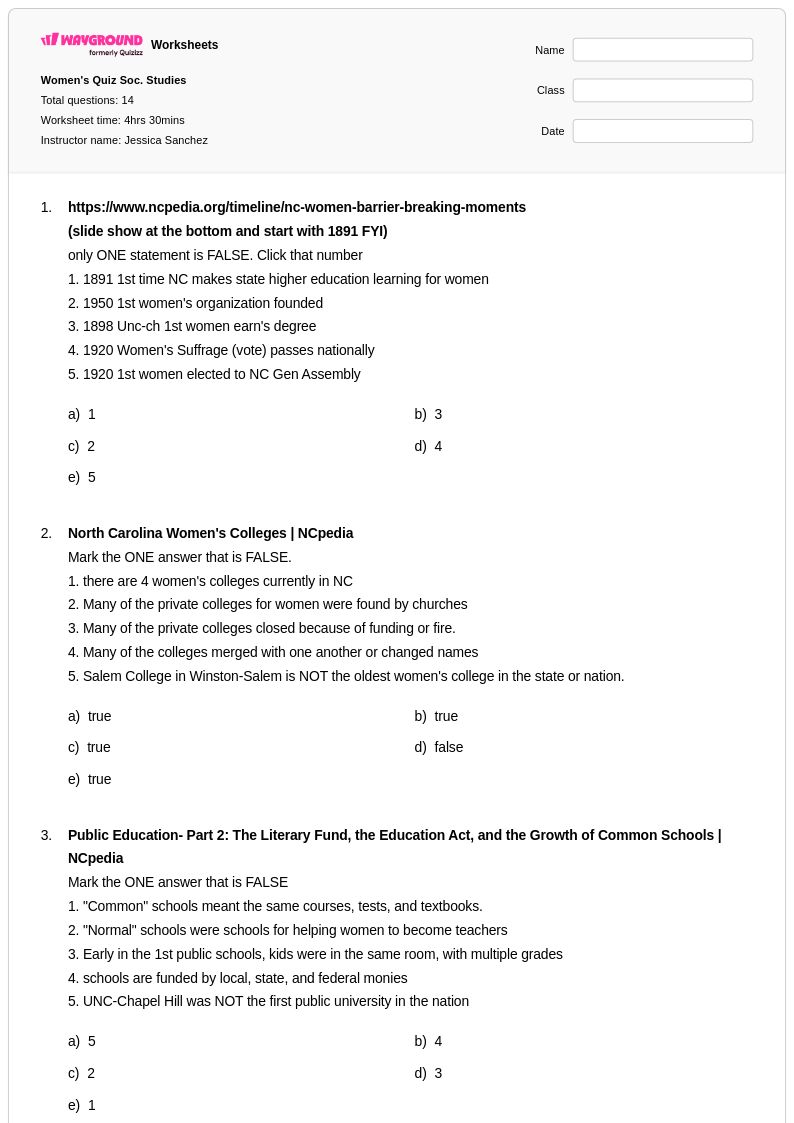
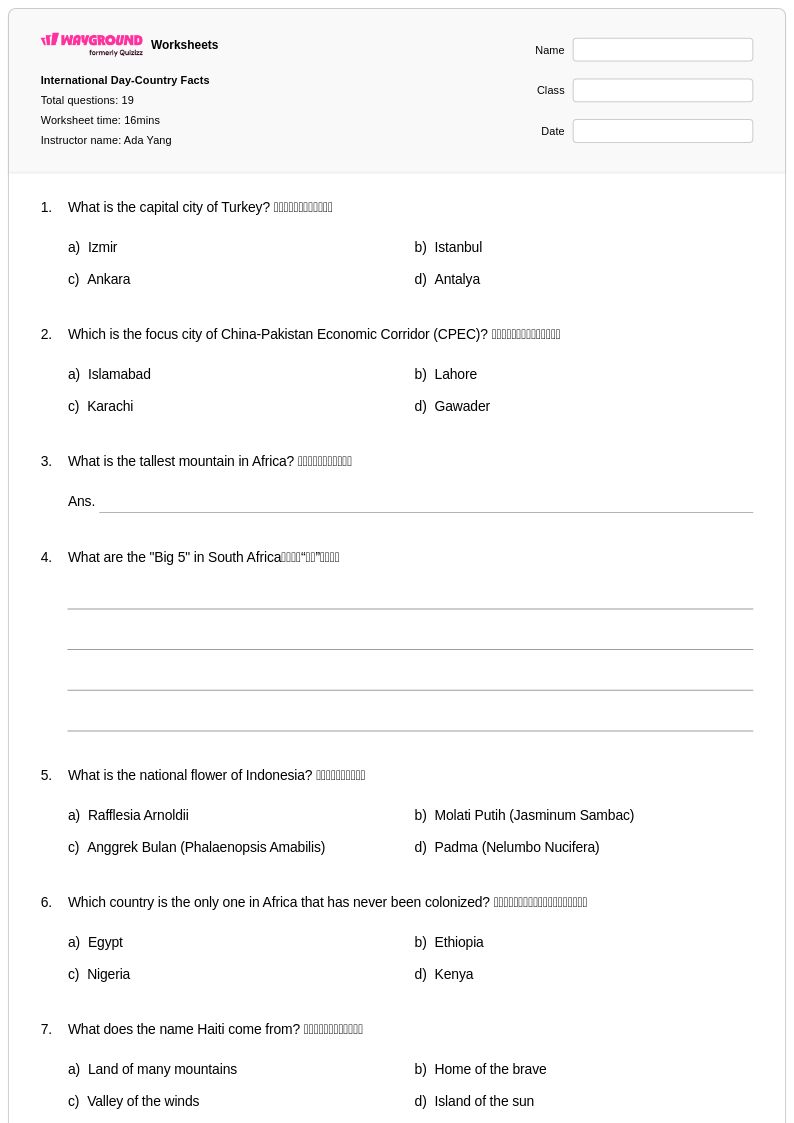
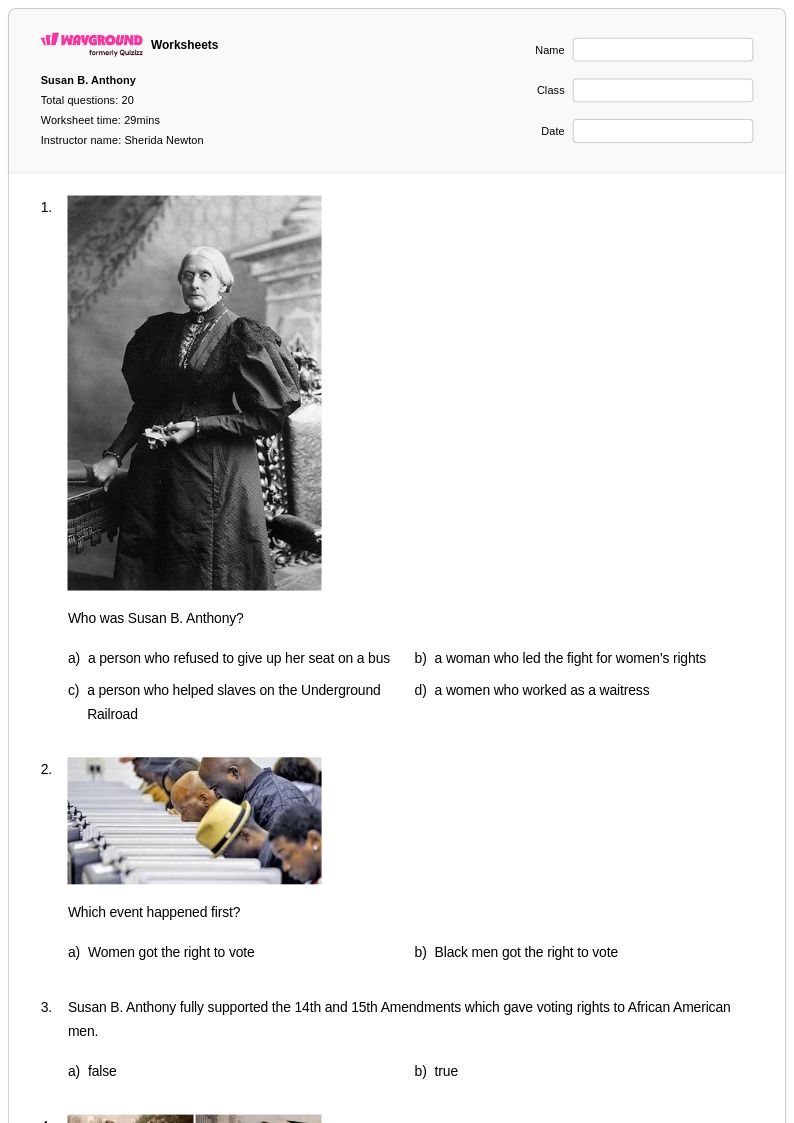
International Women's Day worksheets for Class 8 students available through Wayground (formerly Quizizz) provide comprehensive learning materials that explore the historical significance, global impact, and ongoing relevance of this important observance within community and cultural contexts. These expertly designed resources strengthen critical thinking skills by engaging students in analyzing the contributions of women throughout history, examining gender equality movements across different cultures, and understanding how International Women's Day serves as a catalyst for social change worldwide. The collection includes practice problems that challenge students to evaluate primary sources, compare women's rights movements in various countries, and assess the intersection of gender, culture, and social justice, with complete answer key materials provided to support both independent study and guided instruction through free printable pdf formats.
Wayground (formerly Quizizz) empowers educators with access to millions of teacher-created International Women's Day resources specifically curated for Class 8 social studies instruction, featuring robust search and filtering capabilities that align with curriculum standards for community and cultural studies. The platform's differentiation tools enable teachers to customize worksheet content to meet diverse learning needs, while flexible formatting options provide both printable pdf versions for traditional classroom use and digital formats for technology-integrated lessons. These comprehensive features streamline lesson planning by offering ready-to-use materials for skill practice, targeted remediation for students requiring additional support, and enrichment activities for advanced learners, ensuring that educators can effectively address the complex themes of women's rights, cultural diversity, and global citizenship that define quality International Women's Day instruction.
FAQs
How do I teach International Women's Day in the classroom?
Teaching International Women's Day effectively means grounding students in both historical context and contemporary relevance. Start by examining the origins of the observance and connecting it to broader social justice movements like the suffrage movement and workplace equality campaigns. From there, guide students through case studies of influential women in science, politics, and the arts to build analytical thinking alongside cultural awareness. Pairing primary source analysis with structured reflection activities helps students draw meaningful connections between past achievements and present-day gender equality efforts.
What kinds of activities help students practice skills related to International Women's Day topics?
Effective practice activities for International Women's Day topics include research tasks focused on women leaders and activists, structured reading and response exercises about the suffrage movement, and comparative analysis of women's rights across different cultures and time periods. Reflection prompts that ask students to connect historical events to current social justice movements are especially useful for developing critical thinking and strengthening cultural awareness. Worksheets that guide students through the stories of changemakers in science, politics, and the arts give practice a specific, content-rich focus rather than remaining abstract.
What misconceptions do students commonly have about International Women's Day and women's history?
A common misconception is that International Women's Day is a modern, Western invention rather than a global observance with roots stretching back to the early 20th century labor and suffrage movements. Students also frequently underestimate the breadth of women's contributions, often recognizing a narrow set of figures while overlooking leaders and activists from non-Western cultures and time periods. Another error pattern is treating gender equality as a resolved issue rather than an ongoing effort, which is why connecting historical milestones to present-day advocacy is essential for accurate understanding.
How can I use International Women's Day worksheets in my classroom?
International Women's Day worksheets on Wayground are available as printable PDFs for traditional classroom use and in digital formats for technology-integrated learning environments, and can also be hosted as a quiz directly on Wayground. Each worksheet includes a comprehensive answer key, so teachers can use them for guided instruction, independent practice, or assessment without additional preparation. Digital formats allow for easy assignment in one-to-one device settings, while printable versions work well for station rotations or take-home activities.
How can I differentiate International Women's Day lessons for students with different learning needs?
Differentiation for International Women's Day content can include scaffolded reading passages for students who need additional support accessing complex social studies texts, and extended research or analytical tasks for advanced learners. On Wayground, teachers can apply individual student accommodations such as read aloud support, extended time, and reduced answer choices, which are particularly helpful when students are working through dense historical content or nuanced social justice topics. These settings can be configured per student and reused across future sessions without disrupting the rest of the class.