
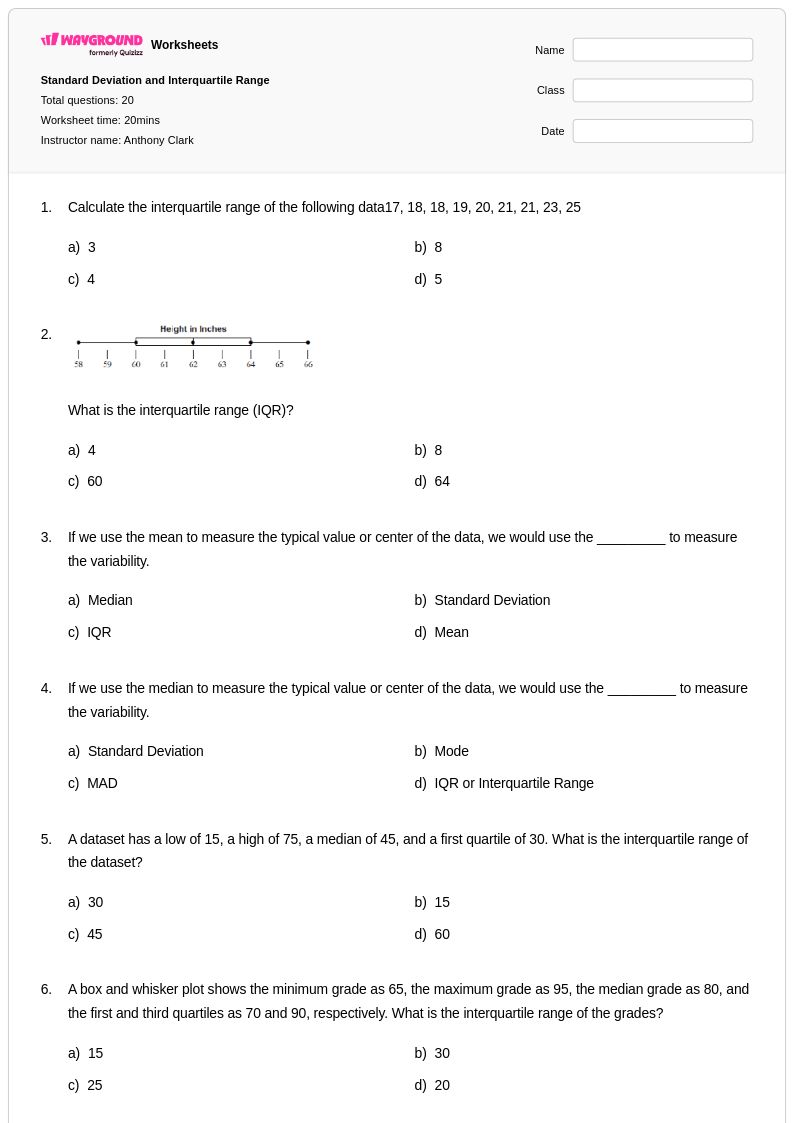
20 Q
9th - Uni
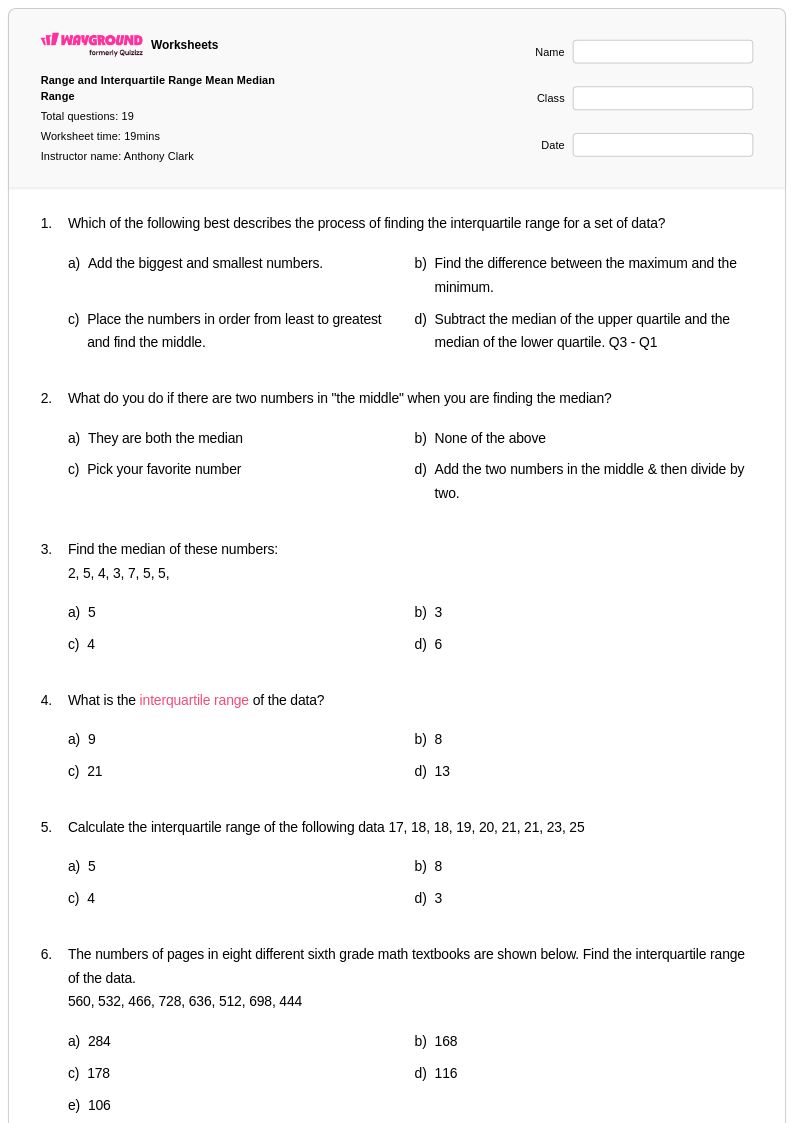
19 Q
6th - Uni
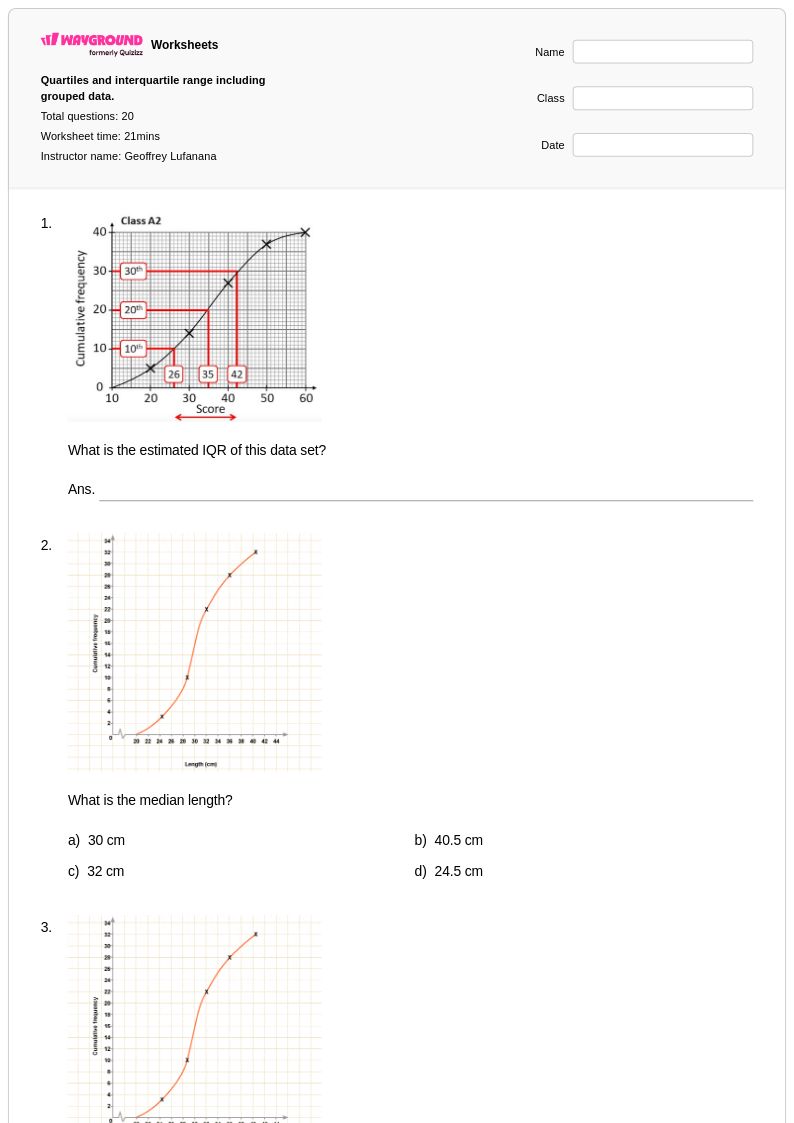
20 Q
10th
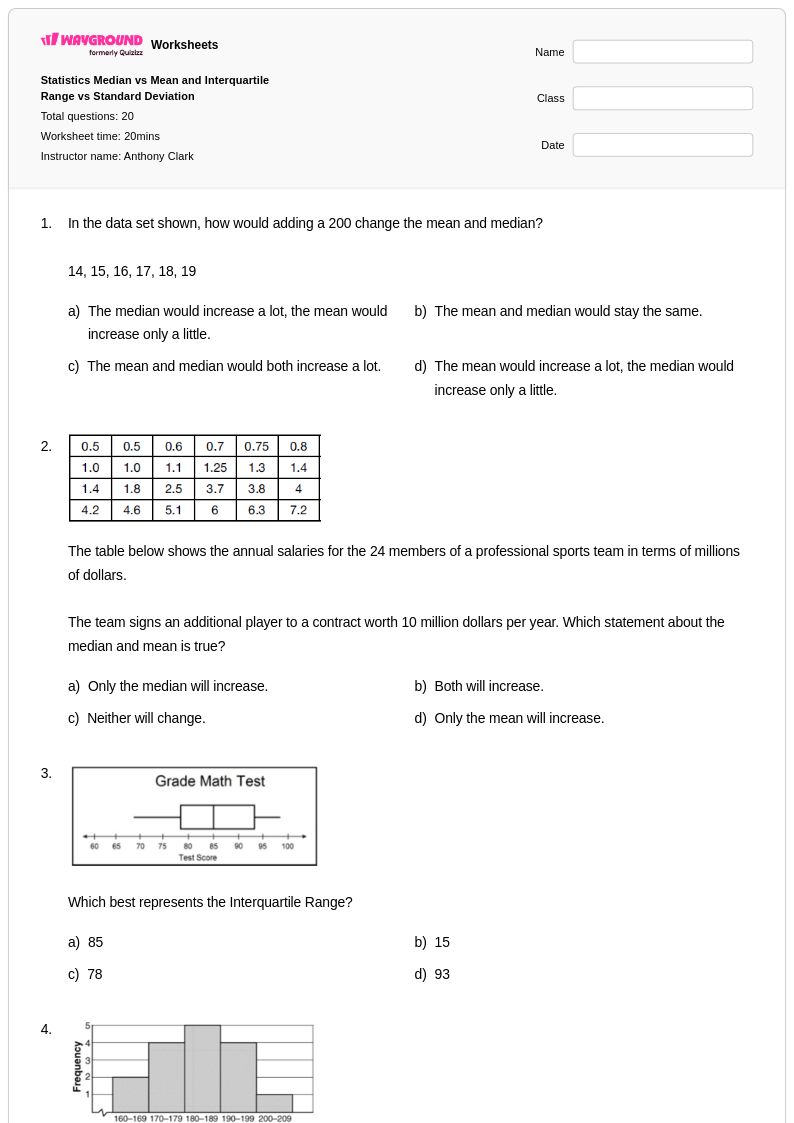
20 Q
9th - Uni
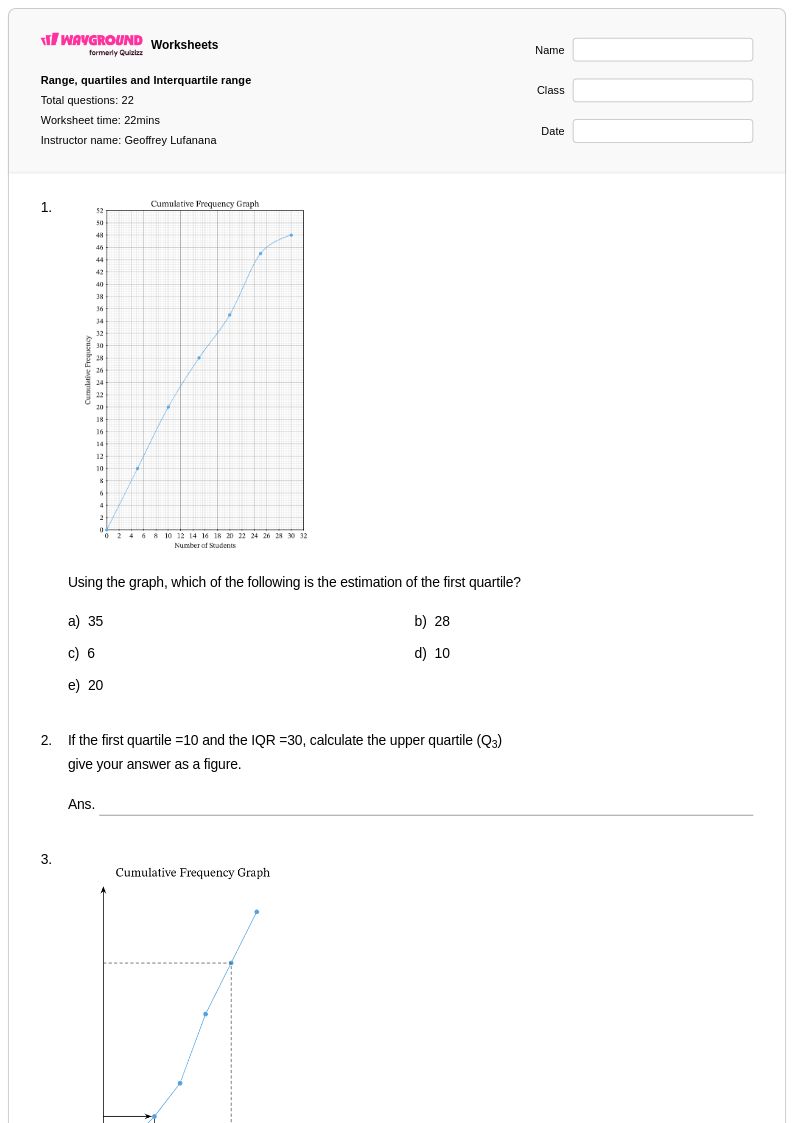
22 Q
10th
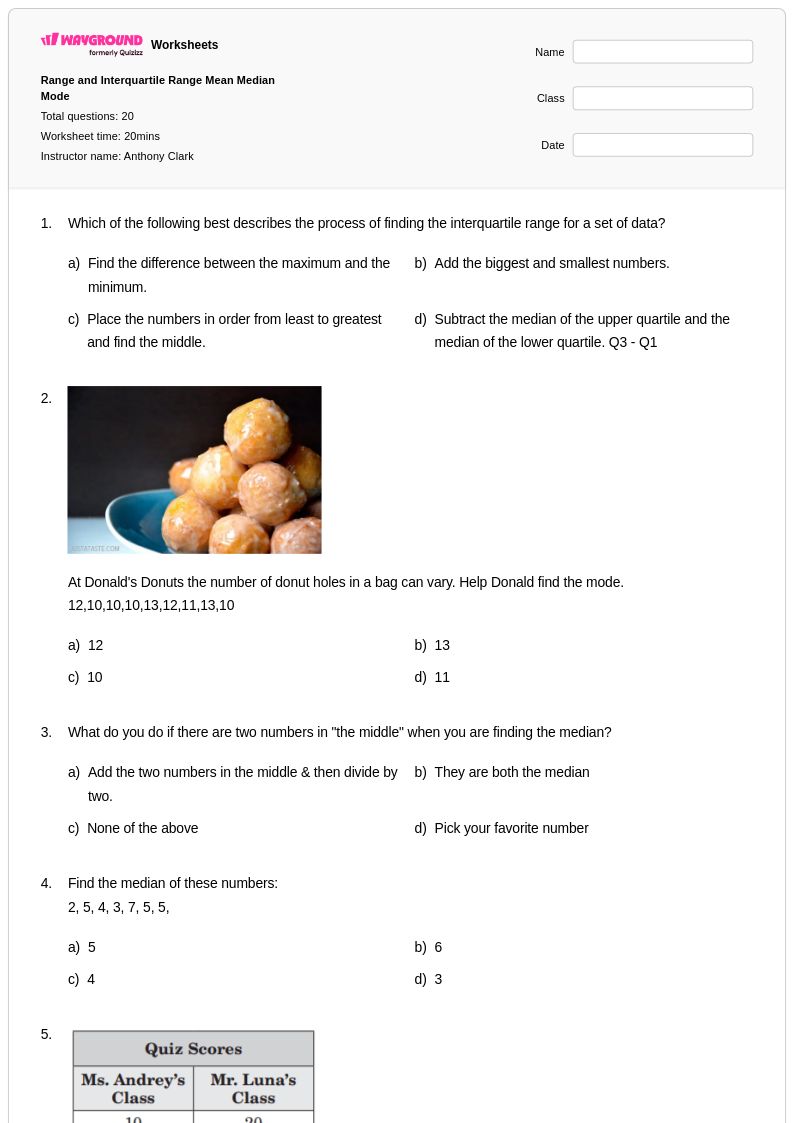
20 Q
6th - Uni
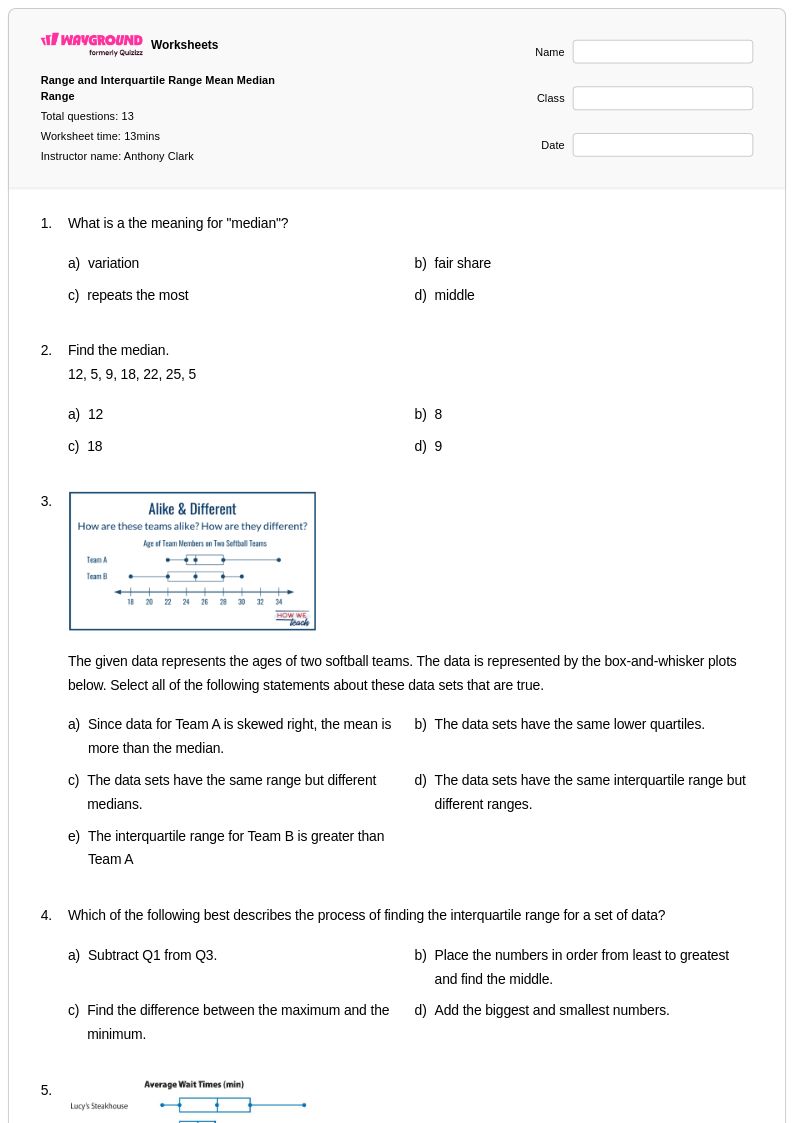
13 Q
6th - Uni
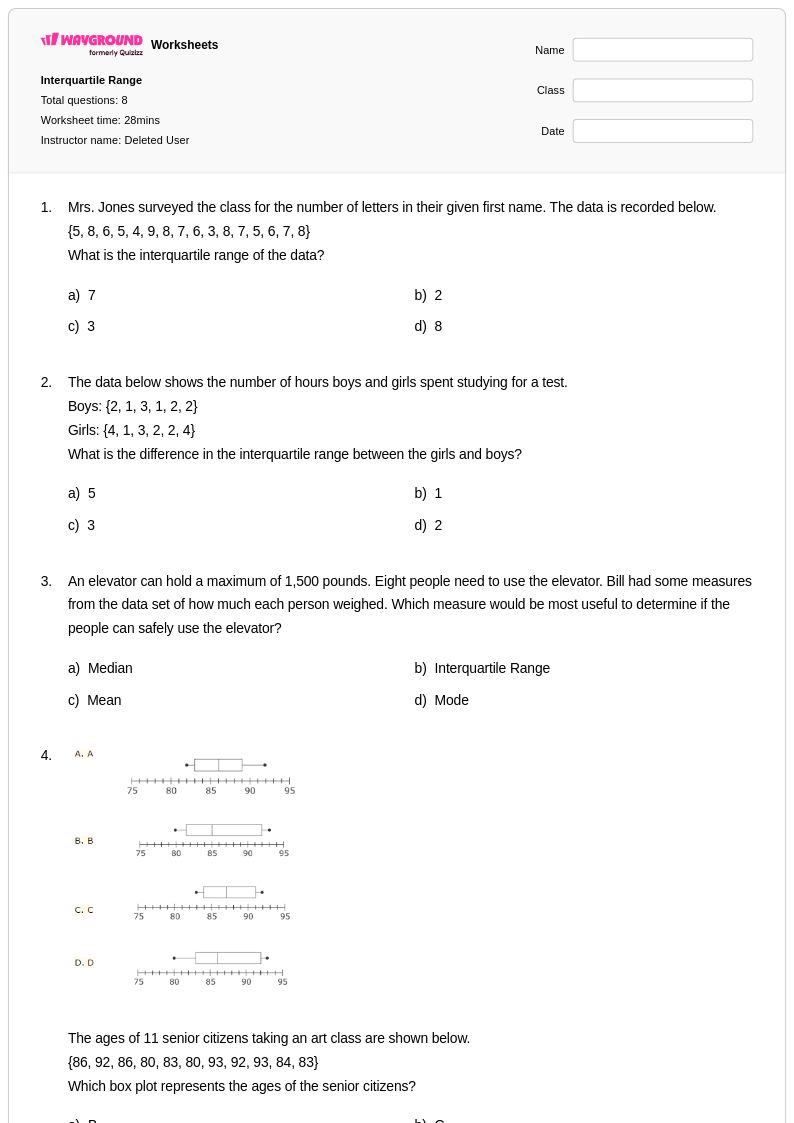
8 Q
9th - 12th
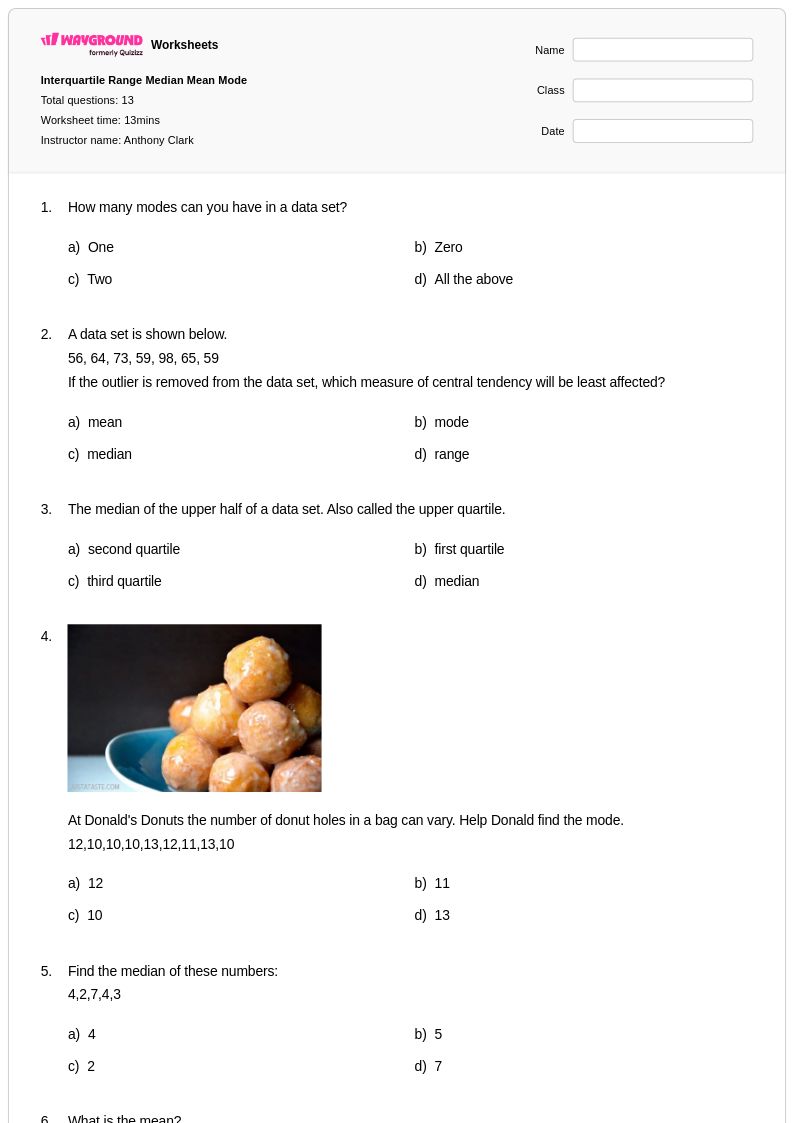
13 Q
6th - Uni
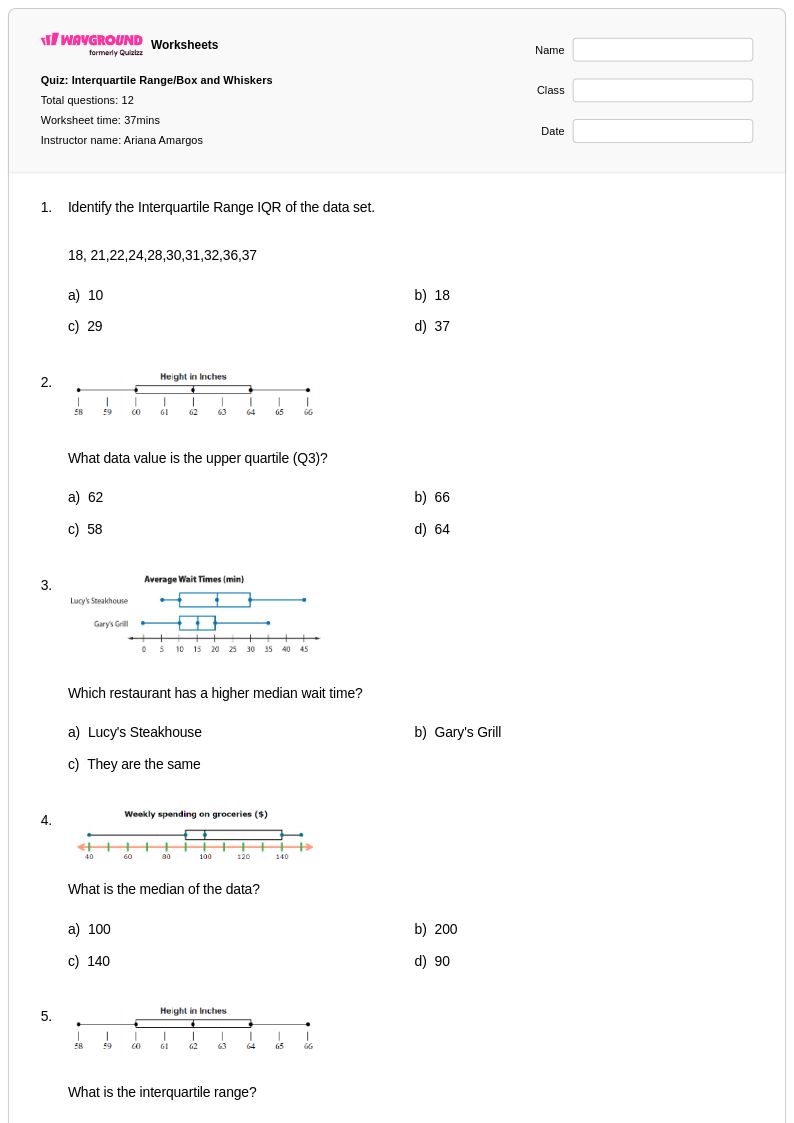
12 Q
6th - Uni
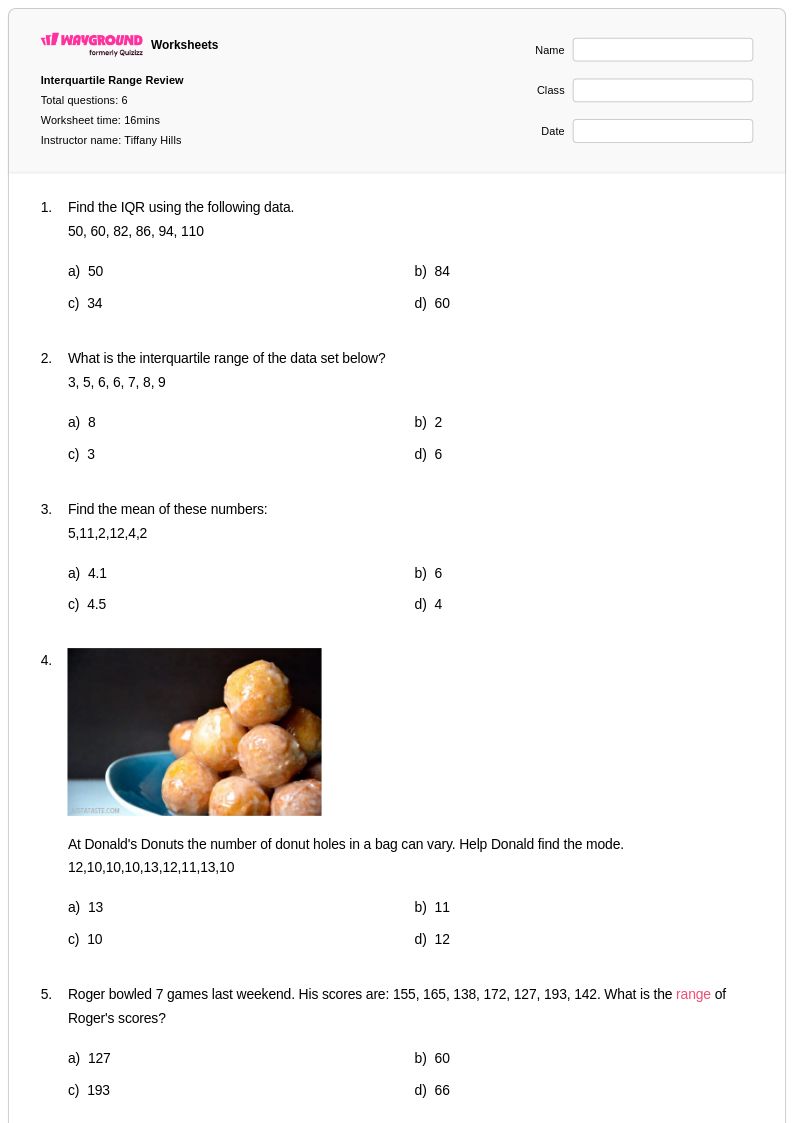
6 Q
6th - 12th
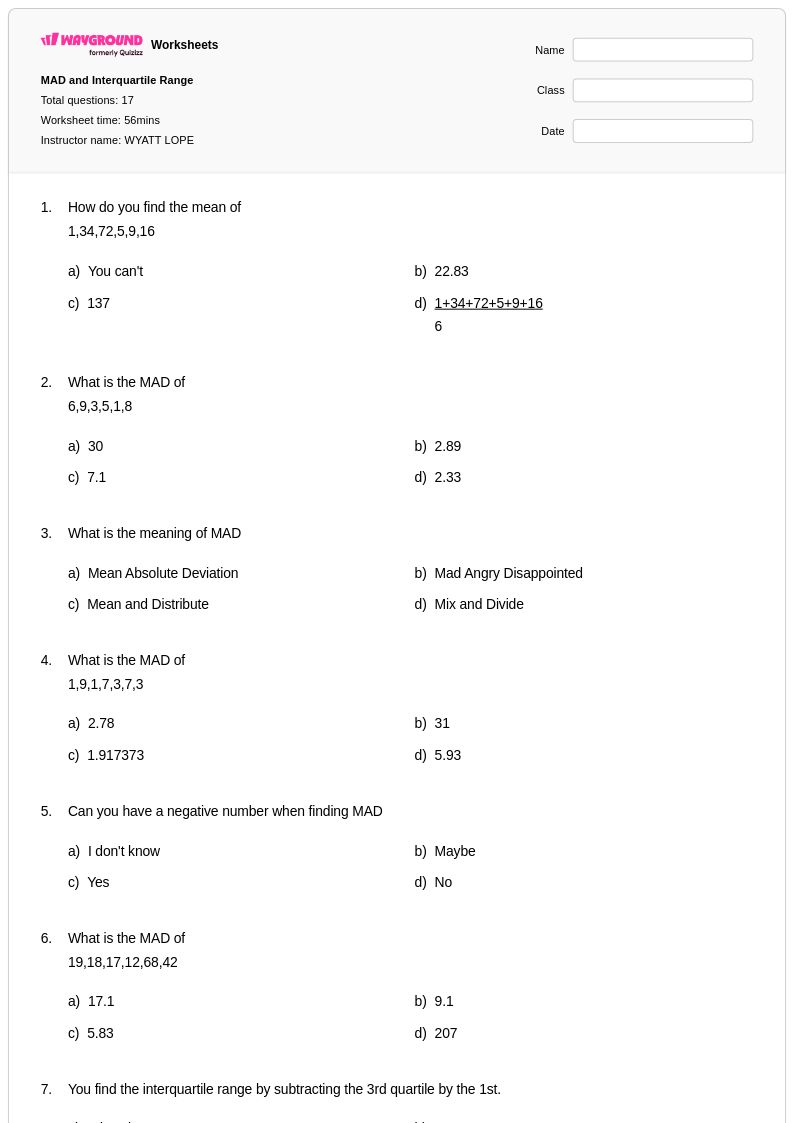
17 Q
6th - 12th
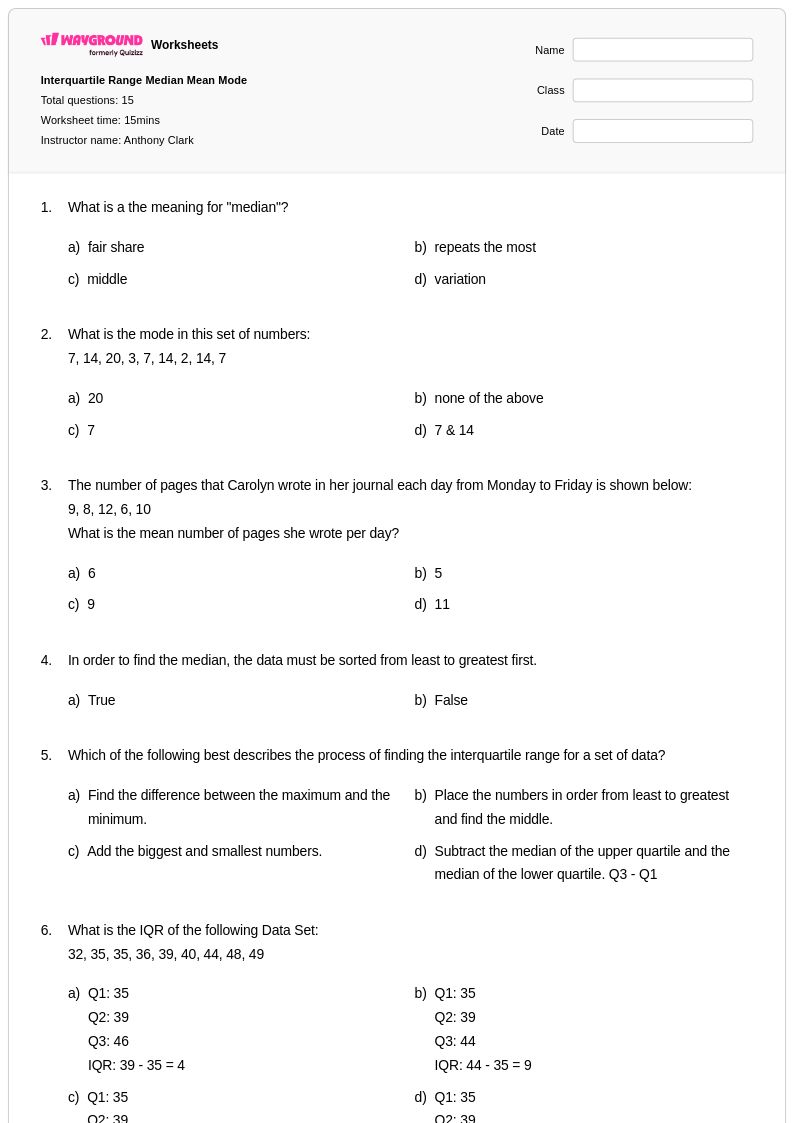
15 Q
6th - Uni
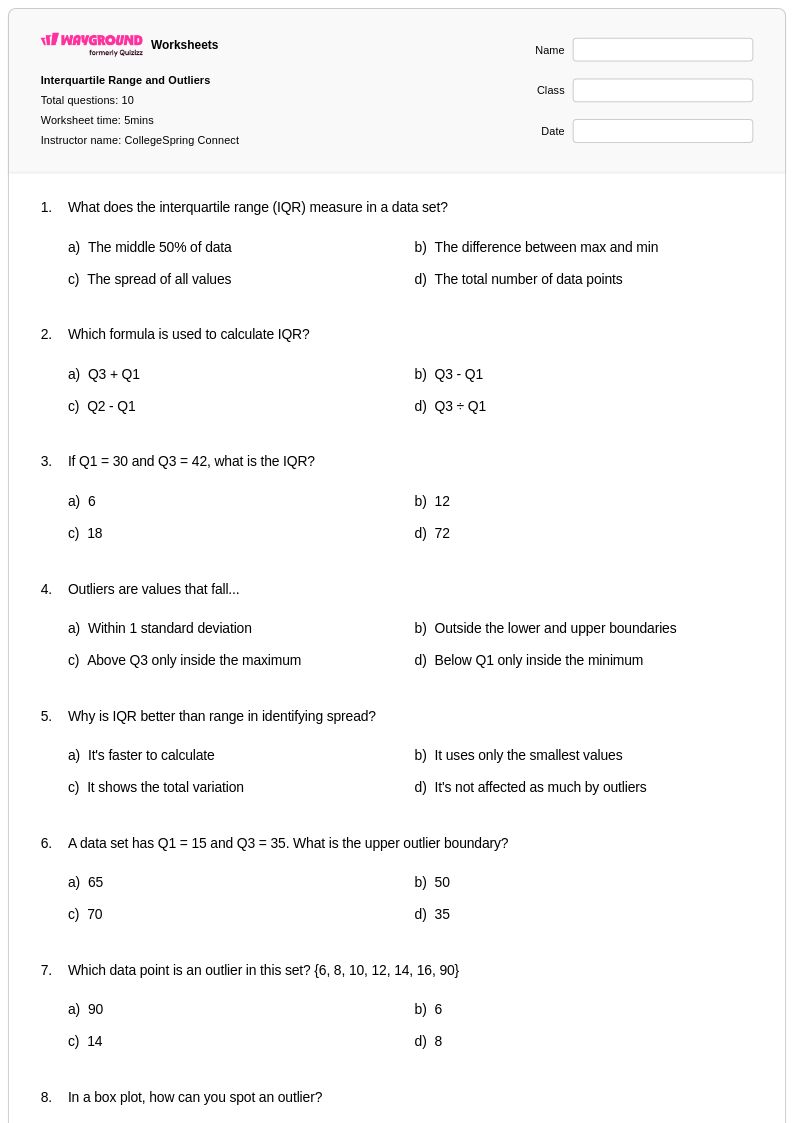
10 Q
9th - 12th
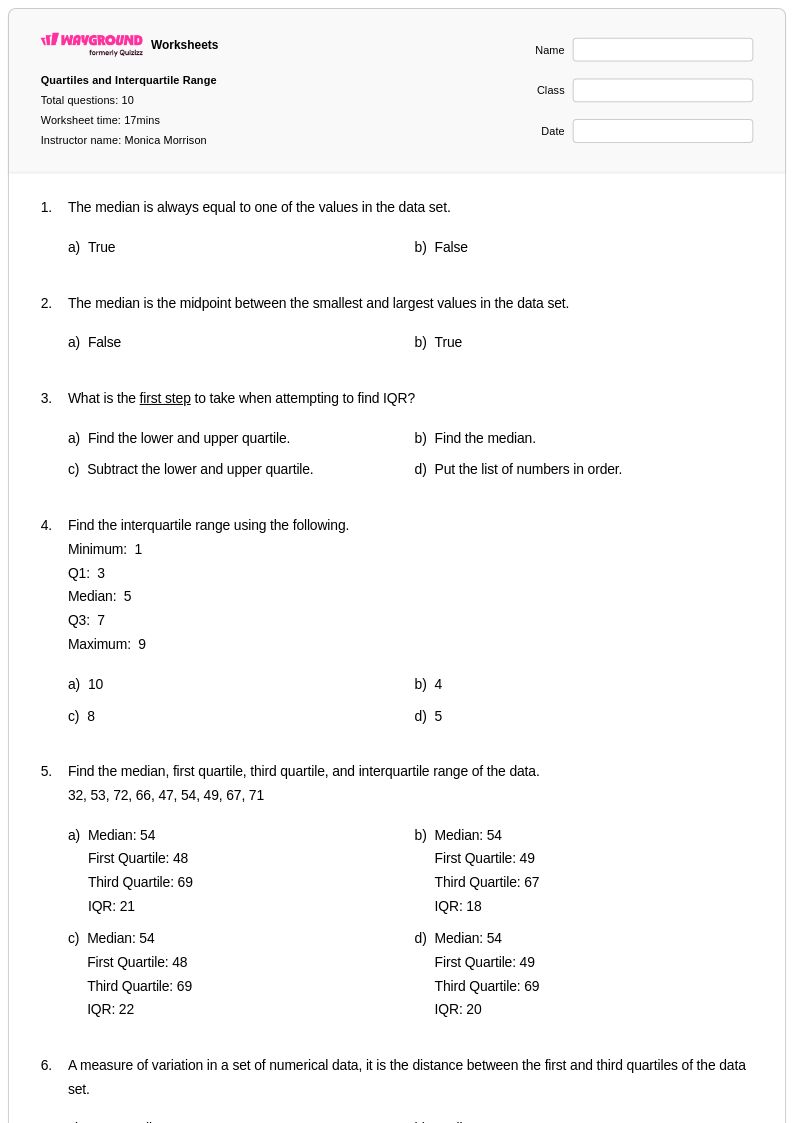
10 Q
7th - 11th
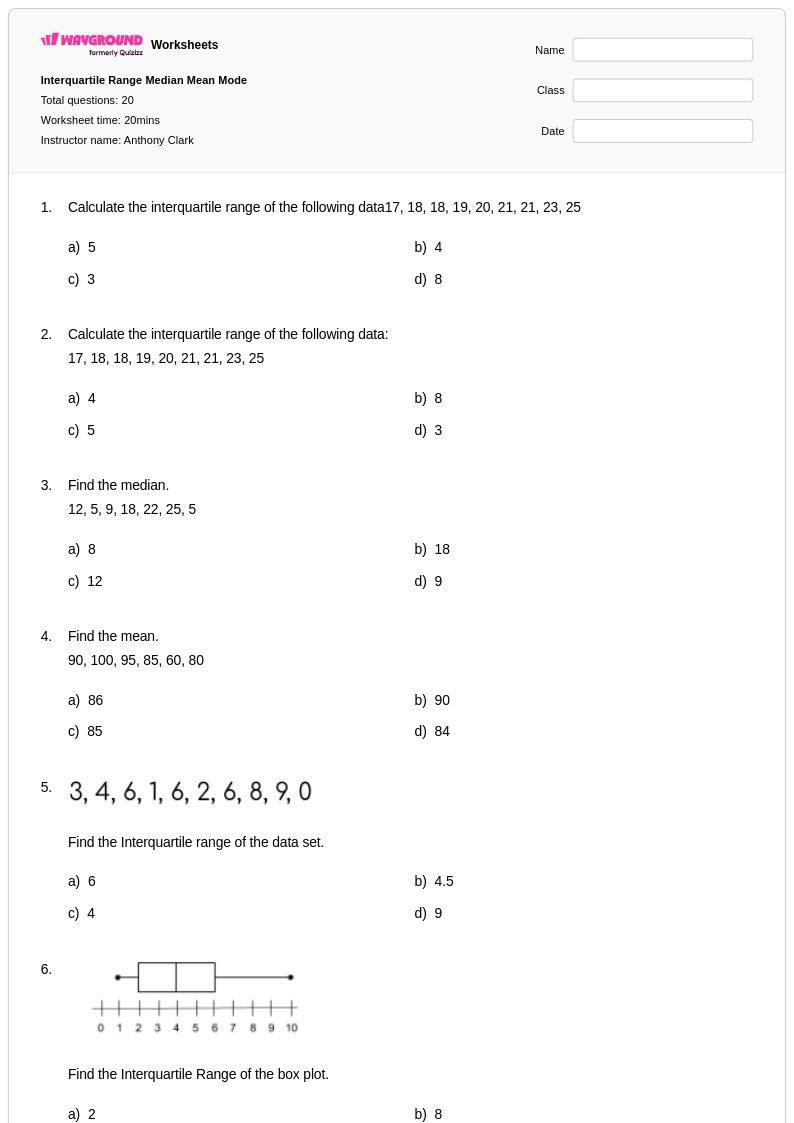
20 Q
6th - Uni
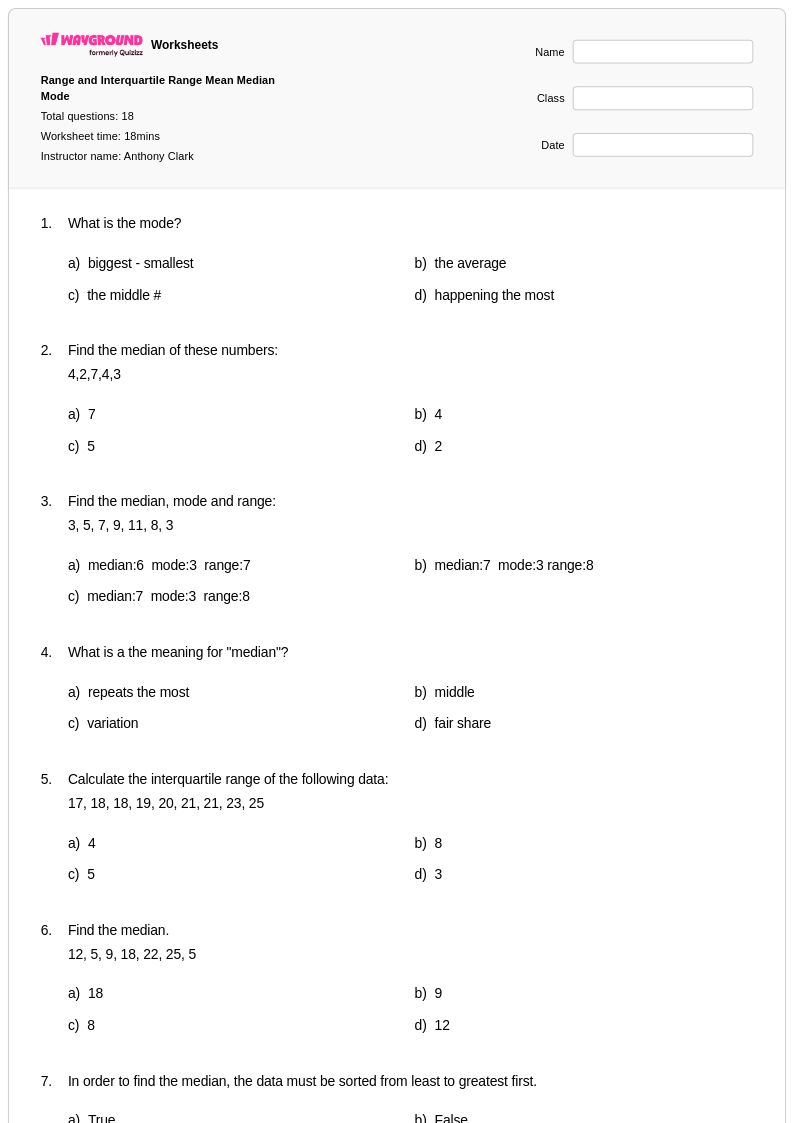
18 Q
6th - Uni
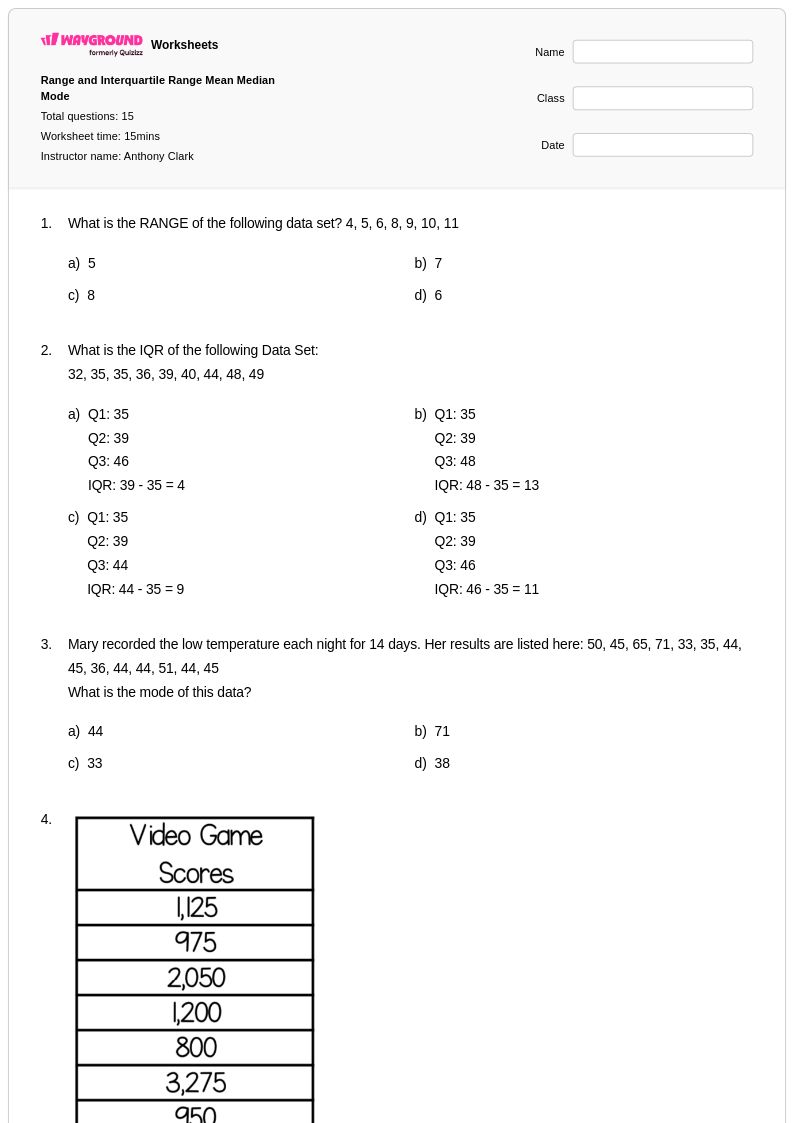
15 Q
6th - Uni
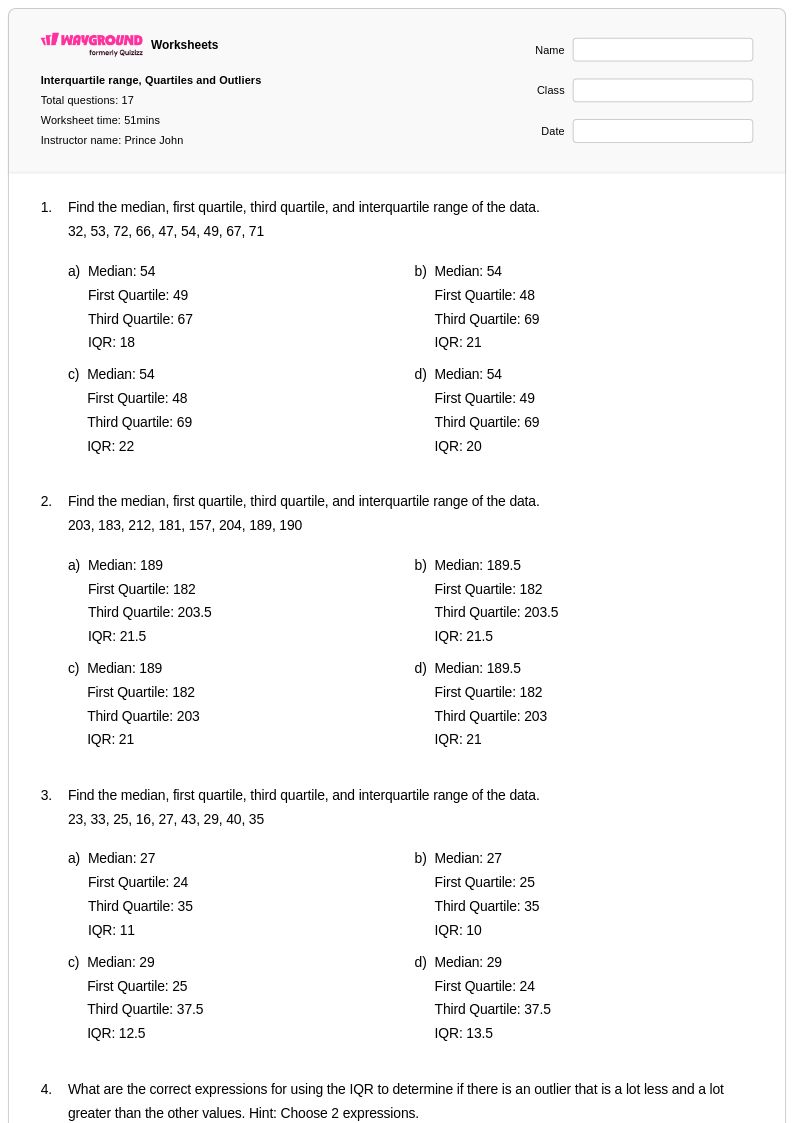
17 Q
10th - 12th
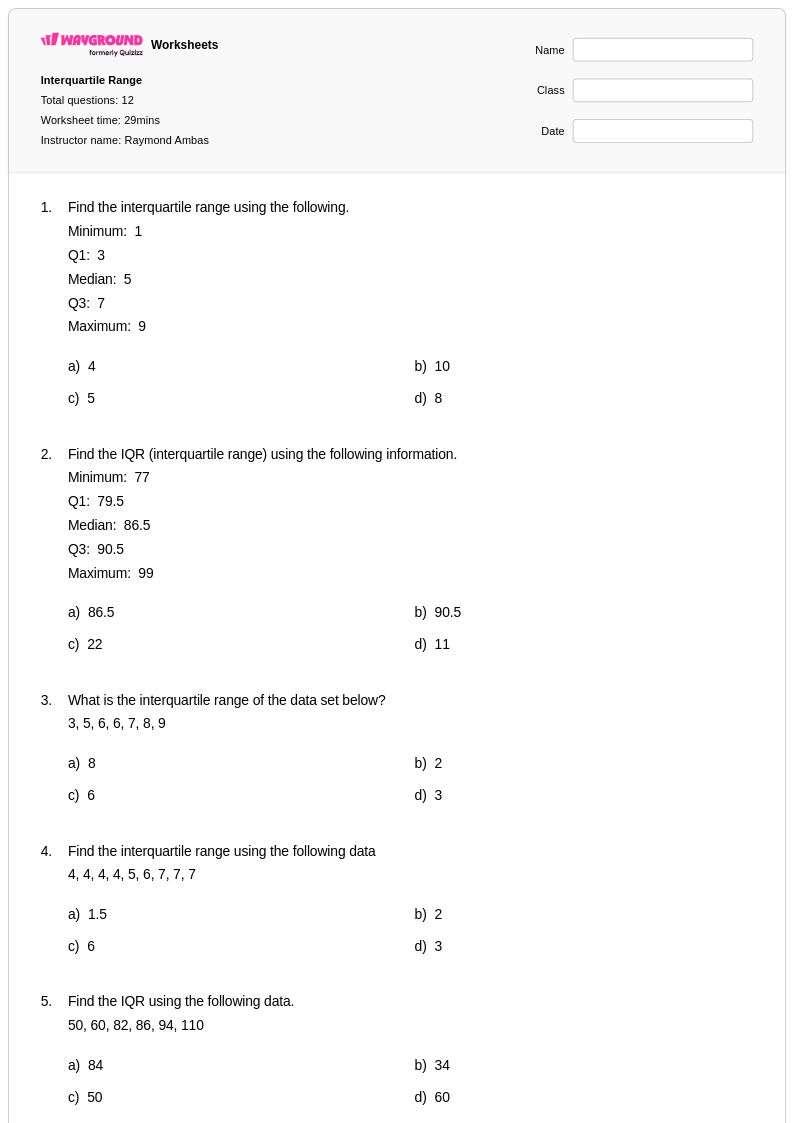
12 Q
10th
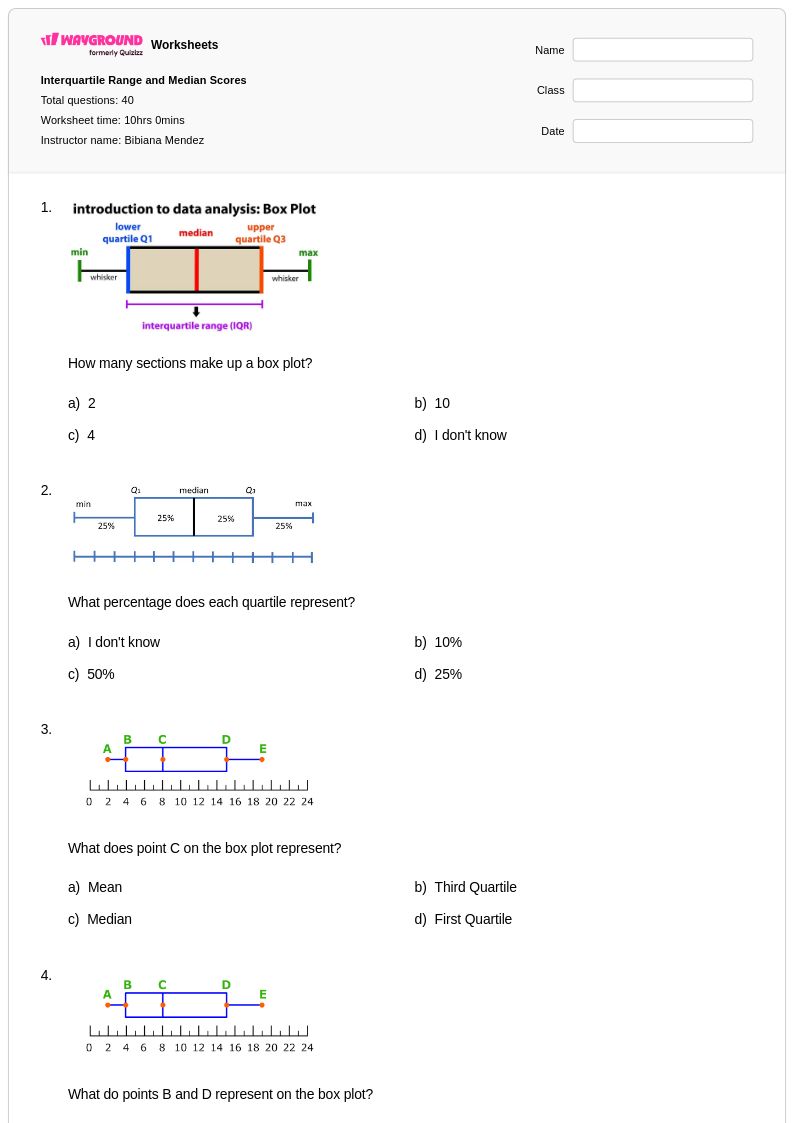
40 Q
6th - Uni
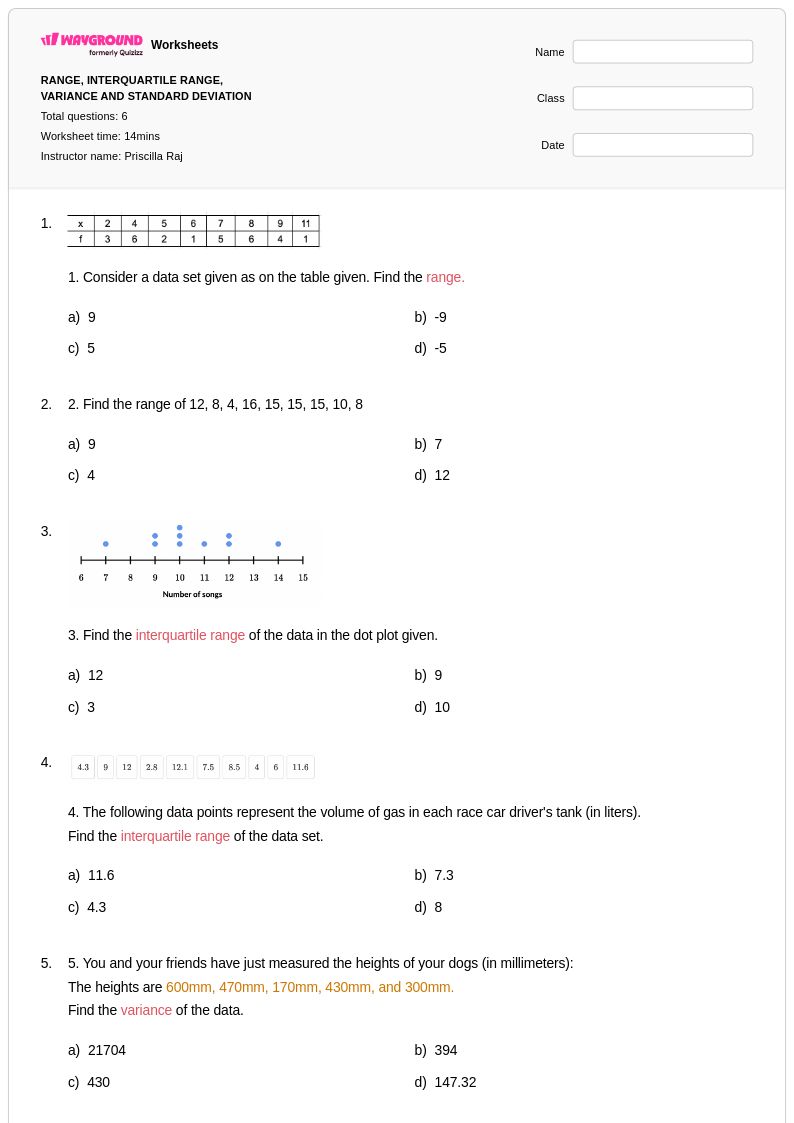
6 Q
10th - 12th
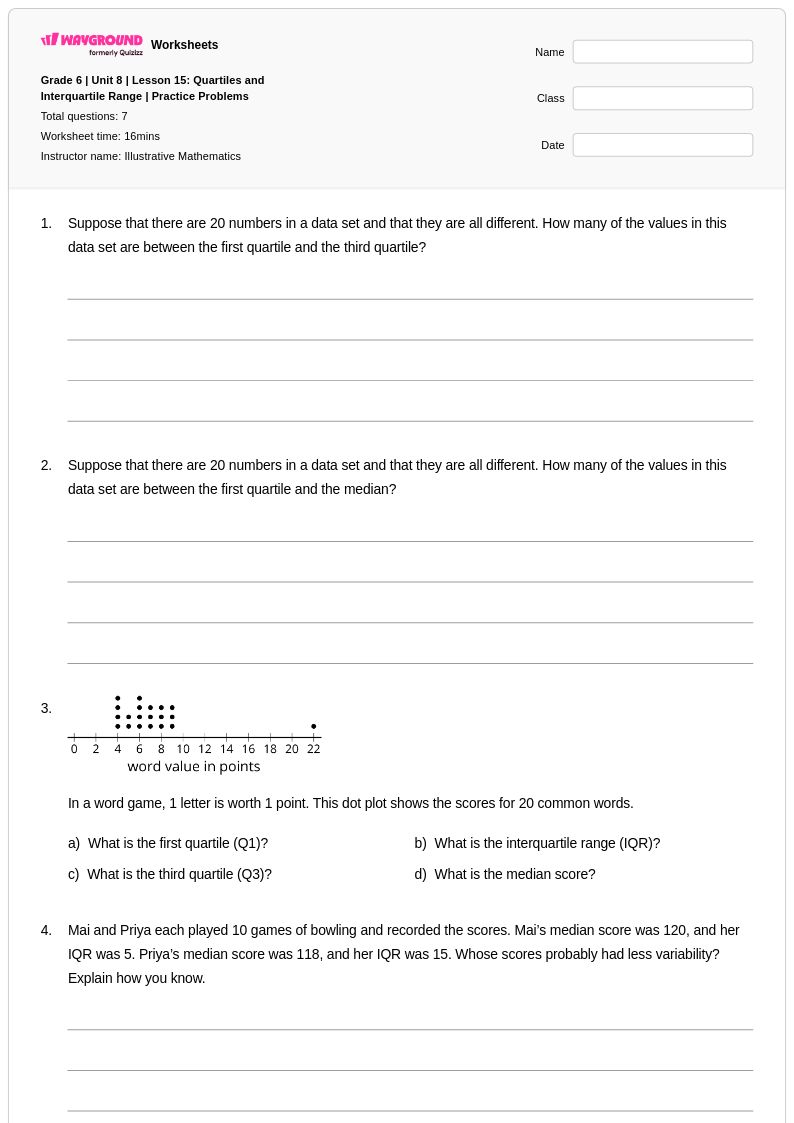
7 Q
6th - Uni
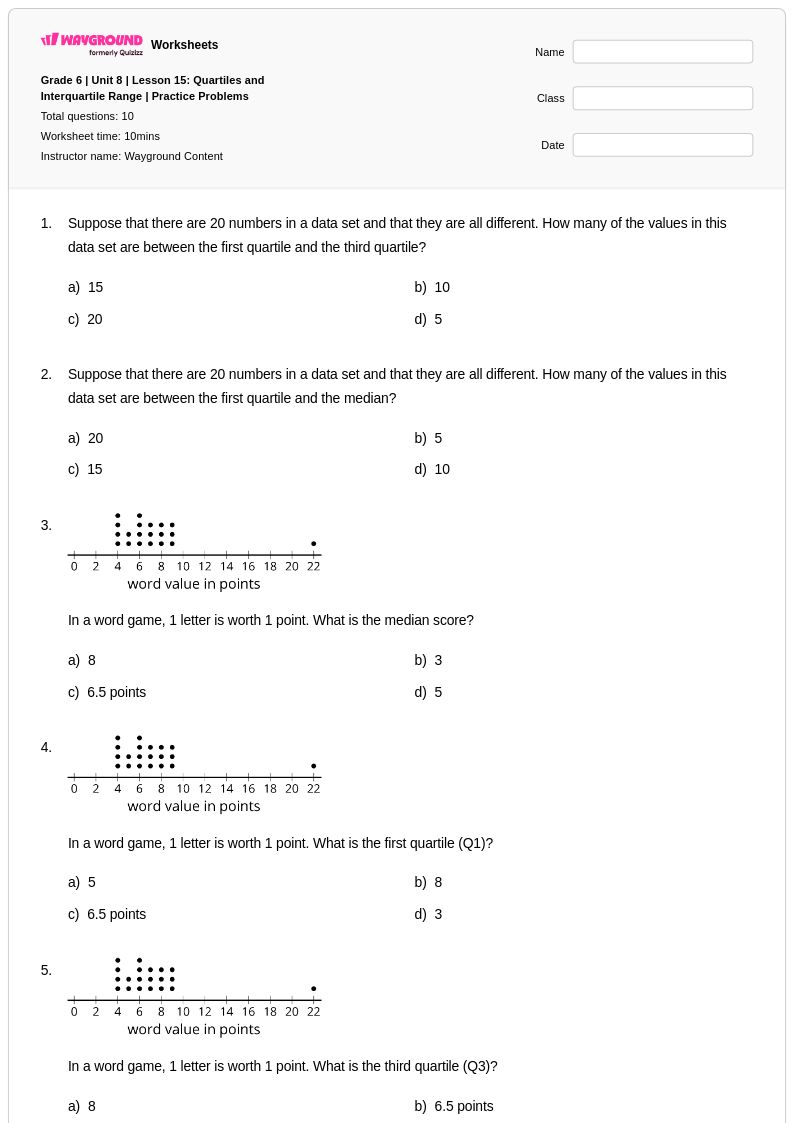
10 Q
6th - Uni
Explore Interquartile Range Worksheets by Grades
Explore Other Subject Worksheets for class 10
Explore printable Interquartile Range worksheets for Class 10
Interquartile range worksheets for Class 10 mathematics provide students with essential practice in measuring statistical spread and variability within data sets. These comprehensive resources from Wayground (formerly Quizizz) focus on developing students' ability to calculate the first quartile, third quartile, and the range between these values, which represents the middle 50% of a data distribution. Students work through practice problems that strengthen their understanding of quartile positioning, data ordering, and outlier identification while building fluency in statistical analysis techniques. Each worksheet includes detailed answer keys and step-by-step solutions, making them valuable free printables for both classroom instruction and independent study as students master this fundamental statistical concept.
Wayground's extensive collection of interquartile range worksheets draws from millions of teacher-created resources, offering educators powerful search and filtering capabilities to locate materials perfectly suited to their Class 10 statistics curriculum needs. These worksheets align with mathematical standards and provide differentiation tools that support diverse learning styles, allowing teachers to customize content difficulty and presentation format based on individual student requirements. Available in both printable pdf formats and interactive digital versions, these resources facilitate flexible lesson planning while supporting targeted remediation for struggling learners and enrichment opportunities for advanced students. Teachers can efficiently integrate these materials into their statistical analysis units, ensuring students develop robust skills in data interpretation and quartile calculations through systematic practice and application.
FAQs
How do I teach interquartile range to Grade 10 students?
What exercises help Grade 10 students practice interquartile range?
What mistakes do students make when calculating interquartile range?
How can I use these Grade 10 interquartile range worksheets?
Do these interquartile range worksheets support Common Core math expectations?
How can I differentiate interquartile range practice for a mixed-ability class?
What grade do students learn interquartile range?