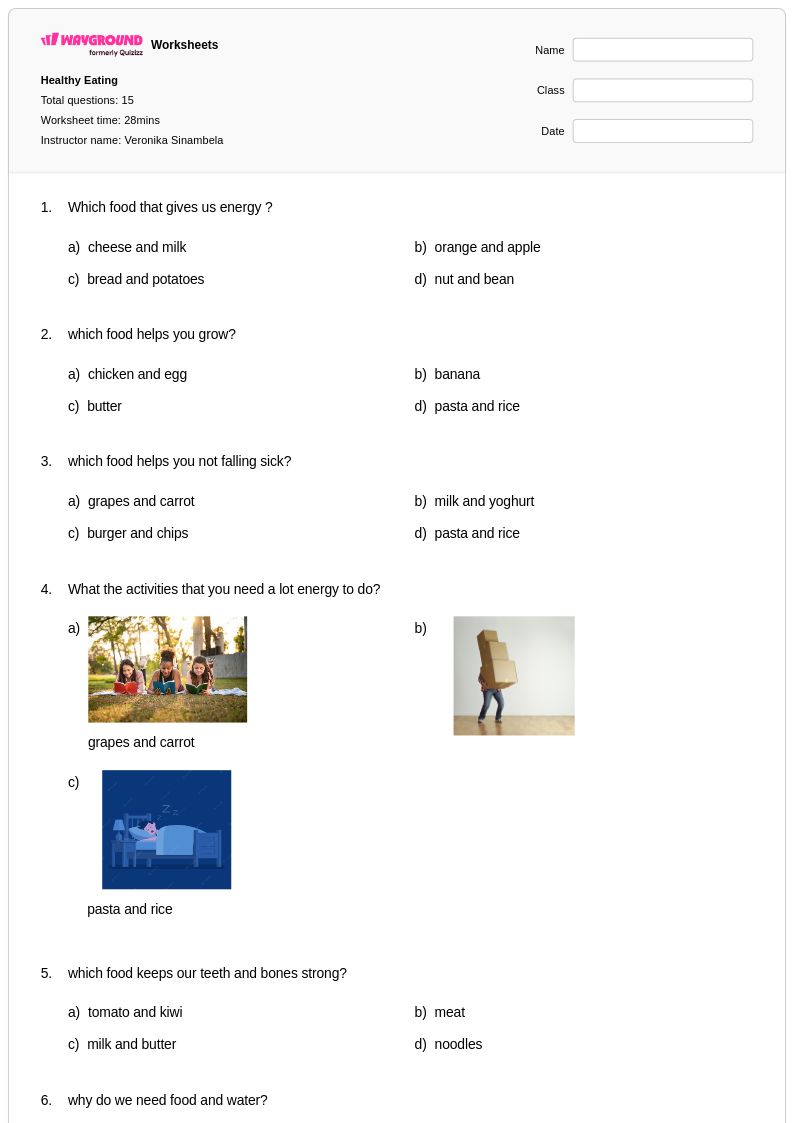
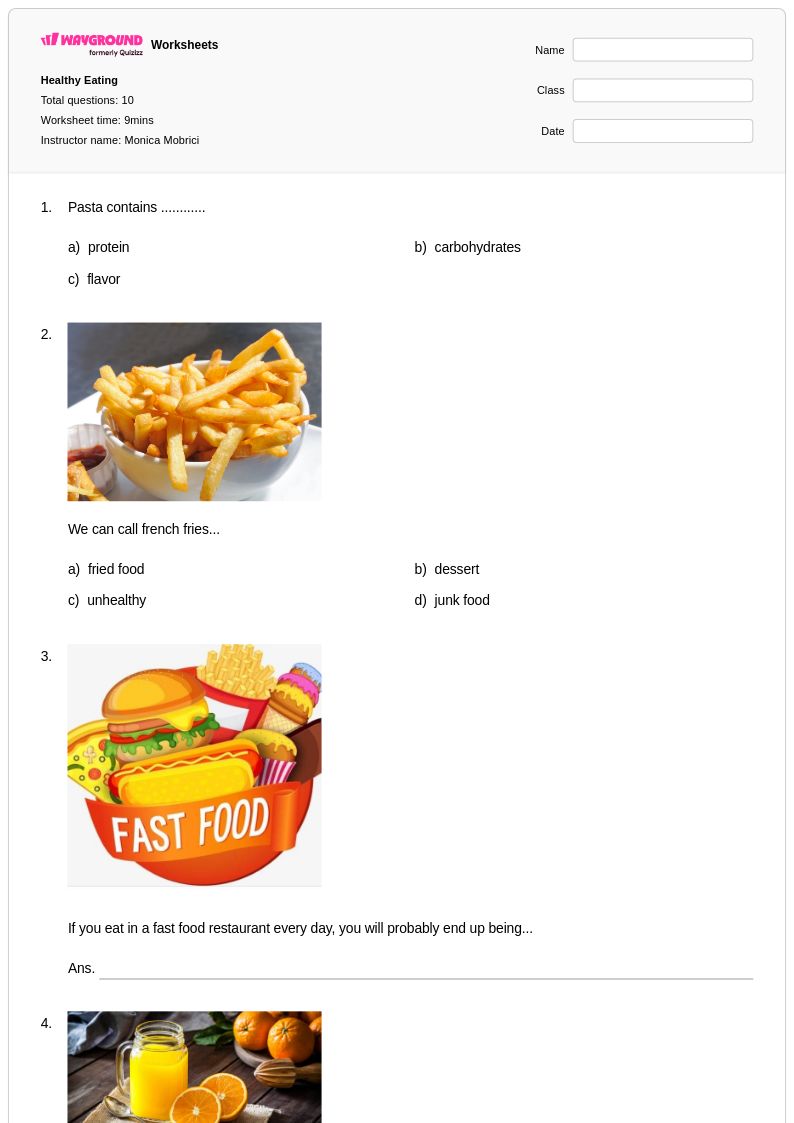
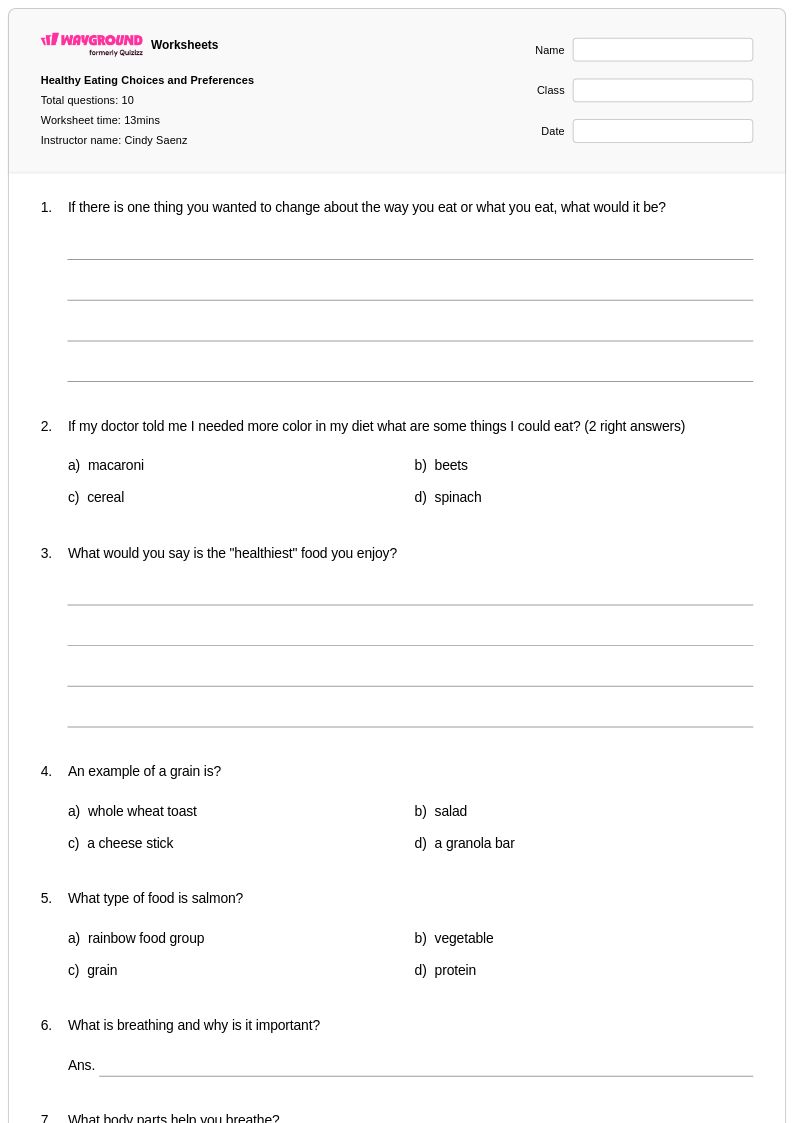
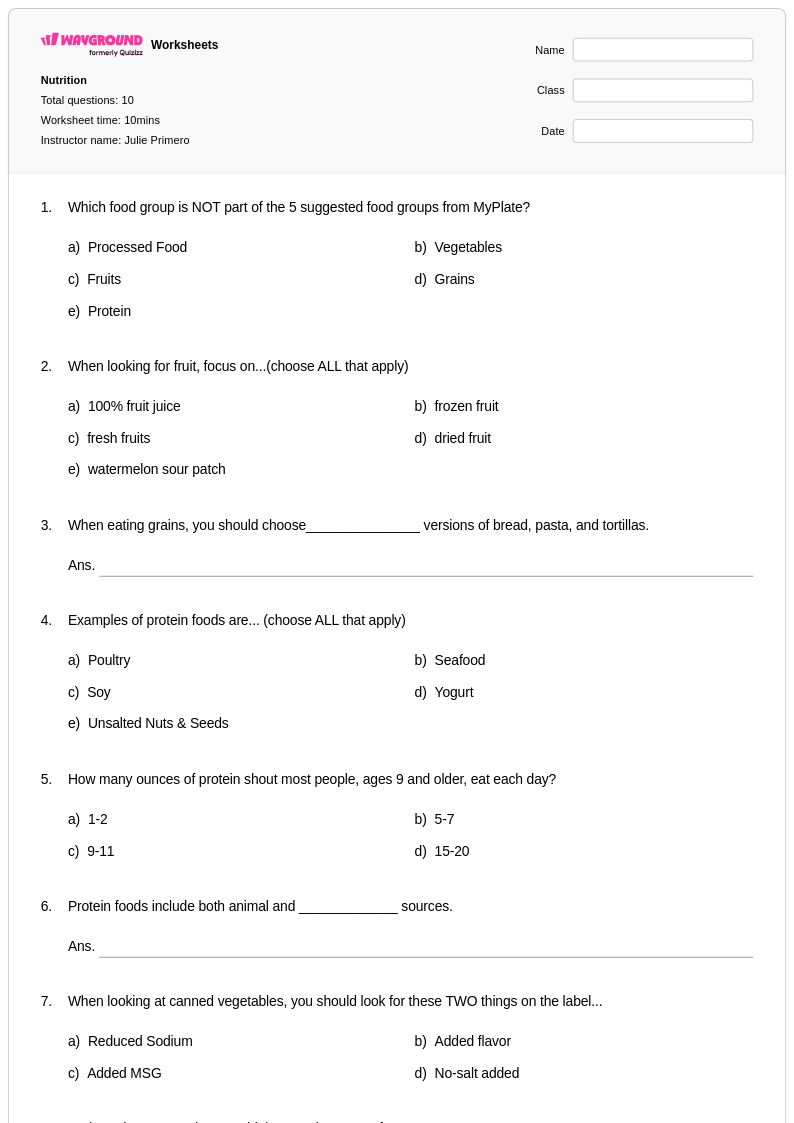
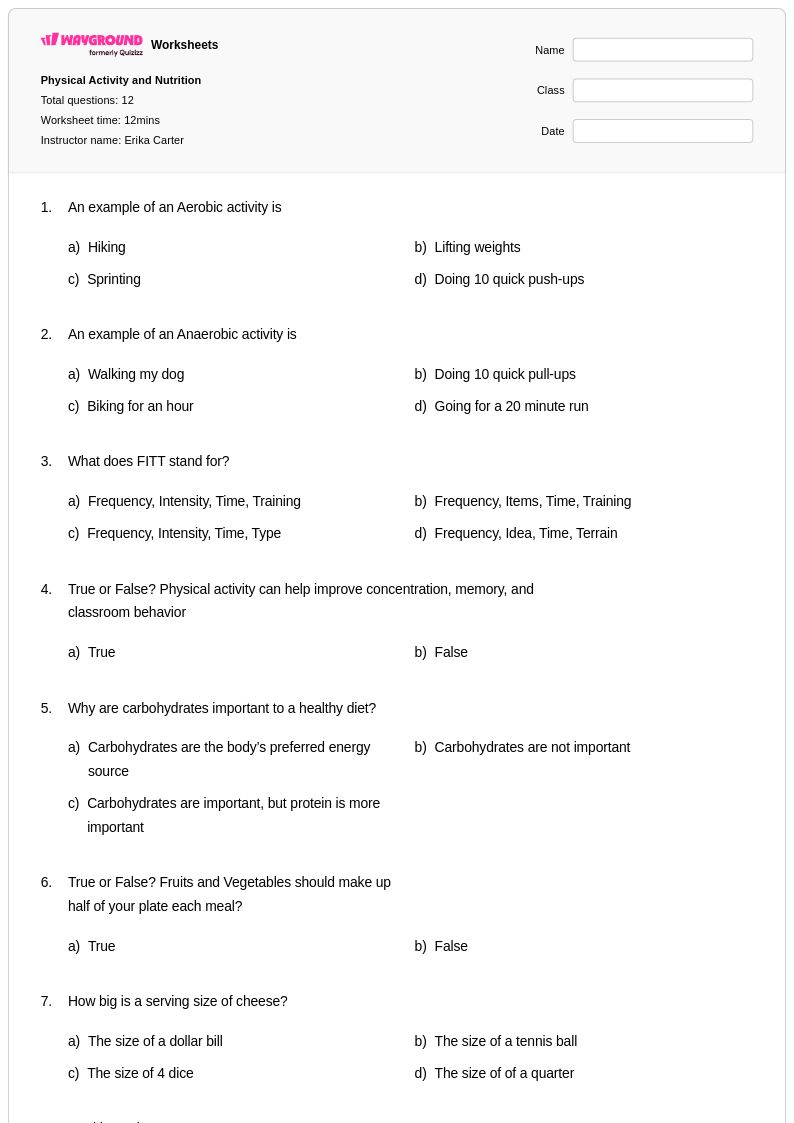
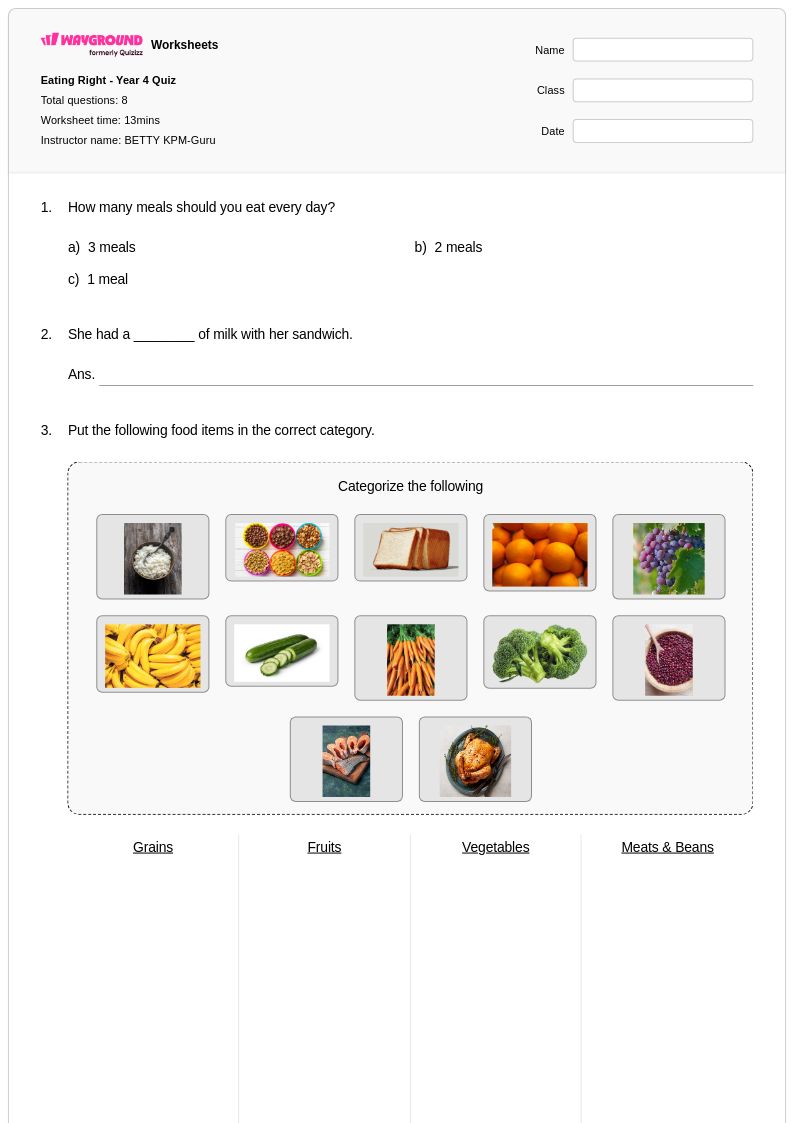
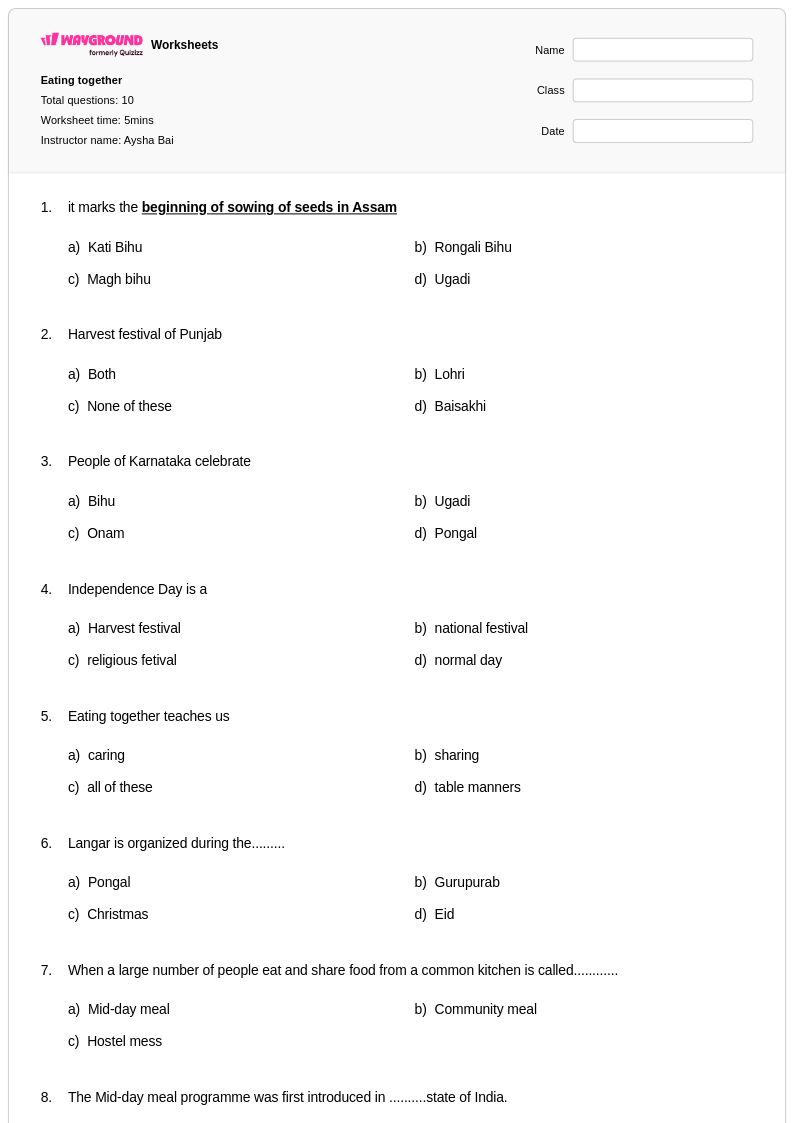
Discover free Intuitive Eating worksheets and printables that help students develop healthy relationships with food, featuring practice problems and answer keys to support mindful eating habits.
Intuitive eating worksheets through Wayground (formerly Quizizz) provide comprehensive educational resources that help students develop a healthy, mindful relationship with food and nutrition. These expertly designed materials guide learners through the core principles of intuitive eating, including recognizing hunger and fullness cues, rejecting diet culture mentality, and honoring their body's natural wisdom. The worksheets strengthen critical thinking skills about nutrition while fostering self-awareness and emotional intelligence around eating behaviors. Each printable resource includes detailed answer keys that support both independent study and classroom instruction, with practice problems that encourage students to reflect on their personal eating experiences and challenge common misconceptions about food and body image. These free educational materials seamlessly integrate evidence-based nutrition science with practical life skills that promote long-term wellness and positive body relationships.
Wayground (formerly Quizizz) empowers physical education teachers with an extensive collection of teacher-created intuitive eating resources drawn from millions of educational materials developed by experienced educators nationwide. The platform's robust search and filtering capabilities enable instructors to quickly locate age-appropriate content that aligns with health education standards and supports diverse learning objectives. Teachers can easily customize worksheets to meet individual student needs, utilizing differentiation tools that accommodate various learning styles and academic levels while addressing the sensitive nature of nutrition and body image topics. These versatile resources are available in both printable pdf formats for traditional classroom use and digital formats for interactive learning experiences, making them invaluable for lesson planning, targeted remediation with students struggling with food-related anxiety, and enrichment activities that deepen understanding of mindful eating practices.
FAQs
How do I teach intuitive eating in a health or PE class?
Teaching intuitive eating starts with helping students distinguish between physical hunger cues and emotional or habitual eating triggers. Begin by introducing the ten core principles of intuitive eating — such as rejecting diet culture, honoring hunger, and respecting fullness — and use structured reflection activities to help students apply these concepts to their own experiences. Because the topic touches on body image and food relationships, establishing a safe, non-judgmental classroom environment before diving into content is essential.
What exercises help students practice recognizing hunger and fullness cues?
Hunger-fullness scale activities are among the most effective tools for helping students tune into their body's signals — students rate their hunger before and after eating and reflect on what influenced their choices. Journaling prompts that ask students to describe physical sensations, emotions, and thoughts around mealtimes reinforce self-awareness over time. Worksheet-based reflection exercises that walk students through specific eating scenarios help them identify patterns and practice mindful decision-making in a structured format.
What misconceptions do students commonly have about intuitive eating?
The most common misconception is that intuitive eating means eating whatever you want with no structure, when in fact it involves developing attunement to physical hunger and nutritional needs rather than abandoning all food awareness. Students also frequently conflate intuitive eating with anti-health messaging, not realizing the approach is rooted in evidence-based nutrition science. Another error pattern is dismissing hunger cues as weakness rather than understanding them as biological signals the body is designed to send.
How can I address diet culture and body image in a classroom setting without causing harm?
Approach diet culture critically by framing it as a societal system rather than making it personal — focus discussions on media messaging, marketing language, and cultural norms rather than individual choices or bodies. Use worksheet activities that ask students to analyze food advertising or identify diet culture language in popular media, which builds critical thinking without requiring students to disclose personal experiences. For students who may have heightened sensitivity to these topics, Wayground's Read Aloud and reduced answer choices accommodations can lower barriers to engagement without drawing attention to individual needs.
How do I use Wayground's intuitive eating worksheets in my classroom?
Wayground's intuitive eating worksheets are available as printable PDFs for traditional classroom use and in digital formats for technology-integrated or blended learning environments, making them flexible for a range of instructional settings. Teachers can also host worksheets as a quiz directly on Wayground, which adds an interactive layer and allows for real-time tracking of student responses. Each worksheet includes a complete answer key, supporting both guided class discussion and independent student work.
How can I differentiate intuitive eating lessons for students with different comfort levels or learning needs?
Differentiation for intuitive eating content is particularly important given the sensitive nature of food, body image, and eating behaviors. On Wayground, teachers can apply individual accommodations such as extended time, Read Aloud for students who benefit from audio support, and reduced answer choices to lower cognitive load — all without alerting other students to those adjustments. These settings can be saved per student and reused across sessions, making it easier to support diverse learners consistently throughout a unit.