
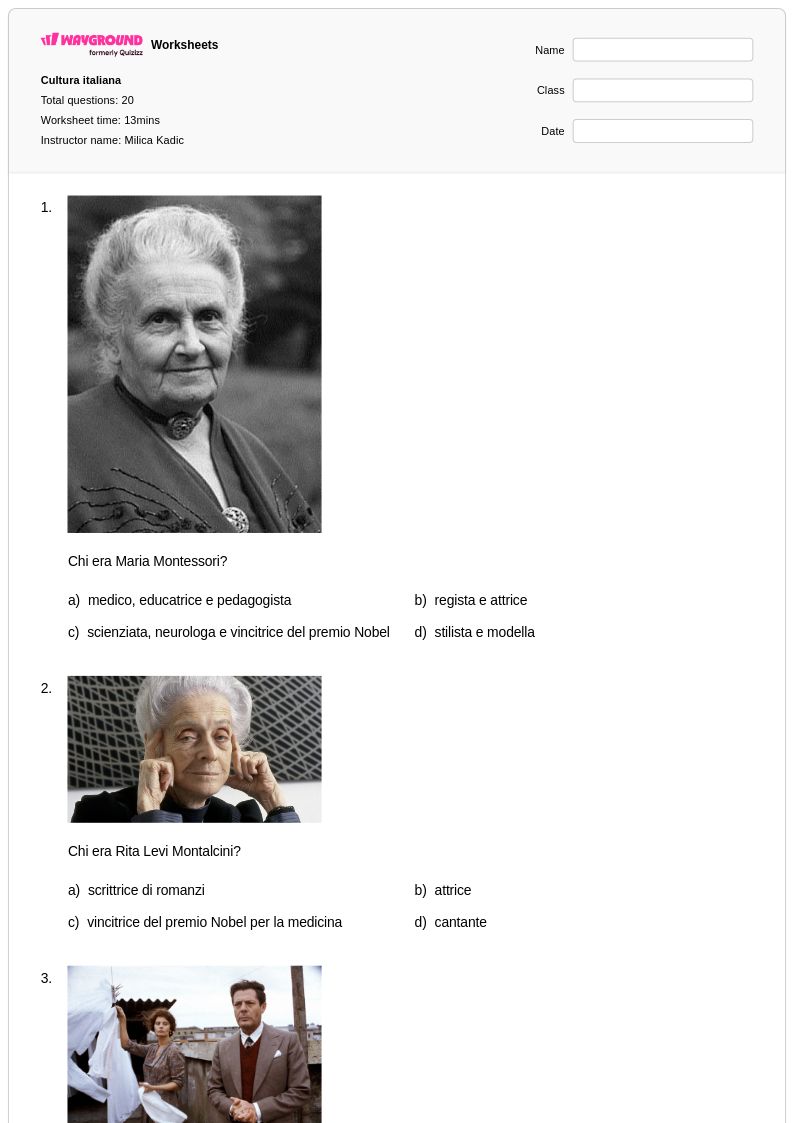
20Q
2nd
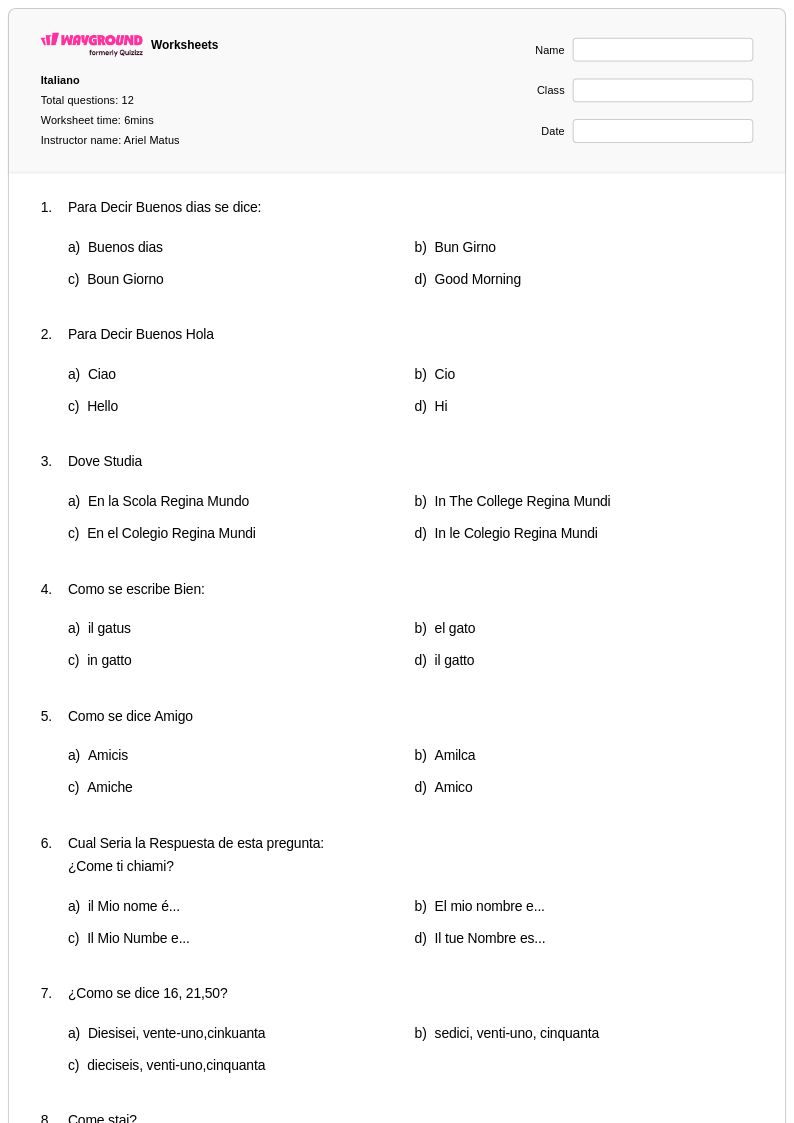
12Q
KG - Uni
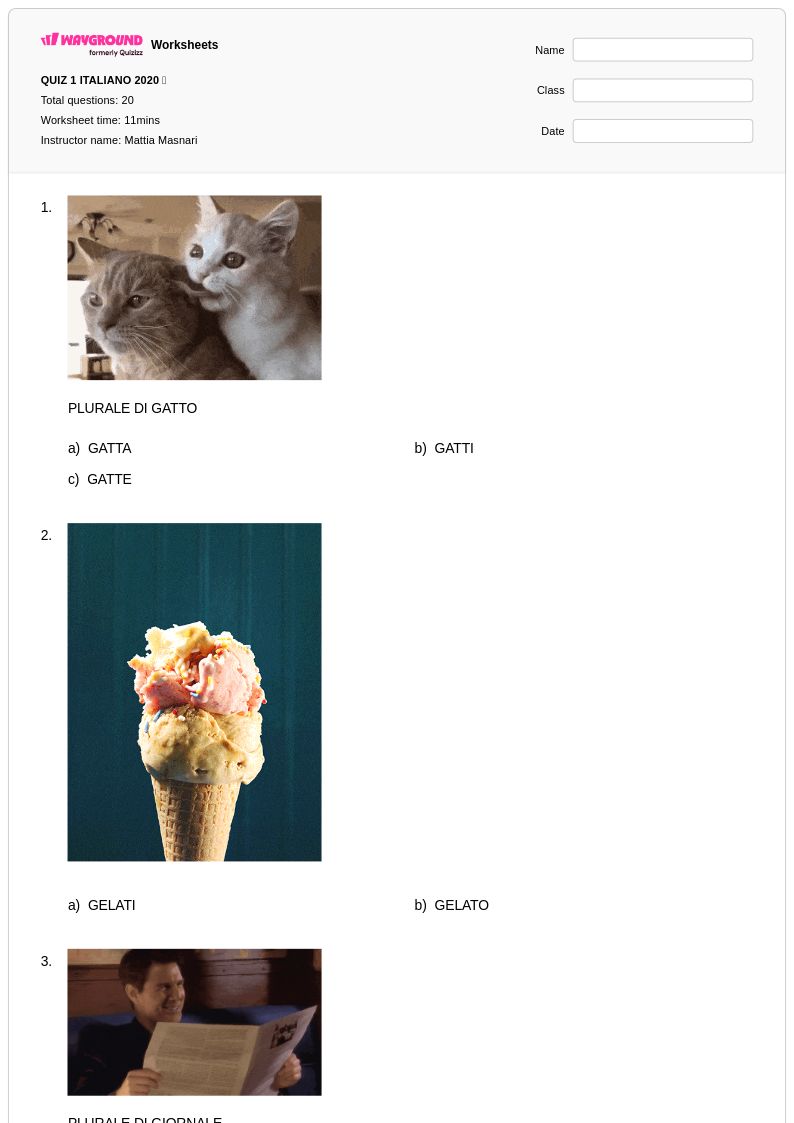
20Q
1st - 10th
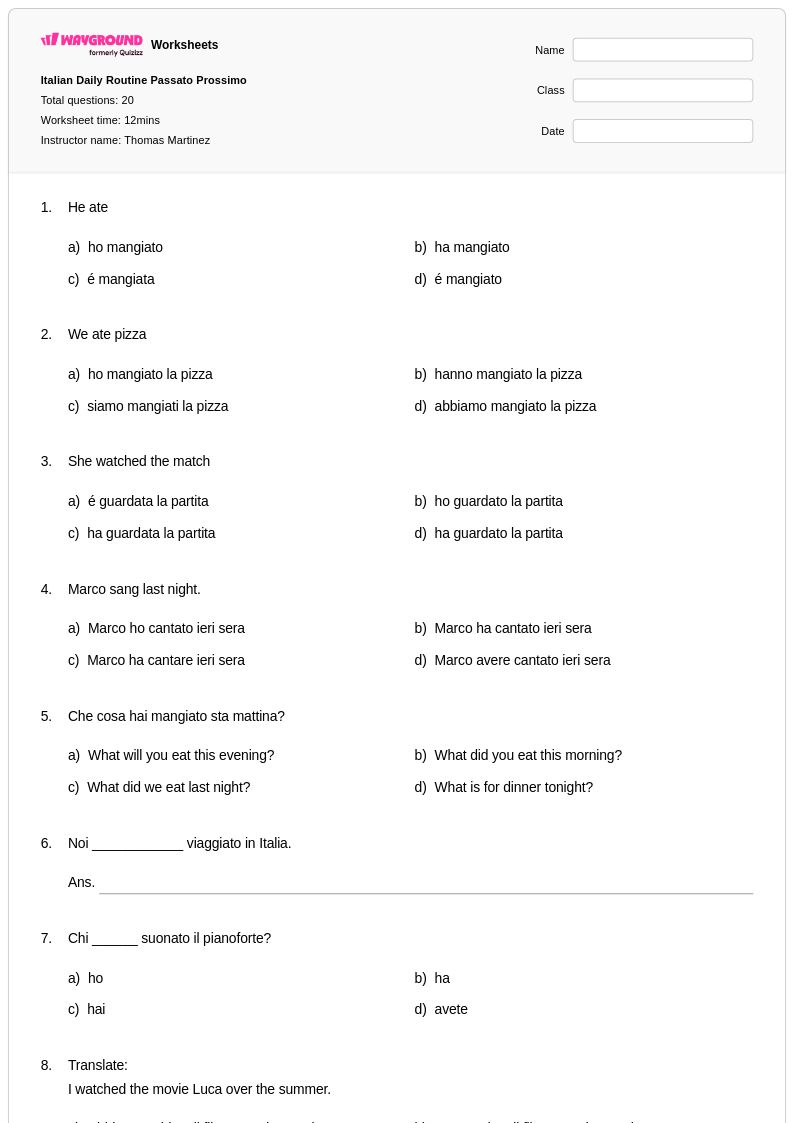
20Q
1st - Uni
38Q
2nd
12Q
2nd - 4th
40Q
1st - 5th
12Q
2nd - 4th
10Q
2nd
6Q
2nd
12Q
2nd - 4th
8Q
1st - 5th
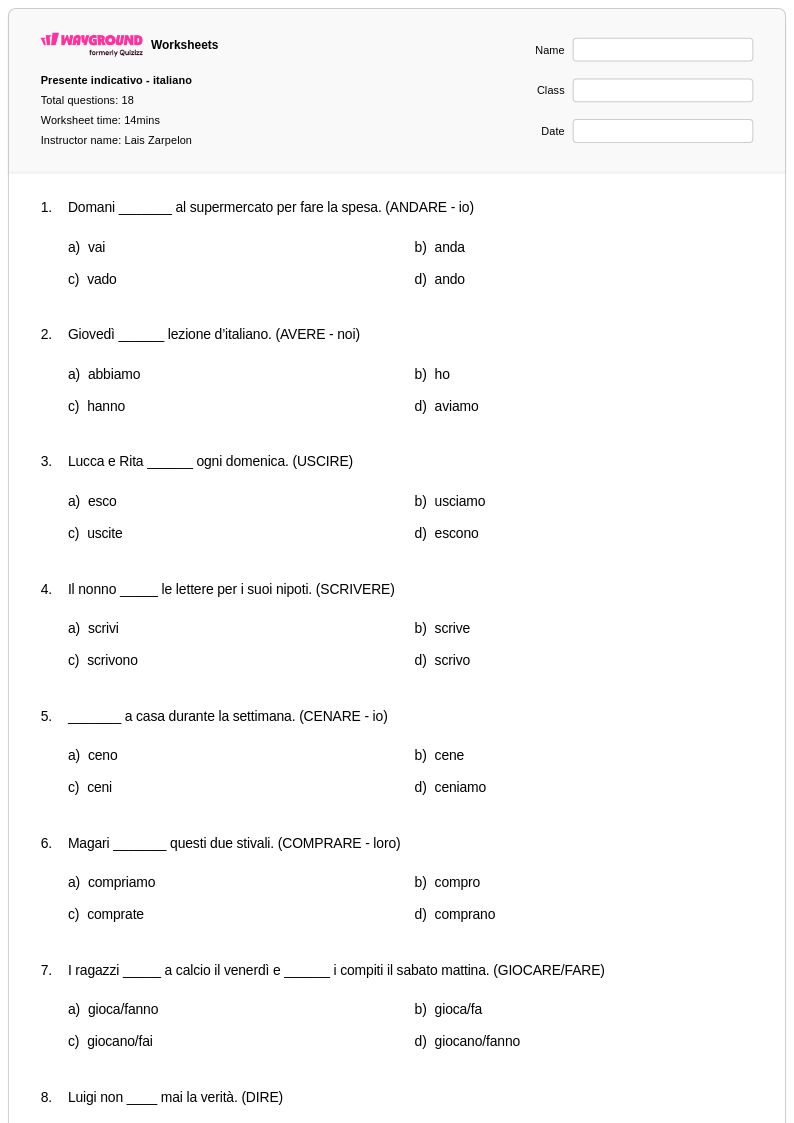
18Q
KG - PD
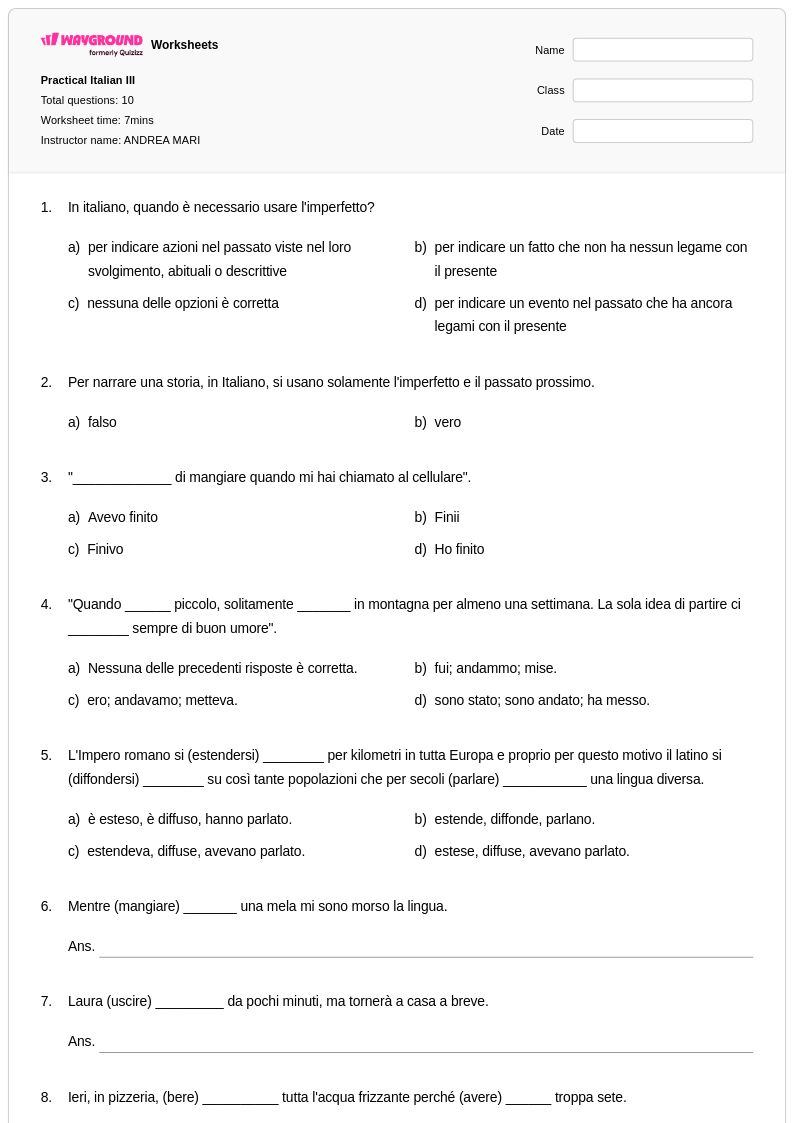
10Q
1st - 3rd
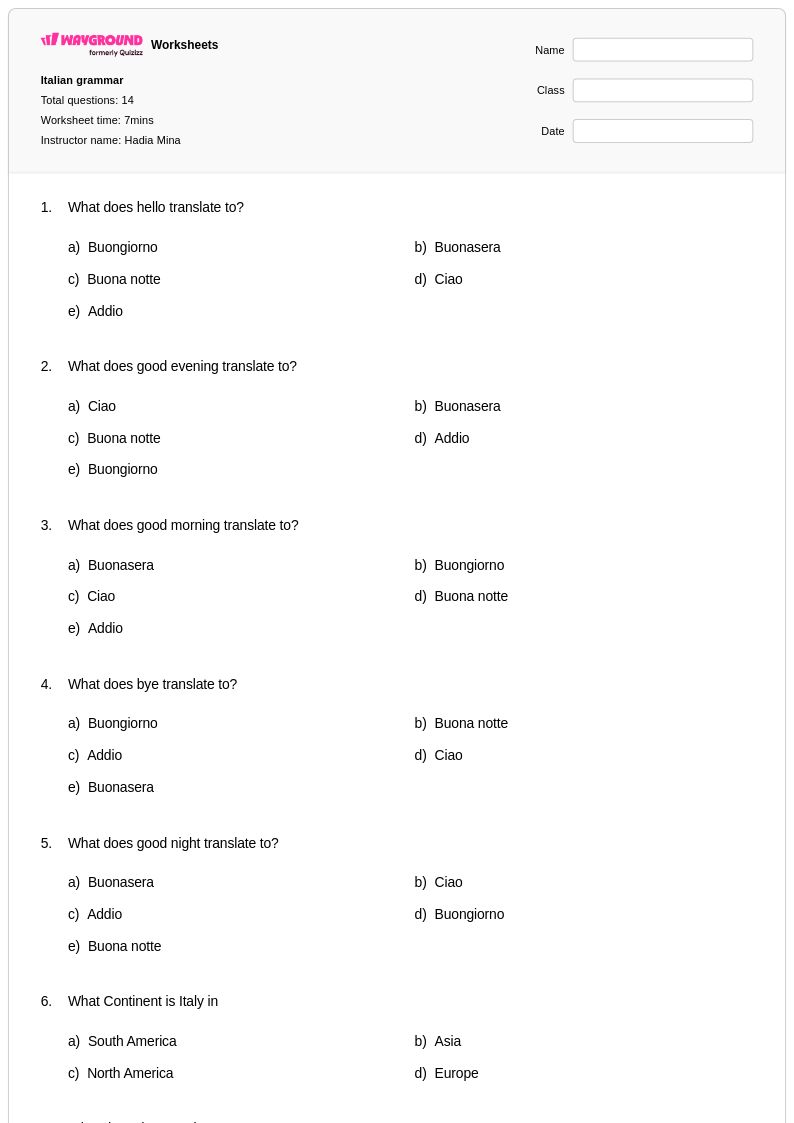
14Q
2nd - 4th
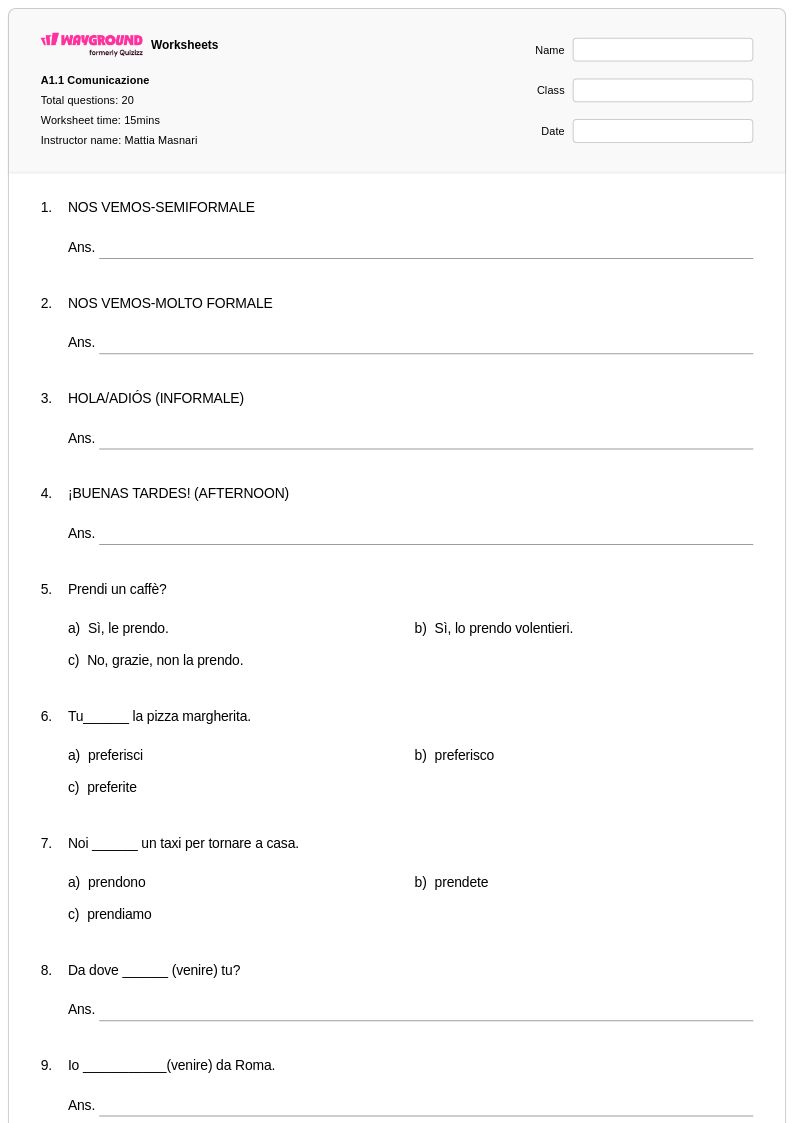
20Q
KG - PD
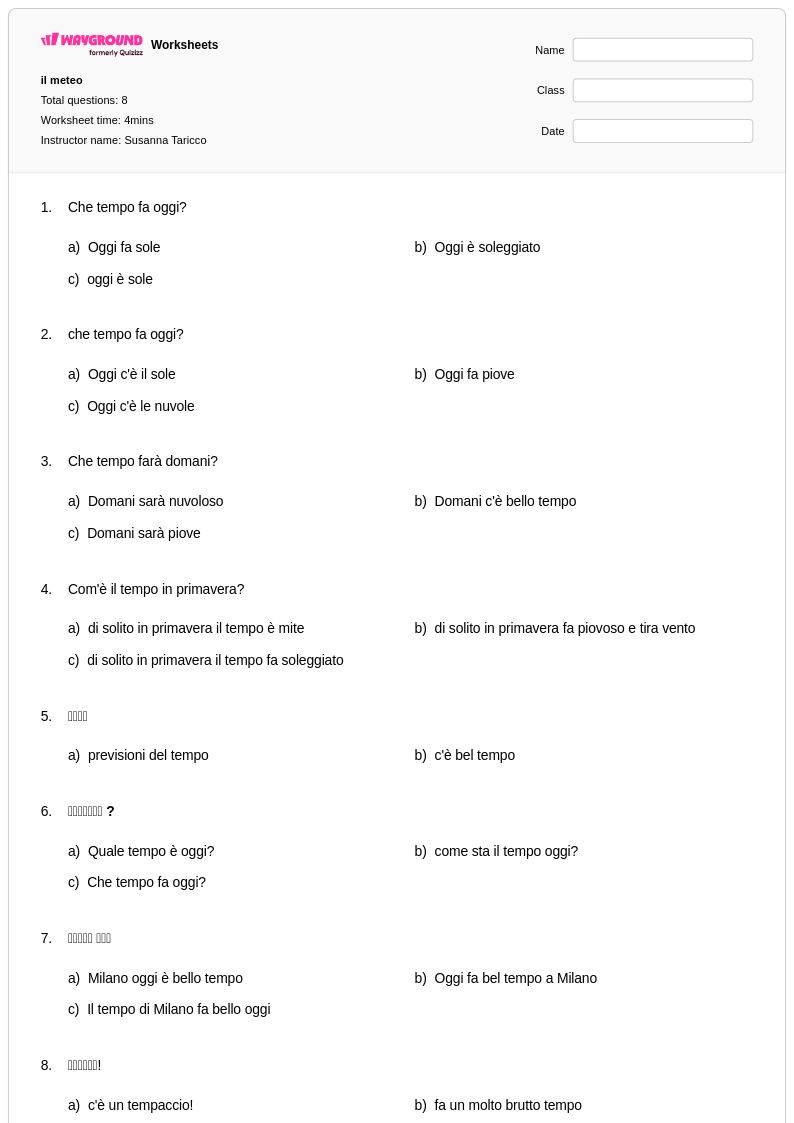
8Q
2nd
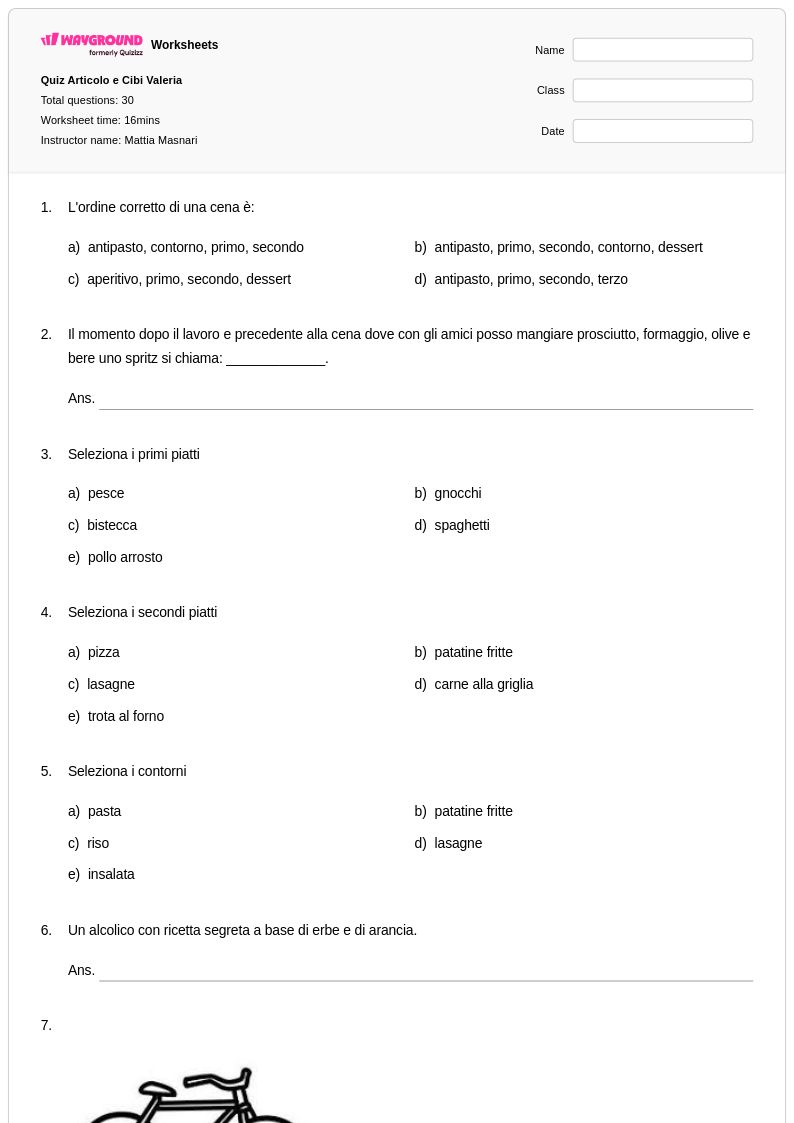
30Q
KG - PD
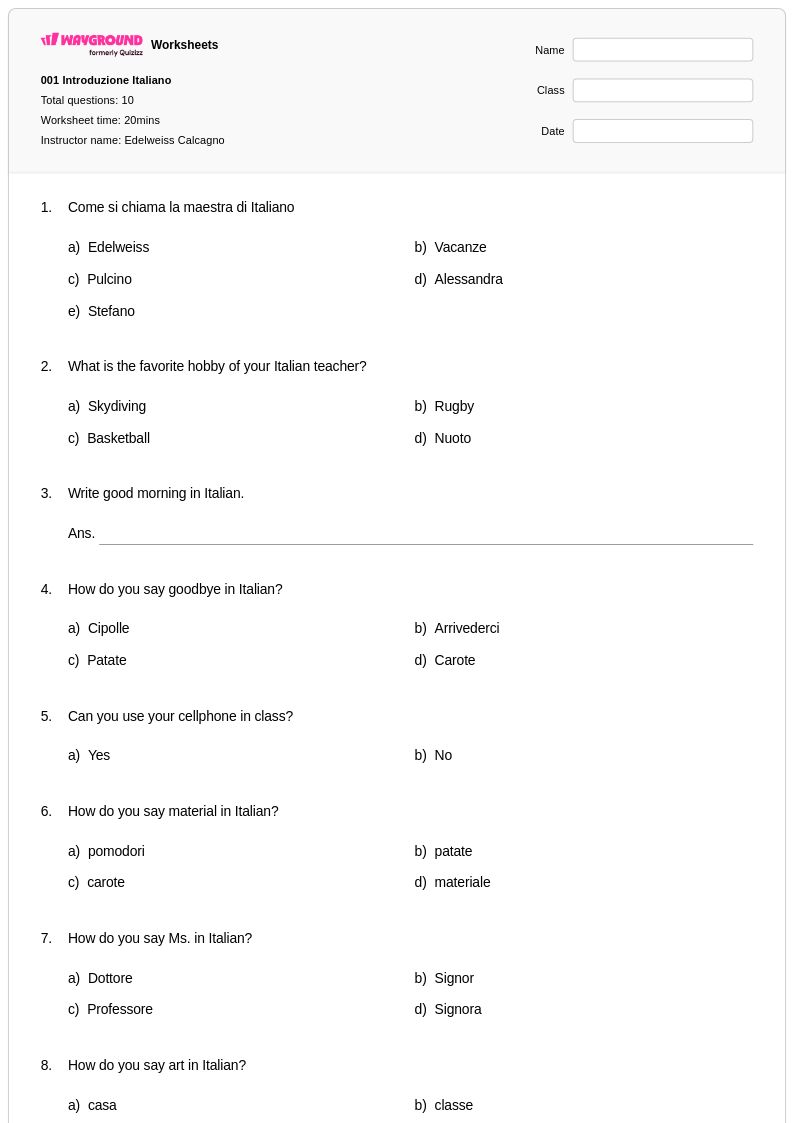
10Q
1st - 12th
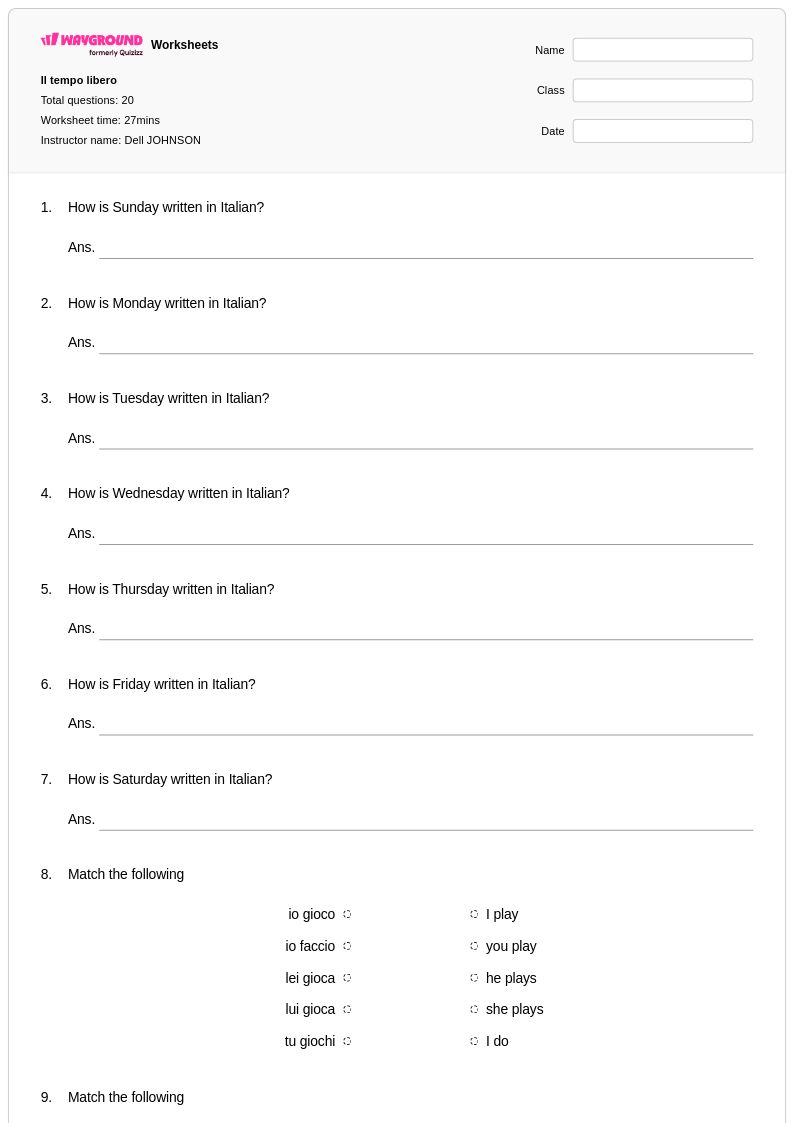
20Q
1st - 6th
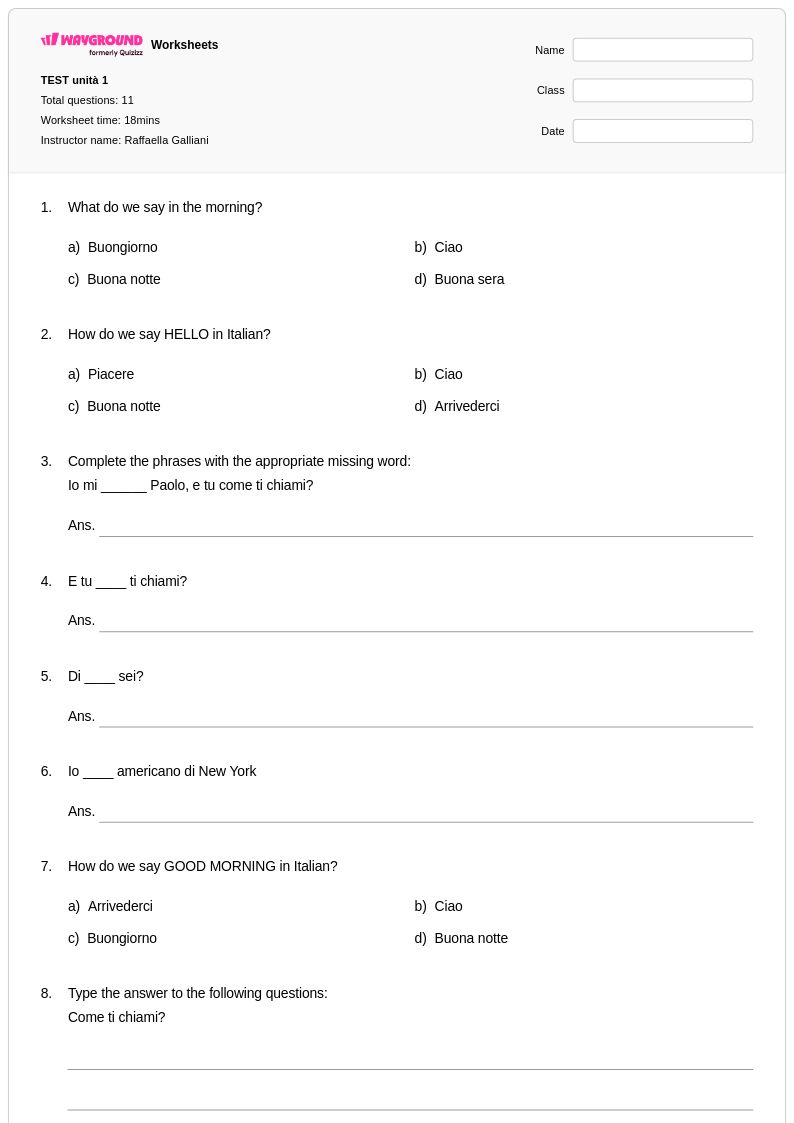
11Q
1st - 5th
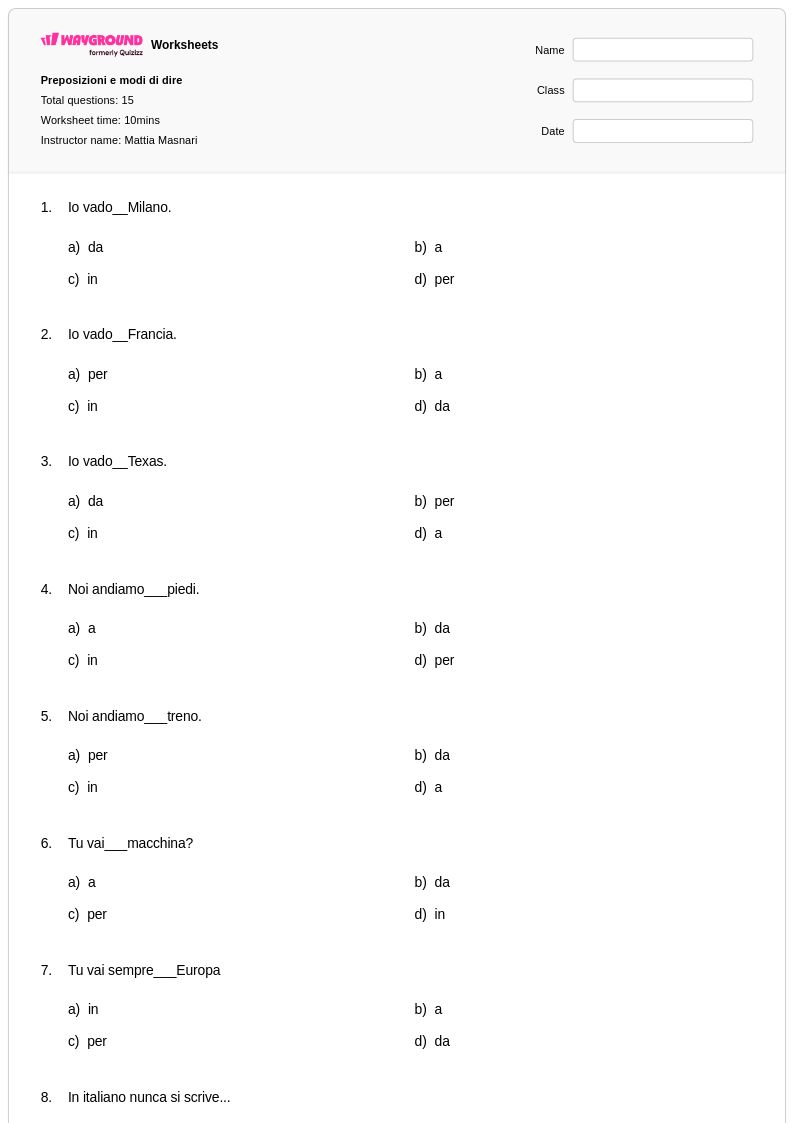
15Q
KG - PD
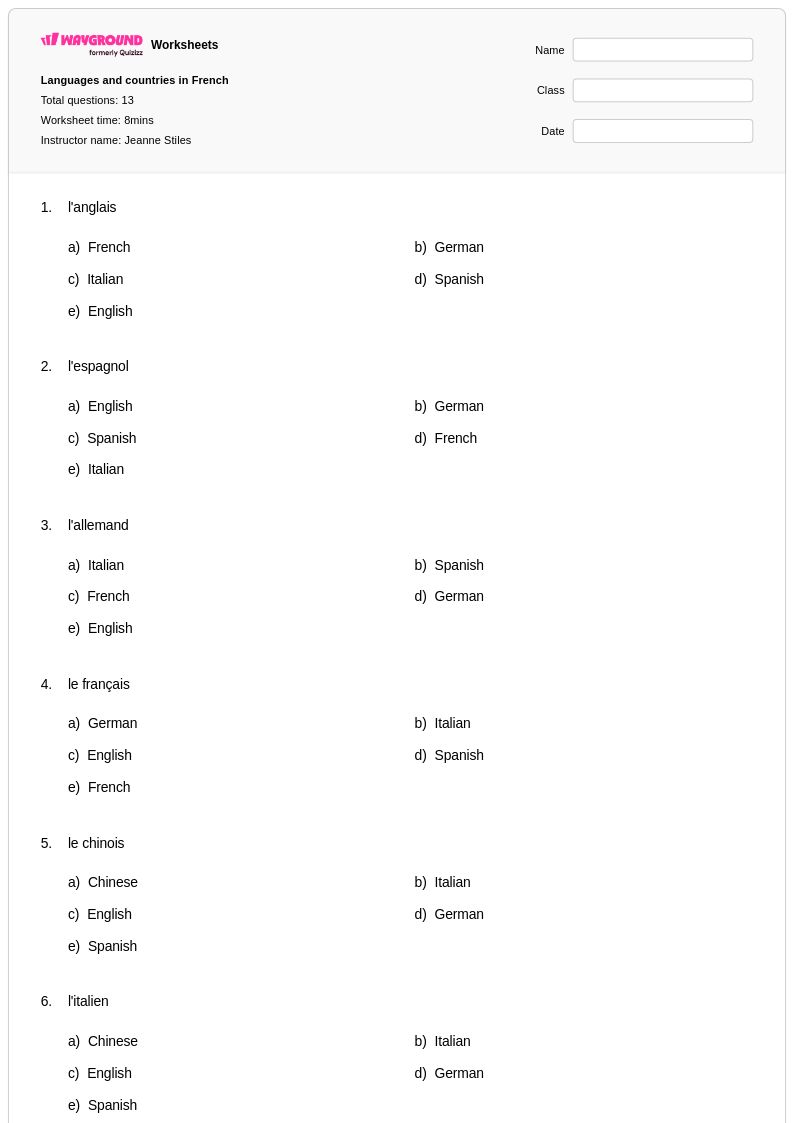
13Q
KG - 12th
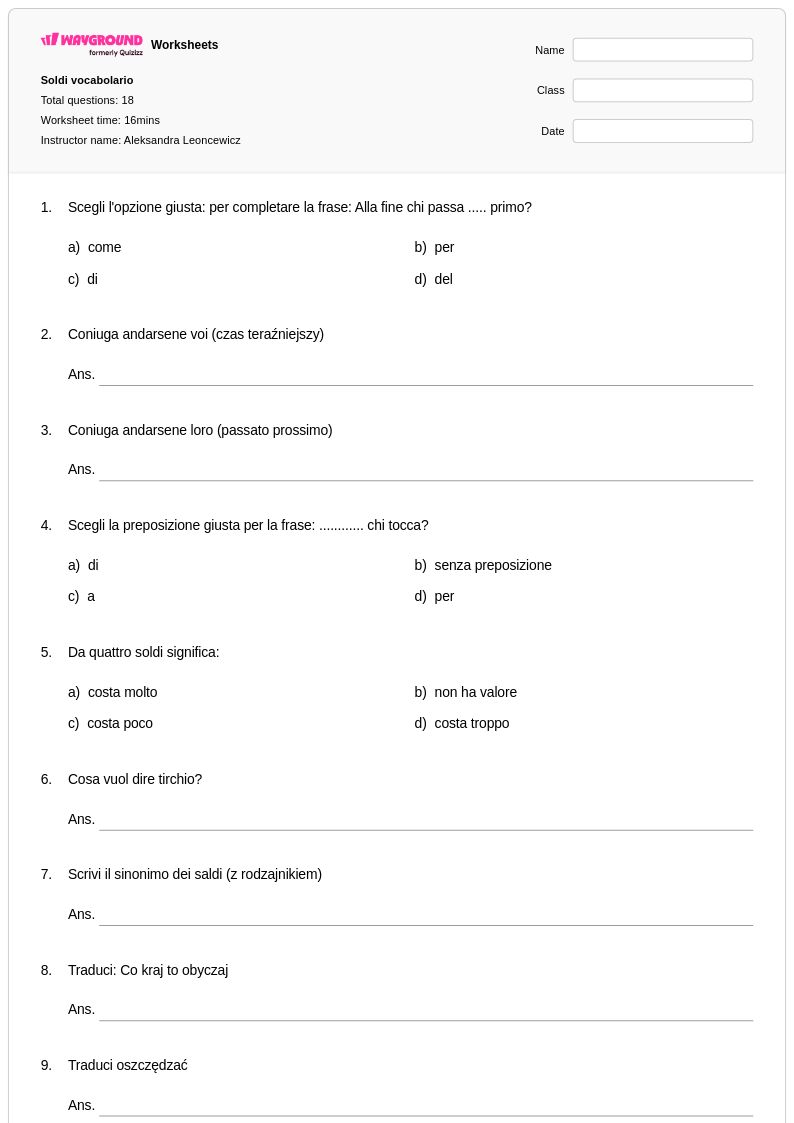
18Q
2nd
Explore planilhas Italian por notas
Explore outras planilhas de assuntos para class 2
Explore printable Italian worksheets for Class 2
Italian worksheets for Class 2 students provide an engaging foundation for young learners beginning their journey into this beautiful Romance language. These carefully designed educational resources introduce essential vocabulary, basic sentence structures, and fundamental grammar concepts through age-appropriate activities that capture second graders' natural curiosity about different cultures and languages. The worksheets strengthen core skills including letter recognition of the Italian alphabet, pronunciation practice through phonetic exercises, and comprehension of simple words and phrases related to family, colors, numbers, and everyday objects. Each printable resource includes comprehensive answer keys to support both independent learning and guided instruction, while practice problems range from tracing exercises to simple matching activities that build confidence in Italian language acquisition. These free educational materials transform language learning into an interactive experience that aligns with Class 2 developmental milestones.
Wayground, formerly Quizizz, empowers educators with an extensive collection of millions of teacher-created Italian worksheets specifically tailored for Class 2 instruction. The platform's robust search and filtering capabilities allow teachers to quickly locate resources that match their curriculum objectives and student needs, whether focusing on vocabulary building, cultural awareness, or foundational grammar concepts. Standards-aligned content ensures that Italian language instruction integrates seamlessly with broader world languages curricula, while differentiation tools enable teachers to customize worksheets for various learning styles and proficiency levels within their classrooms. The flexible platform offers both printable pdf formats for traditional classroom use and digital versions for interactive learning environments, supporting teachers in planning comprehensive lesson sequences, providing targeted remediation for struggling learners, offering enrichment opportunities for advanced students, and delivering consistent skill practice that reinforces Italian language fundamentals throughout the academic year.
FAQs
How do I teach Italian grammar to beginners?
What are the most effective exercises for practicing Italian vocabulary?
What common mistakes do students make with Italian verb conjugations?
How can I use Italian worksheets to support students at different skill levels?
How do I use Wayground's Italian worksheets in my classroom?
How do I teach Italian pronunciation to English-speaking students?