
20 Q
7th
16 Q
6th
15 Q
9th - 12th
25 Q
6th - 8th
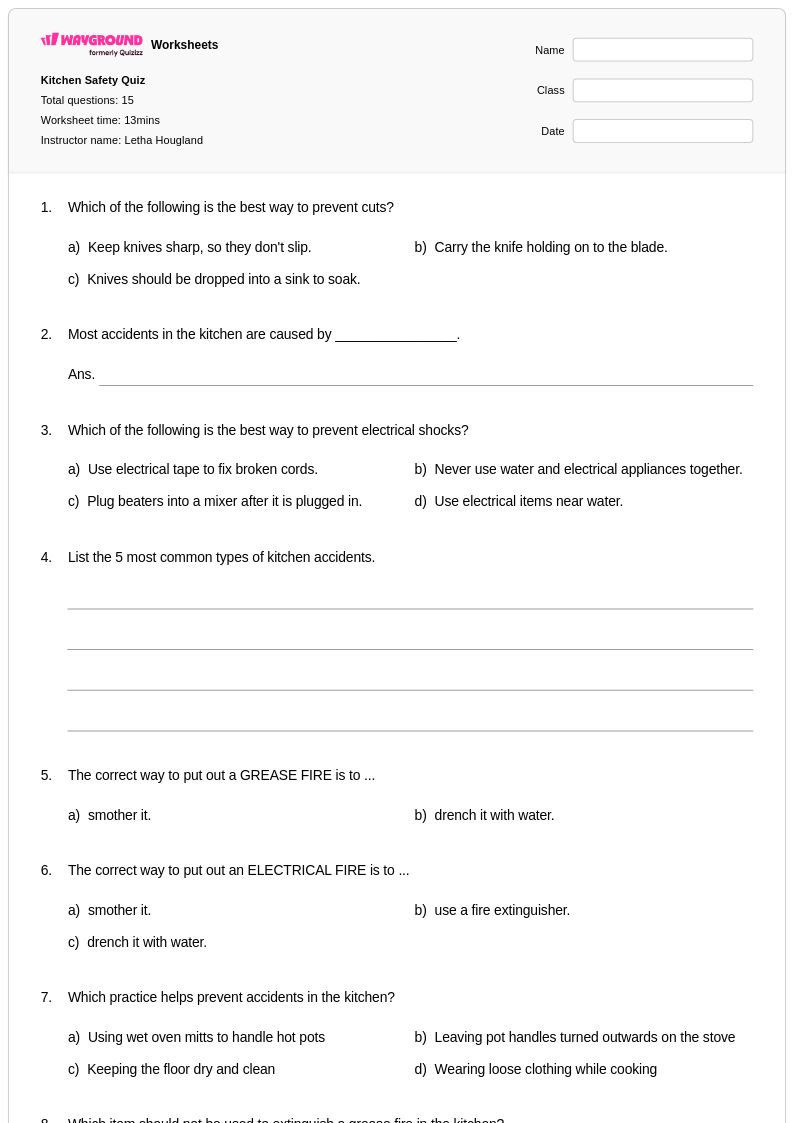
15 Q
10th
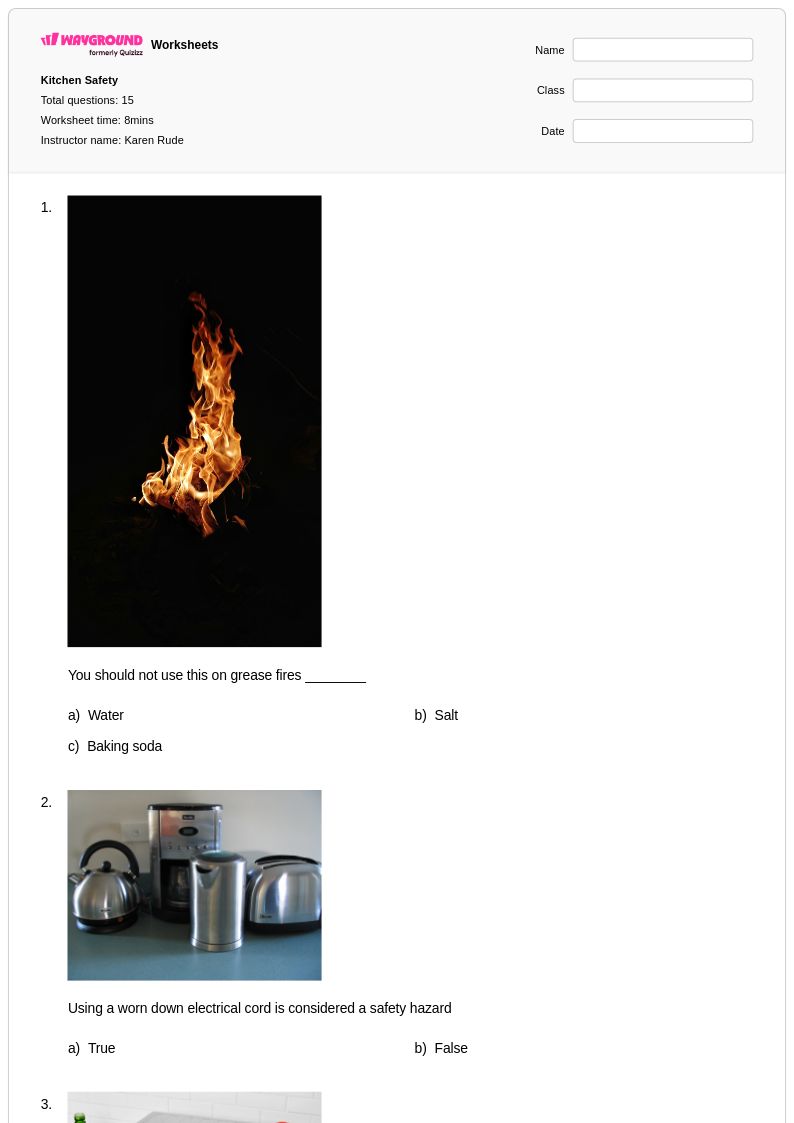
15 Q
6th - 8th
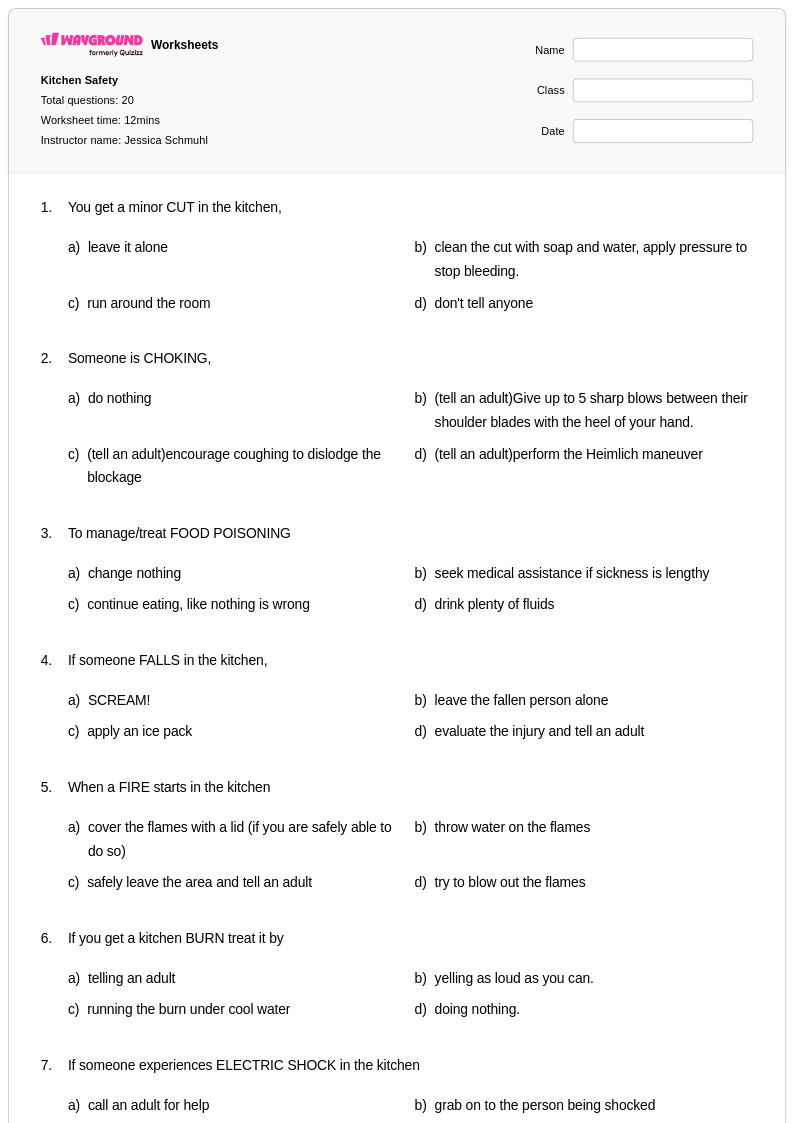
20 Q
6th - 8th
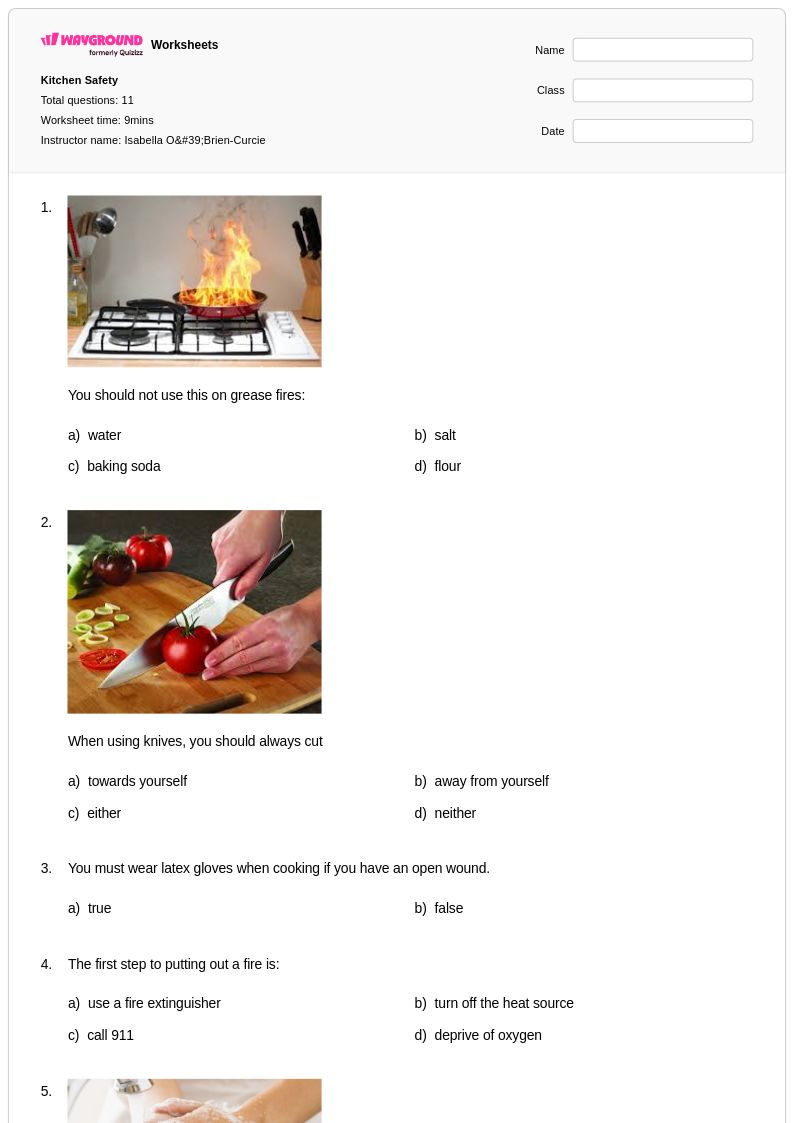
11 Q
7th - 8th
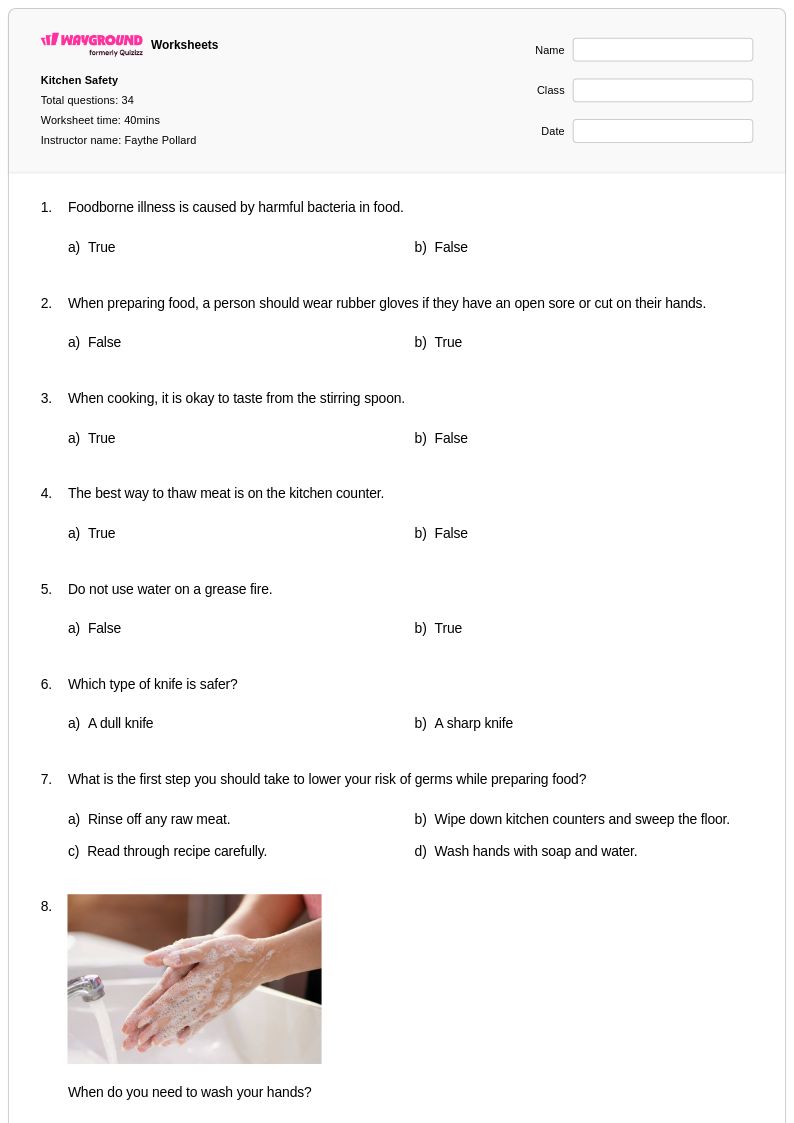
34 Q
6th - 12th
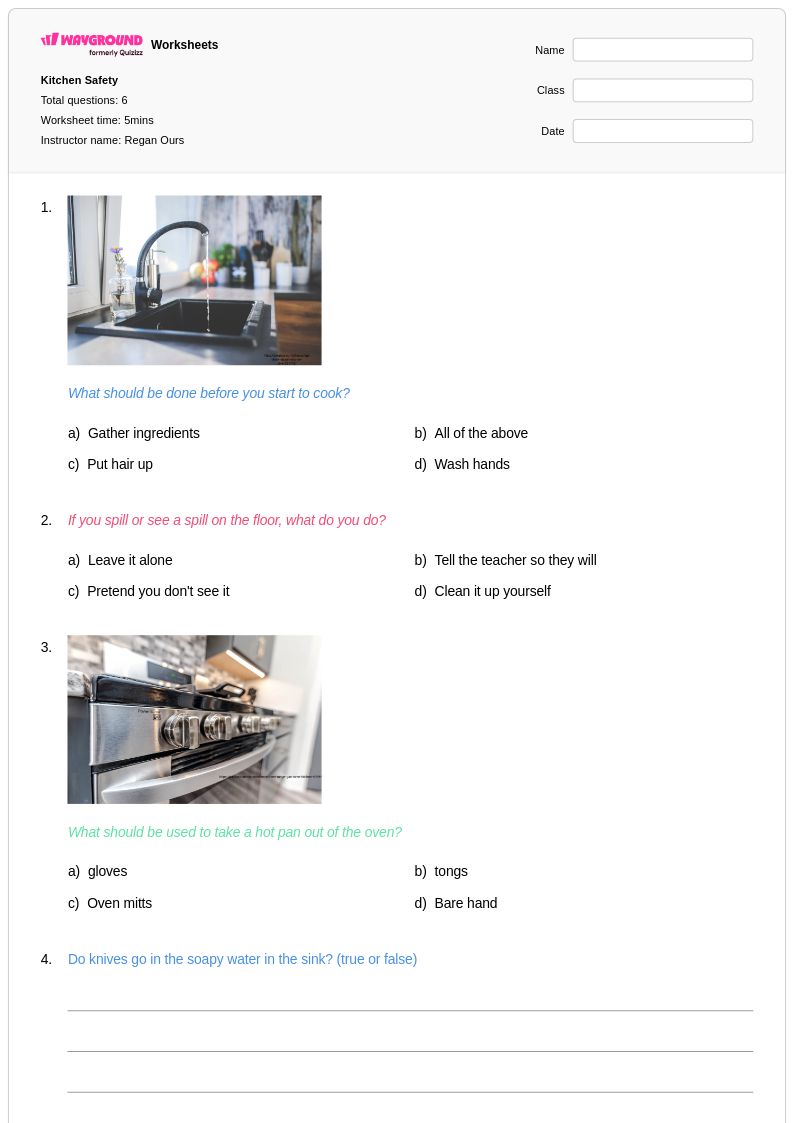
6 Q
9th - 12th
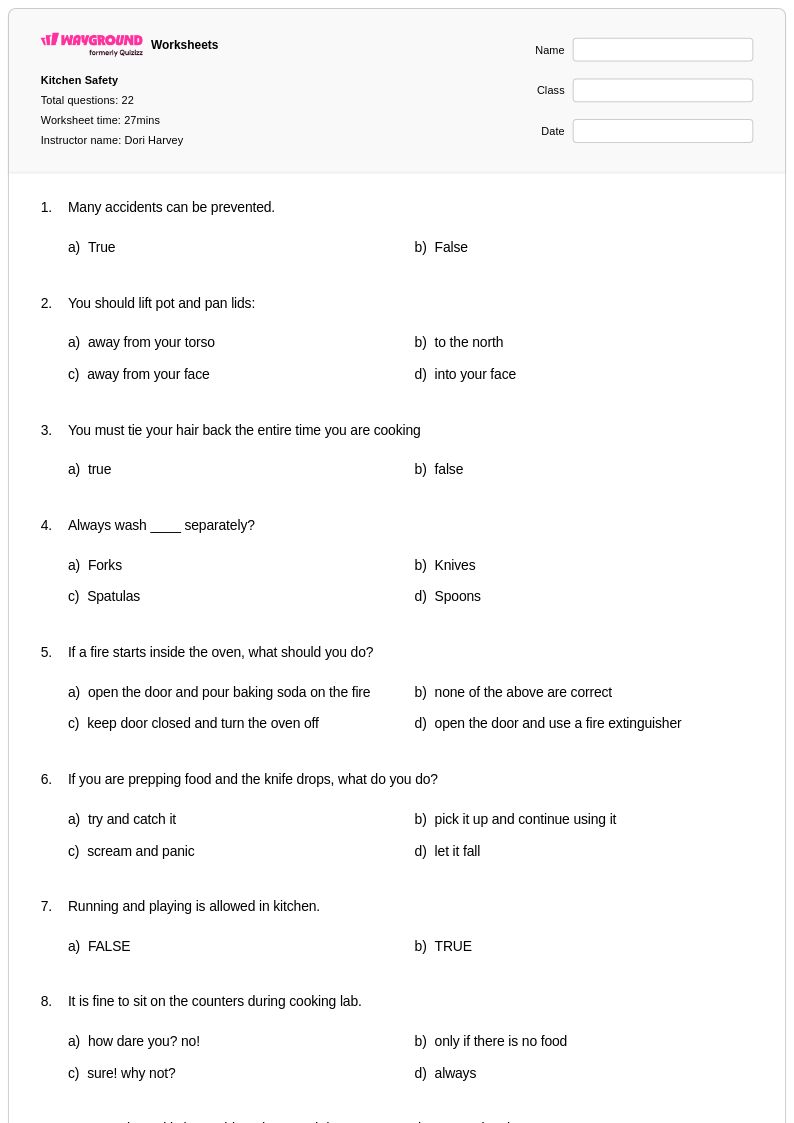
22 Q
9th
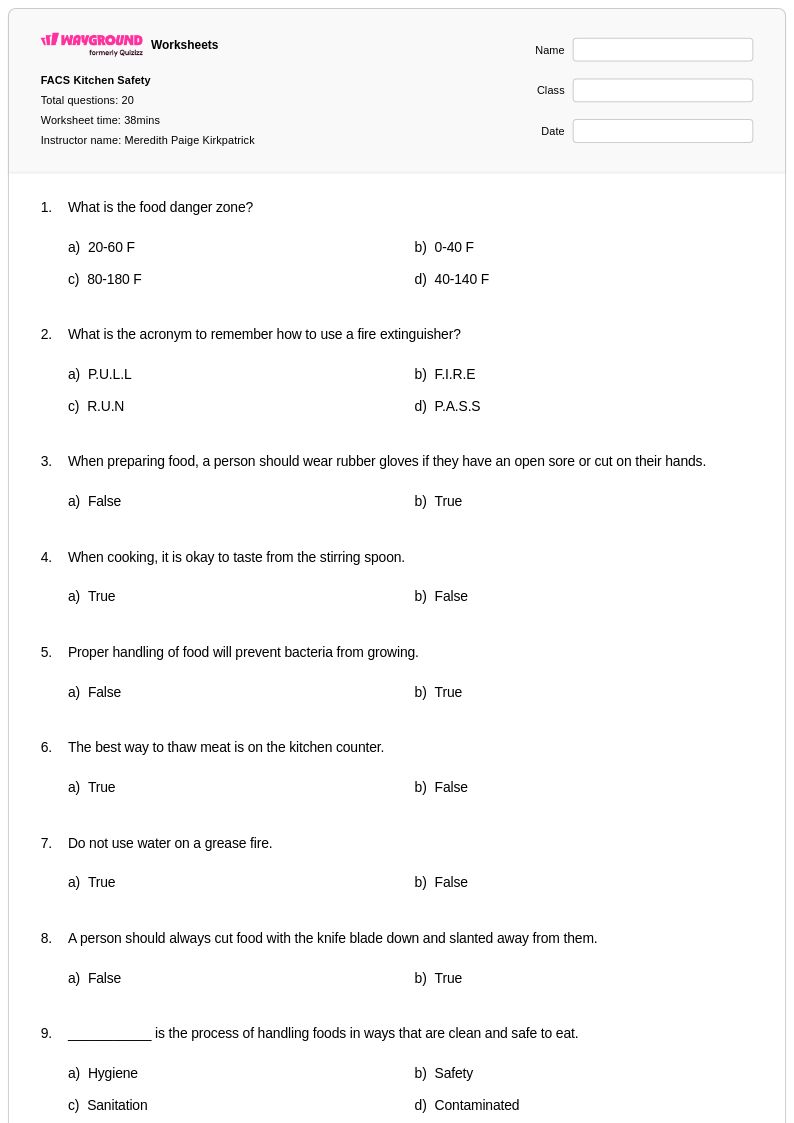
20 Q
6th - 8th
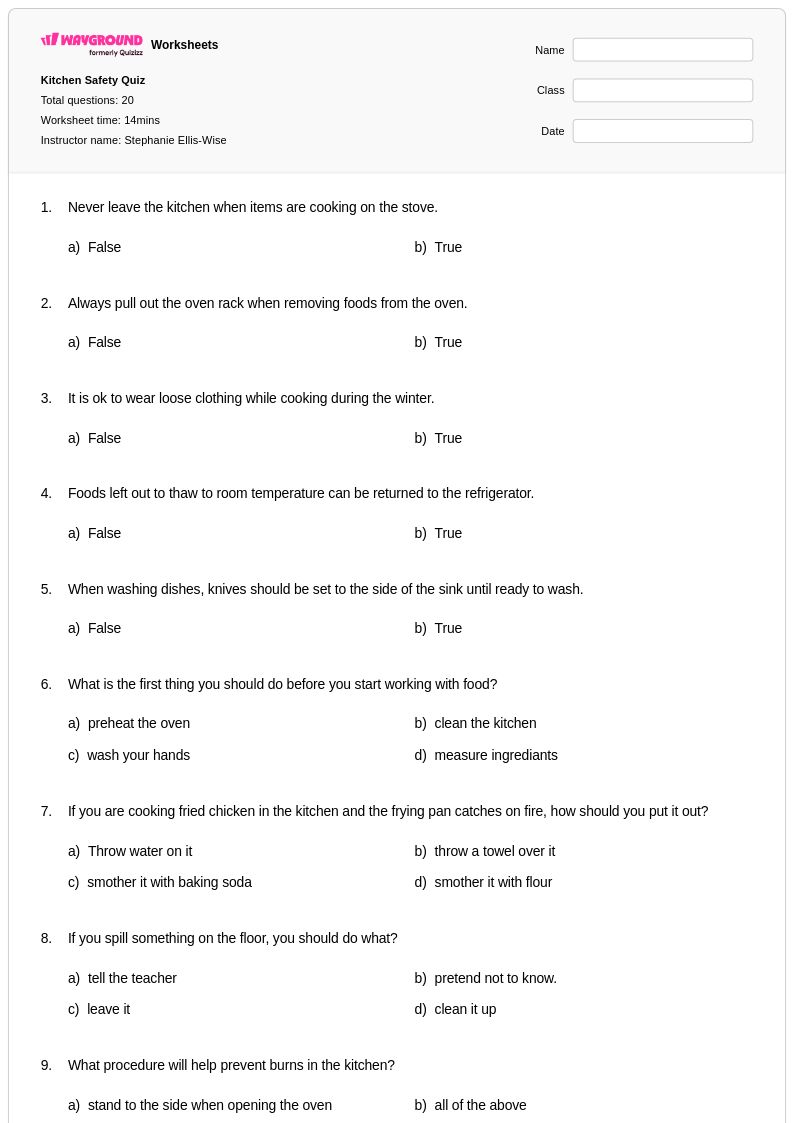
20 Q
6th - 8th
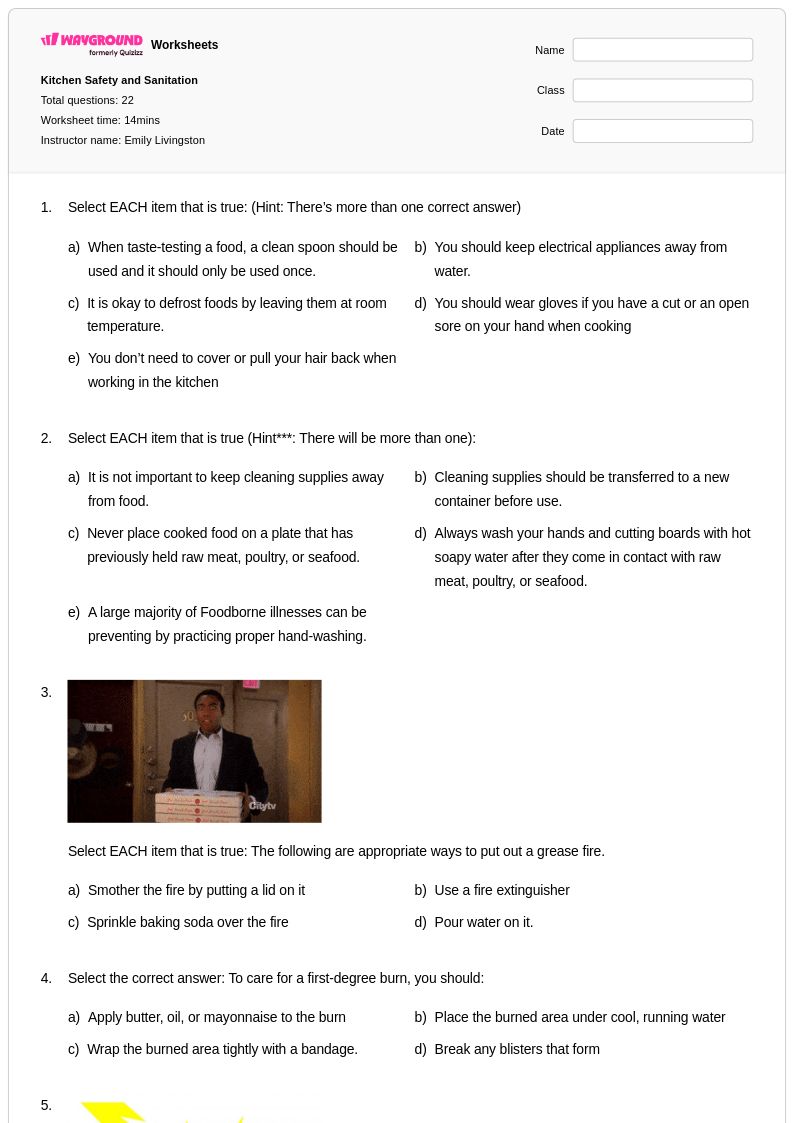
22 Q
6th - 8th
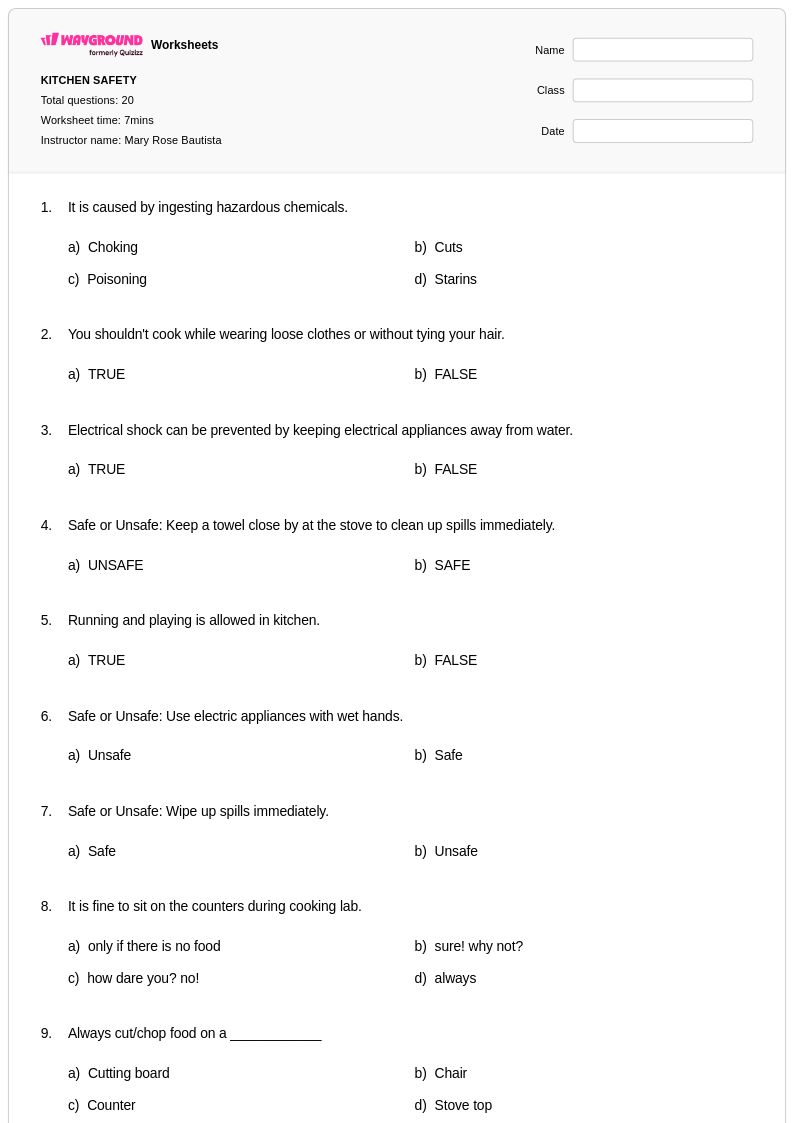
20 Q
10th - 12th
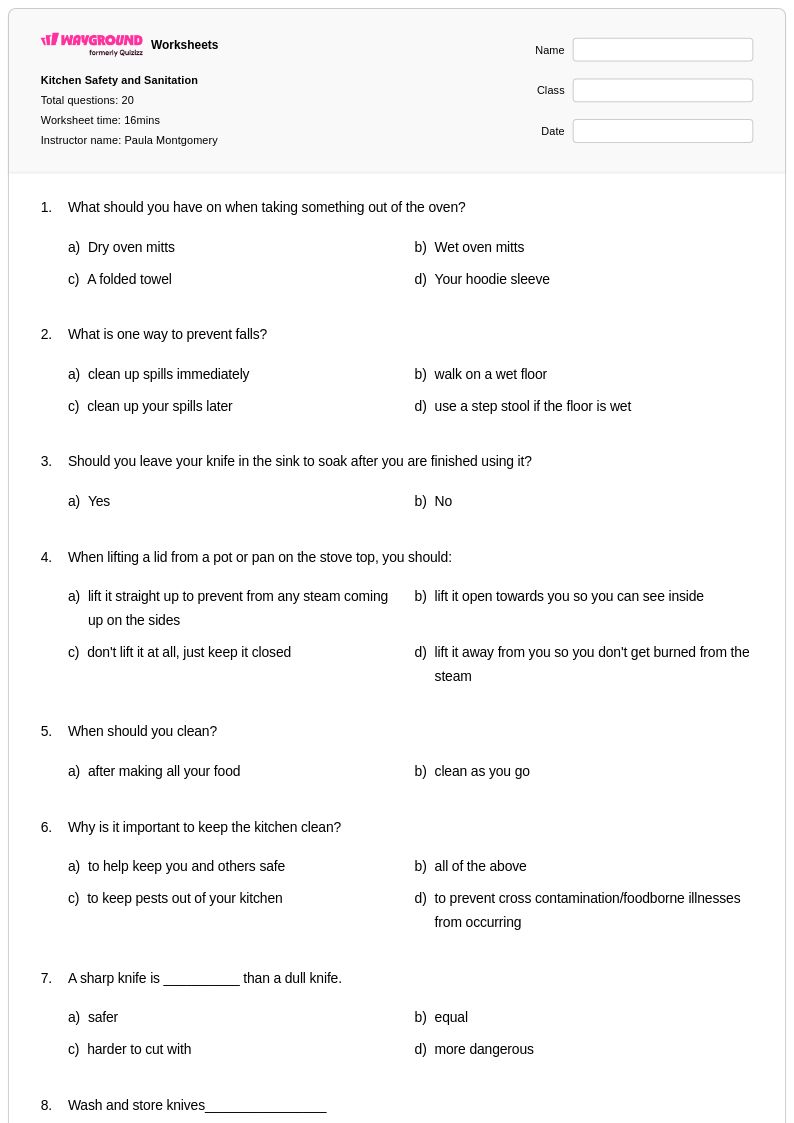
20 Q
8th
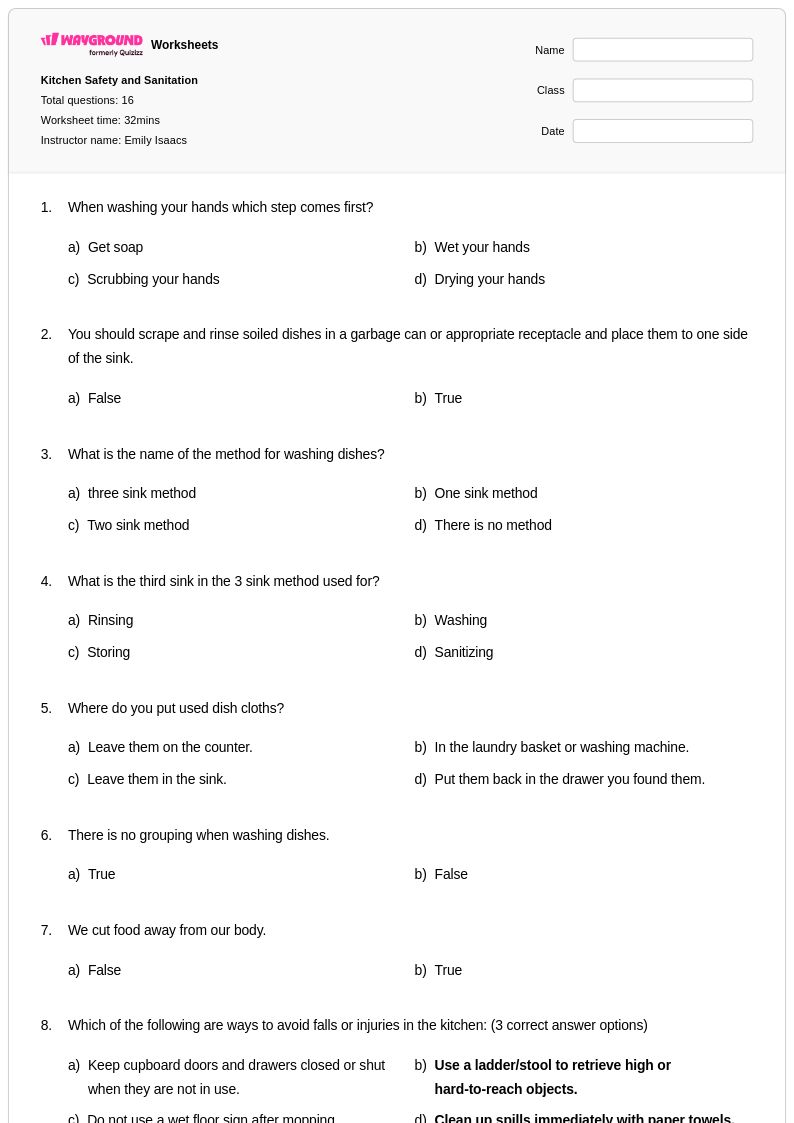
16 Q
6th - 8th
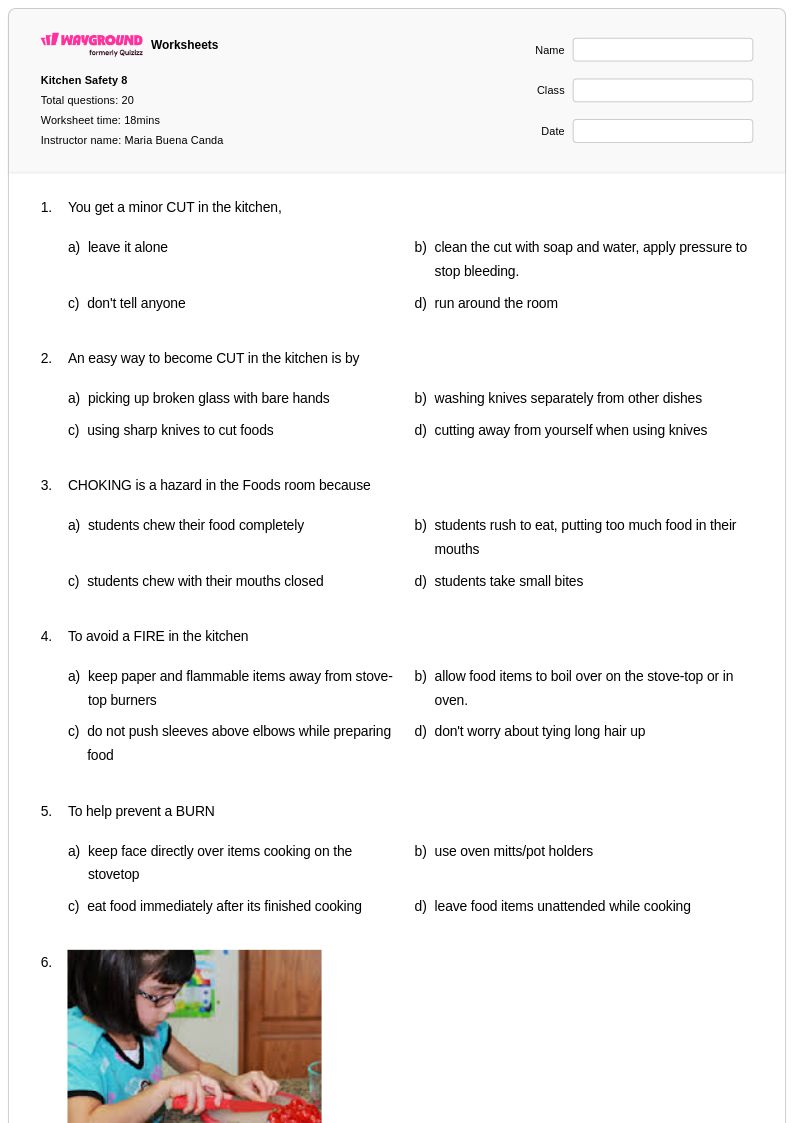
20 Q
8th
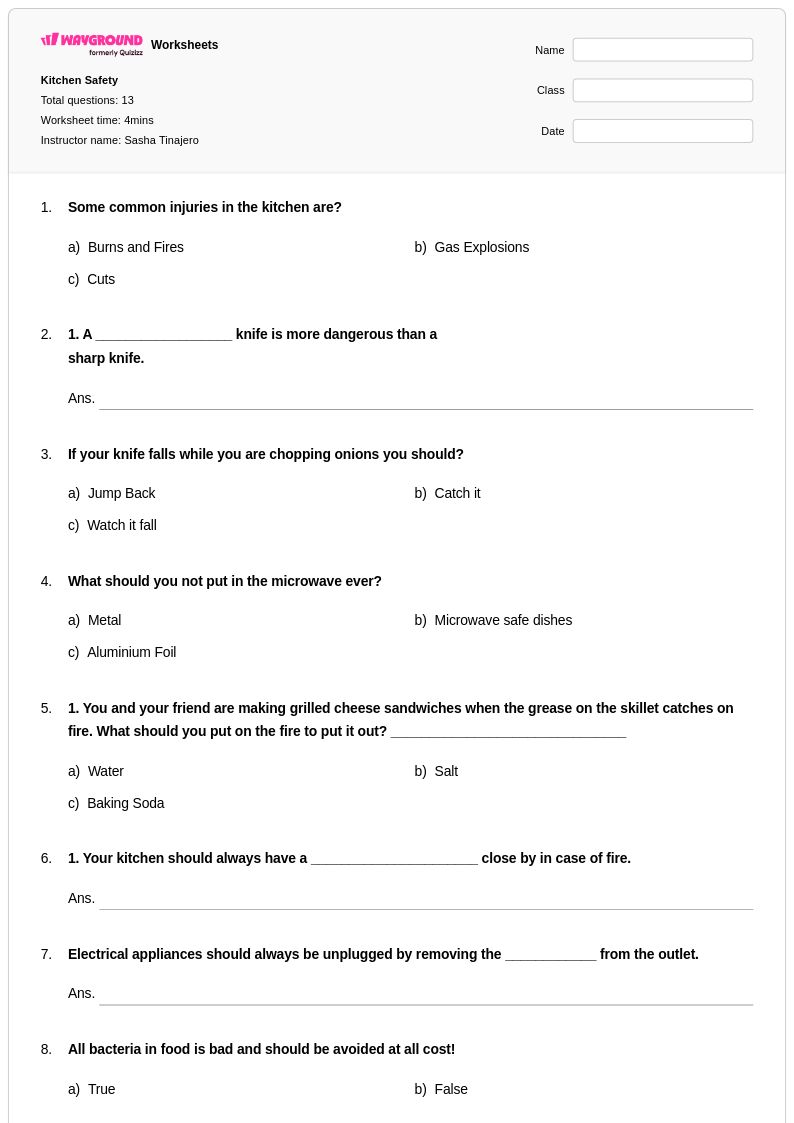
13 Q
9th - 12th
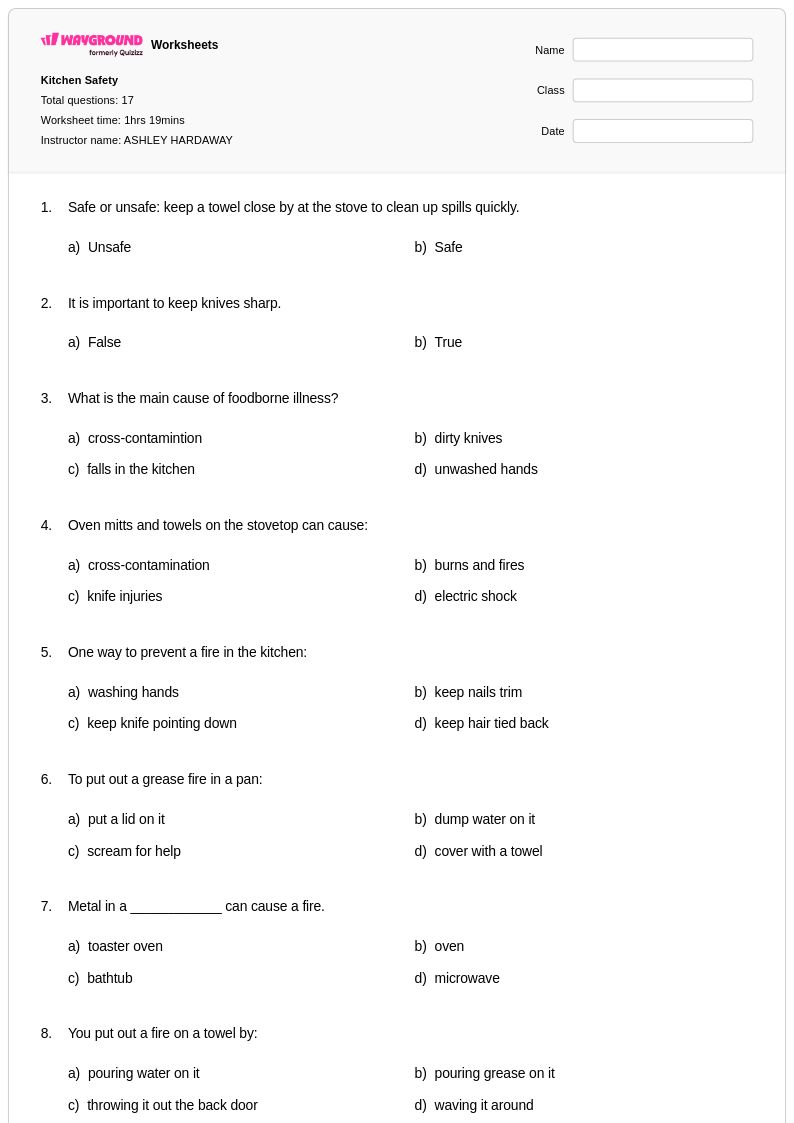
17 Q
9th - 12th
12 Q
9th - 12th
13 Q
PD
20 Q
10th
17 Q
10th
Explore Other Subject Worksheets for kindergarten
Explore printable Kitchen Safety worksheets for Kindergarten
Kitchen safety worksheets for kindergarten students available through Wayground (formerly Quizizz) introduce young learners to essential safety practices in one of the home's most potentially hazardous environments. These carefully designed printables focus on age-appropriate concepts such as identifying hot surfaces, understanding sharp objects, recognizing cleaning products that should never be touched, and learning proper handwashing techniques before food preparation. The worksheets strengthen critical thinking skills as students practice distinguishing between safe and unsafe kitchen behaviors through visual recognition activities, simple matching exercises, and basic problem-solving scenarios. Each resource includes comprehensive answer keys that enable educators and parents to provide immediate feedback, while the free pdf format ensures accessibility for both classroom instruction and home reinforcement of these vital life skills.
Wayground's extensive collection of teacher-created kitchen safety resources provides educators with millions of professionally developed materials specifically tailored for early childhood physical education and health instruction. The platform's robust search and filtering capabilities allow teachers to quickly locate worksheets that align with state health and safety standards while accommodating diverse learning needs through built-in differentiation tools. These customizable resources are available in both printable and digital formats, including downloadable pdfs that can be easily integrated into lesson plans for immediate use or saved for future instructional cycles. The flexibility of these materials supports comprehensive educational planning, enabling teachers to address remediation for students who need additional safety concept reinforcement, provide enrichment opportunities for advanced learners, and deliver consistent skill practice that builds foundational knowledge about kitchen safety protocols essential for kindergarten students' developing independence and personal responsibility.
FAQs
How do I teach kitchen safety to students who have no cooking experience?
What topics should a kitchen safety worksheet cover?
What mistakes do students commonly make when learning kitchen safety concepts?
How can I use kitchen safety worksheets to assess student understanding before a lab or cooking activity?
How do I use Wayground's kitchen safety worksheets in my classroom?
How can I differentiate kitchen safety instruction for students at different skill levels?