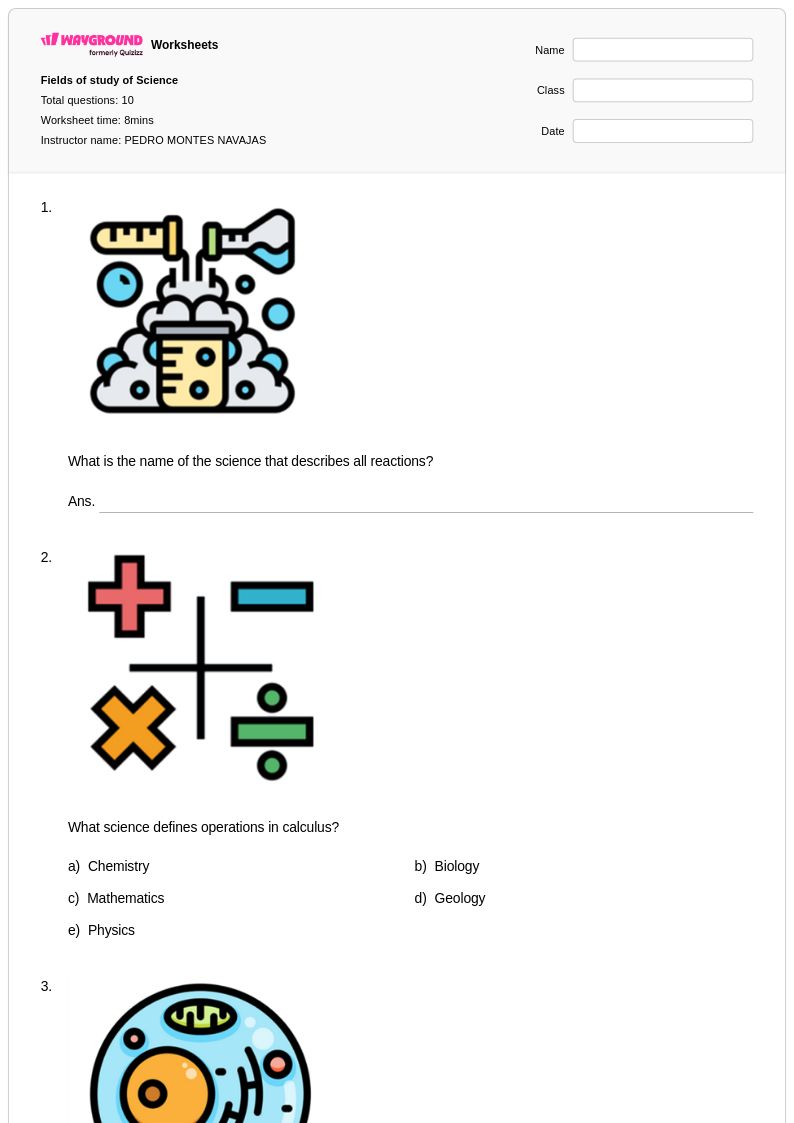
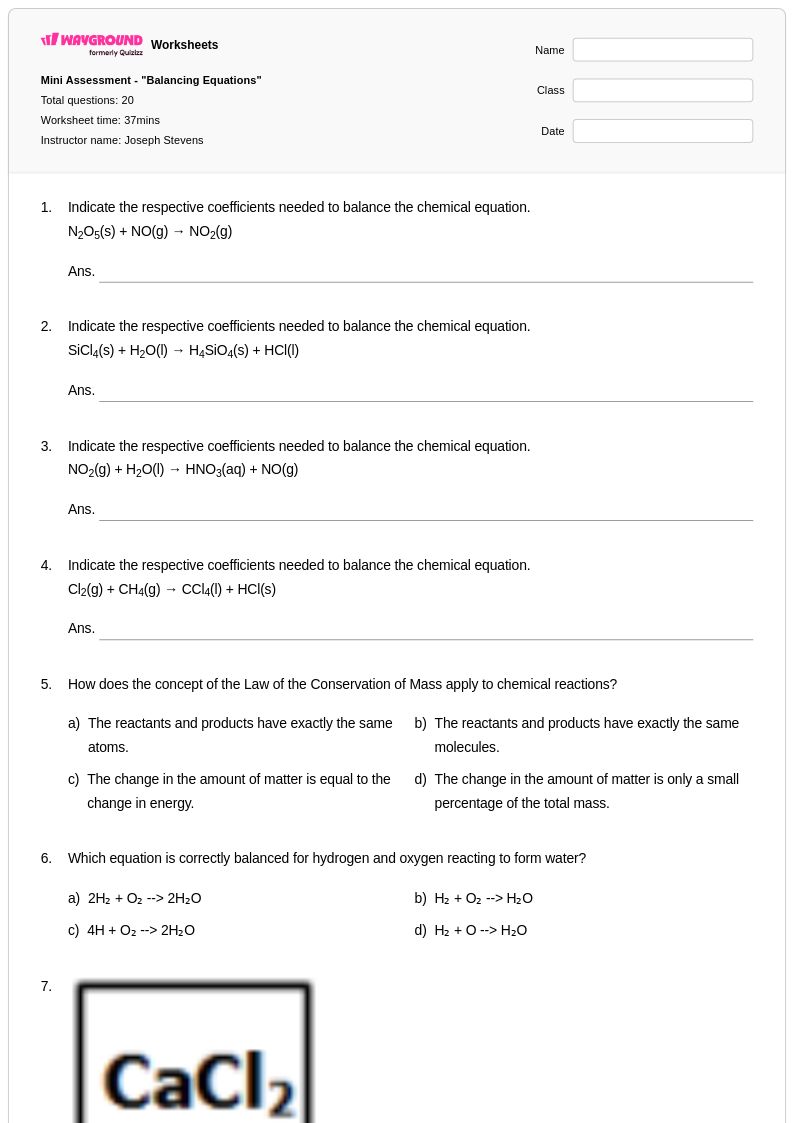
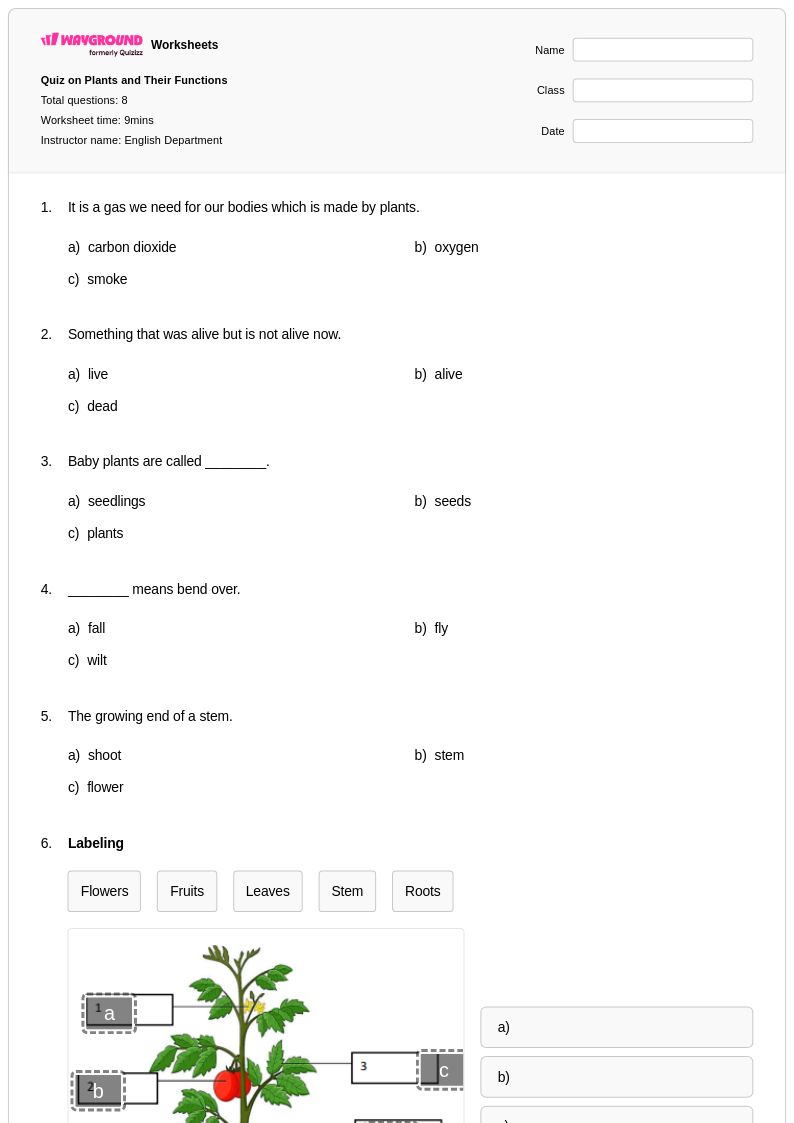
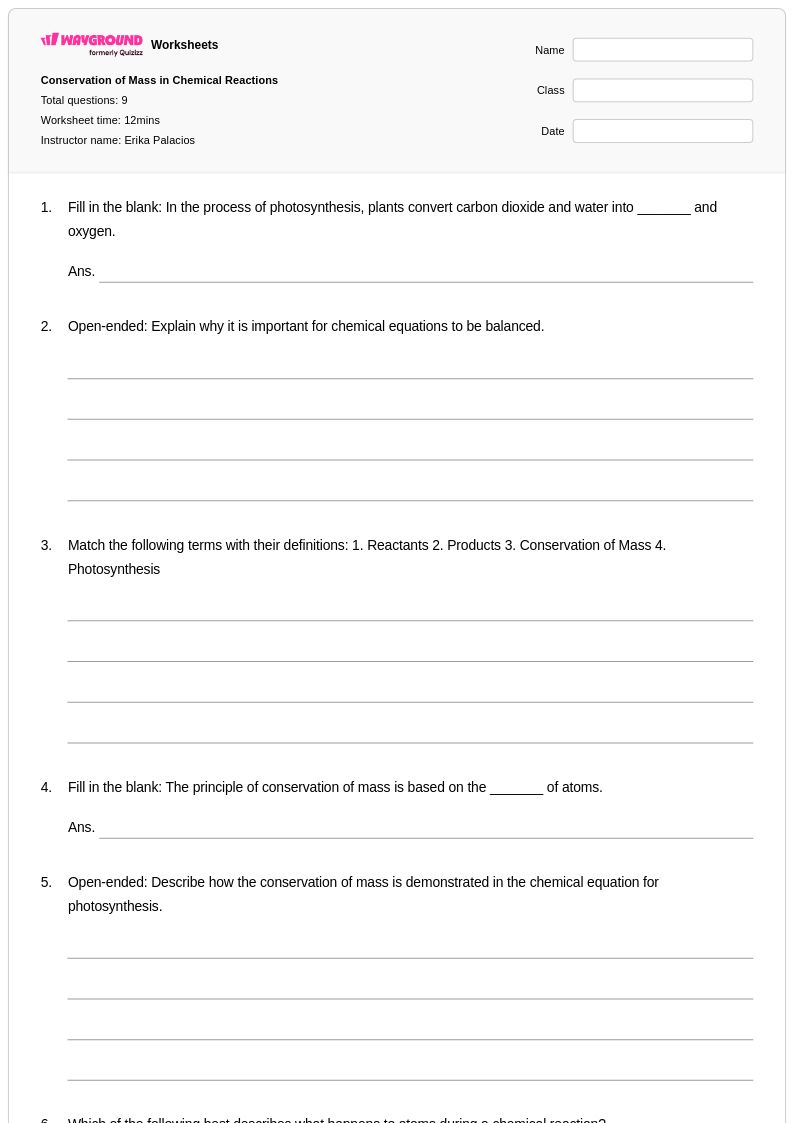
Free Printable Labeling Atoms Worksheets for Class 2
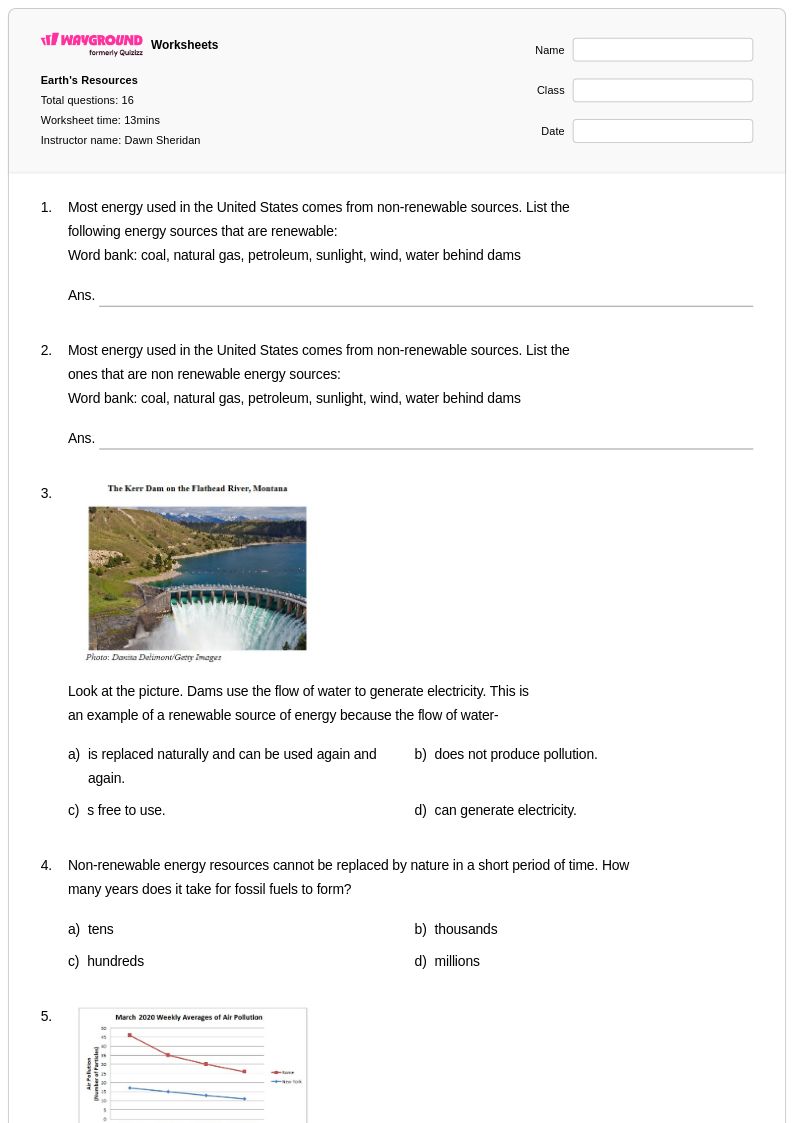
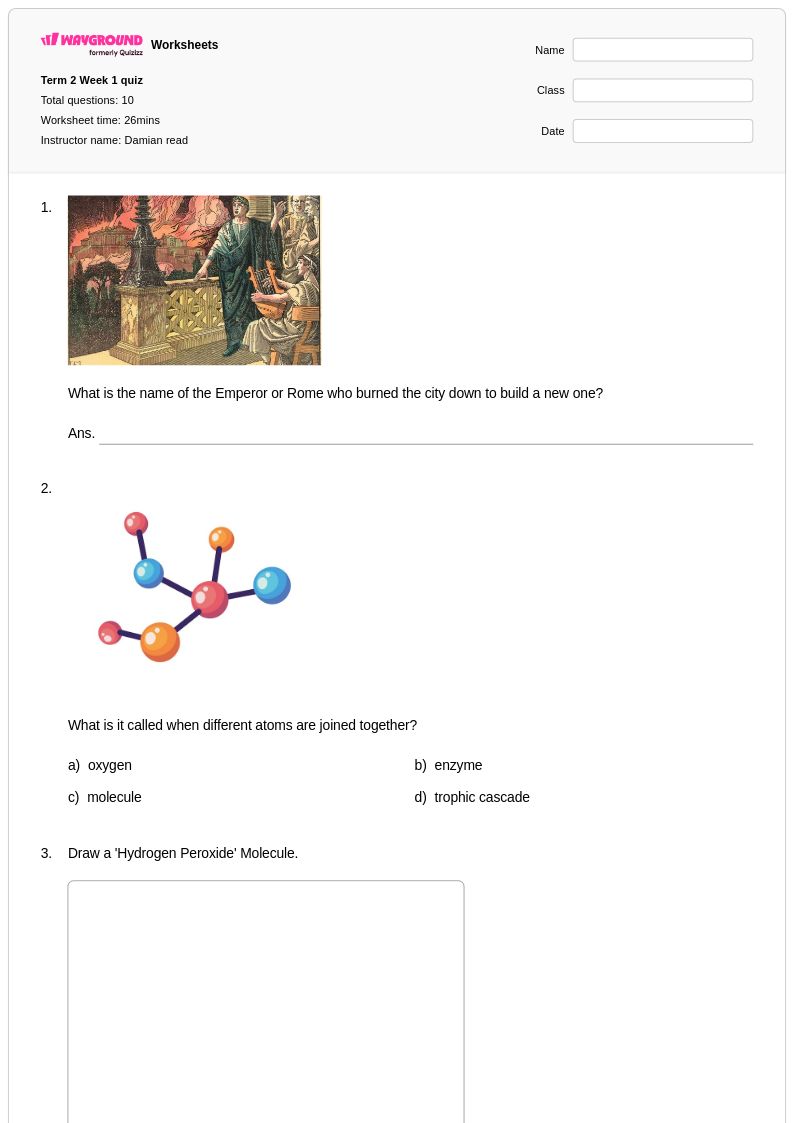
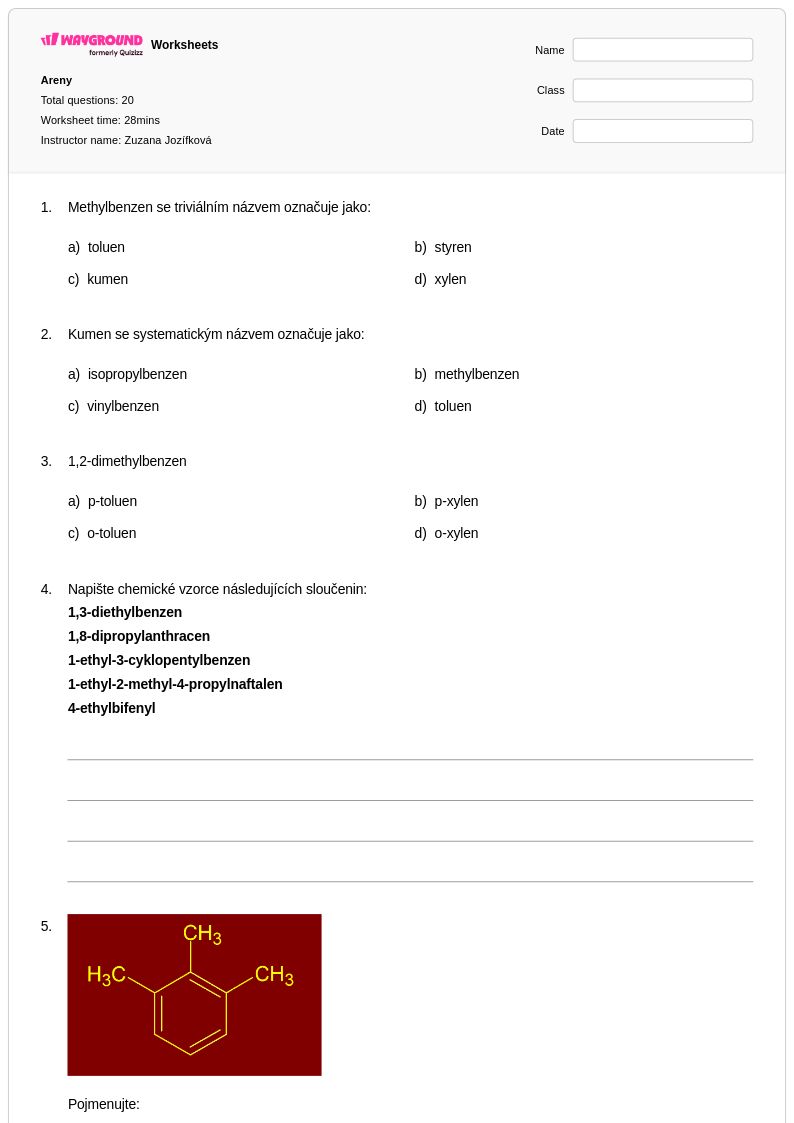
Class 2 labeling atoms worksheets from Wayground offer free printables and practice problems that help young students learn to identify and label basic atomic parts, complete with answer keys for easy assessment.
Explore printable Labeling Atoms worksheets for Class 2
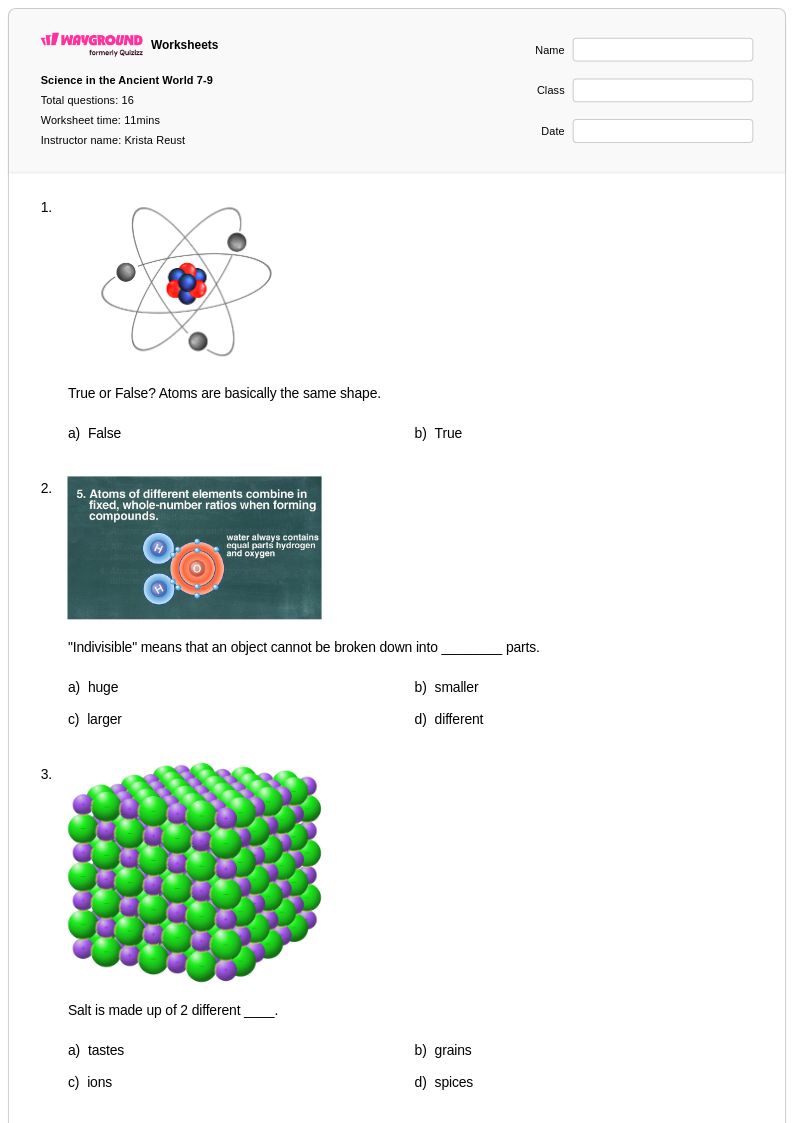
Labeling atoms worksheets for Class 2 students available through Wayground (formerly Quizizz) introduce young learners to the fundamental building blocks of matter through age-appropriate visual activities and interactive exercises. These carefully designed printables help second-grade students develop essential science vocabulary while building foundational chemistry concepts through hands-on practice problems that focus on identifying basic atomic components. The comprehensive worksheet collection strengthens observation skills, scientific terminology recognition, and early analytical thinking as students learn to distinguish between different parts of simple atomic models. Each free resource includes detailed answer keys and pdf formats that support both classroom instruction and independent study, ensuring students can practice labeling atomic structures with confidence while teachers can easily assess comprehension and provide targeted feedback.
Wayground (formerly Quizizz) empowers educators with an extensive library of millions of teacher-created labeling atoms worksheets specifically tailored for Class 2 chemistry instruction, featuring robust search and filtering capabilities that allow teachers to quickly locate resources aligned with curriculum standards and learning objectives. The platform's differentiation tools enable seamless customization of atomic labeling activities to meet diverse student needs, from remediation support for struggling learners to enrichment opportunities for advanced second graders ready to explore more complex atomic concepts. Teachers benefit from flexible formatting options that include both printable pdf versions for traditional classroom use and digital formats for interactive learning environments, streamlining lesson planning while providing multiple pathways for skill practice and assessment that support comprehensive understanding of basic atomic structure concepts.
FAQs
How do I teach students to label the parts of an atom?
Start by establishing the three core subatomic particles: protons and neutrons in the nucleus, and electrons orbiting in shells. Use labeled Bohr model diagrams to make the structure visual before asking students to label diagrams independently. Connecting atomic number directly to proton count, and mass number to protons plus neutrons, gives students a reliable framework they can apply to any element.
What exercises help students practice identifying atomic structure?
Labeling blank atomic diagrams is one of the most effective practice formats because it requires students to recall particle placement rather than just recognize it. Exercises that ask students to determine proton, neutron, and electron counts from atomic symbols reinforce the relationship between notation and structure. Pairing diagram-labeling tasks with questions about atomic number and mass number builds both visual and conceptual fluency.
What mistakes do students commonly make when labeling atoms?
The most frequent error is confusing atomic number with mass number, leading students to miscalculate neutron counts. Students also commonly misplace electrons, either assigning them to the nucleus or incorrectly distributing them across electron shells. Another common misconception is assuming all atoms of an element have the same number of neutrons, which causes confusion when isotopes are introduced.
How do I use Wayground's labeling atoms worksheets in my classroom?
Wayground's labeling atoms worksheets are available as printable PDFs for traditional classroom use and in digital formats for technology-integrated environments, making them flexible for homework, lab warm-ups, or in-class practice. Teachers can also host the worksheets as a quiz directly on Wayground to collect student responses and monitor understanding in real time. Both formats include complete answer keys, so grading and feedback remain efficient regardless of delivery method.
How can I differentiate atomic structure practice for students at different skill levels?
For struggling learners, begin with diagrams that have partially filled labels or a word bank to reduce cognitive load before progressing to fully blank diagrams. Advanced students can be challenged with isotope comparisons or questions that require them to interpret atomic symbols and determine electron configuration from notation alone. Wayground supports individual student accommodations including reduced answer choices and read-aloud features, which can be assigned per student without affecting the rest of the class.
At what grade level are labeling atoms worksheets typically used?
Atomic structure and particle labeling are most commonly introduced in middle school physical science courses, typically around grades 7 and 8, and revisited in high school chemistry. The complexity of the worksheets can vary significantly, from basic proton-neutron-electron identification to interpreting atomic symbols and electron shell configurations, making them applicable across multiple grade levels depending on course depth.