Free Printable Langston Hughes Worksheets for Class 8
Explore Wayground's free Class 8 Langston Hughes worksheets and printables that help students analyze his powerful poetry, understand Harlem Renaissance themes, and develop critical reading skills through engaging practice problems with complete answer keys.
Explore printable Langston Hughes worksheets for Class 8
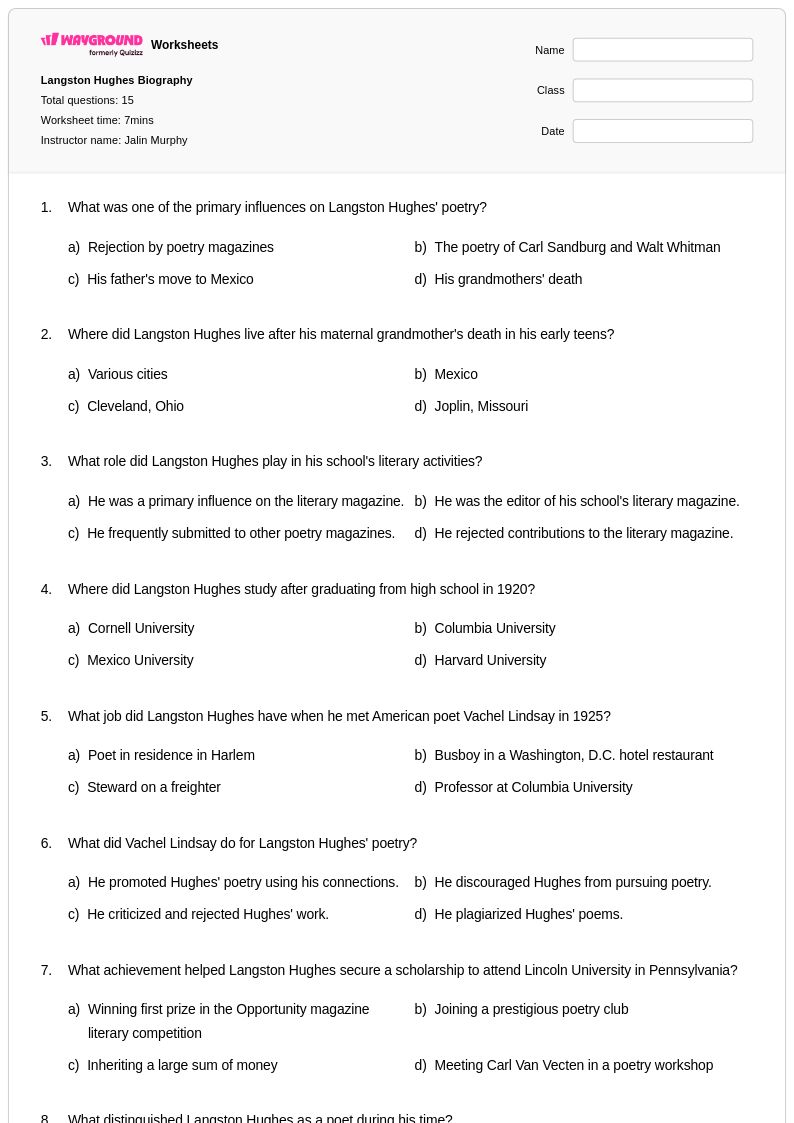
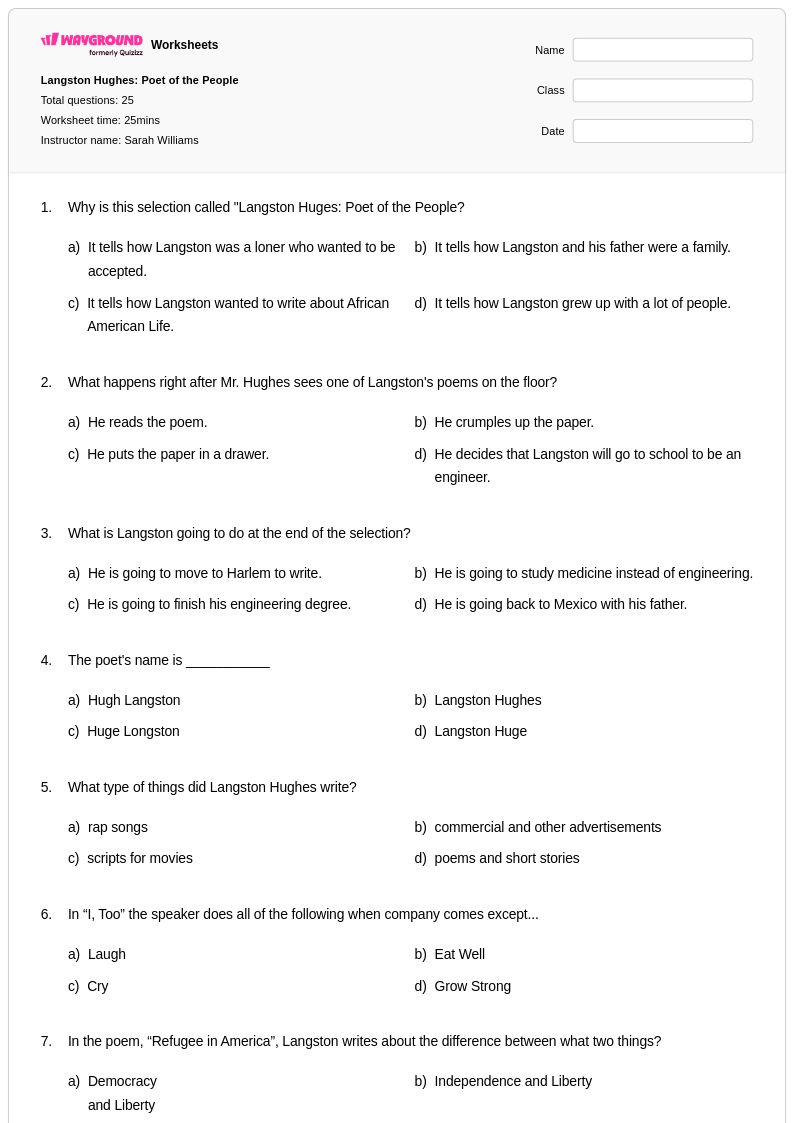
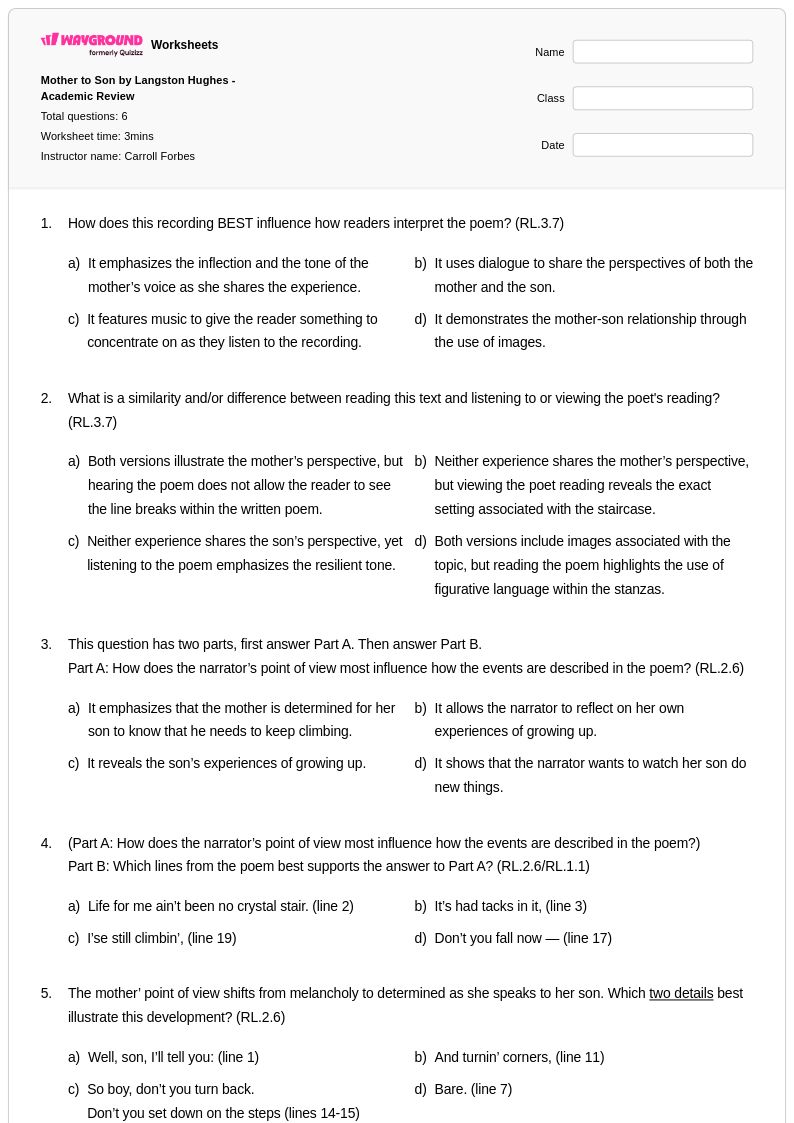
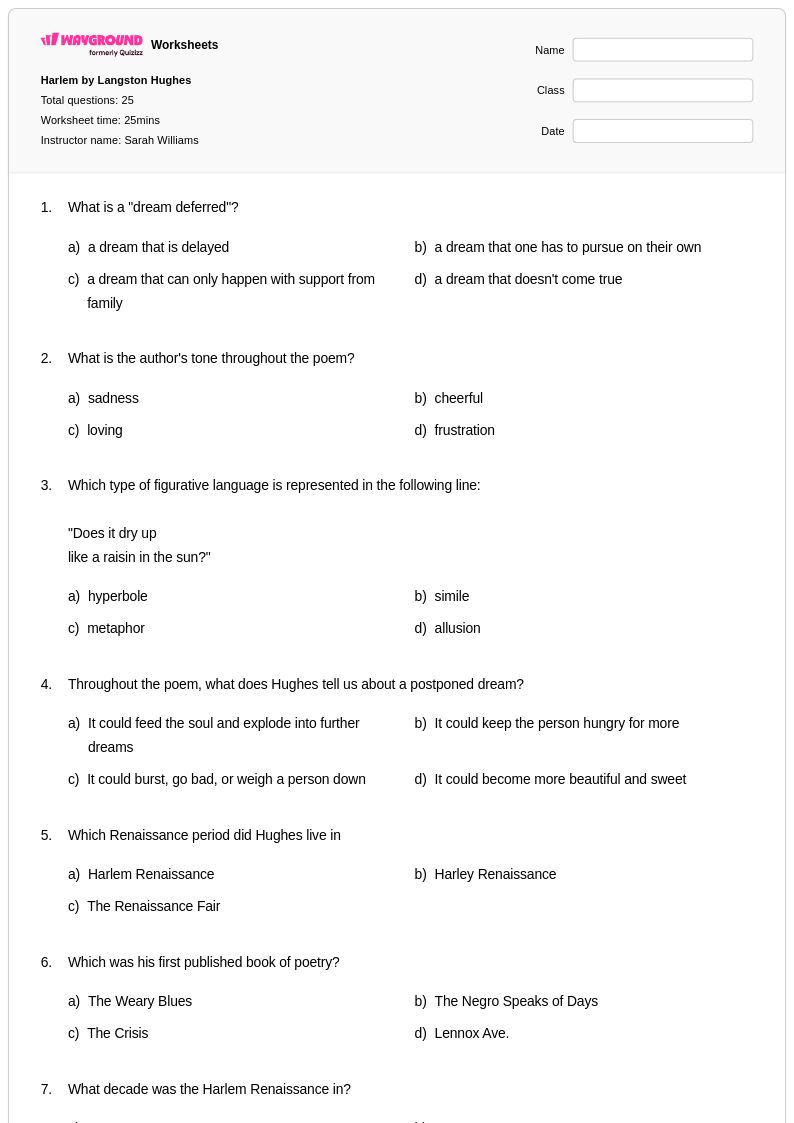
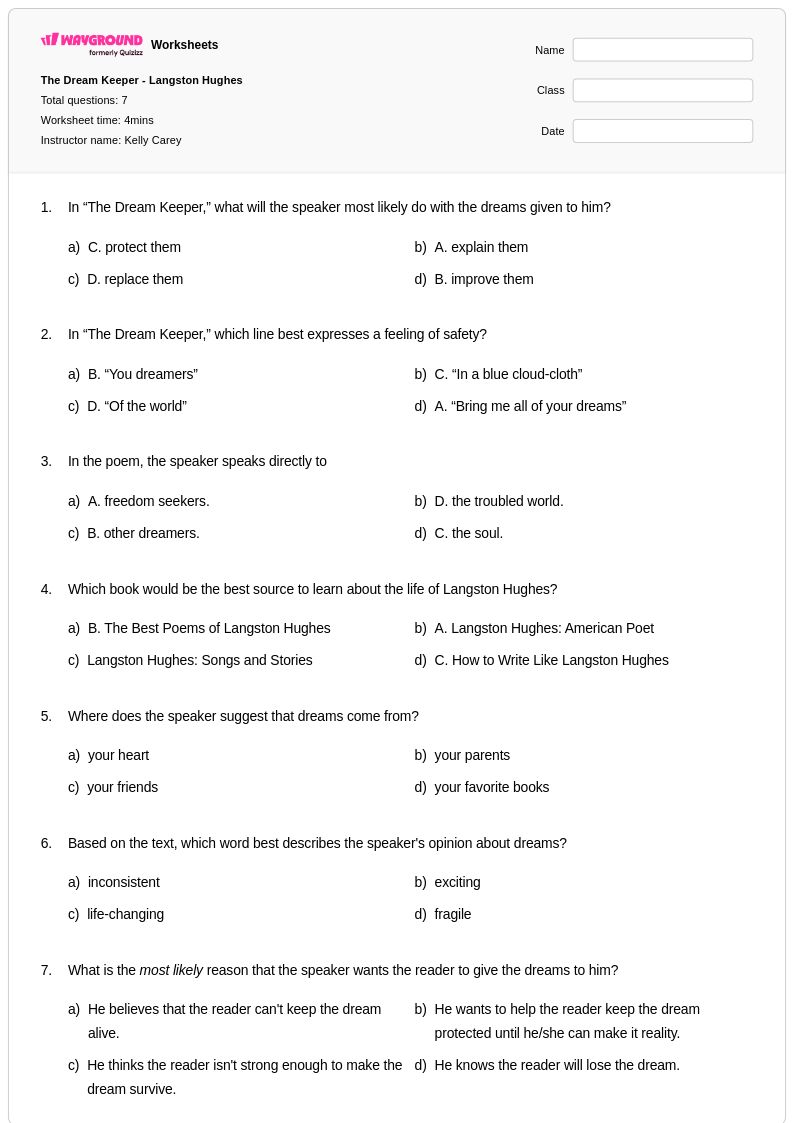
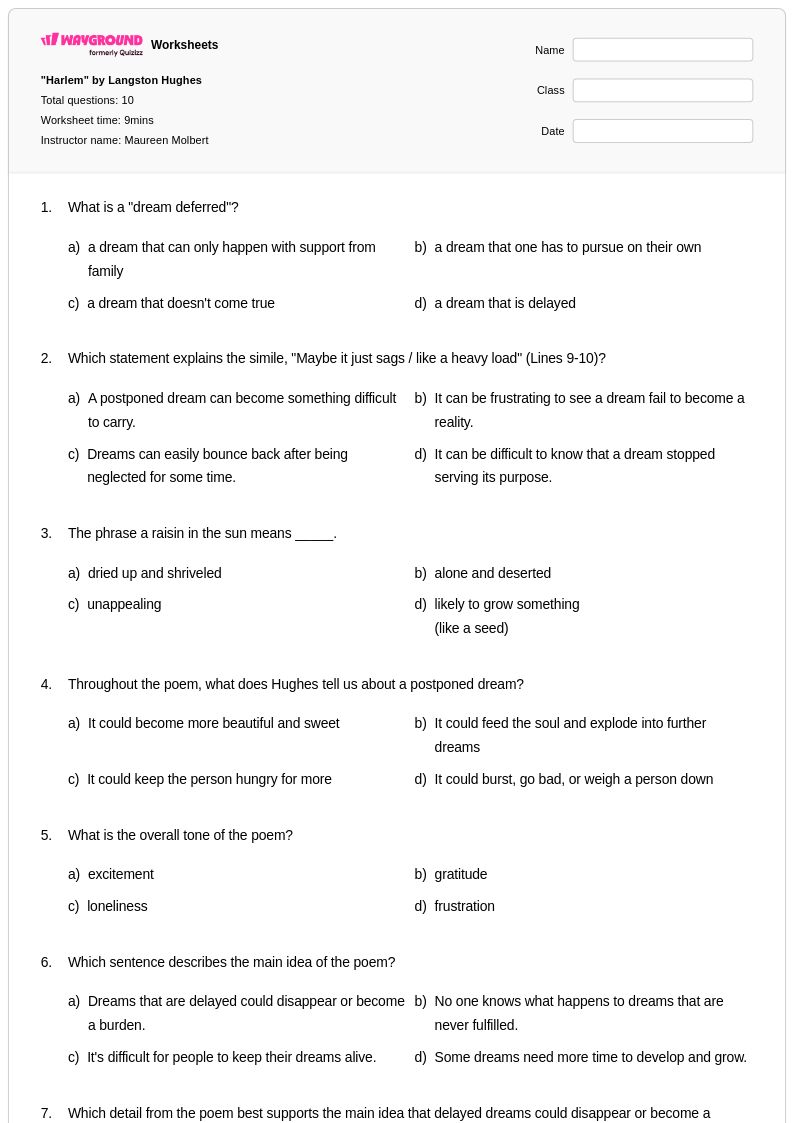
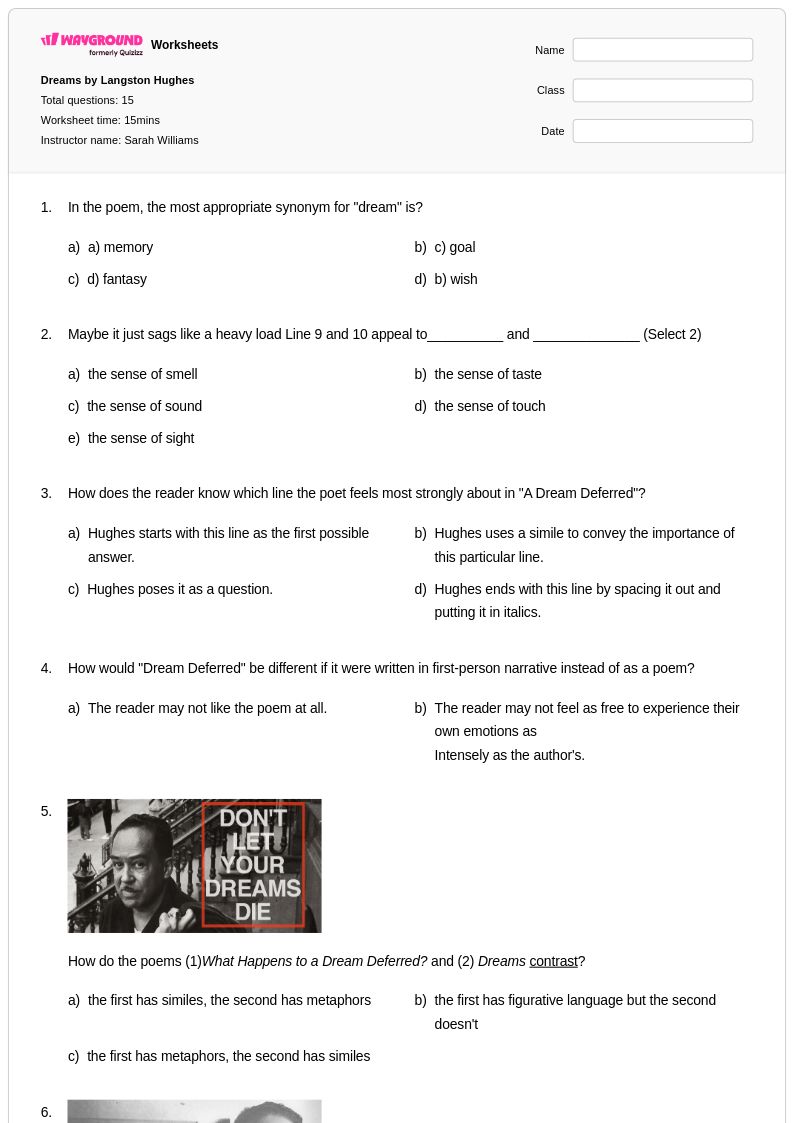
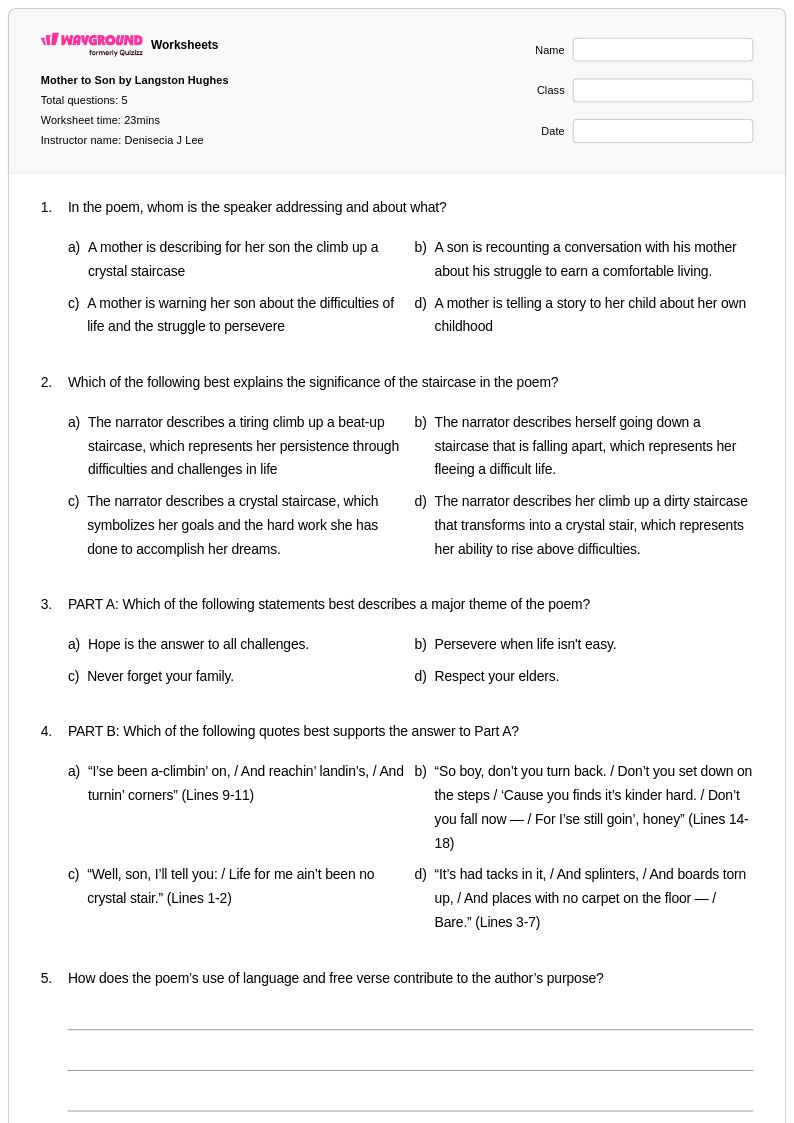
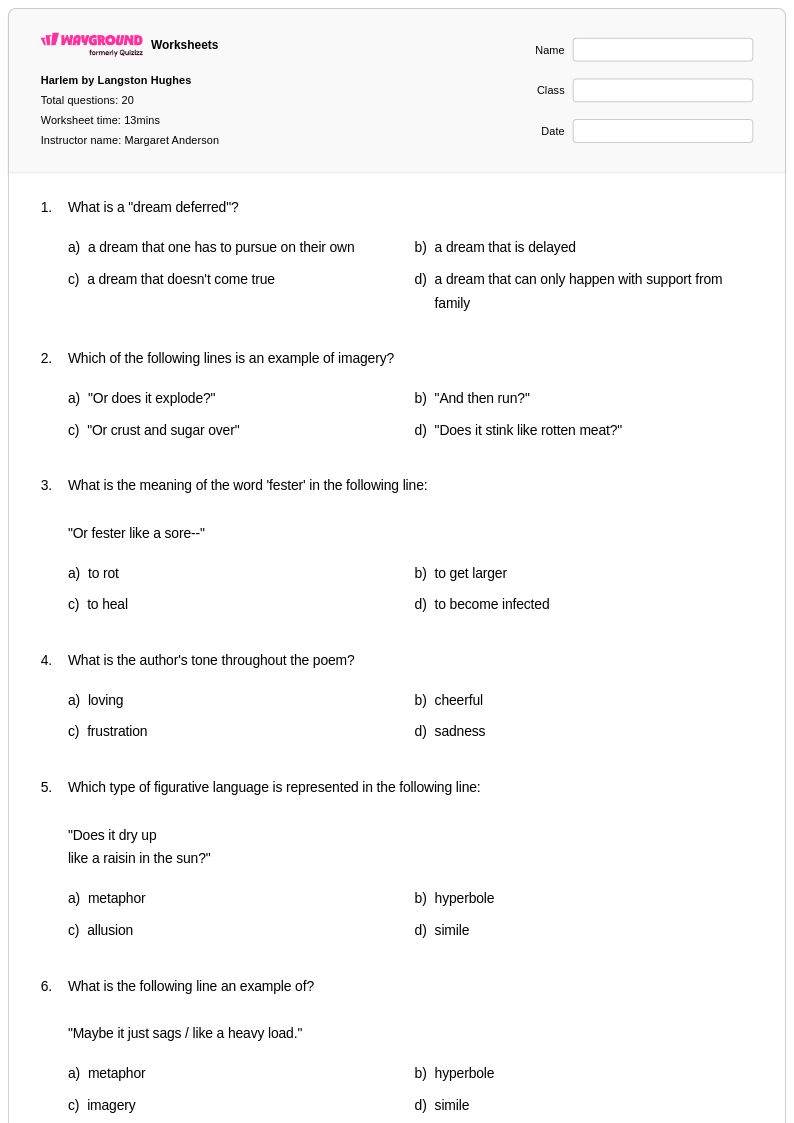
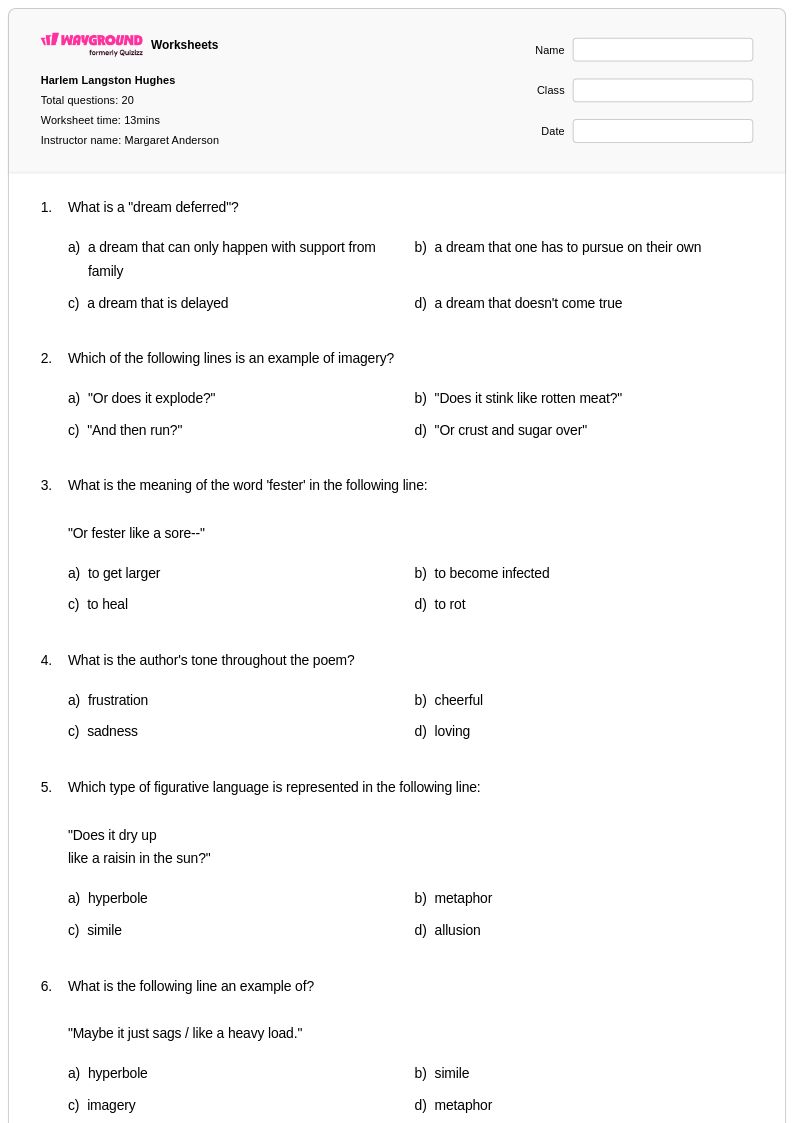
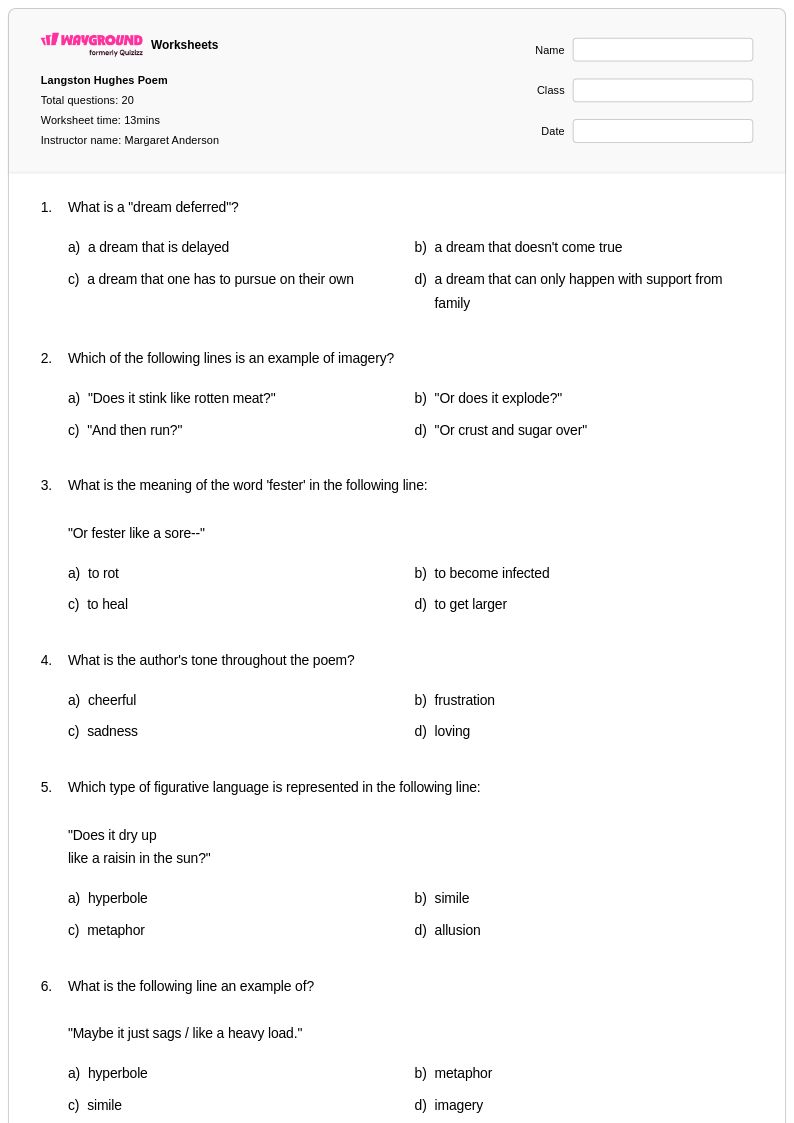
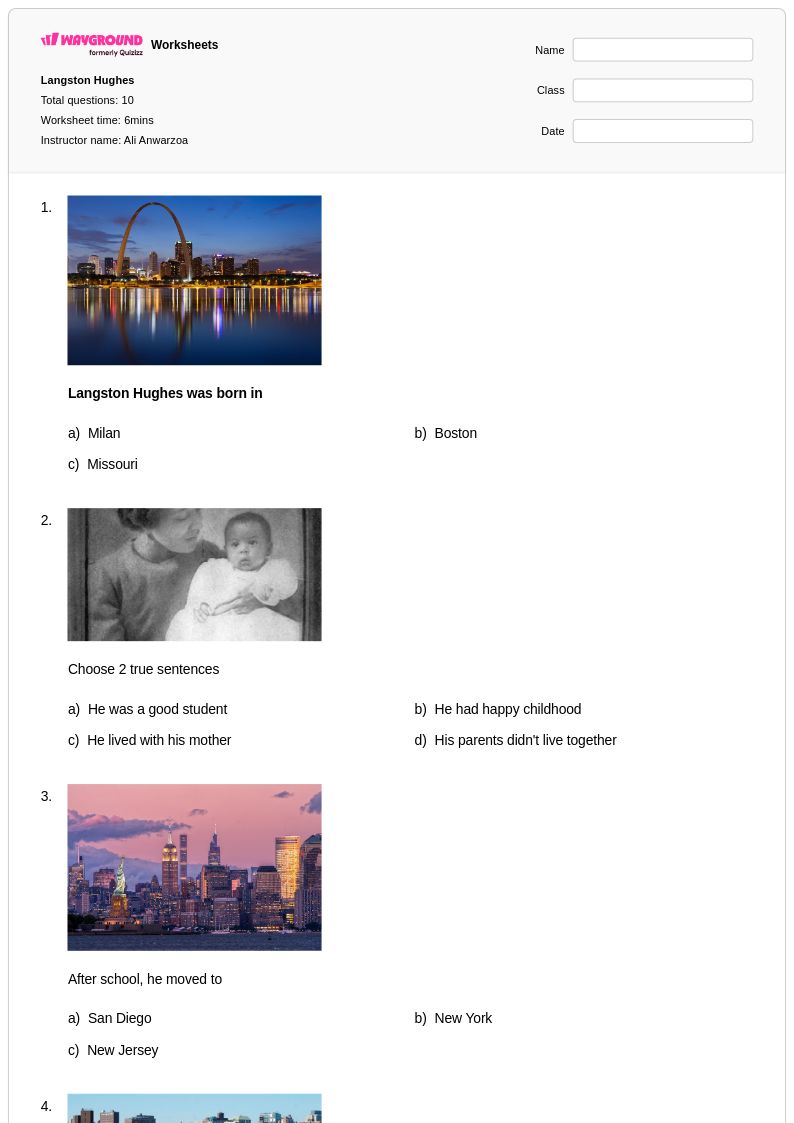
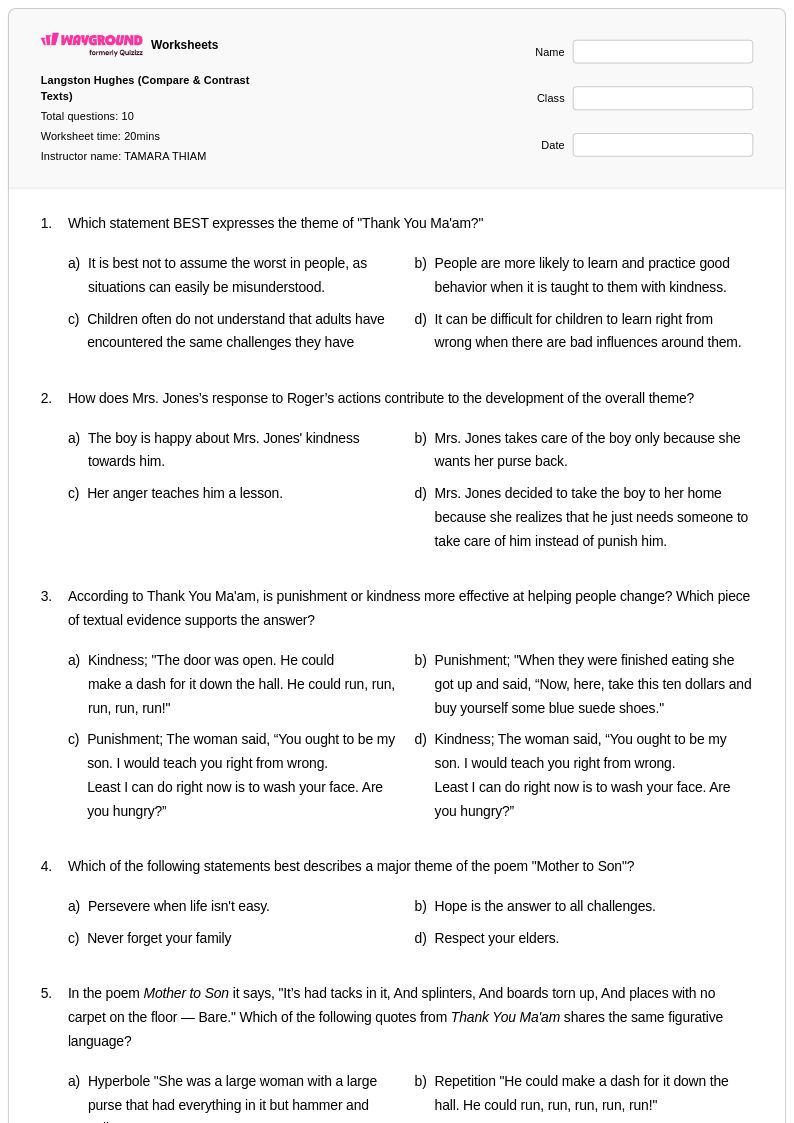
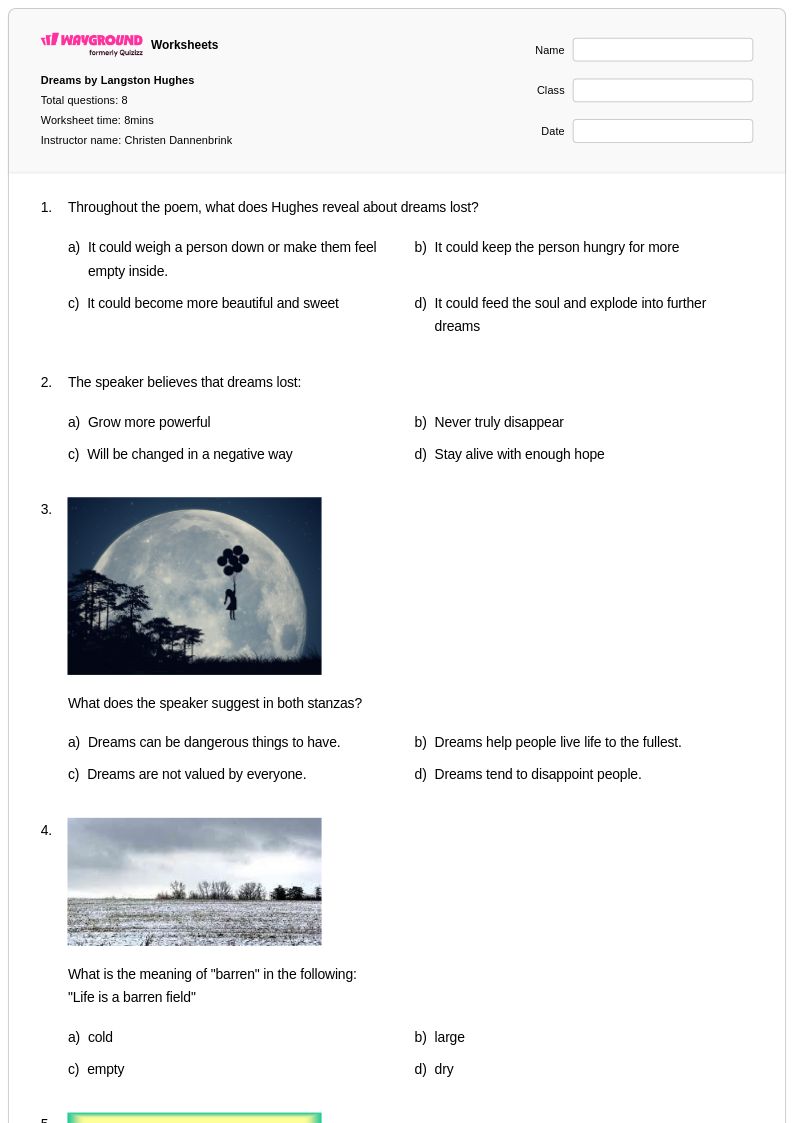
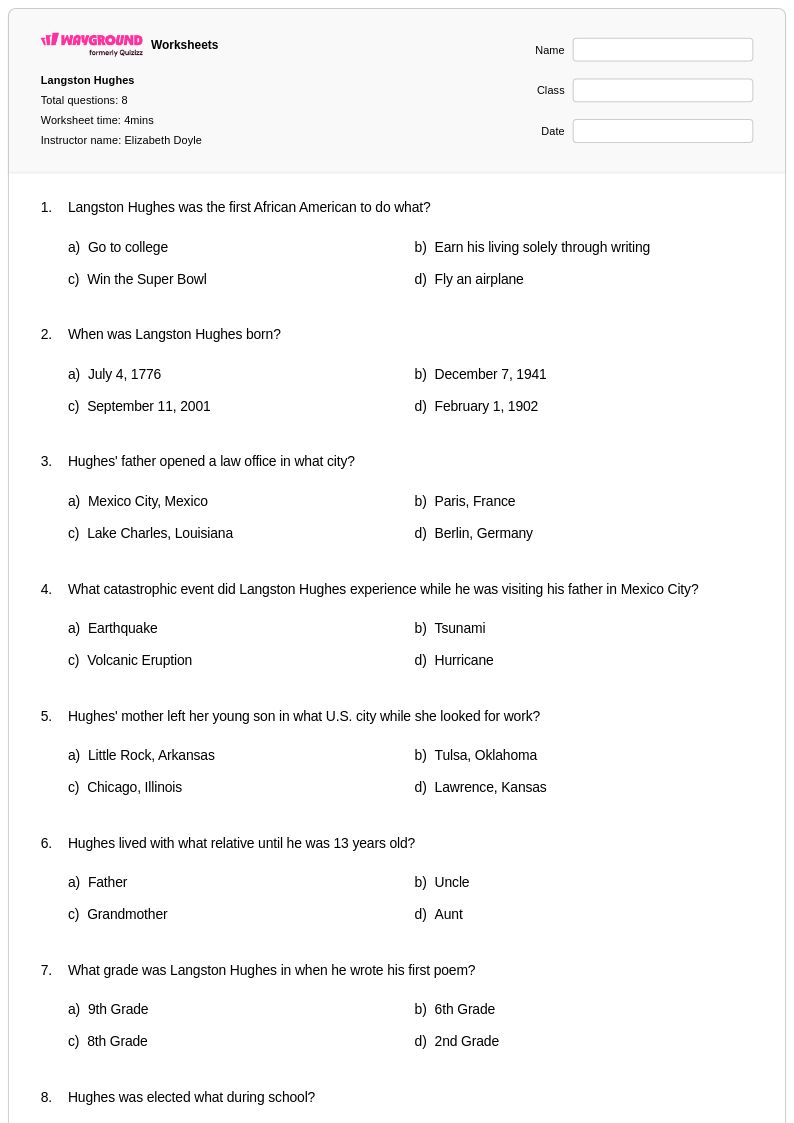
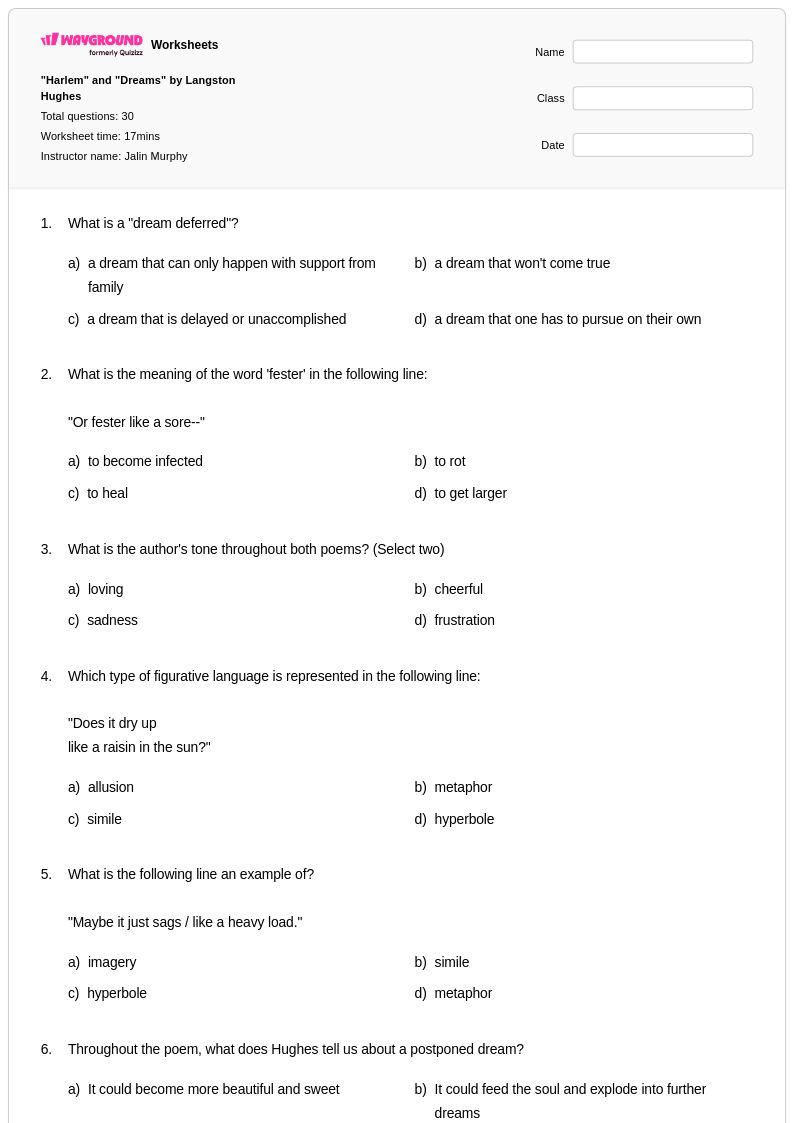
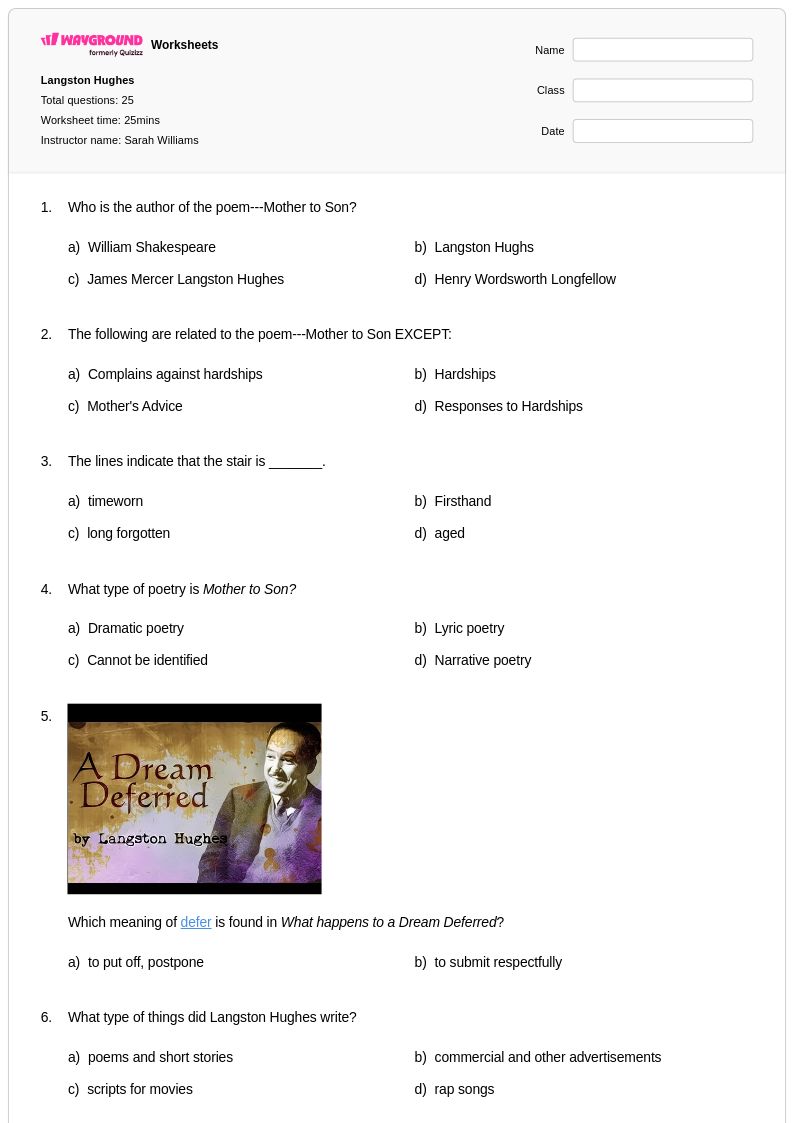
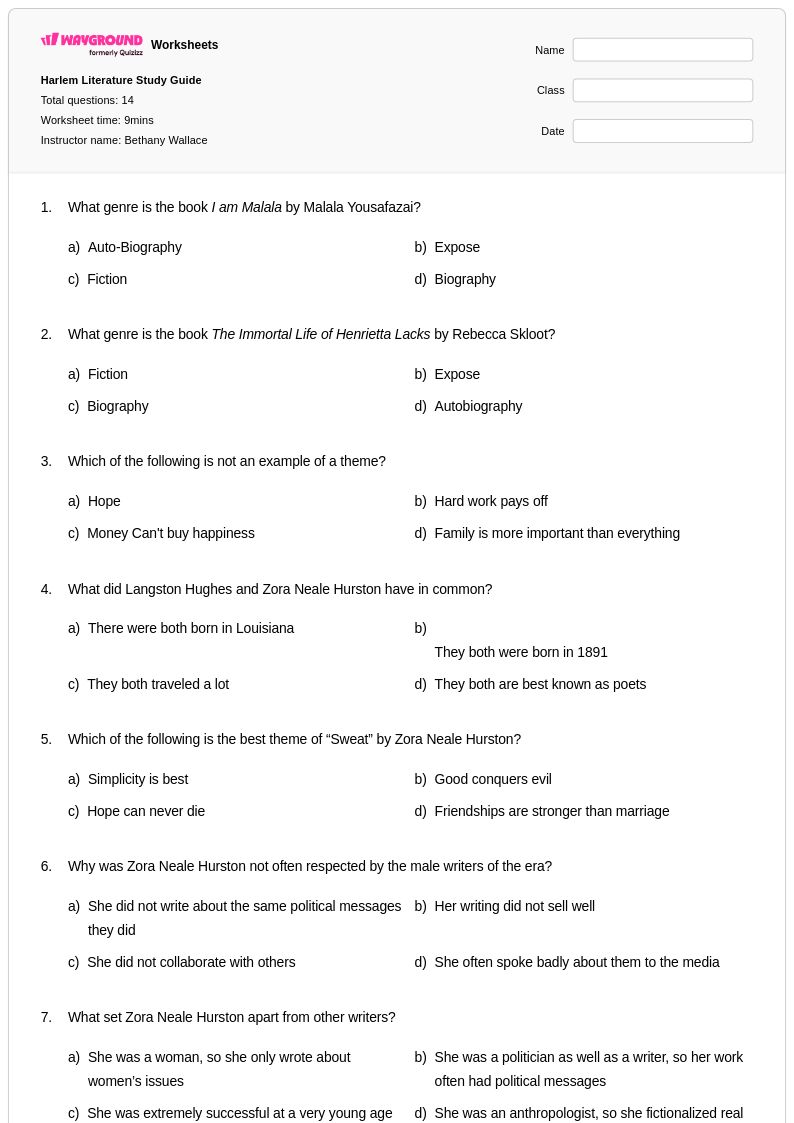
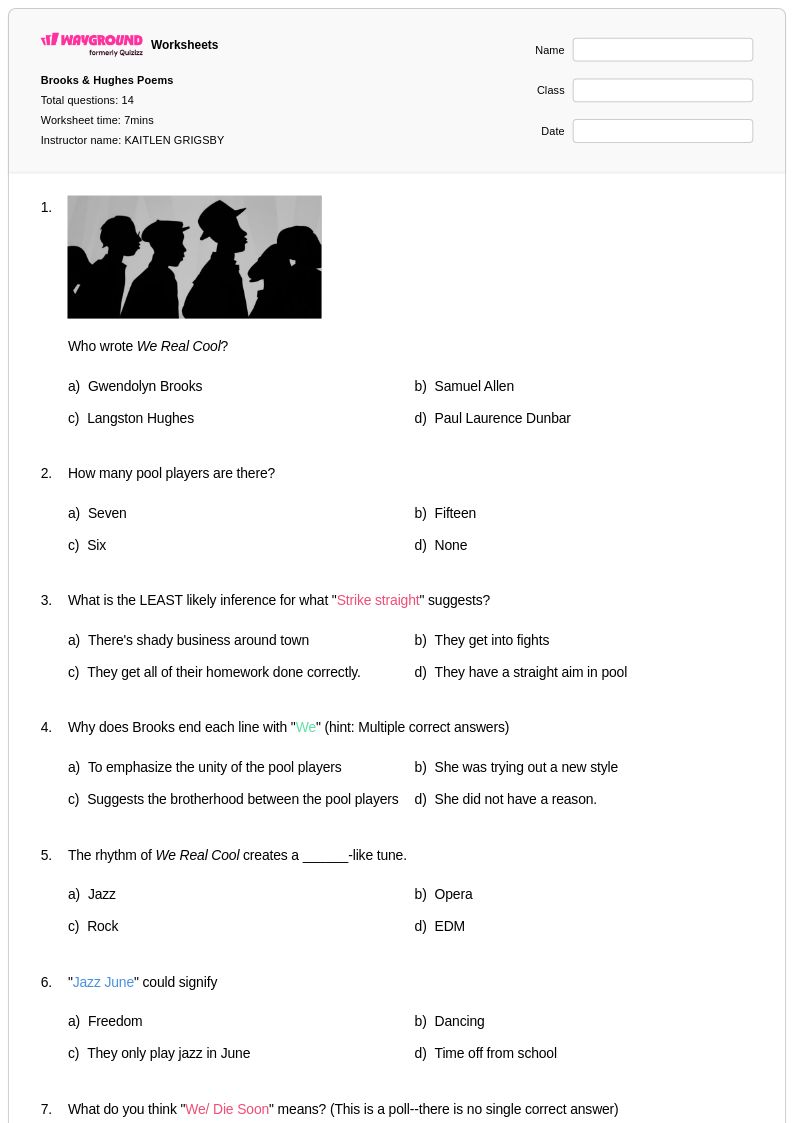
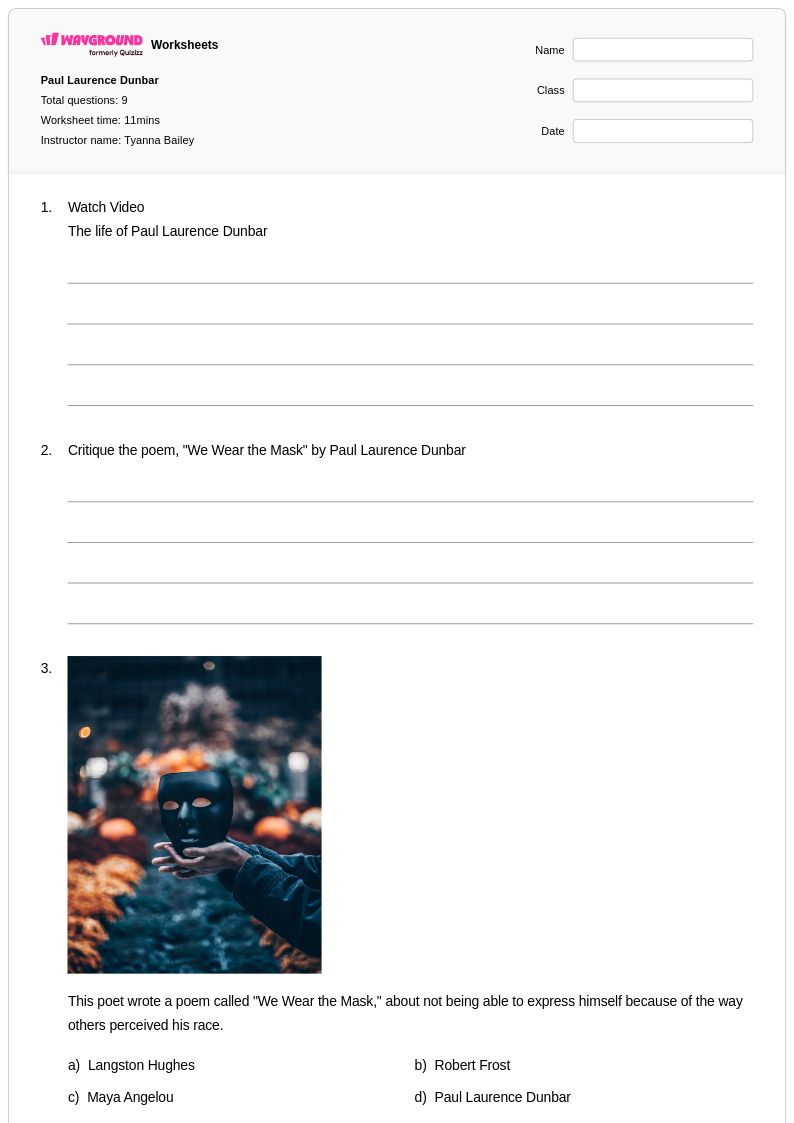
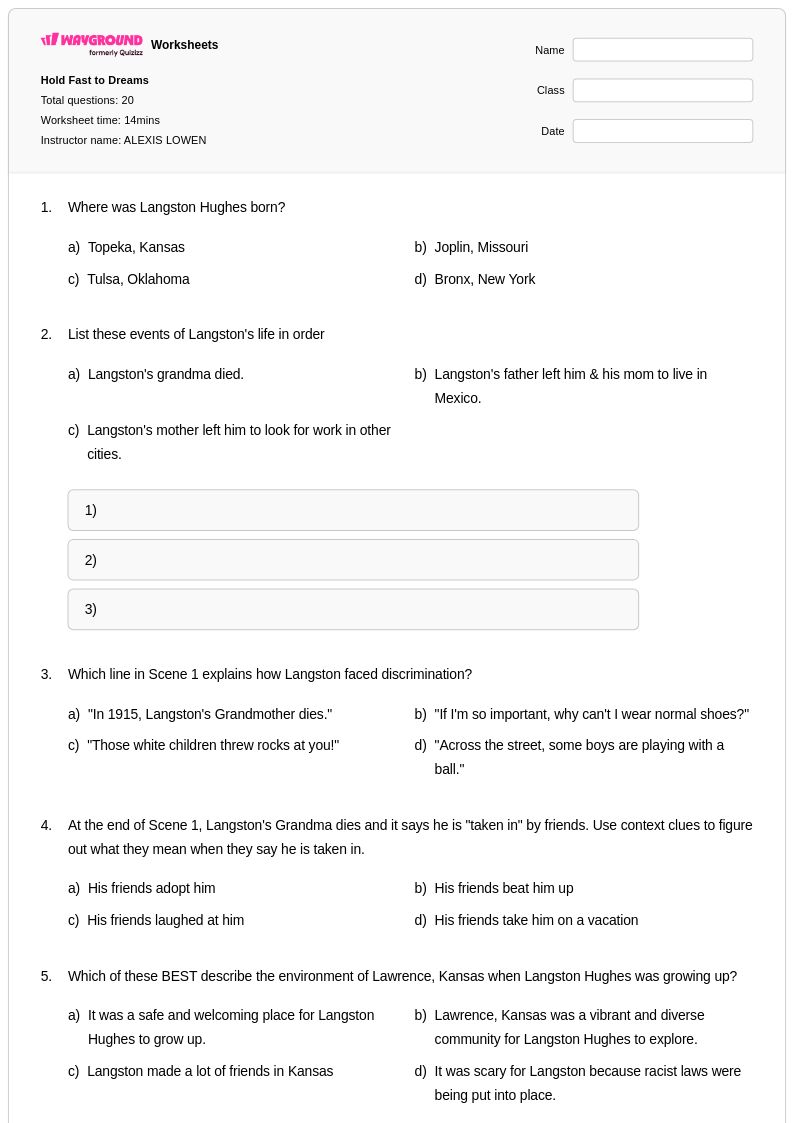
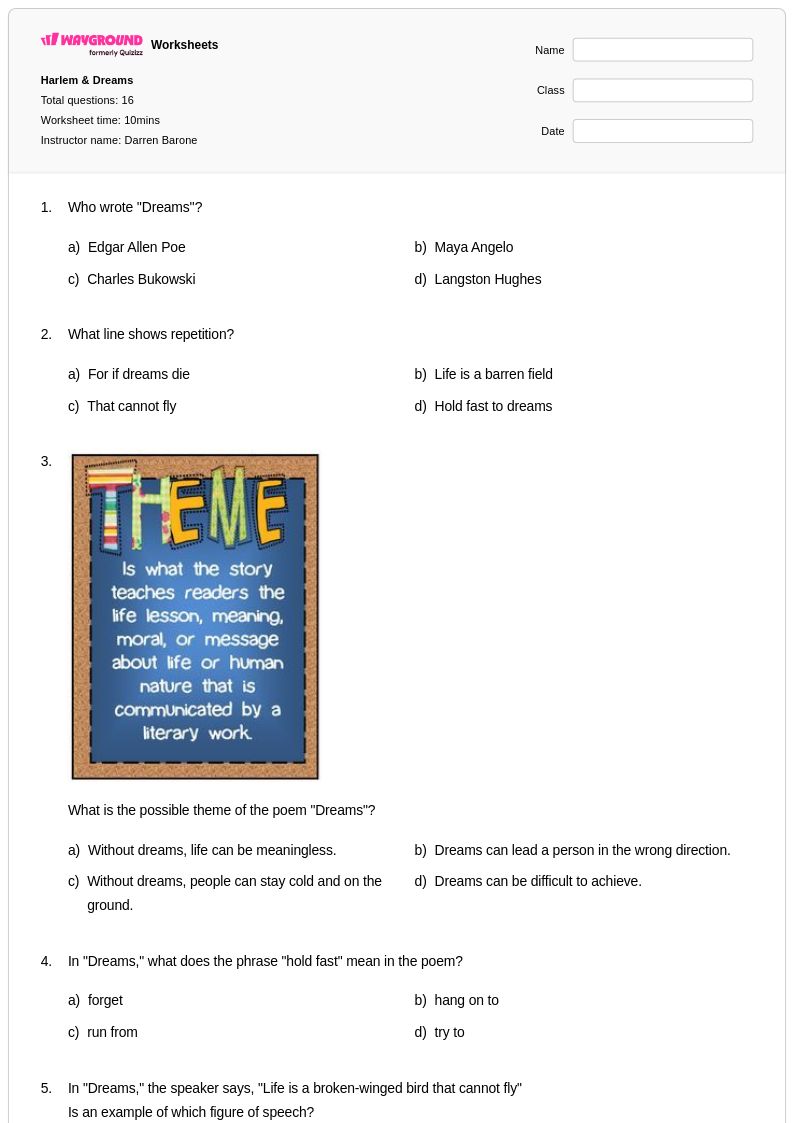
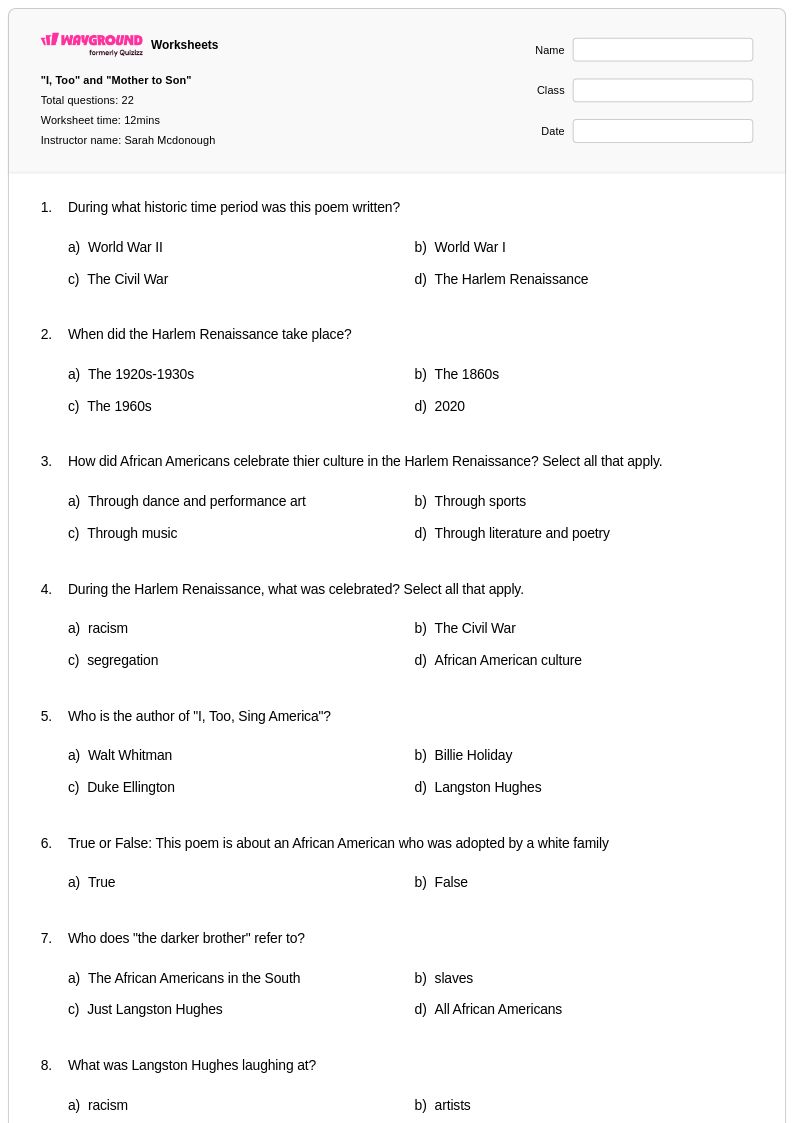
Langston Hughes worksheets for Class 8 students available through Wayground (formerly Quizizz) provide comprehensive resources for exploring one of America's most influential poets and writers of the Harlem Renaissance. These expertly crafted materials strengthen critical reading comprehension skills while deepening students' understanding of Hughes' distinctive voice, themes of social justice, and masterful use of jazz rhythms in poetry. The worksheet collections include guided analysis of his most celebrated works such as "The Weary Blues," "Dream Deferred," and "I, Too, Sing America," featuring practice problems that challenge students to identify literary devices, analyze metaphors, and connect historical context to poetic meaning. Each resource comes with a detailed answer key and is available as free printables in convenient PDF format, allowing educators to seamlessly integrate Hughes' powerful literature into their curriculum while building students' analytical writing and critical thinking abilities.
Wayground (formerly Quizizz) supports educators with an extensive collection of teacher-created Langston Hughes resources, drawing from millions of high-quality materials that have been carefully curated and organized for easy discovery. The platform's robust search and filtering capabilities enable teachers to quickly locate worksheets aligned with specific learning standards, whether focusing on poetry analysis, historical context of the Harlem Renaissance, or comparative literature studies. These differentiation tools allow educators to customize content difficulty levels and select from both printable and digital formats, including comprehensive PDF downloads that work seamlessly in any classroom environment. The flexible worksheet collections serve multiple instructional purposes, from initial skill practice and lesson planning to targeted remediation for struggling readers and enrichment activities for advanced students, ensuring that every eighth-grade learner can engage meaningfully with Hughes' transformative contributions to American literature.
FAQs
How do I teach Langston Hughes' poetry in a way that connects to students?
Start by grounding students in the Harlem Renaissance before reading any poems — understanding the historical context of racial inequality and cultural pride in 1920s–1940s America makes Hughes' voice far more accessible. Use close reading strategies to move through poems like 'Dream Deferred' or 'I, Too, Sing America' line by line, asking students to identify specific images and what emotions those images evoke. Connecting Hughes' biography to his themes, particularly his experiences with racism, displacement, and Black identity, helps students see poetry as a response to lived experience rather than abstract art.
What exercises help students practice analyzing Langston Hughes' poetry?
Close reading exercises that ask students to identify and explain literary devices such as metaphor, simile, and symbolism within specific Hughes poems are among the most effective practice activities. Thematic comparison tasks — for example, asking students to trace how the theme of deferred dreams appears across multiple poems — build analytical depth. Structured response prompts that ask students to connect a line of Hughes' poetry to its historical or cultural context strengthen both reading comprehension and essay writing skills.
What common mistakes do students make when analyzing Langston Hughes' work?
A frequent error is reading Hughes' poems purely at surface level without accounting for historical and cultural subtext, which leads students to miss the weight of poems like 'The Negro Speaks of Rivers.' Students also tend to label literary devices without explaining their effect, writing that a poem 'uses metaphor' without connecting that metaphor to Hughes' broader message. Another common misconception is treating Hughes' work as politically neutral — his poems are deeply engaged with racial justice and Black American identity, and interpretations that ignore this context are incomplete.
How do I use Langston Hughes worksheets in both print and digital classrooms?
Langston Hughes worksheets on Wayground are available as printable PDFs for traditional classroom use and in digital formats for technology-integrated learning environments, which means they work equally well for in-person, hybrid, or remote instruction. Teachers can also host these materials as interactive quizzes directly on Wayground, allowing students to complete activities digitally with immediate feedback. This flexibility makes it easy to assign close reading exercises, biographical analysis tasks, or thematic exploration activities regardless of how your classroom is set up.
How can I differentiate Langston Hughes instruction for students at different reading levels?
For students who need foundational support, begin with shorter, more accessible poems like 'Dreams' and provide sentence starters or graphic organizers to scaffold literary analysis. Advanced students can work with more complex poems like 'Montage of a Dream Deferred' and be challenged to draw connections between Hughes' work and broader American literary or social justice movements. On Wayground, teachers can apply individual accommodations such as read aloud support or reduced answer choices for students who need them, without disrupting the experience for the rest of the class.
What literary devices should students know before studying Langston Hughes?
Students should have a working understanding of metaphor, simile, symbolism, and tone before engaging with Hughes' poetry, as these devices appear throughout his most studied works. Familiarity with the concept of extended metaphor is especially important — poems like 'A Dream Deferred' build their entire argument through a sustained comparison. An understanding of free verse and jazz-influenced rhythmic structure also helps students appreciate why Hughes' poems sound and feel the way they do, since his style was deliberately shaped by African American musical traditions.