Free Printable Limiting Government Worksheets for Class 8
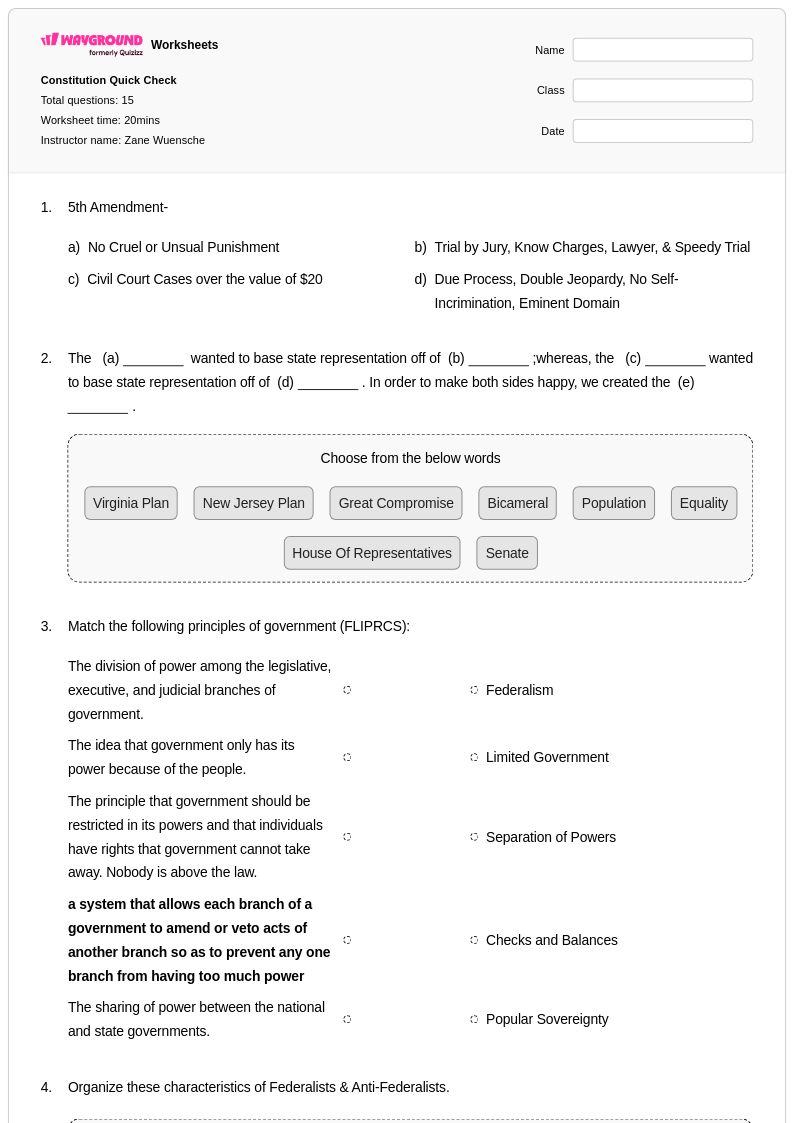
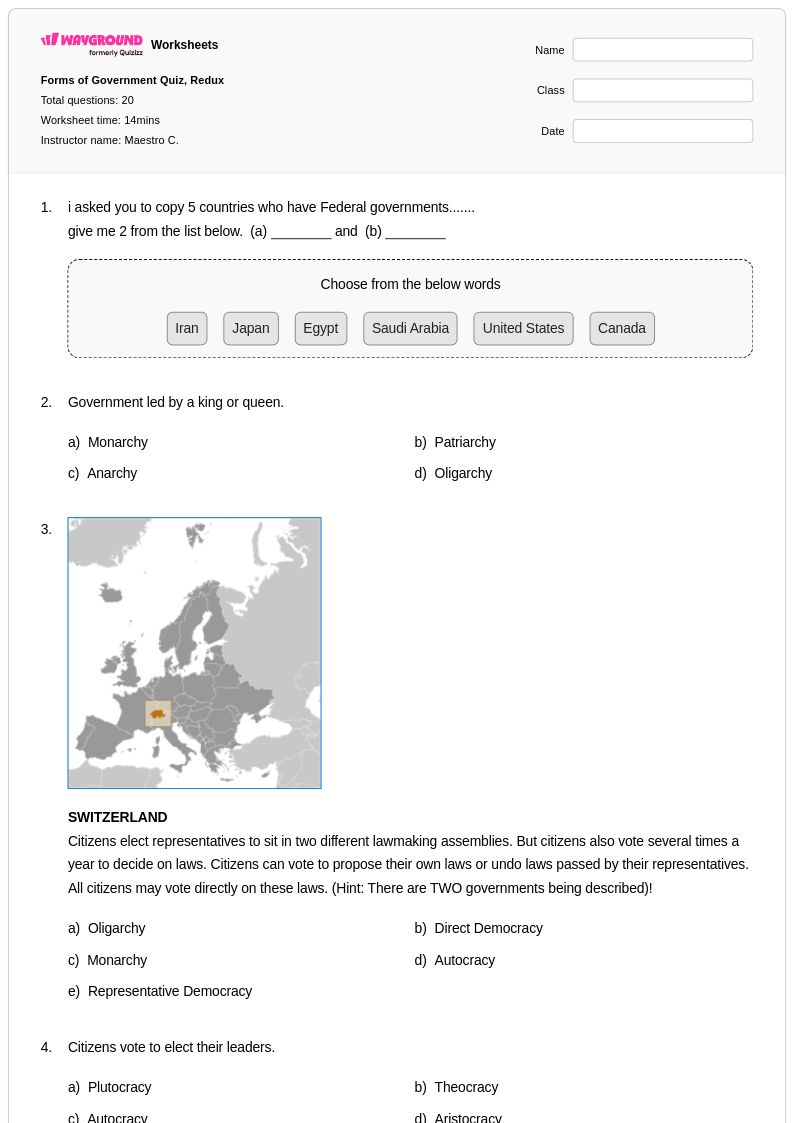
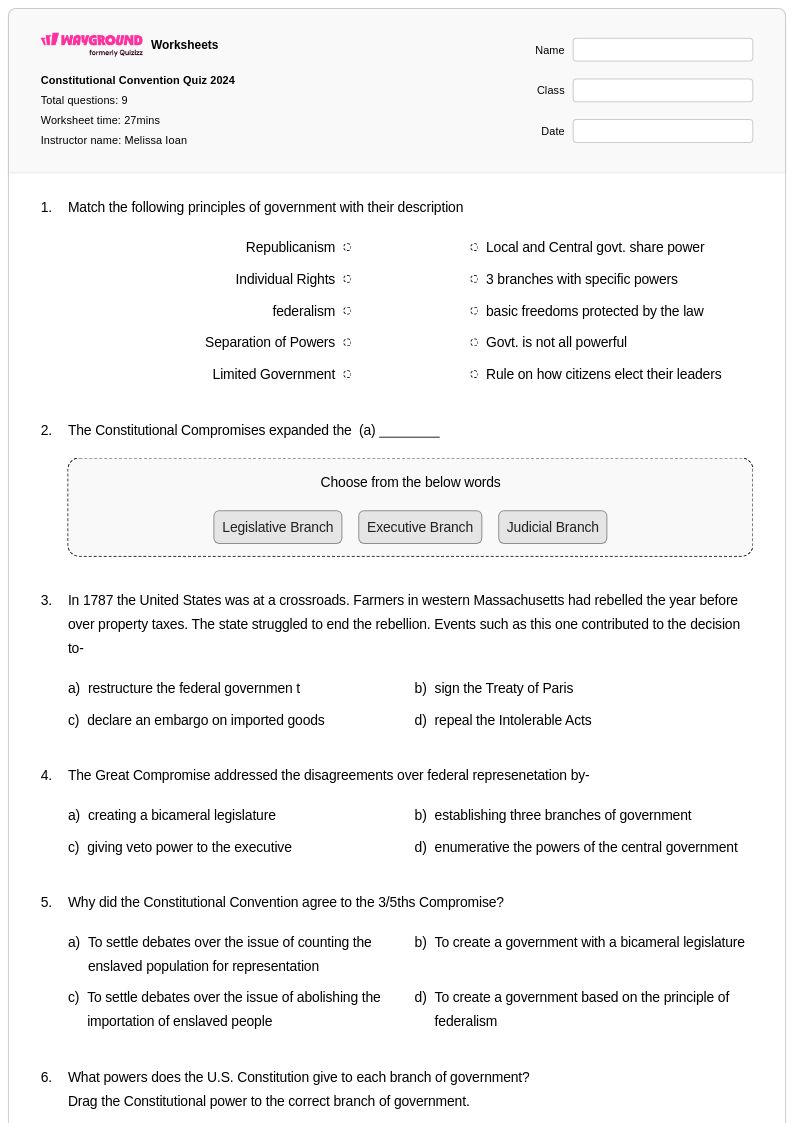
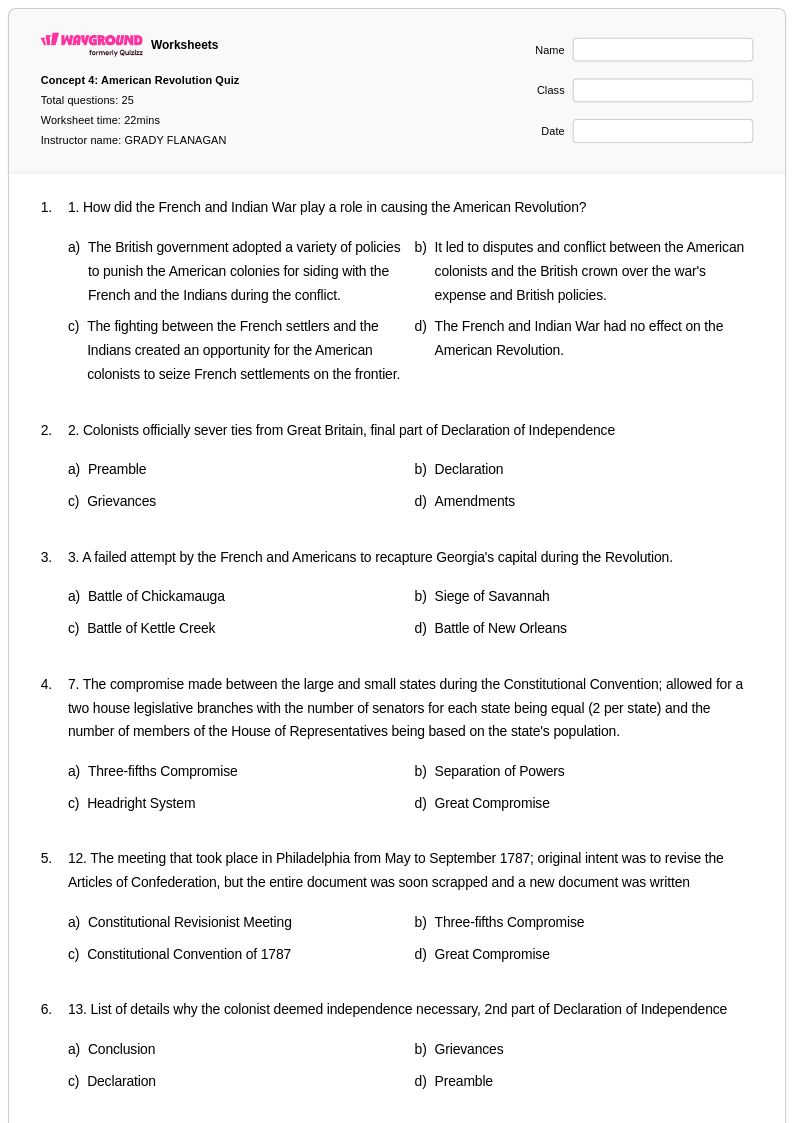
Class 8 limiting government free worksheets and printables help students understand constitutional principles, separation of powers, and checks and balances through engaging practice problems with comprehensive answer keys.
Explore printable Limiting Government worksheets for Class 8
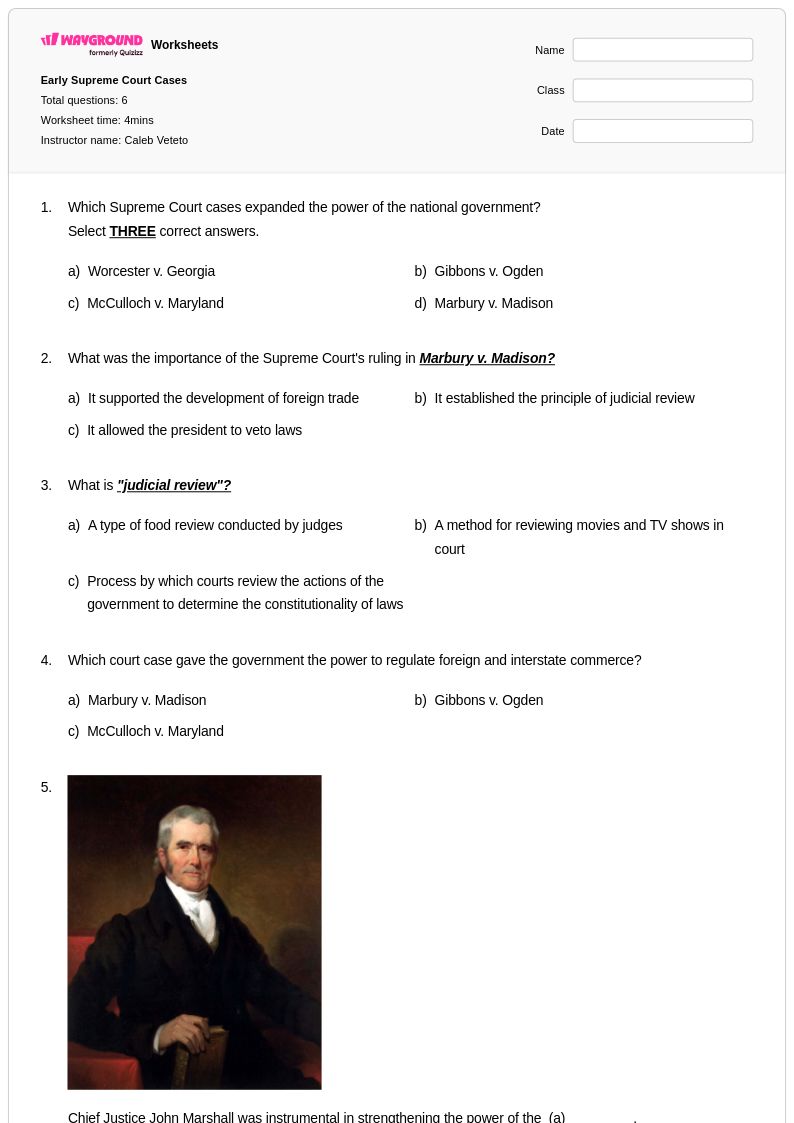
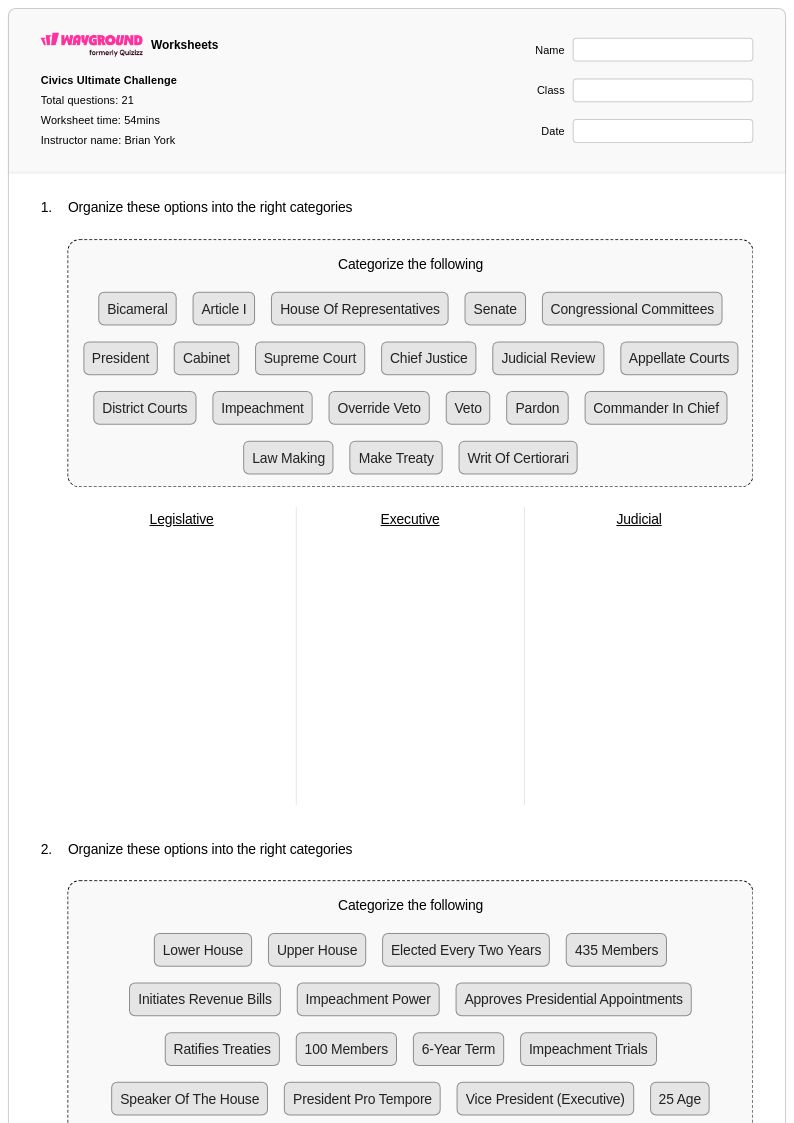
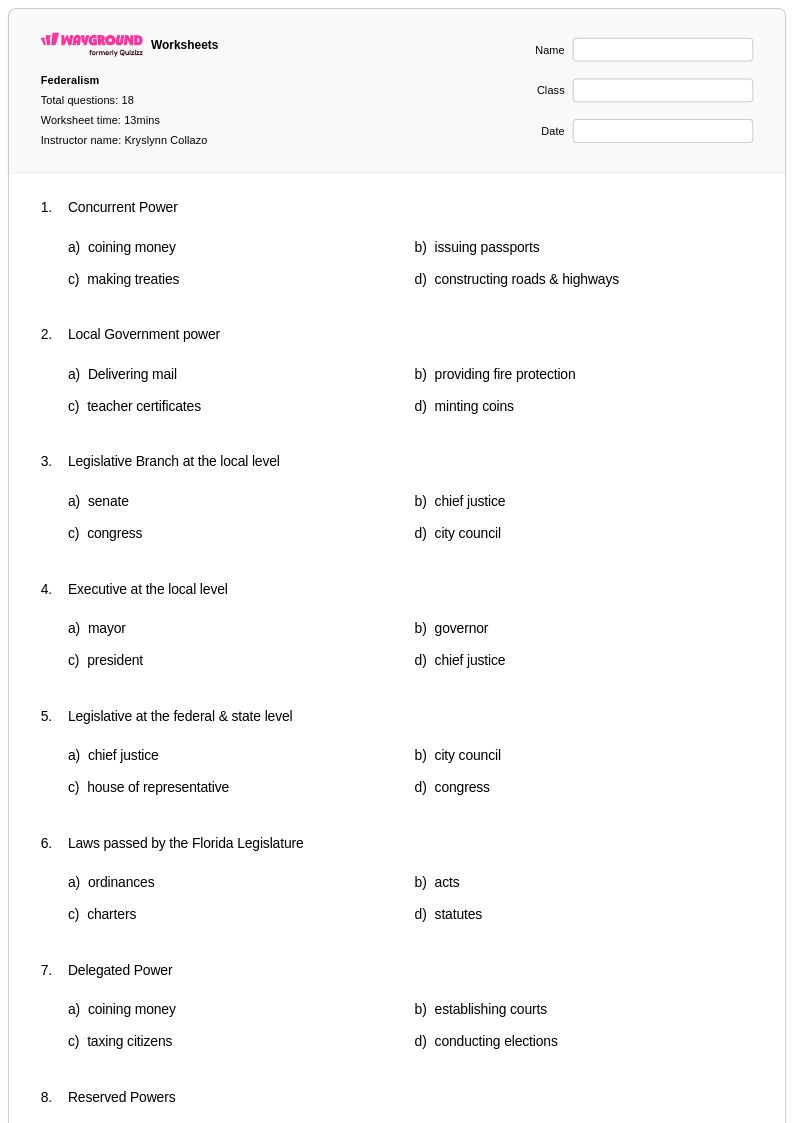
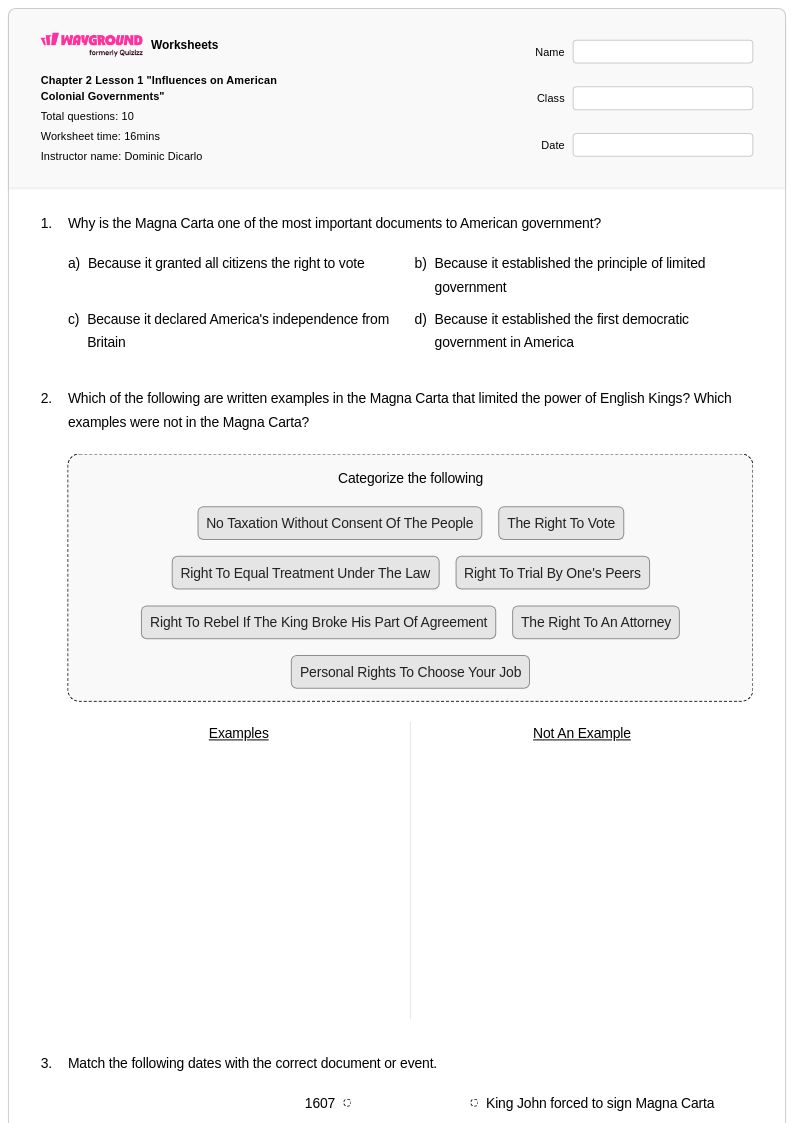
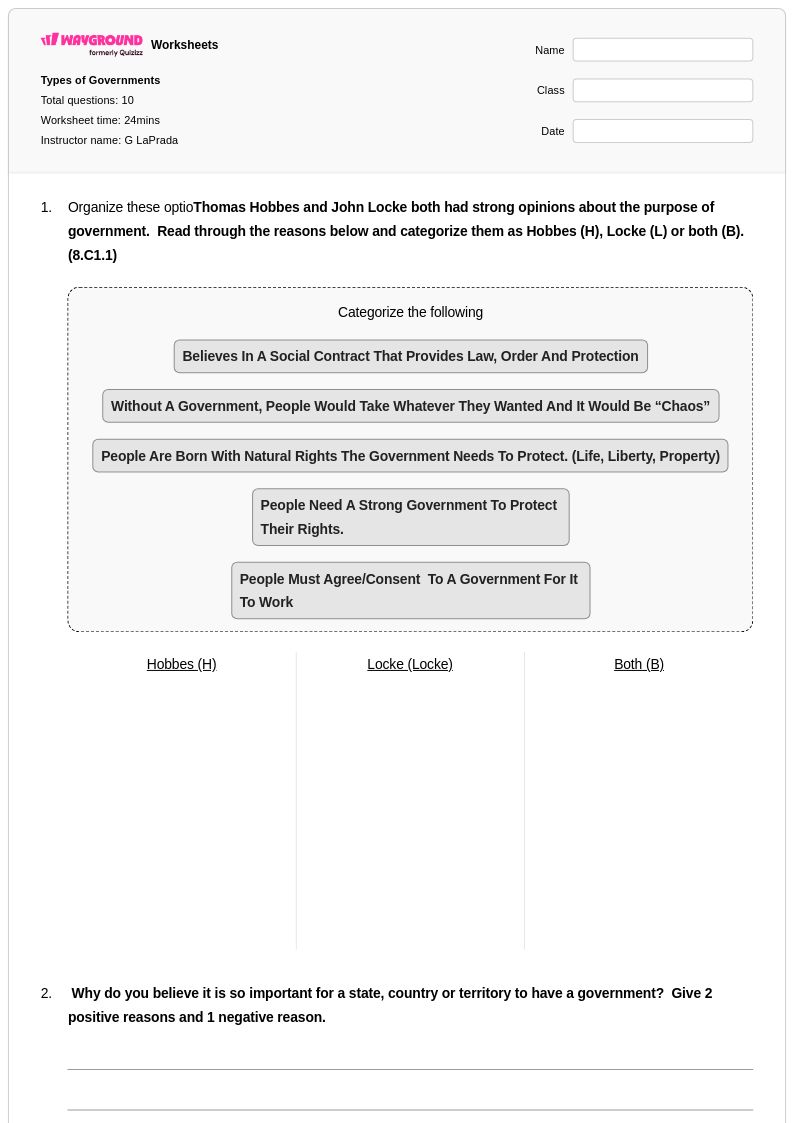
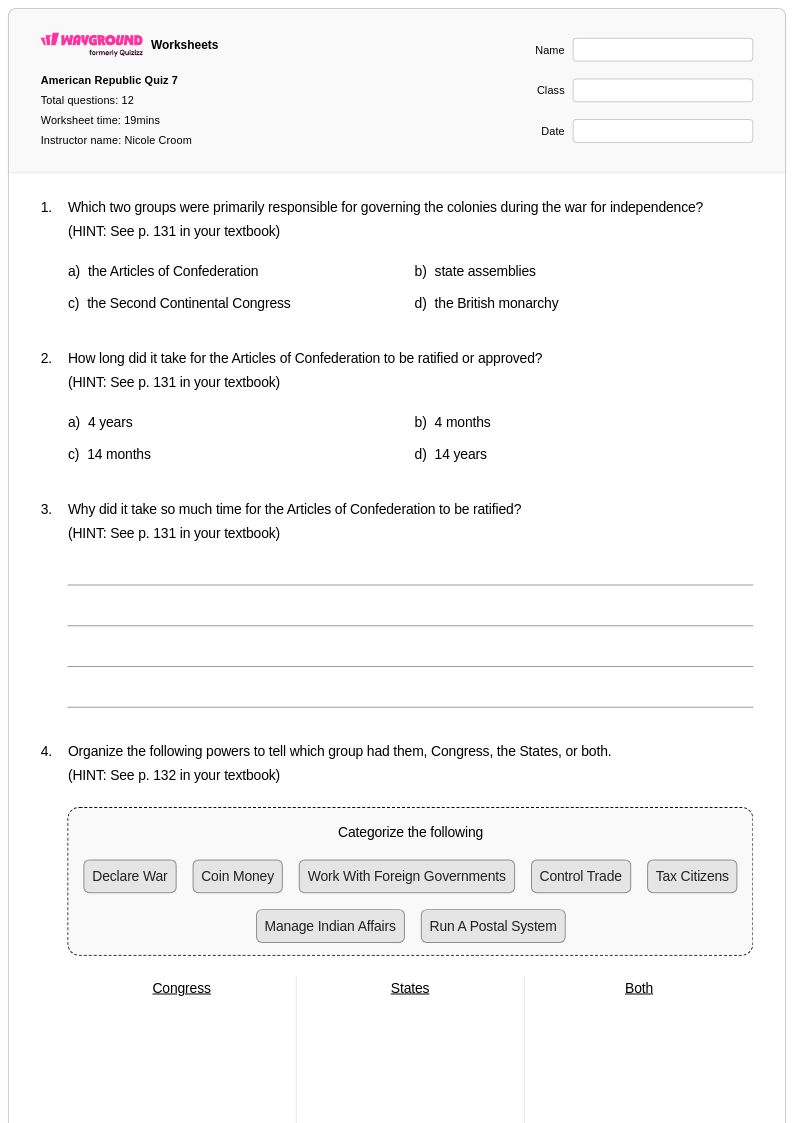
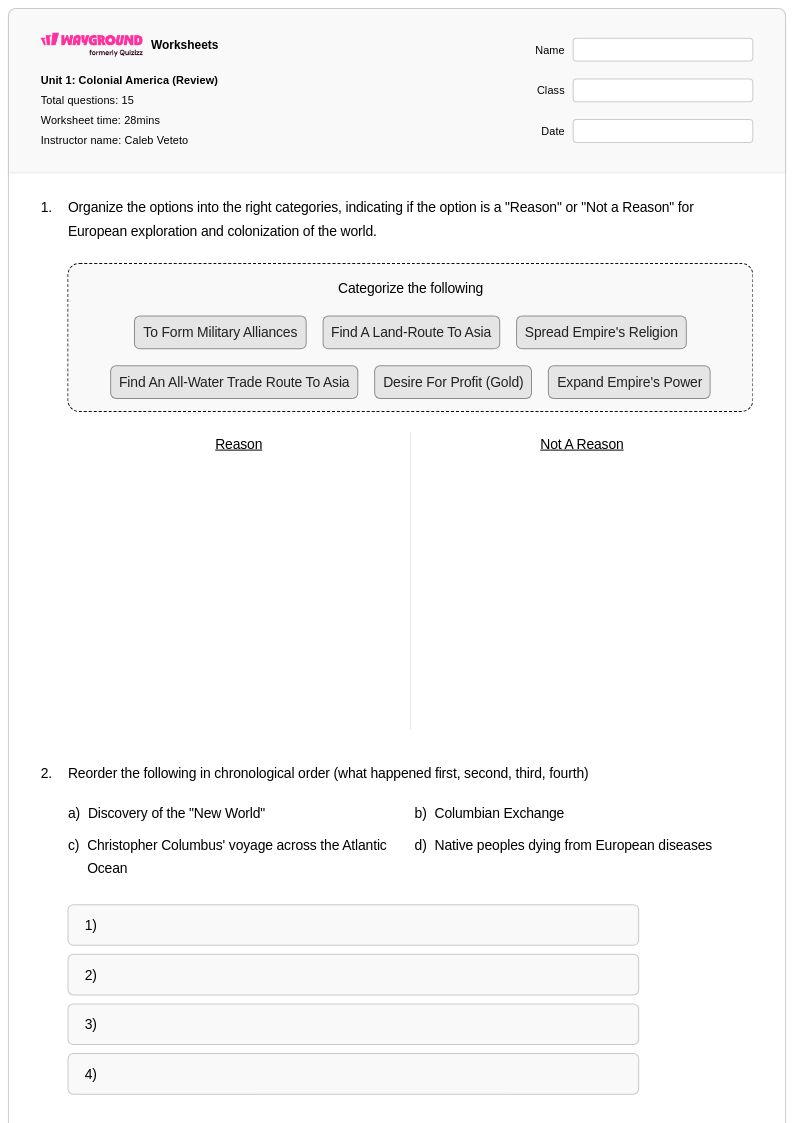
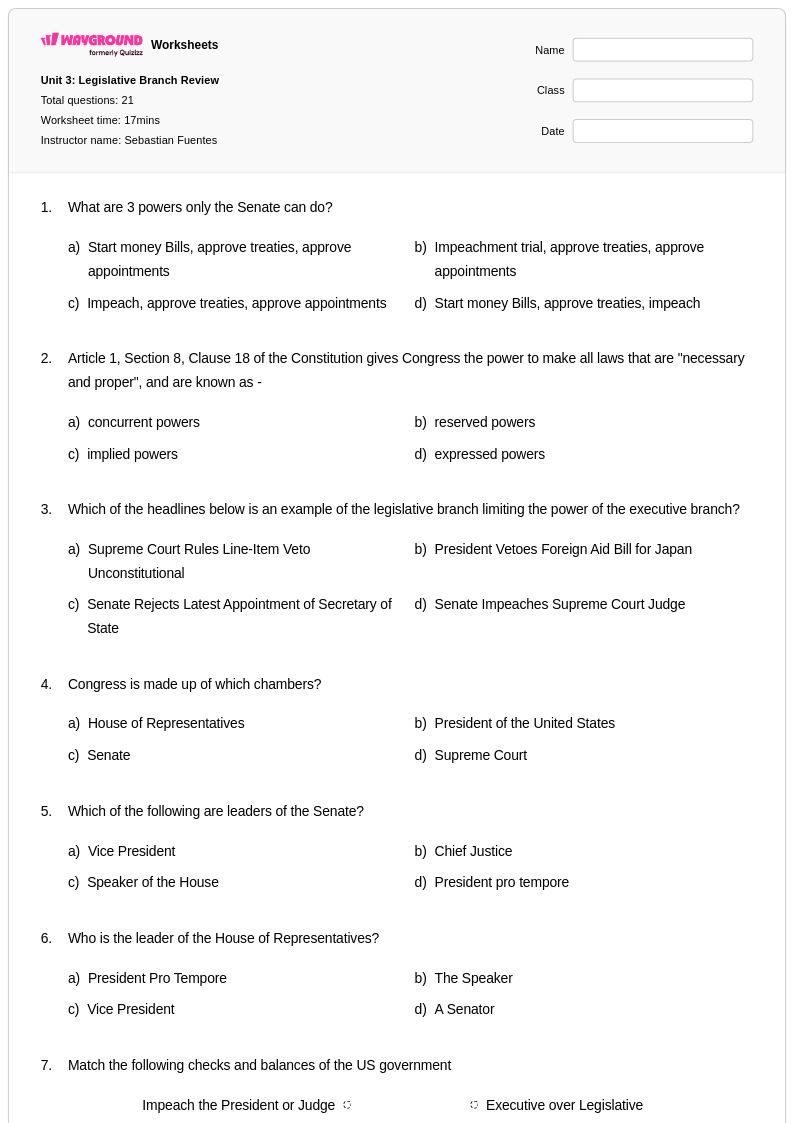
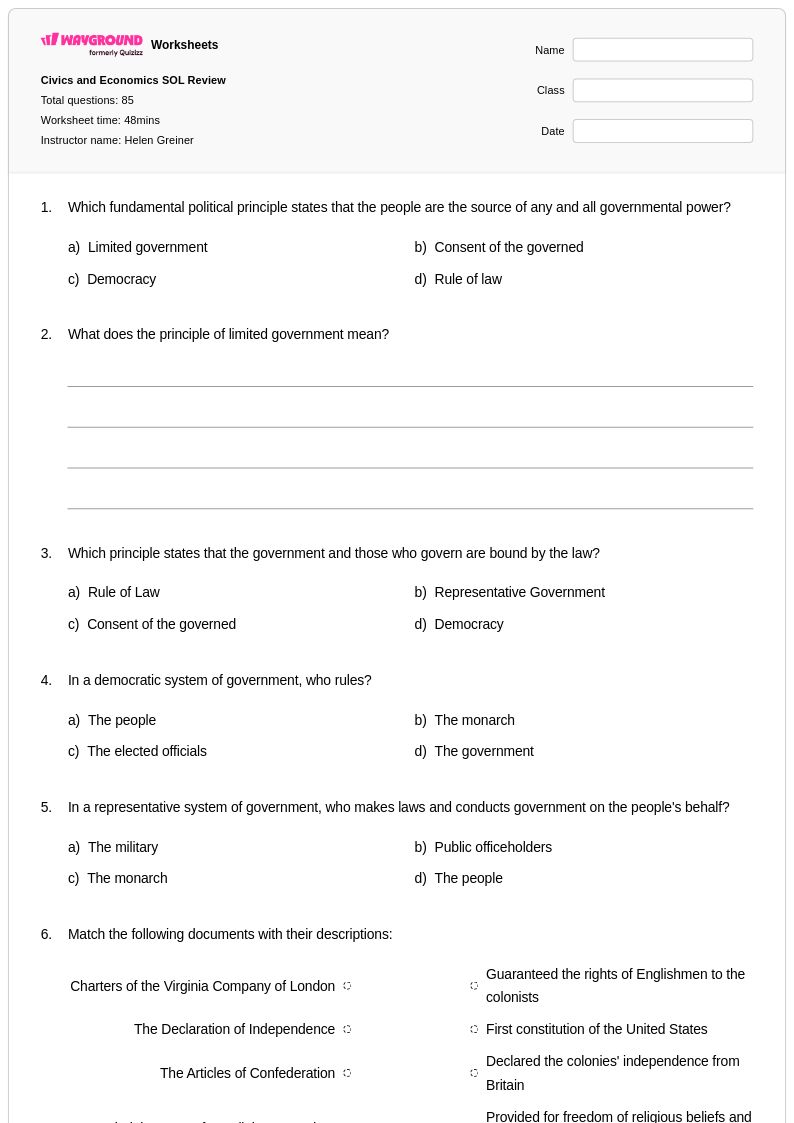
Limiting government worksheets for Class 8 students available through Wayground (formerly Quizizz) provide comprehensive exploration of constitutional principles that prevent governmental overreach and protect individual rights. These expertly crafted educational resources strengthen students' understanding of separation of powers, checks and balances, federalism, and the Bill of Rights as fundamental mechanisms for constraining governmental authority. The practice problems within these free printables challenge eighth graders to analyze real-world scenarios involving constitutional limitations, evaluate the effectiveness of different governmental constraints, and examine landmark Supreme Court cases that have defined the boundaries of governmental power. Each worksheet includes detailed answer keys that support both independent study and classroom instruction, while the pdf format ensures convenient access for teachers seeking to reinforce these critical civics concepts through structured academic exercises.
Wayground (formerly Quizizz) empowers educators with an extensive collection of teacher-created resources specifically designed to support Class 8 limiting government instruction across diverse learning environments. The platform's robust search and filtering capabilities enable teachers to quickly locate worksheets aligned with state and national social studies standards, while built-in differentiation tools allow for seamless customization based on individual student needs and varying academic readiness levels. These limiting government materials are available in both printable and digital formats, including downloadable pdf versions that facilitate flexible lesson planning and support multiple instructional approaches from direct teaching to independent practice sessions. Teachers utilize these comprehensive worksheet collections for targeted skill development, remediation of challenging constitutional concepts, and enrichment activities that deepen students' appreciation for the sophisticated mechanisms through which democratic societies maintain governmental accountability and protect citizen freedoms.
FAQs
How do I teach limiting government to middle or high school students?
Teaching limiting government effectively starts with grounding students in the historical context of why the Founders distrusted concentrated power, then connecting that reasoning to specific constitutional mechanisms like separation of powers, checks and balances, and federalism. Use case studies such as presidential vetoes, landmark Supreme Court rulings, and federal-state conflicts to make abstract principles concrete. Scaffolding instruction from foundational vocabulary toward scenario-based analysis helps students move beyond memorization into genuine constitutional reasoning.
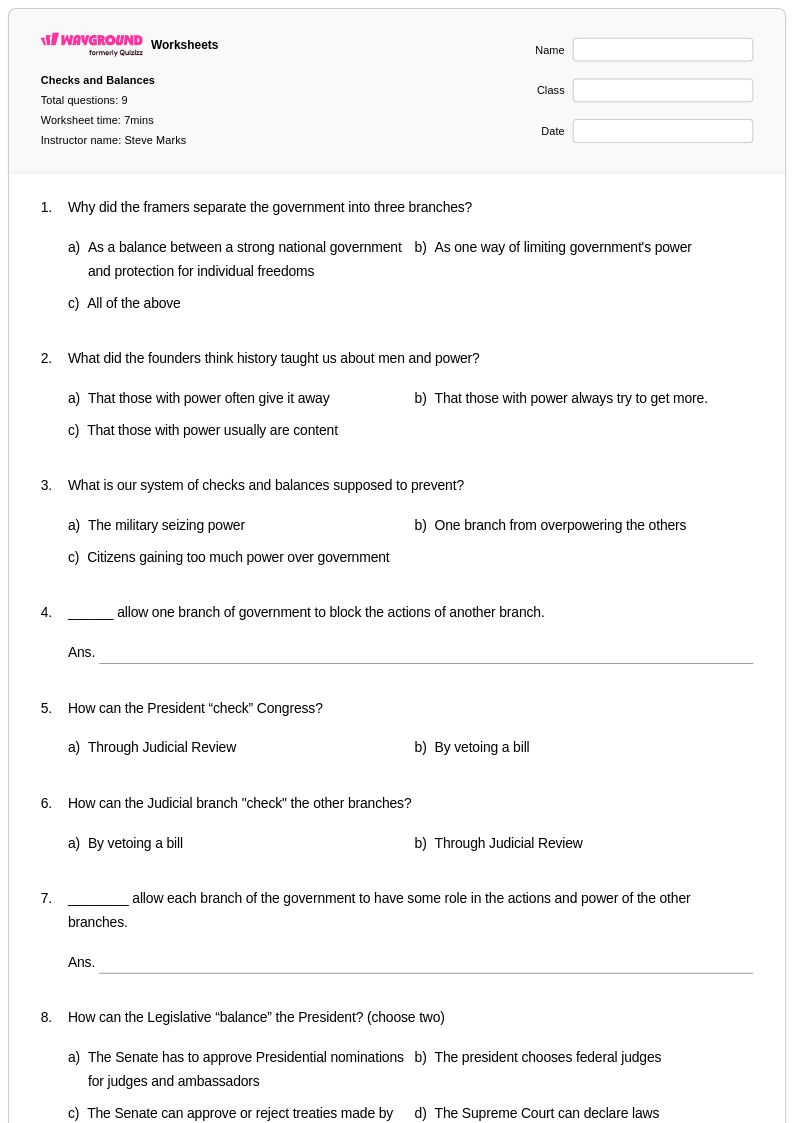
What exercises help students practice checks and balances and separation of powers?
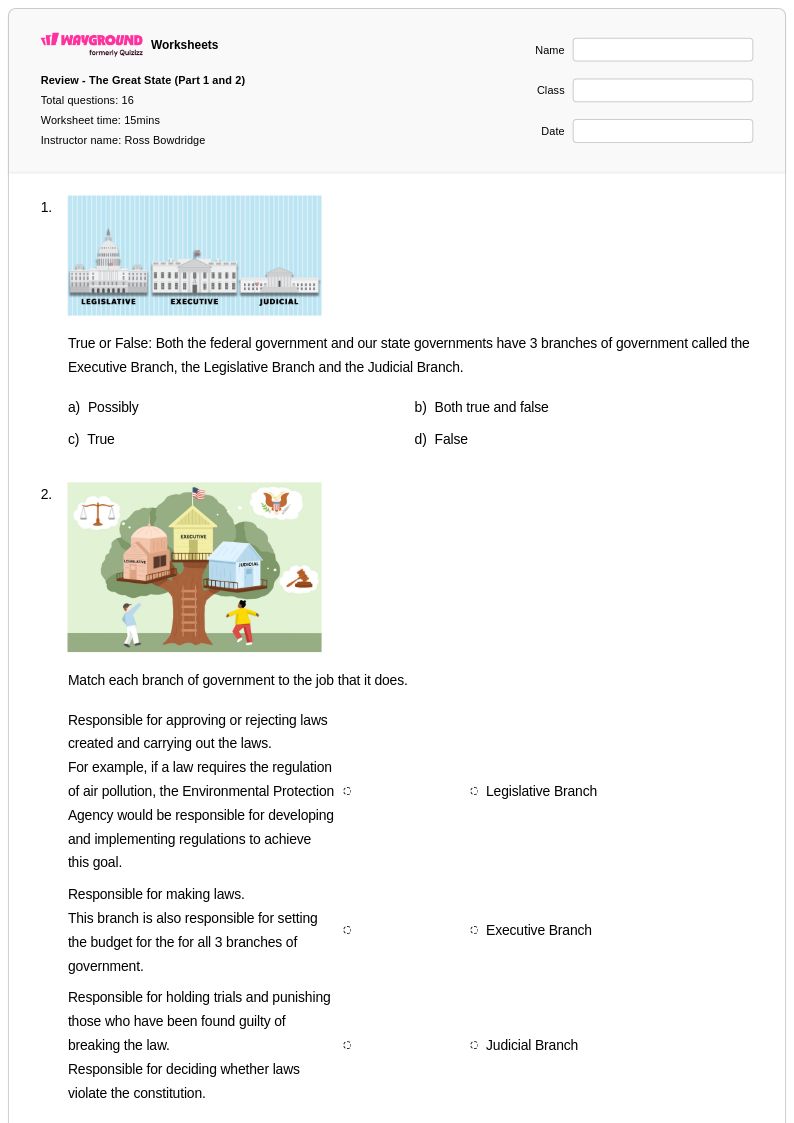
Scenario-based exercises are among the most effective tools for practicing checks and balances, asking students to identify which branch holds a given power and how another branch can counteract it. Diagramming activities that map the three branches and their overlapping authorities help students visualize the system rather than simply list facts. Practice problems that walk through real legislative, executive, and judicial actions, such as a bill becoming law or a court striking down a statute, reinforce procedural understanding alongside conceptual knowledge.
What mistakes do students commonly make when learning about limiting government?
A frequent misconception is that checks and balances and separation of powers are the same concept, when in fact separation of powers divides authority among branches while checks and balances give each branch tools to restrain the others. Students also often conflate federalism with separation of powers, failing to recognize that federalism distributes power vertically between national and state governments rather than horizontally among branches. Another common error is treating the Bill of Rights as a list of government-granted privileges rather than as explicit limitations on what government may do to individuals.
How do I use Wayground's limiting government worksheets in my classroom?
Wayground's limiting government worksheets are available as printable PDFs for traditional classroom use and in digital formats for technology-integrated environments, including the option to host them as a quiz directly on Wayground. Teachers can assign worksheets as independent practice, use them for formative assessment after direct instruction, or integrate them into review sessions before civics exams. Each worksheet includes a complete answer key, so teachers can quickly gauge student comprehension of constitutional constraints without additional preparation.
How can I differentiate limiting government instruction for students at different skill levels?
For students who struggle with abstract constitutional concepts, reducing the complexity of answer choices and pairing reading passages with guiding questions can lower the cognitive barrier to entry. Advanced learners benefit from open-ended scenarios that ask them to evaluate whether a historical or contemporary governmental action was constitutionally justified. On Wayground, teachers can apply individual accommodations such as extended time, read-aloud support, and reduced answer choices to specific students while the rest of the class works through standard settings, allowing differentiation without singling students out.
What topics should a comprehensive limiting government unit cover?
A thorough unit on limiting government should address the philosophical foundations of constrained power, including Enlightenment influences on the Founders, before moving into structural mechanisms like separation of powers, checks and balances, and federalism. Students should also examine individual rights protections through the Bill of Rights and subsequent amendments, judicial review as a check on legislative and executive authority, and contemporary debates about the boundaries of governmental power. Connecting historical design to modern governance helps students understand that these are living systems, not static historical artifacts.