Free Printable Lord of the Flies Worksheets for Class 12
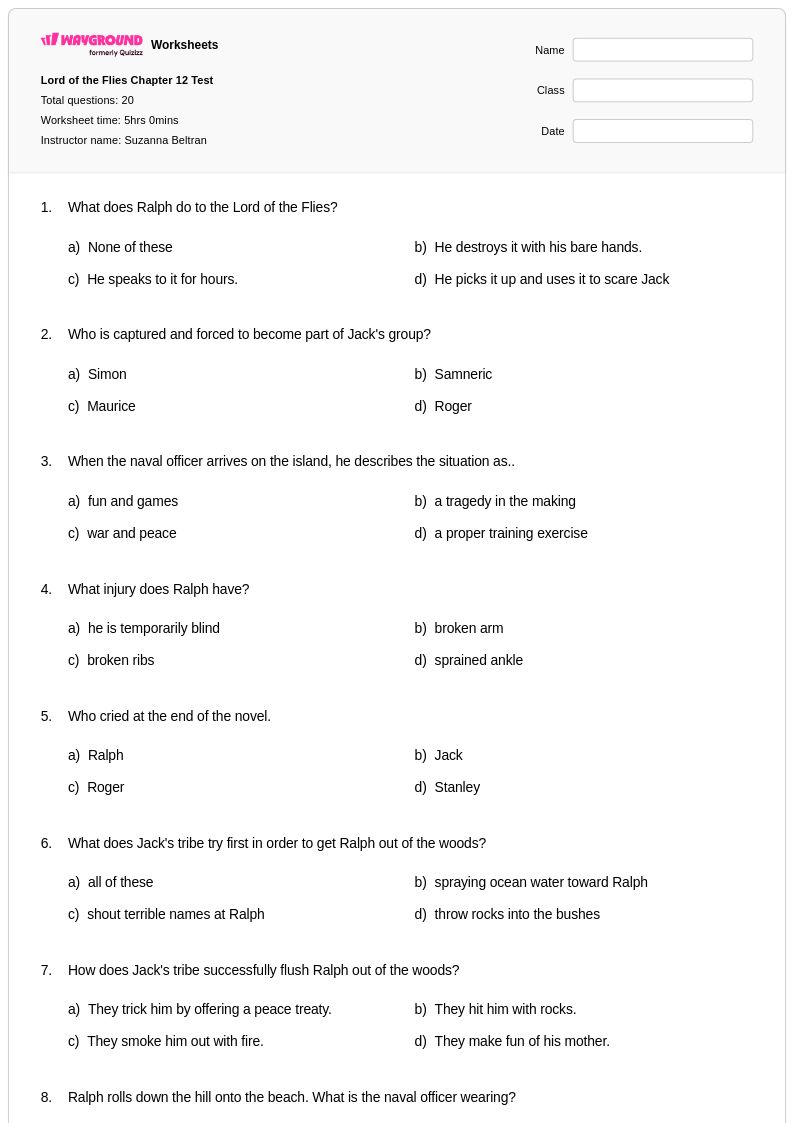
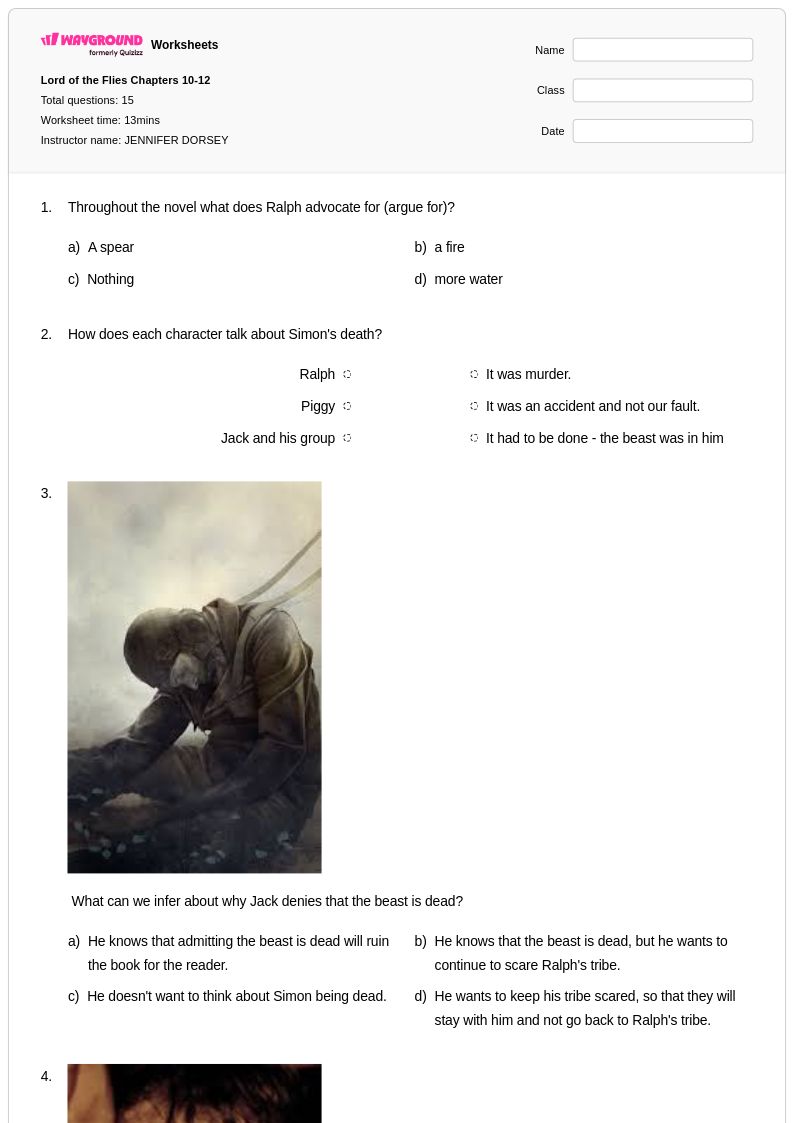
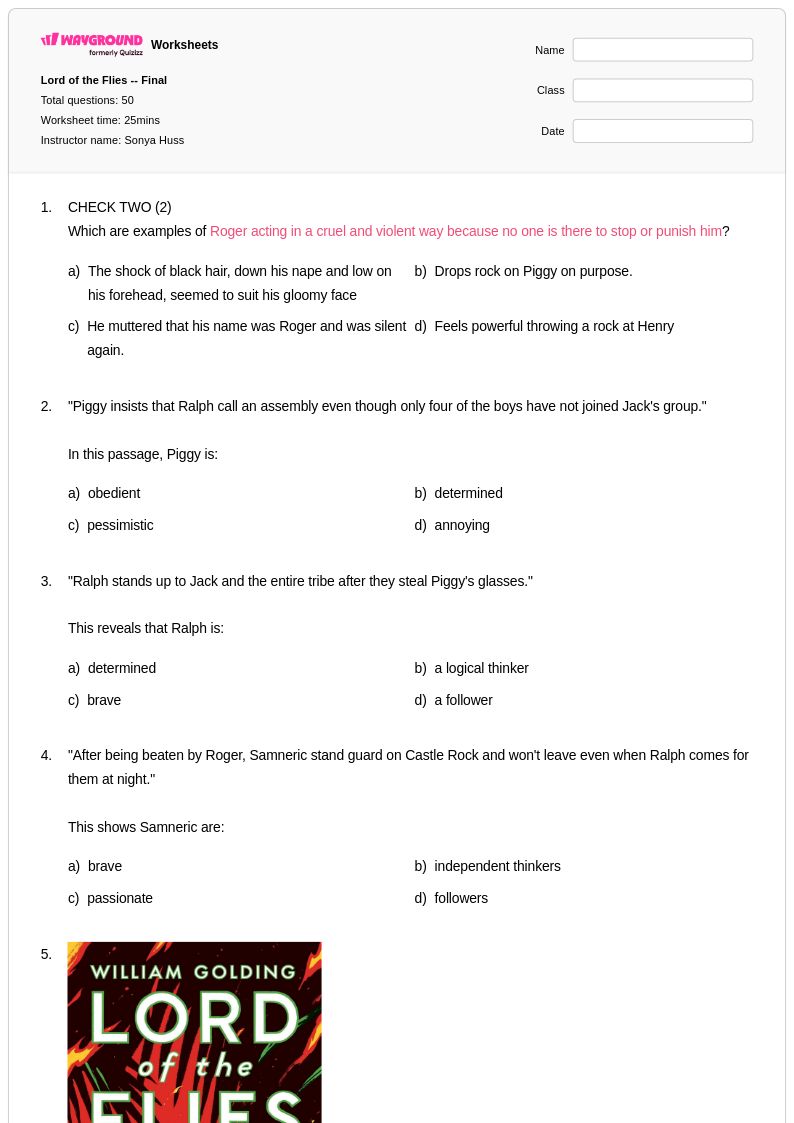
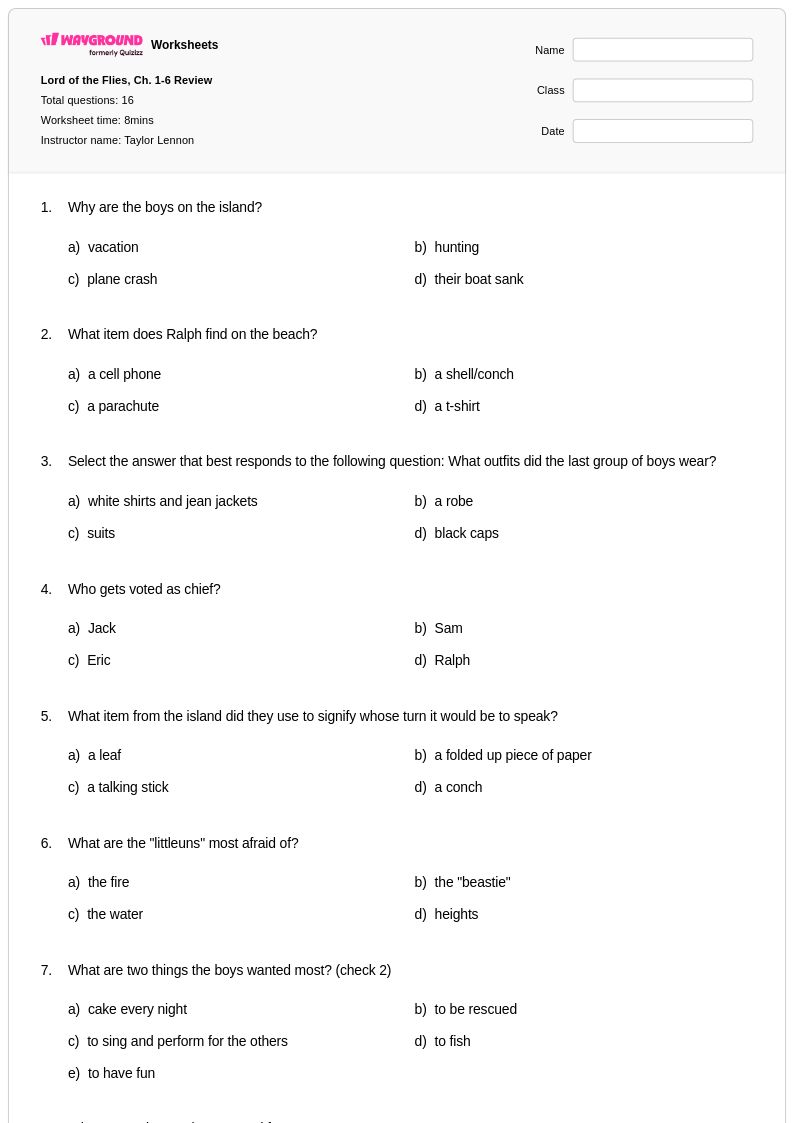
Class 12 Lord of the Flies worksheets and printables help students analyze Golding's classic novel through comprehensive practice problems, free PDF resources, and detailed answer keys for deeper literary understanding.
Explore printable Lord of the Flies worksheets for Class 12
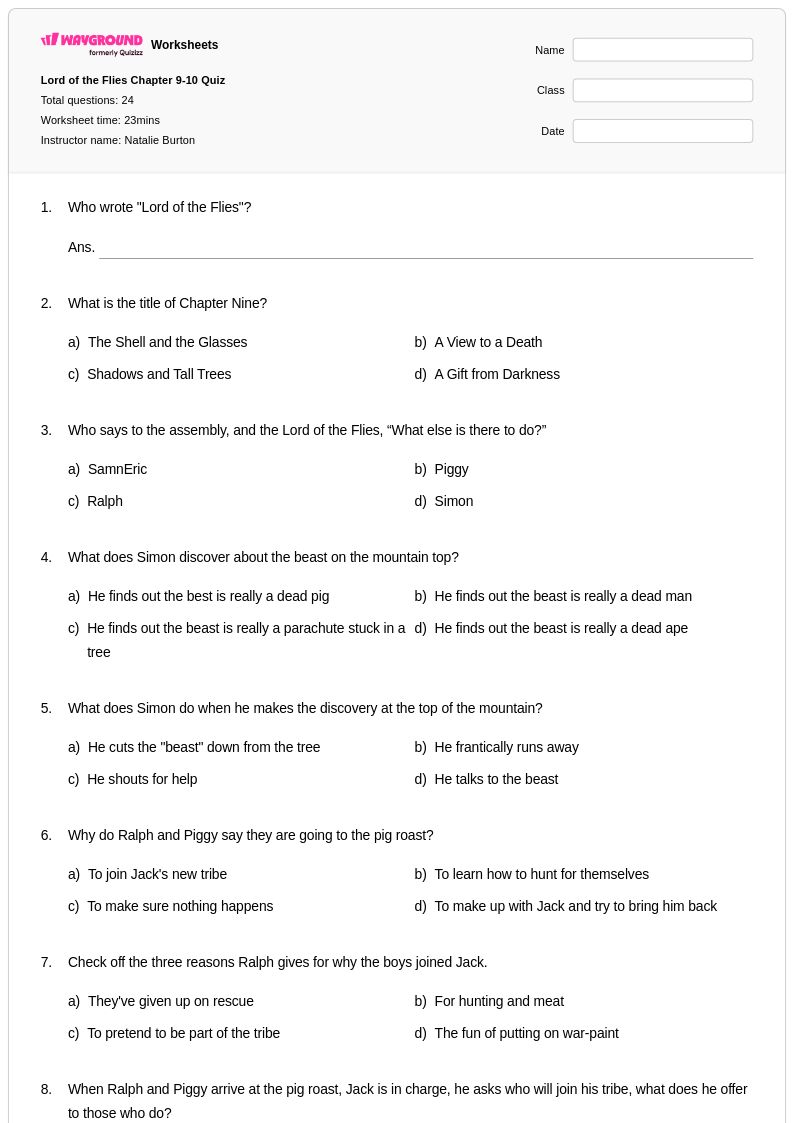
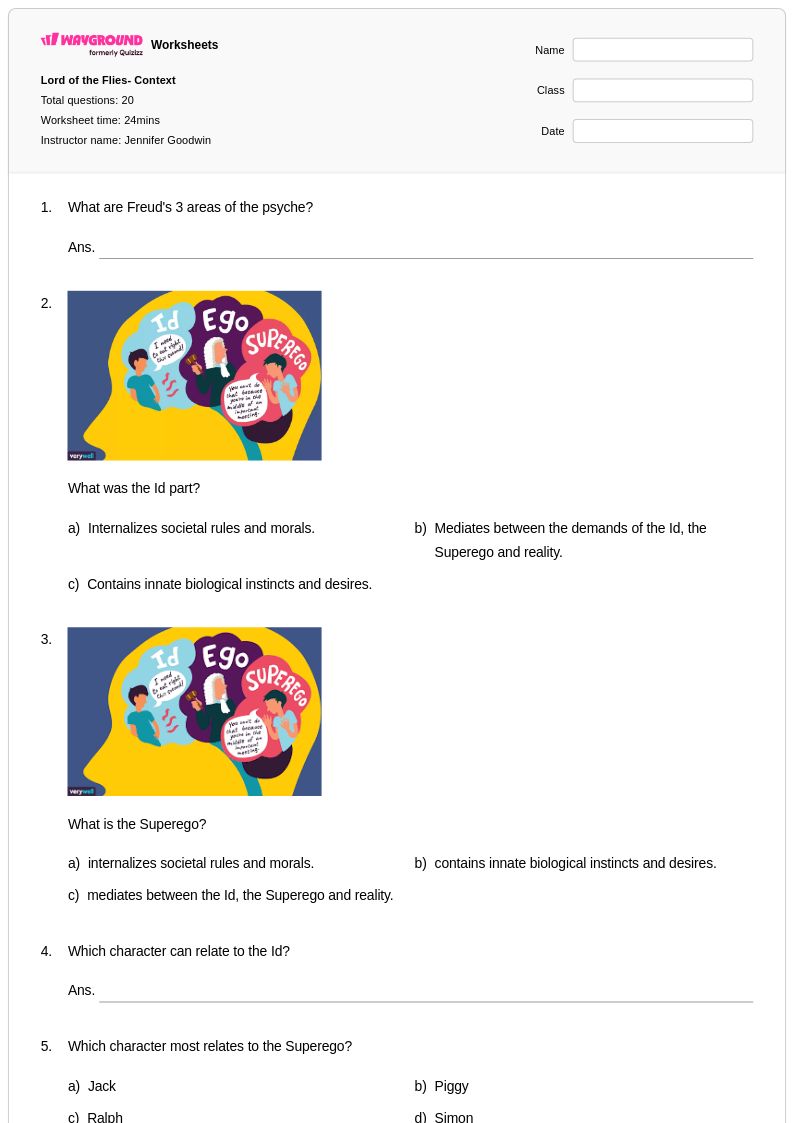
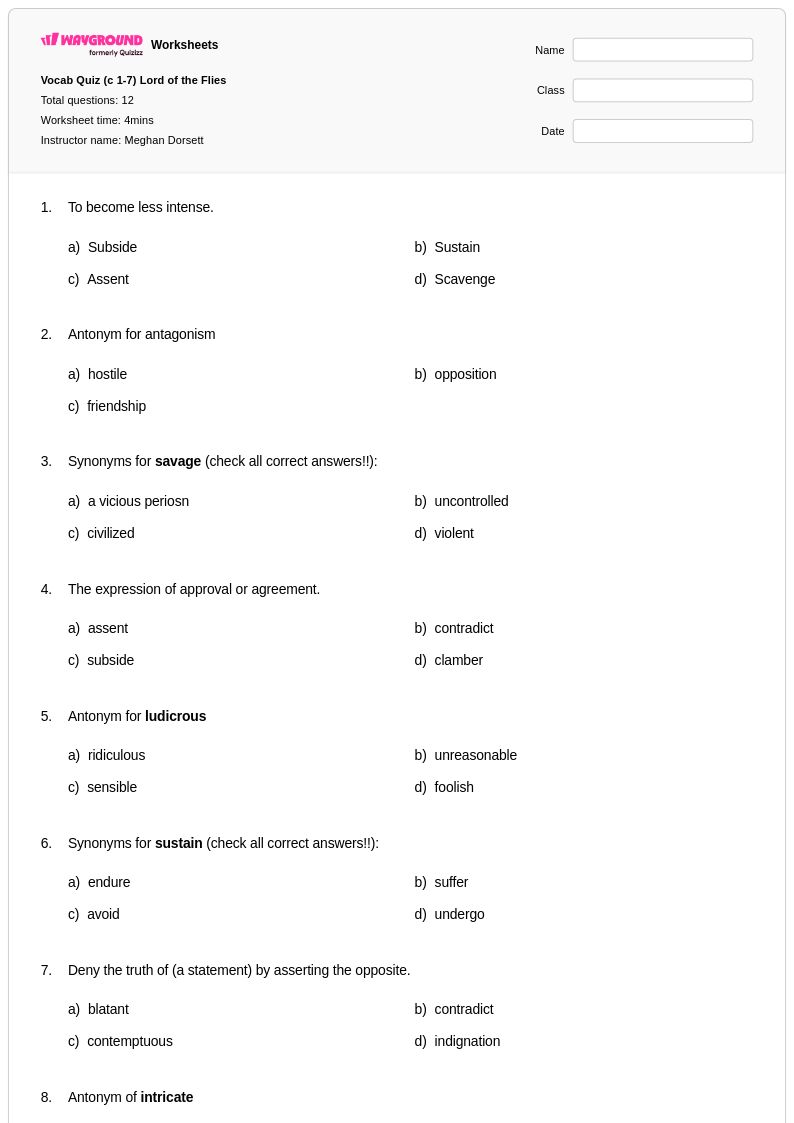
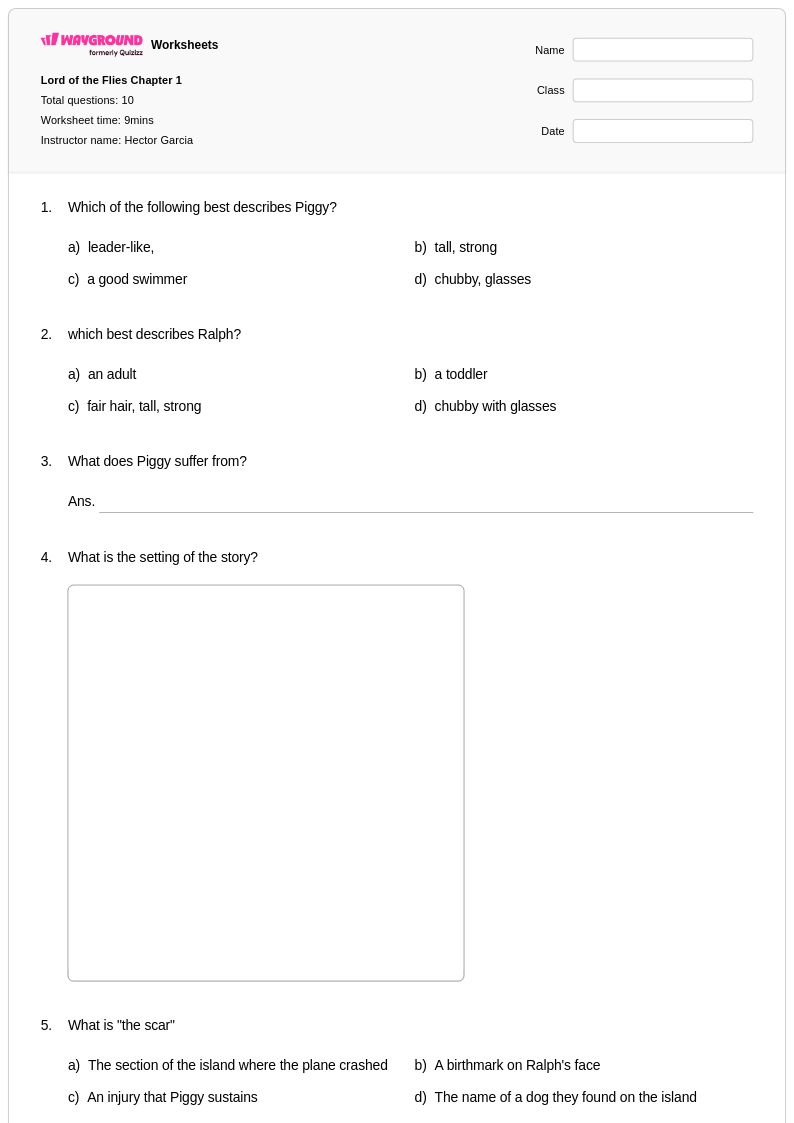
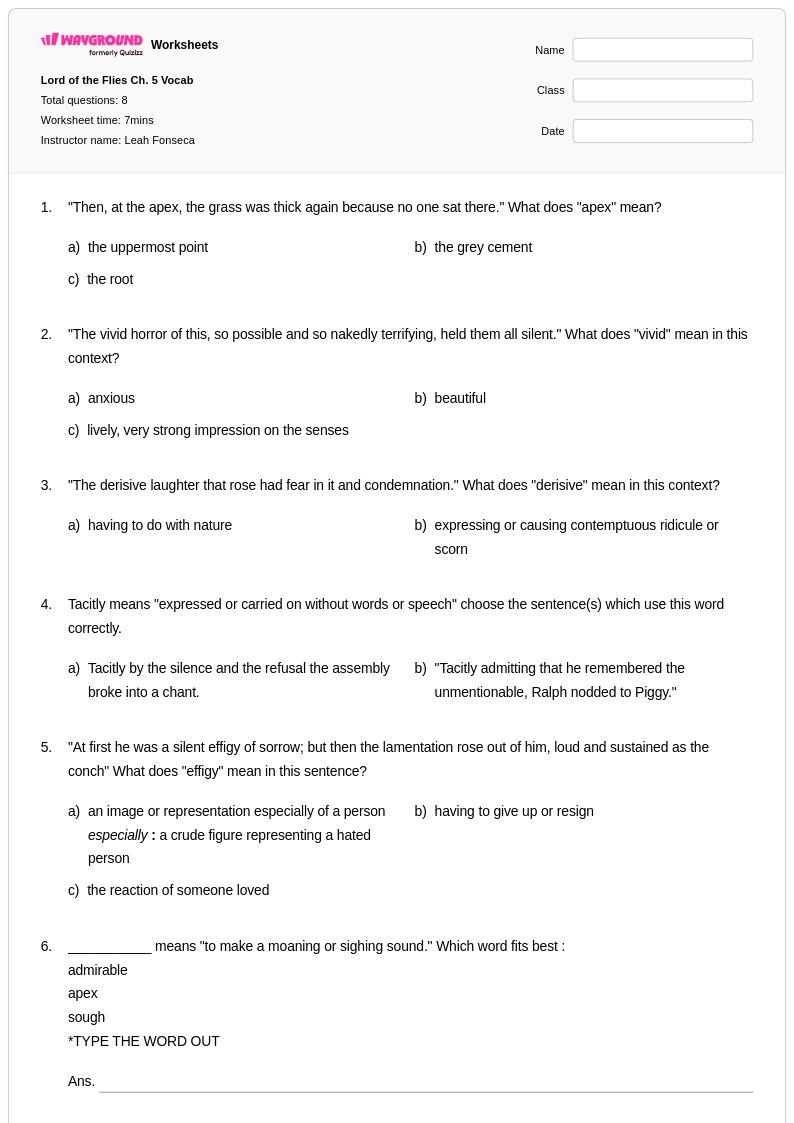
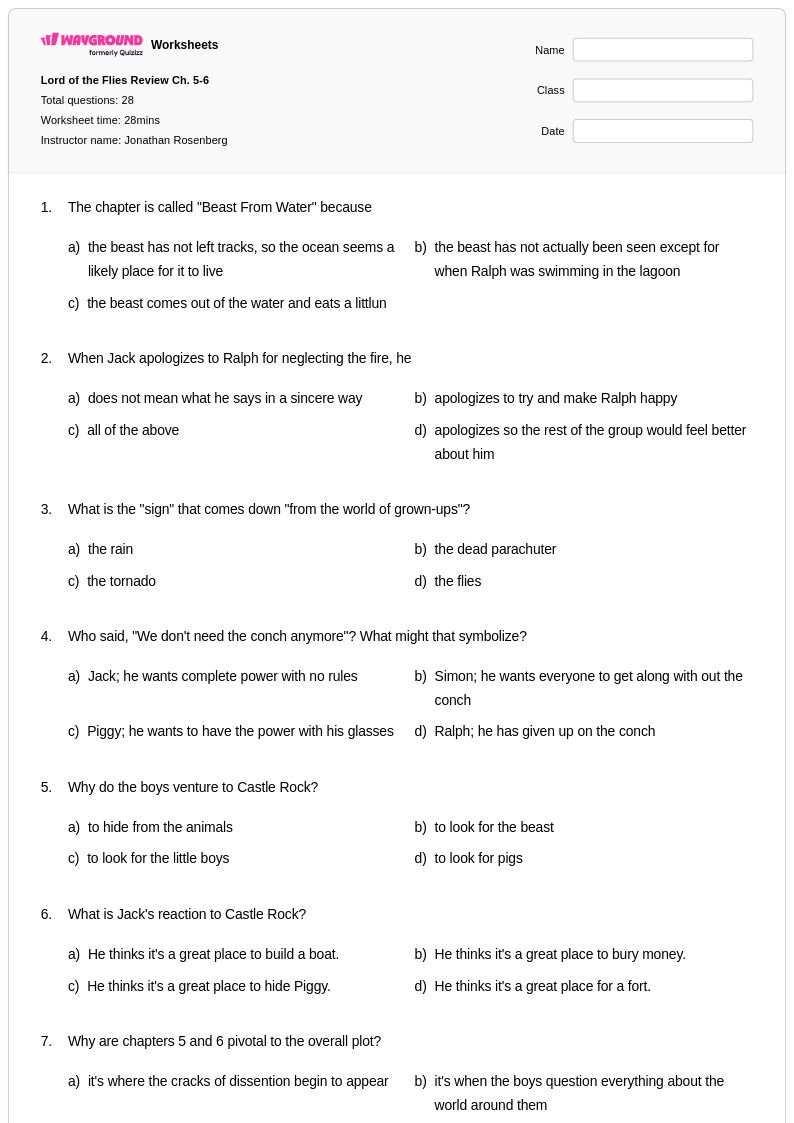
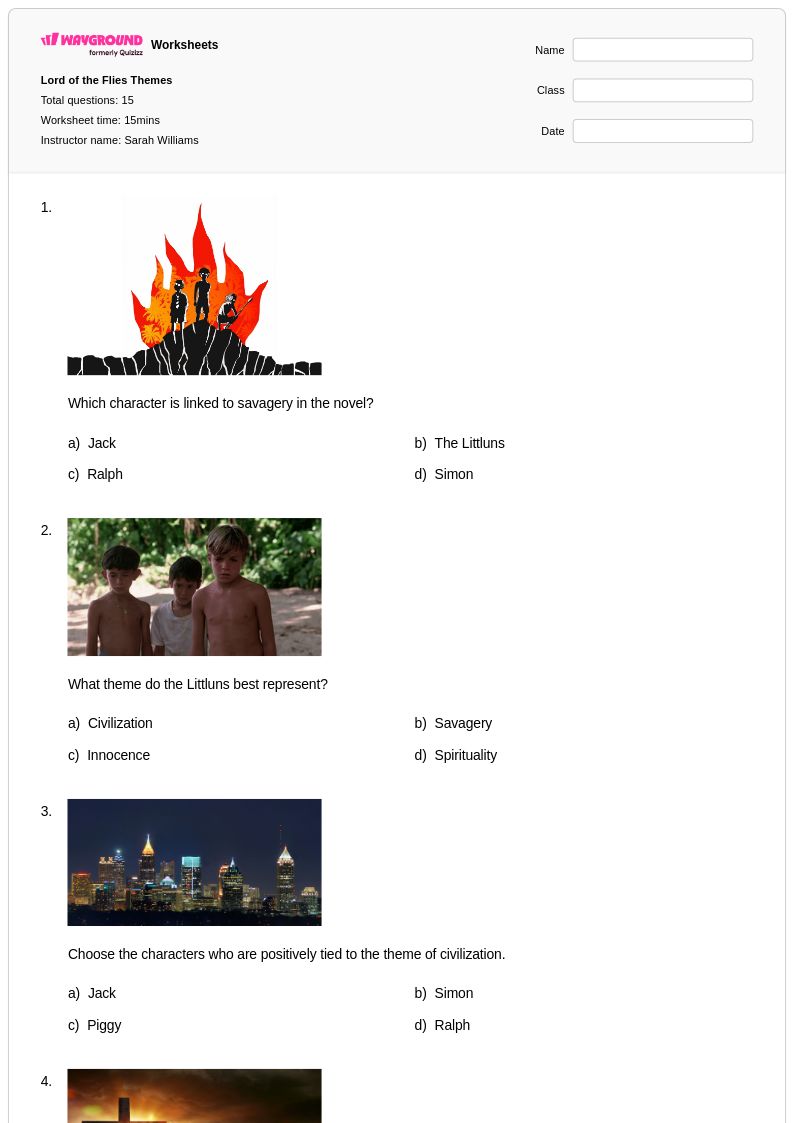
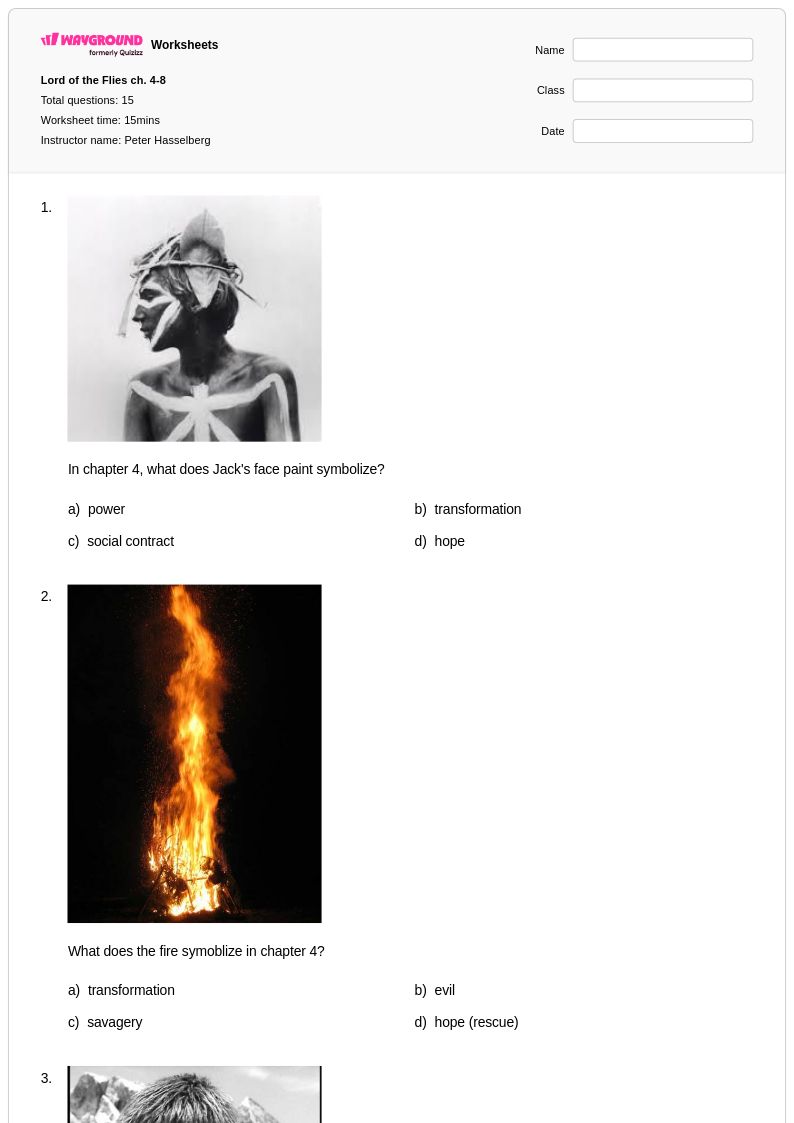
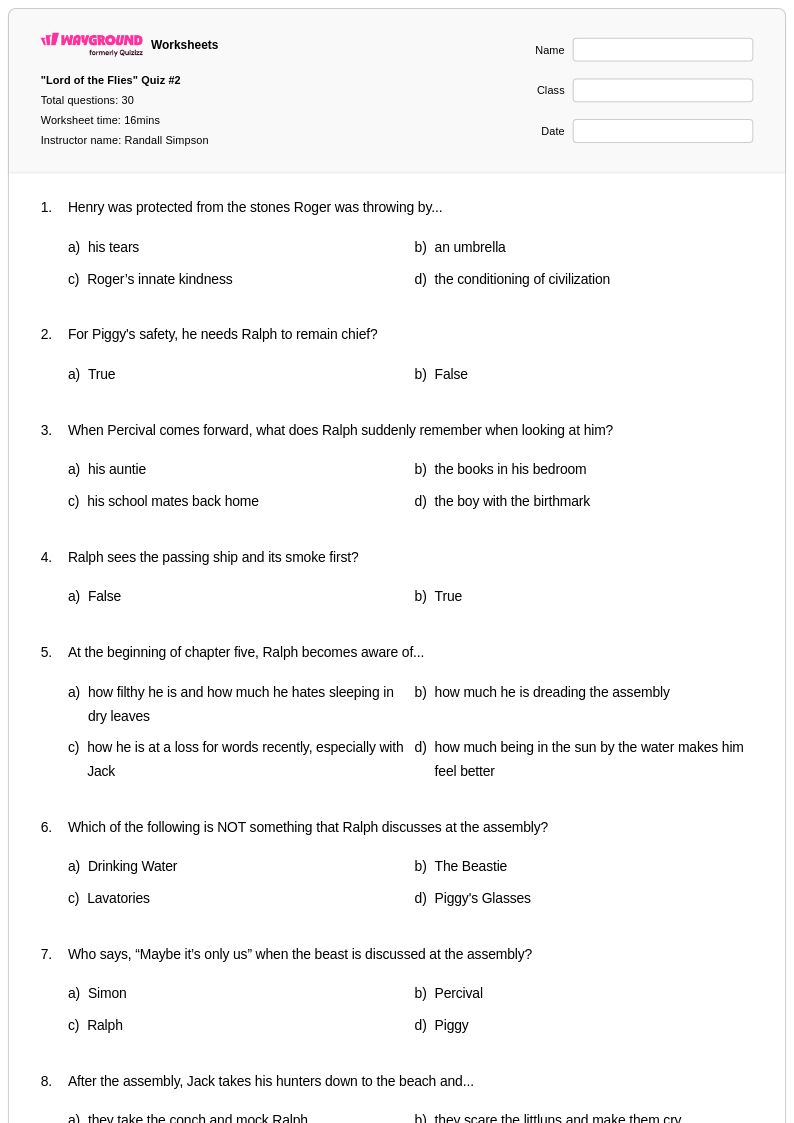
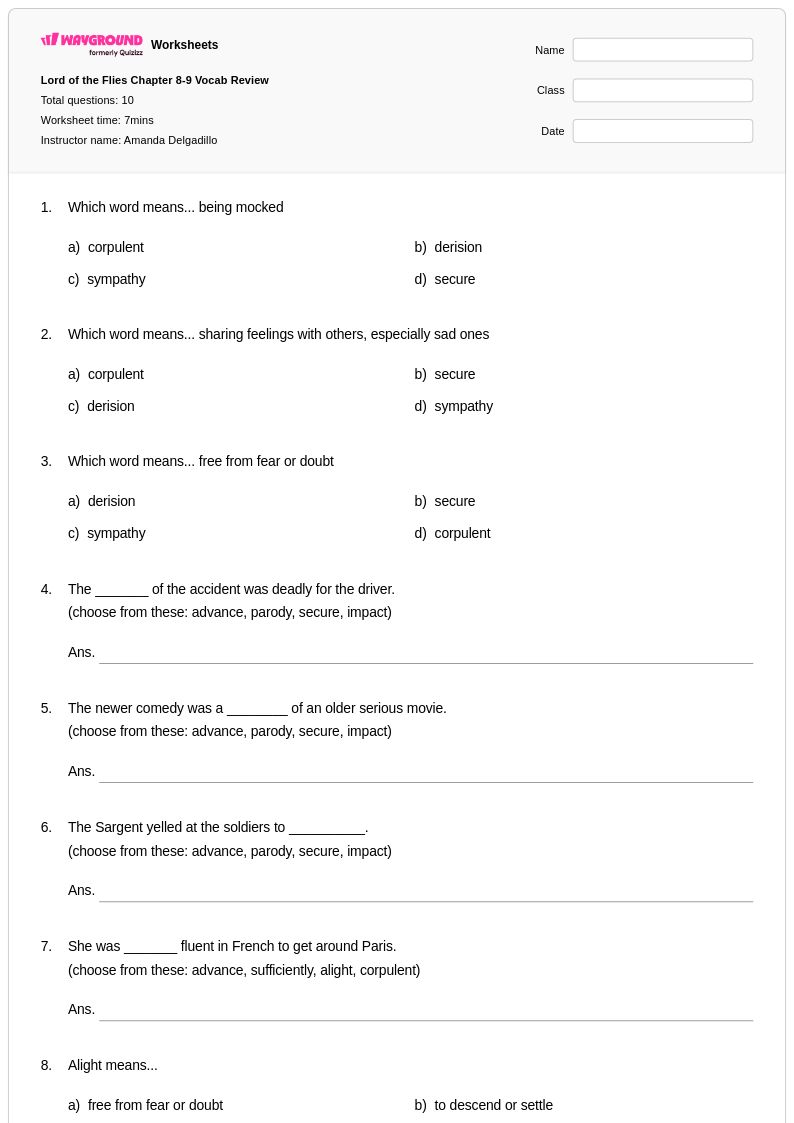
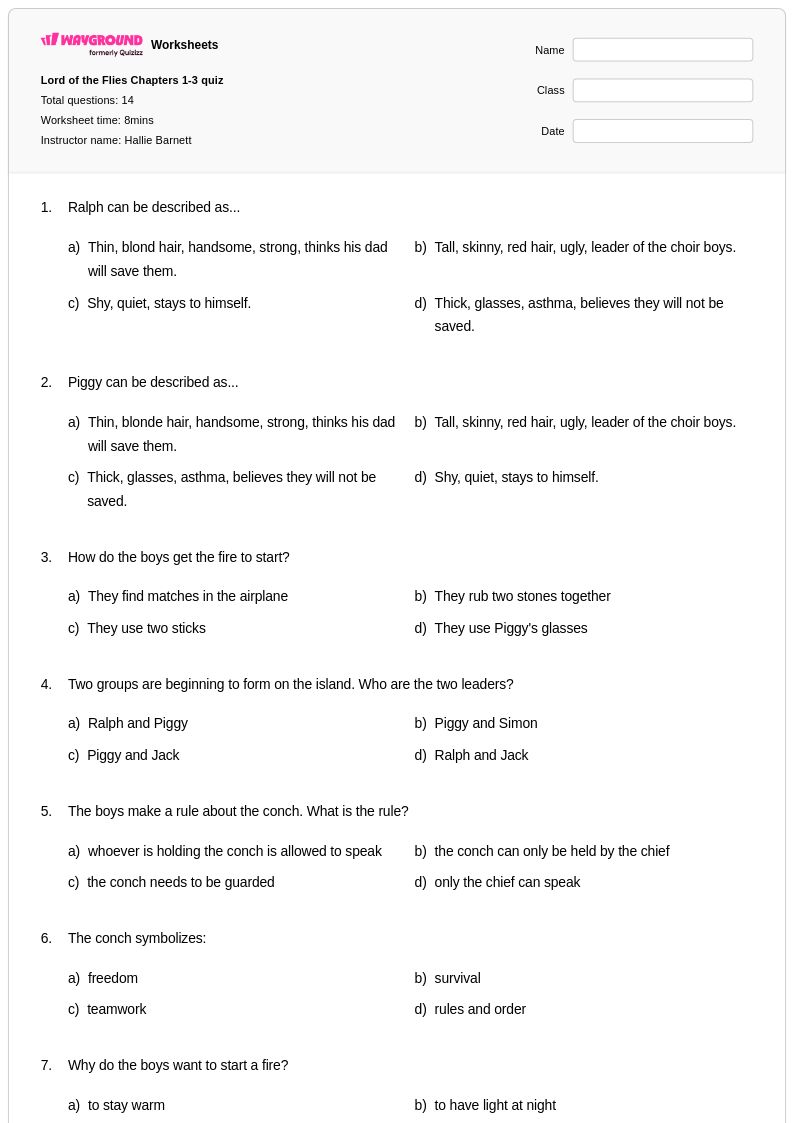
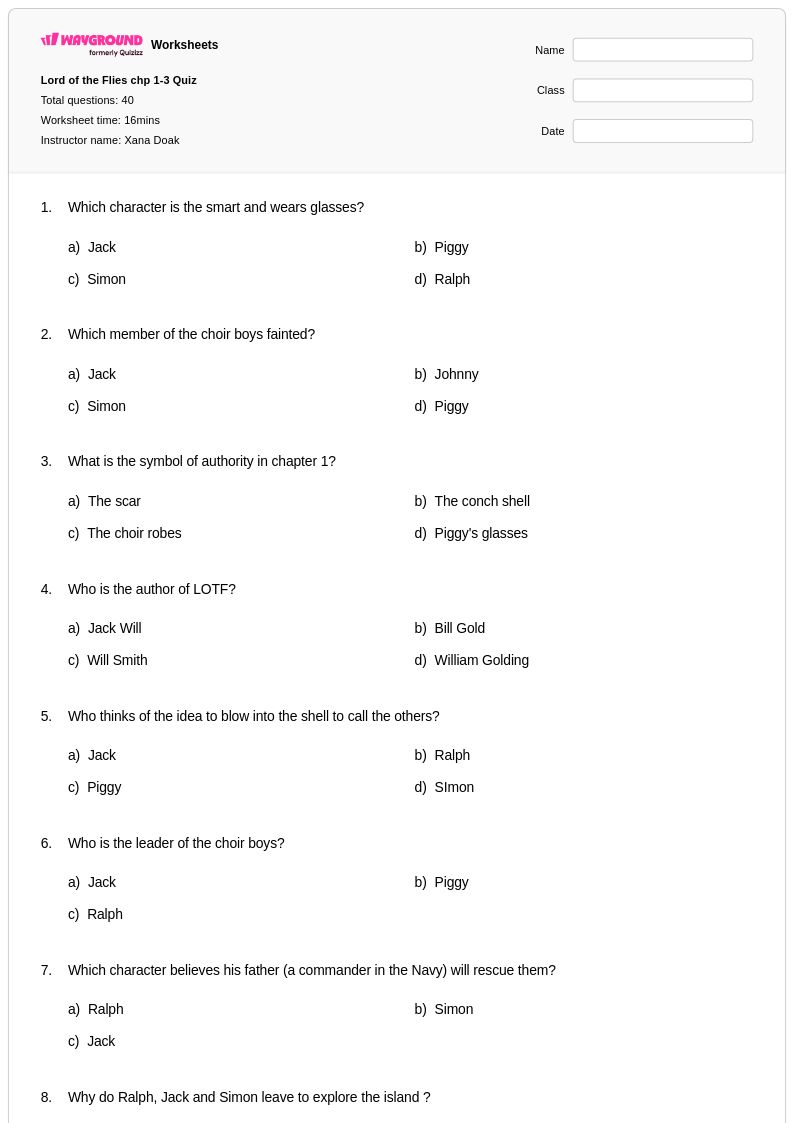
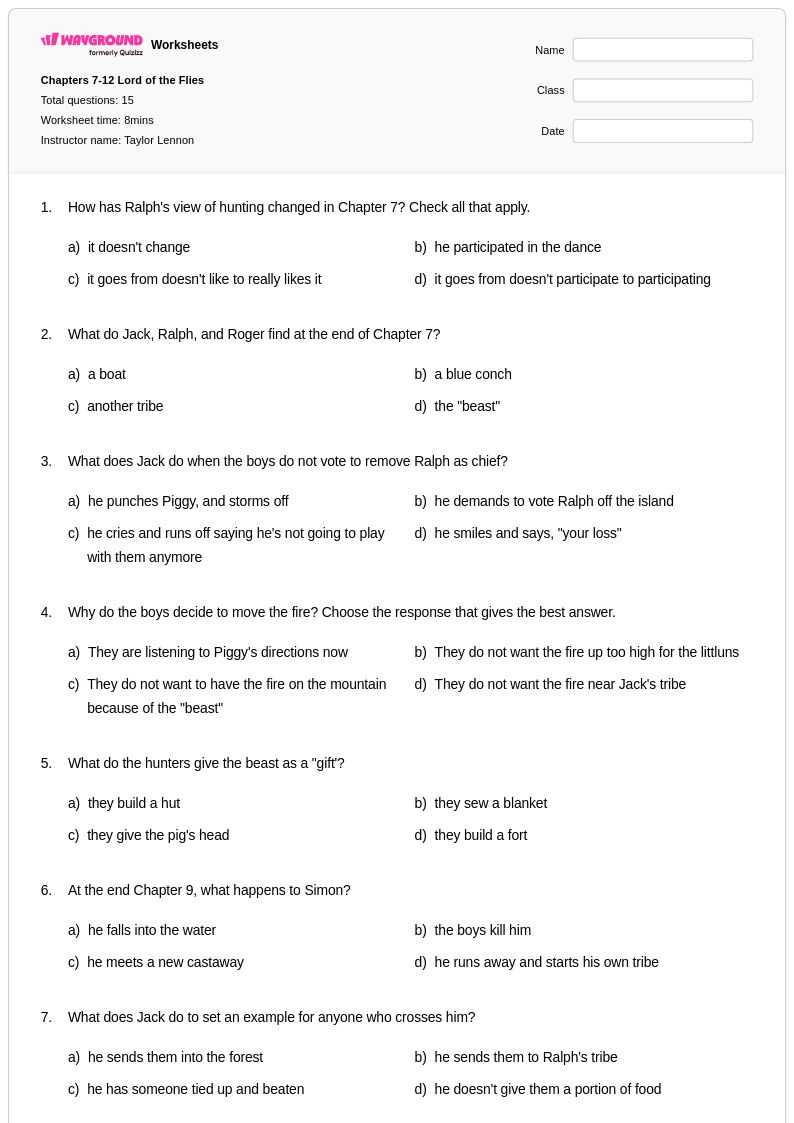
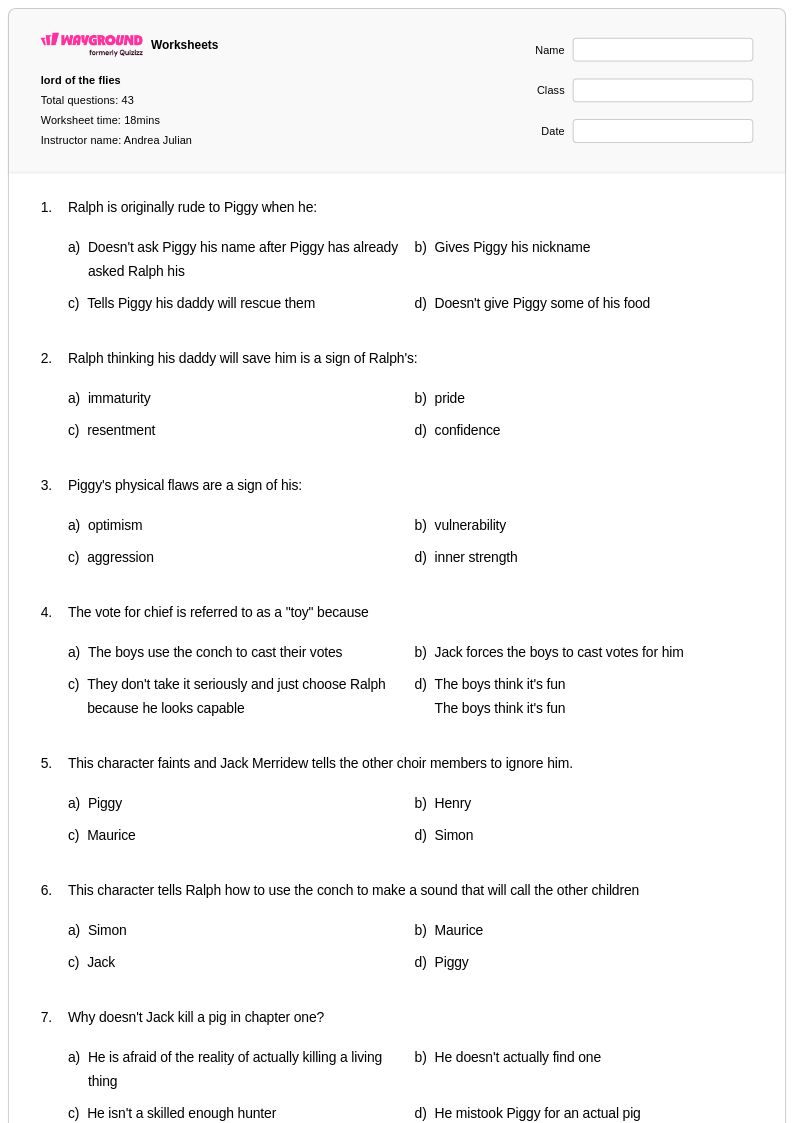
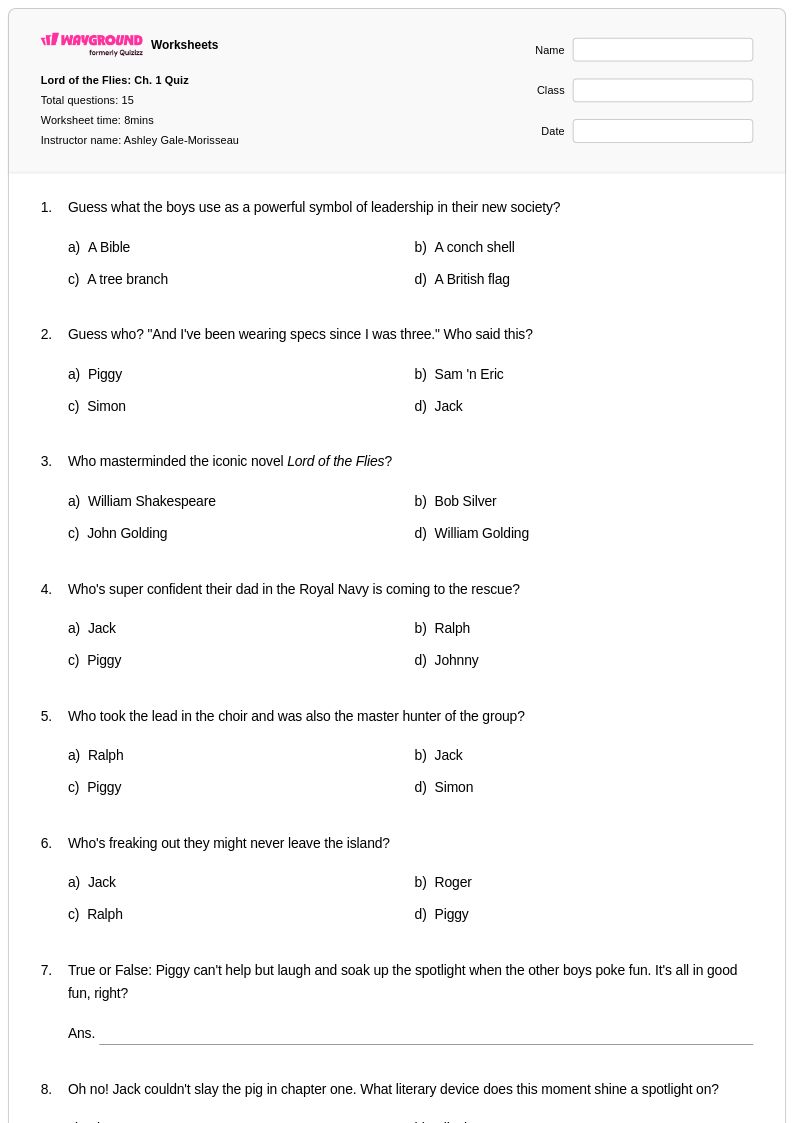
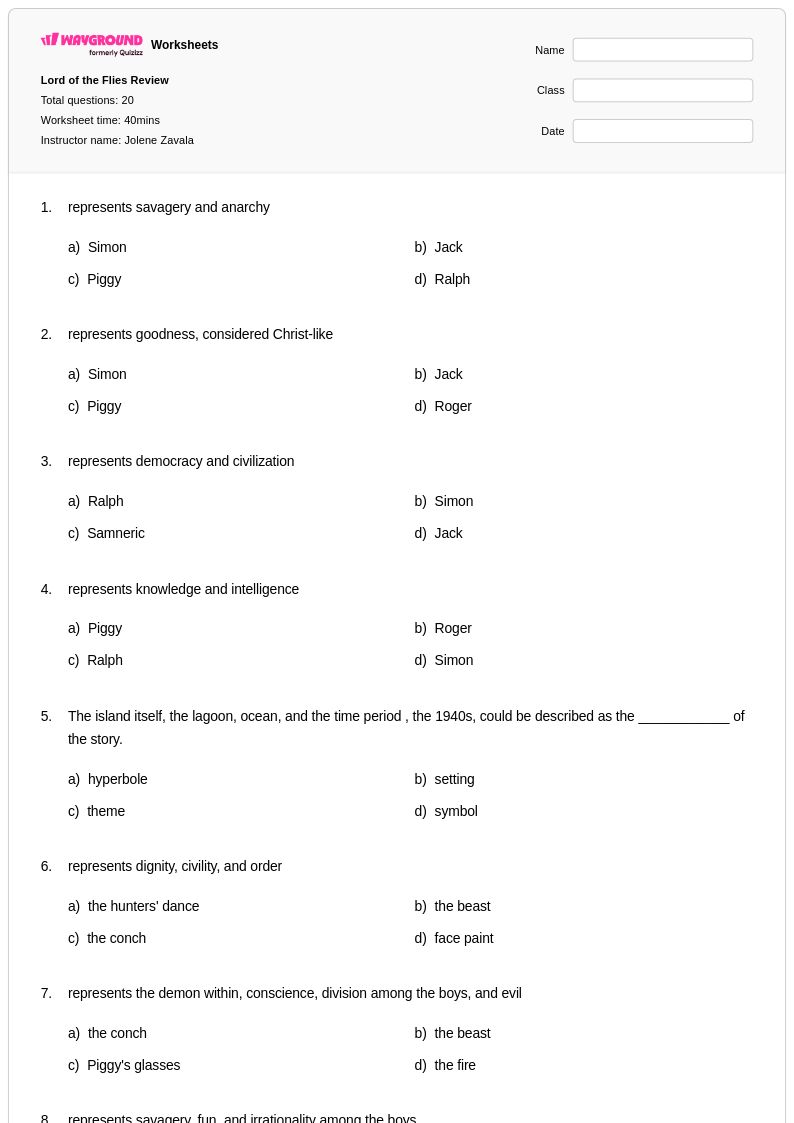
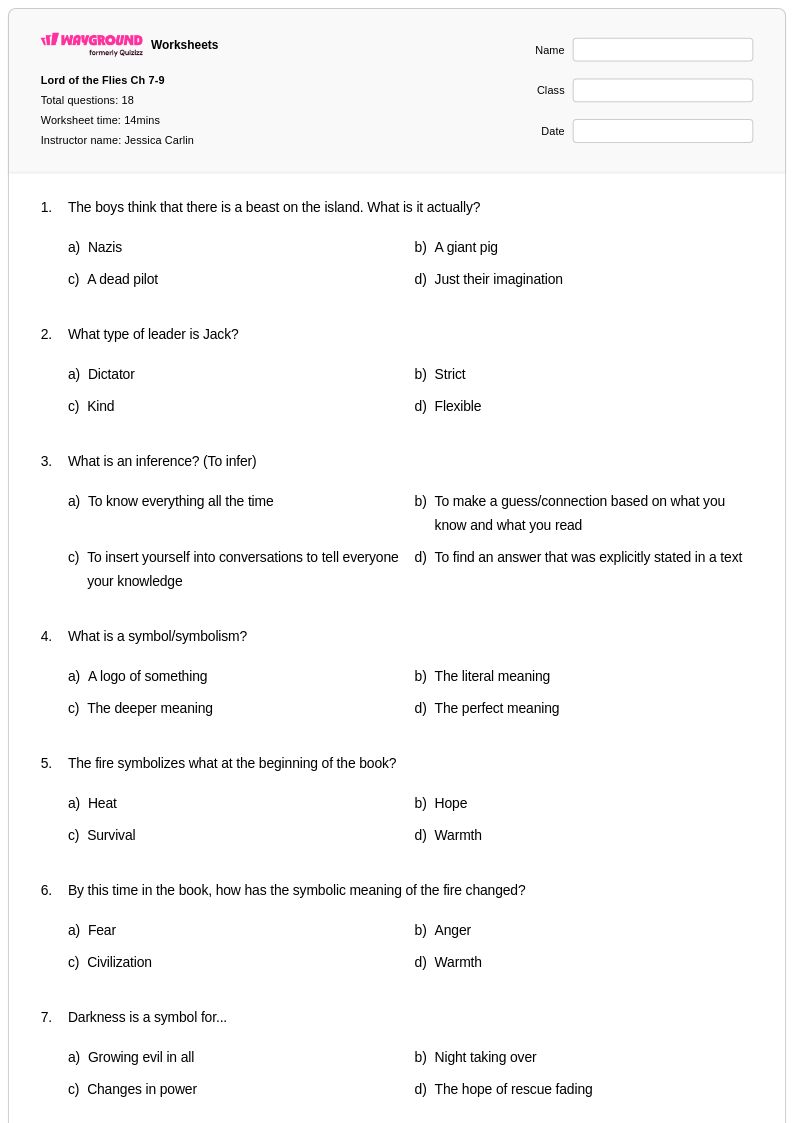
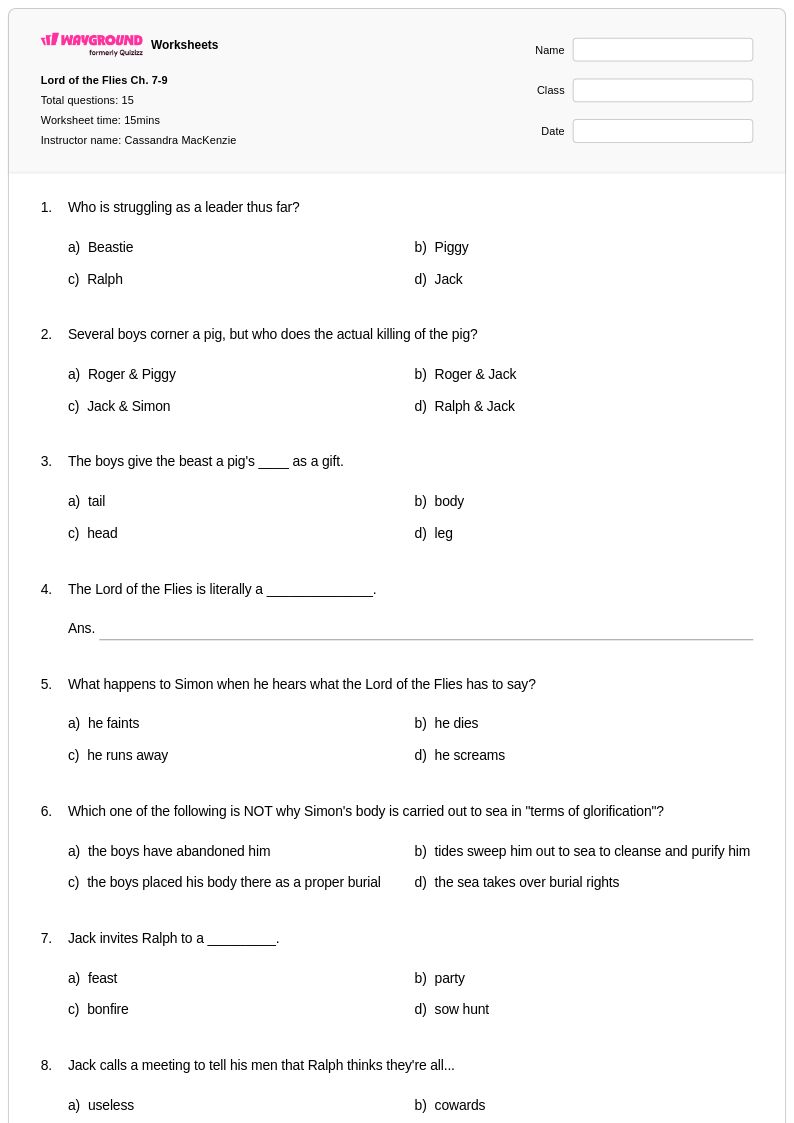
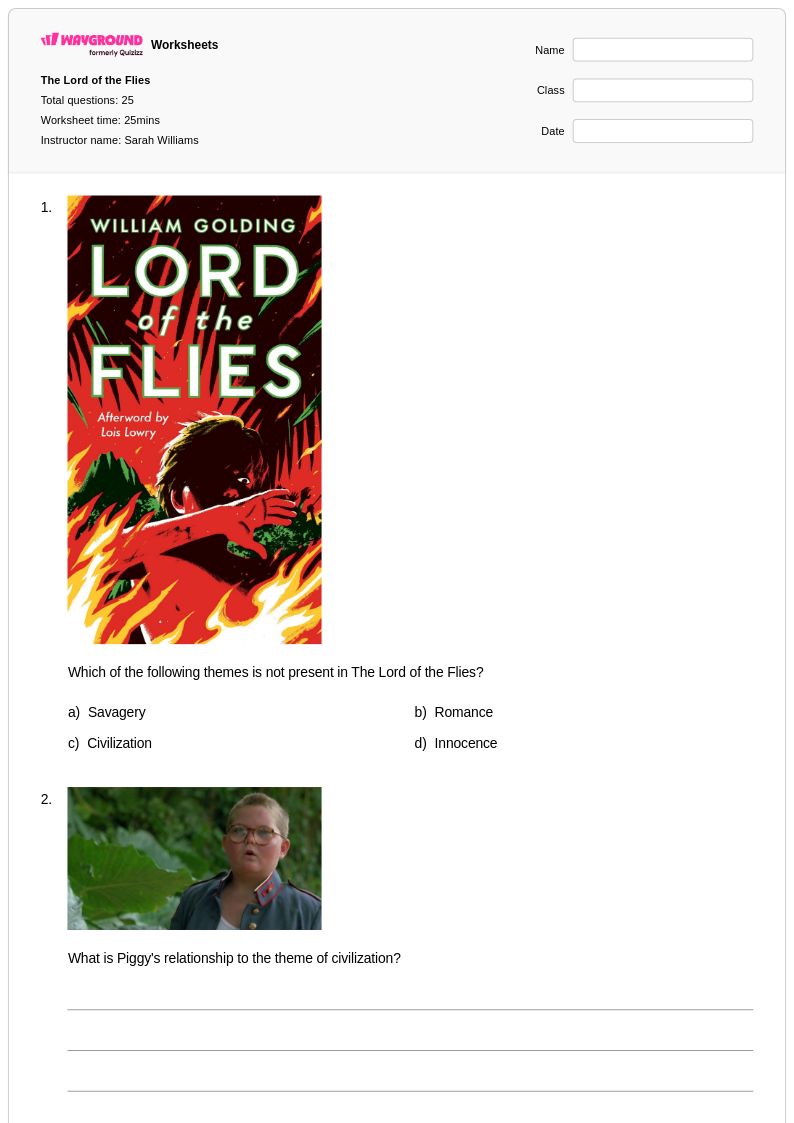
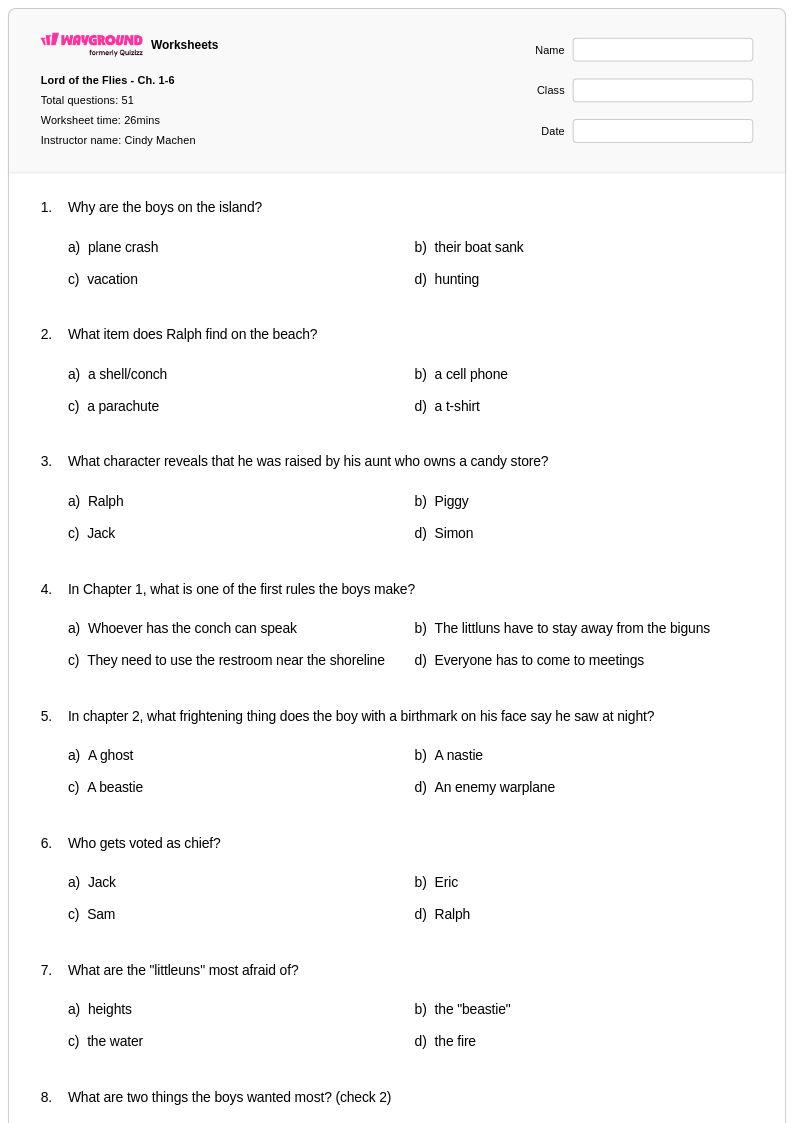
Lord of the Flies worksheets for Class 12 students provide comprehensive analysis tools for exploring William Golding's seminal novel about civilization, human nature, and moral decay. These educational resources guide advanced students through complex literary elements including symbolism, character development, thematic analysis, and allegorical interpretation, strengthening critical thinking skills essential for college-level English studies. The worksheet collections feature detailed answer keys that support independent learning and self-assessment, while printable pdf formats ensure accessibility for both classroom and homework assignments. Free practice problems covering plot analysis, character motivations, and symbolic meanings help students develop sophisticated literary analysis skills, with activities ranging from close reading exercises to comparative essay prompts that examine the novel's enduring relevance to contemporary society.
Wayground, formerly Quizizz, empowers educators with millions of teacher-created Lord of the Flies resources that streamline Class 12 literature instruction through robust search and filtering capabilities. The platform's extensive worksheet library aligns with national and state English language arts standards, offering differentiation tools that accommodate diverse learning needs and reading levels within advanced literature courses. Teachers can customize existing materials or create original content using flexible formatting options, with resources available in both printable and digital formats including downloadable pdf files for seamless integration into hybrid learning environments. These comprehensive tools support effective lesson planning while providing targeted practice opportunities for remediation and enrichment, enabling educators to address individual student needs through varied approaches to literary analysis and textual interpretation.
FAQs
How do I teach Lord of the Flies in a high school English class?
Teaching Lord of the Flies effectively requires building context before students begin reading — introduce Golding's post-WWII worldview and the concept of allegory so students can track the civilization versus savagery tension throughout the novel. Anchor each reading section to a specific analytical focus: character psychology in early chapters, symbol development in the middle, and thematic synthesis toward the end. Structured close-reading activities and character-tracking worksheets help students move from plot comprehension to genuine literary analysis.
What are good exercises for helping students analyze themes in Lord of the Flies?
The most effective exercises ask students to trace a single theme across multiple chapters rather than identifying it in isolation. For example, a worksheet that tracks evidence of 'loss of innocence' at three or four plot points — Simon's death, the progressive abandonment of rules, Piggy's glasses being stolen — builds analytical depth better than a one-time identification task. Character transformation charts comparing Ralph, Jack, and Piggy at the novel's start and end are especially useful for connecting theme to character arc.
What literary devices should students focus on when studying Lord of the Flies?
Students should prioritize allegory, symbolism, and foreshadowing, as Golding uses all three with unusual density and consistency. The conch shell (order and democracy), the beast (innate human evil), and Piggy's glasses (reason and intellect) are the core symbols worth extended analysis. Foreshadowing appears as early as the first chapter and pays off in ways students often miss on a first read, making it an excellent focus for annotation-based worksheets that reward rereading.
What mistakes do students commonly make when analyzing Lord of the Flies?
The most common error is reading the novel as a straightforward adventure story rather than an allegory, which causes students to miss the symbolic weight of nearly every major event and object. Students also frequently oversimplify the Ralph-versus-Jack dynamic into a good-versus-evil binary, ignoring Ralph's own moments of complicity and moral compromise. A related misconception is treating 'the beast' as only a literal fear rather than Golding's central argument about human nature — this gap is worth addressing directly before students begin thematic writing assignments.
How can I use Lord of the Flies worksheets to support different reading levels in the same class?
Differentiation in a Lord of the Flies unit works best when the same core text is approached at different depths of analysis rather than with different content entirely. Worksheets can be tiered so that struggling readers focus on plot sequencing and character identification while advanced readers tackle symbolic interpretation and thematic argument construction. On Wayground, teachers can apply individual accommodations such as read aloud support, reduced answer choices, and extended time to specific students, so the same digital worksheet can be assigned to the whole class while each student receives appropriately adjusted conditions.
How do I use Lord of the Flies worksheets from Wayground in my classroom?
Wayground's Lord of the Flies worksheets are available as printable PDFs for traditional classroom distribution and in digital formats for technology-integrated instruction. Teachers can assign digital versions directly to students and, if preferred, host the material as an interactive quiz on Wayground. Both formats include complete answer keys, making them practical for independent work, guided reading sessions, or assessment preparation. The platform's filtering tools allow teachers to locate materials aligned to specific skills — such as symbol analysis, plot comprehension, or thematic writing — without having to sort through unrelated resources.