Free Printable Making Inferences and Drawing Conclusions Worksheets for Class 7
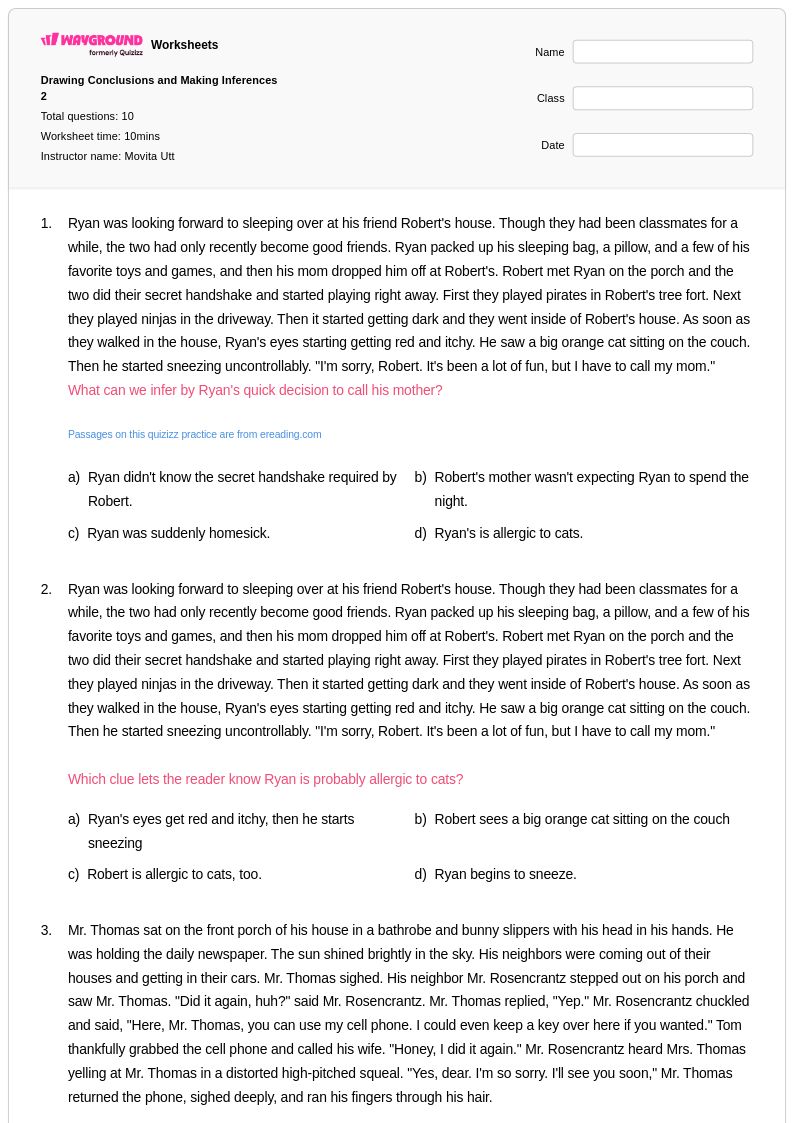
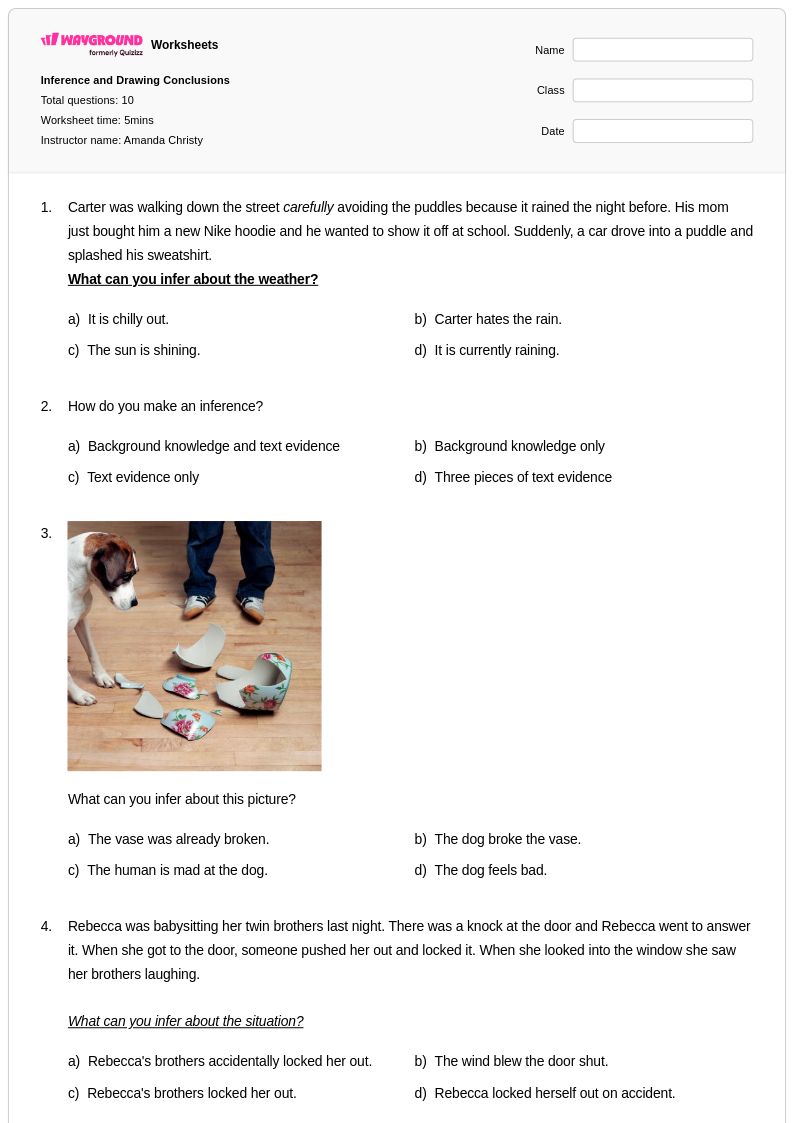
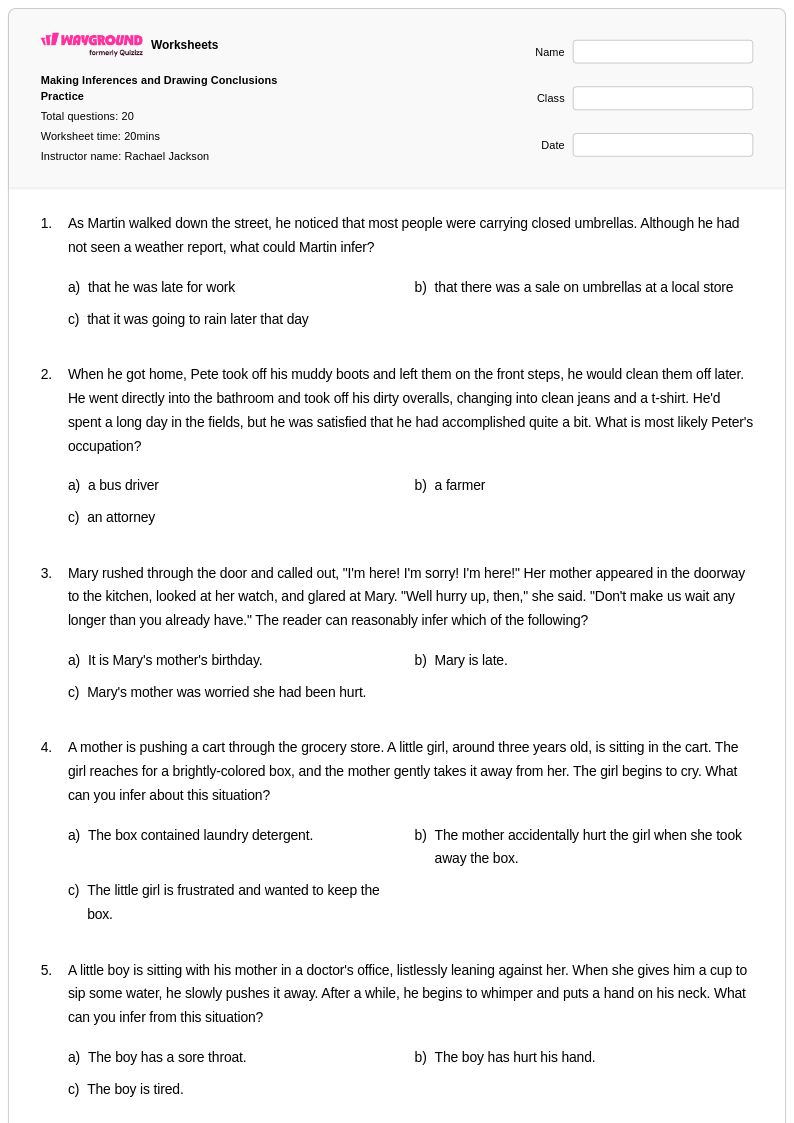
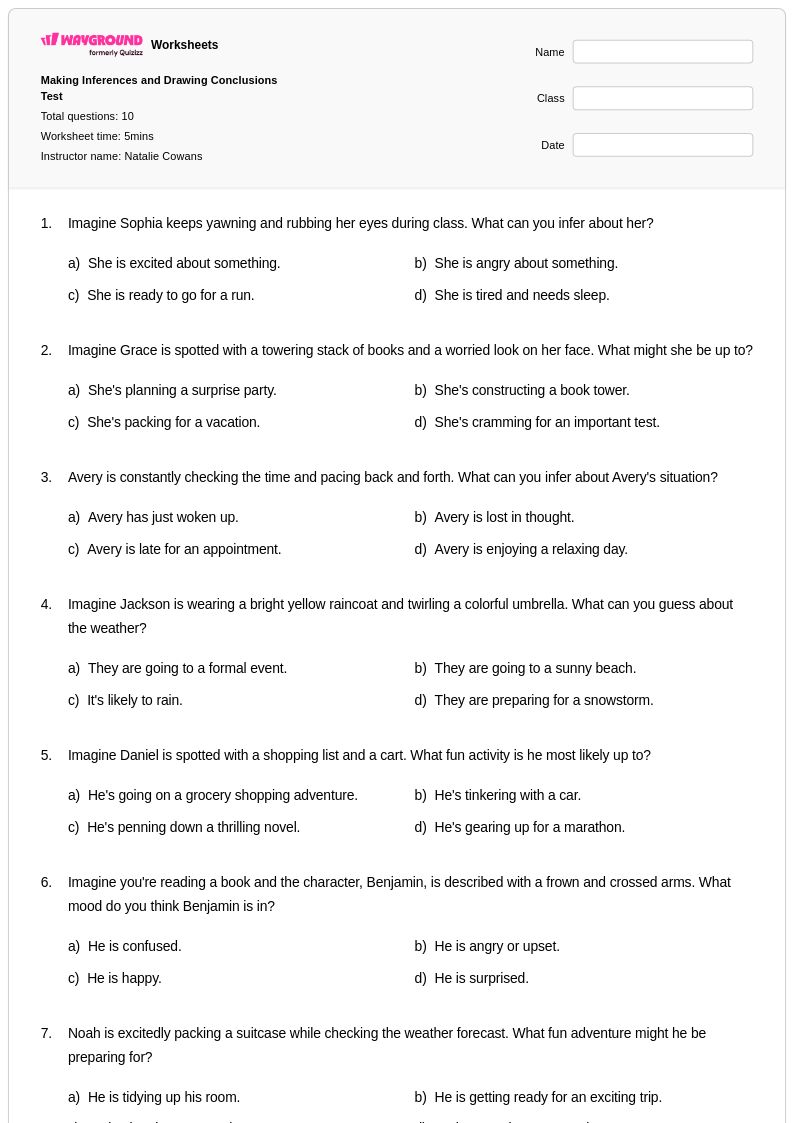
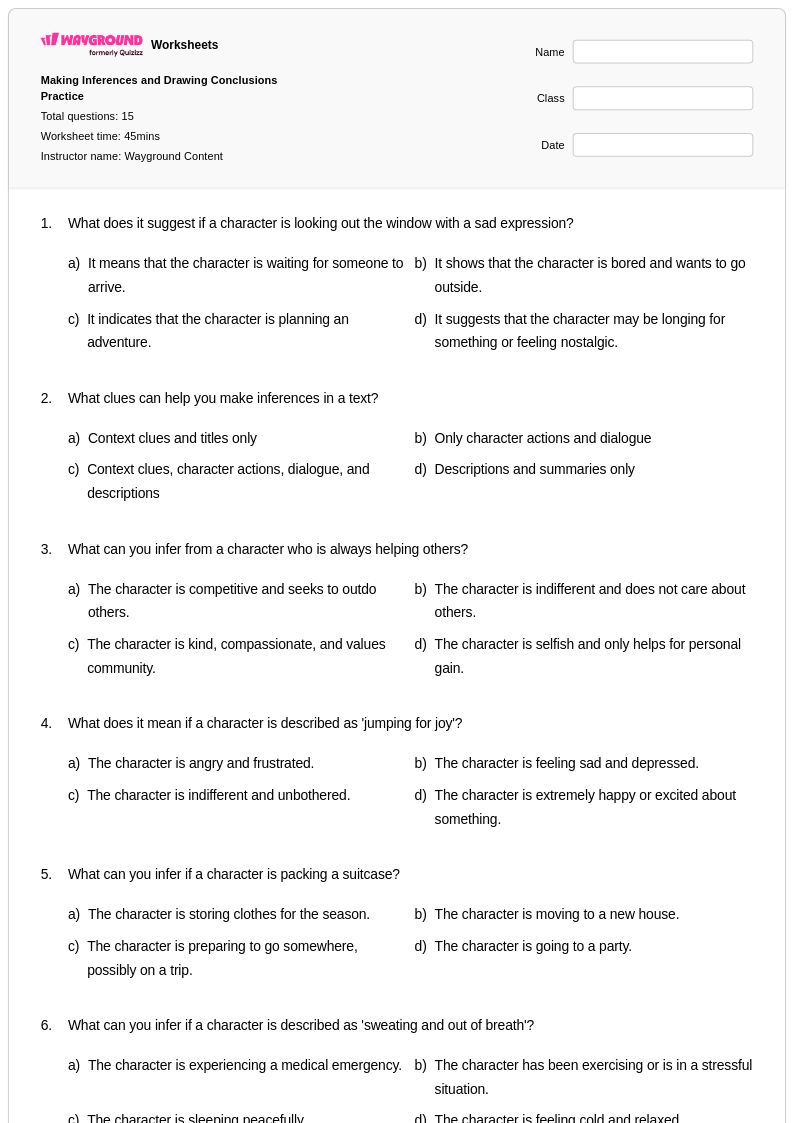
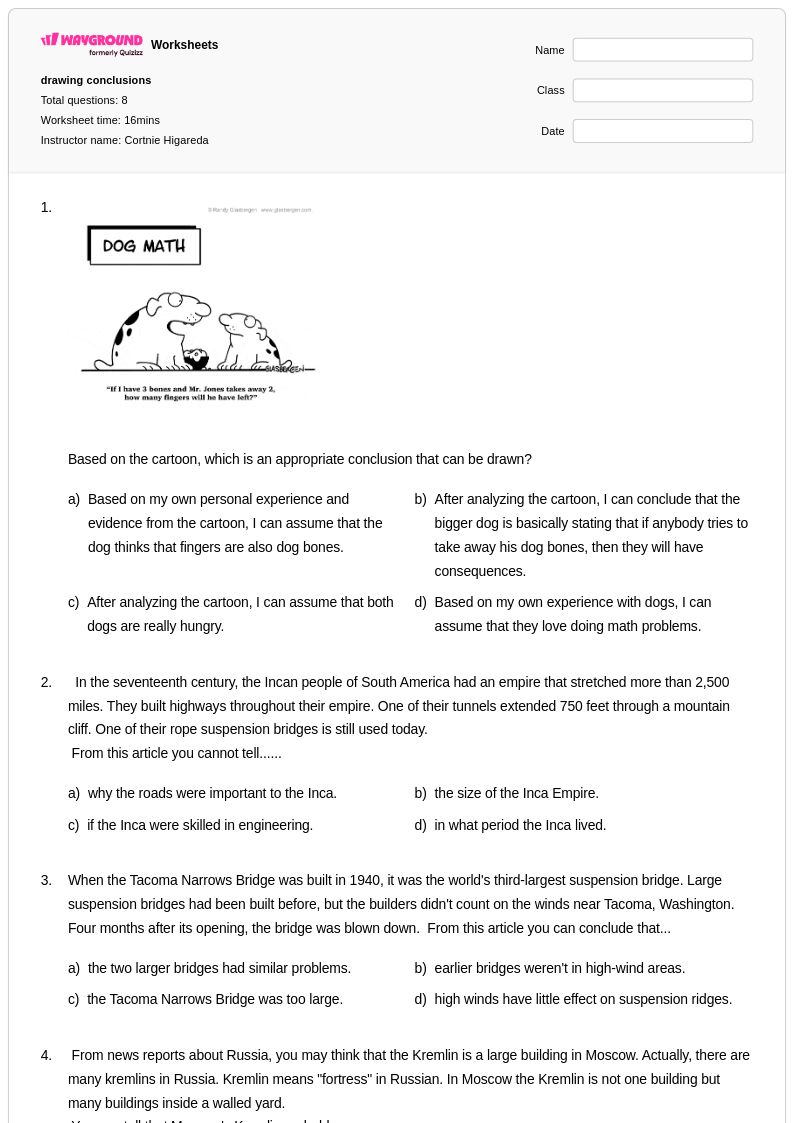
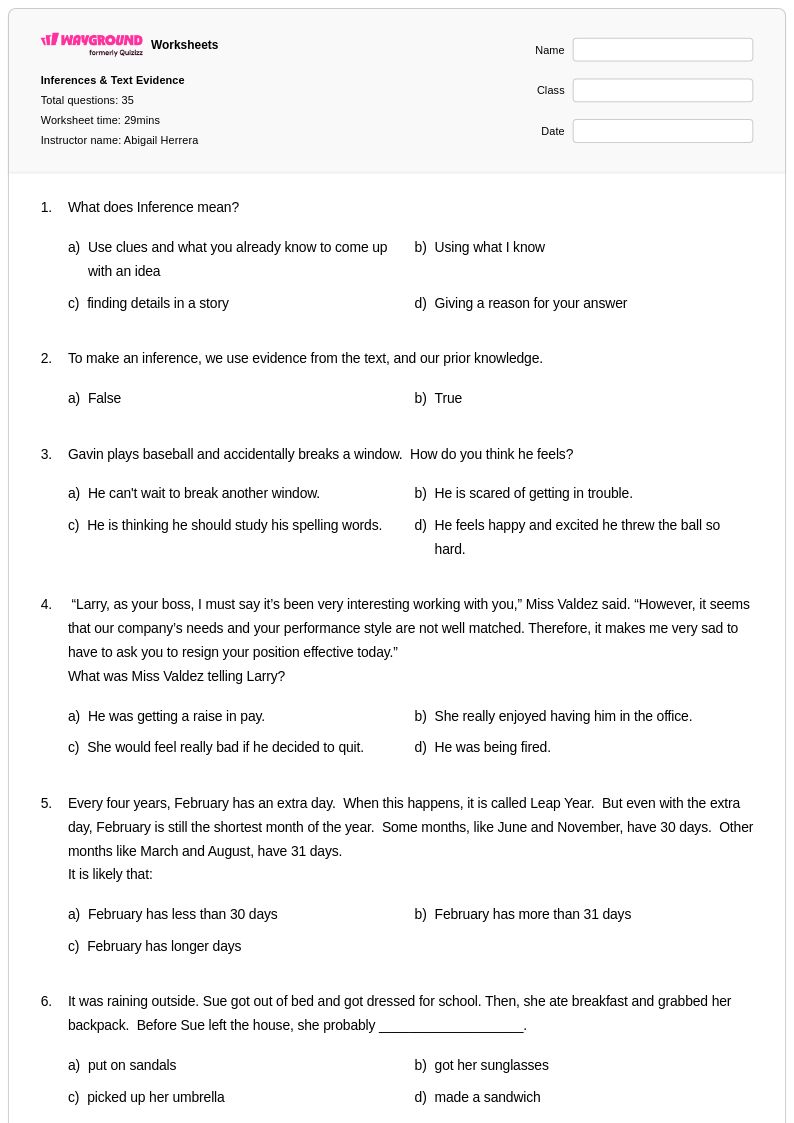
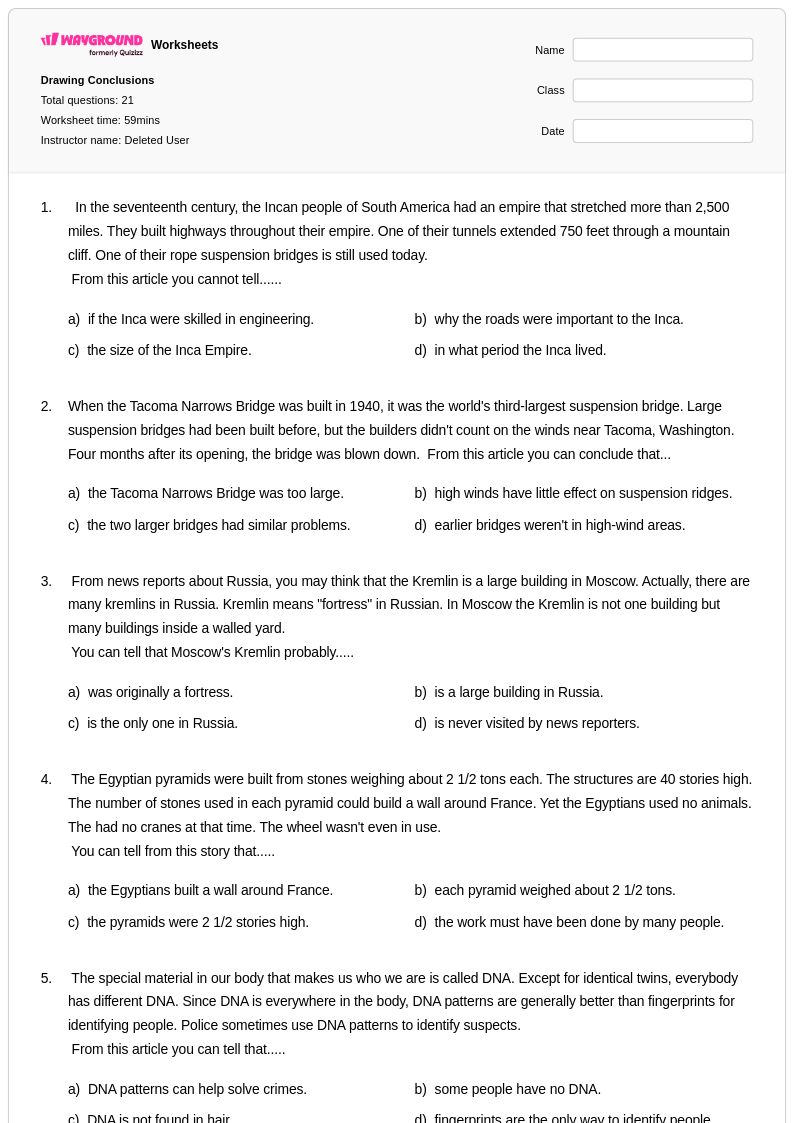
Class 7 students can master making inferences and drawing conclusions with Wayground's comprehensive collection of free worksheets, printables, and practice problems featuring detailed answer keys to strengthen critical reading comprehension skills.
Explore printable Making Inferences and Drawing Conclusions worksheets for Class 7
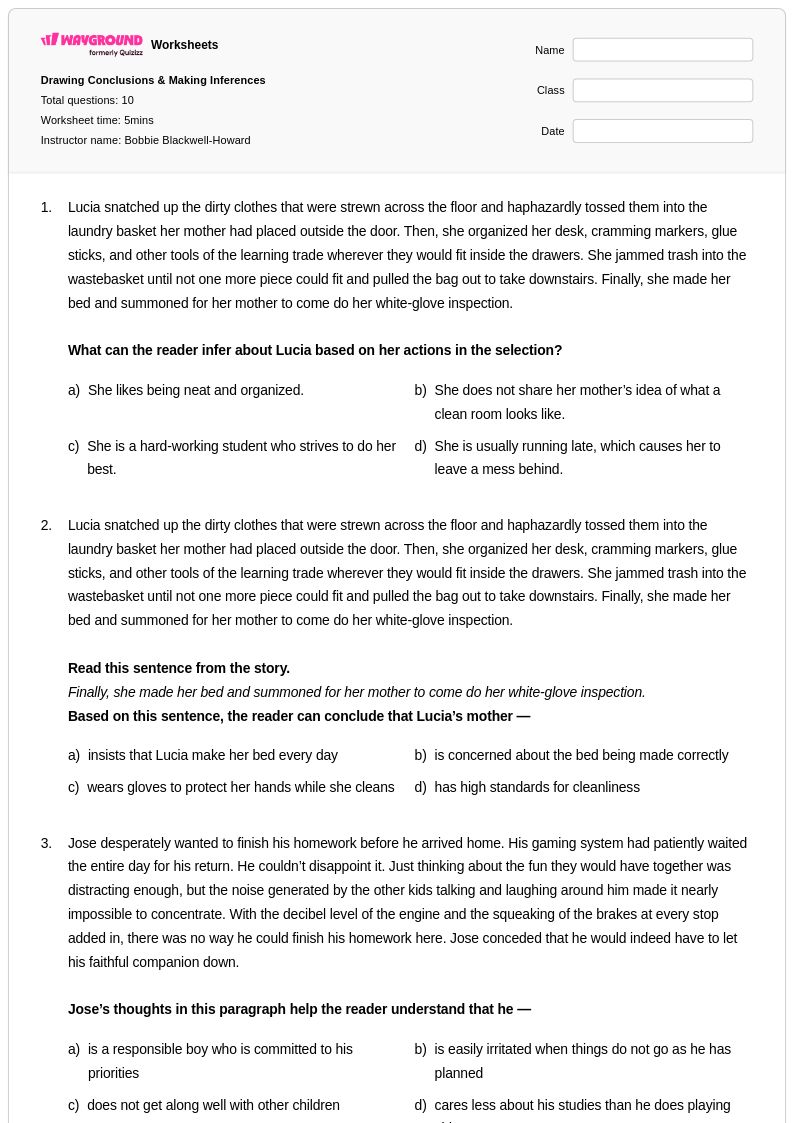
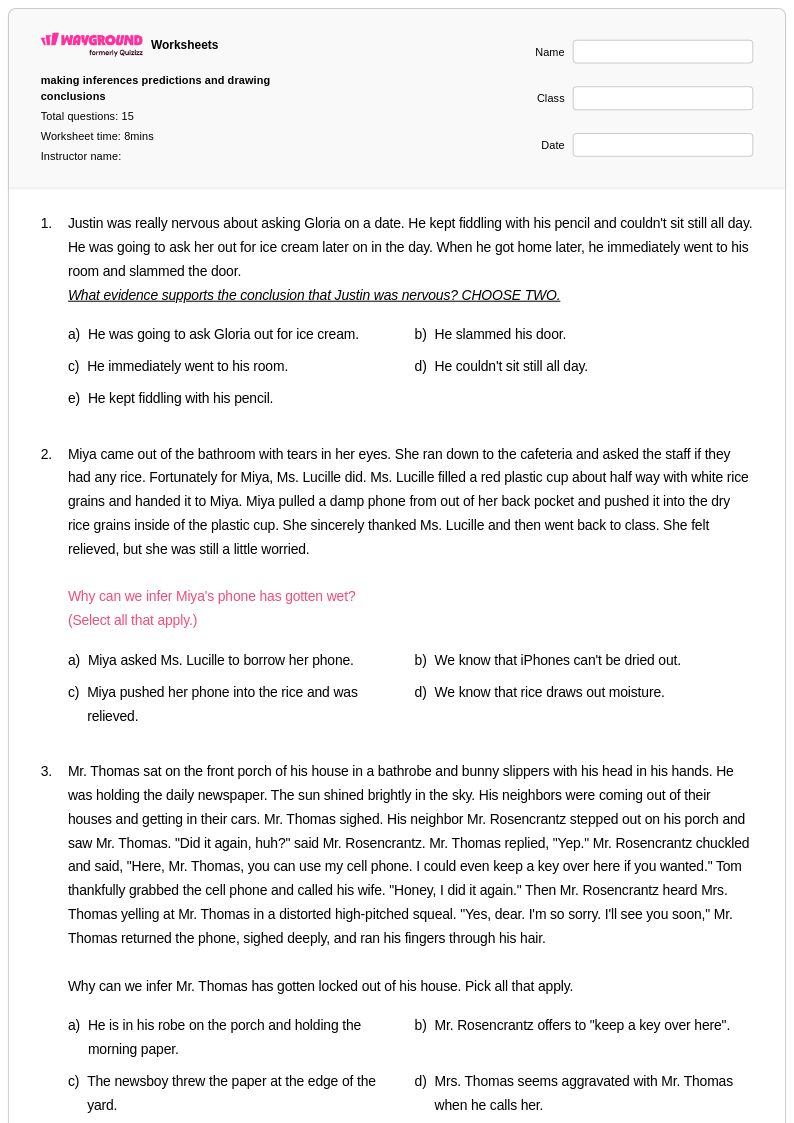
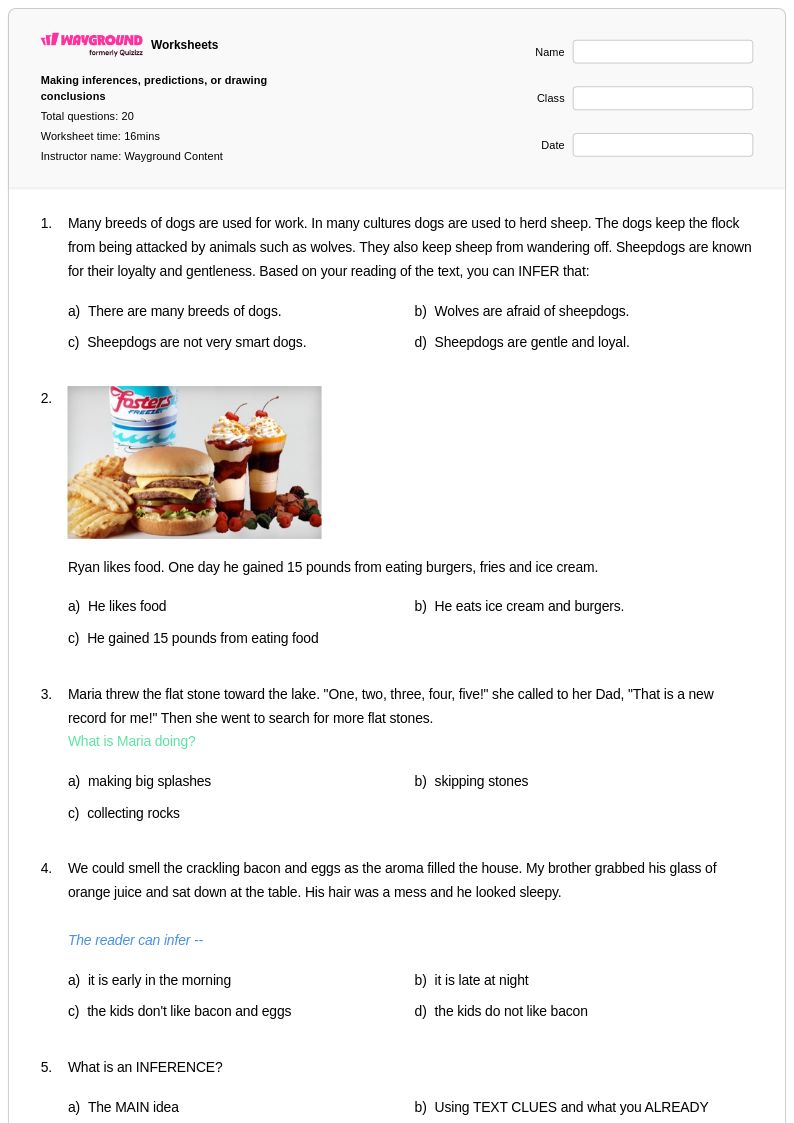
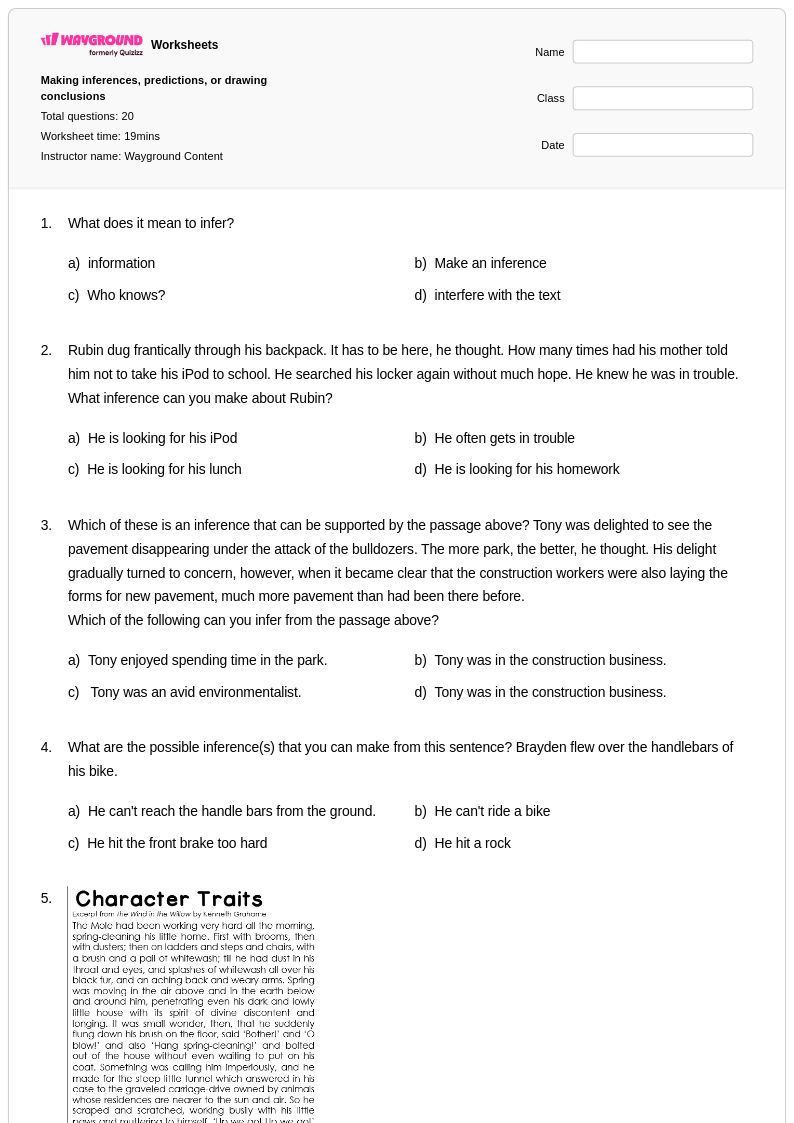
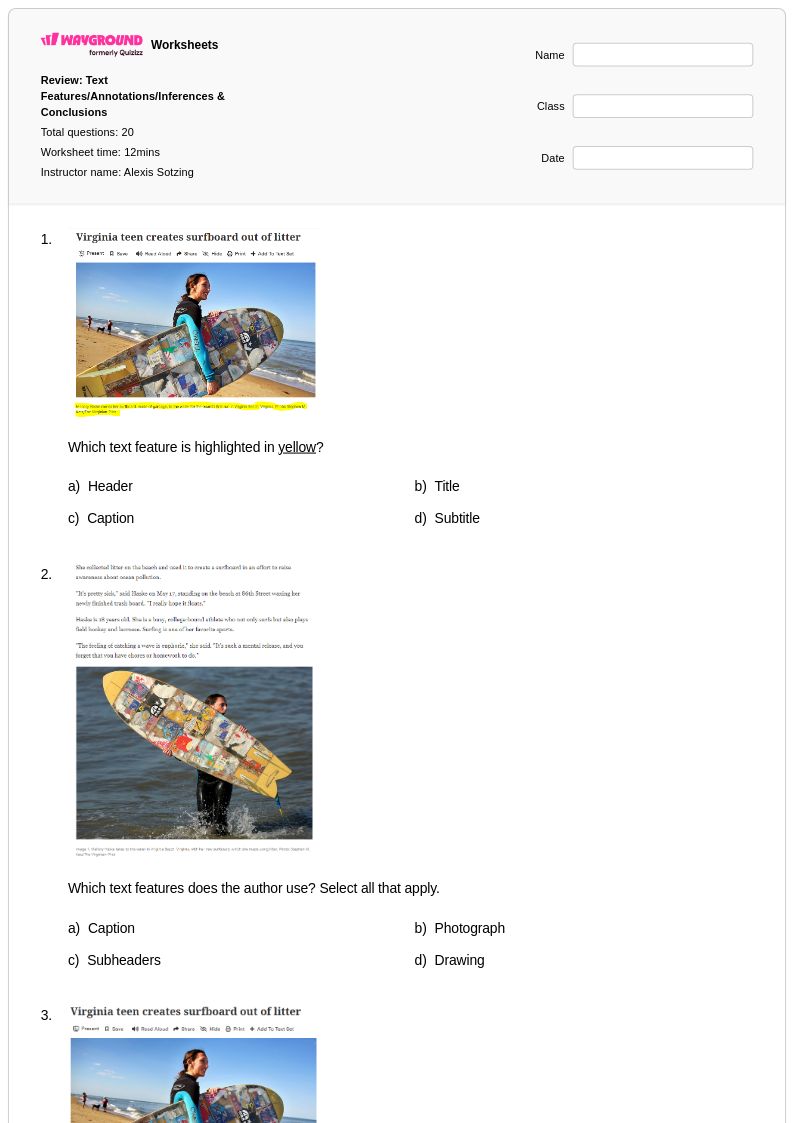
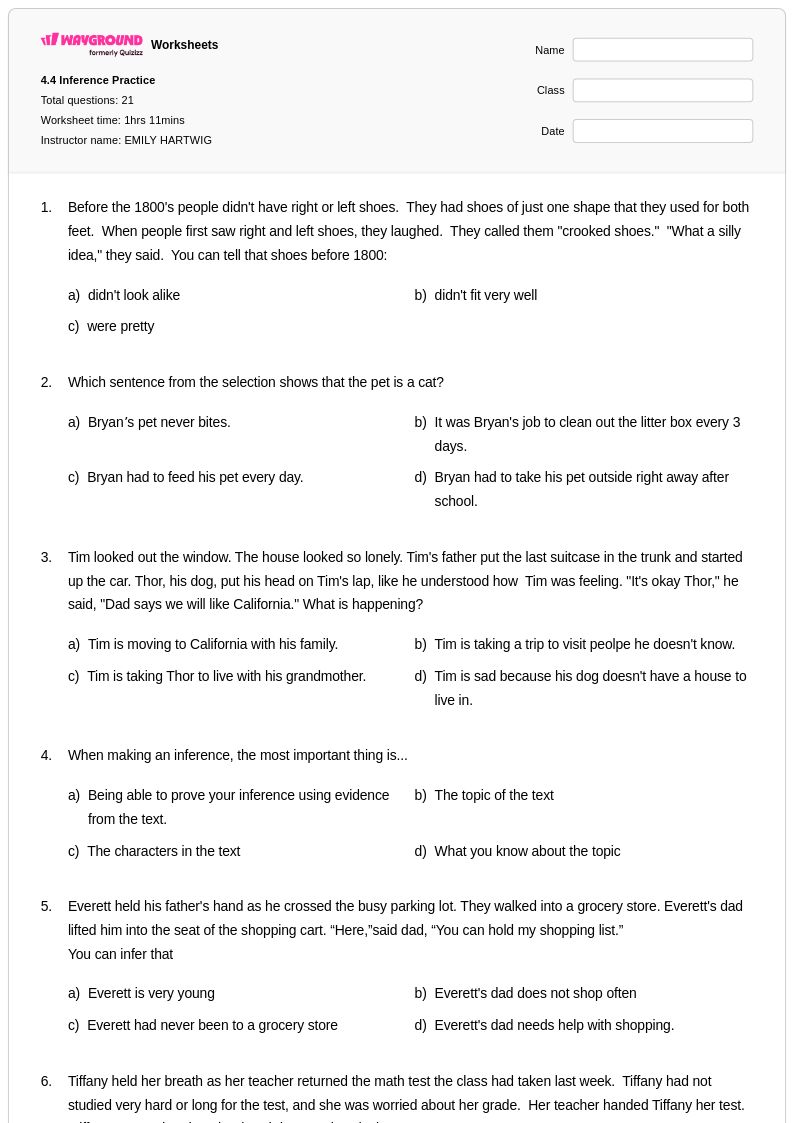
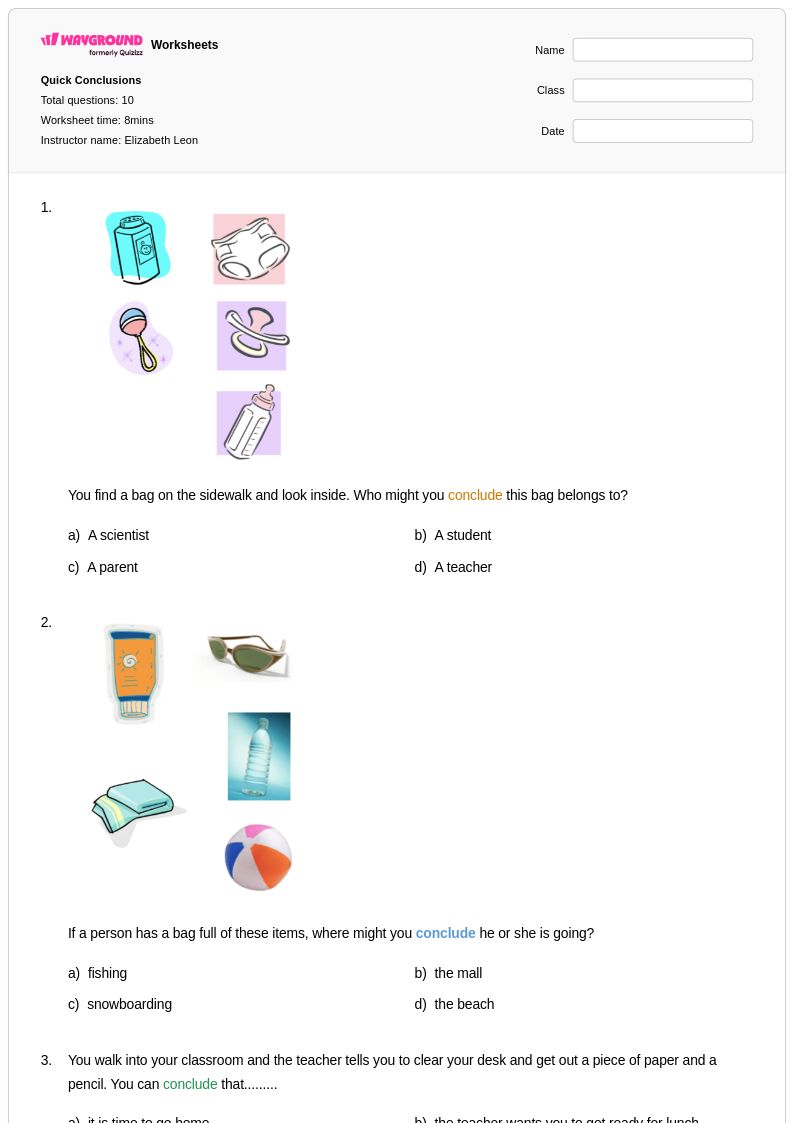
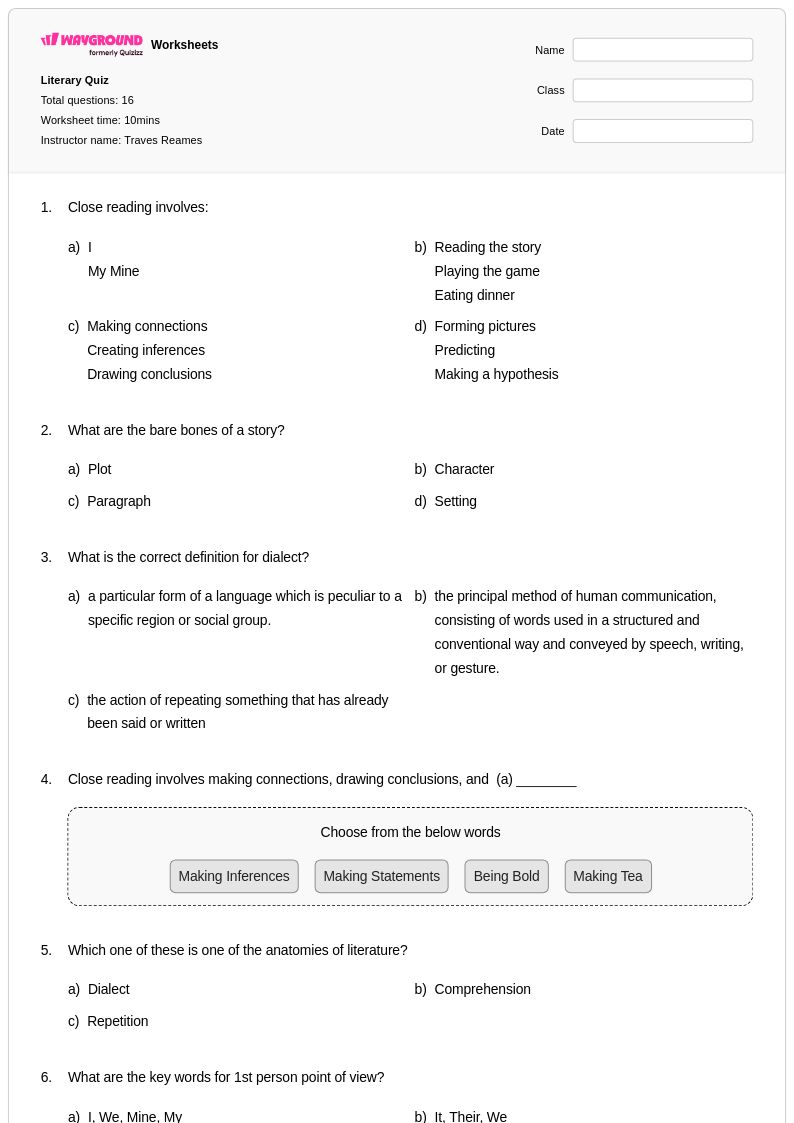
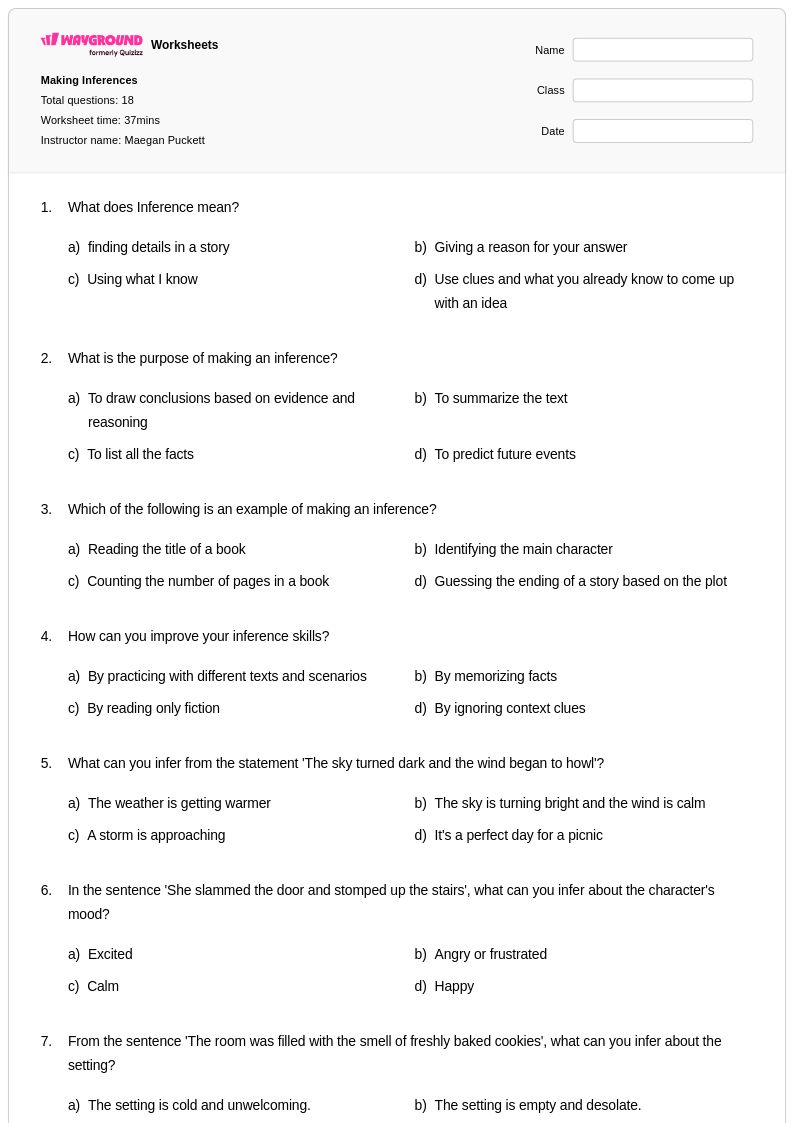
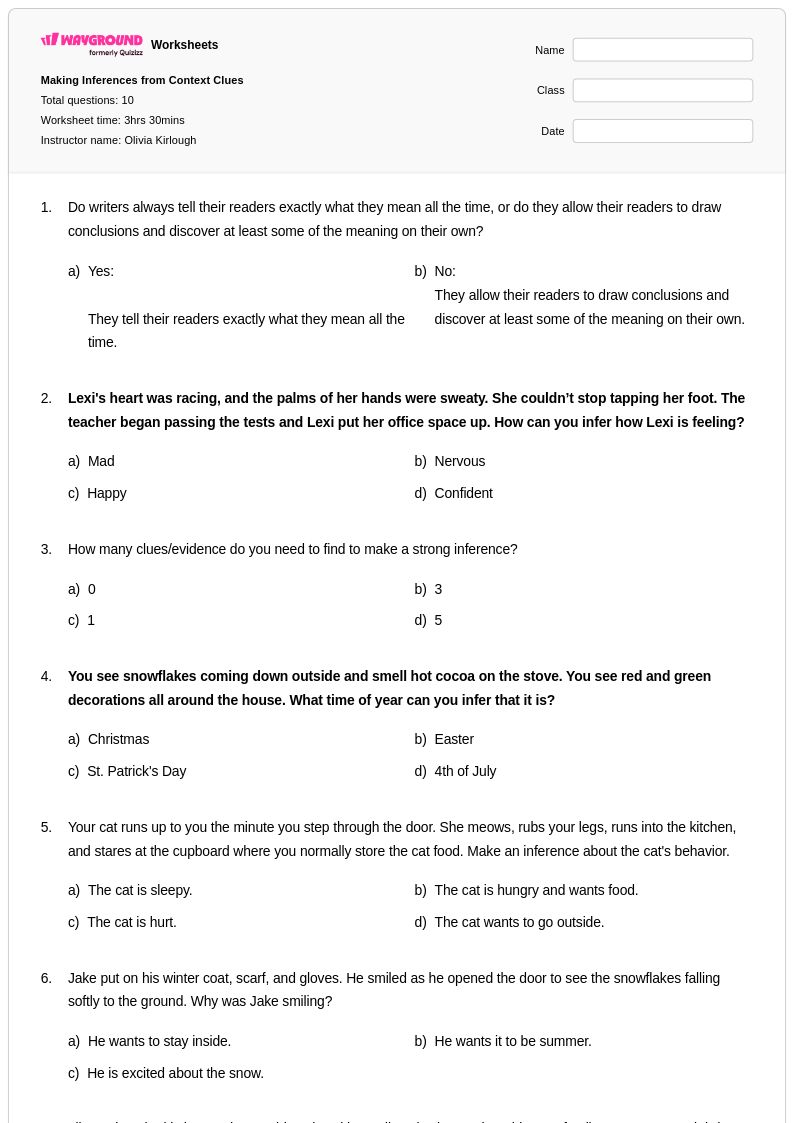
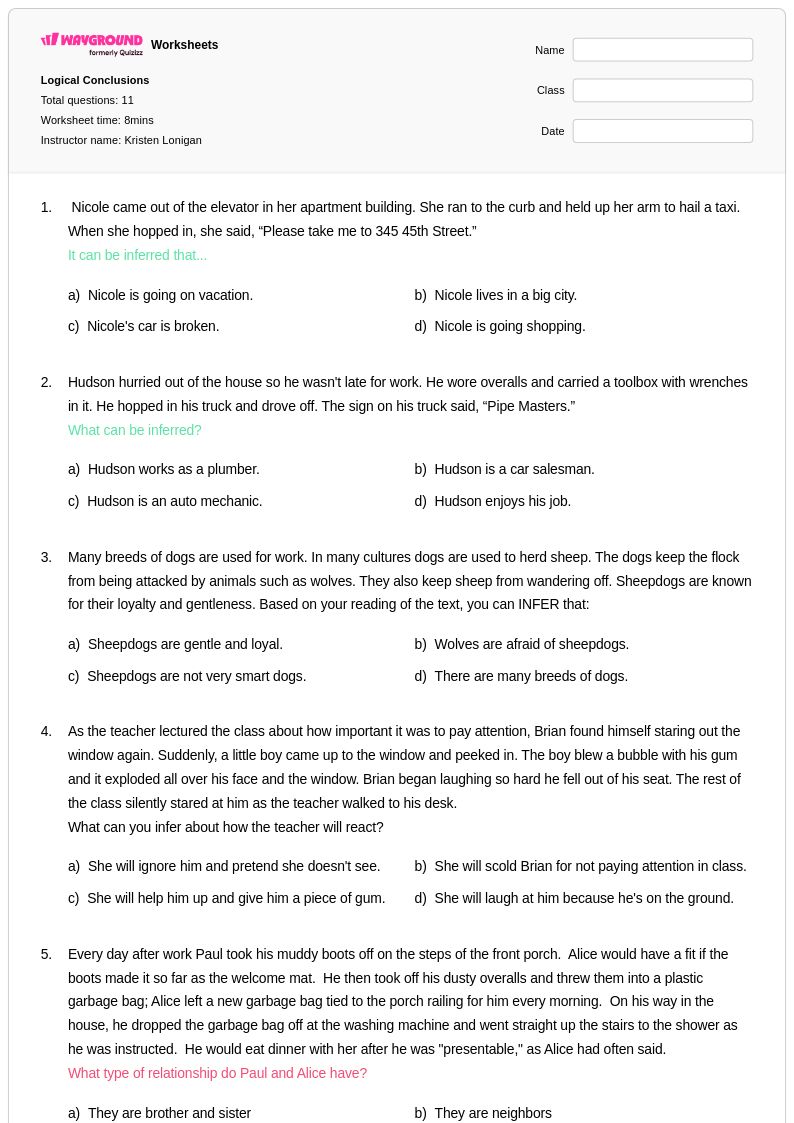
Making inferences and drawing conclusions represents a critical reading comprehension strategy that Class 7 students must master to analyze texts beyond their literal meaning. Wayground's comprehensive collection of making inferences and drawing conclusions worksheets provides targeted practice opportunities that strengthen students' ability to read between the lines, synthesize textual evidence, and form logical interpretations. These carefully designed practice problems guide seventh graders through systematic approaches to identifying implicit information, connecting prior knowledge with textual clues, and supporting their conclusions with evidence from the text. Each printable worksheet includes detailed answer keys that help teachers assess student understanding while providing clear explanations of the reasoning process, making these free resources invaluable for both classroom instruction and independent study in pdf format.
Wayground's extensive library of teacher-created resources offers educators unparalleled support for developing students' inferential reading skills through millions of high-quality worksheets aligned to reading comprehension standards. The platform's robust search and filtering capabilities allow teachers to quickly locate materials that match their specific grade level requirements and learning objectives, while built-in differentiation tools enable customization for diverse learners who need additional scaffolding or enrichment opportunities. These inference and conclusion-drawing worksheets are available in both printable and digital formats, providing flexibility for various instructional settings and making lesson planning more efficient. Teachers can seamlessly integrate these resources into their curriculum for targeted skill practice, remediation sessions, or assessment preparation, ensuring that all Class 7 students develop the critical thinking abilities necessary for advanced text analysis.
FAQs
How do I teach students to make inferences in reading?
Teaching inference starts with helping students recognize that not all meaning is stated explicitly in a text. A reliable classroom strategy is the 'text plus background knowledge equals inference' framework, where students practice combining what the author says with what they already know to reach a logical conclusion. Modeling this process aloud using short fiction and nonfiction passages, then gradually releasing responsibility to students, helps build the skill systematically. Scaffolded practice with guided questions that prompt students to cite specific textual evidence strengthens both inference-making and written reasoning.
What is the difference between making an inference and drawing a conclusion?
An inference is a reasoned guess made during reading, using clues from the text combined with prior knowledge to fill in gaps the author has left unstated. Drawing a conclusion is typically a broader, synthesizing judgment made after processing the full text, often incorporating multiple inferences together. In classroom practice, inferences tend to be local and moment-to-moment, while conclusions are summative. Both skills require students to move beyond literal comprehension and engage with implicit meaning.
What exercises help students practice making inferences and drawing conclusions?
Effective practice exercises include close-reading activities using short fiction and nonfiction passages, where students identify textual evidence and explain the reasoning behind each inference. Graphic organizers that separate 'what the text says' from 'what I know' and 'what I can conclude' are particularly useful for building the habit of evidence-based reasoning. Practice problems that target character motivation, cause-and-effect relationships, and implicit themes provide the range students need to transfer the skill across genres and text types.
What mistakes do students commonly make when drawing conclusions from a text?
The most common error is over-relying on personal opinion or background knowledge while ignoring or misreading the actual textual evidence, which produces conclusions that are unsupported rather than inferred. Students also frequently confuse a stated fact with an inference, meaning they identify explicit information as something they 'figured out.' A third common mistake is drawing conclusions that are too broad or absolute, going far beyond what the evidence can reasonably support. Targeted feedback that asks students to point to the specific text that backs their conclusion helps address all three patterns.
How do making inferences skills differ between fiction and nonfiction texts?
In fiction, inference work typically focuses on character motivation, mood, theme, and plot outcomes that the author implies rather than states directly. In nonfiction, students are more often asked to infer the author's purpose, read between the lines of data or facts, and draw conclusions about cause-and-effect relationships or broader implications. Both genres require the same underlying process of combining text evidence with prior knowledge, but the targets of inference shift significantly, which is why practicing with both text types is essential for full comprehension development.
How can I use Wayground's making inferences worksheets in my classroom?
Wayground's making inferences and drawing conclusions worksheets are available as printable PDFs for traditional classroom use and in digital formats for technology-integrated instruction, giving teachers flexibility across in-person, hybrid, and remote settings. Teachers can also host worksheets as a live or assigned quiz directly on Wayground, making it easy to gather real-time data on student performance. Every worksheet includes a detailed answer key with reasoning explanations, which supports both teacher-led feedback sessions and independent student review.
How can I support struggling readers when teaching inference skills?
Struggling readers often benefit from reduced-complexity passages paired with structured question prompts that break the inference process into explicit steps. On Wayground, teachers can apply individual accommodations such as Read Aloud, which provides audio support for students who have difficulty accessing text independently, and reduced answer choices, which lowers cognitive load during multiple-choice inference practice. Extended time can also be assigned per student to ensure that processing speed does not mask a student's actual comprehension ability. These accommodations can be set up once and reused across future sessions without disrupting the experience of other students in the class.