
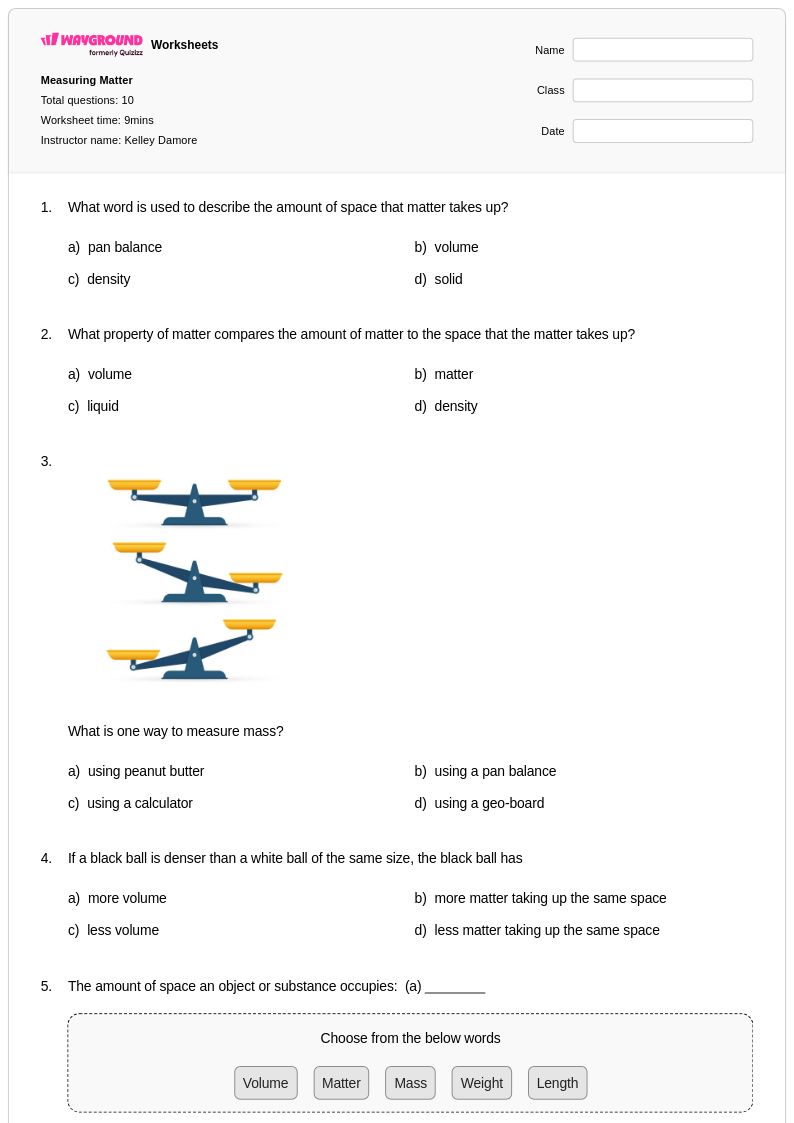
10 Hỏi
4th
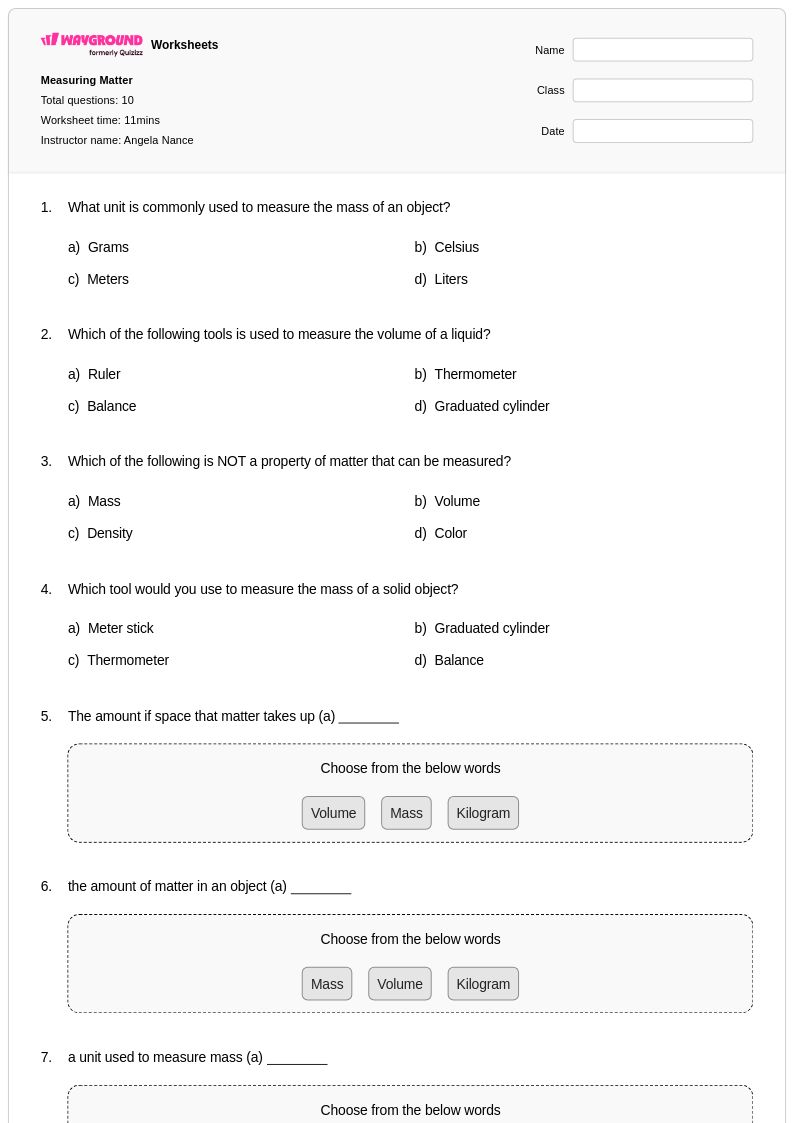
10 Hỏi
4th
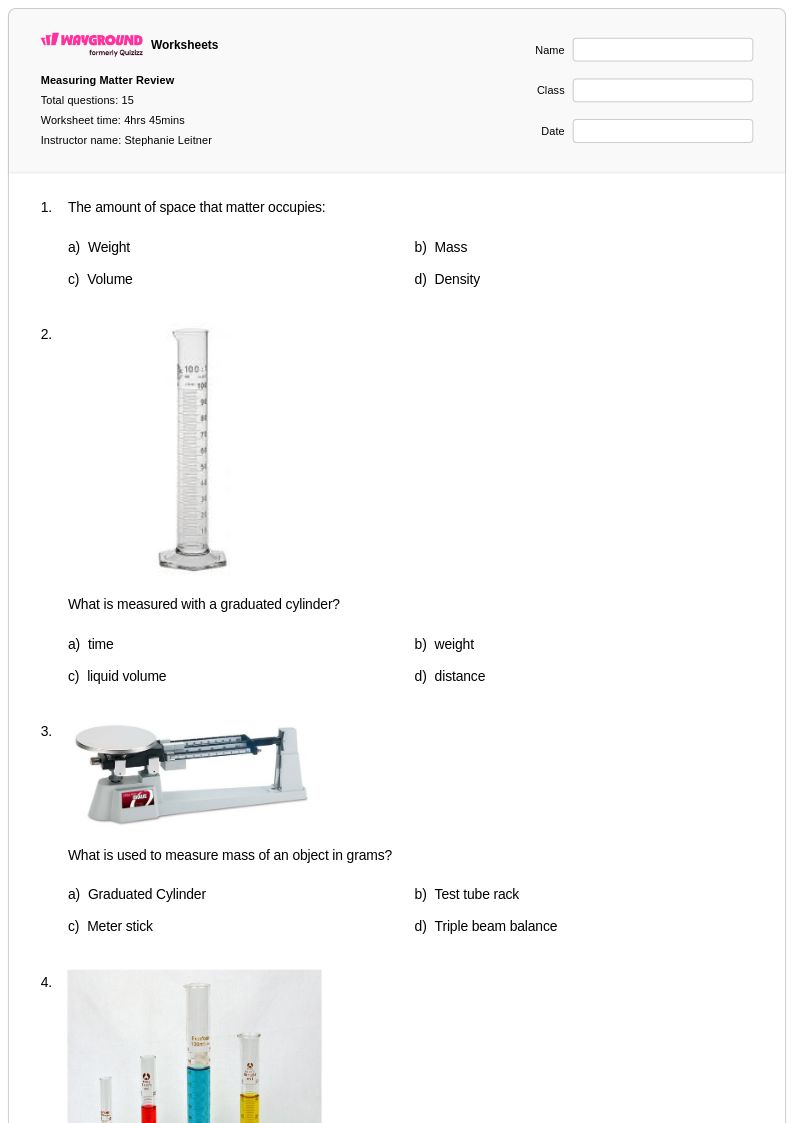
15 Hỏi
4th - 5th
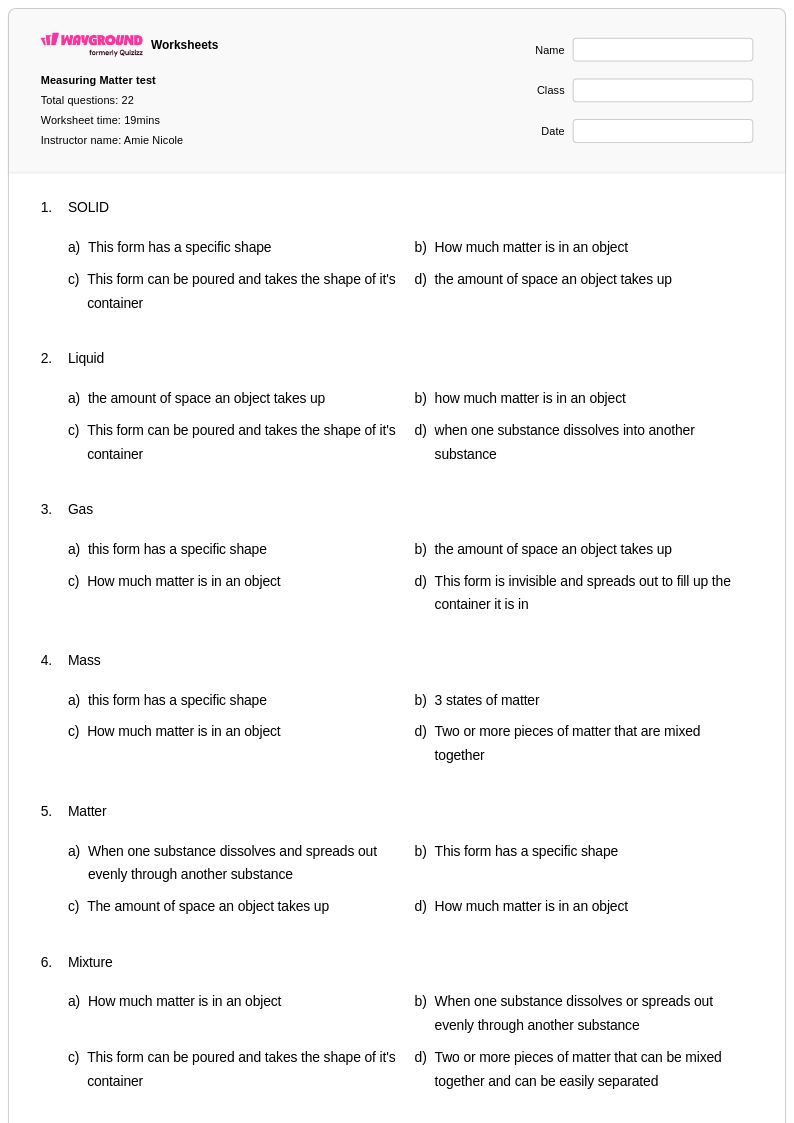
22 Hỏi
4th - 7th
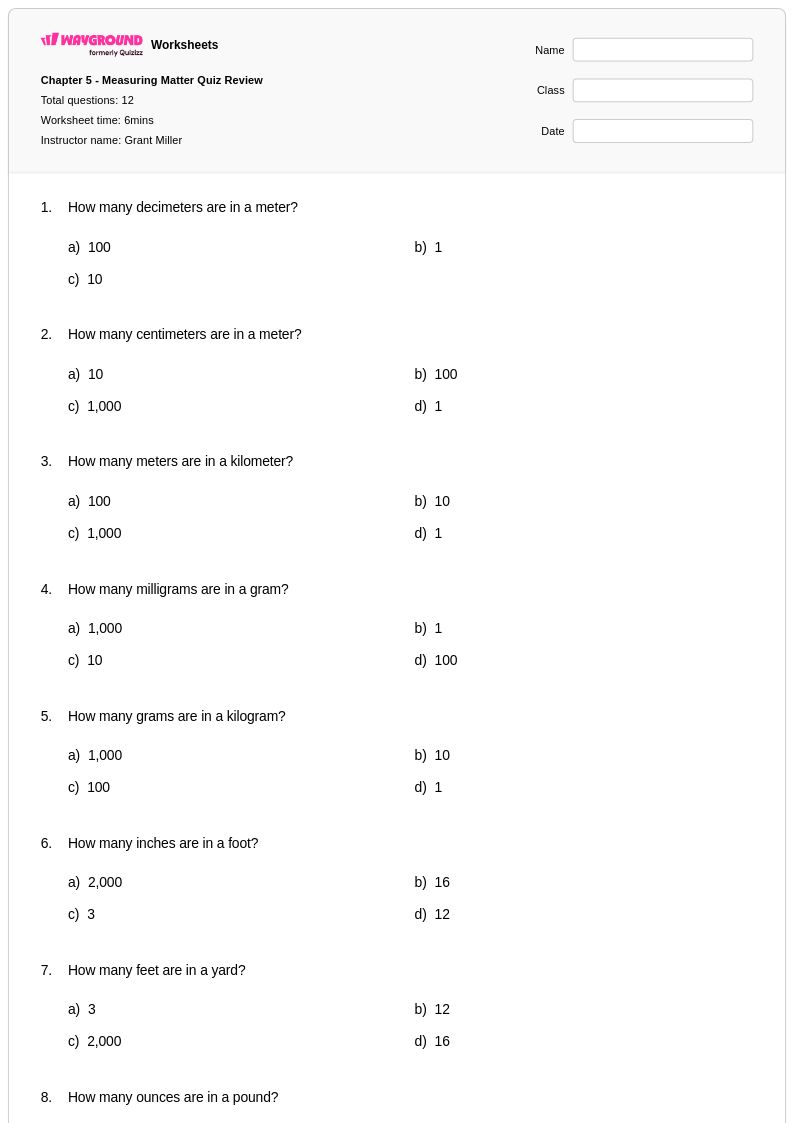
12 Hỏi
4th - 6th
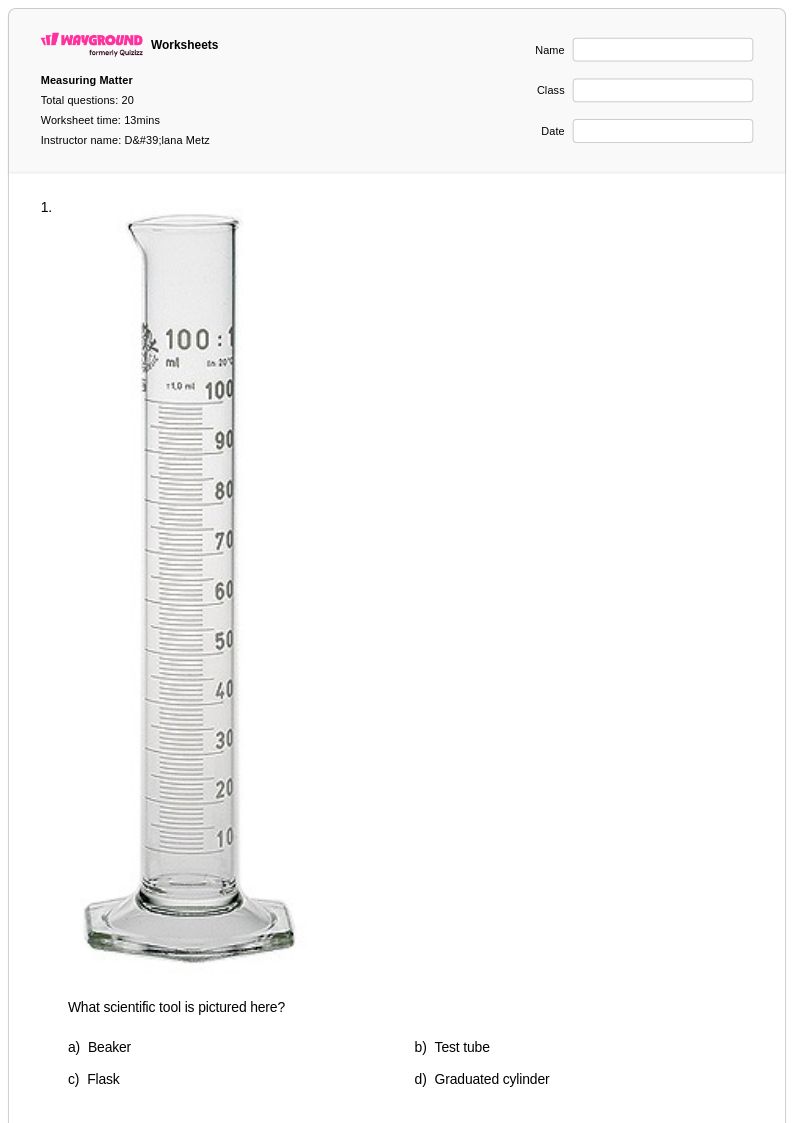
20 Hỏi
4th
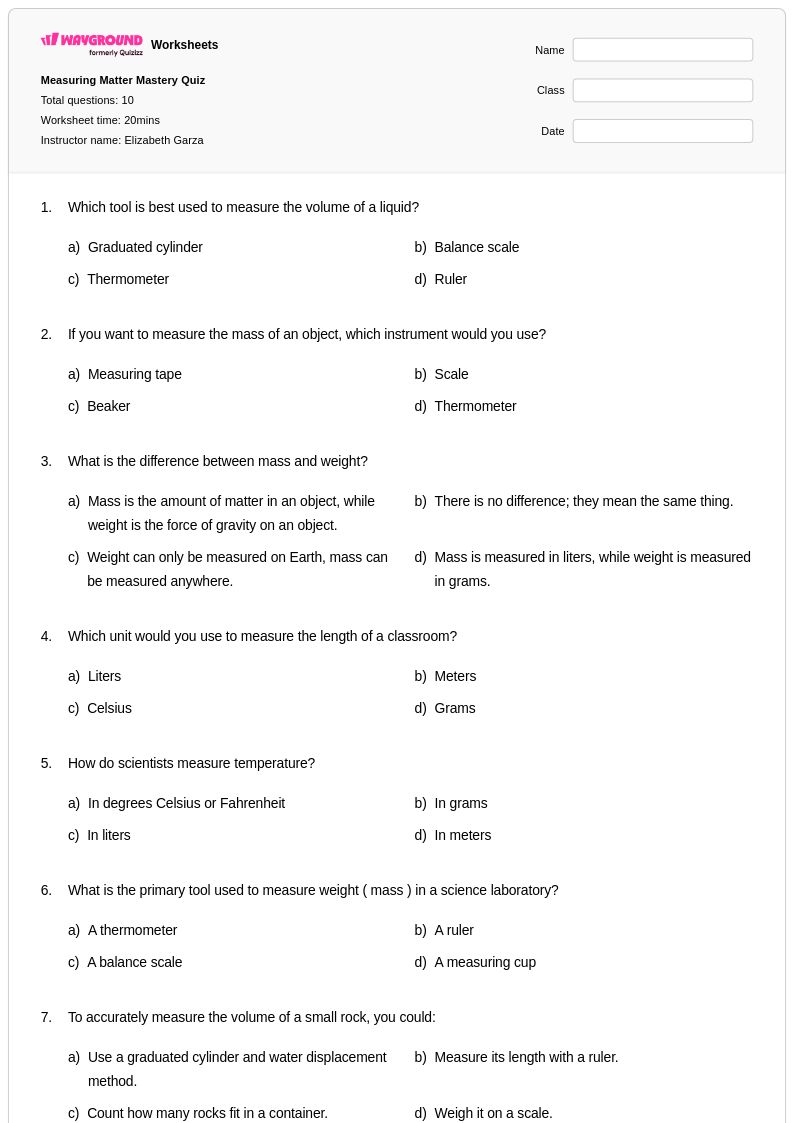
10 Hỏi
4th
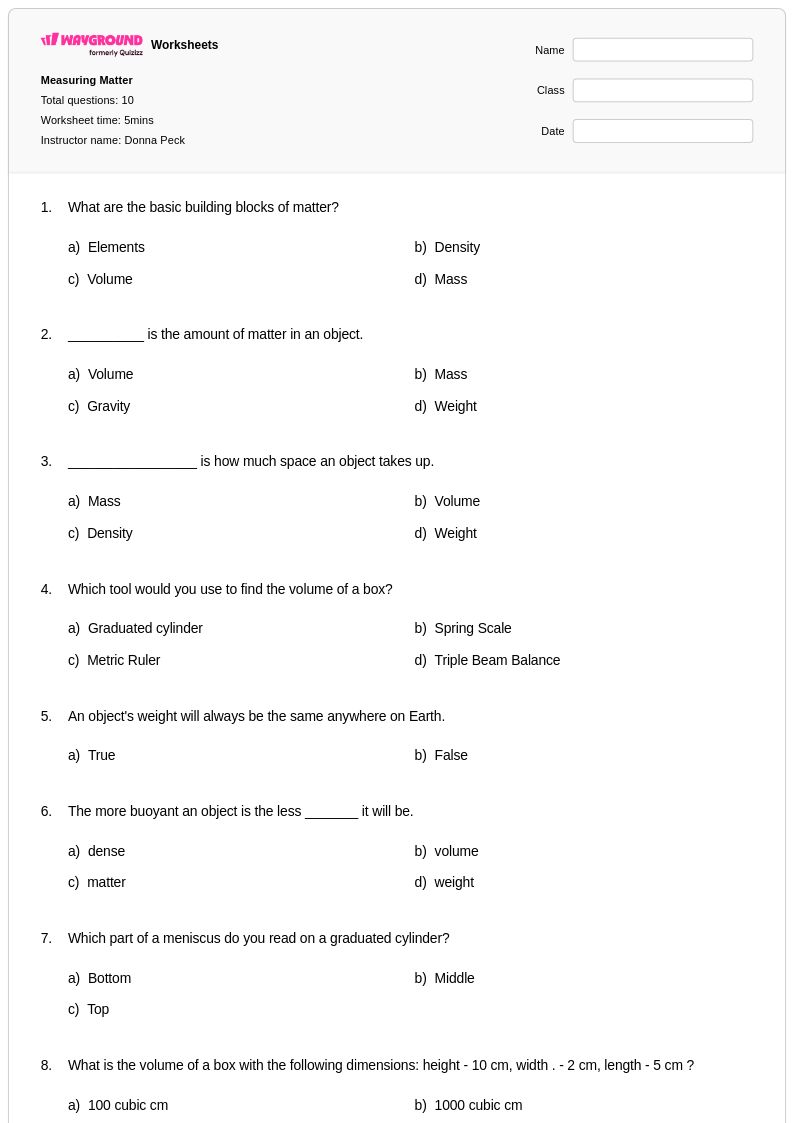
10 Hỏi
4th - 6th
10 Hỏi
4th
12 Hỏi
3rd - 8th
10 Hỏi
3rd - 5th
20 Hỏi
4th
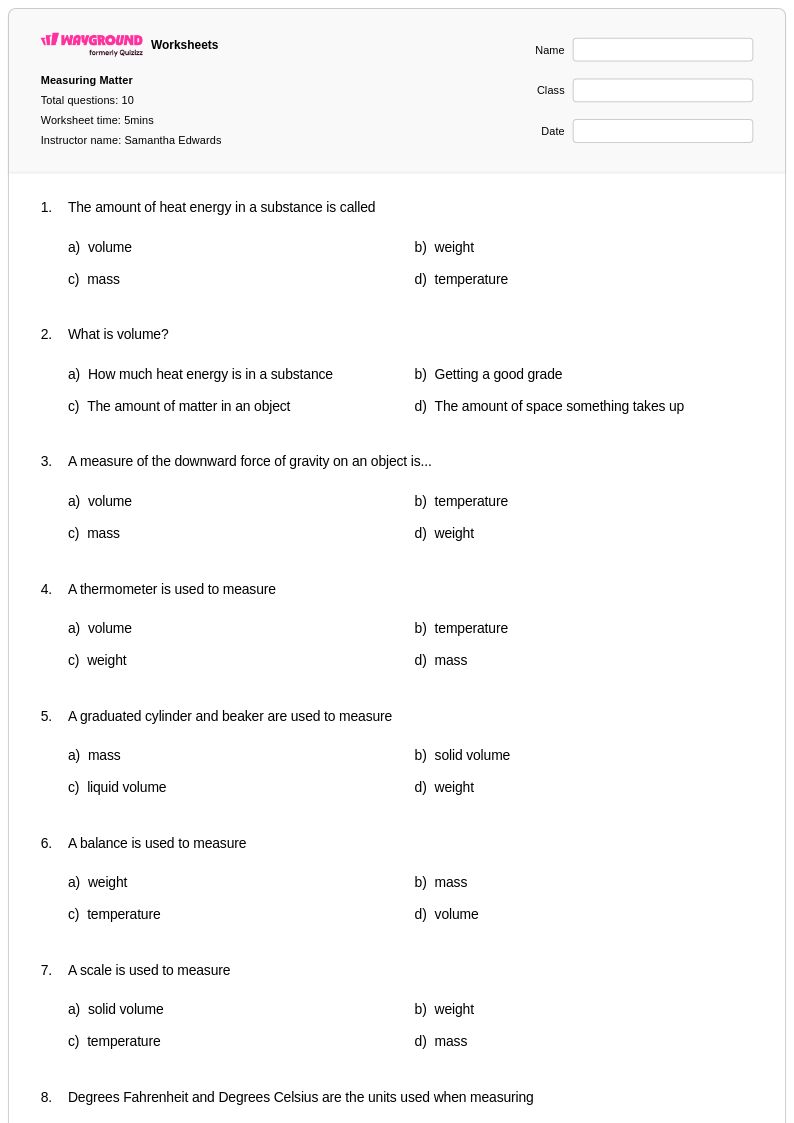
10 Hỏi
3rd - 6th
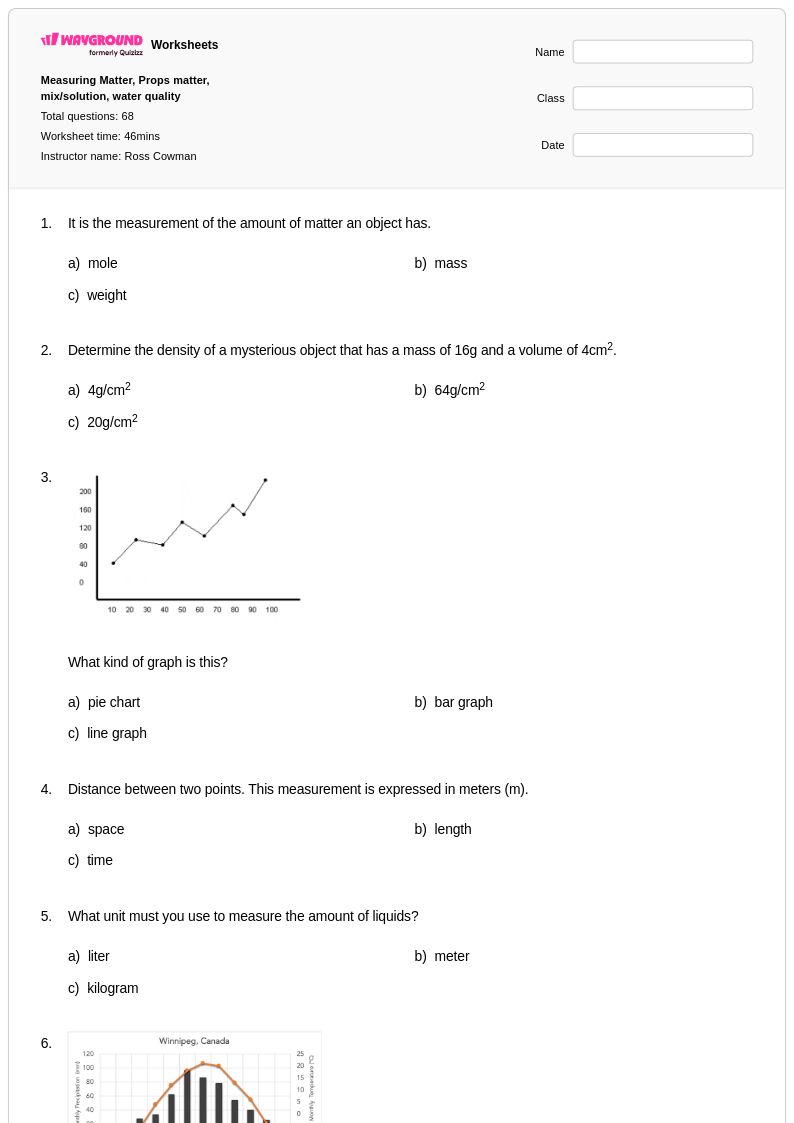
68 Hỏi
4th - 7th
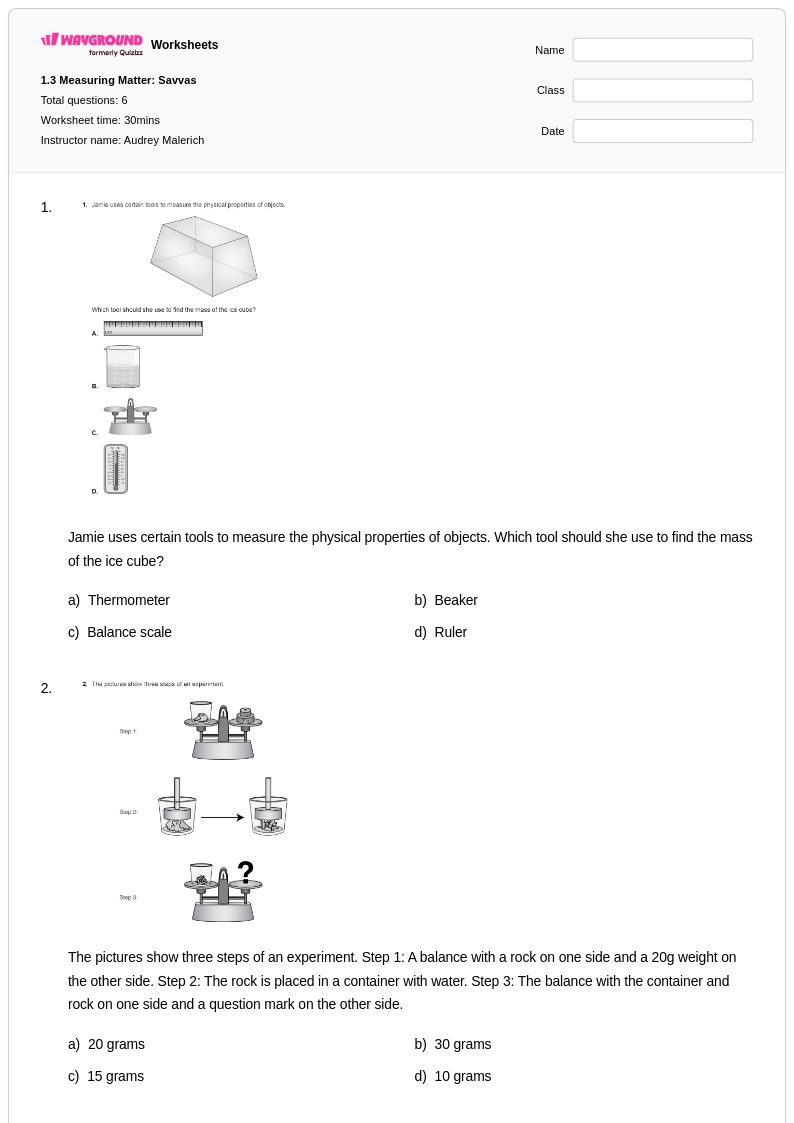
6 Hỏi
4th
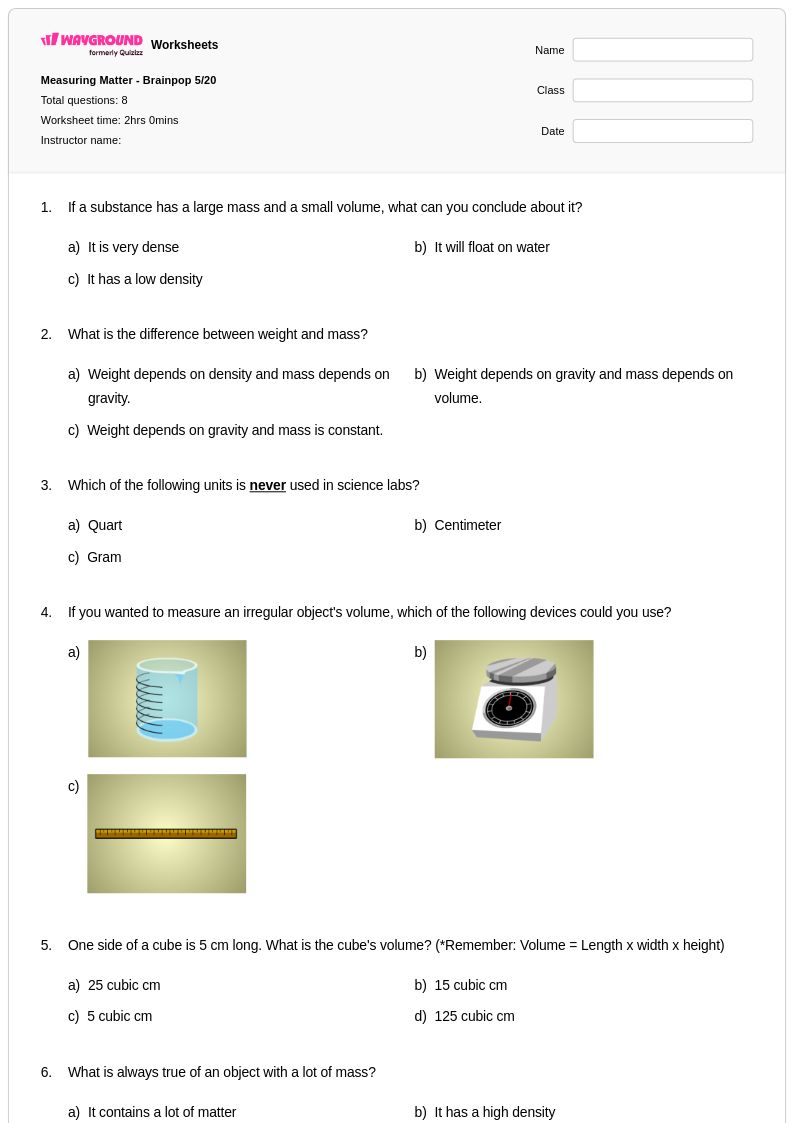
8 Hỏi
4th - 6th
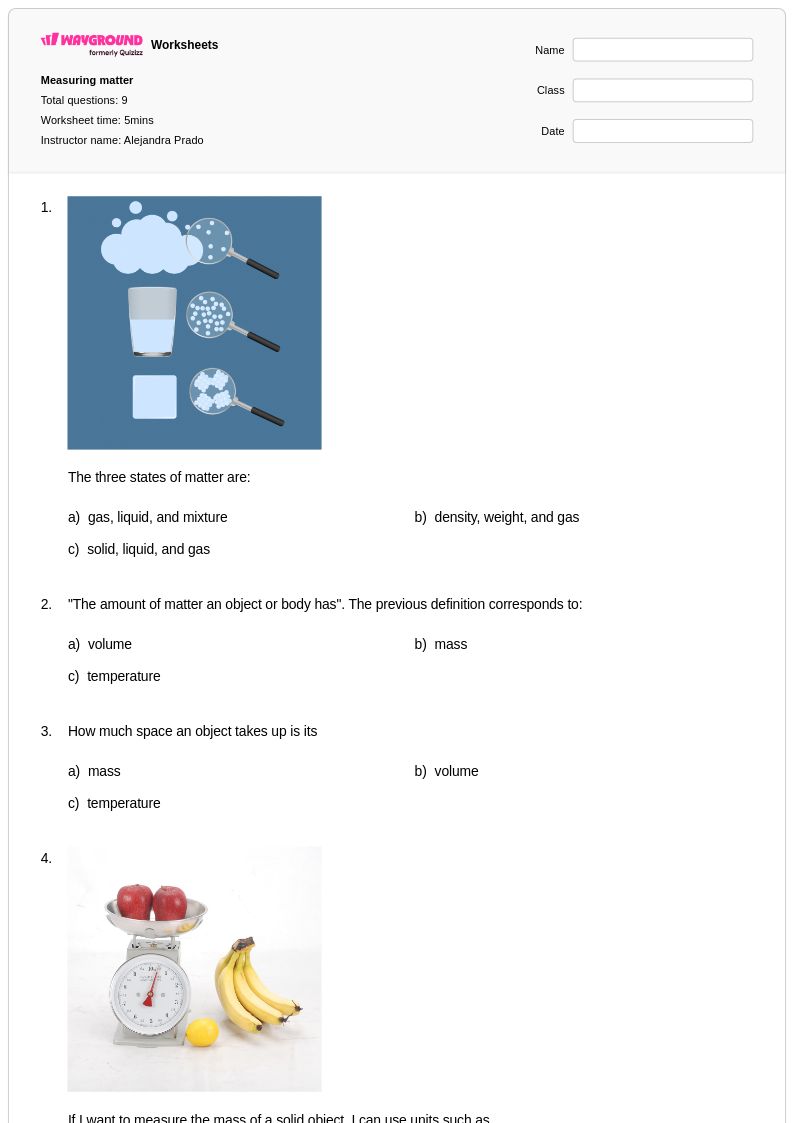
9 Hỏi
4th
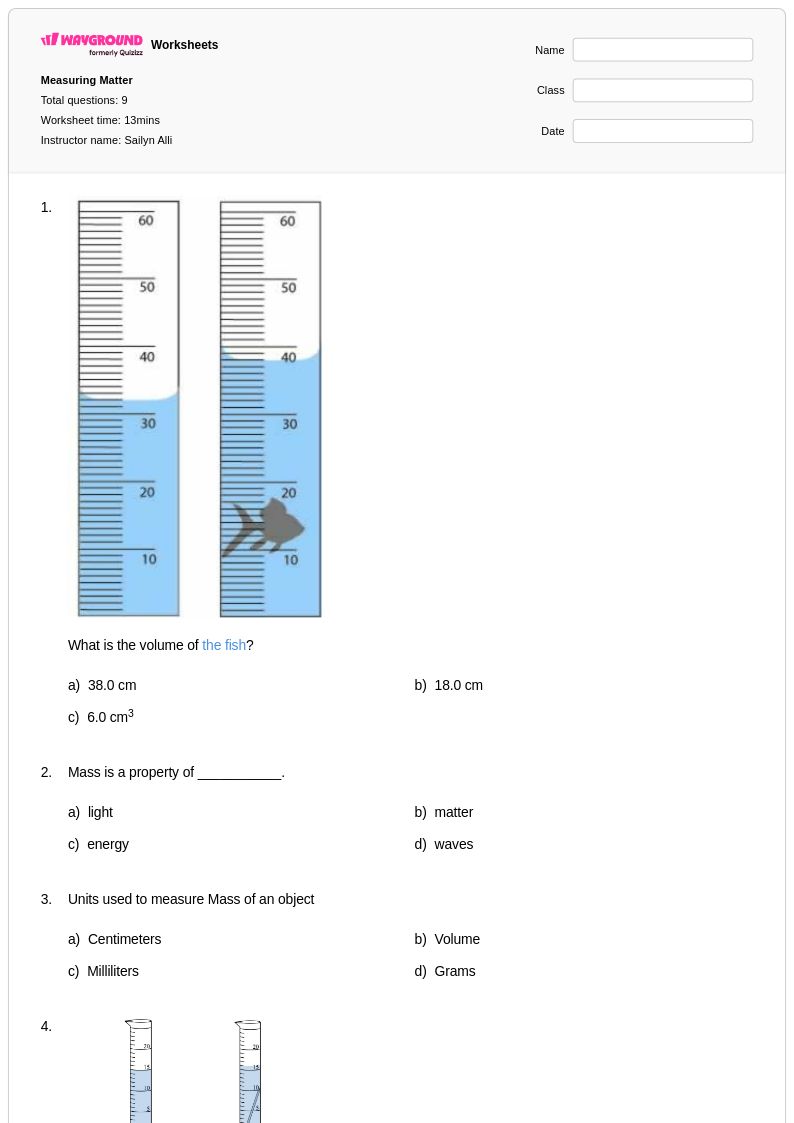
9 Hỏi
4th
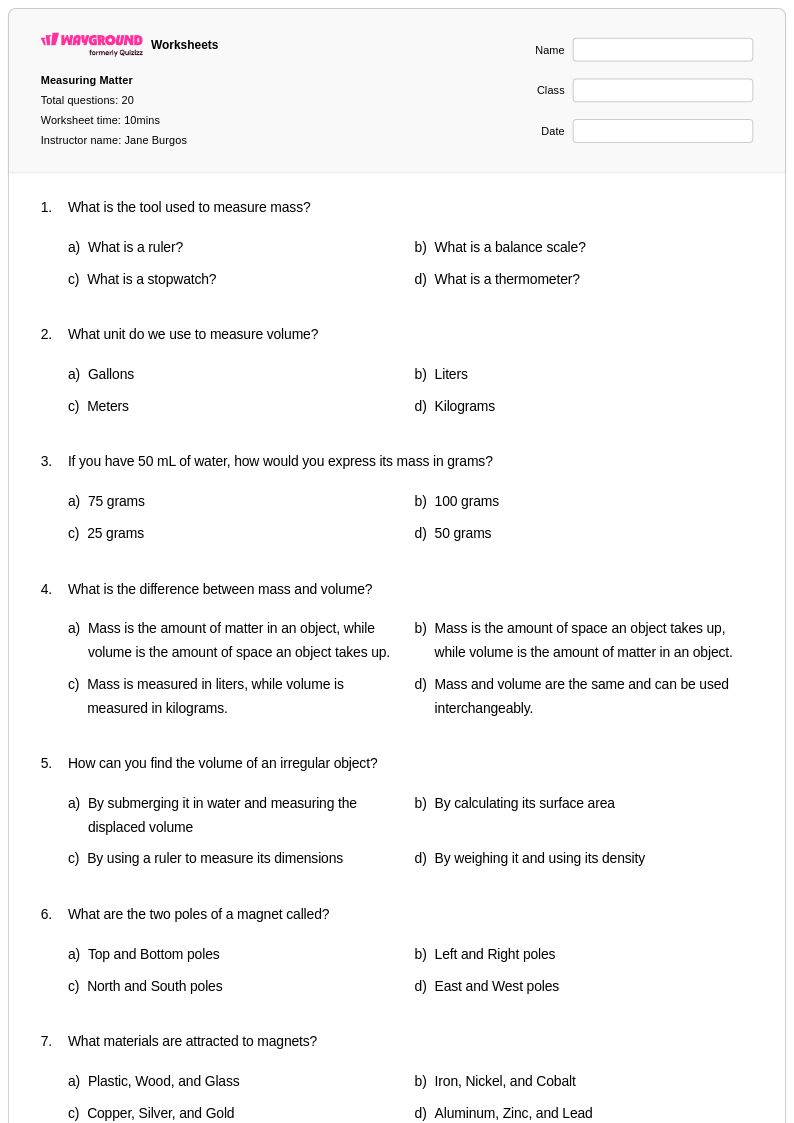
20 Hỏi
4th
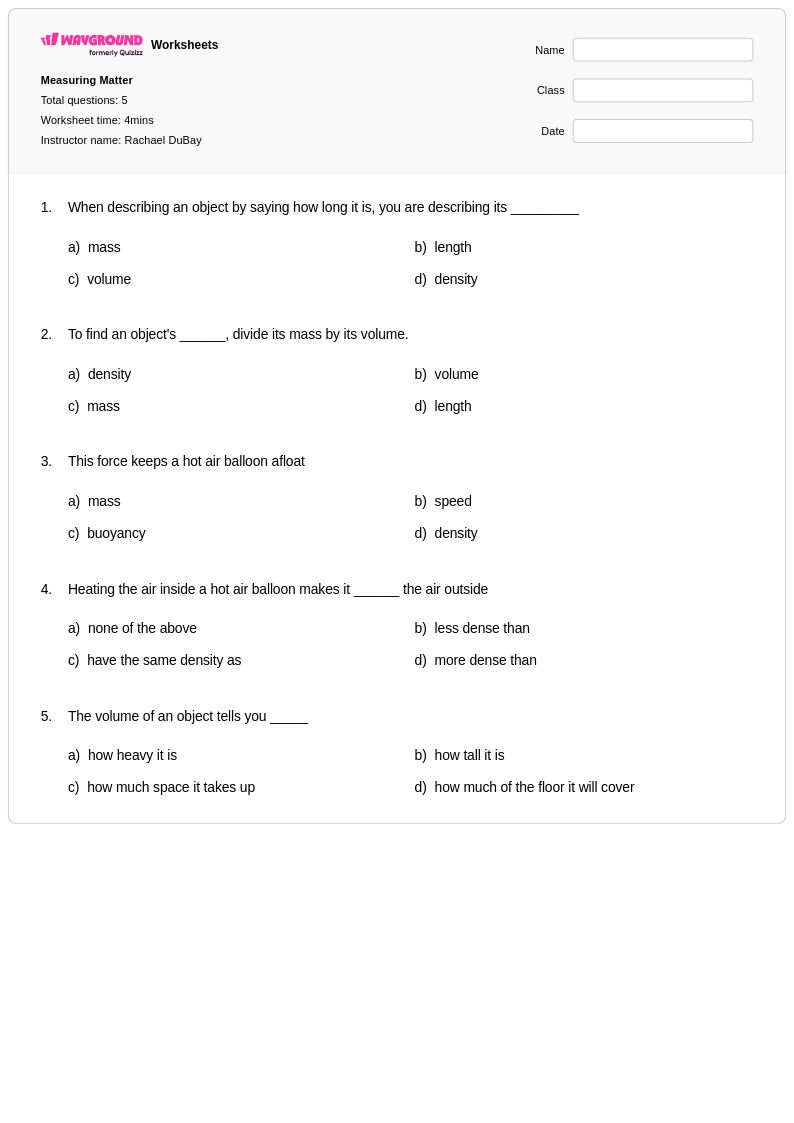
5 Hỏi
4th - 5th
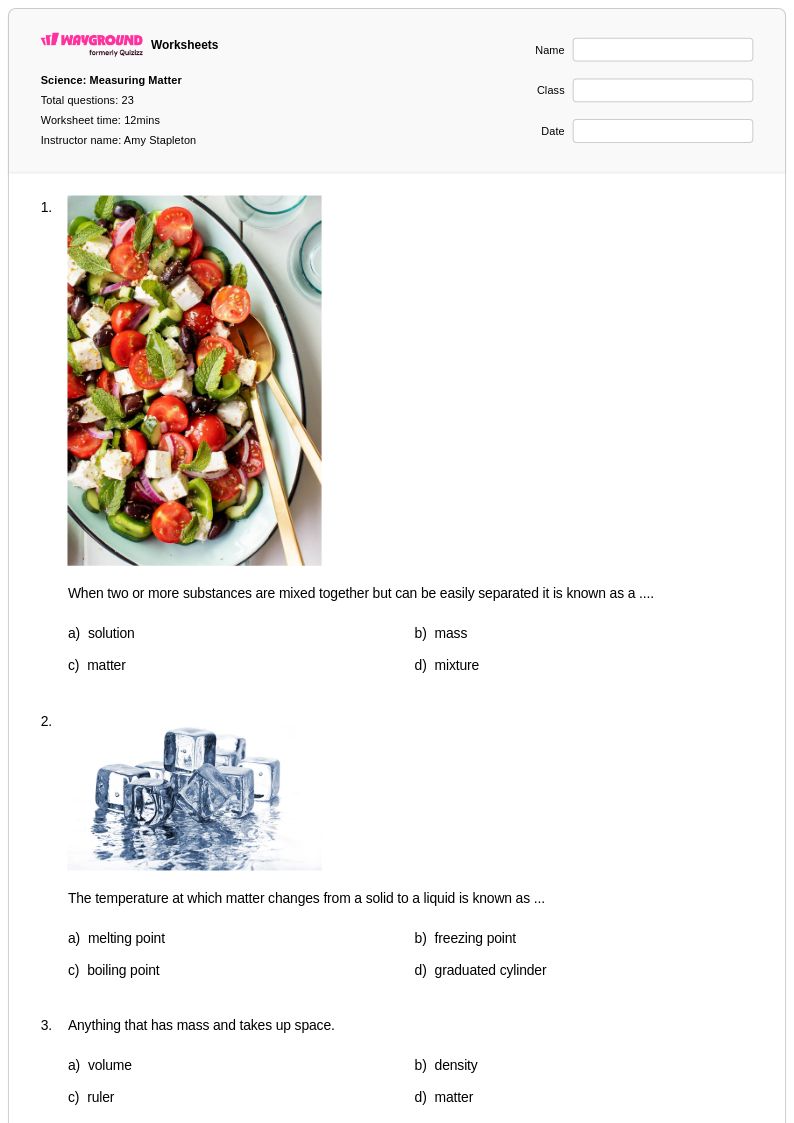
23 Hỏi
4th
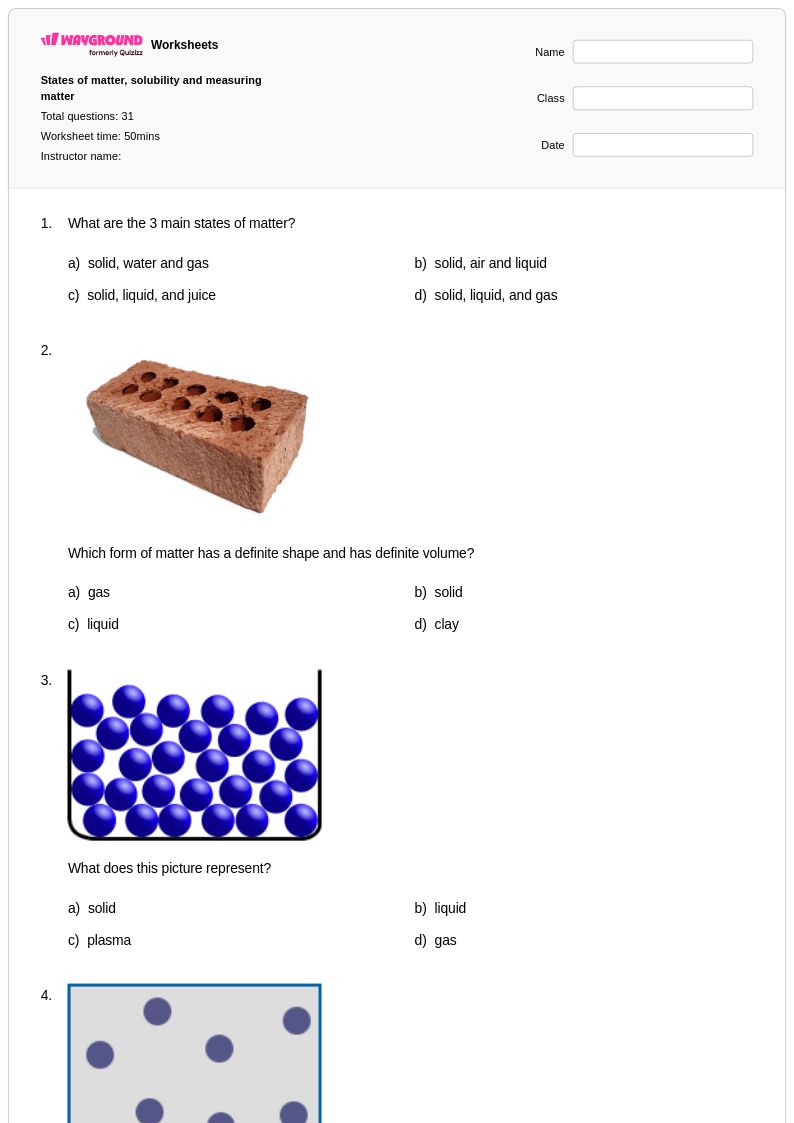
31 Hỏi
4th - 5th
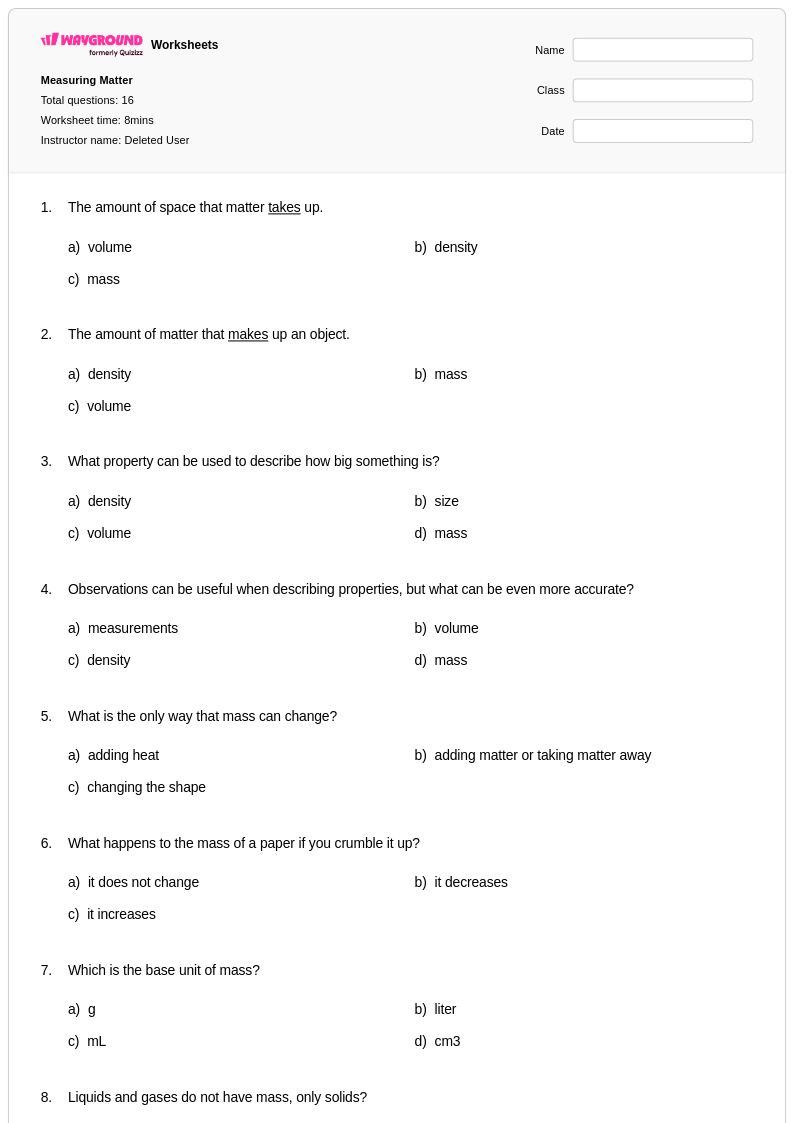
16 Hỏi
4th
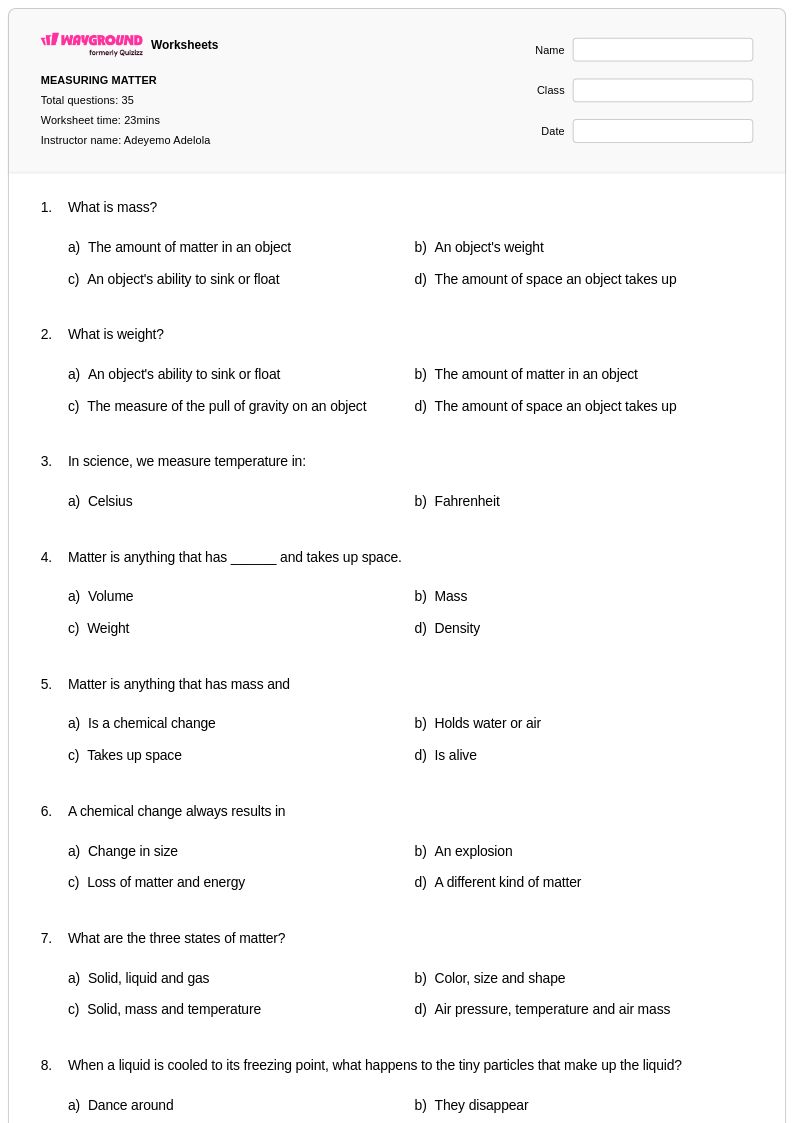
35 Hỏi
4th
Khám phá các bảng tính chủ đề khác cho class 4
Explore printable Measuring Matter worksheets for Class 4
Measuring Matter worksheets for Class 4 students available through Wayground (formerly Quizizz) provide essential hands-on learning experiences that develop fundamental physical science skills. These comprehensive resources focus on teaching students how to accurately measure and compare different properties of matter, including mass, volume, length, and temperature using appropriate tools and units. The worksheets strengthen critical thinking abilities as students learn to select proper measuring instruments, record precise measurements, and analyze data to draw meaningful conclusions about the physical world around them. Each worksheet includes detailed answer keys and practice problems designed to reinforce measurement concepts, while the free printables in convenient PDF format make it easy for educators to distribute materials and support diverse learning needs in the classroom.
Wayground (formerly Quizizz) empowers teachers with access to millions of educator-created resources specifically designed for Class 4 measuring matter instruction, featuring robust search and filtering capabilities that allow quick identification of materials aligned with specific learning standards and objectives. The platform's differentiation tools enable teachers to customize worksheets based on individual student needs, whether for remediation of basic measurement skills or enrichment activities for advanced learners. Available in both printable PDF and interactive digital formats, these versatile resources support flexible lesson planning and can be seamlessly integrated into various instructional approaches, from guided practice sessions to independent skill-building activities. Teachers can efficiently plan comprehensive measurement units while ensuring students receive targeted practice opportunities that build confidence and proficiency in essential physical science measurement techniques.