Free Printable Mesopotamian Empires Worksheets for Class 9
Explore Class 9 Mesopotamian Empires worksheets and printables from Wayground that help students master ancient civilizations through engaging practice problems, free PDF resources, and comprehensive answer keys.
Explore printable Mesopotamian Empires worksheets for Class 9
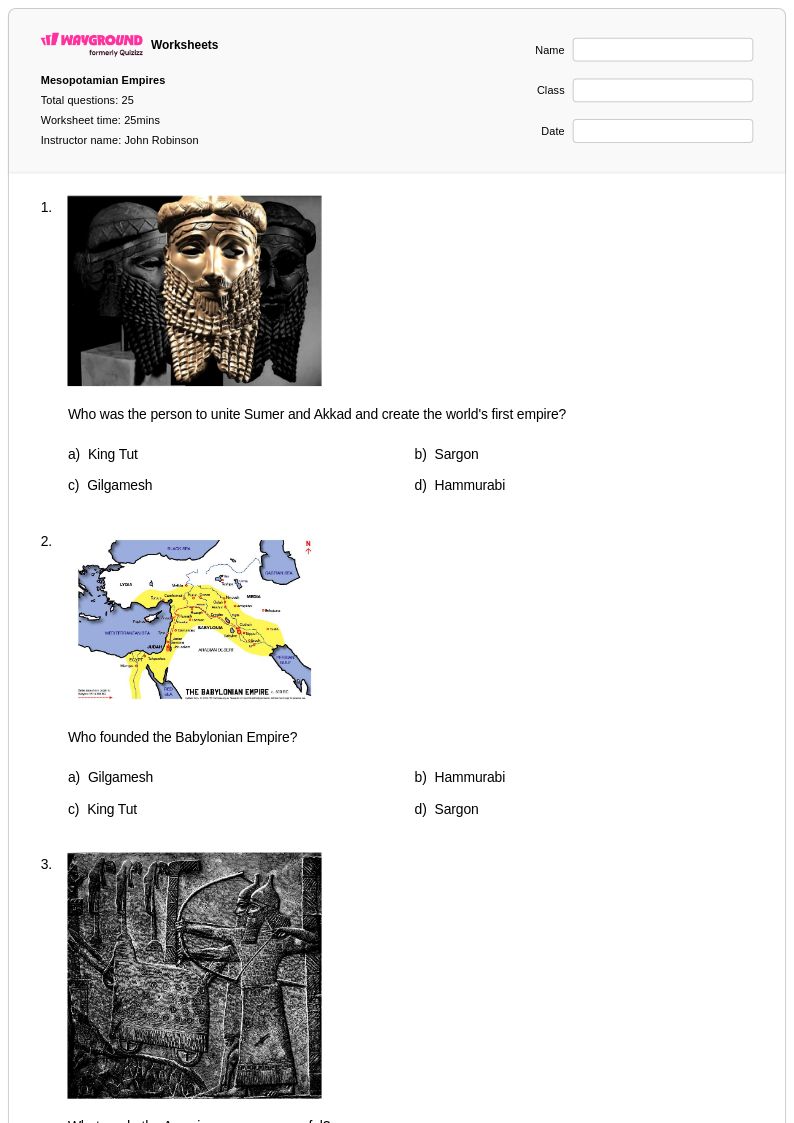
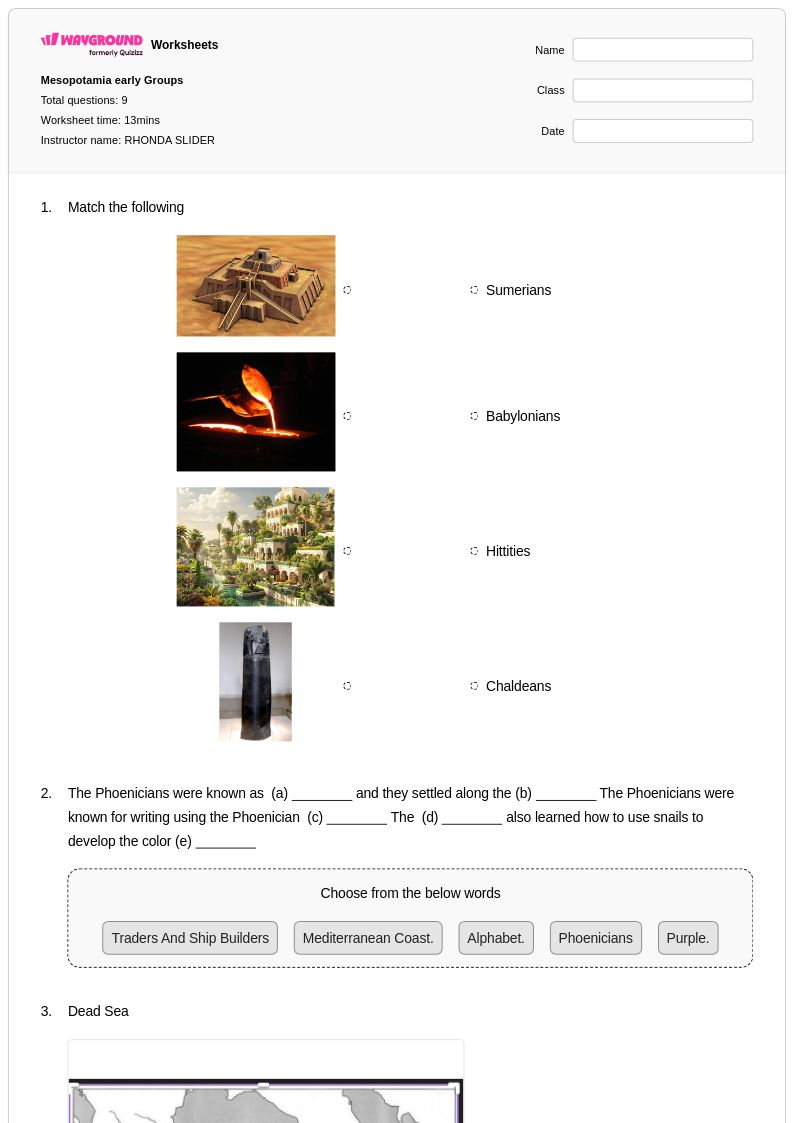
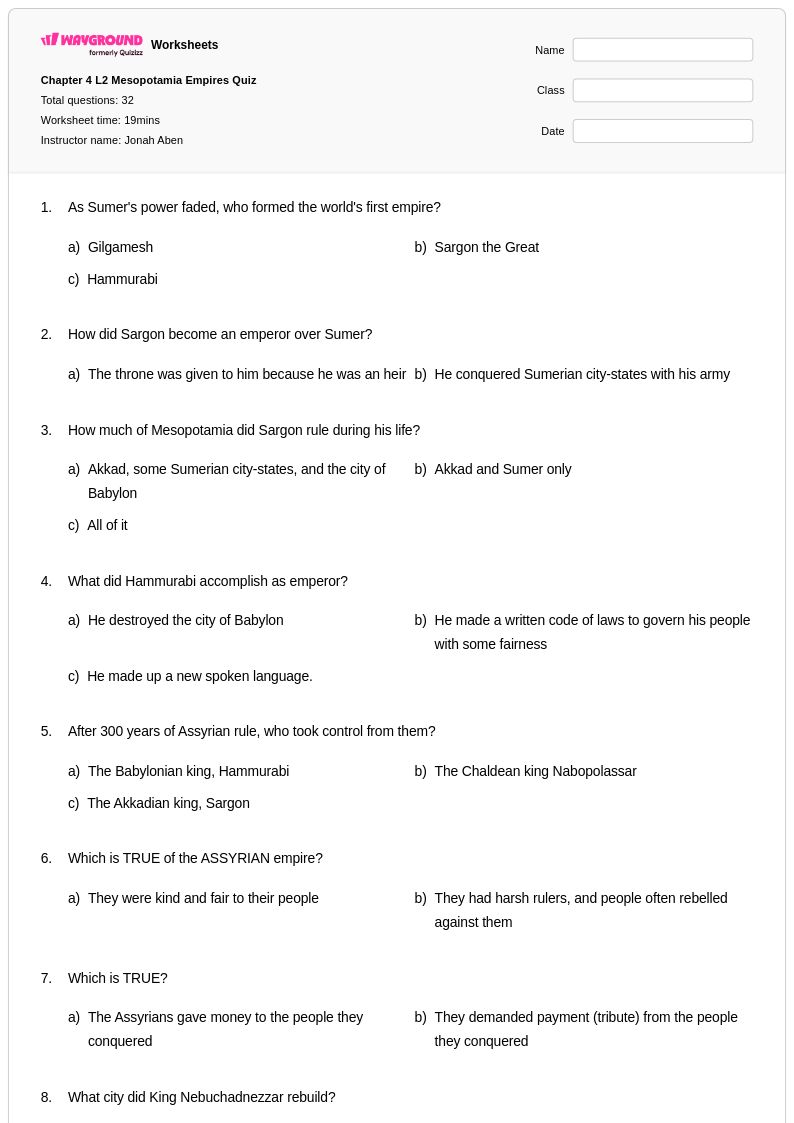
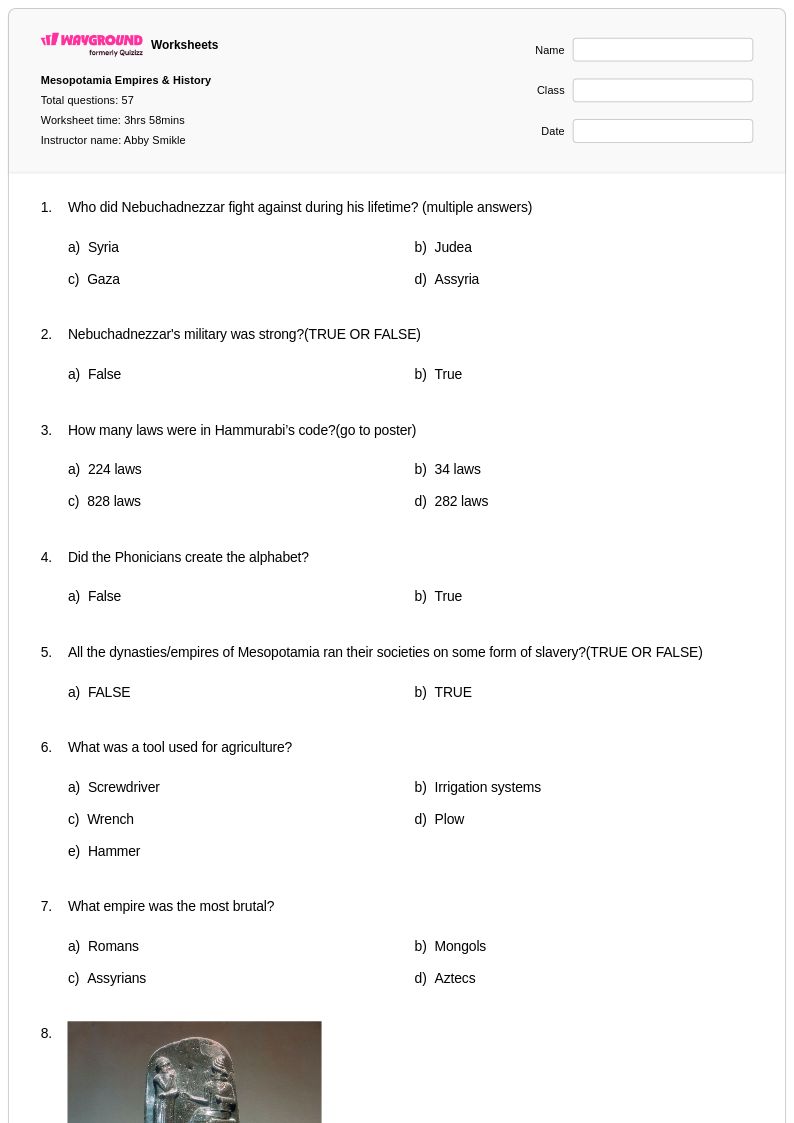
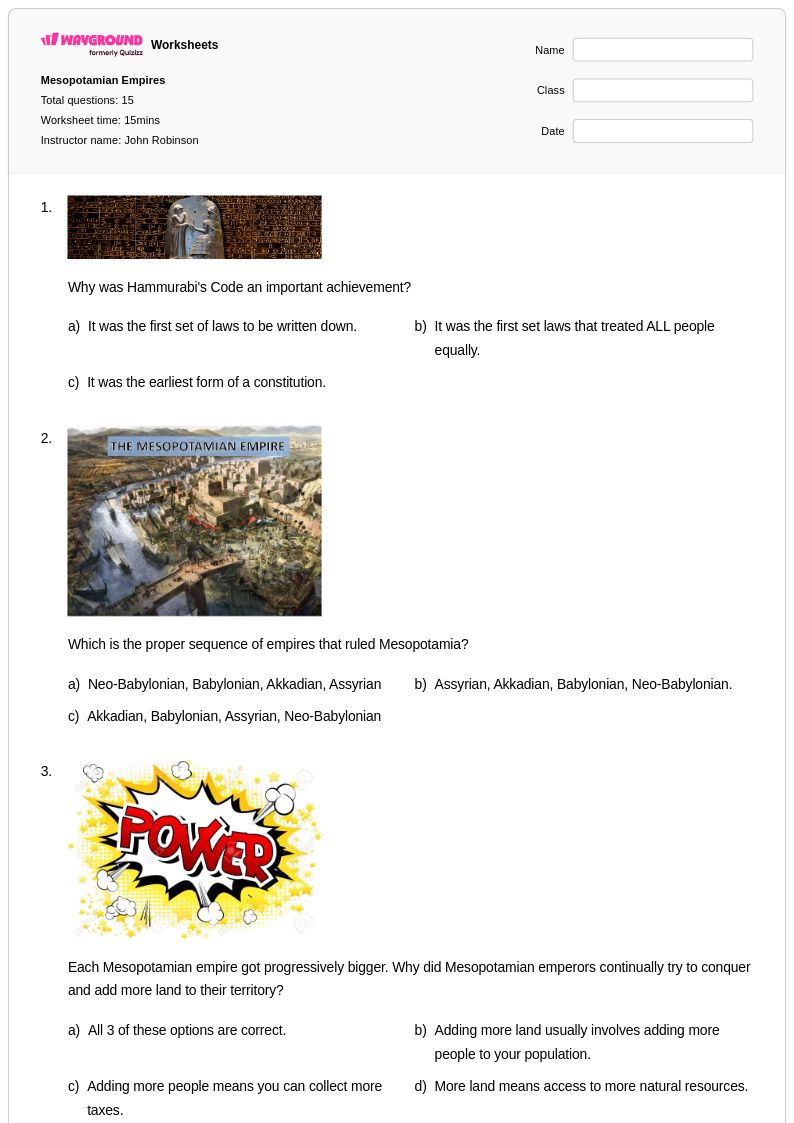
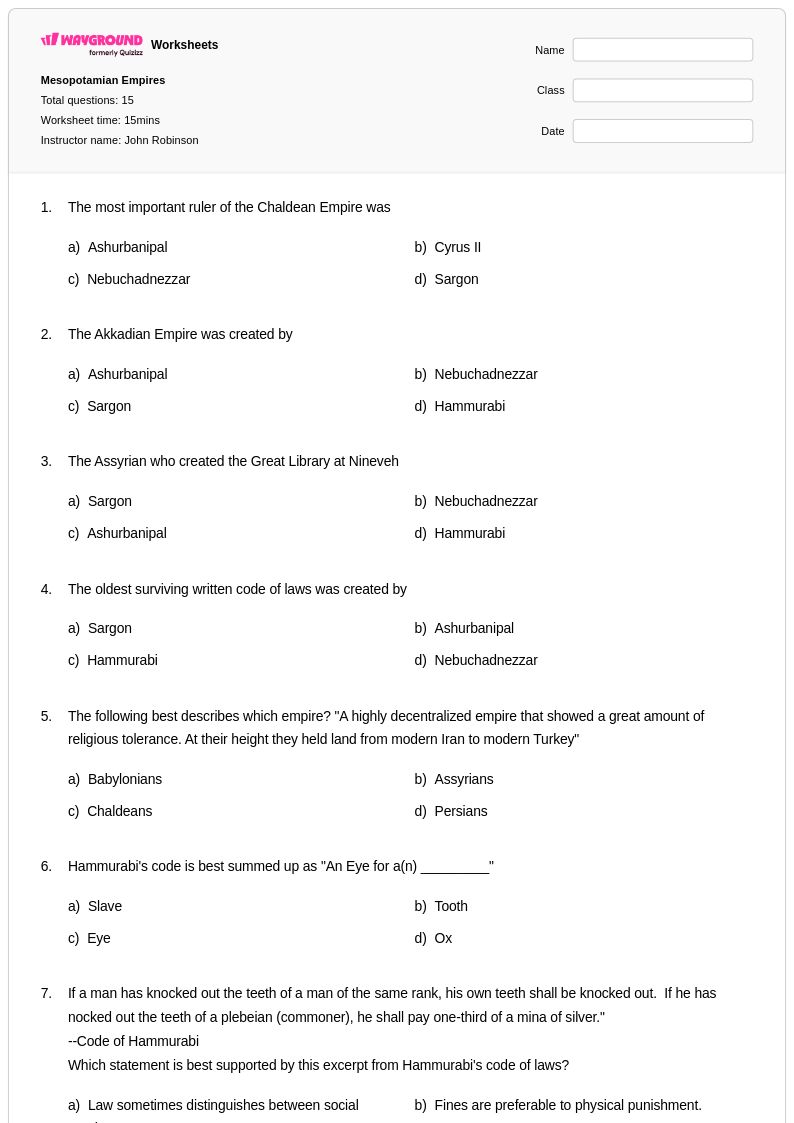
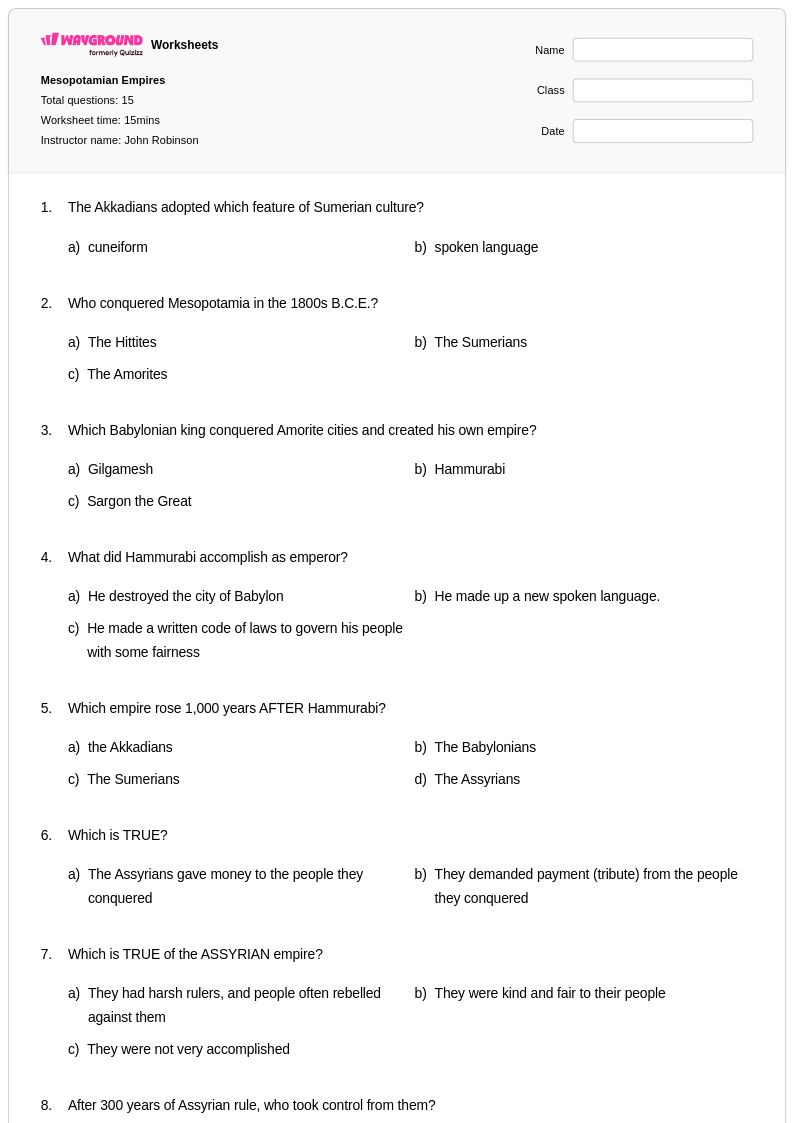
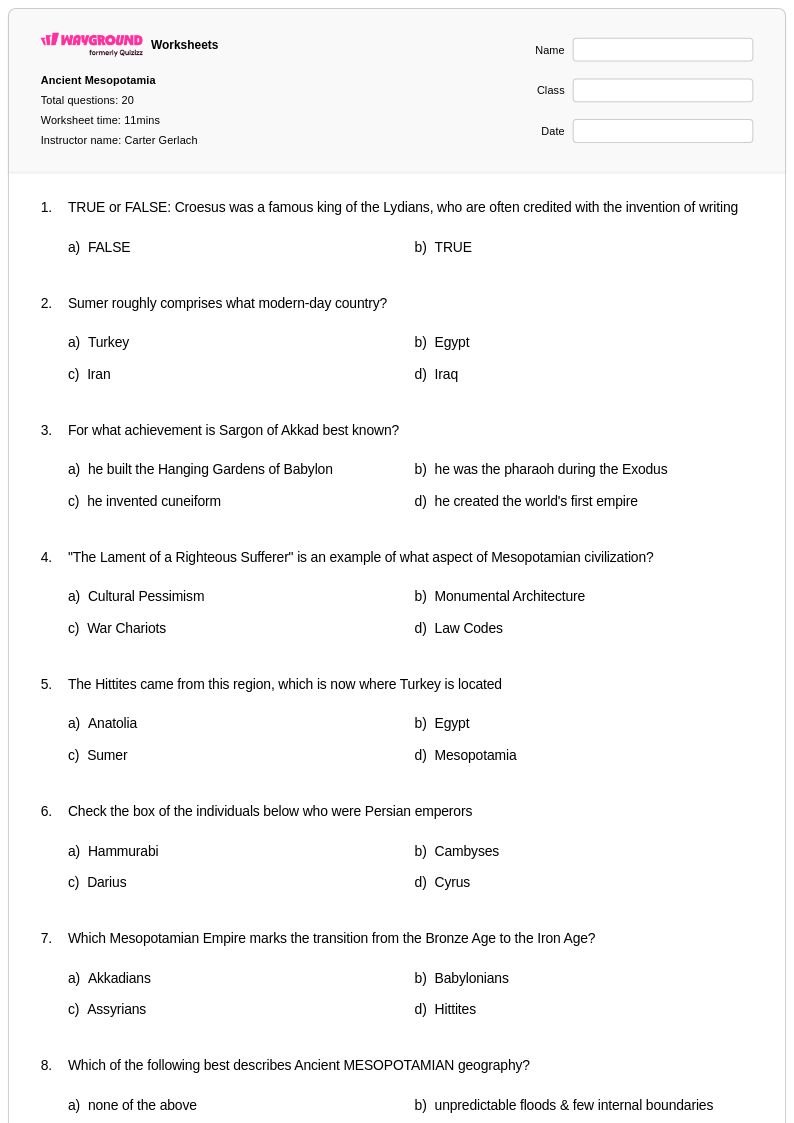
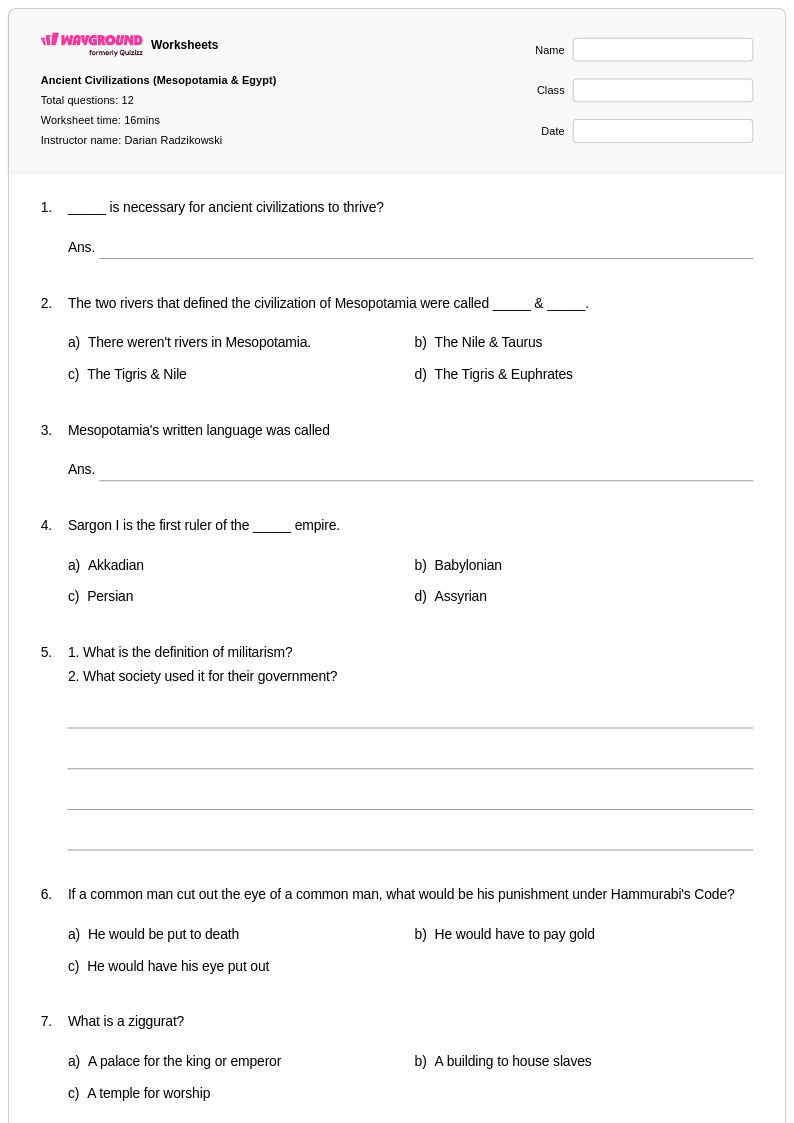
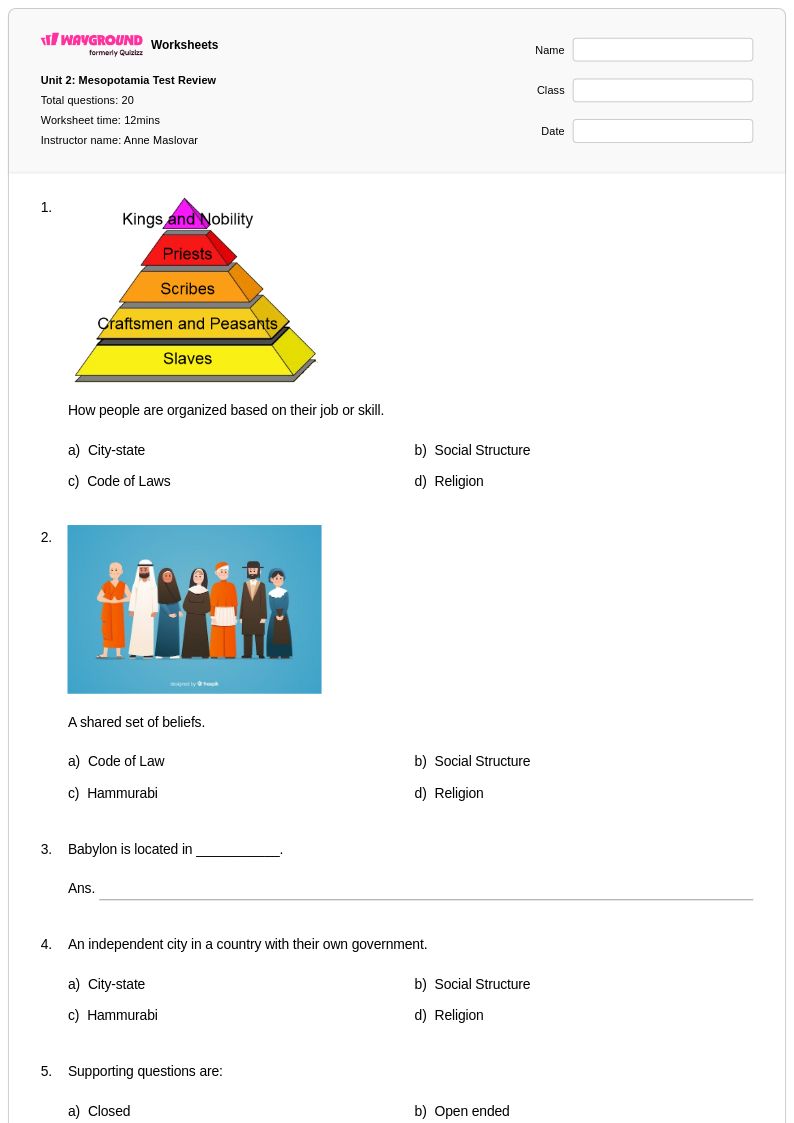
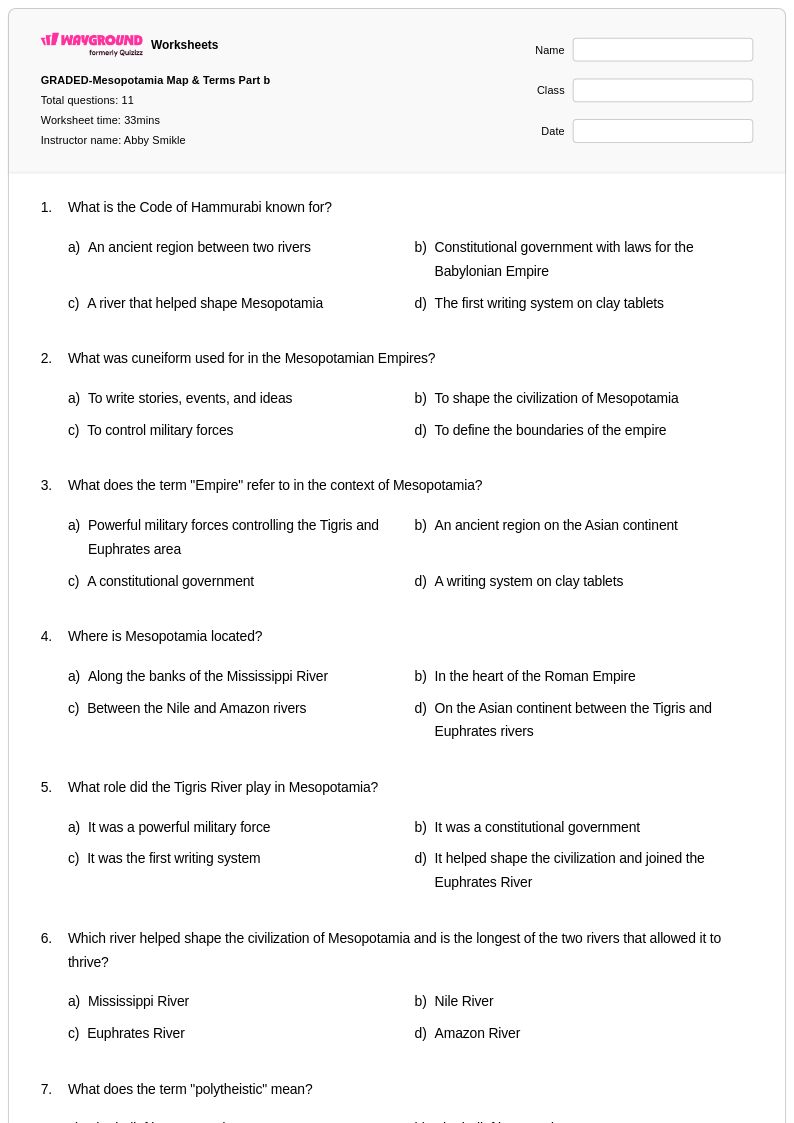
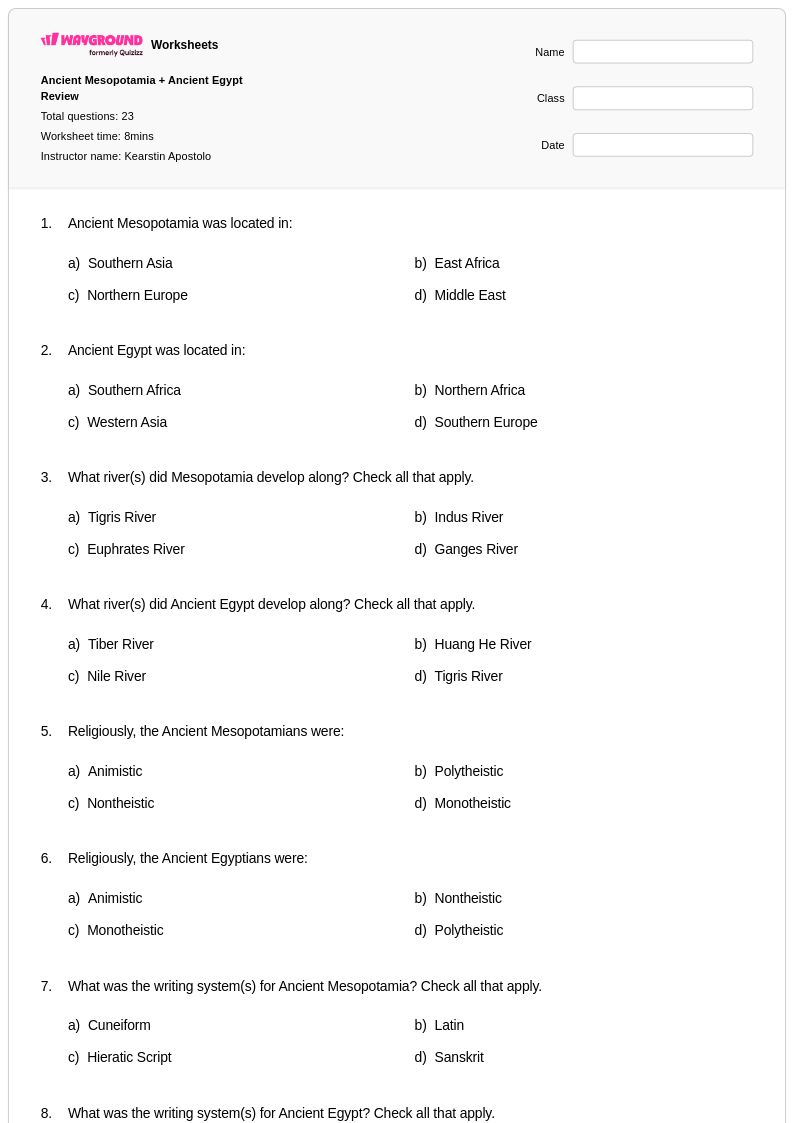
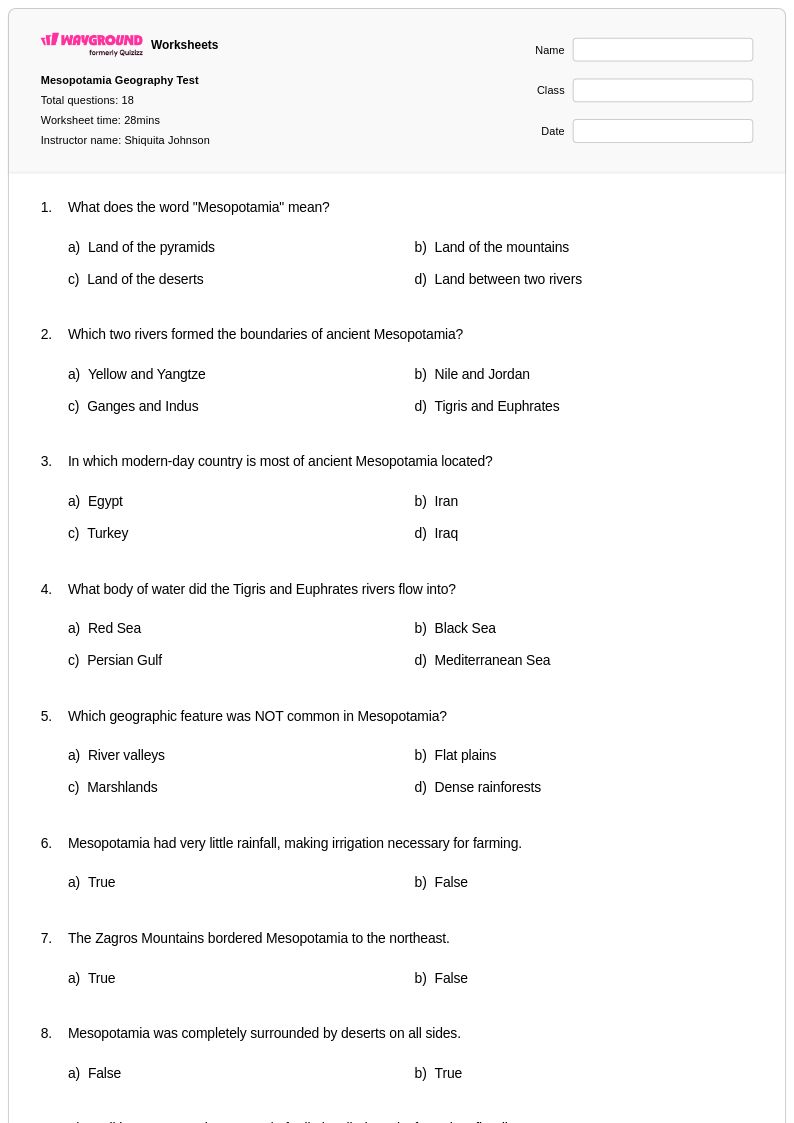
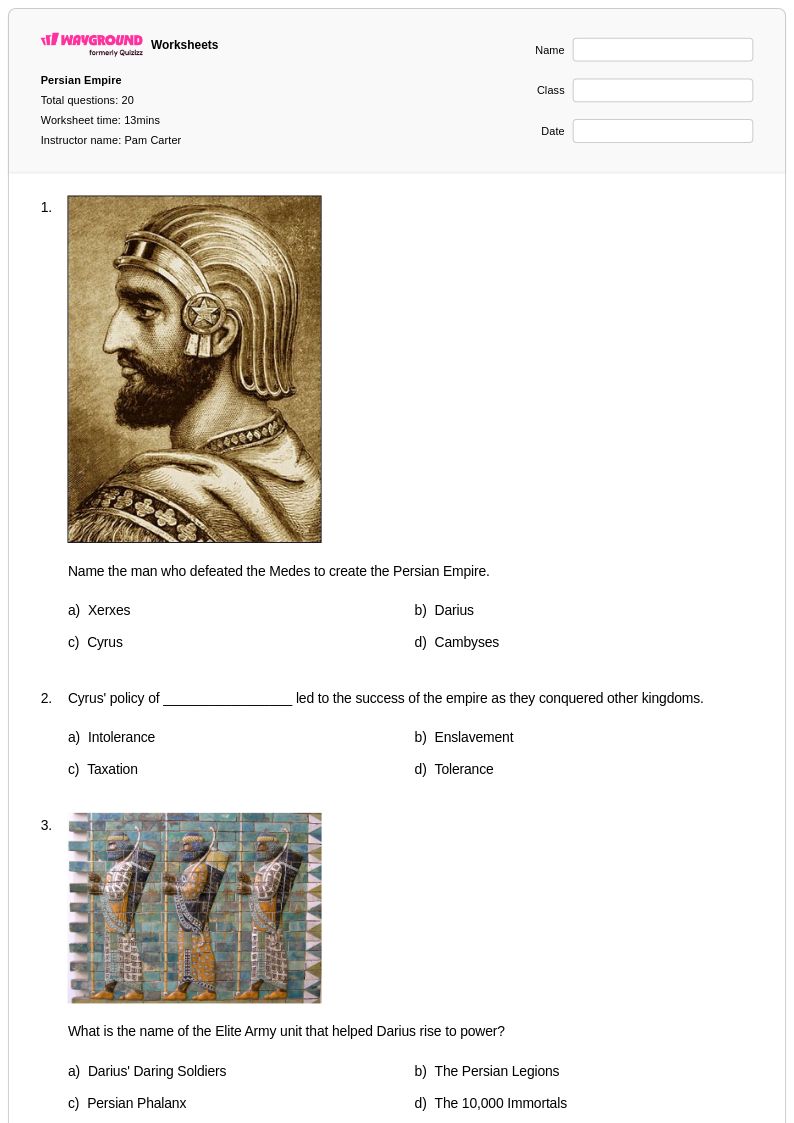
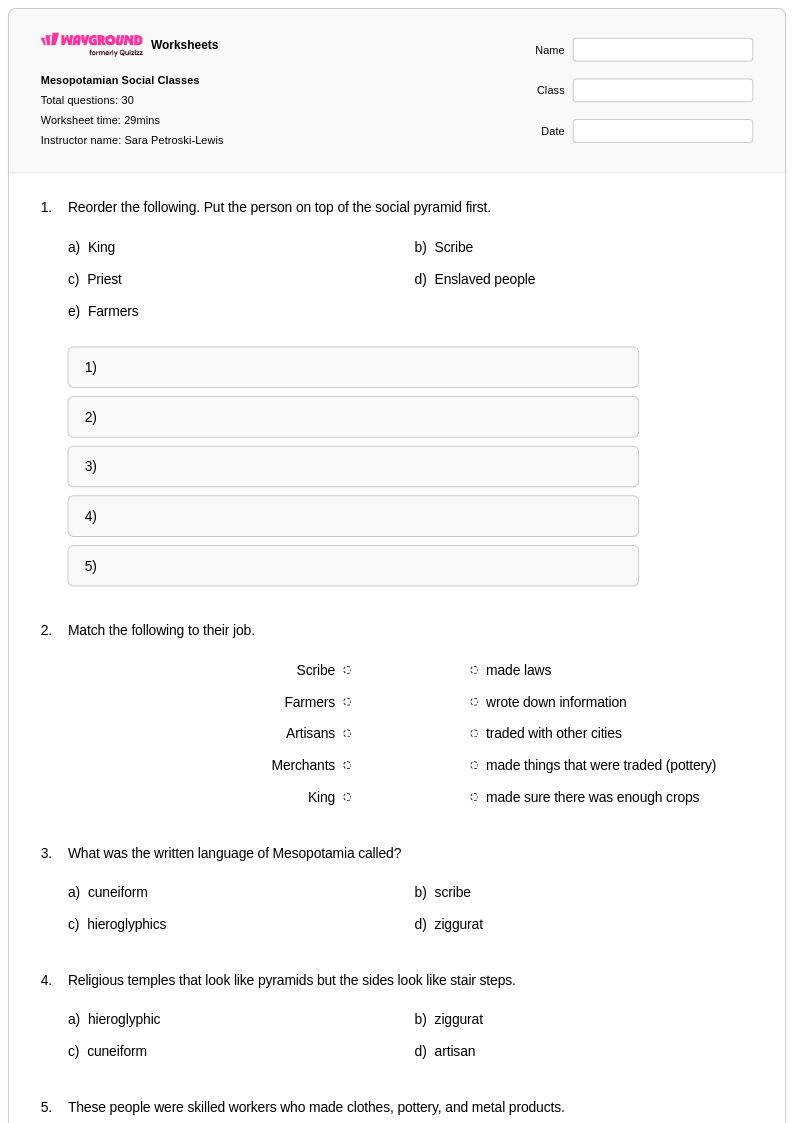
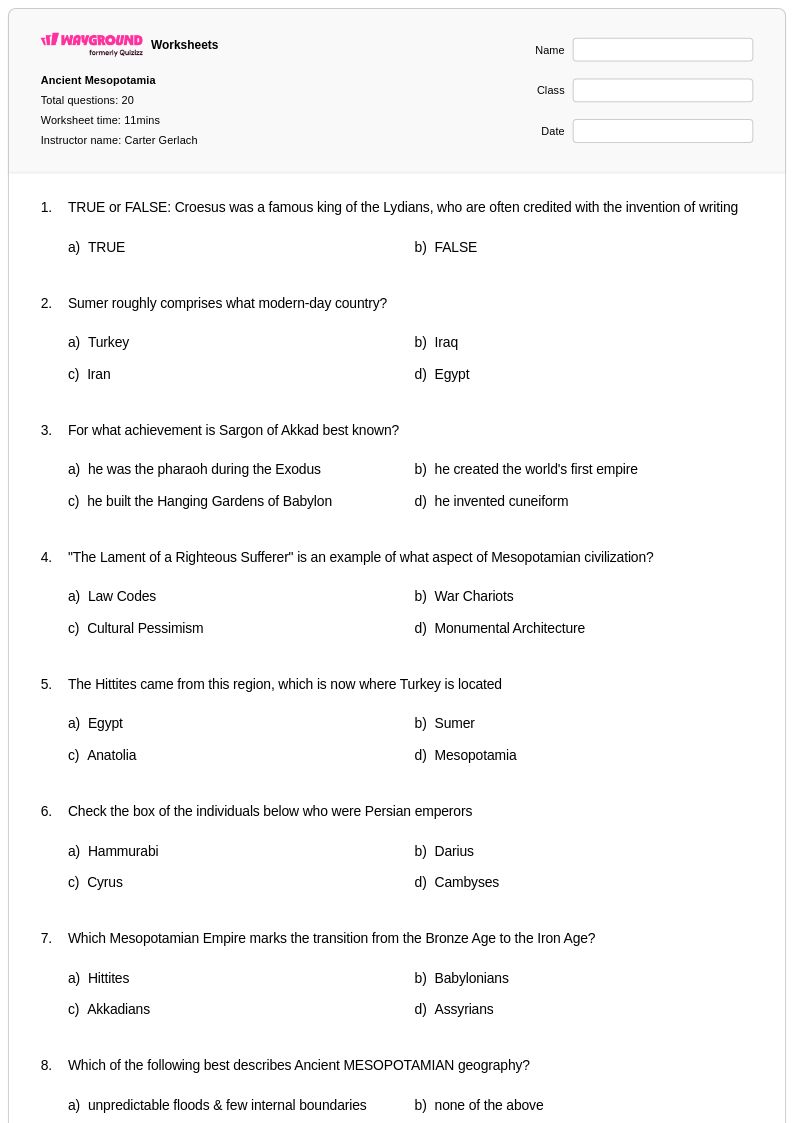
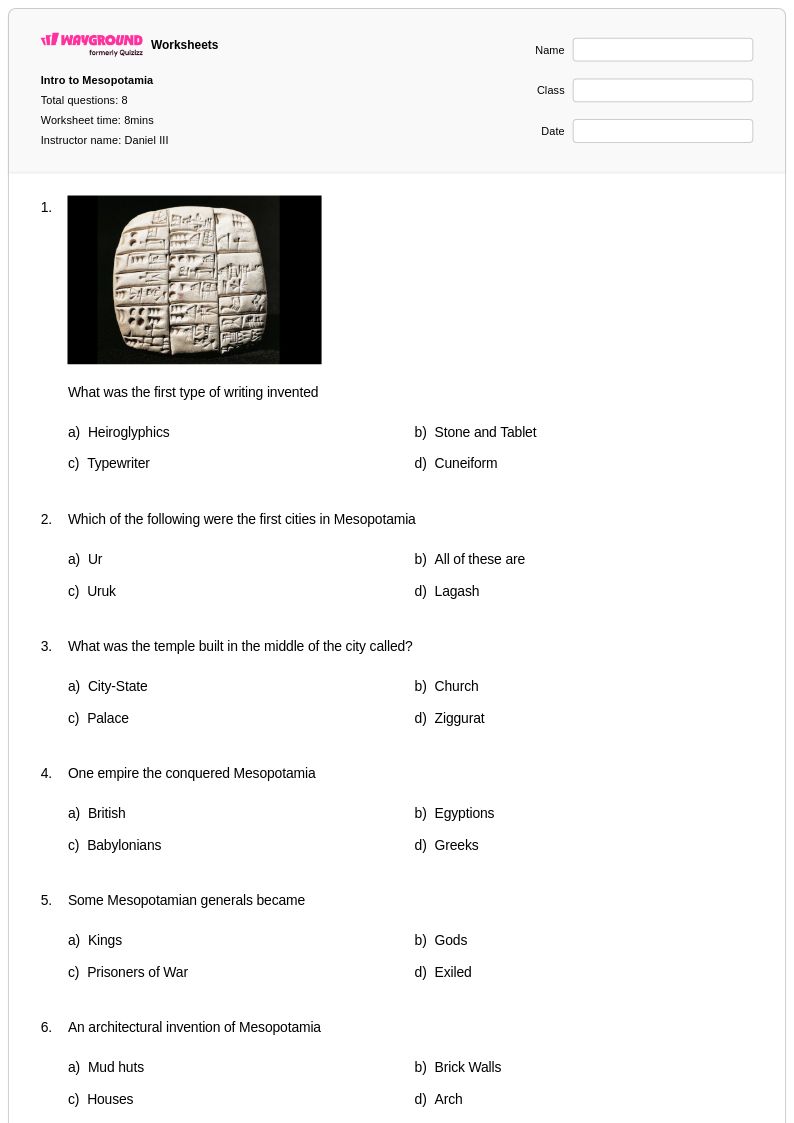
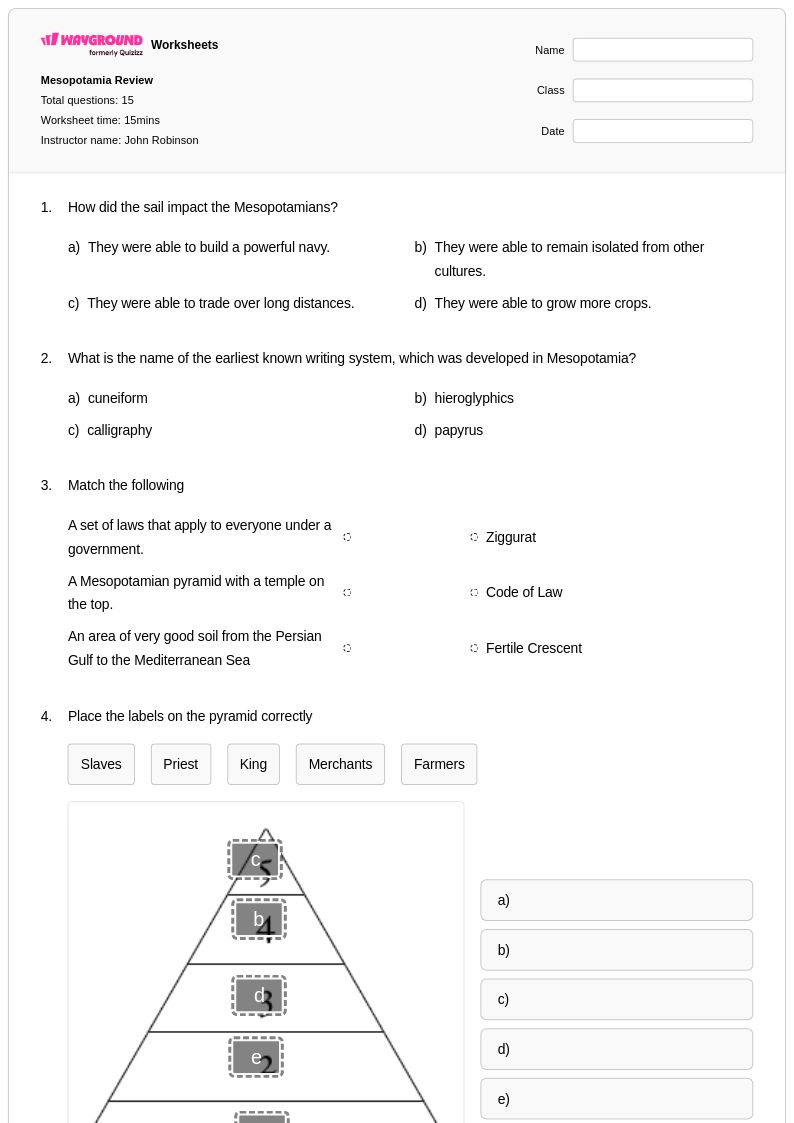
Mesopotamian Empires worksheets for Class 9 students provide comprehensive exploration of the ancient civilizations that flourished between the Tigris and Euphrates rivers, including the Sumerian, Babylonian, Assyrian, and Persian empires. Through Wayground's extensive collection, students engage with carefully designed practice problems that strengthen critical thinking skills while examining the political structures, cultural achievements, and historical significance of these foundational civilizations. These educational resources feature detailed answer keys that support independent learning and include free printables covering topics such as Hammurabi's Code, the rise and fall of empire boundaries, religious practices, and technological innovations like cuneiform writing and the wheel. The pdf format ensures easy accessibility for both classroom instruction and homework assignments, allowing students to analyze primary source documents, compare governmental systems, and trace the lasting influence of Mesopotamian societies on modern civilization.
Wayground's platform, formerly known as Quizizz, empowers educators with millions of teacher-created resources specifically designed for Mesopotamian Empires instruction, featuring robust search and filtering capabilities that allow quick identification of materials aligned with state and national social studies standards. Teachers benefit from sophisticated differentiation tools that accommodate diverse learning needs, enabling customization of worksheet complexity and focus areas to support both remediation for struggling students and enrichment opportunities for advanced learners. The flexible format options include both printable pdf versions for traditional classroom use and digital formats that integrate seamlessly with modern learning management systems, facilitating efficient lesson planning and targeted skill practice. These comprehensive features enable educators to effectively address varying student abilities while maintaining rigorous academic standards in their exploration of ancient Mesopotamian political, social, and cultural developments.
FAQs
How do I teach the Mesopotamian empires to middle school students?
Teaching the Mesopotamian empires effectively means anchoring instruction in sequence and causation — students need to understand why each empire rose after the previous one collapsed, not just memorize names and dates. Start with the Akkadian Empire as the first true empire, then trace how Babylonian, Assyrian, and Neo-Babylonian power each built on or reacted to what came before. Using timeline construction activities and primary source analysis, such as excerpts from Hammurabi's Code, helps students see governance and law as living systems rather than abstract facts.
What are good practice activities for students learning about Mesopotamian empires?
Effective practice for this topic goes beyond recall and pushes students to compare across empires — for example, contrasting Assyrian military innovations with Babylonian administrative systems. Timeline construction worksheets help students internalize the chronological sequence of the Akkadian, Babylonian, Assyrian, and Neo-Babylonian empires, while cause-and-effect graphic organizers reinforce why empires expanded and ultimately fell. Primary source analysis tasks, including documents like Hammurabi's Code, build the historical thinking skills students need to succeed in social studies assessments.
What mistakes do students commonly make when studying Mesopotamian empires?
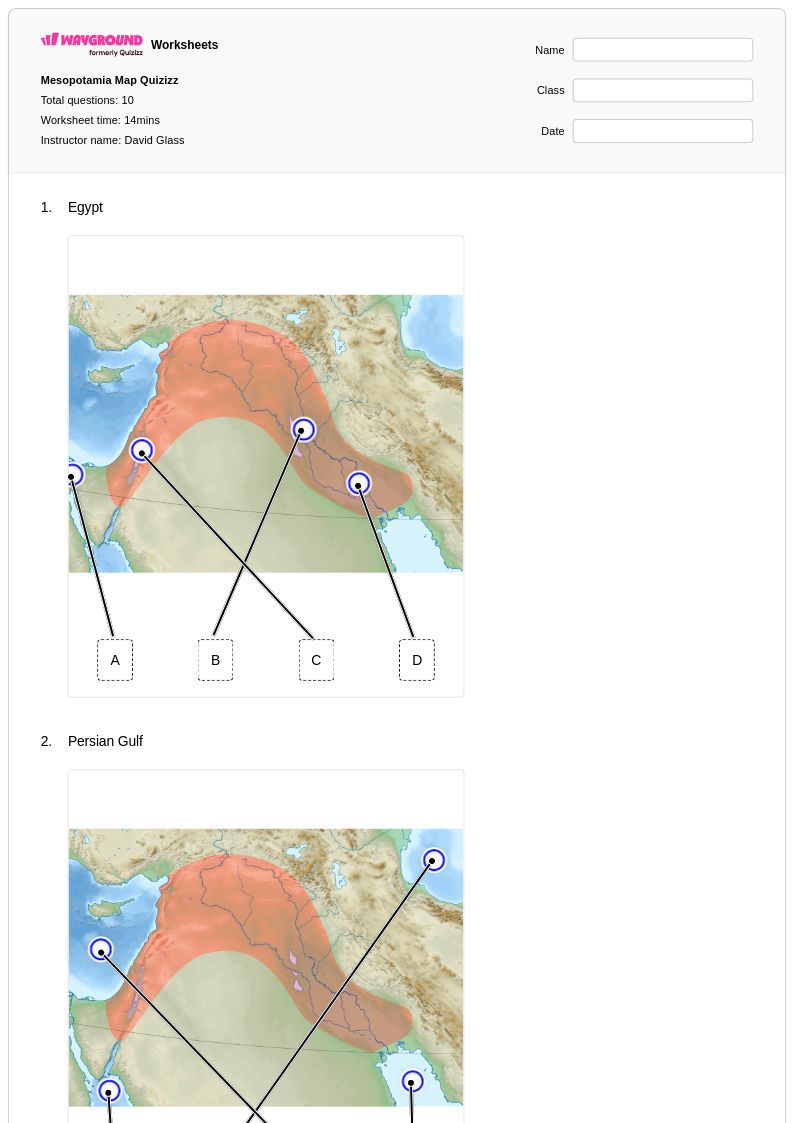
The most common misconception is treating Mesopotamian empires as a single, undifferentiated 'ancient civilization' rather than as distinct political entities with different capitals, rulers, and governing philosophies. Students frequently confuse the Babylonian Empire with the Neo-Babylonian Empire, or attribute Hammurabi's Code to the wrong historical period. Another recurring error is misunderstanding the geographic relationship between the Tigris and Euphrates rivers and how they shaped military strategy, agriculture, and trade routes across all four empires.
How can I use Mesopotamian Empires worksheets in my classroom?
Mesopotamian Empires worksheets on Wayground are available as printable PDFs for traditional classroom distribution and in digital formats for technology-integrated or hybrid learning environments, including the option to host them as a quiz directly on Wayground. Teachers can use them for direct instruction support, independent practice, or structured review before assessments. Each worksheet includes a complete answer key, which reduces prep time and allows for immediate feedback during class.
How do I differentiate Mesopotamian Empires instruction for students at different skill levels?
For students who need additional support, scaffolded worksheets with sentence starters, vocabulary banks, and simplified primary source excerpts reduce cognitive load without removing rigor. Advanced learners benefit from comparative analysis tasks that ask them to connect Mesopotamian innovations — such as written law codes or irrigation systems — to their influence on later civilizations. Wayground's differentiation tools allow teachers to customize worksheets for varying skill levels, and platform accommodations such as read aloud, extended time, and reduced answer choices can be assigned to individual students to meet diverse learning needs.
What topics within Mesopotamian empires should I cover to meet social studies standards?
Most social studies standards at the middle school level expect coverage of the geographic context of Mesopotamia, the political structure of at least two or three major empires, and the cultural and legal contributions of the region — particularly Hammurabi's Code. Military innovations of the Assyrian Empire and the architectural achievements associated with Babylon, including the Hanging Gardens, are also commonly assessed. Comparative governance studies, where students analyze how different empires organized power and managed subject populations, address higher-order thinking standards in most state frameworks.