Explore comprehensive Class 8 mixture worksheets and printables that help students master physical science concepts through engaging practice problems, free PDF downloads, and detailed answer keys from Wayground's educational collection.
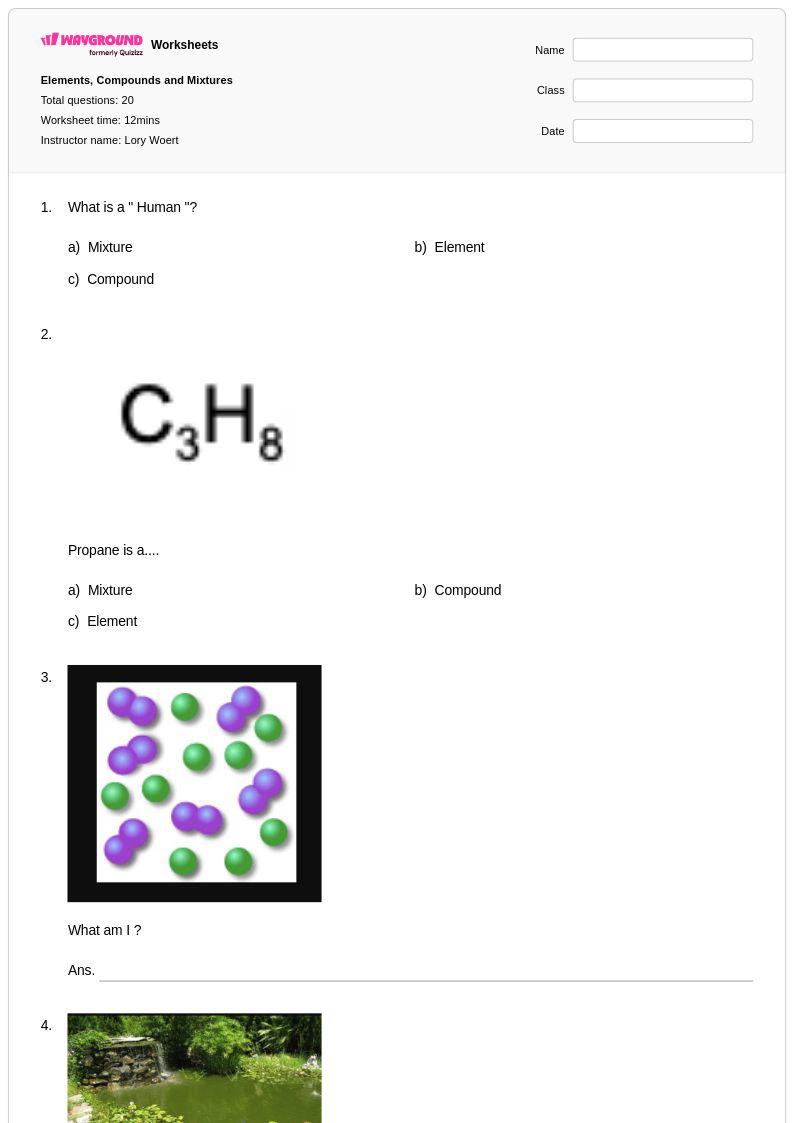
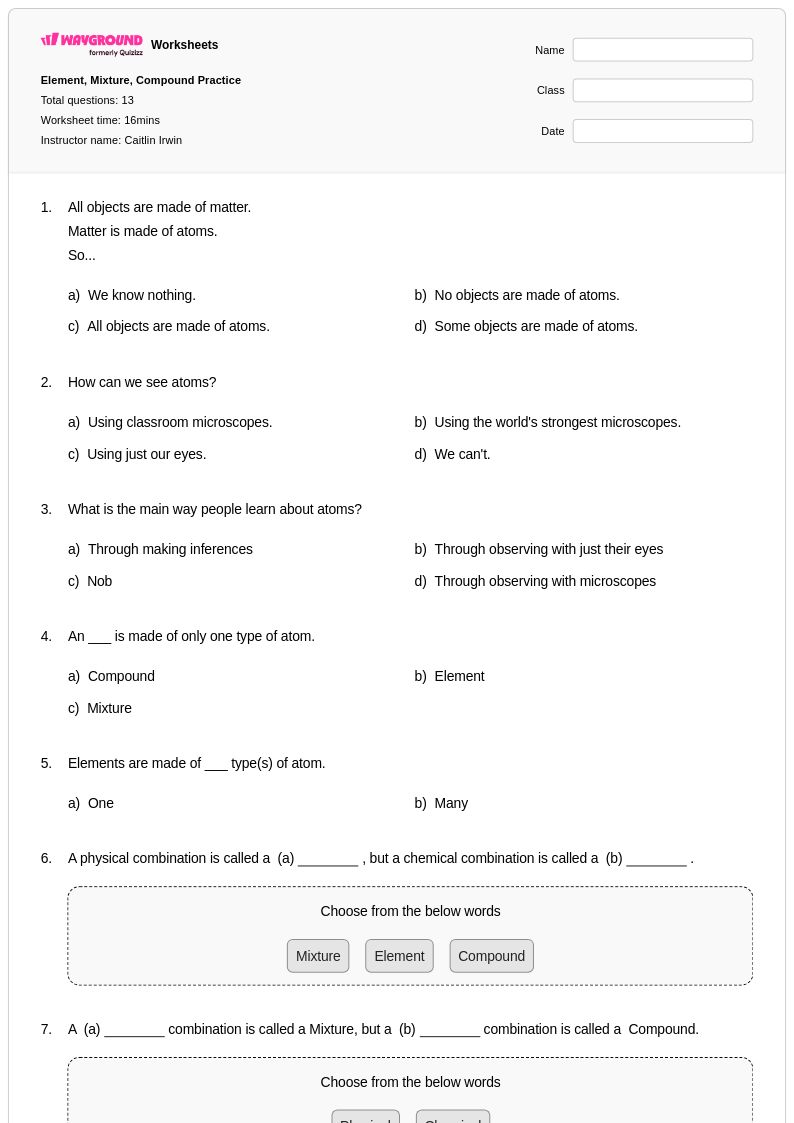
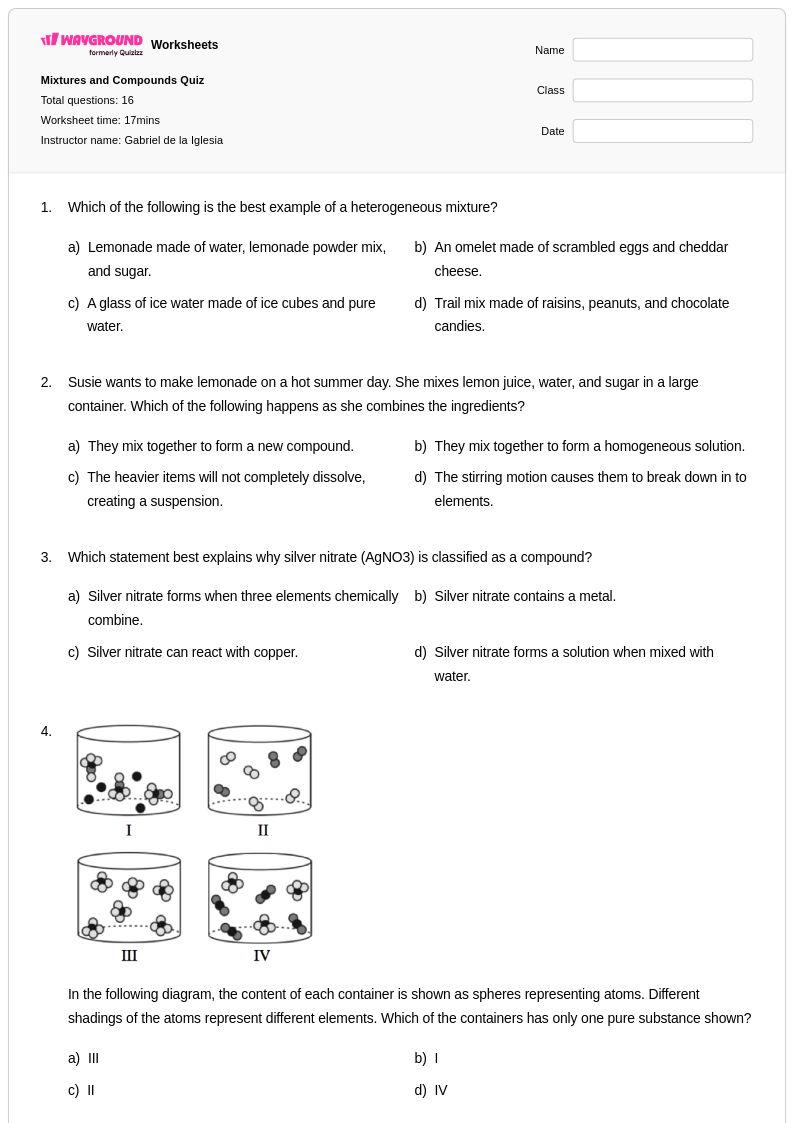
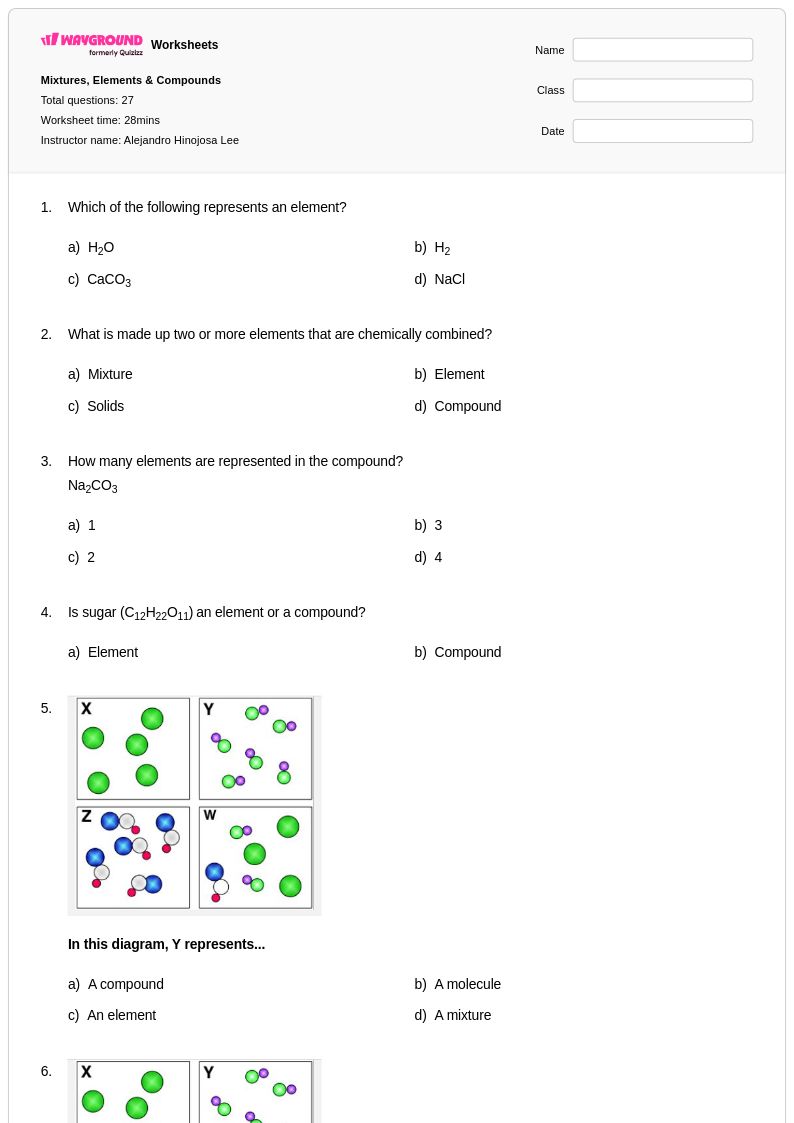
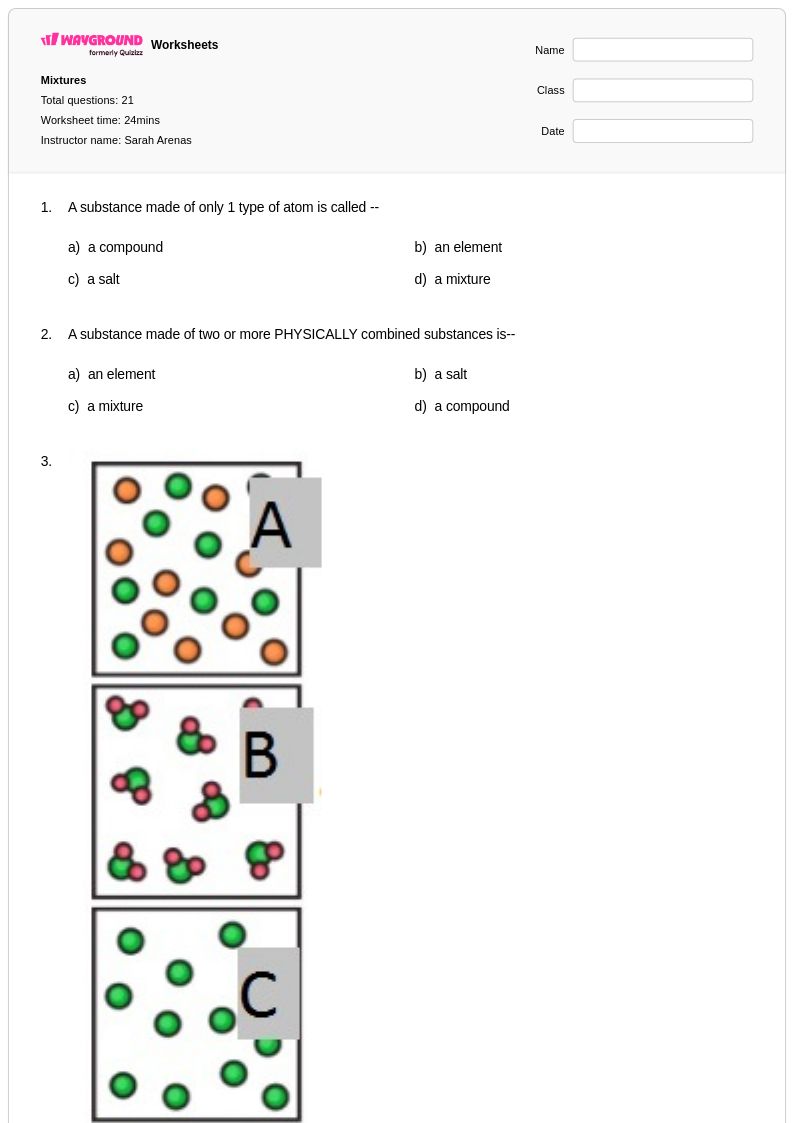
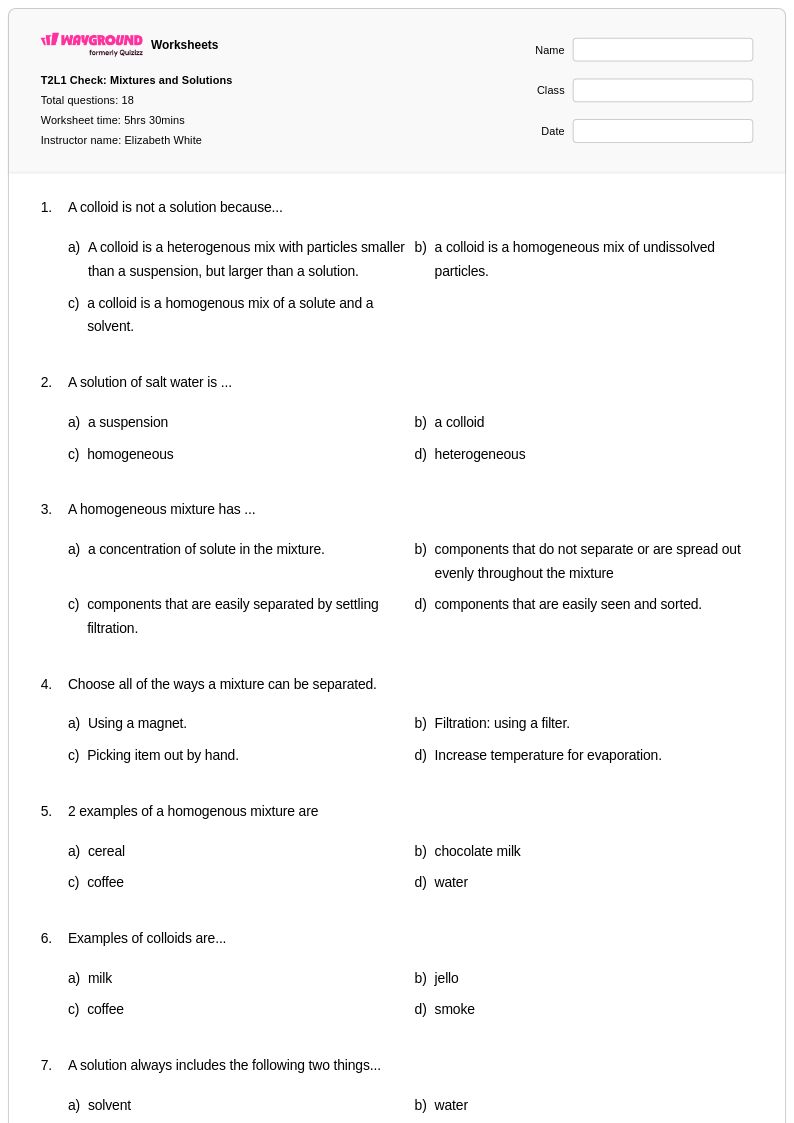
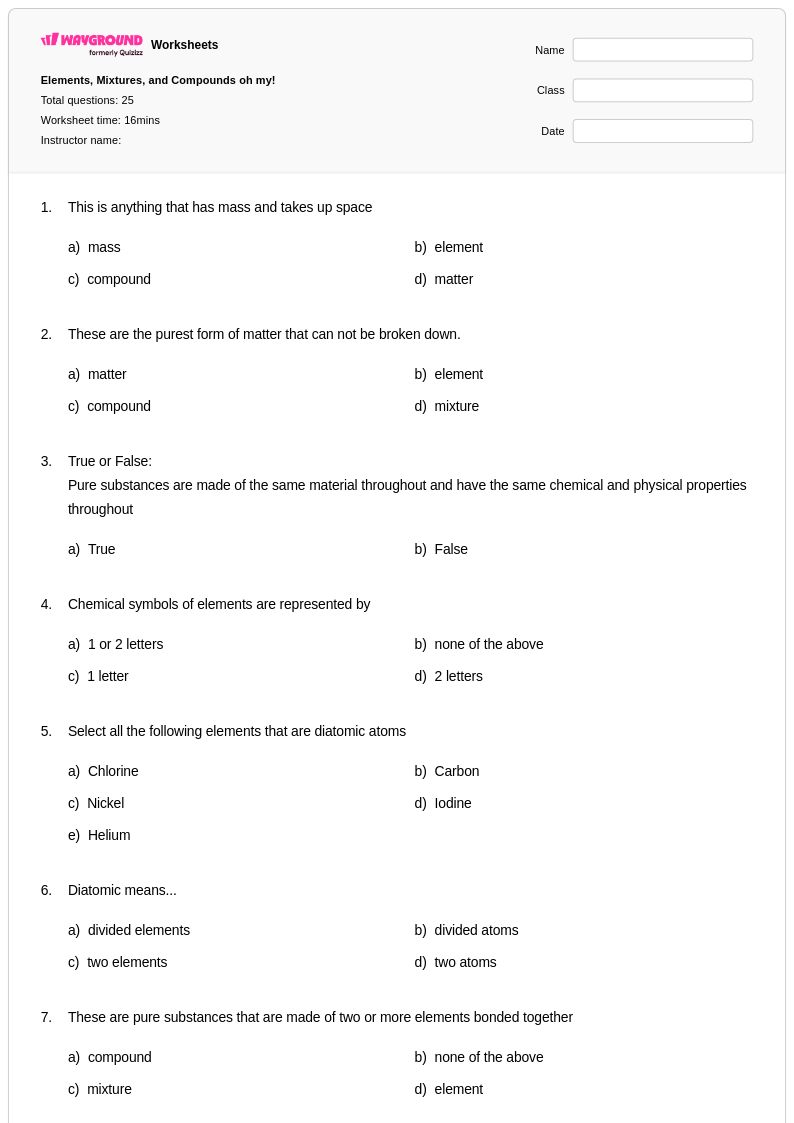
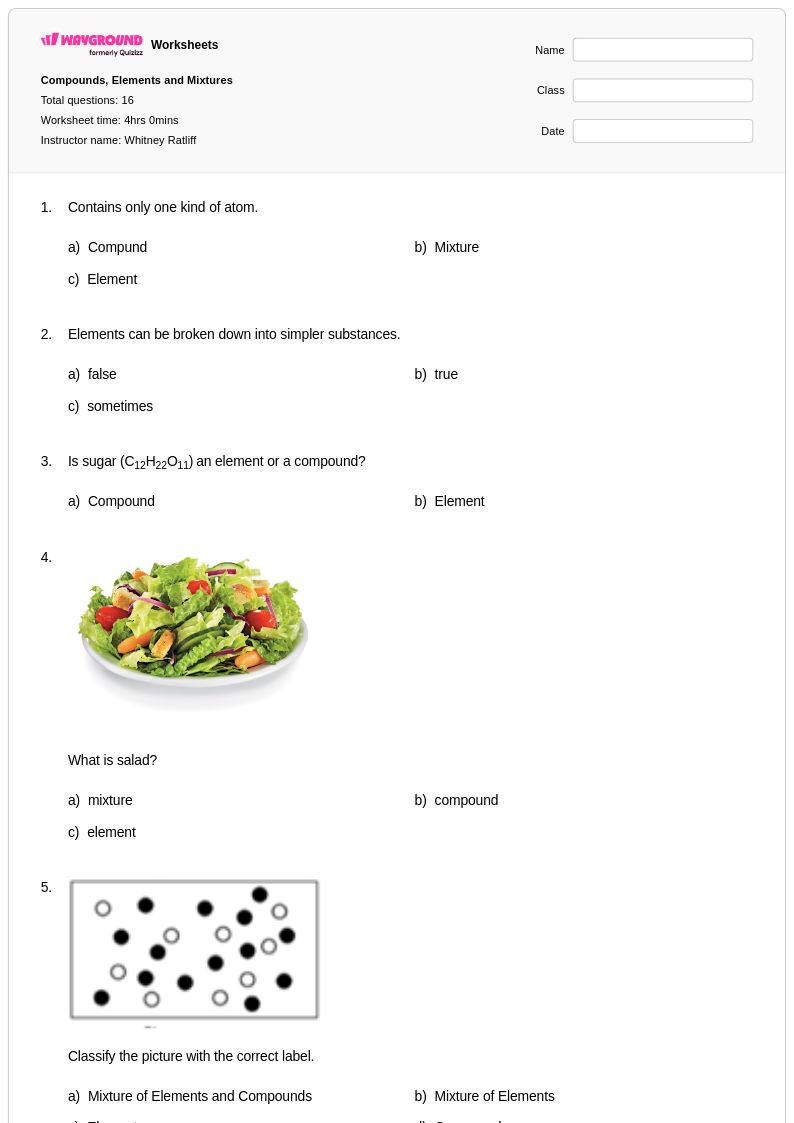
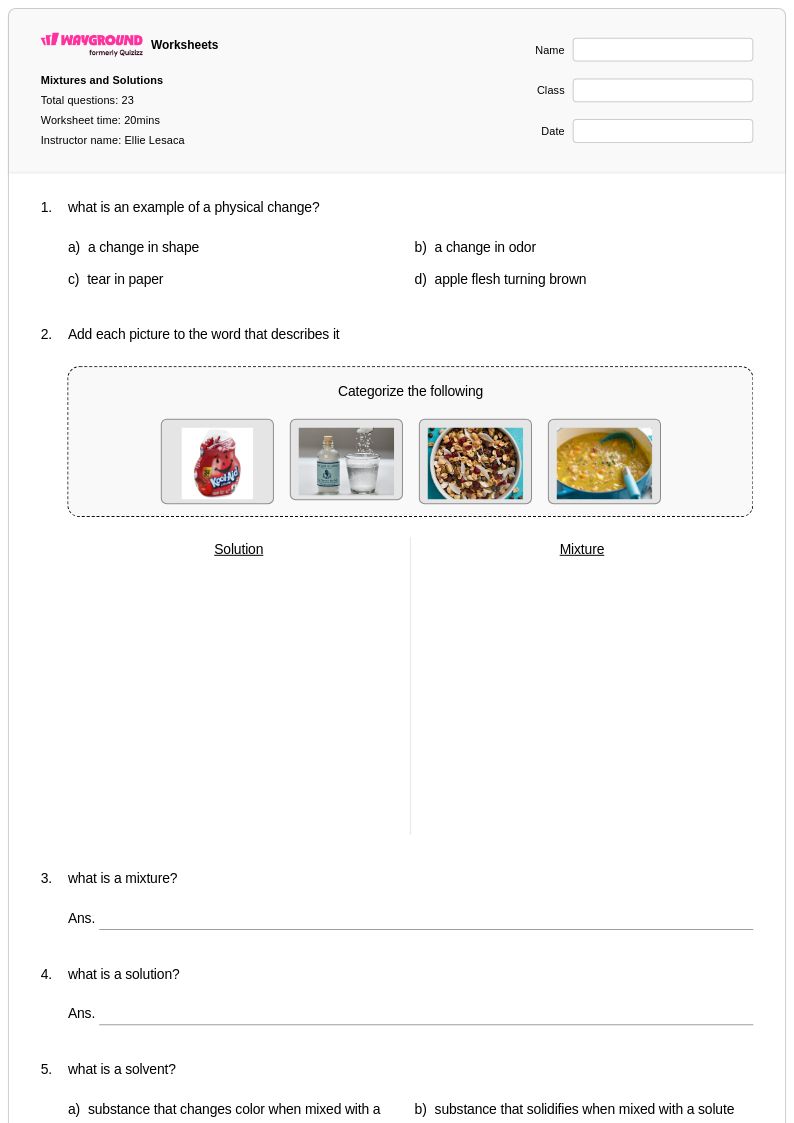
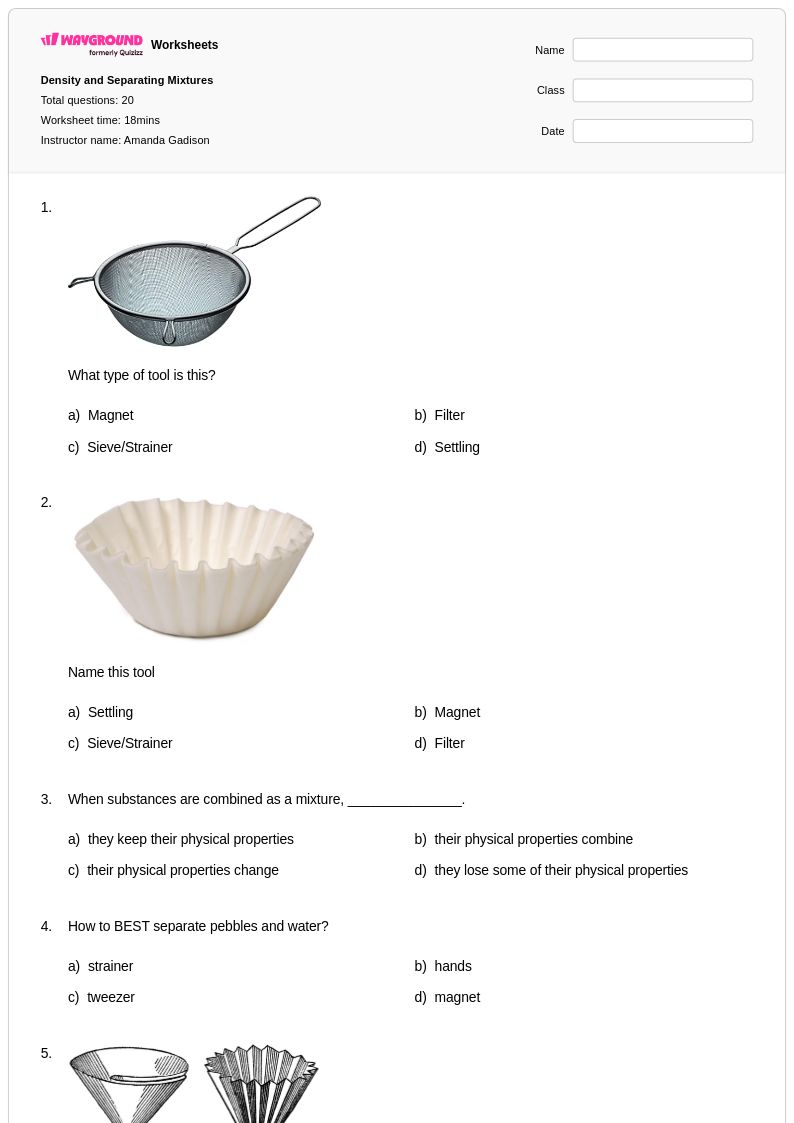
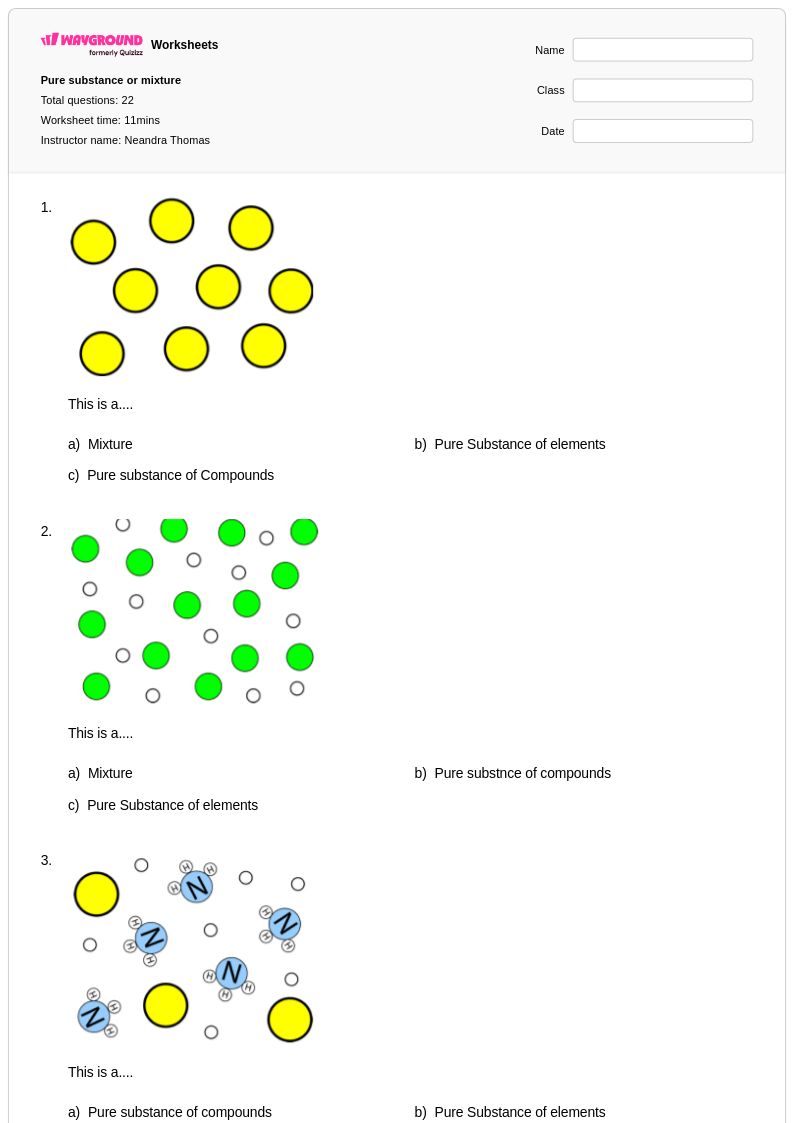
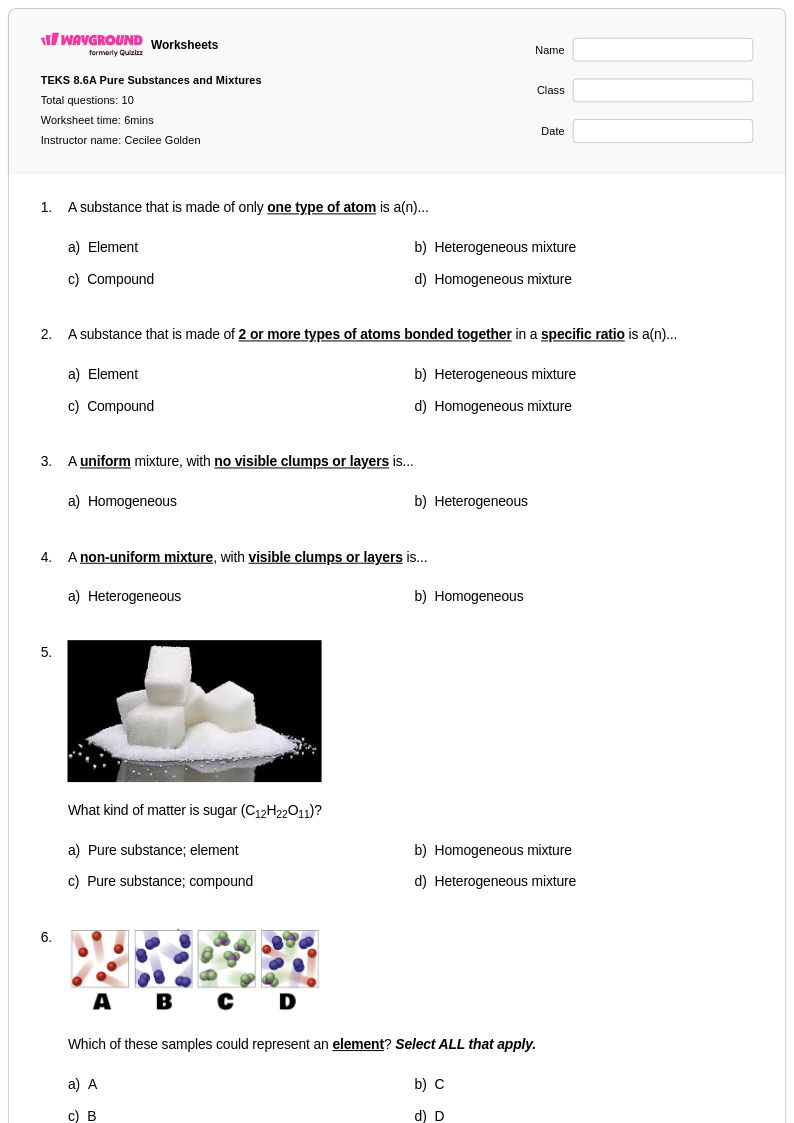
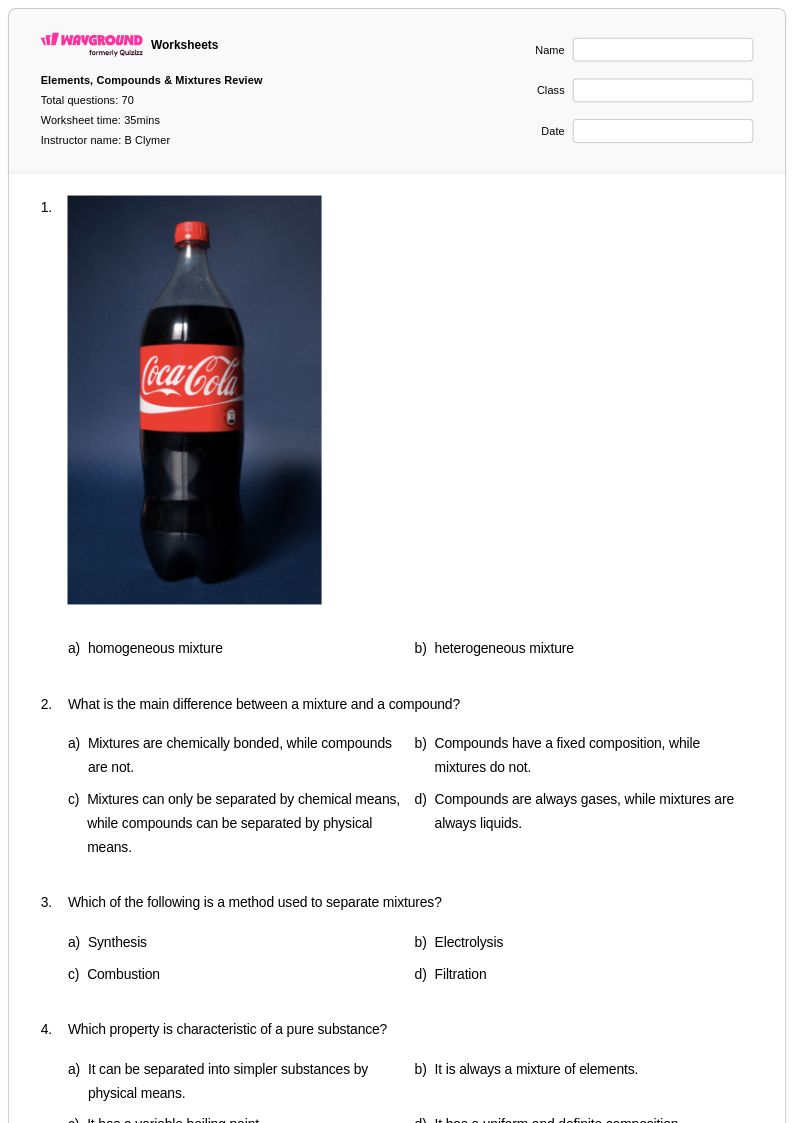
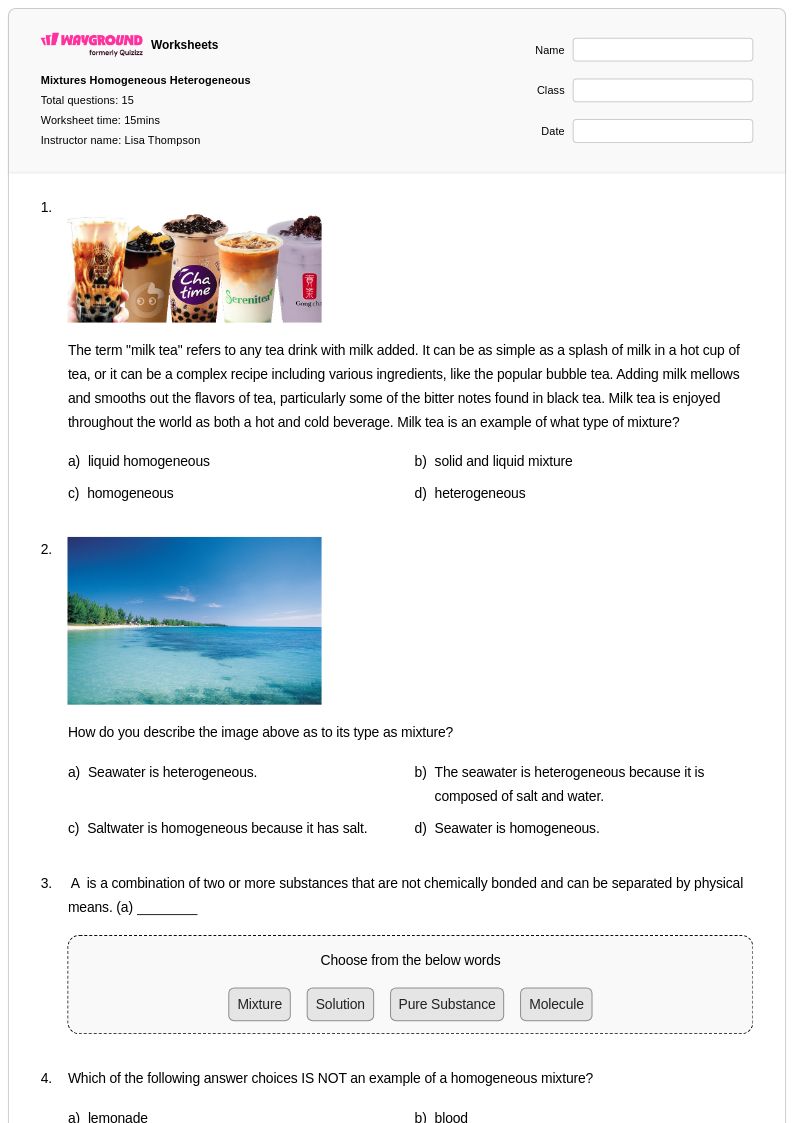
Mixture worksheets for Class 8 students available through Wayground (formerly Quizizz) provide comprehensive coverage of this fundamental physical science concept, helping students master the distinction between heterogeneous and homogeneous mixtures while developing critical analytical skills. These expertly designed resources guide eighth-grade learners through identifying mixture types, understanding separation techniques such as filtration and distillation, and recognizing real-world applications of mixture science in everyday materials like soil, air, and food products. Each worksheet collection includes detailed answer keys that support both independent study and classroom instruction, with free printables offering practice problems that range from basic mixture identification to complex separation method selection, ensuring students build confidence in applying scientific reasoning to classify and analyze different types of matter combinations.
Wayground's extensive library of teacher-created mixture worksheets draws from millions of educational resources, providing educators with robust search and filtering capabilities to locate materials perfectly aligned with Class 8 physical science standards and individual classroom needs. The platform's differentiation tools enable teachers to customize worksheet difficulty levels and content focus, supporting both remediation for struggling learners and enrichment opportunities for advanced students ready to explore more sophisticated mixture concepts. Available in both printable pdf formats for traditional paper-based learning and digital formats for interactive classroom technology, these versatile resources streamline lesson planning while providing the flexibility educators need to address diverse learning styles and implement effective skill practice sessions that reinforce mixture terminology, separation techniques, and scientific observation skills essential for physical science mastery.
FAQs
How do I teach students the difference between homogeneous and heterogeneous mixtures?
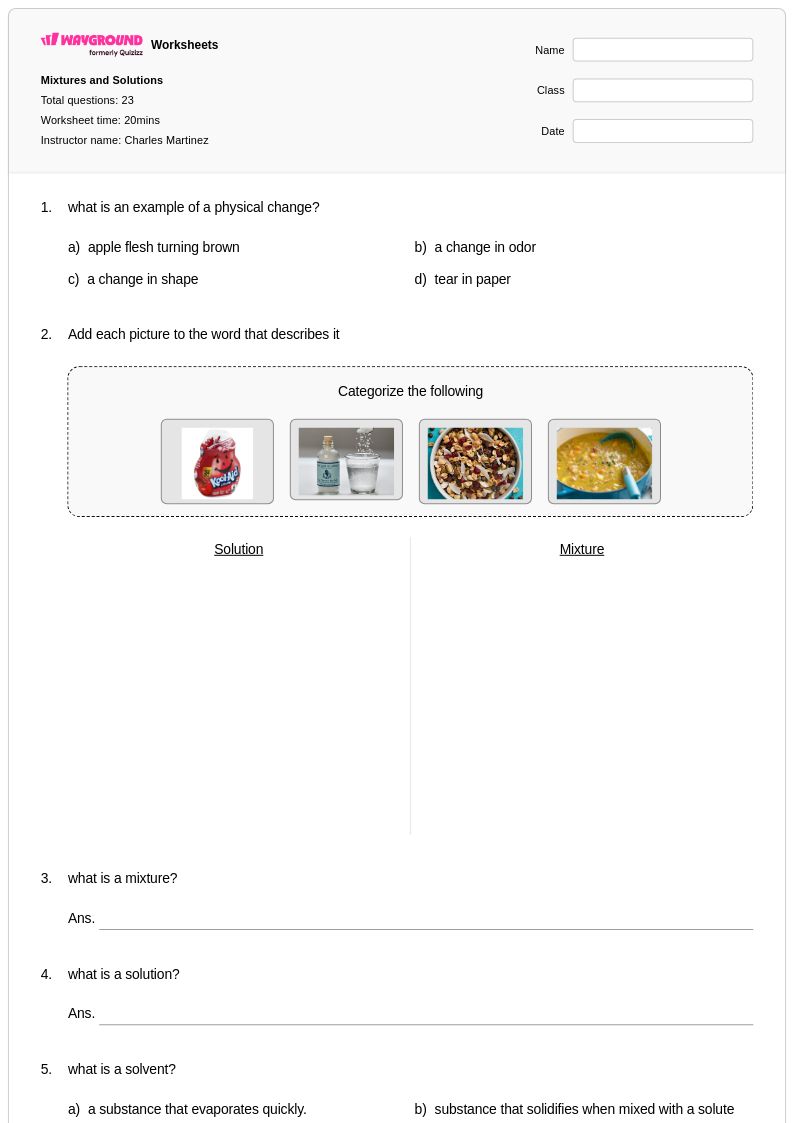
Start with visible, everyday examples: a bowl of trail mix is heterogeneous because its components are visibly distinct, while saltwater is homogeneous because it has a uniform composition throughout. Have students sort household items into categories before introducing formal vocabulary. Reinforcing the concept with classification tasks — where students examine particle distribution and identify mixture type — helps cement the distinction before moving to separation techniques.
What are the best activities for practicing mixture concepts in physical science?
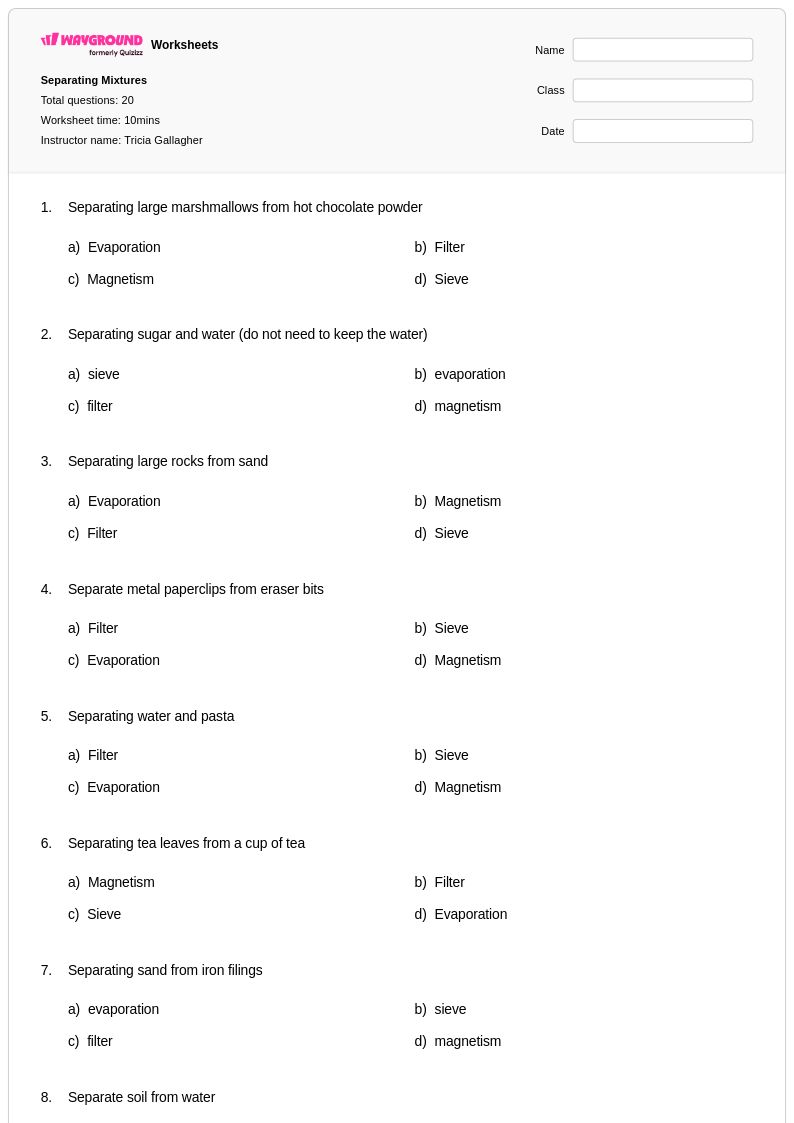
Practice problems that ask students to identify mixture types in real-world scenarios are particularly effective because they connect abstract classification skills to observable phenomena. Exercises involving separation techniques — such as filtration, evaporation, magnetism, and distillation — give students a functional understanding of why mixture properties matter. Worksheets that combine identification, analysis, and application in a single task help students build layered understanding rather than isolated recall.
What common mistakes do students make when learning about mixtures?
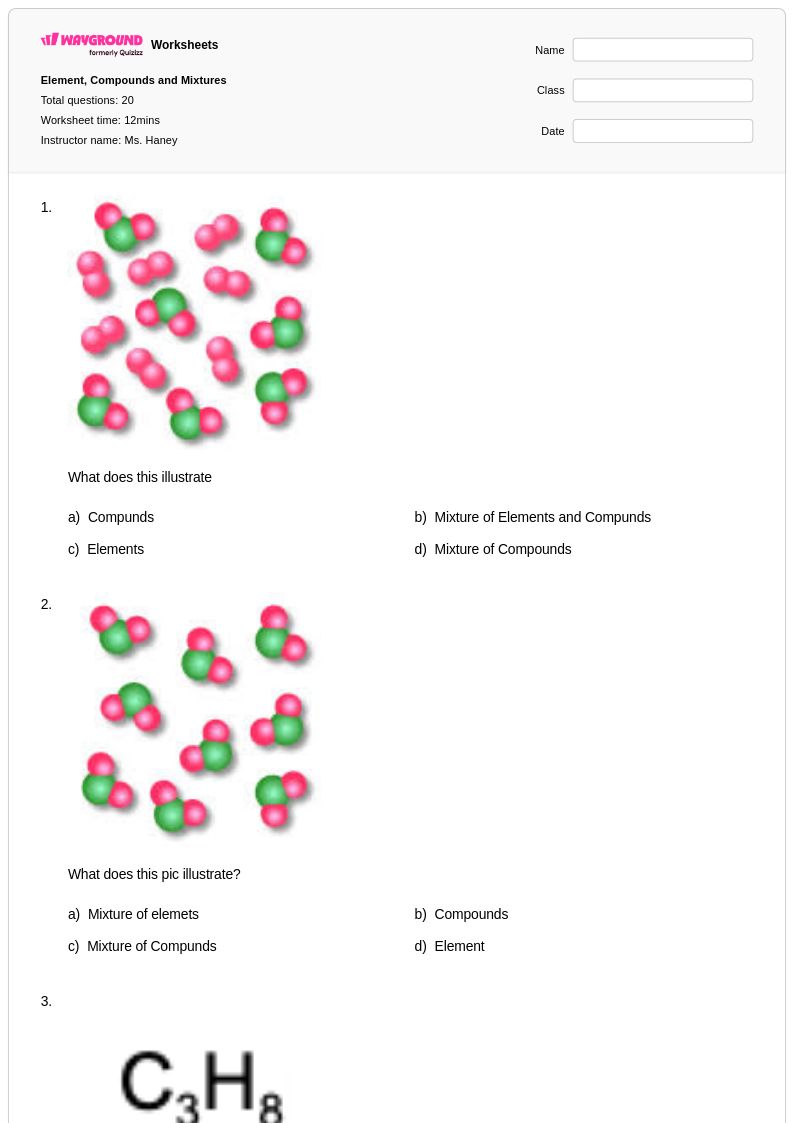
The most frequent misconception is confusing mixtures with compounds — students often assume that any combination of substances results in a new substance with different properties. Another common error is misclassifying colloids and suspensions, since these fall between clearly homogeneous and clearly heterogeneous categories. Students also frequently struggle to distinguish physical separation from chemical reaction, which matters when applying separation techniques to mixture problems.
How do mixture worksheets help students understand separation techniques?
Separation technique problems require students to apply knowledge of mixture properties rather than simply recall definitions, which builds deeper scientific reasoning. Effective worksheets present a mixture and ask students to select and justify the appropriate technique — such as filtration for insoluble solids or evaporation for dissolved salts — based on particle size, solubility, and magnetic properties. This format bridges conceptual understanding with real-world problem solving.
How do I use Wayground mixture worksheets in my classroom?
Wayground mixture worksheets are available as printable PDFs for traditional classroom use and in digital formats for technology-integrated or remote learning environments, including the option to host them as a quiz directly on Wayground. Each worksheet includes a complete answer key, making them practical for independent practice, guided instruction, or assessment. Teachers can also apply student-level accommodations such as extended time, read aloud, or reduced answer choices to support diverse learners without disrupting the rest of the class.
How do I differentiate mixture worksheets for students at different skill levels?
Differentiation for mixture topics can mean adjusting the complexity of scenarios — from simple two-component mixtures to multi-phase systems — or modifying how much scaffolding students receive. On Wayground, teachers can assign individual accommodations such as reduced answer choices for students who need lower cognitive load, or read aloud support for students with reading challenges, while other students work with default settings. These accommodations are reusable across sessions and can be configured from the Students or Classes tab.