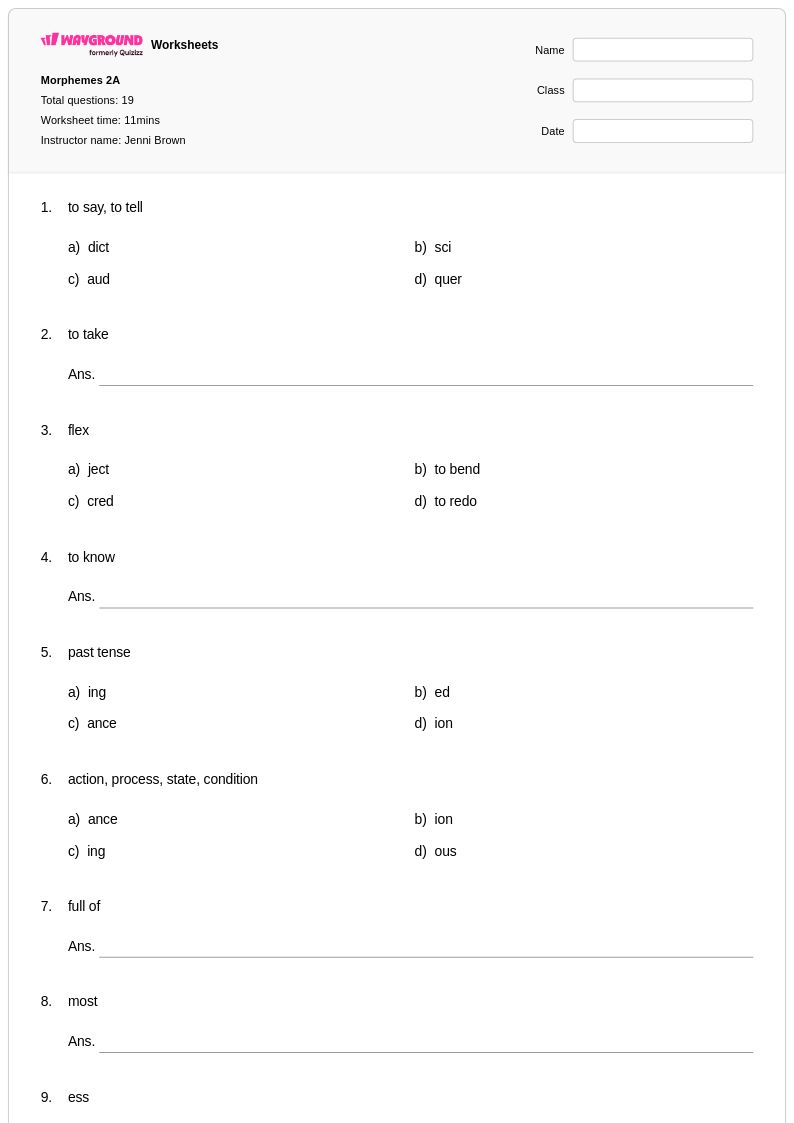
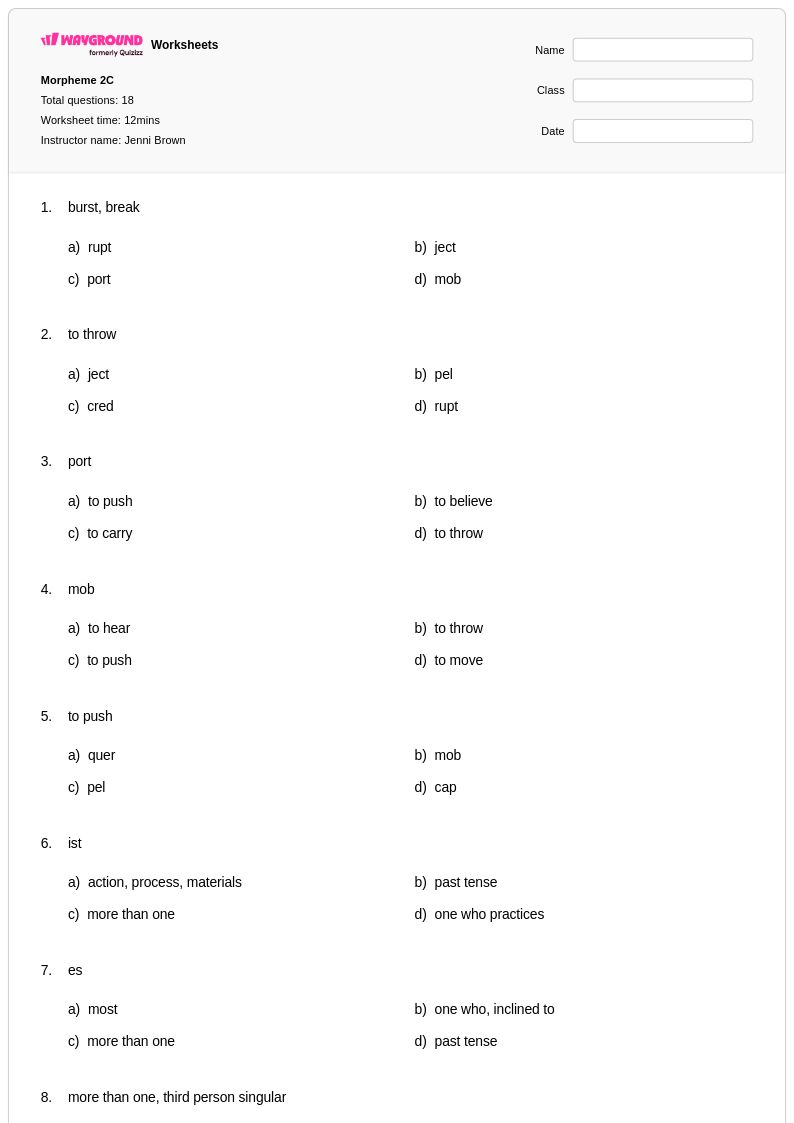
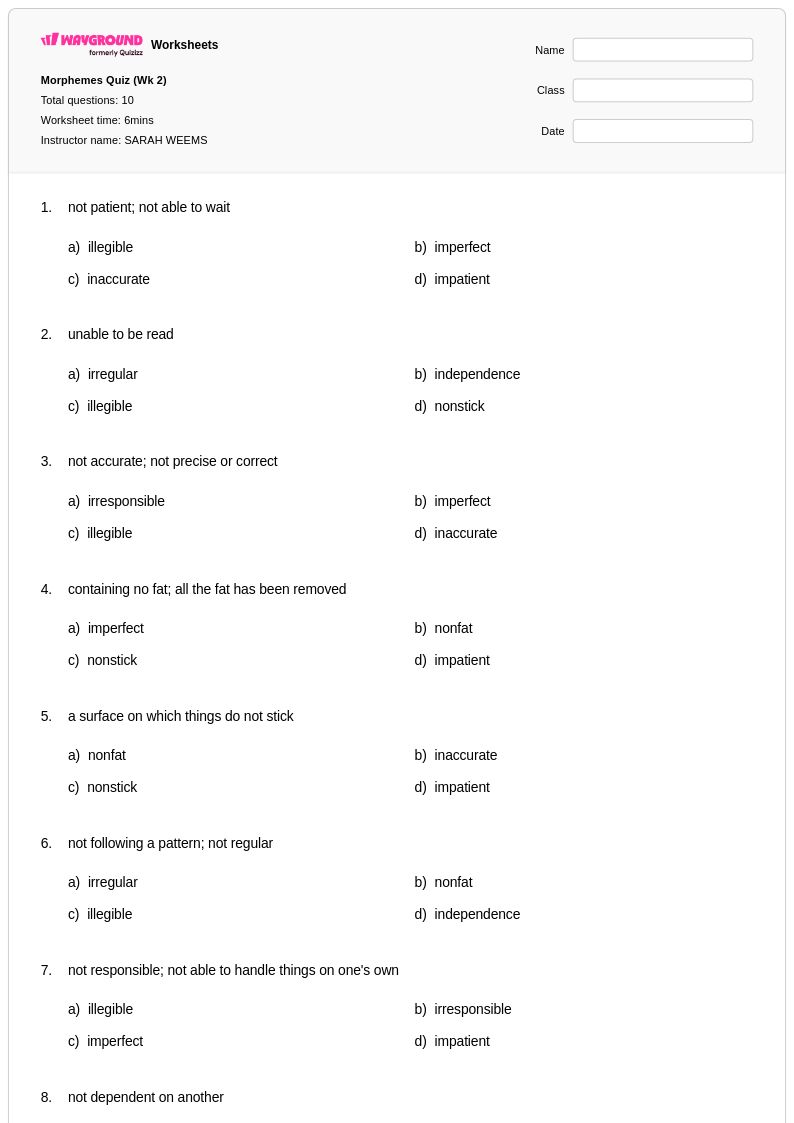
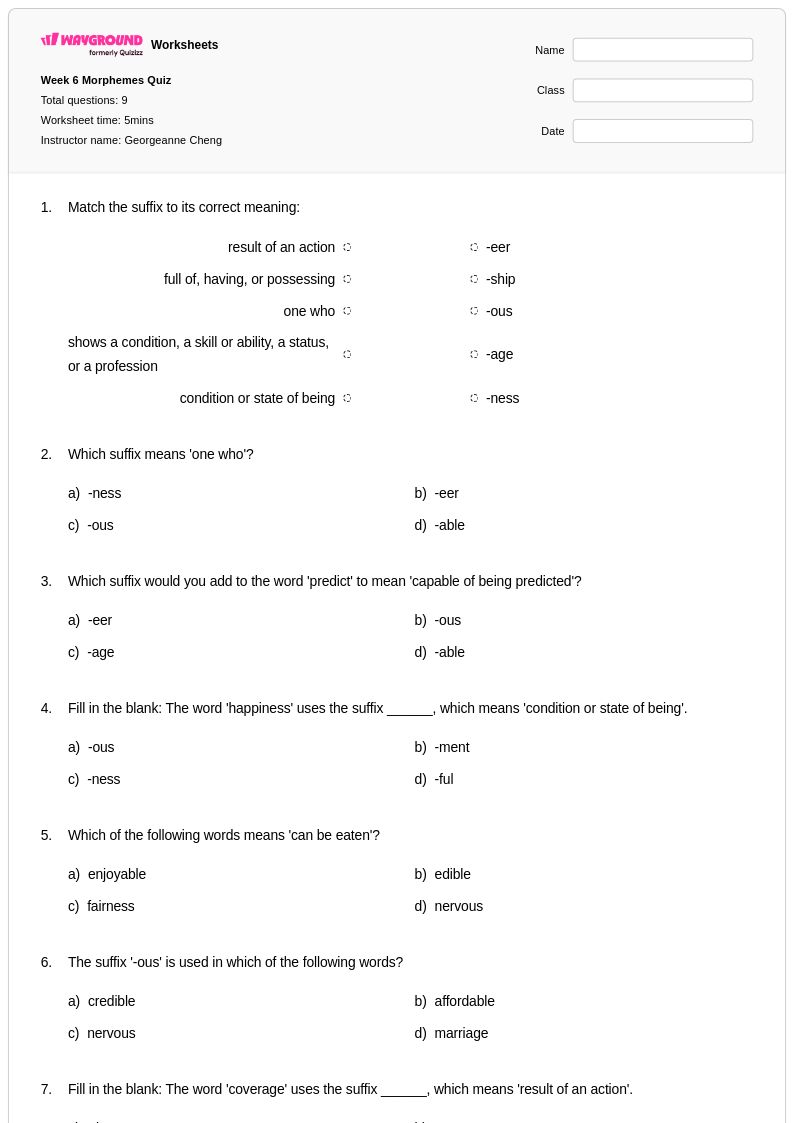
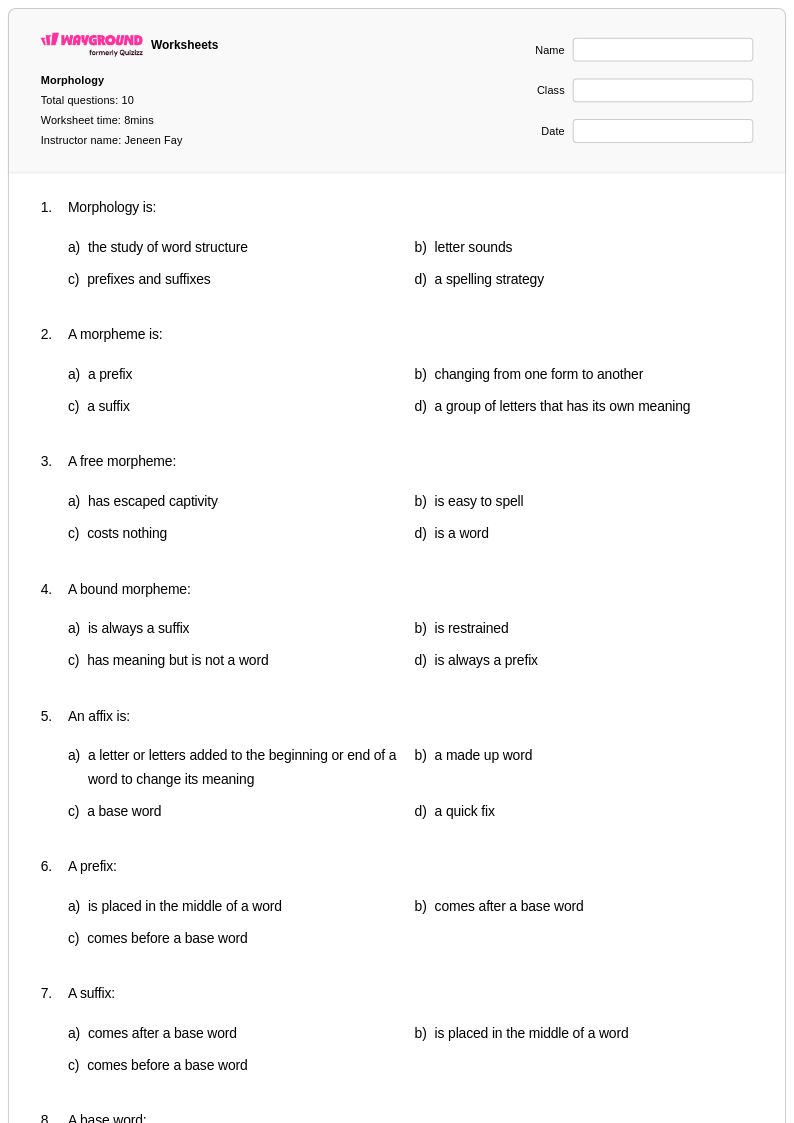
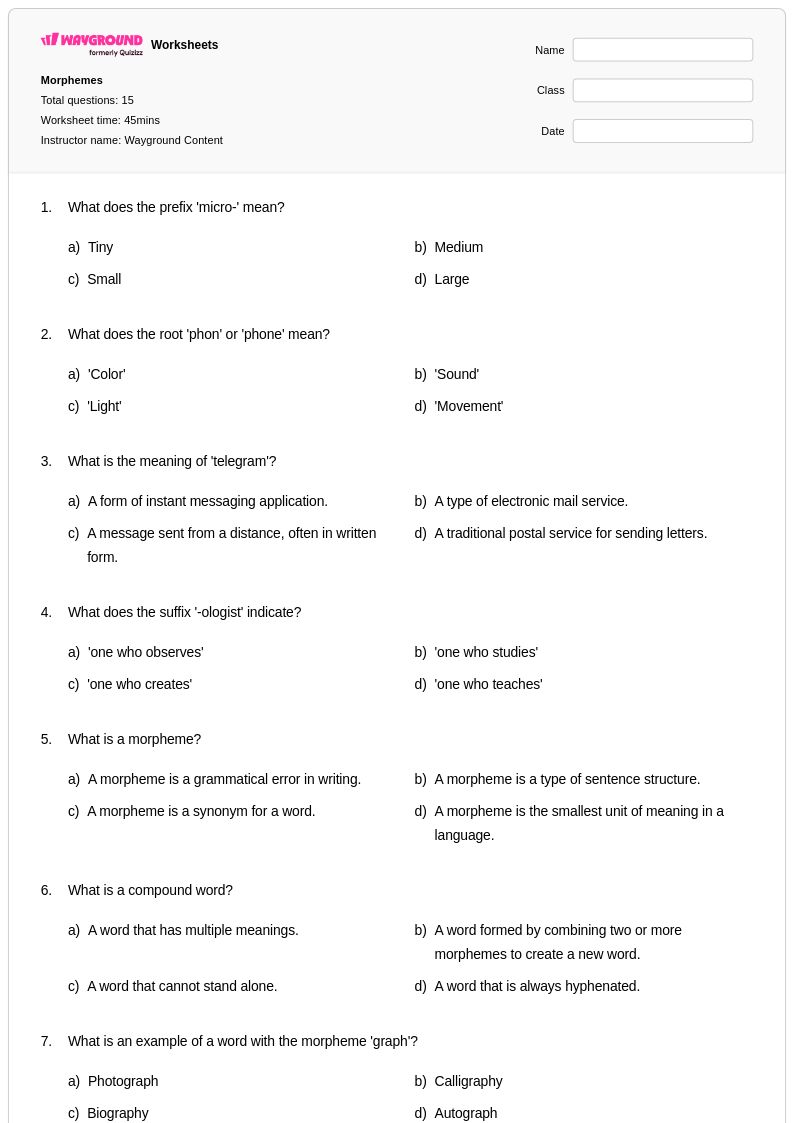
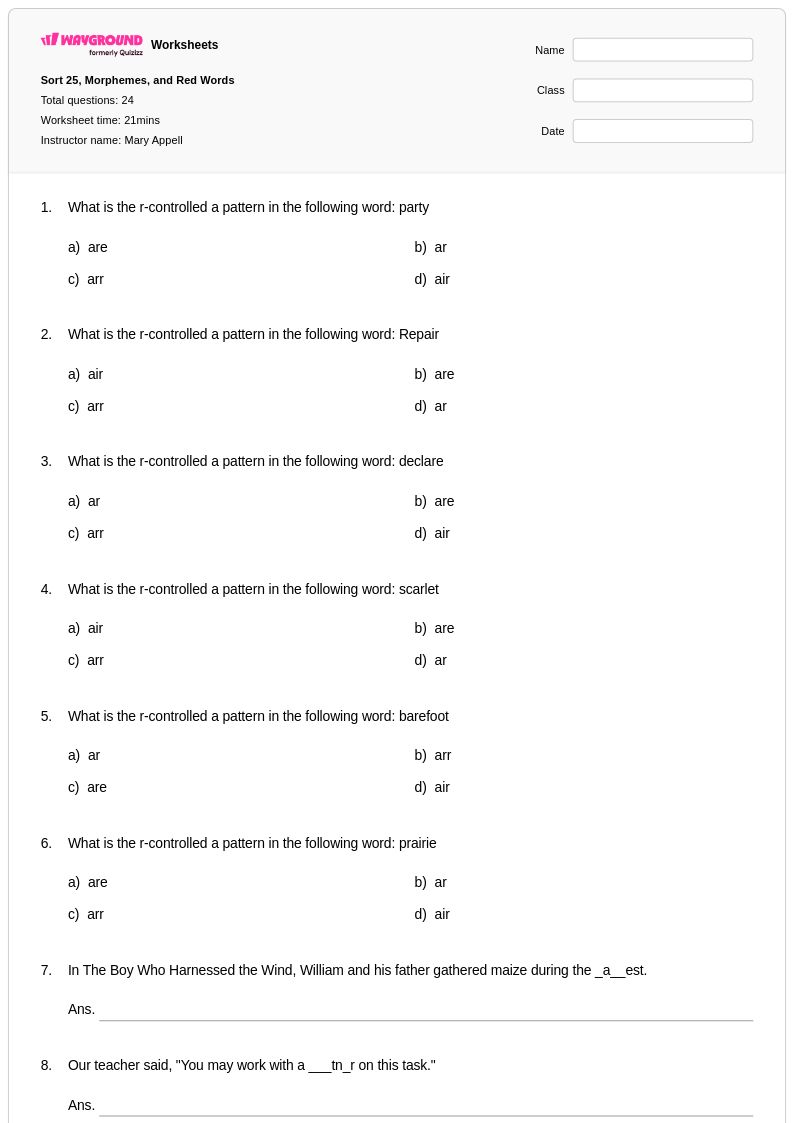
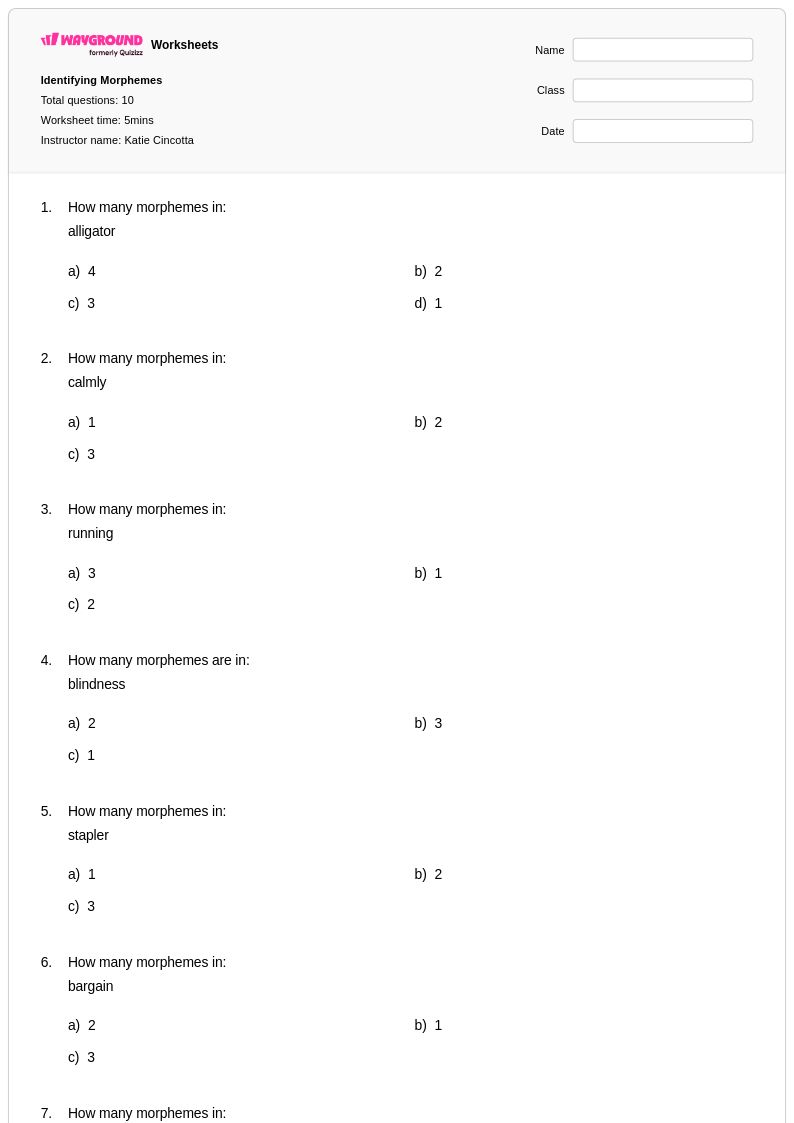
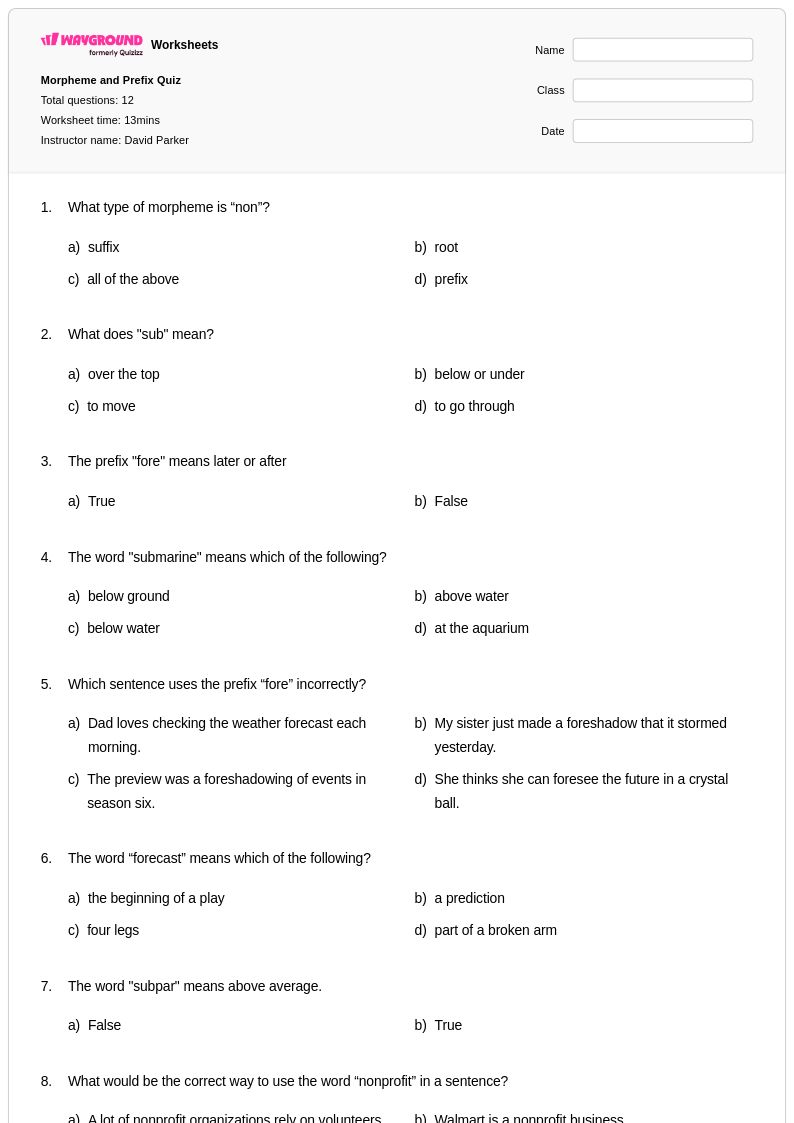
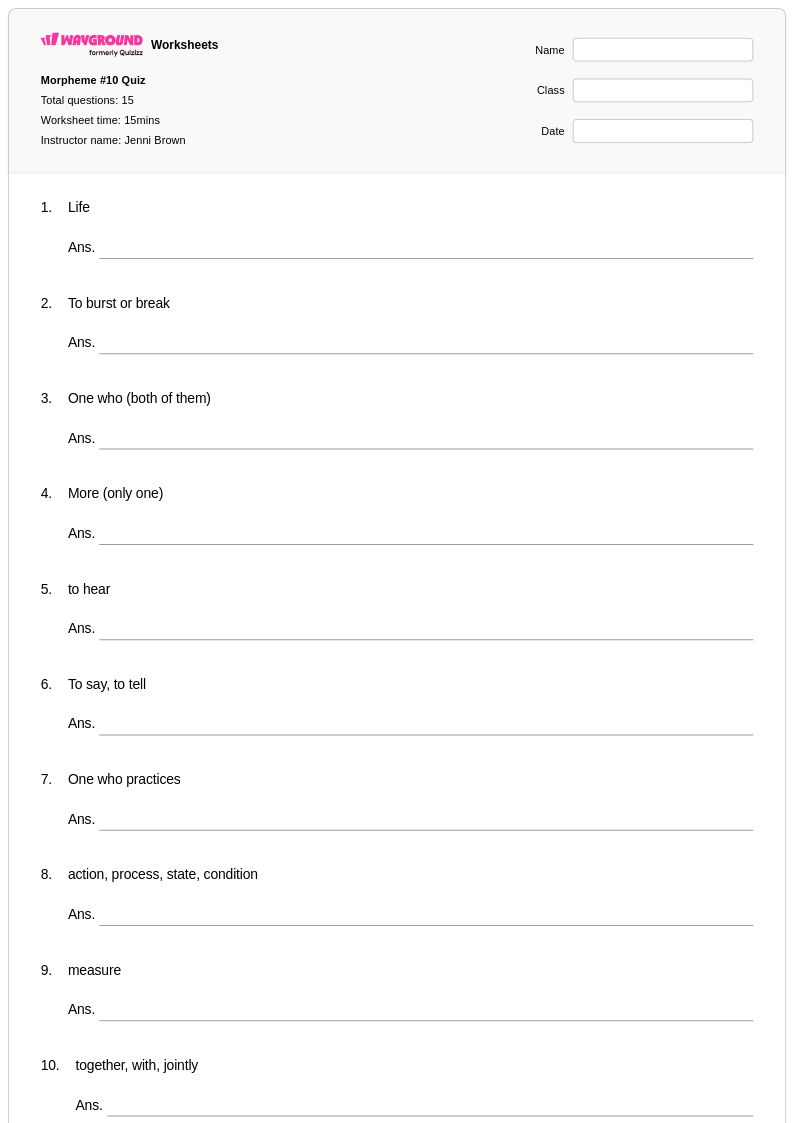
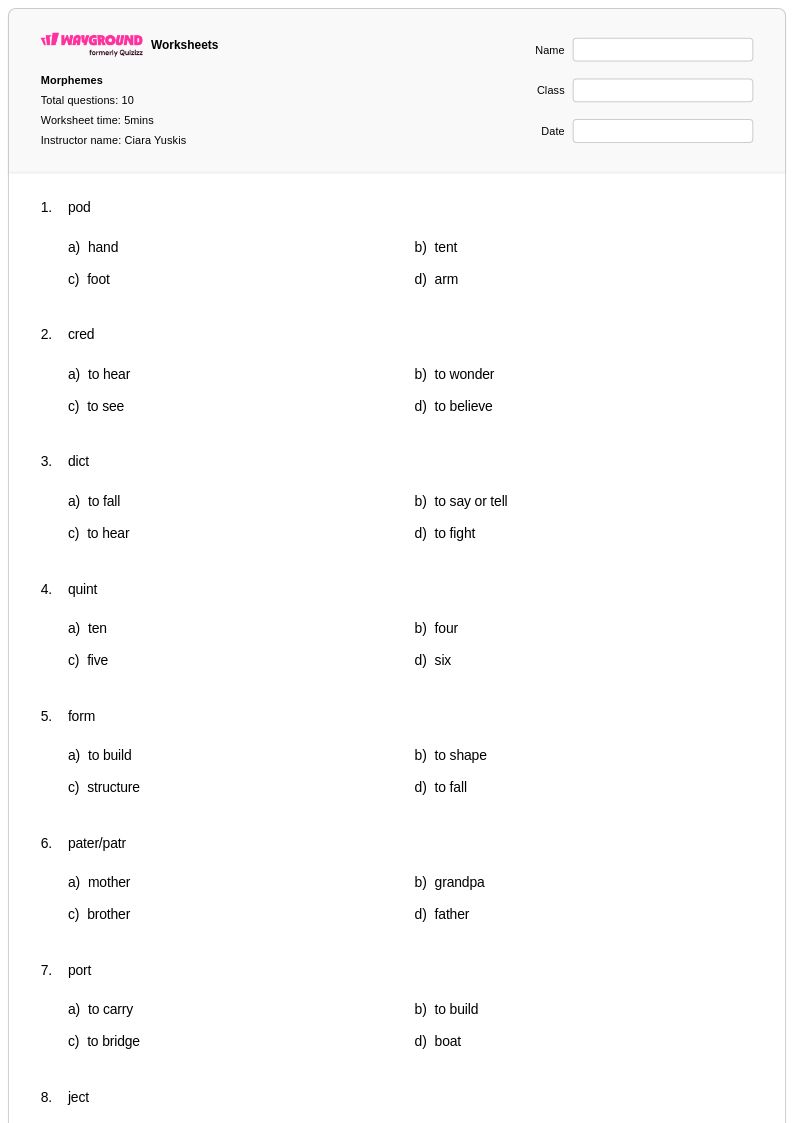
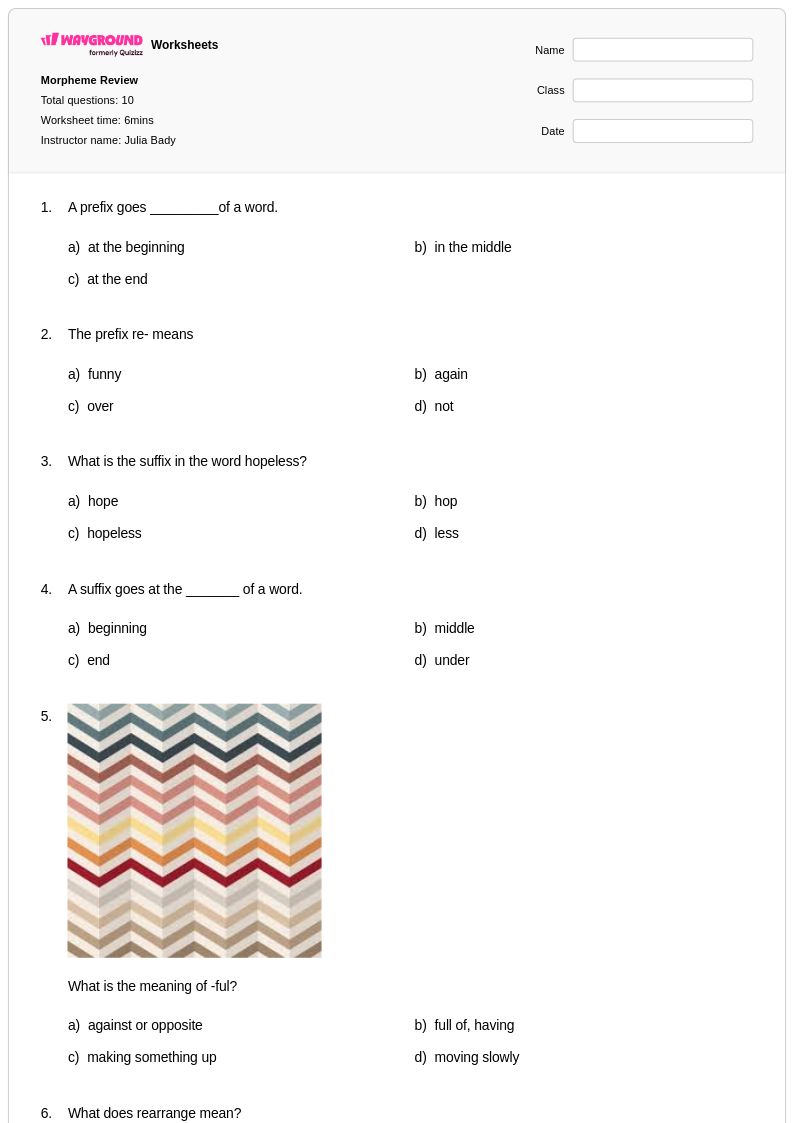
Class 4 morphemes worksheets from Wayground help students master word parts and building blocks through engaging printables, practice problems, and comprehensive answer keys for effective vocabulary development.
Explore printable Morphemes worksheets for Class 4
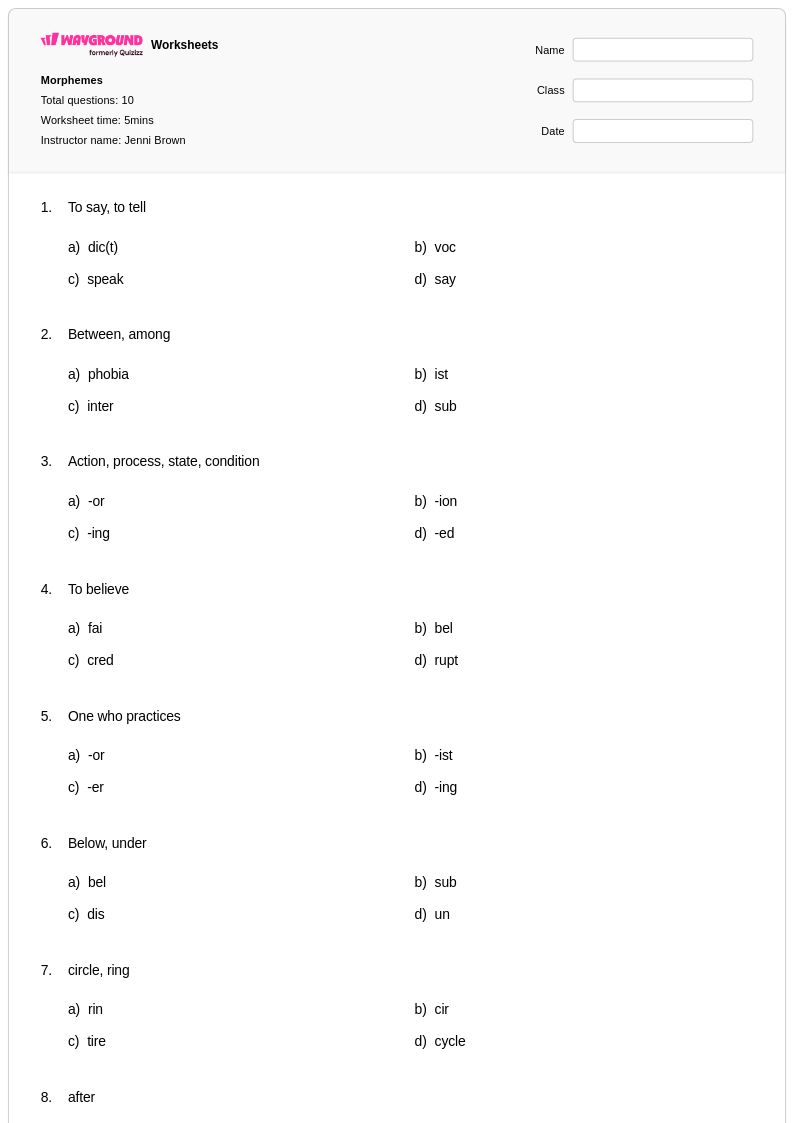
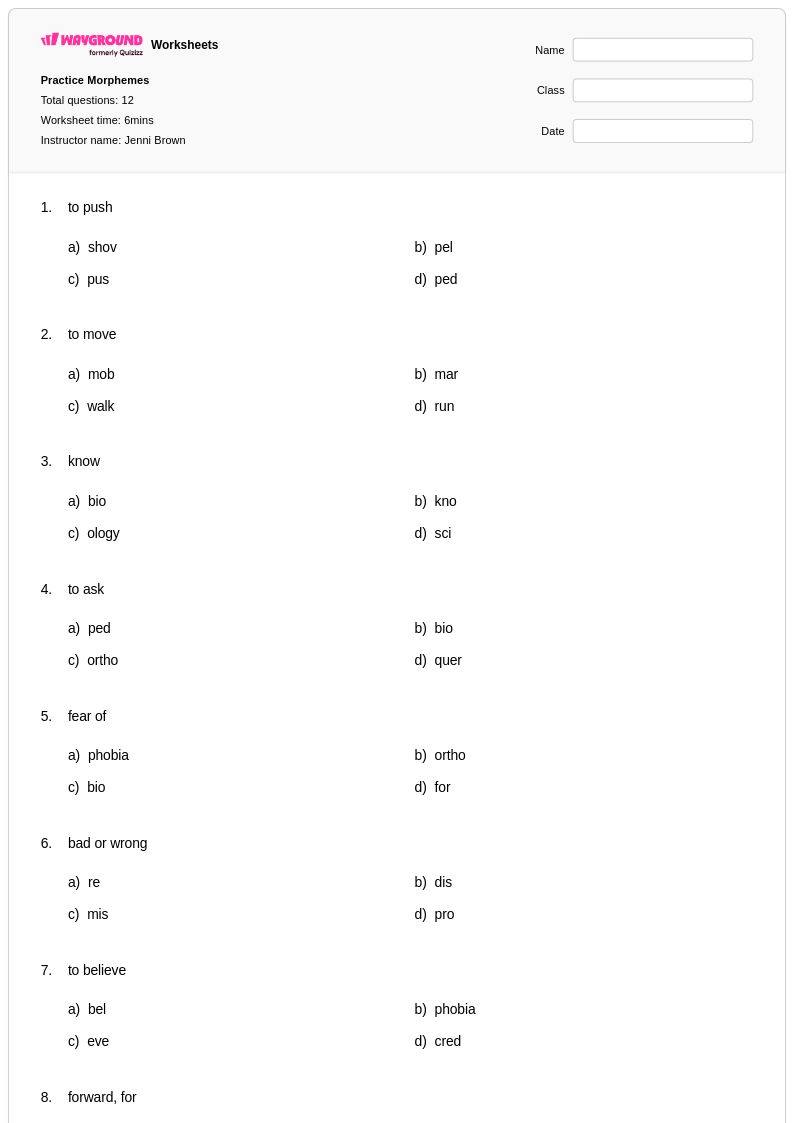
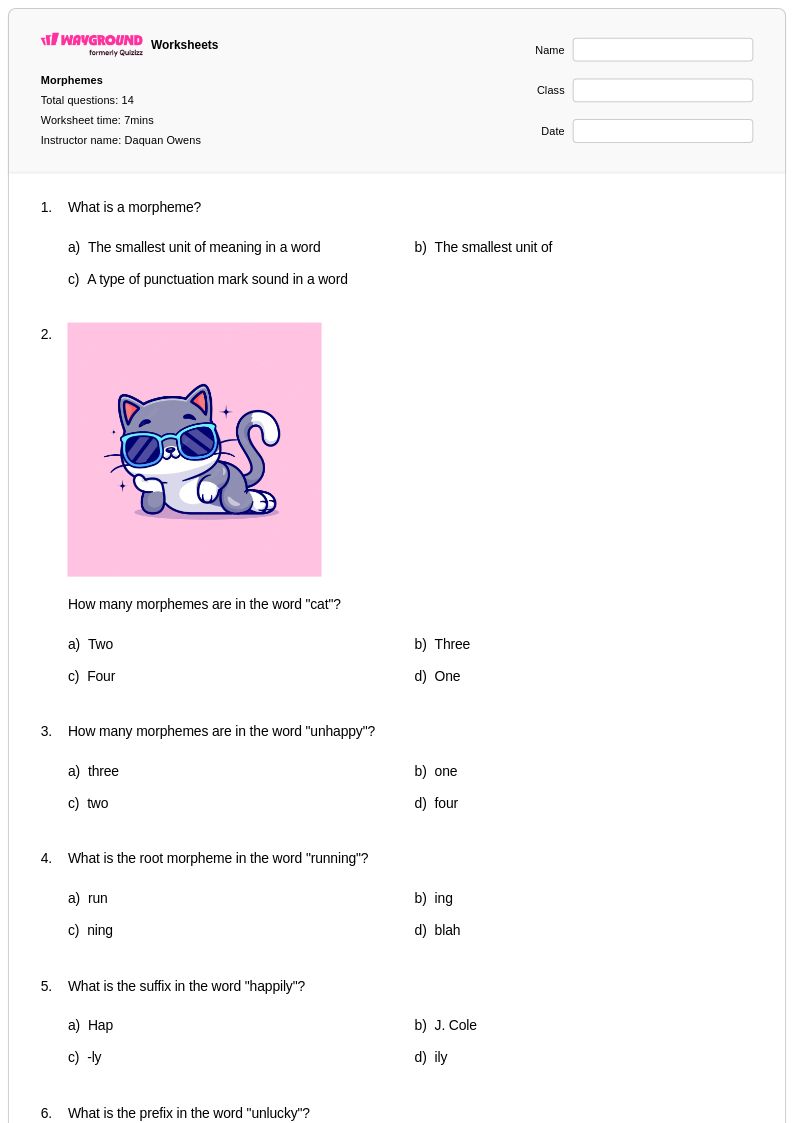
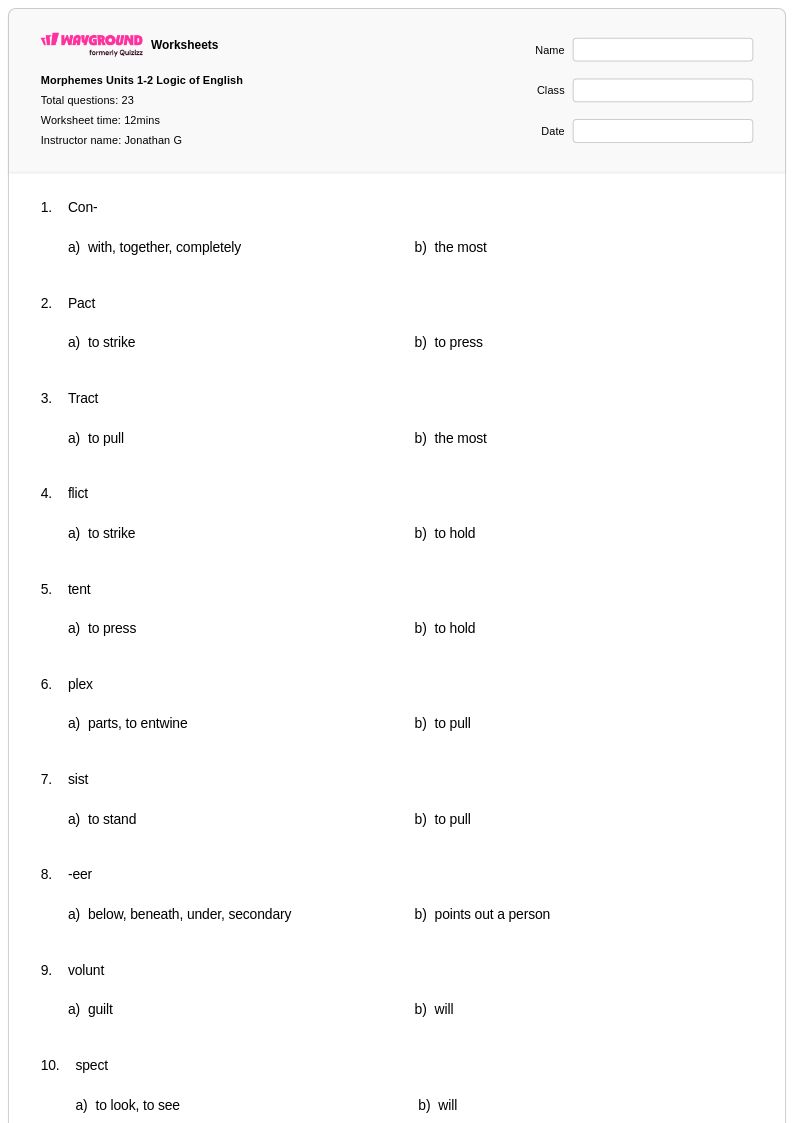
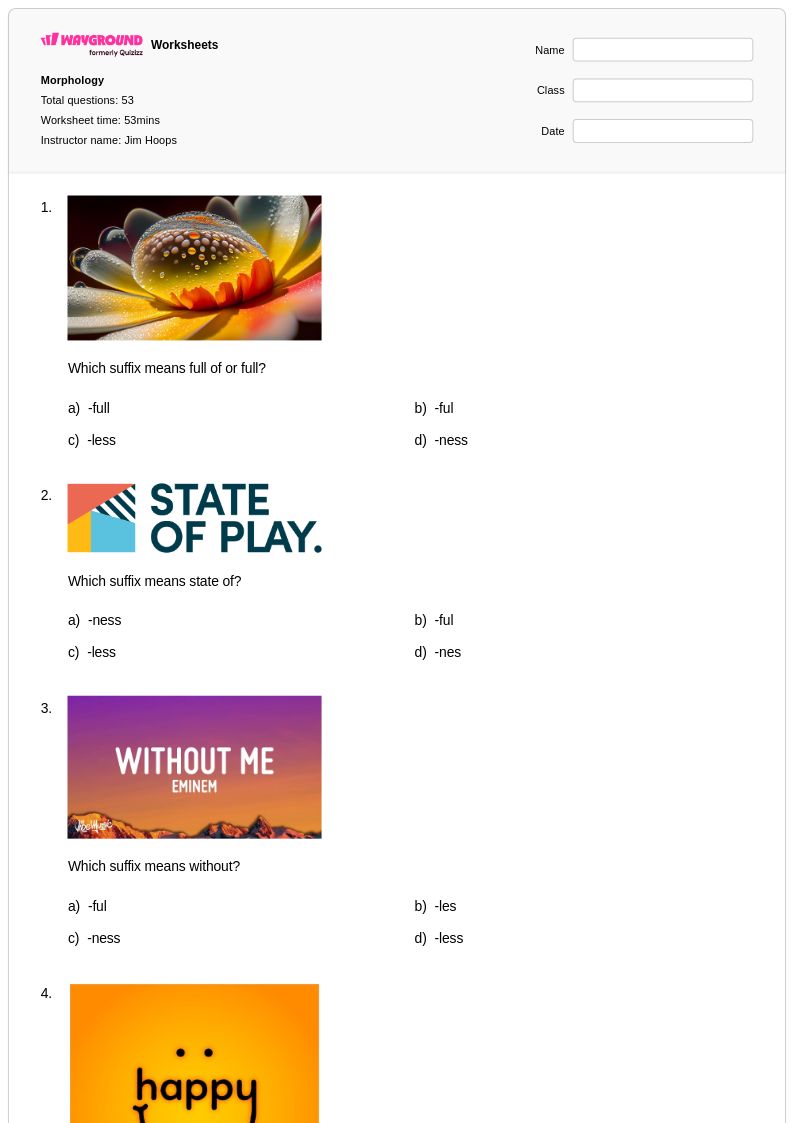
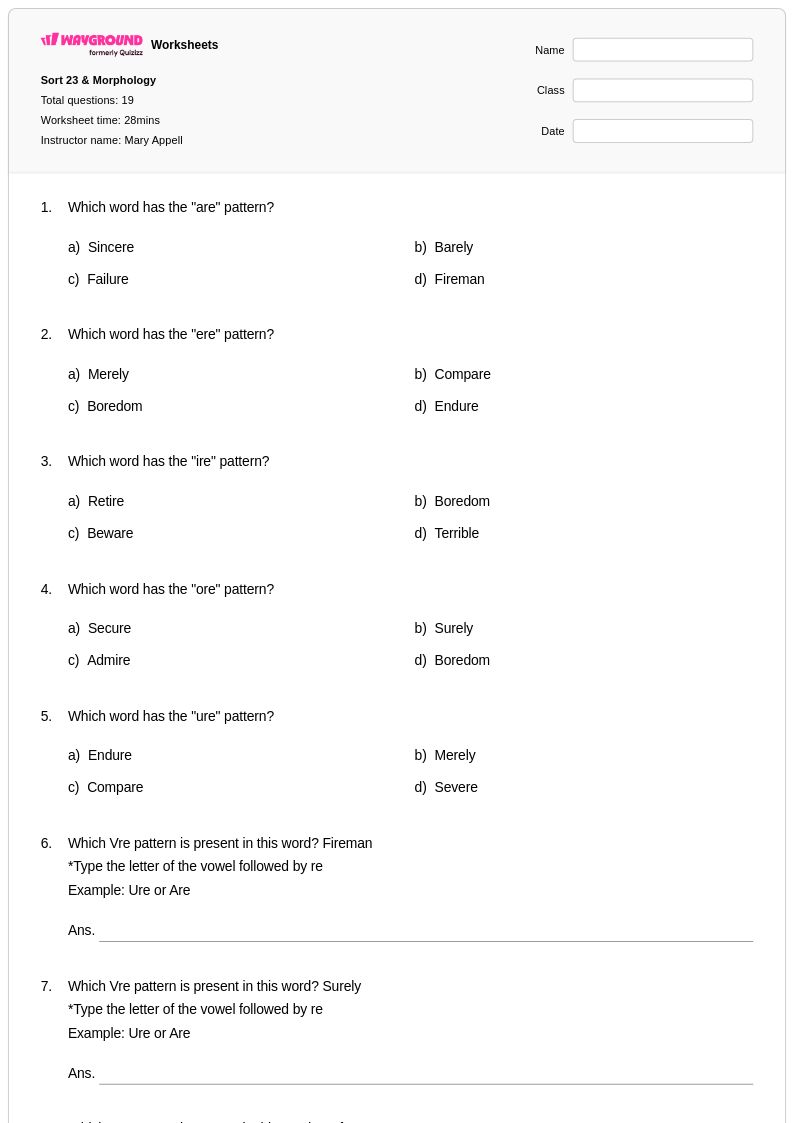
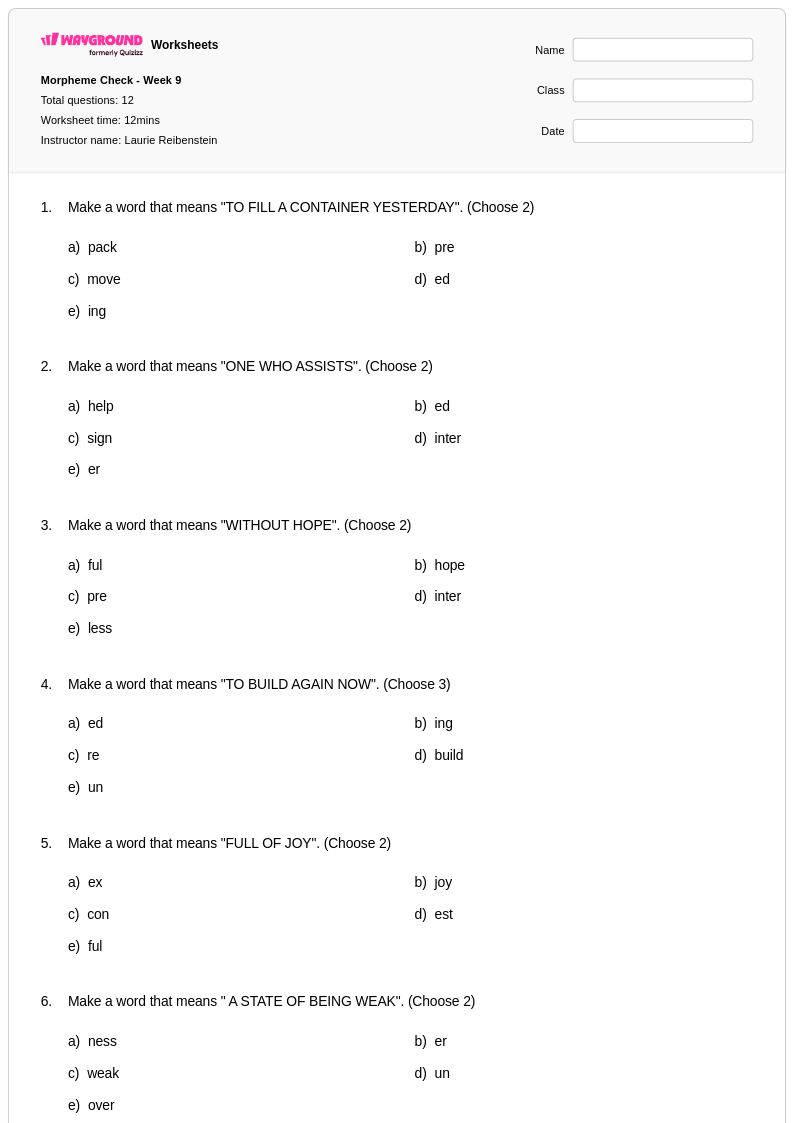
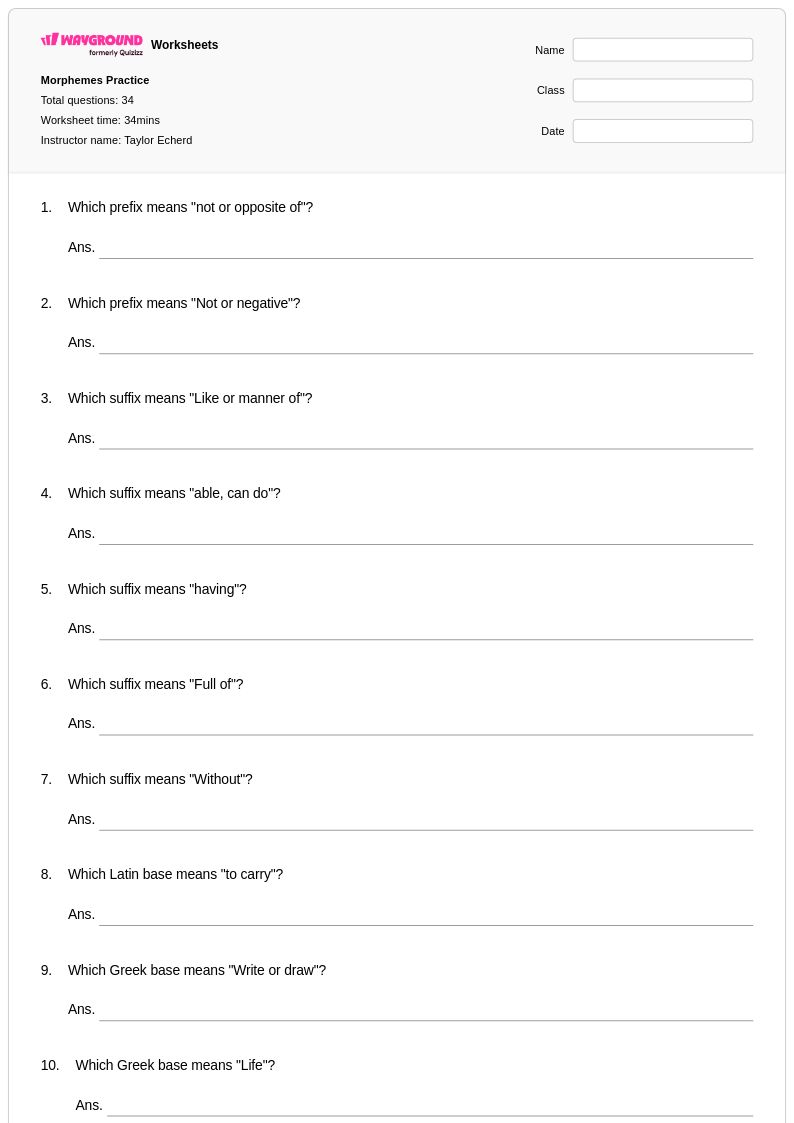
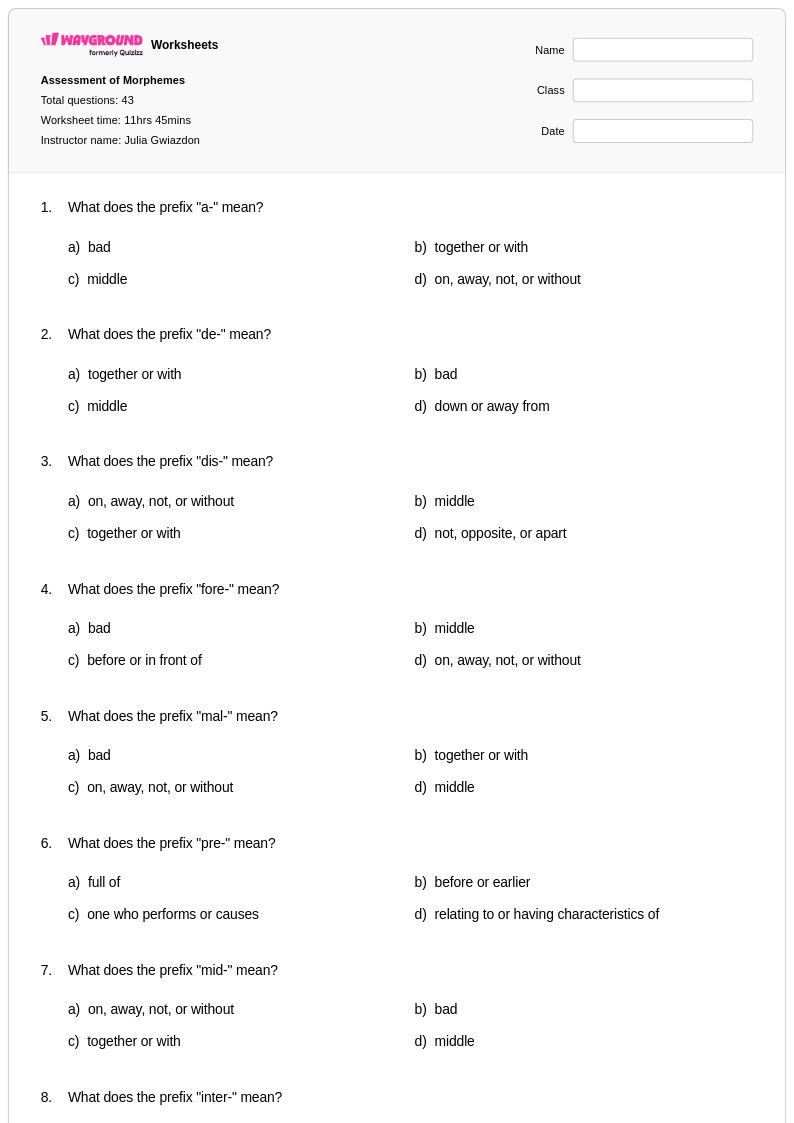
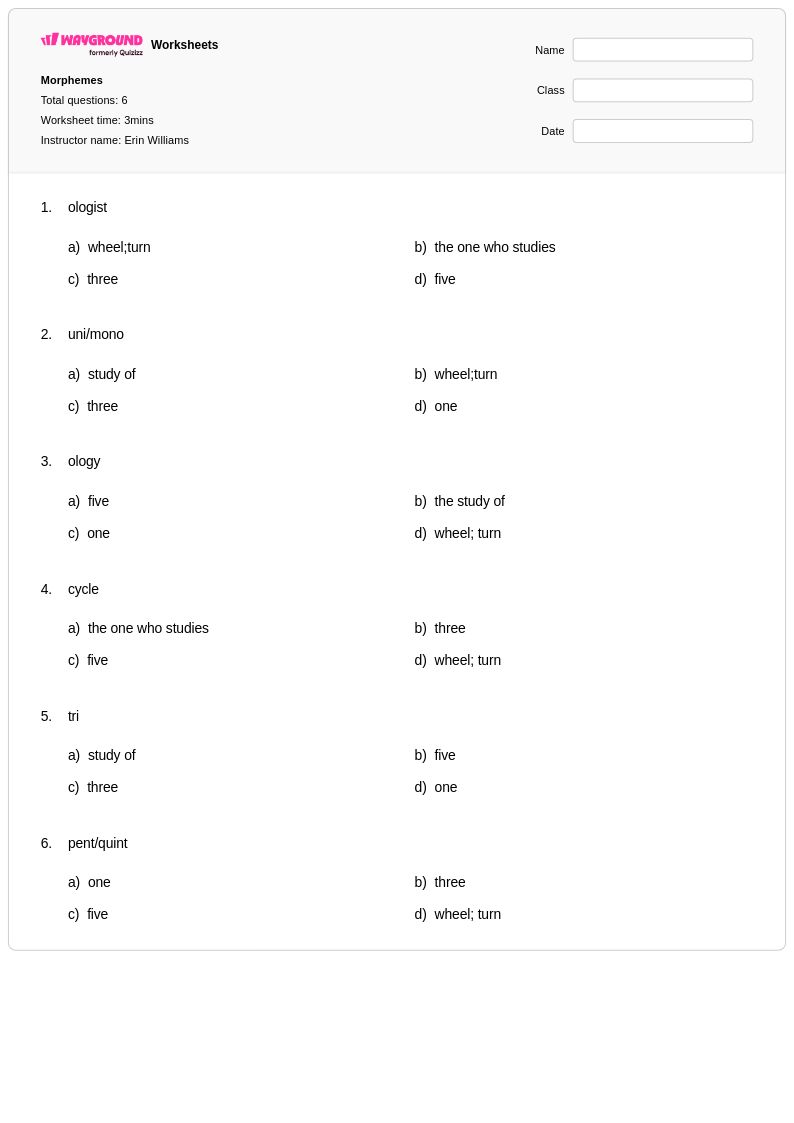
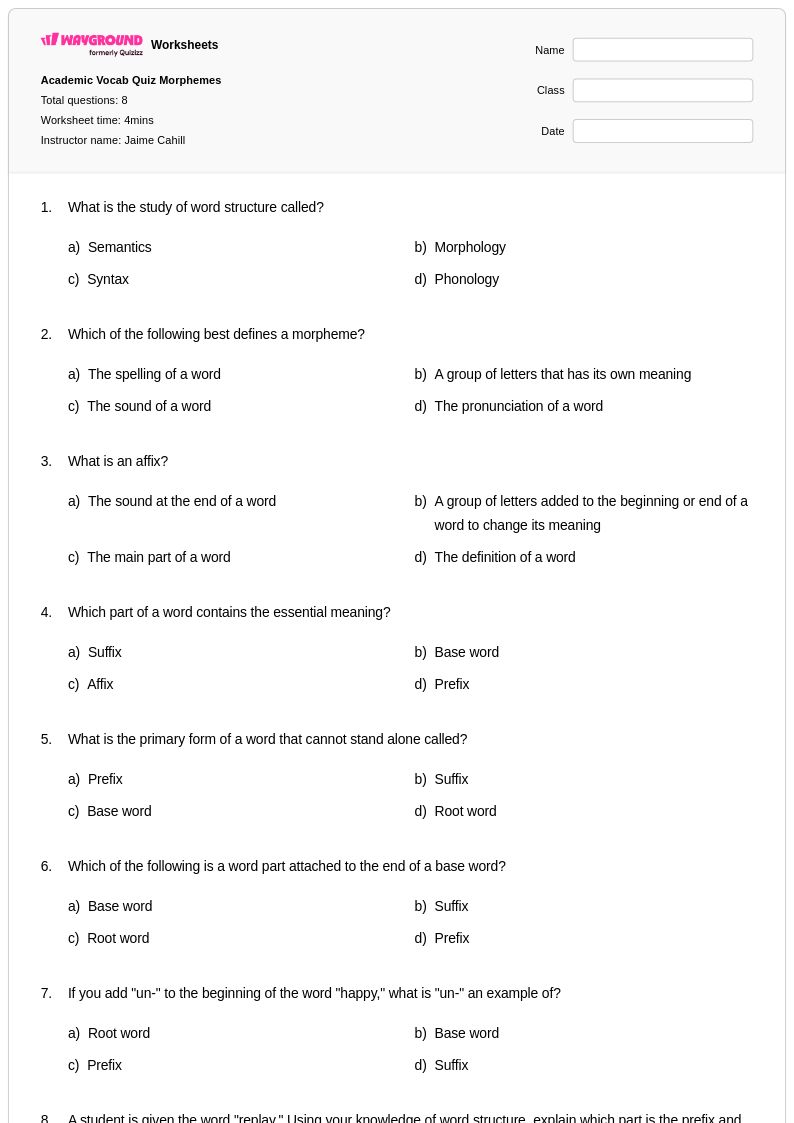
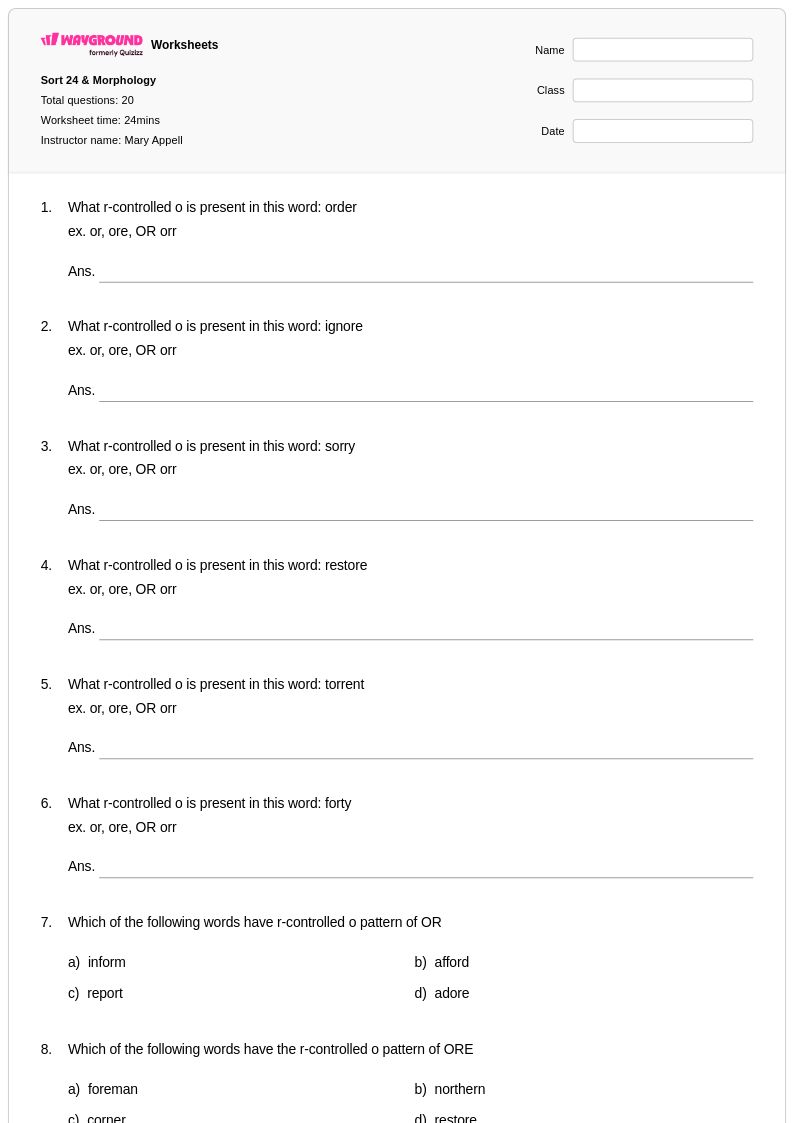
Class 4 morphemes worksheets available through Wayground (formerly Quizizz) provide essential foundation-building practice for students learning to break down and understand word parts. These comprehensive resources focus on developing students' ability to identify and manipulate prefixes, suffixes, and root words, which serves as a crucial stepping stone for vocabulary expansion and reading comprehension. The worksheets strengthen key academic skills including word analysis, pattern recognition, and morphological awareness through engaging practice problems that challenge students to decode unfamiliar words using their knowledge of word parts. Teachers can access these materials as free printables with complete answer keys, making it simple to incorporate morpheme instruction into daily lesson plans and provide students with meaningful practice opportunities in both pdf and interactive formats.
Wayground (formerly Quizizz) supports educators with an extensive collection of teacher-created morpheme resources that can be easily customized to meet diverse classroom needs. The platform's robust search and filtering capabilities allow teachers to quickly locate worksheets aligned with specific learning standards and grade-level expectations, while built-in differentiation tools enable seamless adaptation for students requiring additional support or enrichment challenges. These flexible resources are available in both printable and digital formats, giving teachers the freedom to choose the most effective delivery method for their instructional goals. The comprehensive nature of these materials makes them invaluable for lesson planning, targeted remediation sessions, vocabulary building activities, and consistent skill practice that helps students develop confidence in analyzing complex words through morphological understanding.
FAQs
How do I teach morphemes to students?
Start by introducing the concept of a morpheme as the smallest unit of meaning in a word, distinguishing between free morphemes (words that stand alone, like 'run') and bound morphemes (prefixes and suffixes that must attach to a root, like 'un-' or '-tion'). Build from there by having students sort and categorize words by their morphemic structure before moving into analysis of unfamiliar vocabulary. Consistent exposure to common prefixes, suffixes, and root words helps students internalize patterns they can apply independently when reading and writing.
What exercises help students practice identifying morphemes?
Effective practice exercises include breaking multi-syllabic words into their component morphemes, matching prefixes and suffixes to root words to form new vocabulary, and determining the meaning of unfamiliar words based on known morpheme meanings. Structured worksheets that ask students to identify whether a morpheme is a prefix, suffix, or root word reinforce analytical thinking rather than rote memorization. Regular, low-stakes practice with real words from content-area reading makes morpheme work feel immediately applicable.
What mistakes do students commonly make when learning about morphemes?
A frequent error is treating any recognizable letter string as a morpheme — for example, identifying 'un' in 'uncle' as the prefix 'un-' when it carries no separate meaning in that word. Students also often confuse syllables with morphemes, splitting words by sound rather than by unit of meaning. Another common mistake is assuming a root word retains its full original meaning in every derived form, which can lead to inaccurate vocabulary inferences.
How can I use morpheme worksheets to support vocabulary development across subjects?
Morpheme instruction is especially powerful in content-area classrooms because academic vocabulary in science, social studies, and mathematics is heavily Latin- and Greek-derived. Teaching students the morphemes embedded in terms like 'photosynthesis,' 'democracy,' or 'polygon' gives them transferable decoding strategies rather than requiring each word to be memorized in isolation. Worksheets that pair morpheme analysis with content-specific vocabulary can reinforce both word-study skills and subject knowledge simultaneously.
How do I differentiate morpheme practice for students at different skill levels?
For students who are still building foundational skills, begin with high-frequency prefixes and suffixes attached to simple, familiar root words before introducing less common bound morphemes. More advanced learners can work with Greek and Latin roots, polysyllabic words, and tasks that require them to generate their own examples of derived words. On Wayground, teachers can apply reduced answer choices for students who need additional support, decreasing cognitive load while keeping the core morpheme task intact.
How do I use morpheme worksheets from Wayground in my classroom?
Wayground's morpheme worksheets are available as printable PDFs for traditional classroom use and in digital formats for technology-integrated environments, giving teachers flexibility regardless of their instructional setup. Teachers can distribute printed copies for independent or small-group practice, or host the worksheet as a digital quiz directly on Wayground, allowing for real-time student response and immediate answer-key feedback. Both formats include complete answer keys, making it straightforward to review work and identify where individual students need additional support.