Free Printable Movement Analysis Worksheets for Class 3
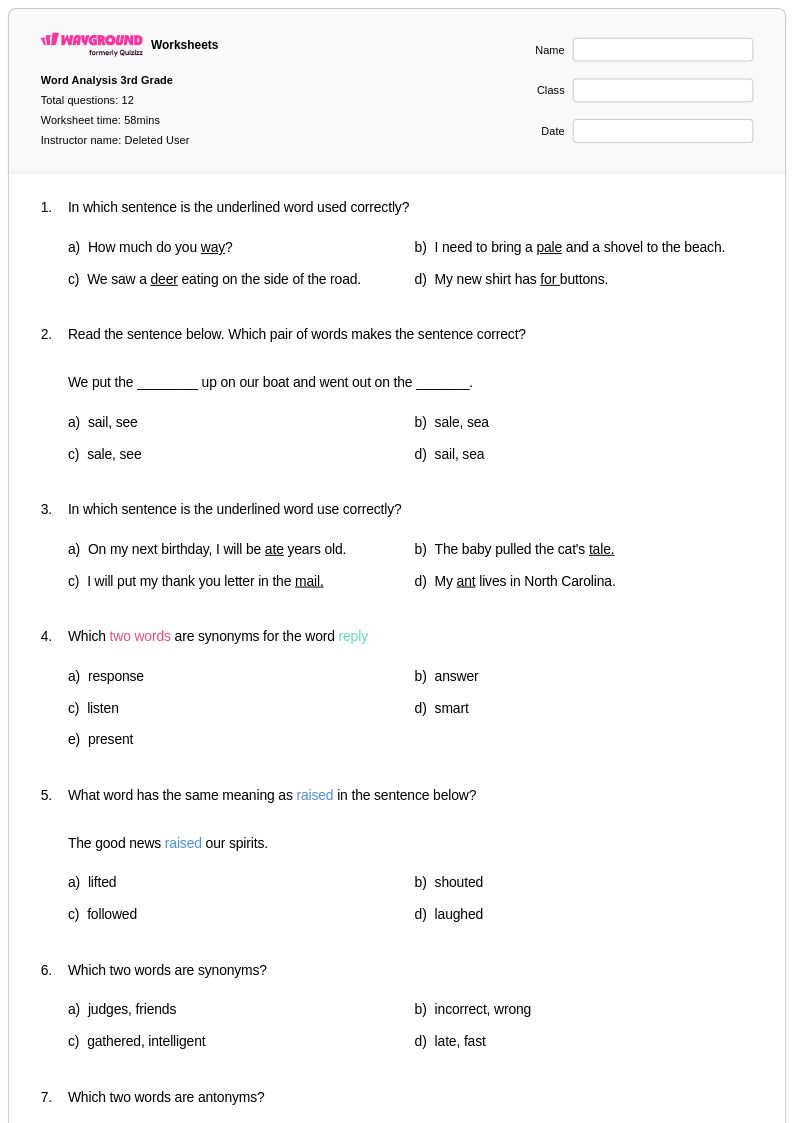
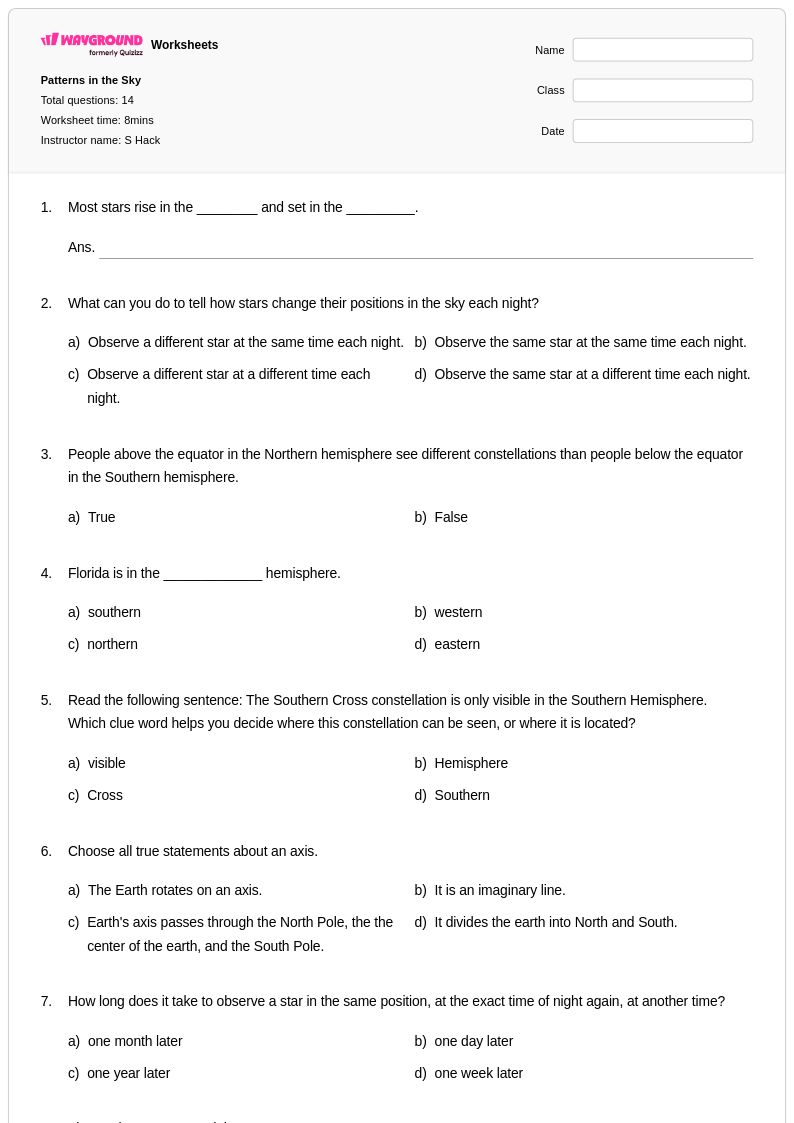
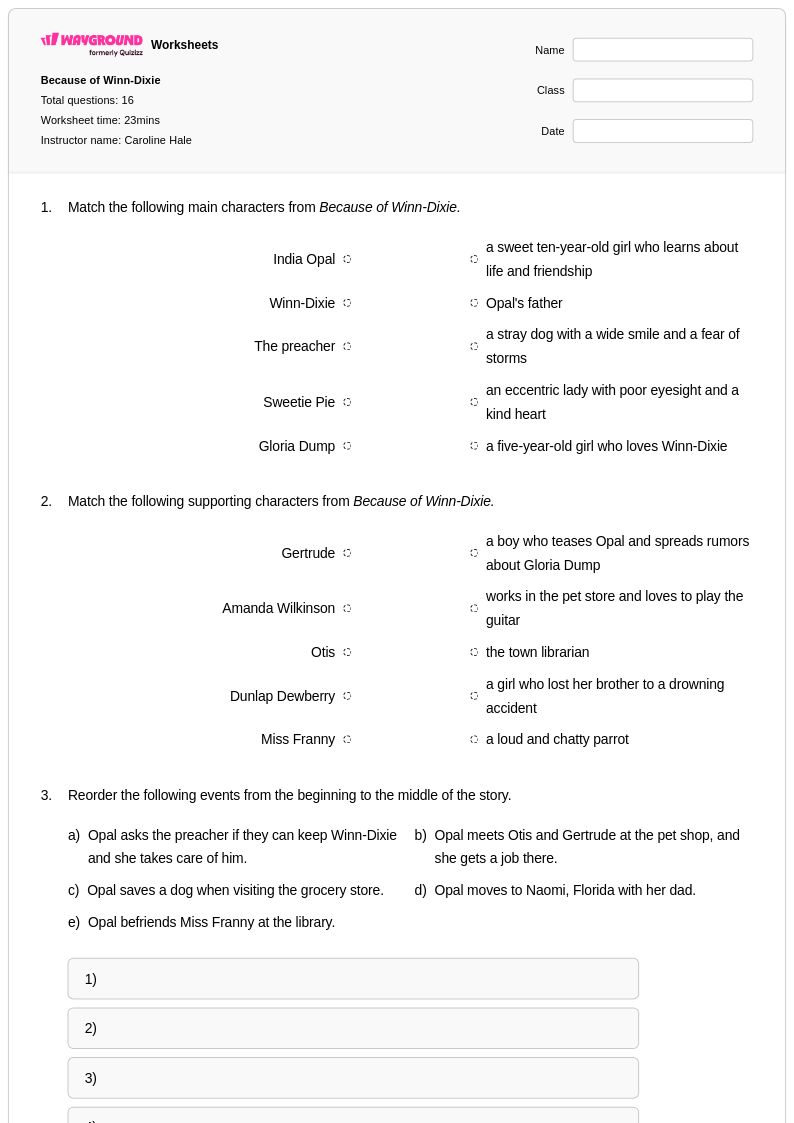
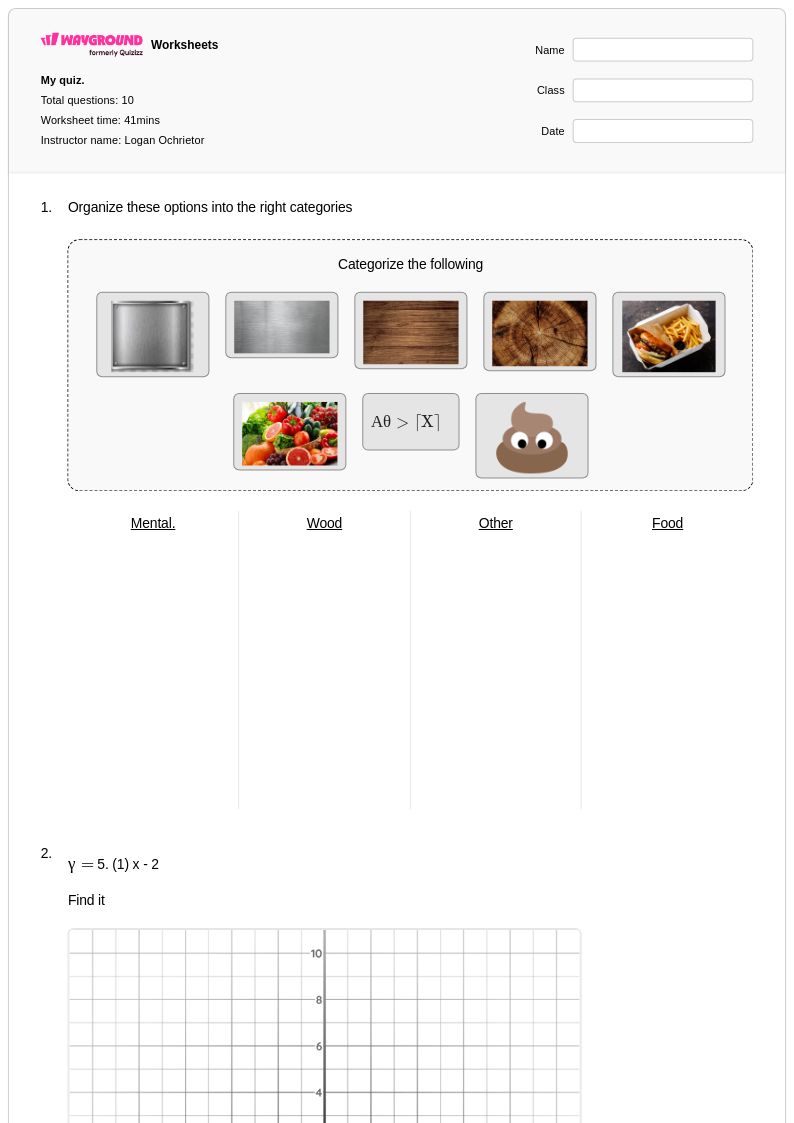
Explore Wayground's free Class 3 movement analysis worksheets and printables that help students develop critical thinking skills about body mechanics, spatial awareness, and motor skill evaluation through engaging practice problems and comprehensive answer keys.
Explore printable Movement Analysis worksheets for Class 3
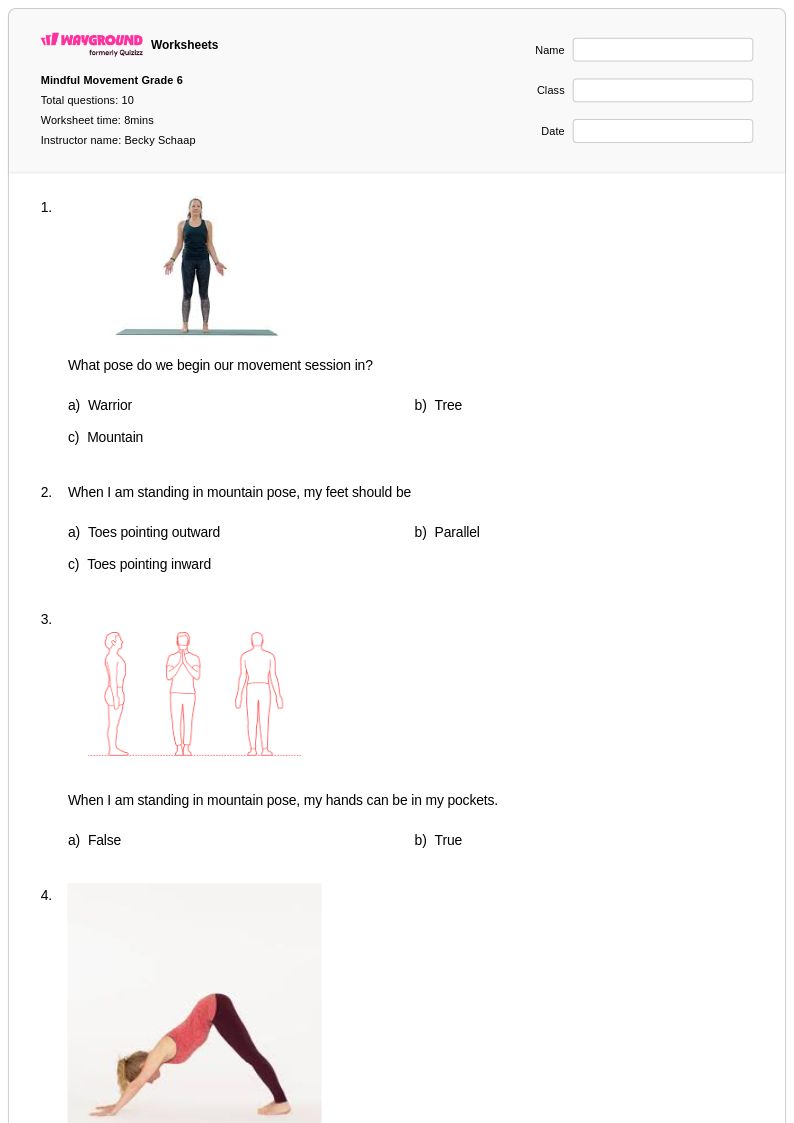
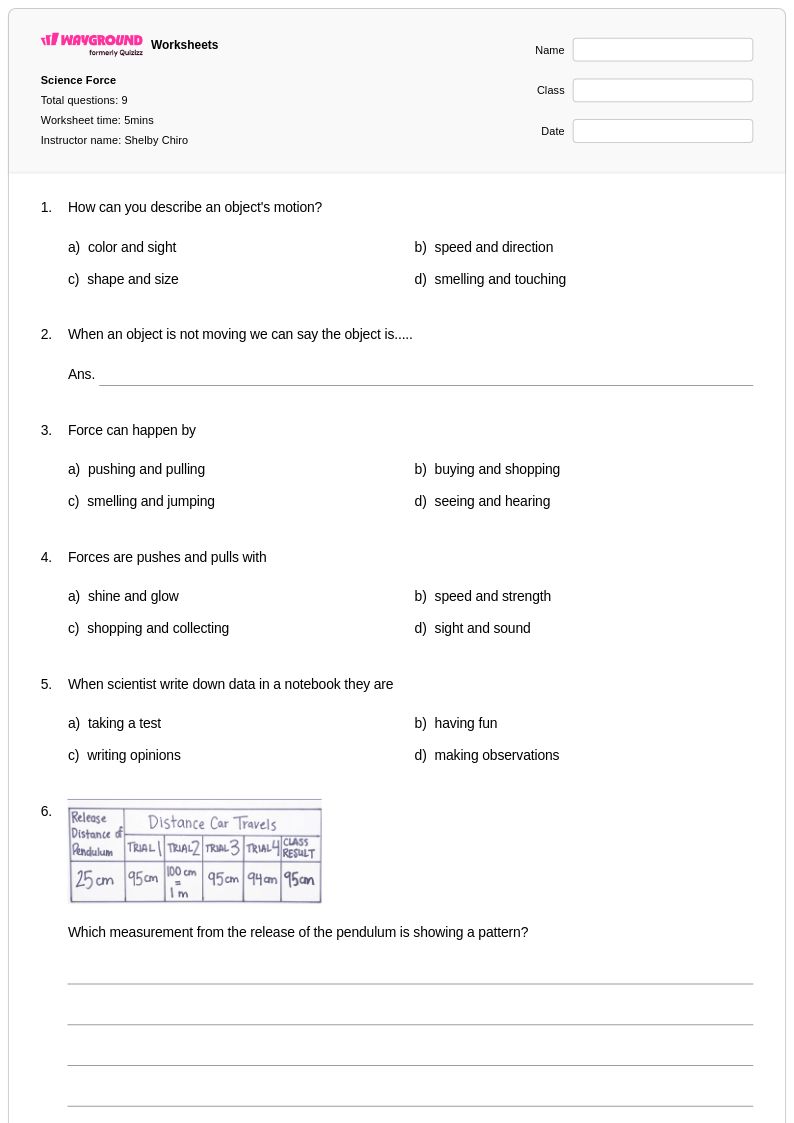
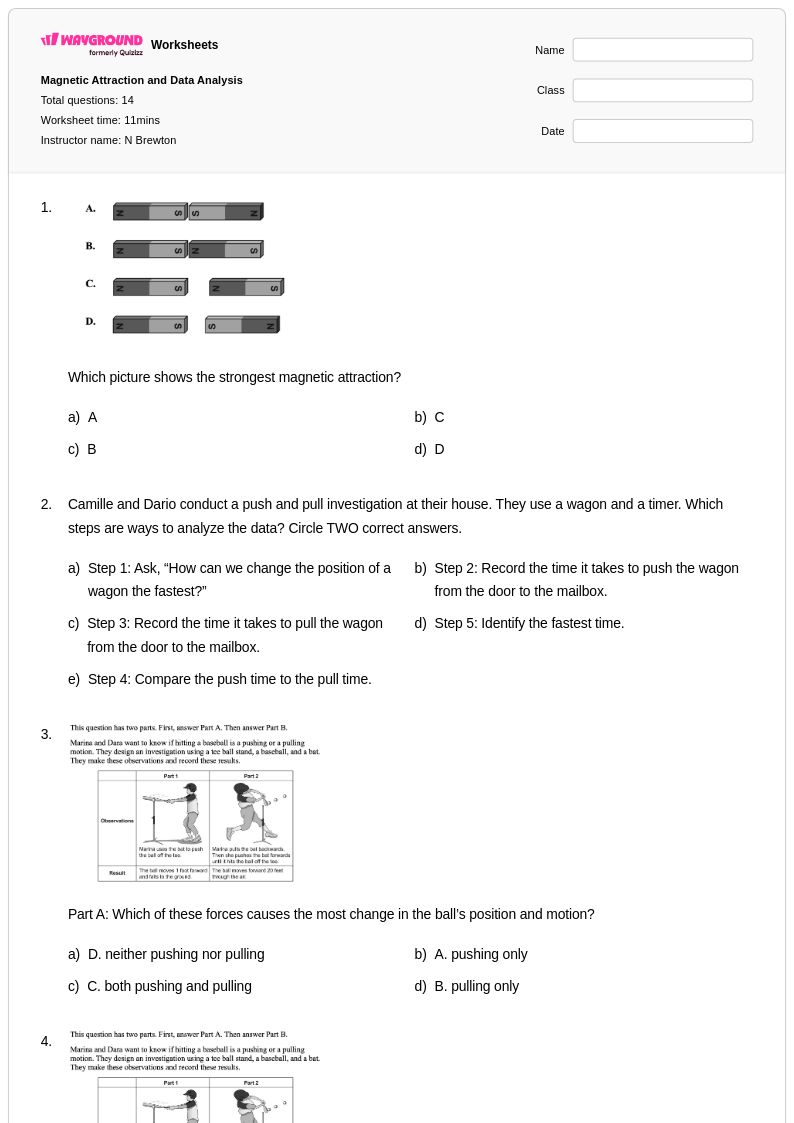
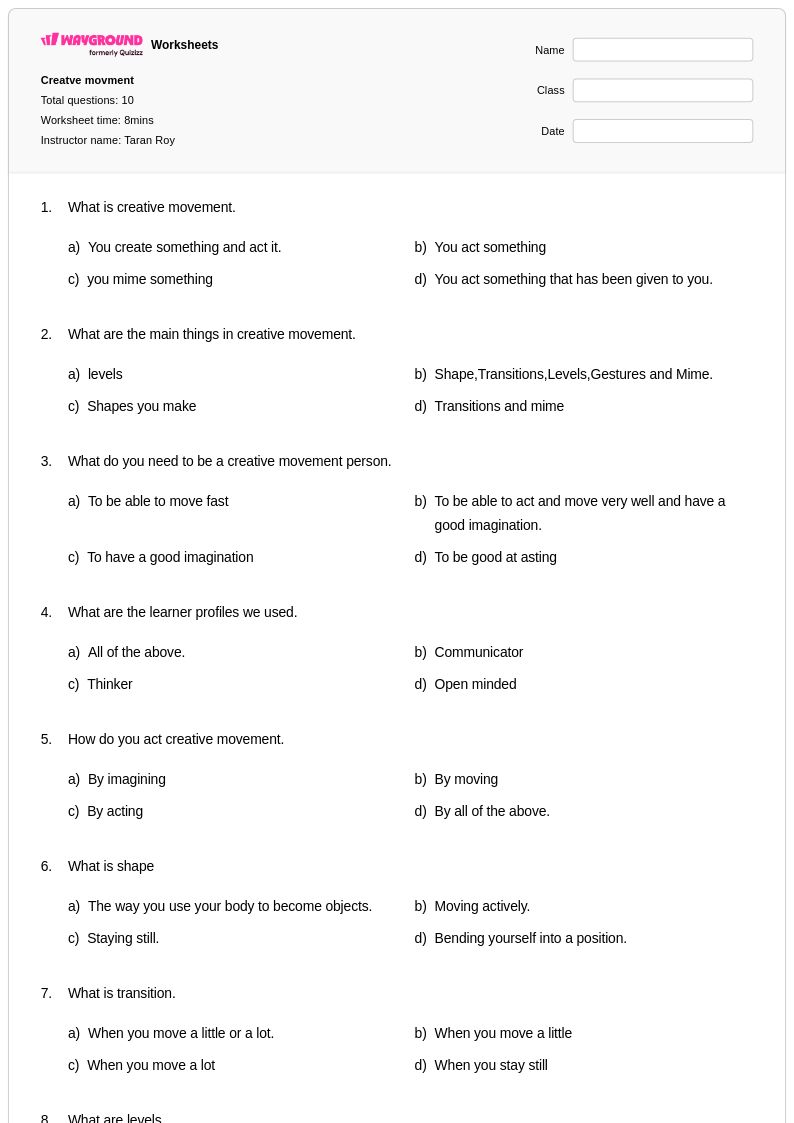
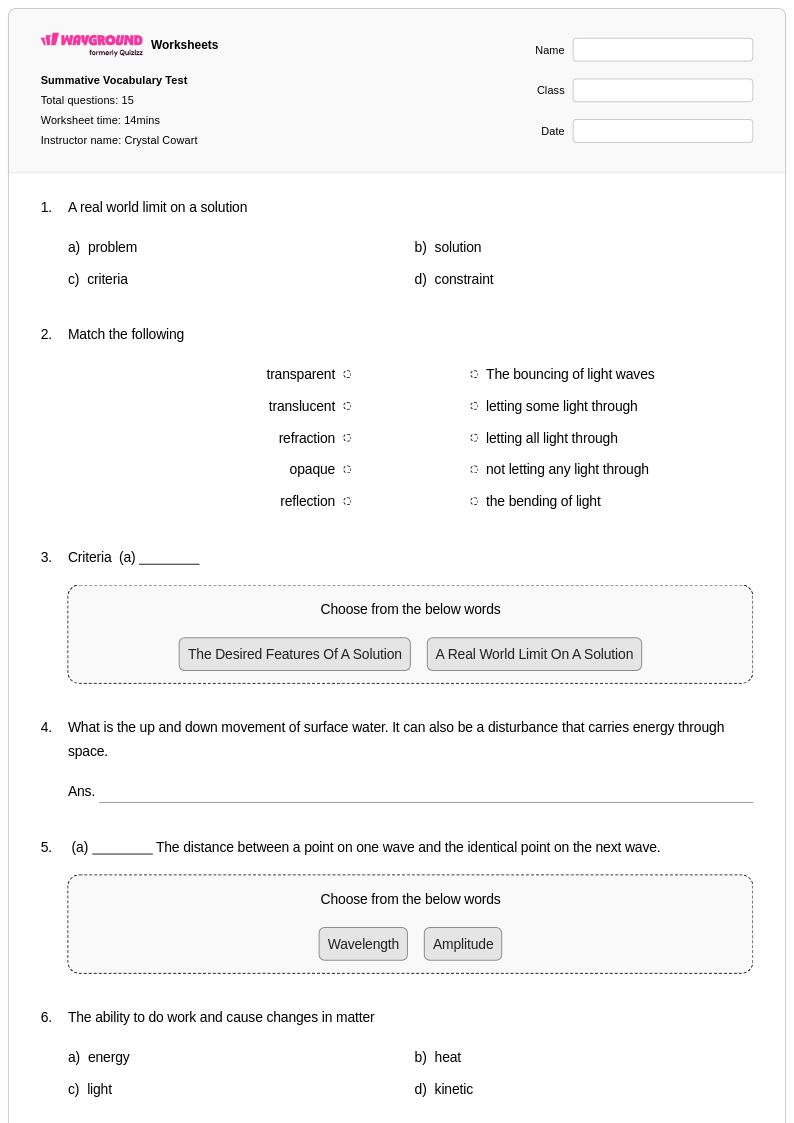
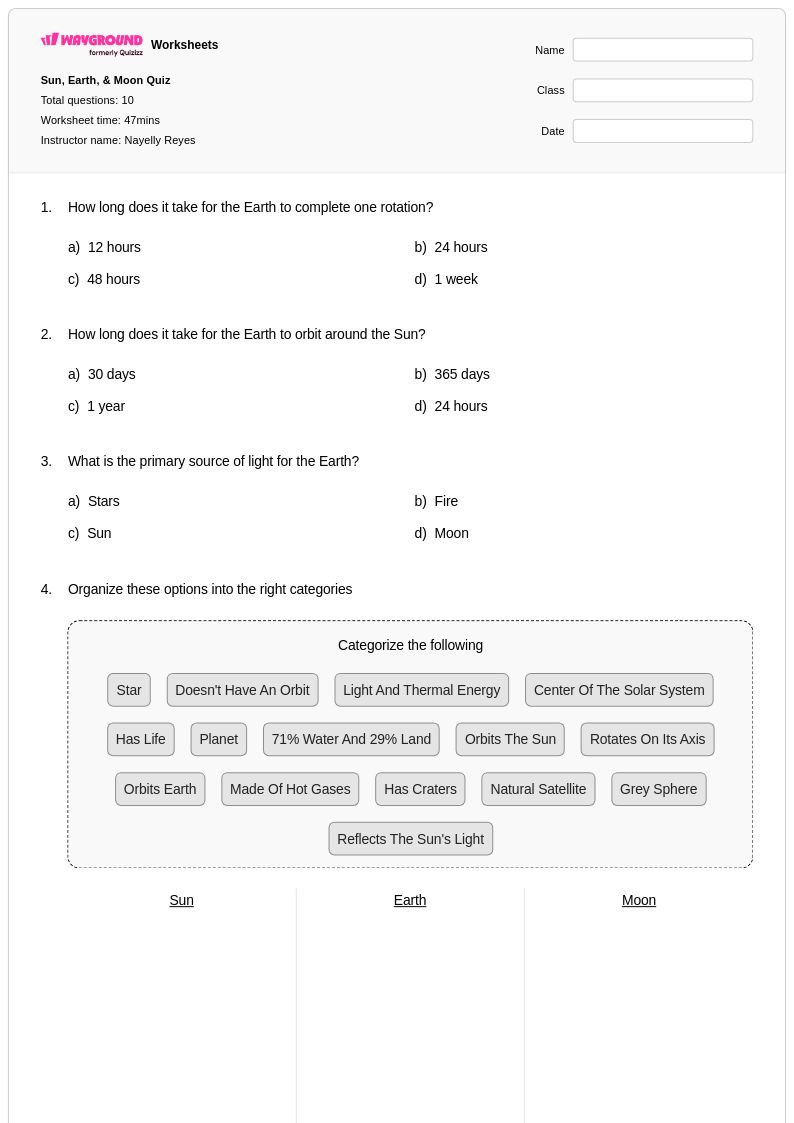
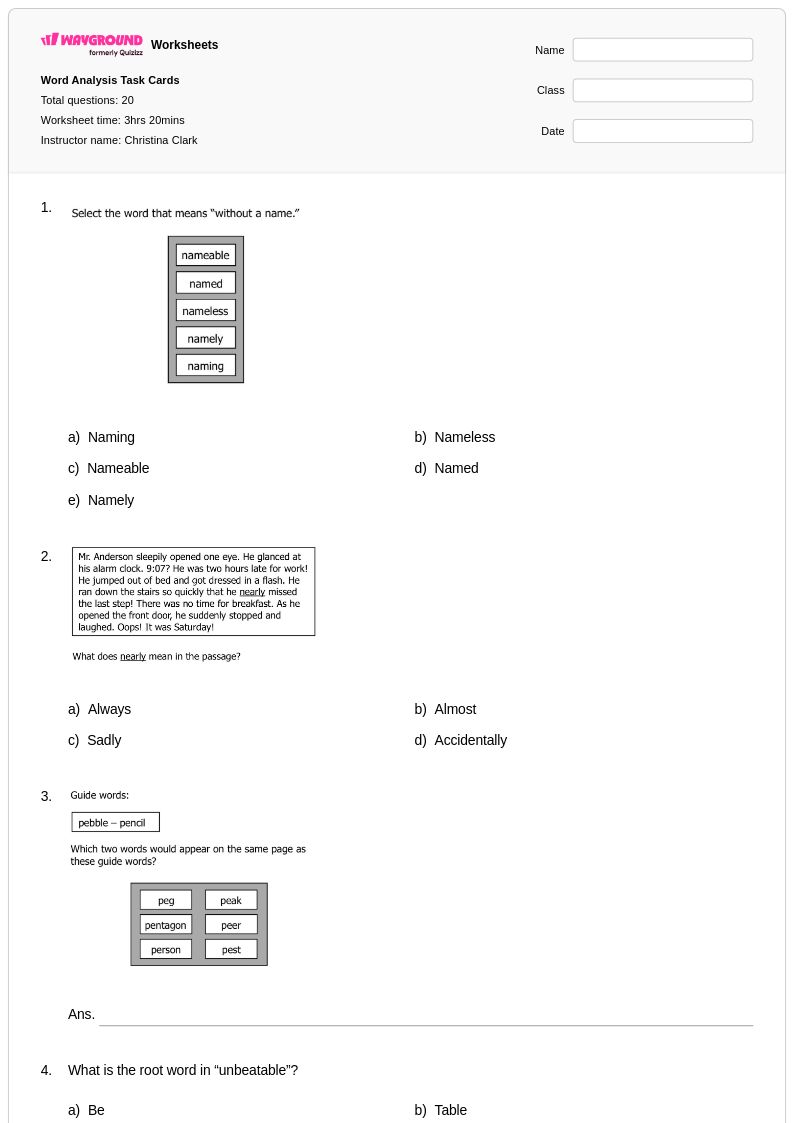
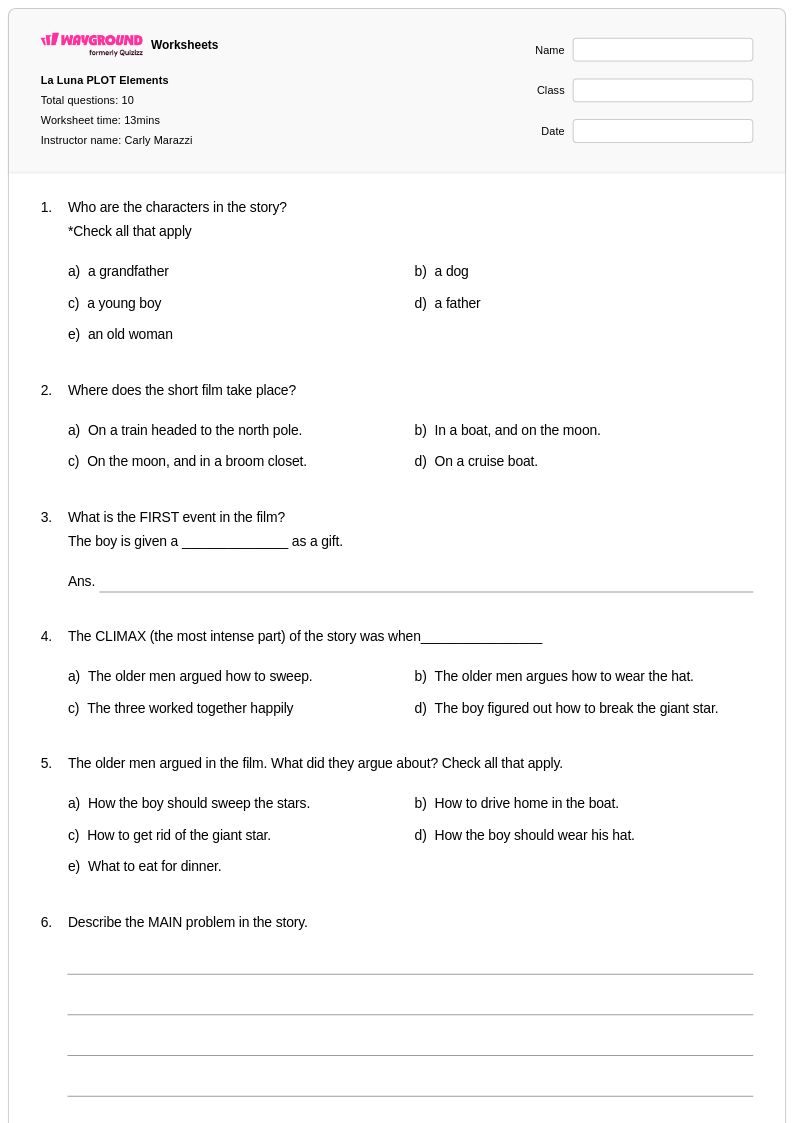
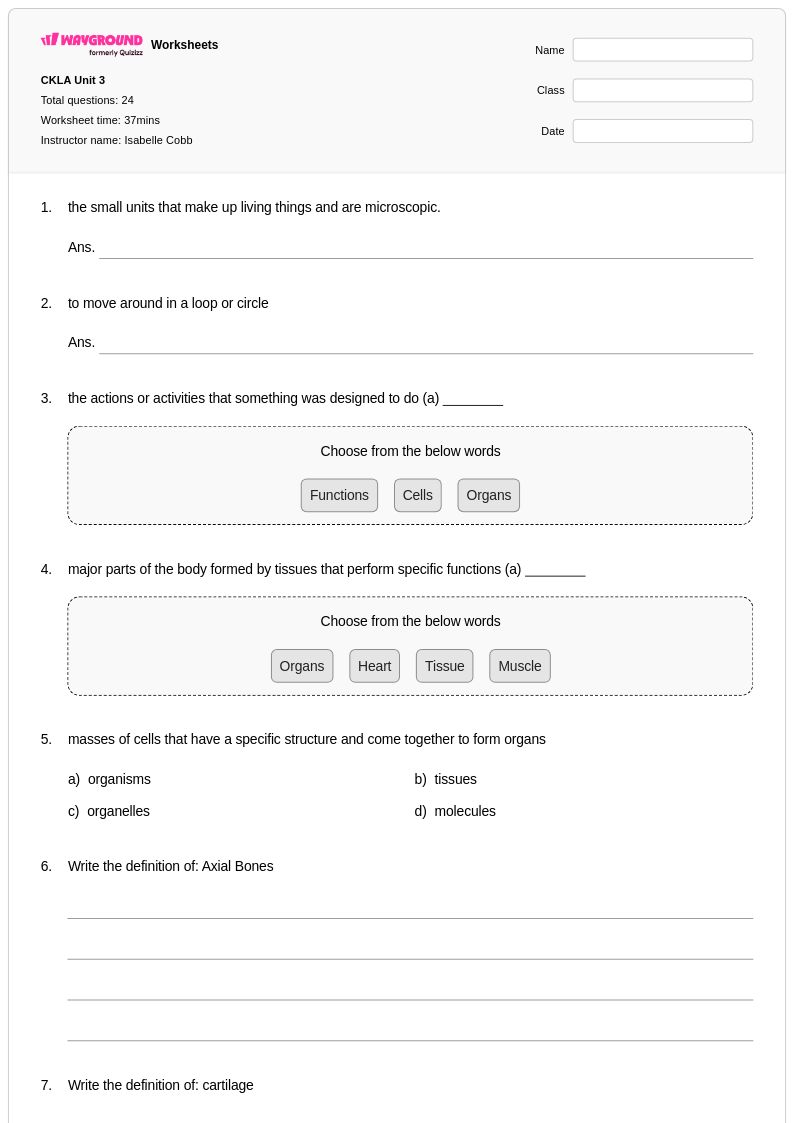
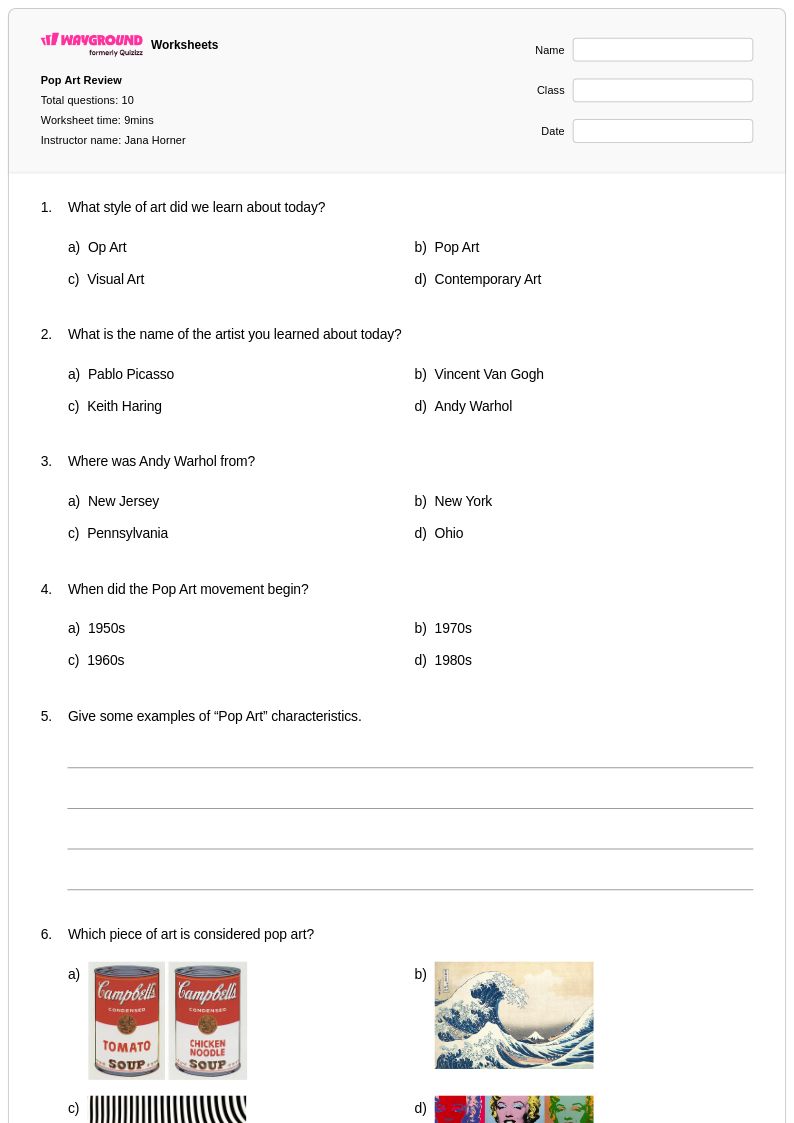
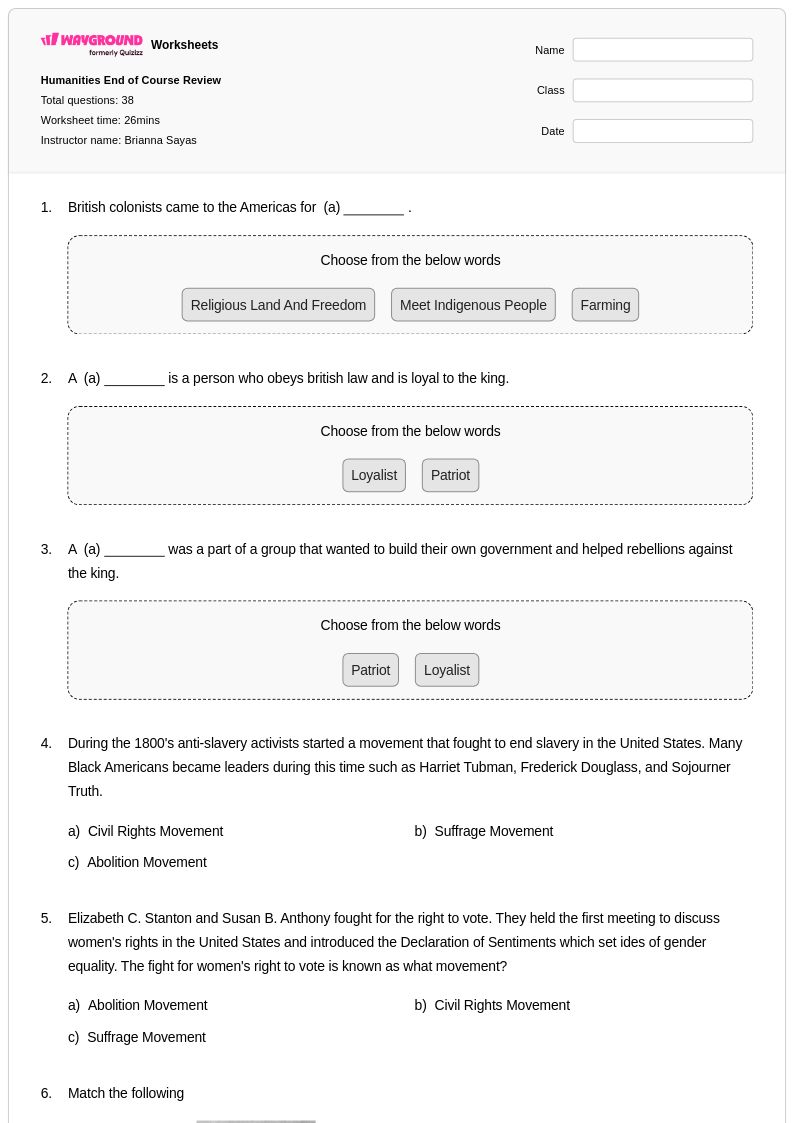
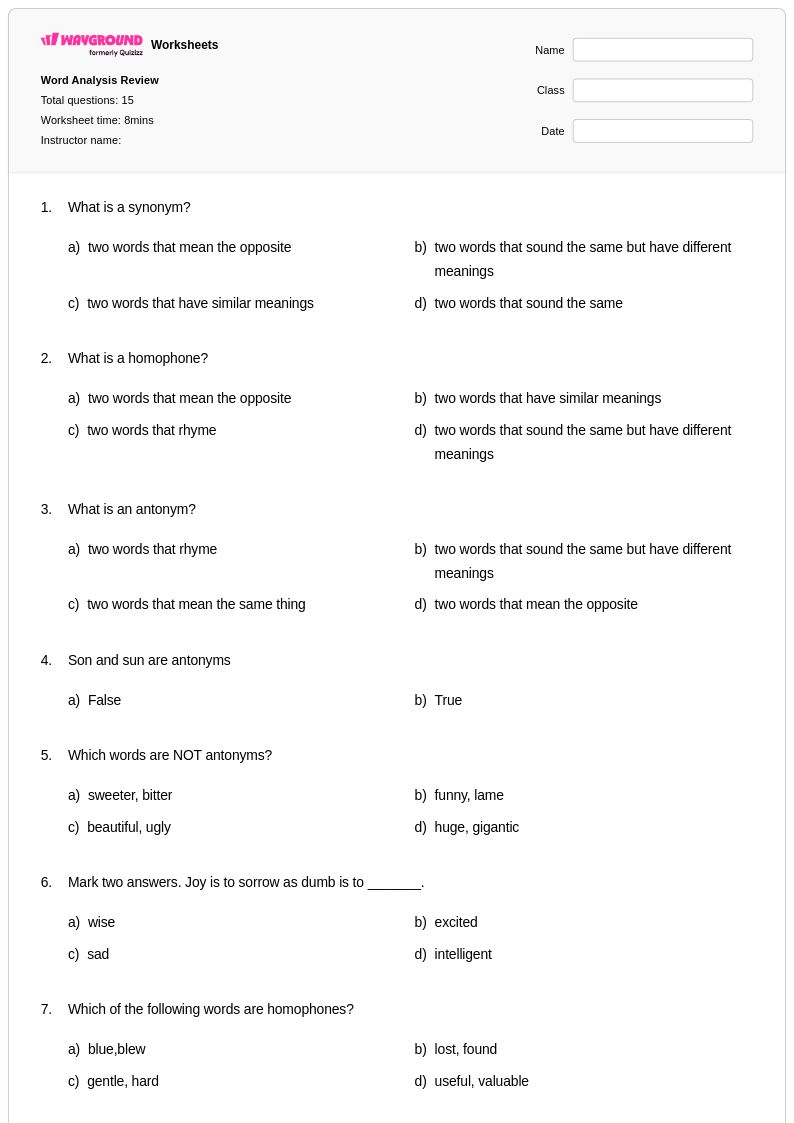
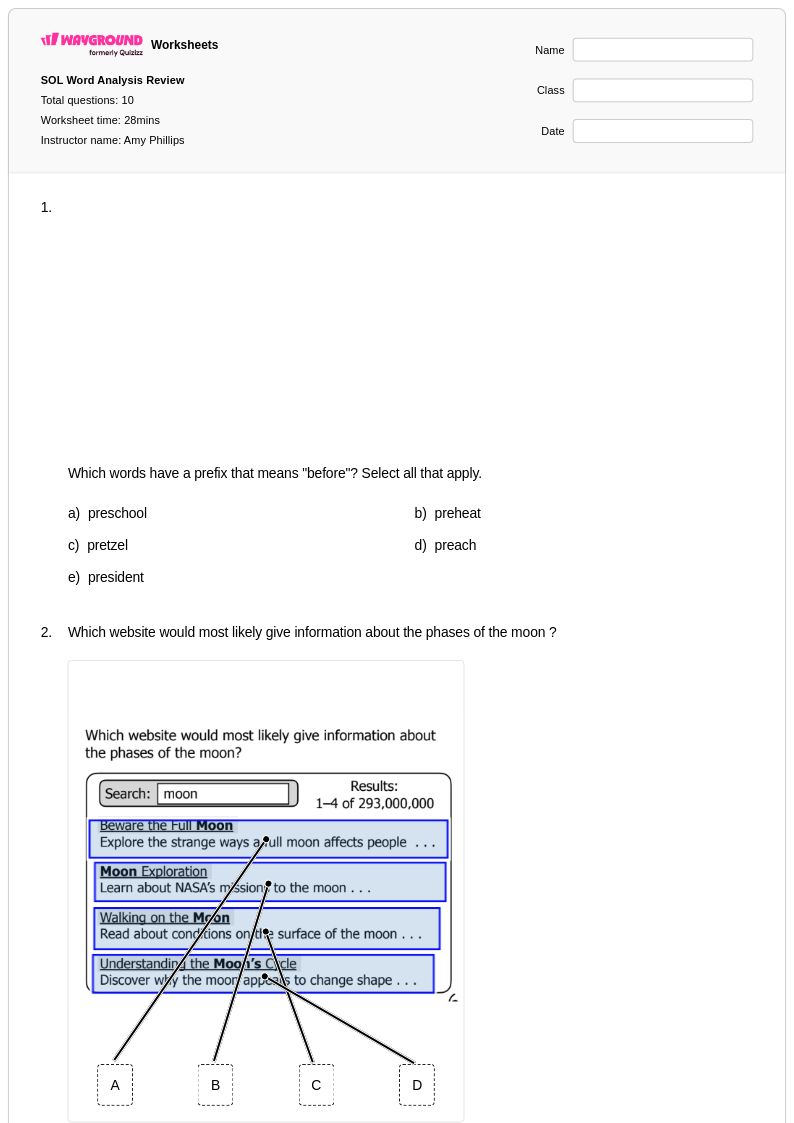
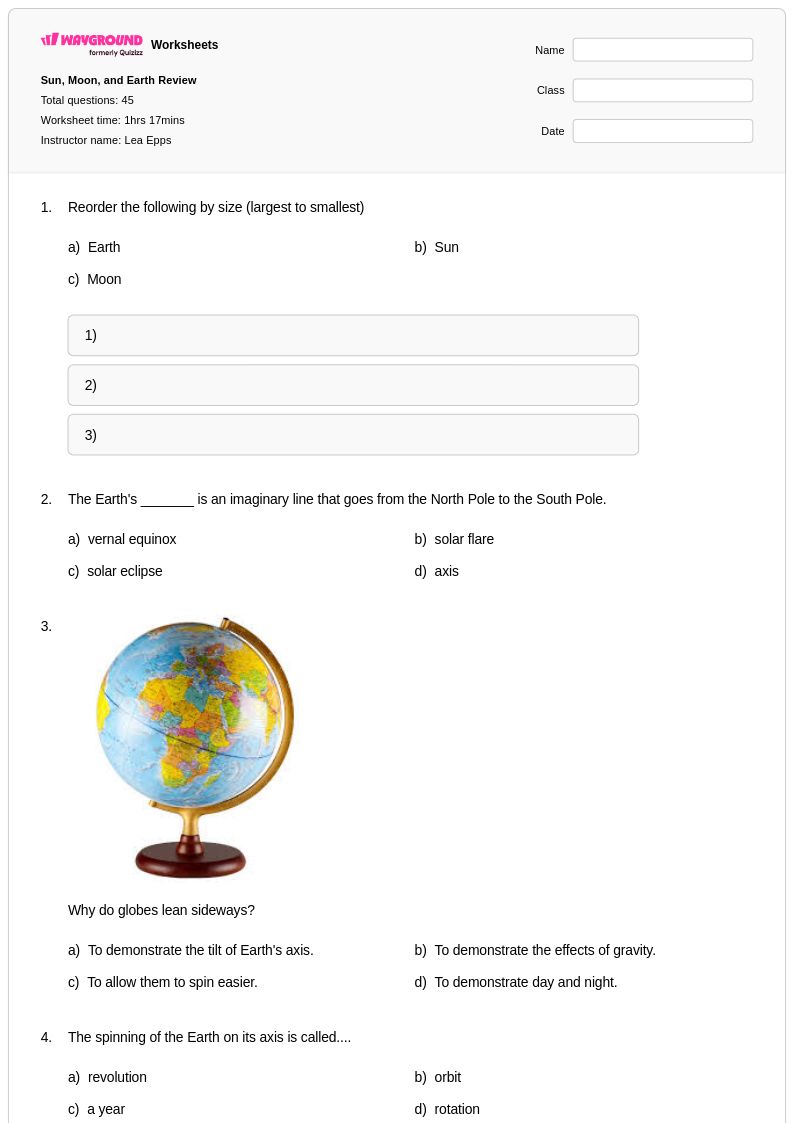
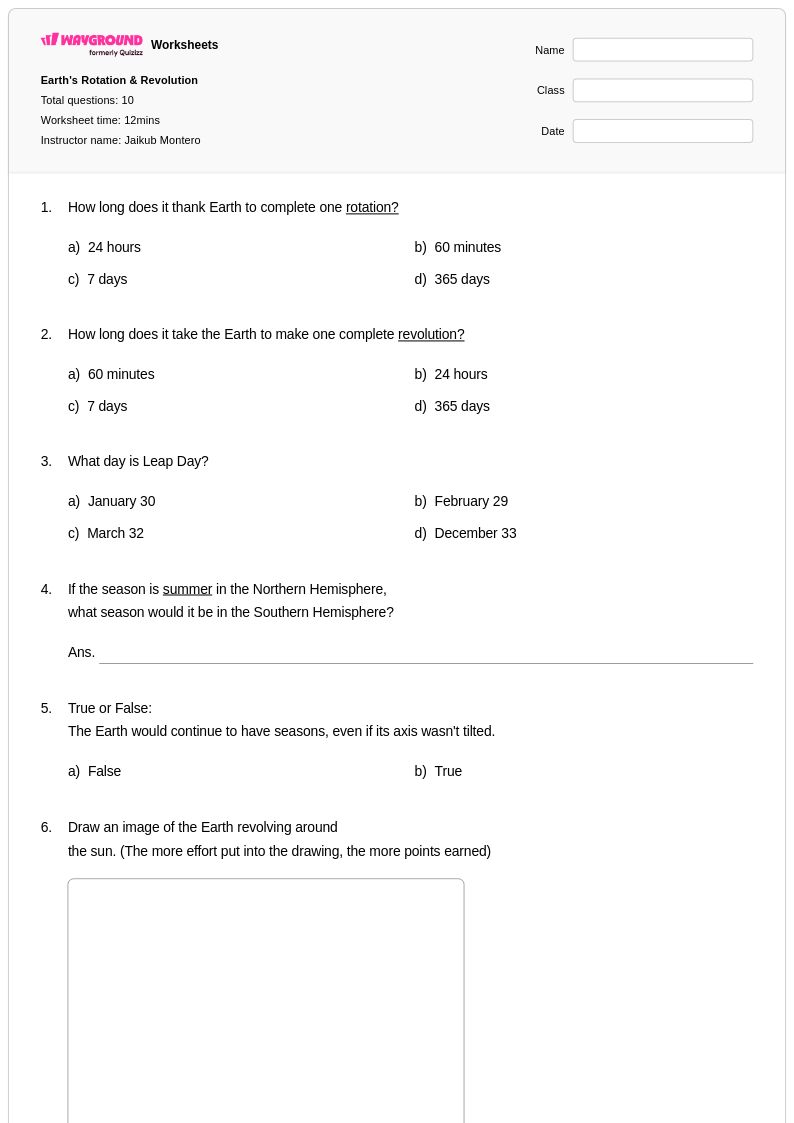
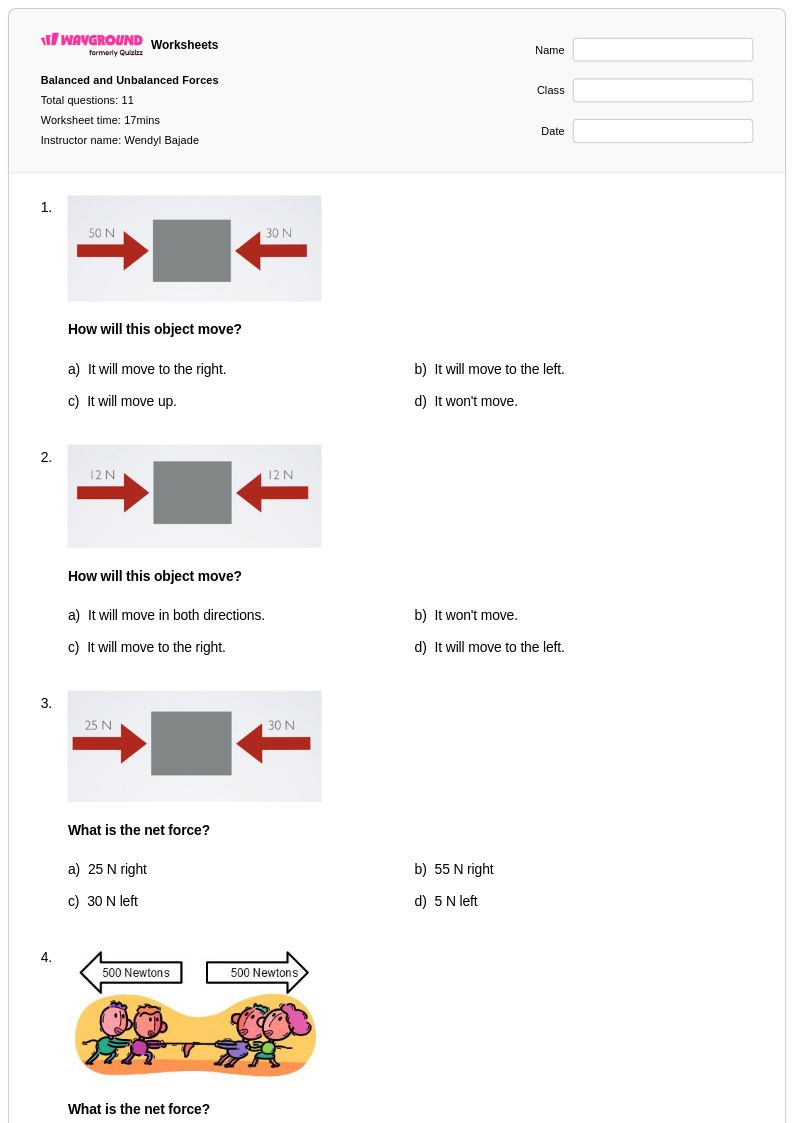
Movement analysis worksheets for Class 3 students available through Wayground (formerly Quizizz) provide comprehensive resources to develop fundamental understanding of how the body moves through space and time during physical activities. These expertly crafted worksheets strengthen critical skills including identifying different types of movements, analyzing body mechanics during basic motor patterns, and understanding the relationship between movement efficiency and physical performance. Students engage with practice problems that require them to observe, describe, and categorize movements such as locomotor skills, non-locomotor actions, and manipulative tasks, while building vocabulary essential for movement literacy. Each worksheet includes a detailed answer key to support accurate assessment, and the free printables are available in convenient PDF format for seamless classroom integration.
Wayground (formerly Quizizz) empowers physical education teachers with access to millions of teacher-created movement analysis resources specifically designed to meet Class 3 developmental needs and learning objectives. The platform's robust search and filtering capabilities enable educators to quickly locate worksheets aligned with specific standards and curriculum requirements, while differentiation tools allow for customization based on individual student abilities and learning styles. Teachers can seamlessly transition between printable PDF versions for hands-on learning experiences and digital formats for technology-enhanced instruction, making these resources invaluable for lesson planning, targeted skill remediation, and enrichment activities. The extensive collection supports systematic movement analysis instruction that builds foundational knowledge essential for lifelong physical literacy and motor skill development.
FAQs
How do I teach movement analysis in physical education?
Teaching movement analysis effectively requires students to develop a systematic framework for observing and evaluating human movement. Start by introducing foundational concepts such as body alignment, force production, spatial awareness, and movement efficiency before applying these to specific motor skills. Structured observation tasks, where students watch a peer or video and annotate movement patterns against clear criteria, help bridge theory and practical application. Building from basic locomotor skills to complex sport-specific techniques gives students a progressive reference point for their analysis.
What exercises help students practice movement analysis skills?
Practice exercises that require students to systematically break down motor skills into observable components are most effective for developing movement analysis ability. Worksheets that prompt students to evaluate body alignment, identify force production strategies, and assess movement efficiency across different skill contexts build analytical habits over time. Structured observation checklists, comparative analysis tasks, and scenario-based problems that move from basic locomotor patterns to sport-specific techniques provide varied, meaningful practice opportunities.
What common mistakes do students make when analyzing movement?
Students frequently focus on the outcome of a movement rather than the mechanical process that produced it, which leads to shallow analysis that misses key biomechanical factors. Another common error is evaluating movement without a consistent framework, causing students to overlook elements like spatial awareness or force production in favor of more visible cues. Students also tend to apply subjective judgments rather than referencing observable criteria, which undermines the precision movement analysis requires. Structured worksheets with guided observation prompts help correct these patterns by training students to work through each analytical dimension methodically.
How can I differentiate movement analysis instruction for students at different skill levels?
Differentiation in movement analysis can be addressed by adjusting the complexity of the motor skills students are asked to evaluate, starting struggling learners on basic locomotor patterns before progressing to complex sport-specific techniques. On Wayground, teachers can apply individual student accommodations including reduced answer choices to lower cognitive load, read aloud support for students who need it, and extended time per question. These settings can be assigned to specific students without affecting the experience of the rest of the class, making differentiation discreet and manageable within a single session.
How do I use Wayground's movement analysis worksheets in my PE class?
Wayground's movement analysis worksheets are available as printable PDFs for traditional classroom or gymnasium use, as well as in digital formats suited to technology-integrated learning environments. Teachers can also host worksheets directly as a quiz on Wayground, enabling real-time student responses and immediate feedback. Each worksheet includes a detailed answer key, supporting both independent student work and instructor-led debrief discussions. This flexibility makes it straightforward to embed structured movement analysis practice into both theory-based lessons and practical PE sessions.
How do I align movement analysis worksheets to specific curriculum standards?
Wayground's search and filtering capabilities allow physical education teachers to locate movement analysis resources aligned to specific learning standards and curriculum objectives without manually sorting through unrelated materials. Teachers can filter by concept area, covering topics such as biomechanical principles, motor skill execution, and movement patterns, to find worksheets that directly match their unit goals. This targeted search process reduces lesson planning time while ensuring that selected resources are purposefully connected to required instructional outcomes.