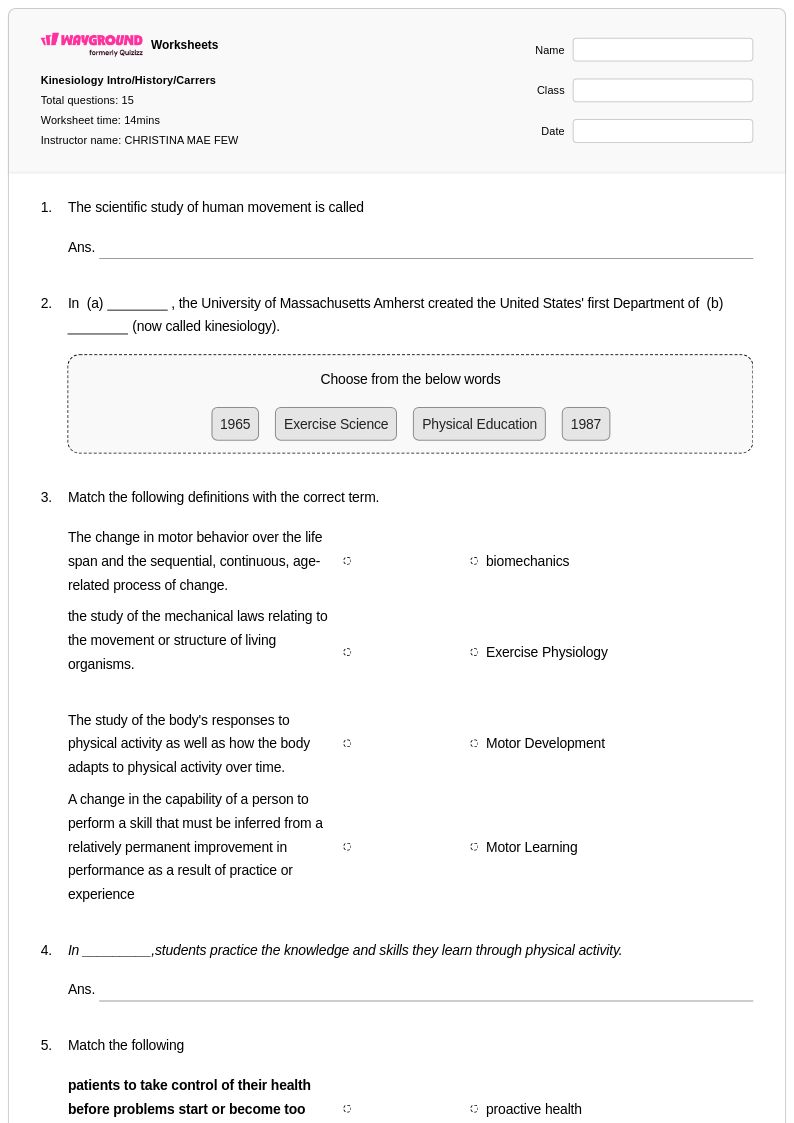
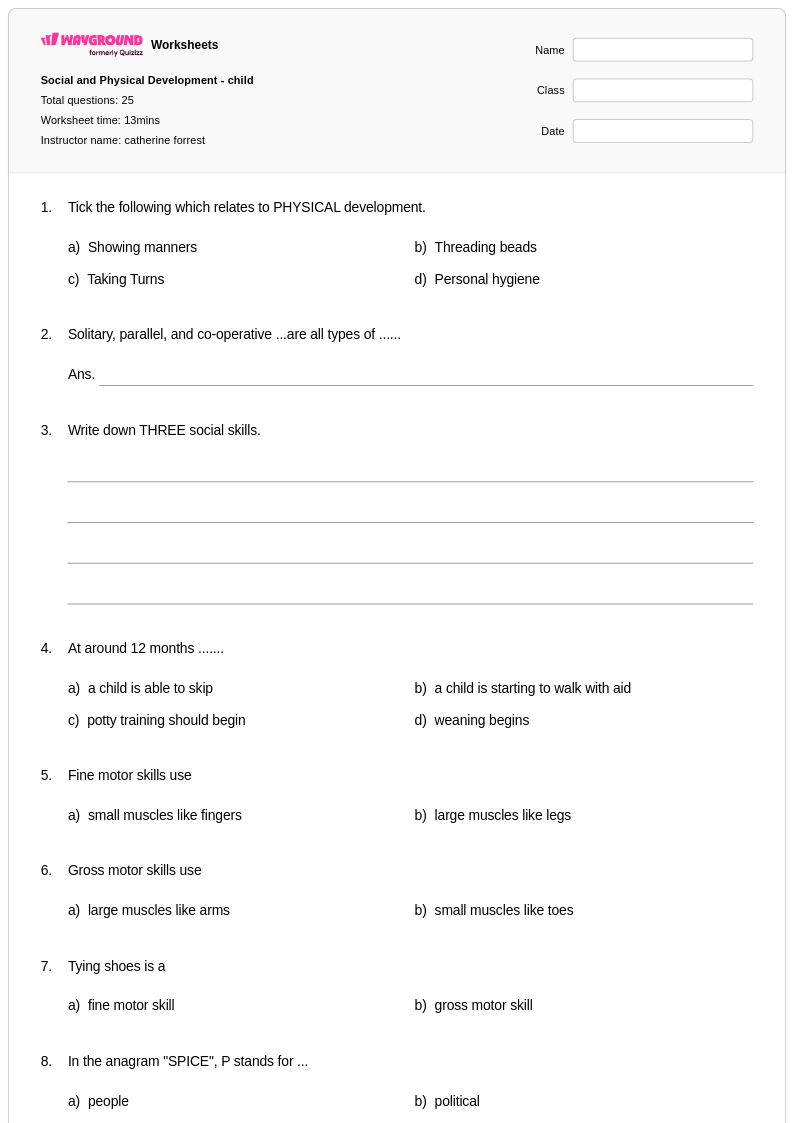
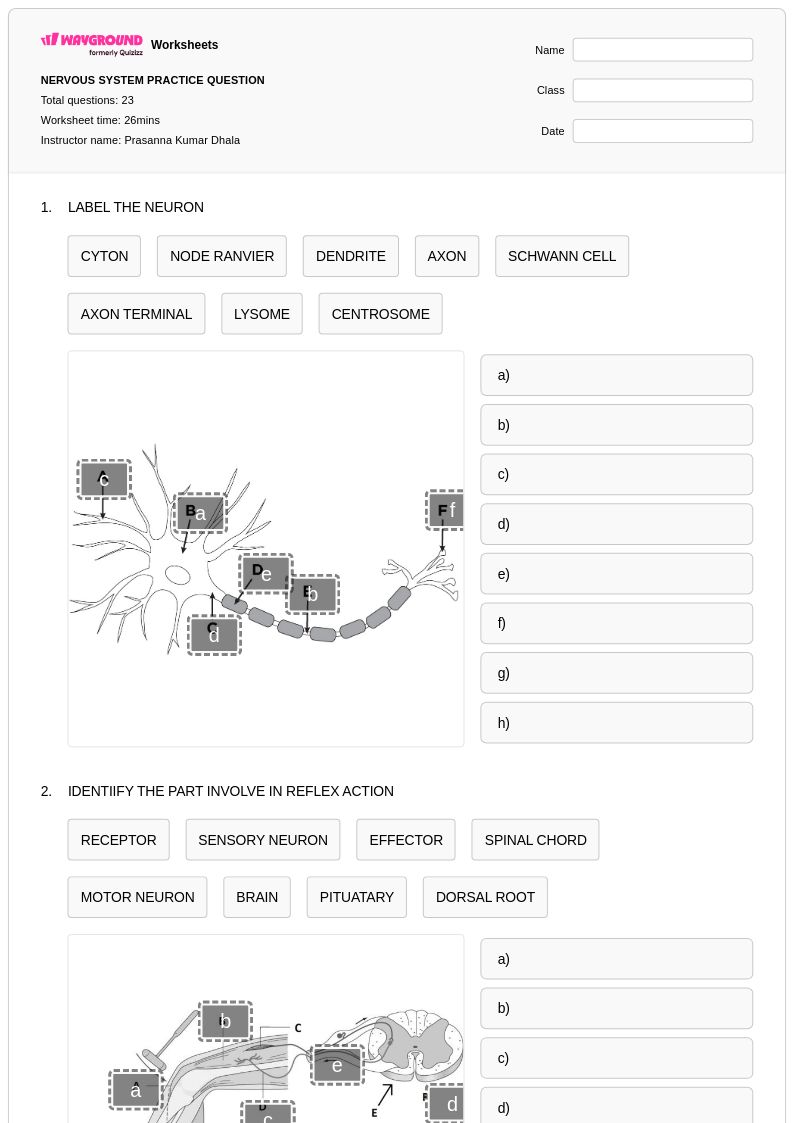
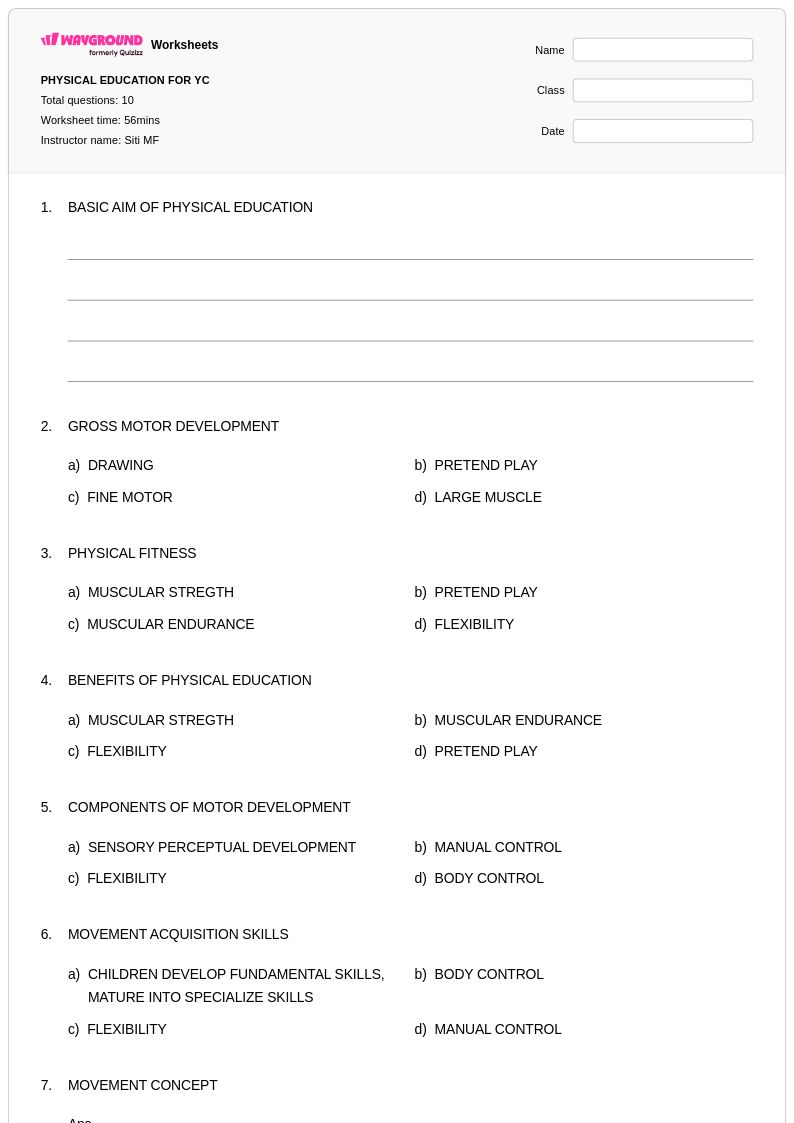
Free Printable Movement and Motor Skills worksheets
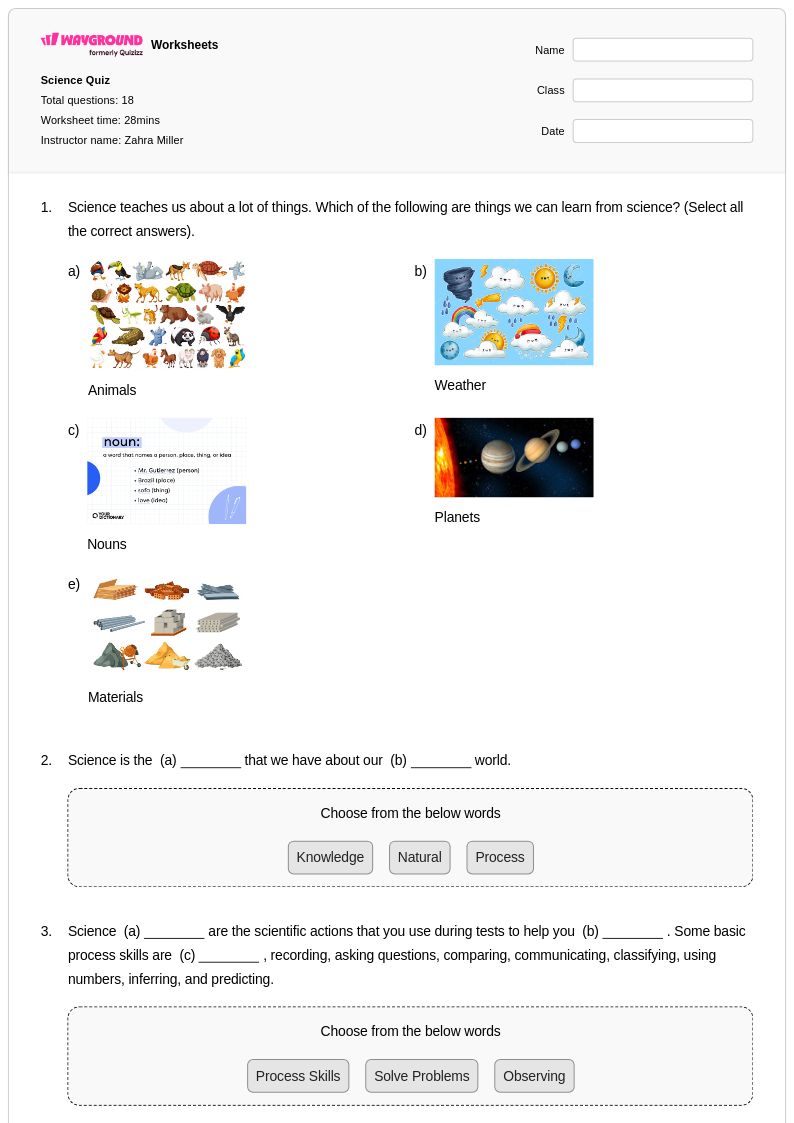
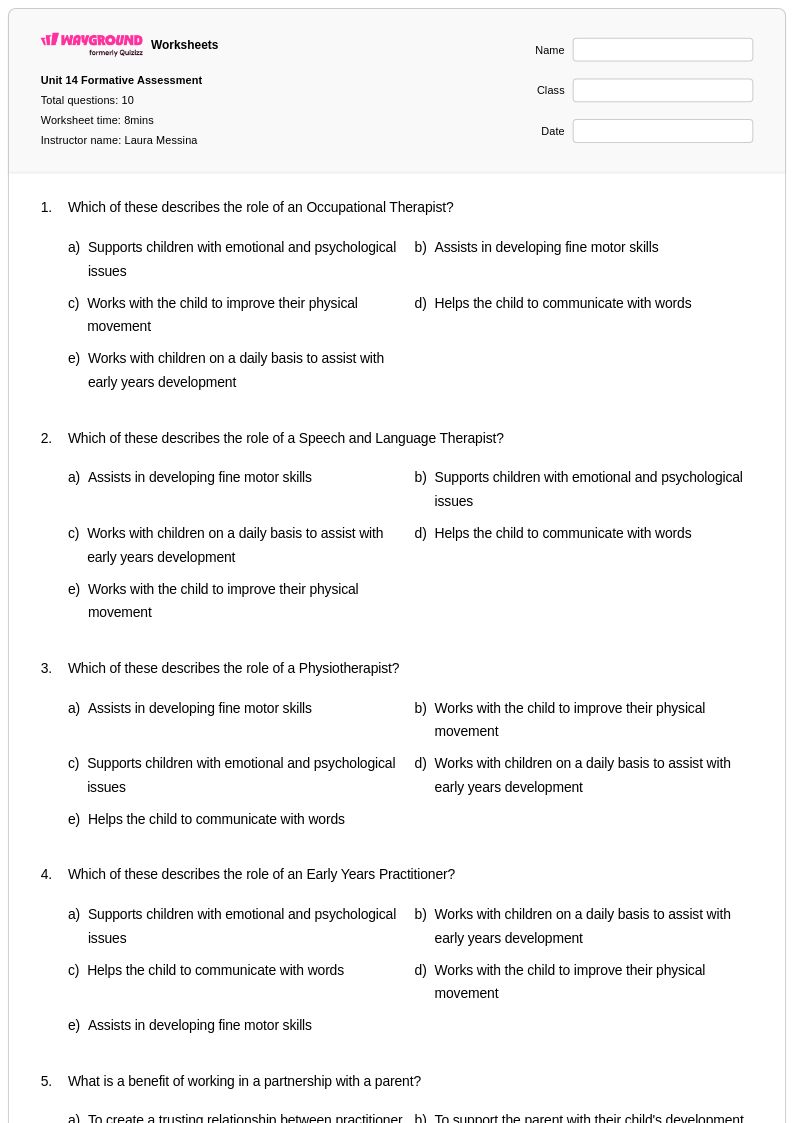
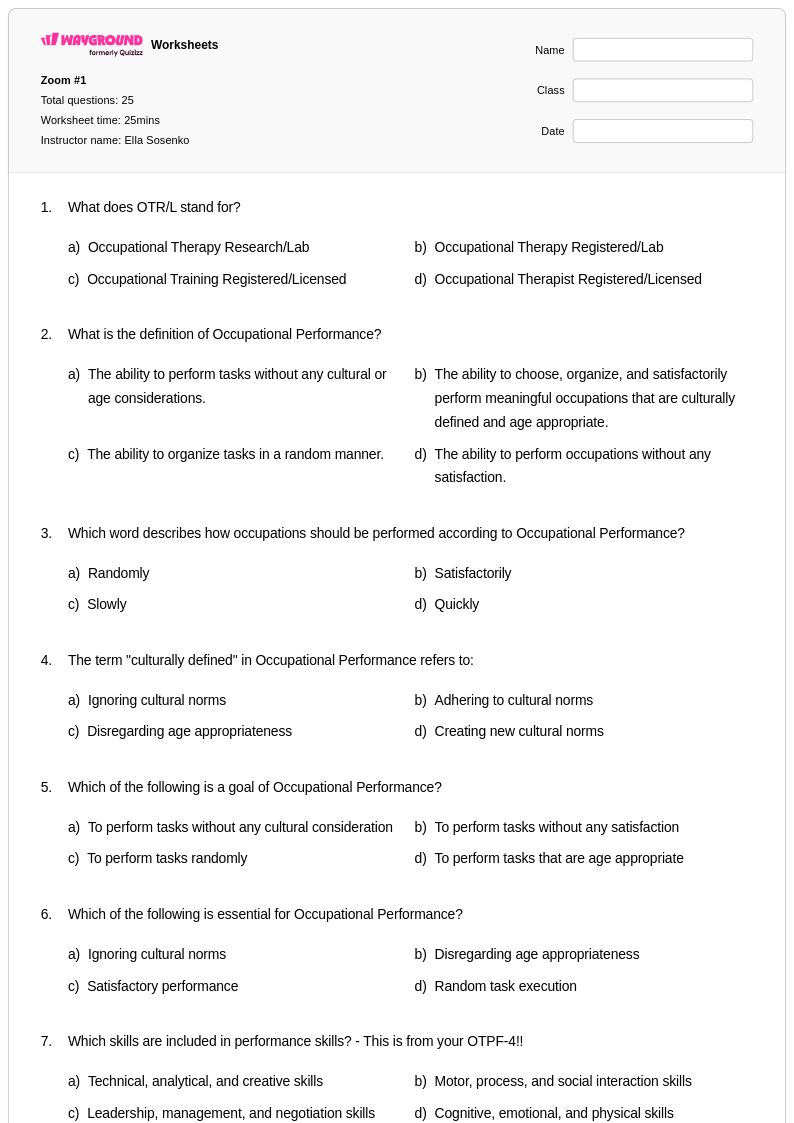
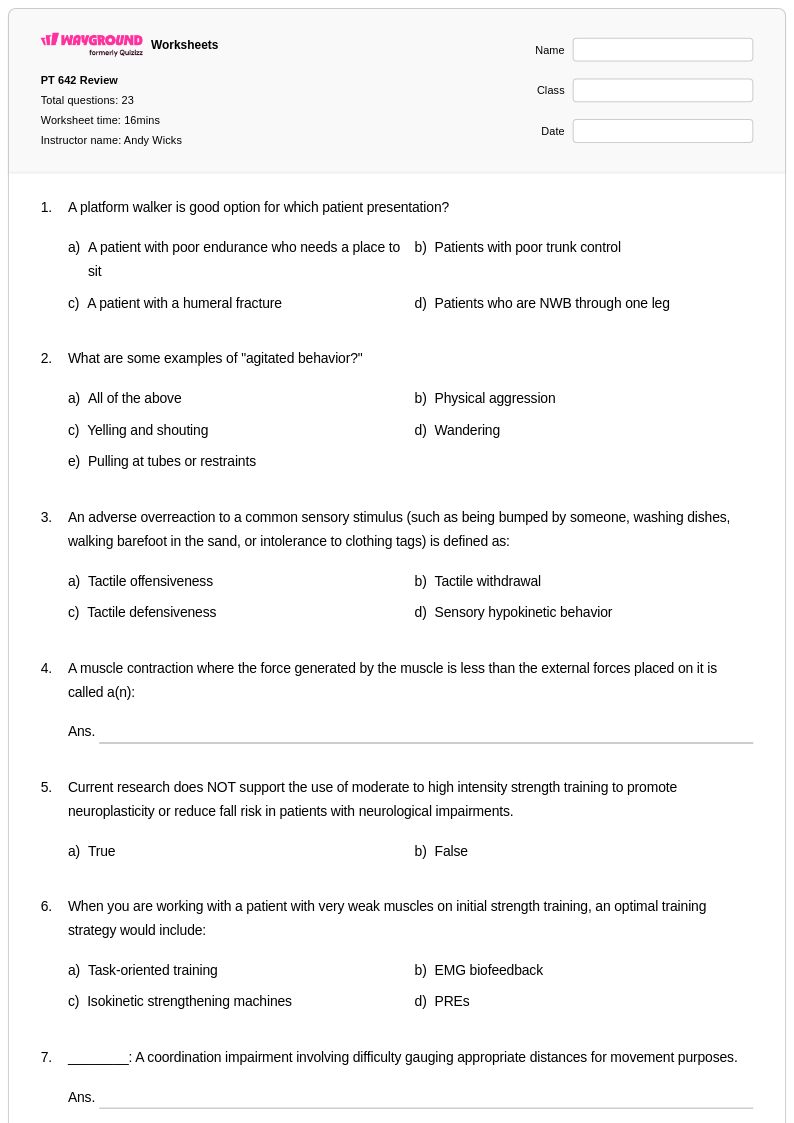
Enhance students' coordination, balance, and fundamental movement patterns with Wayground's comprehensive collection of free Movement and Motor Skills worksheets, featuring engaging printables and practice activities with complete answer keys.
Explore printable Movement and Motor Skills worksheets
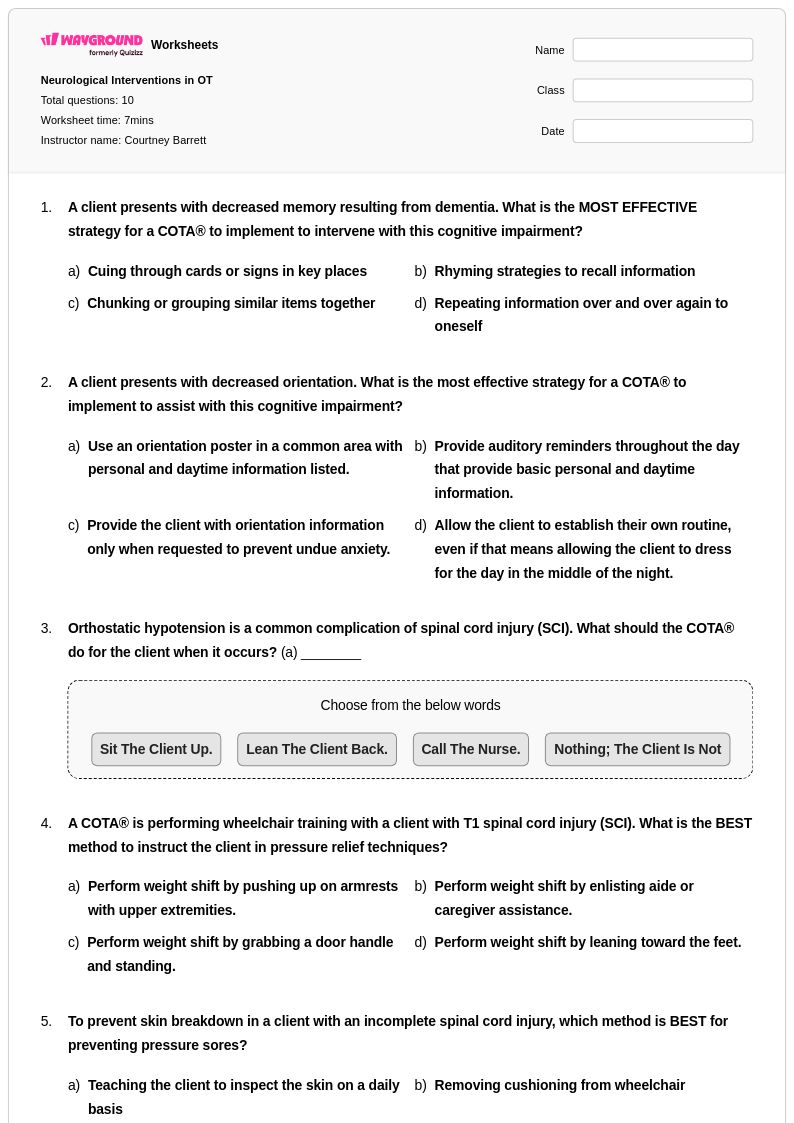
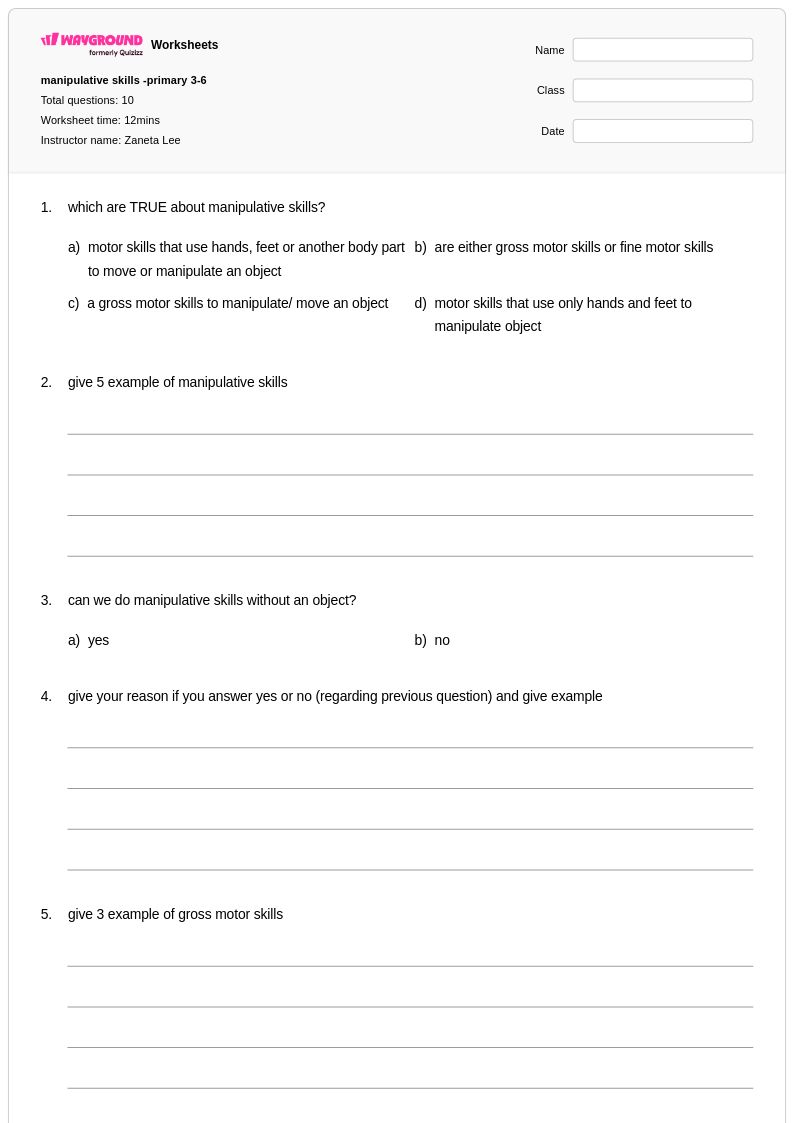
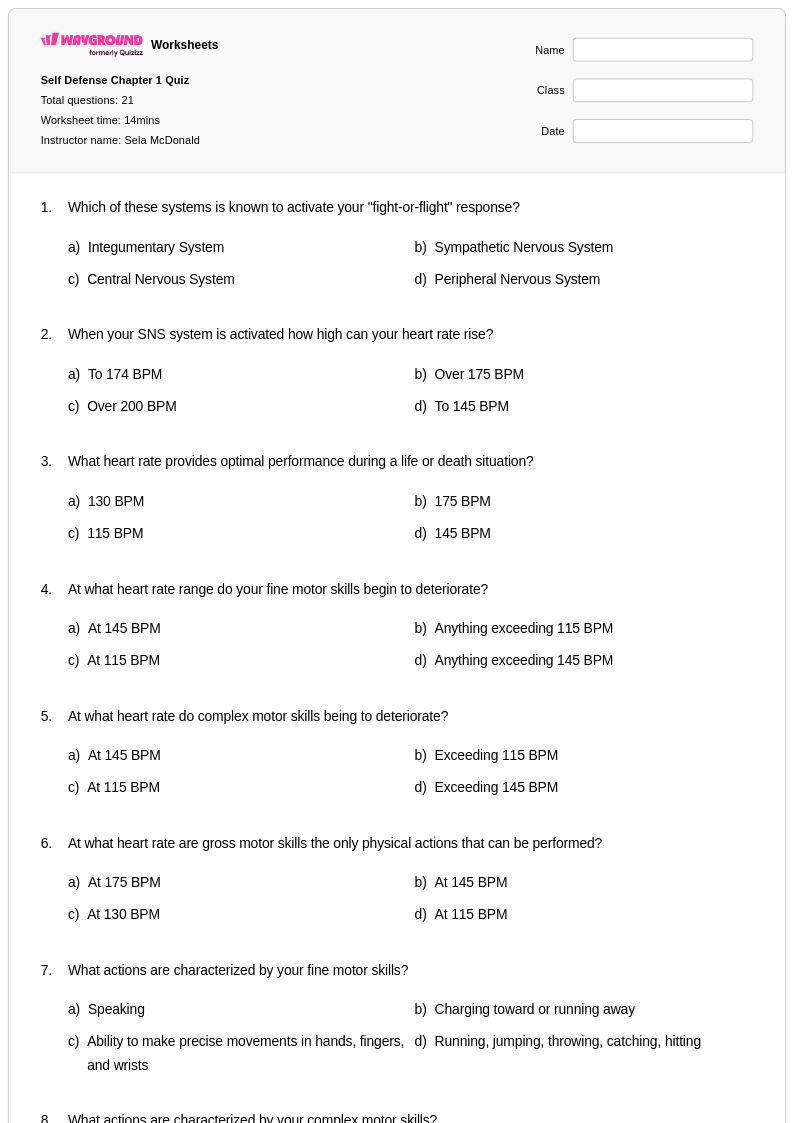
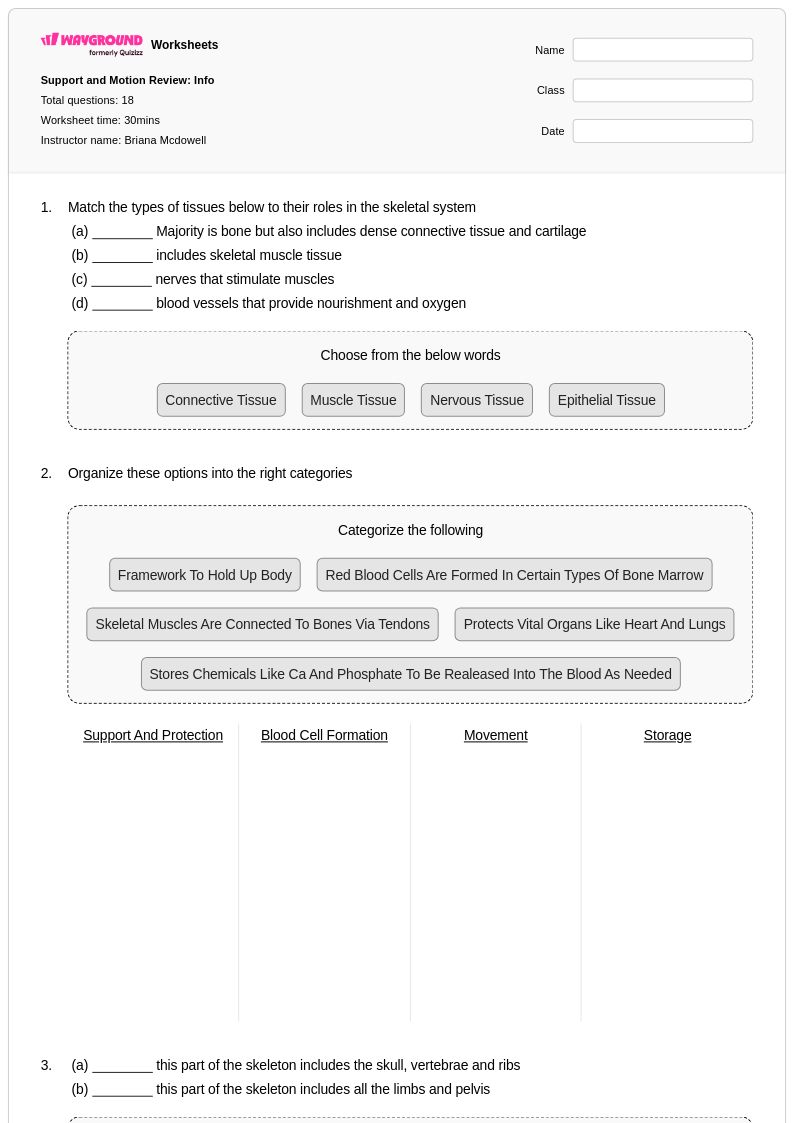
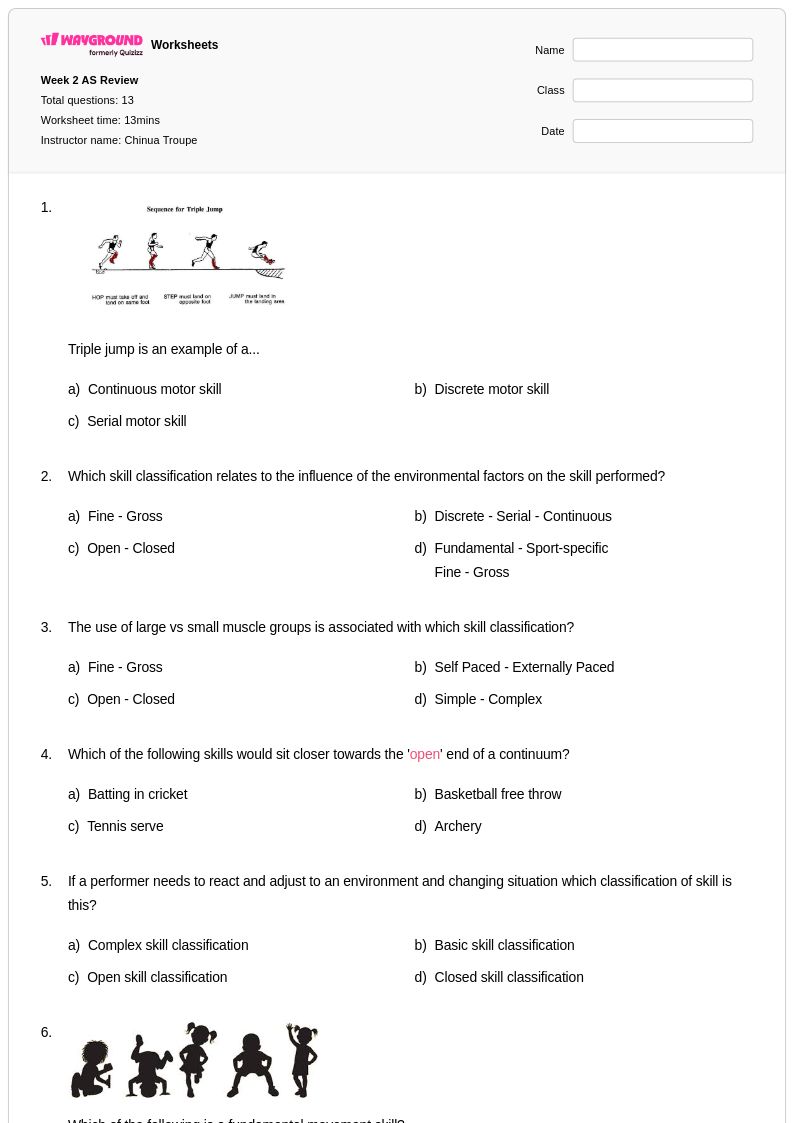
Movement and Motor Skills worksheets available through Wayground (formerly Quizizz) provide comprehensive practice opportunities for students to develop fundamental physical abilities and body awareness essential for lifelong fitness and athletic participation. These expertly designed worksheets focus on building gross motor skills, fine motor coordination, balance, spatial awareness, and movement pattern recognition through engaging activities that can be completed both in classroom and gymnasium settings. Teachers can access free printable resources that include detailed answer keys and structured practice problems covering locomotor skills like running and jumping, non-locomotor movements such as stretching and twisting, and manipulative skills including throwing and catching, all designed to strengthen students' kinesthetic understanding and physical literacy development.
Wayground (formerly Quizizz) supports physical education instructors with millions of teacher-created Movement and Motor Skills resources that feature robust search and filtering capabilities aligned with national and state physical education standards. The platform's differentiation tools enable educators to customize worksheets based on individual student needs and developmental stages, while flexible formatting options provide both printable pdf versions for traditional instruction and digital formats for interactive learning experiences. These comprehensive worksheet collections facilitate effective lesson planning by offering ready-to-use materials for skill practice, movement assessment, and remediation activities, while enrichment opportunities help advanced students explore complex movement patterns and develop deeper understanding of biomechanical principles underlying effective physical performance.
FAQs
How do I teach movement and motor skills in a physical education class?
Effective motor skills instruction begins with breaking down each movement into its component parts — demonstrating proper form, then guiding students through slow, deliberate practice before increasing speed or complexity. Teachers should sequence lessons from simple, isolated movements (like balance and body awareness) to more complex, integrated patterns (like locomotor combinations). Incorporating both gross motor activities in the gymnasium and fine motor tasks at the desk helps students build a complete physical literacy foundation.
What worksheets or activities help students practice motor skills?
Worksheets that target movement analysis, range of motion, and visual motor skills give students a structured framework for understanding what their bodies are doing and why. Practice activities covering locomotor skills like running and jumping, non-locomotor movements like stretching and twisting, and manipulative skills like throwing and catching reinforce kinesthetic understanding both in the gym and in the classroom. Written reflection and observation tasks also help students connect physical experience to conceptual knowledge.
What common mistakes do students make when learning motor skills?
One of the most frequent errors is students rushing through movement sequences without internalizing proper form, which builds faulty muscle memory that is difficult to correct later. Students also commonly struggle with eye-hand coordination tasks because they focus on the tool (pencil, ball) rather than the target, reducing accuracy. In fine motor tasks like pencil grip, incorrect finger placement is often overlooked early on, leading to fatigue and reduced legibility over time.
How can I assess student progress in movement and motor skills?
Movement assessment works best when it combines observational checklists with structured written tasks that ask students to identify and describe correct movement patterns. Worksheets focused on movement analysis and range of motion give teachers a documented record of student understanding beyond what can be captured through physical observation alone. Using pre- and post-assessment worksheets allows teachers to track developmental progress across a unit and identify students who need targeted remediation.
How do I use Wayground's Movement and Motor Skills worksheets in my classroom or gym?
Wayground's Movement and Motor Skills worksheets are available as printable PDFs for traditional classroom and gymnasium settings, as well as in digital formats for technology-integrated learning environments. Teachers can also host worksheets as a quiz directly on Wayground, making them suitable for individual practice, partner review, or whole-class assessment. All worksheets include complete answer keys, reducing prep time and making it easier to provide immediate feedback to students.
How can I differentiate movement and motor skills instruction for students at different developmental stages?
Differentiation in motor skills instruction means adjusting task complexity, the amount of sensory input students receive, and the cognitive demands placed alongside physical tasks. On Wayground, teachers can apply individual accommodations such as read aloud support for students who need questions read to them, reduced answer choices to lower cognitive load, and extended time settings for students who need additional processing time. These accommodations can be assigned per student without notifying peers, so all students engage with the same materials in a way that matches their individual needs.