Free Printable MyPlate Worksheets for Kindergarten
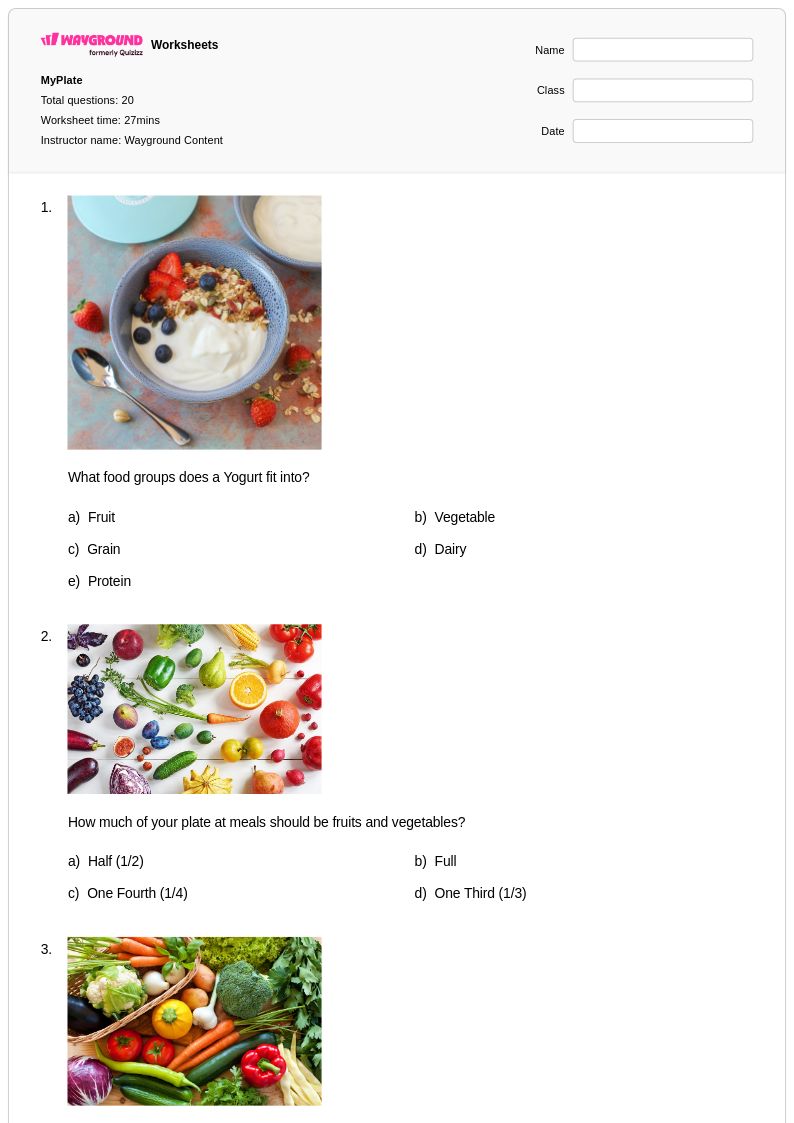
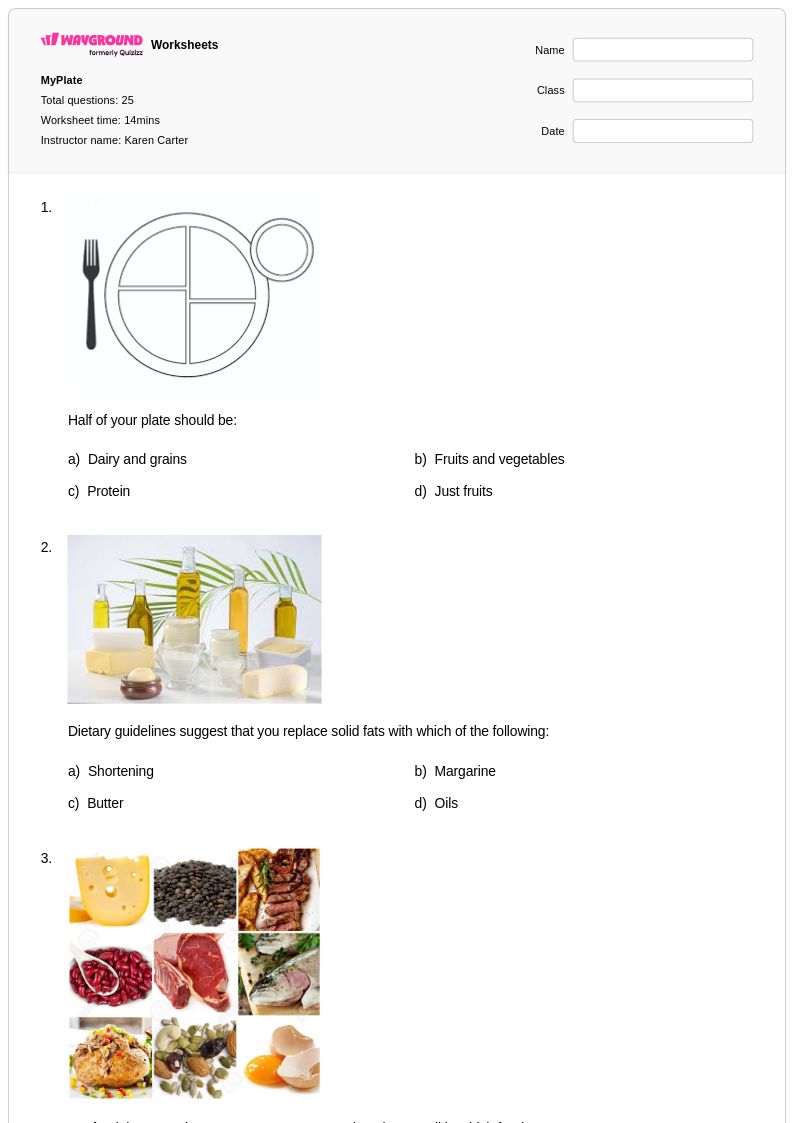
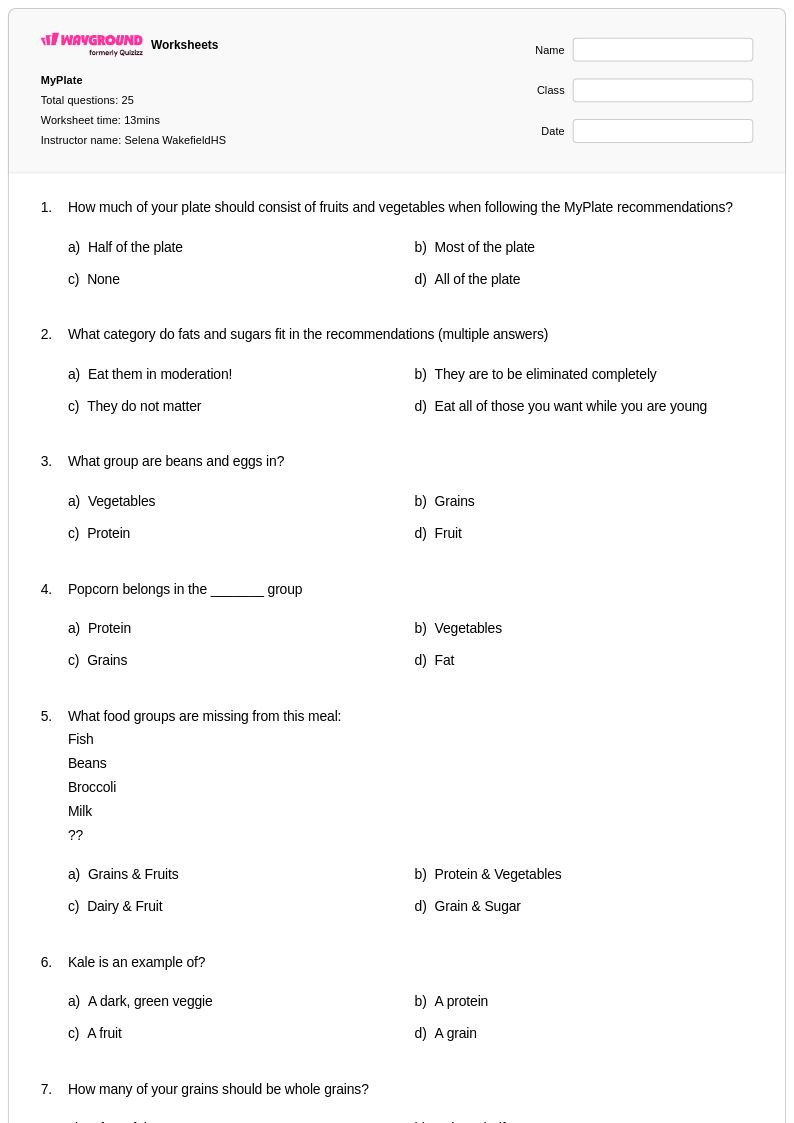
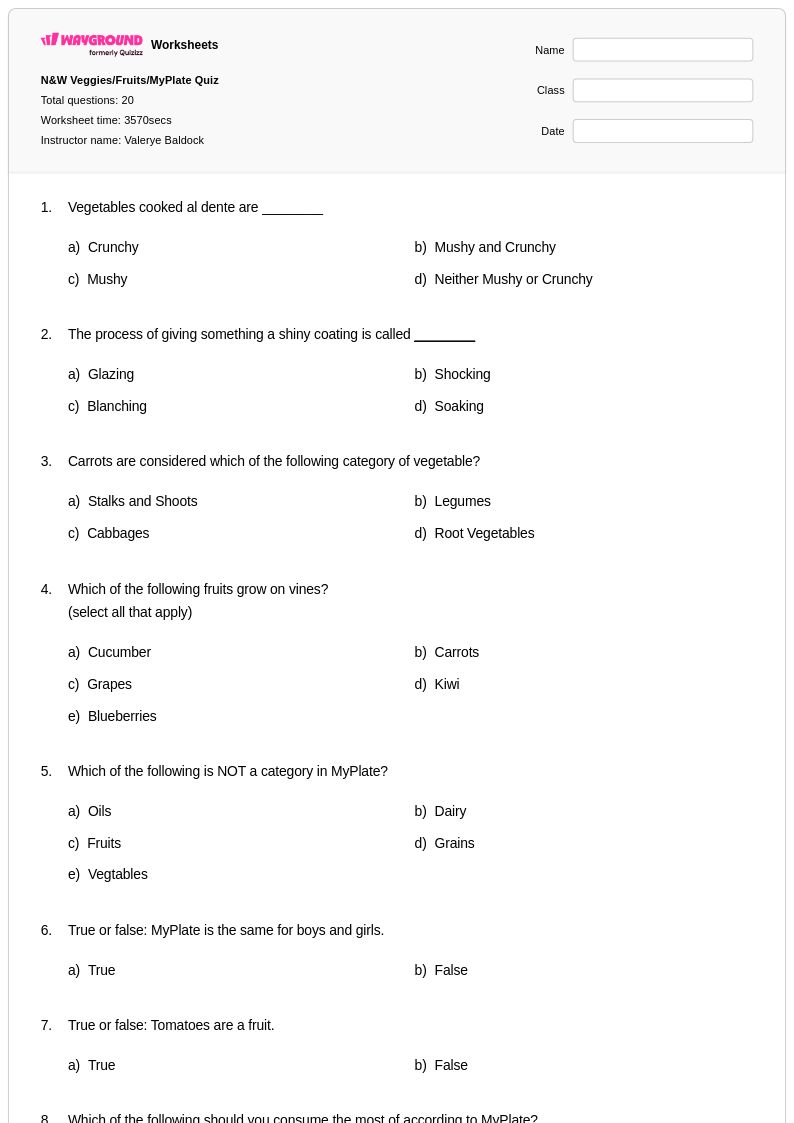
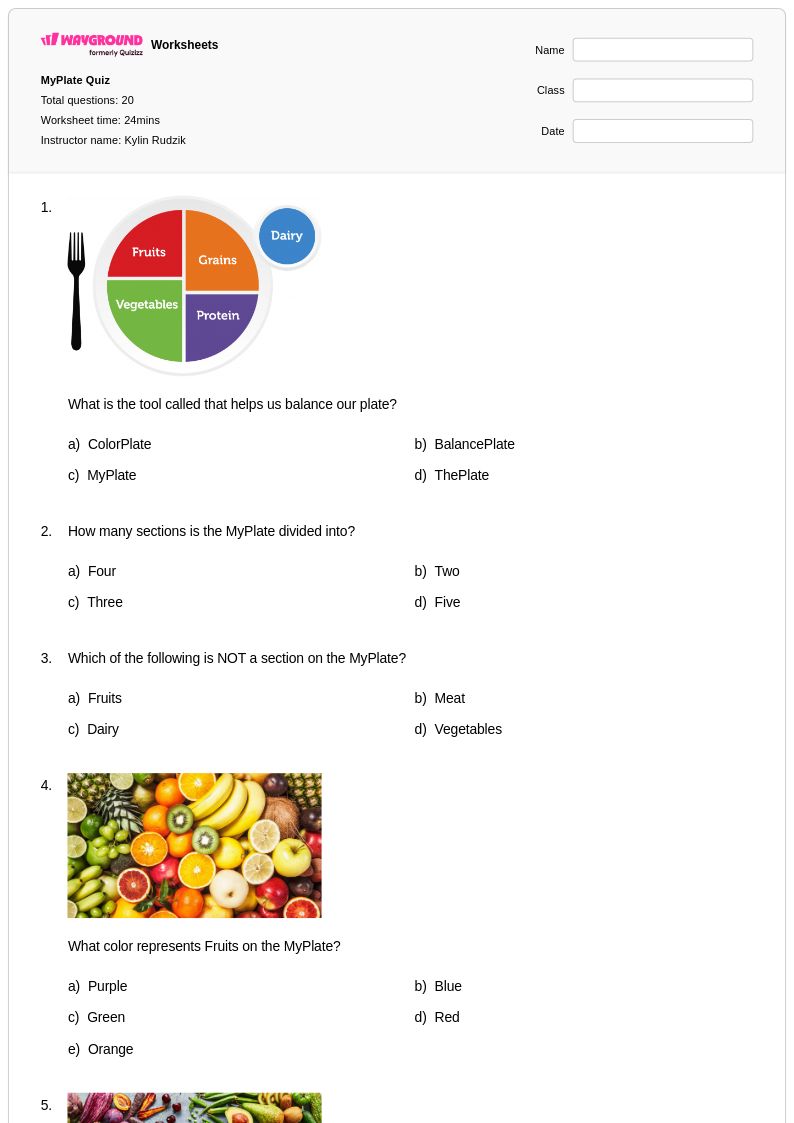
Free kindergarten MyPlate worksheets and printables help young students learn healthy eating habits through engaging practice problems, colorful PDFs, and comprehensive answer keys available on Wayground.
Explore printable MyPlate worksheets for Kindergarten
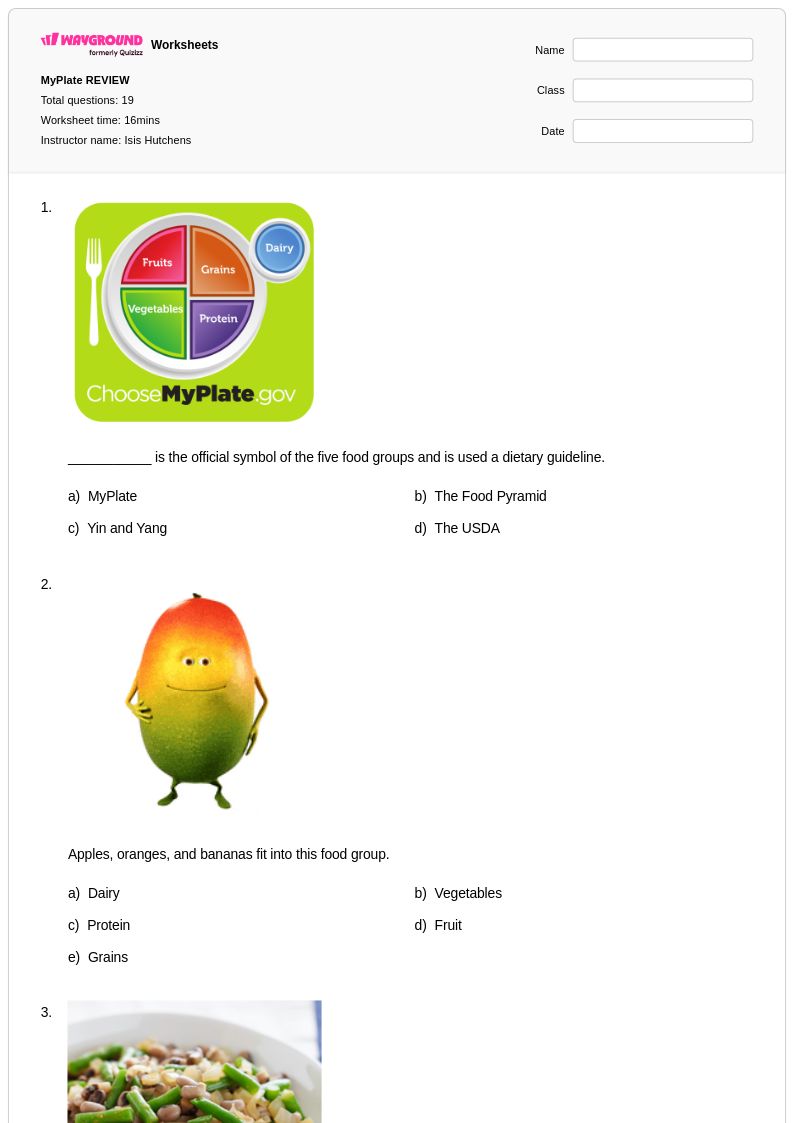
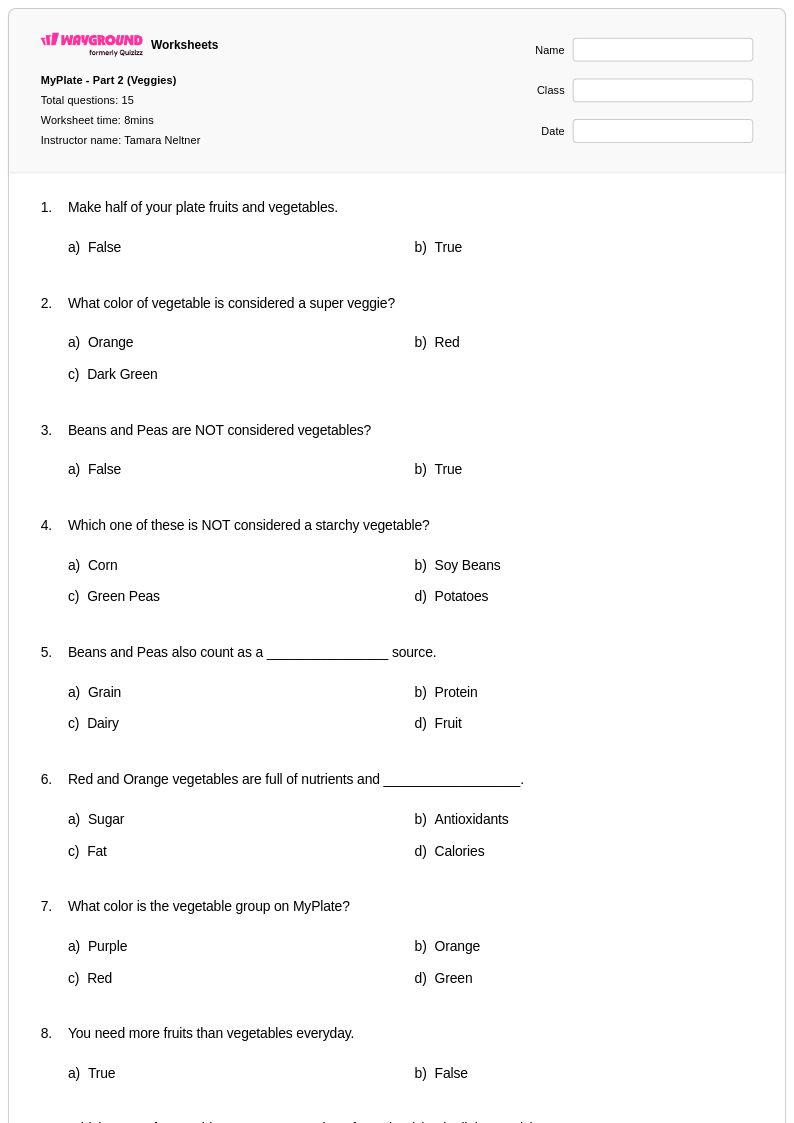
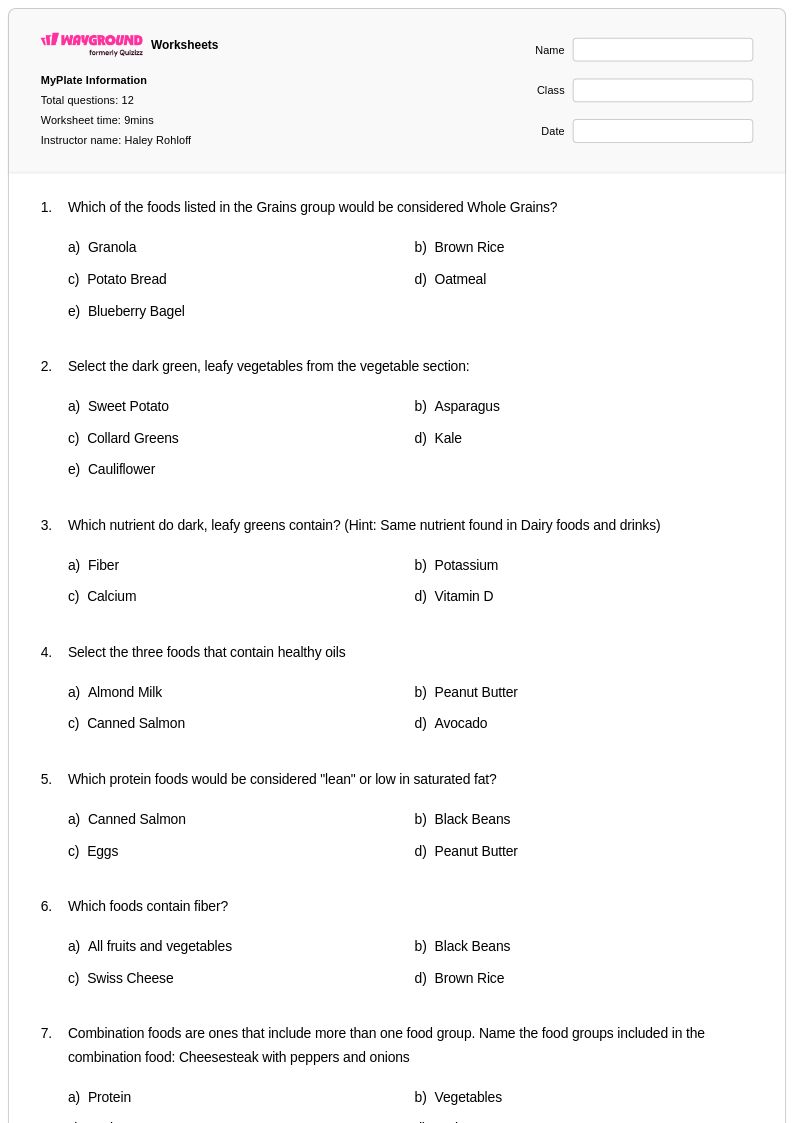
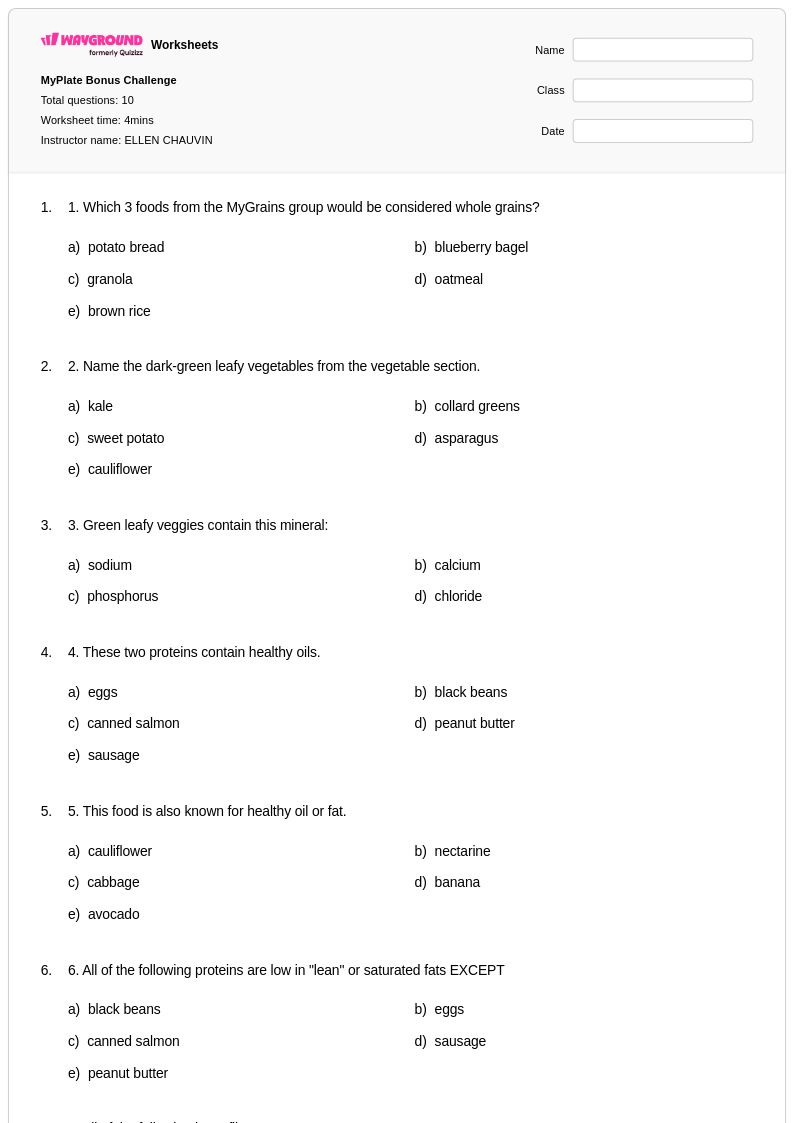
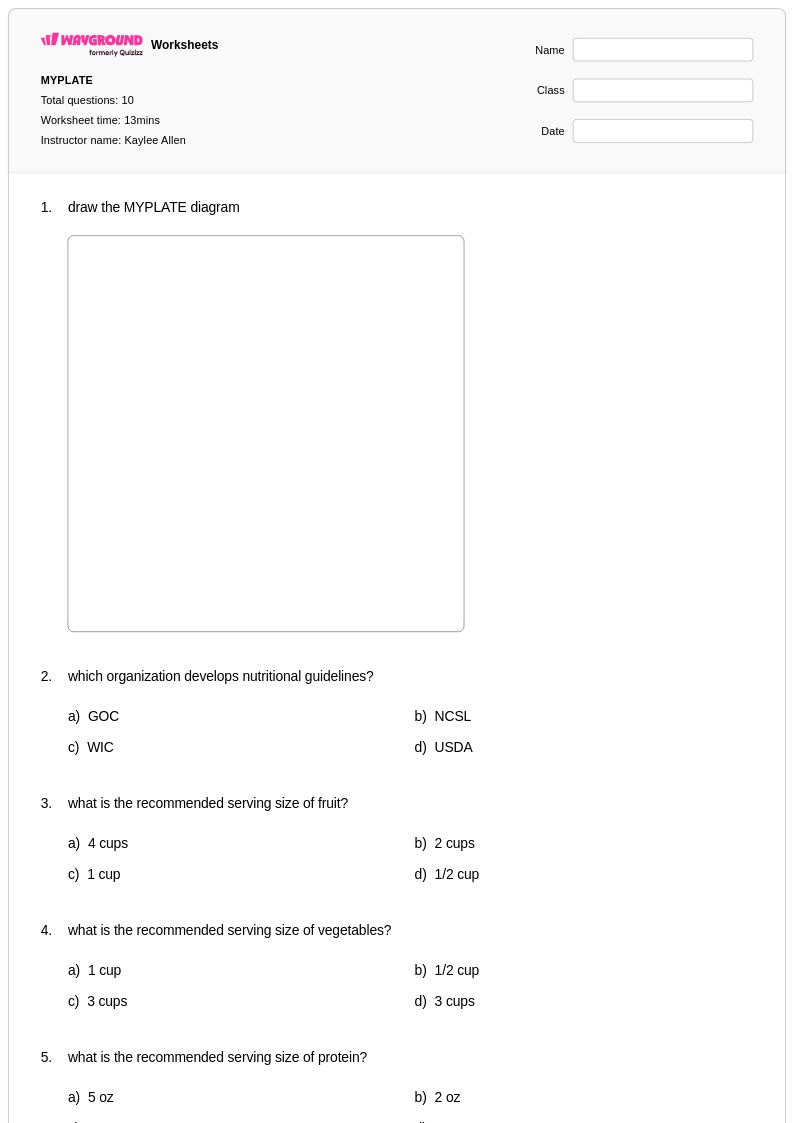
MyPlate worksheets for kindergarten students available through Wayground (formerly Quizizz) introduce young learners to the foundational concepts of balanced nutrition through engaging, age-appropriate activities. These educational resources help kindergarteners develop essential skills in food group identification, healthy eating habits, and basic nutritional awareness by exploring the five food groups represented in the MyPlate model. The worksheets strengthen critical thinking abilities as students practice categorizing foods, understanding portion concepts, and making connections between different types of nutrients and their benefits. Teachers can access comprehensive materials that include visual exercises, interactive activities, and practice problems designed specifically for early elementary learners, with many resources offering answer keys and available as free printables in convenient pdf format.
Wayground (formerly Quizizz) empowers educators with an extensive collection of teacher-created MyPlate resources, drawing from millions of carefully curated materials that support kindergarten nutrition education. The platform's robust search and filtering capabilities allow teachers to quickly locate worksheets that align with specific learning objectives and educational standards, while differentiation tools enable customization for diverse learning needs and abilities. These comprehensive resources are available in both printable and digital formats, including downloadable pdf versions, making them versatile for various classroom environments and teaching approaches. The flexible customization options support effective lesson planning, targeted skill practice, and both remediation and enrichment activities, ensuring that kindergarten students receive appropriate scaffolding as they build their understanding of healthy eating principles and develop lifelong wellness habits.
FAQs
How do I teach MyPlate to students in a health or PE class?
Teaching MyPlate effectively starts with introducing the five food groups — fruits, vegetables, grains, protein, and dairy — and explaining the proportional relationships between them as shown in the USDA's visual plate model. From there, hands-on activities such as meal-planning tasks and food categorization exercises help students move from memorization to application. Connecting MyPlate concepts to students' real daily meals makes the content more relevant and easier to retain.
What kinds of exercises help students practice the MyPlate food groups?
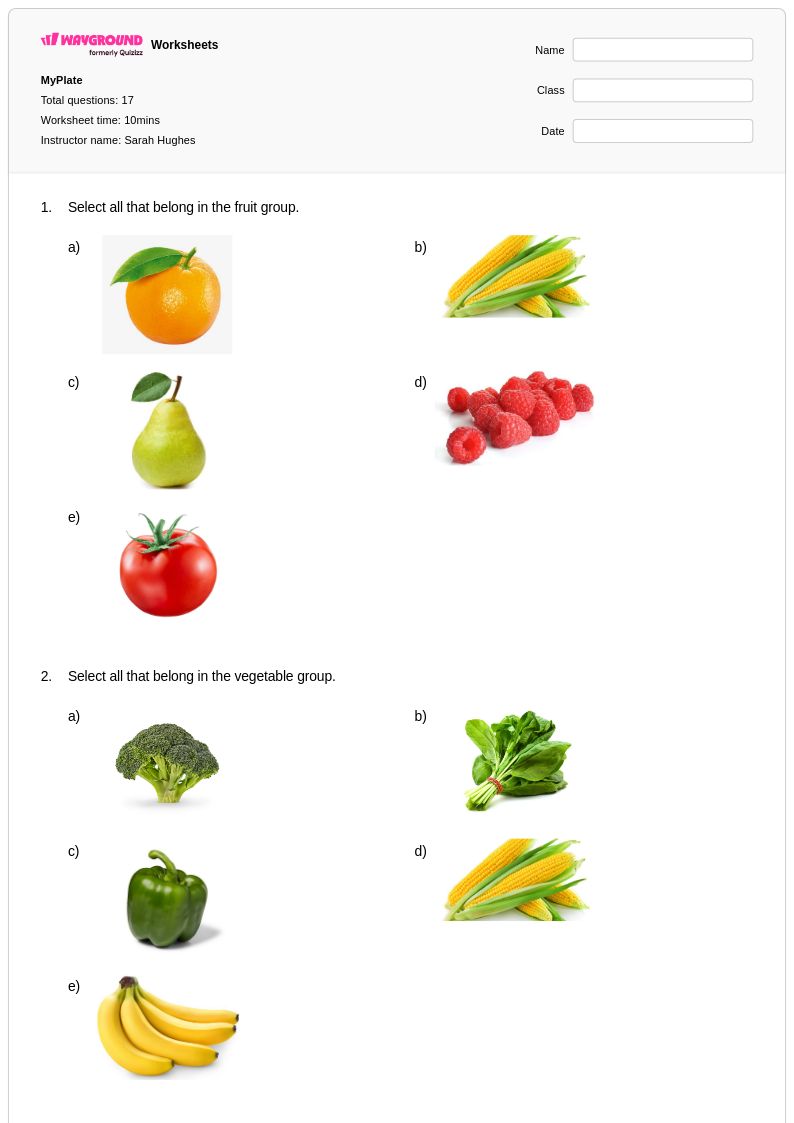
Effective practice exercises include categorizing food items into the five MyPlate groups, analyzing sample meal plates for balance and portion accuracy, and completing fill-in activities where students build their own balanced meals. Practice problems that ask students to evaluate whether a meal meets MyPlate guidelines are especially useful for reinforcing both identification and critical thinking skills. These exercises work well as independent practice, partner activities, or formative assessments.
What misconceptions do students commonly have about MyPlate and nutrition?
A common misconception is that equal portions of each food group are required at every meal, when in fact MyPlate shows that vegetables and grains should make up the largest portions. Students also frequently confuse the protein and dairy sections, or misclassify foods such as cheese (dairy) as protein. Another typical error is assuming that any food within a group is equally healthy, which is worth addressing directly when teaching portion quality alongside portion size.
How can I use MyPlate worksheets to differentiate instruction for students at different skill levels?
For students who need additional support, simplified worksheets that focus on identifying food groups with visual cues work well as an entry point before moving to portion analysis. More advanced students can be challenged with meal-planning scenarios that require them to justify food choices against MyPlate guidelines. On Wayground, teachers can also apply accommodations such as read aloud, reduced answer choices, and extended time to individual students without disrupting the rest of the class.
How do I use Wayground's MyPlate worksheets in my classroom?
Wayground's MyPlate worksheets are available as printable PDFs for traditional classroom use and in digital formats for technology-integrated or remote learning environments. Teachers can also host the worksheets as a quiz directly on Wayground, which enables real-time student responses and automatic grading. All worksheets include answer keys, making them straightforward to use for instruction, practice, or assessment without additional prep.
How do MyPlate worksheets support physical education curriculum standards?
MyPlate worksheets align with health and physical education standards that require students to demonstrate knowledge of nutrition, wellness, and healthy lifestyle choices. Activities that ask students to analyze meal compositions or make dietary decisions connect directly to standards around applying health literacy to real-world situations. Wayground's collection is built by educators and designed to support these curriculum goals across a range of instructional contexts, from initial instruction to ongoing skill reinforcement.