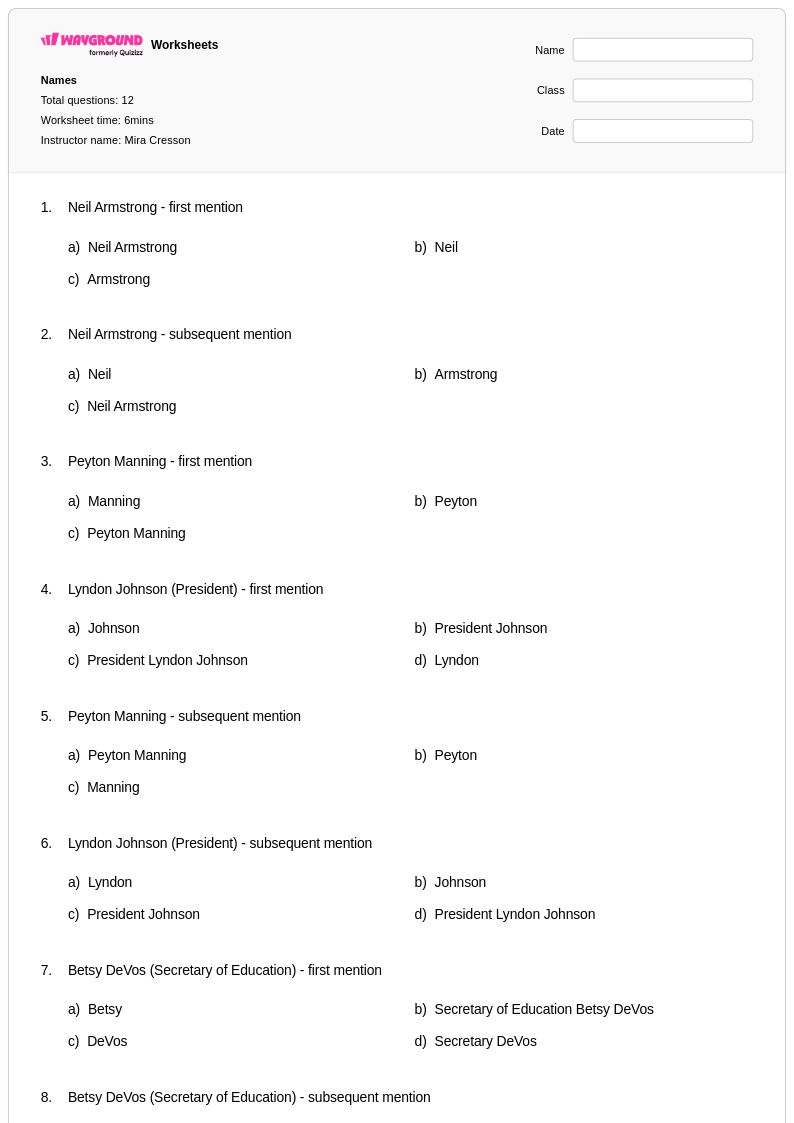
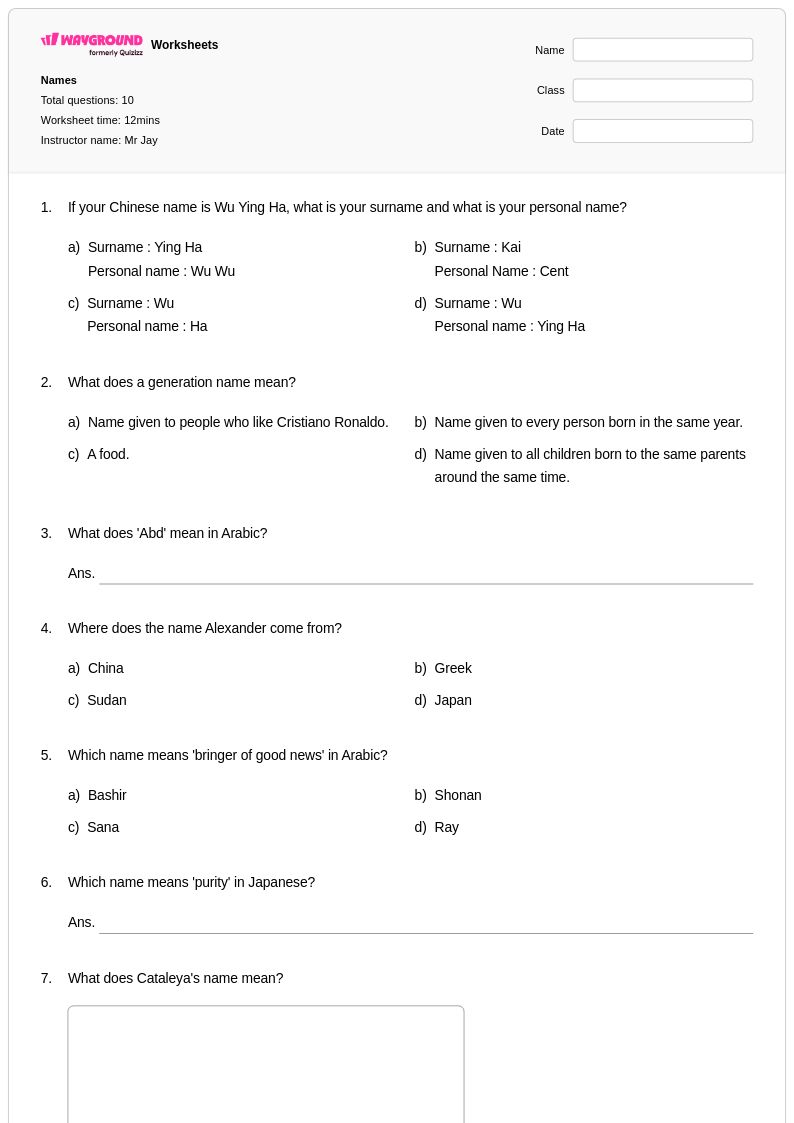
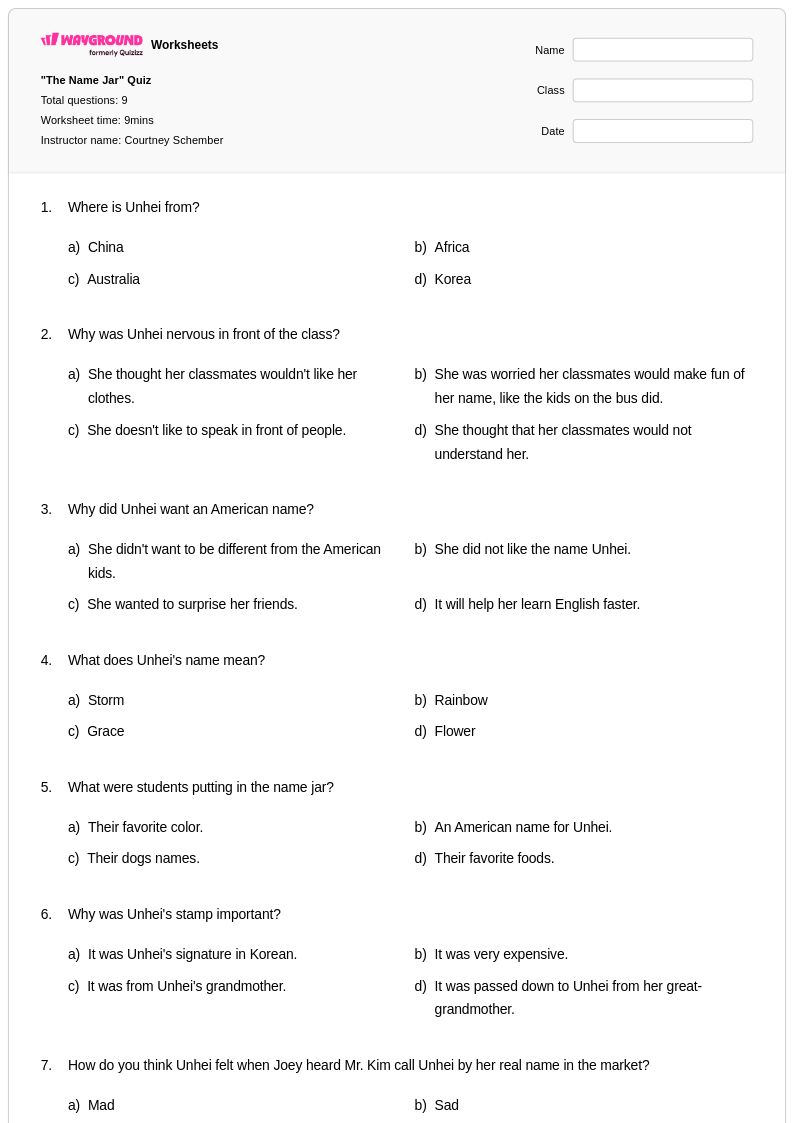
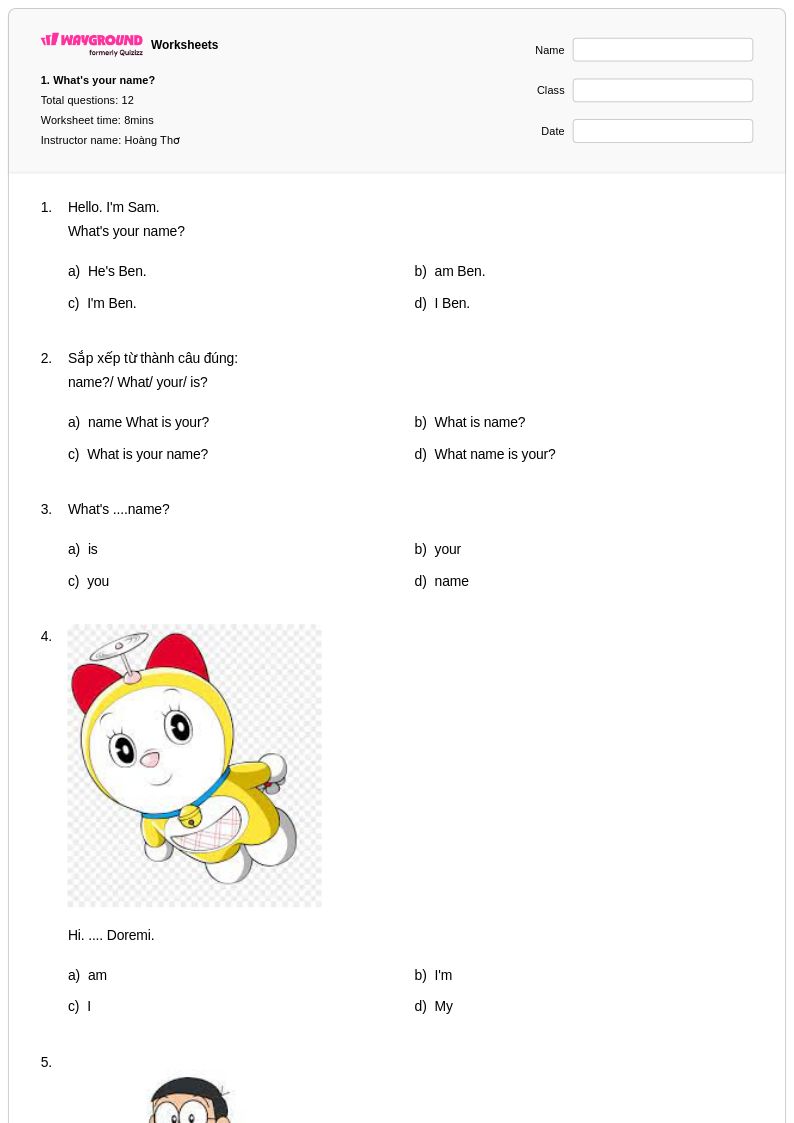
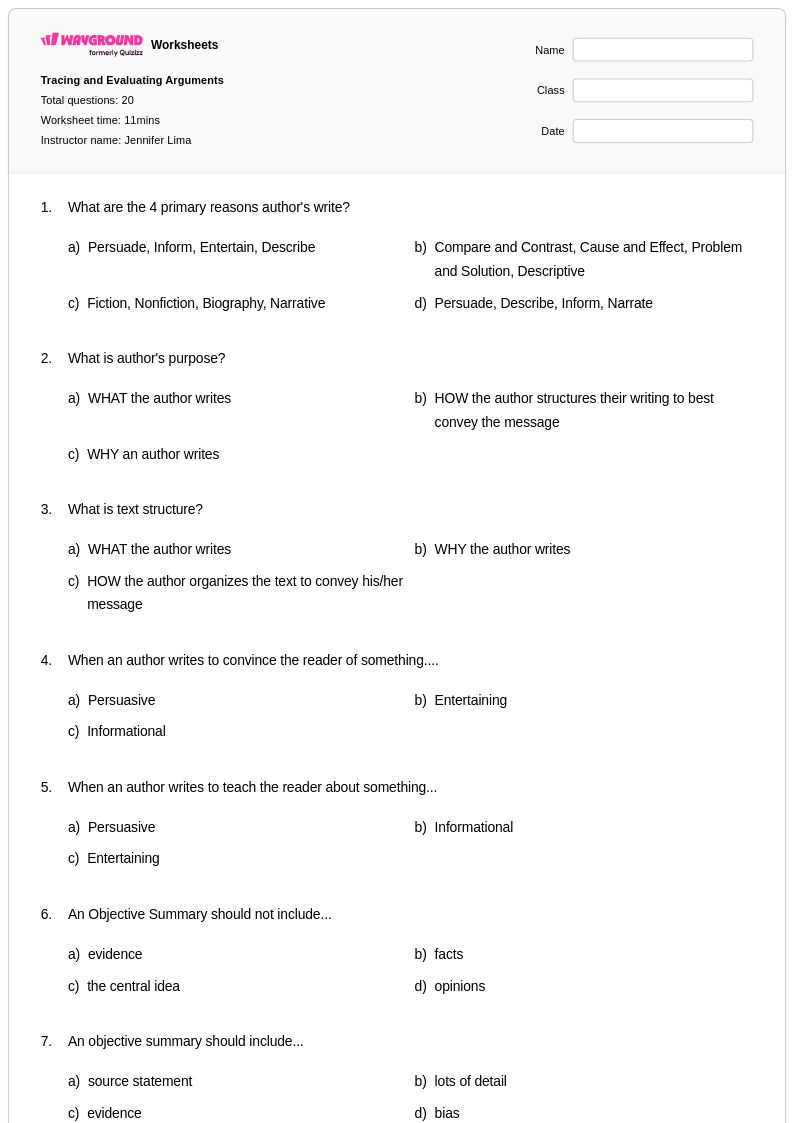
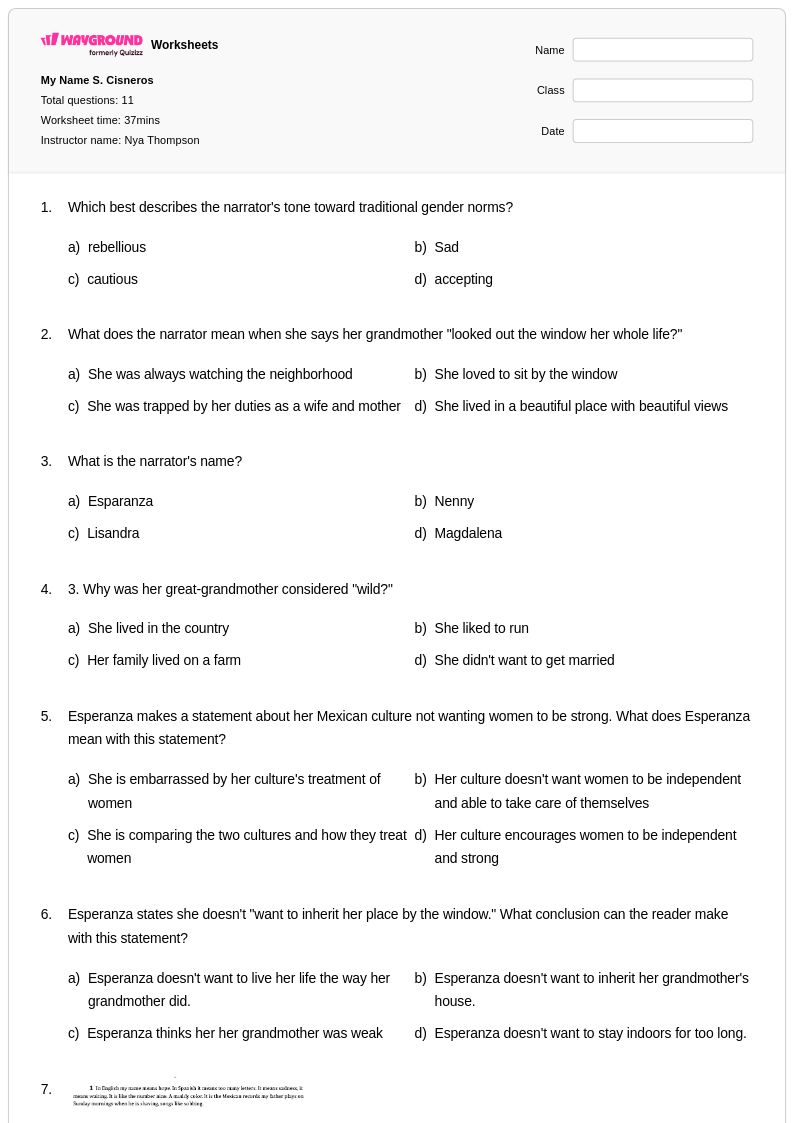
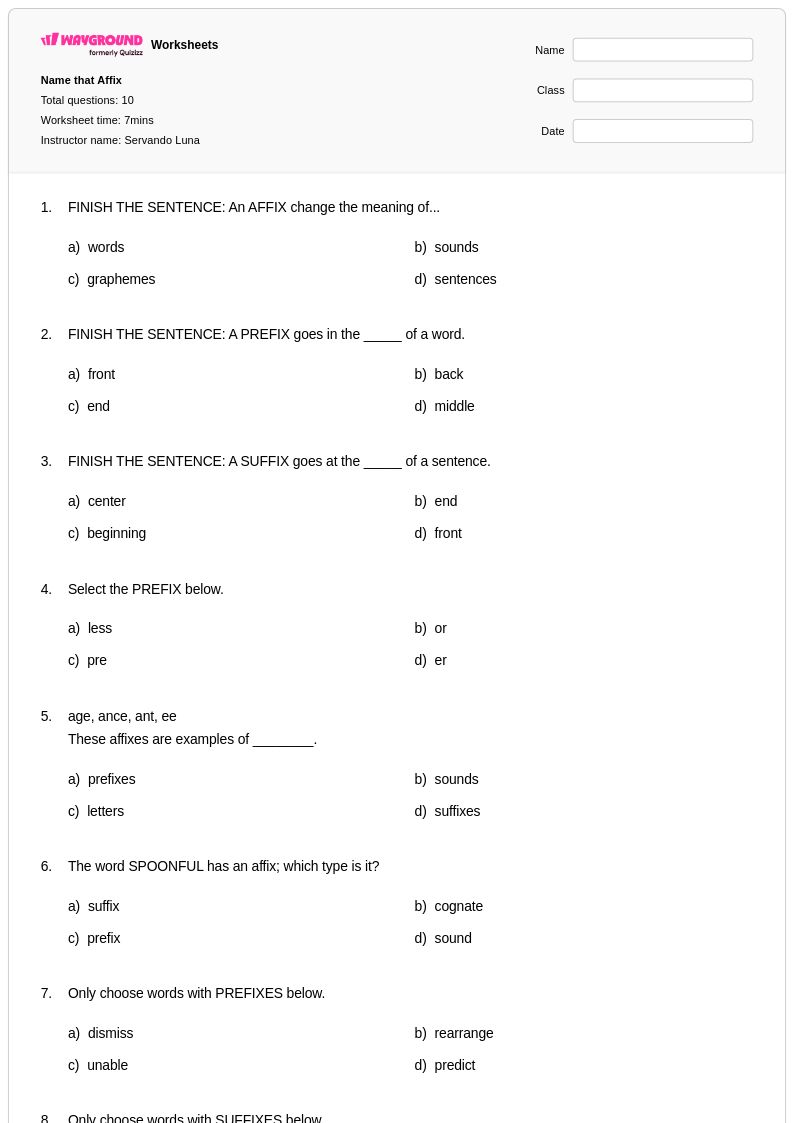
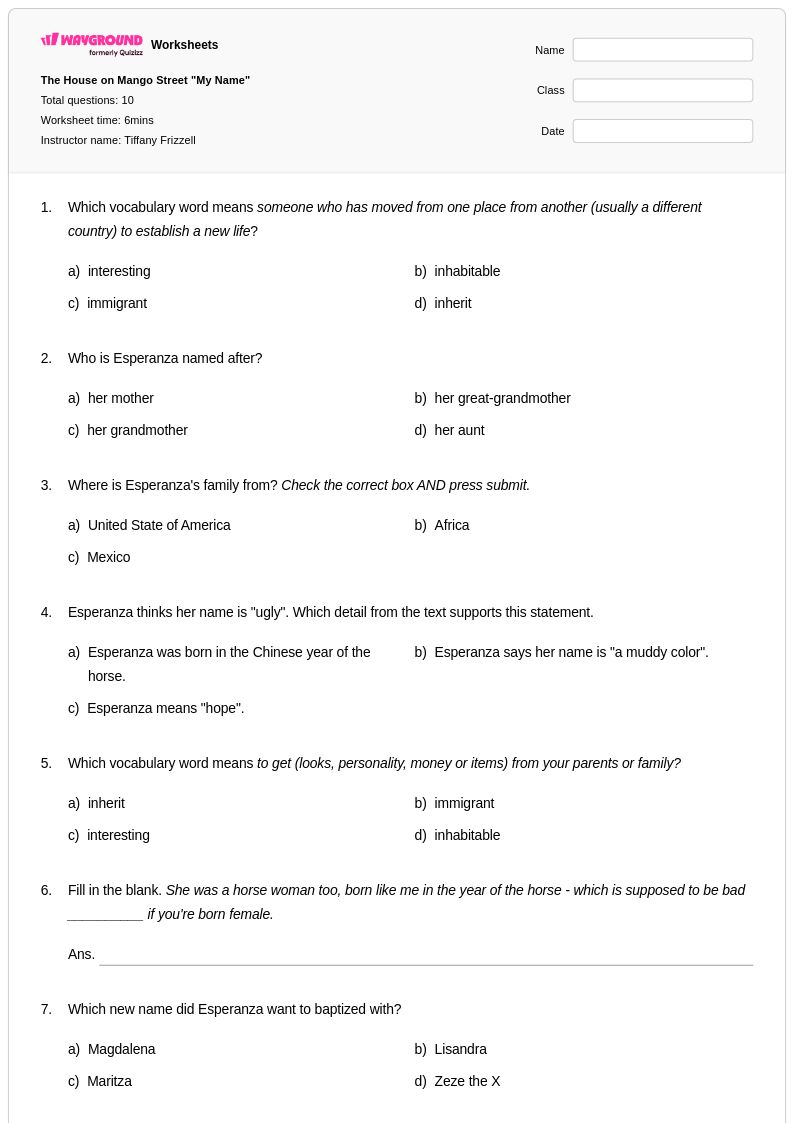
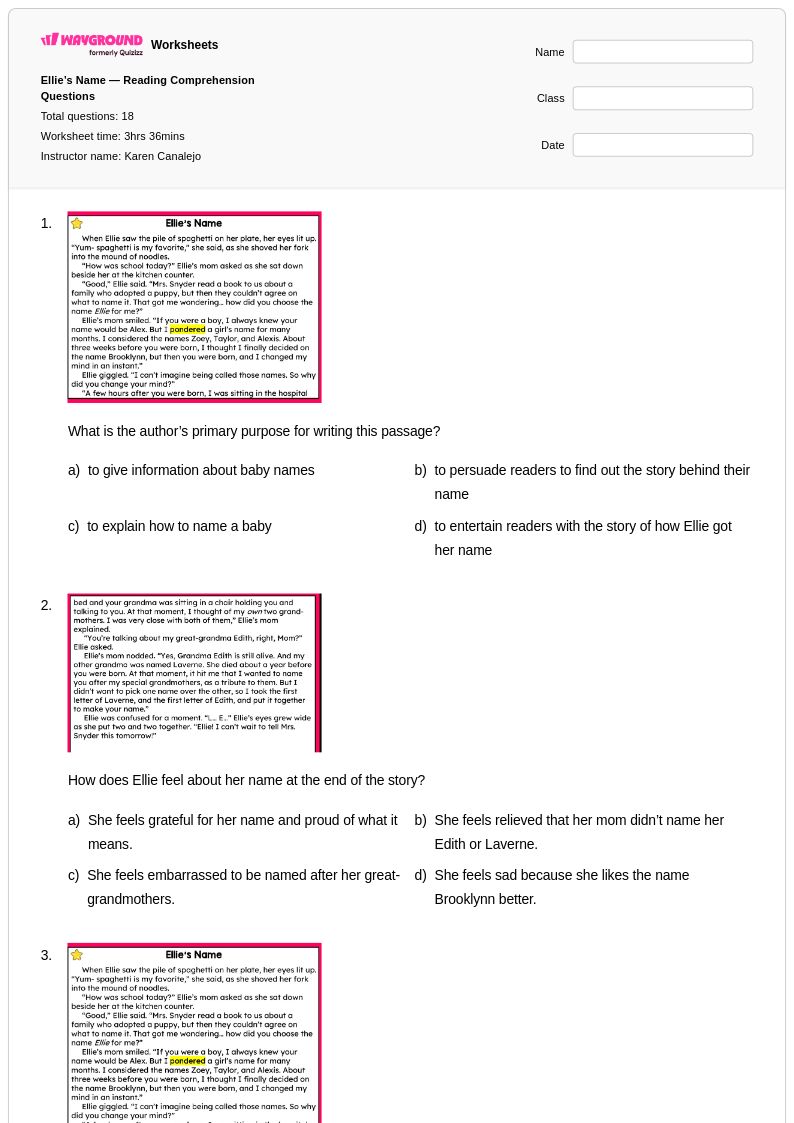
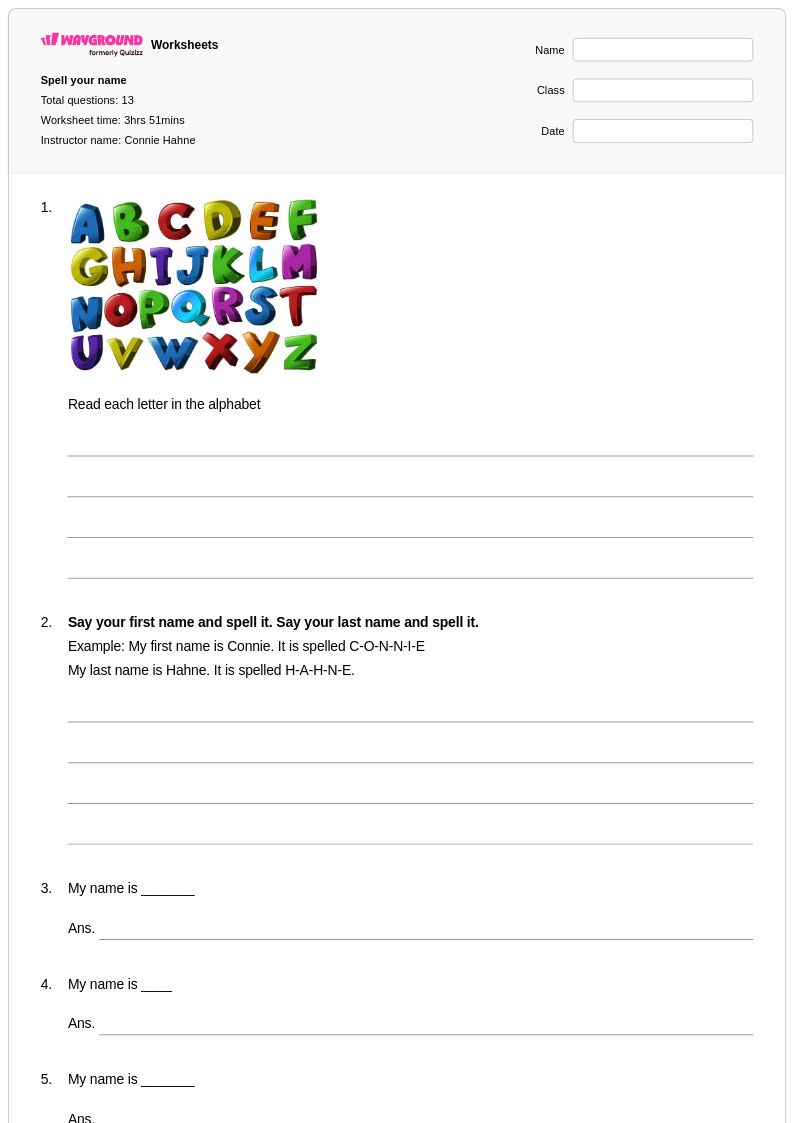
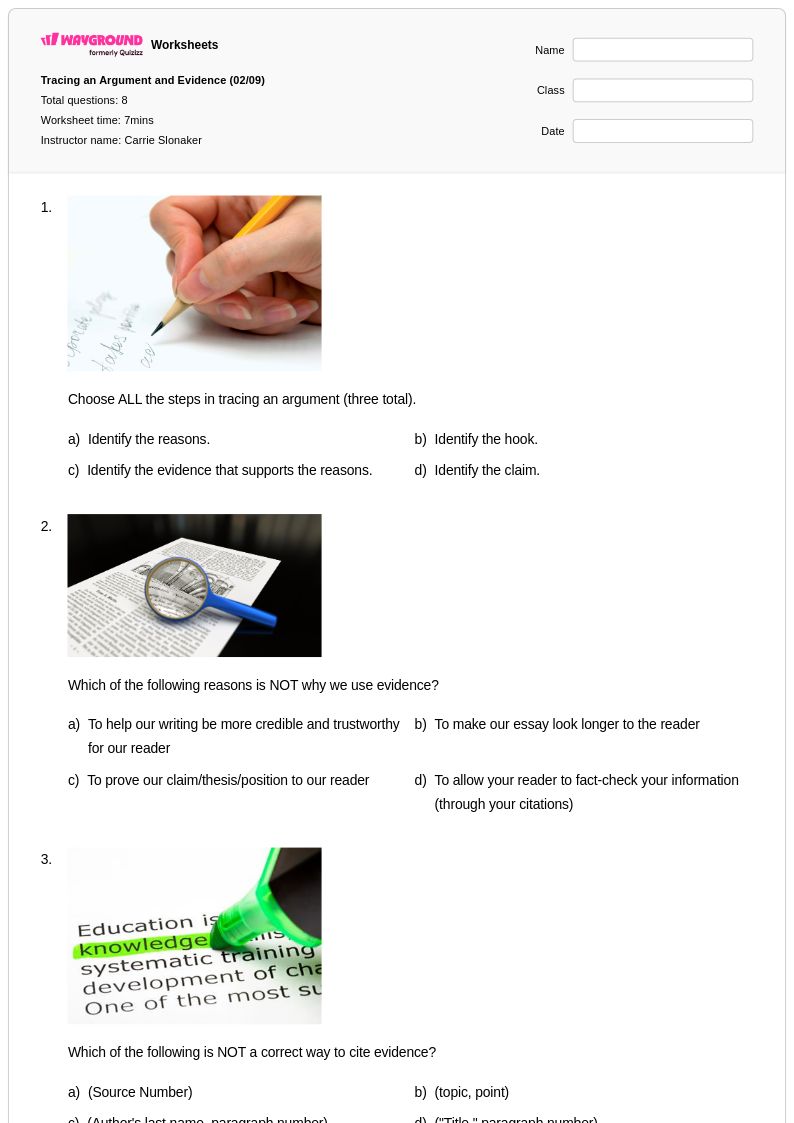
Access free name tracing worksheets and printables from Wayground to help students develop proper letter formation, fine motor skills, and handwriting fundamentals through engaging practice problems with answer keys.
Name tracing worksheets available through Wayground (formerly Quizizz) provide essential handwriting practice that helps students develop proper letter formation, fine motor control, and personal identity recognition. These carefully designed printables focus on the fundamental skill of tracing individual letters that spell out a child's name, creating a meaningful connection between handwriting practice and self-recognition. Each worksheet typically features dotted or outlined letters that guide students through proper stroke sequences, spacing, and letter sizing while building the muscle memory necessary for independent writing. Teachers can access comprehensive collections that include answer keys showing proper letter formation techniques, and these free resources are available as downloadable pdf files that make classroom implementation seamless and efficient.
Wayground's extensive library contains millions of teacher-created name tracing resources that support educators in delivering differentiated handwriting instruction across various skill levels. The platform's robust search and filtering capabilities allow teachers to quickly locate worksheets that match specific learning objectives, whether for initial letter recognition, proper pencil grip development, or advanced handwriting fluency. These customizable materials are available in both printable and digital formats, enabling flexible lesson planning that accommodates diverse classroom needs and learning environments. Teachers can easily modify worksheets to provide targeted remediation for struggling students or create enrichment activities for advanced learners, while the standards-aligned content ensures that handwriting practice connects meaningfully to broader literacy development goals and supports systematic skill progression throughout the academic year.
FAQs
How do I teach name tracing to young students?
Start by introducing each letter in the student's name individually before combining them into the full name. Use dotted or outlined letter guides to show proper stroke order and letter sizing, and model the tracing motion before asking students to attempt it independently. Consistent repetition across short daily sessions builds the muscle memory needed for students to eventually write their name without support.
What exercises help students practice name tracing and letter formation?
Worksheets that feature dotted or outlined letters are among the most effective tools for name tracing practice because they give students a clear path to follow while reinforcing correct stroke sequences and spacing. Pairing tracing exercises with verbal narration of each stroke helps students internalize letter formation at a deeper level. Repeated practice on the same letters builds the fine motor memory necessary for independent, consistent handwriting.
What fine motor skills does name tracing develop?
Name tracing builds pencil grip strength, hand-eye coordination, and the controlled finger movements required for handwriting. Because students are tracing letters that form their own name, the activity carries personal meaning that increases engagement and repetition, which accelerates fine motor development. Over time, consistent tracing practice reduces pencil fatigue and improves the precision students need for independent writing tasks.
What mistakes do students commonly make when tracing their name?
The most common errors include incorrect stroke order, inconsistent letter sizing, and lifting the pencil at the wrong point mid-stroke. Students also frequently apply uneven pressure, which leads to shaky or faint lines that don't reinforce proper muscle memory. Worksheets with clearly marked starting points and directional arrows help address these issues before they become habitual.
How can I differentiate name tracing practice for students at different skill levels?
For students just beginning, use worksheets with larger, widely spaced dotted letters and limit practice to one or two letters at a time. More advanced students can work with smaller letter guides or transition to tracing the full name in one sitting without letter-by-letter scaffolding. On Wayground, teachers can apply individual accommodations such as Read Aloud and adjustable font sizes through Reading mode, which supports students who need additional sensory or accessibility support during handwriting practice.
How do I use name tracing worksheets from Wayground in my classroom?
Wayground's name tracing worksheets are available as downloadable PDF files for traditional print-and-use classroom implementation, as well as in digital formats that support technology-integrated learning environments. Teachers can also host worksheets as a quiz directly on Wayground, making it easy to track student engagement. Answer keys showing proper letter formation techniques are included, giving teachers a clear reference for evaluating student work and providing targeted feedback.