Free Printable Needs and Wants Worksheets for Class 3
Explore free Class 3 needs and wants worksheets and printables that help students distinguish between essential items and desired items through engaging practice problems and activities with answer keys.
Explore printable Needs and Wants worksheets for Class 3
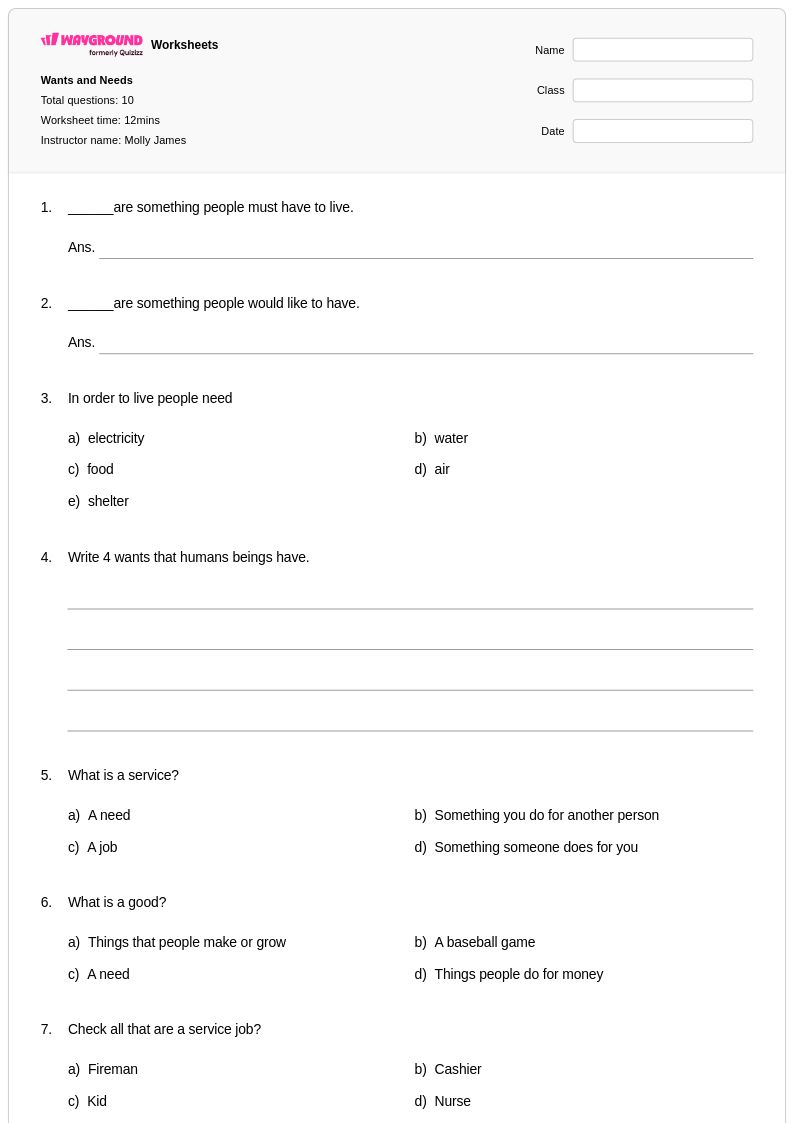
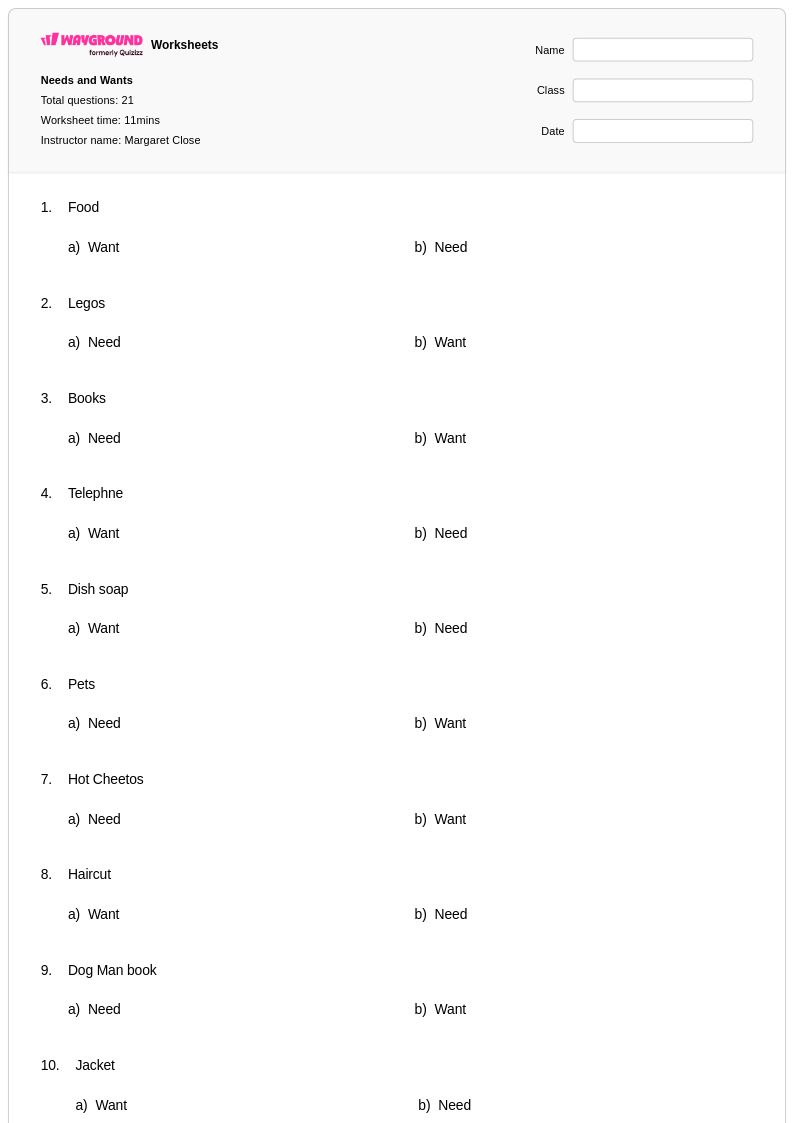
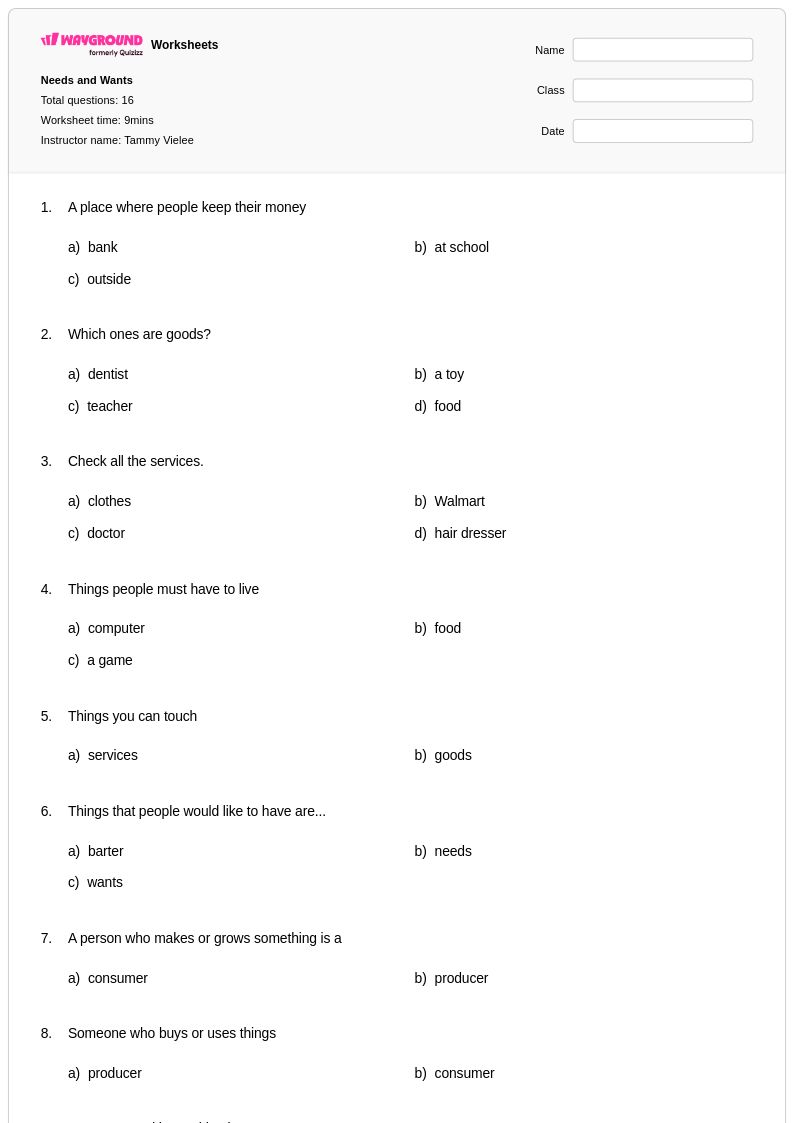
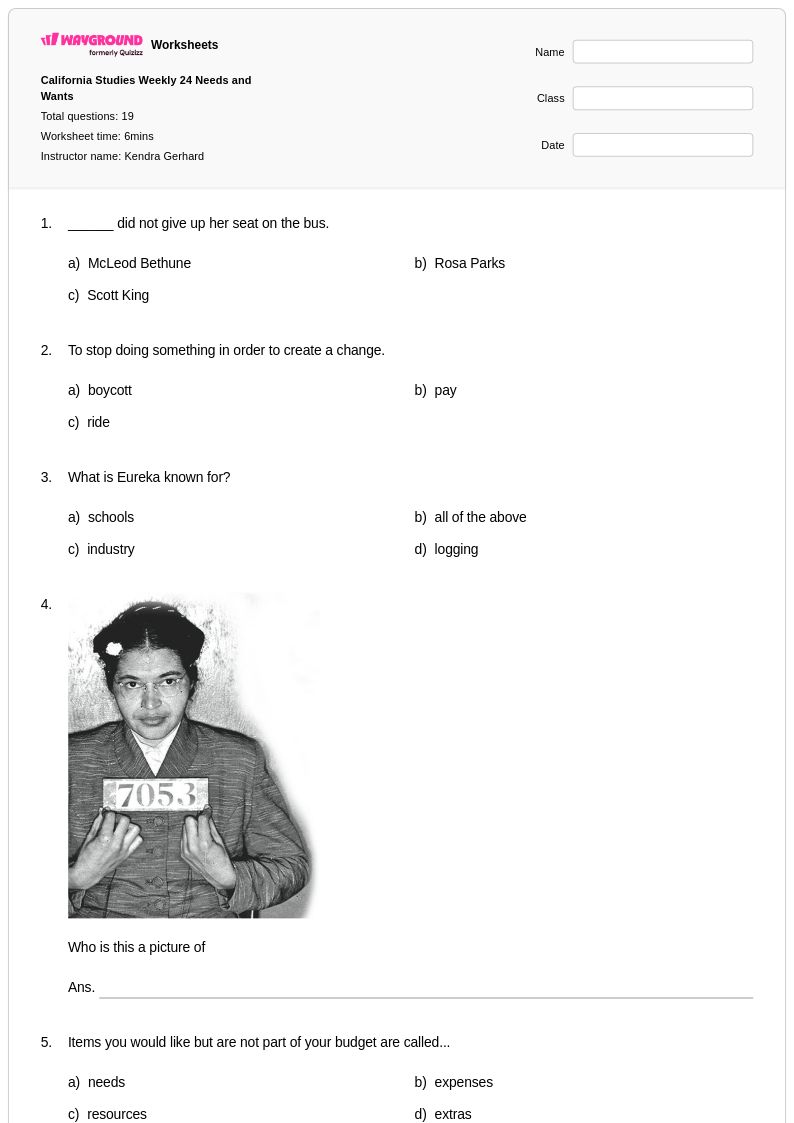
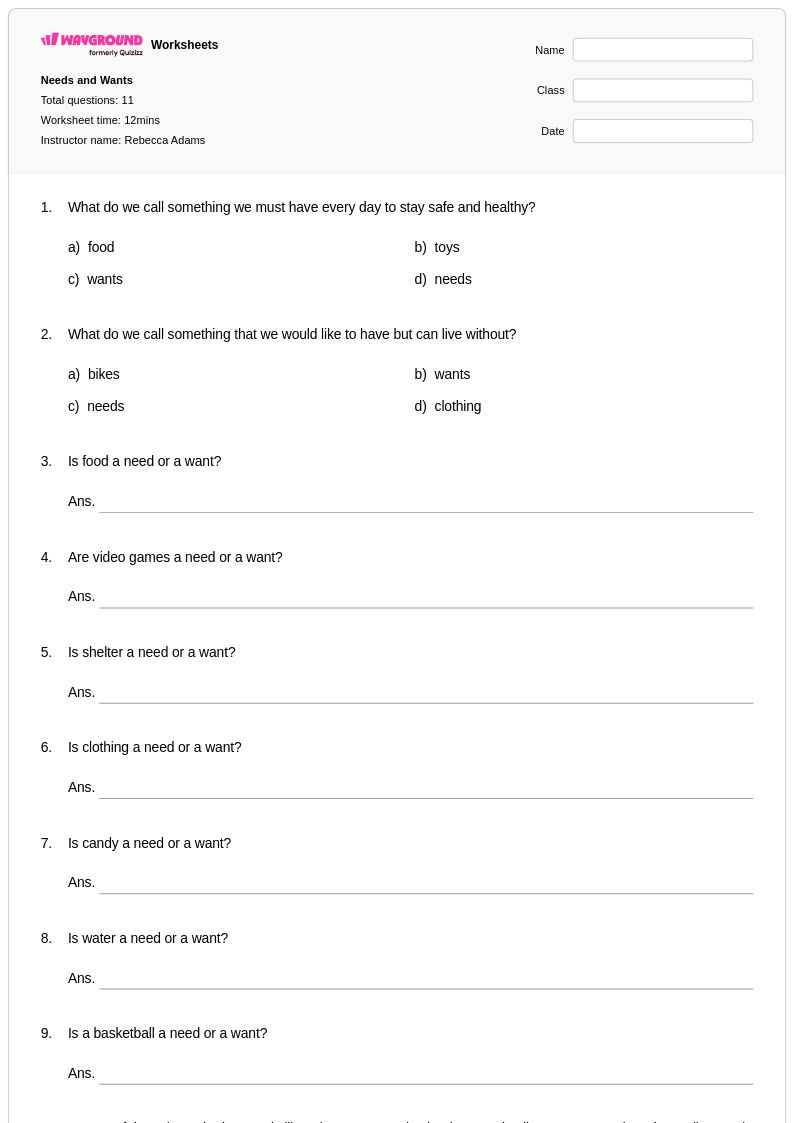
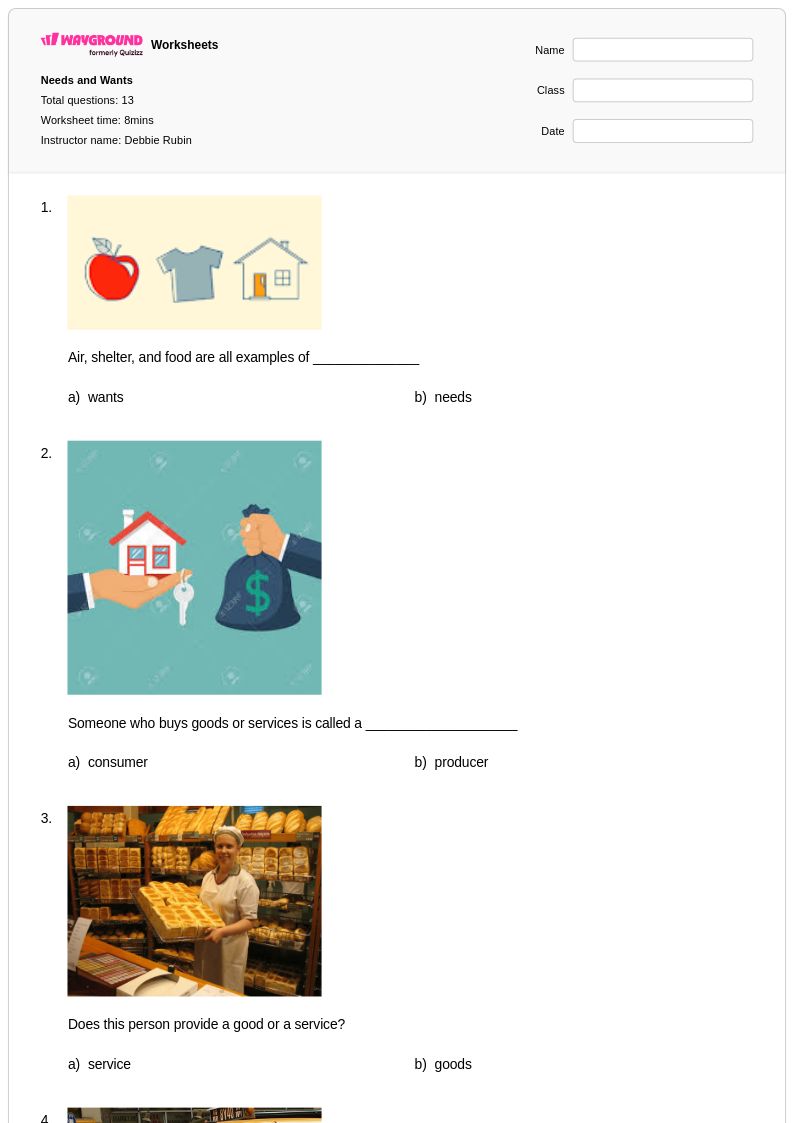
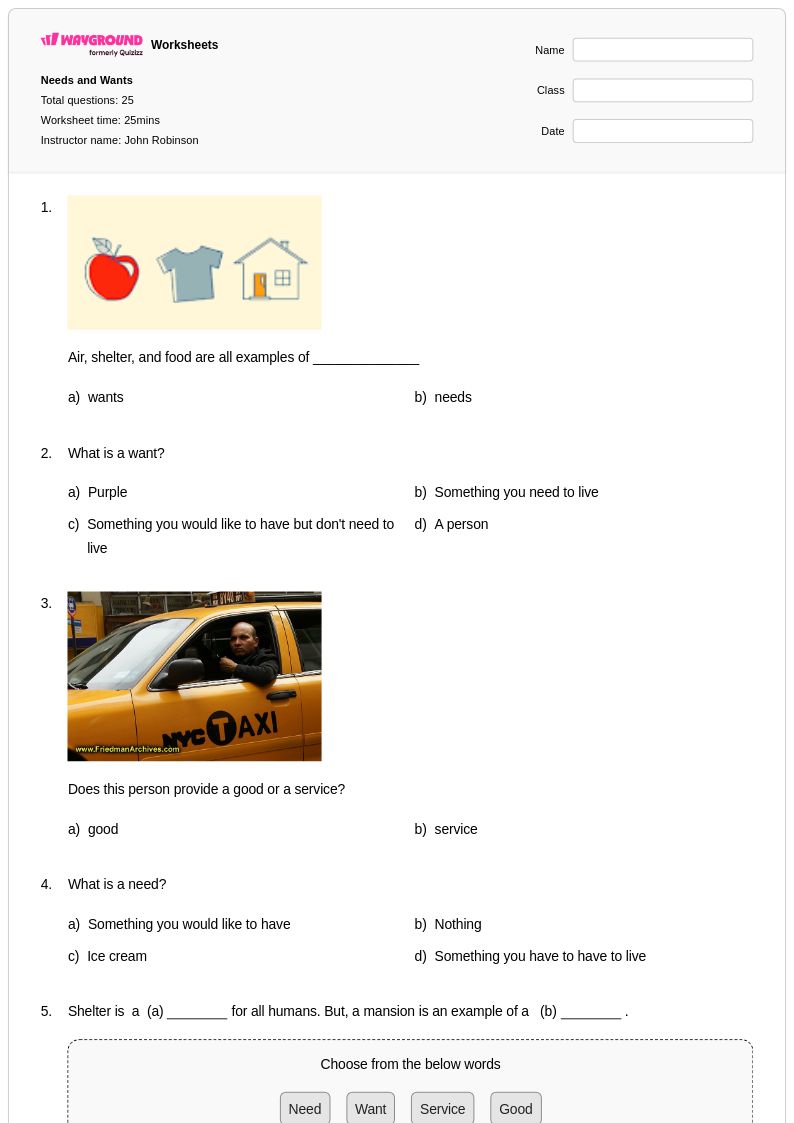
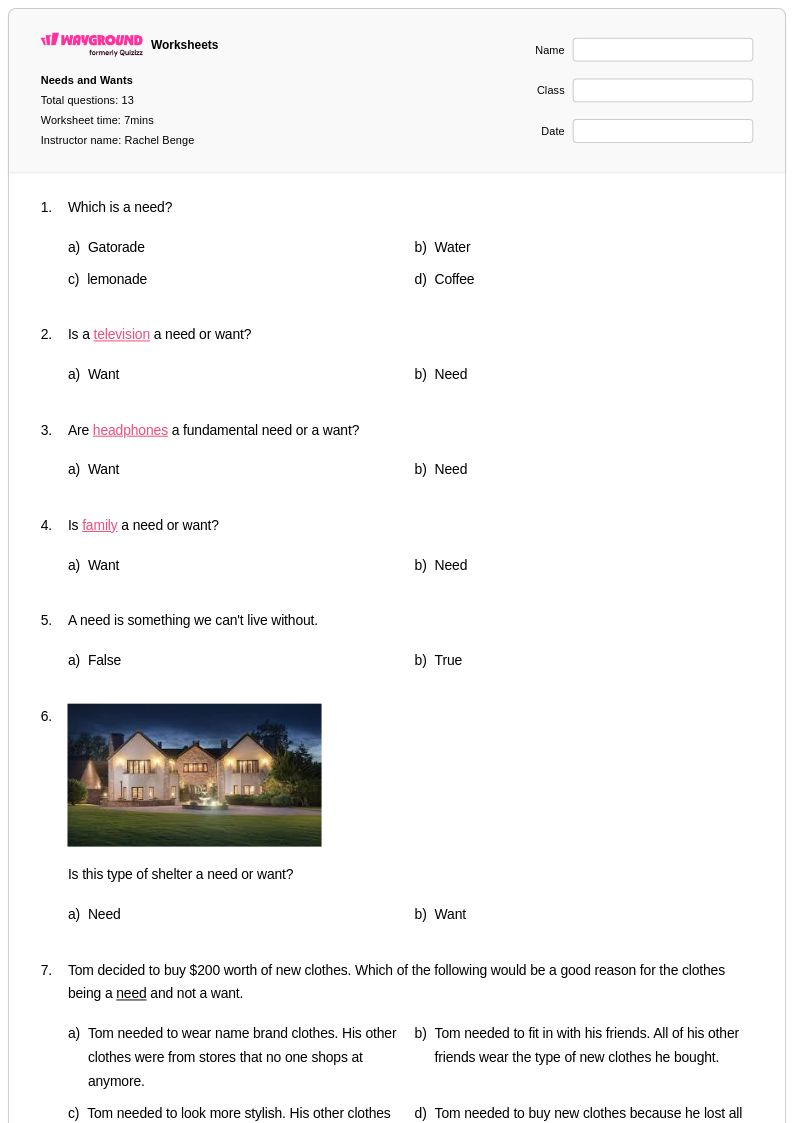
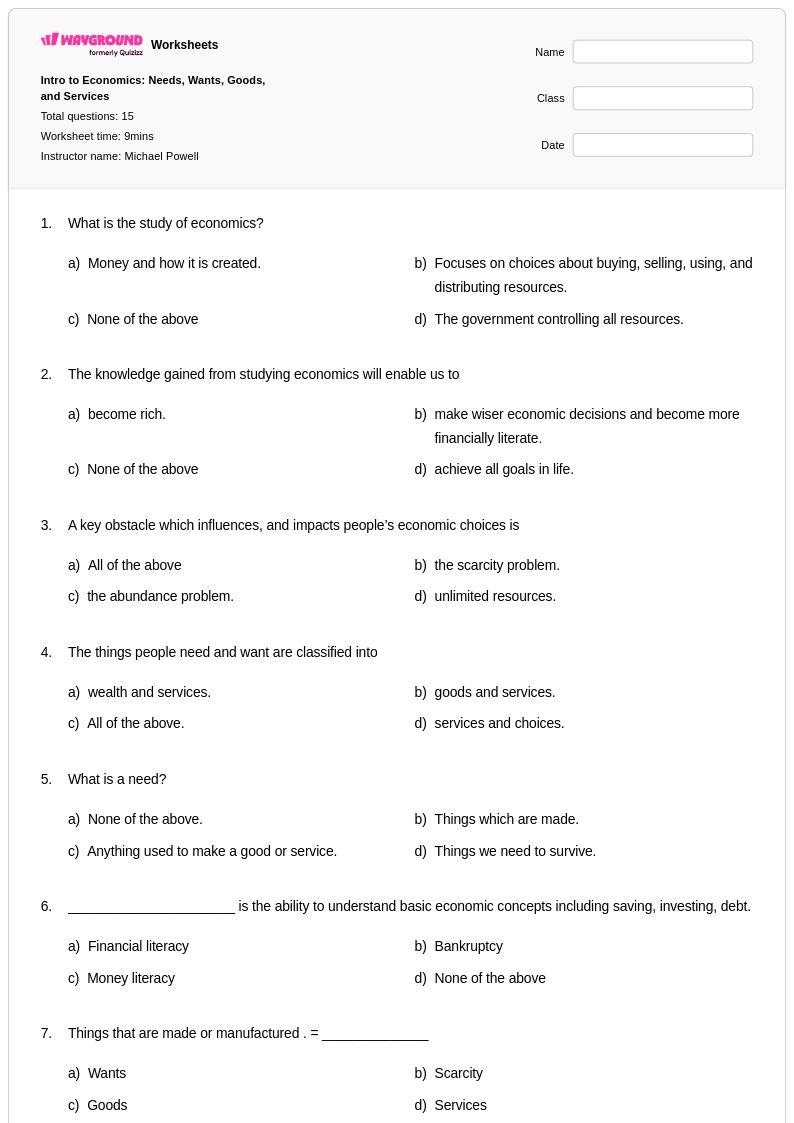
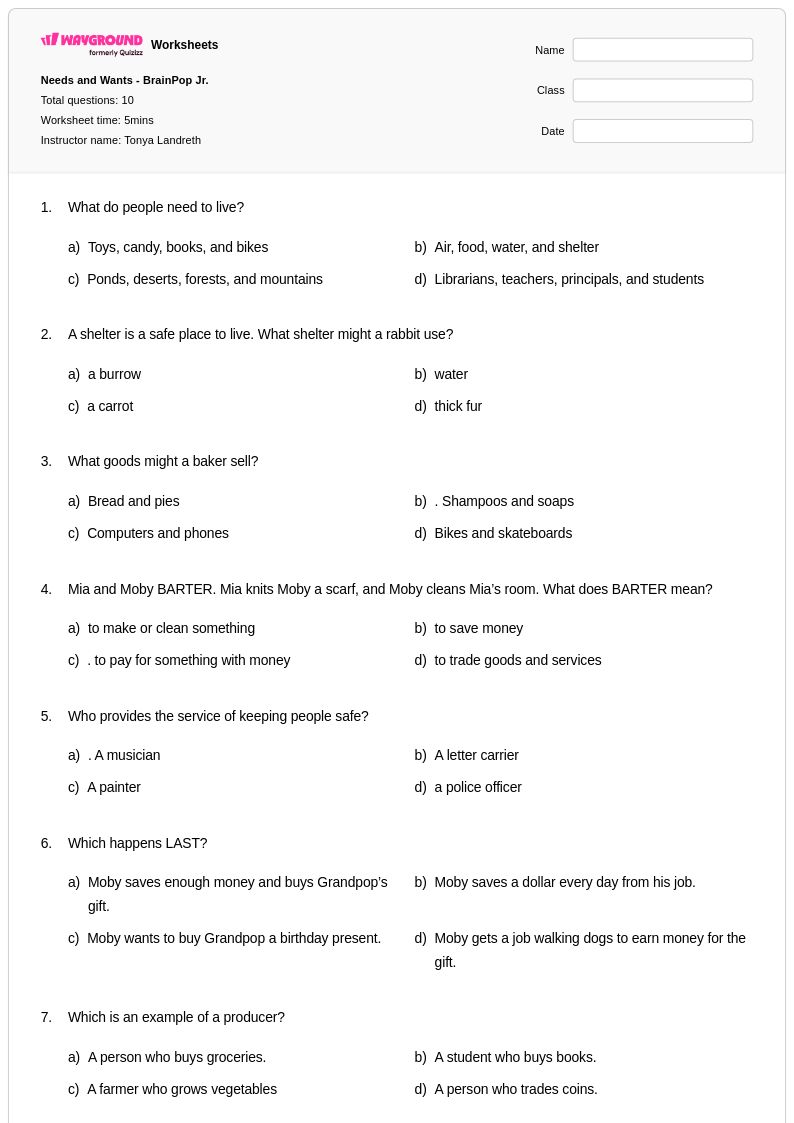
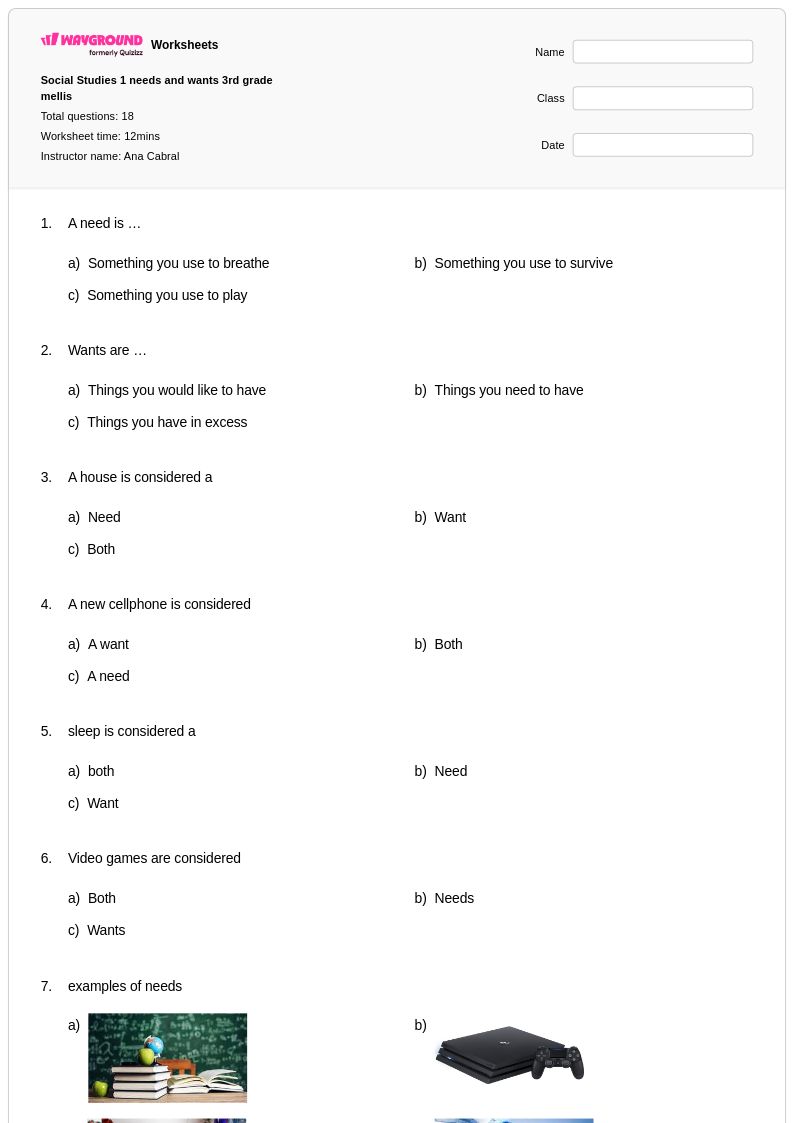
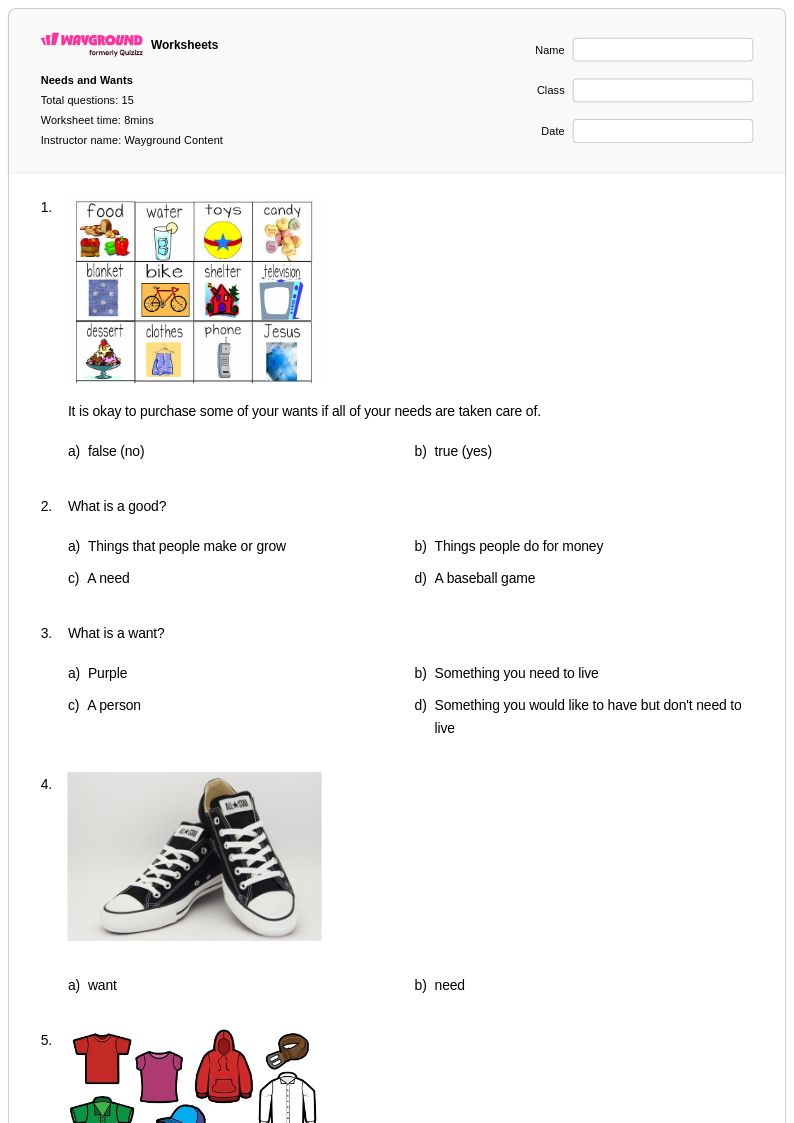
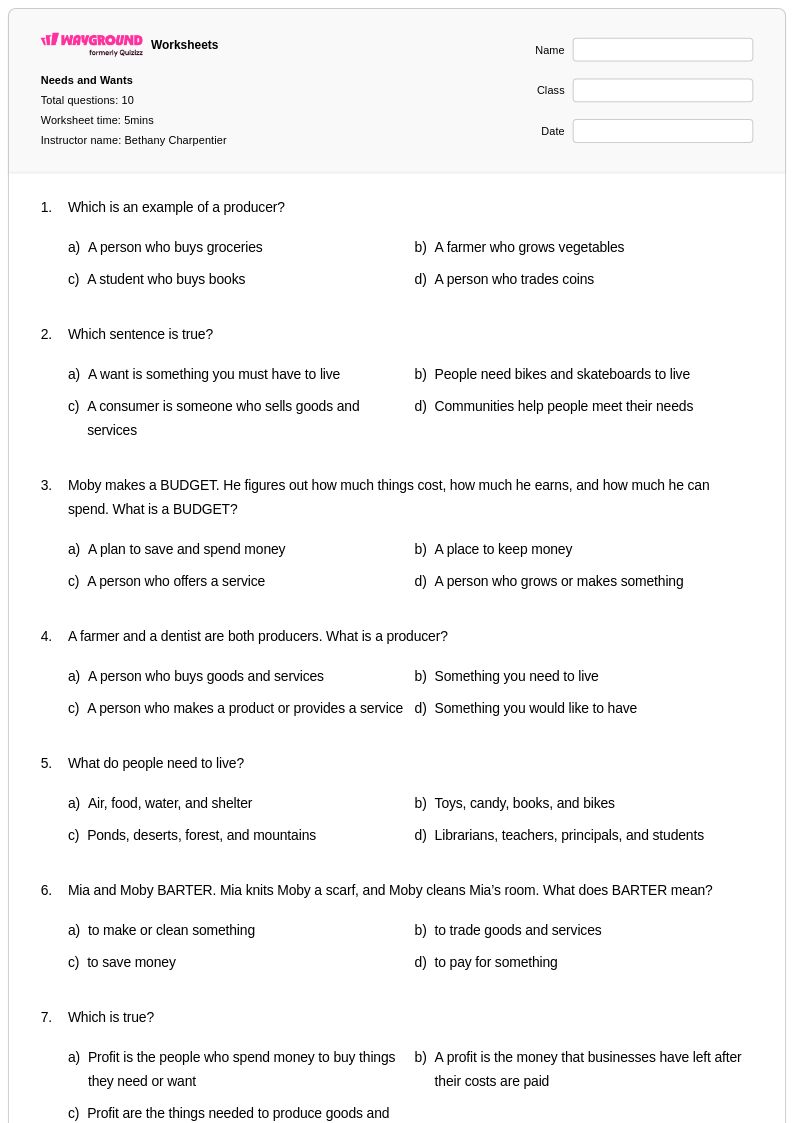
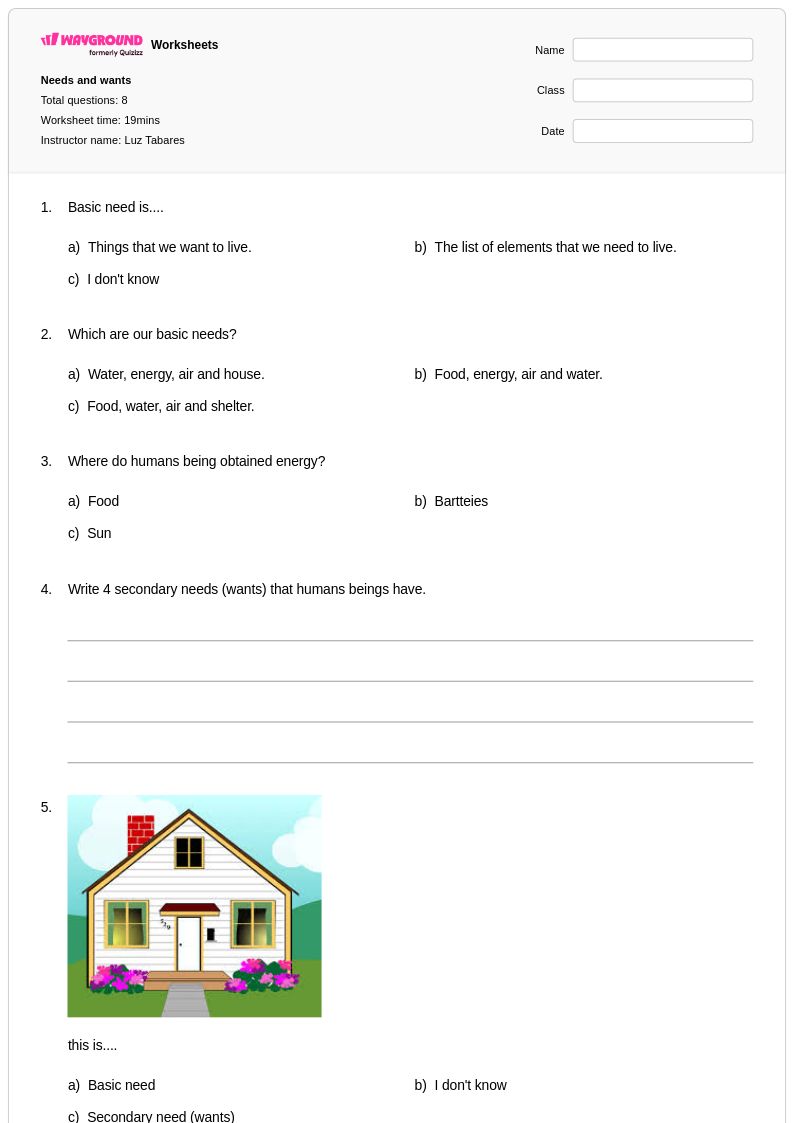
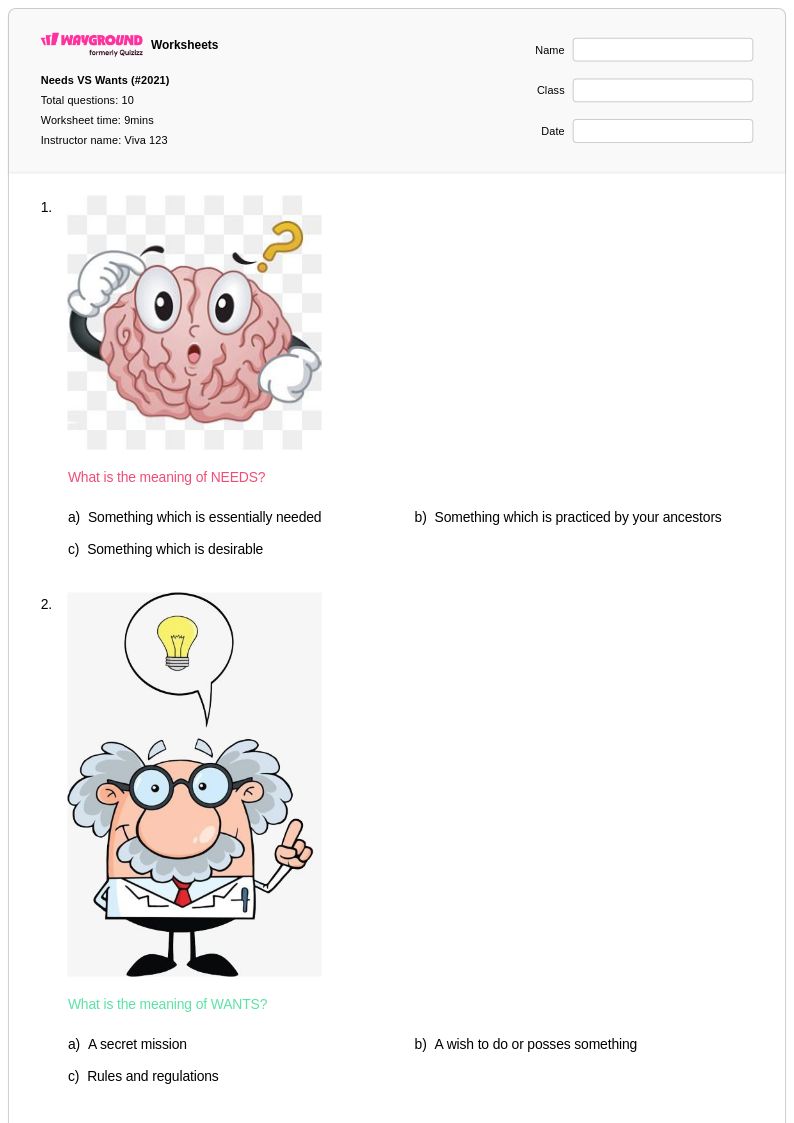
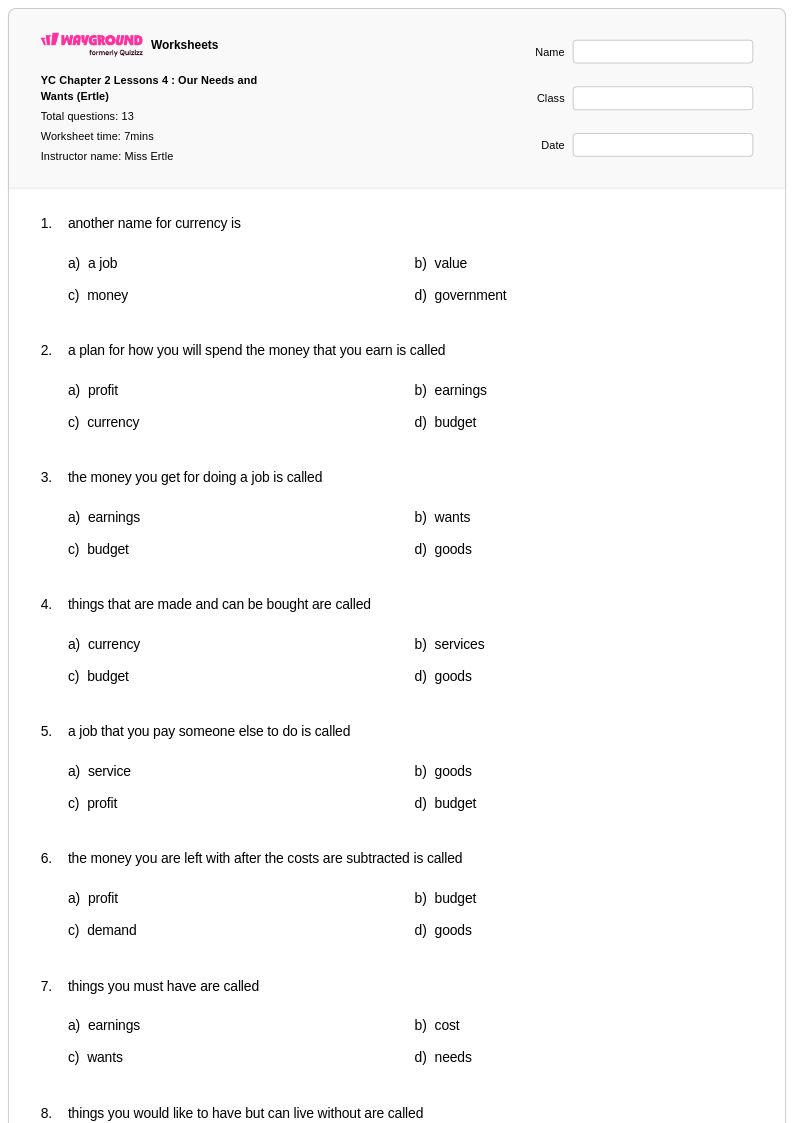
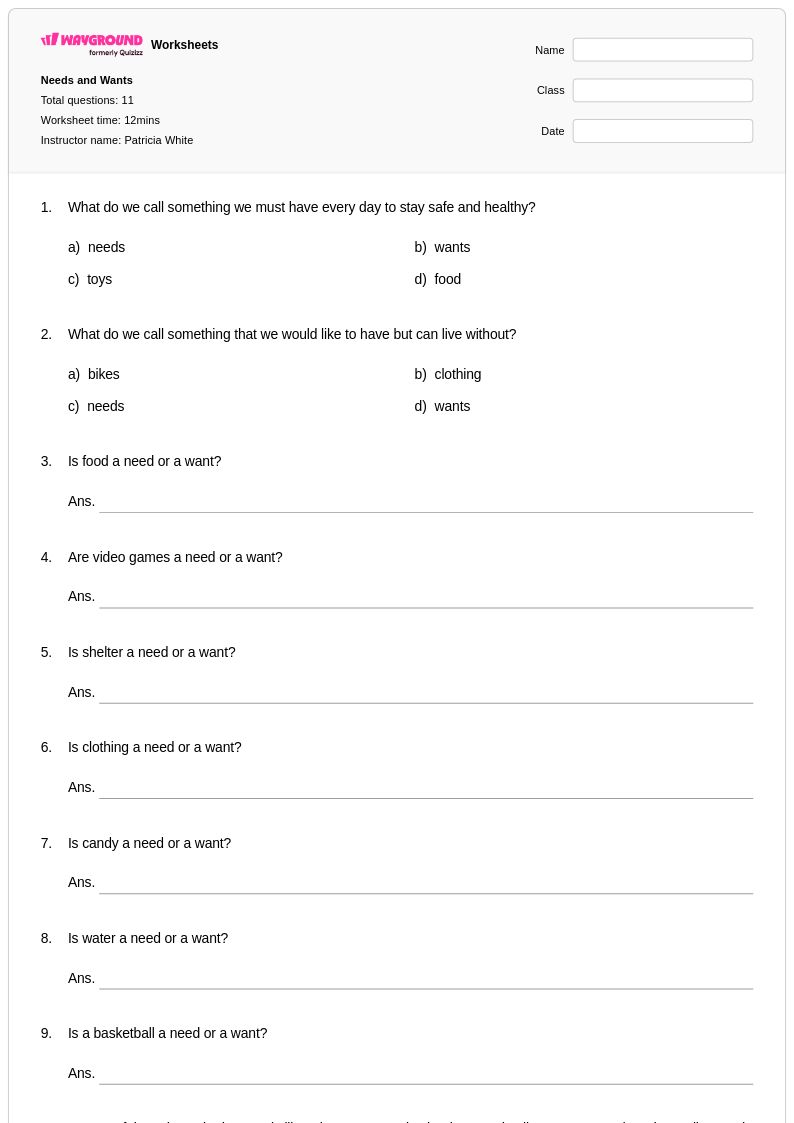
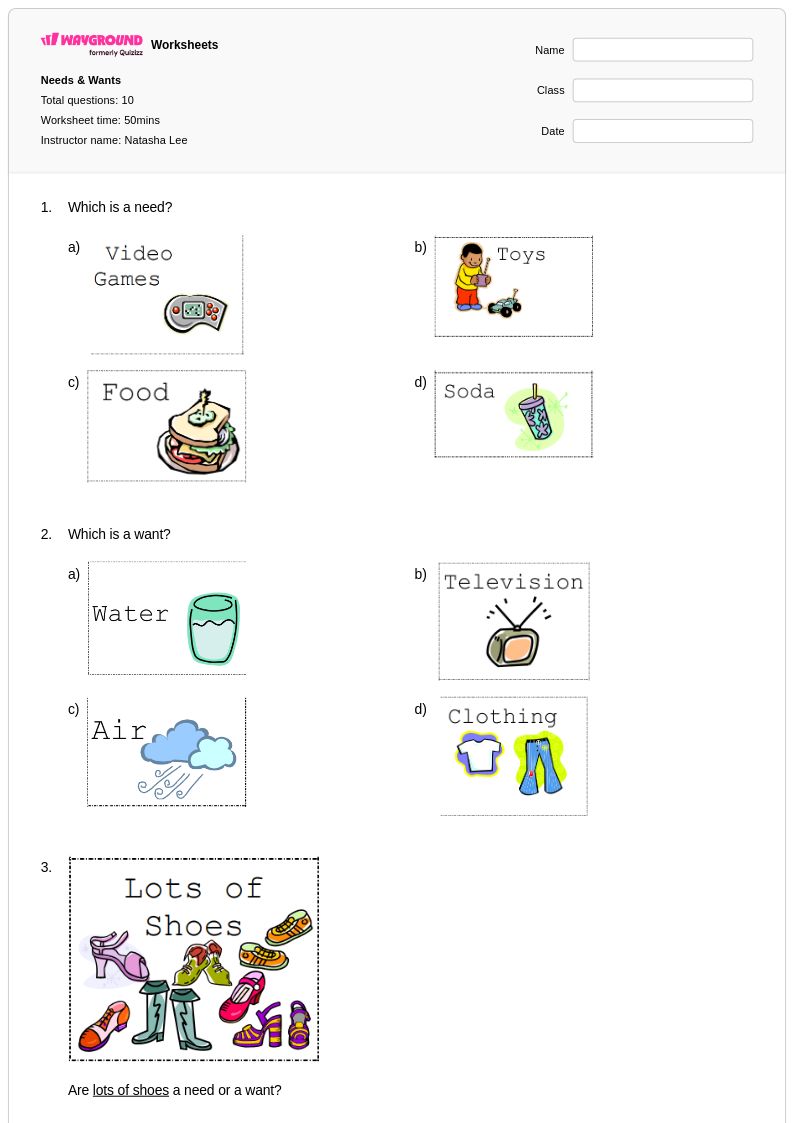
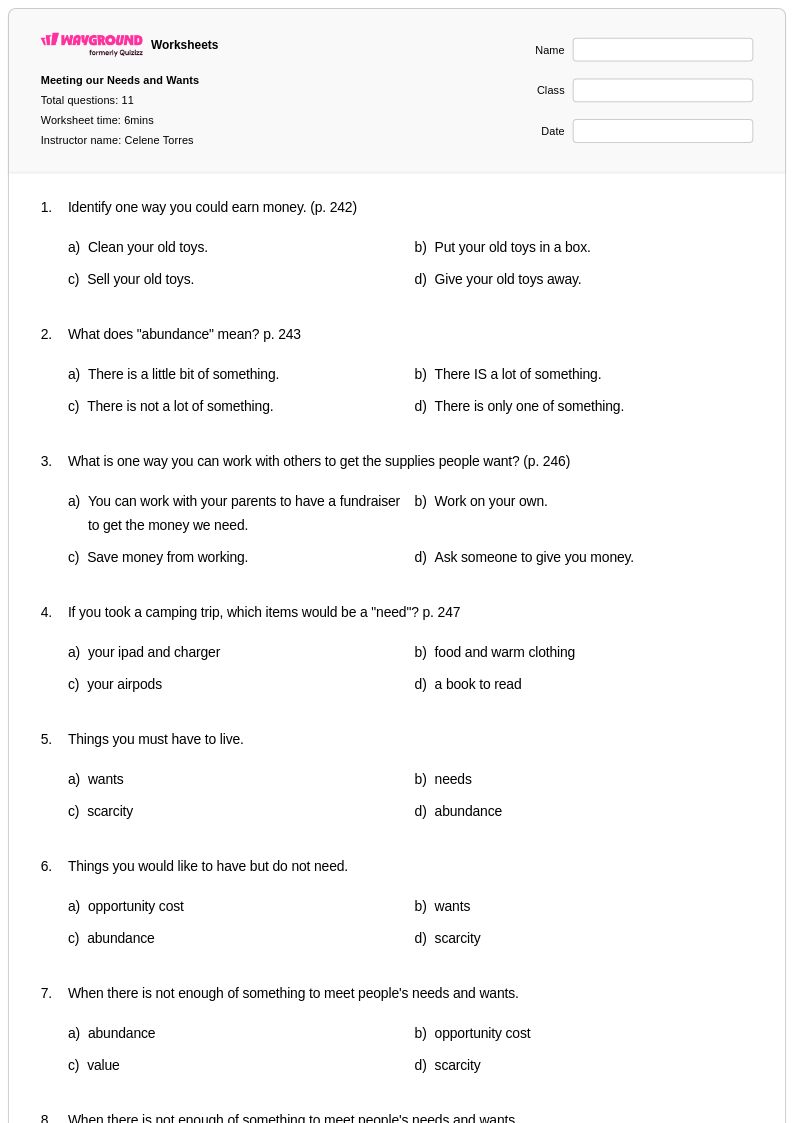
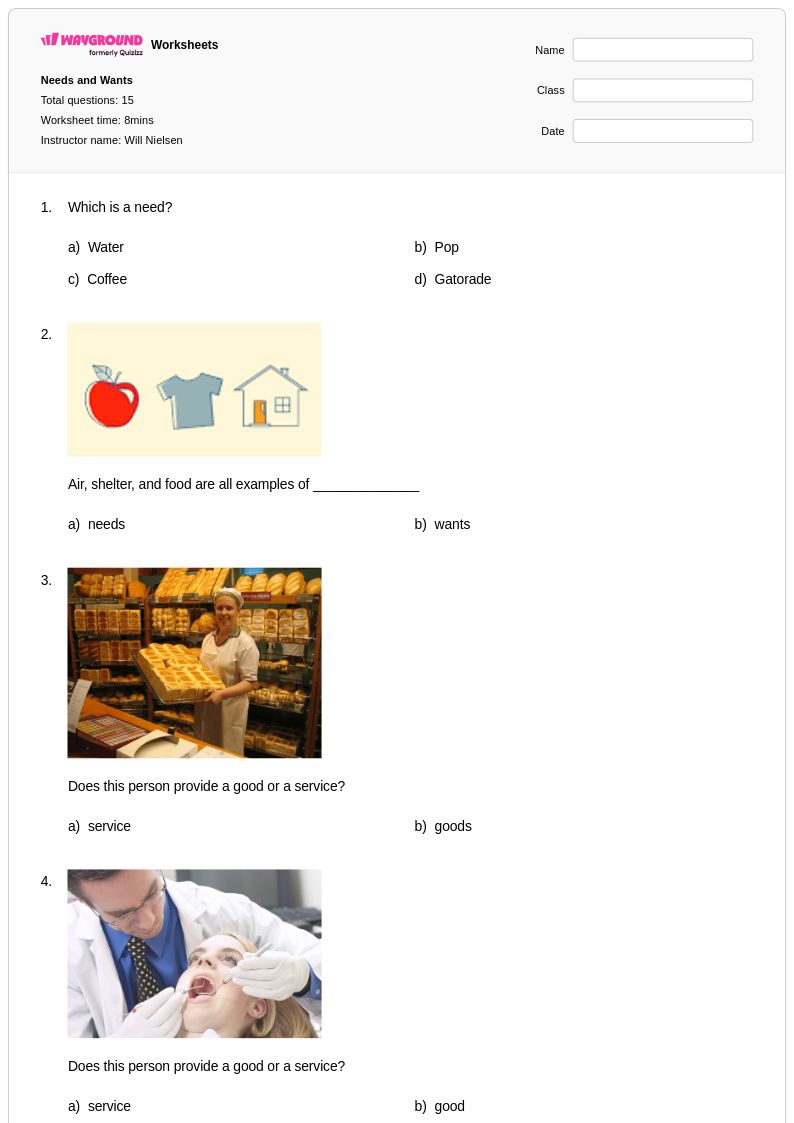
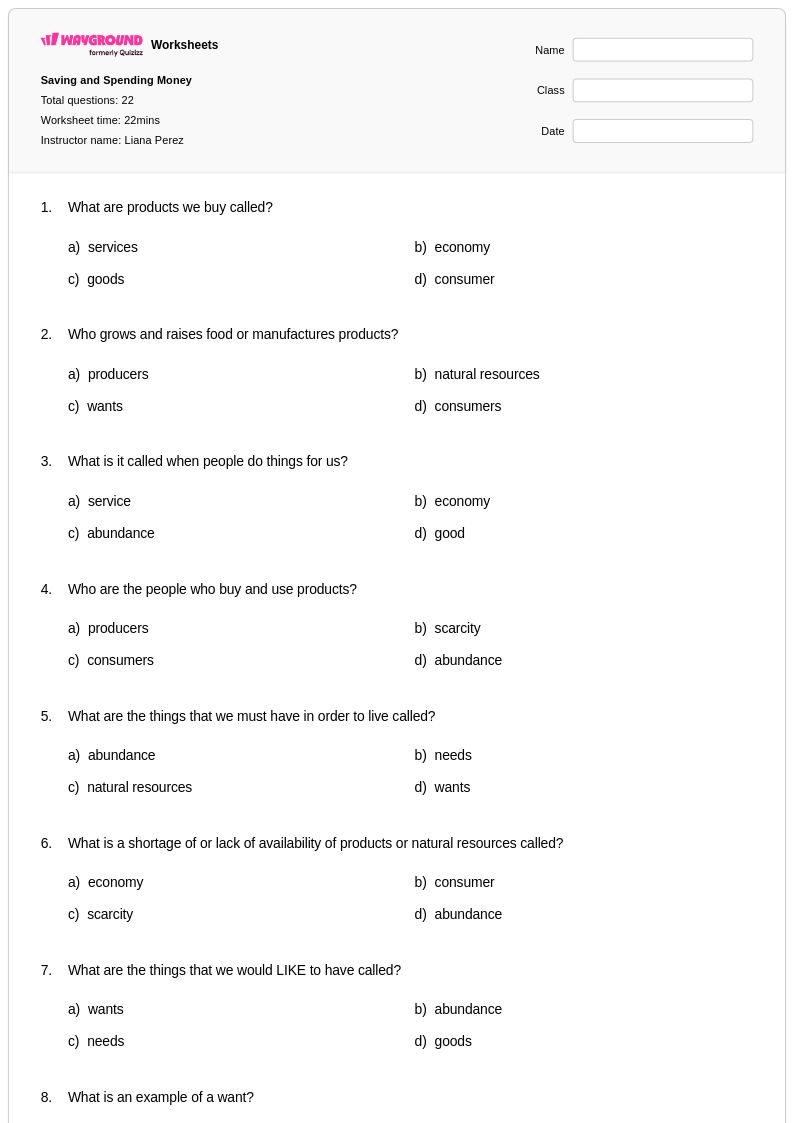
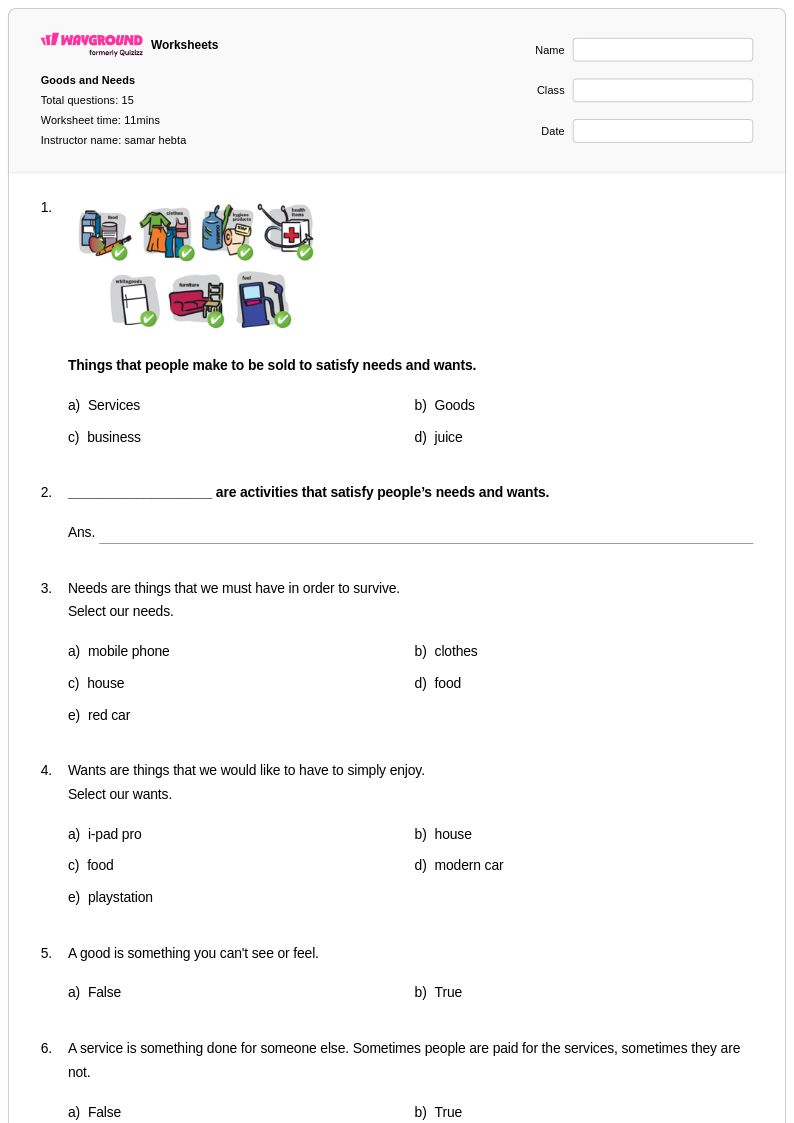
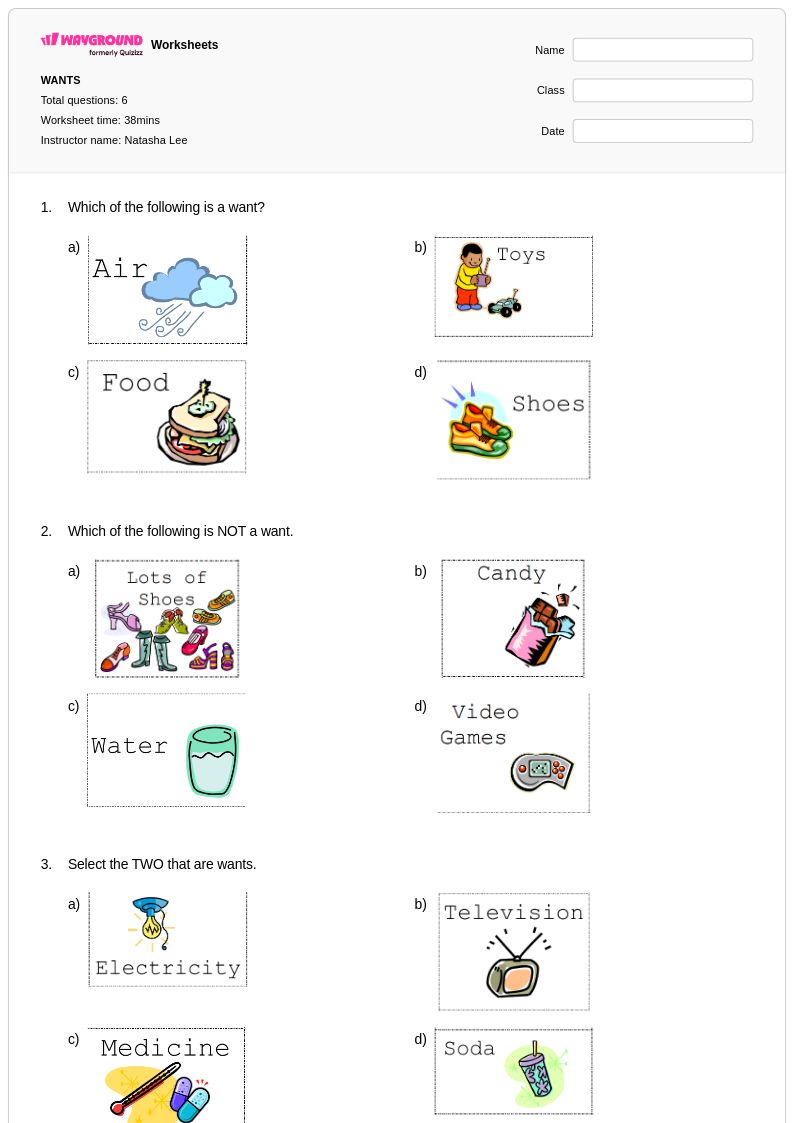
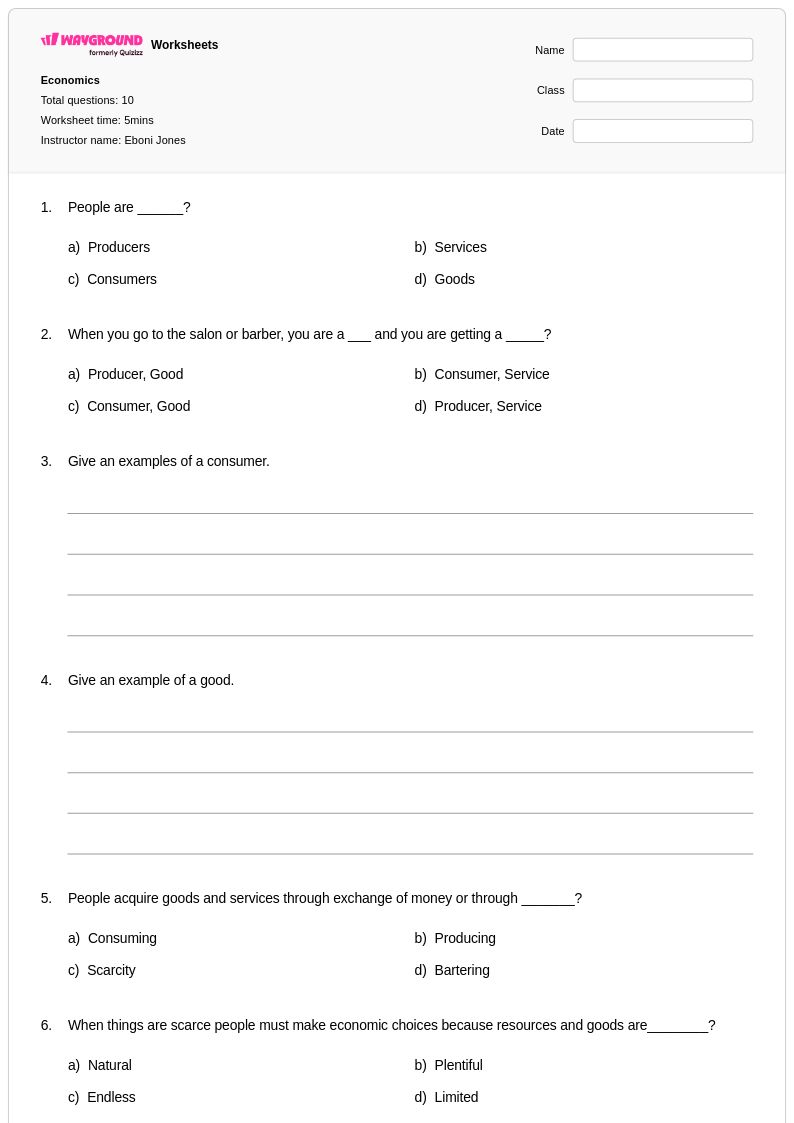
Needs and wants worksheets for Class 3 students provide essential foundation-building resources that help young learners distinguish between items they require for survival and items they desire for enjoyment. These carefully crafted educational materials strengthen critical thinking skills as students analyze real-world scenarios, categorize household items, and make thoughtful decisions about spending priorities. The comprehensive worksheet collections include engaging practice problems that challenge students to identify basic needs like food, shelter, and clothing while recognizing wants such as toys, candy, and entertainment. Each printable resource comes with a detailed answer key, making assessment and self-checking straightforward for both teachers and students. These free educational tools transform abstract economic concepts into concrete learning experiences through relatable examples and age-appropriate vocabulary that third-grade students can easily understand and apply.
Wayground (formerly Quizizz) empowers educators with access to millions of teacher-created needs and wants worksheet resources, complete with robust search and filtering capabilities that streamline lesson planning and material selection. The platform's standards-aligned content ensures that Class 3 economics worksheets meet curriculum requirements while offering extensive differentiation tools that accommodate diverse learning styles and academic levels within the classroom. Teachers can customize existing worksheets or create original content, with all materials available in both printable PDF format and interactive digital versions for maximum flexibility. These comprehensive features support effective remediation for struggling students, provide enrichment opportunities for advanced learners, and offer targeted skill practice that reinforces the fundamental economic principle of distinguishing between necessities and luxuries in daily life.
FAQs
How do I teach students the difference between needs and wants?
Start by anchoring the concept in students' own lives — ask them to list five things they use every day and then sort those items into survival necessities versus preferences. Use concrete examples like food versus candy, or shelter versus a video game, to make the distinction tangible. Once students can sort familiar items confidently, introduce more ambiguous cases (like a coat in winter versus a designer jacket) to build nuanced thinking about context and circumstance.
What exercises help students practice identifying needs and wants?
Visual sorting activities — where students place picture cards or word cards into two labeled columns — are particularly effective for early learners because they reinforce categorization kinesthetically. Real-world scenario exercises, such as evaluating a family's shopping list or a community's budget decisions, push students to apply the concept beyond simple memorization. Analytical exercises that ask students to justify their choices in writing deepen critical thinking and prepare them for more complex economic reasoning.
What common mistakes do students make when distinguishing needs from wants?
The most frequent misconception is treating comfort or habit as necessity — students often classify items like smartphones or brand-name shoes as needs because they feel essential in a social context. Another common error is failing to account for context: a warm coat is a need in a cold climate but not necessarily in a tropical one. Teachers should explicitly address these edge cases so students develop flexible, criteria-based thinking rather than relying on fixed lists.
How can I use needs and wants worksheets to support diverse learners in my classroom?
Needs and wants worksheets on Wayground are available in both printable PDF and digital formats, making them accessible across in-person, remote, and hybrid settings. For students who need additional support, Wayground's digital format allows teachers to enable accommodations such as Read Aloud (audio reading of questions), reduced answer choices to lower cognitive load, and extended time per question. These accommodations can be assigned to individual students while the rest of the class receives default settings, so differentiation happens seamlessly without singling anyone out.
How does understanding needs and wants connect to broader financial literacy skills?
Distinguishing needs from wants is the foundational skill underlying budgeting, spending decisions, and resource allocation — all core components of financial literacy. When students can accurately categorize goods and services, they gain a framework for evaluating trade-offs, which directly supports later learning about opportunity cost, saving, and responsible consumer behavior. Building this skill early gives students a practical lens they will apply throughout their academic and personal lives.
At what grade level should I introduce needs and wants?
Needs and wants is typically introduced in kindergarten through second grade as part of early economics and social studies standards, though the concept is revisited with increasing complexity through upper elementary school. Younger students focus on concrete personal examples, while older students examine needs and wants at the community, national, and global level. The concept remains relevant across grade bands because it underpins more advanced economic and financial literacy topics taught in middle and high school.