
Recommended Topics for you
- A Wrinkle in Time
- Flowers for Algernon
- Hatchet
- Number the Stars
- The Giver
- The Watsons Go to Birmingham
- Where the Red Fern Grows
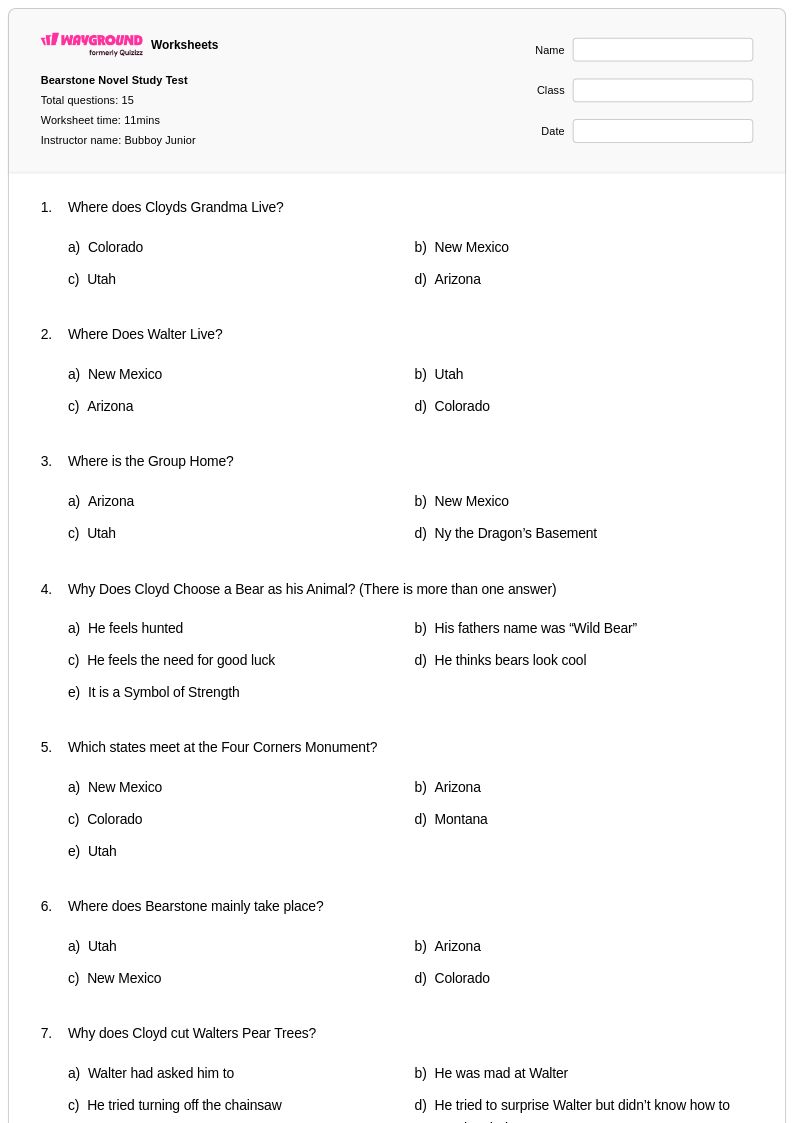
15 Q
6th - 8th
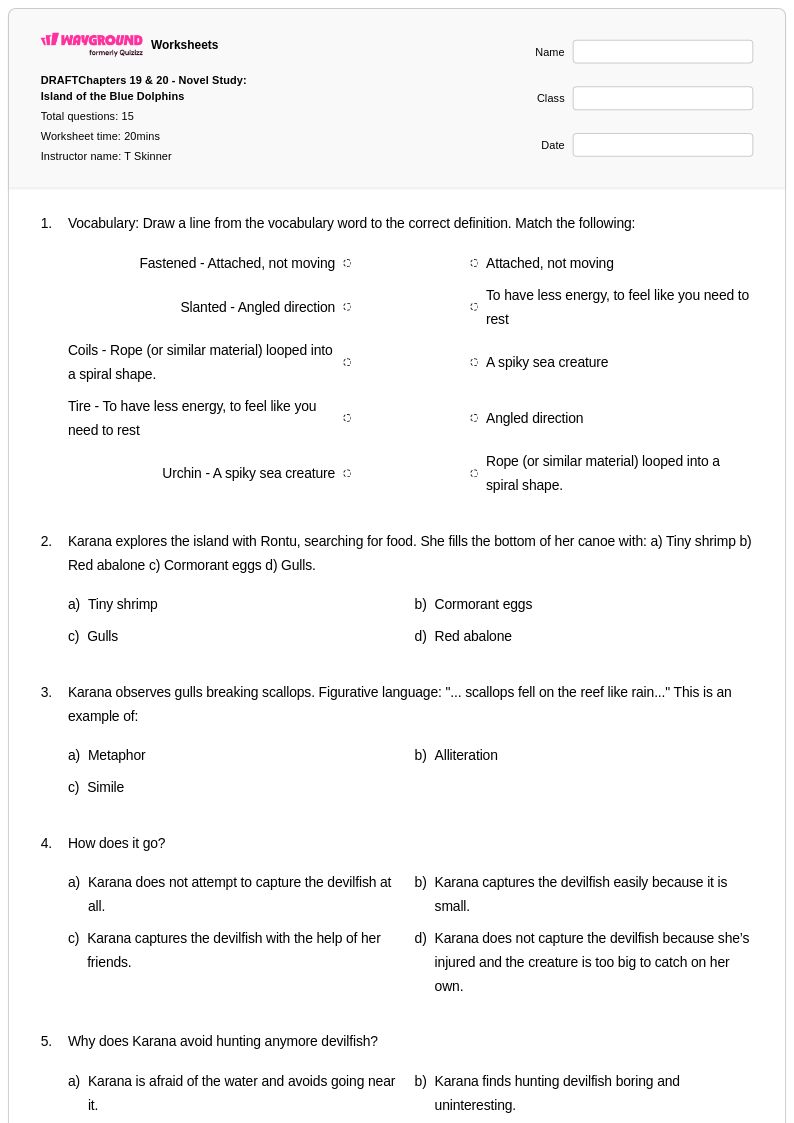
15 Q
5th - Uni
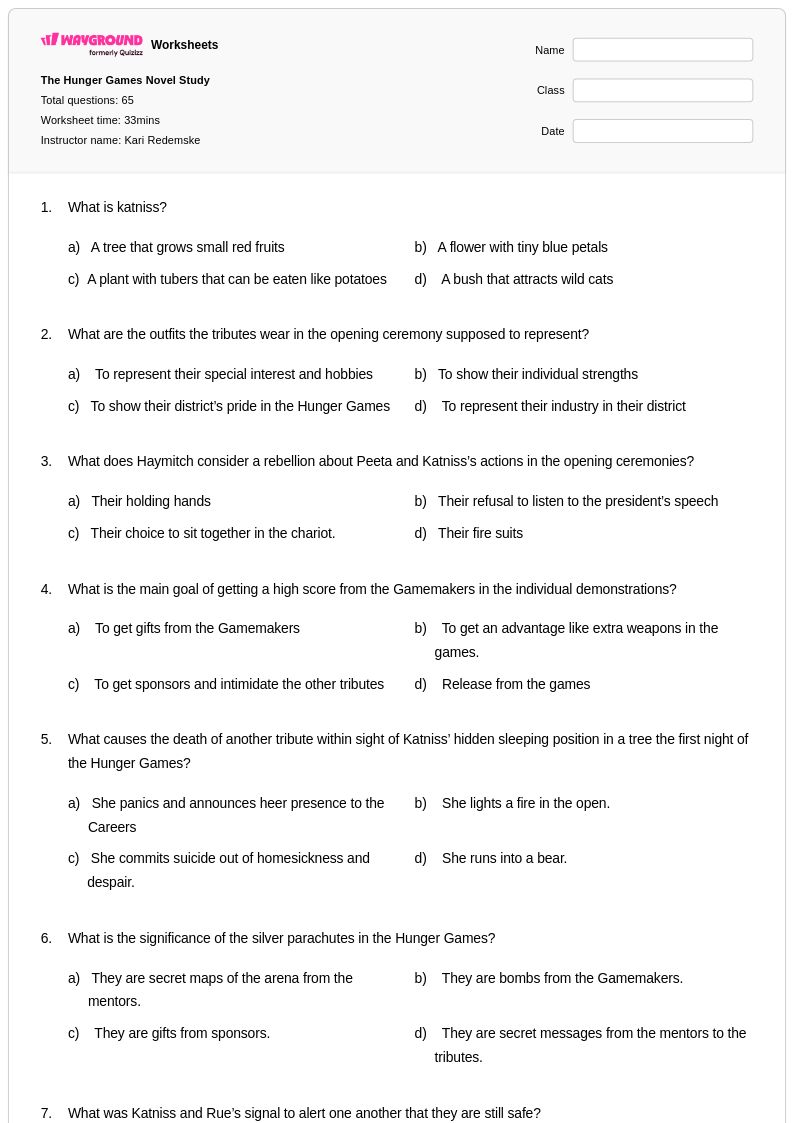
65 Q
6th - 8th
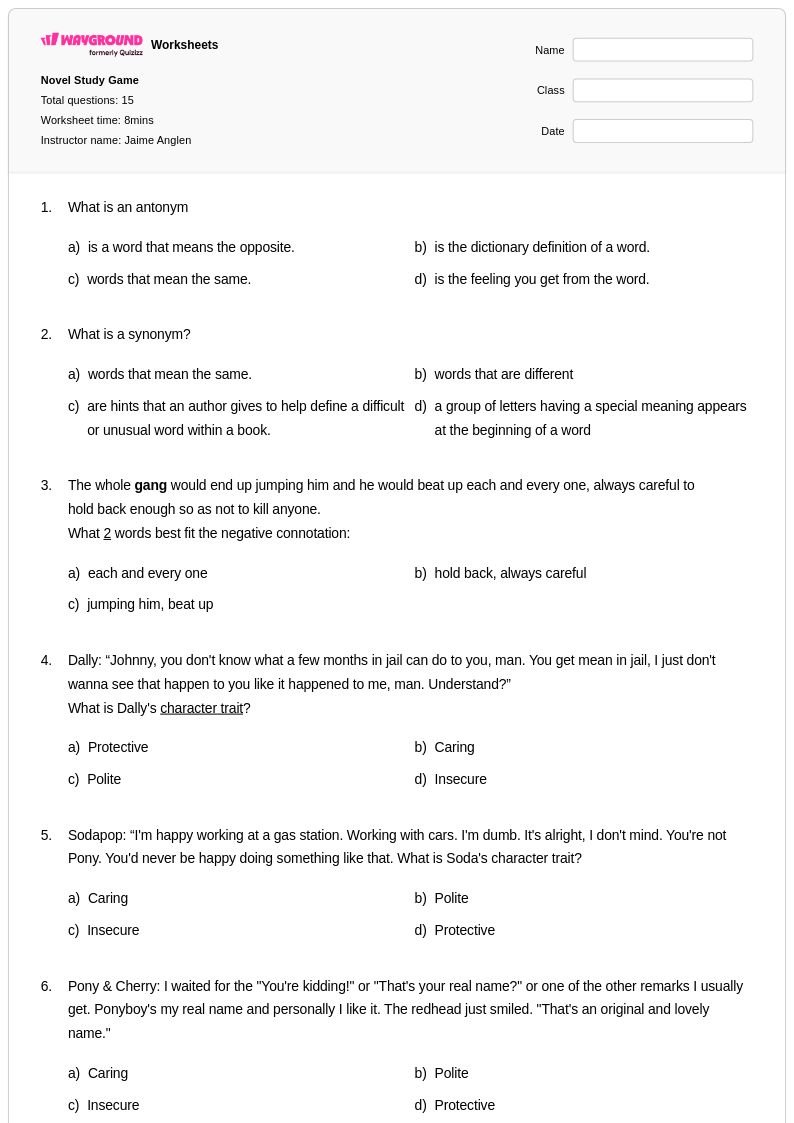
15 Q
6th - 8th
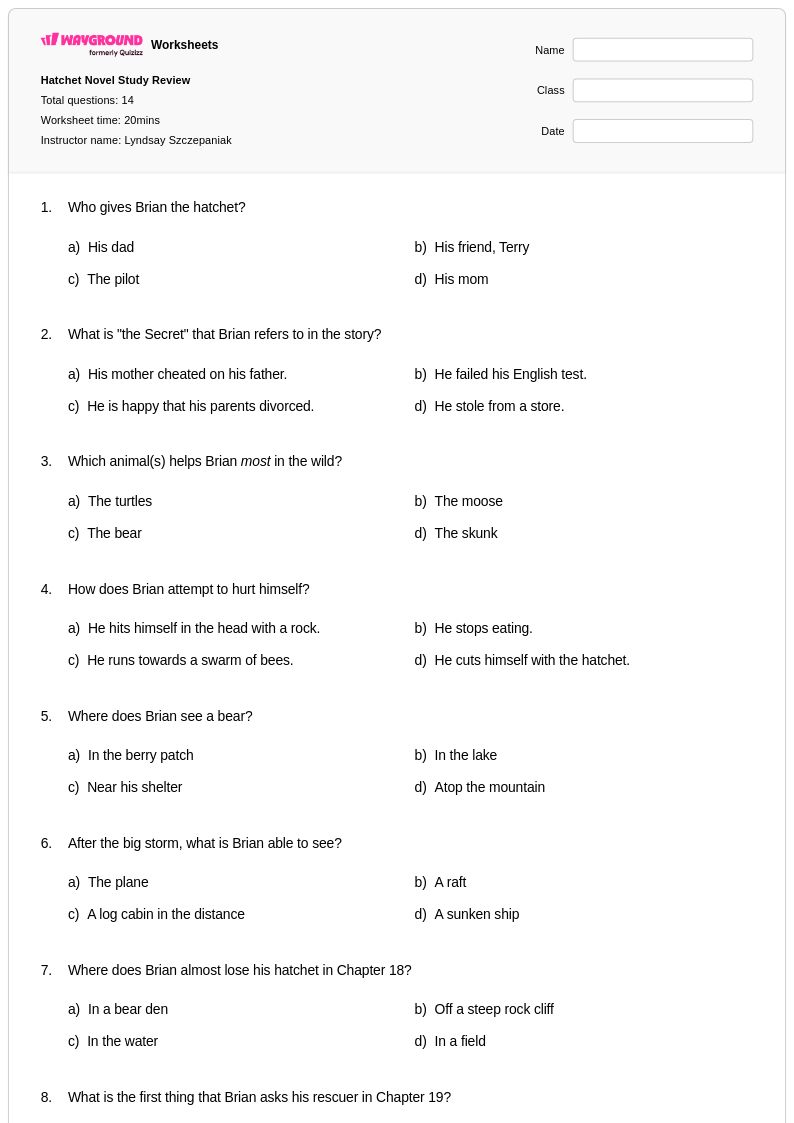
14 Q
5th - Uni
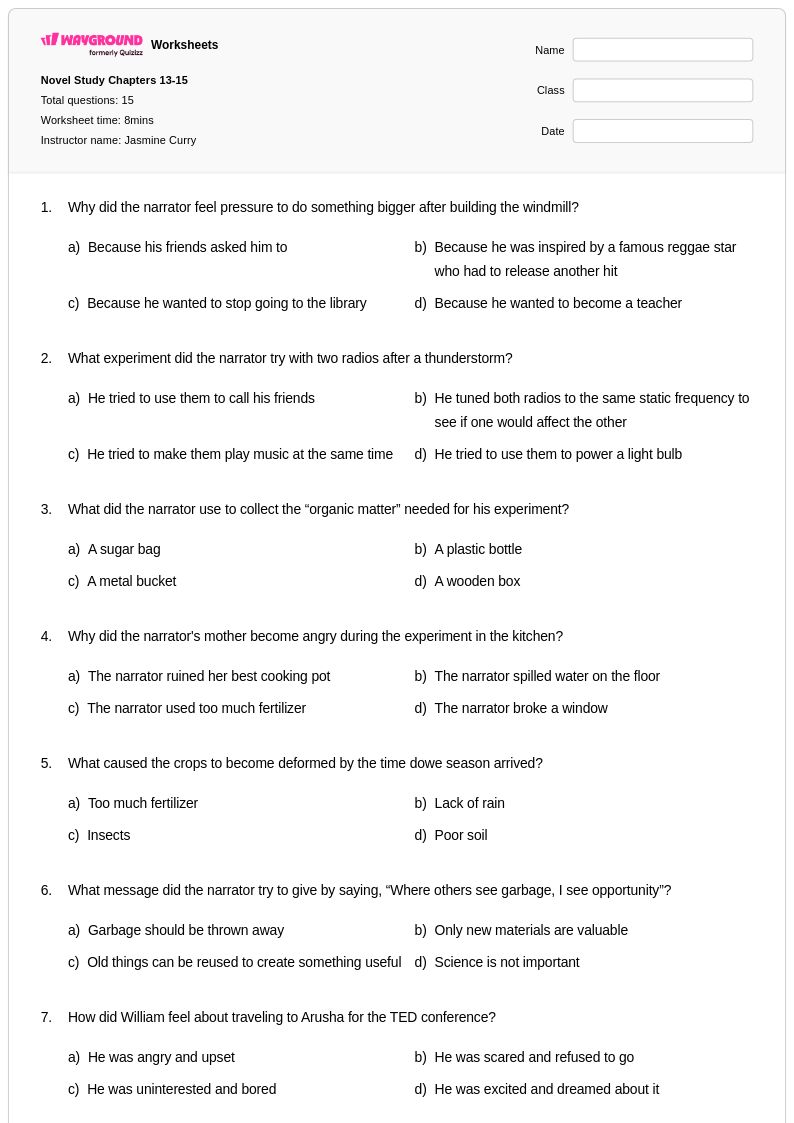
15 Q
5th - Uni
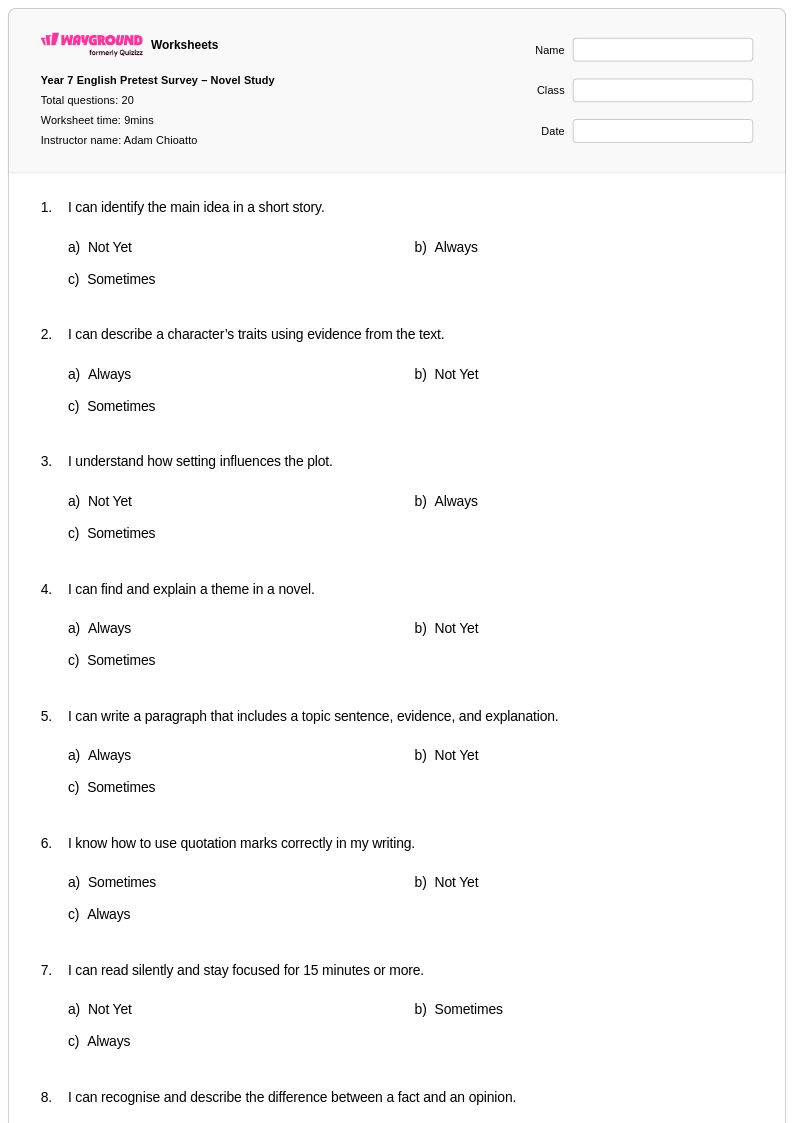
20 Q
7th
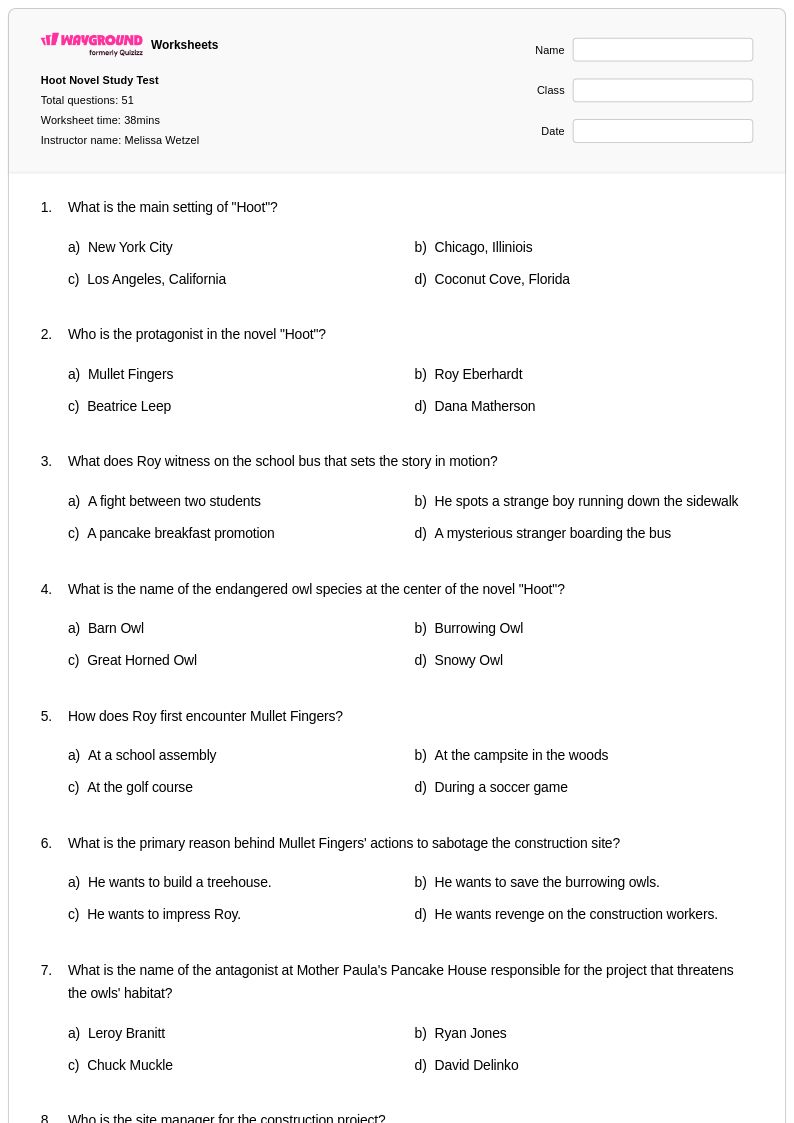
51 Q
7th
14 Q
6th - 8th
15 Q
4th - 7th
15 Q
7th - Uni
10 Q
3rd - 8th
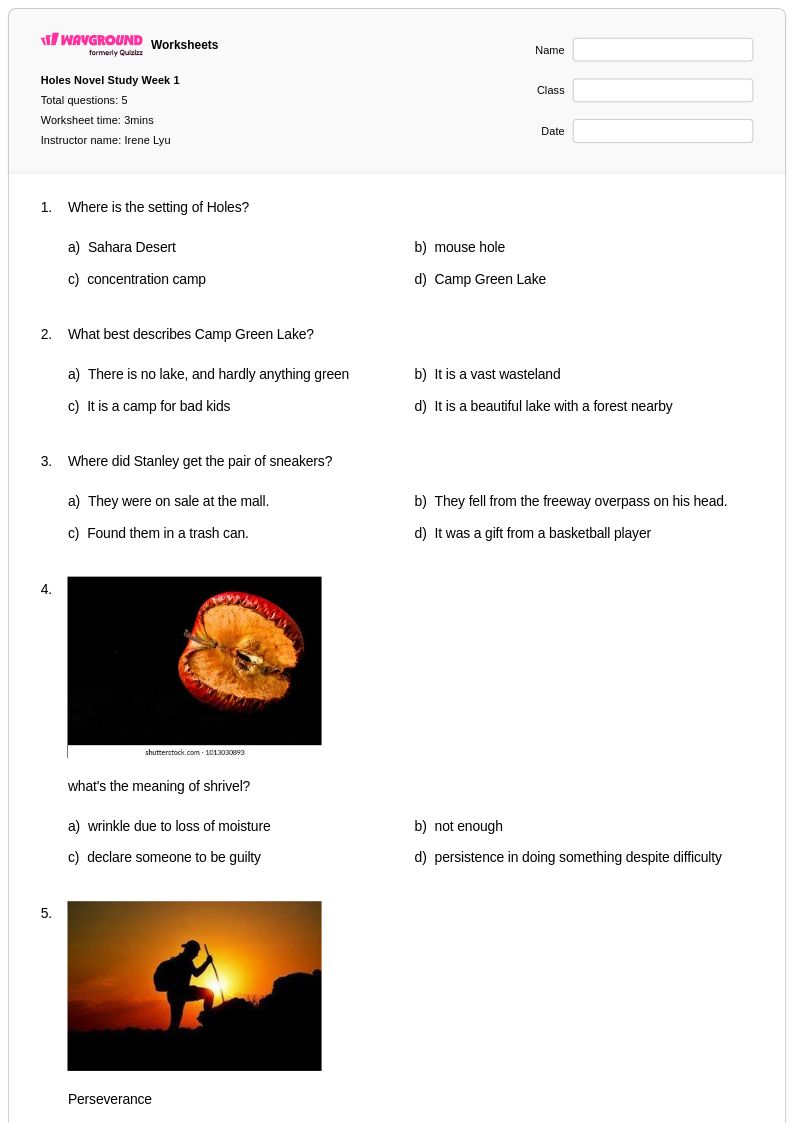
5 Q
7th
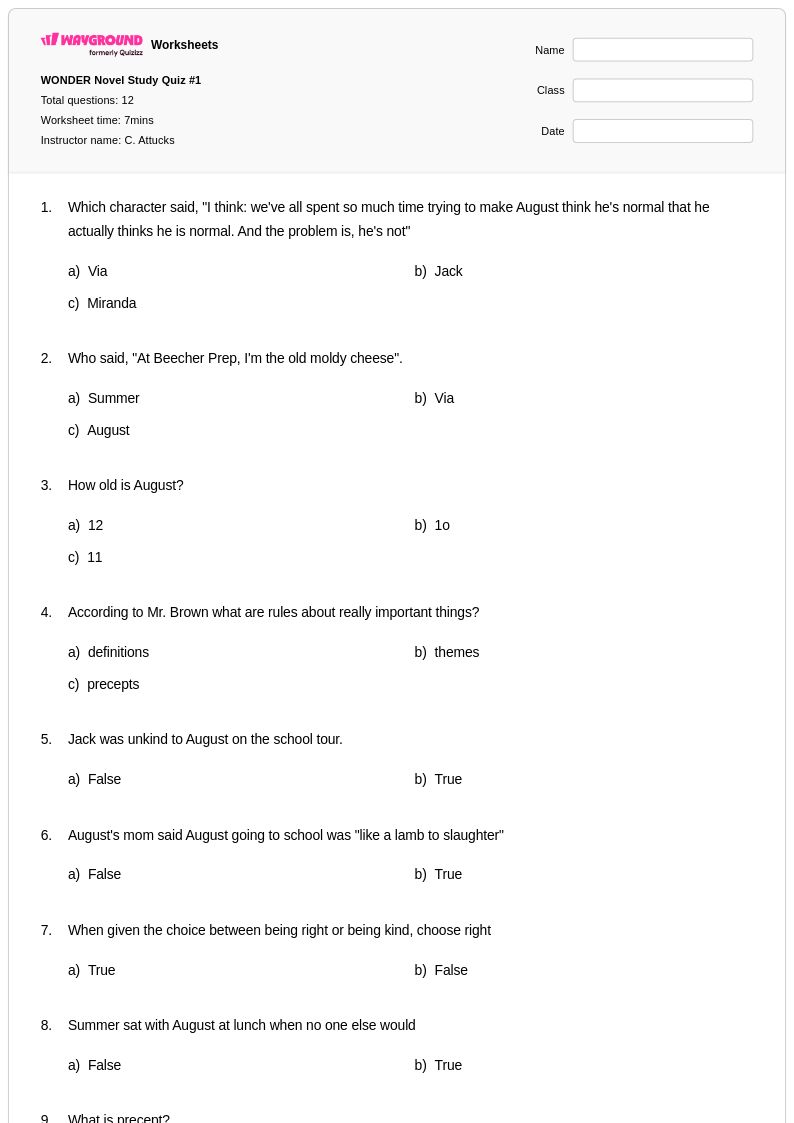
12 Q
6th - 8th
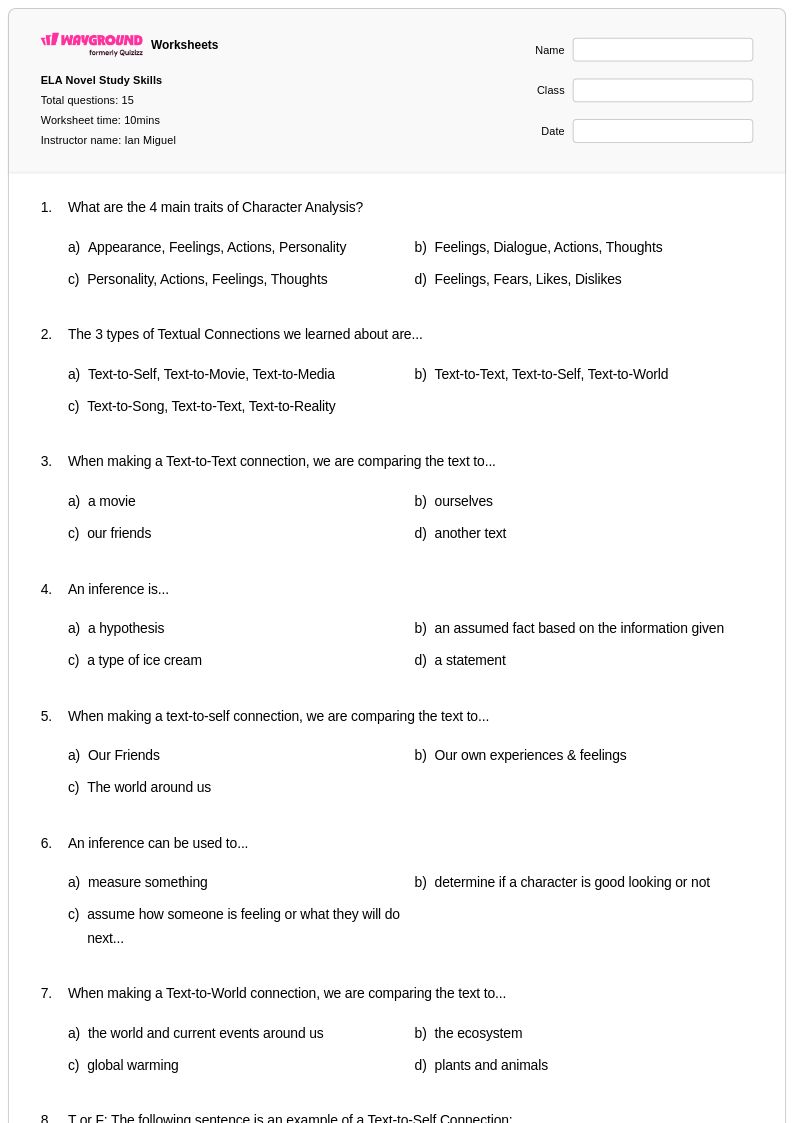
15 Q
6th - 7th
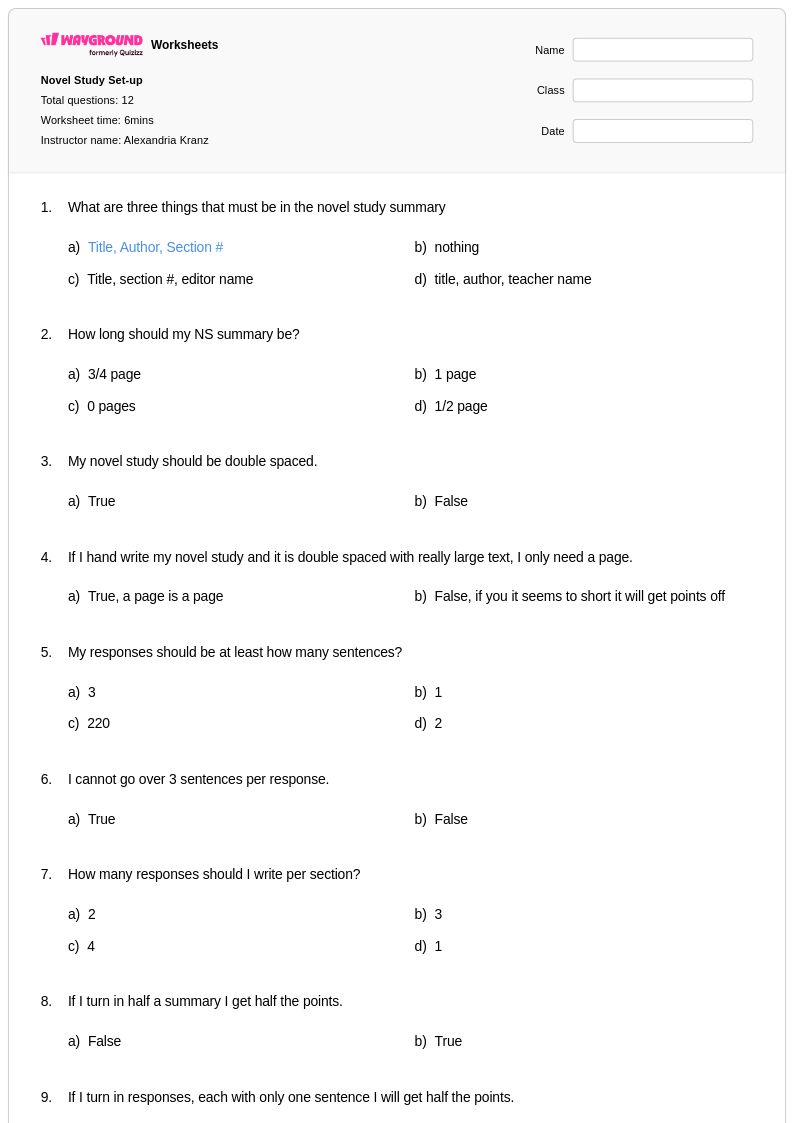
12 Q
7th - 8th
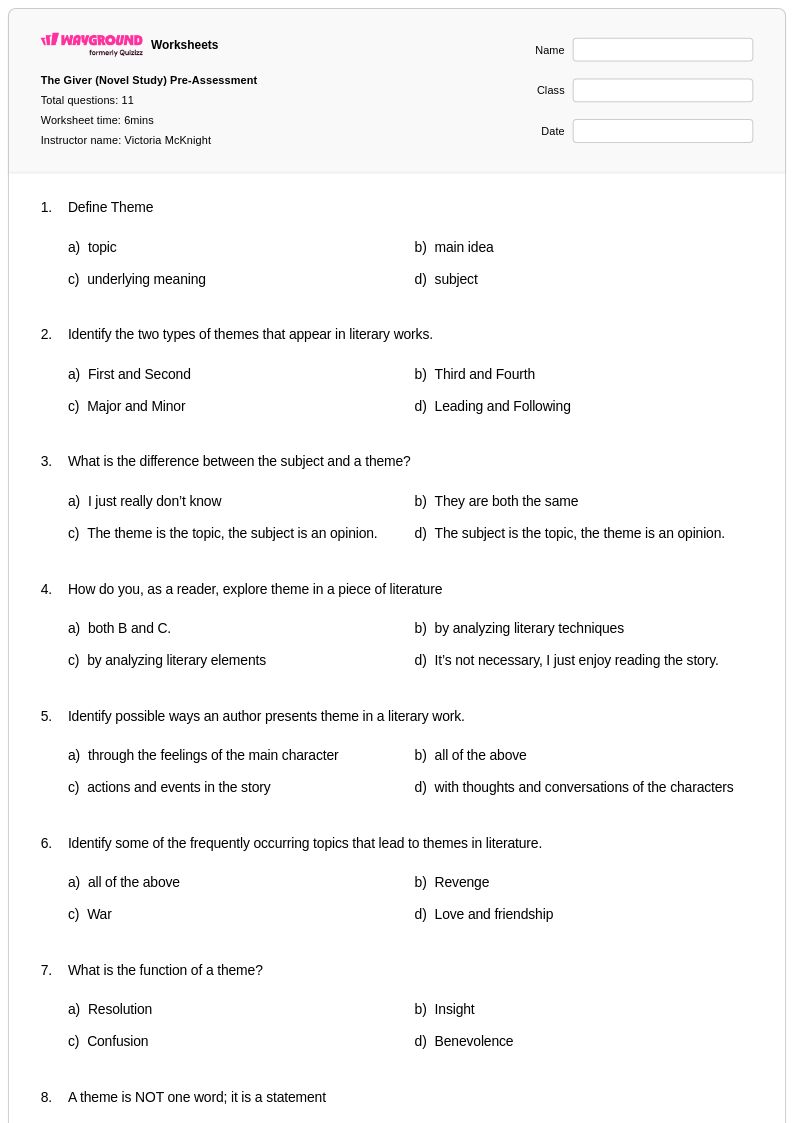
11 Q
6th - 8th
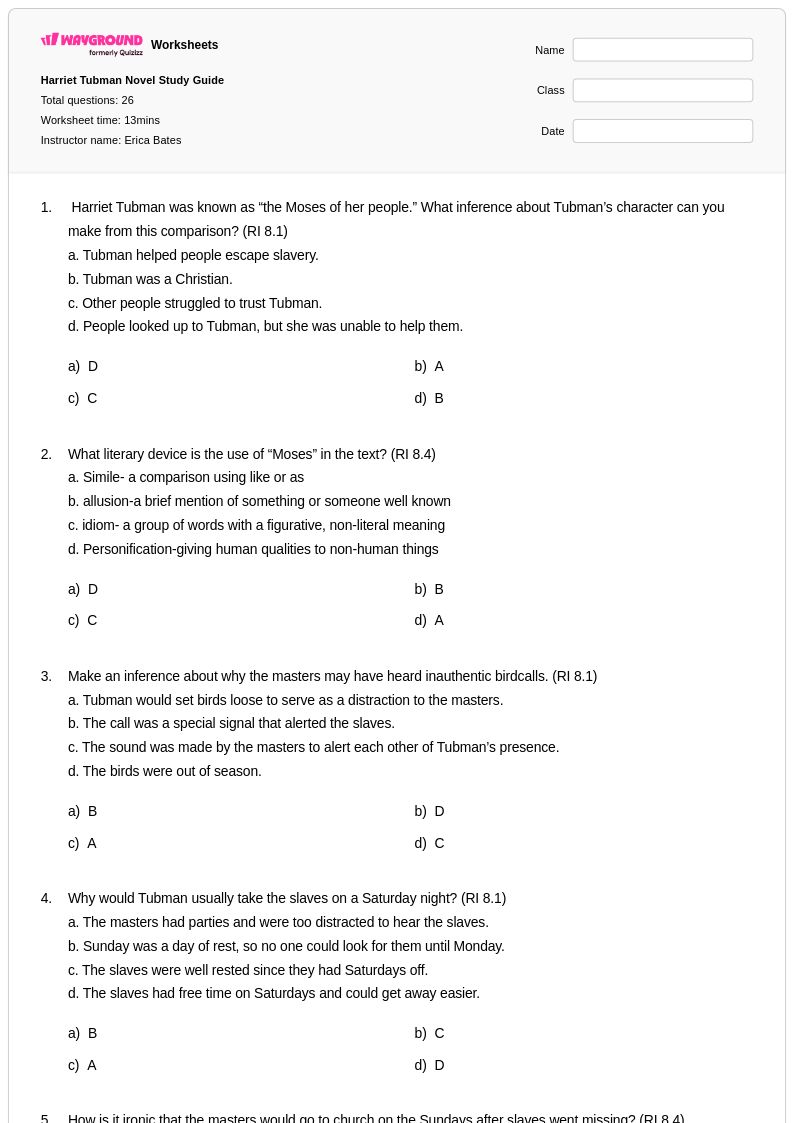
26 Q
6th - 8th
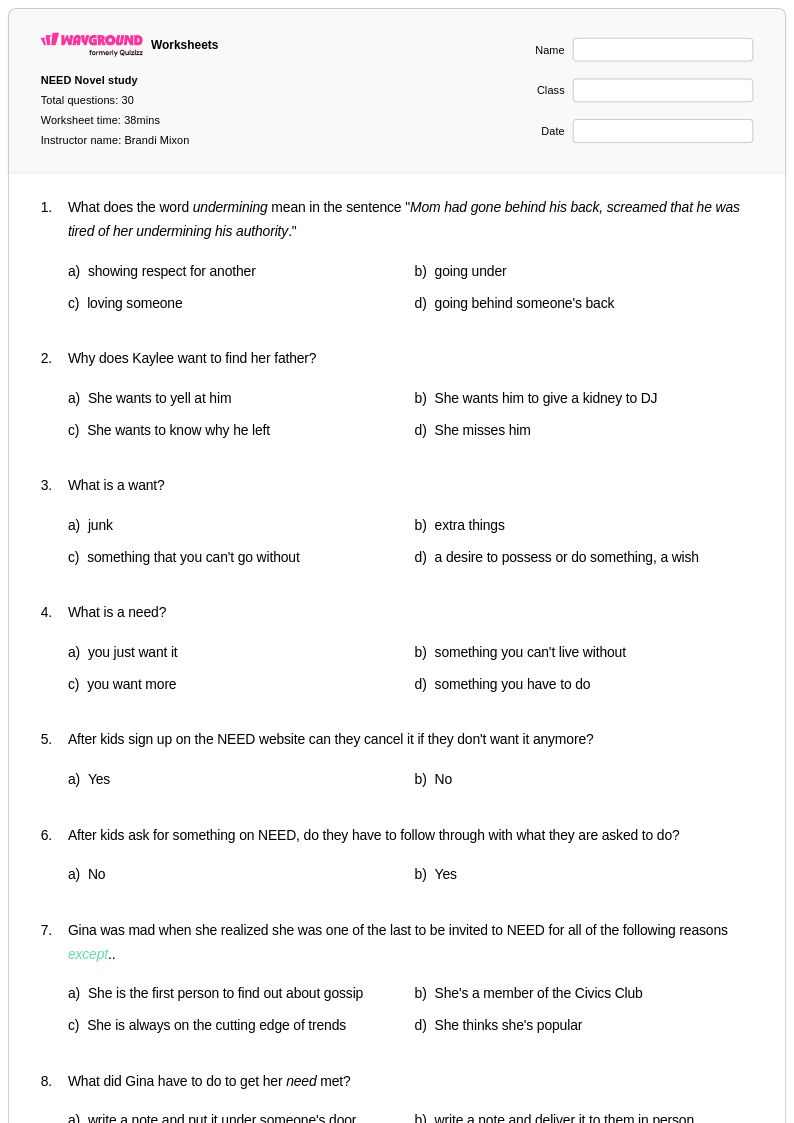
30 Q
7th - 8th
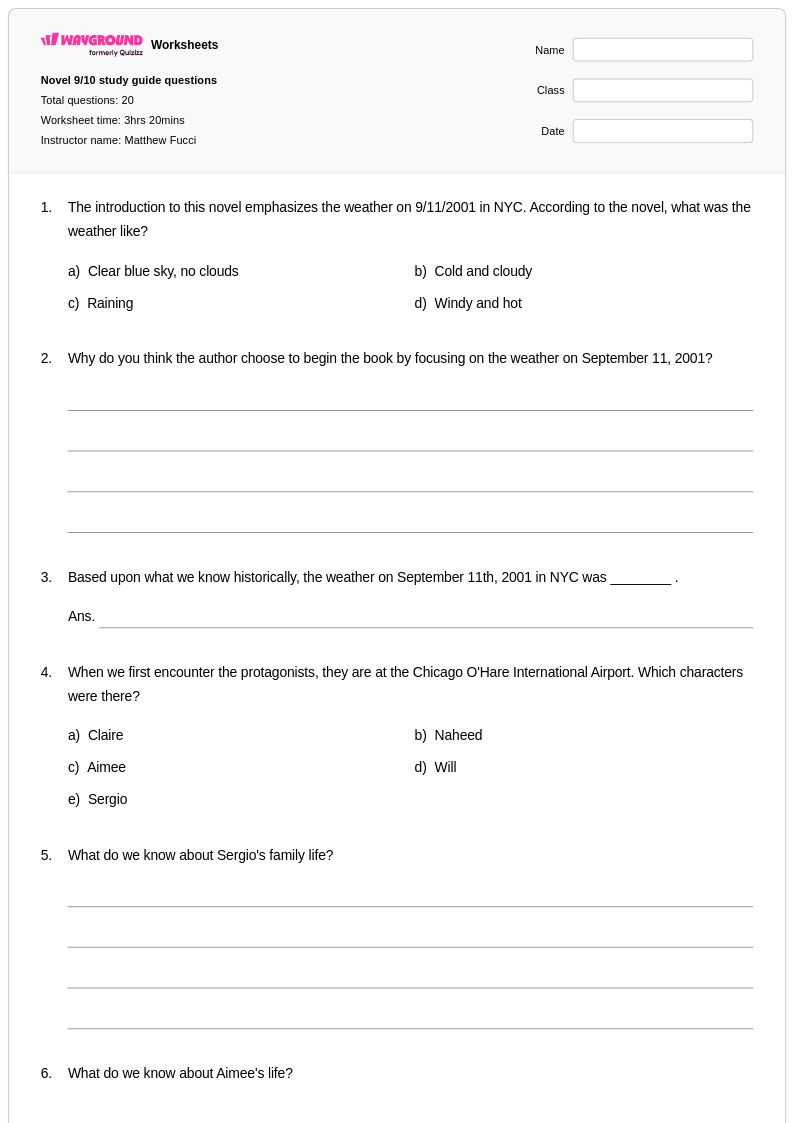
20 Q
7th
10 Q
6th - 7th
75 Q
5th - 9th
12 Q
5th - 7th
38 Q
7th - 12th
Explore Novel Study Worksheets by Grades
Explore Novel Study Worksheets for class 7 by Topic
Explore Other Subject Worksheets for class 7
Explore printable Novel Study worksheets for Class 7
Class 7 novel study worksheets available through Wayground (formerly Quizizz) provide comprehensive resources for developing critical reading and analytical skills essential for middle school literature education. These expertly designed materials guide students through in-depth exploration of novels, focusing on character development, plot structure, thematic analysis, and literary devices that authors employ to craft compelling narratives. The worksheet collections include detailed practice problems that challenge students to examine protagonist motivations, identify symbolic elements, analyze narrative perspectives, and connect textual evidence to broader themes. Each printable resource comes with a comprehensive answer key, enabling teachers to efficiently assess student comprehension while providing immediate feedback on literary analysis skills. These free pdf materials strengthen essential competencies including close reading, textual interpretation, and written response development that form the foundation of advanced literary studies.
Wayground (formerly Quizizz) supports educators with an extensive library of millions of teacher-created novel study resources specifically designed for Class 7 English instruction. The platform's advanced search and filtering capabilities allow teachers to locate materials aligned with specific novels, learning standards, and instructional objectives, while differentiation tools enable customization for diverse reading levels and learning needs. These comprehensive worksheet collections are available in both printable pdf formats and interactive digital versions, providing flexibility for classroom instruction, homework assignments, and independent study sessions. The platform's robust customization features empower teachers to modify existing materials or create targeted interventions for remediation and enrichment, ensuring that novel study instruction meets individual student needs while maintaining rigorous academic expectations. This extensive resource collection streamlines lesson planning and provides consistent opportunities for skill practice across various literary works and genres.
FAQs
How do I teach a novel study unit in middle school?
What exercises help students analyze characters and themes in a novel?
What mistakes do students commonly make when analyzing a novel?
How do I differentiate novel study for struggling readers or students with accommodations?
How do I use Wayground's novel study worksheets in my classroom?
How do I assess whether students truly understood a novel versus just following along?