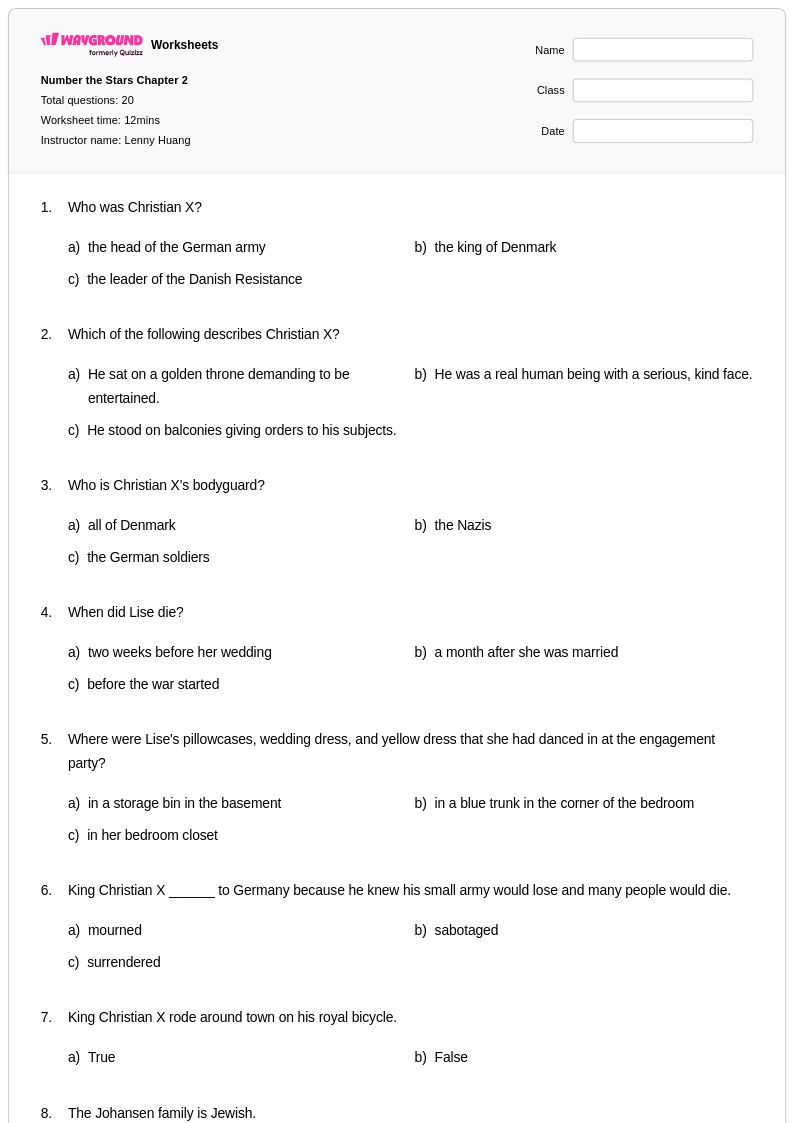
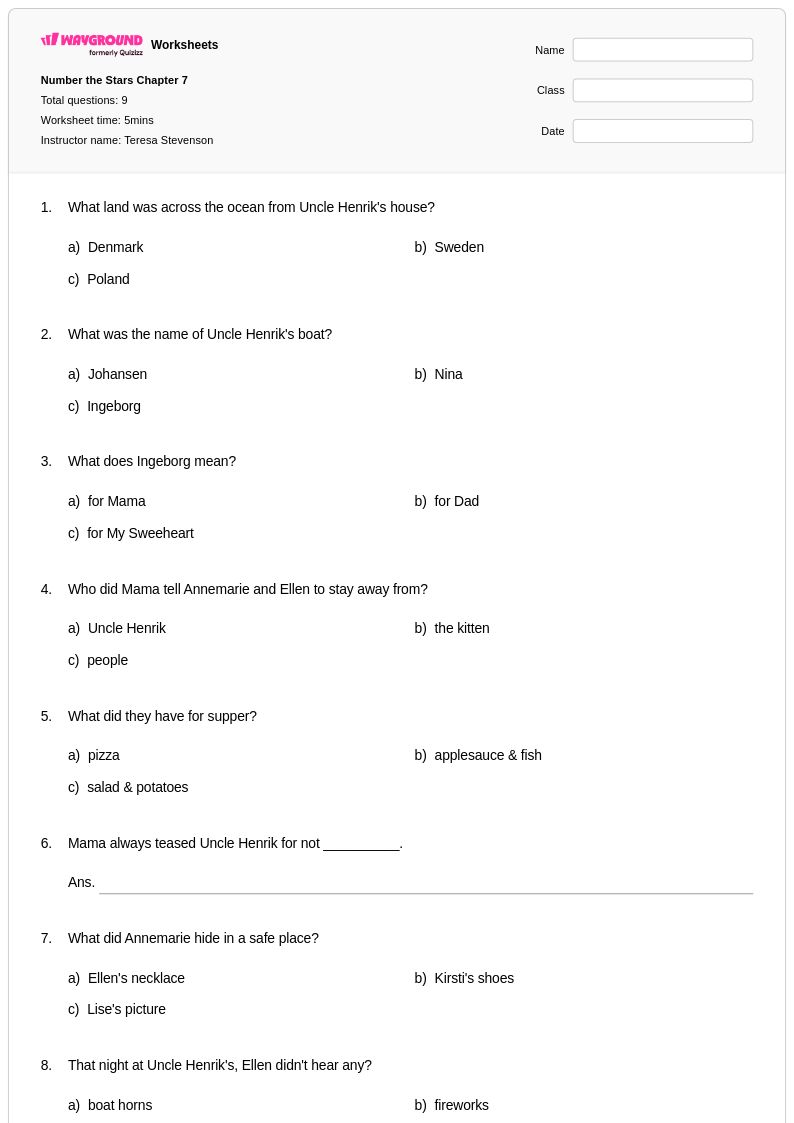
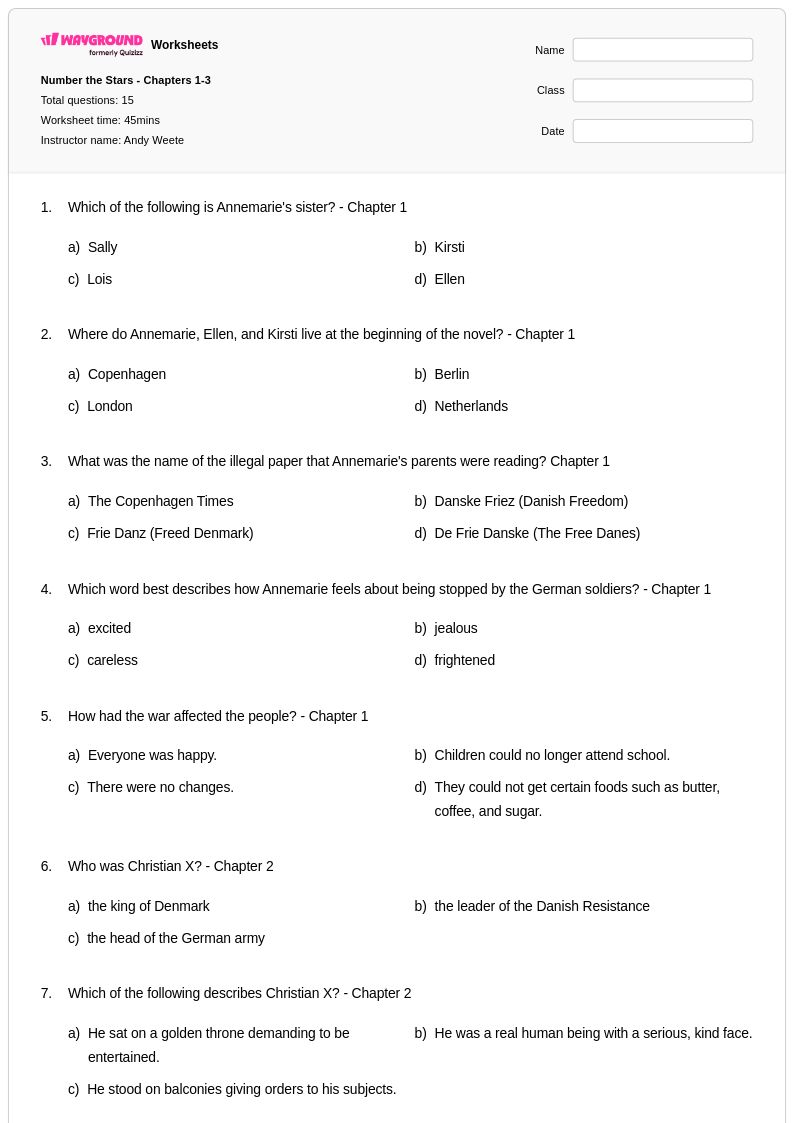
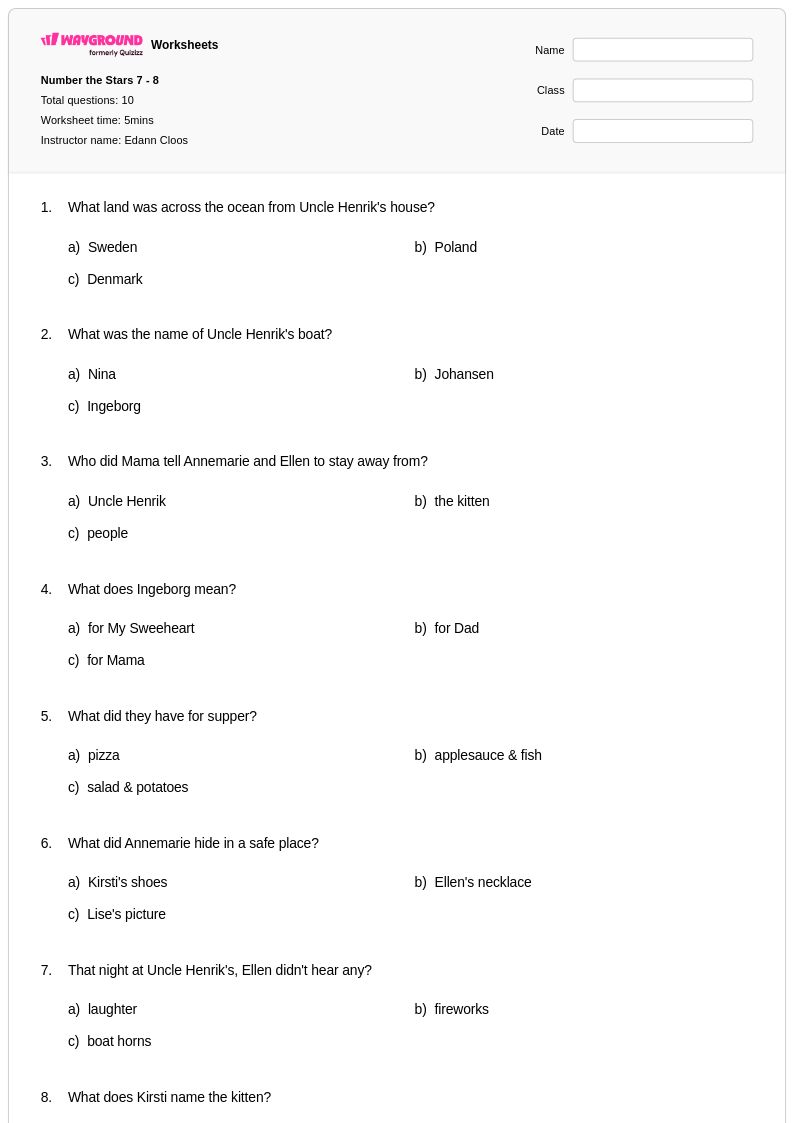
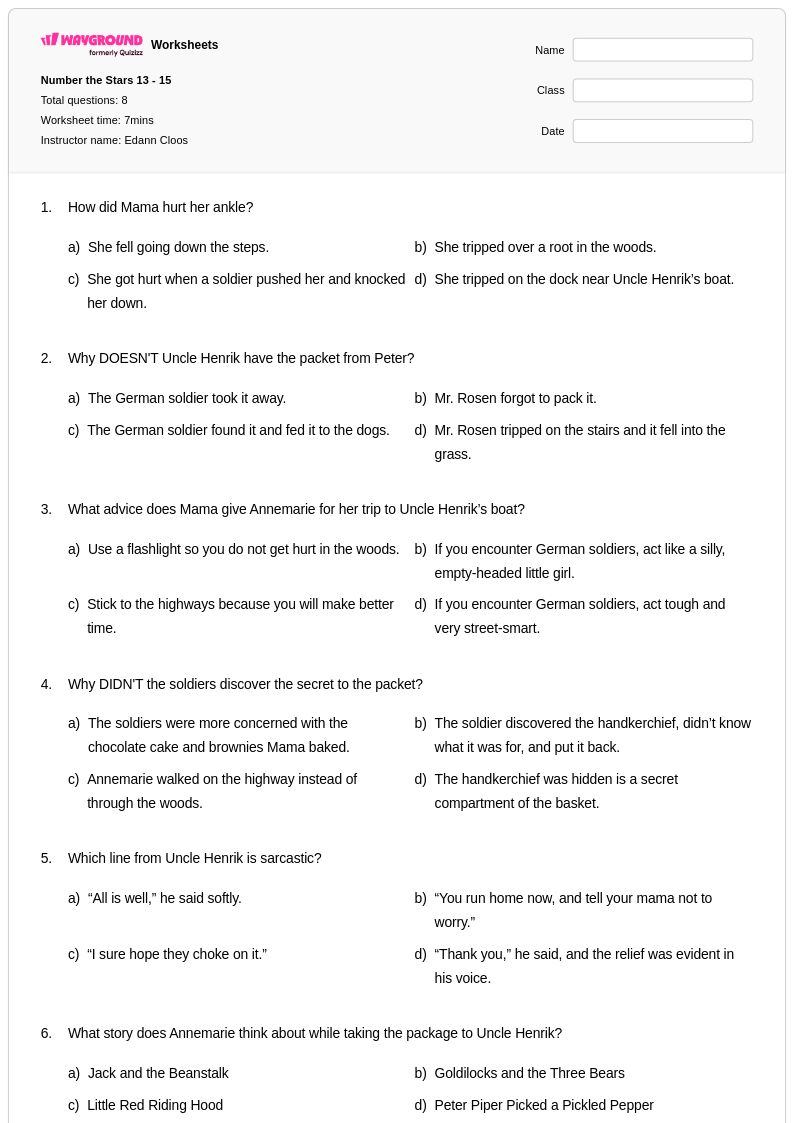
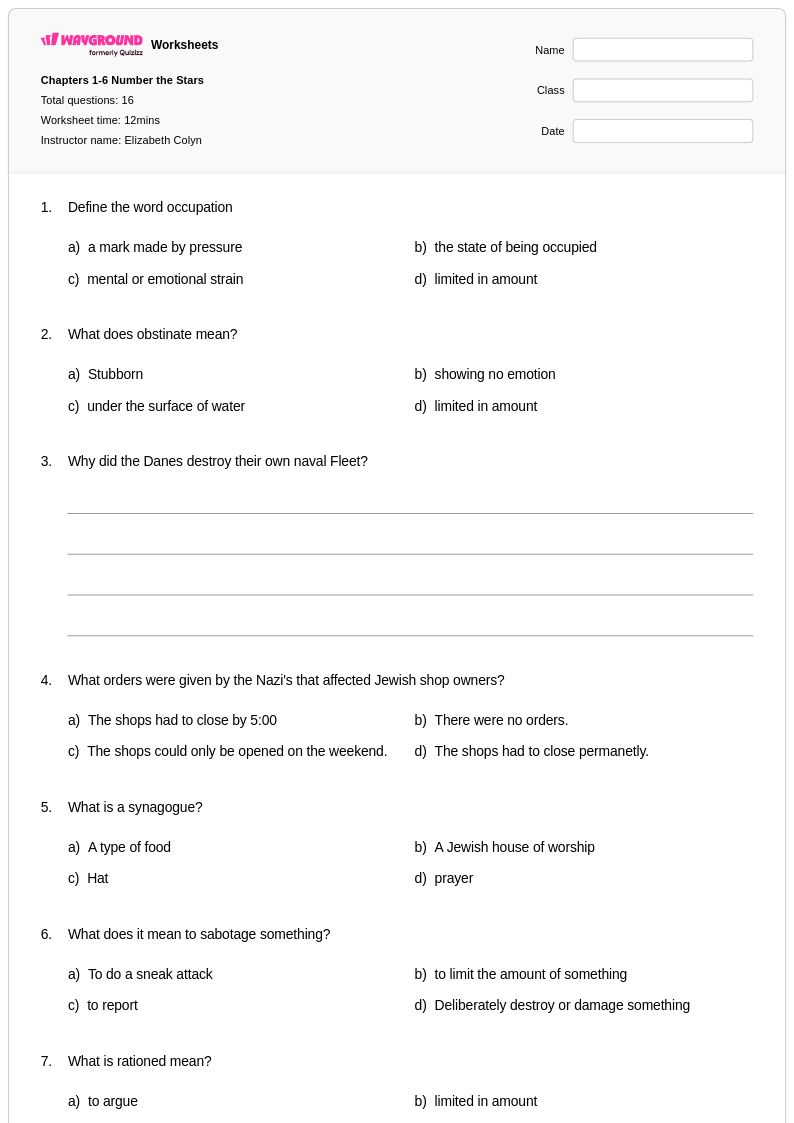
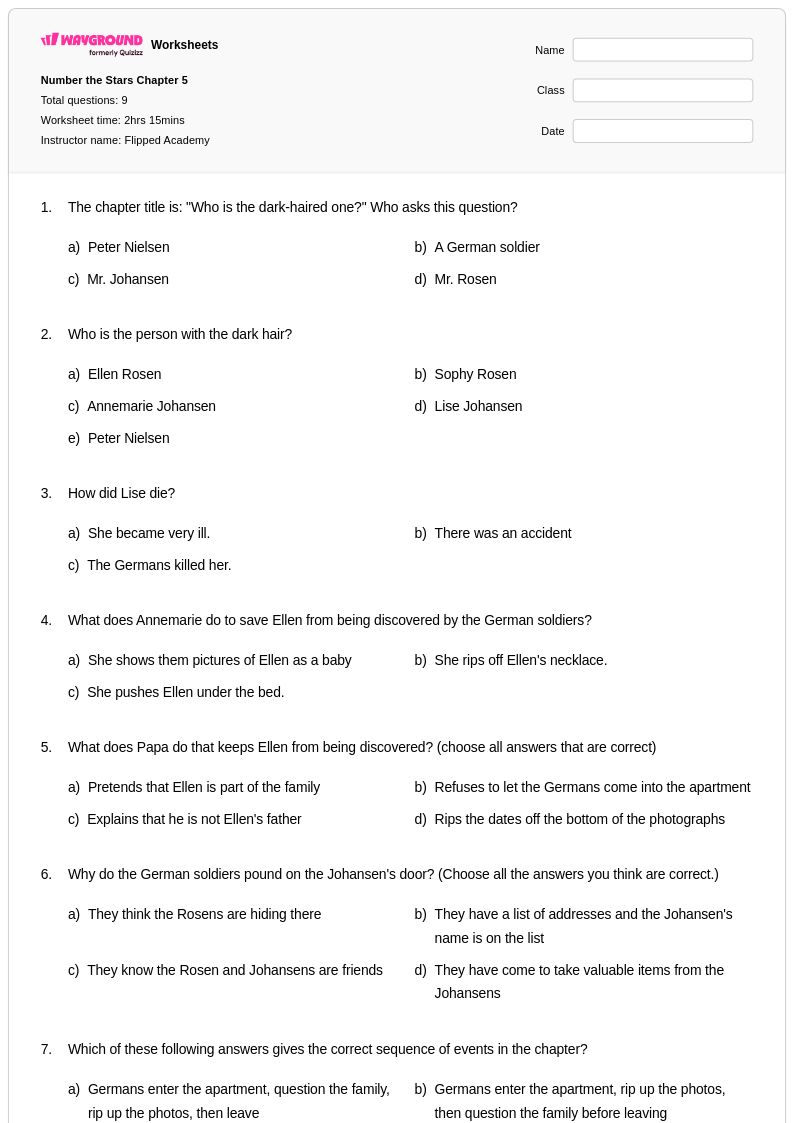
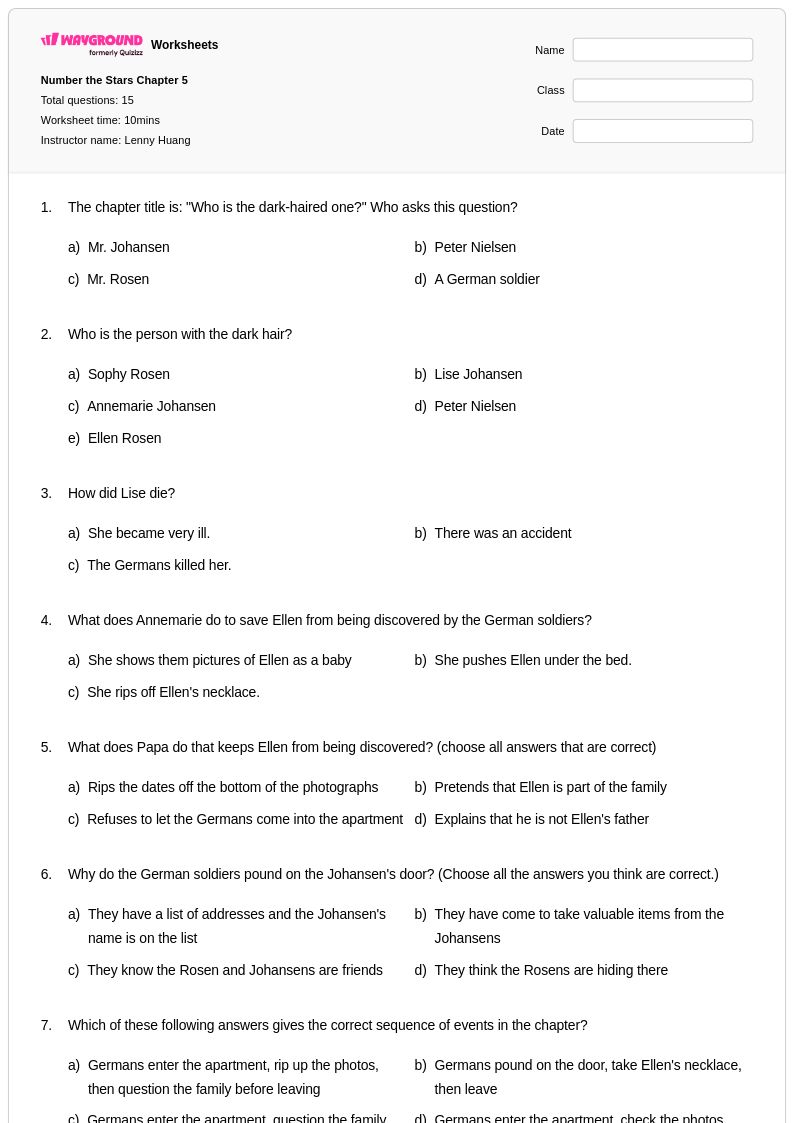
Free Printable Number the Stars Worksheets for Class 4
Enhance Class 4 students' understanding of "Number the Stars" with our comprehensive collection of free printable worksheets and PDF practice problems, complete with answer keys to support reading comprehension and literary analysis skills.
Explore printable Number the Stars worksheets for Class 4
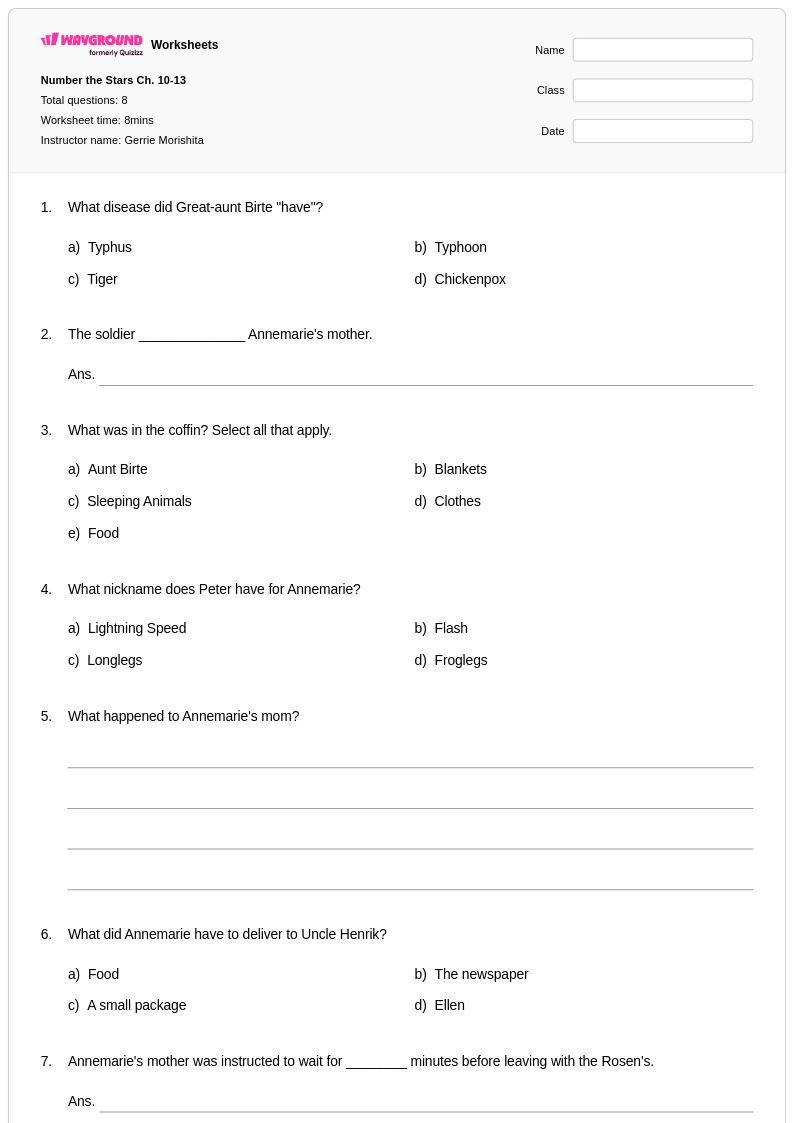
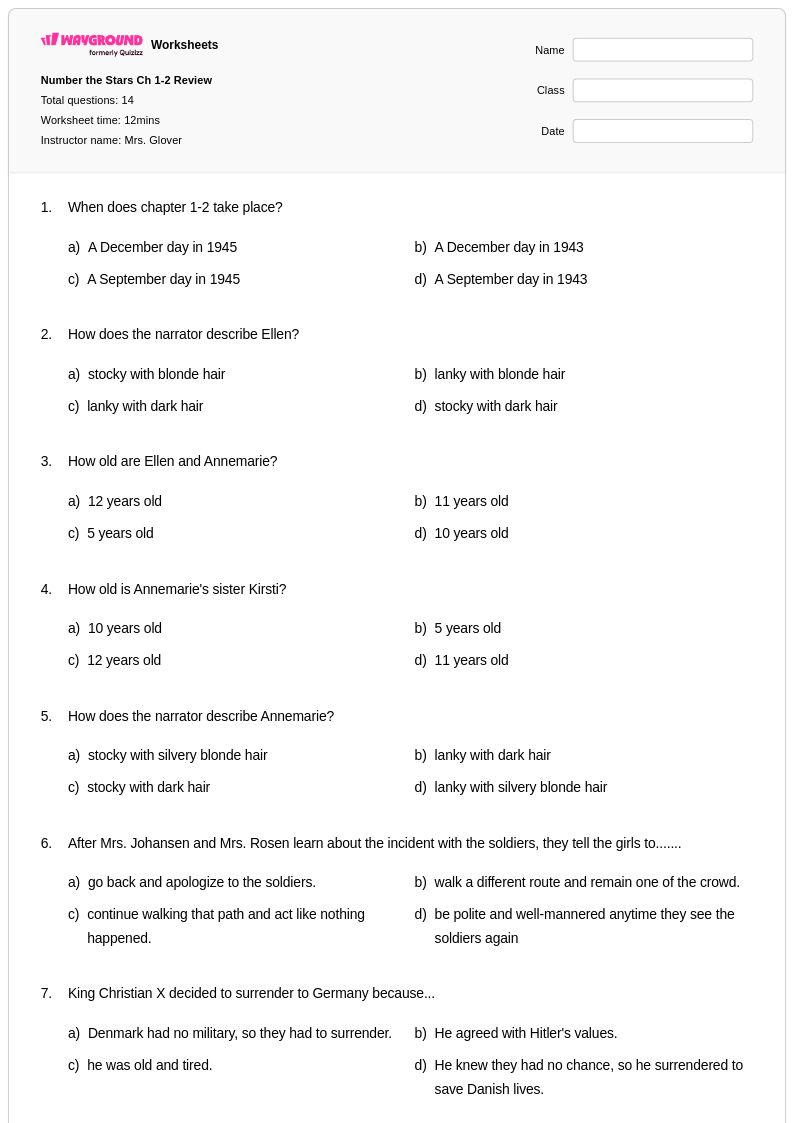
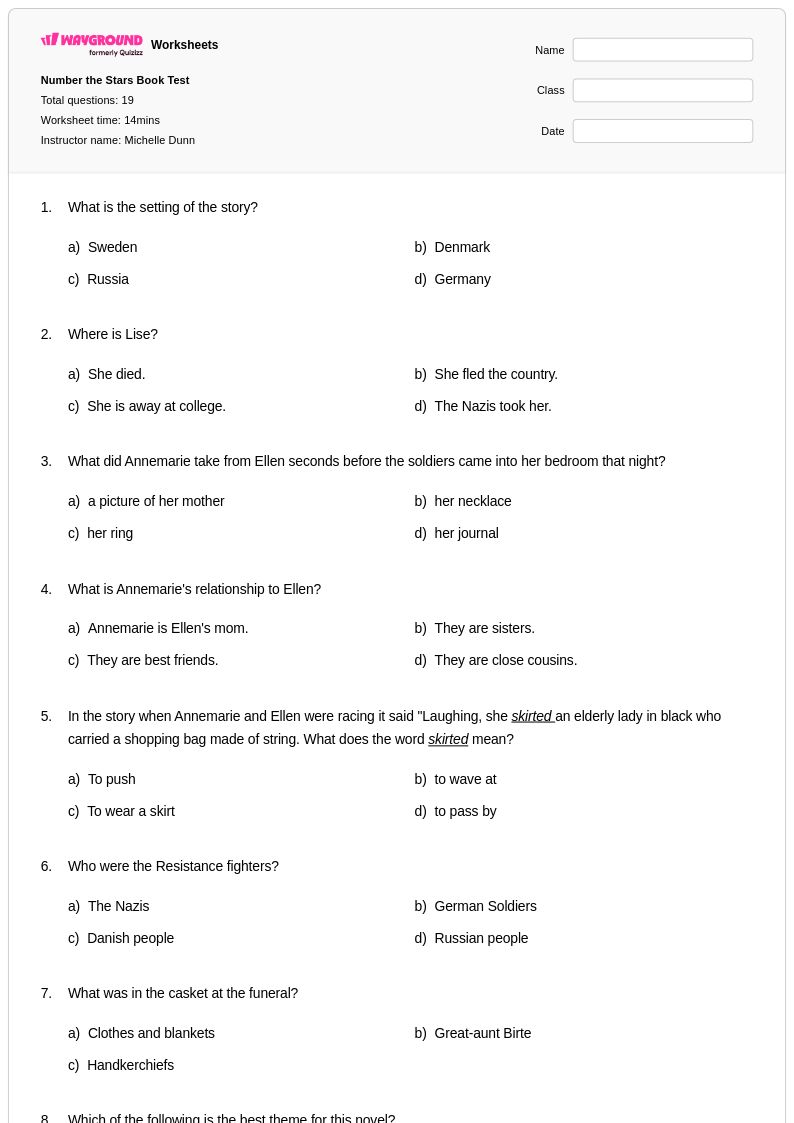
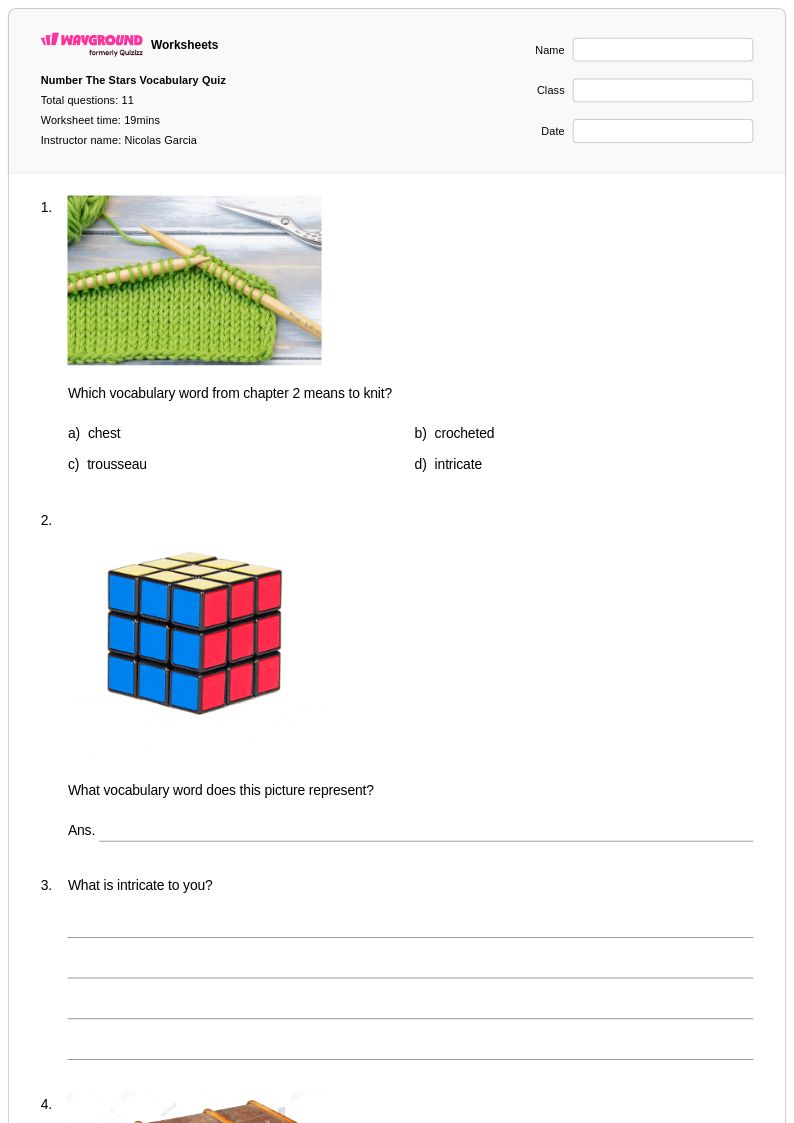
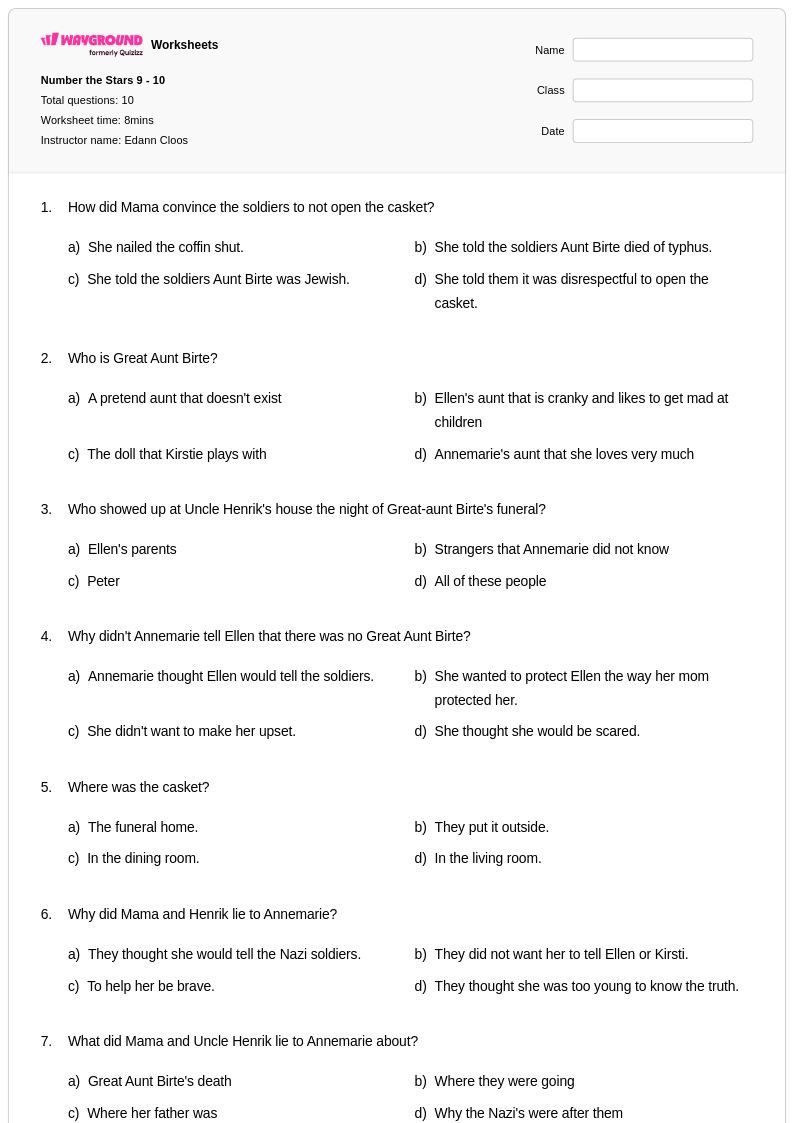
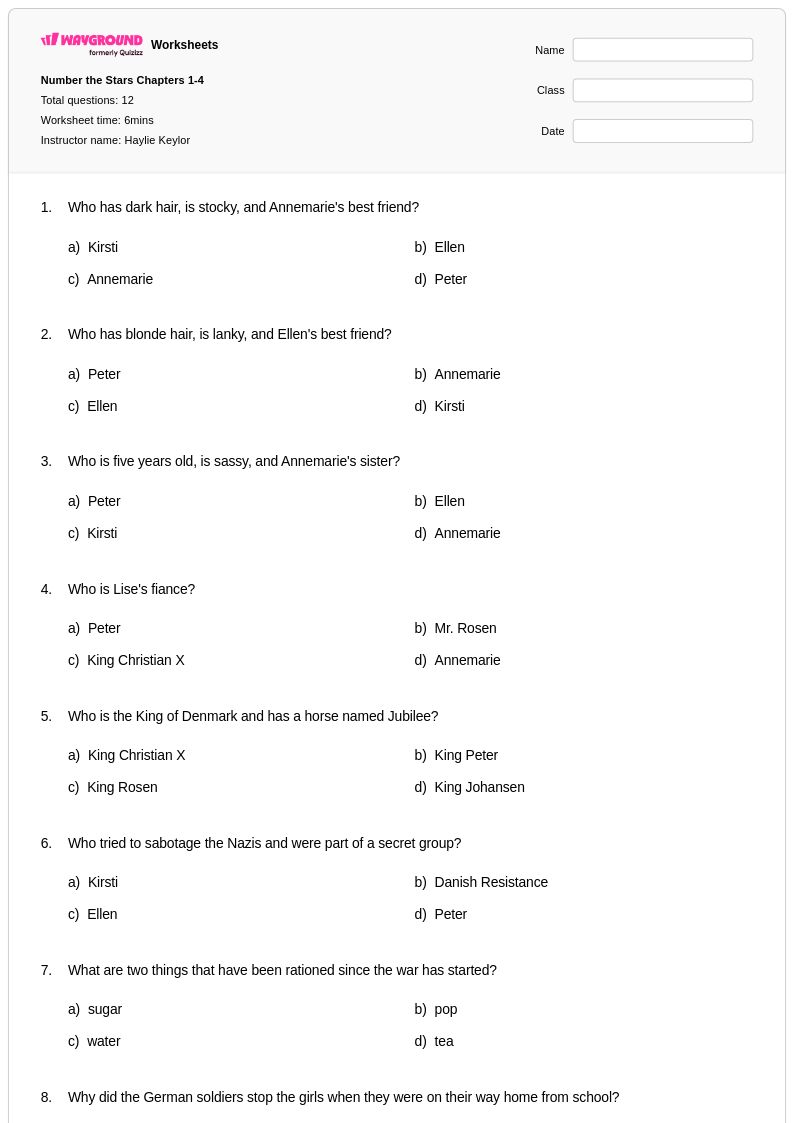
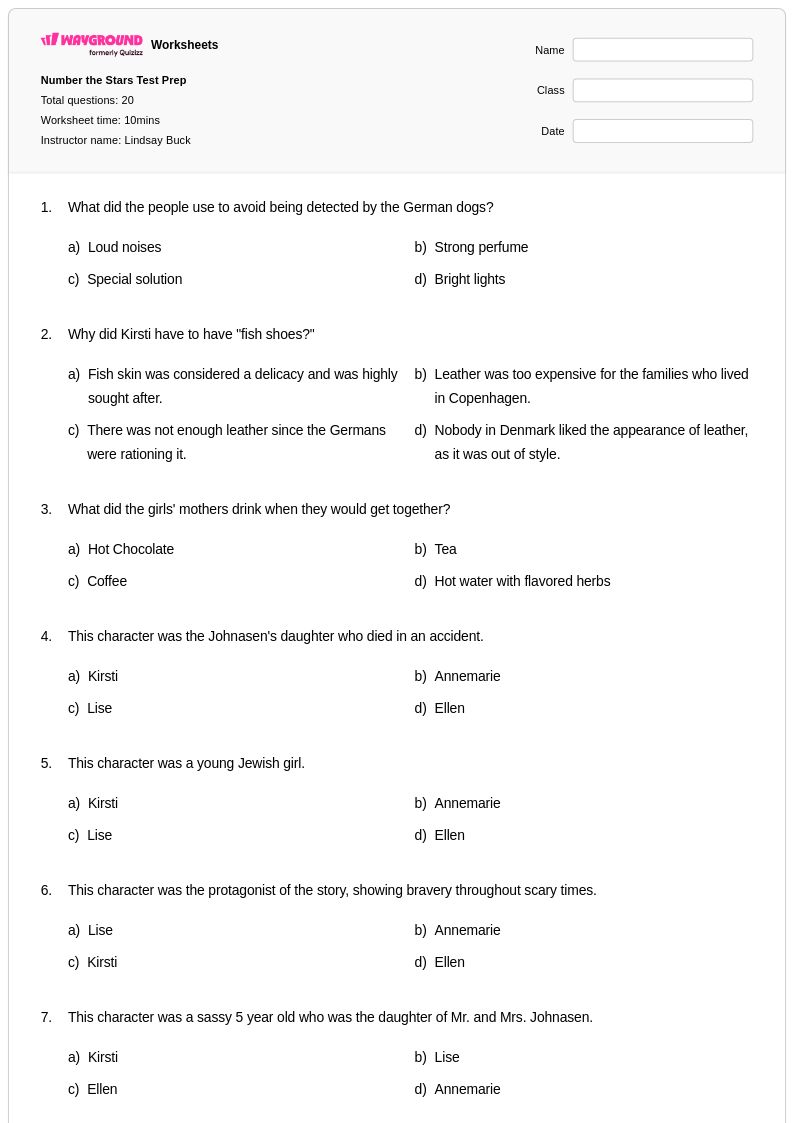
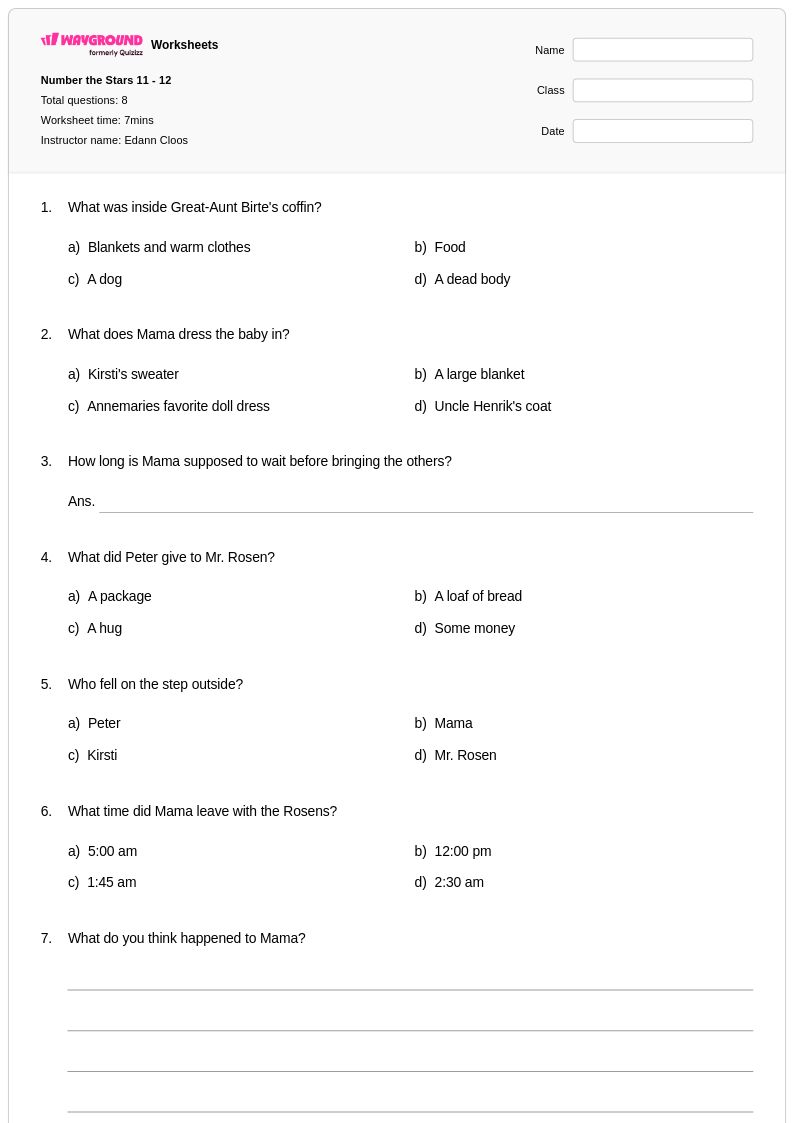
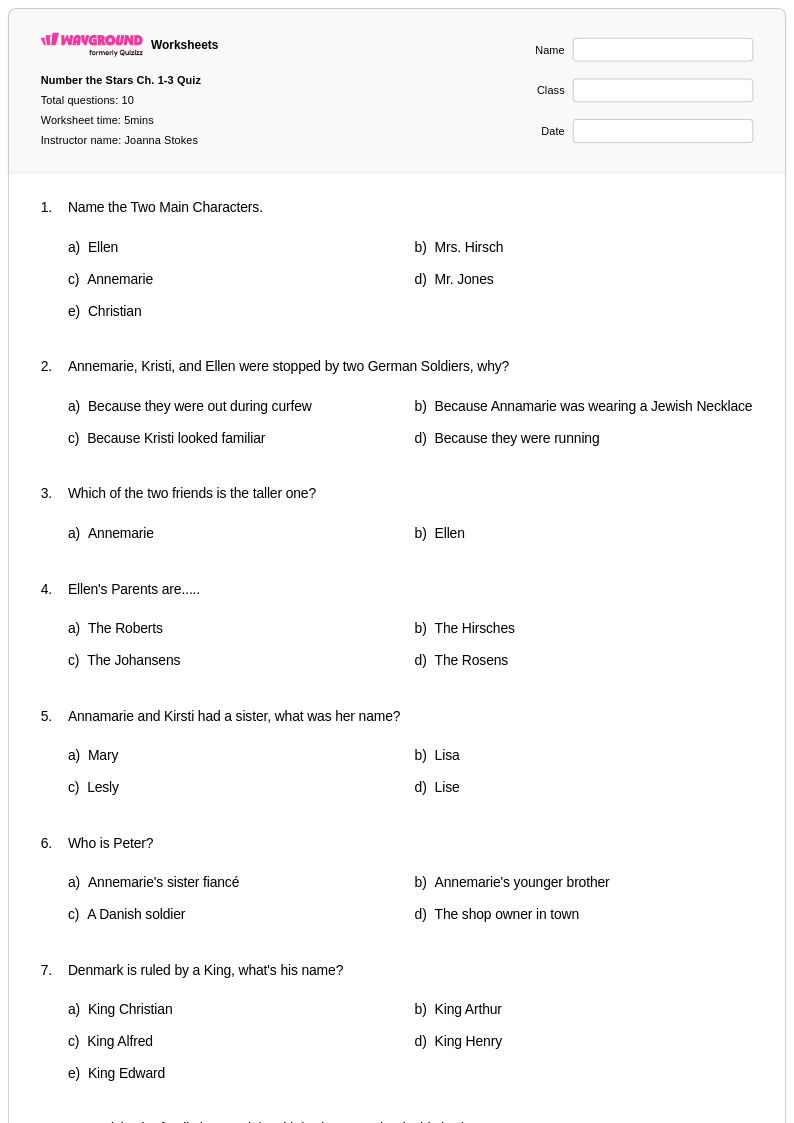
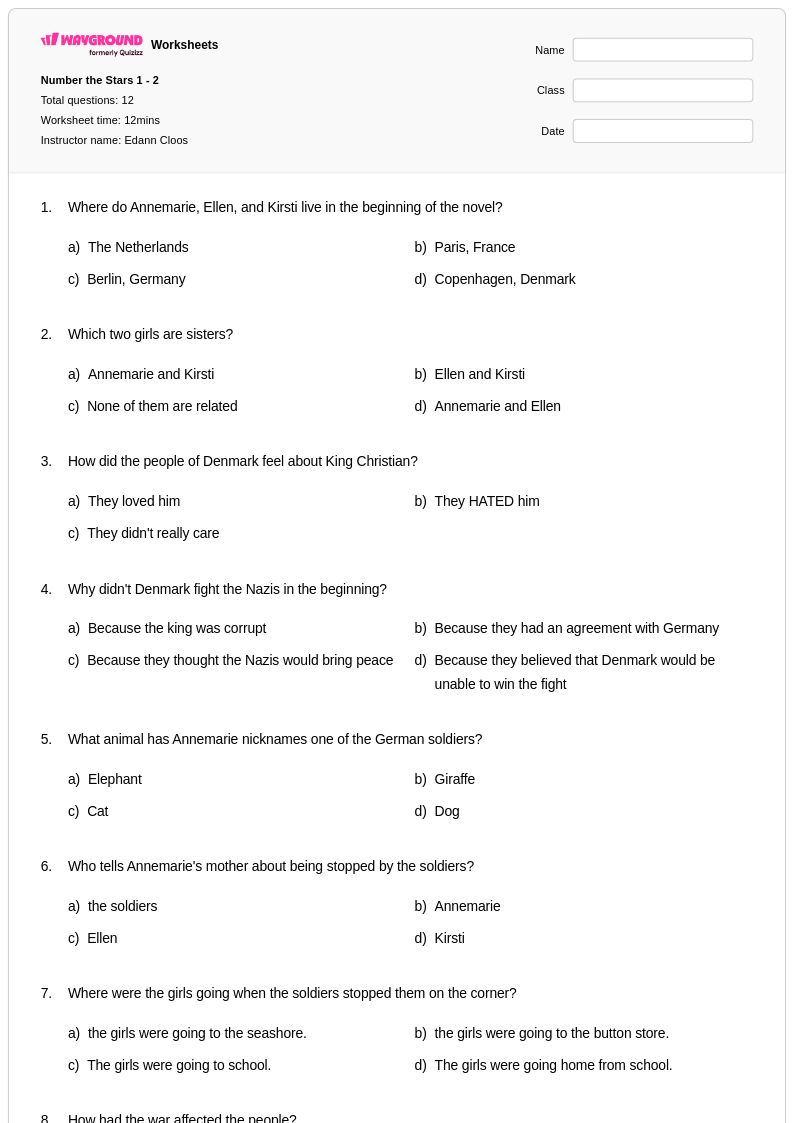
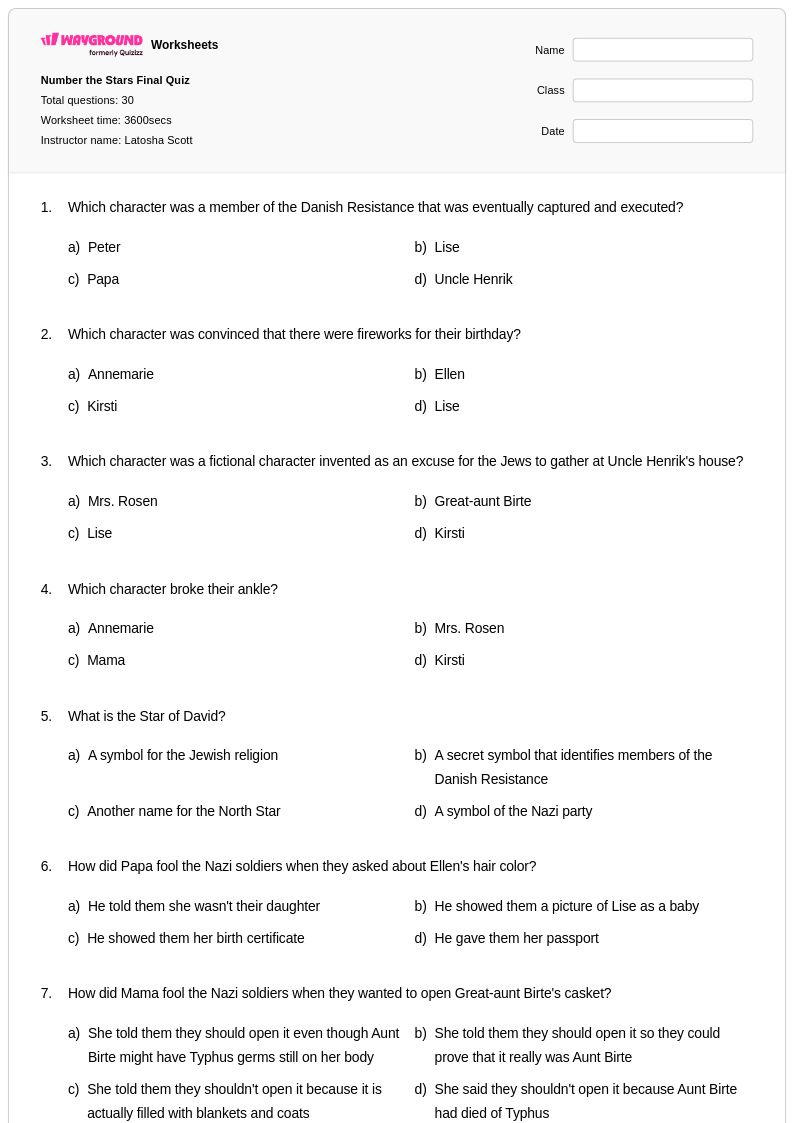
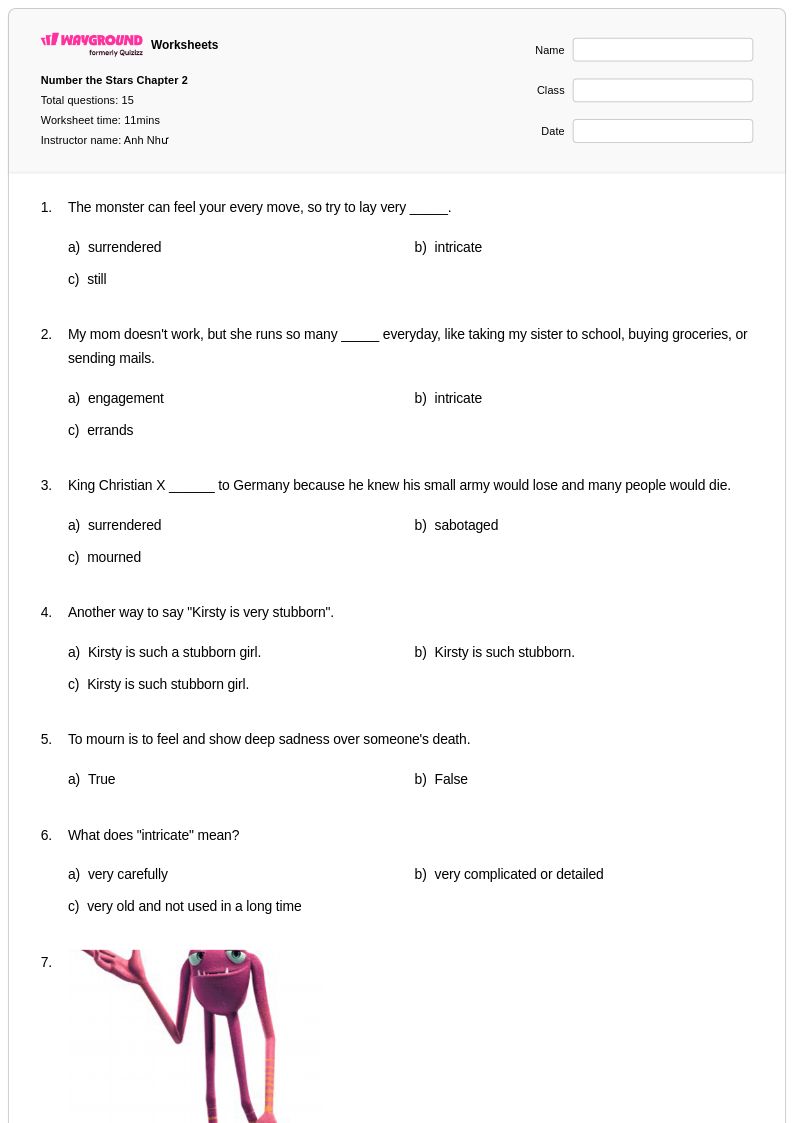
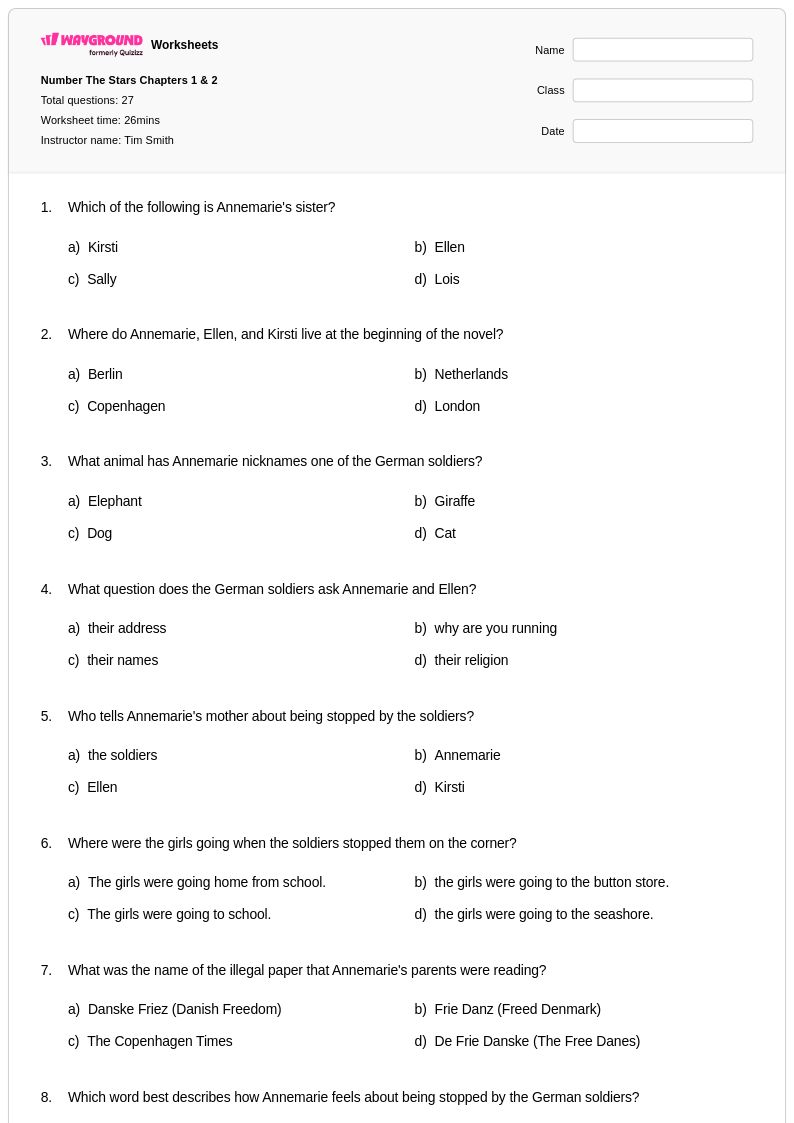
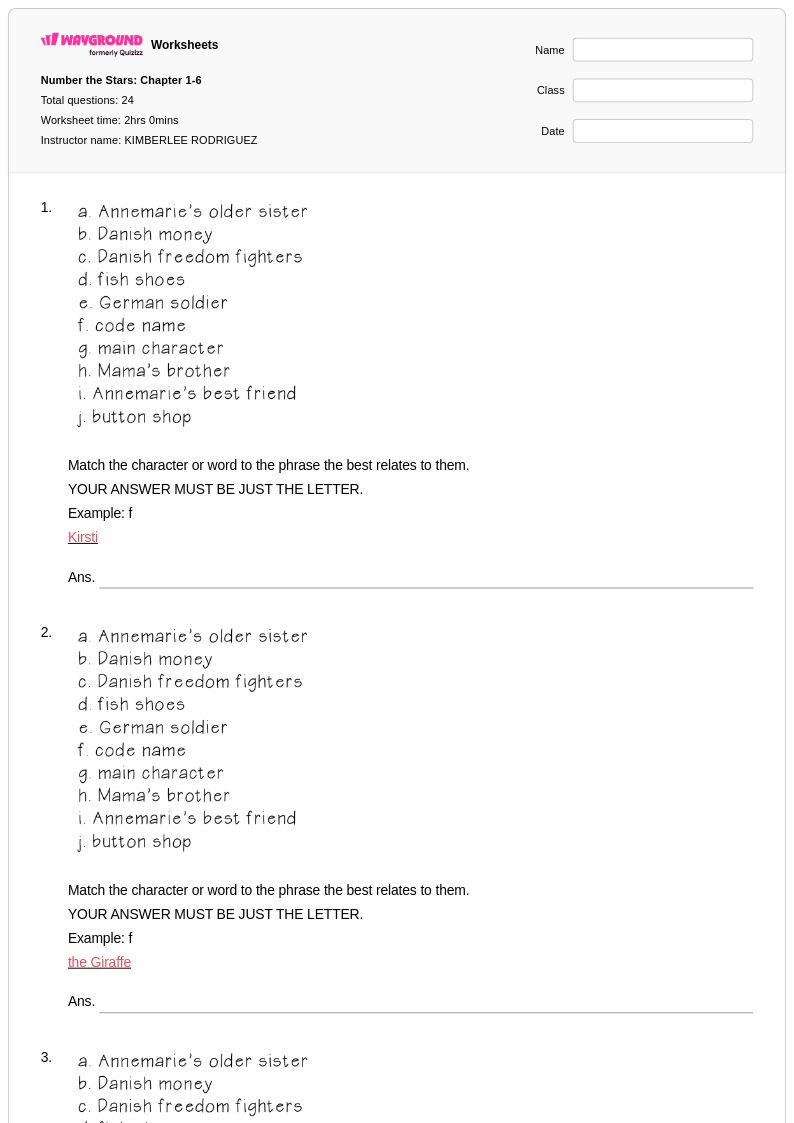
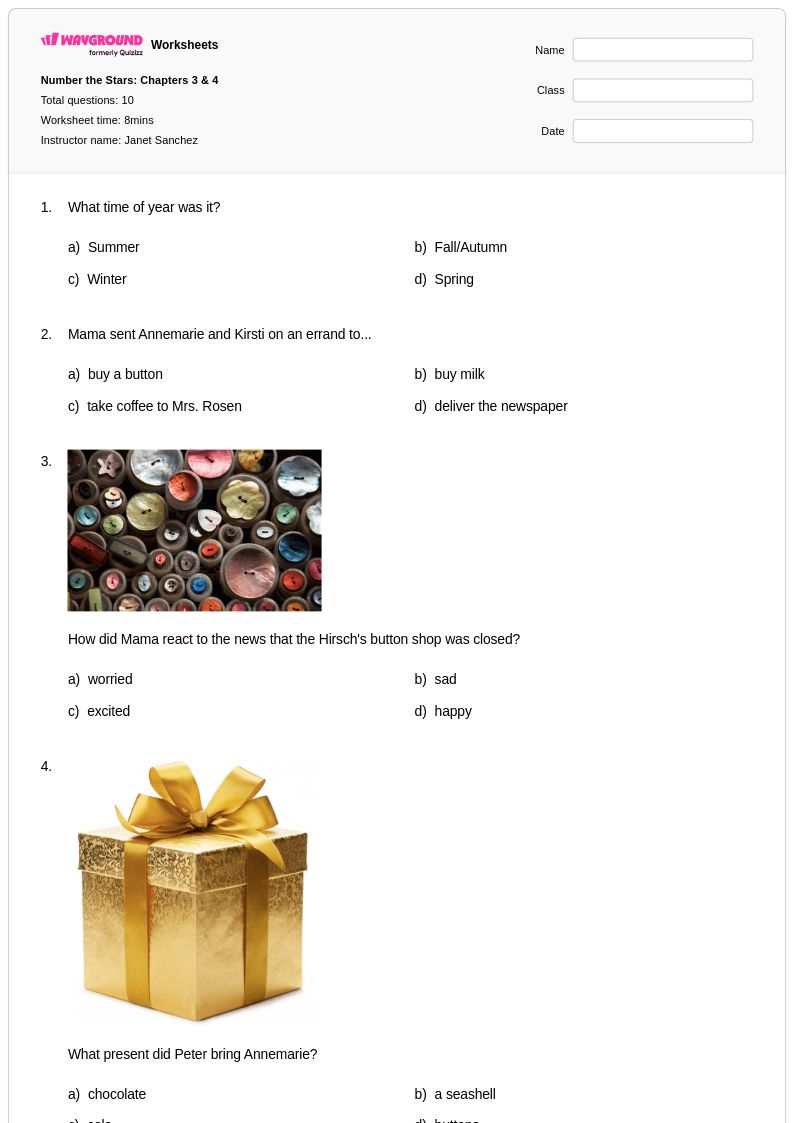
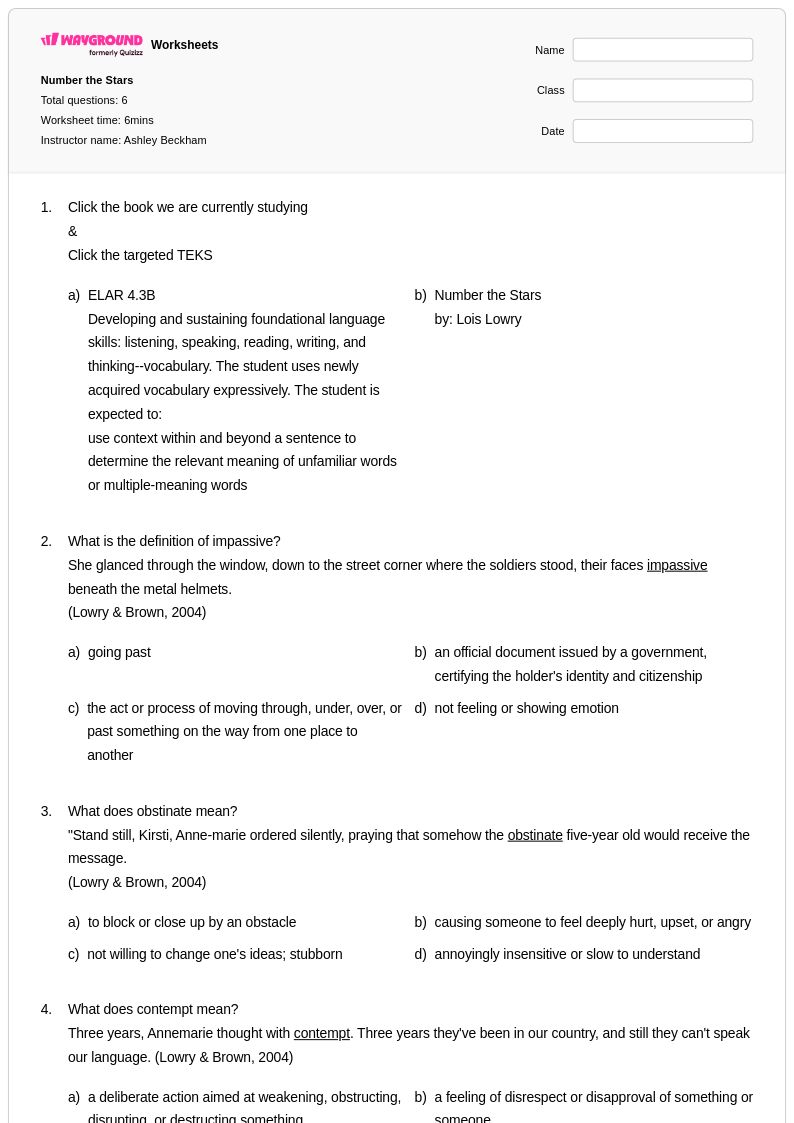
Number the Stars worksheets for Class 4 students provide comprehensive support for this beloved novel study, helping young readers dive deep into Lois Lowry's powerful story of courage and friendship during World War II. These carefully crafted materials strengthen essential reading comprehension skills through character analysis activities, plot sequence exercises, and thematic discussions that explore concepts of bravery, sacrifice, and moral choices. Students engage with vocabulary building exercises that introduce historical terminology and enhance their understanding of the Danish resistance movement, while comprehension questions guide them through critical thinking about Annemarie's journey and the historical context of Nazi-occupied Denmark. The collection includes printable worksheets with complete answer keys, practice problems that reinforce key literary concepts, and free pdf resources that support both independent reading and classroom discussions about this Newbery Medal-winning novel.
Wayground (formerly Quizizz) empowers teachers with an extensive library of millions of teacher-created Number the Stars resources specifically designed for Class 4 novel studies, featuring robust search and filtering capabilities that allow educators to quickly locate materials aligned with specific learning objectives and curriculum standards. The platform's differentiation tools enable teachers to customize worksheets for diverse learning needs, providing advanced students with enrichment activities while offering additional scaffolding for those requiring extra support with reading comprehension and literary analysis. These flexible resources are available in both printable and digital formats, including downloadable pdf versions, making lesson planning seamless whether teachers need materials for in-person instruction, homework assignments, or remote learning environments. The comprehensive collection supports effective remediation strategies for struggling readers while providing engaging skill practice opportunities that help all students develop deeper appreciation for historical fiction and strengthen their analytical reading abilities.
FAQs
How do I teach Number the Stars in the classroom?
Teaching Number the Stars is most effective when instruction connects the novel's literary elements to its historical context. Begin by grounding students in the reality of Nazi-occupied Denmark before reading, so they can interpret character decisions within that framework. As you move through the novel, focus on how Lois Lowry uses suspense, symbolism, and point of view to develop Annemarie's moral growth. Structured discussion around key scenes — particularly moments of risk and sacrifice — helps students move from plot-level comprehension to thematic analysis.
What are good comprehension exercises for Number the Stars?
Effective comprehension exercises for Number the Stars include chapter-by-chapter reading checks, character development trackers, and evidence-based response questions that ask students to connect specific text passages to themes like courage, sacrifice, and moral choice. Literary analysis tasks focusing on symbolism (such as the Star of David necklace) and point of view help students practice close reading skills. Exercises that ask students to place events in historical context — connecting the novel to the Danish resistance and the Holocaust — deepen both reading comprehension and historical understanding.
What common mistakes do students make when analyzing Number the Stars?
One of the most common errors students make is reading Number the Stars as a straightforward adventure story rather than recognizing its deeper themes of moral courage and resistance. Students often struggle to distinguish between Annemarie's limited perspective as a child narrator and the larger historical reality Lowry is depicting. Another frequent mistake is identifying symbols, such as the title itself or the Star of David imagery, without explaining how they function thematically. Prompting students to cite textual evidence when making analytical claims helps correct surface-level responses.
How can I use Number the Stars worksheets to support different reading levels?
Number the Stars worksheets can be differentiated by adjusting the complexity of the analytical tasks — scaffolded sentence frames and guided response structures support struggling readers, while open-ended literary analysis prompts challenge advanced students. On Wayground, teachers can apply individual student accommodations such as Read Aloud, extended time, and reduced answer choices, which are particularly useful for students who need additional support engaging with historically dense literary content. These settings can be assigned to individual students without disrupting the experience of the rest of the class.
How do I use Number the Stars worksheets on Wayground?
Number the Stars worksheets on Wayground are available as printable PDFs for traditional classroom use and in digital formats for technology-integrated or remote learning environments, giving teachers flexibility in how they assign and collect student work. Teachers can also host worksheets directly as a quiz on Wayground, making it easy to track student responses and assess comprehension at the class level. All worksheets include answer keys, supporting both self-paced independent study and teacher-led instruction.
How do I connect Number the Stars to broader history and human rights discussions?
Number the Stars provides a powerful entry point for discussions about the Holocaust, the Danish resistance, and the moral choices individuals face under oppression. Teachers can use the novel's themes of bravery and sacrifice to bridge into broader human rights conversations, asking students to consider how ordinary people respond to injustice. Pairing literary analysis with primary source documents — such as firsthand accounts from Danish rescuers — strengthens both historical understanding and empathy-based reading. Discussion prompts that ask students to connect the novel's themes to contemporary events extend its relevance beyond the World War II context.