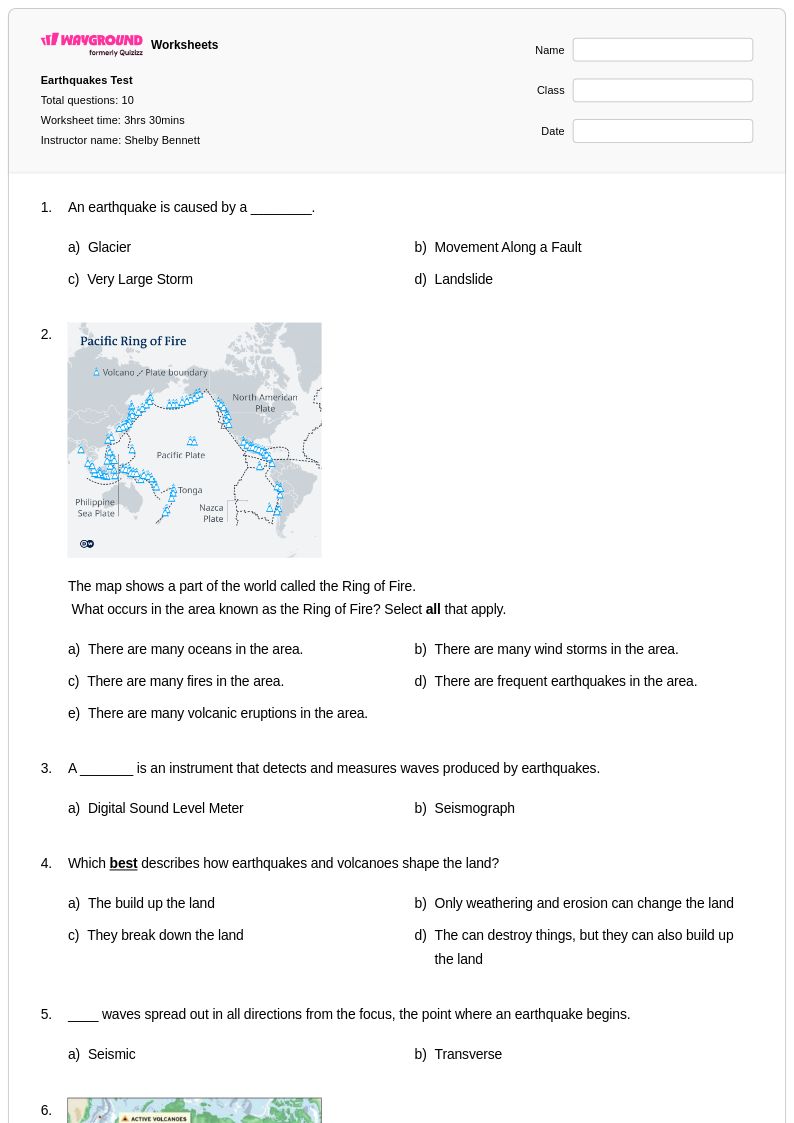
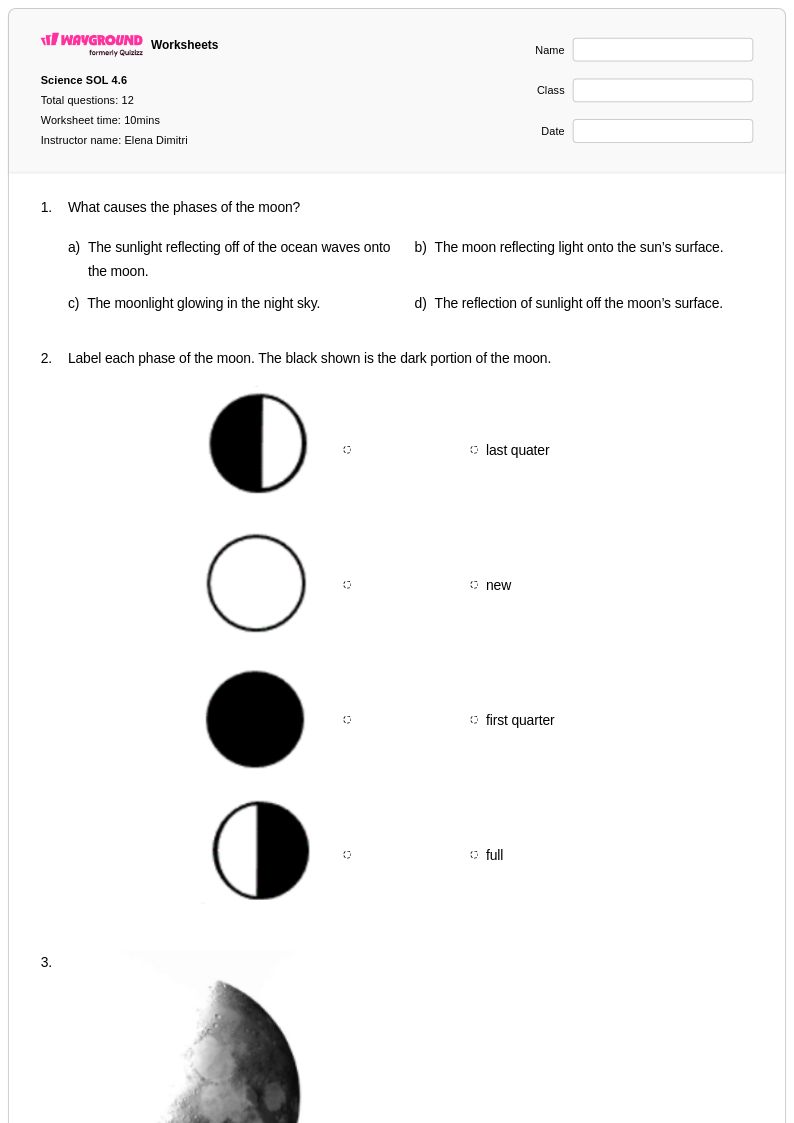
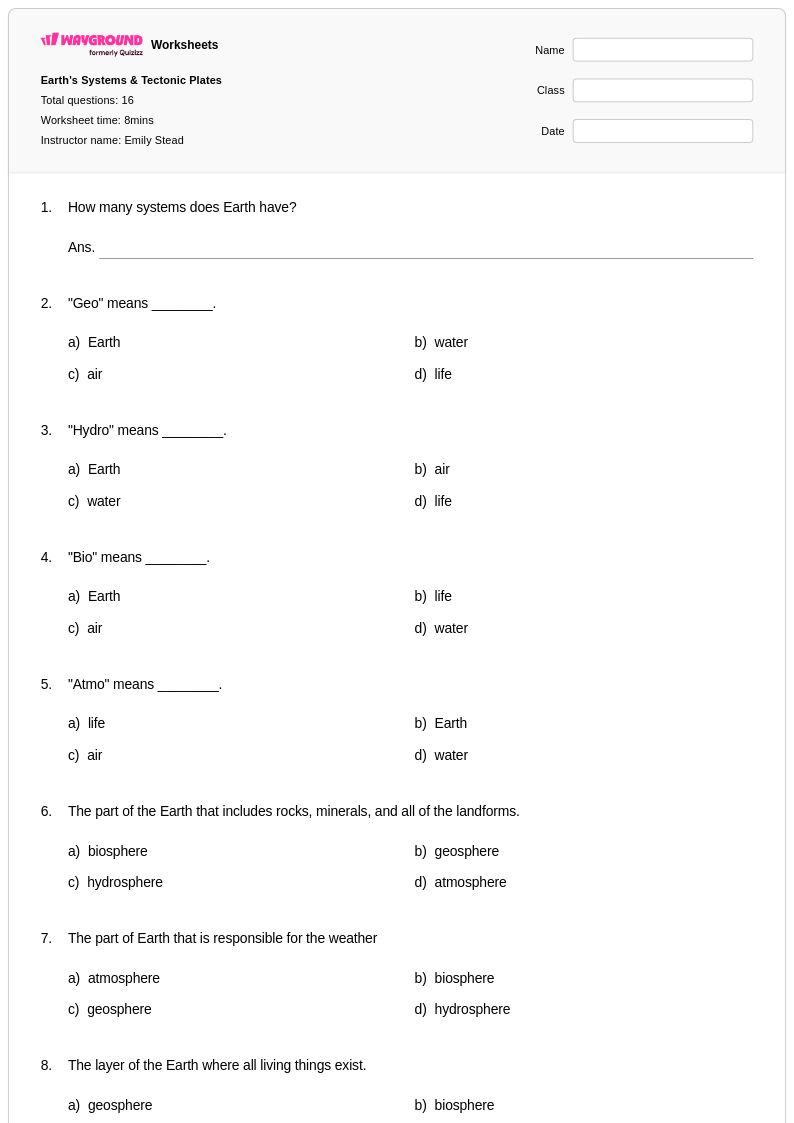
Explore Wayground's free Class 4 ocean waves worksheets and printables that help students understand wave formation, movement, and coastal interactions through engaging practice problems with complete answer keys.
Explore printable Ocean Waves worksheets for Class 4
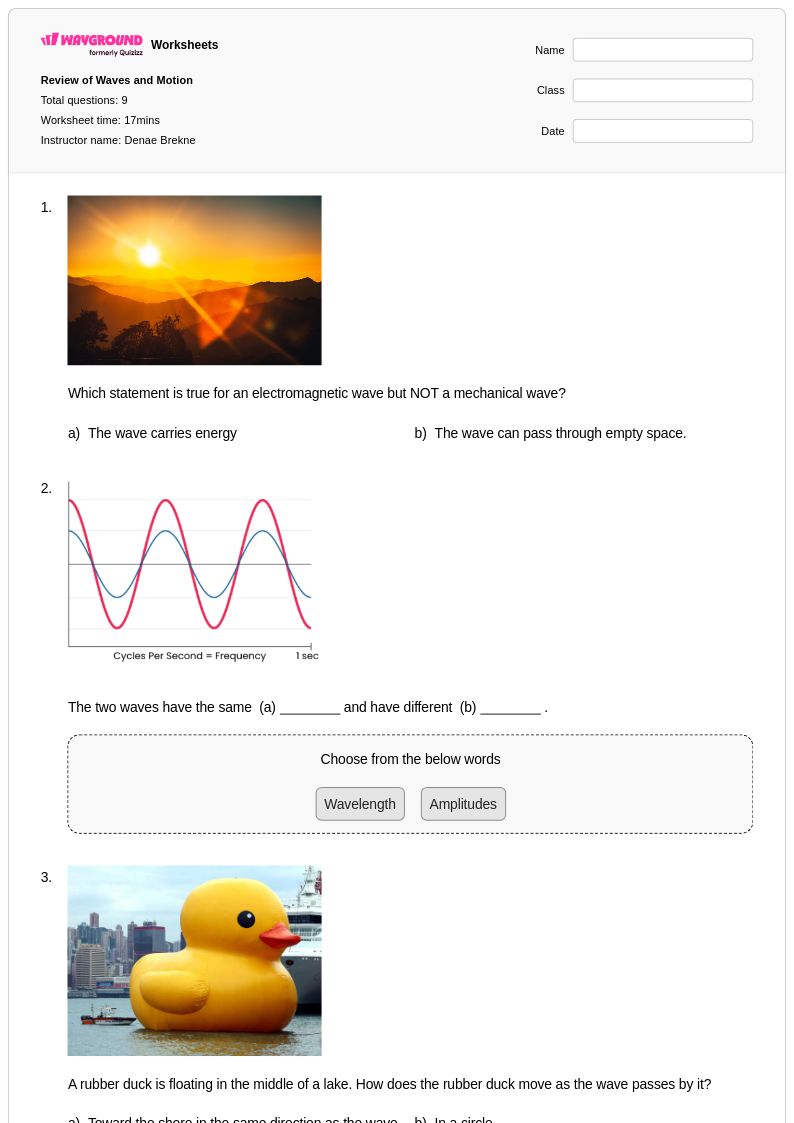
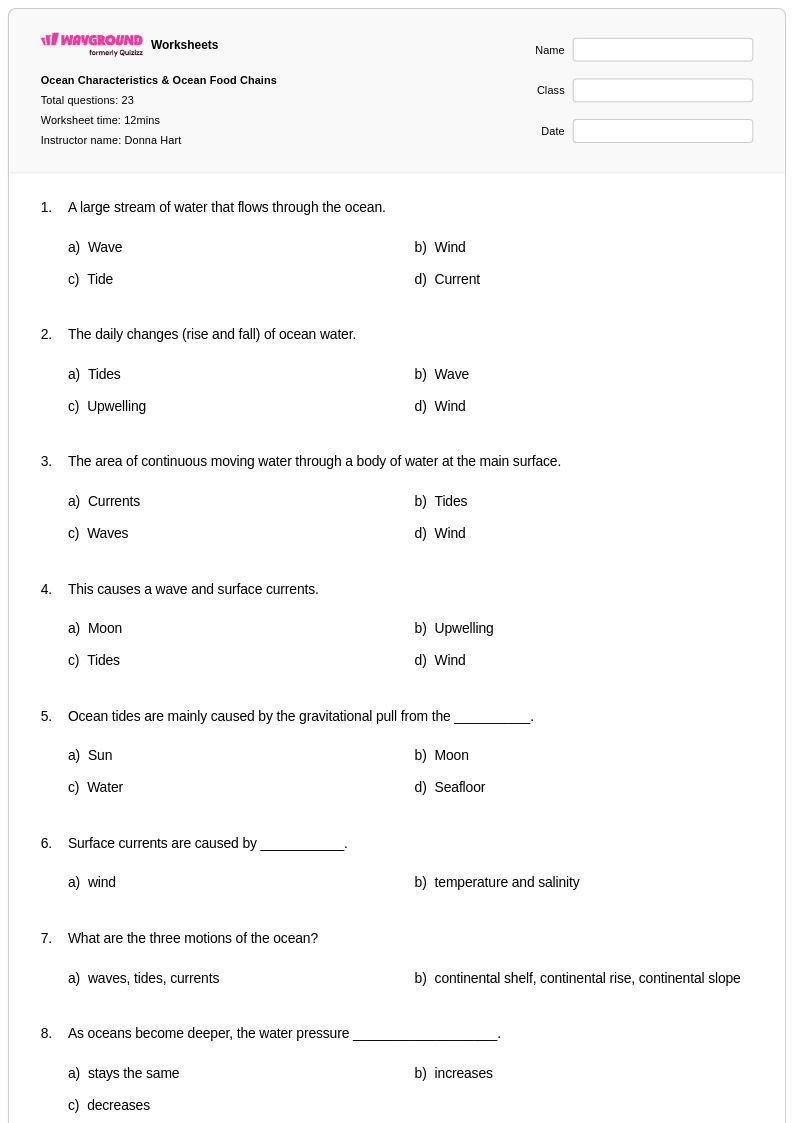
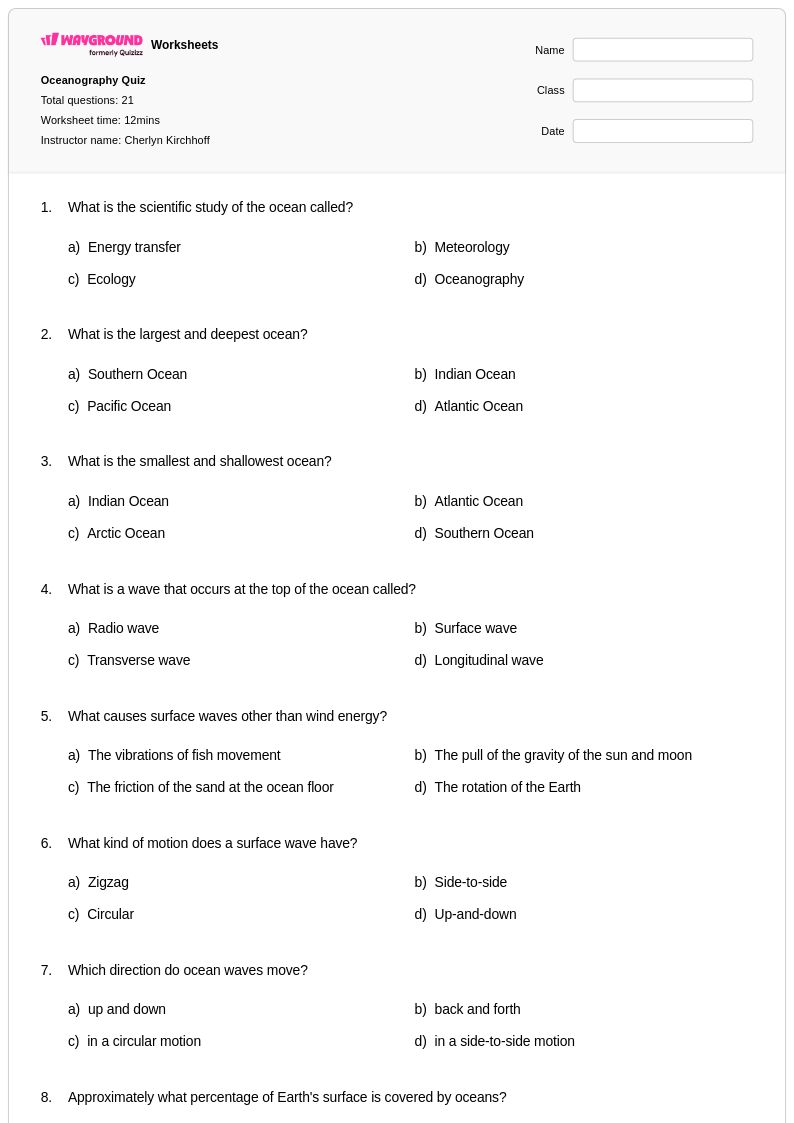
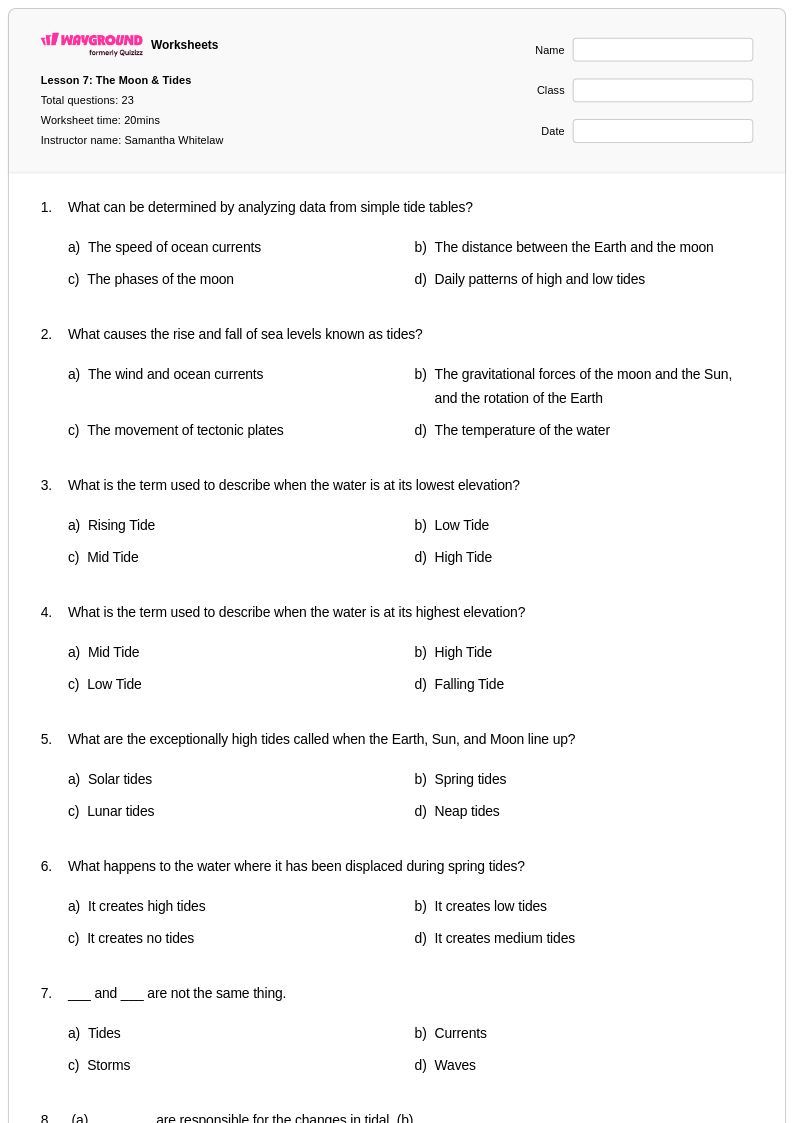
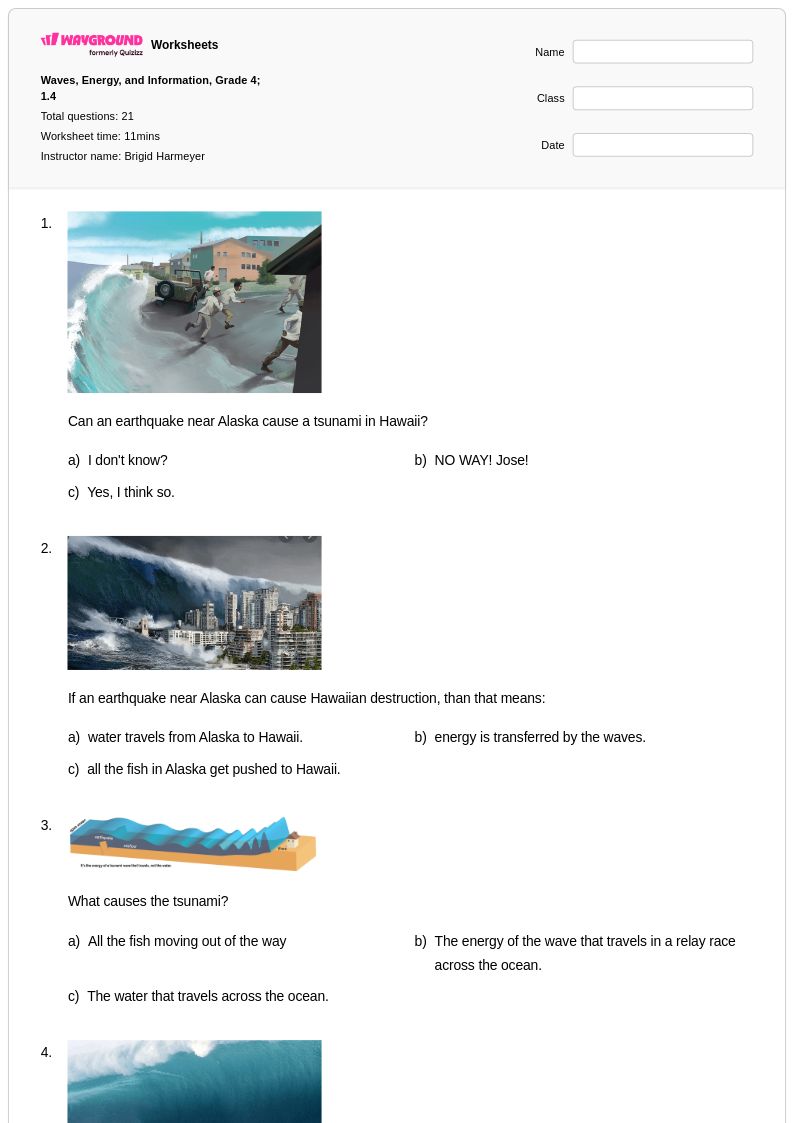
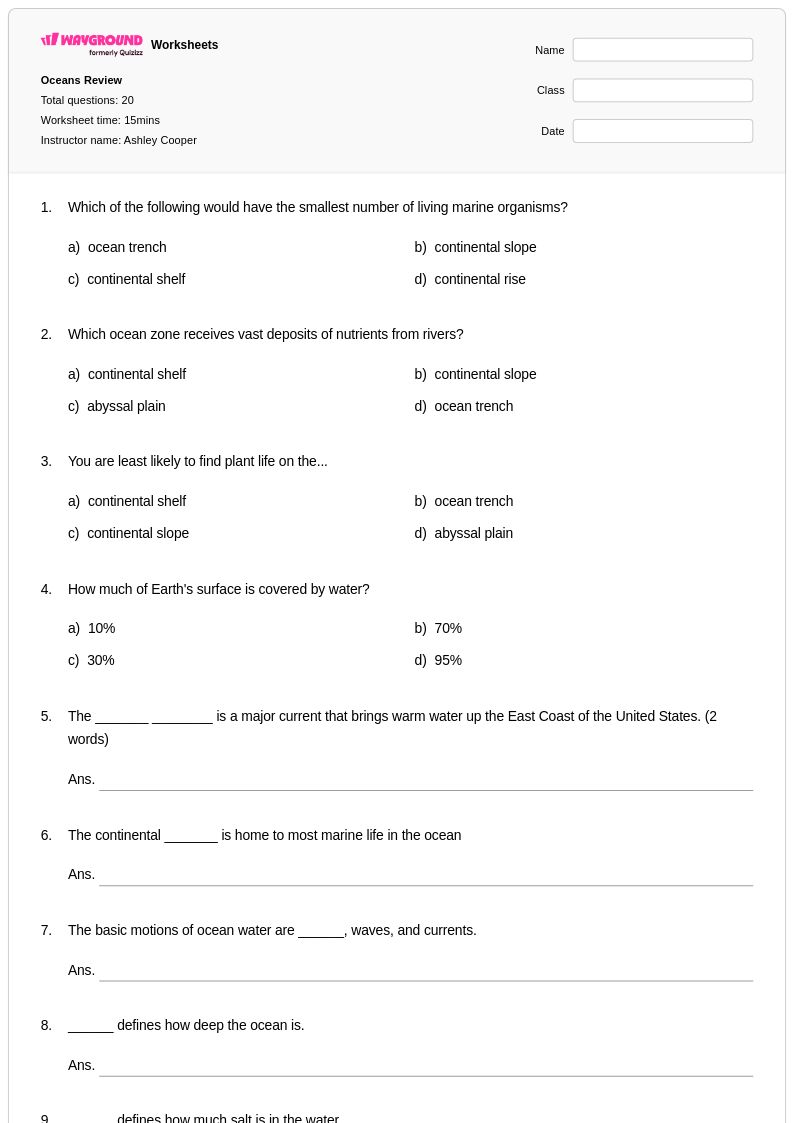
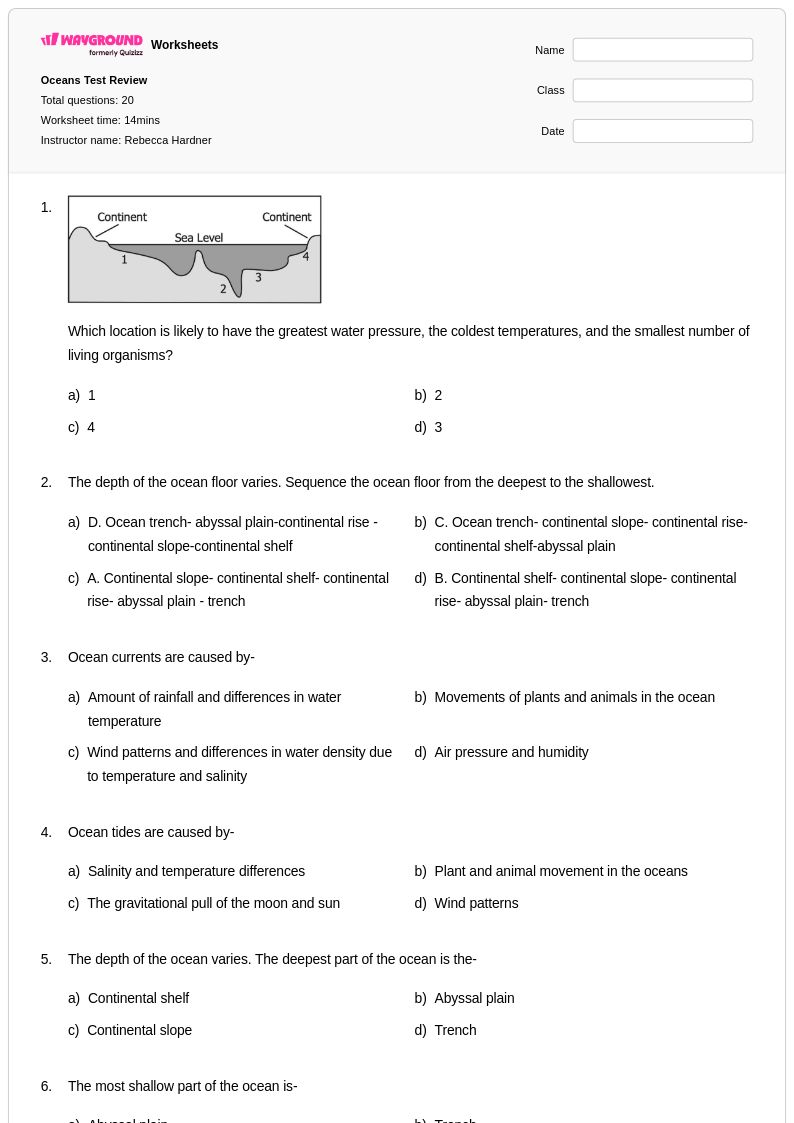
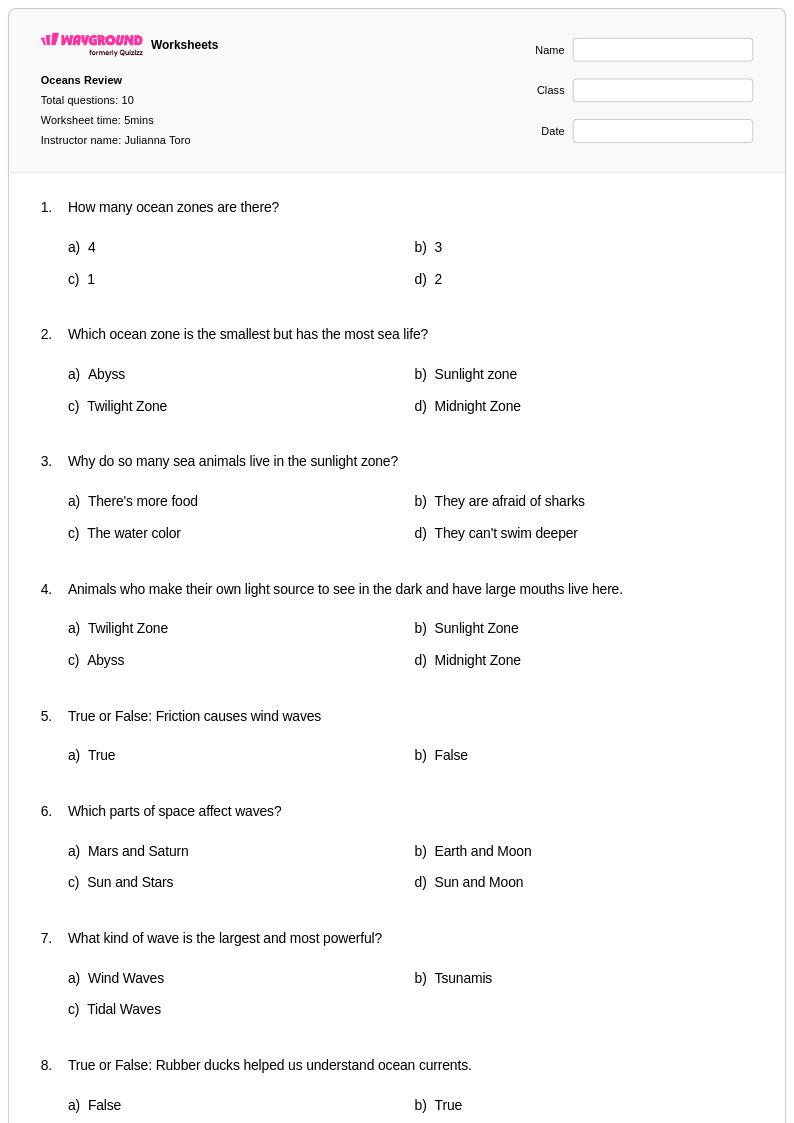
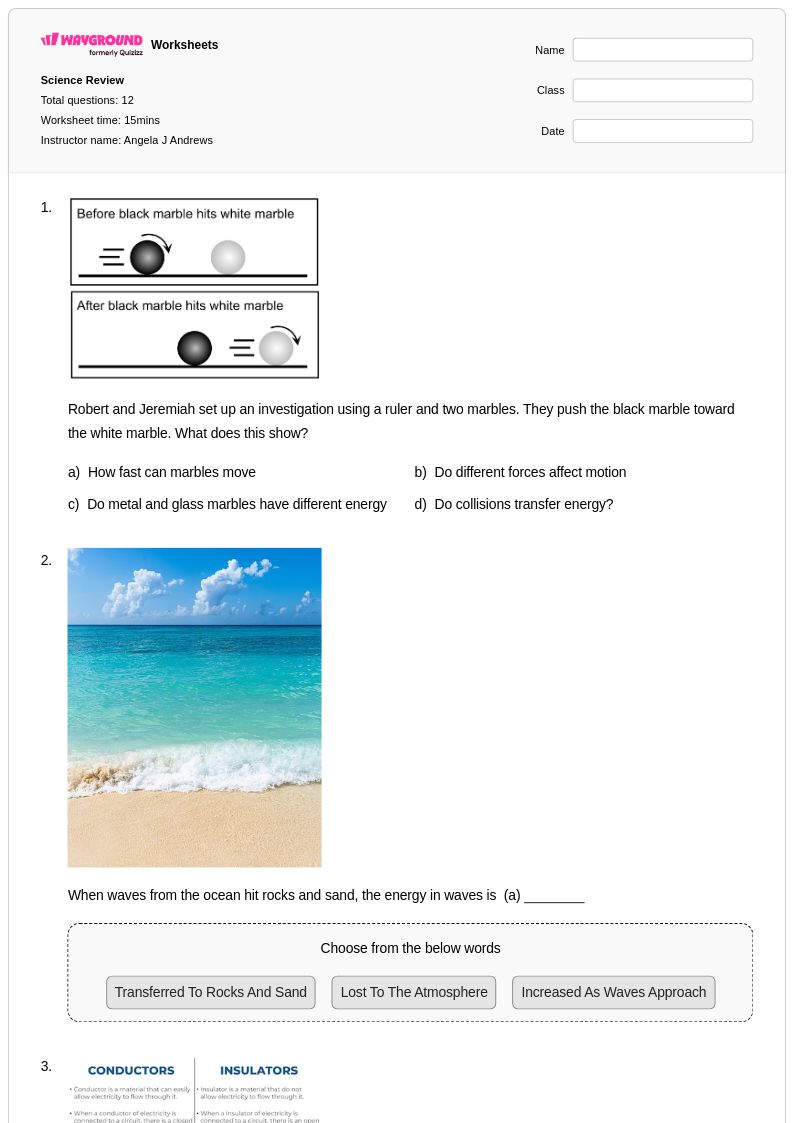
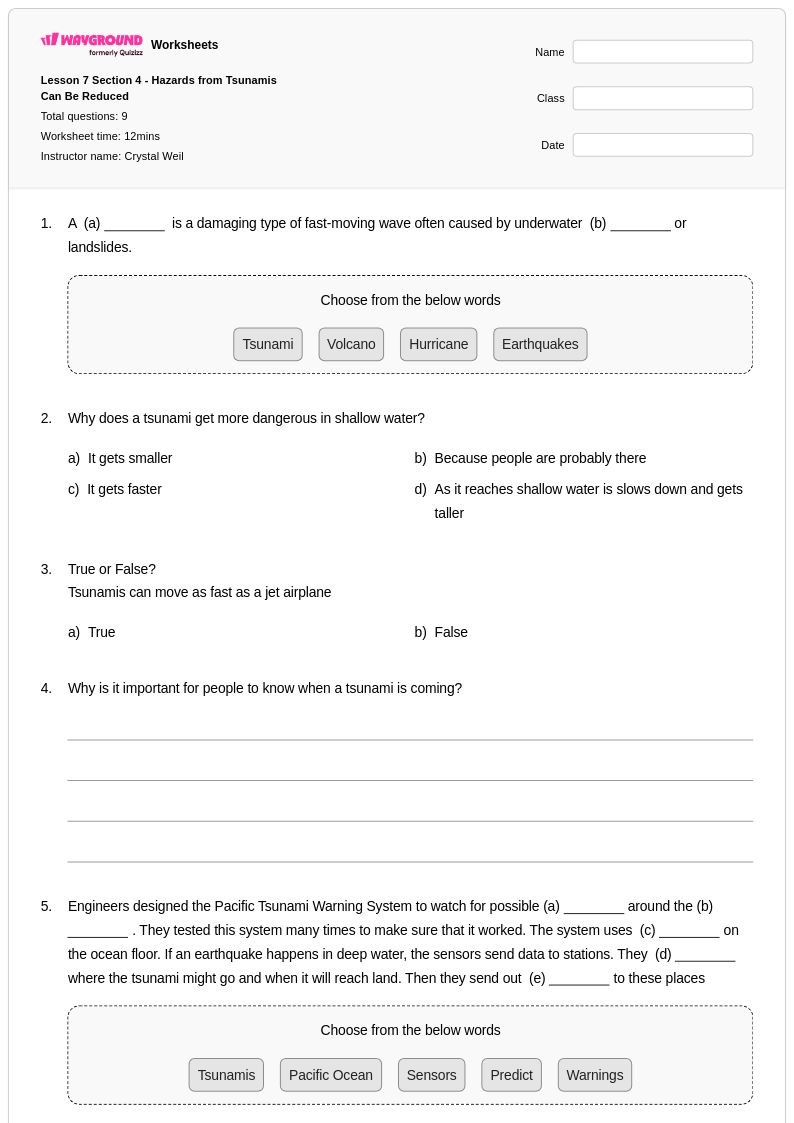
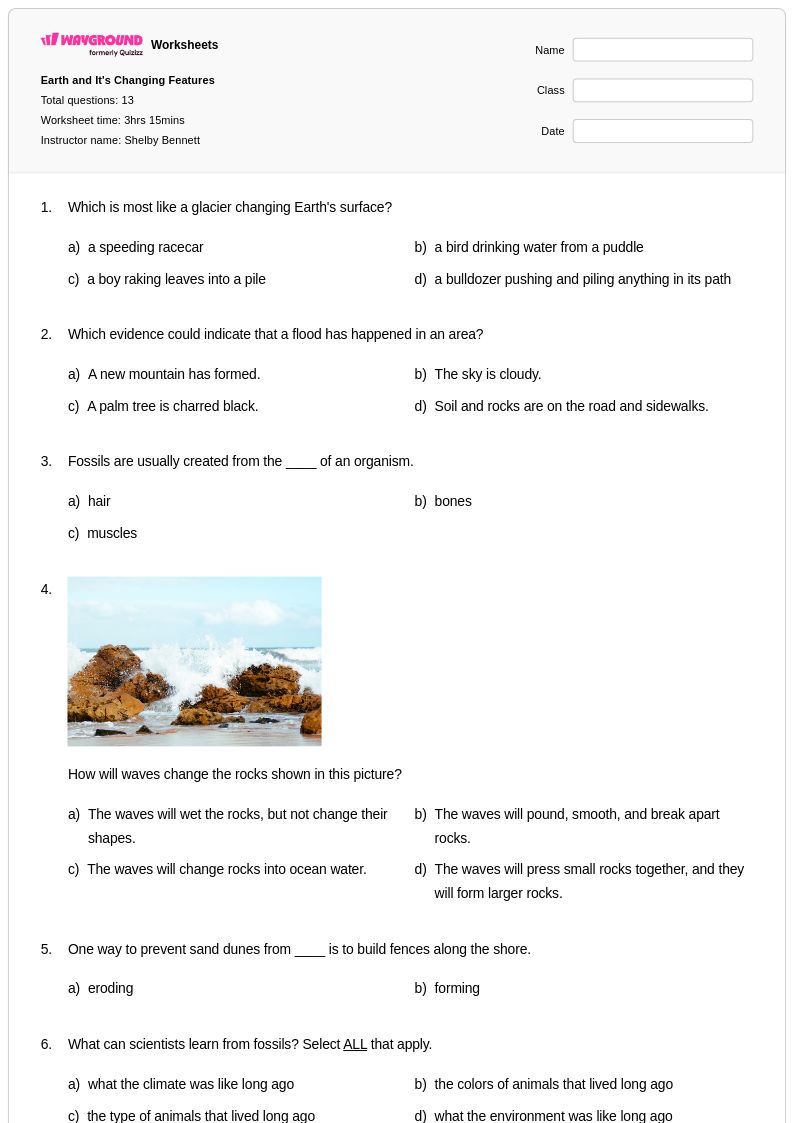
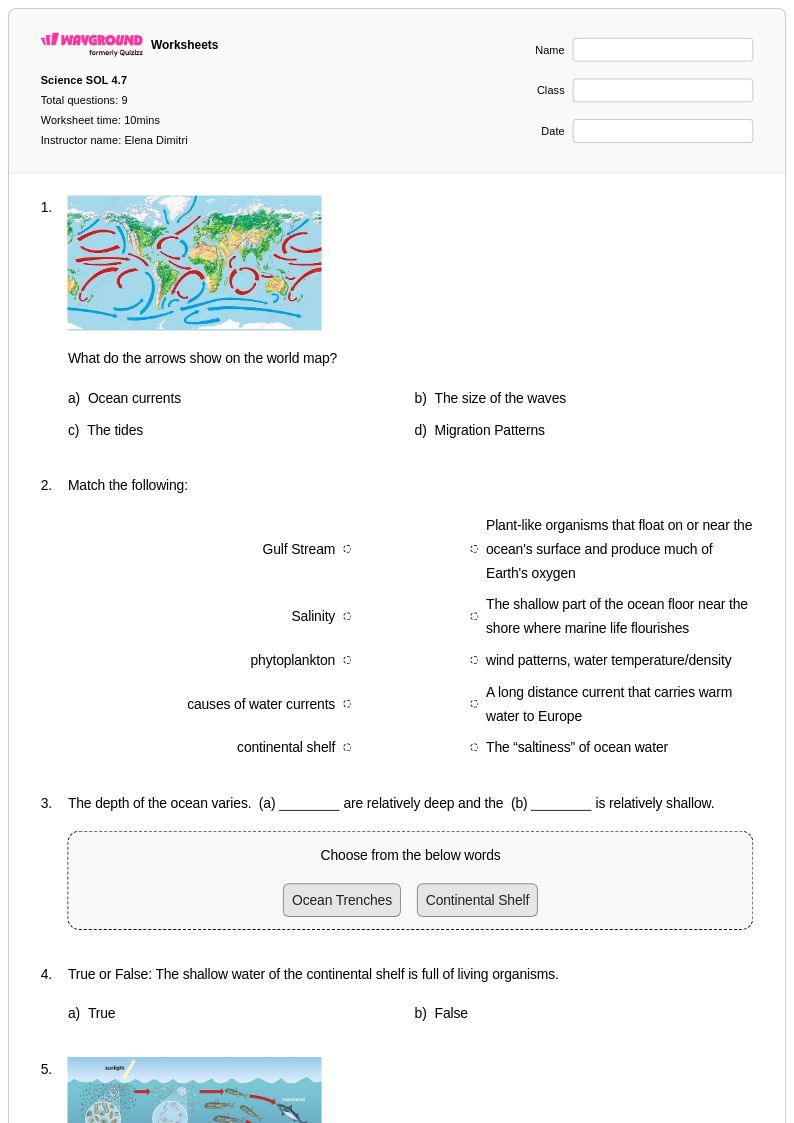
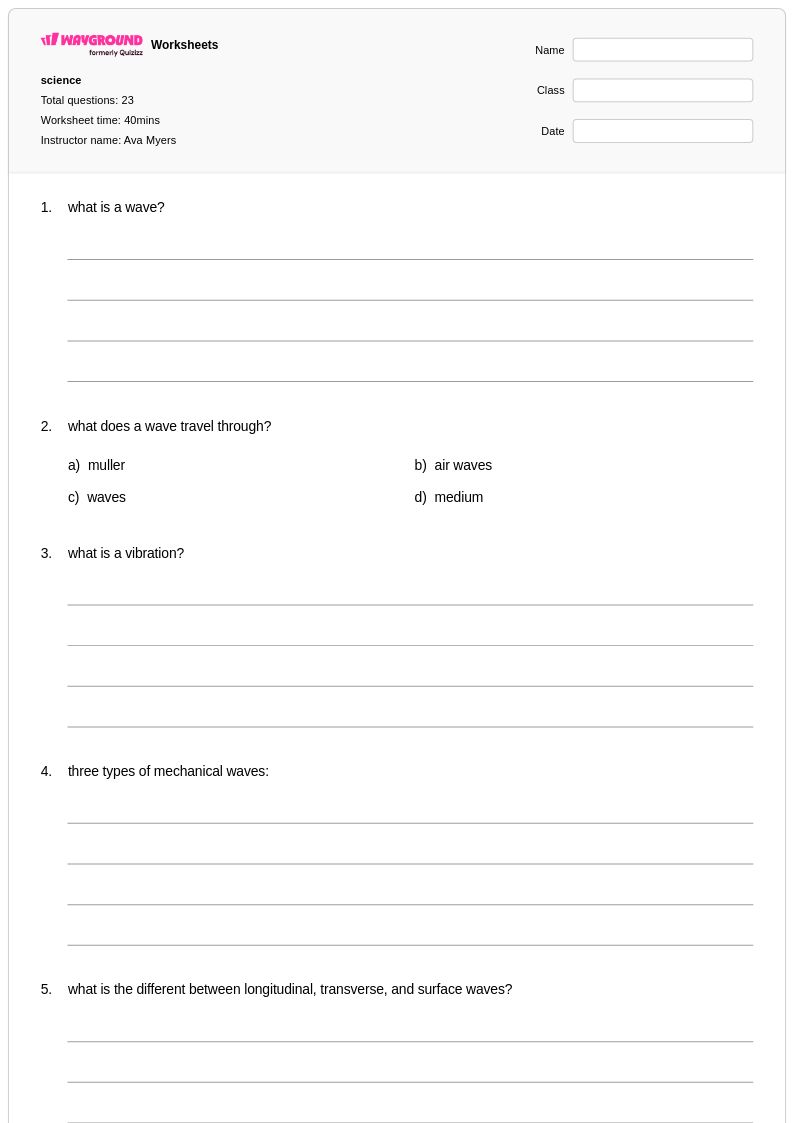
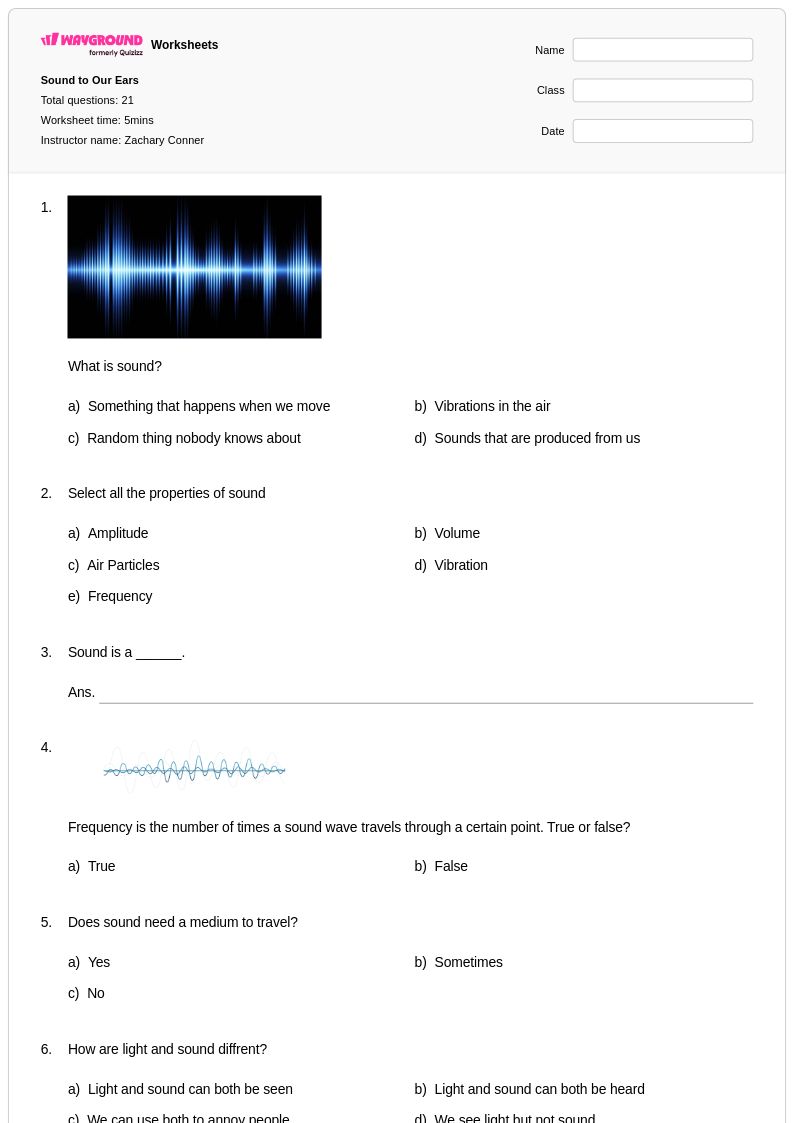
Ocean waves worksheets for Class 4 students available through Wayground (formerly Quizizz) provide comprehensive educational resources that explore the fundamental concepts of wave formation, movement, and coastal impact. These carefully designed worksheets strengthen students' understanding of how wind energy transfers to water surfaces, creating the rhythmic patterns that shape our coastlines and influence marine ecosystems. Each worksheet collection includes practice problems that guide fourth graders through observations of wave height, frequency, and the relationship between wind strength and wave size, while comprehensive answer keys support both independent learning and classroom instruction. The free printable materials cover essential topics such as how waves transport energy across ocean basins, the difference between deep water and shallow water wave behavior, and the role waves play in erosion and sediment transport along beaches.
Wayground (formerly Quizizz) empowers educators with millions of teacher-created ocean waves resources specifically aligned with Class 4 Earth and Space Science standards, offering robust search and filtering capabilities that help instructors quickly locate materials matching their specific curriculum needs. The platform's differentiation tools allow teachers to customize worksheets for varying skill levels within their classrooms, ensuring that advanced learners receive appropriate challenges while struggling students access supportive scaffolding through modified practice problems. These versatile resources are available in both digital and printable PDF formats, enabling seamless integration into traditional classroom settings, remote learning environments, or hybrid instructional models. Teachers rely on this extensive worksheet library for daily lesson planning, targeted skill remediation, and enrichment activities that deepen students' comprehension of ocean wave mechanics and their broader significance in Earth's dynamic systems.
FAQs
How do I teach ocean waves to middle or high school students?
Start by establishing the distinction between energy transfer and particle movement — students often assume water physically travels forward with a wave, when in reality the water moves in circular orbits as energy passes through it. From there, introduce wave properties (wavelength, amplitude, frequency, and wave speed) using diagrams before moving into real-world phenomena like refraction along coastlines and the formation of tsunamis. Connecting abstract wave mechanics to observable coastal processes helps students anchor the concepts more durably.
What exercises help students practice wave properties like wavelength and frequency?
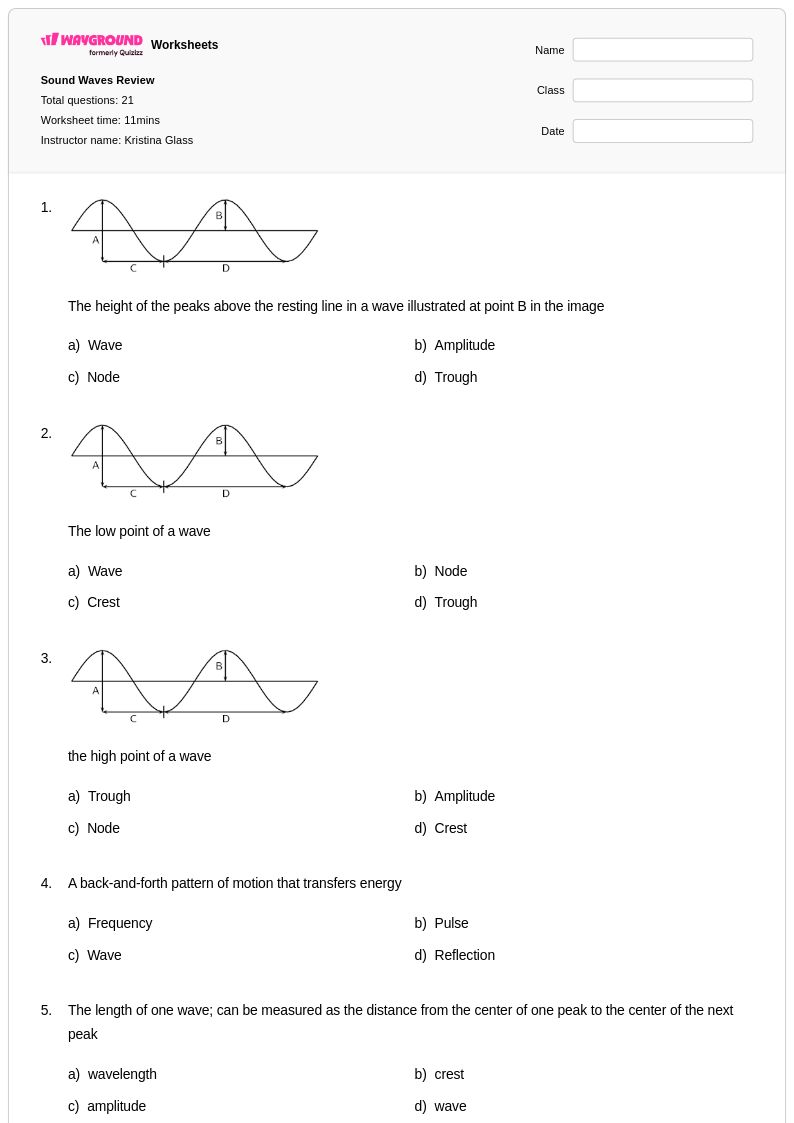
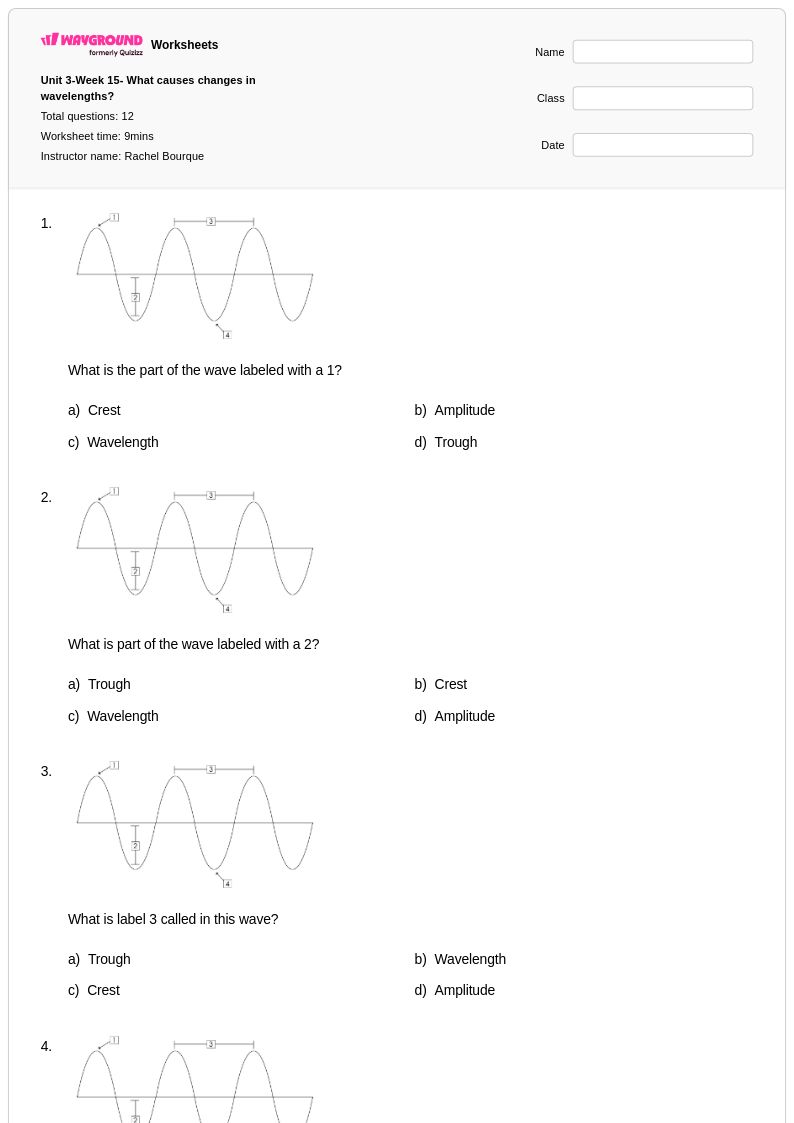
Practice problems that require students to calculate wave speed using the formula v = fλ are among the most effective for reinforcing the relationship between wavelength, frequency, and speed. Diagram-based exercises where students label wave anatomy — crest, trough, amplitude, wavelength — build foundational vocabulary before students attempt calculations. Including real-world data sets, such as wave frequencies observed during tsunami events or tidal cycles, adds applied context that strengthens retention.
What mistakes do students commonly make when learning about ocean waves?
The most persistent misconception is that water molecules move horizontally in the direction of wave travel — students frequently confuse the motion of the wave with the motion of the medium. Another common error is conflating amplitude with wavelength, particularly when reading wave diagrams. Students also struggle to distinguish between wave refraction, diffraction, and reflection, often applying the wrong term when describing how waves respond to obstacles or changes in water depth.
How do ocean waves worksheets connect to real-world science topics?
Ocean wave mechanics underpin a range of applied science topics including tsunami formation, coastal erosion, tidal energy, and shoreline geography. Worksheets that incorporate these connections help students see wave properties not as abstract formulas but as forces with measurable consequences for human communities and ecosystems. Tying wavelength and frequency calculations to tsunami warning systems, for example, gives mathematical practice immediate real-world relevance.
How can I use Wayground's ocean waves worksheets in my classroom?
Wayground's ocean waves worksheets are available as printable PDFs for traditional classroom use and in digital formats for technology-integrated or remote learning environments. Teachers can also host worksheets as interactive quizzes directly on Wayground, allowing for real-time student response tracking. Each worksheet includes a detailed answer key, so both instruction and assessment are supported without additional prep. For students who need accommodations, Wayground allows teachers to enable features like extended time, read aloud, or reduced answer choices on an individual basis.
How do I differentiate ocean waves instruction for students at different ability levels?
For foundational learners, begin with visual wave diagrams and vocabulary-matching activities before introducing any calculation. Advanced students benefit from problems involving wave interference patterns, mathematical modeling of wave behavior, or analysis of real bathymetric data and its effect on wave speed. On Wayground, teachers can apply individual accommodations such as reduced answer choices or extended time to specific students while the rest of the class works under standard settings, making differentiation practical without disrupting the flow of a lesson.