Free Printable Origins of Buddhism Worksheets for Class 4
Explore Class 4 Origins of Buddhism worksheets and free printables that help students discover the foundational teachings, history, and cultural impact of Buddhism through engaging practice problems and comprehensive answer keys.
Explore printable Origins of Buddhism worksheets for Class 4
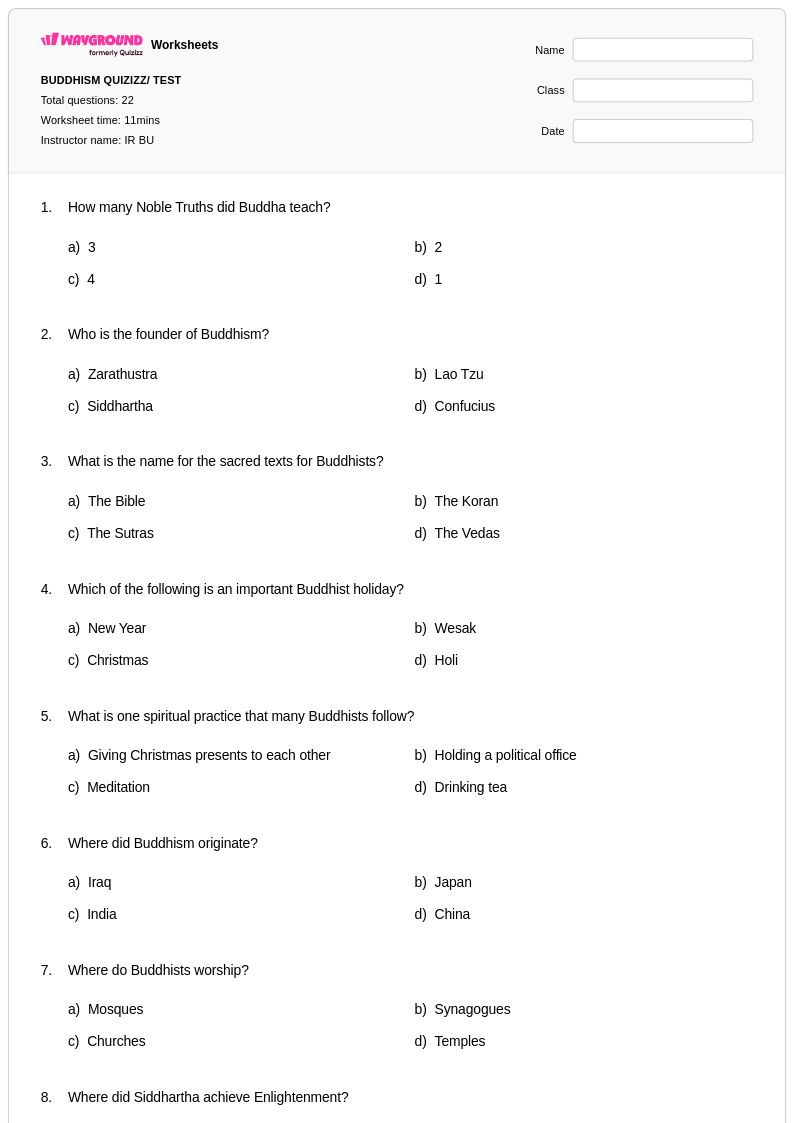
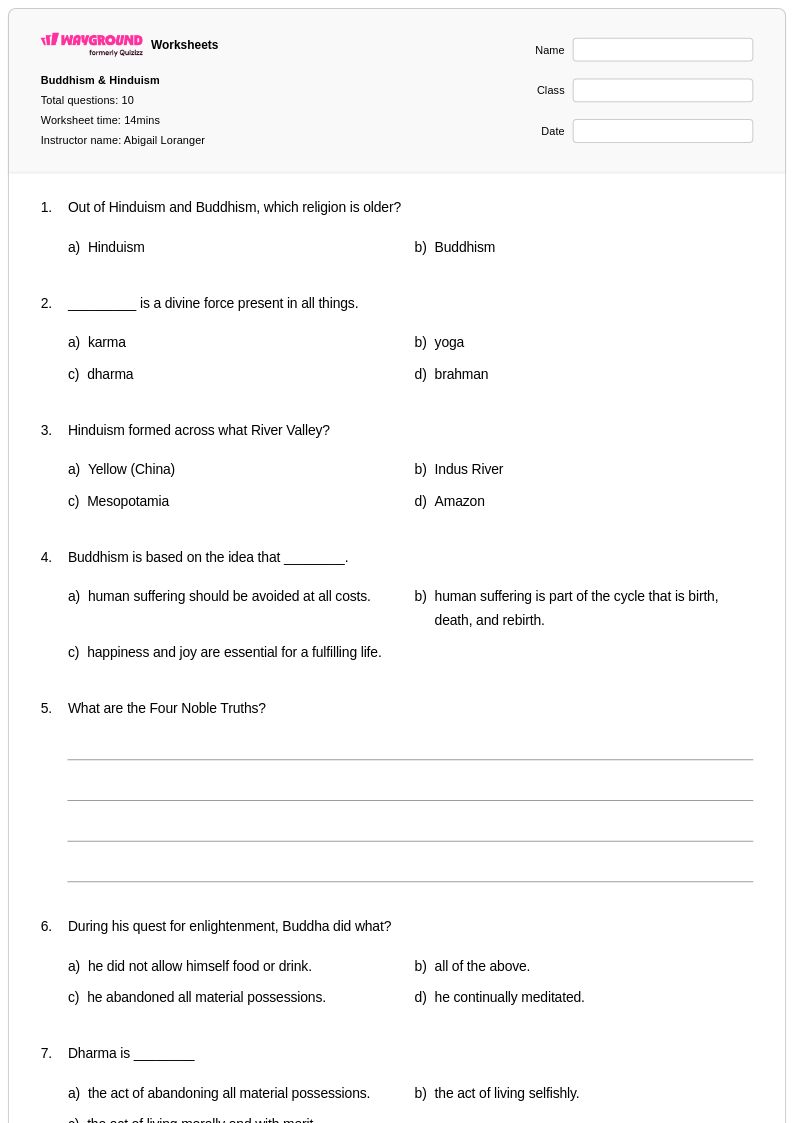
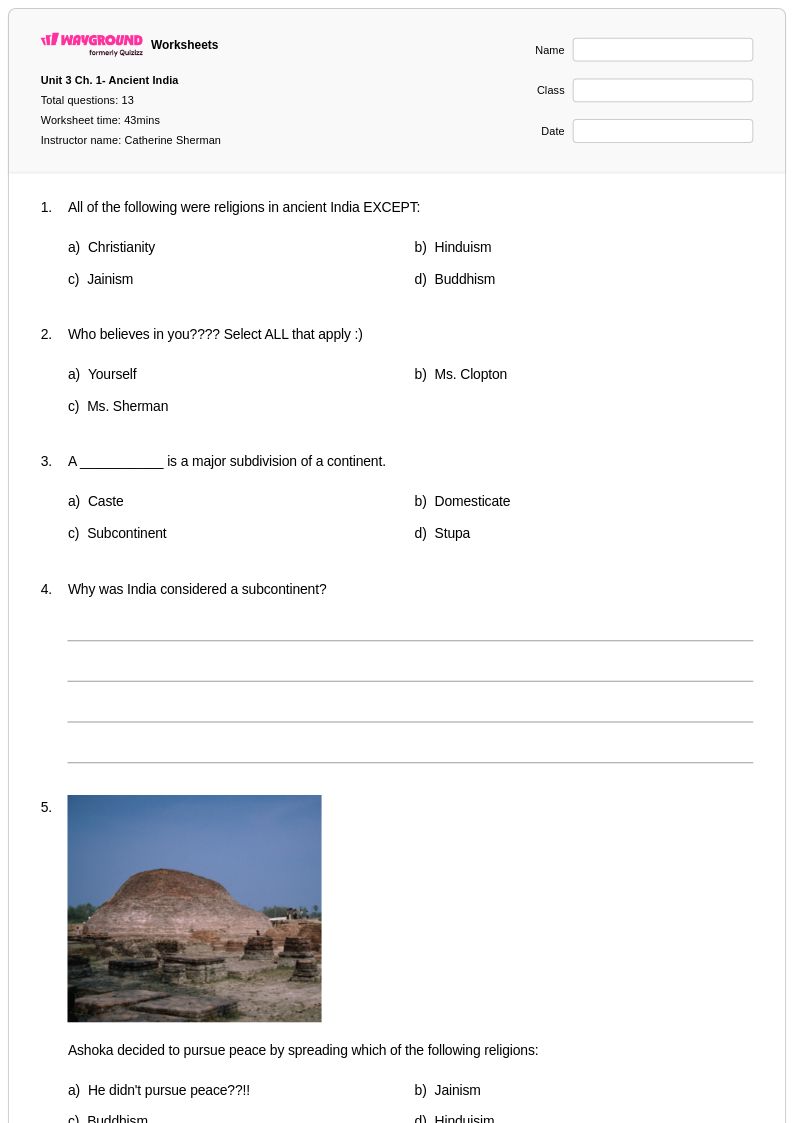
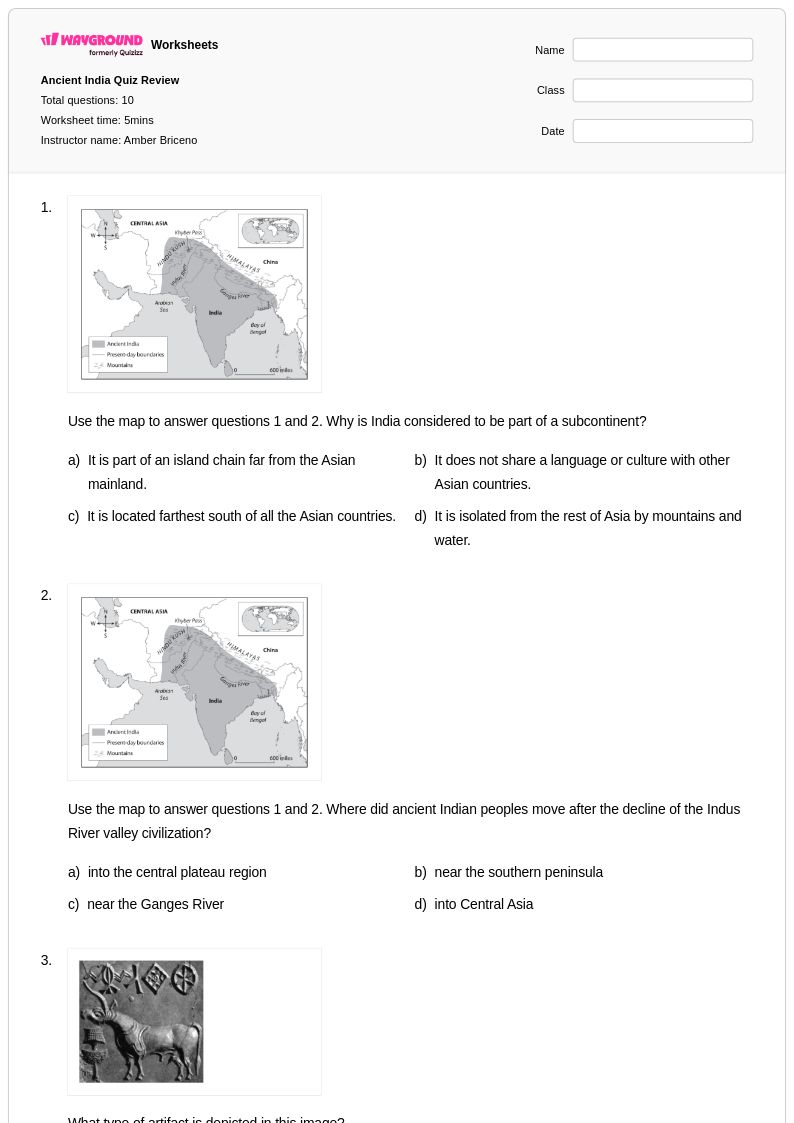
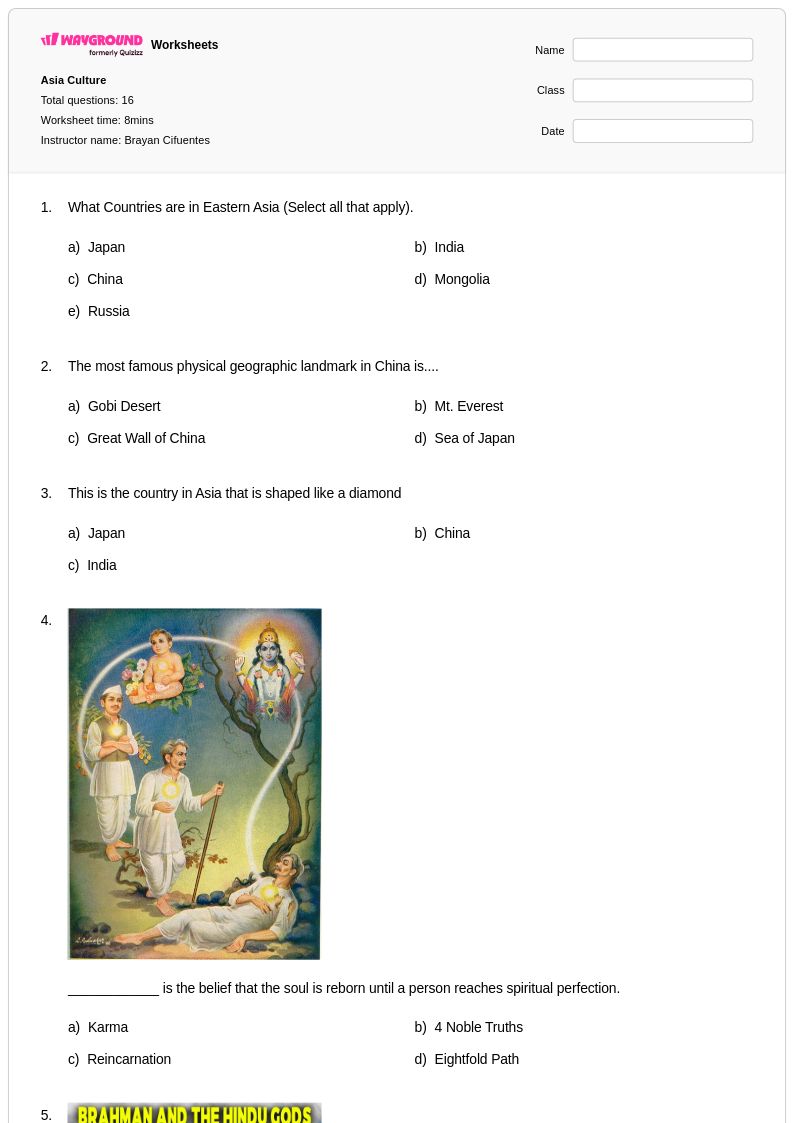
Origins of Buddhism worksheets for Class 4 students provide an engaging introduction to one of the world's major religions and its historical foundations. These educational resources help young learners explore the life of Siddhartha Gautama, understand the basic principles of Buddhist teachings, and examine how Buddhism spread throughout ancient Asia. The worksheets strengthen critical thinking skills as students analyze primary source materials, compare different cultural practices, and develop timeline comprehension abilities. Teachers can access comprehensive materials including practice problems that reinforce key concepts, printable activities for classroom use, and pdf resources complete with answer keys to support effective instruction and assessment.
Wayground, formerly Quizizz, empowers educators with millions of teacher-created resources specifically designed for Origins of Buddhism instruction at the Class 4 level. The platform's advanced search and filtering capabilities allow teachers to quickly locate materials aligned with social studies standards while offering robust differentiation tools to meet diverse learning needs. These worksheet collections are available in both printable and digital formats, including downloadable pdf versions, enabling seamless integration into any classroom environment. The flexible customization features support comprehensive lesson planning, targeted remediation for struggling students, enrichment opportunities for advanced learners, and ongoing skill practice that reinforces understanding of Buddhist origins and their significance in world history.
FAQs
How do I teach the origins of Buddhism to middle or high school students?
Start by grounding students in the historical context of ancient India during the 6th century BCE, including the social structure of Hindu society and the conditions that prompted Siddhartha Gautama's spiritual search. From there, build outward to the core teachings: the Four Noble Truths, the Eightfold Path, and the concept of the Middle Way. Using primary-source-style excerpts alongside structured note-taking activities helps students connect the philosophical content to its historical moment rather than treating it as abstract doctrine.
What exercises help students practice understanding the Four Noble Truths and the Eightfold Path?
Matching and classification activities work well for the Four Noble Truths, asking students to pair each truth with its meaning or real-world example. For the Eightfold Path, sequencing tasks or short-answer prompts that ask students to explain how each step connects to the goal of ending suffering reinforce comprehension. Graphic organizers that compare the Eightfold Path to the concept of the Middle Way can also deepen understanding by showing how these teachings interrelate.
What mistakes do students commonly make when learning about the origins of Buddhism?
A frequent misconception is conflating Buddhism with Hinduism because both originated in ancient India and share some vocabulary, such as karma and dharma, despite those terms carrying different meanings in each tradition. Students also commonly misidentify the Buddha as a deity rather than a historical human figure, which distorts their understanding of Buddhist philosophy. Another common error is treating the spread of Buddhism as a single uniform movement rather than recognizing that it diversified significantly as it traveled across Asia.
How do I use Origins of Buddhism worksheets from Wayground in my classroom?
Wayground's Origins of Buddhism worksheets are available as printable PDFs for traditional classroom use and in digital formats for technology-integrated environments, giving teachers flexibility across in-person, hybrid, and remote settings. Teachers can also host worksheets directly as a quiz on Wayground, enabling real-time student responses and immediate scoring. For students who need additional support, Wayground's accommodation tools allow teachers to enable read-aloud functionality, extended time, or reduced answer choices on an individual basis without disrupting the rest of the class.
How do I help students understand the historical spread of Buddhism across Asia?
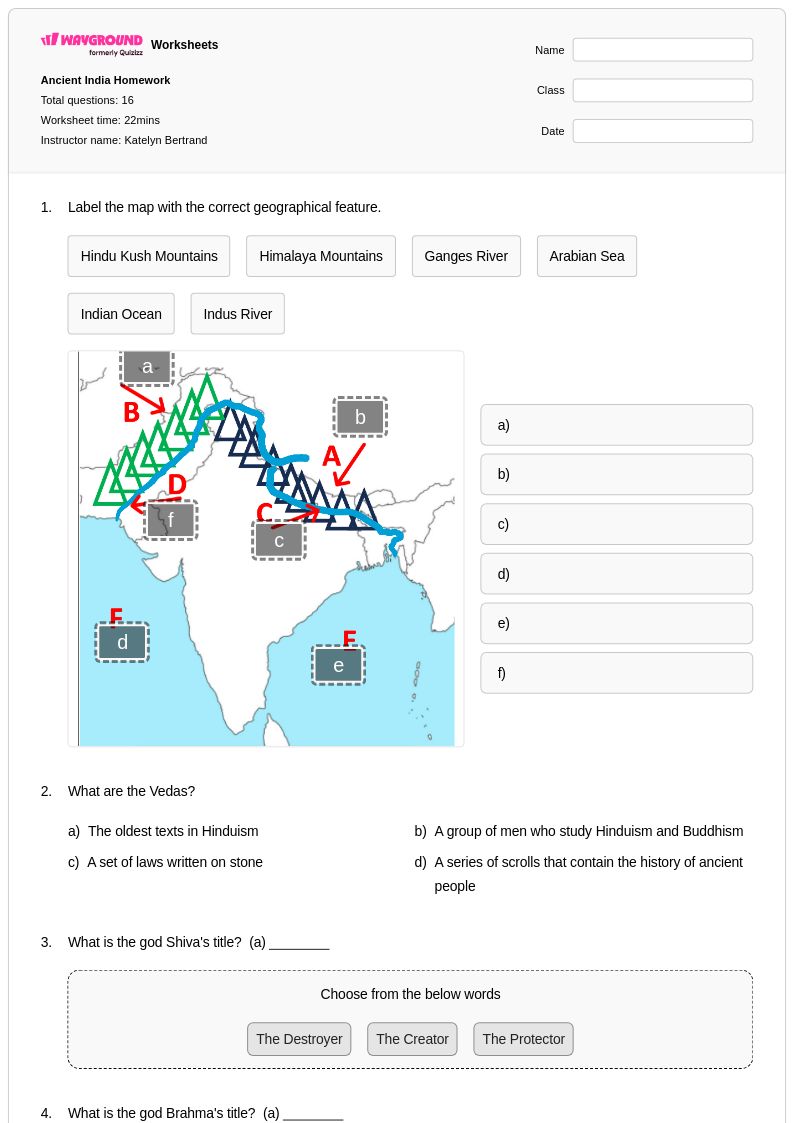
Map-based activities that trace Buddhism's expansion from ancient India through Southeast Asia, China, and beyond give students a concrete visual anchor for understanding diffusion. Pairing these with short reading passages that explain how Buddhist teachings adapted to different cultural contexts, such as the development of Mahayana and Theravada traditions, helps students move beyond memorizing geography to understanding why and how the religion transformed. Asking students to identify the political and trade routes that facilitated this spread reinforces the connection between world religions and ancient civilizations content.
How can I differentiate Origins of Buddhism instruction for students at different reading and skill levels?
For struggling readers, simplified passages focused on Siddhartha Gautama's life story provide a narrative entry point before introducing abstract concepts like karma and dharma. Advanced students benefit from compare-and-contrast tasks that examine how Buddhist and Hindu understandings of key terms differ, or from analyzing how the Four Noble Truths address universal human experiences. On Wayground, teachers can assign individual accommodations such as read-aloud support, extended time, or reduced answer choices to specific students while the rest of the class works under standard settings.