Free Printable Outdoor Education Worksheets for Class 4
Free Class 4 outdoor education worksheets and printables help students explore nature-based learning through engaging practice problems, activities, and comprehensive answer keys for effective physical education instruction.
Explore printable Outdoor Education worksheets for Class 4
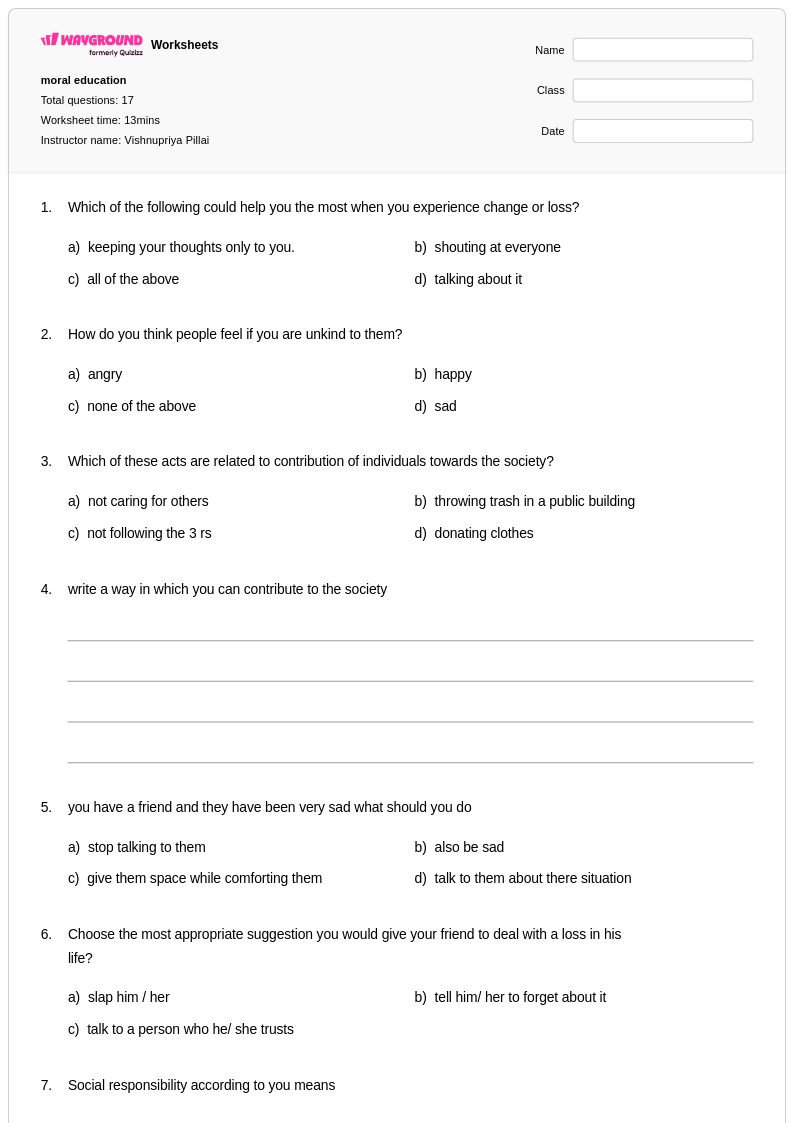
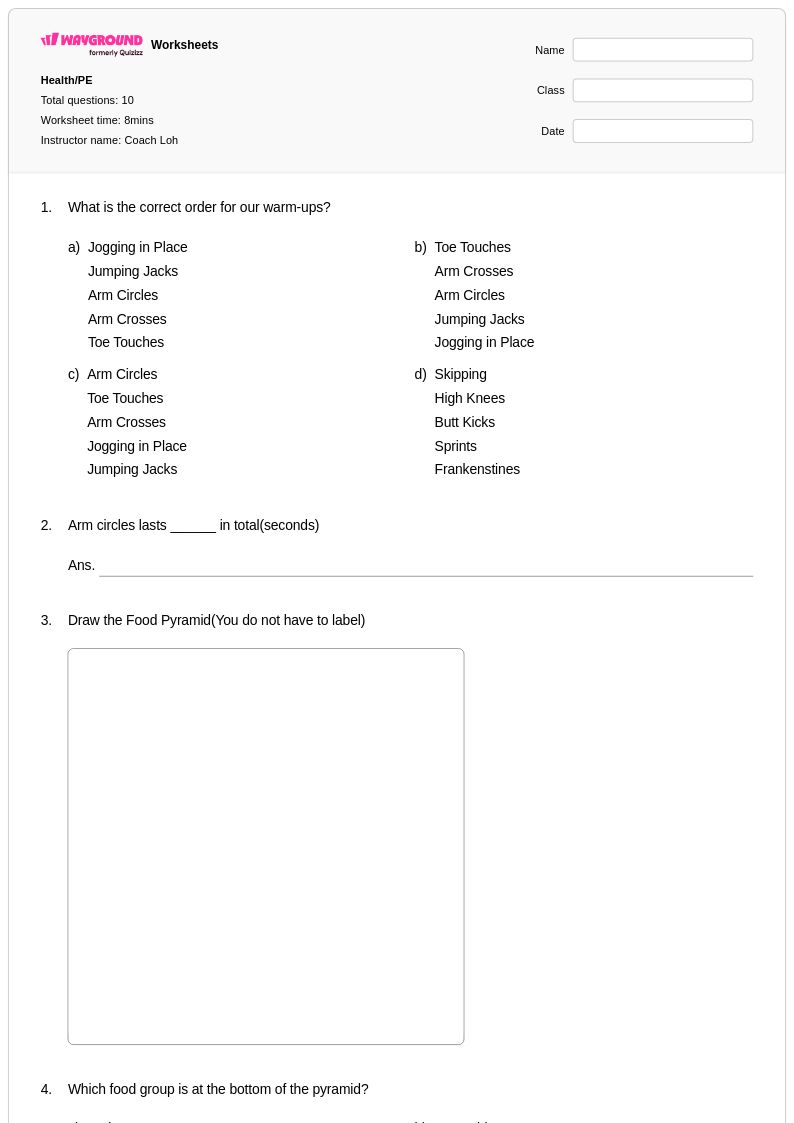
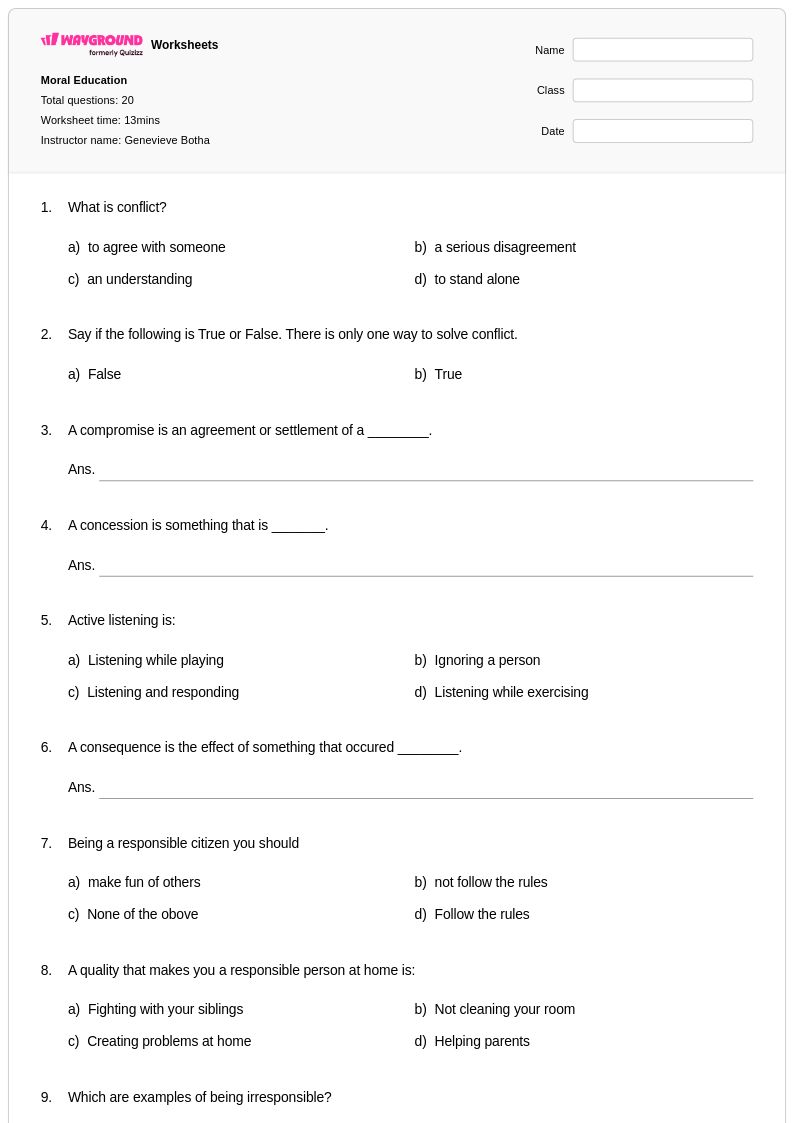
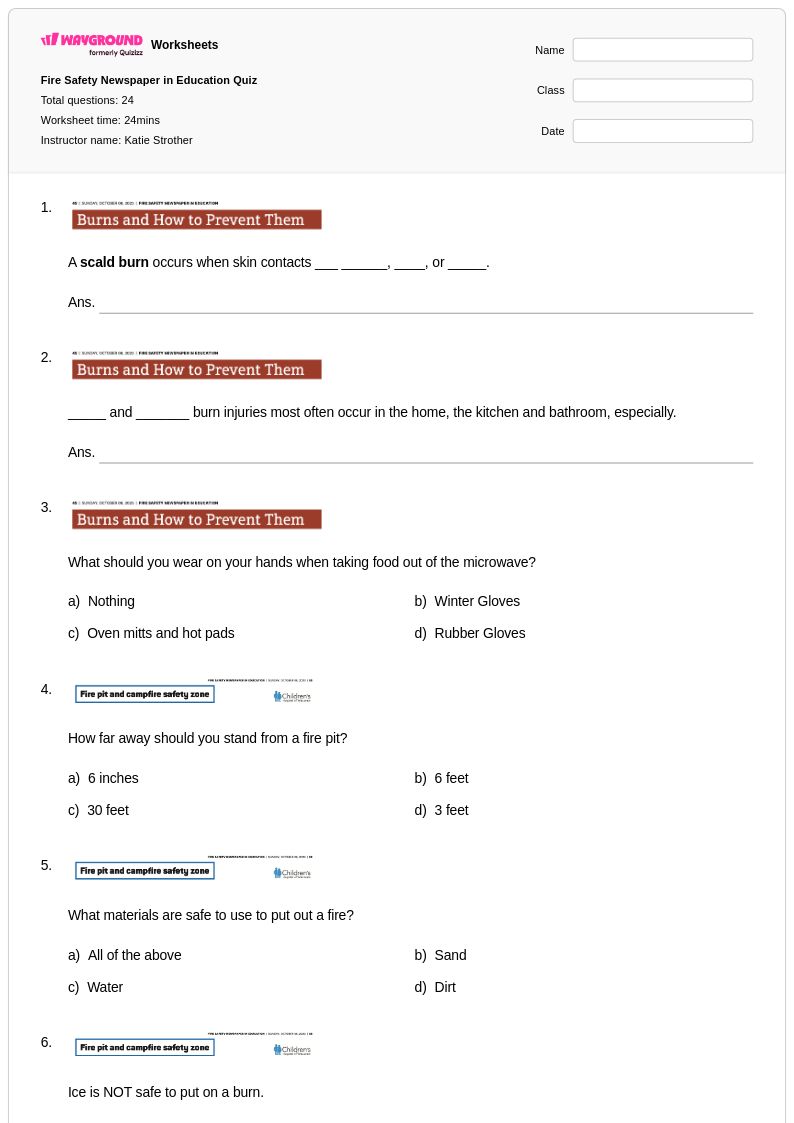
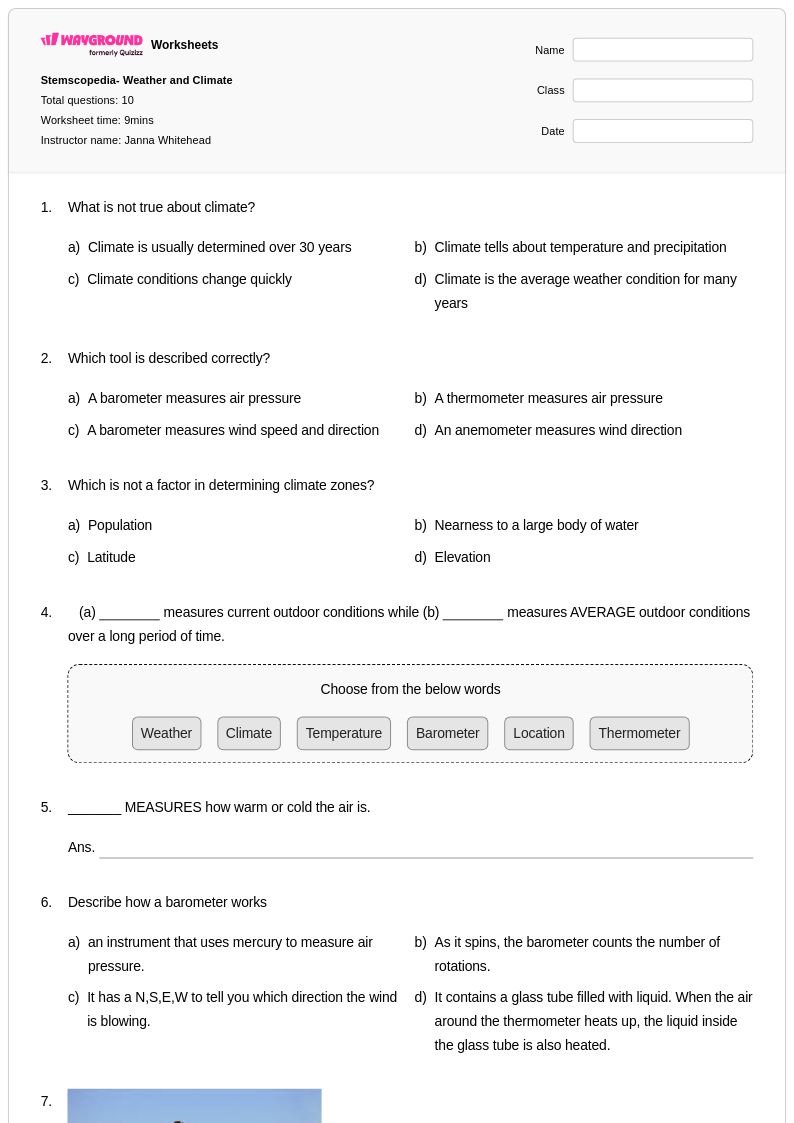
Outdoor education worksheets for Class 4 students available through Wayground provide essential learning tools that connect classroom instruction with nature-based experiences and environmental awareness. These comprehensive printables focus on developing students' understanding of outdoor safety protocols, basic survival skills, environmental stewardship, and appreciation for natural ecosystems. The worksheets strengthen critical thinking abilities as students analyze weather patterns, identify local flora and fauna, practice map reading and compass navigation, and explore Leave No Trace principles. Each resource includes detailed answer keys that enable teachers to efficiently assess student comprehension while providing immediate feedback on outdoor safety concepts, environmental conservation practices, and basic outdoor recreation skills. These free practice problems challenge fourth-grade learners to apply theoretical knowledge to real-world outdoor scenarios, fostering both academic growth and practical life skills that promote responsible outdoor citizenship.
Wayground supports elementary physical education teachers with millions of teacher-created outdoor education resources specifically designed to enhance Class 4 curriculum standards and learning objectives. The platform's robust search and filtering capabilities allow educators to quickly locate worksheets that align with specific outdoor education standards, whether focusing on wilderness safety, environmental science integration, or adventure activity preparation. Teachers can easily differentiate instruction by accessing materials at various complexity levels, customizing existing worksheets to meet diverse learning needs, and selecting from both printable PDF formats for traditional classroom use and digital versions for technology-integrated lessons. These versatile tools streamline lesson planning while providing targeted resources for remediation, enrichment, and skill reinforcement, enabling teachers to effectively prepare students for safe, meaningful outdoor experiences while building foundational knowledge about environmental responsibility and outdoor recreation principles.
FAQs
How do I teach outdoor education skills in the classroom before a field trip?
Pre-trip classroom instruction should focus on building foundational knowledge students will apply in the field, including map reading, weather interpretation, risk assessment, and Leave No Trace principles. Pairing direct instruction with scenario-based practice problems helps students internalize safety protocols and decision-making frameworks before they encounter real conditions. Connecting each concept explicitly to the upcoming field experience increases engagement and retention.
What topics should outdoor education worksheets cover?
Effective outdoor education worksheets address a range of interdisciplinary skills, including orienteering and navigation, wilderness first aid scenarios, campsite selection, outdoor cooking safety, ecosystem identification, weather pattern recognition, and environmental stewardship principles such as Leave No Trace. The strongest materials move beyond recall and ask students to apply these skills to realistic decision-making scenarios, which mirrors the judgment demands of actual outdoor environments.
What common mistakes do students make when learning outdoor safety and risk assessment?
Students frequently underestimate environmental hazards by applying urban or familiar-setting logic to wilderness contexts, such as assuming a clear sky means stable weather or that a trail will remain navigable without a map. They also tend to treat safety protocols as abstract rules rather than situational decisions, which means they struggle when scenarios require judgment rather than rote recall. Worksheet exercises that present realistic, layered scenarios are particularly effective at surfacing and correcting these misconceptions before fieldwork begins.
How can I differentiate outdoor education instruction for students with varying skill levels?
Differentiation in outdoor education should address both prior knowledge gaps and varying physical or cognitive readiness. For students who need additional support, reducing the complexity of scenario variables and providing vocabulary scaffolds for technical terms like 'orienteering' or 'stewardship' helps build confidence. On Wayground, teachers can apply accommodations such as read aloud, reduced answer choices, and extended time to individual students, ensuring that all learners can engage meaningfully with the same core content without singling anyone out.
How do I use Wayground's outdoor education worksheets in my class?
Wayground's outdoor education worksheets are available as printable PDFs, making them practical for field preparation packets or in-classroom instruction, and in digital formats suited for pre-trip preparation or post-experience reflection assignments. Teachers can also host worksheets as quizzes directly on Wayground, enabling formative assessment before or after outdoor experiences. The platform's search and filtering tools allow quick identification of materials aligned to specific topics such as wilderness first aid, navigation, or ecosystem identification.
How do I assess whether students are ready for a wilderness or adventure-based experience?
Readiness assessment for outdoor experiences should go beyond basic safety rule recitation and evaluate whether students can apply concepts under variable conditions. Scenario-based assessments that ask students to make campsite selection decisions, respond to first aid situations, or interpret topographic features give a much clearer picture of preparedness than multiple-choice recall alone. Reviewing common error patterns on these assessments also helps instructors identify which safety concepts need additional reinforcement before the group enters the field.