Free Printable Panama Canal Worksheets for Class 12
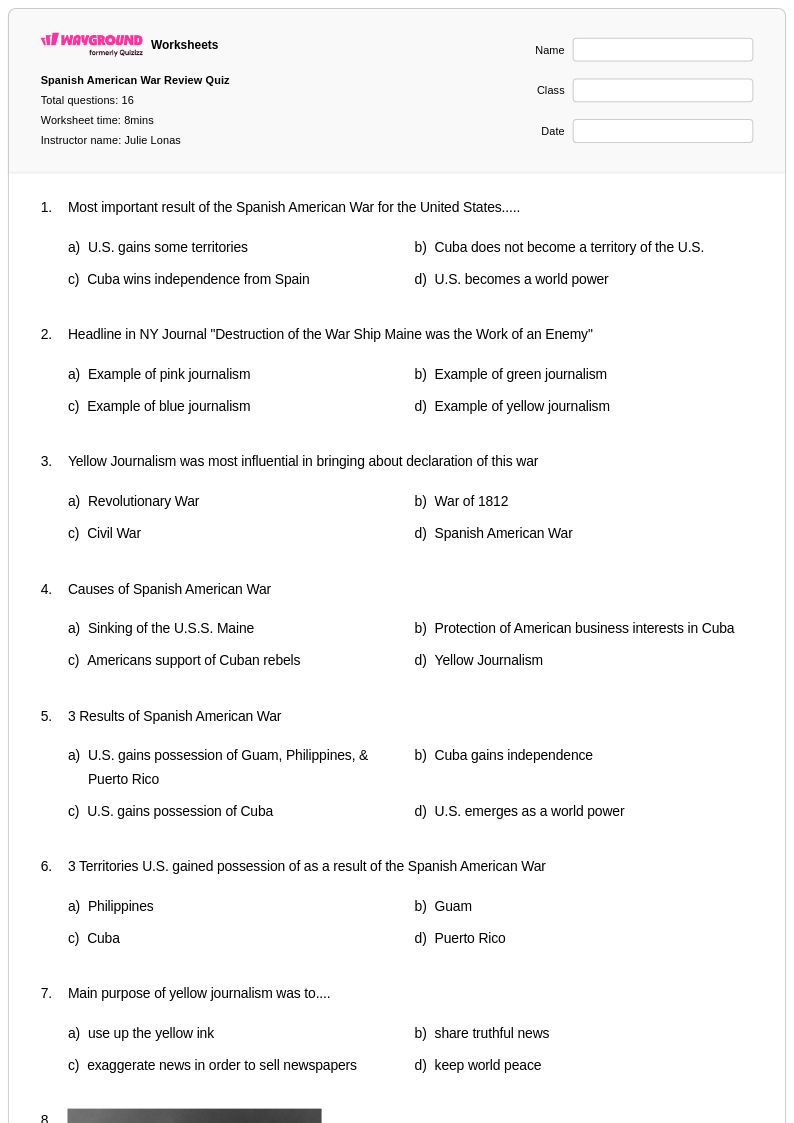
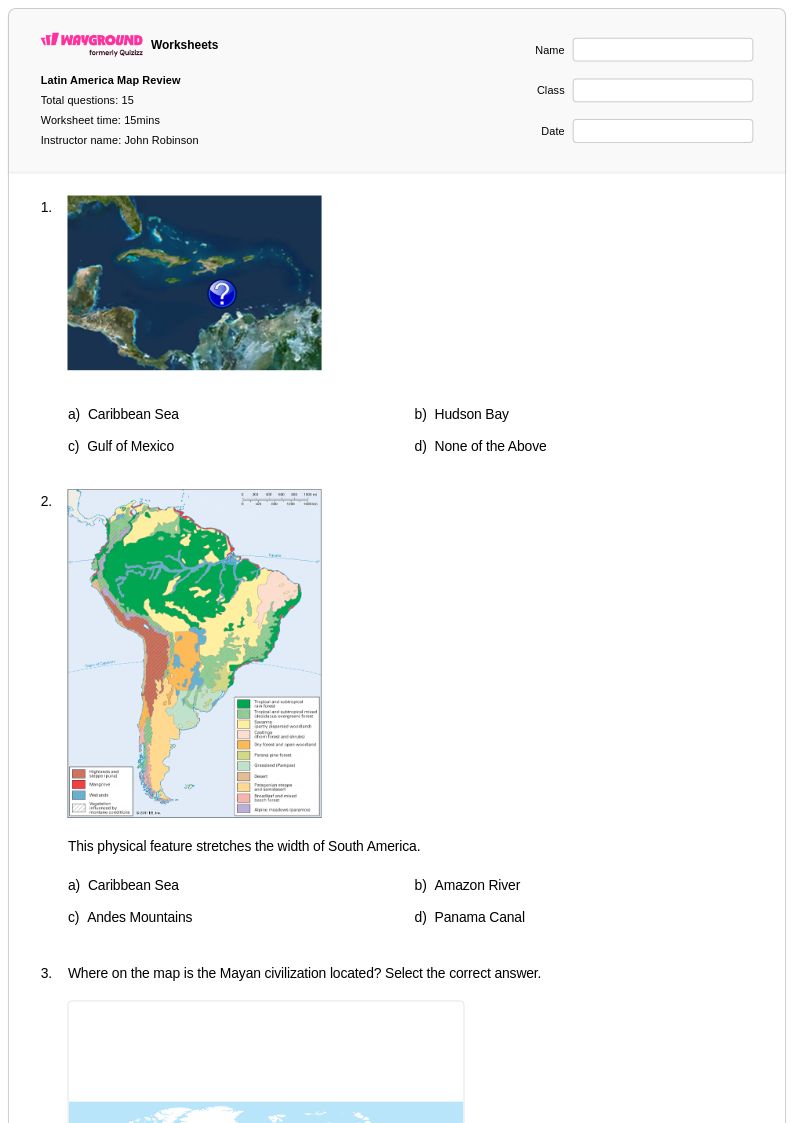
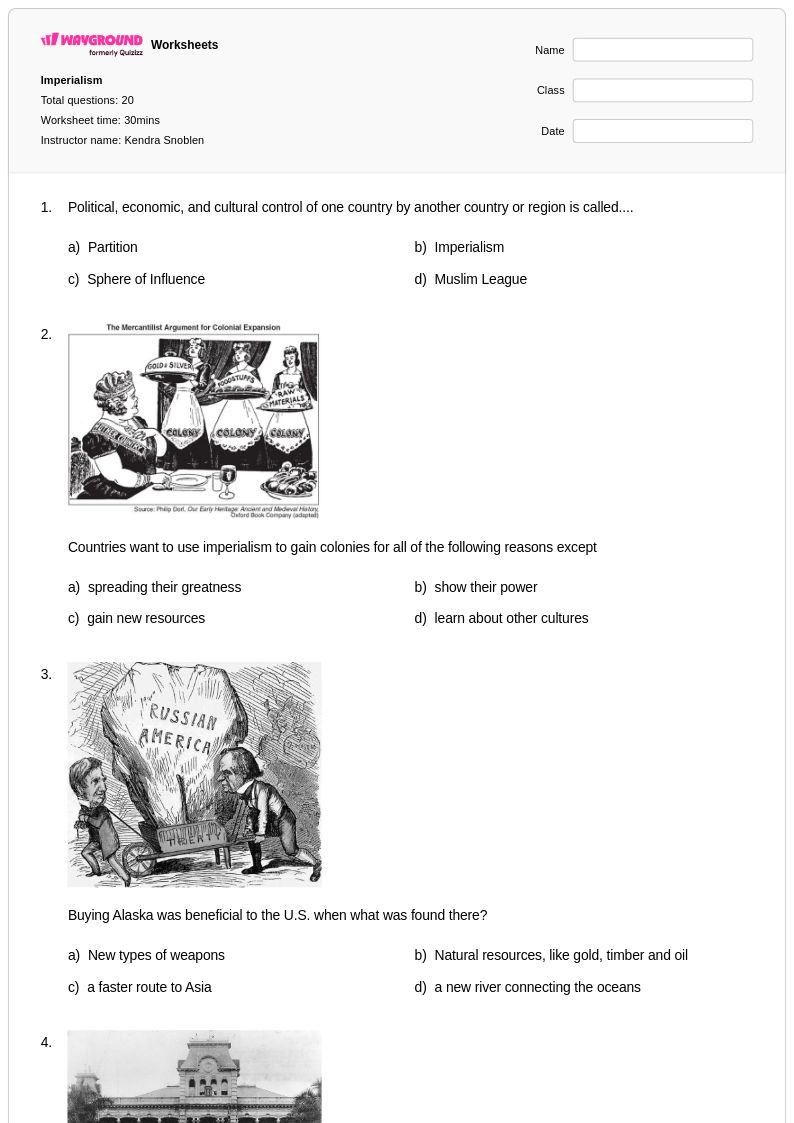
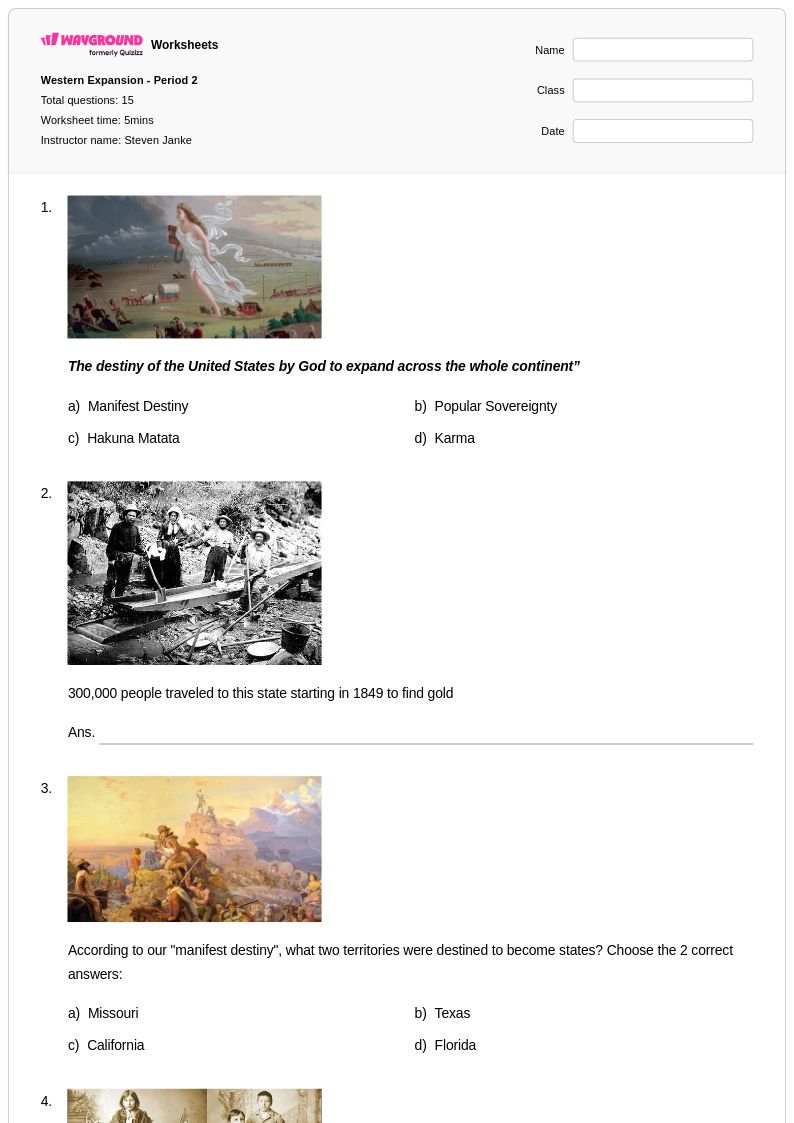
Explore Wayground's comprehensive collection of Class 12 Panama Canal worksheets, featuring free printables and practice problems with answer keys to help students master this crucial geographical and historical waterway.
Explore printable Panama Canal worksheets for Class 12
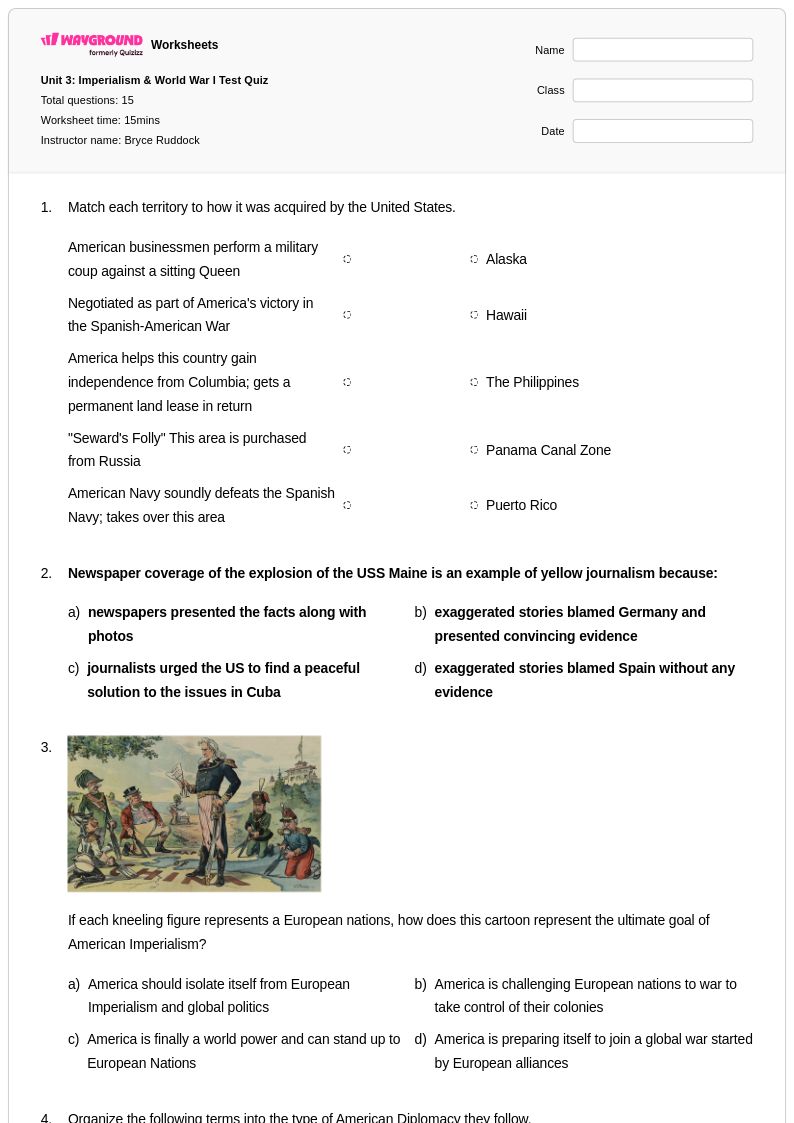
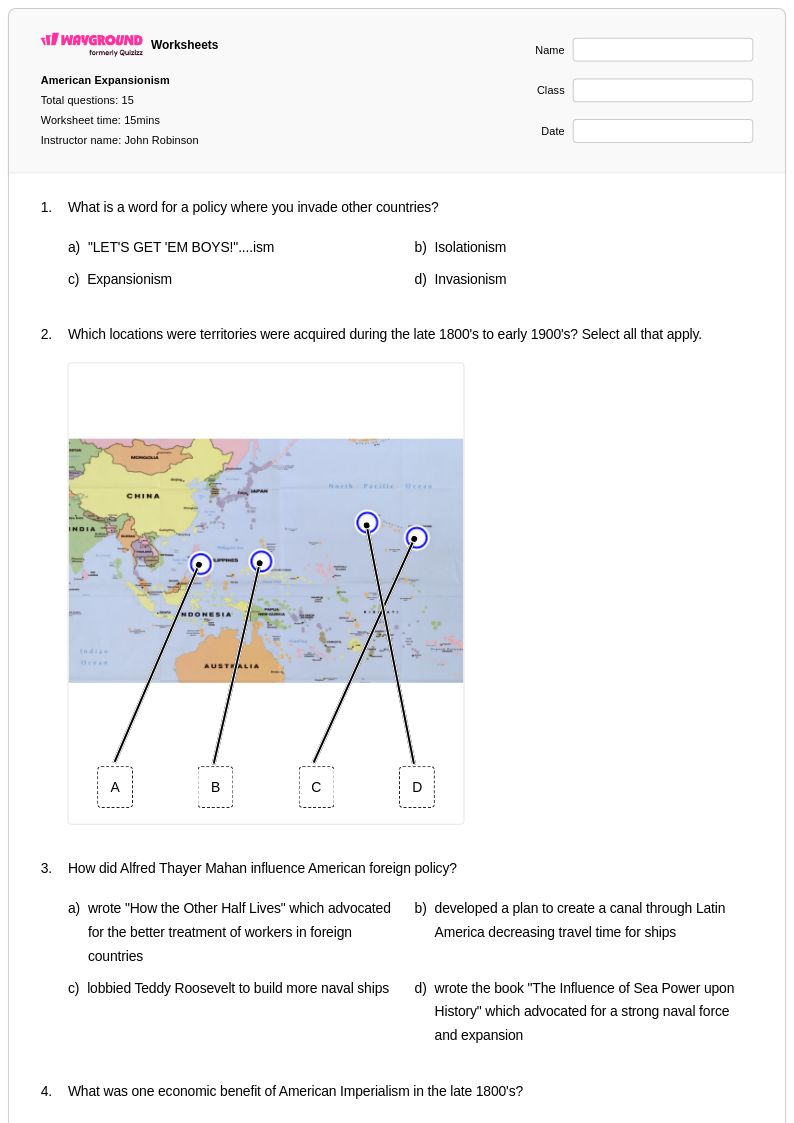
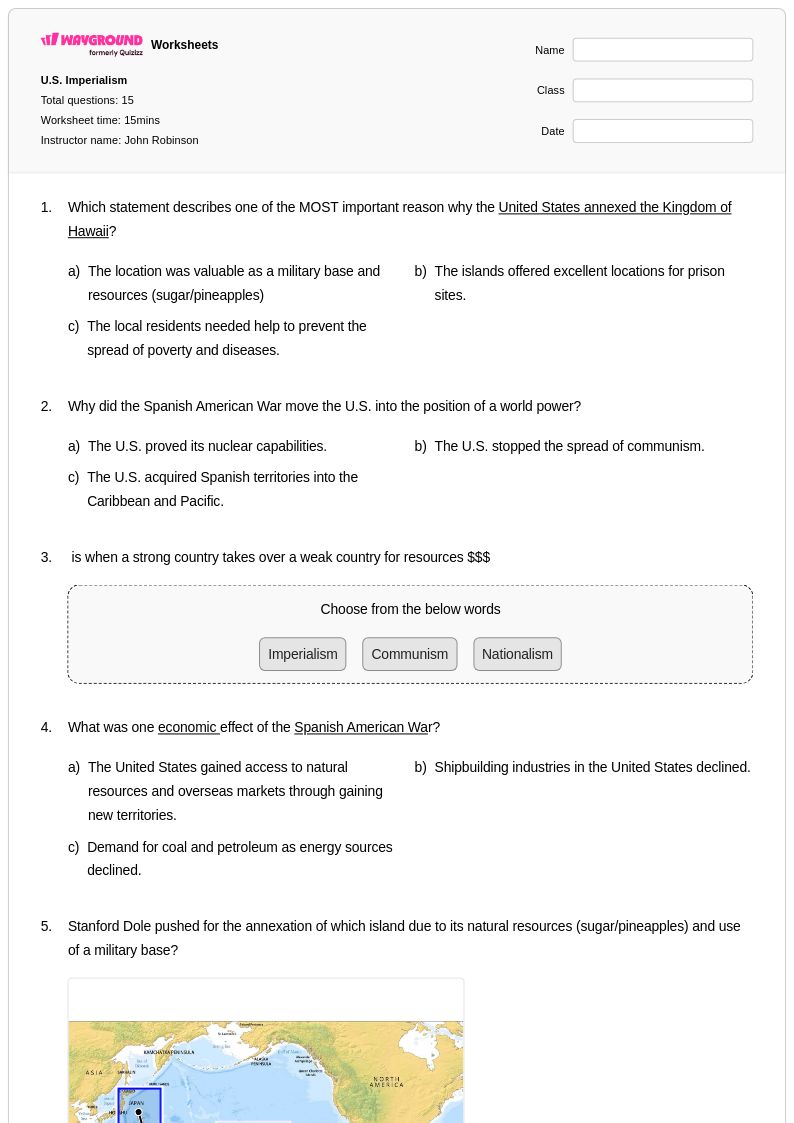
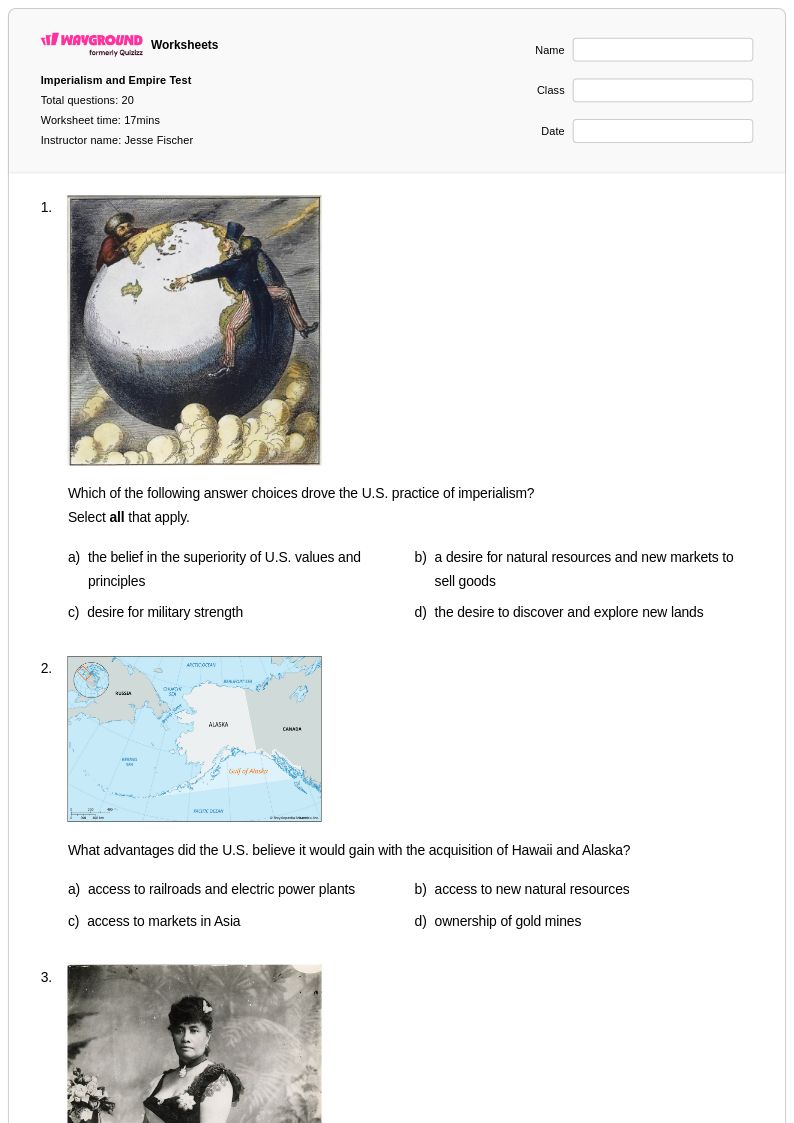
Panama Canal worksheets for Class 12 students available through Wayground (formerly Quizizz) provide comprehensive educational resources that explore this monumental engineering achievement and its profound impact on global trade, geopolitics, and regional development. These expertly designed worksheets strengthen critical thinking skills by examining the canal's historical construction challenges, its role in shaping international maritime commerce, and its ongoing significance in modern supply chain logistics. Students engage with practice problems that analyze shipping route efficiency, calculate economic benefits of reduced travel distances, and evaluate the environmental and social consequences of this transformative infrastructure project. The collection includes detailed answer keys and free printables that guide learners through complex geographic concepts, from understanding lock systems and elevation changes to assessing the canal's influence on Panama's national development and regional power dynamics.
Wayground (formerly Quizizz) empowers educators with access to millions of teacher-created Panama Canal resources that support diverse classroom needs and learning objectives for Class 12 geography instruction. The platform's robust search and filtering capabilities enable teachers to quickly locate materials aligned with specific curriculum standards, while differentiation tools allow for seamless customization based on individual student readiness levels and learning preferences. These flexible resources are available in both printable and digital formats, including convenient PDF downloads, making them ideal for traditional classroom instruction, remote learning environments, or hybrid educational settings. Teachers can effectively utilize these comprehensive worksheet collections for lesson planning, targeted skill remediation, advanced student enrichment, and ongoing practice that reinforces understanding of the Panama Canal's multifaceted role in global geography and international relations.
FAQs
How do I teach the Panama Canal to middle or high school students?
Teaching the Panama Canal works best when you anchor the lesson in three interconnected lenses: engineering, geography, and global trade. Start with the problem the canal solved — the 8,000-mile detour ships had to make around South America — then move into how the lock system overcomes elevation changes to move vessels between oceans. Layering in primary sources, such as construction-era photographs or Roosevelt's correspondence, gives students concrete historical context before they analyze the canal's ongoing economic and political significance.
What are good practice activities for students learning about the Panama Canal?
Effective practice activities include map analysis exercises where students trace pre- and post-canal shipping routes and calculate distance differences, as well as document-based questions that ask students to evaluate construction challenges and political negotiations. Having students compare trade data before and after the canal's opening reinforces the concept of global economic impact in a measurable way. These tasks build geographic literacy and analytical writing skills simultaneously, which aligns with most social studies and history standards.
What mistakes do students commonly make when learning about the Panama Canal?
A common misconception is that the Panama Canal connects the Atlantic and Pacific oceans at the same elevation, when in fact ships are raised and lowered through a series of locks to navigate terrain that rises up to 85 feet above sea level. Students also frequently confuse the canal's location, assuming it runs east-to-west, when the geography of Panama actually means ships travel roughly northwest to southeast. Another frequent error is underestimating the political complexity of the canal's construction and ownership history, reducing it to a purely engineering story.
How do Panama Canal worksheets help students understand the lock system?
Panama Canal worksheets that include labeled diagrams and elevation-change problems give students a concrete visual model of how locks function as a water elevator, lifting and lowering ships rather than cutting a level channel through the terrain. Practice problems that ask students to sequence the steps a ship takes through the Gatun, Pedro Miguel, and Miraflores locks reinforce procedural understanding alongside geographic knowledge. This combination of diagram analysis and step-based reasoning is particularly effective for visual and sequential learners.
How can I use Wayground's Panama Canal worksheets in my classroom?
Wayground's Panama Canal worksheets are available as printable PDFs for traditional classroom use and in digital formats for technology-integrated or hybrid learning environments, and teachers can also host them as a quiz directly on Wayground. Each worksheet includes a complete answer key, so grading is efficient and feedback can be returned to students quickly. The digital format supports accommodations such as read aloud, extended time, and reduced answer choices, making the same materials accessible to students with diverse learning needs without requiring separate versions.
How do I differentiate Panama Canal lessons for students at different skill levels?
For foundational learners, focus on vocabulary and basic geography — identifying the canal on a map, defining locks, and sequencing key historical events. Intermediate students can move into cause-and-effect analysis, examining how the canal changed global shipping economics. Advanced students benefit from evaluating primary sources, analyzing trade data, and arguing positions on sovereignty and international control. On Wayground, teachers can apply individual accommodations such as extended time or reduced answer choices to specific students, so all learners can access the same core materials without requiring entirely separate worksheets.