
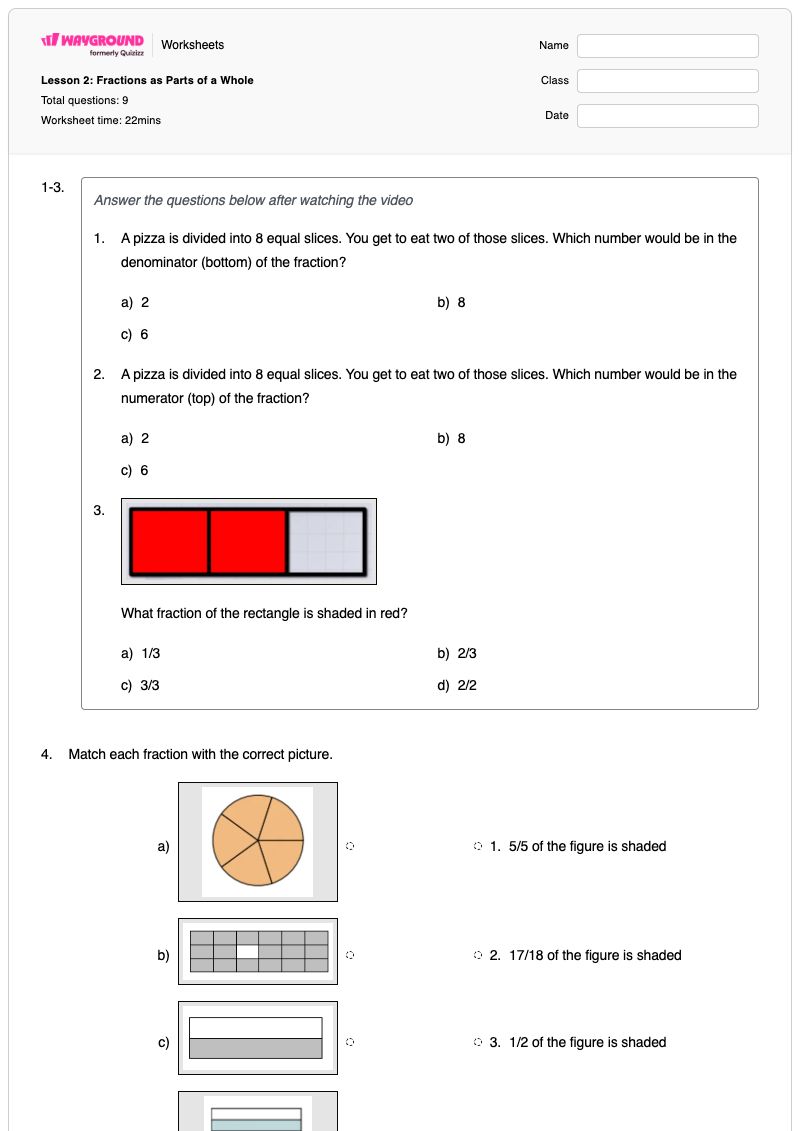
13 Q
1st - 5th
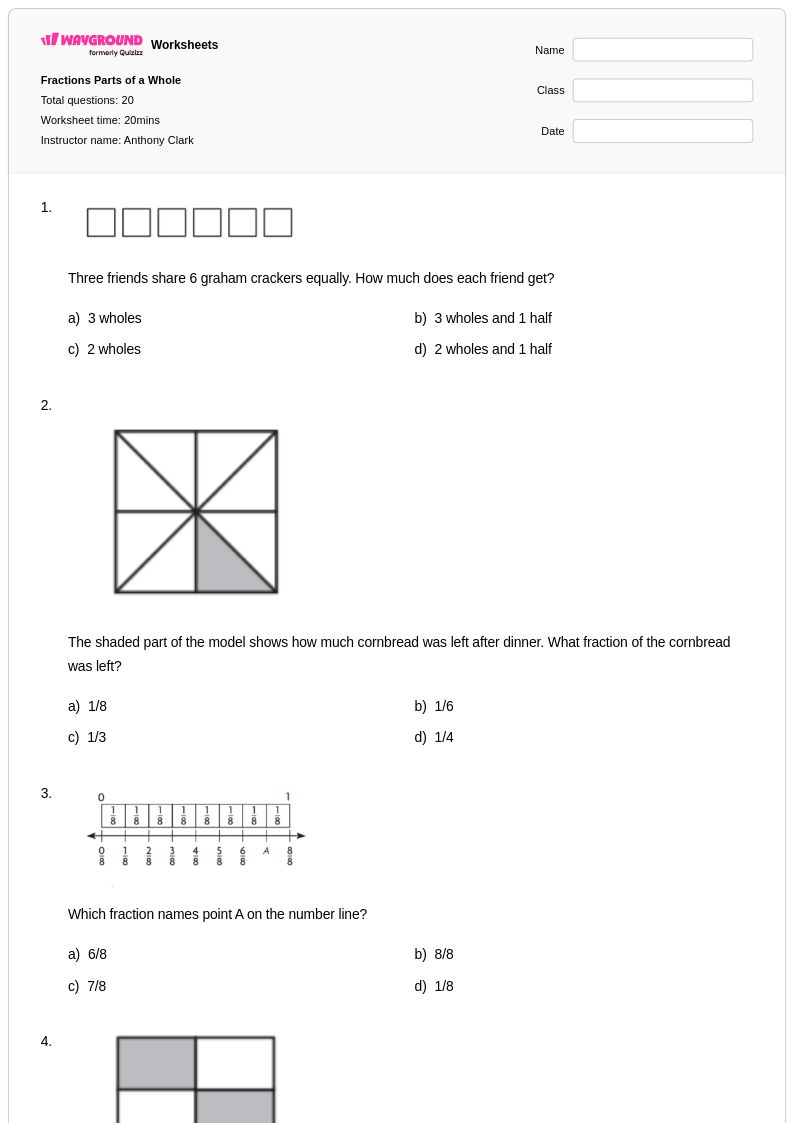
20 Q
3rd - Uni
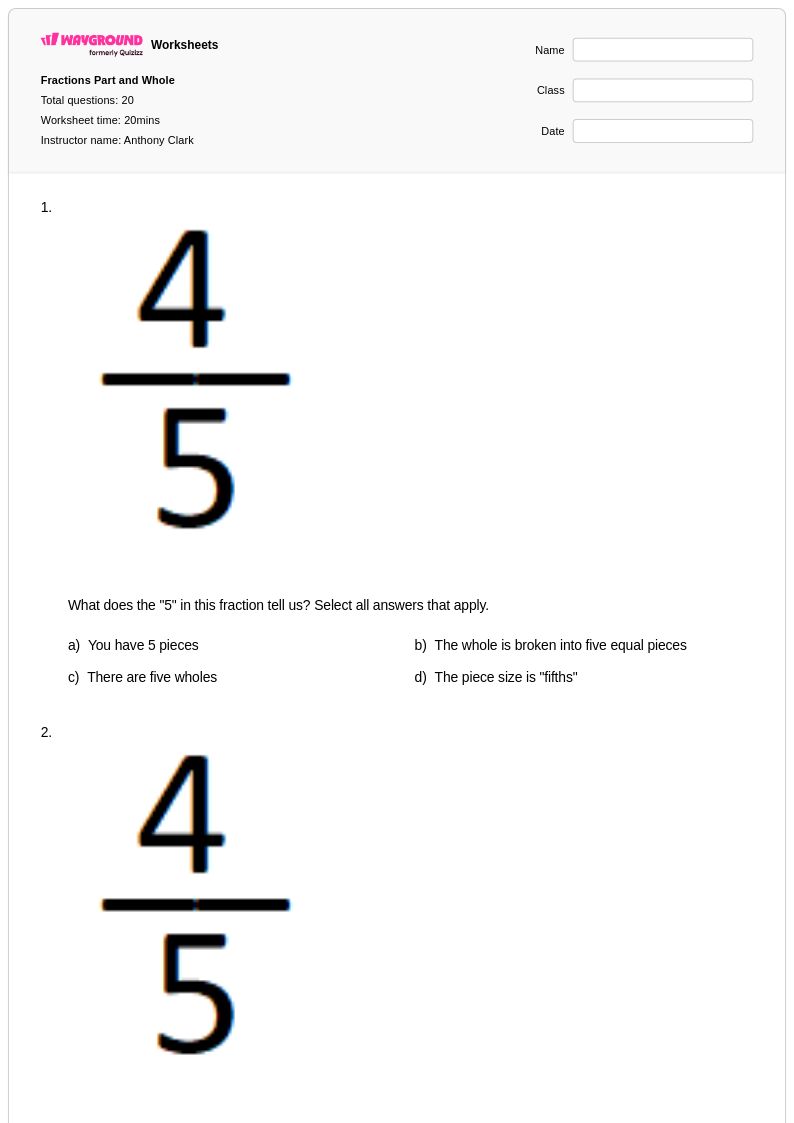
20 Q
3rd - Uni
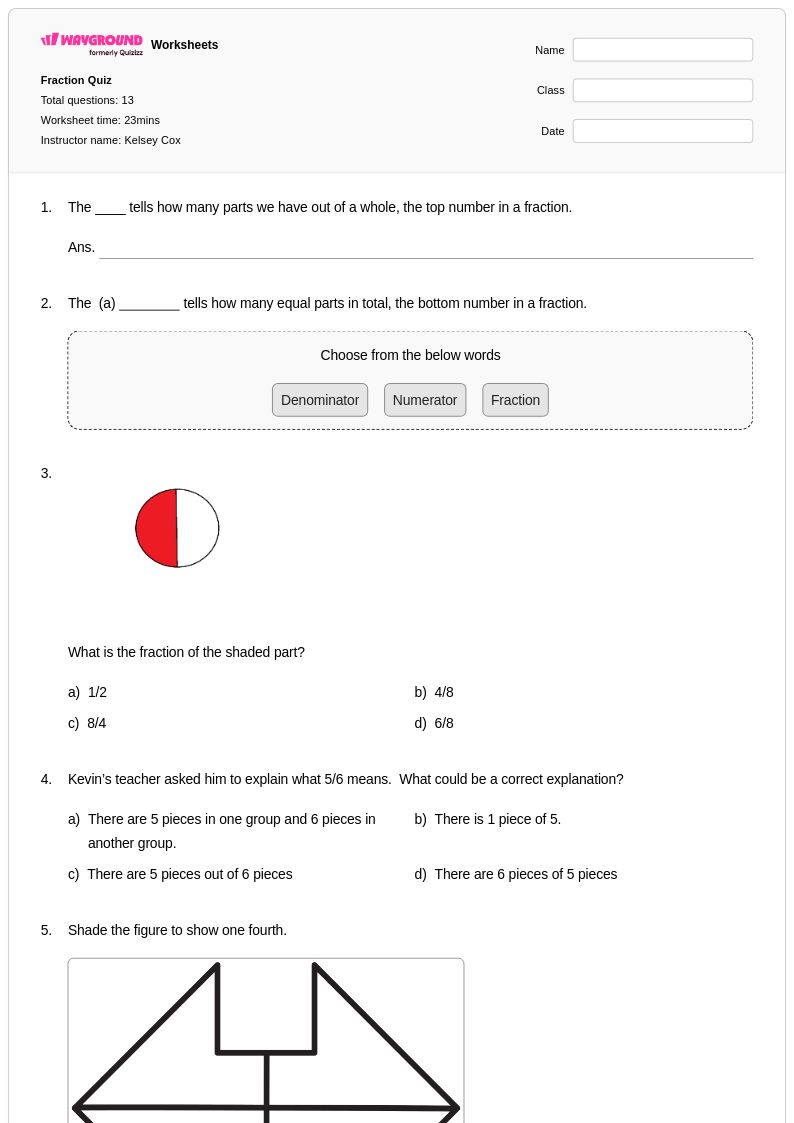
13 Q
3rd
20 Q
3rd - Uni
19 Q
3rd - Uni
13 Q
3rd
20 Q
3rd
20 Q
3rd
20 Q
3rd
20 Q
3rd
15 Q
3rd
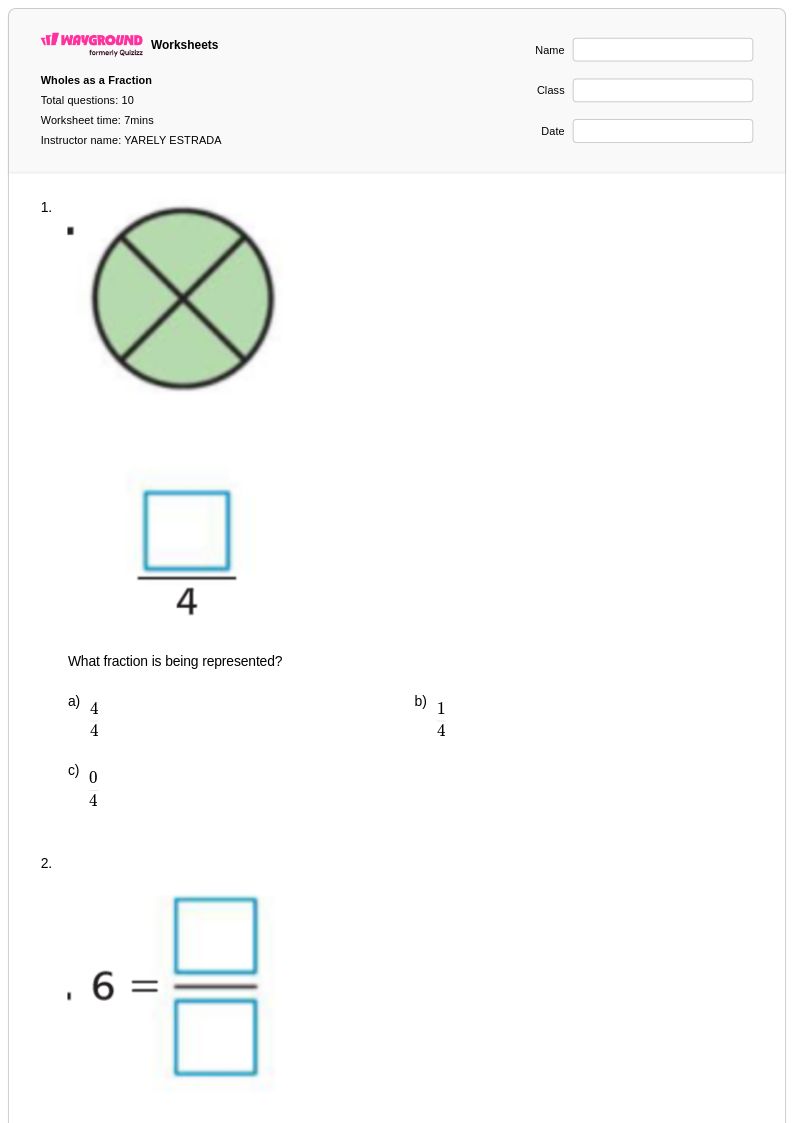
10 Q
3rd
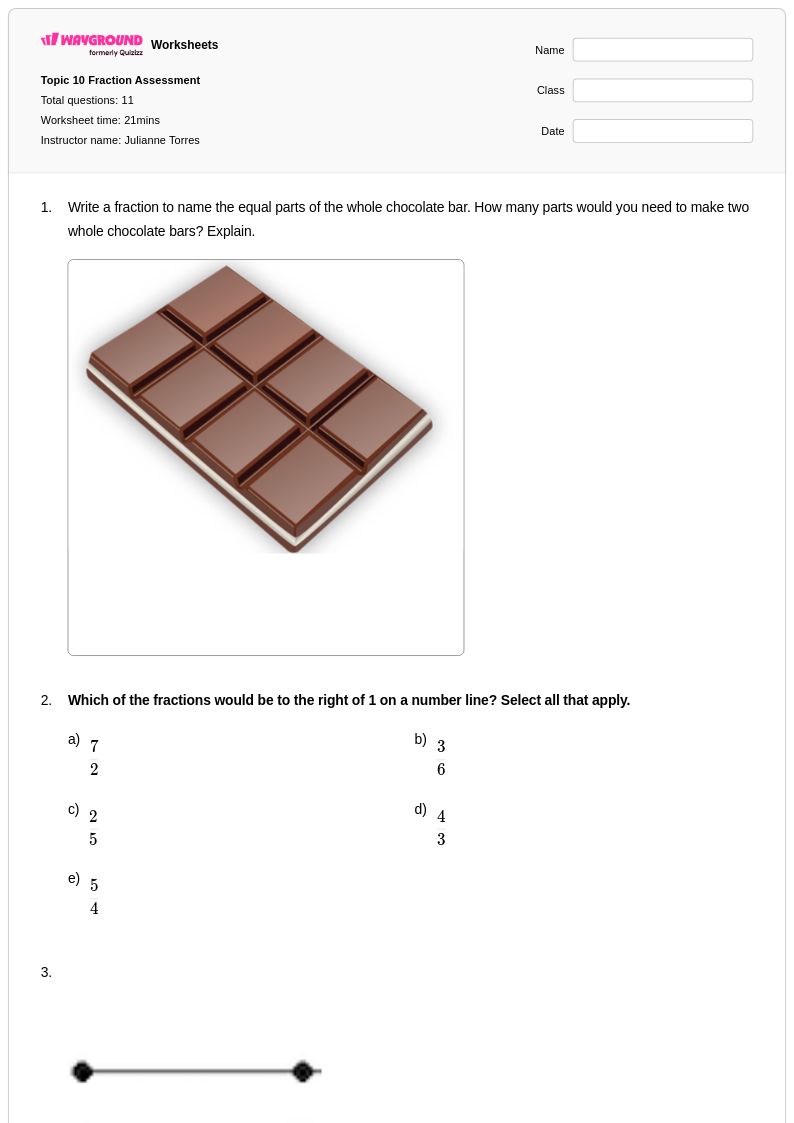
11 Q
3rd
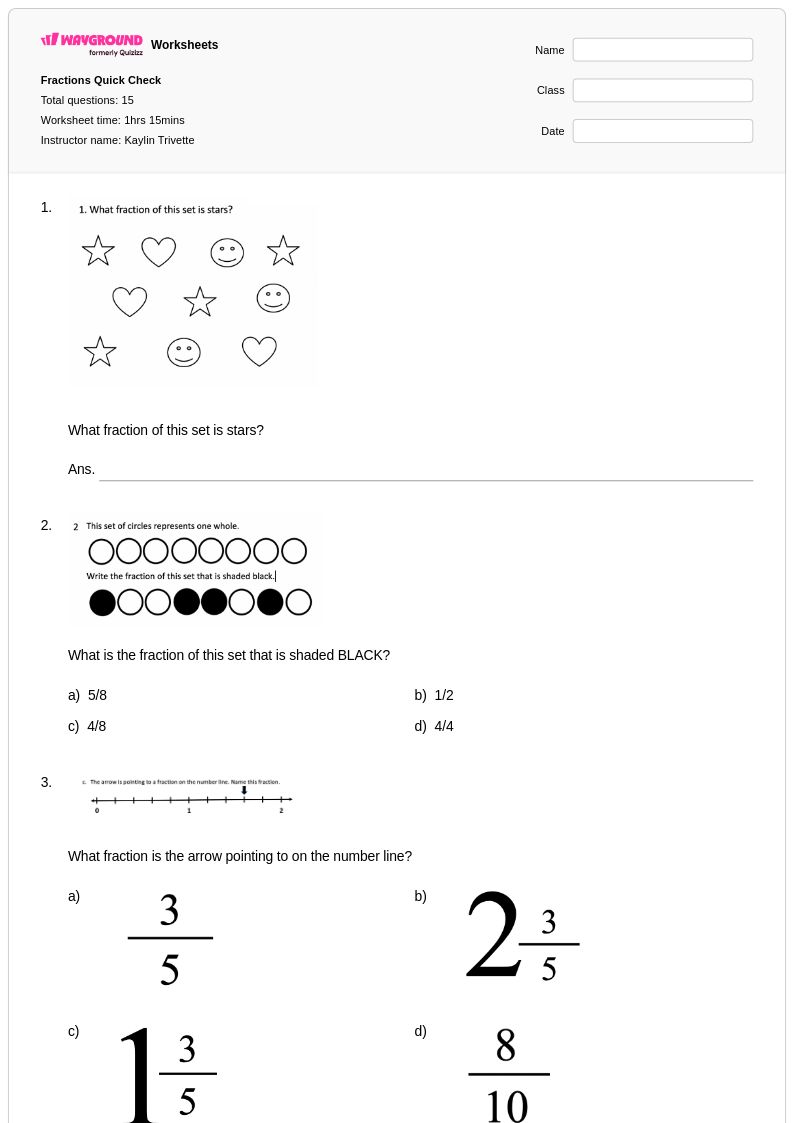
15 Q
3rd
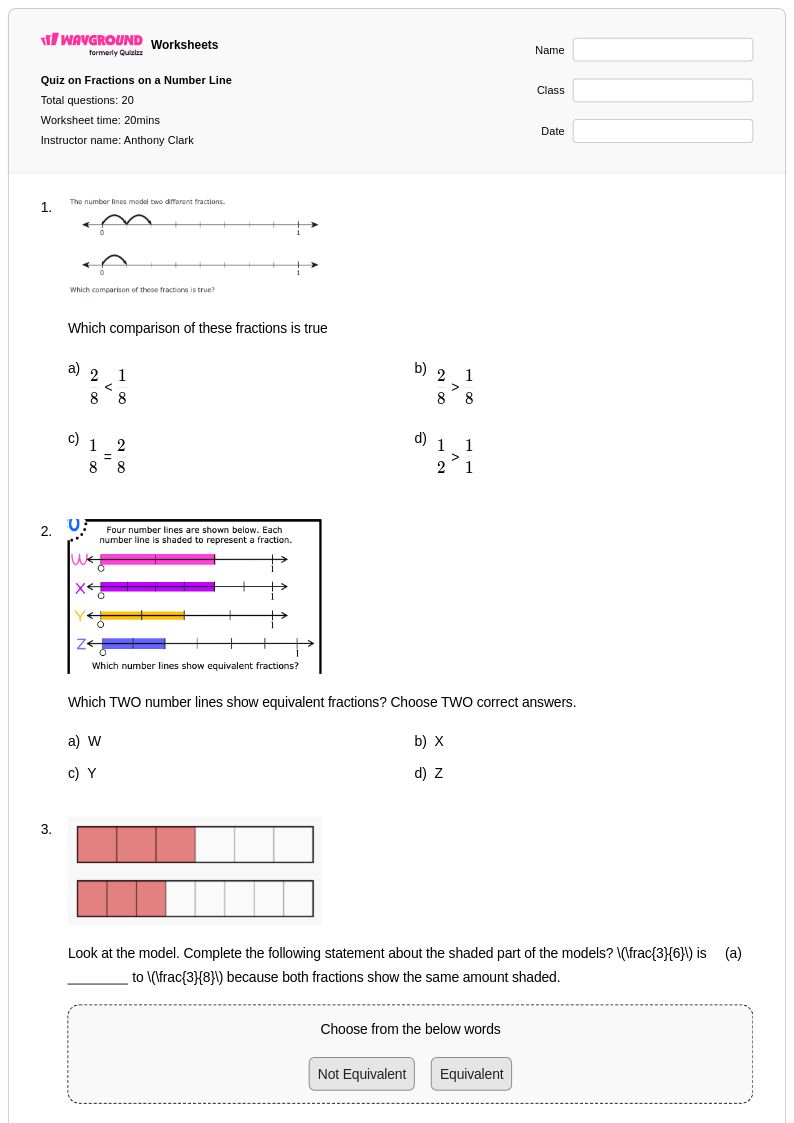
20 Q
3rd - Uni
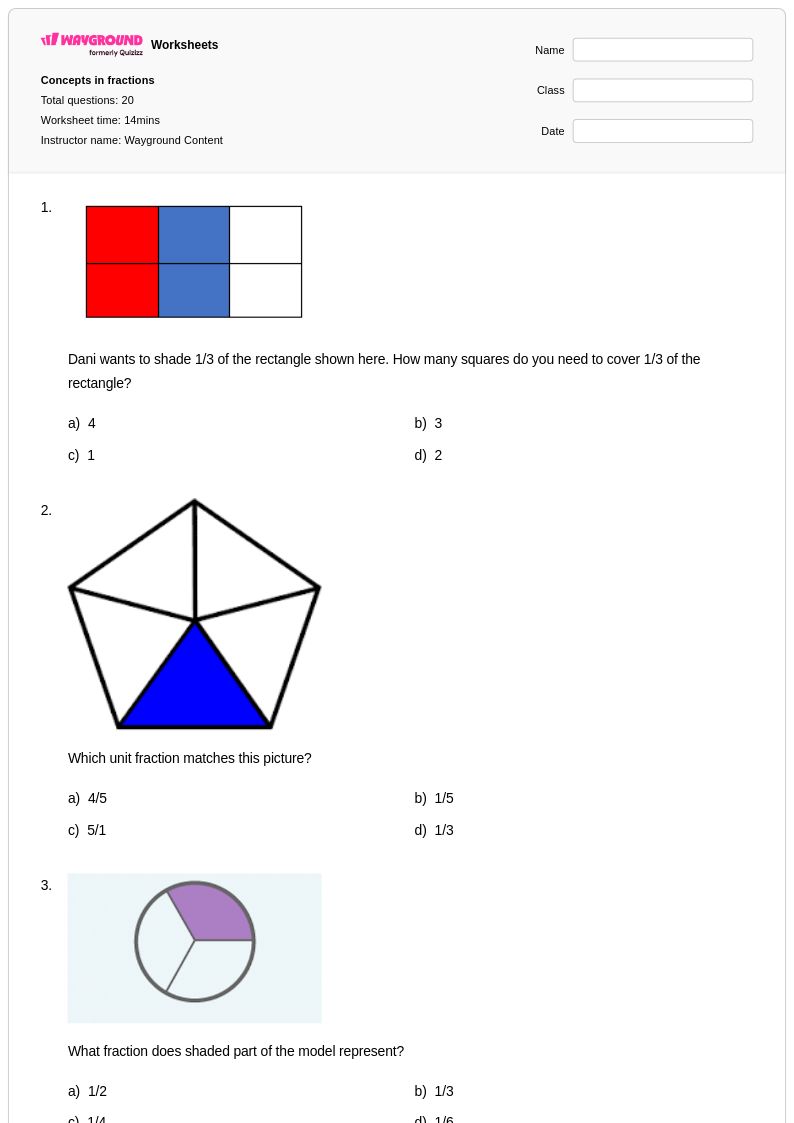
20 Q
3rd
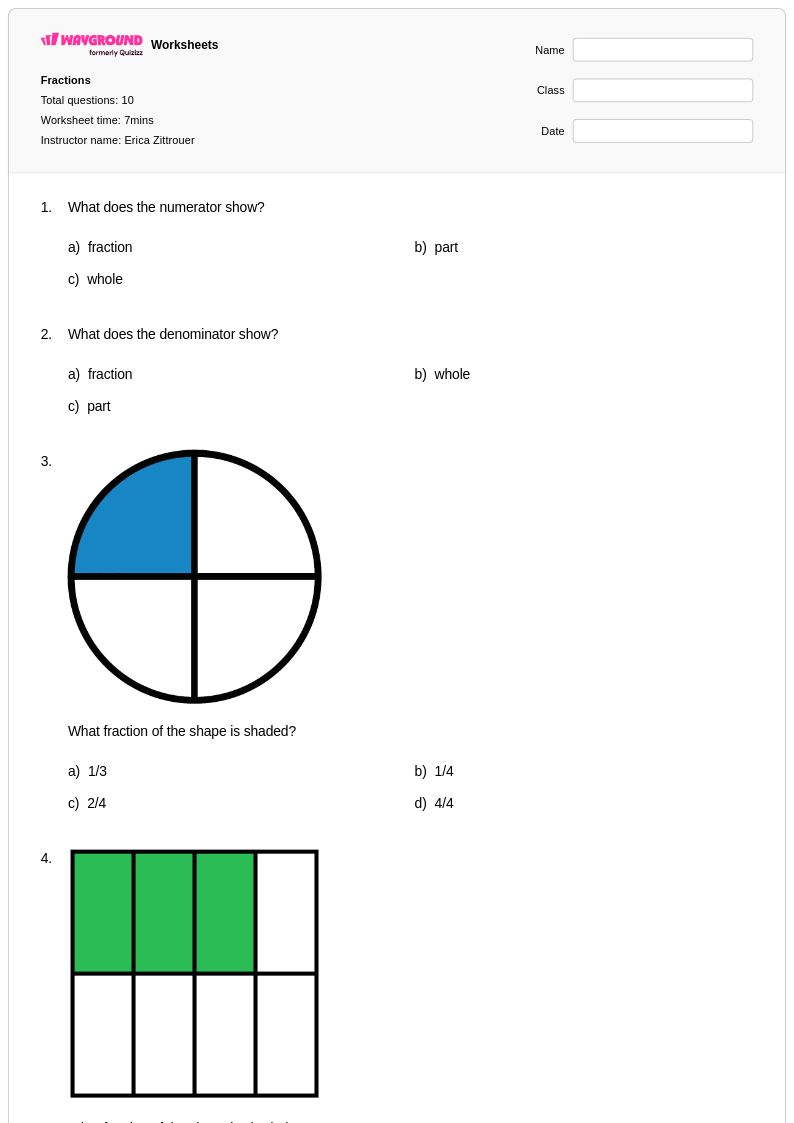
10 Q
3rd
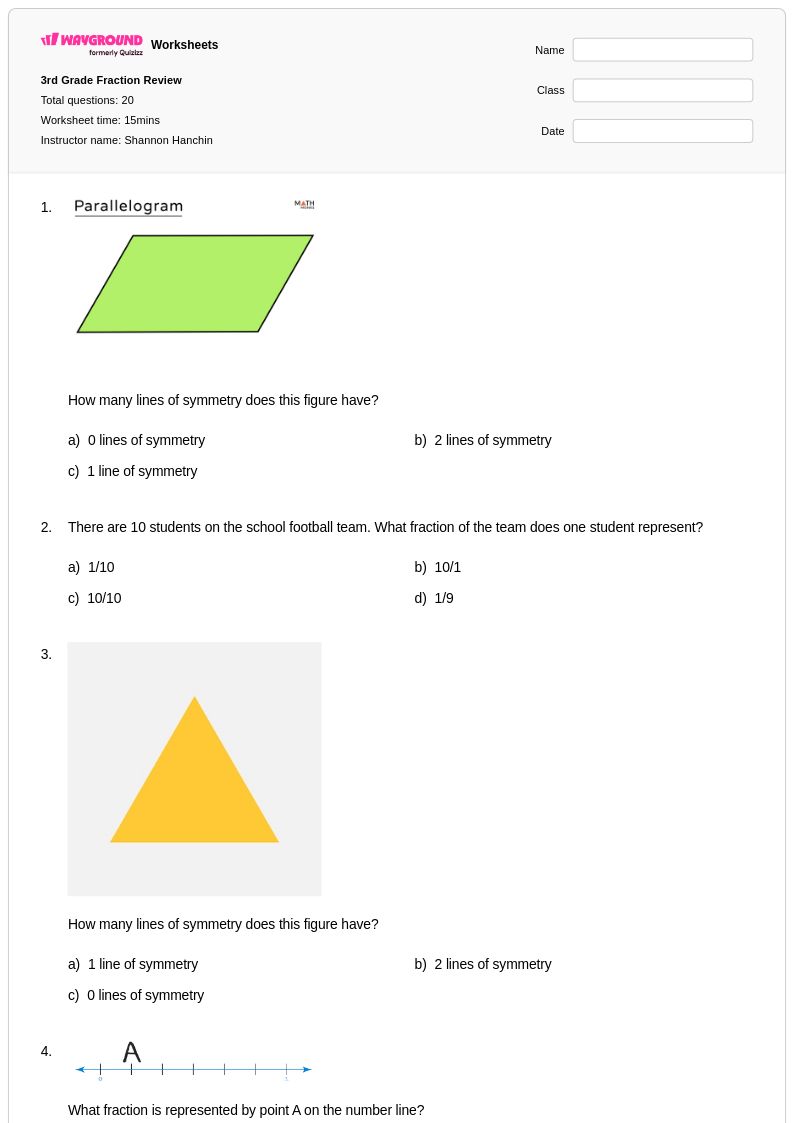
20 Q
3rd
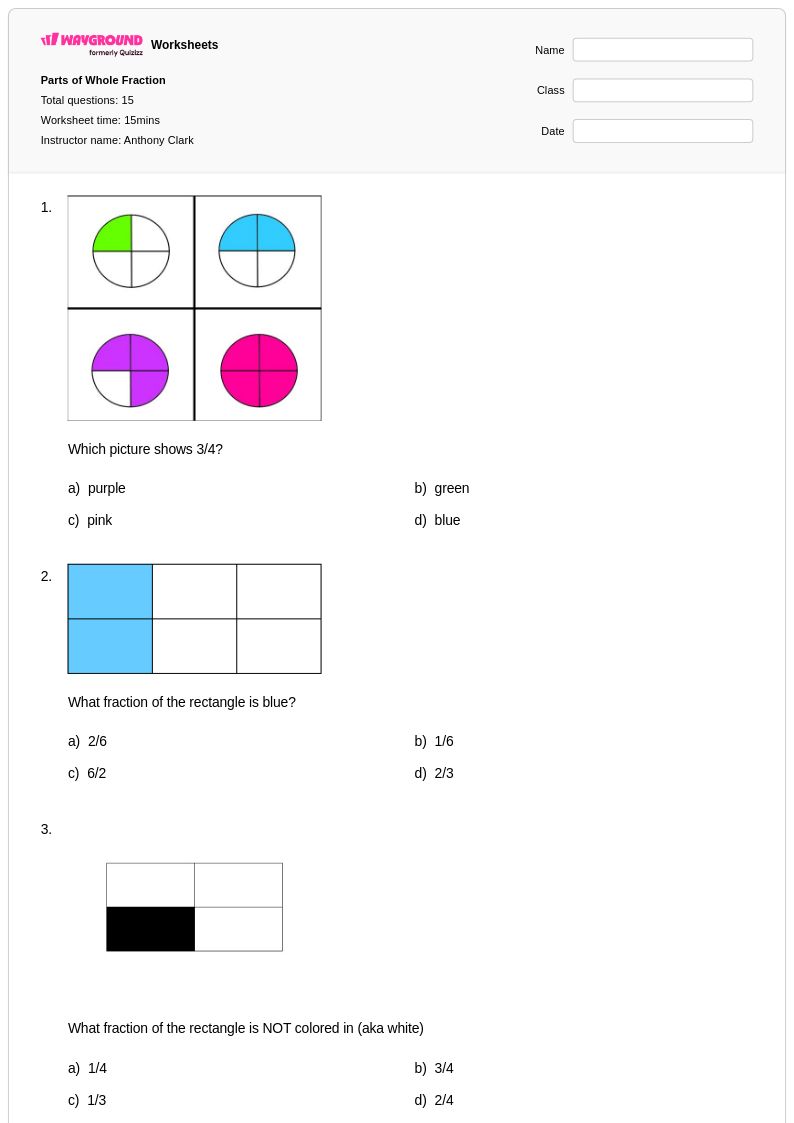
15 Q
3rd - Uni
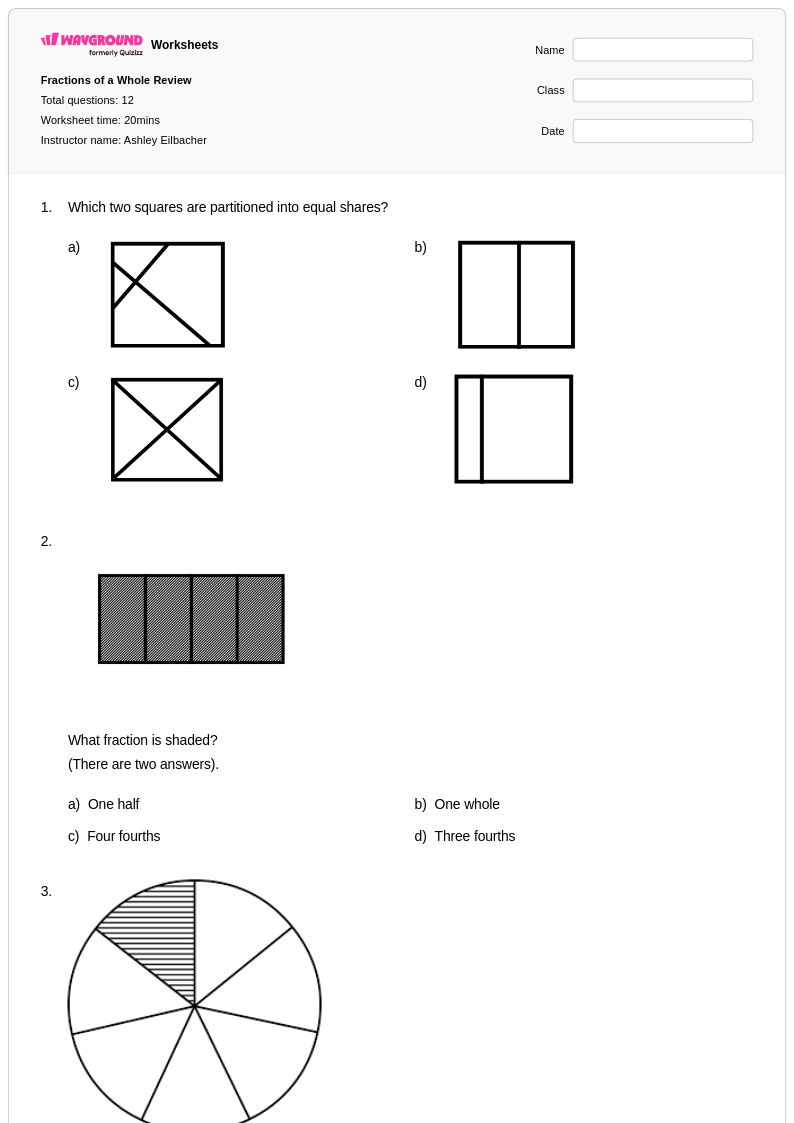
12 Q
3rd
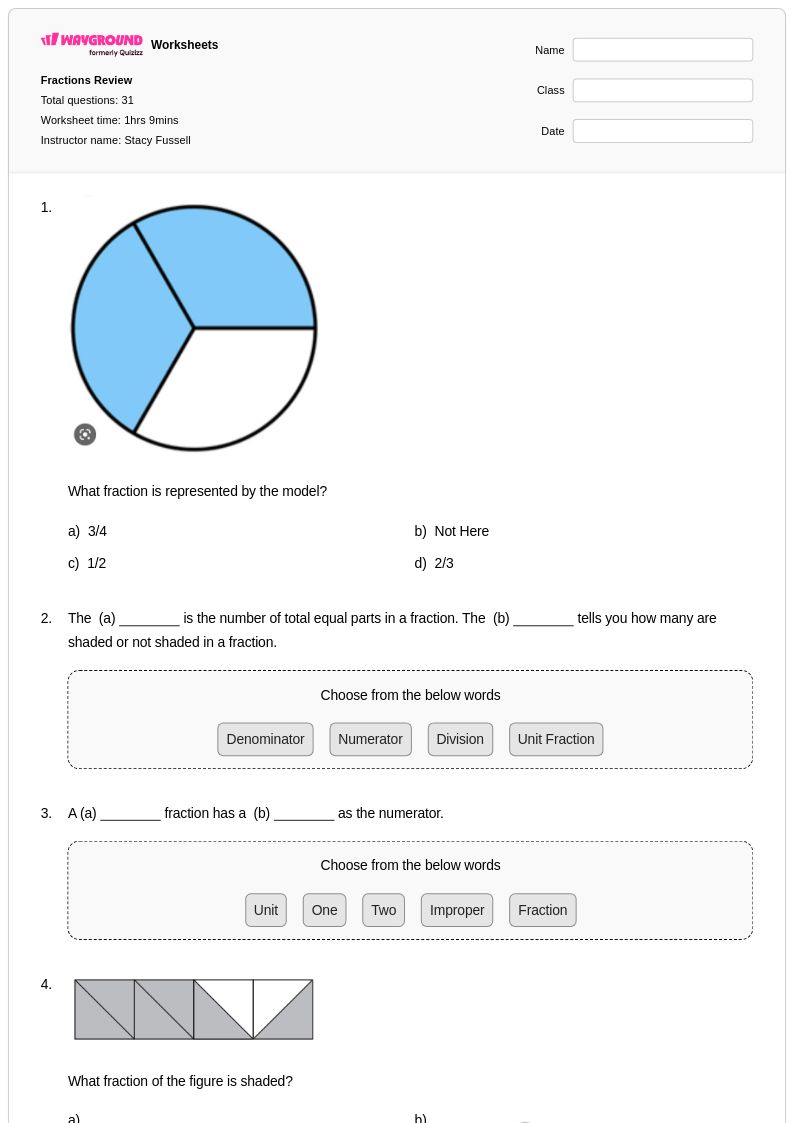
31 Q
3rd
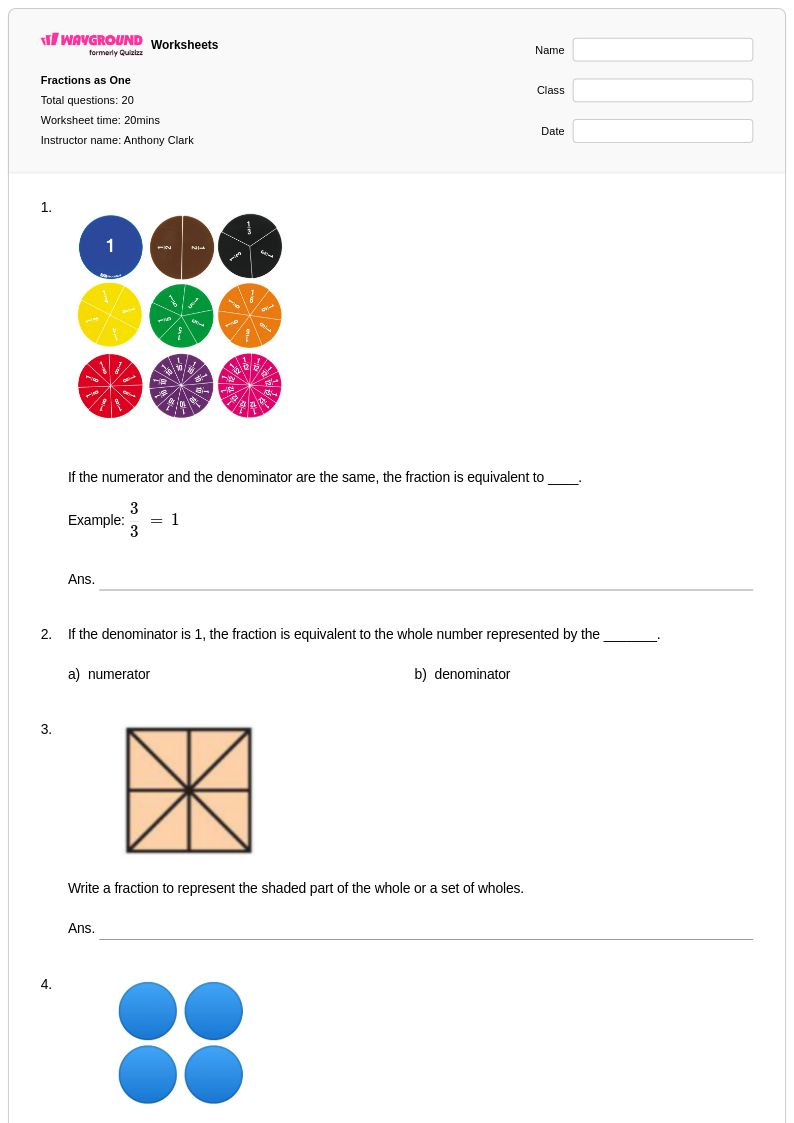
20 Q
3rd - Uni
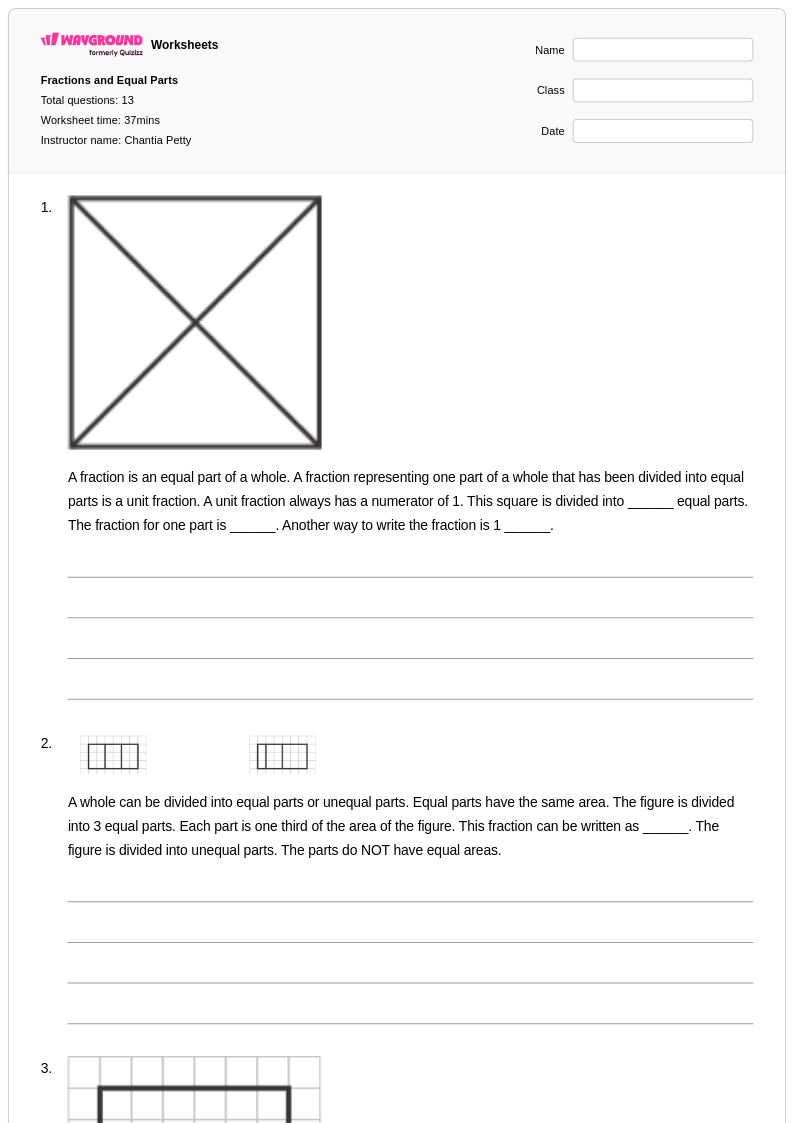
13 Q
3rd
Explore Part and Whole Concepts Worksheets by Grades
Explore Other Subject Worksheets for class 3
Explore printable Part and Whole Concepts worksheets for Class 3
Part and whole concepts form the essential foundation for Class 3 students beginning their journey into fraction understanding, and Wayground's comprehensive worksheet collection provides targeted practice to master these critical mathematical building blocks. These carefully designed worksheets guide young learners through identifying parts within a whole, recognizing equal and unequal divisions, and understanding how individual pieces relate to complete objects or sets. Students develop spatial reasoning and number sense as they work through practice problems that visually represent fractions using shapes, objects, and real-world scenarios. Each worksheet includes a complete answer key, making assessment and self-checking straightforward, while the free printable format allows for repeated practice and reinforcement of these fundamental concepts that will support all future fraction learning.
Wayground (formerly Quizizz) empowers educators with millions of teacher-created resources specifically designed to strengthen part and whole concept understanding in elementary mathematics instruction. The platform's robust search and filtering capabilities enable teachers to quickly locate worksheets that align with specific learning objectives and curriculum standards, while differentiation tools support both remediation for struggling learners and enrichment opportunities for advanced students. Teachers can seamlessly customize existing materials or create new practice sets, with all resources available in both digital and printable pdf formats to accommodate diverse classroom needs and learning environments. This flexibility streamlines lesson planning while providing consistent, high-quality practice opportunities that help students build confidence and competency in recognizing how parts combine to form wholes, establishing the conceptual groundwork essential for fraction success throughout their mathematical education.
FAQs
How do I help third graders transition from part-whole models to formal fraction notation?
What skills do these third-grade fraction worksheets focus on?
What is the most common misunderstanding for third graders learning fractions?
How can I use these Grade 3 fraction worksheets in my class?
How does this topic align with third-grade math standards?
How can I differentiate fraction practice for my third-grade students?