Free Printable Participial Phrases Worksheets for Class 8
Enhance Class 8 students' understanding of participial phrases with Wayground's comprehensive collection of free worksheets, printables, and practice problems that include detailed answer keys to master this essential grammar skill.
Explore printable Participial Phrases worksheets for Class 8
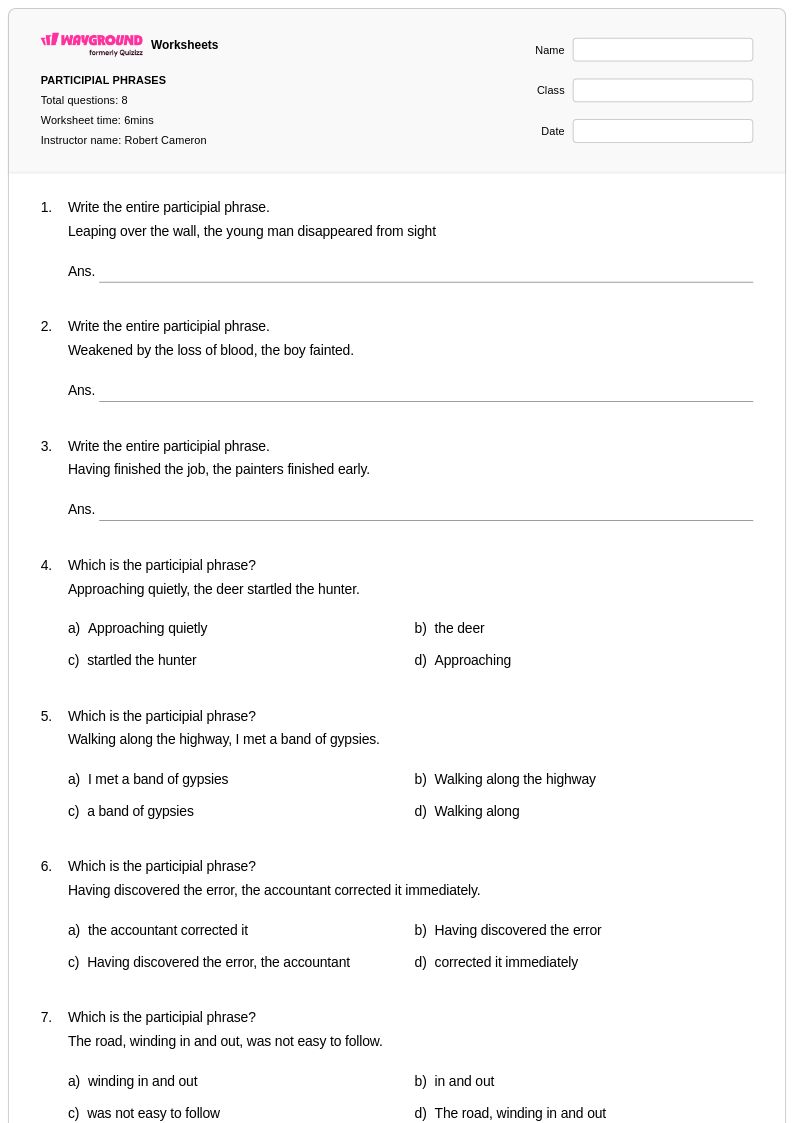
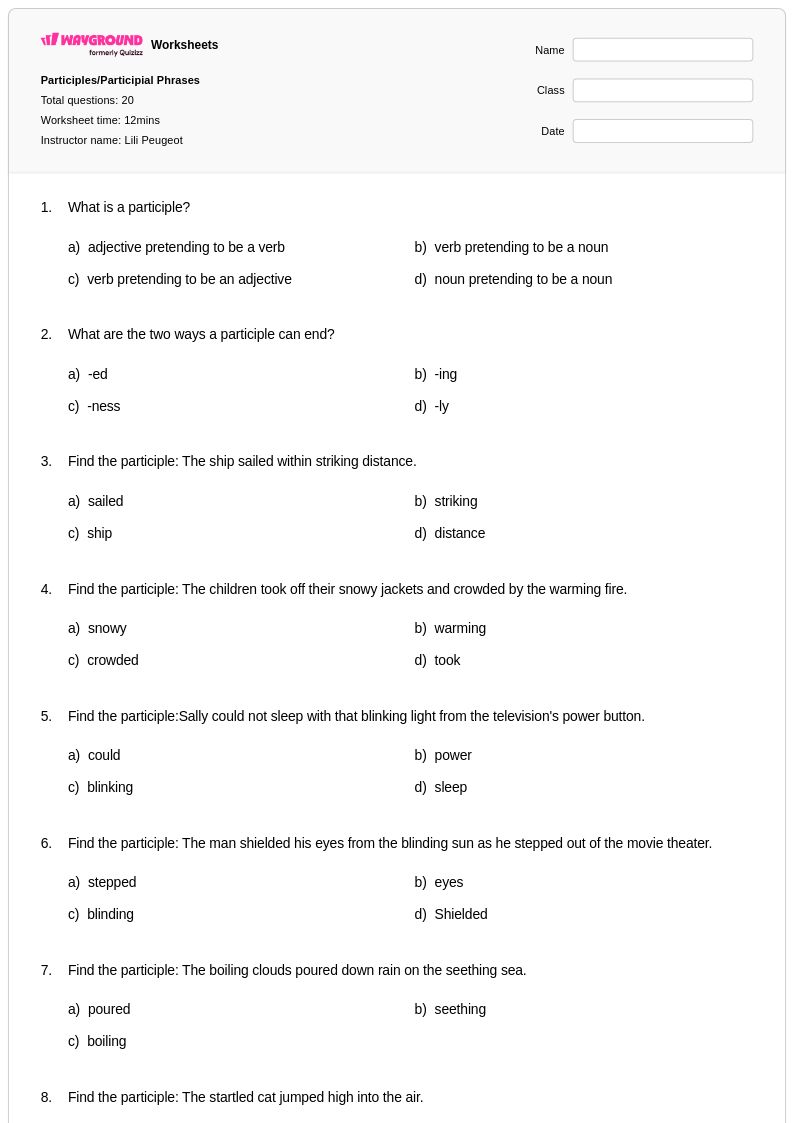
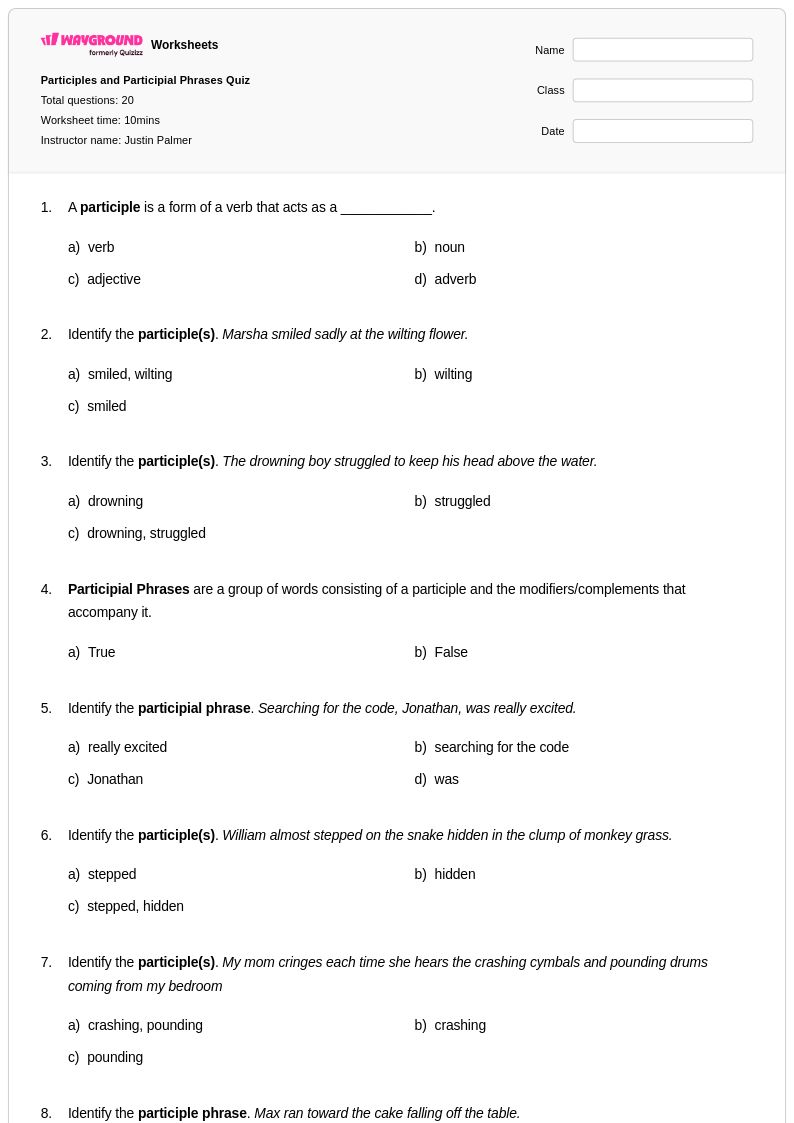
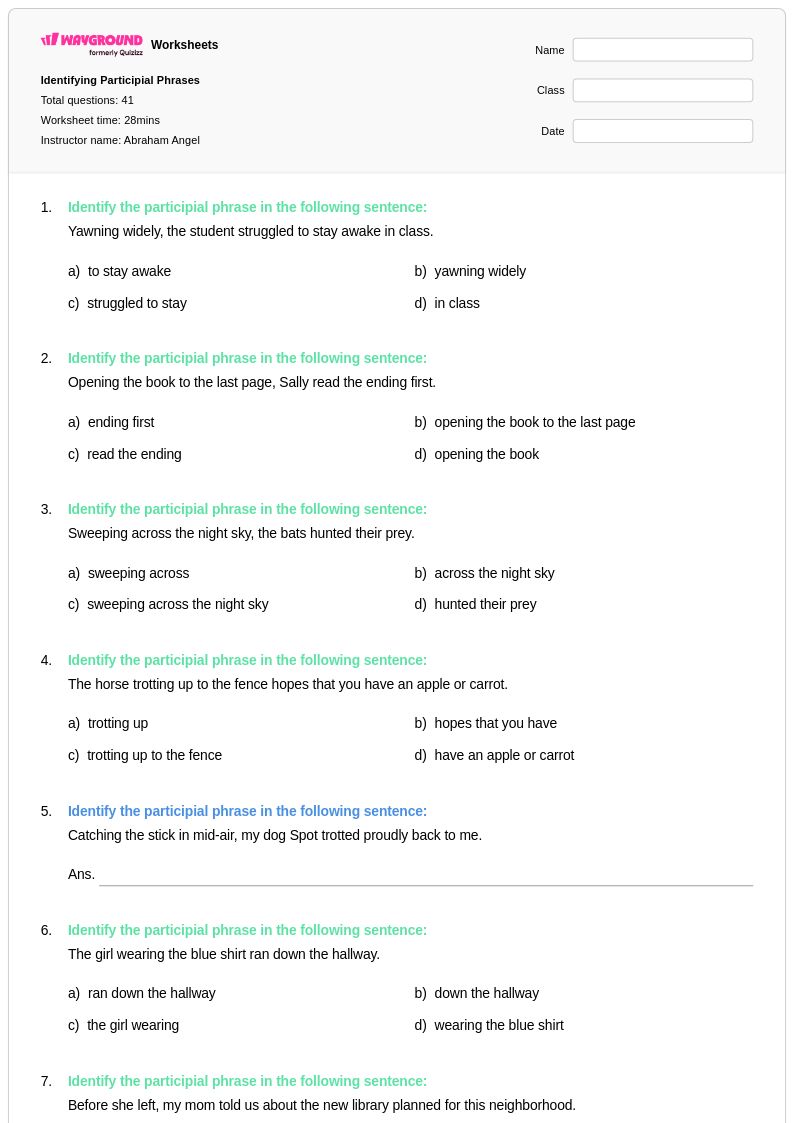
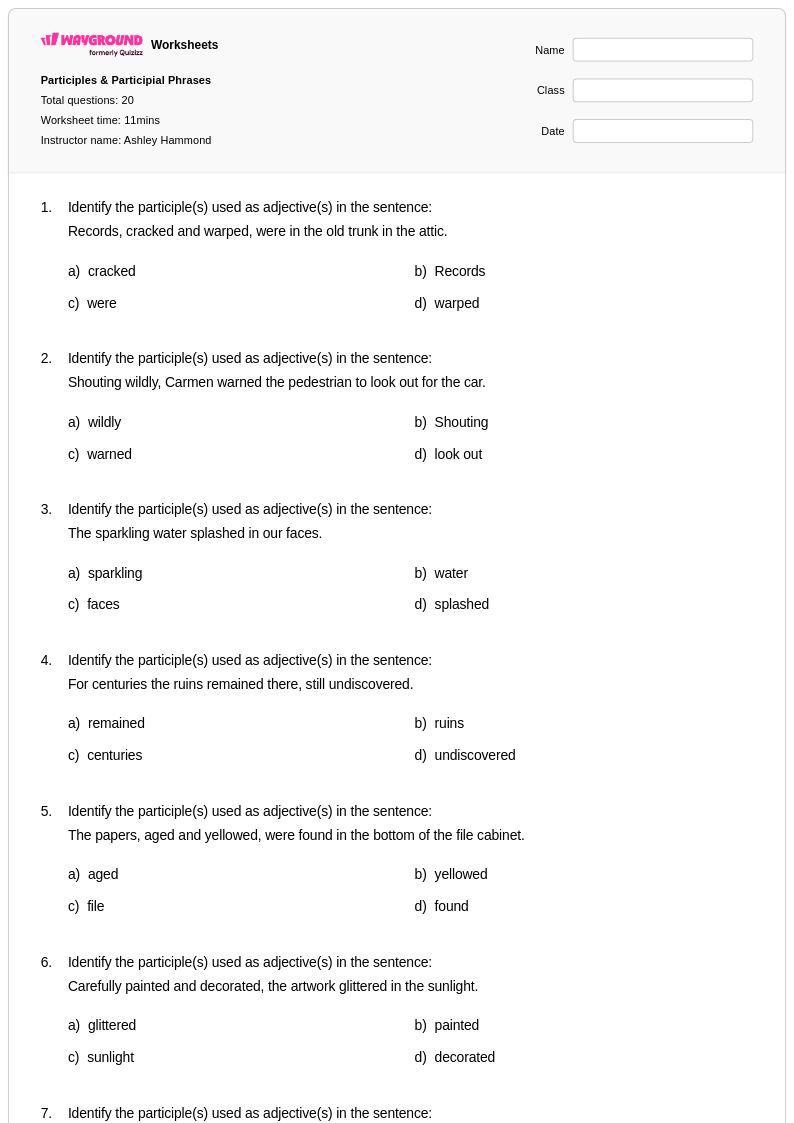
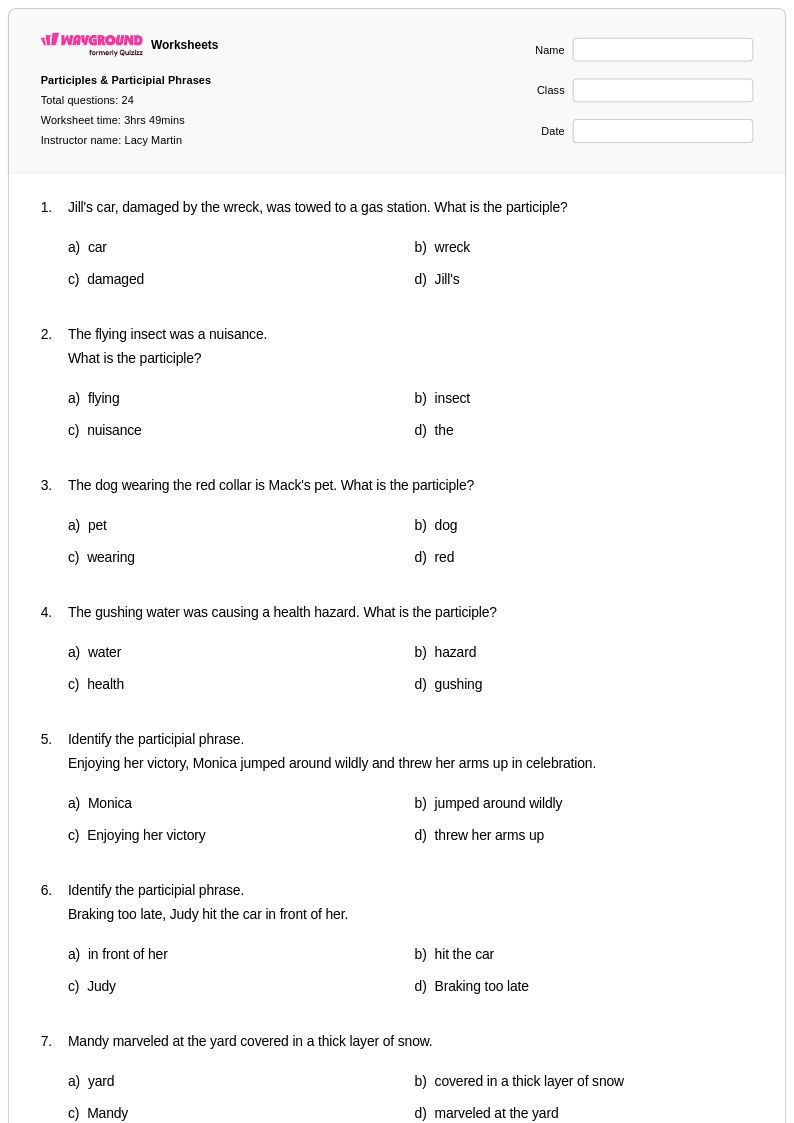
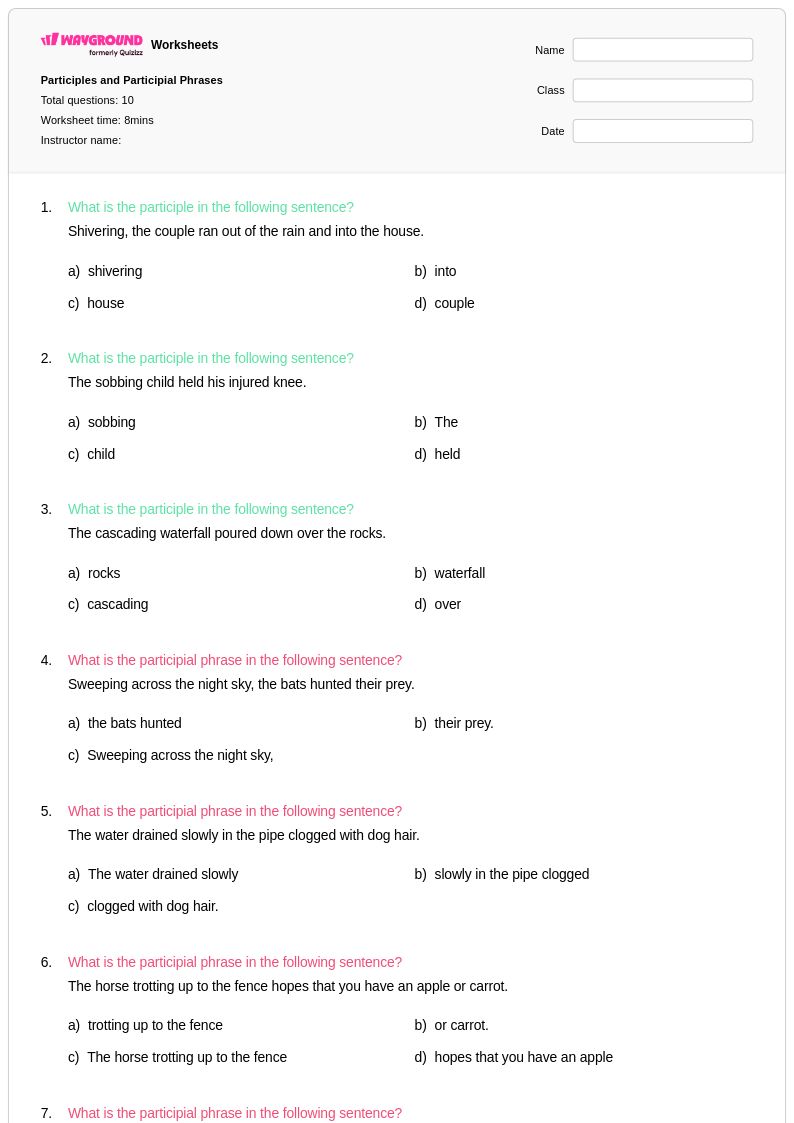
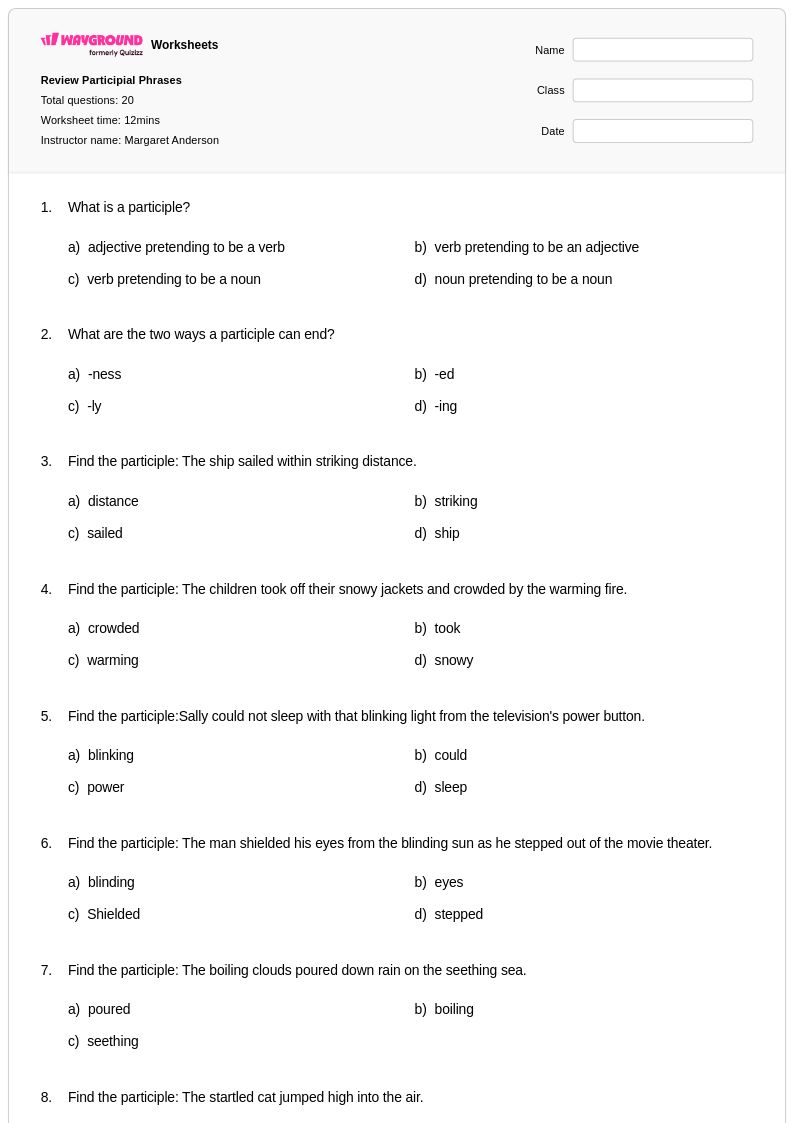
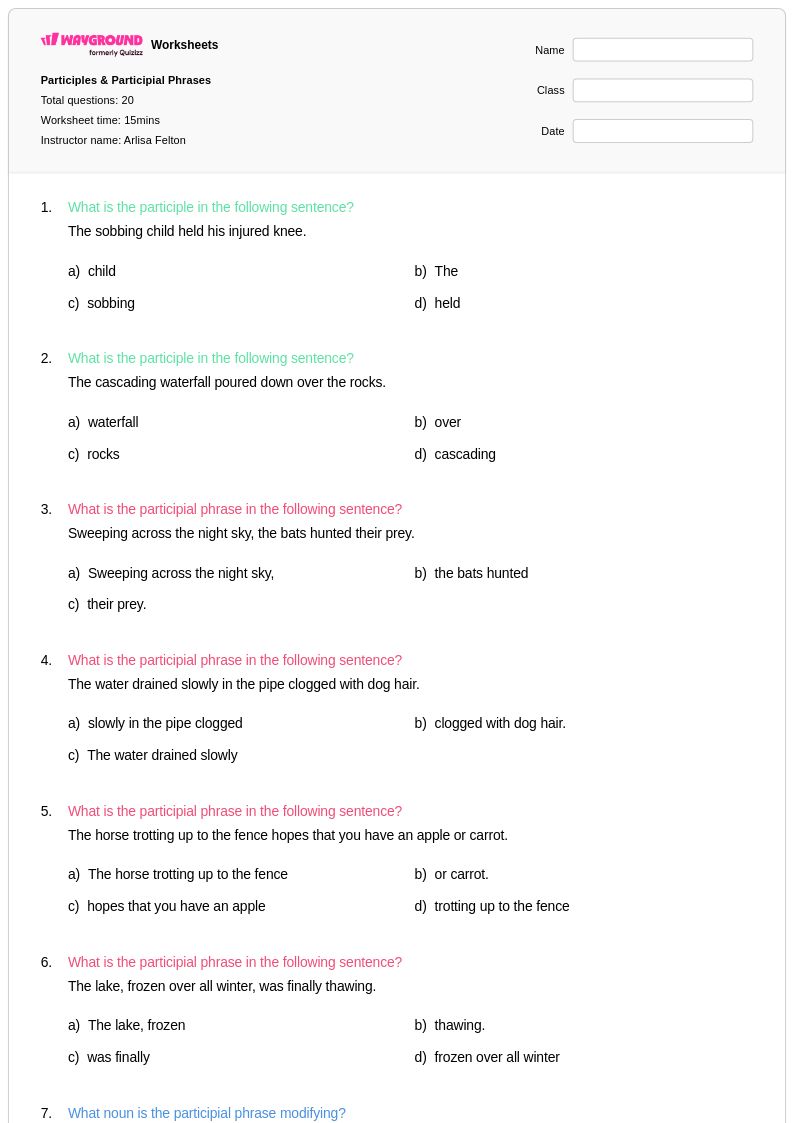
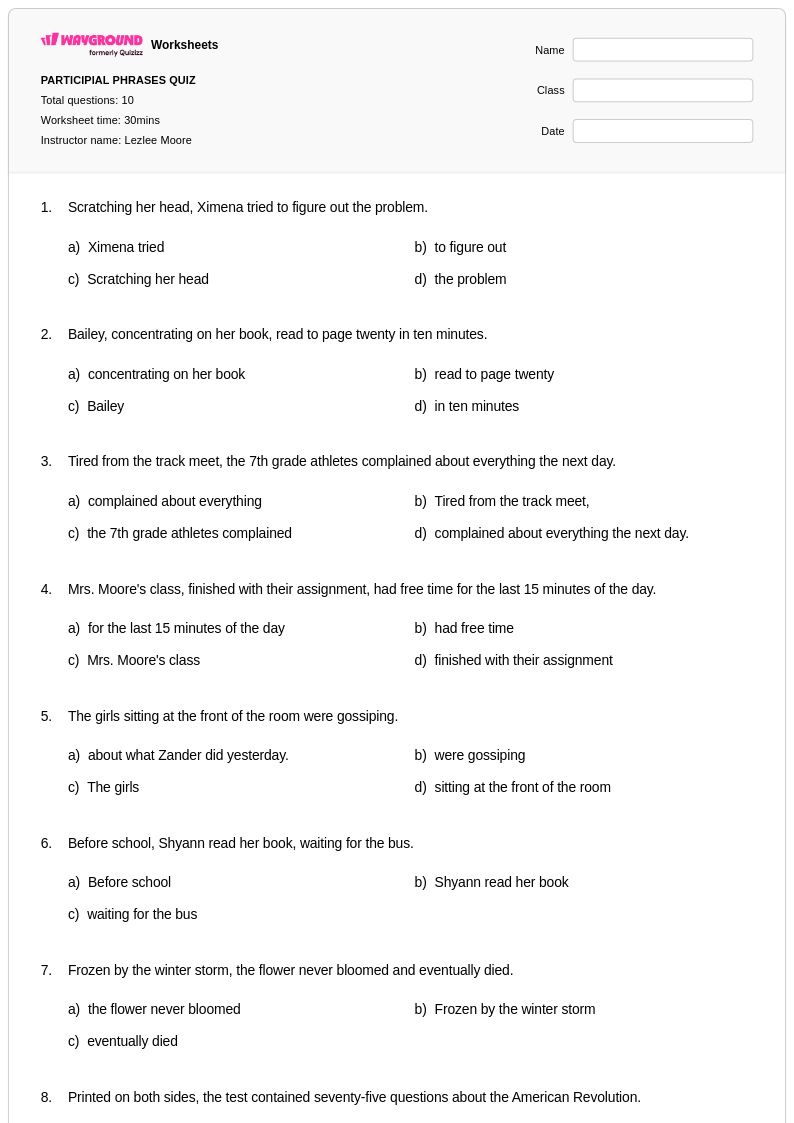
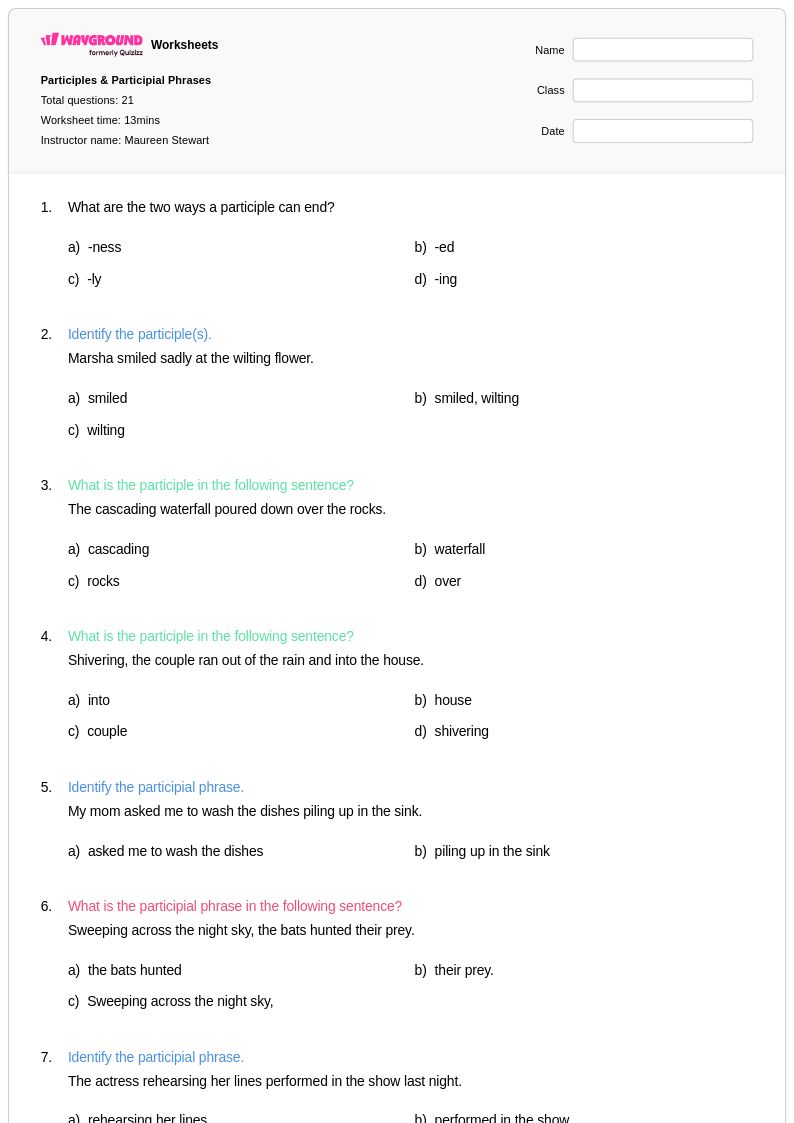
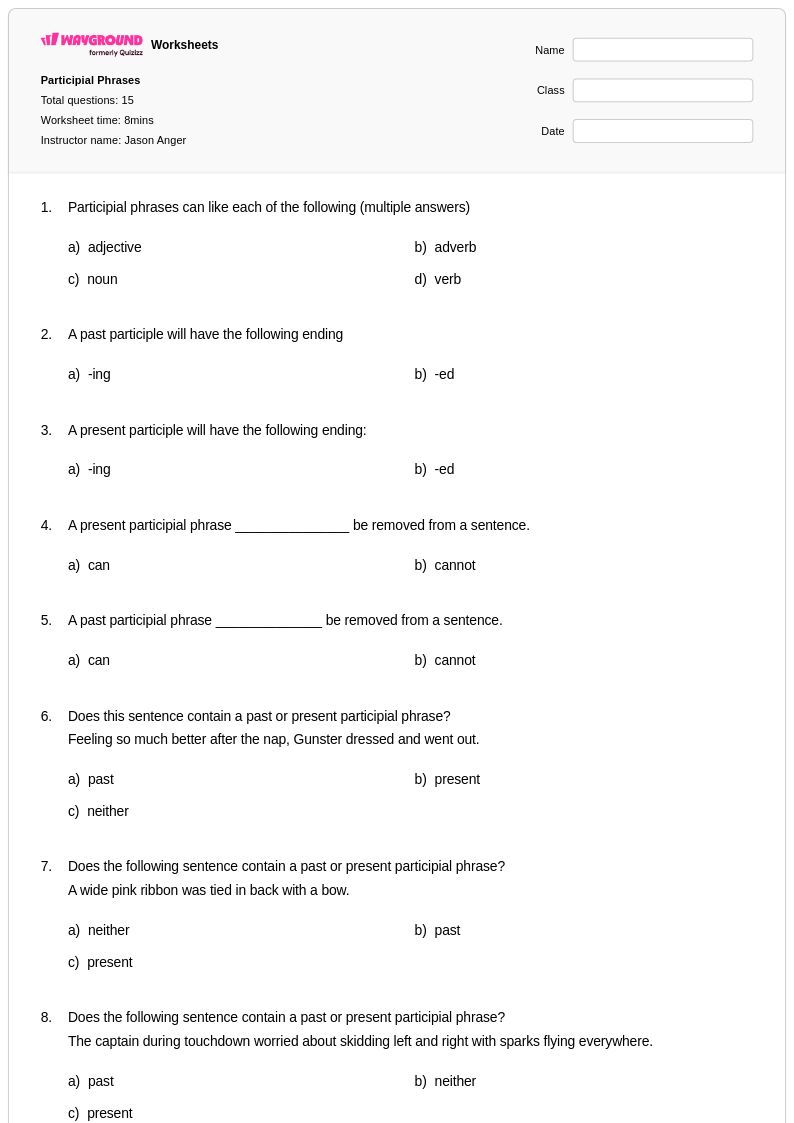
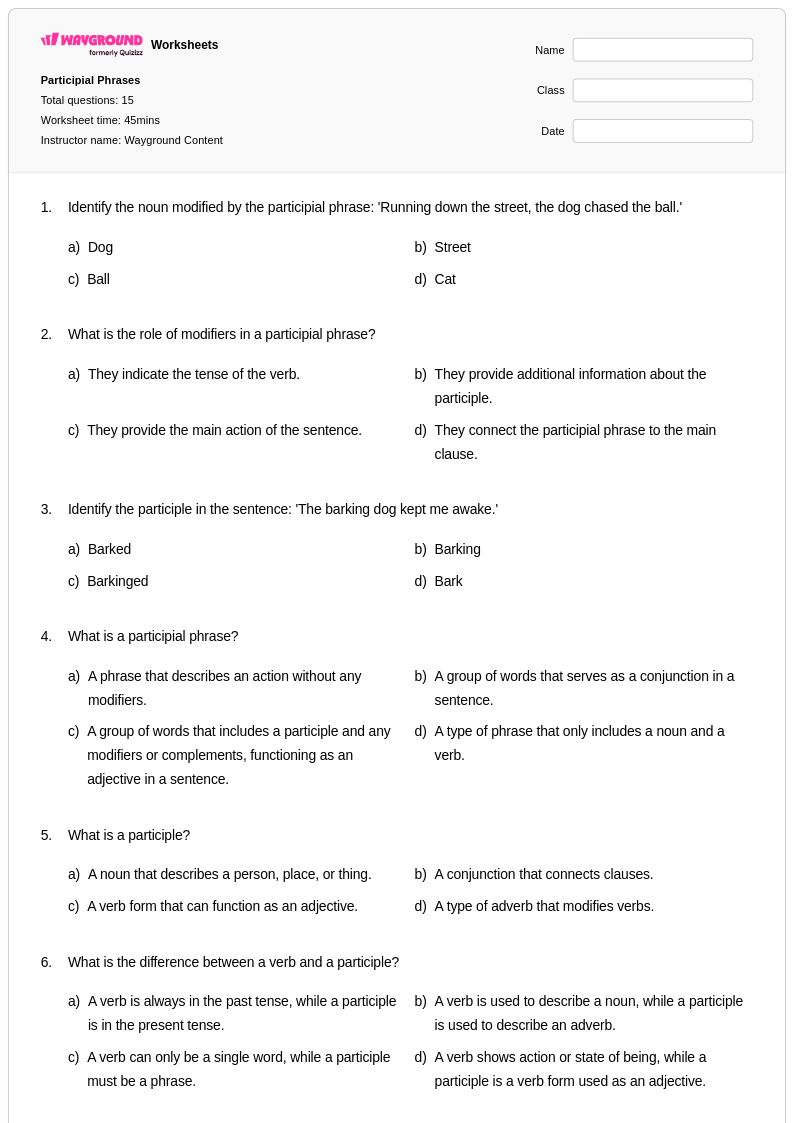
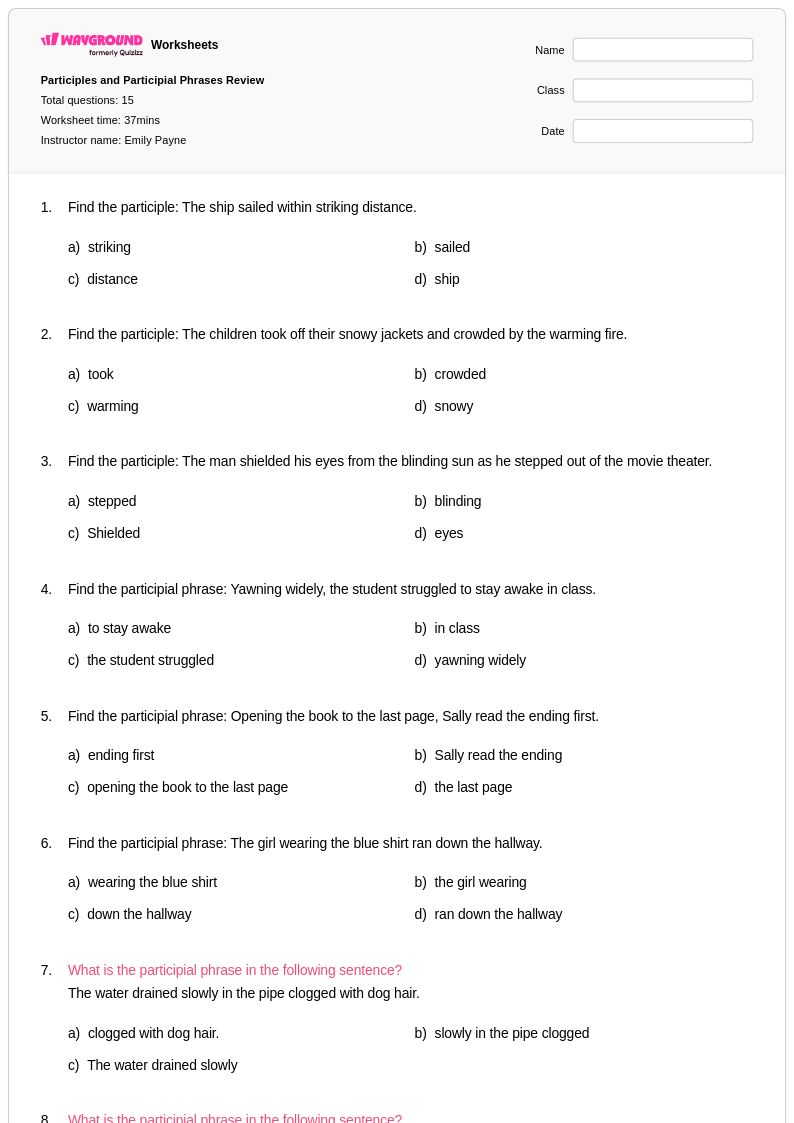
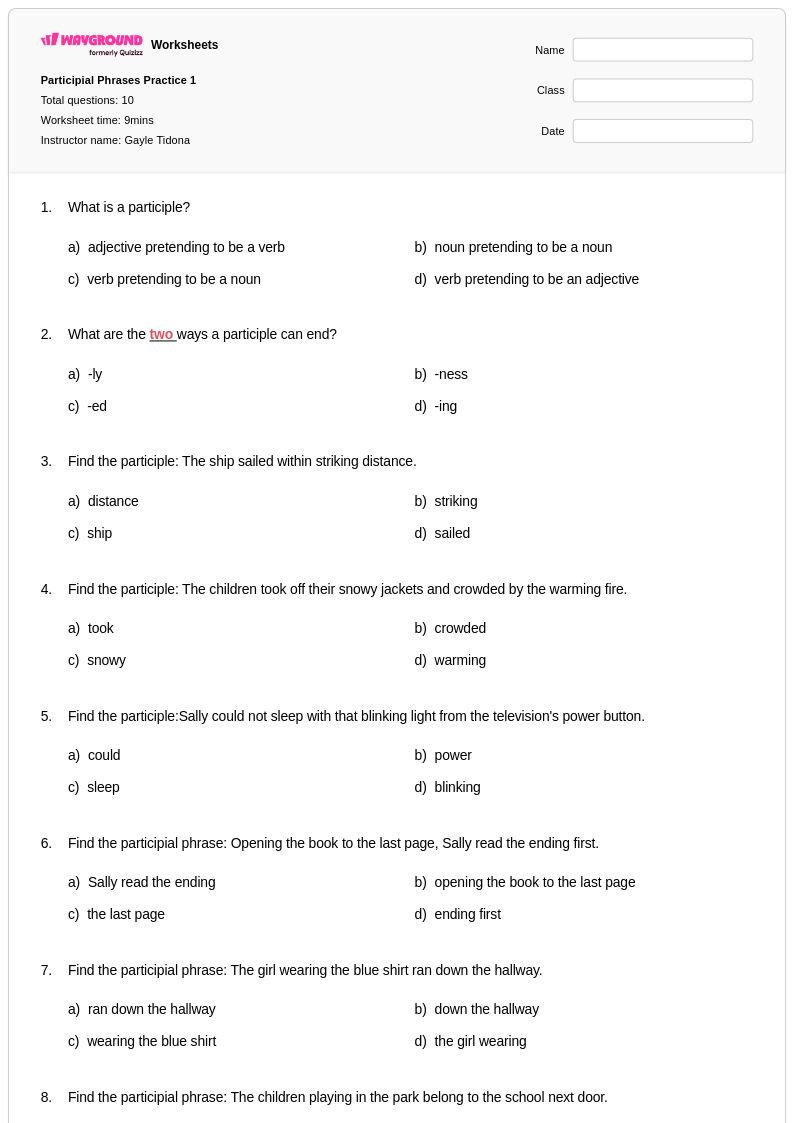
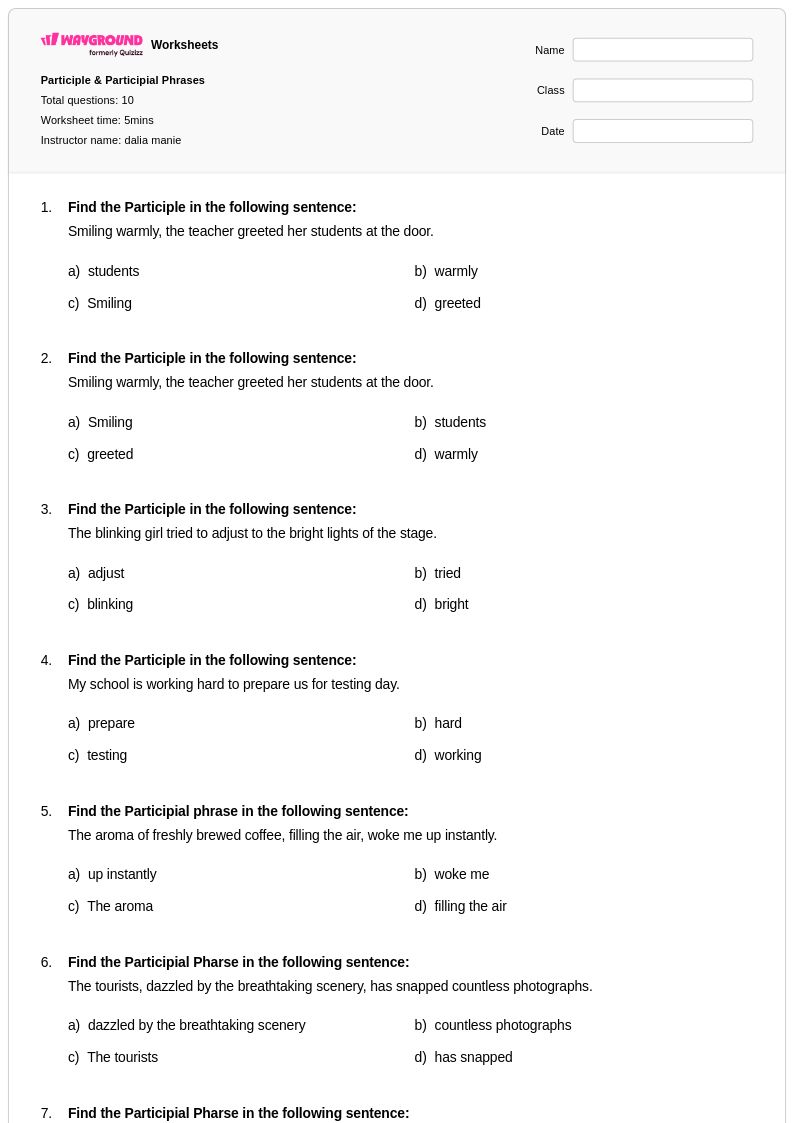
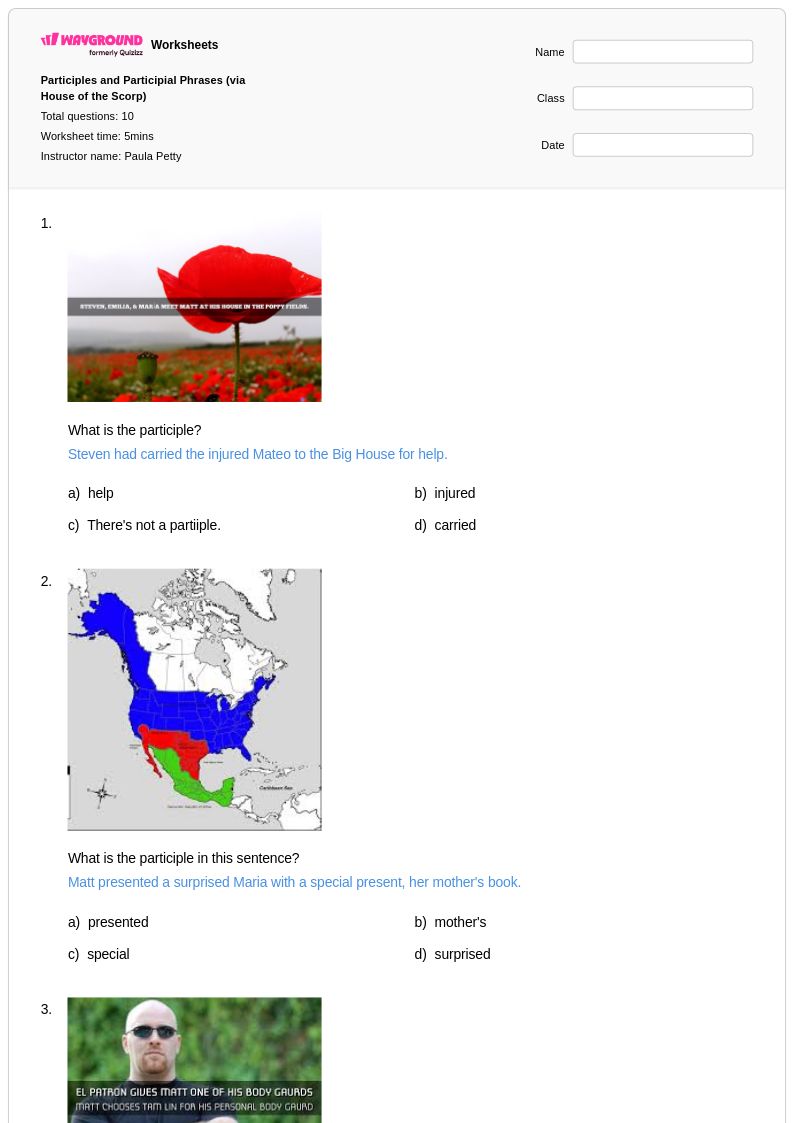
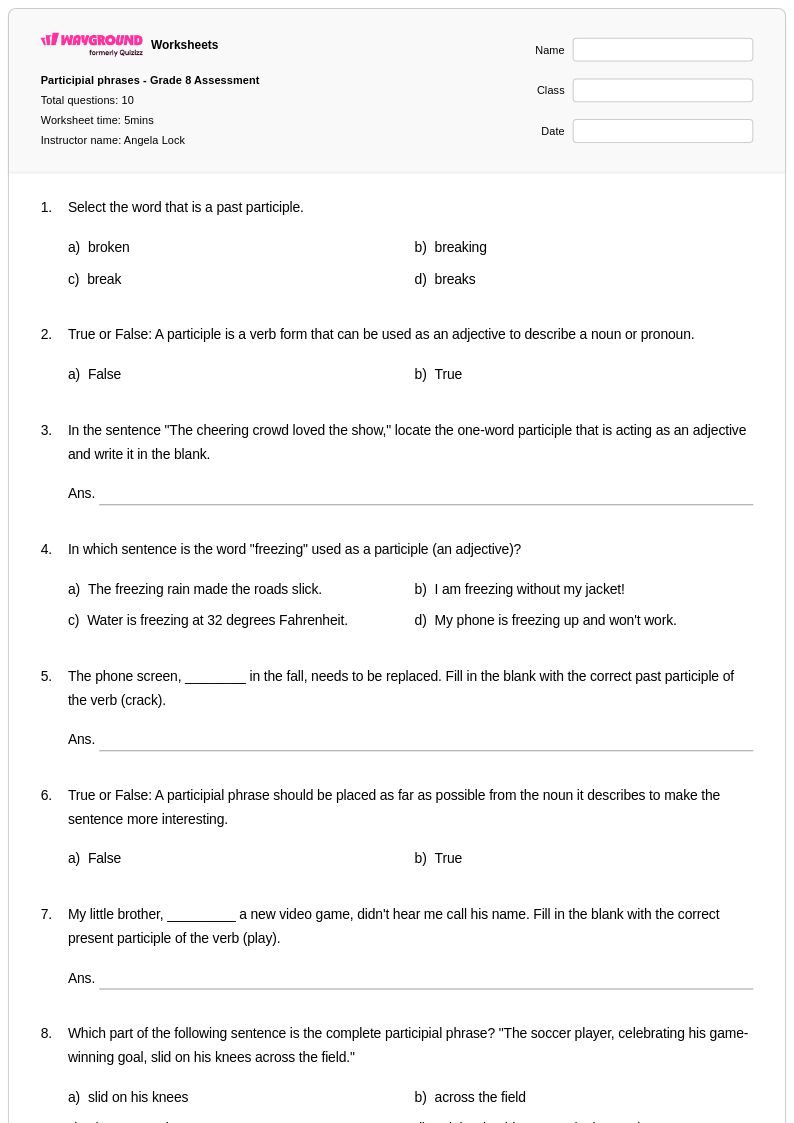
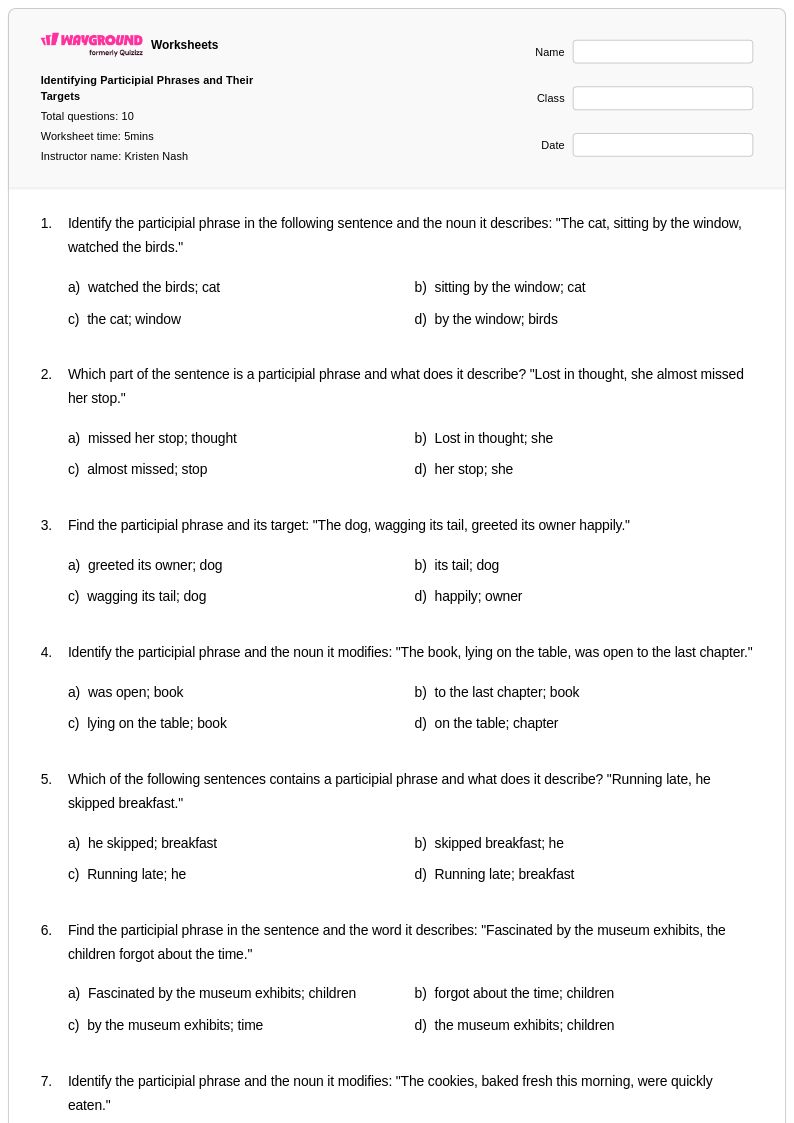
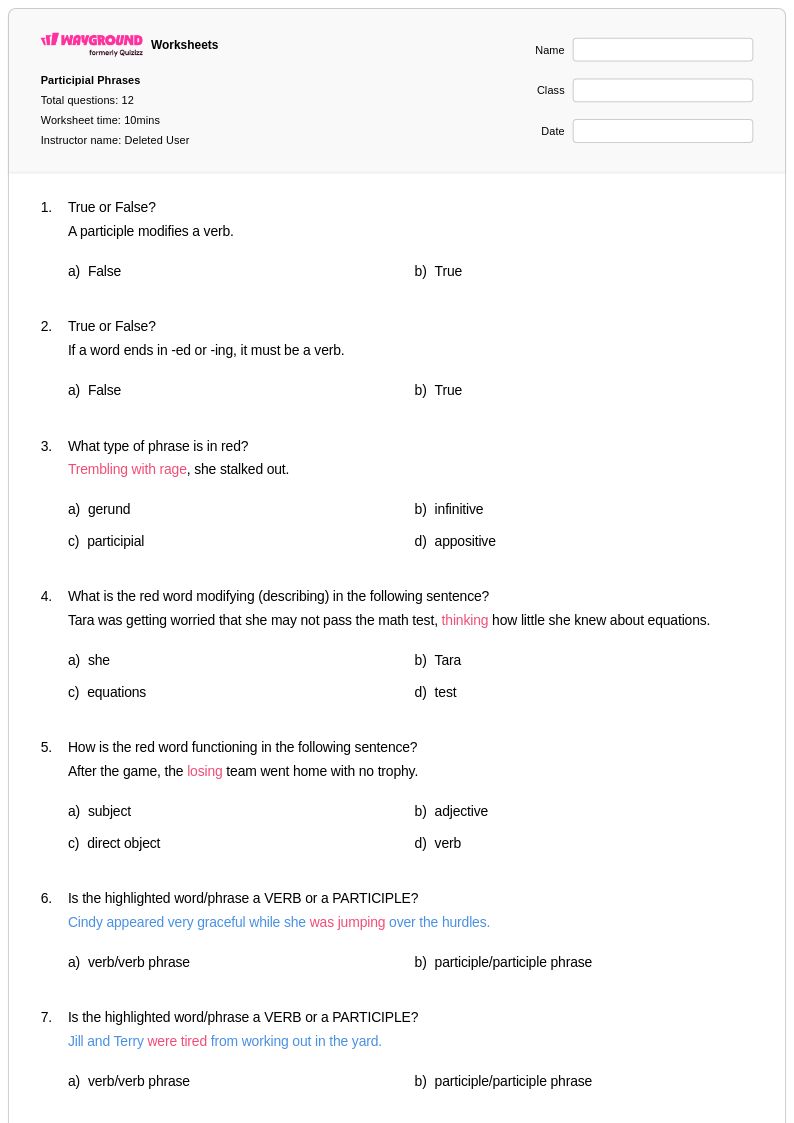
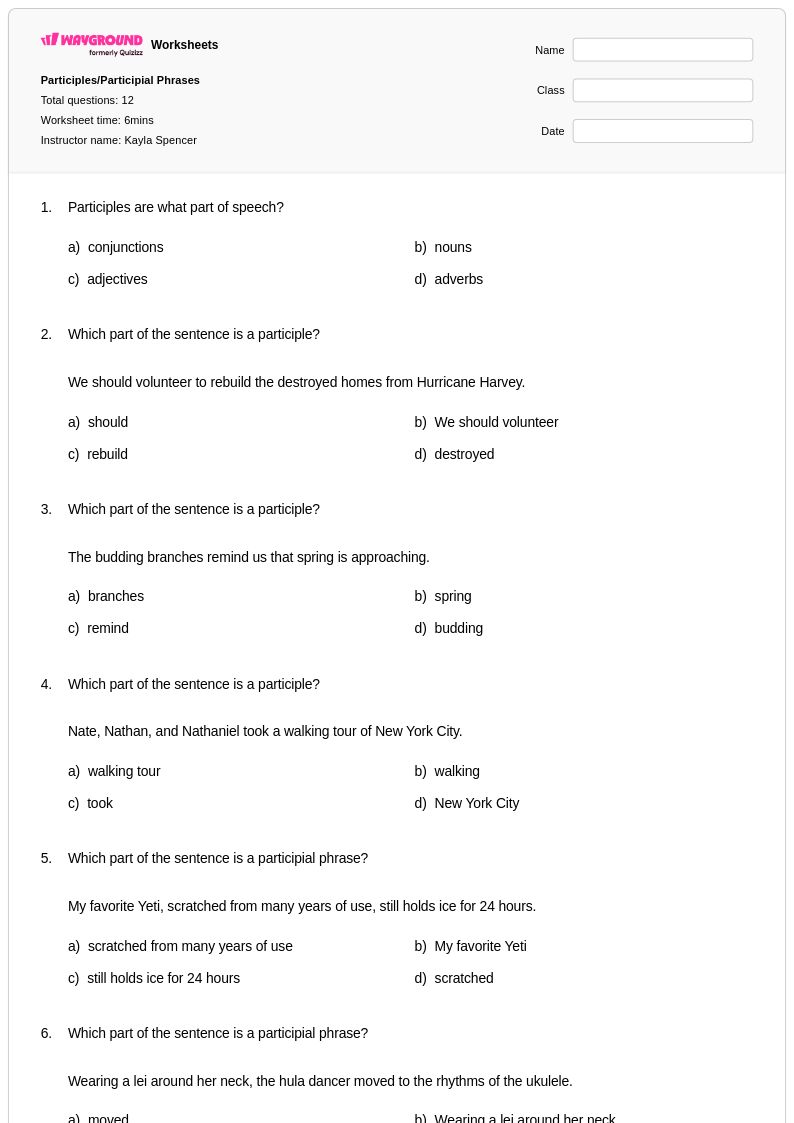
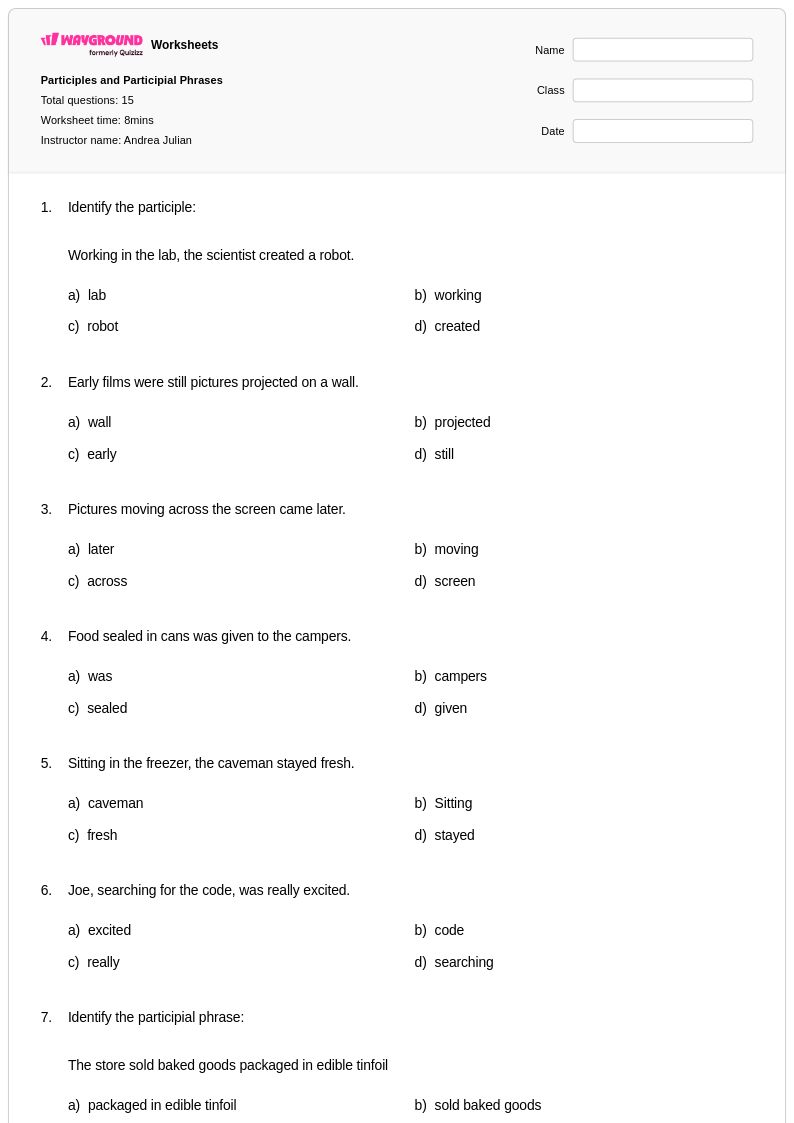
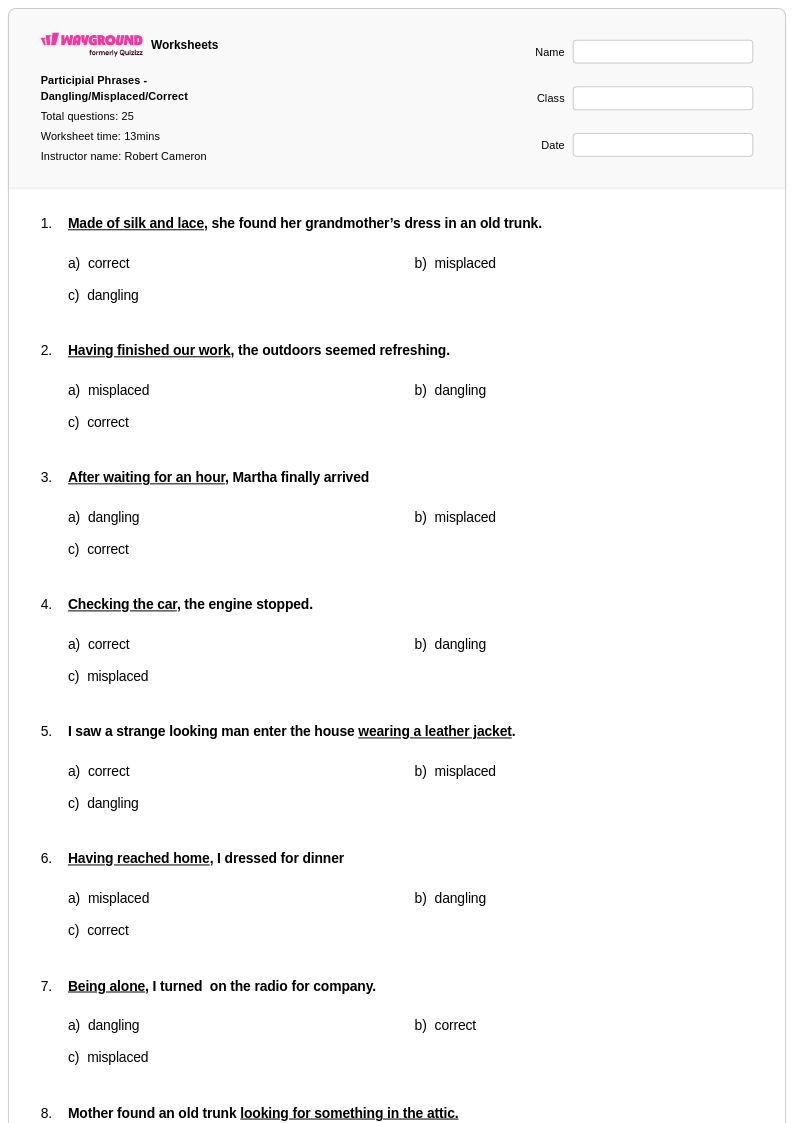
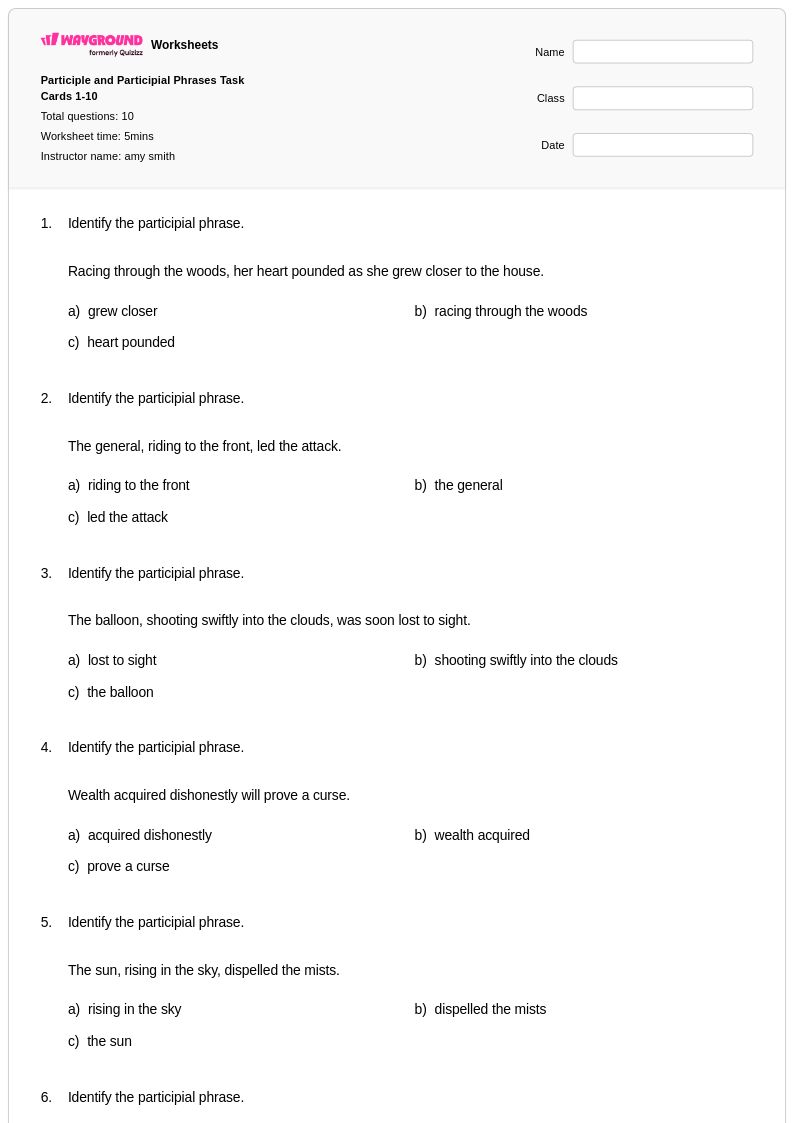
Class 8 participial phrases worksheets available through Wayground (formerly Quizizz) provide comprehensive practice for students learning to identify, construct, and properly punctuate these essential grammatical structures. These expertly designed resources strengthen students' understanding of how participial phrases function as adjectives to modify nouns and pronouns, while helping them master the critical punctuation rules that govern these constructions. The worksheets feature diverse practice problems that guide students through recognizing present and past participles, understanding dangling and misplaced modifiers, and incorporating participial phrases effectively into their own writing. Each worksheet includes a detailed answer key to support independent learning and self-assessment, with free printable pdf formats making them easily accessible for classroom use or homework assignments.
Wayground (formerly Quizizz) empowers educators with an extensive collection of teacher-created participial phrase worksheets that streamline lesson planning and provide targeted grammar instruction for Class 8 students. The platform's robust search and filtering capabilities allow teachers to quickly locate resources aligned with specific standards and learning objectives, while built-in differentiation tools enable customization for diverse student needs and skill levels. These flexible resources are available in both digital and printable formats, including downloadable pdf versions, making them ideal for various teaching environments and learning preferences. Teachers can effectively use these comprehensive worksheet collections for initial skill introduction, targeted remediation for struggling learners, enrichment activities for advanced students, and ongoing practice to reinforce proper participial phrase usage and punctuation mastery.
FAQs
How do I teach participial phrases to students who struggle with grammar?
Start by ensuring students understand what a participle is before introducing the full phrase. Use mentor sentences from familiar texts to show how participial phrases function as adjectives, modifying a nearby noun or pronoun. Have students physically highlight the participial phrase and draw an arrow to the word it modifies — this visual step makes the grammatical relationship concrete before students attempt to write their own.
What exercises help students practice identifying and constructing participial phrases?
Effective practice exercises include sentence-level identification tasks where students locate and label participial phrases, sentence-combining activities where two short sentences are merged using a participial phrase, and error-correction tasks where students fix dangling or misplaced modifiers. Practicing participial phrases across multiple sentence positions — introductory, mid-sentence, and end-of-sentence — builds flexibility and reinforces the corresponding comma rules.
What are the most common mistakes students make with participial phrases?
The two most persistent errors are dangling modifiers and misplaced modifiers. A dangling modifier occurs when the participial phrase does not logically connect to the subject of the main clause, while a misplaced modifier occurs when the phrase is positioned too far from the noun it modifies, creating ambiguity or unintended meaning. Students also frequently omit commas after introductory participial phrases or confuse restrictive and non-restrictive usage, leading to incorrect punctuation.
How do I help students understand the difference between restrictive and non-restrictive participial phrases?
Teach students the removal test: if taking out the participial phrase changes the essential meaning of the sentence or makes the subject unidentifiable, the phrase is restrictive and takes no comma. If the phrase simply adds extra information and can be removed without confusion, it is non-restrictive and requires a comma. Using paired sentence examples that contrast both types side by side is the most effective way to make this distinction visible.
How do I use Wayground's participial phrases worksheets in my classroom?
Wayground's participial phrases worksheets are available as printable PDFs for traditional classroom use and in digital formats for technology-integrated learning environments, so they work equally well as in-class practice, homework, or assessment prep. Teachers can also host the worksheets as a quiz directly on Wayground, allowing students to complete the exercises digitally with immediate feedback. The included answer keys support both teacher-led review and independent student practice.
How do I differentiate participial phrase instruction for students at different skill levels?
For foundational learners, focus on identifying present and past participial phrases in simple sentences before introducing comma rules or modifier errors. Advanced learners benefit from sentence-revision tasks that require them to embed participial phrases into complex writing, as well as exercises that analyze published prose. On Wayground, teachers can apply accommodations such as reduced answer choices or read-aloud support to individual students, allowing the same worksheet to function across multiple proficiency levels without separate materials.