Free Printable Parts of Speech Worksheets for Class 4
Enhance Class 4 students' understanding of parts of speech with Wayground's comprehensive collection of free worksheets, printables, and practice problems that include detailed answer keys to master nouns, verbs, adjectives, and more.
Explore printable Parts of Speech worksheets for Class 4
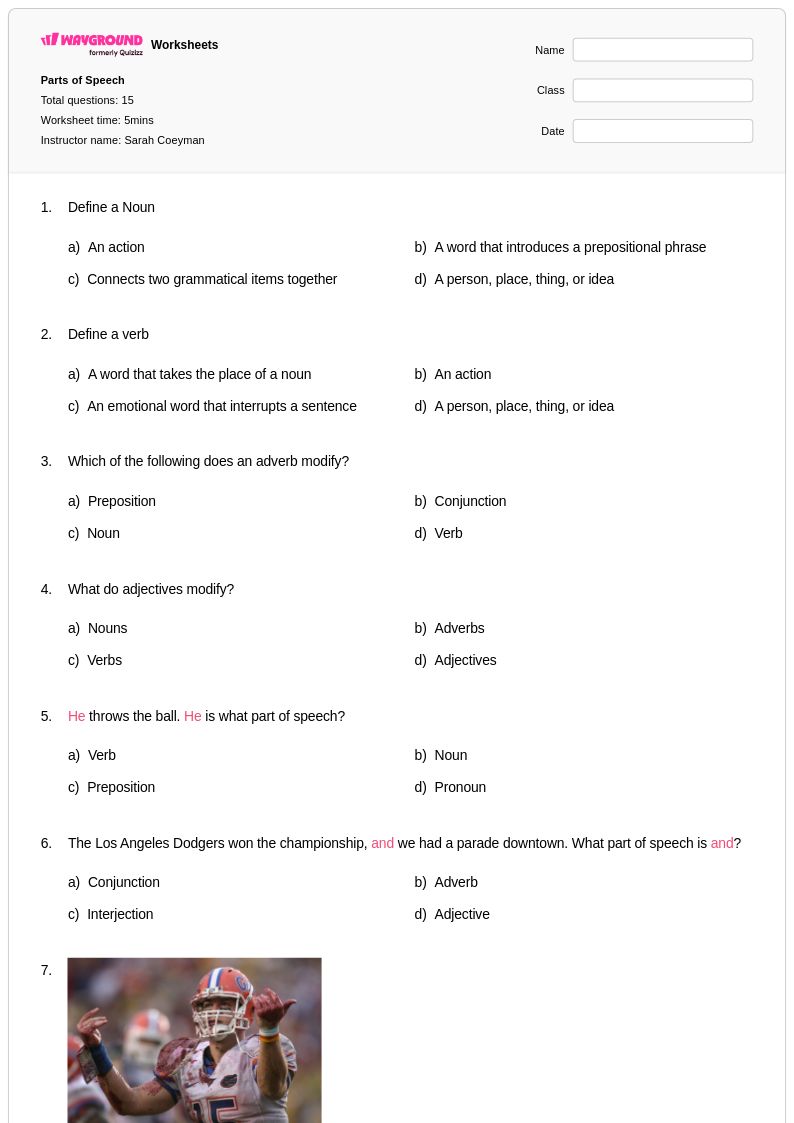
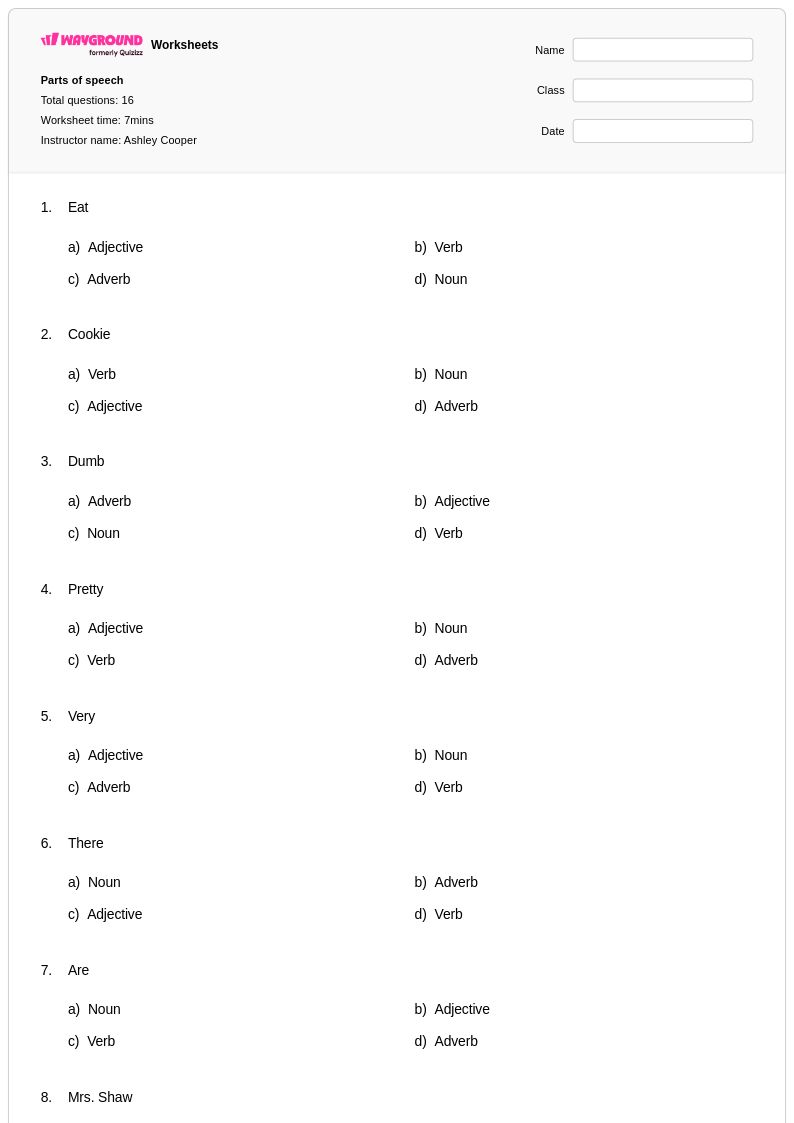
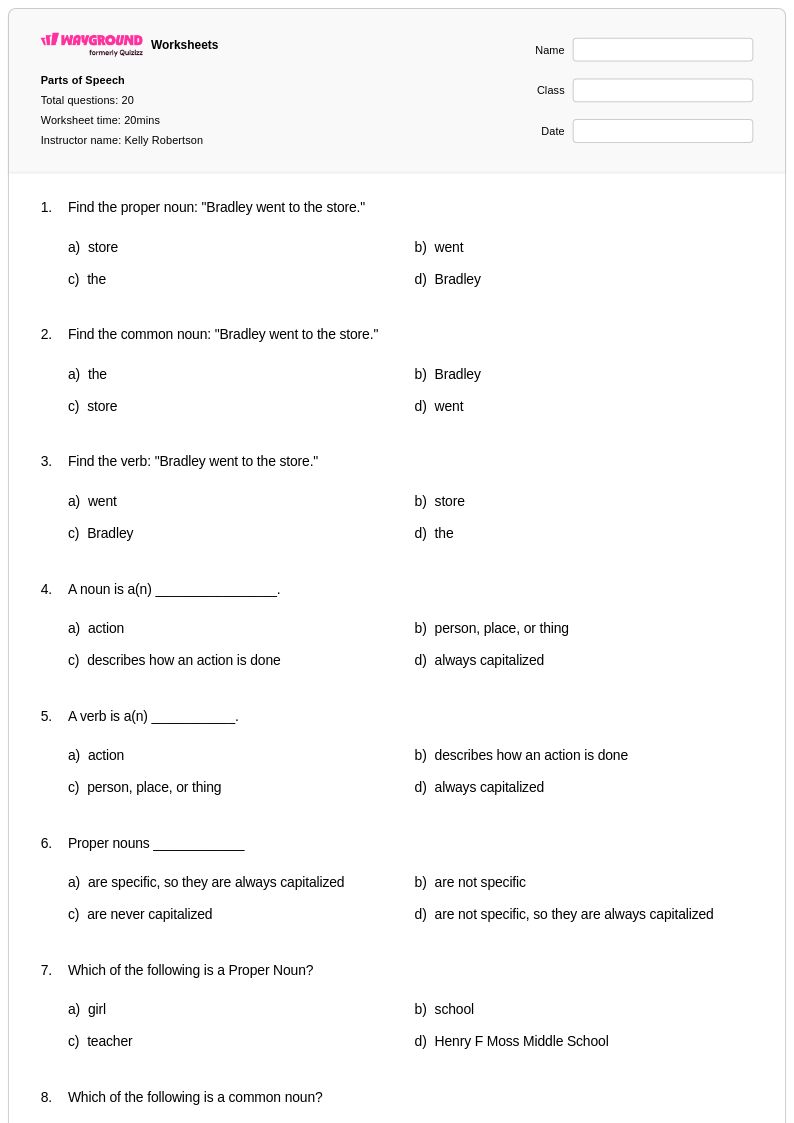
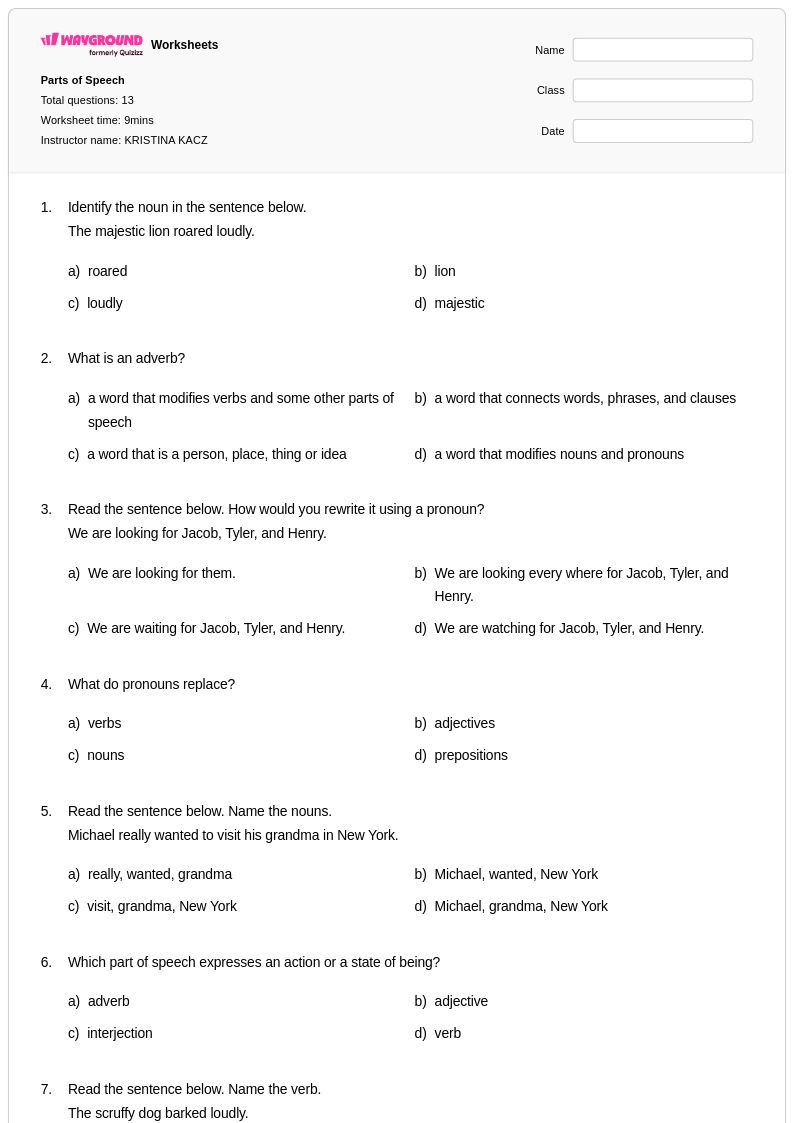
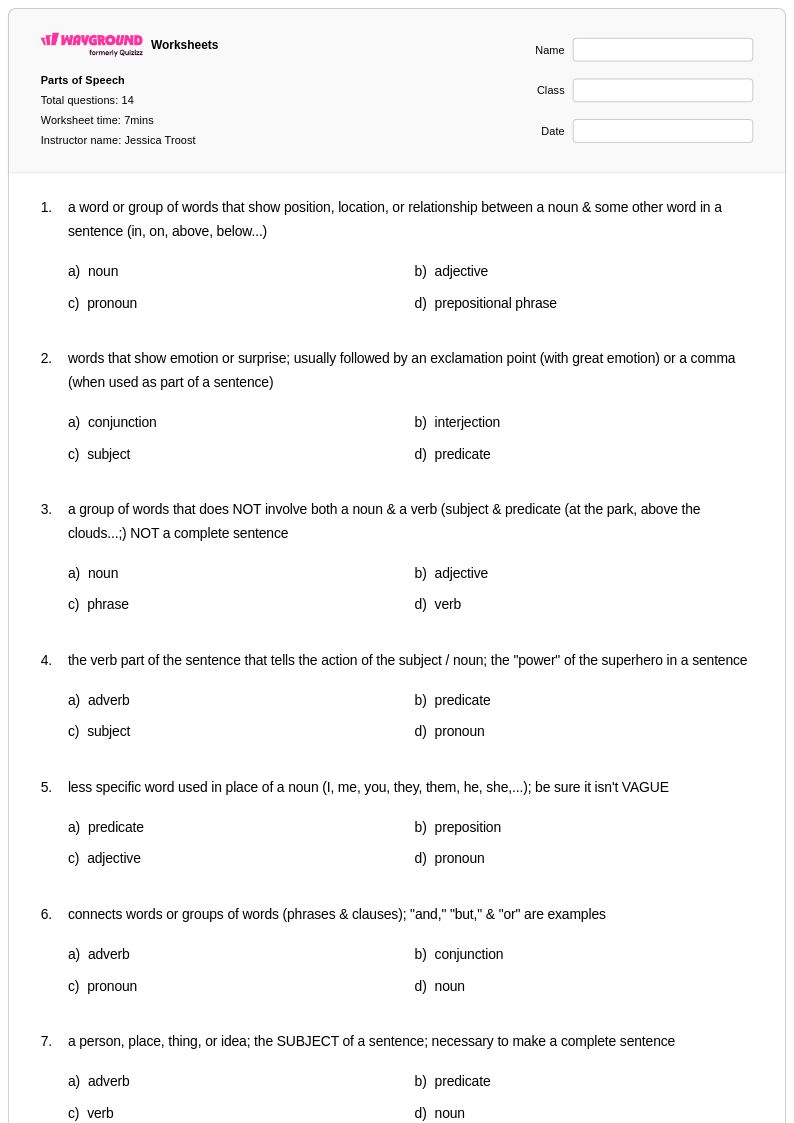
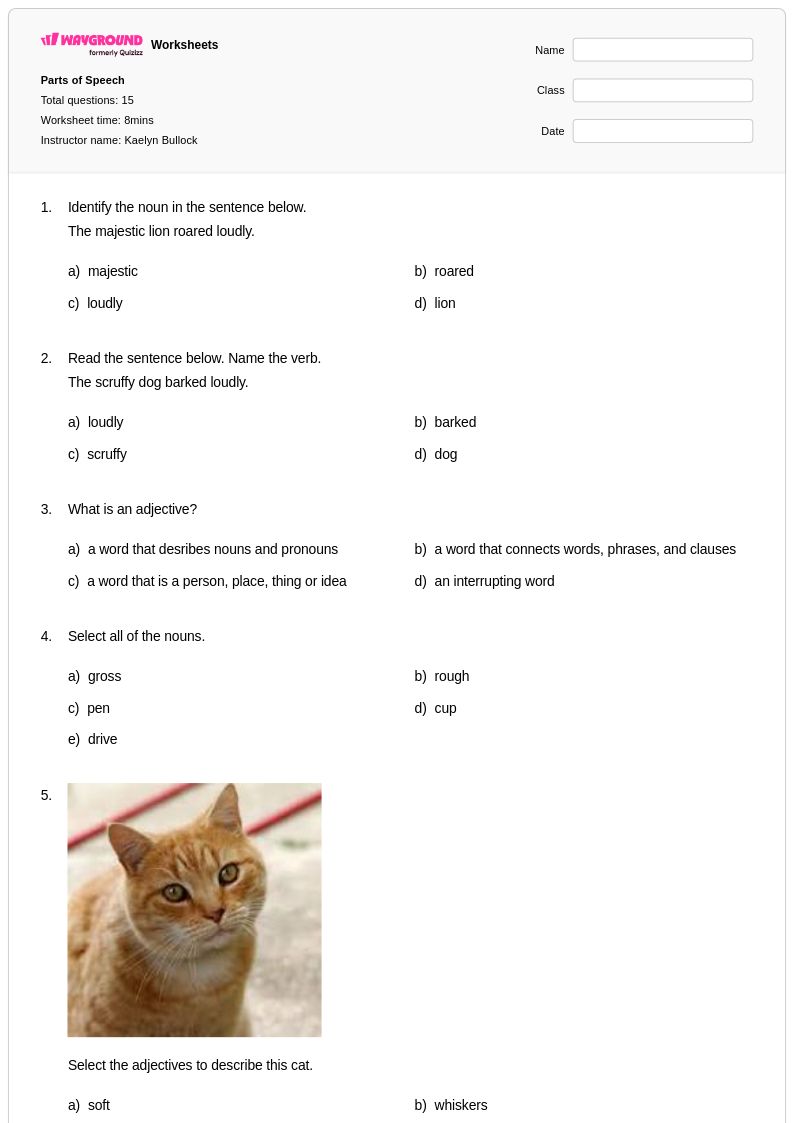
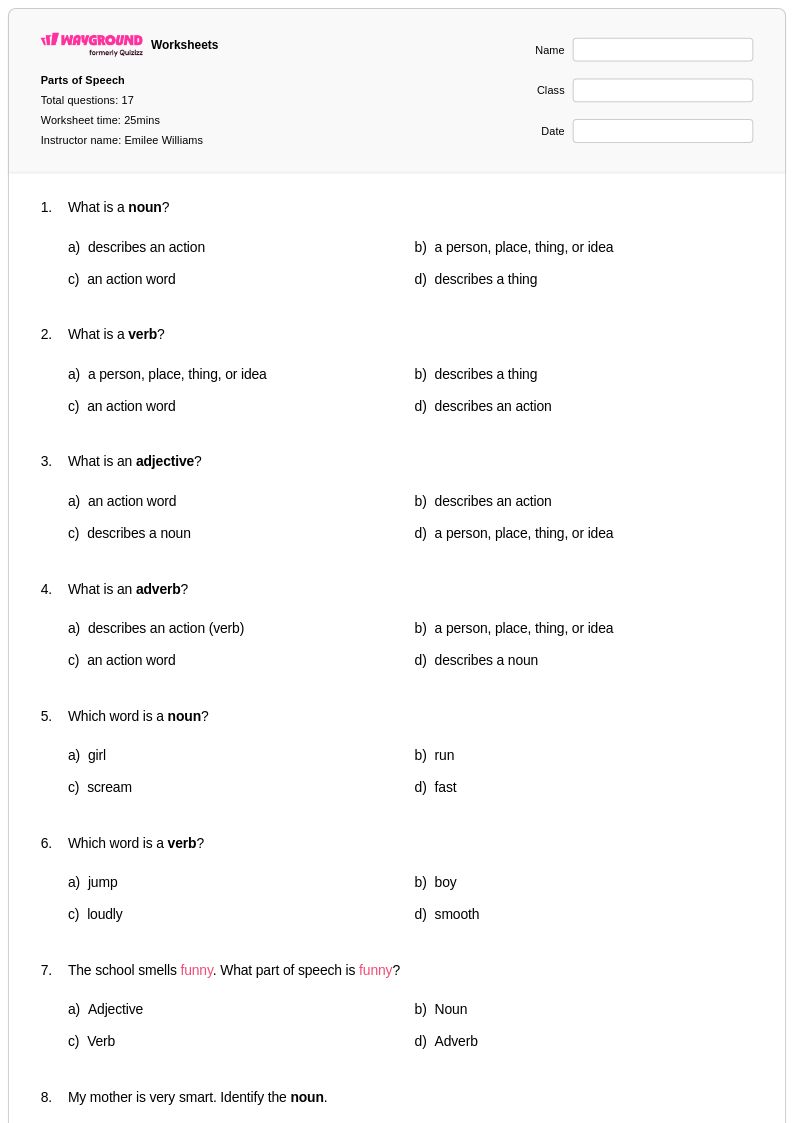
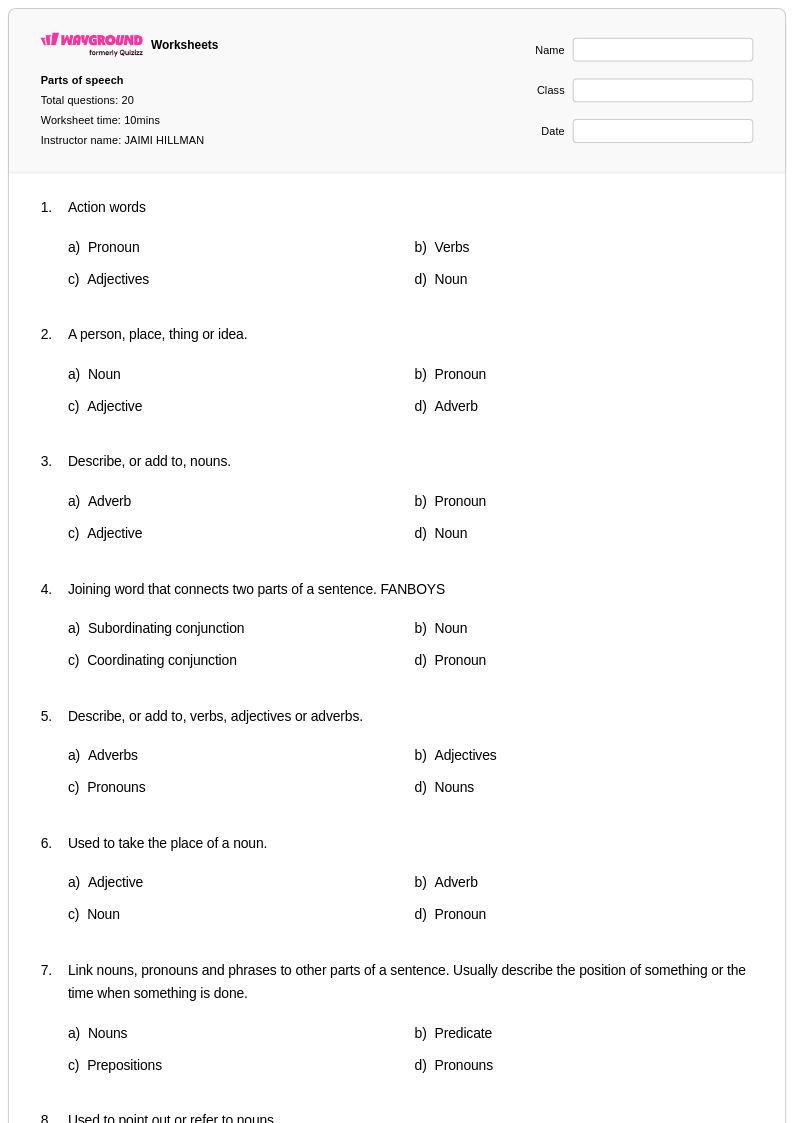
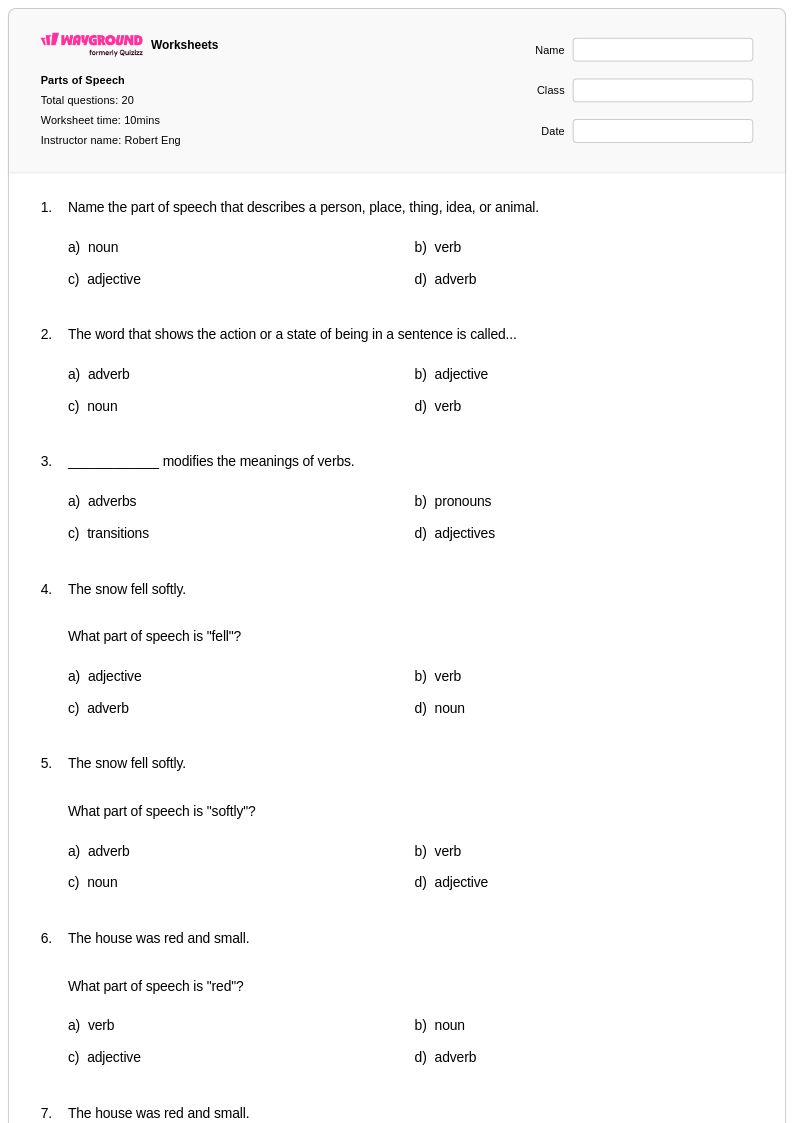
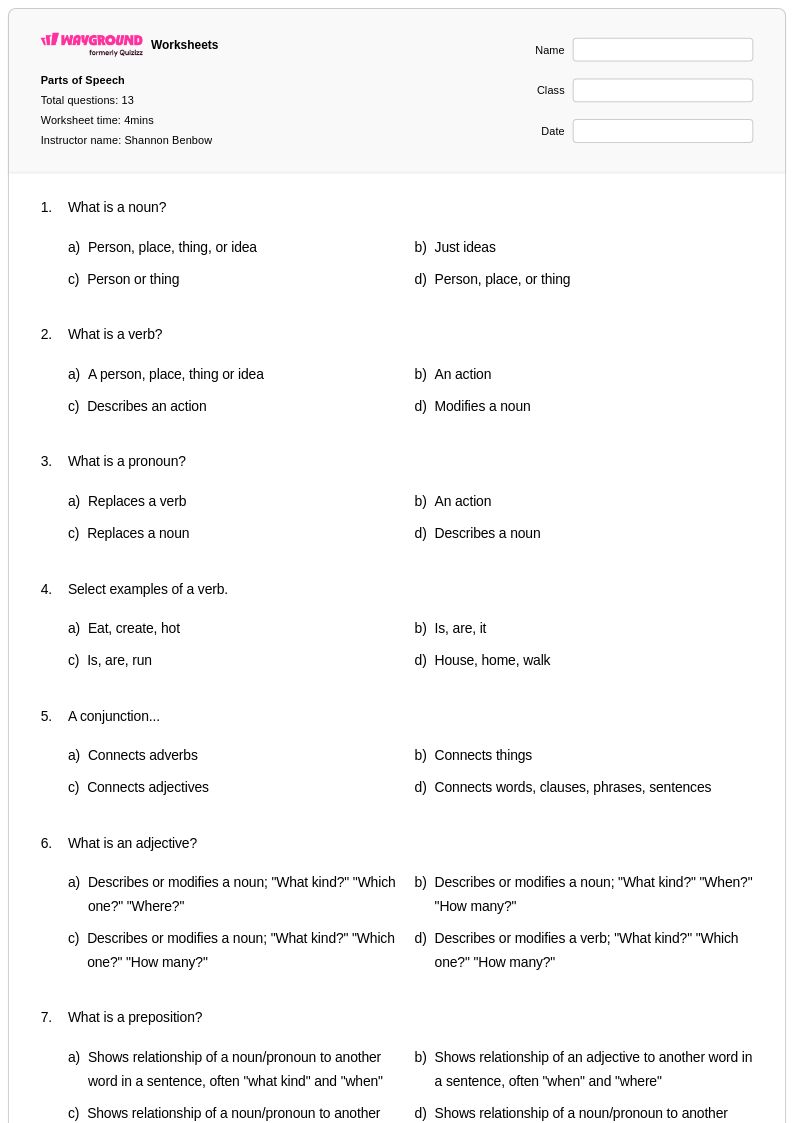
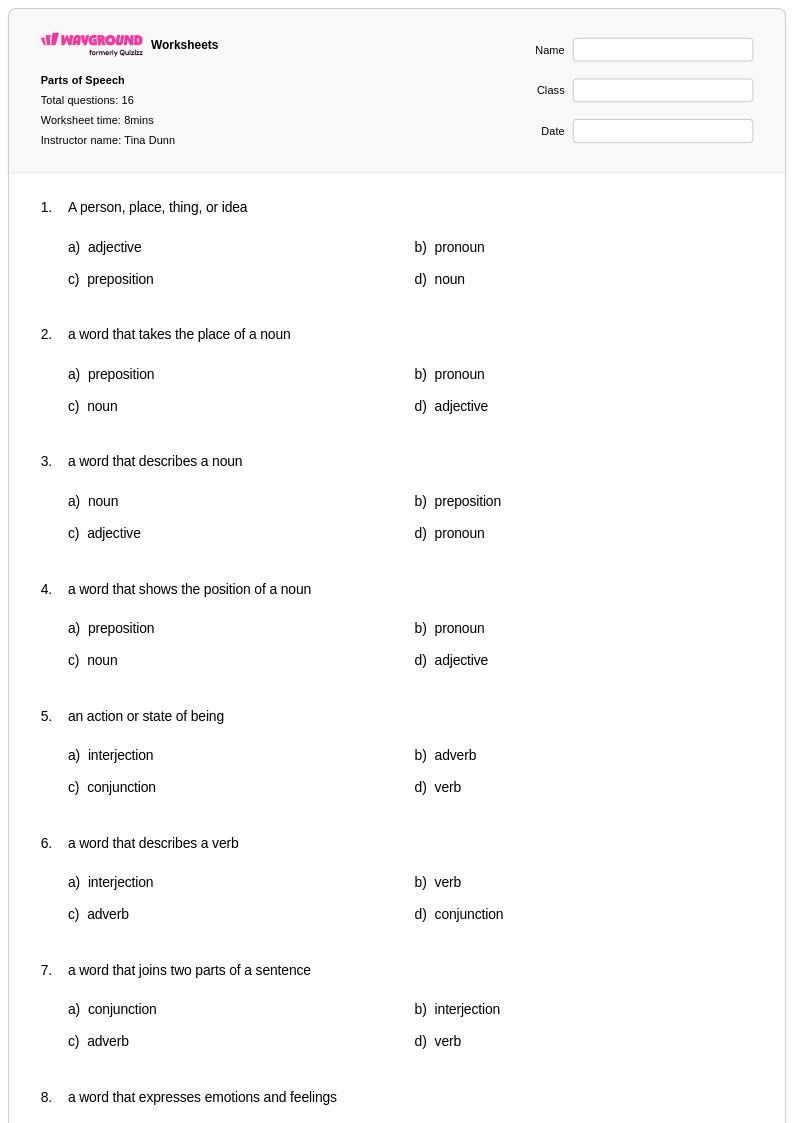
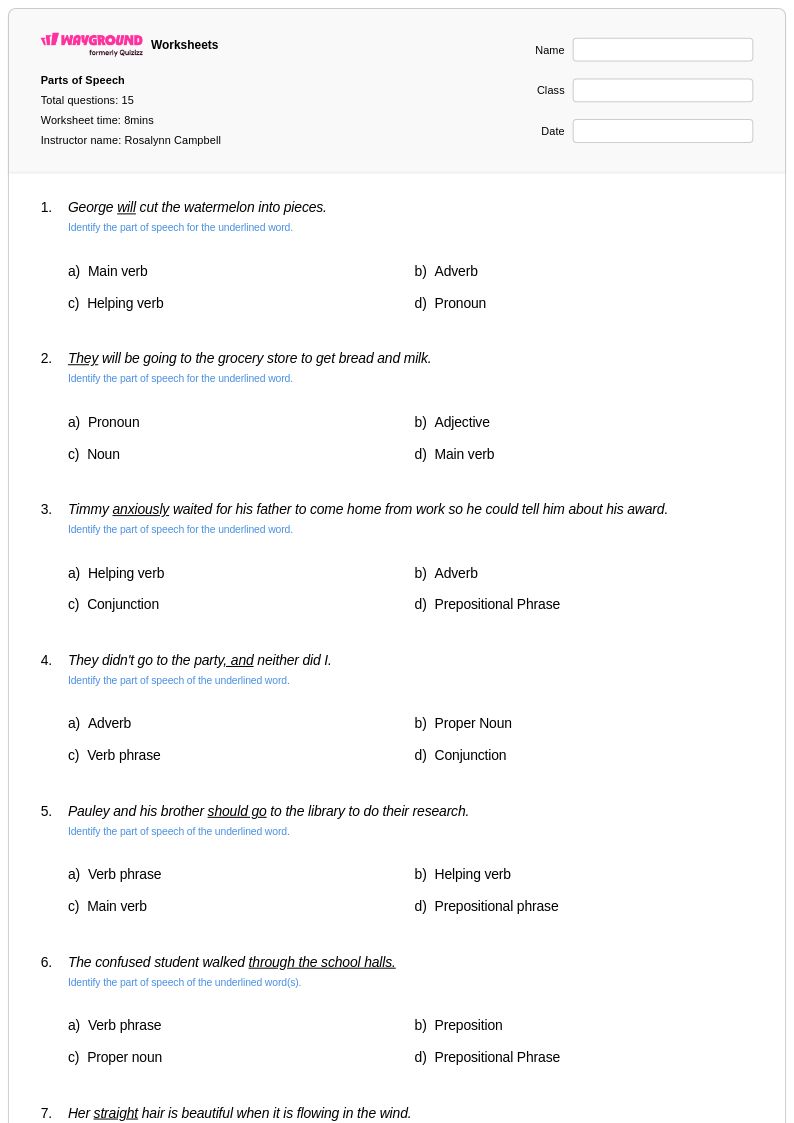
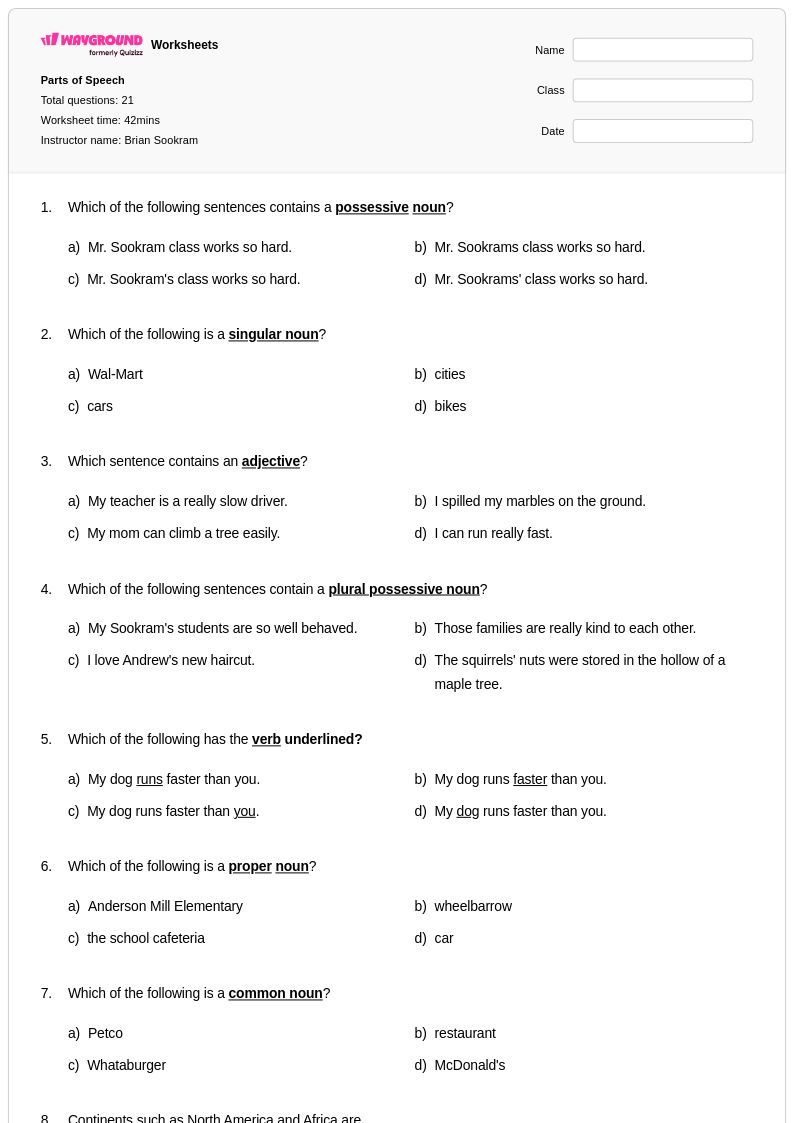
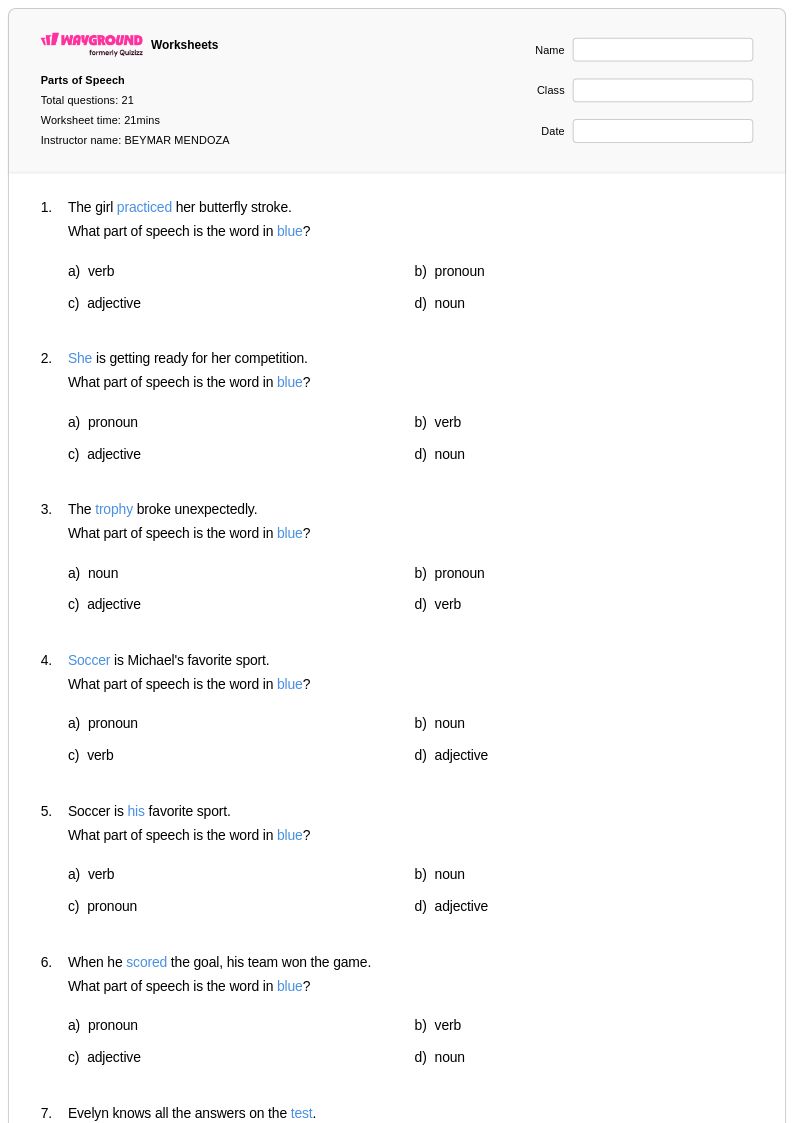
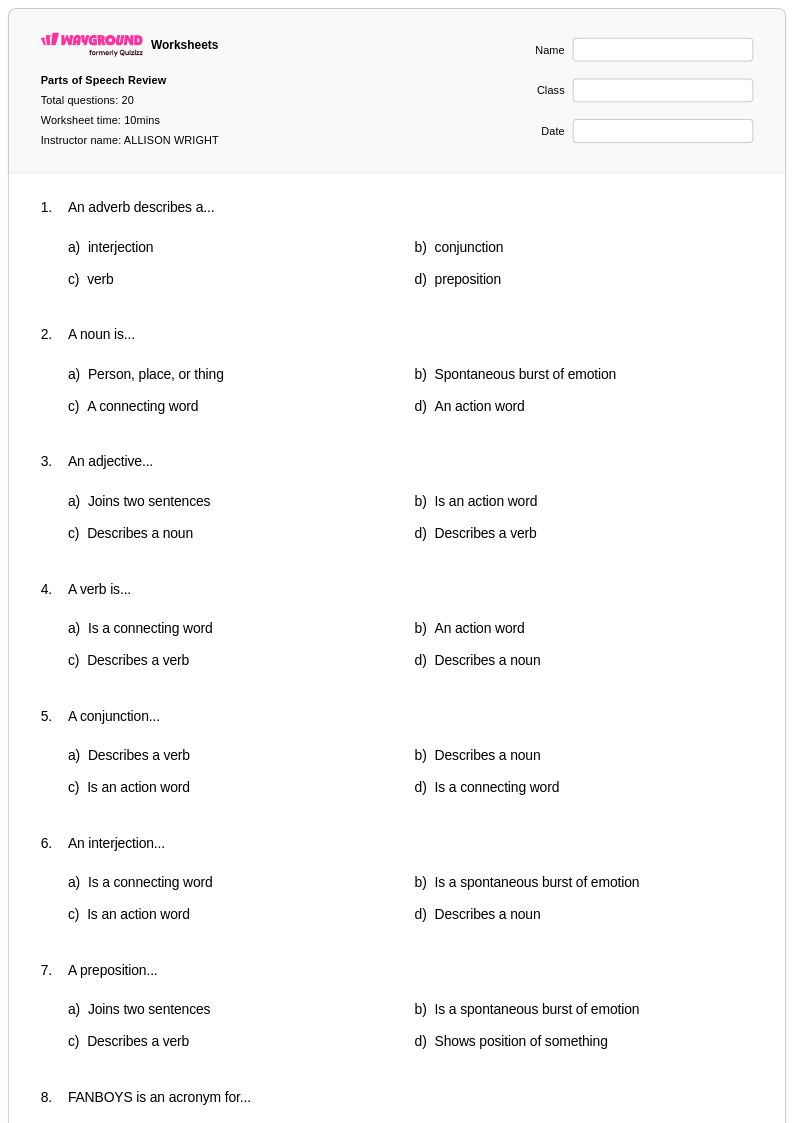
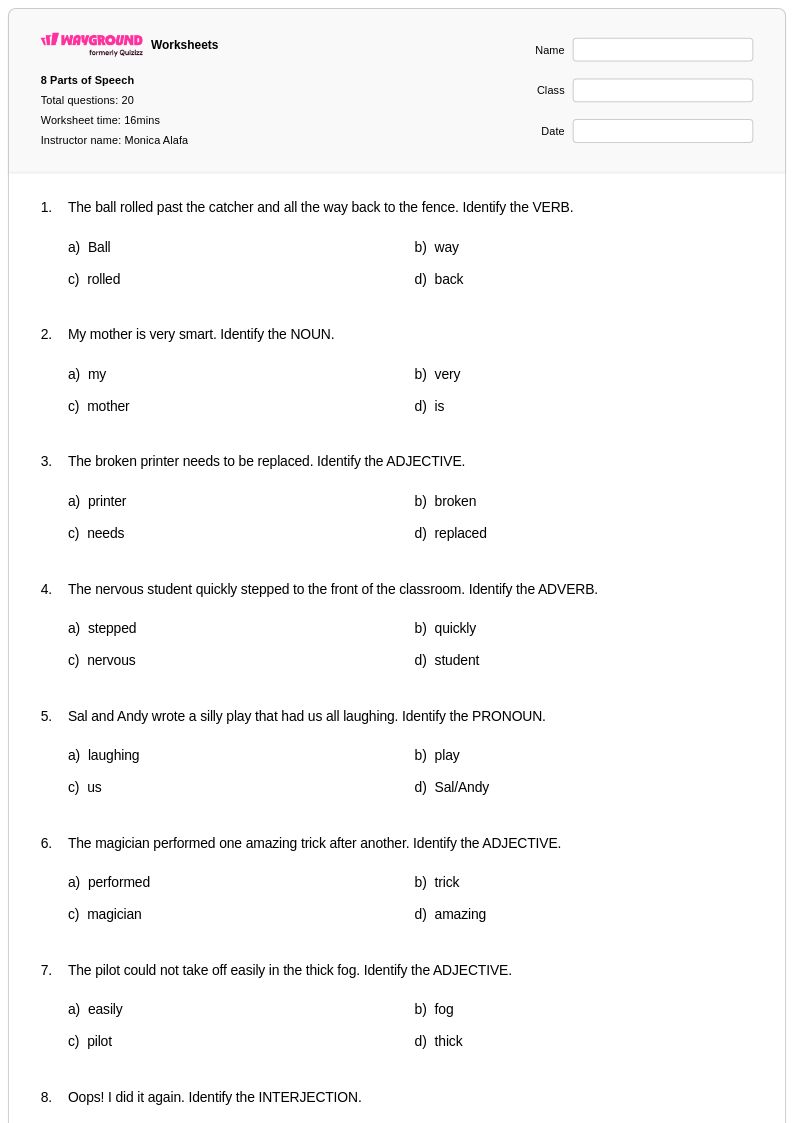
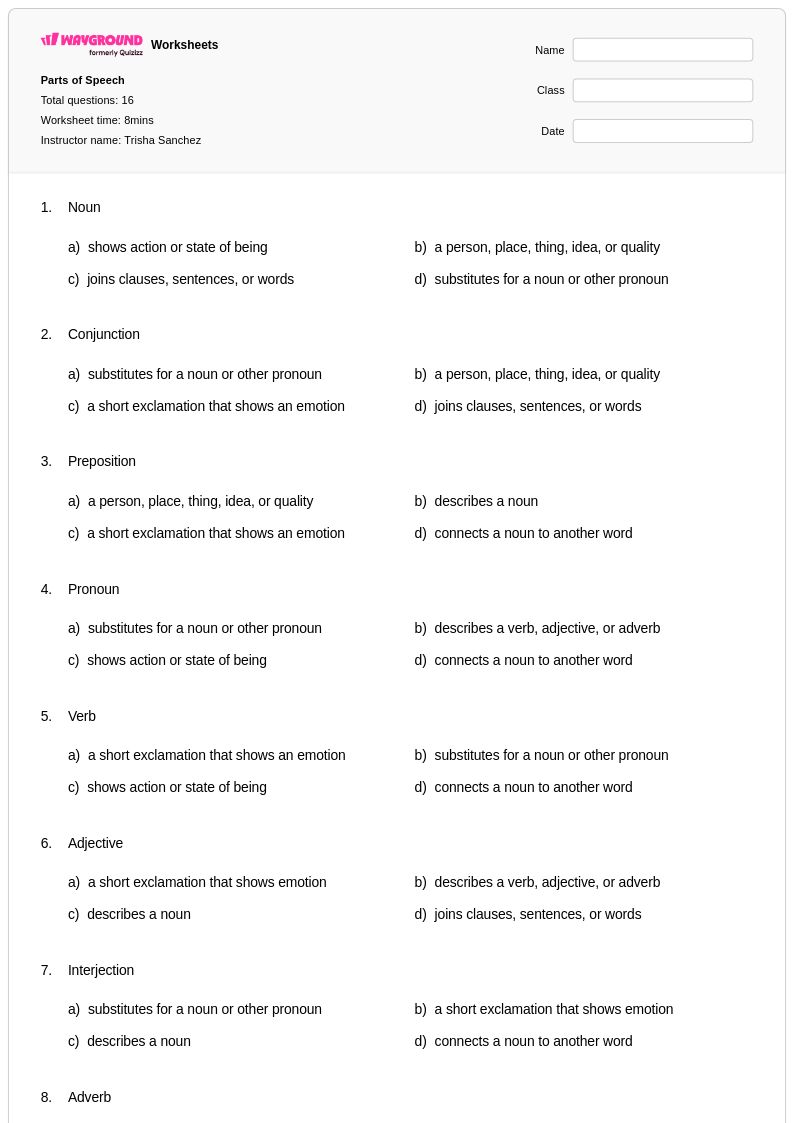
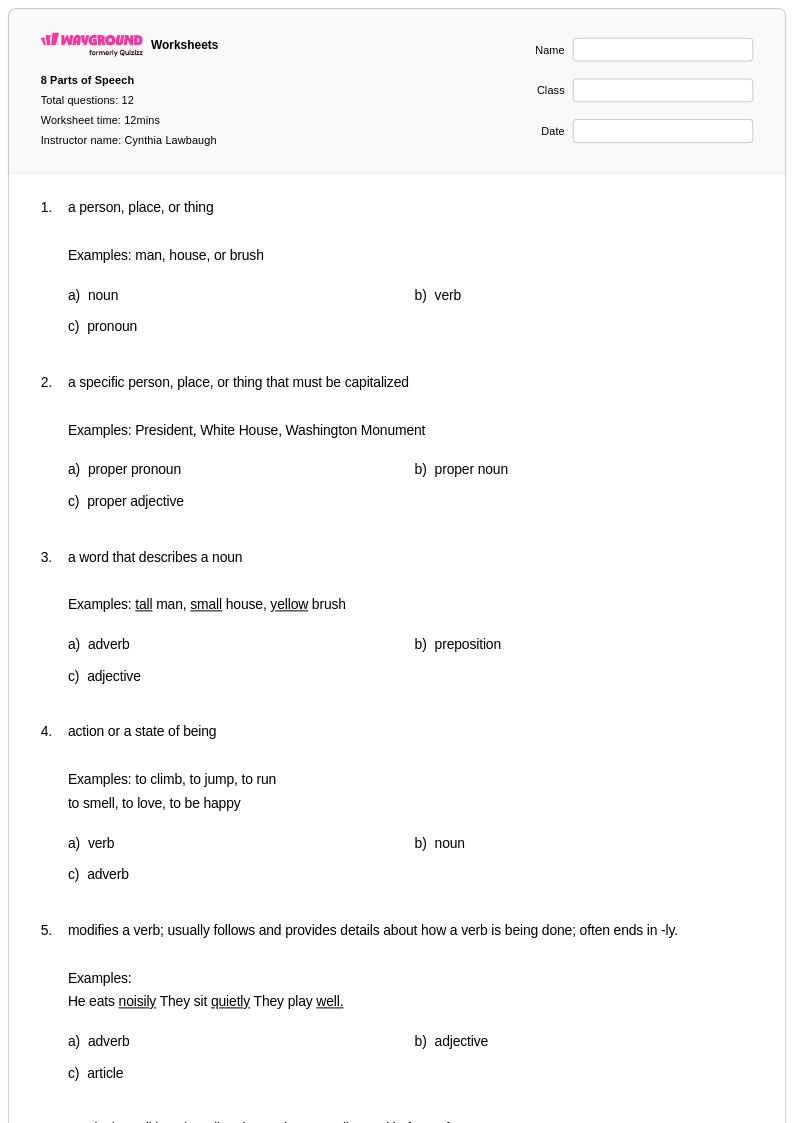
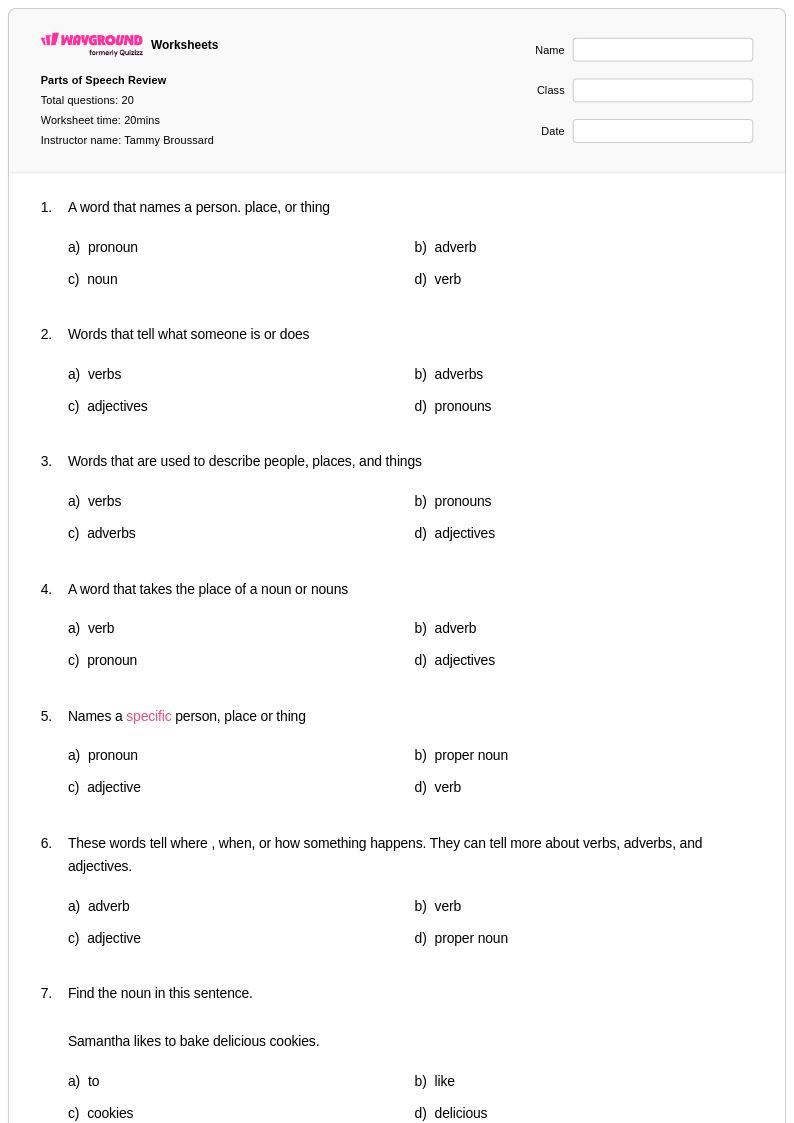
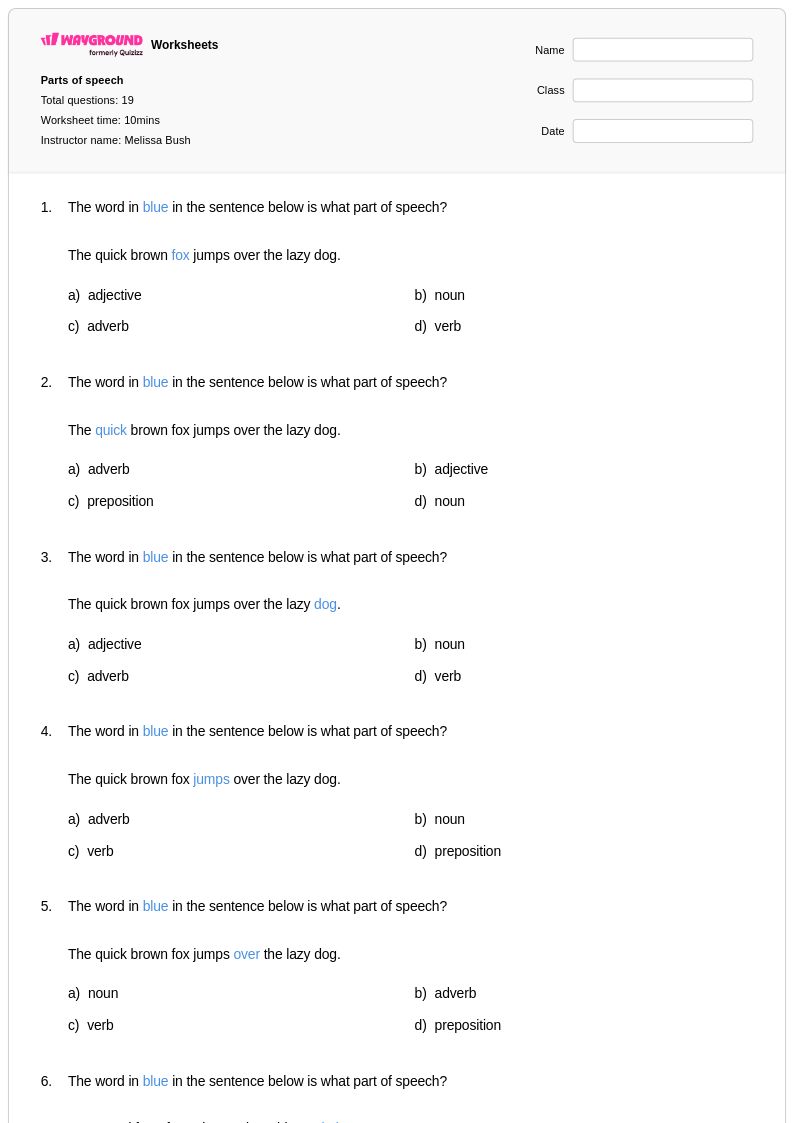
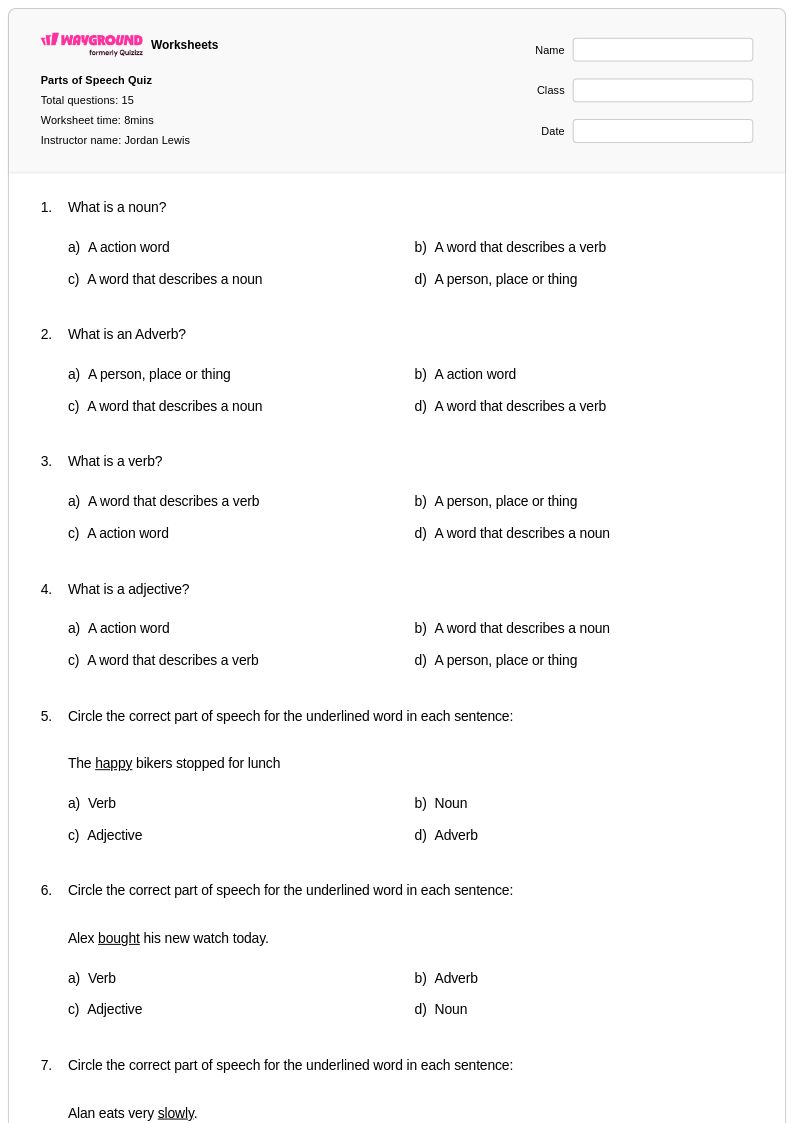
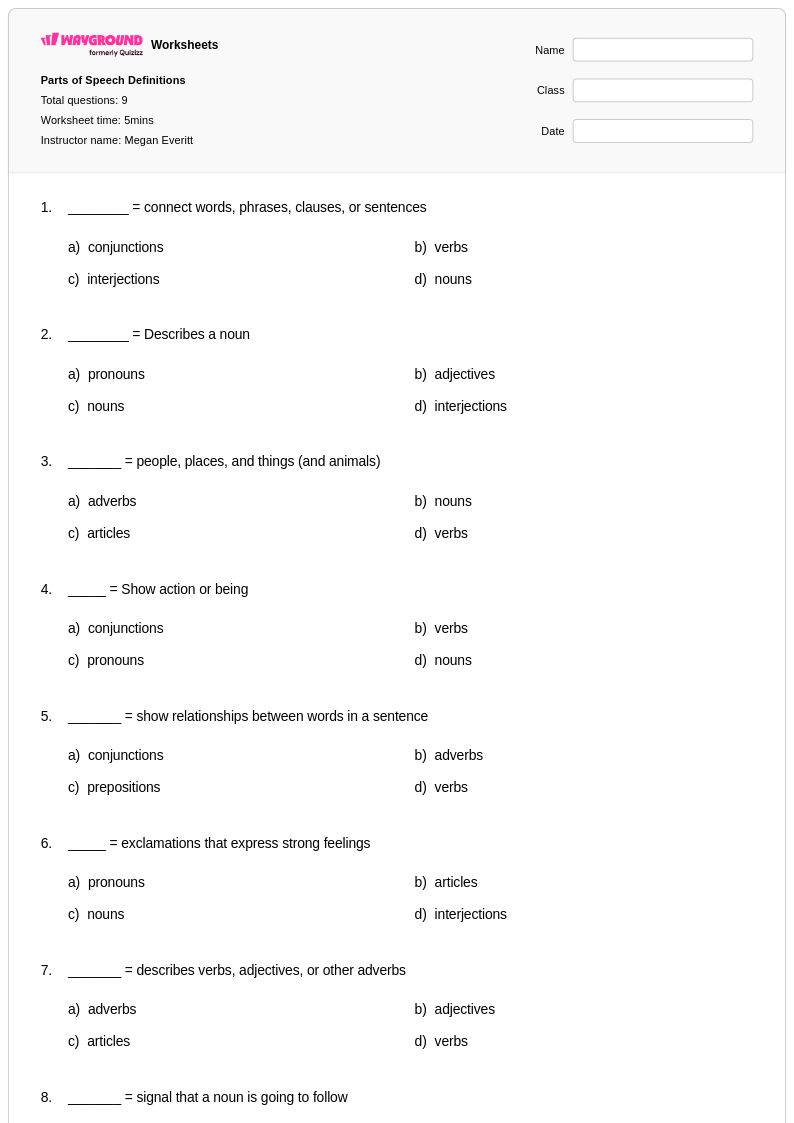
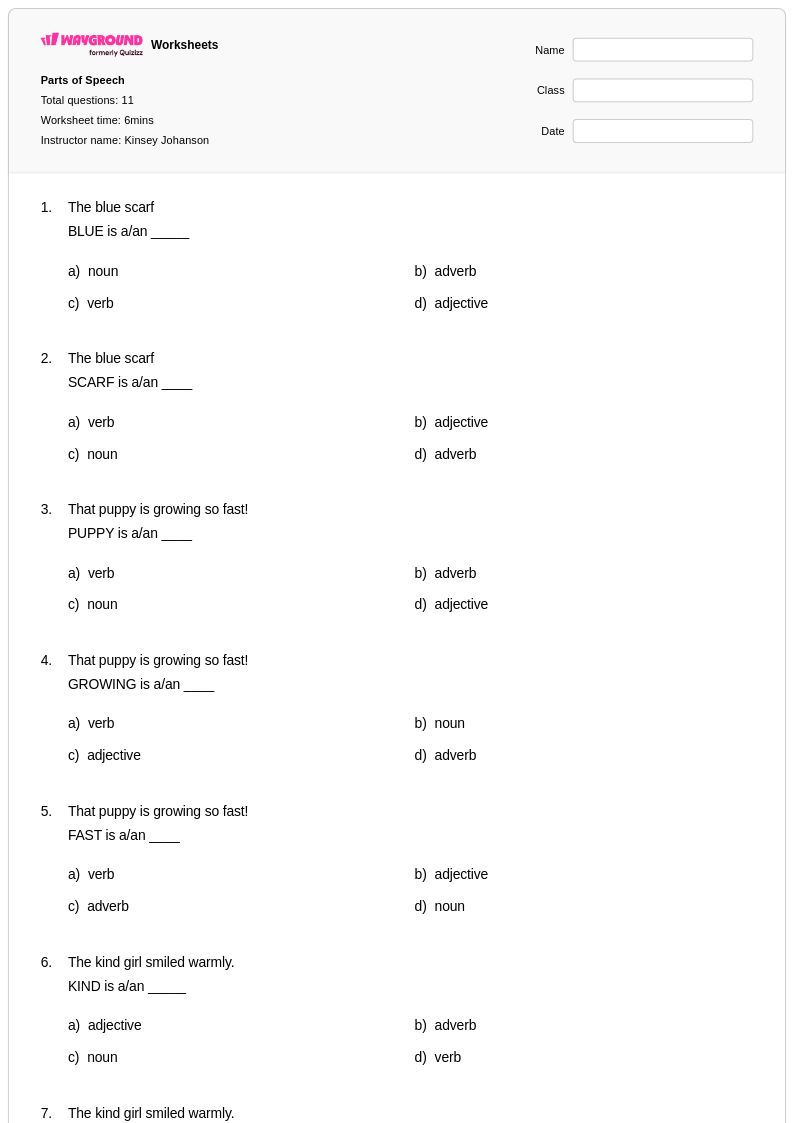
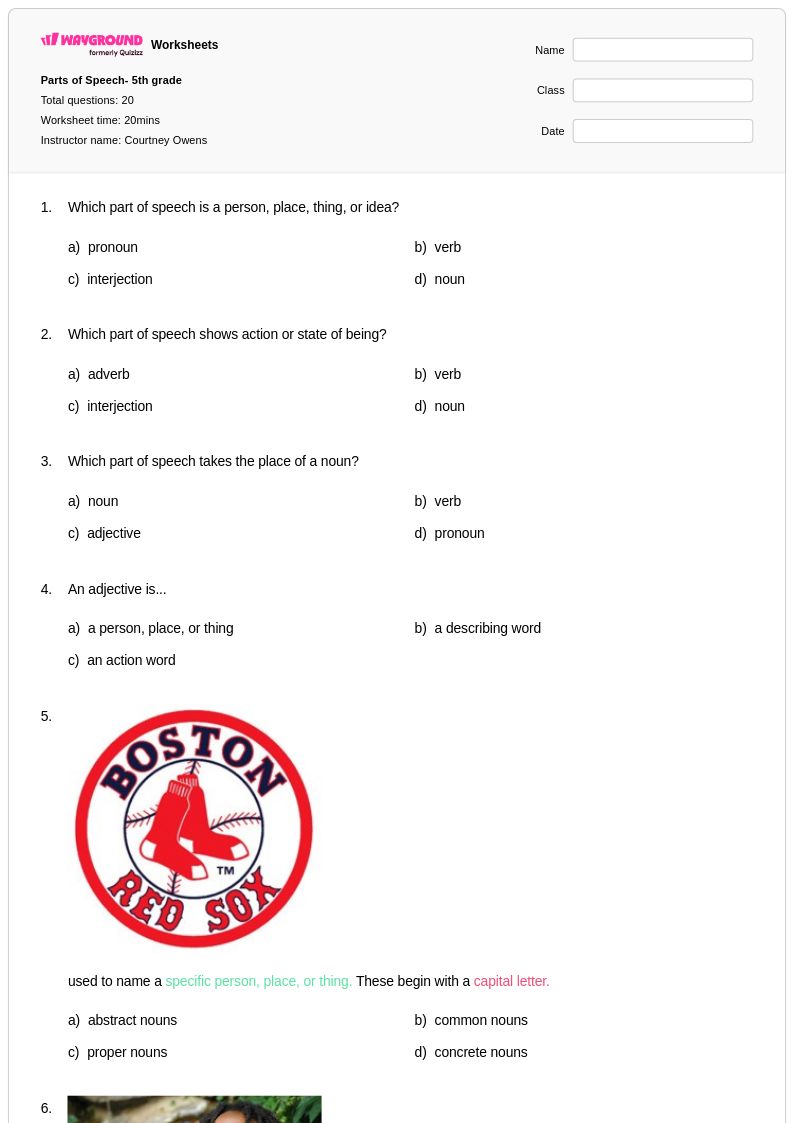
Class 4 parts of speech worksheets available through Wayground (formerly Quizizz) provide comprehensive practice for students learning to identify and categorize the fundamental building blocks of language. These educational resources focus on helping fourth-grade students master nouns, verbs, adjectives, adverbs, pronouns, prepositions, conjunctions, and interjections through engaging practice problems that reinforce grammatical concepts. Each worksheet includes carefully crafted exercises that progress from basic identification tasks to more complex applications, allowing students to develop confidence in recognizing how different parts of speech function within sentences. Teachers can access these free printables with complete answer keys, making assessment and feedback efficient while ensuring students receive immediate reinforcement of correct responses in convenient pdf format.
Wayground (formerly Quizizz) empowers educators with an extensive collection of teacher-created parts of speech resources, drawing from millions of high-quality materials that align with grammar and mechanics standards for Class 4. The platform's robust search and filtering capabilities enable teachers to quickly locate worksheets that match their specific instructional needs, whether focusing on individual parts of speech or comprehensive review activities. These differentiation tools support diverse learning styles through customizable formats available in both printable and digital versions, including downloadable pdfs that facilitate seamless integration into lesson planning. Teachers can efficiently address remediation needs for struggling students while providing enrichment opportunities for advanced learners, ensuring that all fourth-grade students receive targeted skill practice that strengthens their grammatical foundation and prepares them for more sophisticated language arts concepts.
FAQs
How do I teach parts of speech effectively in the classroom?
The most effective approach to teaching parts of speech is to introduce each category in context rather than in isolation, using real sentences students encounter in their reading. Start with nouns and verbs as the structural anchors of a sentence, then layer in adjectives, adverbs, pronouns, and prepositions progressively. Connecting each part of speech to its function — what it does in a sentence — helps students internalize the concept rather than just memorize a label. Frequent low-stakes practice with varied sentence types reinforces recognition and correct usage over time.
What exercises help students practice identifying parts of speech?
Identification exercises that ask students to label underlined words, sort words by category, and rewrite sentences using substitutions are highly effective for building fluency with parts of speech. Sentence-level activities, such as parsing a full sentence by assigning a role to every word, push students beyond single-word recognition toward understanding grammatical relationships. Combining identification tasks with writing application exercises — where students must use a specified part of speech correctly in an original sentence — reinforces both recognition and production skills.
What mistakes do students commonly make when identifying parts of speech?
One of the most common errors is misclassifying words based on appearance rather than function — for example, treating 'running' as always a verb when it can serve as a noun (gerund) or adjective depending on the sentence. Students also frequently confuse adjectives and adverbs, particularly when modifying words that could plausibly be either a noun or a verb. Another persistent misconception is treating articles (a, an, the) as adjectives without understanding their specific function as determiners. Targeted practice with ambiguous words in varied sentence contexts helps students develop function-first thinking.
How do I differentiate parts of speech instruction for students at different skill levels?
For students who are still developing foundational skills, reducing the number of parts of speech introduced at once and providing sentence frames with visual supports helps lower the cognitive load. More advanced students benefit from complex sentence analysis tasks involving verb phrases, verbals, and conjunctions. On Wayground, teachers can apply individual accommodations such as reduced answer choices for students who need support and extended time for those who require additional processing time, without other students being notified of those adjustments.
How can I use parts of speech worksheets from Wayground in my classroom?
Wayground's parts of speech worksheets are available as printable PDFs, making them easy to use for in-class instruction, independent practice, or homework. They are also available in digital formats suited to technology-integrated classrooms, and teachers can host them as a quiz directly on Wayground. Each worksheet includes a complete answer key, so teachers can use them for self-paced student review or for fast formative assessment without additional grading prep.
How do I help students understand the difference between adjectives and adverbs?
The clearest way to distinguish adjectives from adverbs is to anchor instruction in the question each word answers: adjectives answer 'which one,' 'what kind,' or 'how many' and modify nouns, while adverbs answer 'how,' 'when,' 'where,' or 'to what degree' and most commonly modify verbs, adjectives, or other adverbs. A common point of confusion arises with words ending in '-ly,' which students may assume are always adverbs — but words like 'friendly' or 'lovely' are adjectives. Practice exercises that require students to identify the word being modified, not just the modifier, build the analytical habit that resolves this confusion.
At what grade level should students be expected to master all parts of speech?
Students typically begin formal instruction in nouns and verbs in early elementary grades, with adjectives and adverbs introduced in grades 2 through 4. Pronouns, prepositions, and conjunctions are generally addressed in grades 3 through 5, while more complex forms such as verb phrases, verbals, and interjections are often covered in middle school. Full mastery across all parts of speech, including nuanced understanding of function-dependent classification, is a reasonable expectation by the end of middle school, though many students benefit from continued reinforcement in high school writing courses.