Free Printable Persuasive Writing Worksheets for Class 11
Master Class 11 persuasive writing techniques with Wayground's comprehensive collection of free worksheets, printables, and practice problems designed to develop compelling argumentative skills with detailed answer keys.
Explore printable Persuasive Writing worksheets for Class 11
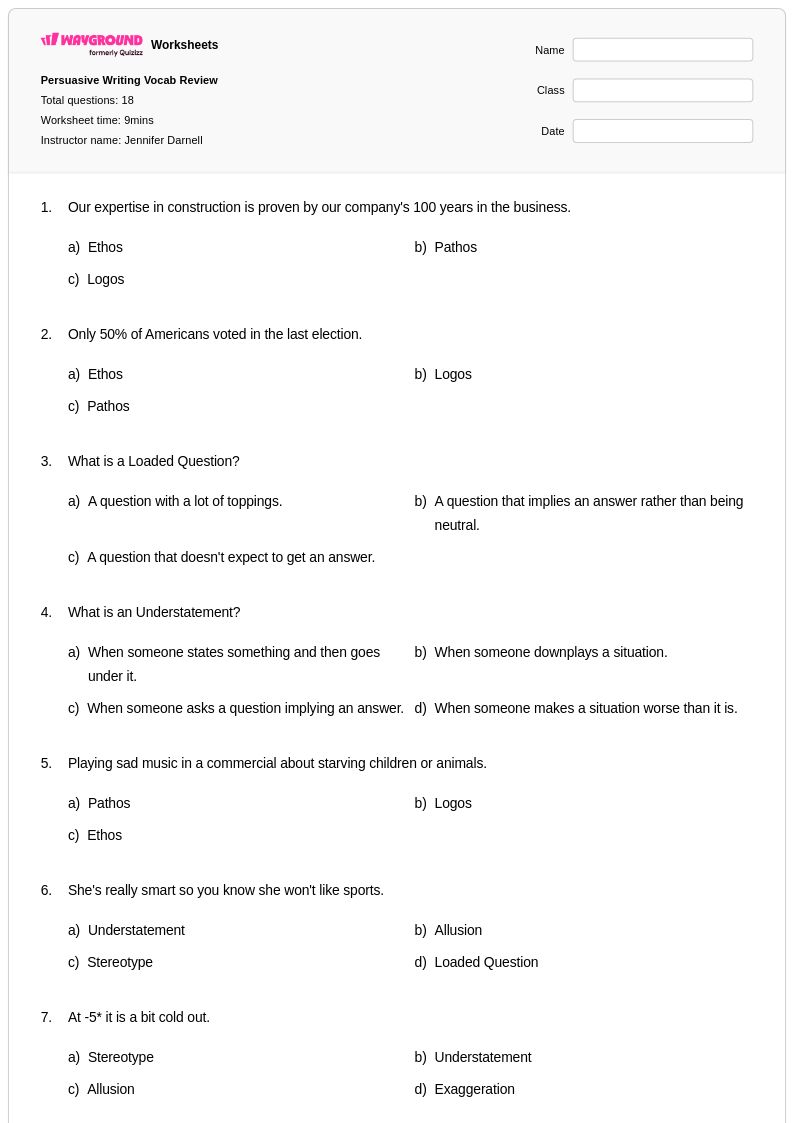
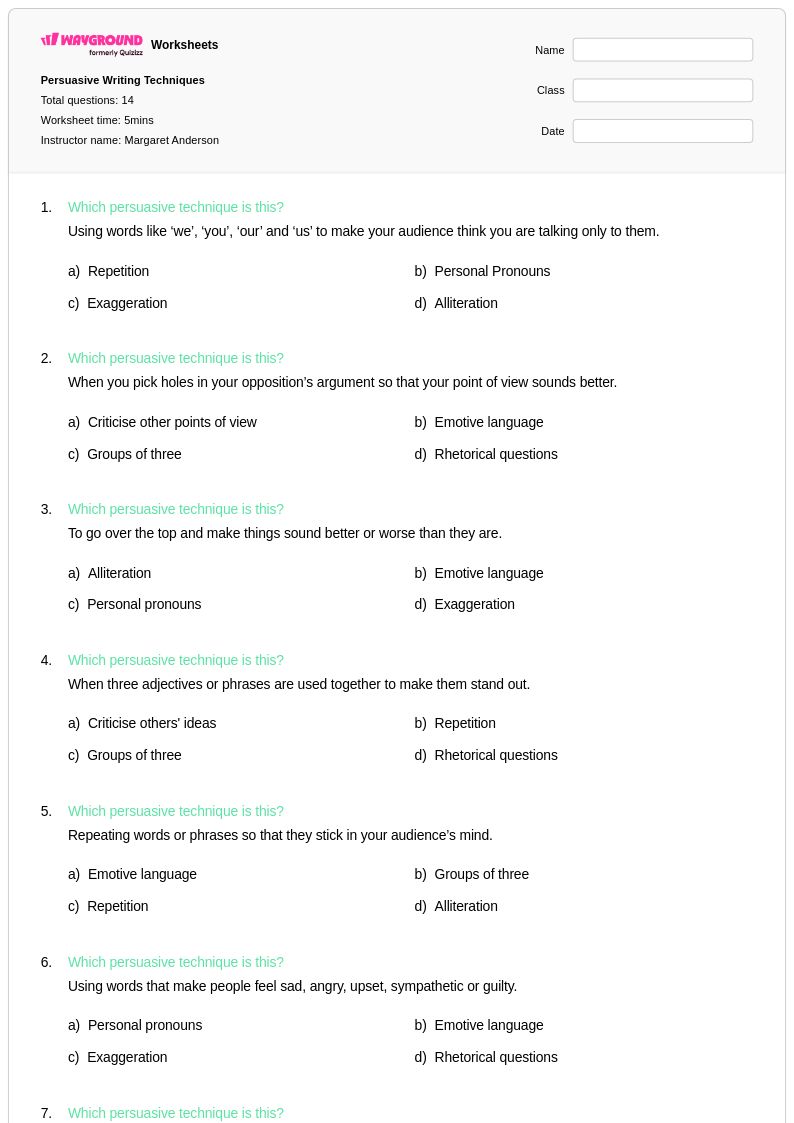
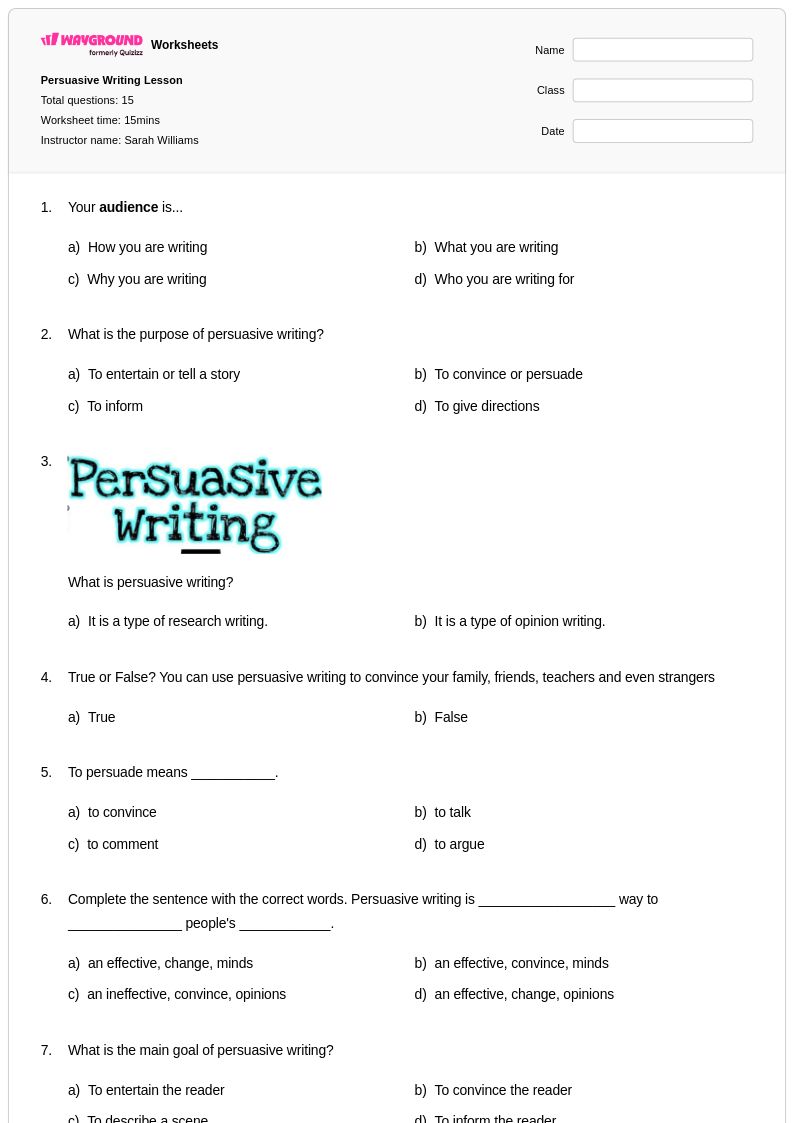
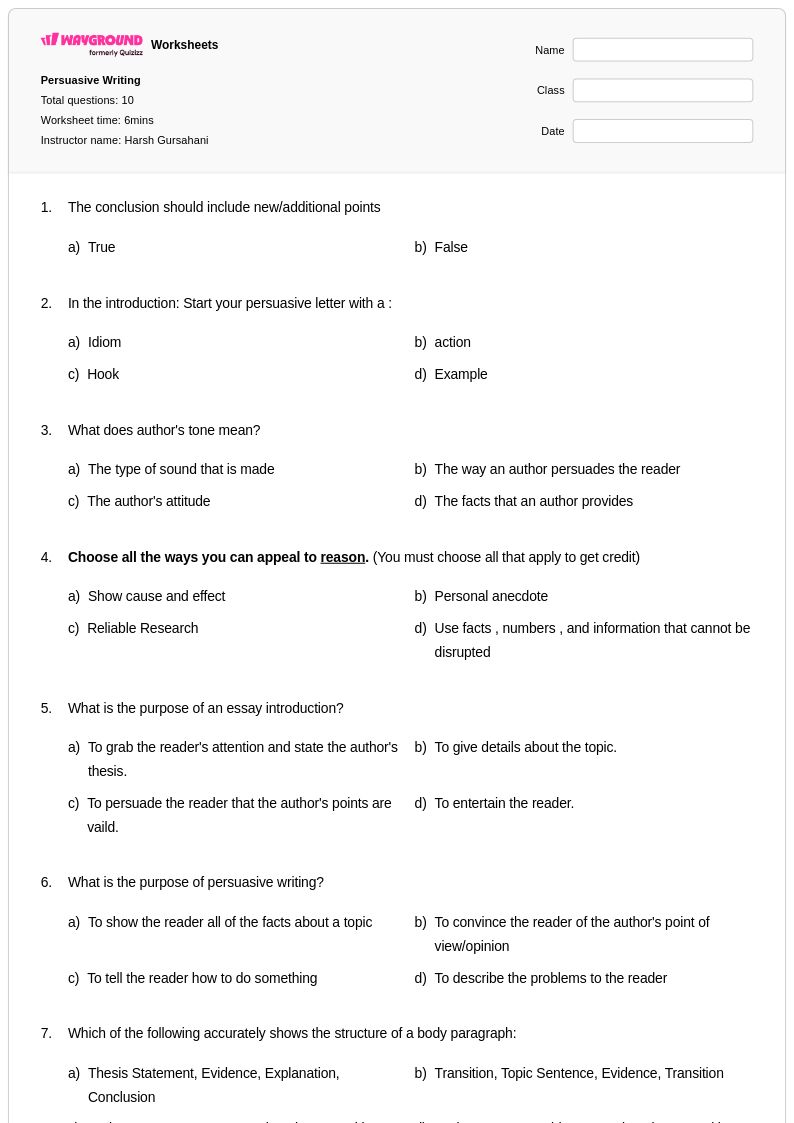
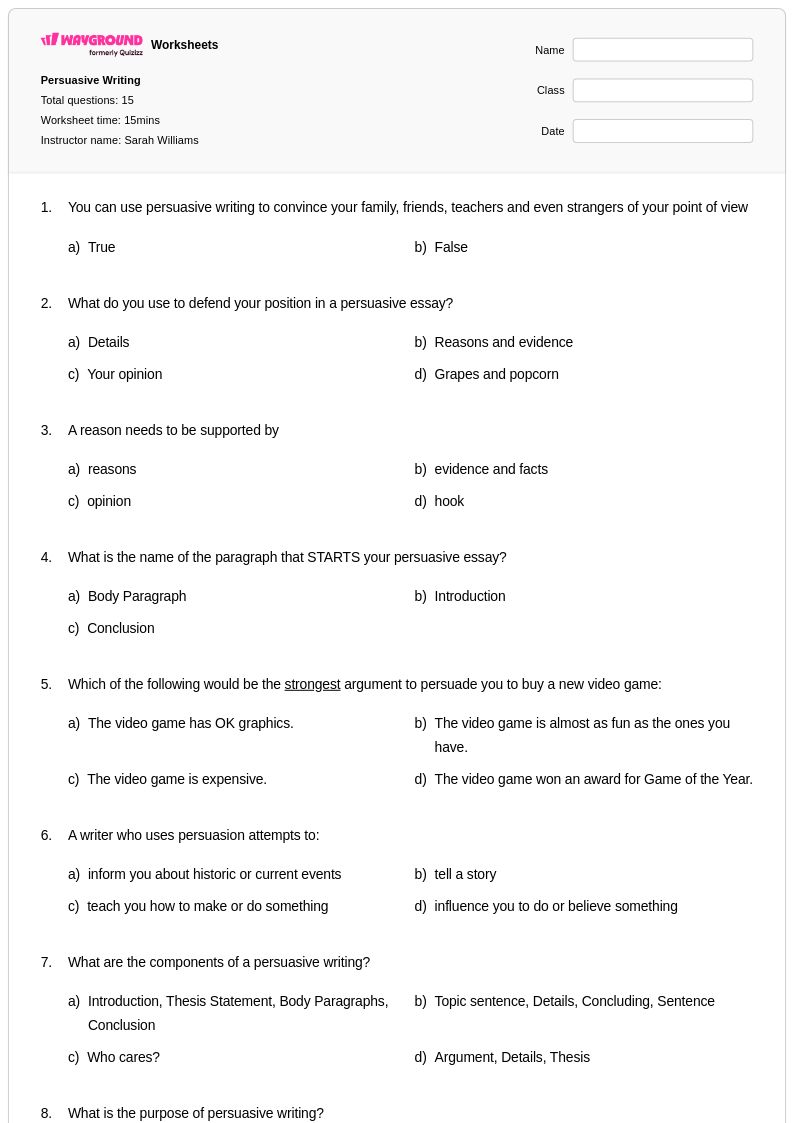
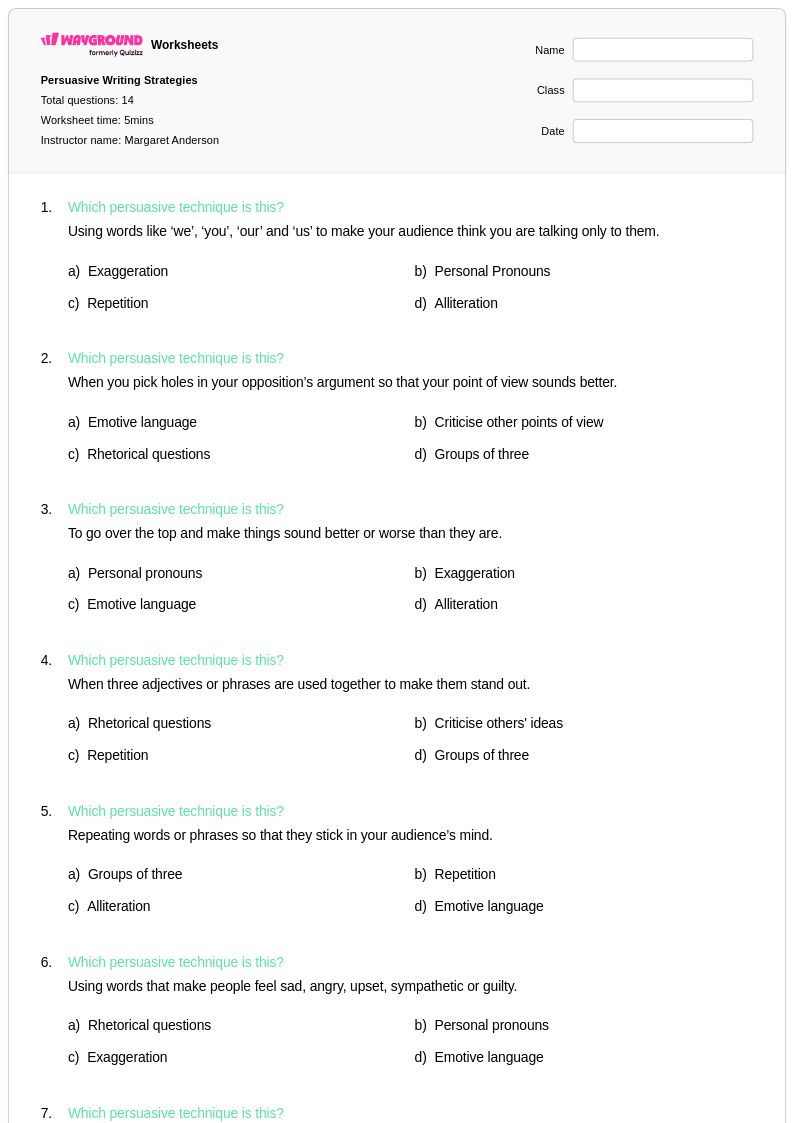
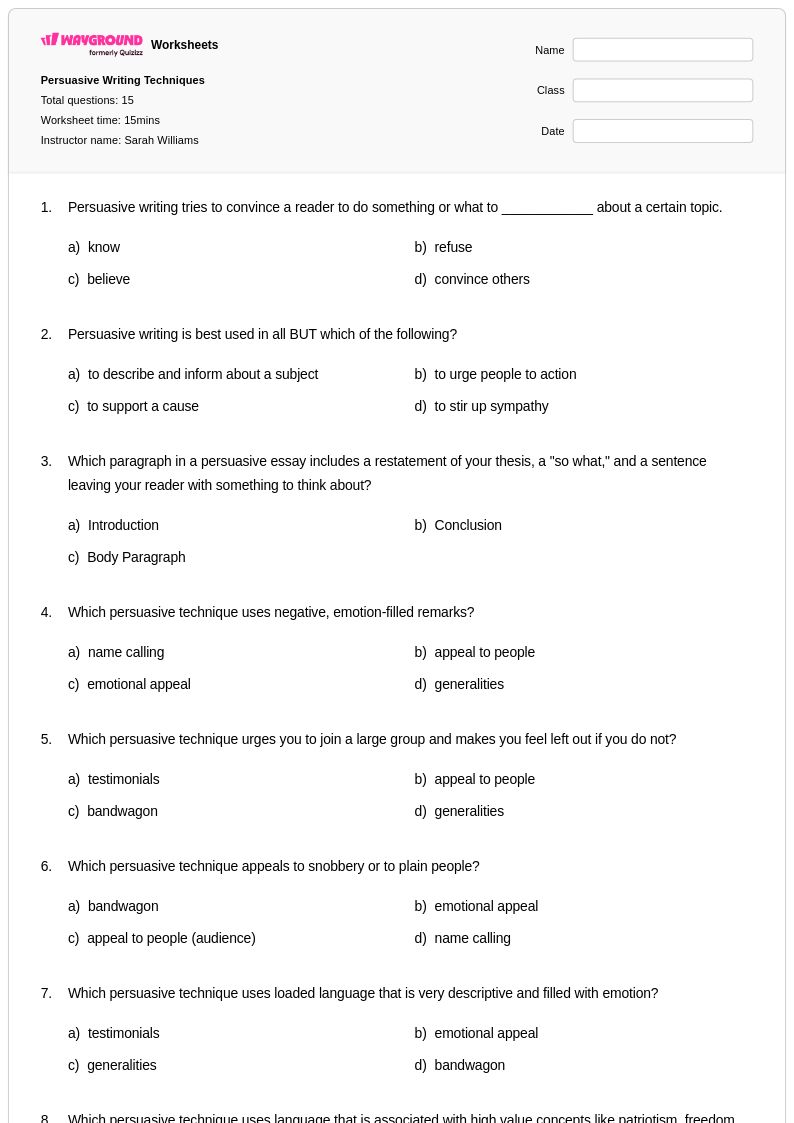
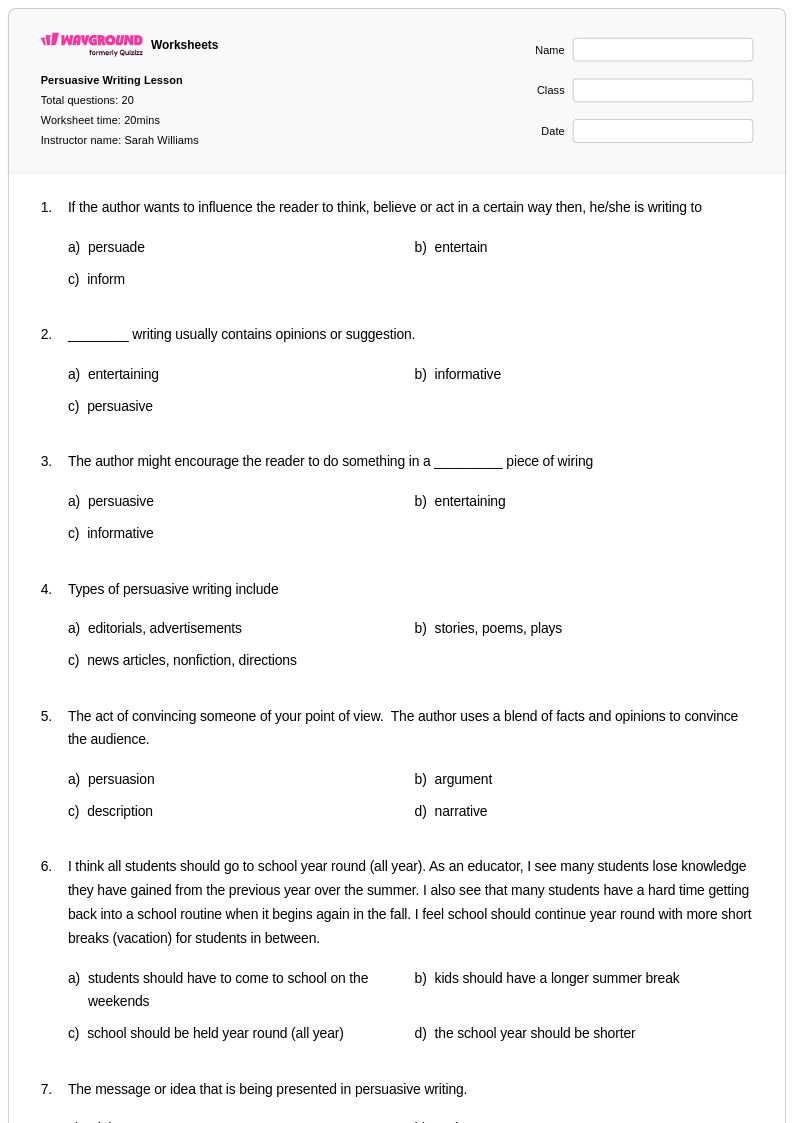
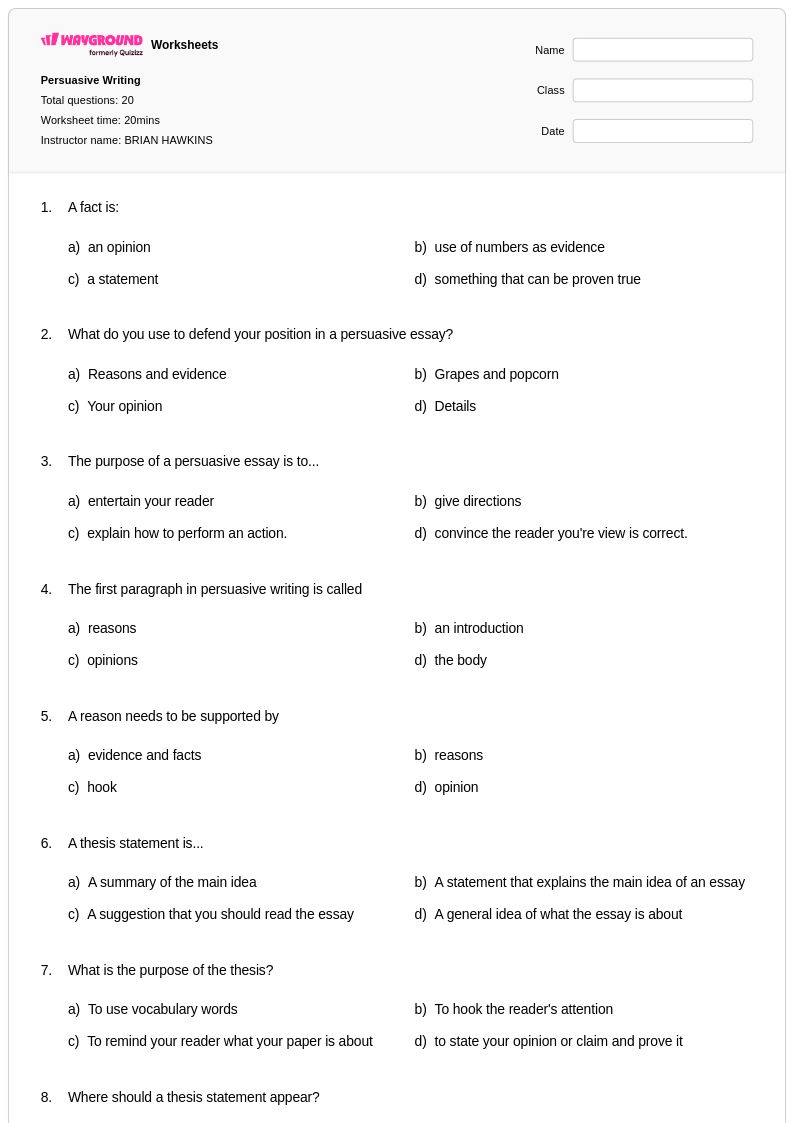
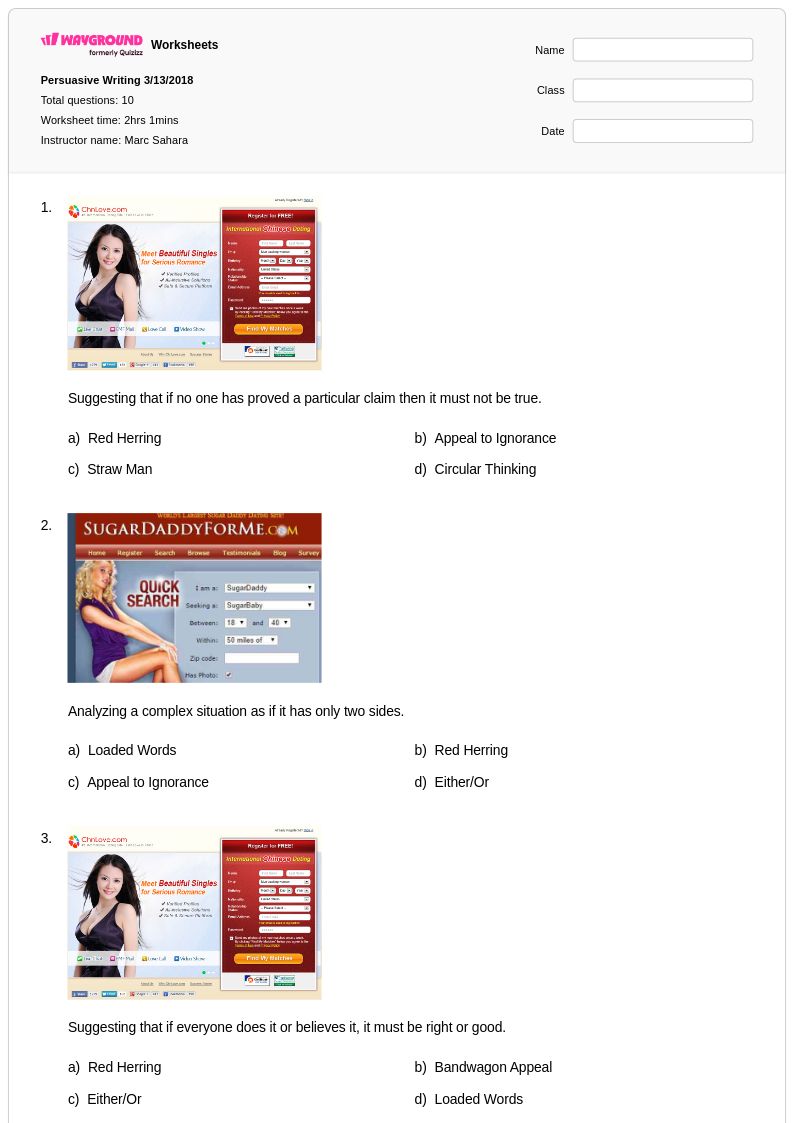
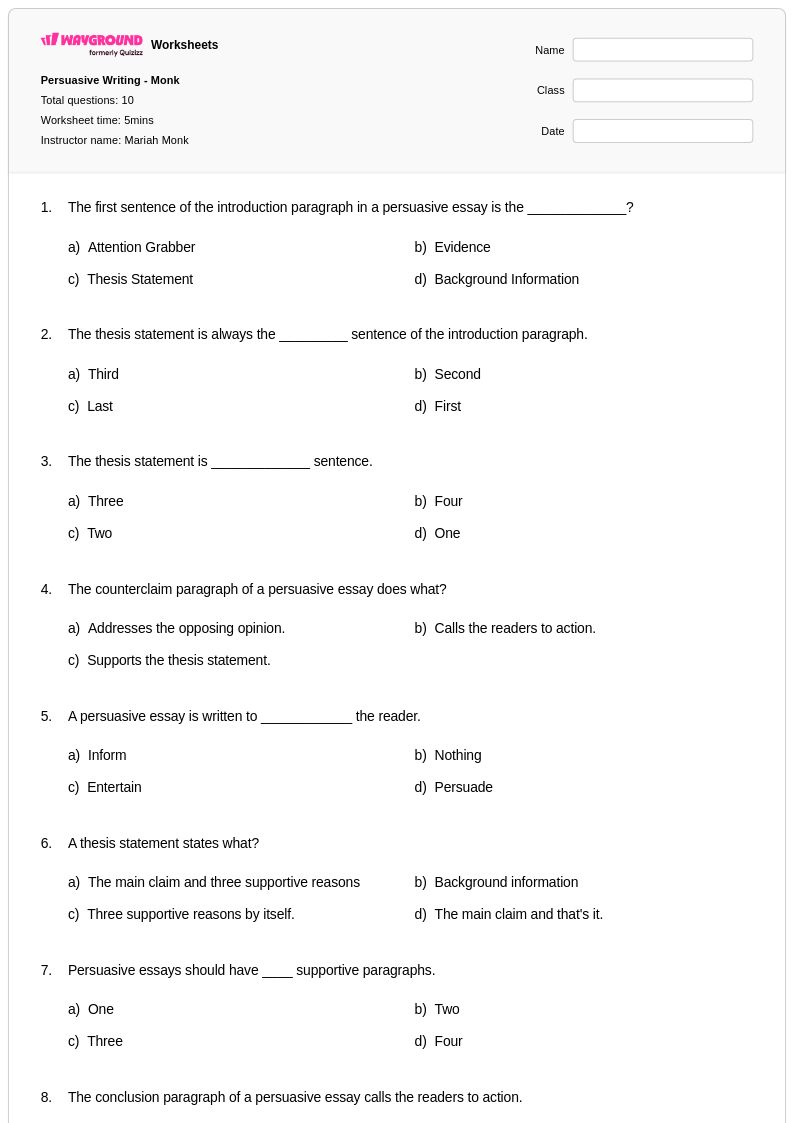
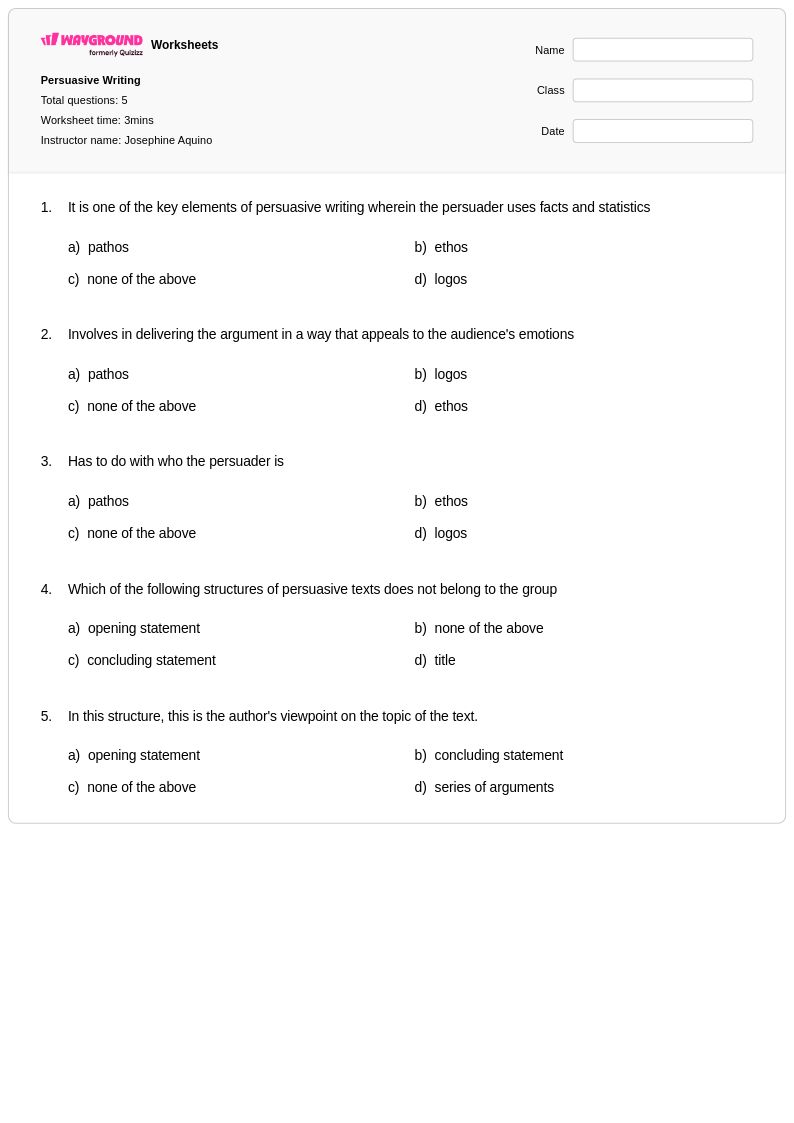
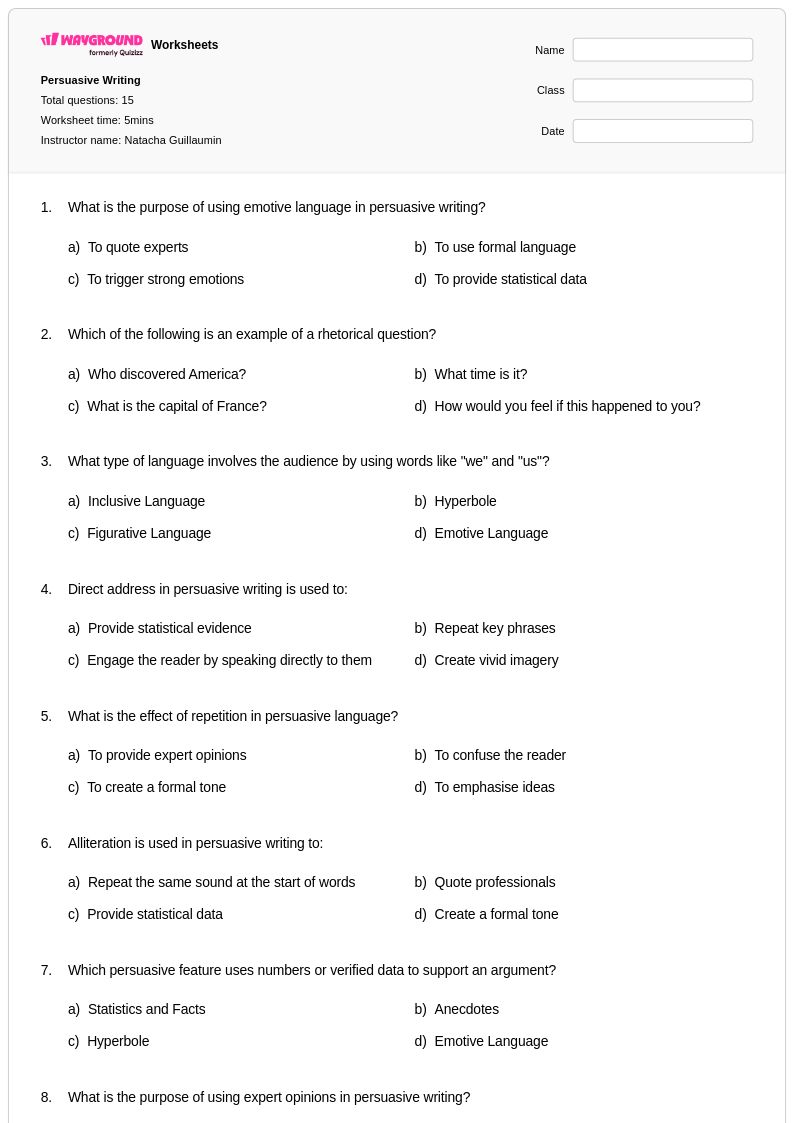
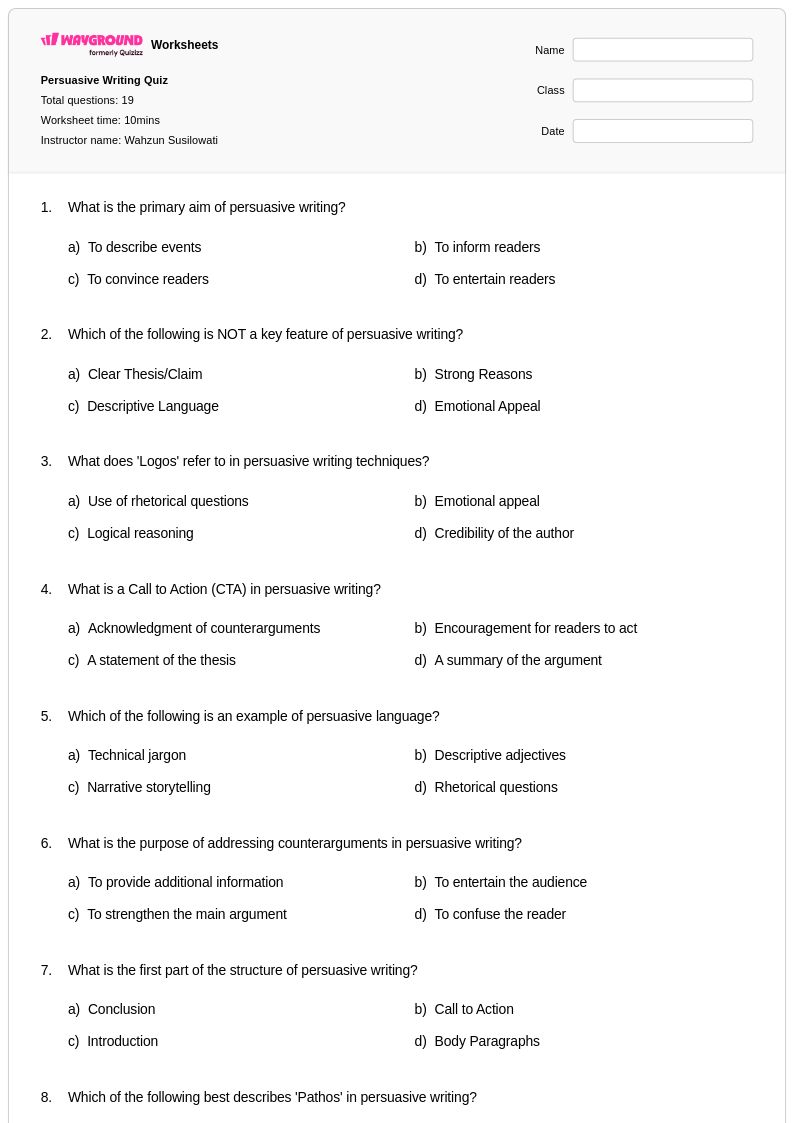
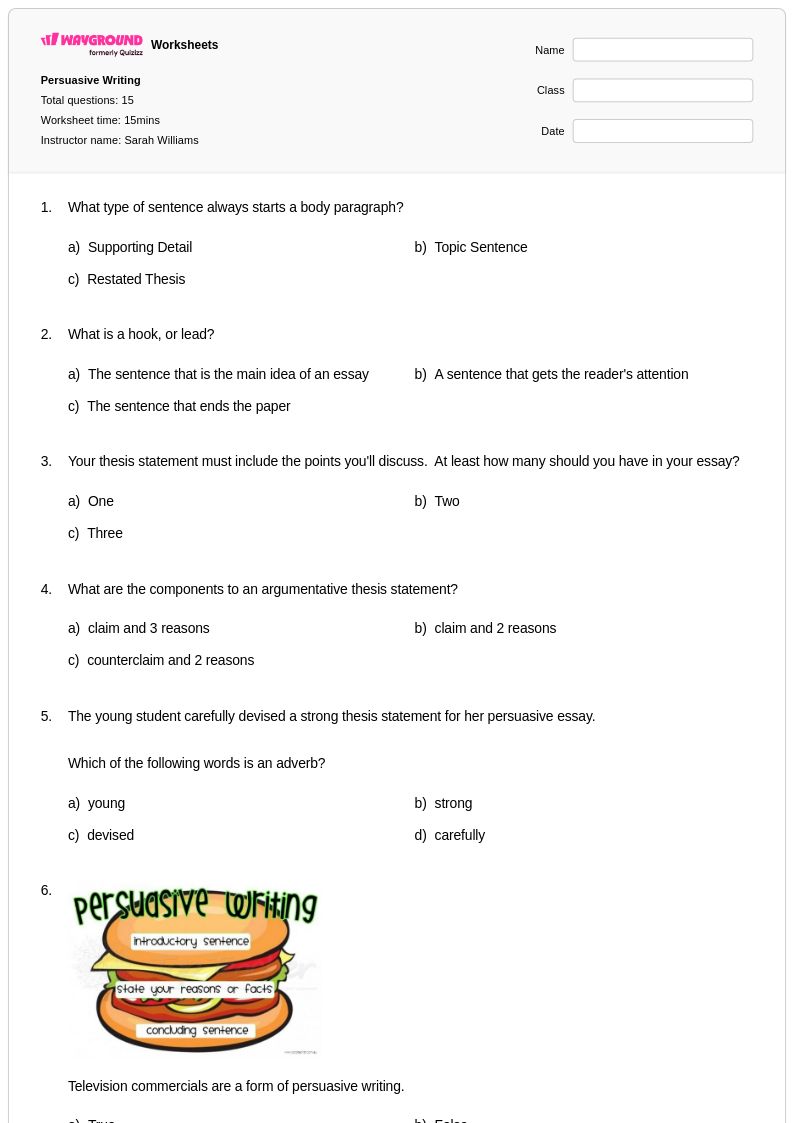
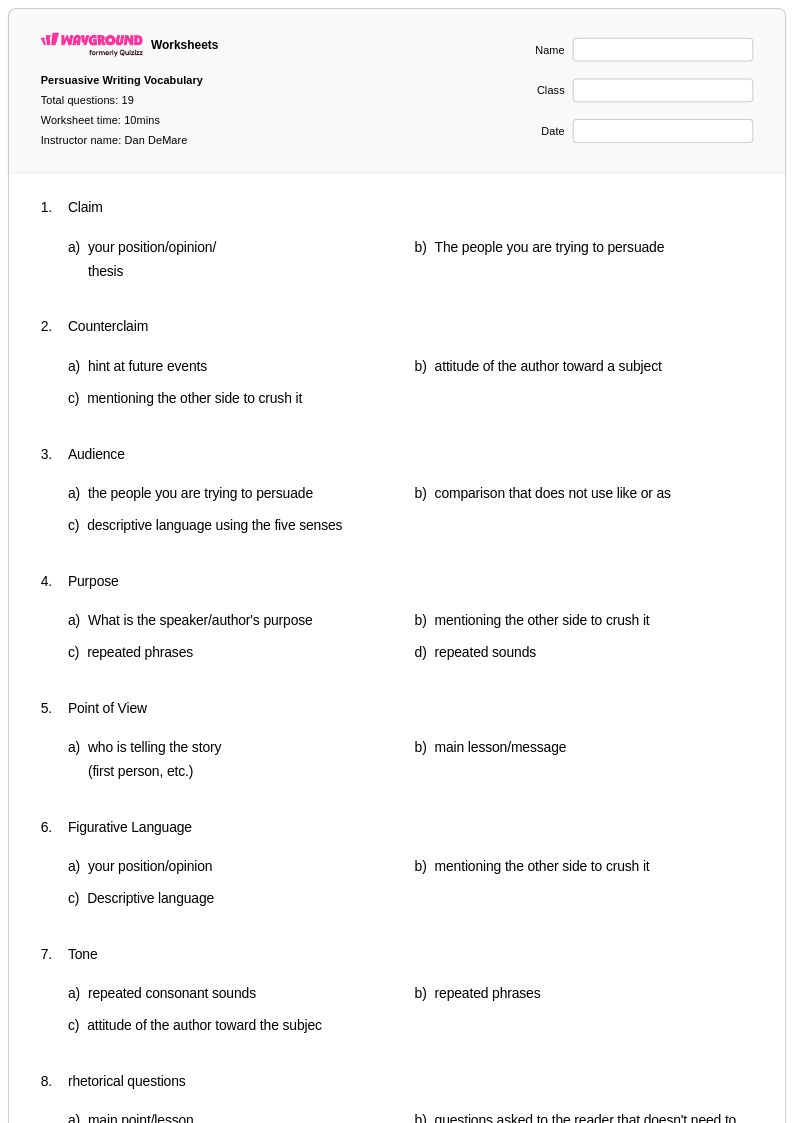
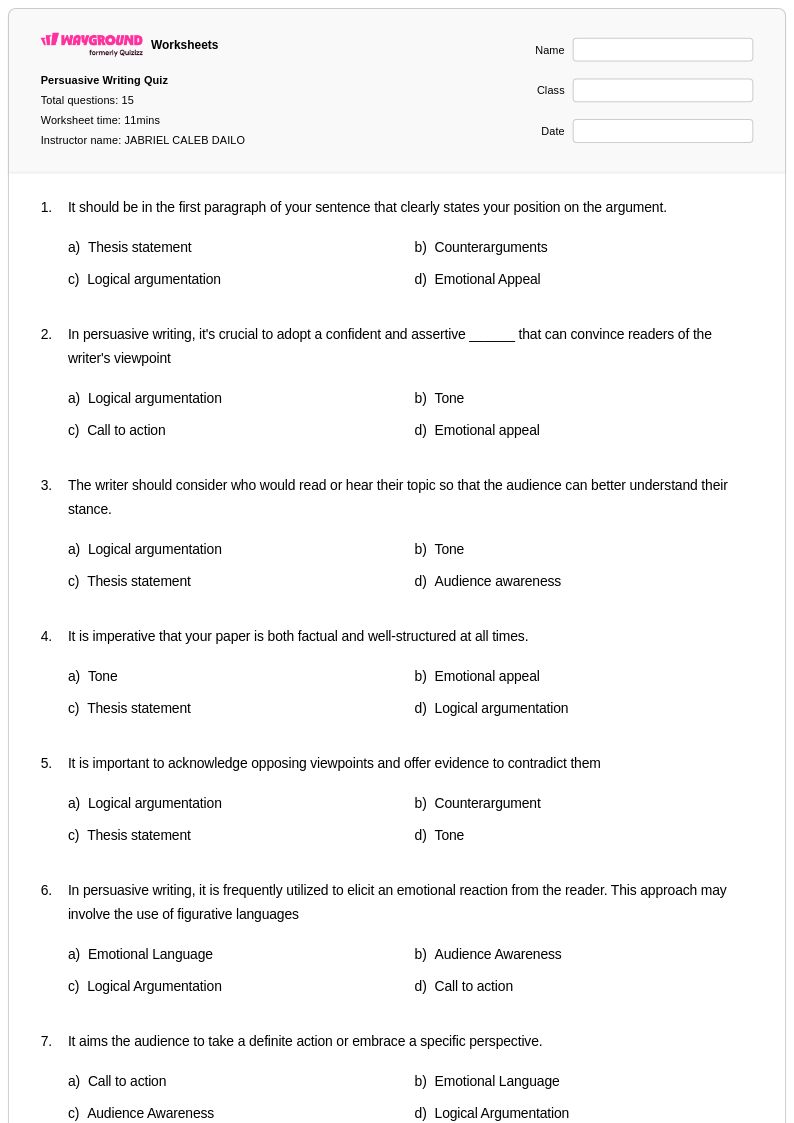
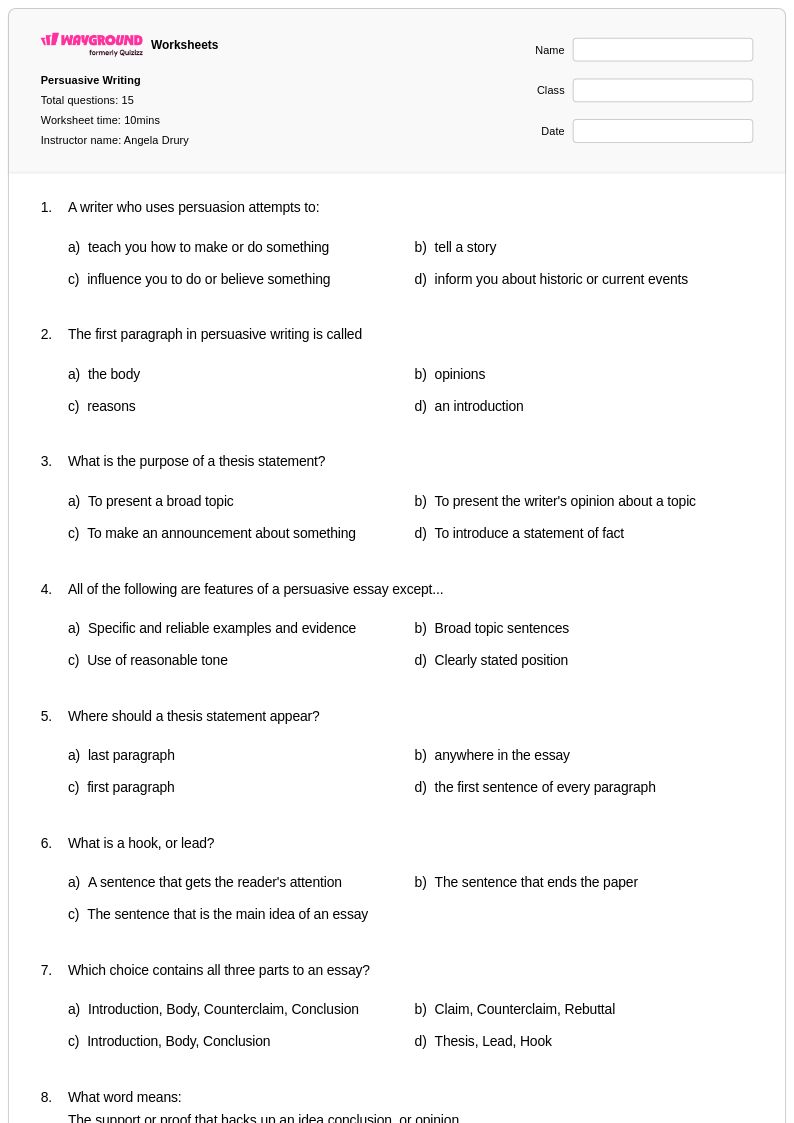
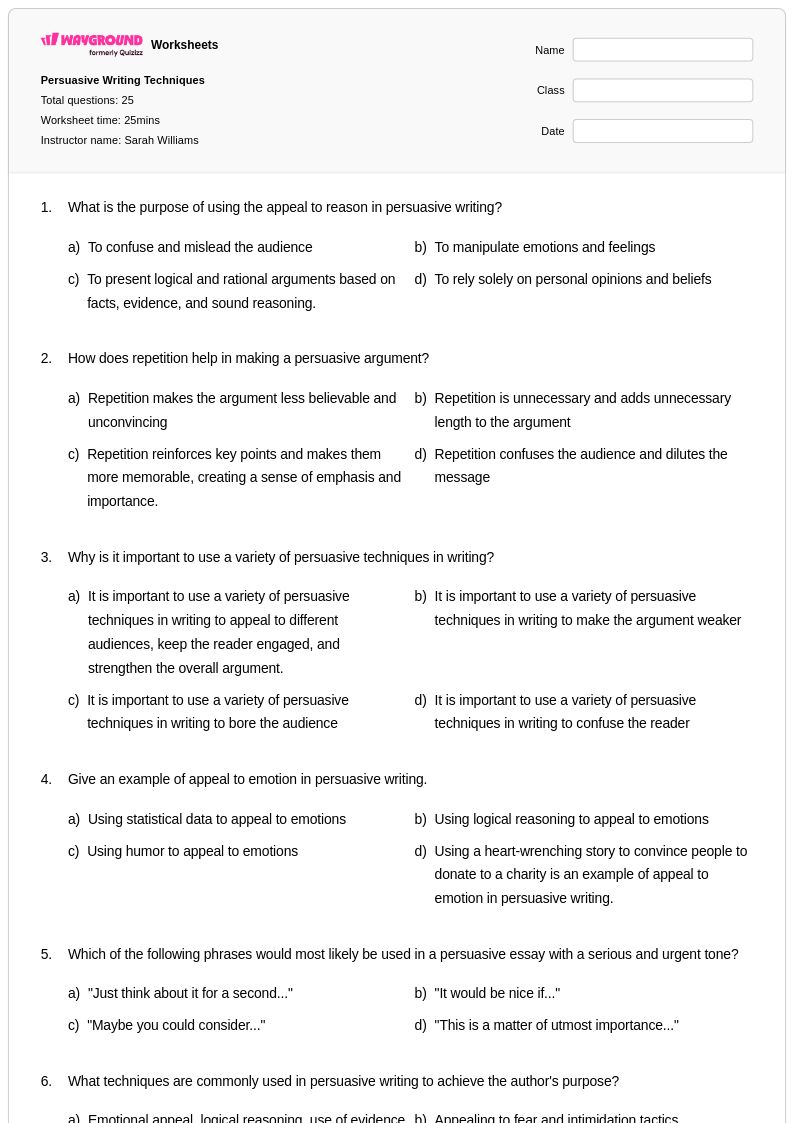
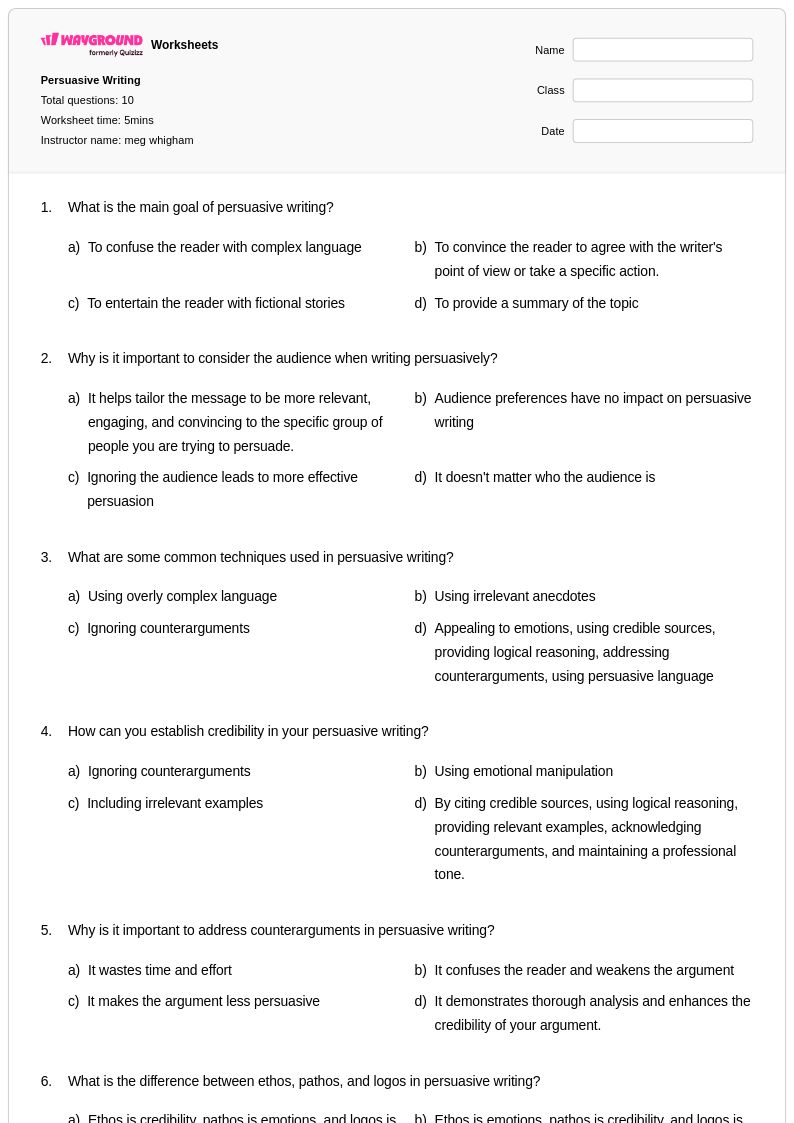
Persuasive writing worksheets for Class 11 students available through Wayground (formerly Quizizz) provide comprehensive practice in developing compelling arguments and mastering advanced rhetorical techniques. These carefully designed resources strengthen critical academic skills including thesis development, evidence selection and analysis, counterargument recognition, logical reasoning, and effective use of rhetorical appeals such as ethos, pathos, and logos. Students work through structured practice problems that guide them in crafting sophisticated argumentative essays, analyzing persuasive texts from various sources, and evaluating the effectiveness of different persuasive strategies. Each worksheet collection includes detailed answer keys that help students understand the reasoning behind strong persuasive techniques, while the free printable format ensures accessibility for both classroom instruction and independent study.
Wayground (formerly Quizizz) empowers educators with an extensive library of millions of teacher-created persuasive writing resources specifically tailored for Class 11 English instruction. The platform's robust search and filtering capabilities allow teachers to quickly locate worksheets aligned with specific curriculum standards and learning objectives, while built-in differentiation tools enable customization to meet diverse student needs and skill levels. These comprehensive collections are available in both printable pdf formats and interactive digital versions, providing flexibility for various classroom environments and teaching approaches. Teachers can seamlessly integrate these resources into their lesson planning for targeted skill practice, use them for remediation with struggling writers, or deploy them as enrichment activities for advanced students ready to tackle more complex persuasive writing challenges.
FAQs
How do I teach persuasive writing to students who struggle with argumentation?
Start by teaching students to distinguish a claim from an opinion, then model how to build a logical argument using evidence and reasoning. Breaking the process into discrete steps — claim, evidence, warrant — helps struggling writers see argumentation as a structure rather than an innate talent. Explicit instruction in persuasive appeals (ethos, pathos, logos) gives students a concrete vocabulary for analyzing and constructing arguments. Practice with mentor texts, such as advertisements and opinion editorials, provides low-stakes entry points before students write their own pieces.
What exercises help students practice persuasive writing skills?
Structured worksheet practice is highly effective for building persuasive writing skills because it isolates specific components students often struggle with, such as writing a strong thesis statement, selecting relevant evidence, or countering opposing viewpoints. Opinion essay prompts, persuasive speech outlines, and advertising analysis tasks each develop different dimensions of rhetorical thinking. Repeated low-stakes writing practice across varied topics builds fluency and helps students internalize argument structure before applying it in longer, graded compositions.
What are the most common mistakes students make in persuasive writing?
The most frequent error is confusing a preference with an argument — students state what they believe without providing reasoning or evidence to support it. Many students also ignore the opposing viewpoint entirely, which weakens credibility and rhetorical effectiveness. Over-reliance on emotional appeals (pathos) without logical support (logos) is another common pattern, as is writing a thesis that is too broad to defend in the scope of the assignment. Identifying these error patterns early allows teachers to target instruction at the specific breakdown points in each student's writing process.
How do I differentiate persuasive writing instruction for students at different skill levels?
For emerging writers, scaffolded graphic organizers that break argument structure into labeled sections reduce cognitive load while maintaining the integrity of the task. Advanced students benefit from open-ended prompts that require nuanced counterargument or analysis of complex rhetorical situations. On Wayground, teachers can apply accommodations such as read aloud for students who need support processing written prompts, reduced answer choices to lower the difficulty of structured response tasks, and extended time settings configured per student, ensuring every learner can engage with the same persuasive writing content at an appropriate level of challenge.
How do I use Wayground's persuasive writing worksheets in my classroom?
Wayground's persuasive writing worksheets are available as printable PDFs for traditional classroom use and in digital formats for technology-integrated environments, including the option to host them as a live quiz on the Wayground platform. Teachers can use them for direct instruction support, targeted remediation with struggling writers, enrichment for advanced students, or independent practice that builds argument-writing confidence over time. The worksheets cover a range of formats including opinion essays, persuasive speeches, and advertising analysis, making them adaptable across different units and instructional contexts.
How do I help students analyze audience and purpose in persuasive writing?
Audience and purpose are the two variables that should drive every rhetorical decision a writer makes, from word choice to the selection of evidence. Teaching students to ask 'Who am I trying to convince and what do they already believe?' before drafting helps them move from self-expression to genuine persuasion. Comparing the same argument written for two different audiences — a peer versus a school board, for example — makes the concept concrete and transferable across writing contexts.