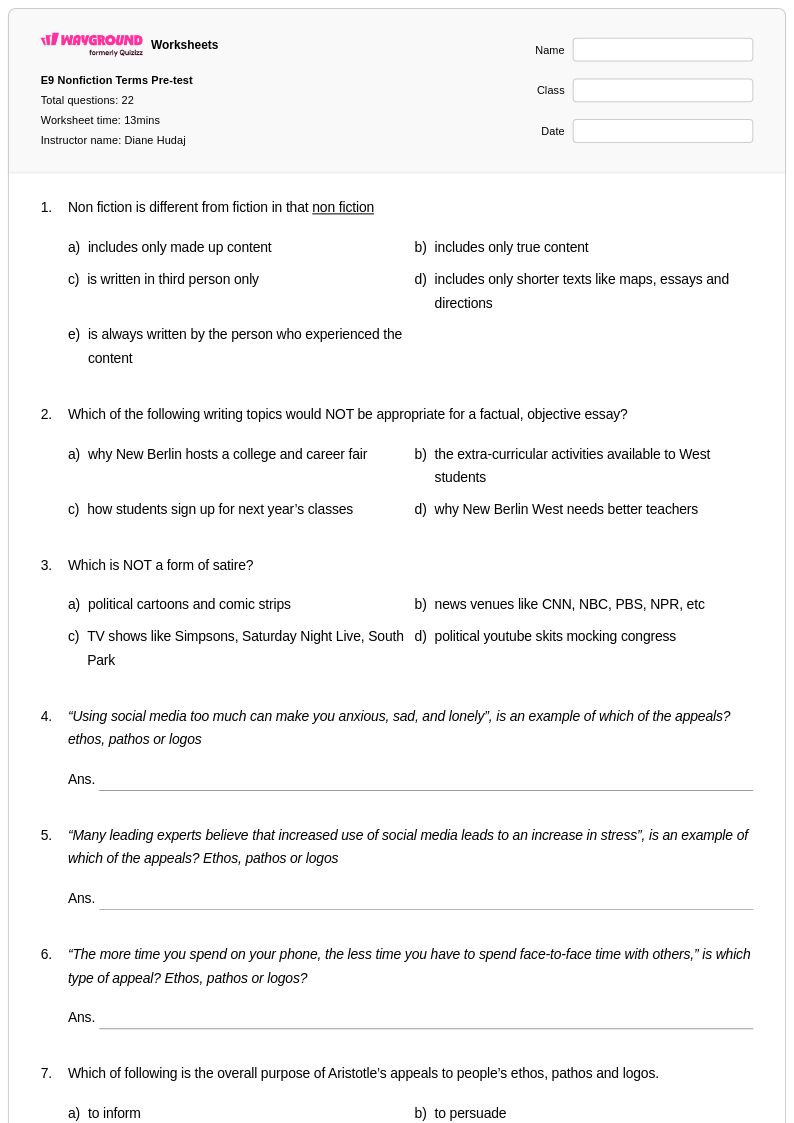
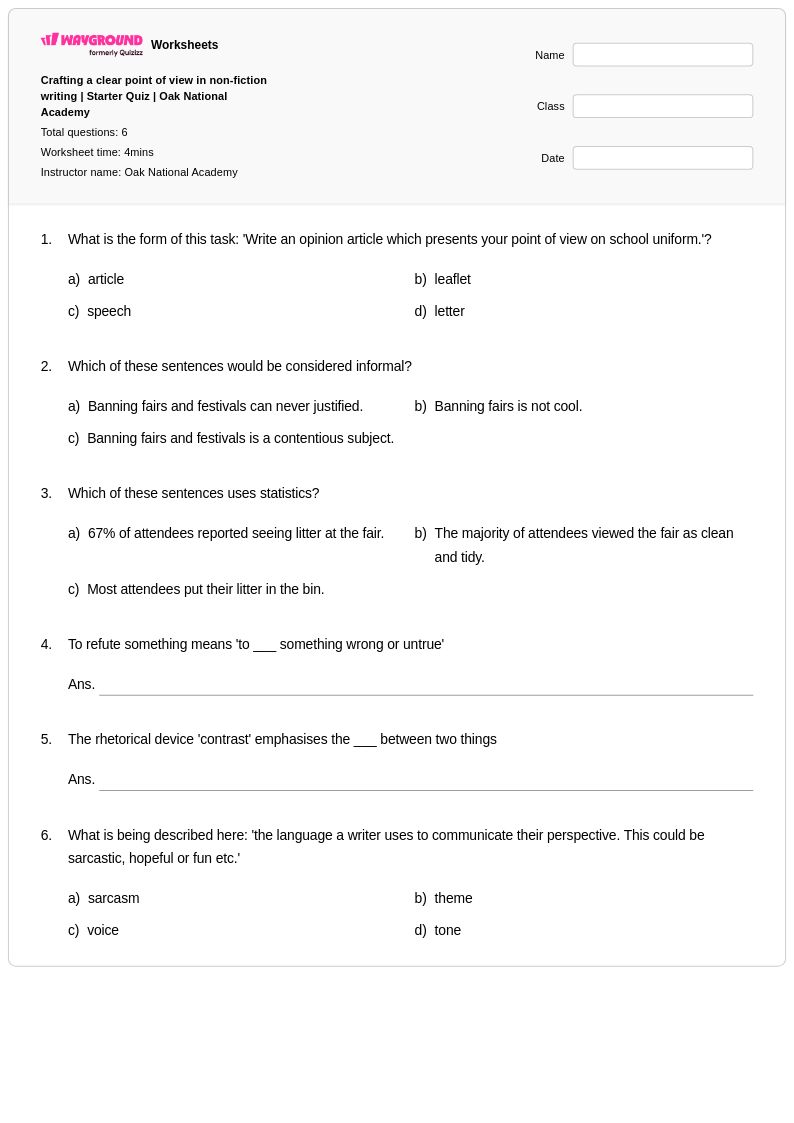
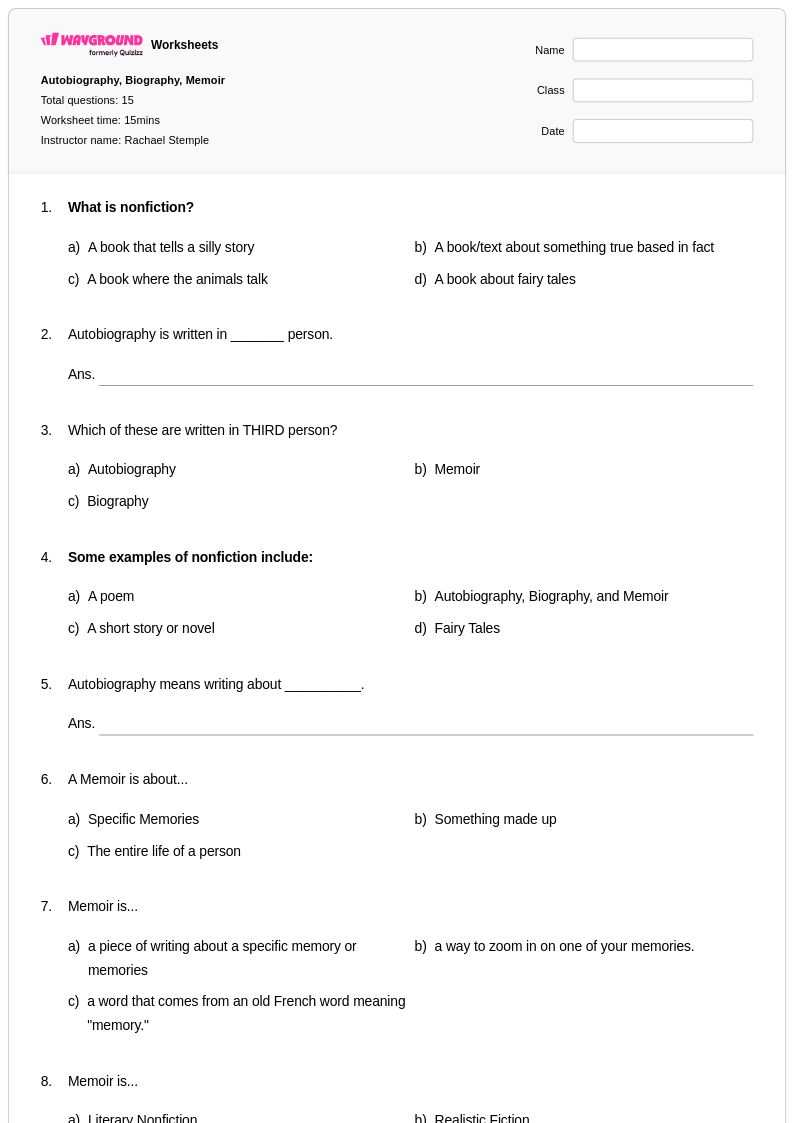
Free Printable Fiction Writing Worksheets for Class 11
Enhance Class 11 fiction writing skills with Wayground's comprehensive collection of free worksheets and printables, featuring practice problems and answer keys to develop creative storytelling techniques and narrative craft.
Explore printable Fiction Writing worksheets for Class 11
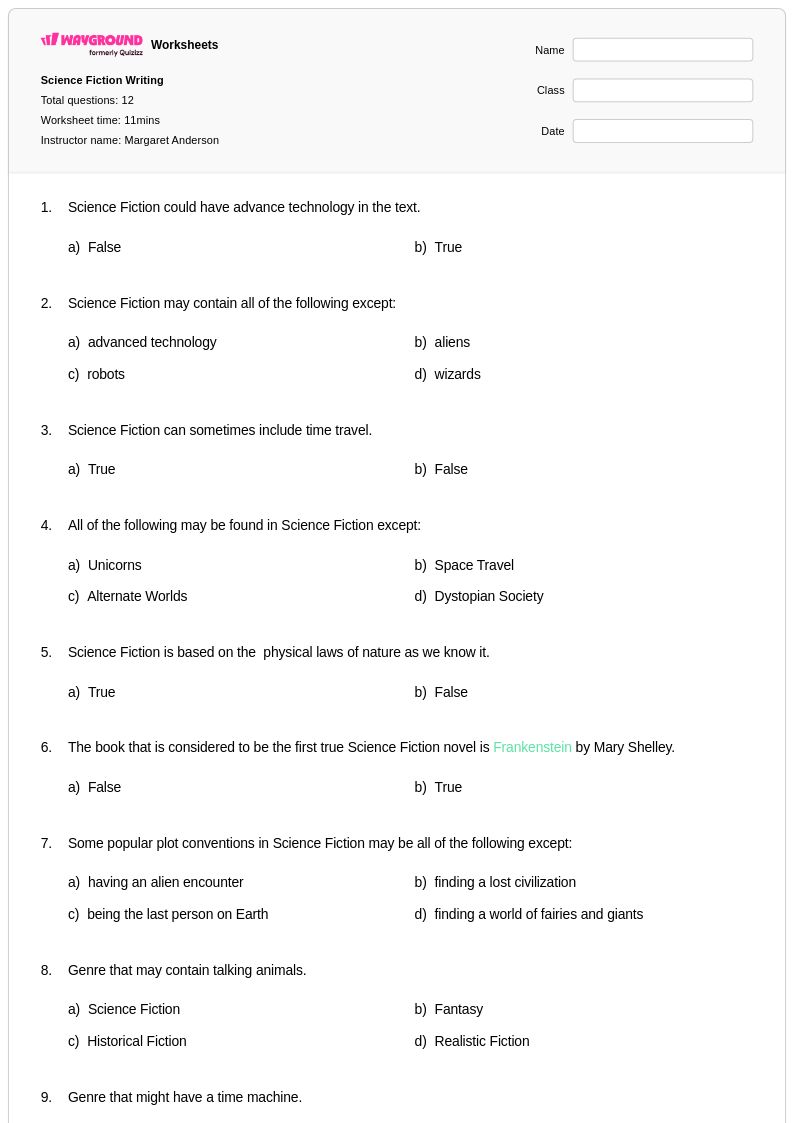
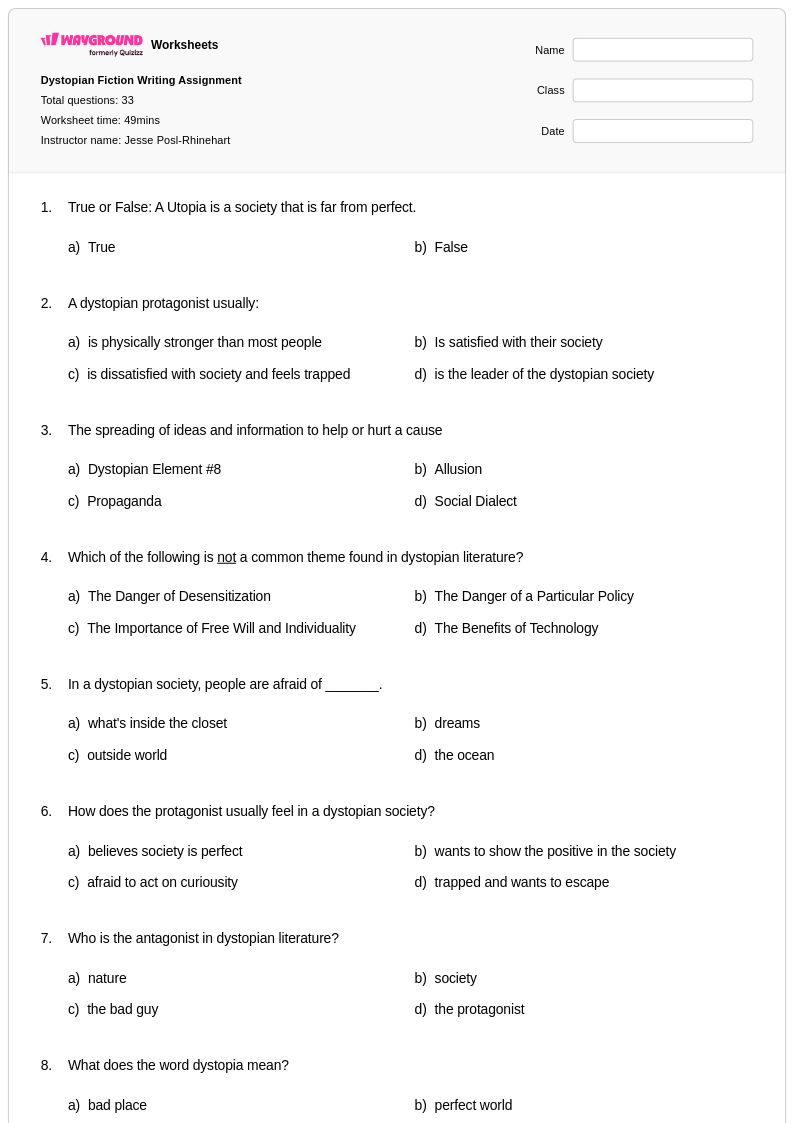
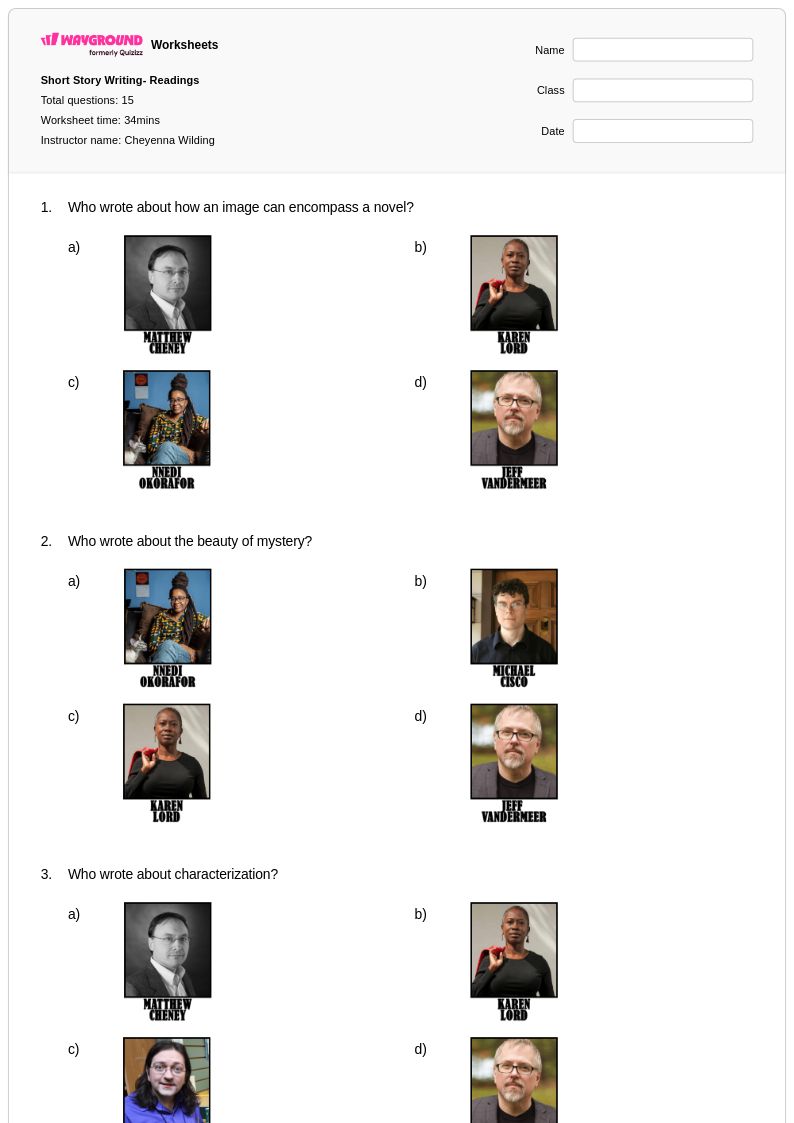
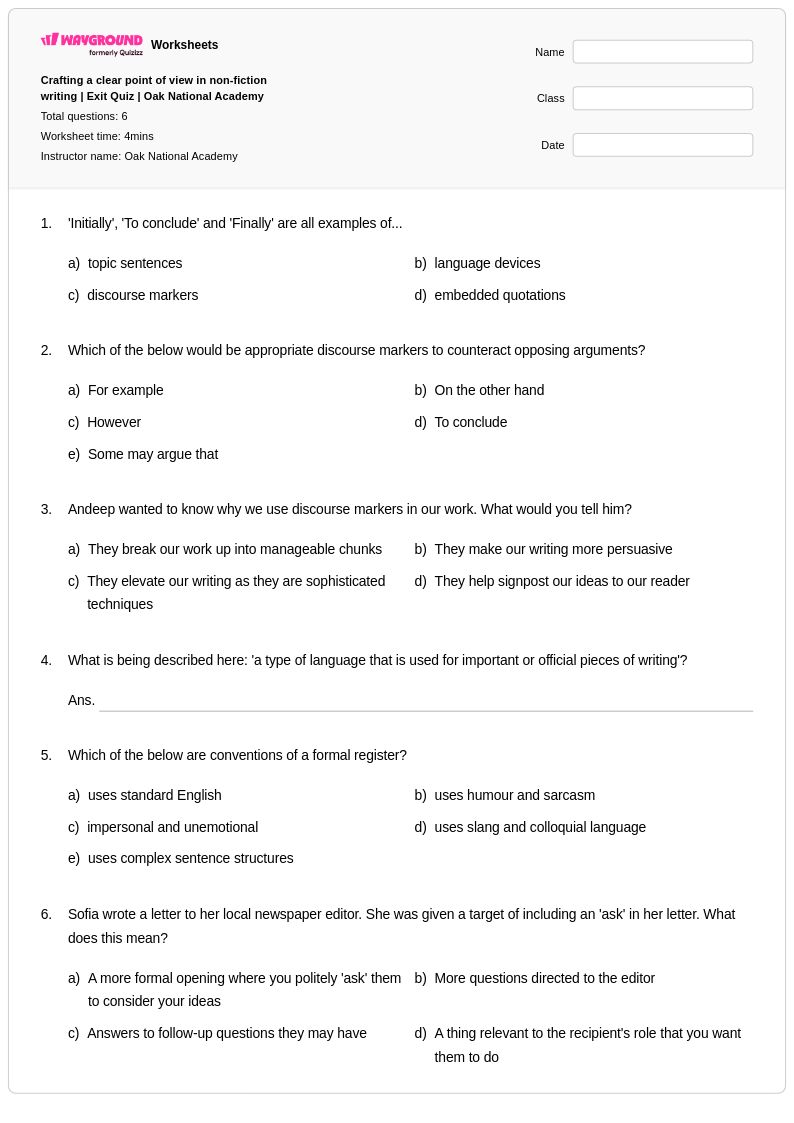
Fiction writing worksheets for Class 11 students available through Wayground (formerly Quizizz) provide comprehensive practice opportunities for developing advanced narrative skills and creative expression. These expertly crafted resources strengthen essential fiction writing competencies including character development, plot structure, dialogue construction, point of view mastery, and literary device implementation. Students engage with practice problems that challenge them to analyze narrative techniques, create compelling story openings, develop complex characters with authentic motivations, and craft sophisticated plot structures with appropriate pacing and tension. Each worksheet includes detailed answer keys that help students understand effective fiction writing strategies, while the free printable format ensures accessibility for both classroom instruction and independent practice at home.
Wayground (formerly Quizizz) empowers educators with an extensive collection of millions of teacher-created fiction writing resources specifically designed for Class 11 instruction. The platform's robust search and filtering capabilities allow teachers to quickly locate worksheets aligned with specific curriculum standards and learning objectives, while differentiation tools enable customization for diverse student needs and skill levels. These comprehensive resources are available in both printable pdf formats and interactive digital versions, providing flexibility for various classroom environments and teaching preferences. Teachers can seamlessly integrate these materials into their lesson planning for targeted skill practice, use them for remediation with struggling writers, or deploy them as enrichment activities for advanced students, ensuring that all Class 11 learners receive appropriate support in developing their fiction writing abilities.
FAQs
How do I teach fiction writing to students who struggle with where to start?
Students who struggle to begin often benefit from structured scaffolding that breaks fiction writing into discrete stages: brainstorming, outlining, drafting, and revising. Teaching character creation first gives students a concrete anchor before they attempt plot or setting, because students who know their character deeply tend to generate story ideas more organically. Using graphic organizers for character profiles and story maps helps reluctant writers externalize their thinking before committing words to the page.
What exercises help students practice plot structure in fiction writing?
Plot structure practice works best when students analyze familiar stories before constructing their own, identifying exposition, rising action, climax, falling action, and resolution in texts they already know. Sequencing exercises, where students reorder scrambled story events, reinforce the logic of narrative arc without requiring original composition. Once students can label structure in mentor texts, they are better prepared to apply it in their own realistic fiction and creative writing.
What are the most common mistakes students make in fiction writing?
The most common errors in student fiction writing include flat or underdeveloped characters, plots that skip directly from setup to resolution without sufficient conflict, and inconsistent point of view. Students also frequently neglect setting, treating it as decoration rather than as a force that shapes character and plot. In dialogue, students often write exchanges that sound unnatural or fail to advance the story, and they tend to tell readers how characters feel rather than showing emotion through action and detail.
How can I use fiction writing worksheets to support students at different skill levels?
Fiction writing worksheets can be differentiated by adjusting the degree of scaffolding: advanced students may receive open-ended prompts for character creation or poetry, while developing writers benefit from partially completed graphic organizers or sentence starters. On Wayground, teachers can apply student-level accommodations such as Read Aloud for struggling readers, reduced answer choices to lower cognitive load, and extended time settings, all configurable per individual student without disrupting the rest of the class. These settings are reusable across sessions, making it efficient to maintain consistent support for students with IEPs or learning differences.
How do I use Wayground's fiction writing worksheets in my classroom?
Wayground's fiction writing worksheets are available as printable PDFs for traditional classroom use and in digital formats for technology-integrated or remote learning environments, and teachers can also host them as interactive quizzes directly on the Wayground platform. The collection covers subtopics including character creation, creative writing, poetry, and realistic fiction, making it straightforward to select materials that match a specific unit or skill focus. Complete answer keys are included, so worksheets function as independent practice, homework, or formative assessment with minimal additional preparation required from the teacher.
How do I teach students to write believable dialogue in fiction?
Believable dialogue requires students to understand two principles: characters speak in ways consistent with their personality and background, and every line of dialogue should do at least one of two things, reveal character or move the plot forward. A useful classroom exercise is having students rewrite the same exchange between two characters with different relationships, such as friends versus strangers, to feel how voice shifts. Teaching dialogue punctuation conventions alongside these content lessons prevents the mechanical errors that distract readers from the story.