Free Printable Realistic Fiction Worksheets for Class 11
Enhance Class 11 students' realistic fiction writing skills with Wayground's comprehensive collection of free worksheets, printables, and practice problems featuring detailed answer keys to develop authentic characters and believable storylines.
Explore printable Realistic Fiction worksheets for Class 11
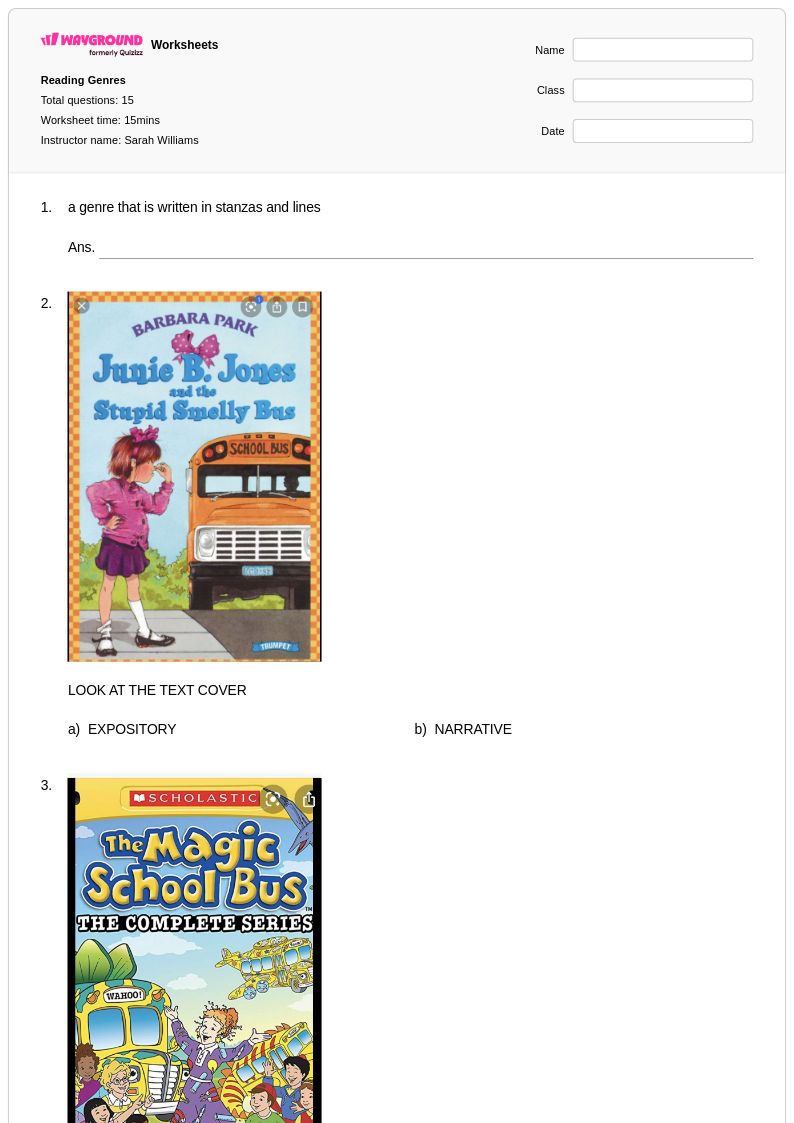
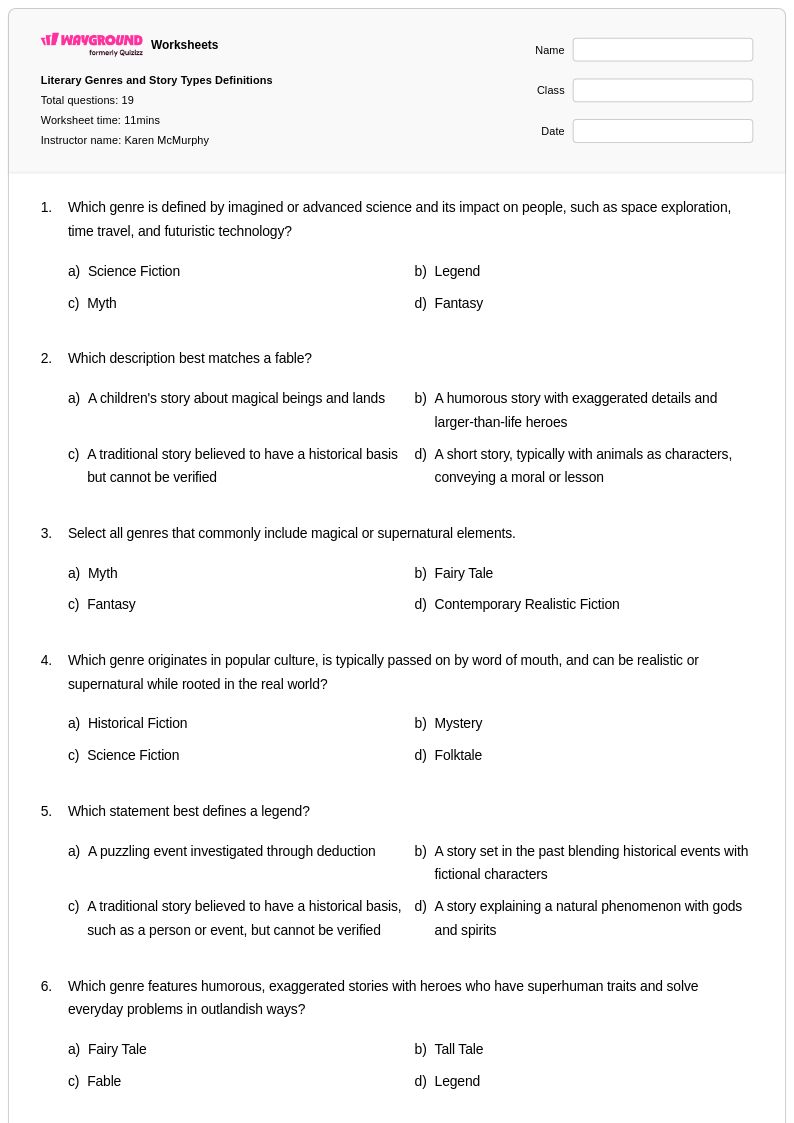
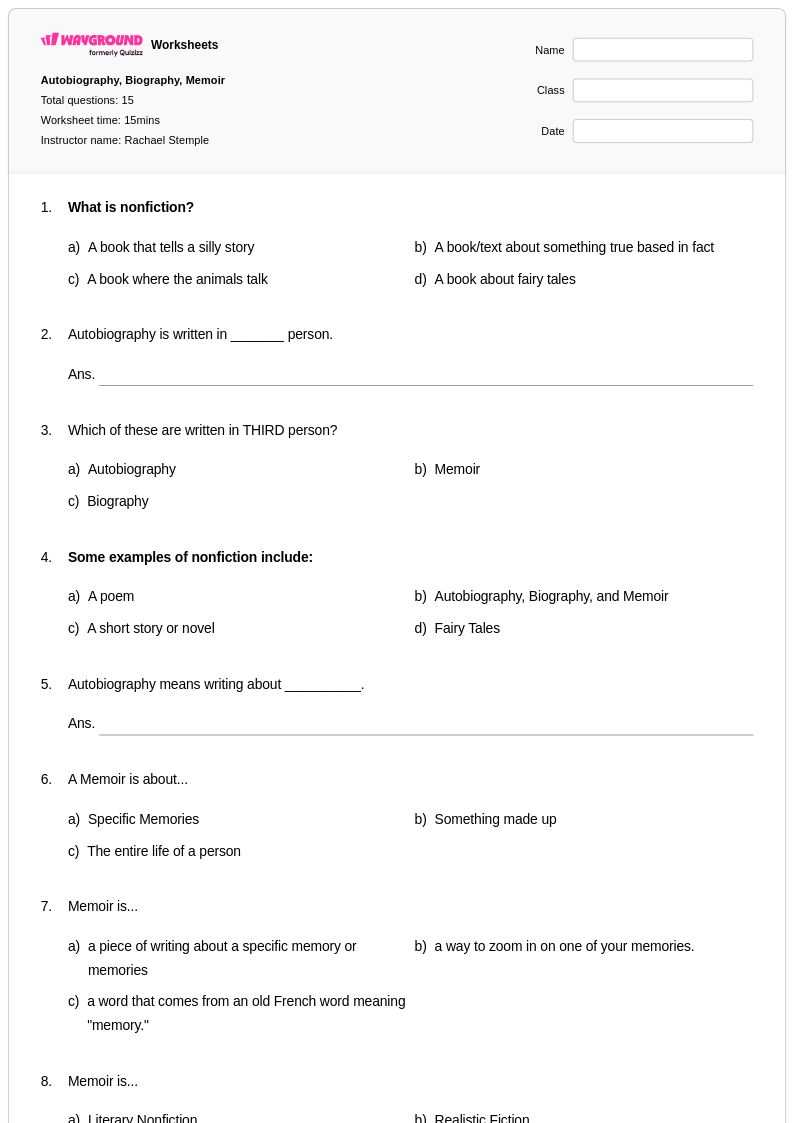
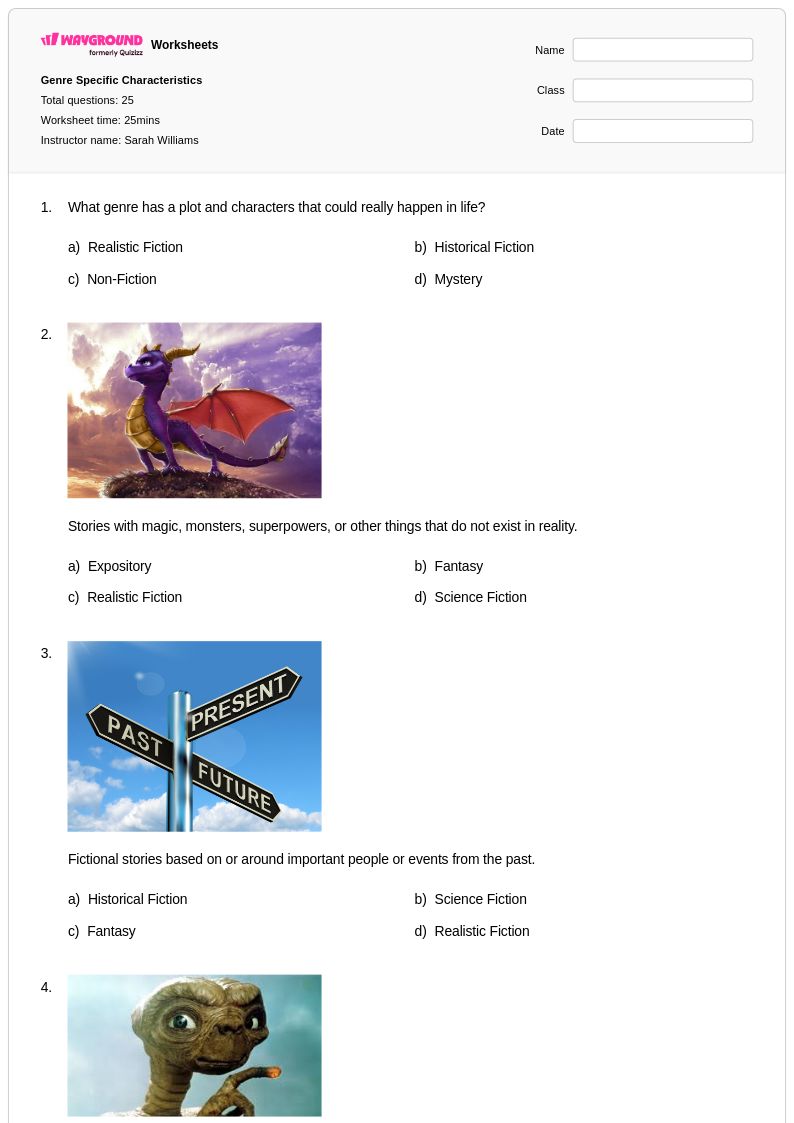
Realistic fiction writing worksheets for Class 11 students available through Wayground (formerly Quizizz) provide comprehensive resources to develop sophisticated narrative crafting skills essential for advanced high school writers. These expertly designed materials focus on helping students master the complexities of creating believable characters, authentic dialogue, and plausible plot structures that reflect real-world experiences and contemporary issues. The worksheets strengthen critical writing competencies including character development, setting establishment, conflict resolution, and thematic exploration while providing structured practice problems that guide students through the nuances of realistic fiction composition. Each resource includes detailed answer keys and is available as free printable pdf materials, allowing educators to seamlessly integrate targeted writing exercises that challenge students to craft narratives grounded in authentic human experiences and recognizable social contexts.
Wayground (formerly Quizizz) empowers educators with an extensive collection of millions of teacher-created realistic fiction writing resources specifically curated for Class 11 instruction, featuring robust search and filtering capabilities that enable quick identification of materials aligned with curriculum standards and individual classroom needs. The platform's differentiation tools allow teachers to customize worksheets for diverse learning levels, while flexible formatting options provide both printable and digital pdf versions to accommodate various instructional preferences and technological environments. These comprehensive features streamline lesson planning by offering ready-to-use materials for skill practice, targeted remediation for struggling writers, and enrichment opportunities for advanced students, ensuring that all Class 11 learners receive appropriate support in developing their realistic fiction writing abilities through structured, progressive exercises that build confidence and technical proficiency.
FAQs
How do I teach realistic fiction to students?
Teaching realistic fiction effectively starts with grounding students in the genre's defining features: contemporary settings, believable characters, and conflicts drawn from real-world experience. Begin by analyzing mentor texts to help students identify how authors create emotional authenticity and cultural accuracy. From there, guide students through structured writing stages, starting with character development and motivation before moving into plot construction and dialogue.
What exercises help students practice writing realistic fiction?
Effective practice exercises for realistic fiction include character profile activities where students build multi-dimensional characters with realistic motivations, and scenario-building prompts that require students to root conflict in everyday situations. Dialogue writing exercises are especially valuable because they push students to balance natural speech with narrative purpose. Guided worksheets that scaffold each element, from setting establishment to narrative structure, help students practice these skills systematically before drafting independently.
What mistakes do students commonly make when writing realistic fiction?
The most common mistake students make in realistic fiction is creating one-dimensional characters whose motivations feel convenient rather than genuine. Students also frequently resolve conflicts too neatly or too quickly, undermining the emotional authenticity the genre requires. Another common error is dialogue that sounds scripted rather than natural, which breaks the believability of the story. Targeted practice on character depth and conflict development helps address these patterns directly.
How do I teach character development in realistic fiction?
Character development in realistic fiction requires students to think beyond physical description and focus on internal motivation, backstory, and emotional response to conflict. Teach students to ask why a character makes each decision and how their history shapes their behavior. Structured graphic organizers that prompt students to define a character's wants, fears, and relationships are especially effective for building this depth before drafting begins.
How can I use Wayground's realistic fiction worksheets in my classroom?
Wayground's realistic fiction worksheets are available as printable PDFs for traditional classroom use and in digital formats for technology-integrated learning environments, giving teachers flexibility across different instructional settings. Teachers can also host these materials as a quiz directly on Wayground, making them suitable for both independent practice and formative assessment. Each worksheet includes complete answer keys, so teachers can use them for guided instruction, independent work, or peer review without additional preparation.
How do I support struggling writers during a realistic fiction unit?
Struggling writers in a realistic fiction unit often benefit from reduced cognitive load during drafting, which means separating the planning and writing stages clearly. Providing sentence starters for dialogue, structured character templates, and step-by-step plot outlines gives students a scaffold without removing creative ownership. On Wayground, teachers can apply individual accommodations such as read aloud support and reduced answer choices to help students access writing prompts and comprehension questions at their level.