Free Printable Physical and Chemical Changes Worksheets for Class 2
Explore Wayground's free Class 2 physical and chemical changes worksheets with printable PDFs, practice problems, and answer keys to help young students identify and understand basic scientific transformations.
Explore printable Physical and Chemical Changes worksheets for Class 2
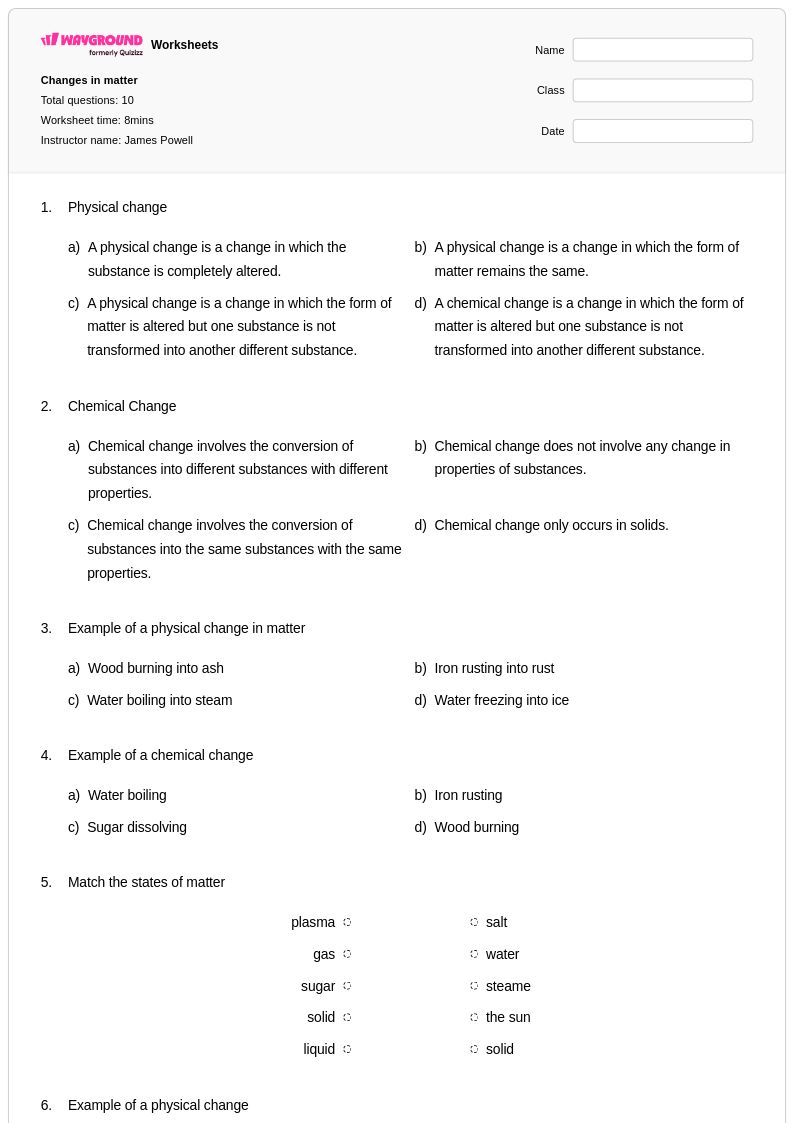
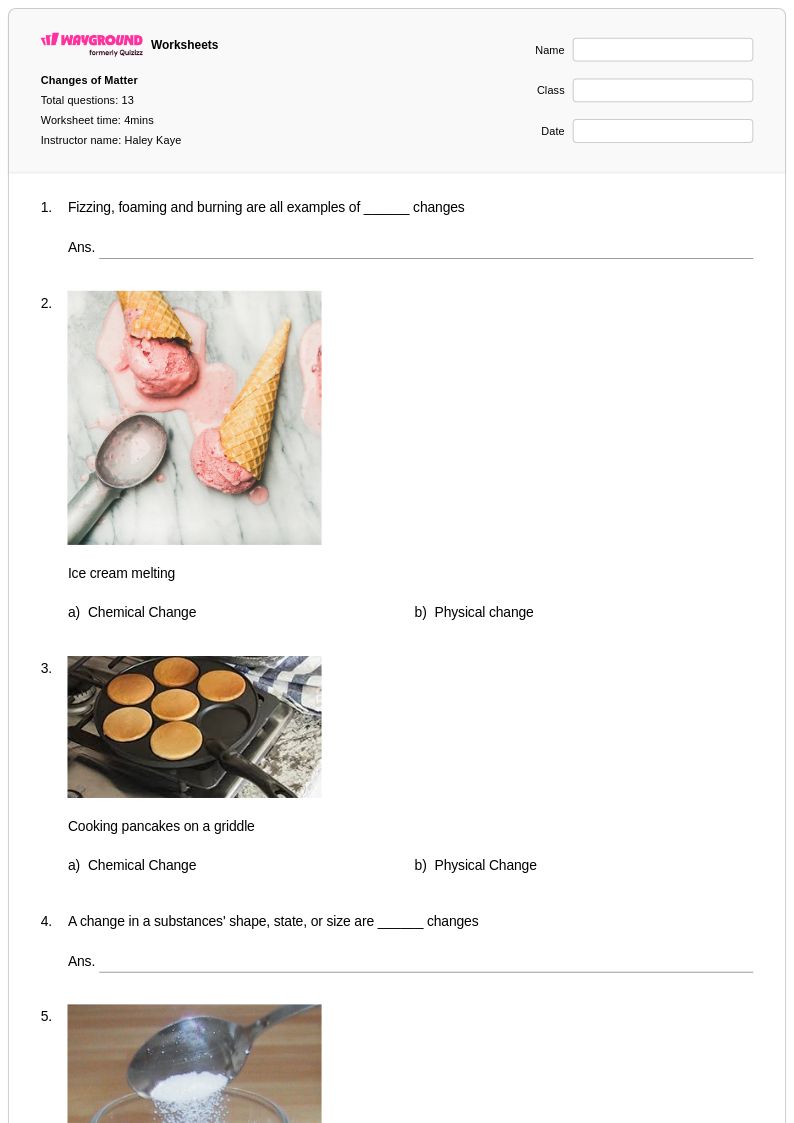
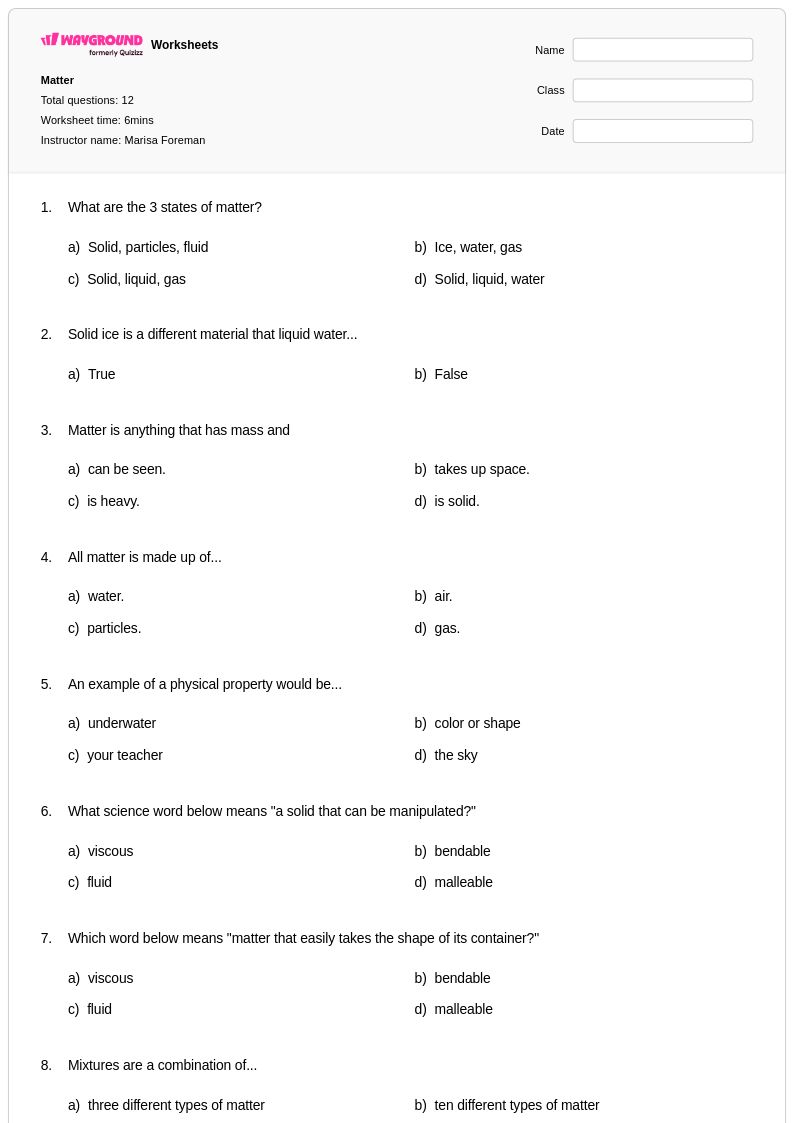
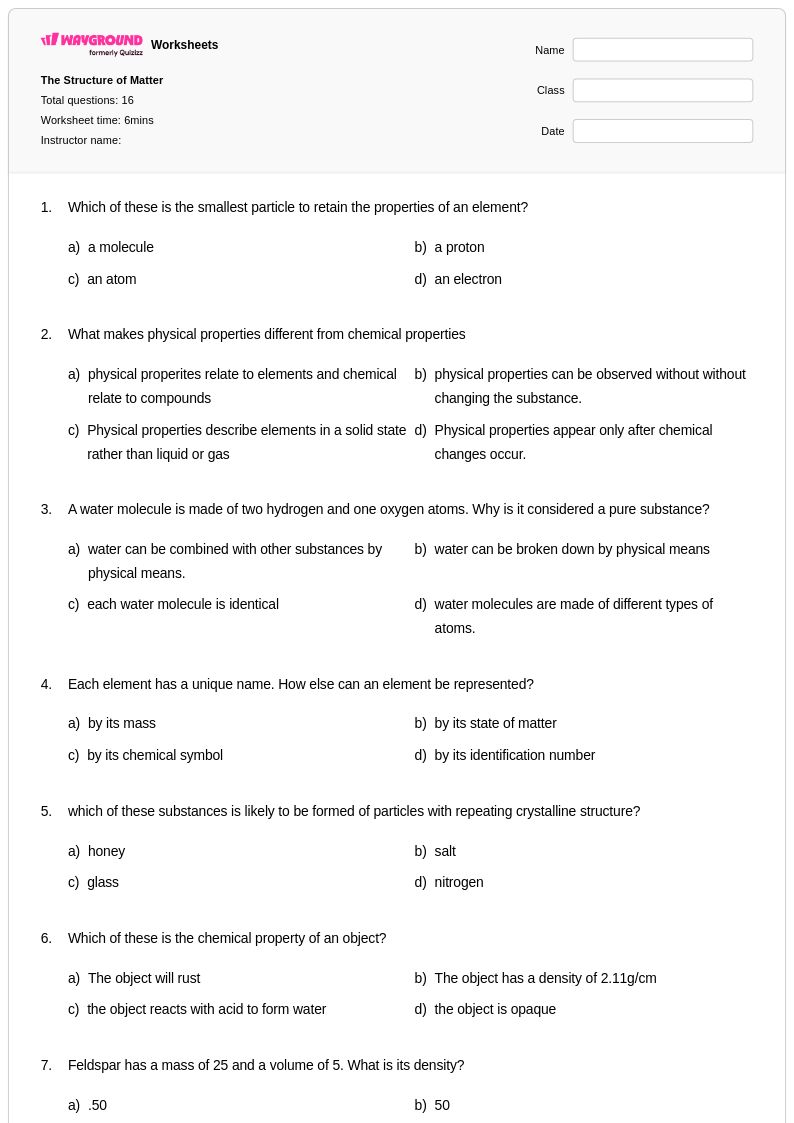
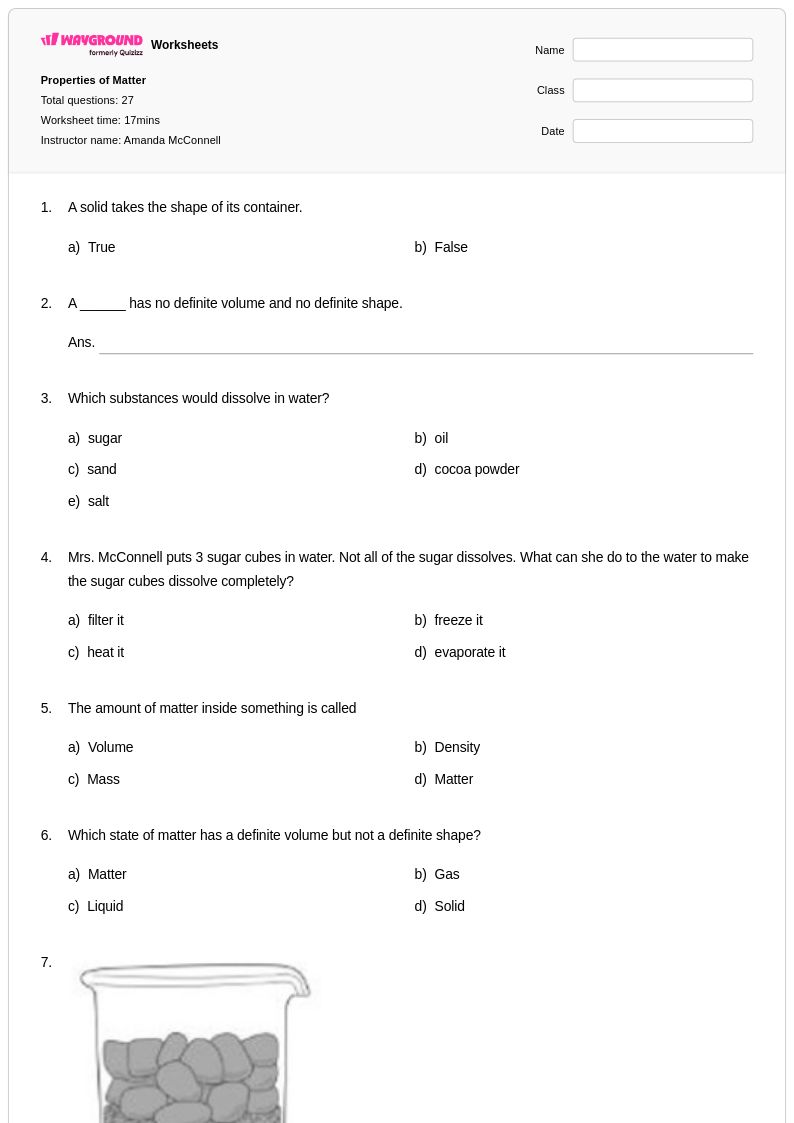
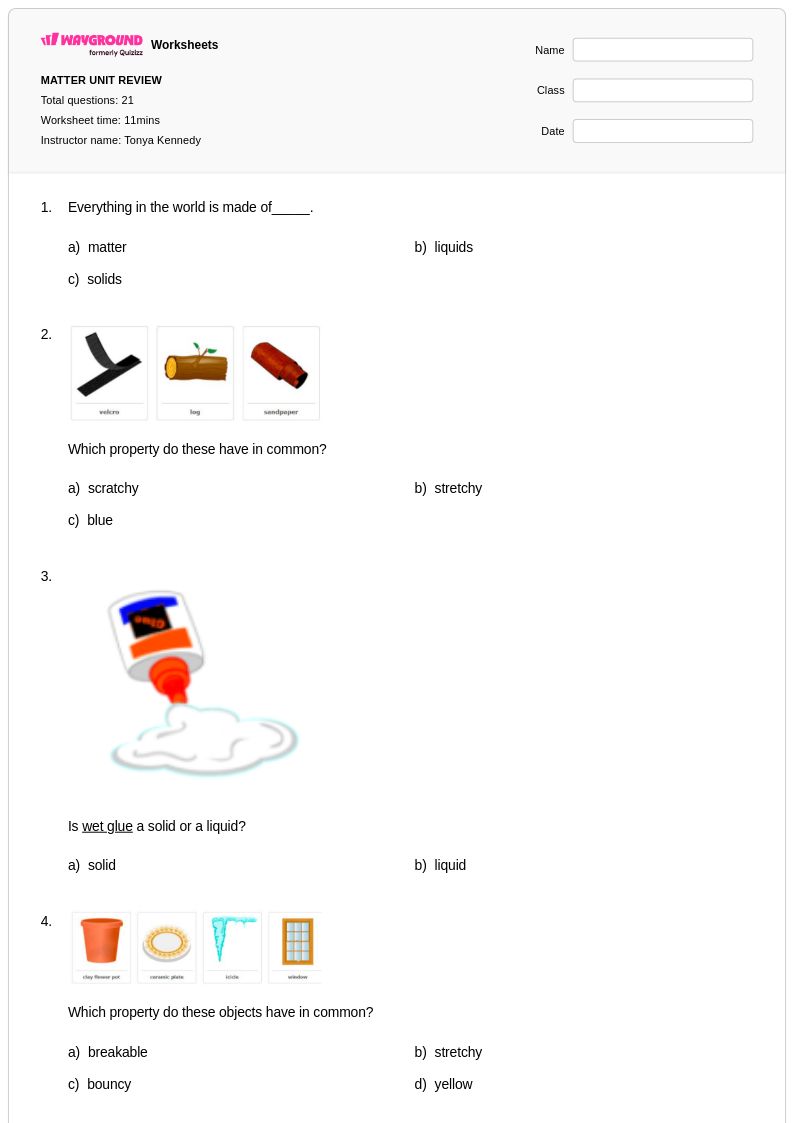
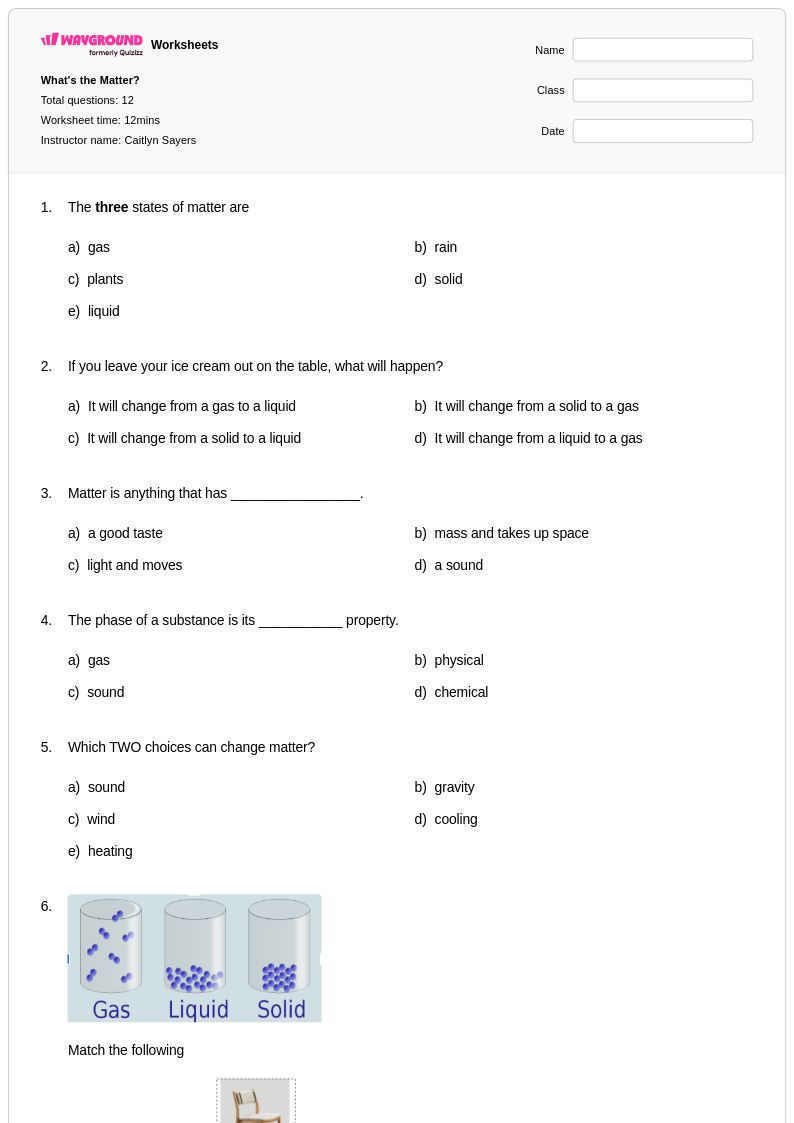
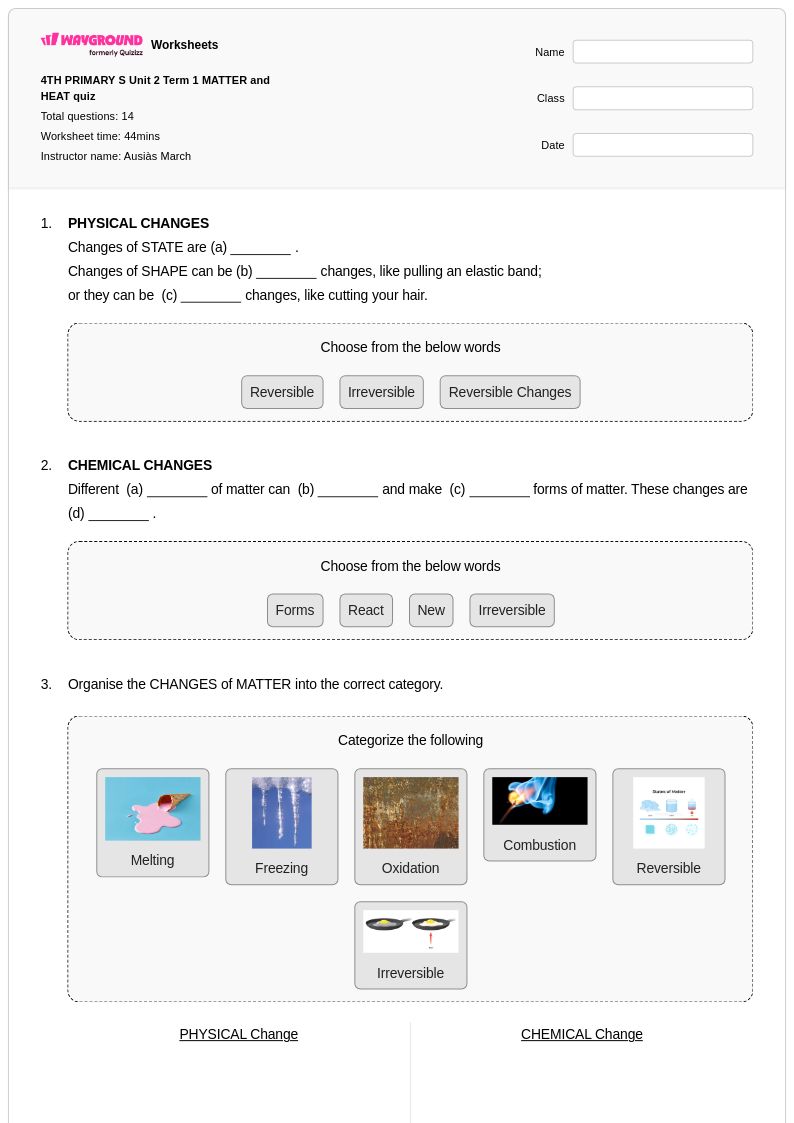
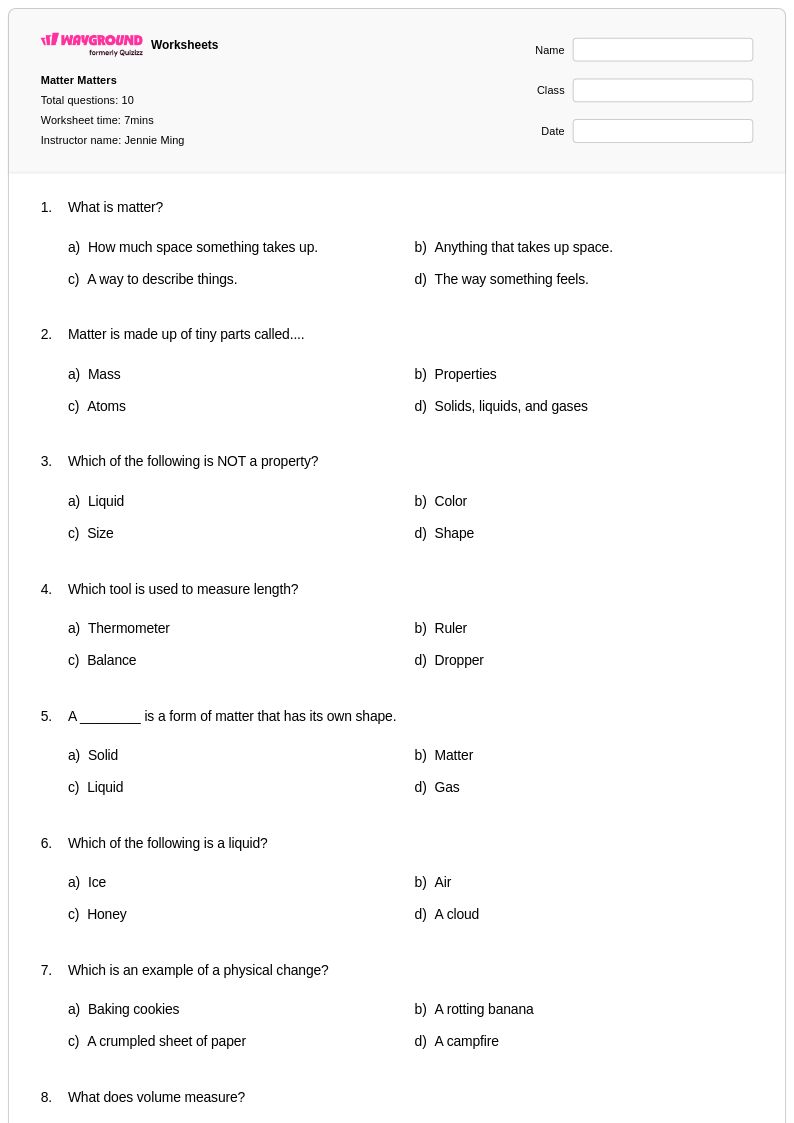
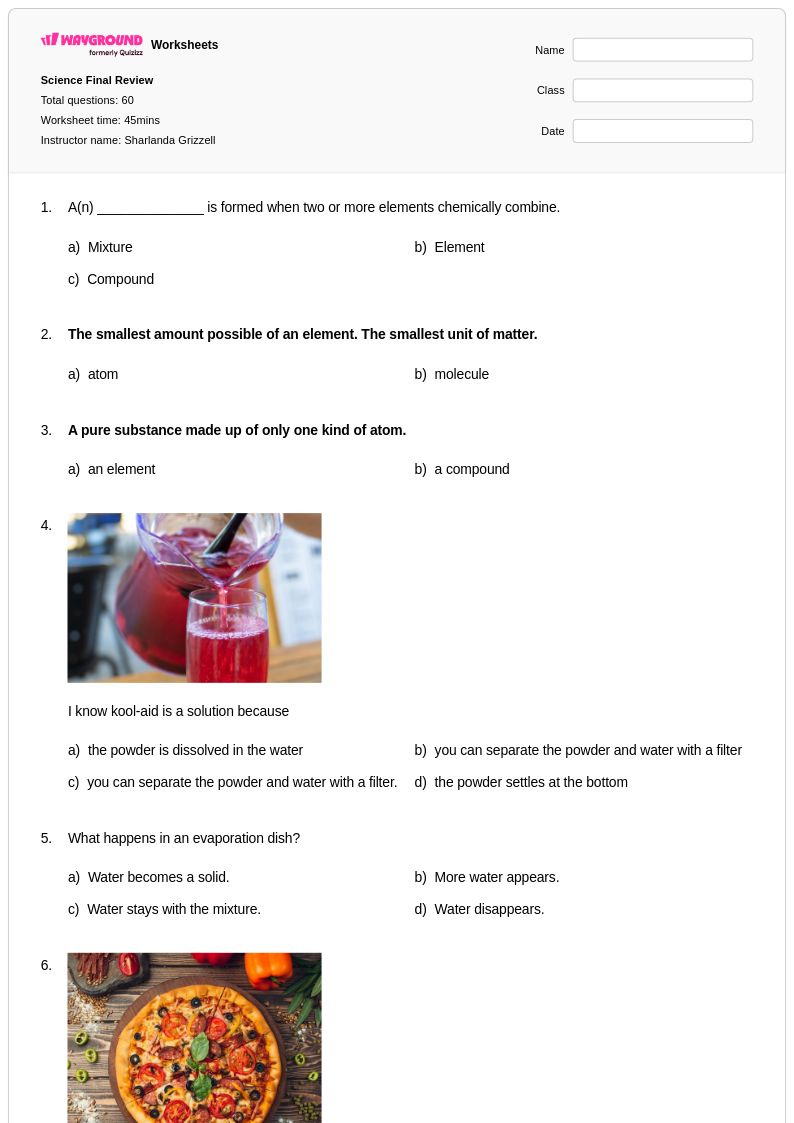
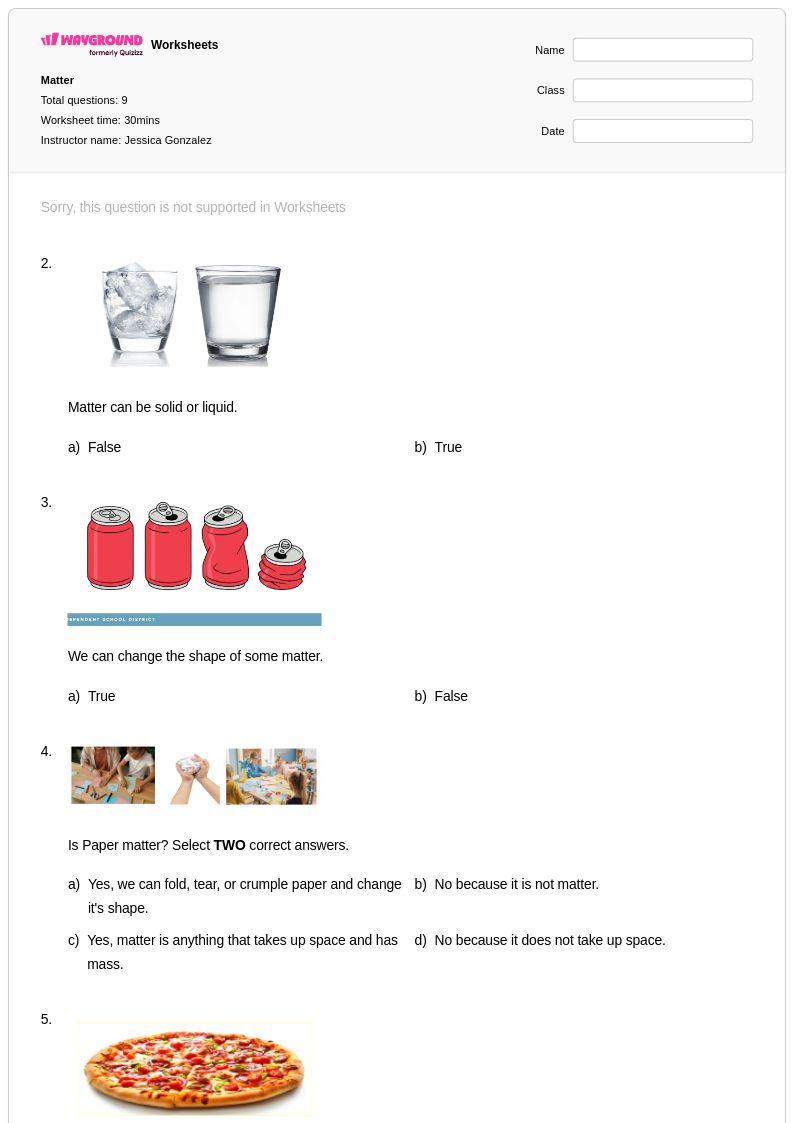
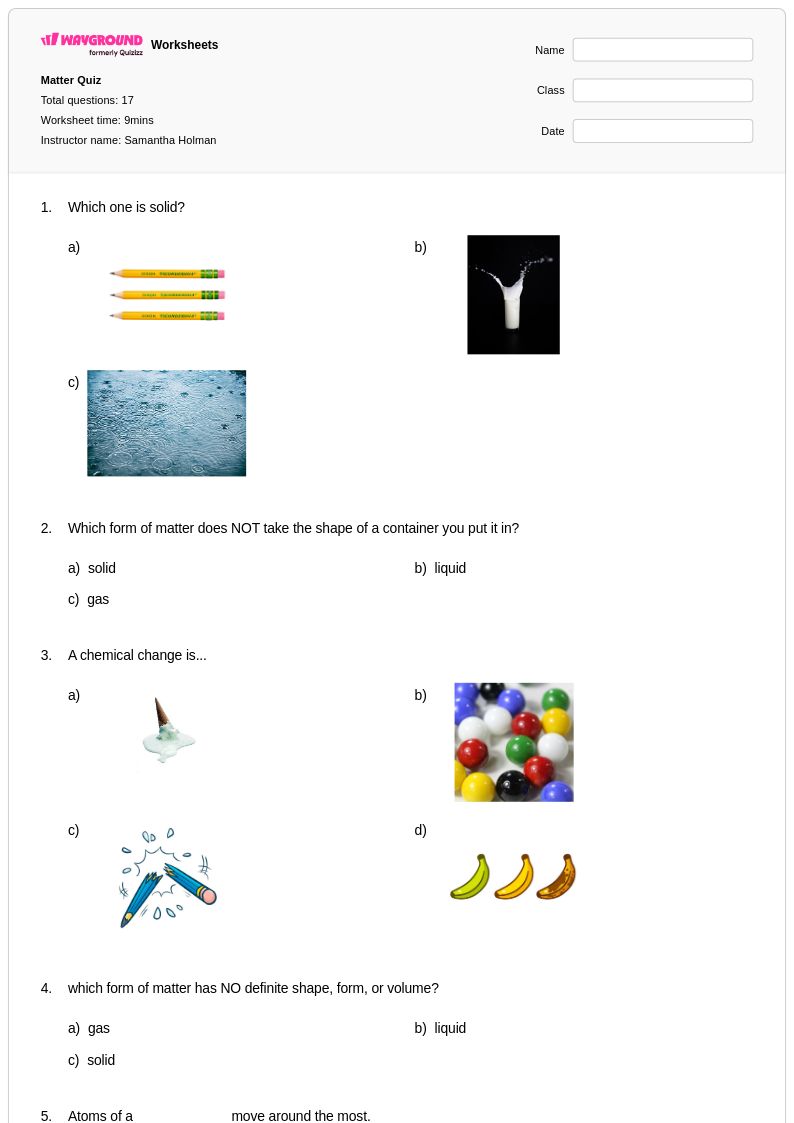
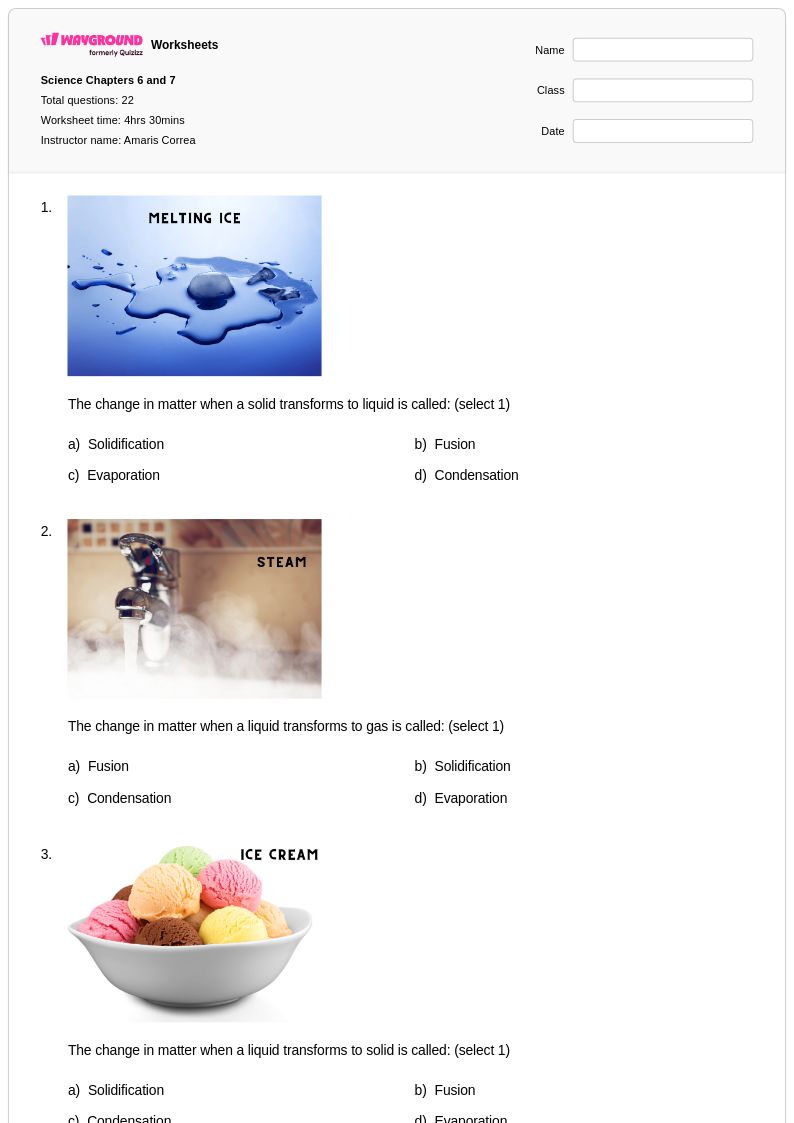
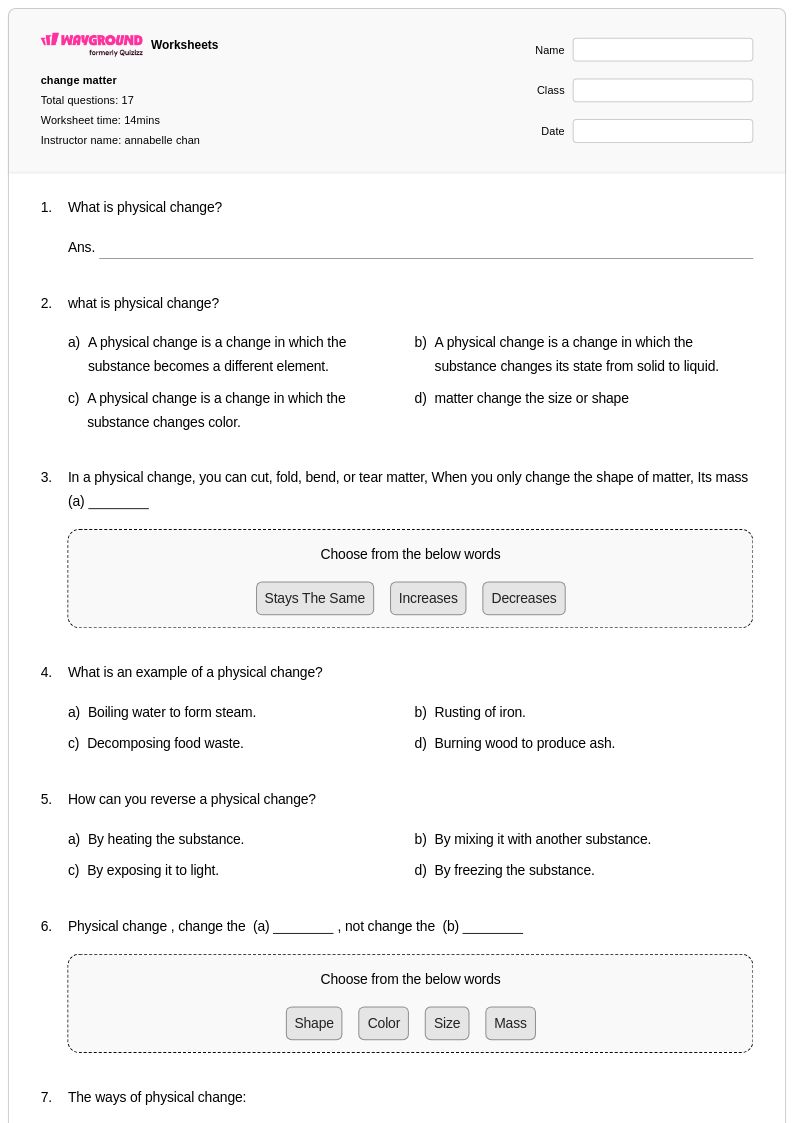
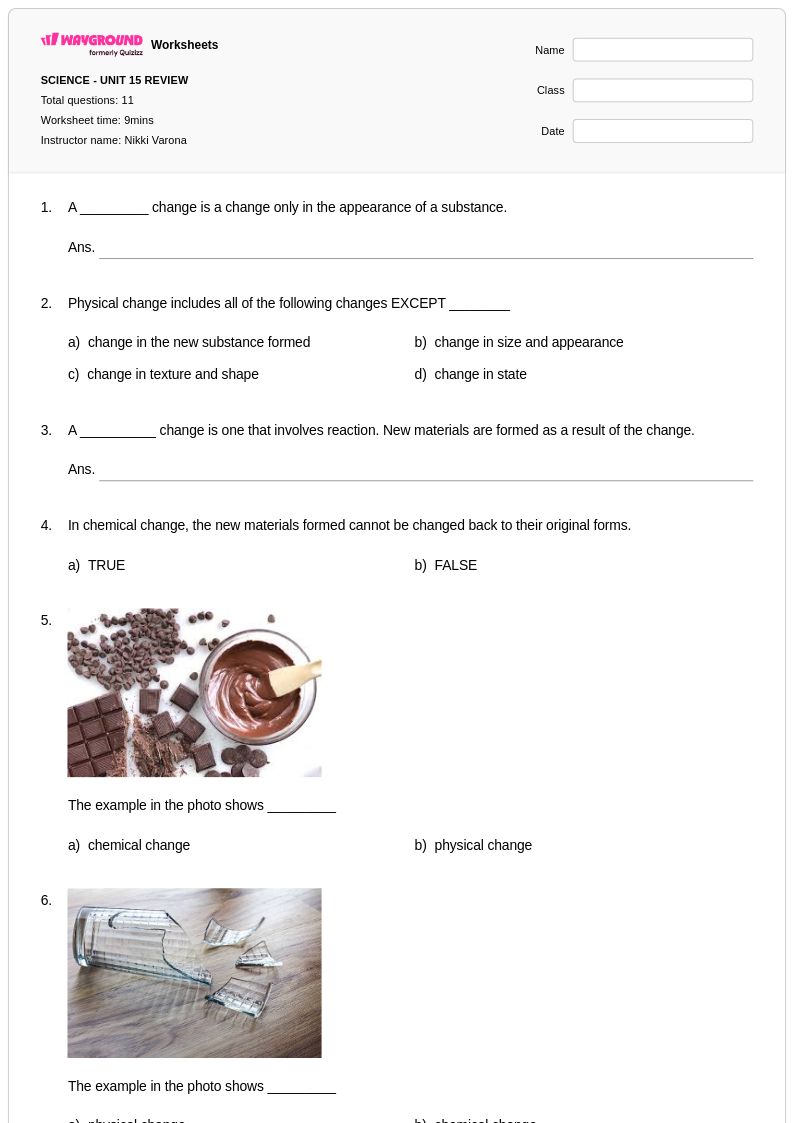
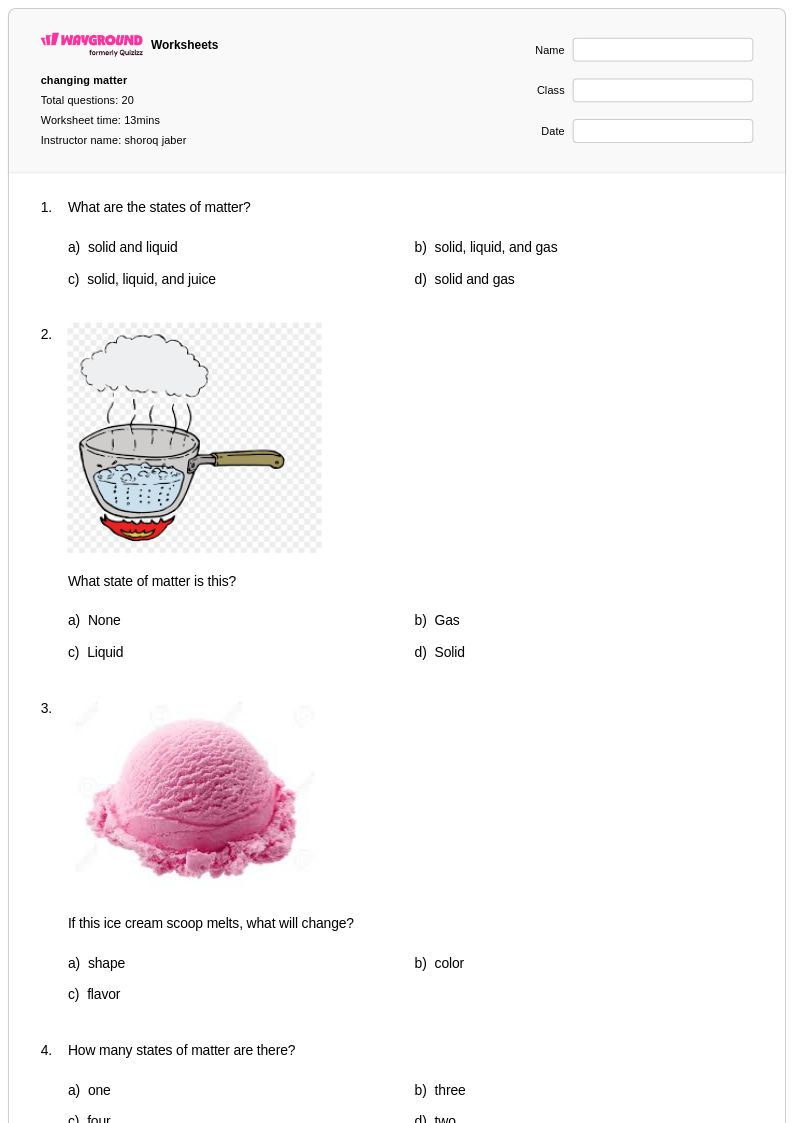
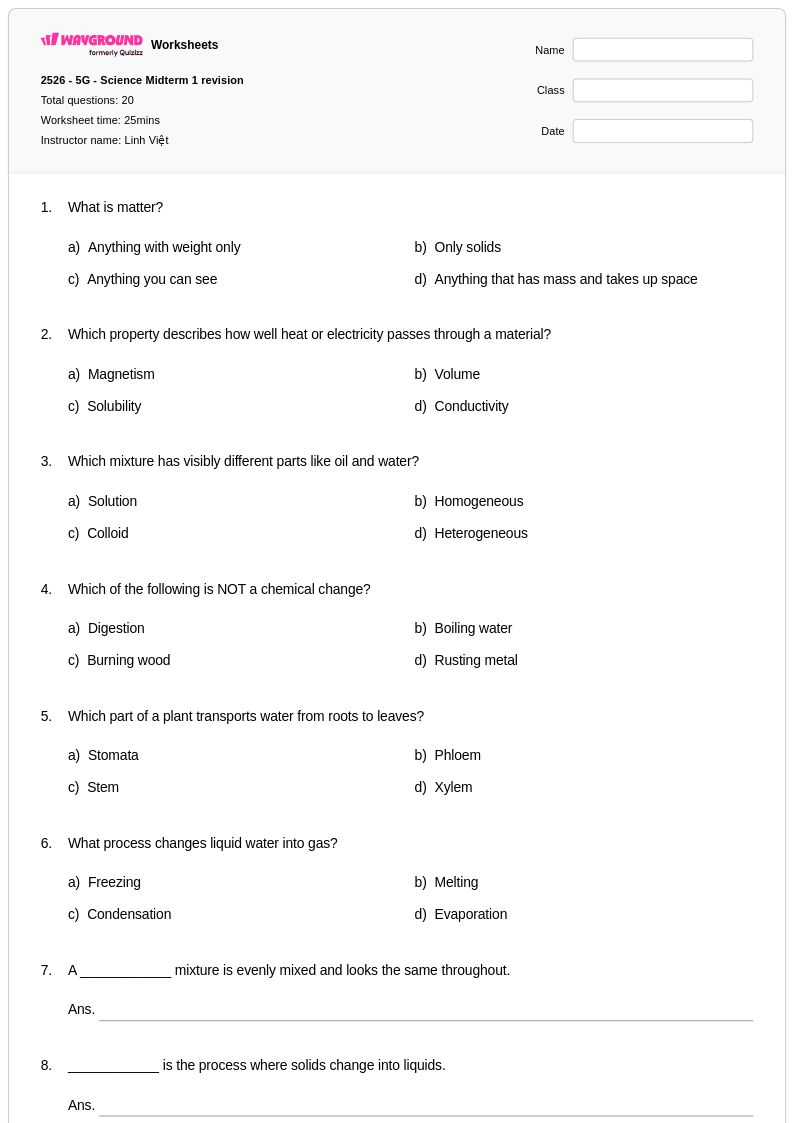
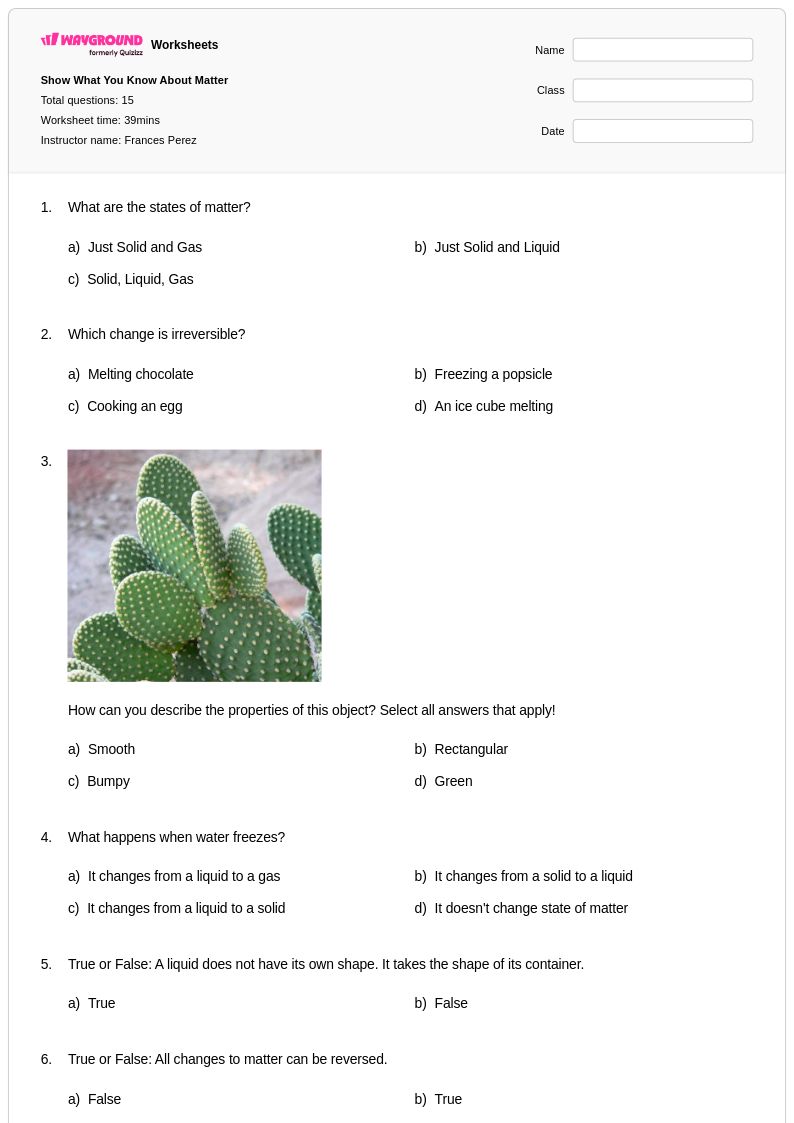
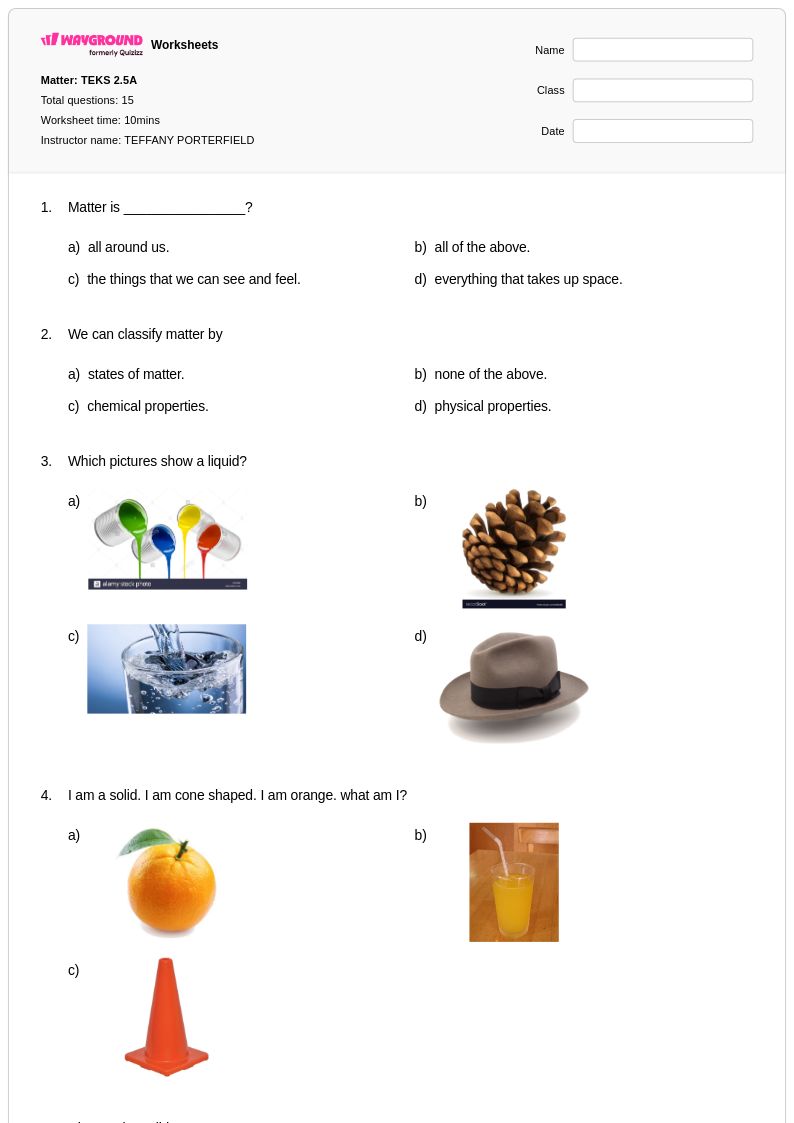
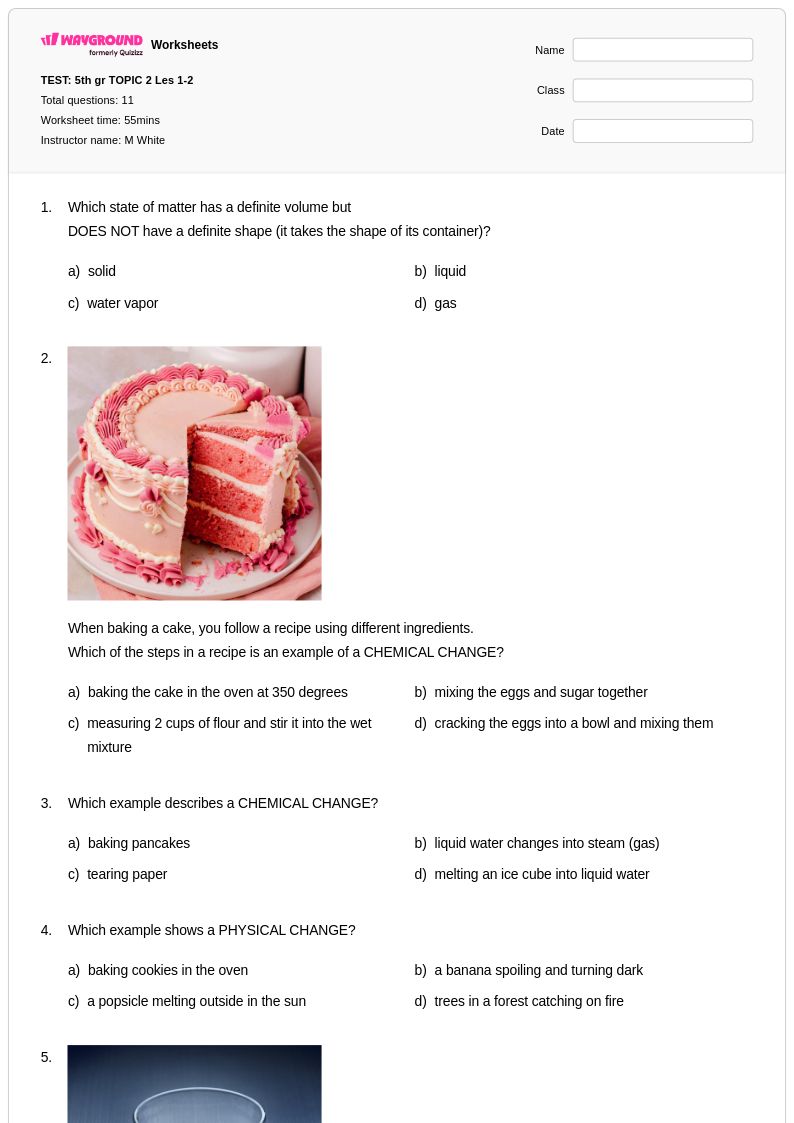
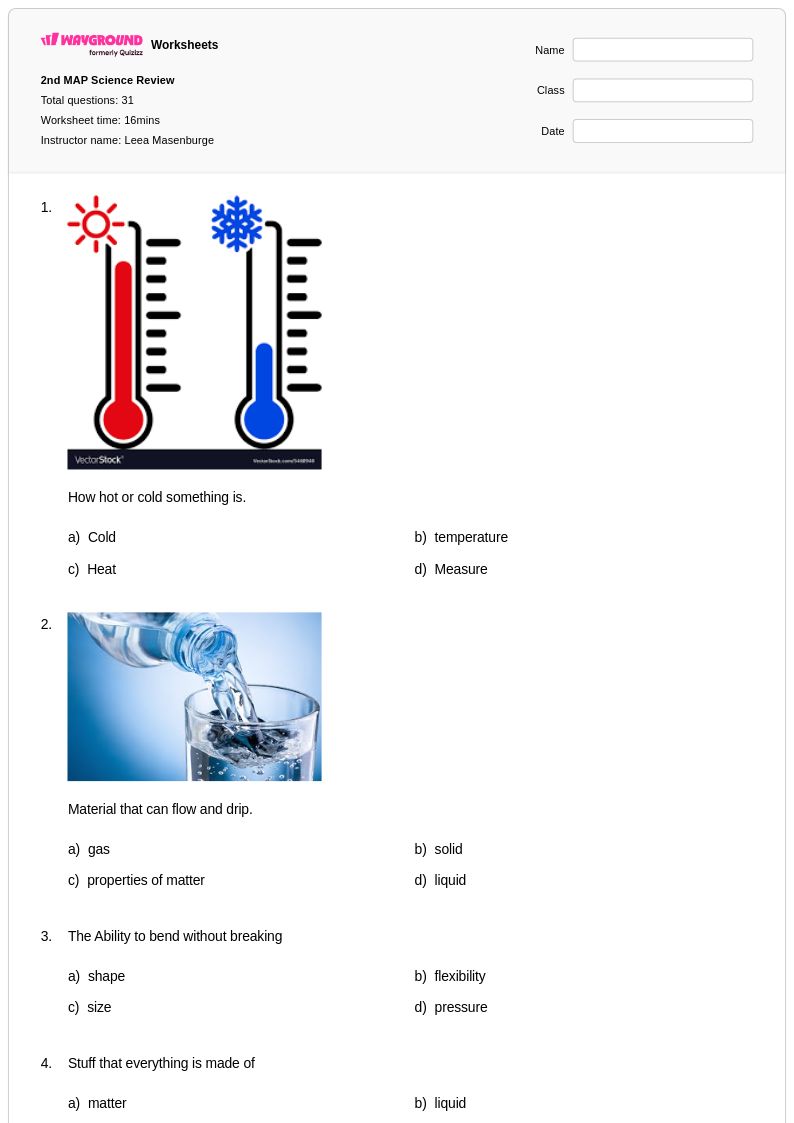
Physical and chemical changes worksheets for Class 2 students through Wayground (formerly Quizizz) introduce young learners to fundamental scientific concepts through age-appropriate activities and observations. These carefully designed educational resources help second-grade students distinguish between reversible physical changes, such as melting ice or tearing paper, and irreversible chemical changes, like burning wood or baking a cake. The worksheets strengthen critical thinking skills by guiding students through hands-on experiments, visual identification exercises, and simple classification tasks that build foundational understanding of matter and its transformations. Each printable resource includes comprehensive practice problems with answer keys, allowing teachers to assess student comprehension while providing immediate feedback. The free pdf formats ensure accessibility for diverse classroom environments, supporting both individual work and collaborative learning experiences that make abstract scientific concepts tangible for young minds.
Wayground's extensive collection of physical and chemical changes worksheets draws from millions of teacher-created resources, offering educators unparalleled variety and quality for Class 2 science instruction. The platform's robust search and filtering capabilities enable teachers to quickly locate materials that align with specific curriculum standards and learning objectives, while differentiation tools support diverse student needs through varying complexity levels and presentation formats. Teachers can seamlessly customize worksheets to match their classroom requirements, whether implementing remediation strategies for struggling learners or providing enrichment opportunities for advanced students. The dual availability of printable and digital formats, including downloadable pdf versions, accommodates different teaching preferences and technological capabilities. This comprehensive resource library streamlines lesson planning by providing ready-to-use materials that support systematic skill practice, formative assessment, and engaging science exploration that builds student confidence in understanding the physical world around them.
FAQs
How do I teach students the difference between physical and chemical changes?
Start by anchoring instruction in observable evidence rather than definitions alone. Teach students to look for specific indicators: physical changes alter form or appearance but produce no new substance, while chemical changes produce evidence such as color change, gas production, precipitate formation, or a temperature change. Using real-world examples like ice melting (physical) versus wood burning (chemical) helps students build reliable classification instincts before they encounter more ambiguous cases.
What are good worksheet exercises for practicing physical and chemical changes?
Effective practice exercises ask students to classify real-world scenarios by identifying the evidence that supports their answer, rather than simply labeling an event. Scenario-based classification problems, evidence identification tasks, and compare-and-contrast exercises between reversible and irreversible changes all build the analytical habits students need. Practice problems that require students to explain their reasoning — not just circle an answer — are especially effective at reinforcing durable understanding.
What mistakes do students commonly make when identifying physical vs. chemical changes?
The most common error is conflating dramatic appearance changes with chemical changes — students often classify cutting, dissolving, or crumpling as chemical because something looks different. A second misconception is treating reversibility as the sole criterion, which breaks down with examples like dissolving salt (physical, but appears irreversible). Instruction should explicitly address these edge cases and train students to look for evidence of a new substance rather than relying on visual drama or reversibility alone.
How do I use physical and chemical changes worksheets in my classroom?
Physical and chemical changes worksheets on Wayground are available as printable PDFs for traditional classroom use and in digital formats for technology-integrated or remote learning environments, and can also be hosted as a quiz directly on the Wayground platform. Printable versions work well for guided notes, lab follow-ups, or homework assignments, while digital versions allow for immediate feedback. Each worksheet includes a complete answer key, making them practical for both initial instruction and independent review sessions.
How can I support struggling learners when teaching physical and chemical changes?
For students who need additional support, Wayground's built-in accommodation tools allow teachers to enable Read Aloud for audio delivery of questions, reduce the number of answer choices to lower cognitive load, and grant extended time on a per-student basis. These settings can be applied individually without notifying other students, so differentiation stays discreet. Pairing these digital accommodations with scaffolded practice problems that walk through the classification process step by step is an effective combination for learners who are building foundational chemistry skills.
Are physical and chemical changes worksheets aligned to chemistry curriculum standards?
Physical and chemical changes is a core concept in middle and high school chemistry curricula, appearing in standards frameworks that address the properties of matter and chemical reactions. Worksheets that focus on evidence-based classification, real-world scenarios, and systematic observation align directly with science and engineering practice standards that emphasize analysis and argumentation. Wayground's filtering tools allow teachers to locate materials matched to their specific curriculum standards and student needs.