Free Printable Plot Structure Worksheets for Class 9
Class 9 plot structure worksheets from Wayground help students master story elements through engaging printables and practice problems with comprehensive answer keys for effective reading comprehension development.
Explore printable Plot Structure worksheets for Class 9
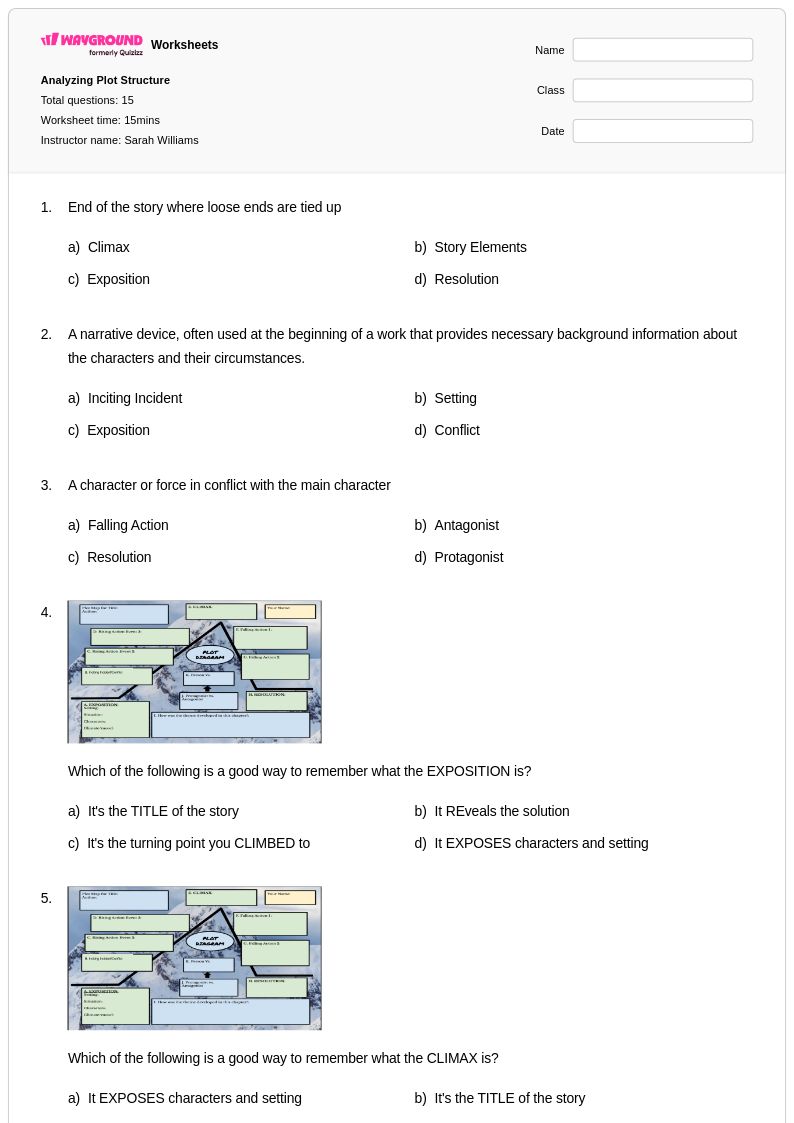
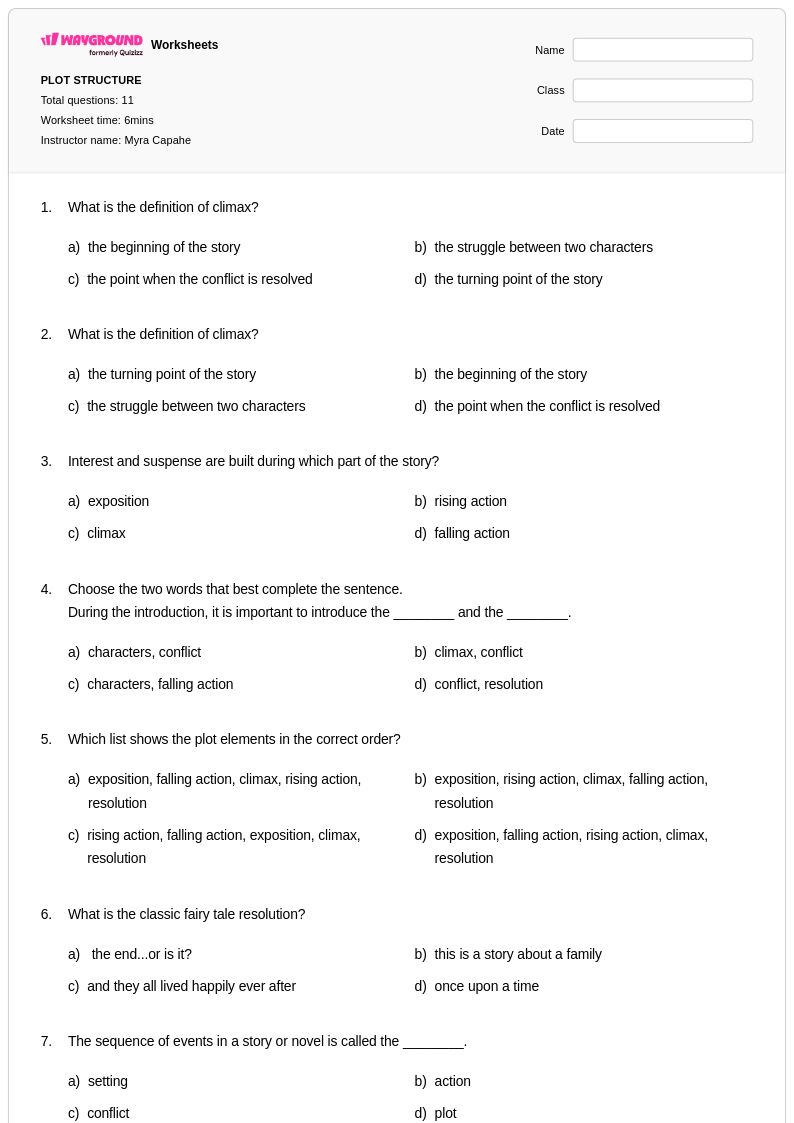
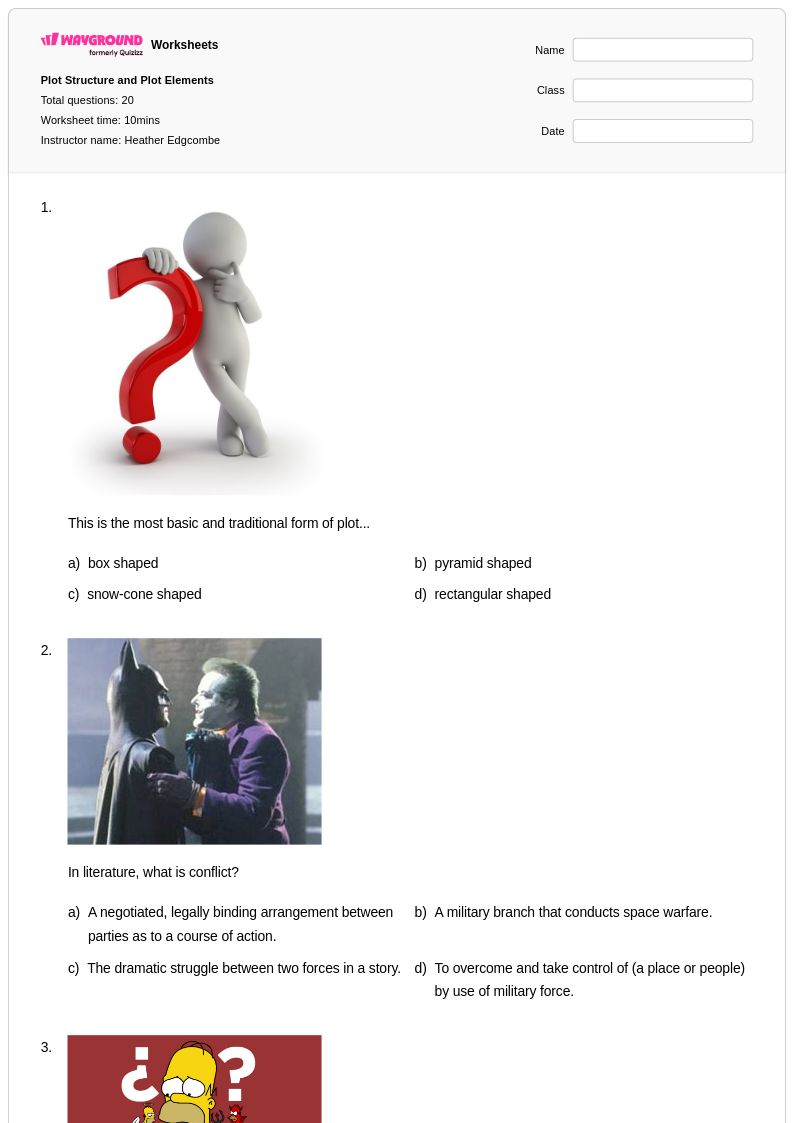
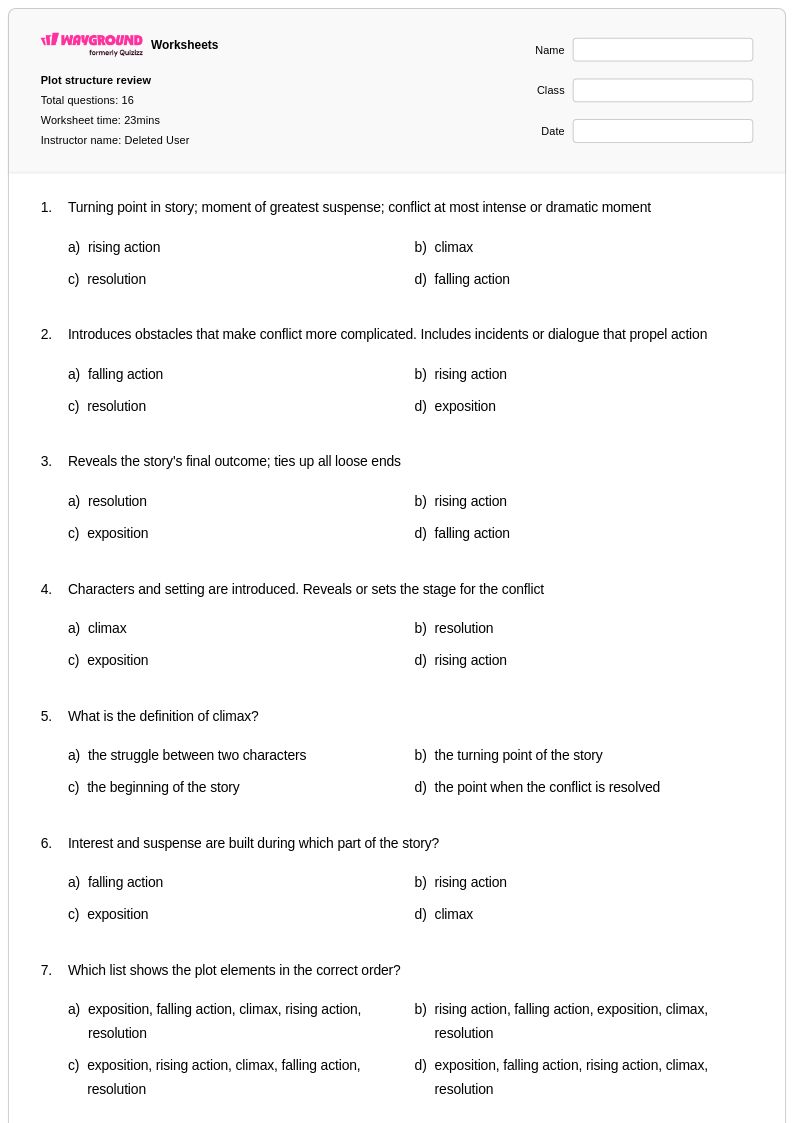
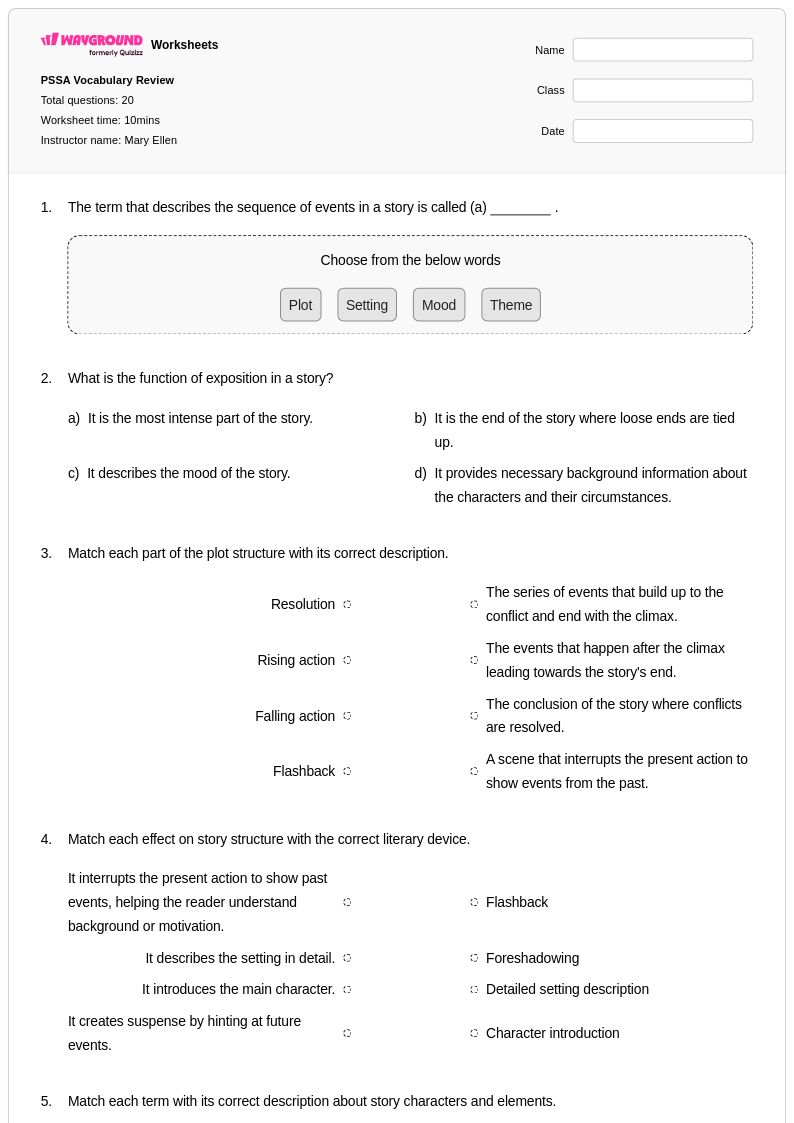
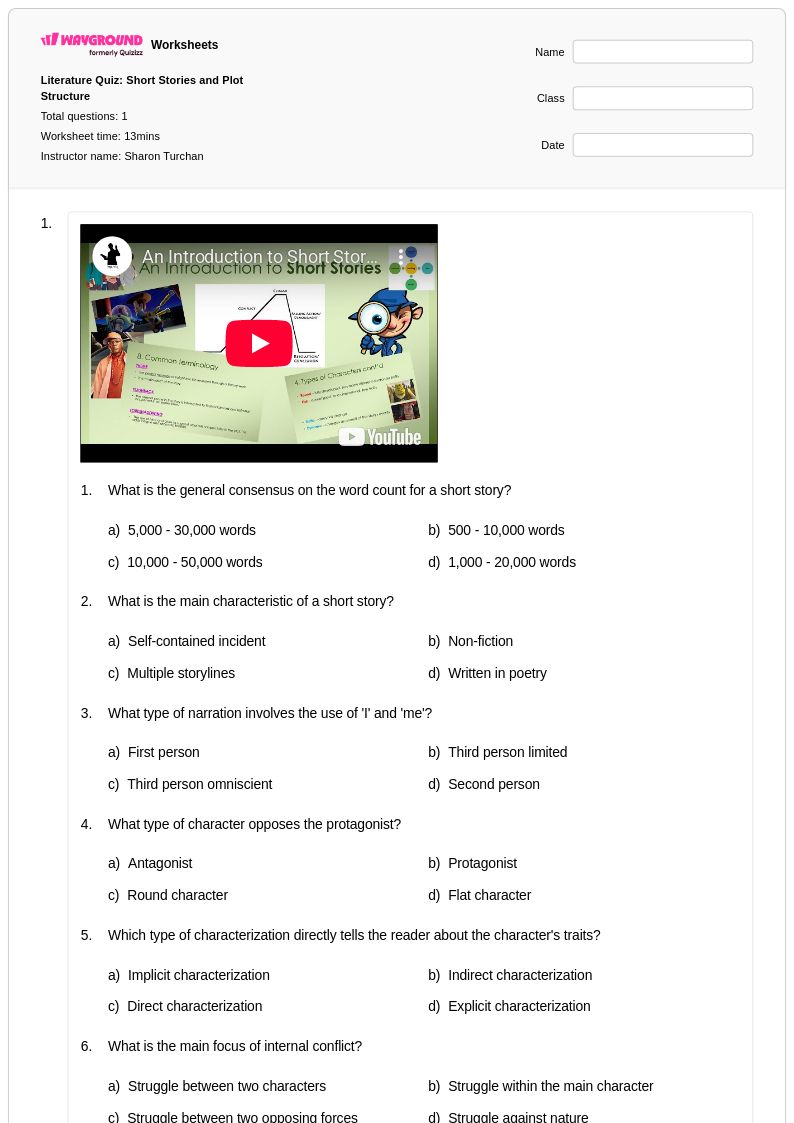
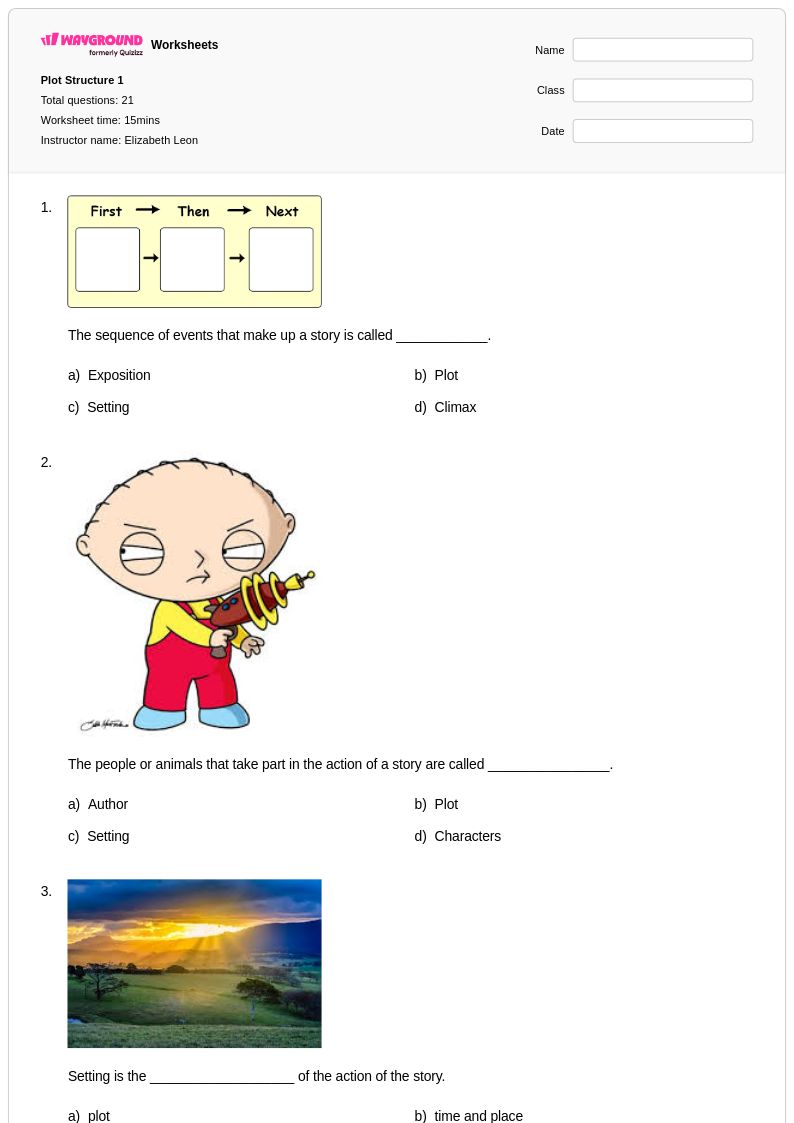
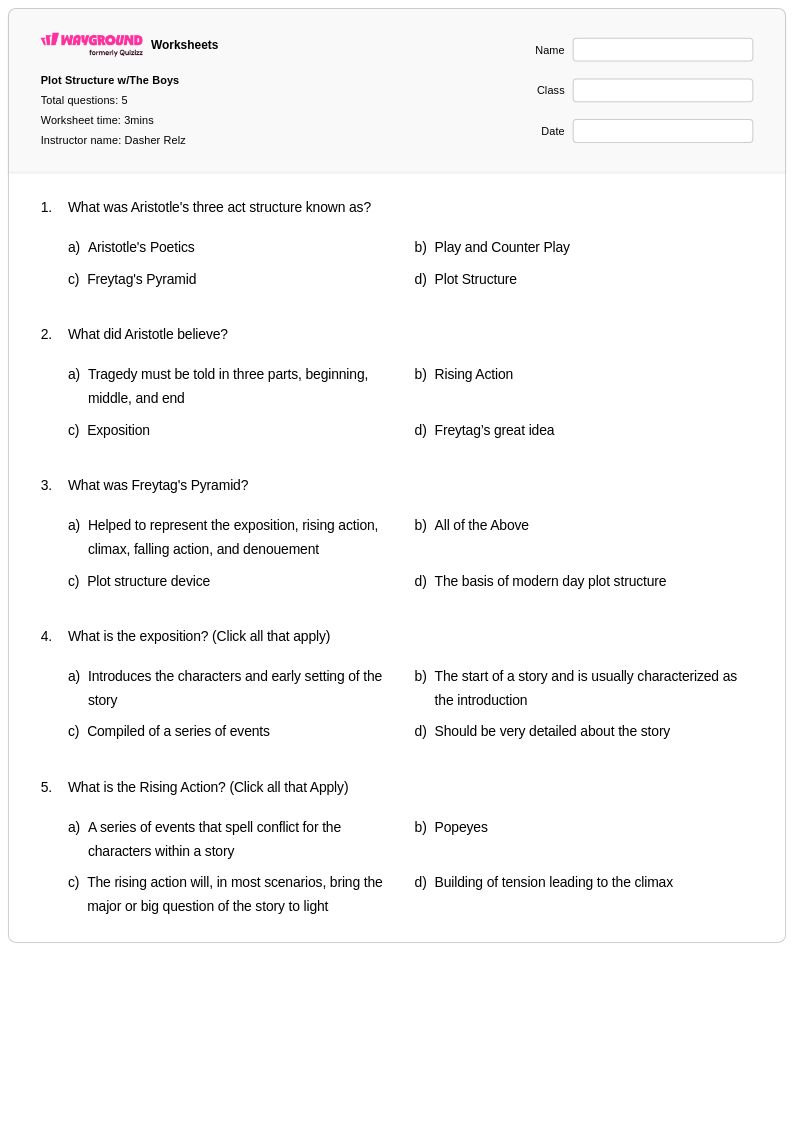
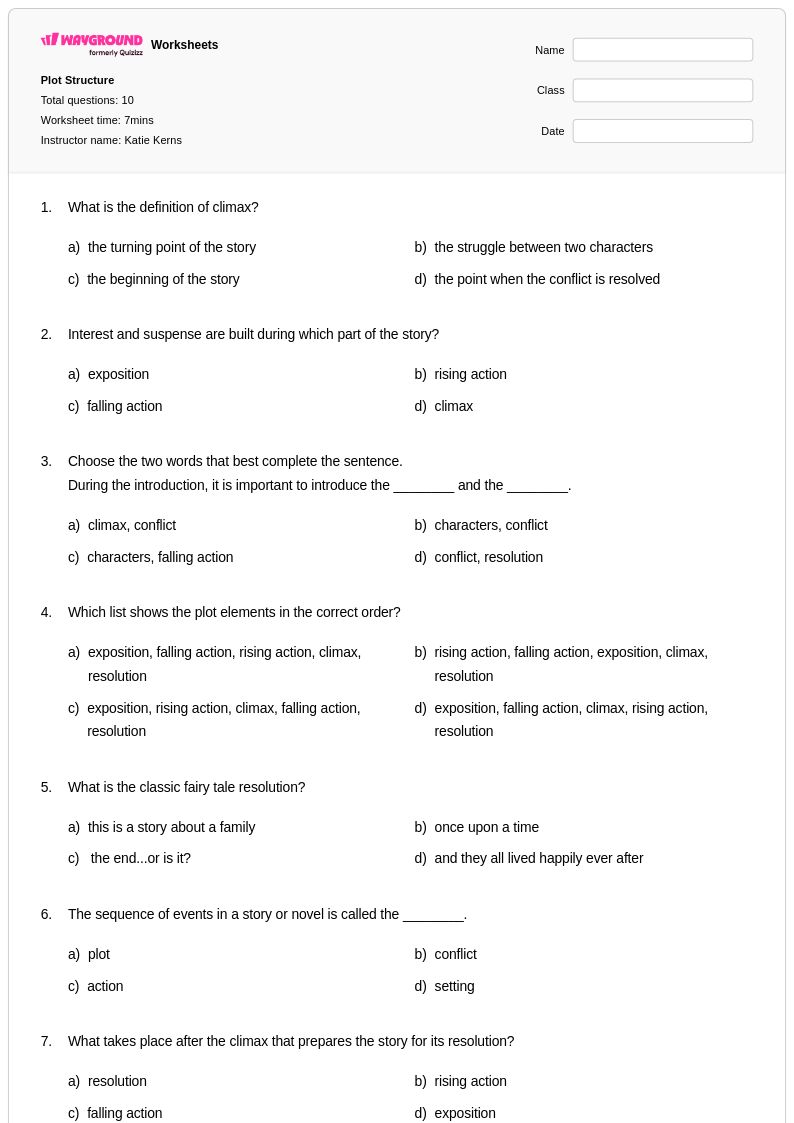
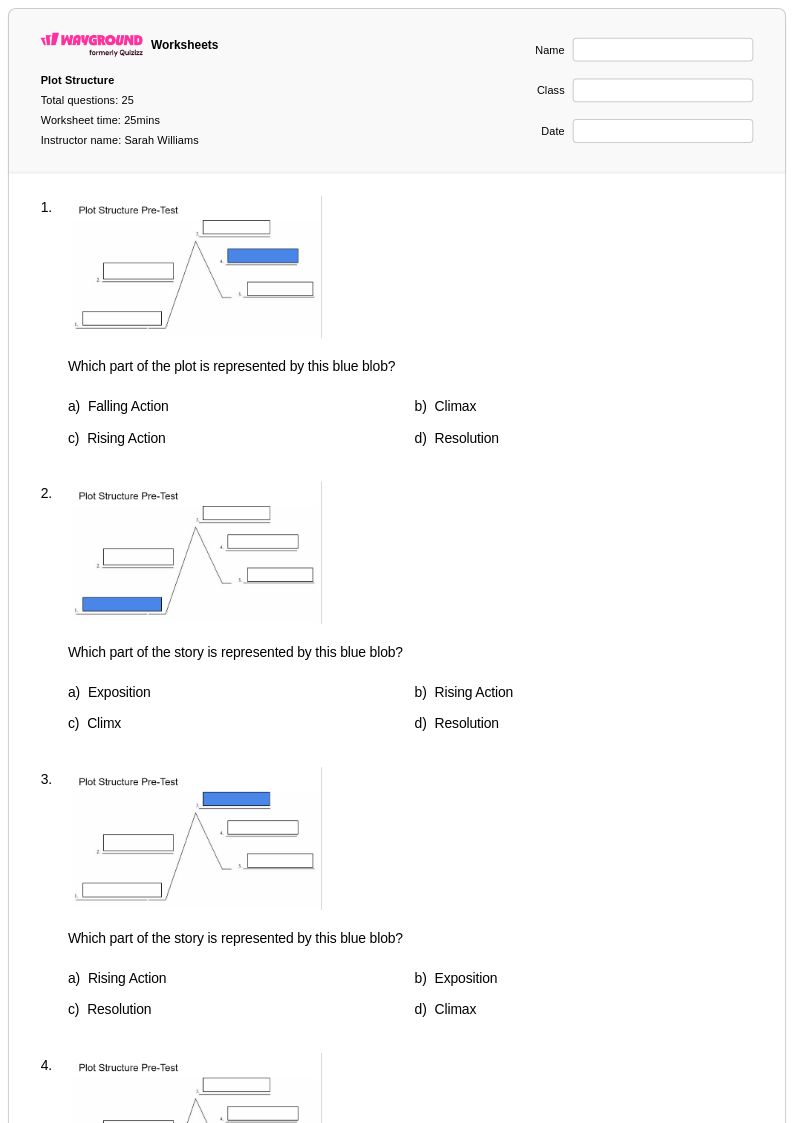
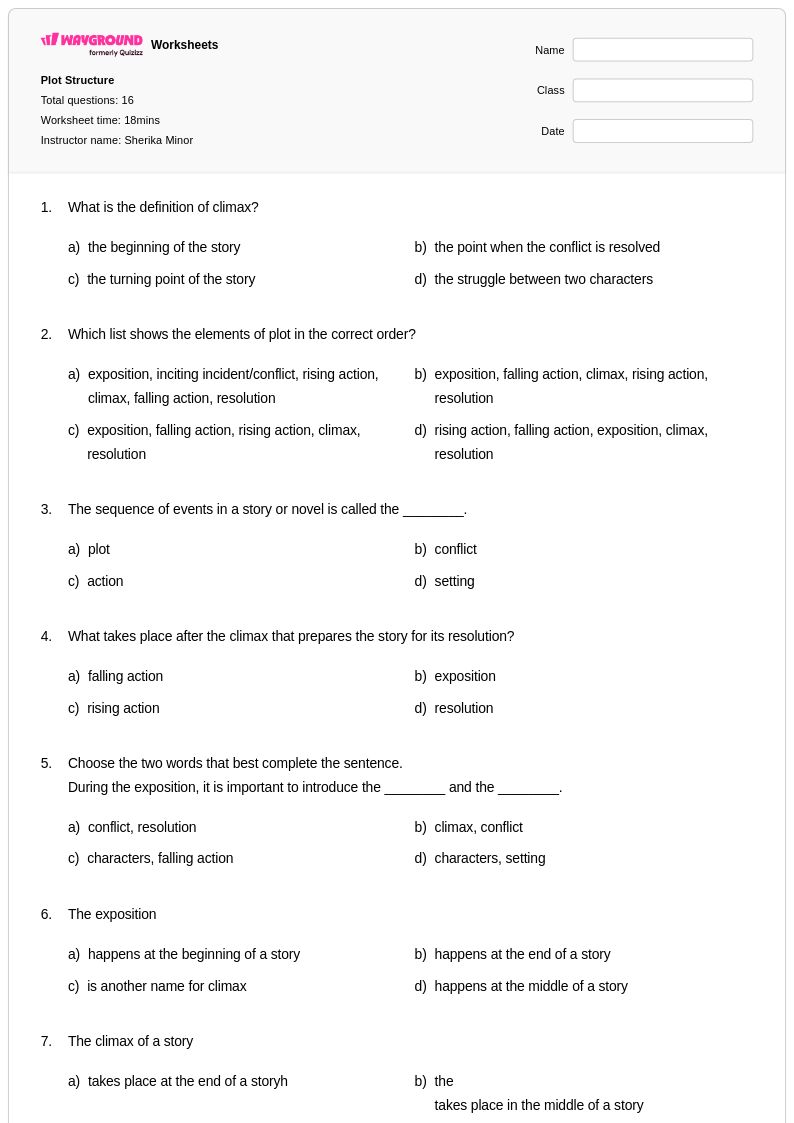
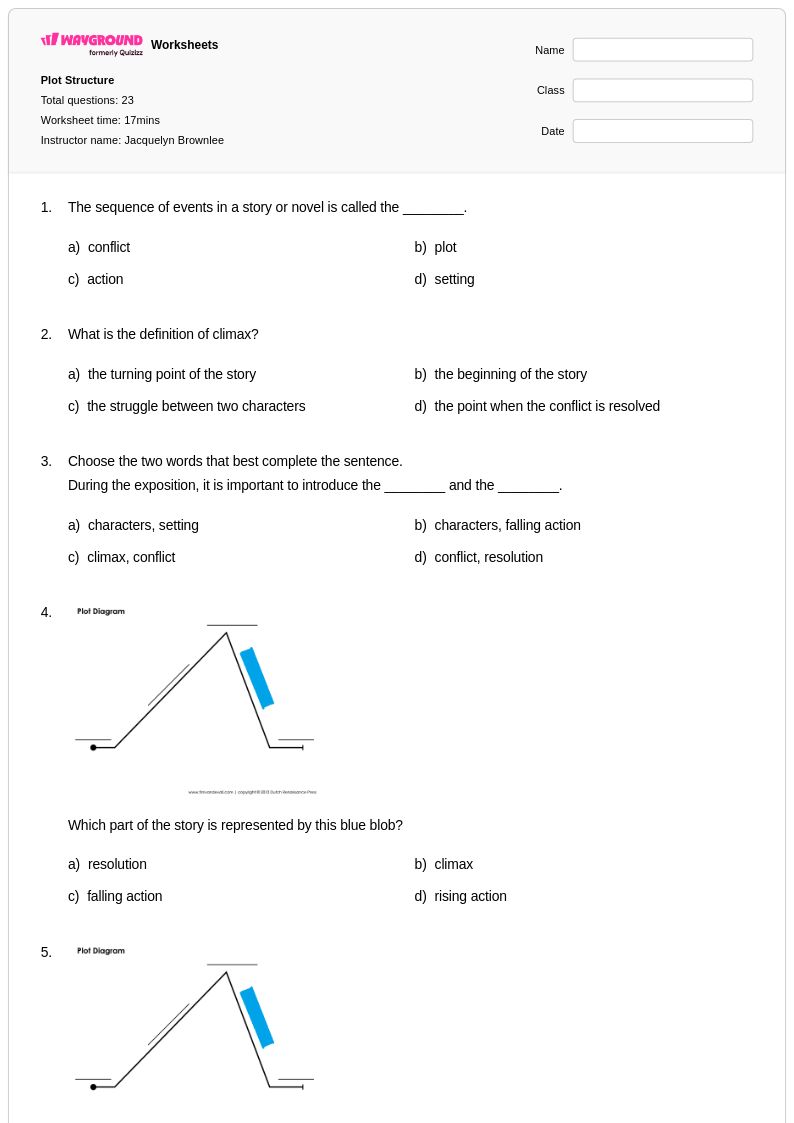
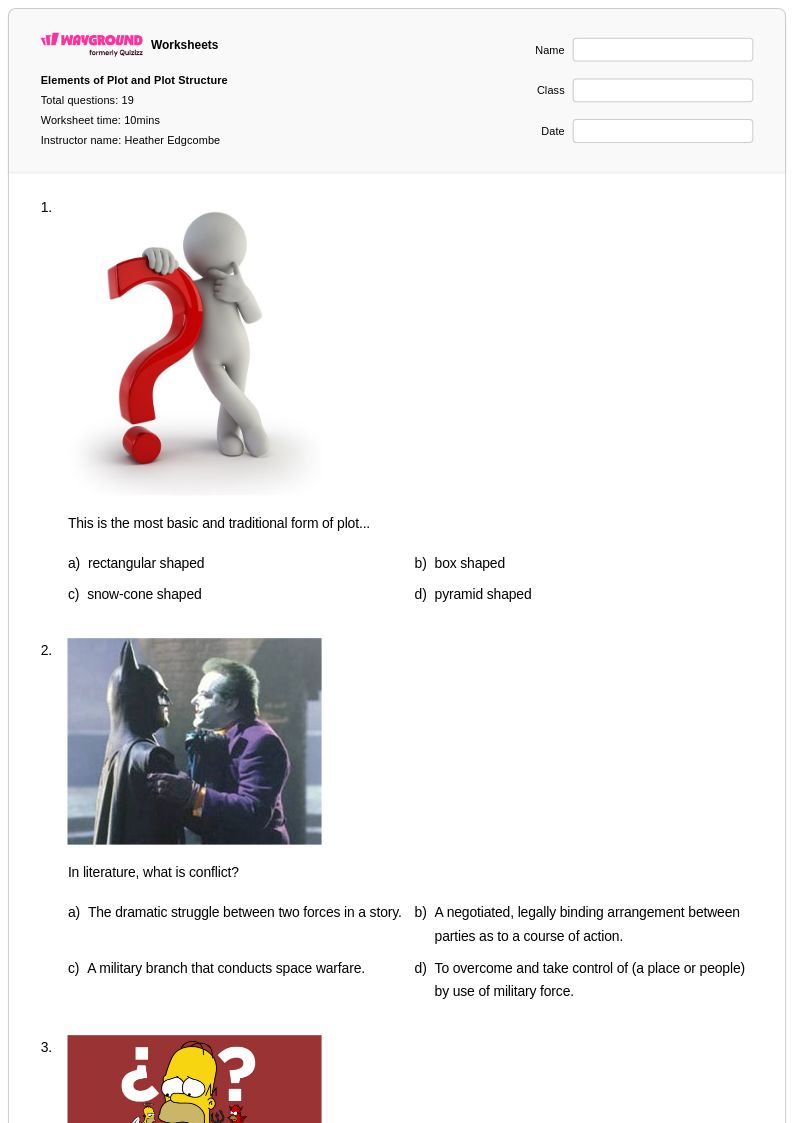
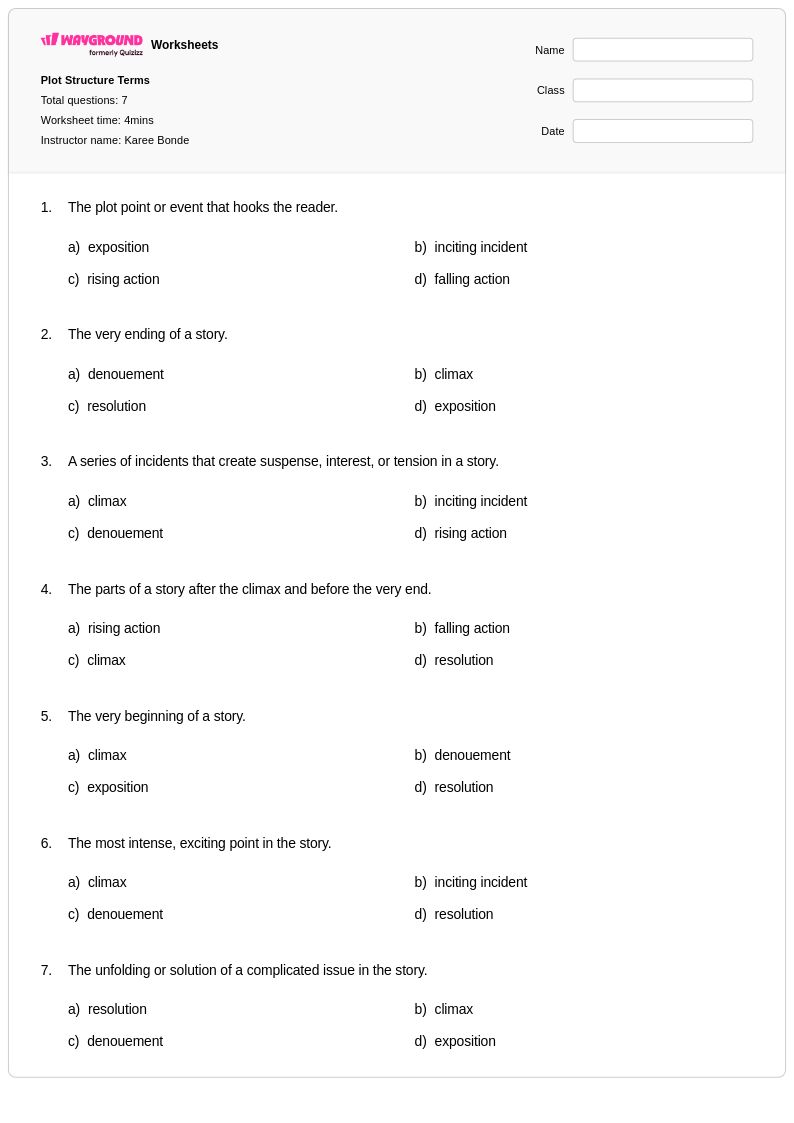
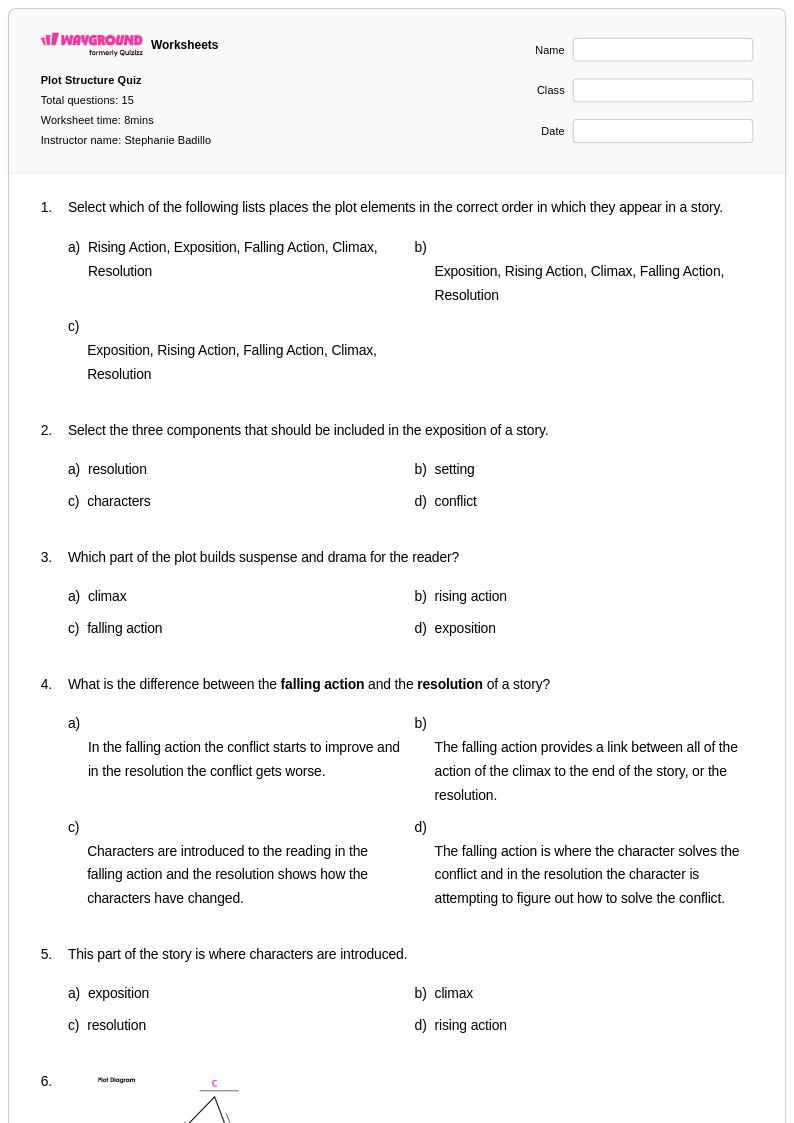
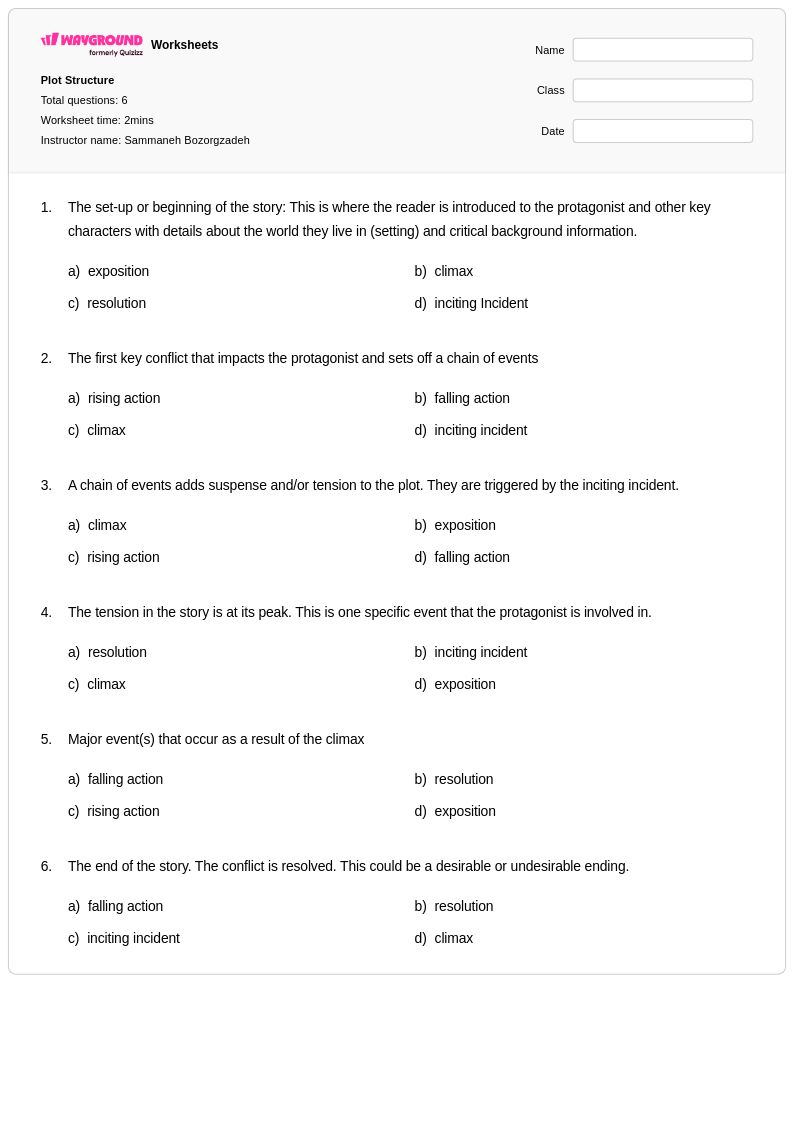
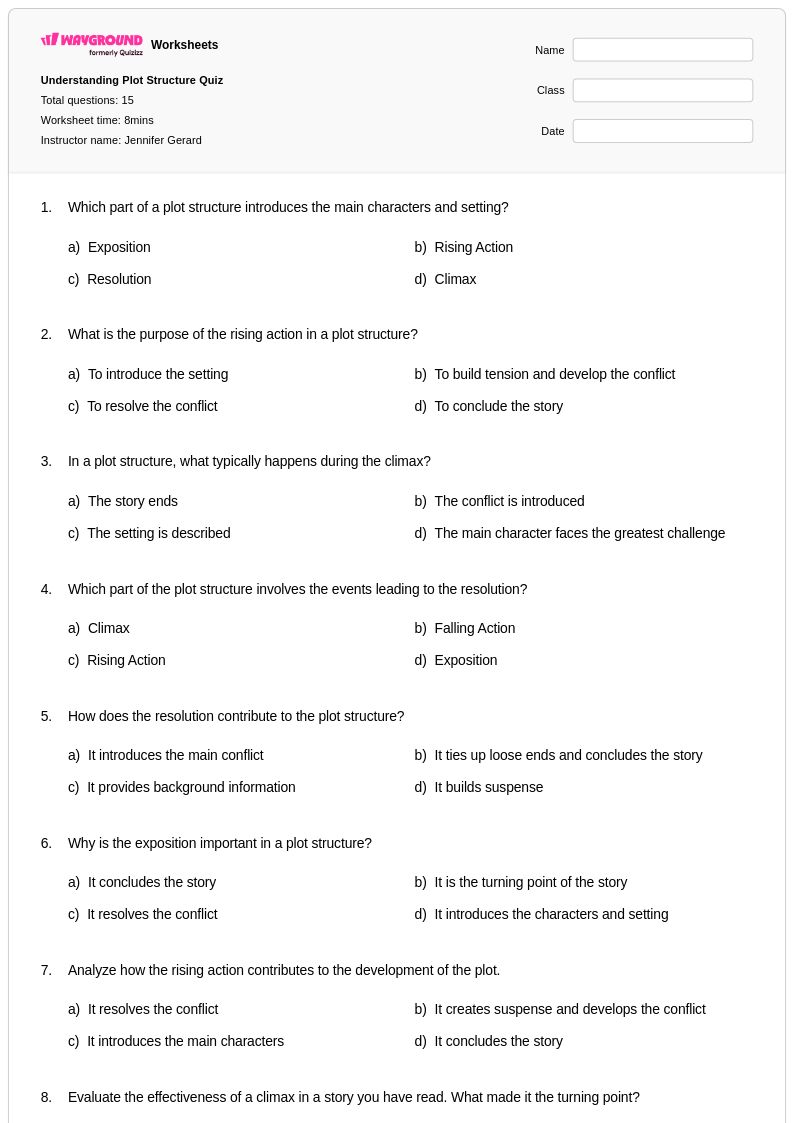
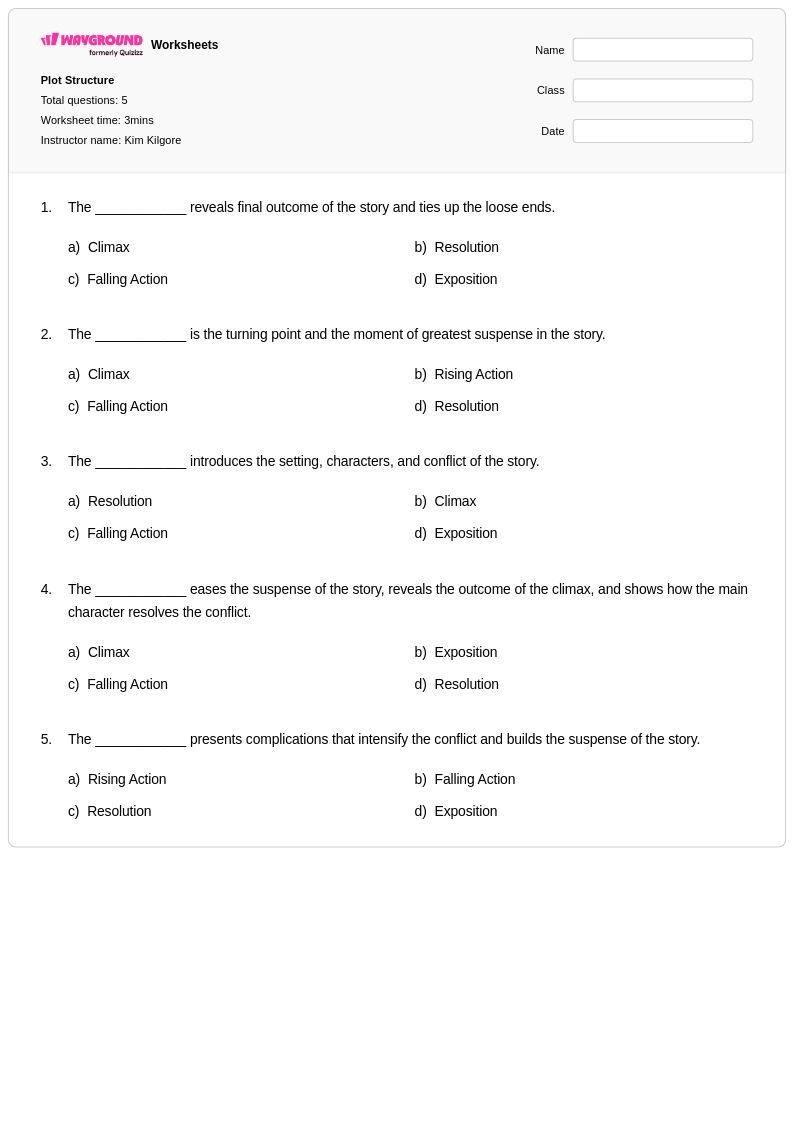
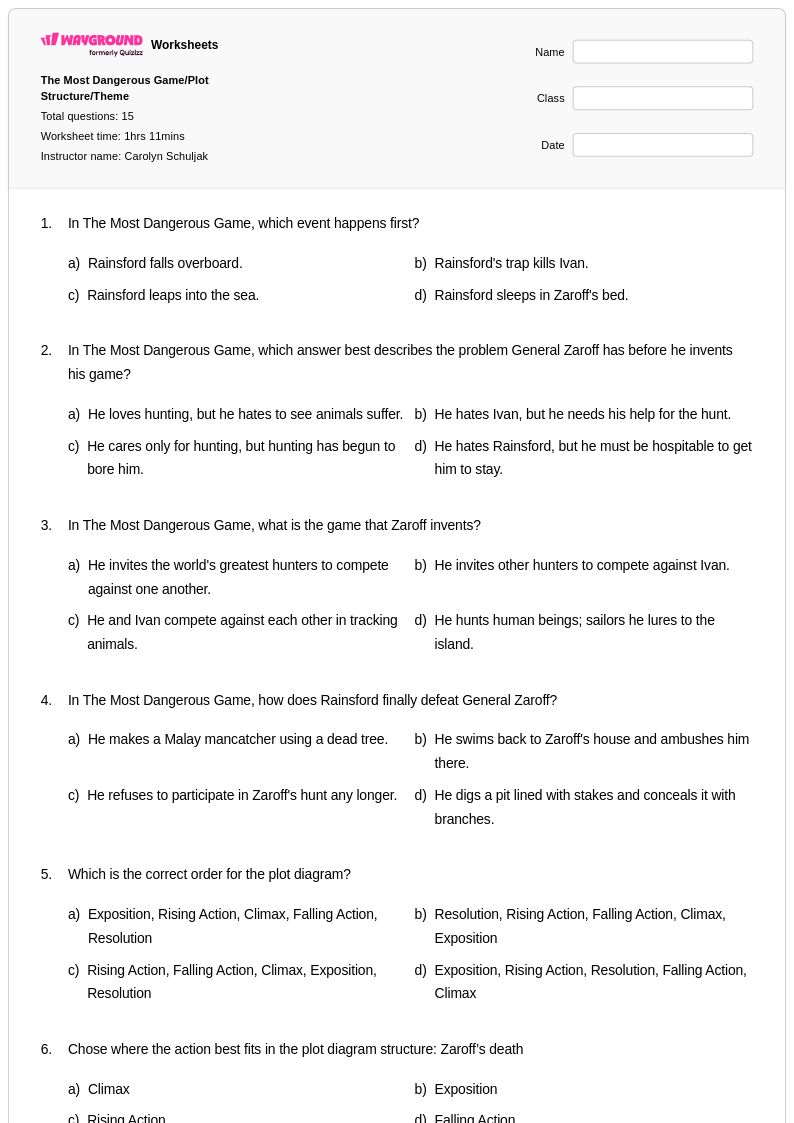
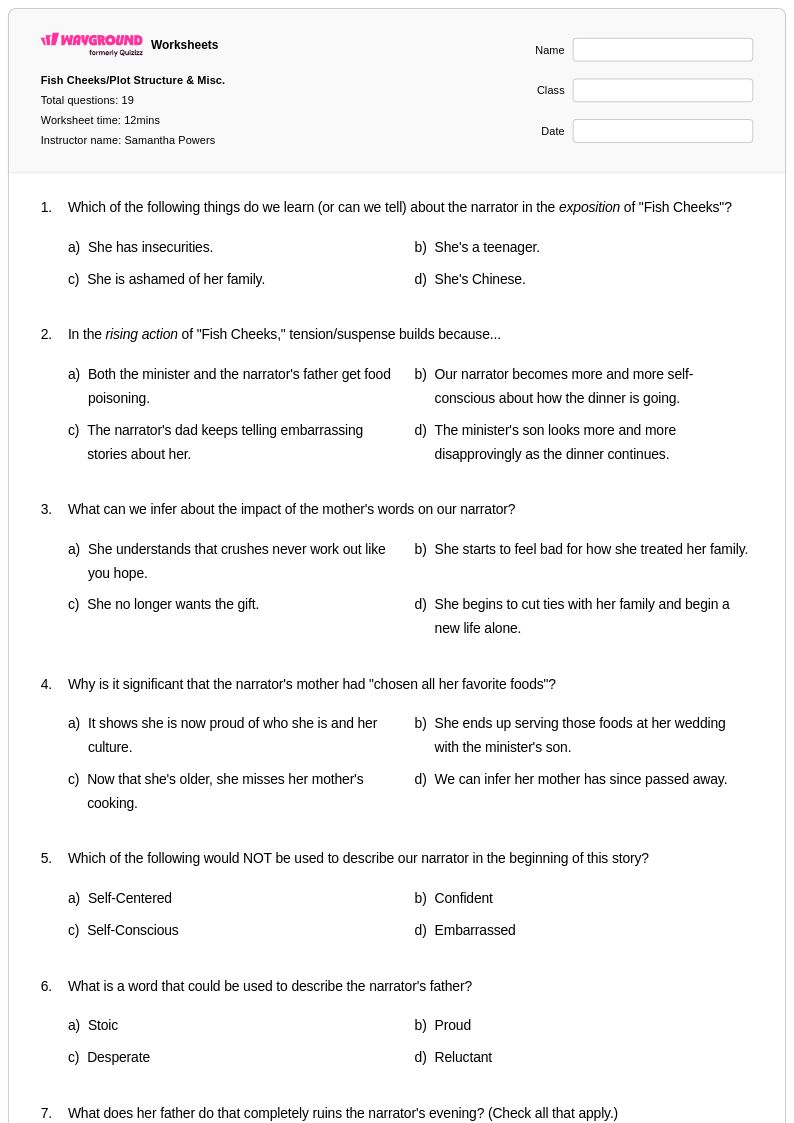
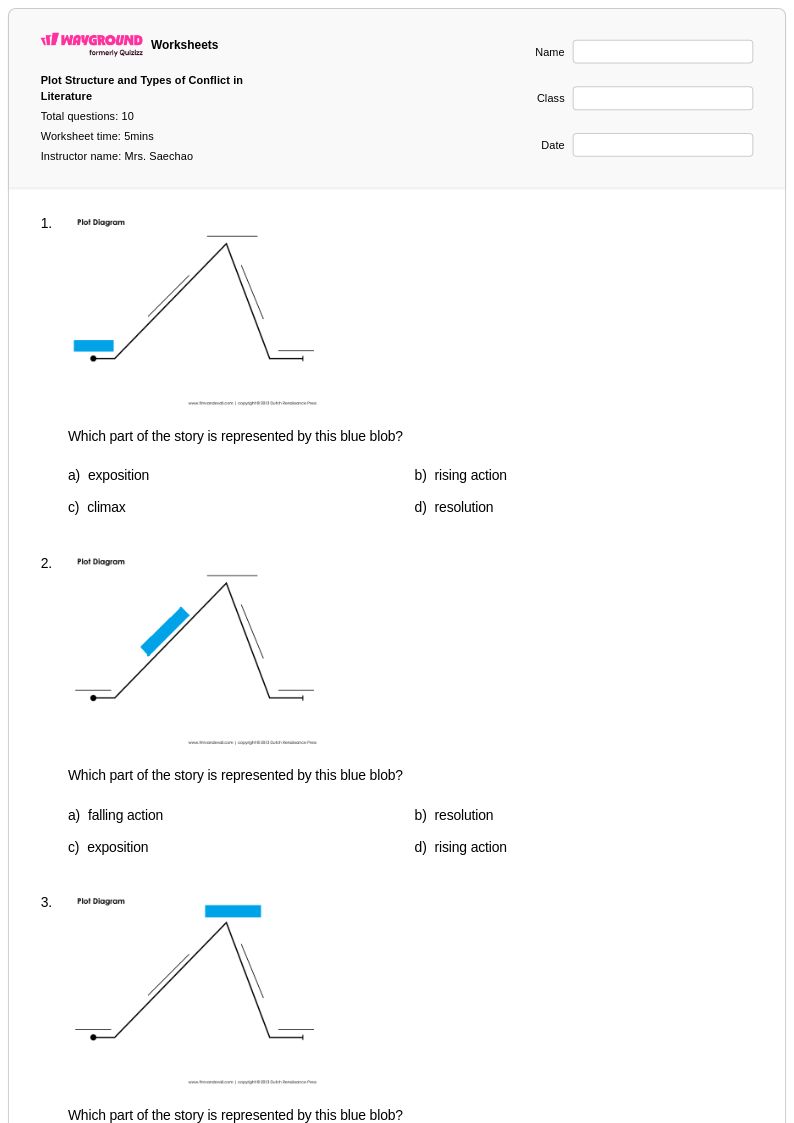
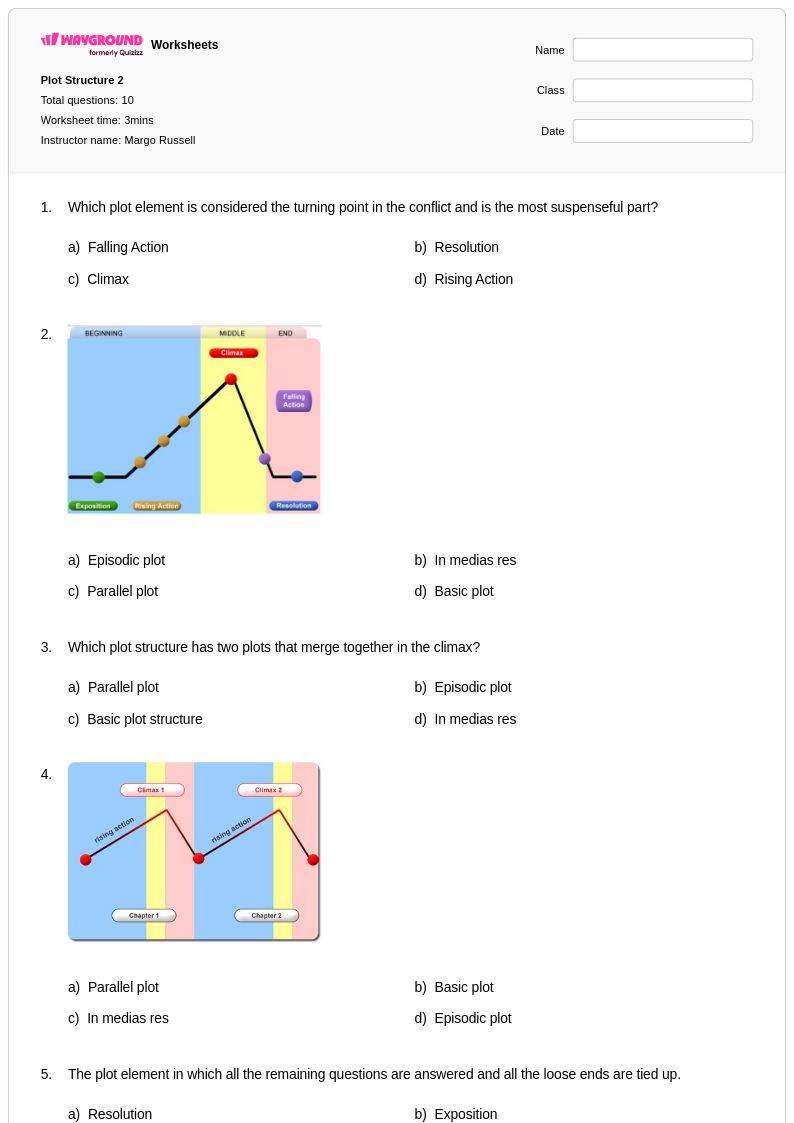
Plot structure worksheets for Class 9 students available through Wayground (formerly Quizizz) provide comprehensive practice in identifying and analyzing the fundamental components of narrative organization, including exposition, rising action, climax, falling action, and resolution. These carefully designed resources strengthen students' ability to recognize how authors construct compelling stories and develop their analytical skills through targeted practice problems that examine character development, conflict progression, and thematic elements within various literary works. Each worksheet collection includes detailed answer keys and is available as free printables in pdf format, allowing students to trace plot diagrams, sequence story events, and examine how tension builds throughout different narrative structures while developing critical reading comprehension strategies essential for high school English success.
Wayground (formerly Quizizz) empowers educators with millions of teacher-created plot structure resources specifically aligned to Class 9 reading comprehension standards, featuring robust search and filtering capabilities that help instructors locate materials perfectly suited to their classroom needs. The platform's differentiation tools enable teachers to customize worksheets for varying skill levels, while flexible formatting options provide both printable pdf versions for traditional classroom use and digital formats for technology-integrated learning environments. These comprehensive collections support effective lesson planning by offering diverse practice opportunities for skill reinforcement, targeted remediation for struggling readers, and enrichment activities for advanced students, ensuring that all ninth-grade learners can master the sophisticated analytical thinking required to deconstruct complex narrative structures across multiple literary genres.
FAQs
How do I teach plot structure to students?
Teaching plot structure works best when students can map story events onto a visual framework like Freytag's Pyramid, which labels exposition, rising action, climax, falling action, and resolution. Start with a familiar short story or film so students can identify each stage before applying the framework to longer texts. Once students can label plot stages, push deeper by asking why an author made structural choices and how those choices affect the reader's experience.
What exercises help students practice identifying plot structure?
Effective practice exercises include plot diagram mapping, where students place key events from a story onto a five-stage structure, and sequencing activities that ask students to reorder scrambled story events. Short story analysis worksheets that prompt students to identify the inciting incident, turning point, and resolution in a single passage are particularly useful because they build the habit of reading with structural awareness. Repeated practice across multiple genres, including fiction, fables, and personal narratives, helps students generalize the skill.
What mistakes do students commonly make when analyzing plot structure?
The most common error is confusing the climax with the most exciting or action-filled scene rather than identifying it as the moment of highest tension or the turning point that determines the outcome. Students also frequently collapse falling action and resolution into a single stage, missing the distinction between the consequences of the climax and the final state of equilibrium. Another persistent misconception is treating exposition as unimportant setup rather than recognizing it as the foundation that makes the rest of the plot meaningful.
How do I differentiate plot structure instruction for struggling readers?
For struggling readers, reduce cognitive load by using shorter texts with clear, linear plots before introducing stories with flashbacks or nonlinear structures. Providing a pre-labeled plot diagram with sentence starters helps students focus on identifying events rather than managing the framework itself. On Wayground, teachers can enable Read Aloud so students hear questions and story passages read to them, and Reduced Answer Choices to lower the difficulty of identification tasks, with these accommodations applied individually so other students are unaffected.
How do I use Wayground's plot structure worksheets in my classroom?
Wayground's plot structure worksheets are available as printable PDFs for traditional classroom use and in digital formats for technology-integrated environments, giving teachers flexibility for both in-person and remote instruction. Teachers can also host the worksheets as a live quiz directly on Wayground, making them suitable for formative assessment, review sessions, or independent practice. Each worksheet includes a complete answer key, so teachers can use them for self-paced work or whole-class instruction without additional preparation.
How does plot structure connect to other reading comprehension skills?
Understanding plot structure directly supports character analysis, because students who can identify the rising action and climax are better positioned to trace how characters change under pressure. It also strengthens theme analysis, since the resolution of a plot often signals what the author wants readers to take away. Teaching plot structure as a lens for comprehension, rather than as an isolated skill, helps students become more active and analytical readers across all narrative texts.