Free Printable Post-war Europe Worksheets for Class 11
Class 11 students can explore Post-war Europe through Wayground's comprehensive collection of free Social Studies worksheets, featuring printable PDFs with practice problems and answer keys to master reconstruction, political changes, and Cold War origins.
Explore printable Post-war Europe worksheets for Class 11
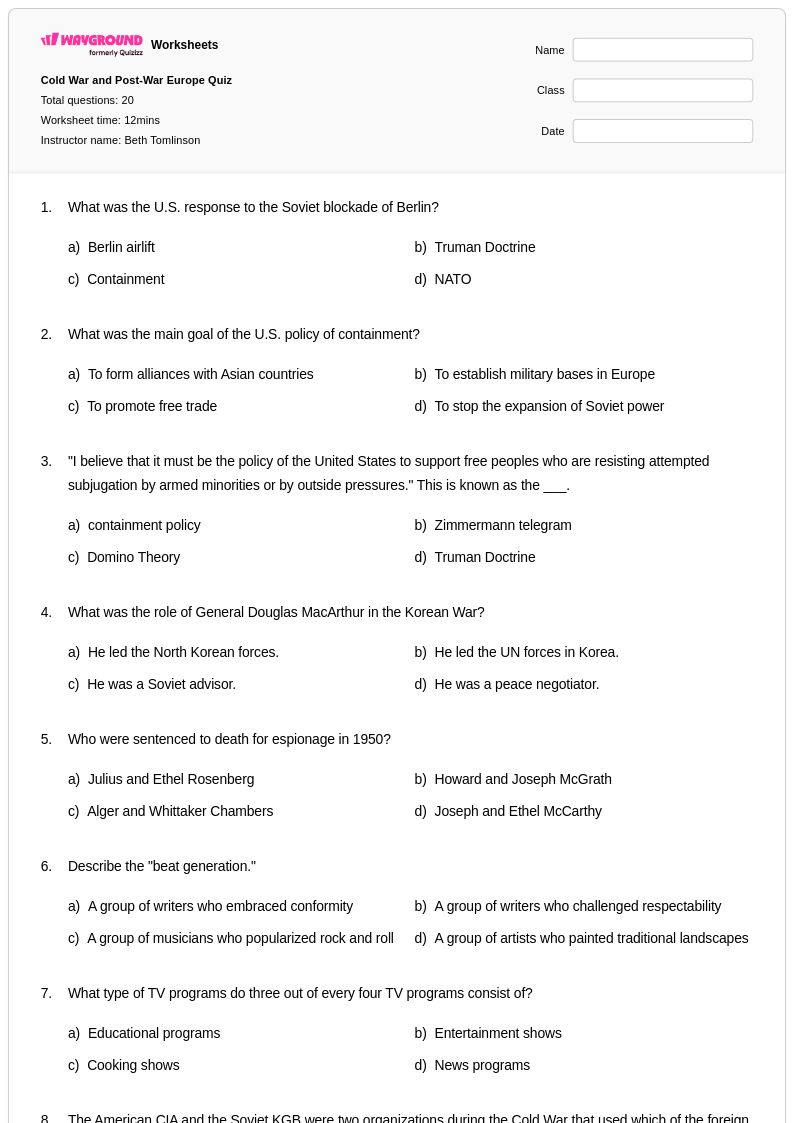
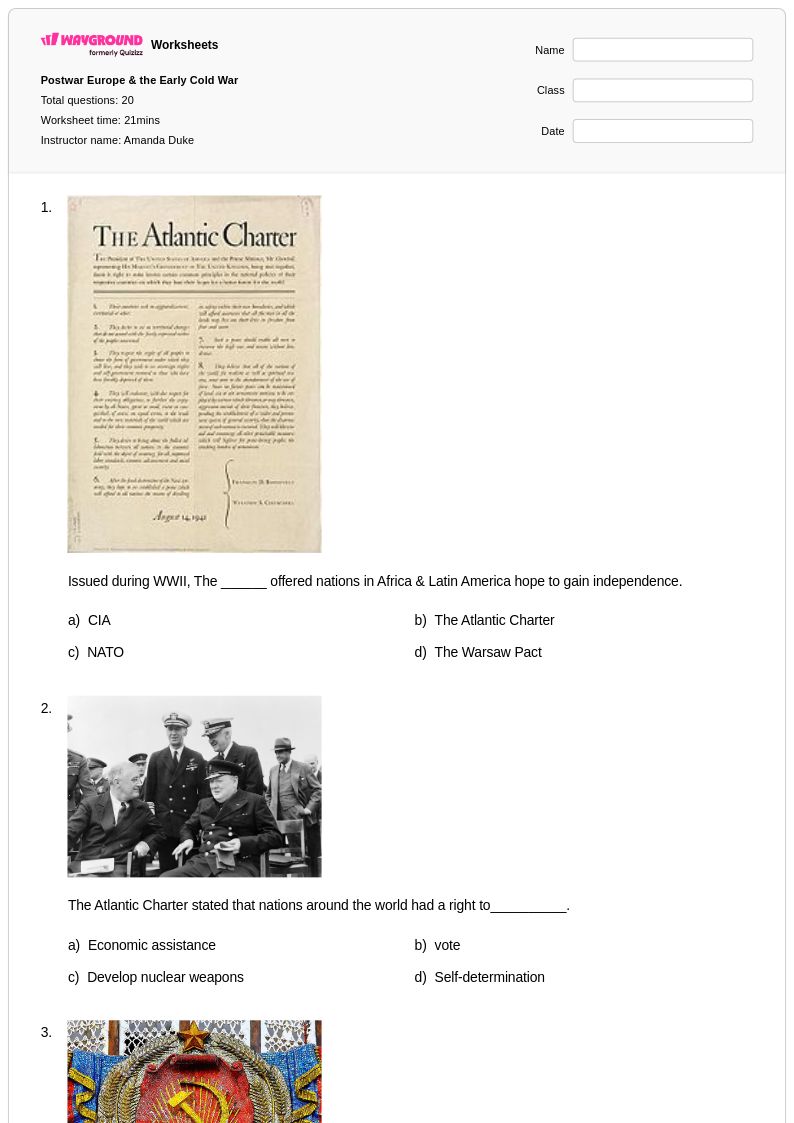
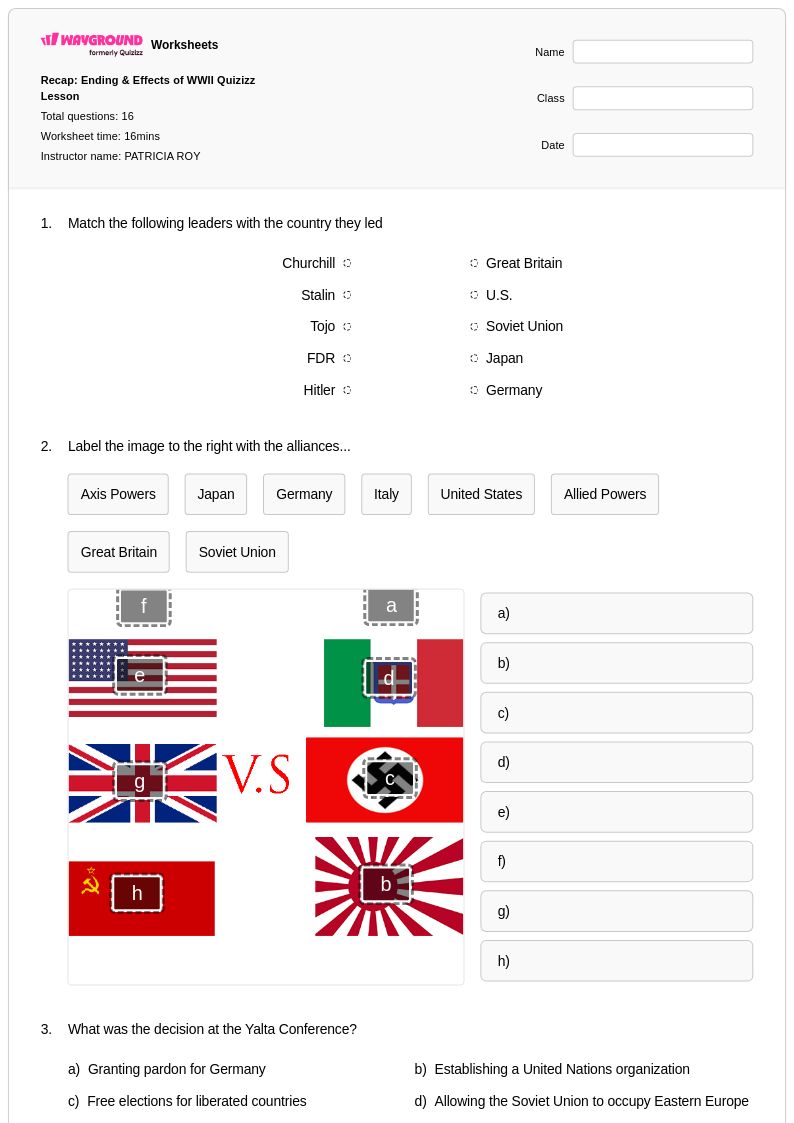
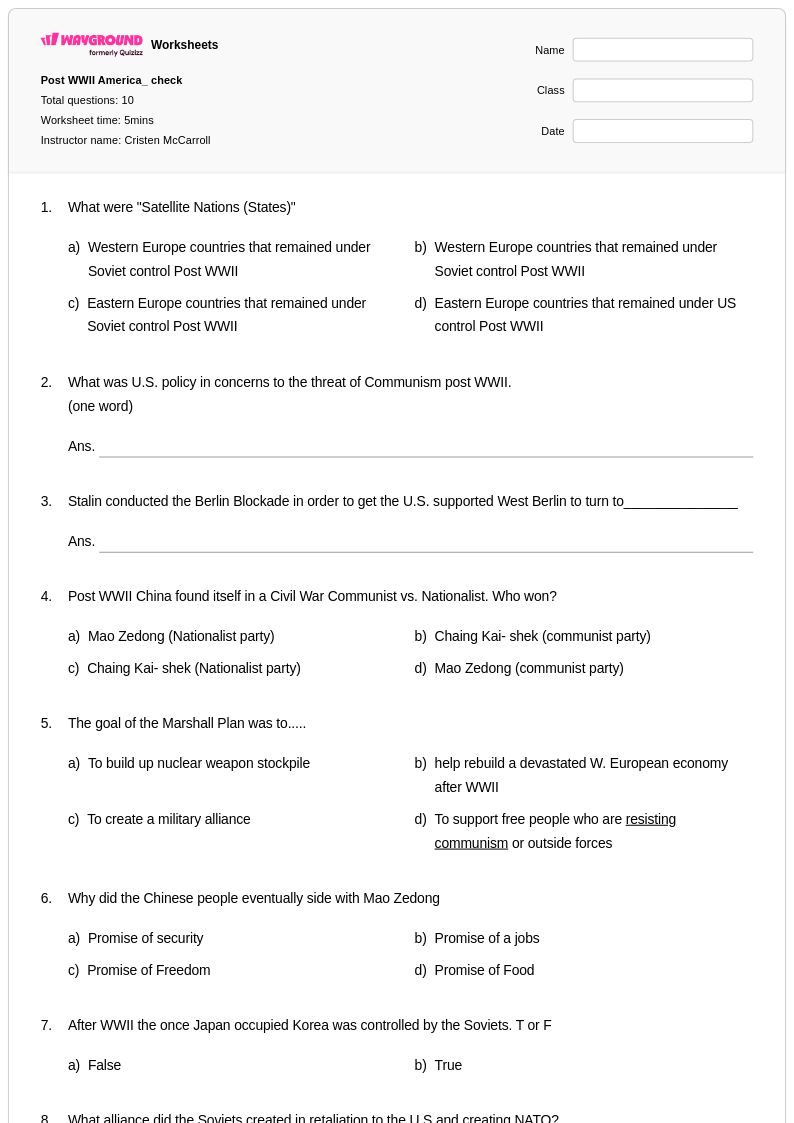
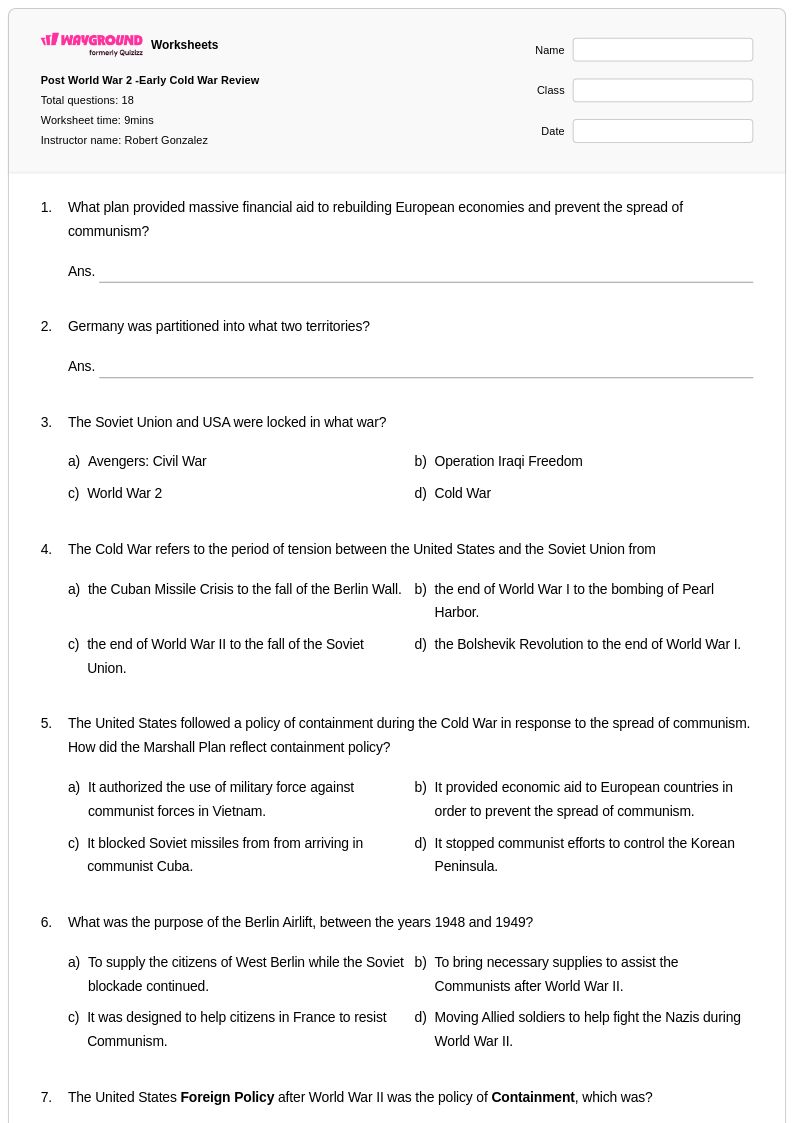
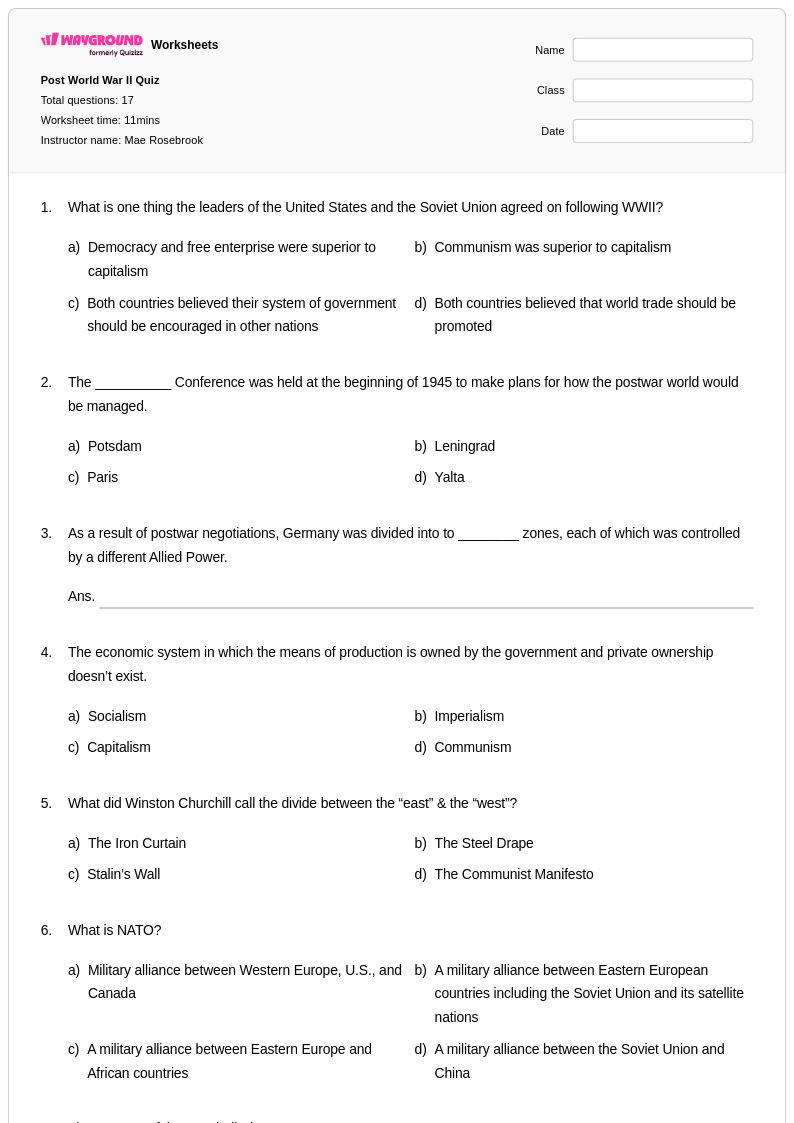
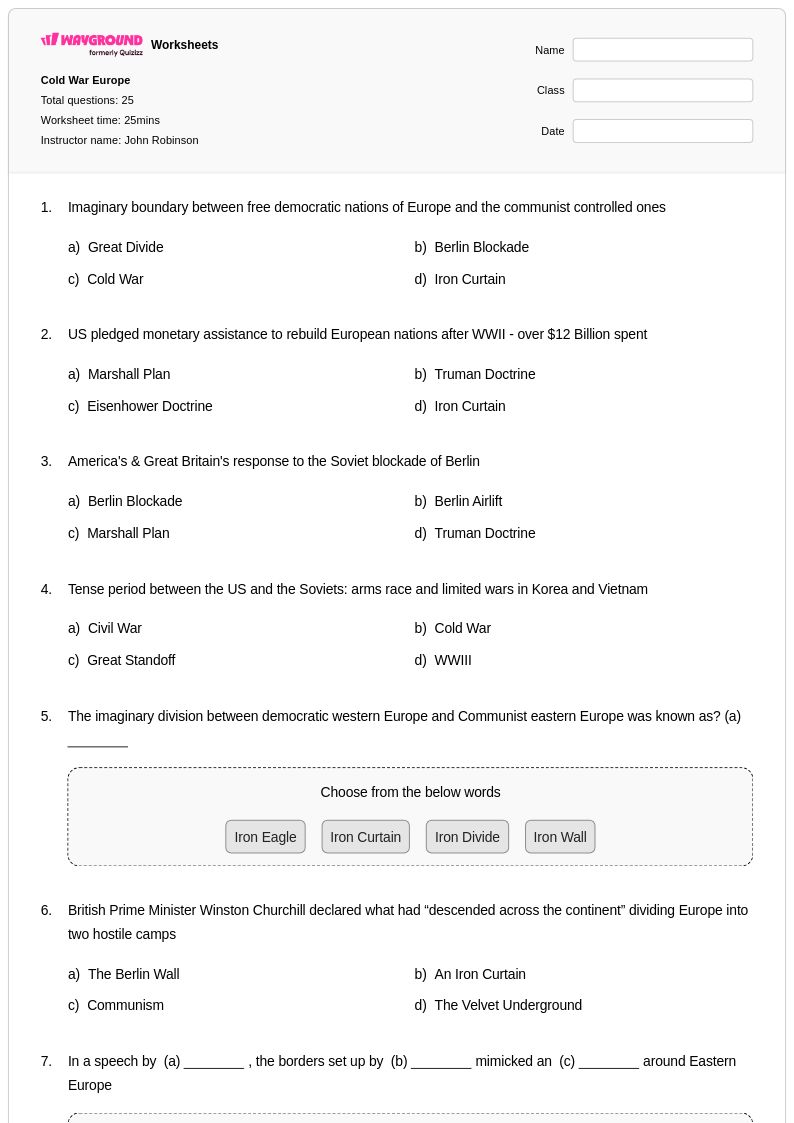
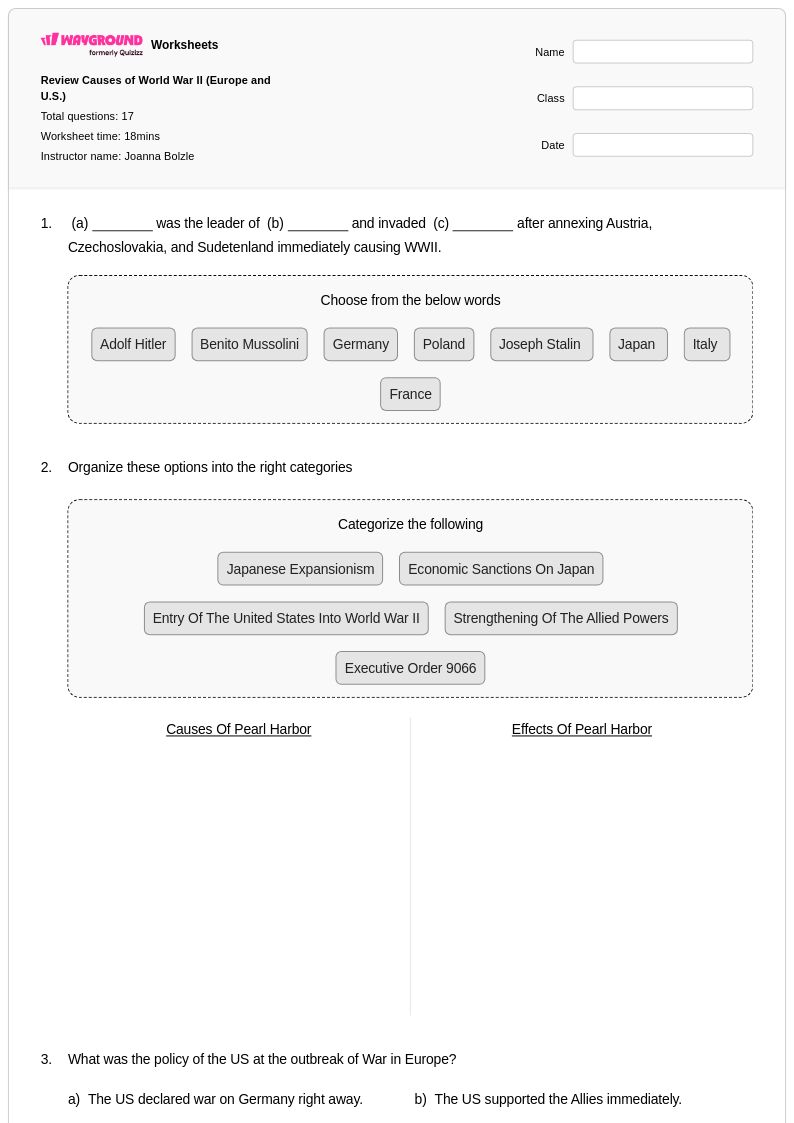
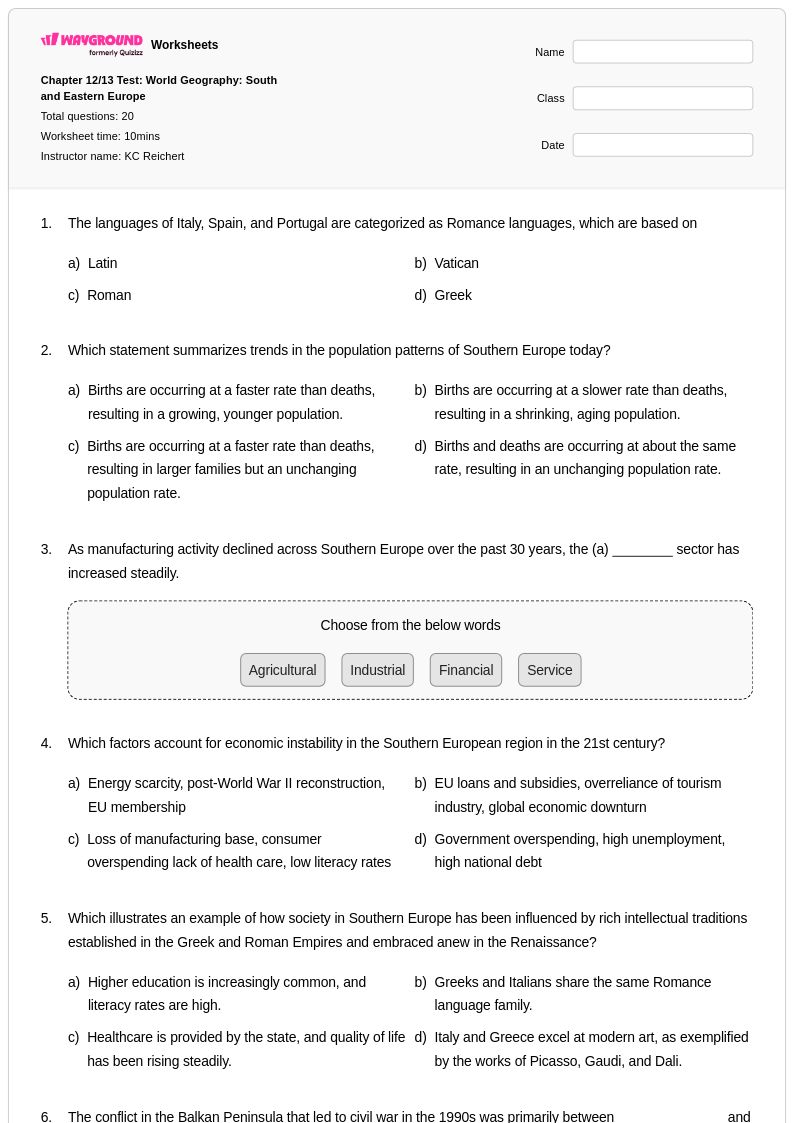
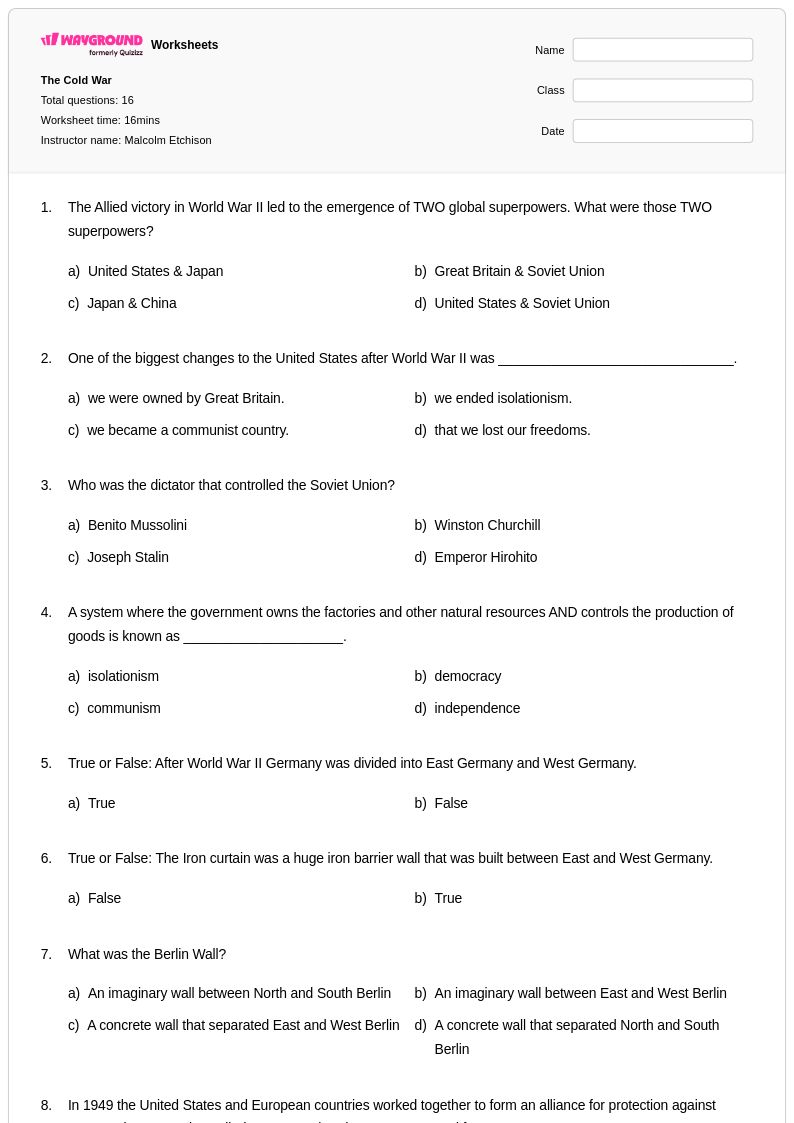
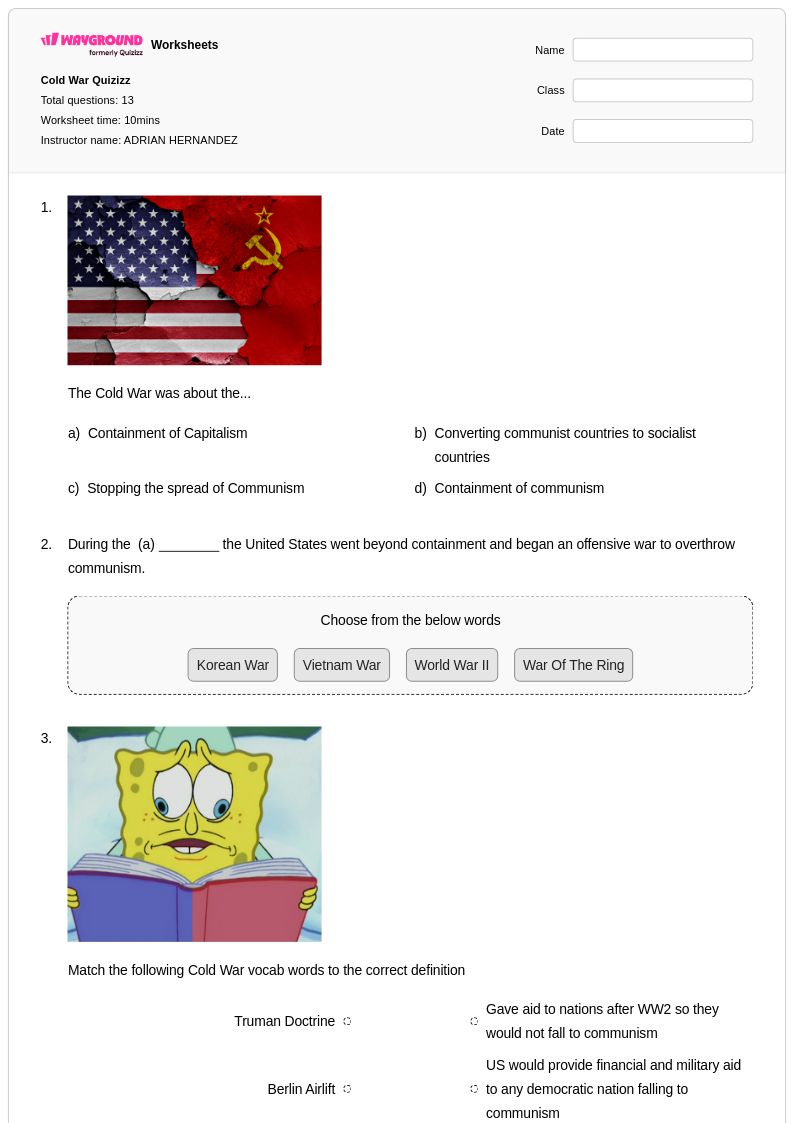
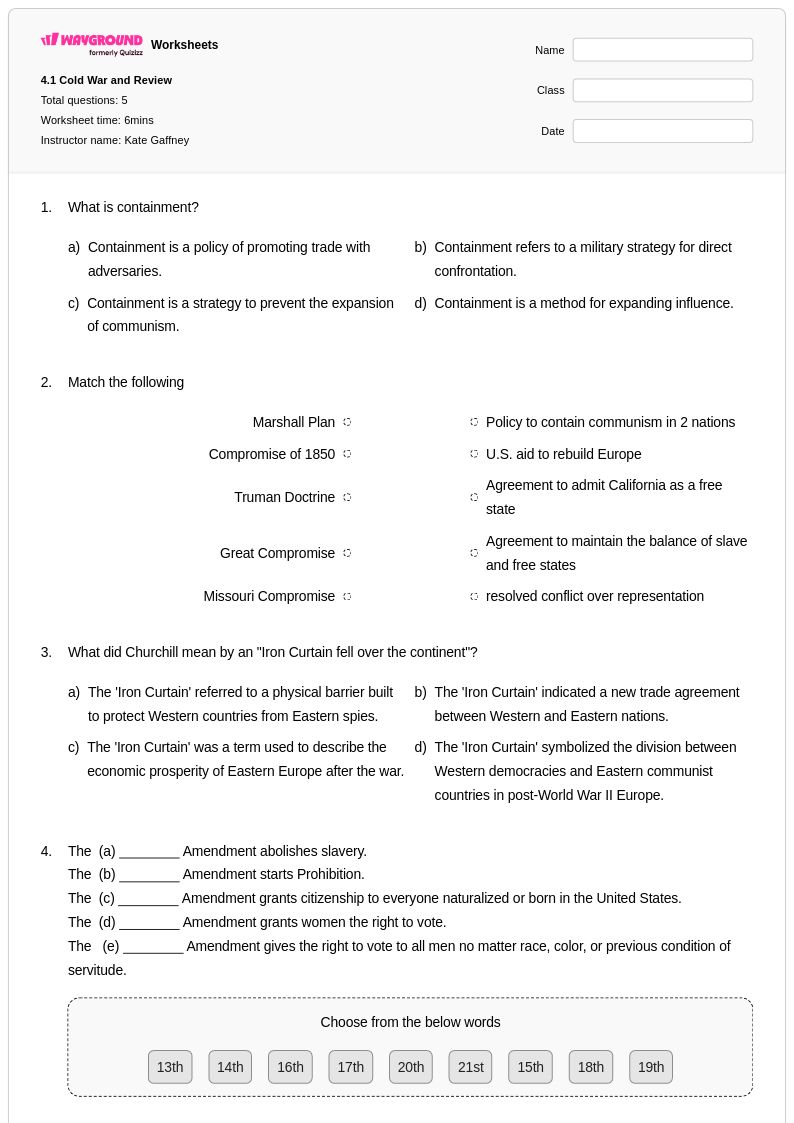
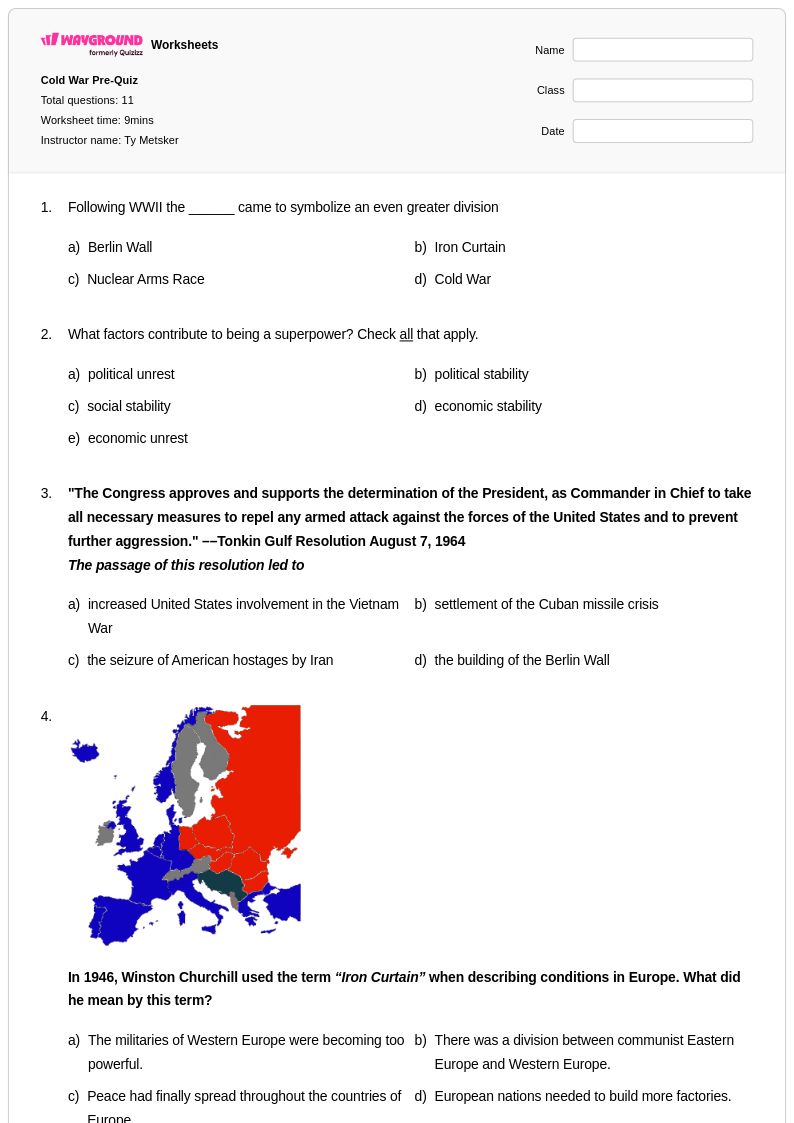
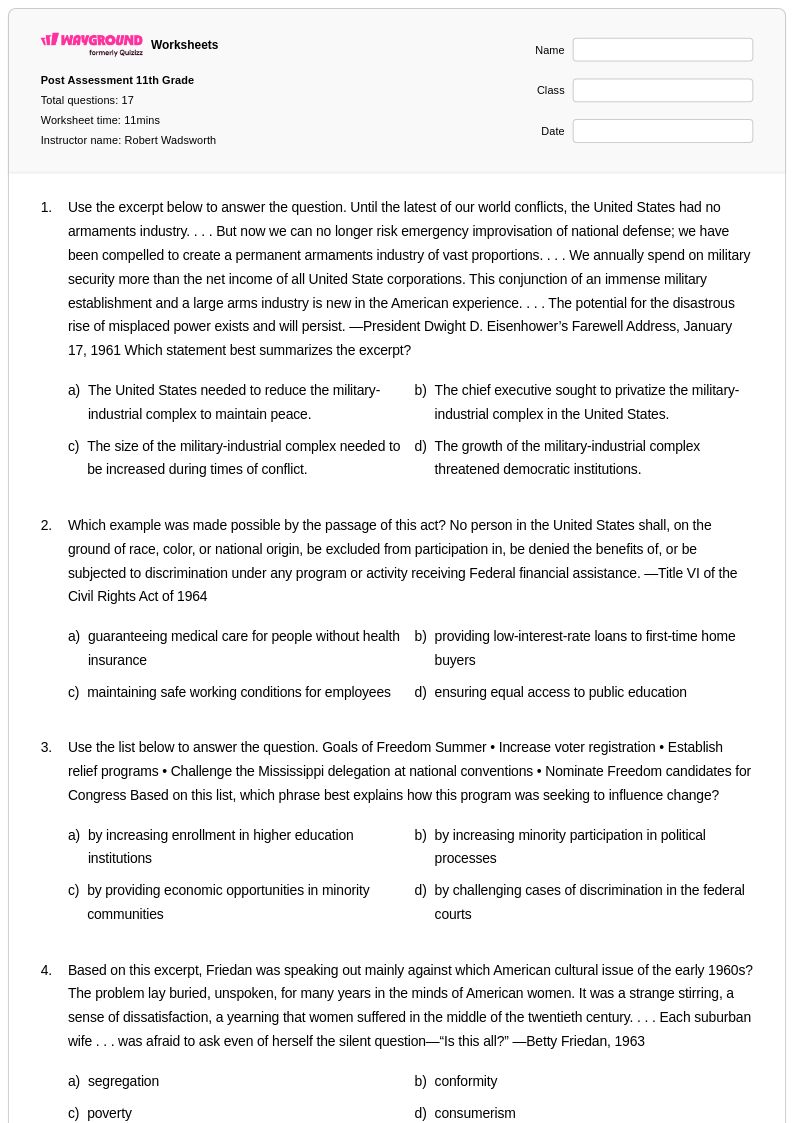
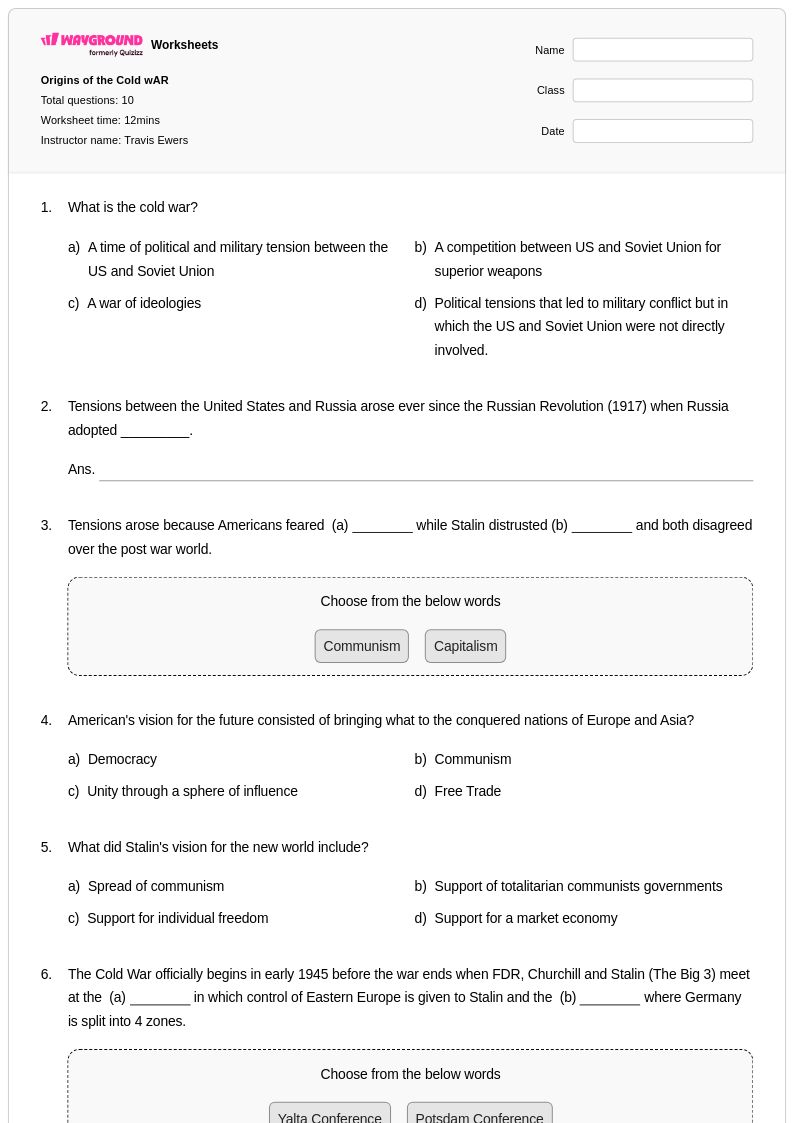
Post-war Europe worksheets for Class 11 students available through Wayground (formerly Quizizz) provide comprehensive coverage of the complex political, economic, and social reconstruction that followed World War II. These carefully designed educational materials guide students through critical topics including the Marshall Plan, the division of Germany, the emergence of the Cold War, decolonization processes, and the formation of new international organizations like NATO and the United Nations. Students develop essential analytical skills by examining primary source documents, comparing reconstruction policies across different nations, and evaluating the long-term consequences of wartime decisions on European society. Each worksheet includes detailed answer keys and is available as free printable resources in pdf format, featuring practice problems that challenge students to synthesize information about displaced populations, war crimes tribunals, and the ideological tensions that shaped the new European order.
Wayground (formerly Quizizz) empowers educators with access to millions of teacher-created resources specifically focused on post-war European history, offering robust search and filtering capabilities that align with state and national social studies standards. Teachers can easily differentiate instruction by selecting from worksheets that range from basic comprehension exercises to advanced critical thinking assignments, with flexible customization options that allow for modifications based on individual student needs and classroom objectives. The platform's comprehensive collection supports both remediation for struggling learners and enrichment opportunities for advanced students, providing educators with ready-to-use materials for lesson planning, formative assessment, and skill practice sessions. Available in both printable and digital formats including downloadable pdf files, these resources streamline preparation time while ensuring that Class 11 students develop a thorough understanding of how post-war reconstruction efforts established the foundation for modern European political and economic systems.
FAQs
How do I teach post-war Europe to my students?
Teaching post-war Europe effectively means grounding students in the major turning points: the Marshall Plan, the division of Germany, the formation of NATO and the Warsaw Pact, and the emergence of Cold War tensions between Western democracies and the Soviet Union. Start with the physical and economic devastation of 1945 so students understand why reconstruction was so urgent, then trace the ideological divide that shaped European politics for decades. Primary source analysis and map interpretation are especially effective for helping students visualize territorial changes and political realignment. Building from cause to consequence helps students see post-war Europe not as isolated events but as an interconnected transformation.
What exercises help students practice analyzing post-war European history?
Structured practice problems that require students to examine primary sources, interpret maps showing territorial changes, and evaluate the effectiveness of reconstruction efforts across different nations are among the most effective exercises for this topic. Comparing the recovery trajectories of Western and Eastern European countries under different political and economic systems helps students develop analytical and evaluative skills. Asking students to assess the origins of European integration or the long-term consequences of wartime destruction pushes them beyond recall toward genuine historical reasoning.
What common misconceptions do students have about post-war Europe?
A frequent misconception is that the Cold War began suddenly as a conflict between the US and USSR, when in fact post-war Europe shows how former allies gradually moved toward ideological opposition through specific policy decisions like the Marshall Plan, the Berlin Blockade, and the formation of rival military alliances. Students also tend to treat European reconstruction as uniform, missing how vastly different the recovery experience was for countries under Soviet influence versus those receiving Marshall Plan aid. Another common error is conflating the end of World War 2 with immediate political stability, when in reality many European countries faced years of governmental restructuring and social upheaval.
How can I use post-war Europe worksheets in my classroom?
Post-war Europe worksheets on Wayground are available as printable PDFs for traditional classroom use and in digital formats for technology-integrated environments, making them flexible for in-class instruction, homework, or independent study. Teachers can also host them as a quiz directly on Wayground to assess student comprehension in real time. Each worksheet includes an answer key, which streamlines grading and supports self-paced or remediation work. For students who need additional support, Wayground's accommodation tools allow teachers to enable read-aloud, extended time, or reduced answer choices on an individual basis without disrupting the rest of the class.
How do I differentiate post-war Europe instruction for students at different ability levels?
For students who struggle with the complexity of post-war political geography and ideology, reducing the number of answer choices on assessments can lower cognitive load without removing rigor. Wayground allows teachers to apply accommodations like read-aloud, extended time, and reduced answer choices to individual students while the rest of the class works under default settings, and no other students are notified. For advanced learners, enrichment activities that explore European integration origins or the long-term social consequences of wartime destruction provide meaningful extension without requiring entirely separate lesson plans.